
Walt Maddox proposes penny tax for ‘Elevate Tuscaloosa’ project

Tuscaloosa Mayor Walt Maddox has proposed a one-cent sales tax to raise money for the Elevate Tuscaloosa initiative, ABC 3340 reports. Maddox believes this will shift Tuscaloosa from a retail economy to an experience-based, technology-driven city through improvements to transportation, education, and recreation over the next 10 years. Elevate Tuscaloosa consists of 19 projects that will improve mass transit, develop centers for performing arts, adds parts and sports venues, enhance the education system. “If our economy wants to grow, we got to attract and retain the best and brightest. We have a distinct advantage over most cities. We have the University of Alabama, we have Shelton State and Stillman College. We need them to not only build their business here, but raise their families here,” Maddox told ABC. Maddox says this is about growth for the future. “This is not about where we are. We can continue where we are. That’s not an issue but if we want to elevate our city. If we want to be competitive in this 21st century technology driven environment, We have to change the way we think about the economy,” Maddox said, according to WBRC. “It’s about my son Eli and my daughter Taylor, building a Tuscaloosa where they can get a high quality education..where they can go find a quality job,” The city hasn’t seen a tax increase in nearly 30 years, ABC says, so Maddox has proposed this as one way to raise the $250 million necessary for the project. “We’re going to take the revenue that’s going to be generated by this investment. They will not be co-mingled with our general fund and they will be used for those 19 specific projects only,” said Maddox. Tuscaloosa City Council is waiting for more specifics before committing. “I’m looking at it, is it balanced? Is there one area of the city that seems to be favored over all the other districts? I’m going to depend heavily on the people who elected me to see how the winds blowing,” Tuscaloosa City Councilman Kip Tyner told WBRC. As part of the proposed tax increase, the city will ask the state legislature for grocery stores to be exempt from municipal sales tax. That would reduce the tax rate from nine percent to seven. There will be an open house on Wednesday, February 6 at the Tuscaloosa River Market from 4-7 p.m to see the project, how the city proposes to fund it, and ask questions. Elevate Tuscaloosa’s 19 projects Experience venue: a large-capacity venue drawing thousands of visitors annually – resulting in direct and indirect jobs as well as infusing millions of dollars into Tuscaloosa’s experience economy Cost: $60M Implementation: FY2025 Improvements to Tuscaloosa National Airport: A commercial and TSA-ready terminal, runway enhancement, and public safety enhancements. Cost: $15M Implementation: FY2024 Workforce and Downtown Transit: Mass transit for the workers and expanded hours and days. Rapid transit for tourists to stimulate economic growth. Cost: $6.9M Implementation: FY2021 Project Trinity: A local match to infrastructure improvements. Cost: $7.5M Implementation: Undefined Nichol-Harris Water Recreation & Trails Experience: Create a national park out of this area which will bring jobs and visitors. Cost: Undefined Implementation: 2021 Bama Theater: Upgrades to a historic venue including enhancements to the educational experience. Cost: $3M Implementation: 2023 McDonald Hughes Event Complex: A venue allowing the city to recruit athletic tournaments (including basketball and volleyball). Cost: $18M Implementation: 2025 Center Court Tuscaloosa: Indoor and/or outdoor tennis courts. Consolidation of all public tennis courts into one site. Cost: $3.5M Implementation: 2023 McAbee Senior Center: Expanding fitness, proving a new fitness track, adding a new lap pool. Cost: Undefined Implementation: 2023 Phelps Center: Upgrades including a new lap pool, racquetball, and fitness center. A new trail. Cost: Undefined Implementation: 2024 Western Riverwalk: Continue the Riverwalk expansion west from the amphitheater. Cost: $5M Implementation: 2023 Northern Riverwalk: Riverwalk expansion. Cost: $2M Implementation: 2024 Snow Hinton Park: Upgrade the pedestrian experience with paths, lighting, and other needs. Cost: $2M Implementation: 2022 Bowers Park: Become a baseball and softball “megasite.” Upgraded lighting, facilities, and access. Cost: $10M Implementation: 2024 Sokol Park: Make this the primary center for soccer, lacrosse, and football. Upgraded lighting, facilities, and access. Additional fields. Cost: Undefined Implementation: 2023 Tuscaloosa Public Library: Complete necessary upgrades. Cost: $1.25M Implementation: Undefined Tuscaloosa Pre-K Initiative: Additional classrooms and opportunities for Pre-K. Cost: $4.8M Implementation: 2020 Summer Learning Academy: Extending this program to address summer learning loss. Cost: Undefined Implementation: 2020 Job and Career-ready Scholarships: Scholarships to prepare students for college or jobs of the future. Cost: $9.7M Implementation: 2020 https://www.youtube.com/watch?v=e80tLVztXSA
John Archibald with Spencer Collier day of accident: correcting the record and why it matters

Earlier today we reported a story that last week Spencer Collier listed AL.com’s John Archibald a passenger in his car on the day of his 8/14/17 car accident on a new witness list in the Robert Bentley defamation case. I went on to talk about it on News Talk 93.1. Originally, we wrote that Archibald was a passenger in the car during the accident. That was incorrect. We updated this within moments of Archibald clarifying that he was not in the car during the wreck, but rather earlier in the day. Again, my apologies for the inaccuracy. That said, it doesn’t take away from the larger fact that AL.com did not report on the accident whatsoever. I want to reiterate that I believe the accident itself was newsworthy, and we still cannot find any coverage of this accident on AL.com. While— Times Daily, Lagniappe Mobile, Selma Times Journal, WSFA-12, Montgomery Advertiser, Decatur Daily, Alabama News Net all covered it. Over the past year and a half, since the day of the accident questions have continued about the cause of it, and from my vantage point Archibald has valuable information relevant to Collier’s state of being that day. Again, it is relevant that Archibald, a journalist who talks about the events of the day for a living, was with Collier. And questions linger: When was he with him? For how long? Was he lucid? Was he tired? All of which could be answered with this “good footage” from Archibald. Which is why I’m calling on John to answer those questions now and release the footage. Help us create a timeline of what happened, and give those of us who were not with Collier that day a small glimpse of what happened sometime before the accident. My back and forth with John on Twitter this morning: “Are you saying I was a passenger in Collier’s wreck? I was not. We filmed him in his cop car earlier in the day,” Archibald tweeted. Are you saying I was a passenger in Collier’s wreck? I was not. We filmed him in his cop car earlier in the day. — John Archibald (@JohnArchibald) January 30, 2019 “We are responding to a tweet that says you will “discuss the @JohnARchibald-Spencer Collier accident.” WTF?” Archibald tweeted. We are responding to a tweet that says you will “discuss the @JohnARchibald-Spencer Collier accident.” WTF? — John Archibald (@JohnArchibald) January 30, 2019 “You did,” said Archibald. You did: pic.twitter.com/hWjTKPjwb3 — John Archibald (@JohnArchibald) January 30, 2019 “My apologies for wording. Updated headline to reflect you were with him that day,” I replied. My apologies for wording. Updated headline to reflect you were with him that day — Apryl Marie (@aprylmarie) January 30, 2019 “And got some good footage, too,” Archibald replied. And got some good footage, too. https://t.co/DA9lW0XKj6 — John Archibald (@JohnArchibald) January 30, 2019 “We have updated that headline. To reflect an error was made,” I added. We have updated that headline. To reflect an error was made. — Apryl Marie (@aprylmarie) January 30, 2019
Alabama prison system ordered to report mental health segregation data
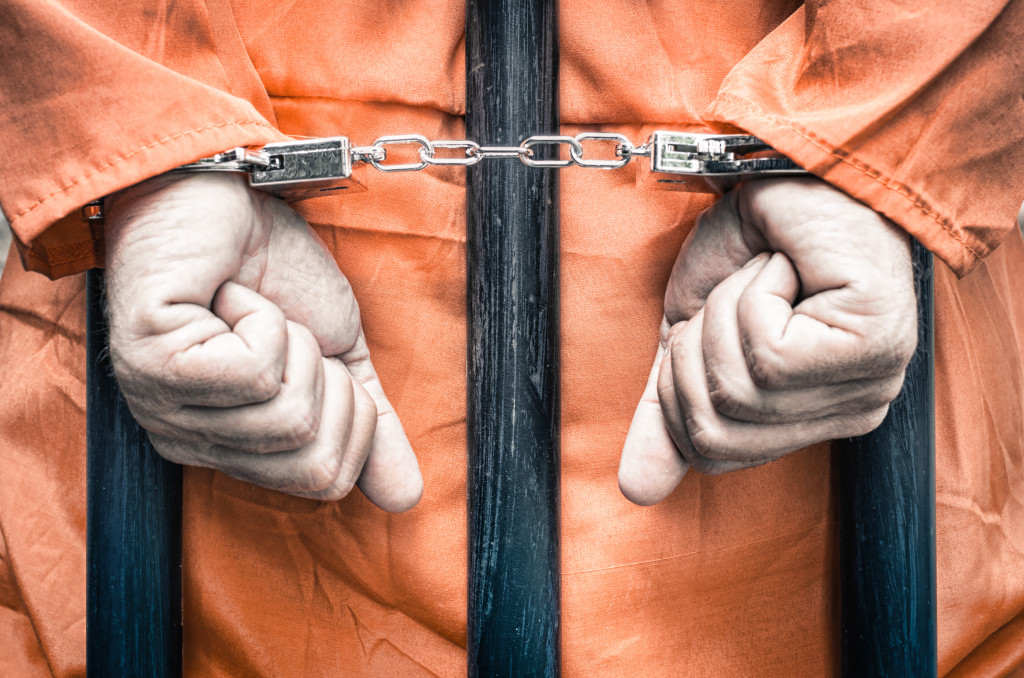
On Tuesday, U.S. District Judge Myron Thompson issued an order for the Alabama Department of Corrections (ADOC) to report how many inmates with mental illnesses have been placed in segregation units, The Associated Press reports. This comes when attorneys for inmates requested intervention after three suicides occurred in four weeks in state prisons. Thompson previously instructed state prisons not to isolate prisoners without extenuating circumstances after finding in 2017 that care for mentally ill inmates was “horrendously inadequate.” History of mental health issues in Alabama prisons The issue of mental health care in state prisons has been ongoing. In December 2018, Alabama prison officials stated that they were making “substantial progress” in increasing mental health staff and asked not to be held in contempt of court of an order requiring minimum levels of mental health staff. In a December filing, the ADOC wrote that Wexford Health Sources, the contractor hired to provide health care, had not been able to meet staffing targets but said “both are making all efforts to increase staffing as quickly as possible.” The letter continued, “In sum, the state is not contending that it has fulfilled every requirement of the staffing remedial order. But it has made in good faith all reasonable efforts to do so, and those efforts have resulted in substantial progress.” They claimed that a shortage of professionals available, especially in rural areas, has made staffing difficult. Lawyers for the inmates wrote “Defendants’ contempt is placing prisoners with serious mental-health needs at a substantial risk of serious harm every day. Their failures are most evident when looking at staffing levels for mental-health staff with advanced training, specifically psychiatrists, CRNPs, psychologists, and registered nurses.” In September of 2018, the Southern Poverty Law Center asked Judge Thompson to hold the ADOC in contempt. “Adequate staffing is critical to address the mental health needs and secure the safety of the prisoners in ADOC’s care,” said Maria Morris, senior supervising attorney at the SPLC. “Time and time again, ADOC has failed to meet court-ordered deadlines to fill essential staffing positions. We have no confidence that ADOC is doing all it can to hire enough staff to care for prisoners with mental illnesses. We are asking the court to rule ADOC in contempt for continuing to fail to meet these court-ordered deadlines.” This came after a warden testified in February 2018 after a mentally ill prisoner committed suicide.
Anniston councilman Ben Little indicted on ethics charges

Anniston city councilman Ben Little has been charged with two counts of ethics violations, Anniston Star reports. Little turned himself in at the Calhoun County jail Monday afternoon after a grand jury filed an indictment charging him with voting on city legislation on which he had a conflict of interest, and on an issue in which he had a financial interest. If convicted, he faces from two to 20 years in prison, a fine of up to $30,000, as well as removal from office. In 2017, the city council voted to abate a list of vehicles that were inoperable and sitting in yards. Little owned several of them, and a church where he serves as pastor owned a van. Calhoun County District Attorney Brian McVeigh confirmed the state Attorney General’s office is handling the case, according to AL.com. Little voted against declaring inoperable vehicles that were sitting in yards a nuisance in 2017 instead of abstaining, WBRC reports. Little owned several of the vehicles in question and is the pastor of a church that owned another. Little arraignment is scheduled for March 14. Read the indictment below:
Spencer Collier lists AL.com’s John Archibald passenger day of accident on witness list in Robert Bentley case

Last week, a witness list was released in an ongoing defamation lawsuit filed against former-Gov. Robert Bentley by his former law enforcement chief Spencer Collier. Collier, who is currently the Selma police chief, sued Bentley in 2016. He contends the former Governor wrongfully fired him in March 2016 as secretary of the Alabama Law Enforcement Agency (ALEA) and then tried to discredit him with a sham state investigation. Flash forward to August 2017 and Collier was injured in a two vehicle car crash on Hwy 80 in Montgomery County that led to an investigation, since at the time of the crash Collier was driving an unmarked police SUV issued to him by the city of Selma. Ultimately Collier was cleared of any wrong-doing. After months of coverage on the suit, Alabama Today was tipped off this week to one glaring omission from all of the coverage written thus far: nestled 11 pages deep in a 12 page document, is one key fact: AL.com’s John Archibald was in the with Spencer the day of the wreck. “If any Defendant makes Collier’s wreck of August 14, 2017, an issue, Collier reserves the right to call any witness who has information of Collier’s condition on the day of the wreck including Selma Police Officers, the Selma PD Dispatcher, the Custodian of Records for the Selma PD and al.com columnist John Archibald who rode with Collier on the day of the wreck,” reads the subpoena. According to WSFA-12 the crash report revealed at around 7:45 p.m.: Collier’s vehicle was traveling east on U.S. 80 when it left the roadway, re-entered, then over corrected. Collier’s vehicle then began spinning before crossing the median and striking a second vehicle. The reports indicate Collier told investigators he did not remember anything about the crash or the events leading up to it. The driver of the second vehicle told investigators that when he realized Collier’s vehicle was starting to the cross the median, he hit his brakes and tried to take evasive action to avoid the collision. The report also shows investigators took a blood sample from Collier and submitted it to the Alabama Department of Forensic Sciences. In dozens of articles about the crash — Times Daily, Lagniappe Mobile, Selma Times Journal, WSFA-12, Montgomery Advertiser, Decatur Daily, Alabama News Net — we found no mention of Archibald being in the car with Collier that day. In fact, AL.com, who usually doesn’t miss a beat when it comes to covering everything happening in the state, did not cover the accident whatsoever. Out of 810 articles that mention Collier, there’s not a single one that talks about the car crash where one of their writers, who also happens to now be a Pulitzer Prize winner, was with Collier some time prior to the wreck. Here’s where things get interesting. While the crash is seemingly unrelated to Collier’s firing and subsequent lawsuit, the toxicology report also appears to significant to Bentley in the suit with Collier. In December 2017, the former Governor attempted to subpoena the reports from the Alabama Department of Forensic Sciences (ADFS). In addition to the toxicology results, Bentley also subpoenaed all documents related to the wreck and “any and all communications related to your investigation into Collier’s car accident… including without limitation any internal communications.” Archibald has further clarified in a tweet to Alabama Today that he was not in the car with Collier at the time of the accident, but rather with him earlier in the day. “Are you saying I was a passenger in Collier’s wreck? I was not. We filmed him in his cop car earlier in the day,” tweeted Archibald. Are you saying I was a passenger in Collier’s wreck? I was not. We filmed him in his cop car earlier in the day. — John Archibald (@JohnArchibald) January 30, 2019 See the full subpoena below: *Headline and article have been updated to reflect John Archibald were not in the wreck together. Rather Archibald was a passenger in Collier’s car that day.
Alabama Education Department seeks school safety funding

Alabama education officials are seeking money for school safety projects, the state superintendent said Friday. Alabama Superintendent Eric Mackey told lawmakers that the Department of Education is seeking an additional $30 per student for school safety projects. The state superintendent said the money could be used for locks, cameras and other options including mental health. “The biggest thing that people are asking for are locks,” Mackey said. He said school systems could also use money to provide school offices for mental health counselors employed by the Department of Mental Health. He said that partnership would allow students to access care more easily by having the counselor work at the school. “The model is to set that mental health counselor an office in the school and then students are going back and forth to them just like they go to a guidance counselor or assistant principal’s office, rather than having to transit off campus,” Mackey said. Lawmakers last year voted to allow schools to use a state technology fund to pay for school resource officers or other security measures. Mackey said the department is also seeking money for additional school nurses and to expand the state reading initiative. Mackey discussed the funding request during budget hearings this week before state lawmakers. Lawmakers this spring will begin working on state budgets for the next fiscal year. The 2019 legislative session begins March 5. Republished with permission from the Associated Press.
Pentagon: Several thousand more troops to the Mexico border
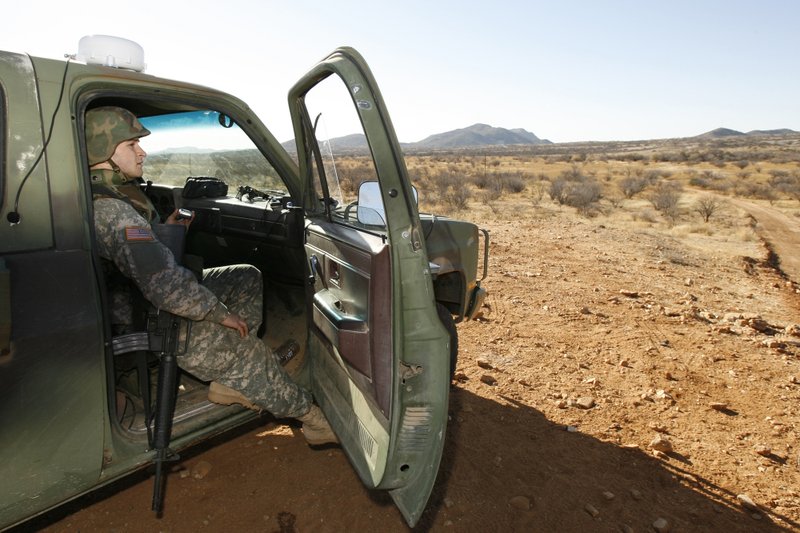
The U.S. will be sending “several thousand” more American troops to the southern border to provide additional support to Homeland Security, Acting Defense Secretary Pat Shanahan said Tuesday, providing for the first time new estimates for the next phase of the military aid. He said the troops will mainly be used to install additional wire barriers and provide a large new system of mobile surveillance and monitoring of the border area. Plans call for about 150 more miles of concertina wire placed mainly in the gaps between ports of entry. It’s still not clear how many of the roughly 2,400 active duty forces currently working the border mission will go home and not be replaced, but the Pentagon estimates that the total number of forces deployed there over the coming months will exceed 4,000. The Department of Homeland Security, said Shanahan “has asked us to support them in additional concertina wire and then expanded surveillance capability, and we’ve responded with, you know, here how many people it would take and this is the timing and mix of the people to support that.” The Pentagon has approved an extended U.S. deployment to the border through the end of September. As of Tuesday, officials were still working out exactly how many forces would be deployed and what units should be tapped. Shanahan’s comments came as members of the House Armed Services Committee grilled top defense and military leaders about the border mission, demanding details on its impact on military readiness and whether needed training and other jobs were not being done as a result. “What impact does it have to readiness to send several thousand troops down to the Southern border? It interrupts their training. It interrupts their dwell time,” said Rep. Adam Smith (Democrat-Washington) and chairman of the committee. Vice Adm. Mike Gilday, the director of operations for the Joint Staff, told the panel that he does not believe military readiness has been significantly affected. He said some units have missed training opportunities because of the deployment and others have seen less time at home between deployments than the military likes to provide. But he said there is an effort to rotate service members in and out of the mission every six to eight weeks in order to minimize any impact. He also said that the estimated cost of deploying the active duty personnel through the end of this month is $132 million, and the cost of deploying about 2,300 National Guard members to the border last year was $103 million and is estimated at $308 million for this year. Lawmakers said they’ve been told that troops remained at the border after they had finished their missions and had nothing to do, and that many were spending time playing sports or watching videos. Gilday acknowledged some trial and errors as the mission progressed. “We have tried really hard not to waste people’s time down to the border,” he said. “There have been occasions when we haven’t gotten it right with respect to numbers. And maybe we had excess capacity, but we have brought those people back when we realized that we have made a mistake.” Officials said that the majority of the troops going to the border now will be combat engineers and support forces who will install the additional barriers. The expectation is that they will complete the job in a few months and then be able to go home. Many of the others will start the expanded surveillance mission which will last at least through September. The U.S. forces will use Customs and Border Protection vehicles that have mounted surveillance cameras and they will monitor the border. Troops are not allowed to do any law enforcement duties, so they can’t detain migrants crossing the border. Instead, when they see suspicious activity they will alert CBP agents, who would then deal with any migrants involved. Republished with permission from the Associated Press.
Alabama delegation committee assignments for the 116th Congress
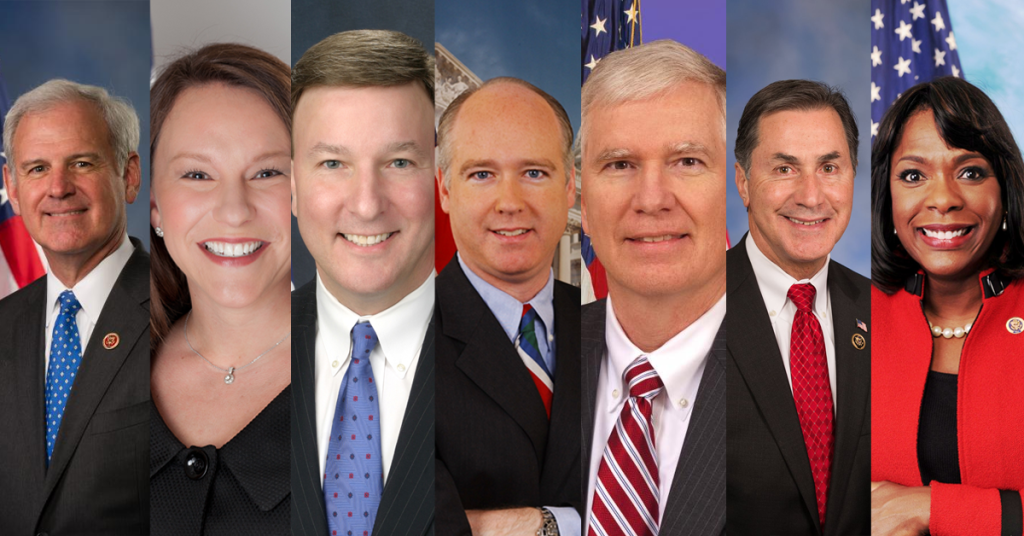
With the 116th Congress officially underway, members of the Alabama delegation have been announcing their committee and subcommittee assignments for the next two years. Here’s where the delegation will be serving: 1st District U.S. Rep. Bradley Byrne: House Armed Services Committee: Subcommittee assignments will be announced in the coming weeks. “Given Alabama’s many military installations and national defense programs, I am honored to again serve on the Armed Services Committee,” said Byrne. “Whether it is fighting for the Austal shipyard in Mobile or supporting missile defense programs critical to Redstone Arsenal in Huntsville, I look forward to continuing to be a steadfast advocate for a stronger, more capable U.S. military.” House Education and Labor Committee: Subcommittee assignments will be announced in the coming weeks. “The Education and Labor Committee is really all about supporting the American workforce and Alabama’s economy. In order to have a strong economy, we need an education system that builds a skilled workforce and keeps decision making authority at the local and state level,” Byrne explained. “We also need labor policies that benefit workers, not Big Labor bosses or Washington bureaucrats. On the Education and Labor Committee, I will fight every day for Alabama’s students, teachers, and workers.” 2nd District U.S. Rep. Martha Roby: House Appropriations Committee: Subcommittee on State and Foreign Operations, the Subcommittee on Military Construction and Veterans Affairs, and the Subcommittee on Commerce, Justice, and Science. “I am honored to have the opportunity to continue serving on the House Appropriations Committee during the 116th Congress,” said Roby. “These subcommittee assignments give me a seat at the table to advocate for the conservative funding priorities that are important to the people I represent in Alabama’s Second District, including properly supporting our national security interests at home and abroad, ensuring adequate resources and care for our nation’s veterans, and more.” House Judiciary Committee: will serve as the Ranking Member on the Subcommittee on Courts, Intellectual Property, and the Internet. “I am humbled to have been selected to serve as the top Republican on the Judiciary Subcommittee on Courts, Intellectual Property, and the Internet,” Roby added. “As an attorney, I’m excited to work closely on the important issues this subcommittee touches and to be a stronger voice in this leadership capacity on behalf of my district and state.” 3rd District U.S. Rep. Mike Rogers: House Agriculture Committee House Armed Services Committee House Homeland Security Committee
Kay Ivey: Workforce development is ‘very clear need’ that requires attention

Alabama Gov. Kay Ivey told economic developers today that the state’s success in growing jobs and capital investment is the result of teamwork and more of it will be required to address the workforce challenges ahead. “Alabama has hit record low unemployment rates and also we have more people working in Alabama than ever before,” Ivey told those gathered at the Economic Development Association of Alabama’s Winter 2019 Conference. “And jobs, y’all, are continuing to pour into our state. So, as we seek out companies to locate and expand in our great state, there remains a very clear need that we’ve got to prepare our men and women for the jobs of today and the jobs of tomorrow.” Ivey said it is an area that requires attention. “That’s why enhancing workforce development is vitally important and it’s a priority of mine moving forward,” she said. “This will be led by Nick Moore and this office will focus solely on aligning our workforce development funding streams with our workforce development programs for Alabamians all across our state,” she said. “This entity within the governor’s office is working to increase our labor force participation to surpass our goal to better equip some 500,000 of our workers with a post-secondary degree, certificate or credential.” It’s a needed element in a larger strategic plan to enhance workforce development that educators, leaders of business and industry and communities put together, Ivey said. “I know that together we can get that done,” she said. “Alabama’s workforce efforts will be known worldwide and they will be effective. And, to put it simply, they will be known as the best.” Ivey used her keynote address as a call to action. “So today, my friends at EDAA, I charge each of you, each and every one of you, to show the world that Alabama’s workforce is a force to be reckoned with and that Alabama is the place to do business,” she said. “Let’s show companies that the ‘Made in Alabama’ team is one to join because with it, our future will be filled with growth and opportunity for everyone.” Ivey’s address wasn’t all about the challenges. She did take time to celebrate the successes. “Throughout my time as governor, we have proven time and time again that success is best found when we work together,” she said. During her time as governor, Ivey said the state has seen $8 billion in new investment, 16,000 new jobs and several coveted economic development projects announced, along with strides to improve the state’s education system. “Working together, we are achieving these results,” she said. “But what matters most to Alabamians is what are the next steps. How are we going to build on the success that we’ve had?” Ivey said she and Commerce Secretary Greg Canfield recently met with seven top U.S. site consultants. “They made it very clear to me that they appreciate the teamwork that they see in our state,” she said. “They further said that they didn’t find that degree of teamwork in many other states.” That approach has led to a revamping of the state’s incentives program that is paying off, she said. One area seeing a large payoff is the way the state brings economic development to rural areas. “I’ve often said that we’re only truly successful when we are all successful together,” Ivey said. “That means also striving for economic growth is important for all 67 counties.” The incentives created by the Jobs Act focus on targeted counties allowing companies to claim more tax breaks for establishing operations in those counties. “Since I became governor, the targeted counties saw a success rate of over 70 percent by landing 10 economic development projects. This means that nearly $1 billion and some 1,200 new jobs have been created in rural Alabama,” Ivey said. “The targeted county approach certainly has merit,” she added. “It works, and we need to take advantage of that and continue to be innovative and work hard to be sure that we have economic development of our rural areas as well. Rural economic development is absolutely a top priority of mine. When there is gain in rural Alabama, it’s a gain for the entire state.” Reprinted with permission from Alabama Newscenter
Steve Flowers: Infrastructure program should be priority 1
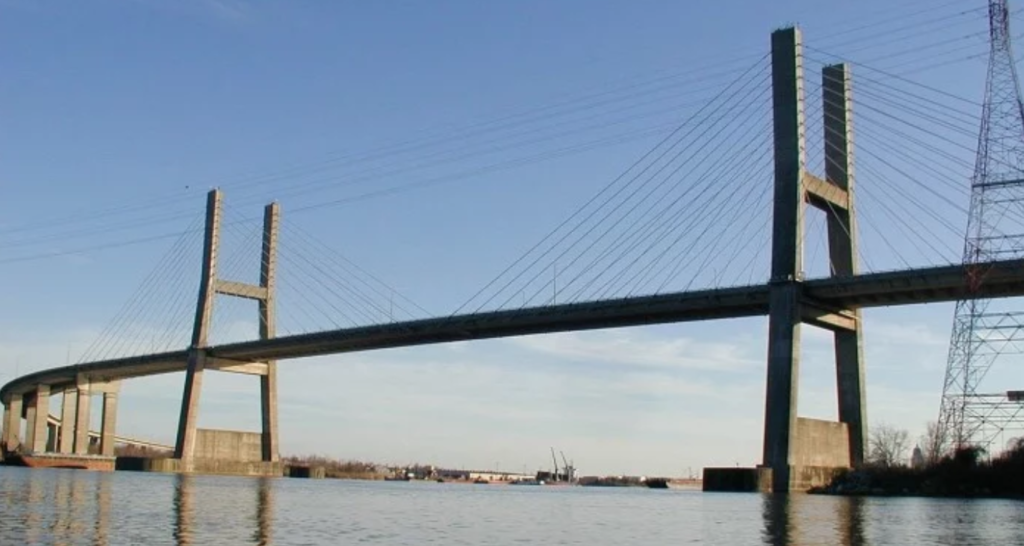
As the new quadrennium crests in Alabama government, everybody looks toward a new beginning. There is a new fresh four years ahead for the newly elected leaders. They are overwhelmingly Republican. The Governor is Republican and all of the accompanying constitutional officeholders are members of the GOP. More importantly, the State Legislature, both the House and the Senate are Republicans. In fact, over two-thirds of each chamber are Republican. It is a supermajority. The cards are lining up for these leaders to leave a legacy. That legacy could and should be to rebuild Alabama’s roads and bridges. The optimum word is infrastructure. Folks know that it is time. Alabamians see the needs everyday as they drive to work. The staunchest and most conservative people I know throughout the state tell me, adamantly, that they are flat ready to pay more in gasoline tax to fix their roads. The hue and cry arises from rural folks whose roads are impassable from large potholes. Birmingham’s roads are deplorable. Suburban commuters who have to travel highway 280 in Jefferson and Shelby counties are exasperated. Indeed, commuters in the state from all of our largest metro areas are acutely aware of the horrendous log jams they experience every day. The country folks have figured out that it would be cheaper to pay more for gasoline than it is to pay for having their frontends aligned and tires balanced every few weeks from hitting holes in their roads. A good many of the rural bridges in the state have been condemned and are hazardous for heavy trucks and school buses to travel. The Alabama Department of Transportation (ALDOT) has an unprecedented number of unmet repairs and expansions. A spokesman for ALDOT says there are $10 billion of identified capacity projects and needs. Some big-ticket items on the ALDOT list include a new Interstate 10 and bridge and Bayway widening project in Mobile and Baldwin Counties, the completion of the Birmingham northern beltline, the Montgomery Outer Loop, and additional lanes along the interstate in Huntsville. Speaking of Huntsville, they are poised to be one of the fastest growing areas of the entire nation over the next decade. It is imperative that their infrastructure needs are met to keep pace with their expansion. Toyota-Mazda is set to build their largest plant in the Huntsville-Madison metro area. They were assured that roads would be built to accommodate their location and expansion. Alabama, like most states, relies on gasoline taxes to pay for their roads and bridges. It has been 26 years since our gas tax was raised. The last time that Alabama had an increase in our fuel tax was 1992. That state increase was just ahead of the last federal gas tax increase enacted by Congress. President Donald Trump pledged while running and again after his election in 2016 to advance a massive infrastructure program, the largest in U.S. history. He signaled support for increasing the federal gasoline tax to pay for this American infrastructure initiative. This rebuilding of America infrastructure is one of the bipartisan issues that both Democrats and Republicans are espousing. It is a certainty that states will have to come up with matching dollars to get the federal money. Indeed, 28 states have raised or reformed their taxes since 2013 in anticipation of a federal tax increase which they will have to match. This is the one issue in which both parties in Washington can come to an agreement. We in Alabama are not ahead of the curve, but we are poised to maybe come to grips with this issue. A gasoline tax increase to fund infrastructure needs will be the paramount issue of 2019. My guess is that it will happen this year. Governor Kay Ivey, shortly after taking office, said she “supported an increase in the state gasoline tax to fix state roadways.” House Speaker, Mac McCutcheon, of Huntsville, has trumpeted the need for a road program for years. Most of his Republican colleagues in the House ran for reelection without having to take a vow that they would not raise any new revenue or taxes. The stars are aligned for Alabama to act. The time is now. The timing is good. We will probably never have the Chairman of the United States Senate Appropriations Committee as our Senior Senator ever again. Senator Richard Shelby will make sure that we get our fair share of the federal money. However, we must have the basic revenue to draw down the federal funds. See you next week. ••• Steve Flowers is Alabama’s leading political columnist. His weekly column appears in more than60 Alabama newspapers. He served 16 years in the state legislature. Steve may be reached at www.steveflowers.us.
