
John Merrill appoints 10 members to Probate Judges’ Advisory Council
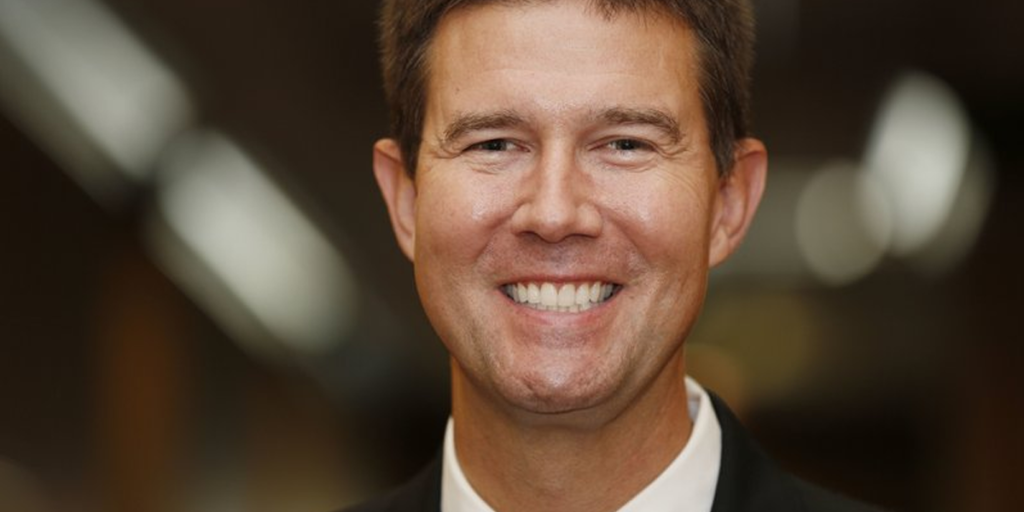
On Thursday, Alabama Secretary of State John Merrill announced 10 newly appointed members of the Probate Judges’ Advisory Council. First formed in 2015, the council works with Merrill to ensure elections and corporate filings continue their path of modernization while still preserving the security and integrity of those systems by administering them appropriately, accurately, and efficiently and as effectively as possible at the county and state levels. The advisory council is a bi-partisan collection of Probate Judges from counties over the state that advise Merrill and keep him informed about issues that need improvement in the counties and at the state level. Members of the Committee are as follows: Judge James Tatum: Bullock County Judge Daniel Rosser: Colbert County Judge Jimmy Nunn: Dallas County Judge David Money: Henry County Judge Frank Barger: Madison County Judge Laurie Hall: Marengo County Judge Al Harden: Russell County Judge Rob Robertson: Tuscaloosa County Judge Nick Williams: Washington County Judge Brittney Jones-Alexander: Wilcox County
Across the country state lawmakers place their bets on sports gambling

Kentucky’s public employee pension system, $39 billion in the red, is among the worst-funded retirement plans in the country and has vexed lawmakers for years as they sought a solution. Now some lawmakers think they’ve found at least a partial fix: sports gambling. Several bills introduced this year would legalize it in the state, a step made possible by a U.S. Supreme Court decision last May that ended Nevada’s monopoly. A portion of the money the state would take in would go toward plugging the gap in the underfunded pension system. It won’t solve it, but each little bit helps, said state Rep. Adam Koenig, a Republican whose sports gambling bill passed a key committee earlier this week. “I think there’s a lot of folks, particularly Democrats, who campaigned on finding revenue,” he said. Kentucky is one of at least 22 states where lawmakers this year are considering legislation to legalize sports gambling. Seven states joined Nevada and legalized it last year after the Supreme Court’s decision. Lawmakers say they are eager to ensure their state can regulate a practice that has long operated in the shadows and to get a slice of the action, even if the expected tax revenue is relatively modest. An Associated Press review of all sports gambling bills introduced this year — more than 100 so far — found high interest among lawmakers, but also many questions about how legalized sports betting would be handled. Casino companies, sports leagues, fantasy sports companies and others are lobbying lawmakers in the hopes of getting the legislation tailored to their liking. Among the details being debated: How will sports gambling be regulated and taxed? Where will sports gamblers be allowed to place their bets? Should betting be allowed on a state’s college teams? And how should the state spend its share of the tax money? Tapping another source of state revenue has been a key motivator for many lawmakers and governors who are supporting legalization. On Wednesday, Illinois Gov. J.B. Pritzker, a Democrat, proposed a budget that relies on legalizing sports betting and marijuana to help pay down tens of billions of dollars in pension debt. Connecticut Democratic Gov. Ned Lamont and New Hampshire GOP Gov. Chris Sununu, made similar calls for sports betting legalization in their recent budget addresses. That optimism will likely be tempered by reality: Sportsbooks have profit margins around 5 percent, and the state’s cut is usually a sliver of that. In states that have projections on how much legalized sports betting would bring in, even the most optimistic numbers amount to a fraction of 1 percent of their state budgets. An analysis of the Kentucky bill found that taxes on sports betting — set at 10.25 to 14.25 percent of the sportsbooks’ winnings — could bring the state $20 million annually in revenue. The estimate climbs to $48 million if neighboring states don’t follow suit, which isn’t likely. West Virginia legalized sports betting last year, and it’s being considered in every other state that borders Kentucky. The modest revenue projections— less than 1 percent of the state’s overall budget — and caution over legalizing another form of gambling have raised concern among some lawmakers and interest groups, who say the bill’s passage is not assured. State Rep. Chris Fugate, a Republican who represents an eastern Kentucky district, is one of several lawmakers who question whether legalizing sports betting is worth it because of the potential social cost. “We are known for being in the top 10 of opioid addiction,” he said. “And now the state, or some people in the state, wants to put more vice out there to make our kids not be provided for even more.” Kent Ostrander, executive director of The Family Foundation, a socially conservative Kentucky group, has been pushing against legalization. “I think there is a moral component to it, but our argument is economic,” he said. “The state should cause families to thrive, not prey on them for revenue and give licenses to others, to an elite group of others, to prey on.” Other lawmakers, in Kentucky and elsewhere, say betting on sports was already happening under the radar well before the Supreme Court opened the door to legalization in the states. Why not tax it, regulate it and reap some of the money for education, infrastructure, pensions or even to treat addiction? “It’s already occurring in North Dakota,” state Rep. Michael Howe said Wednesday as the House passed a sports betting legalization bill. “Let’s keep that money in North Dakota for charities, addiction services and tax revenue.” Whether to allow betting on college sports is among the provisions lawmakers in several states are considering. All the states that have so far legalized sports betting allow it, although some have restrictions. Delaware and New Jersey, for example, prohibit betting on games that involve in-state colleges. The fear of college athletes cheating is rooted in a history of scandals dating to the 1950s, including point-shaving cases in the 1980s and early 1990s. A Massachusetts bill that has the support of the governor would ban betting on college sports, mirroring a current state law on fantasy sports. In New Hampshire, state Rep. Timothy Lang, a Republican sponsoring a bill to legalize sports betting, included a provision barring bets on games involving in-state colleges. He said he went to a University of New Hampshire basketball game recently and easily met players for the Wildcats, raising concerns about potential influence from sports gamblers. “It’s not like going to Duke or any of these big colleges,” he said. “In New Hampshire, you have pretty good access to these players.” Republished with permission from the Associated Press.
Bill Hightower ‘praying for God’s guidance’ in potential congressional run

Now that sitting 1st District U.S. Rep. Bradley Byrne has announced his candidacy for the U.S. Senate, there’s chatter over who will run for his seat in the U.S. House of Representatives. Among those considering a congressional run is Mobile-Republican, former State Senator Bill Hightower. “Since Congressman Byrne’s U.S. Senate campaign announcement, I have been honored by the many calls I have received urging me to launch a campaign for Congress in Alabama’s 1st District. I believe public service is a high calling and I do not take these encouragements lightly,” Hightower said in a statement on Thursday. “Over the next few weeks, I will be discussing the potential of a congressional campaign with my family and close friends, while praying for God’s guidance as we make a final decision.” About Hightower During his time in Montgomery, Hightower ranked among the most conservative state senators in Alabama. He pushed for smaller government and lower taxes – even sponsoring legislation to change Alabama to a flat tax. Mostly recently he vied for the Republican nomination for Governor, which he ultimately lost to Kay Ivey. Hightower graduated from the University of South Alabama, received an M.B.A. from Vanderbilt University, and has worked with with several Fortune 100 corporations including Emerson Electric, AlliedSignal, Eaton
Bradley Byrne: Everything you need to know about the 2020 Senate candidate
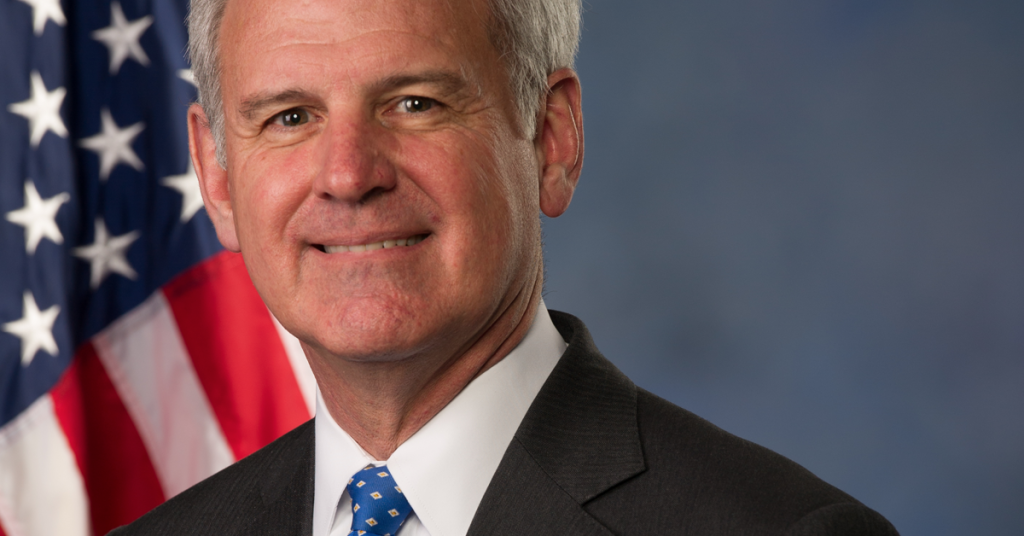
Republican Alabama 1st District U.S.Rep. Bradley Byrne announced Wednesday he will challenge Democratic Sen. Doug Jones in the 2020 election in an attempt to take back the Senate seat for the GOP in the overwhelmingly red state. Here’s everything you need to know about Byrne: Key facts Current position: Congressman representing Alabama’s 1st Congressional District since 2014 Age: 64 Born: Mobile, Ala. Undergraduate: Duke University Graduate: University of Alabama (JD) Date candidacy announced: February 20, 2019 % of votes in line with Trump, via FiveThirtyEight: 96.3% Previous prominent roles: Alabama State Senate; Chancellor of the Alabama Community College System; Member of the Alabama Board of Education Key issues Immigration: Supports President Donald Trump’s efforts to build a border wall with Mexico. Believes “we must deploy the national guard, and use any means necessary to stop the rampant caravans of illegals that are heading to the Mexican border.” 2nd Amendment: Pro-guns with a a lifetime “A” rating from the NRA. Health care: Supports repealing Obamacare and “replacing it with a free-market approach that doesn’t put the government between a patient and their doctor.” Education: Pushes for policies that return decision-making authority back to the state and local entities Term limits: Introduced a Constitutional amendment to impose term limits in “an effort to ensure we keep fresh blood in the halls of Congress.” Pro-life/Pro-Choice? Is 100% pro-life. Has worked “tirelessly” to defund abortion organizations like Planned Parenthood. Interesting facts Byrne’s first run for office was in 1994 when he ran for the Alabama State Board of Education as a Democrat. In 1997, he left the Democratic Party and became a Republican. The Mobile Press-Register reported in May 2011 that Byrne was considering running for chief justice of the Alabama Supreme Court in the upcoming 2012 election. “I’ve been encouraged to look at it, and I’m doing that. But I’ve made no decision, and frankly I’m no where near a decision at this point,” Byrne said. Ultimately, he did not enter the race.
Former Secretary of State Condoleezza Rice testifies in fraud trial of Birmingham attorney
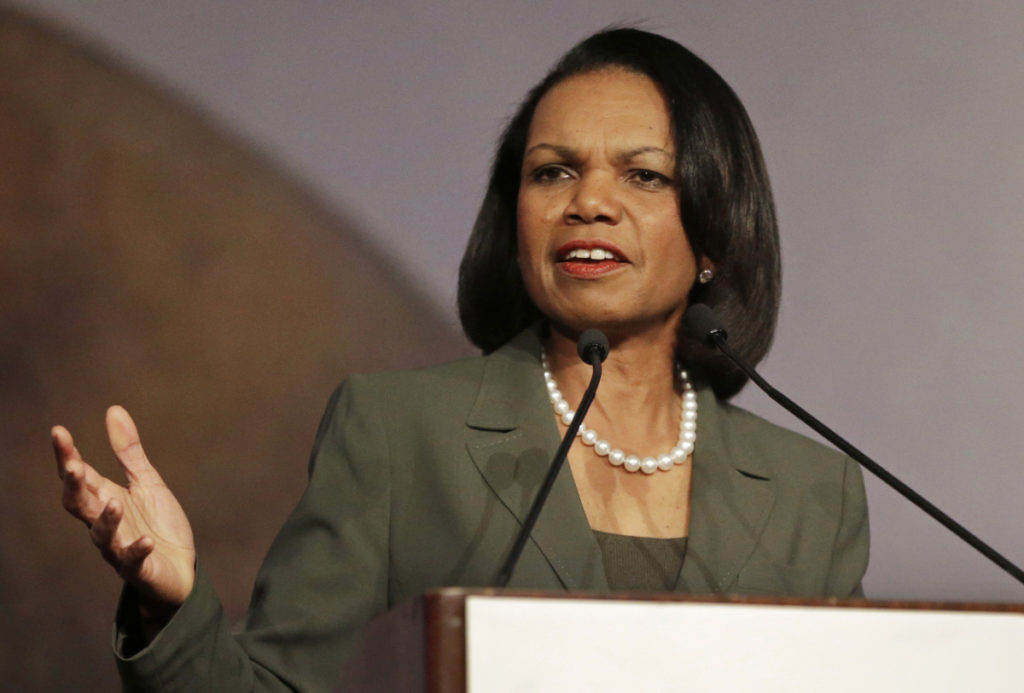
Former Secretary of State Condoleezza Rice told a jury Wednesday that she rejected a suggestion that she serve on the board of a company associated with two men on trial in an investment fraud case. Donald V. Watkins Sr., of Atlanta, and Donald V. Watkins Jr., of Birmingham, each face multiple counts of wire and bank fraud and one count of conspiracy. Rice was the first witness called in the trial — in which each man is representing himself. Prosecutors said Watkins Sr. told investors that Rice, an Alabama native, was considering investing in one of his companies, known as Masada. Al.com reports Rice met Watkins Sr. through friends who said she should look into Masada. Rice said she met twice in person and had two phone calls with him. But when he suggested she serve on Masada’s board of directors, Rice said she wasn’t interested. “I told him at that time I was just out of government, and I was looking at a lot of different possibilities,” she said. “I (was) unlikely to join boards.” Watkins Sr. then suggested a strategic advising position, Rice said. At one point he sent out a press release announcing her involvement. Rice said she emailed Watkins Sr. and told him she was not in a position to accept the role. “I couldn’t accept, and I couldn’t most certainly do a press release at that time,” she said. Rice said she hadn’t showed the proposed agreement to her lawyer or financial adviser, and liked to take ample time to agree to business ventures. “I was just uncomfortable with the fact that this seemed so urgent,” she said. “I didn’t think I could meet Mr. Watkins’ time-frame.” She also said she wanted no role when Watkins began talking about a venture involving purchase of the NFL’s Los Angeles Rams. “Please do not associate it with me in any way,” Rice told him via email. Emails displayed in court show in March 2009, Watkins Sr. wrote to others about job assignments he had planned for Rice. Rice said she has no recollection of ever being told about the assignments and she never authorized him to share her name and possible involvement in talks with others. Watkins Sr. asked Rice about their meeting at a Palo Alto, California restaurant. Watkins Sr. asked about the length of the meeting and if it lasted several hours. Rice replied, “Mr. Watkins I didn’t have two hours to spend with people at that time. Mr. Watkins, you were clearly recruiting me.” After June of that year, Rice said she never talked to Watkins Sr. about Masada again. Rice said she never met Watkins Jr. or directly communicated with him. Republished with permission from the Associated Press.
Democrats prepare resolution against Donald Trump’s declaration
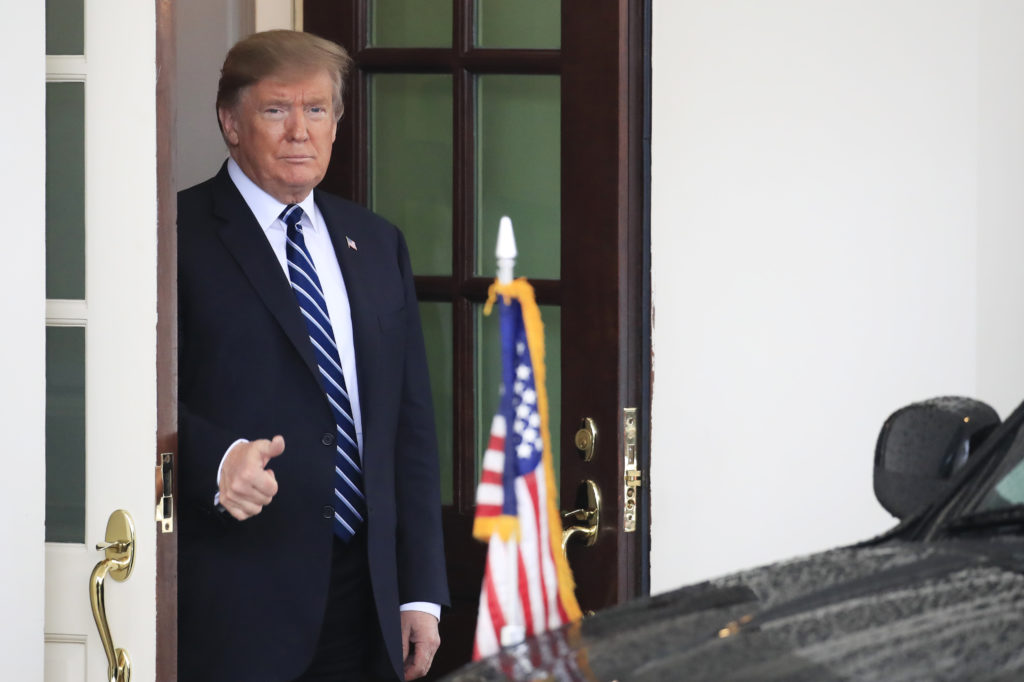
House Democrats will file a resolution Friday aimed at blocking the national emergency declaration that President Donald Trump has issued to help finance his wall along the Southwest border, teeing up a clash over billions of dollars, immigration policy and the Constitution’s separation of powers. Though the effort seems almost certain to ultimately fall short — perhaps to a Trump veto — the votes will let Democrats take a defiant stance against Trump that is sure to please liberal voters. They will also put some Republicans from swing districts and states in a difficult spot. Formally introducing the measure sets up a vote by the full House likely by mid-March, perhaps as soon as next week, because of a timeline spelled out by law. Initial passage by the Democratic-run House seems assured. The measure would then move to the Republican-controlled Senate, where there may be enough GOP defections for approval. The law that spells out the rules for emergency declarations seems to require the Senate to address the issue too, but there’s never been a congressional effort to block one and some procedural uncertainties remain. House Speaker Nancy Pelosi, D-Calif., seemed to predict approval, telling colleagues in a letter that her chamber will “move swiftly” to pass it and “the resolution will be referred to the Senate and then sent to the President’s desk.” Should the House and Senate initially approve the measure, Congress seems unlikely to muster the two-thirds majorities in each chamber that would be needed later to override a certain Trump veto. Even so, Republican senators facing tough 2020 re-election fights in competitive states like Arizona, Colorado and North Carolina would have to take stances that could risk dividing the GOP’s pro-Trump and more moderate voters. Moderate Sen. Susan Collins, R-Maine, said Wednesday she would back a resolution blocking the declaration, making her the first Republican to publicly state her support for the effort to thwart the emergency. With Republicans holding a 53-47 majority, three more GOP senators would need to vote with Democrats for the resolution to win initial approval. The votes could also cause discomfort for other Republicans who’ve opposed the declaration. Many have expressed concerns that Trump’s declaration sets a precedent for future Democratic presidents to declare emergencies to help their own favored issues, like global warming or gun control. The battle is over an emergency declaration Trump has issued to access billions of dollars beyond what Congress has authorized to start erecting border barriers. Building the wall was the most visible trademark of his presidential campaign. Congress approved a vast spending bill last week providing nearly $1.4 billion to build 55 miles of border barriers in Texas’ Rio Grande Valley while preventing a renewed government shutdown. That measure represented a rejection of Trump’s demand for $5.7 billion to construct more than 200 miles. Besides signing the bill, Trump also declared a national emergency and used other authorities that he says gives him access to an additional $6.6 billion for wall building. That money would be transferred from a federal asset forfeiture fund, Defense Department anti-drug efforts and a military construction fund. Federal officials have yet to identify specifically which projects would be affected. Pelosi and Rep. Joaquin Castro, D-Texas, circulated separate letters Wednesday to lawmakers seeking co-sponsors to his one-sentence resolution. A Castro aide said there were already 102 co-sponsors, all Democrats. Both letters targeted Friday for the measure’s introduction. While Congress is in recess this week, the House has a brief “pro forma” session Friday for bill introductions but no votes. Castro’s measure says Trump’s emergency declaration “is hereby terminated.” He chairs the 38-member Congressional Hispanic Caucus. “The President’s decision to go outside the bounds of the law to try to get what he failed to achieve in the constitutional legislative process violates the Constitution and must be terminated,” Pelosi wrote. Pelosi and Senate Minority Leader Chuck Schumer, D-N.Y., said in a joint statement last week that lawmakers will use “every remedy available” to defend Congress’ powers, including in the courts. Democratic aides said Wednesday that leaders were still deciding exactly what legal action to take, and when. Outside activists said they understood from conversations with congressional staff that Democrats were likely to file their own lawsuit, rather than simply joining other actions that 16 state attorneys general and liberal, environmental and other organizations have commenced separately. It remained unclear whether Democrats would wait for congressional action to play out before going to the courts. Speaking Tuesday about the attorneys general suit, Trump said he expected to do “very well” in the case and said he had an “absolute right” to make the declaration. Democrats and some Republicans say there is no emergency at the border. They say Trump is improperly declaring one to work around Congress’ rejection of the higher amounts. Once a resolution of disapproval is introduced, the national emergency law says it must be assigned to a committee, which has 15 calendar days to send it to the full chamber. The House parliamentarian has assigned Castro’s measure to the House Transportation and Infrastructure Committee. That chamber then has three calendar days to vote on it. The timing could be shortened, which is why a vote could occur more quickly. The same procedure is then repeated in the second chamber. The law requires those timetables unless either chamber votes to do otherwise. If McConnell tries using that provision to delay the vote on the resolution, the vote on slowing the measure will become the key showdown. A spokesman for McConnell declined to comment on what the leader will do. Republished with permission from the Associated Press.
Daniel Sutter: Two paths forward for healthcare

Numerous prominent Democrats now support Medicare for All, the most recent proposal for a single-payer healthcare system. A recent Trump Administration report, Reforming America’s Healthcare System Through Choice and Competition, offers a different path forward, detailing the numerous ways government restricts competition and increases costs. Medicare for All suggests that we would be turning away from markets and private insurance to government healthcare. In truth, government rules have dominated the industry for over fifty years. A handful of economists have argued for more competition. These arguments have been largely ignored. Until now. Market proponent and economist John Goodman describes the new report as “astonishingly bold,” and “the first time any administration has explicitly acknowledged” government as the source of our most serious problems in healthcare. Competition for profits in markets controls costs. Let doctors and hospitals compete and we can see who offers patients the best service for the best price. Yet we do not truly use markets for healthcare. For instance, doctors rarely quote prices for treatments or procedures ahead of time. People seem to fear that profitable medicine must involve cutting costs and offering low quality care. Yet luxury thrives under competition. Luxury hotels succeed because they deliver high quality, albeit costly, service. Examples like the Mayo Clinic demonstrate that reputations for excellence in medicine can be maintained. Concierge doctors provide high quality care for paying customers. Reforming America’s Healthcare System’s list of how government inhibits competition is too long to thoroughly examine. I will consider some highlights. Scope of practice laws often prevent medical professionals like physician assistants, advanced practice nurses, and pharmacists from offering services consistent with their training. These professionals can competently diagnose many routine conditions or prescribe standard drugs but are restricted by law. A Mercatus Center study estimated that eliminating state scope of practice laws would save over $800 million annually. Such restrictions particularly hurt rural areas facing a shortage of physicians. Certificate of Need laws require government-appointed boards to approve new or expanded healthcare facilities. Alabama’s law covers hospitals, nursing homes, and out-patient surgery centers, among others. Executives from hospitals and clinics often staff these boards, letting existing providers deny entry to would-be challengers. This is a dubious idea. Sears would have loved to keep Walmart and Amazon out of retail. Telemedicine promises considerable cost savings. Smart phones can already transmit a significant amount of information to a medical professional. The barriers to telemedicine today are primarily regulatory. And the benefits extend beyond dollars: patients with limited mobility can avoid painful trips to a doctor’s office. America arguably needs more doctors. We have fewer doctors per capita than most other developed nations despite spending a larger percentage of our GDP on healthcare. Medical doctors must be smart and spend years in intensive training, so the supply will always be limited. But the restrictions are artificial, not natural. Medical organizations run by physicians – who benefit from restricted supply – determine the number of slots in America’s medical schools. The report proposes redirecting Federal medical education dollars to gradually increase enrollment in U.S. medical schools. Simplifying the process for approving foreign-trained doctors to practice in the U.S. offers more immediate relief. Residency and licensure burdens could be waived for doctors completing foreign medical training judged comparable to American programs. The alternative to markets and competition is governance by experts. State Certificate of Need laws resulted from one such Federal planning effort in the 1970s. Government experts would avoid investments in unneeded hospitals and facilities to help control costs. Yet the healthcare costs have outpaced inflation since the 1970s. Experts never seem to outperform competition in controlling cost. Government control and markets provide alternative ways to organize our economy. We rely on markets to supply us with food, which is as much a necessity as medical care, with ever-declining prices and an incredible array of options as a result. Perhaps we should give a healthcare market a chance before turning to Medicare for All. ••• Daniel Sutter is the Charles G. Koch Professor of Economics with the Manuel H. Johnson Center for Political Economy at Troy University and host of Econversations on TrojanVision. The opinions expressed in this column are the author’s and do not necessarily reflect the views of Troy University.
