
Five things you need to know about Alabama’s gas tax increase proposal
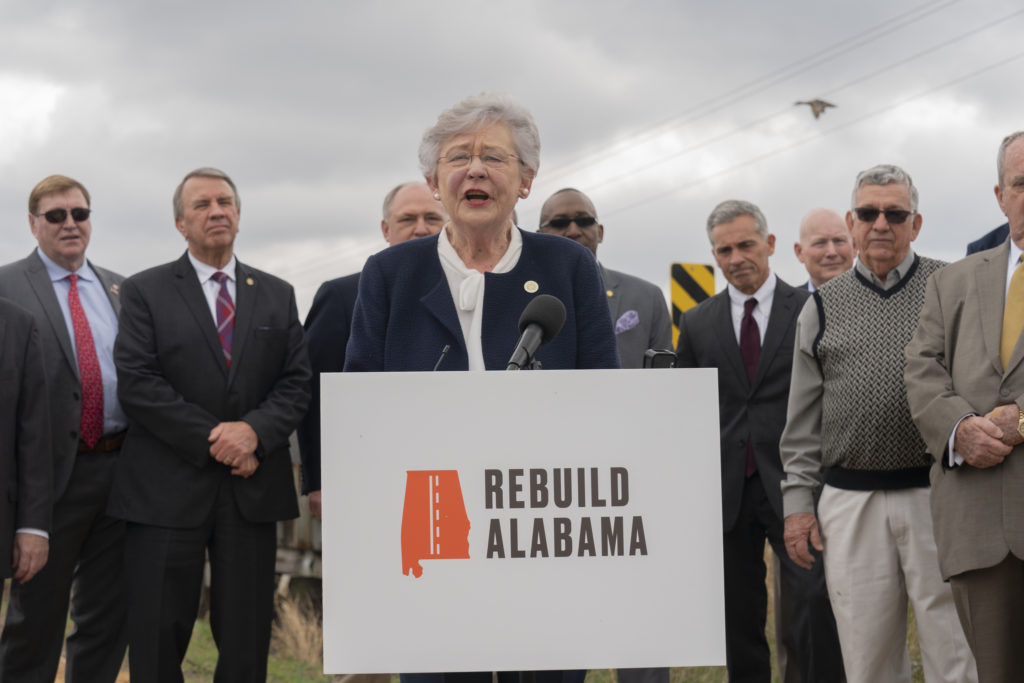
Last week, Alabama Gov. Kay Ivey announced her Rebuild Alabama Infrastructure Plan that proposes raising the state’s gas tax 10-cents to pay for infrastructure improvements. Here are the top 5 things you need to know about the proposed tax increase: Current gas tax rate: Alabama’s current state gas tax is 18 cents per gallon. Proposed gas tax rate: Ivey’s proposal includes a plan that increases a total of 10 cents over the course of three years, as follows: up 6 cents effective October 1, 2019, up another 2 cents, effective October 1, 2020, and up another 2 cents, effective October 1, 2021. Last time the gas tax increased: 1992. Since then there have been several proposals to increase the gas tax, but they’ve yet to pass the State Legislature. Number of votes needed to pass the tax in the House: Should Ivey call a special session on the gas tax, a simple majority will be needed to pass the proposal. With 105 members of the State House of Representatives, just 53 members need vote in support of it. Total cost of the proposal to the average driver: $55 a year, or $4.58 a month. That’s according to the Alabama Transportation Institute based on 12,000 annual miles and 22MPG.
Hurry back, John. You’re the reason I visit AL.com
You probably saw it yourself, but if you didn’t John Archibald is taking a book sabbatical from AL.com. That’s all around bad news bears for everyone. If you’re one of the people like me who love his writing though frequently disagree with him or his takeaways (he gave our section of readership a shout out in his goodbye note) you’ll miss him because why Kyle Whitmire is good he’s not Archibald good and may never be. His bias isn’t as frequently backed up as facts as Johns and while john dislikes or hates the way the game is played it seems Kyle just hates everyone on the field and many of the spectators. John talks to us. Many other commentators talk down to us. A book from Archibald? That will undoubtedly make good reading and I will be on the front lines to preorder it if only to curse and provide commentary every page. Good luck, John. Al.com just lost more than half my clicks which were to see what you were writing about.
House Judiciary panel launches sweeping Donald Trump probe
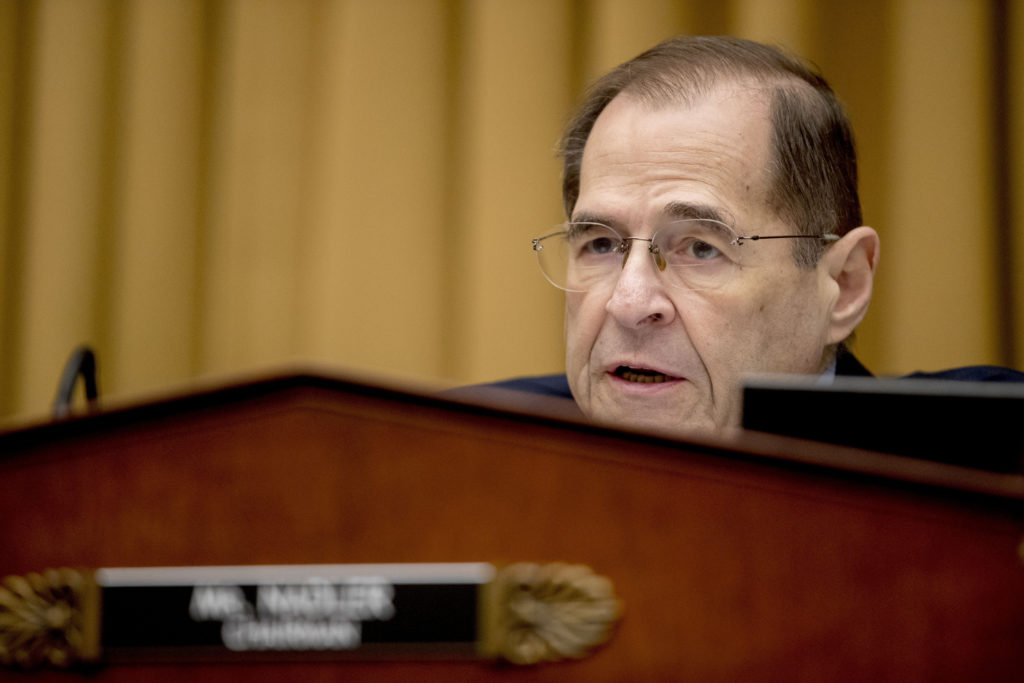
The House Judiciary Committee is launching a sweeping new probe of President Donald Trump, his White House, his campaign and his businesses, sending document requests to 81 people linked to the president and his associates. Committee Chairman Jerrold Nadler said Monday the investigation will be focused on possible obstruction of justice, corruption and abuse of power. The aggressive, broad investigation could set the stage for an impeachment effort, although Democratic leaders have pledged to investigate all avenues and review special counsel Robert Mueller‘s report before trying any drastic action. Nadler said that the document requests , with responses to most due by March 18, are a way to “begin building the public record” and that the committee has the responsibility to investigate and hold public hearings. “Over the last several years, President Trump has evaded accountability for his near-daily attacks on our basic legal, ethical, and constitutional rules and norms,” Nadler said in announcing the beginning of the probe. “Investigating these threats to the rule of law is an obligation of Congress and a core function of the House Judiciary Committee.” Now that Democrats hold a majority in the House, the new probe is a sign that Trump’s legal and political peril is nowhere near over, even as the special counsel’s Russia investigation winds down. The move all but guarantees that potentially damaging allegations will shadow Trump for months to come as Democrats try to keep them in the public eye. Nadler’s announcement comes after the House intelligence panel has already announced a separate probe into Russian interference in the 2016 election and Trump’s foreign financial interests. The House Oversight and Reform Committee has launched multiple investigations. Several other committees are probing related matters as well, and while many might overlap, the committee chairmen and chairwomen say they are working together on the investigations. The list of 81 names touches on all parts of Trump’s life — his businesses, his campaign, the committee that oversaw the transition from campaign to the White House and the White House. There are also people connected to Russian interference in the 2016 campaign, including participants in a meeting at Trump Tower with a Russian lawyer before the election. In a letter to the White House, the committee asks for information surrounding former FBI Director James Comey‘s termination, communications with Justice Department officials, the Trump Tower meeting and multiple other matters. White House Press Secretary Sarah Sanders said Monday the White House had received the letter and that “the counsel’s office and relevant White House officials will review it and respond at the appropriate time.” The list includes two of the president’s children, Donald Trump Jr. and Eric Trump, and many of his current and former close advisers, including Steve Bannon. It also includes his embattled charitable foundation, which he is shutting down after agreeing to a court-supervised process, and officials at the FBI and Justice Department. The committee is expected to use the information to amass information that officials can then comb through, according to a person familiar with the investigation. The person declined to be named to discuss the committee’s internal process. The committee expects some people to produce right away, and others may eventually face subpoenas, the official said. It is unclear how many will eventually be called in for interviews. The announcement of the new investigation follows a bad political week for Trump. He emerged empty-handed from a high-profile summit with North Korea leader Kim Jong Un on denuclearization, and Trump’s former personal attorney, Michael Cohen, in three days of congressional testimony, publicly characterized the president as a “con man” and “cheat.” Nadler previewed the announcement on ABC’s “This Week” on Sunday, contending it’s “very clear” that Trump obstructed justice. He said House Democrats, now in the majority, are simply doing “our job to protect the rule of law” after Republicans during the first two years of Trump’s term were “shielding the president from any proper accountability.” “We’re far from making decisions” about impeachment, he said. In a tweet on Sunday, Trump blasted Mueller’s Russia investigation, calling it a partisan probe unfairly aimed at discrediting his win in the 2016 presidential election. “I am an innocent man being persecuted by some very bad, conflicted & corrupt people in a Witch Hunt that is illegal & should never have been allowed to start – And only because I won the Election!” he wrote. House Minority Leader Kevin McCarthy, R-Calif., on Sunday accused House Democrats of prejudging Trump as part of a query based on partisan politics. “I think Congressman Nadler decided to impeach the president the day the president won the election,” McCarthy said. “Listen to exactly what he said. He talks about impeachment before he even became chairman and then he says, ‘you’ve got to persuade people to get there.’ There’s nothing that the president did wrong.” “Show me where the president did anything to be impeached,” he said. House Speaker Nancy Pelosi, D-Calif., has kept calls for impeachment at bay by insisting that Mueller first must be allowed to finish his work, and present his findings publicly — though it’s unclear whether the White House will allow the full release. Republished with permission from the Associated Press.
J. Pepper Bryars: Why we should avoid an immediate special session for the gas tax
Many Alabamians, including the conservative-leaning Alabama Policy Institute, agree our state needs to increase funding for roads and bridges. And Governor Kay Ivey hasn’t yet ruled out calling the state legislature into a special session to raise the gas tax when lawmakers convene Tuesday in Montgomery. But is fast-tracking a $300 million tax increase a good idea? Probably not. True, calling lawmakers into a special session would free them from having to multitask the dozens of other issues they’d normally be dealing with. State senators, state representatives, and their staffs could focus intently on the legislation, and committees could schedule hearings and votes without worrying about competing events. But maybe we need to respect the normal process instead. Putting aside everything else and concentrating solely on something this big might normally make sense, but moving immediately into a special session this week may cause more problems than it’d solve. First, a third of the members of the legislature are brand new and this puts them in a very tight spot. They lack the benefit of having studied and debated this issue in recent years. Asking them to immediately cut their legislative teeth on a problem this monumental, this controversial, and this complicated may not be entirely fair. Besides, I can hear their opponent’s radio ad playing already: “We sent ol’ Billy Bob to Montgomery and the very first thing he did was vote to raise our taxes.” Ouch. They might not hear that ad until three years from now, but when they do, it sure will sting. Second, a special session may create the unintended appearance of ramming a tax increase through because of the shorter period of time needed and the lower hurdles required for passage. Spending only a handful of days on the issue — between introduction, debate, passage, and enactment — could look bad. It seems rushed, and begs the question: what’s the hurry? And needing fewer votes than normal for passage could also send the wrong message. That’s because in a normal legislative session, a 3/5th vote is needed in each chamber to advance a bill before the state budgets are done. In a special session that vote doesn’t happen. Removing that rather high bar — a safeguard that exists for a reason — begs another question: why not go through the normal process? And third, while a special session may afford lawmakers plenty of time since it’ll be what they’re working on all day long, such a rapid process wouldn’t give regular folks enough time to learn about the details, discuss the pros and cons of the bill in their communities, and let their state senators and state representatives know what they think. A special session could circumvent the normal feedback loop between elected officials and their constituents. That loop is especially important when it comes to tax increases. Lawmakers should also take note of what happened when tax increases were perceived to be rammed through the process recently in other states. Last week, Wyoming’s state legislature adjourned having failed to pass a tax increase that was strongly supported by its leadership in both chambers along with the state’s Republican governor. Why? Aside from the particulars, many voters felt things were moving way too fast. The bill was introduced in the House of Representatives on a Tuesday and passed out on a Friday. It then went to the upper chamber, where it was initially supported by a majority of senators seeking a quick vote until they began feeling the heat from angry constituents. Things fell apart, and their effort failed. And then there’s what happened to the chairman of the transportation committee in the Tennessee House of Representatives, State Rep. Barry “Boss” Doss. He was accused by some of breaking the chamber’s rules in 2017 so he could speed up the process and “ram” through the gas tax increase. Doss ended up drawing a challenger in the Republican Primary and ultimately lost his seat, one of only two GOP incumbents to lose that year. Some believe his parliamentary maneuvers were partly to blame. Alabama stands on the threshold of something big. We have the opportunity to bring real reform to our tax code — ending the practice of siphoning gas tax revenue to fund things unrelated to transportation, increasing the resources needed to improve our state’s roads and bridges, and lowering taxes that could help our poorest neighbors or increase economic activity. And as proposed by the Alabama Policy Institute and others, we can, and should, do all of that without increasing the overall tax burden. But we need to be patient, take our time, listen to others, and build a plan we all can support. Haste makes waste, and considering our state leaders are seeking to raise the gas tax by $300 million every year, waste is the last thing Alabama needs. J. Pepper Bryars is a native of Mobile who lives in Huntsville, is a senior fellow at the Alabama Policy Institute. Follow him on Twitter at @jpepperbryars.
Bradley Byrne: Defending the Second Amendment
This past week, Democrats in Congress again launched an attack on our Constitution and the rights we cherish as Americans. This time, they came after the Second Amendment and our right to bear arms. H.R. 8, the latest Democrat-led gun control bill does absolutely nothing to prevent criminals or violent persons from getting their hands on firearms. What H.R. 8 does do is violate the Constitutional rights of millions of Americans, ignores the mental health crisis behind actions of mass violence, and limits the Constitutional rights of millions of responsible gun owners. I’m a gun owner and hunter myself. I’ve talked to lots of folks from all around Alabama who proudly own guns for sport, work, and protection. Congress should not and cannot limit the rights of the American people in the name of politics. Under the Democrat bill, almost every time a lawful gun owner wants to transfer or sell a gun, he or she will have to go through a government-sanctioned middle-man. Under this bill, no longer could I sell my gun to my cousin or my neighbor in a private transaction. If this bill were to become law, millions of law-abiding gun owners could suddenly be subject to federal prosecution. Of course, we all know that criminals are going to do what they already do: make illegal transfers of firearms. So, this won’t make any difference in cutting down on crime. I have a long track record of supporting commonsense bills to provide Alabamians a way to protect themselves while offering smart background check programs and mental health services to those in need. My grandfather was shot and killed by someone suffering from mental illness. I know the importance of providing important resources for those in need without infringing on the rights guaranteed by our Founding Fathers. The so-called solutions in the Democrat gun control bill do nothing to prevent mass violence. We should not punish law-abiding citizens, instead we should listen to responsible gun owners and work on solutions that protect our Second Amendment rights. I have news for the out-of-touch Democrats: Gun owners of America are watching this debate. They know what H.R. 8 is all about, and they know that this bill is just a sham to chip away at the Second Amendment and our Constitution. Instead of trying to attack the Second Amendment, we should be trying to protect it. During the debate last week, Speaker Pelosi blocked my amendment to strip out this anti-gun legislation and replace it with nationwide concealed carry reciprocity. Instead of trampling on our Constitution, Democrats could have accepted my amendment and allowed a vote on a bill that would have actually made our country safer. Our Founding Fathers enshrined the right to keep and bear arms in our nation’s Constitution. Throughout our history, we have seen the importance of the Second Amendment for people to make a living, to provide for their families, and to protect their life and liberty. It is clear that this bill was nothing more than yet another sham show vote from the Democratic leadership. The gun control bill promises much but delivers very little. I opposed this bill, and I will oppose any bill that goes against the Second Amendment rights of law-abiding Americans. It is my duty as a citizen of the United States and representative of the people of Alabama to defend our Constitution against any effort to roll back the important protections enshrined within it. One thing is for sure: I will always stand up for our Constitution, the Second Amendment, and the rights of law-abiding gun owners in Alabama and around the United States. Bradley Byrne is a member of U.S. Congress representing Alabama’s 1st Congressional District.
Bill Clinton has 2020 advice, but few candidates seeking it
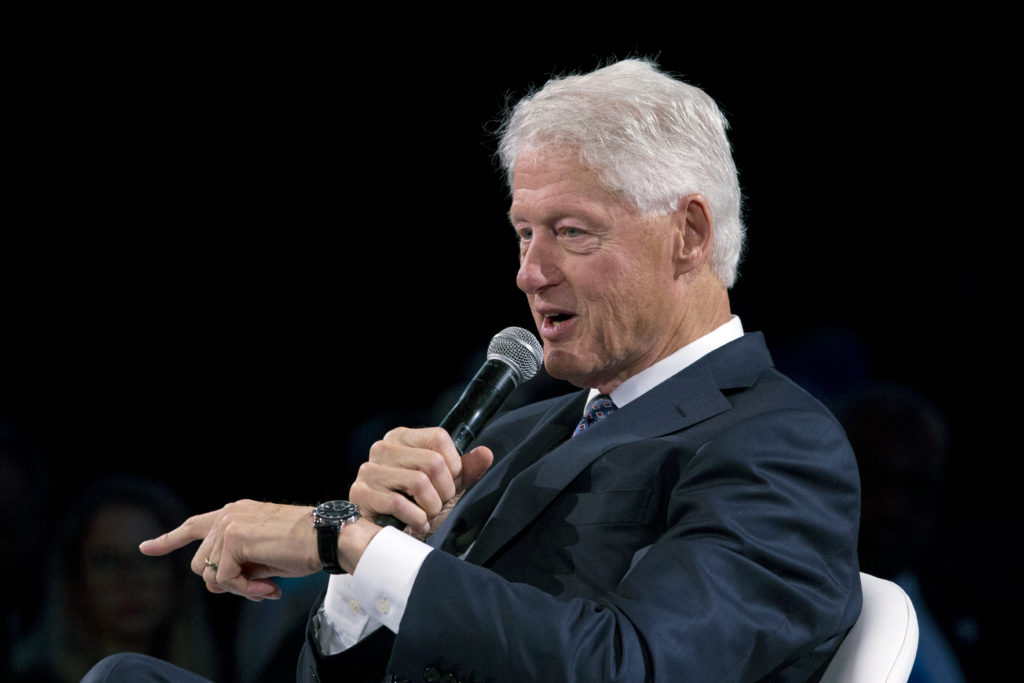
Nearly 20 years after he left the White House, Bill Clinton is still sought after for advice by some Democrats running for president. But the names on his dance card in recent months underscore how much his standing in the party has changed. So far, none of the party’s early front-runners has had a formal meeting with Clinton. Nor have the women who are running in the historically diverse primary field. Instead, Clinton has spoken mostly with male candidates who are considered longshots for the Democratic nomination, including Montana Gov. Steve Bullock, former Housing secretary Julian Castro and former Maryland Rep. John Delaney. Clinton remains one of Democrats’ most successful politicians of the last half-century and one of its strongest messengers on the economy. Yet the party has shifted considerably to the left since his two terms in White House, and his personal baggage — as well as lingering hostilities from his wife Hillary Clinton’s failed 2016 campaign — make him an awkward adviser for some in his party’s next class of presidential hopefuls. Tensions run particularly deep between the Clintons and Vermont Sen. Bernie Sanders, who has launched another bid for the White House. The Clintons blame Sanders for damaging Hillary Clinton during the 2016 primary. And as they assess the 2020 field, the Clintons don’t believe Sanders is capable of beating Trump, according to those who have spoken with them. “I think that at some point bygones can be bygones, but what you can’t get around is the electability question,” said David Brock, a longtime Clinton ally. Neither side tried to mask the tensions in the days since Sanders launched his 2020 campaign. When asked Friday on ABC’s “The View” whether he would seek campaign advice from Hillary Clinton, Sanders said: “I think not.” There was not much warmth between Sanders and Hillary Clinton on Sunday when the two were in Selma, Alabama, to mark the 54th anniversary of the “Bloody Sunday” clash. Bill Clinton has offered advice to a handful of candidates, sometimes meeting them at his New York office or speaking to them by phone. Former Colorado Gov. John Hickenlooper was meeting with Hillary Clinton at the couple’s Chappaqua, New York, home when the former president stopped by and sat in on the rest of the meeting. Castro, the former secretary of Housing and Urban Development, said he spoke with Clinton in January and “got some good advice,” though he wouldn’t elaborate on what they discussed. Others discussed meetings with Clinton on the condition of anonymity in order to speak about the private conversations. Clinton’s friends say he still relishes the political debate and is closely monitoring early developments in the primary. While he doesn’t have much of a relationship with some of the younger White House hopefuls, like Beto O’Rourke, some of his contemporaries are considering running, including former New York Mayor Michael Bloomberg and former Vice President Joe Biden. Neither has had a formal meeting with Clinton about the campaign, but they’ve talked politics with him for years. The 72-year-old former president rarely offers tactical advice about how to structure a campaign, according to people with knowledge of the conversations. He’s said to be well-aware that technology and campaign tactics have significantly evolved since he was last on the ballot in 1996. But the famously verbose Clinton does dive deep into policy and offers advice on how to appeal to the same economic anxiety that drove some white, working-class voters to side with Trump over his wife. Clinton’s focus on white, working-class voters became something of a joke within his wife’s 2016 campaign, with aides privately mocking his insistence on plunging more energy and resources into states like Michigan and Wisconsin. Top campaign advisers believed they didn’t need to invest heavily in those reliably Democratic states, then watched Trump narrowly edge Clinton out in the upper Midwest on his way to the presidency. Some progressives say that while they agree Democrats can’t turn their backs on white, working-class voters, they see Clinton’s more centrist approach to winning back those voters as a throwback to an era — and a party — that no longer exists. “Times have changed,” said Adam Green, co-founder of the Progressive Change Campaign Committee, a liberal group that has endorsed Massachusetts Sen. Elizabeth Warren. “The center of gravity within the Democratic Party and the electorate overall has moved massively in a more populist direction.” Indeed, some of Clinton’s signature policies — including the North America Free Trade Agreement and the 1994 crime bill — are out of step with the mainstream of the Democratic Party. Clinton himself has acknowledged that the crime bill worsened the problem of mass incarcerations, particularly among black men. It’s Clinton’s personal baggage that has created another uncomfortable dynamic with Democrats running for the White House. New York Sen. Kirsten Gillibrand, who had been backed by the couple throughout her political career, said Clinton should have resigned from office because of his affair with a White House intern. The former president has tried to publicly brush off the comment, saying Gillibrand — a leading Senate voice on sexual harassment and assault — is “living in a different context.” But Clinton allies say the couple’s anger at Gillibrand runs deep and their relationship may be irreparable. Other women seeking the Democratic nomination also haven’t met with Clinton, including Warren and California Sen. Kamala Harris. Minnesota Sen. Amy Klobuchar spoke with Clinton briefly at last month’s funeral for John Dingell, the retired Democratic congressman. 2020 wouldn’t be the first time Clinton has been sidelined in part because of his personal transgressions. His own vice president, Al Gore, distanced himself from Clinton during the 2000 campaign, a move some Democrats still see as a mistake. But views on Clinton shifted, and by 2012, he was considered one of the strongest surrogates for Barack Obama’s re-election campaign. In a shot at those who see Clinton as an albatross this time around, one ally of the former president referenced Gore
Searches resume after tornado kills 23 in Alabama
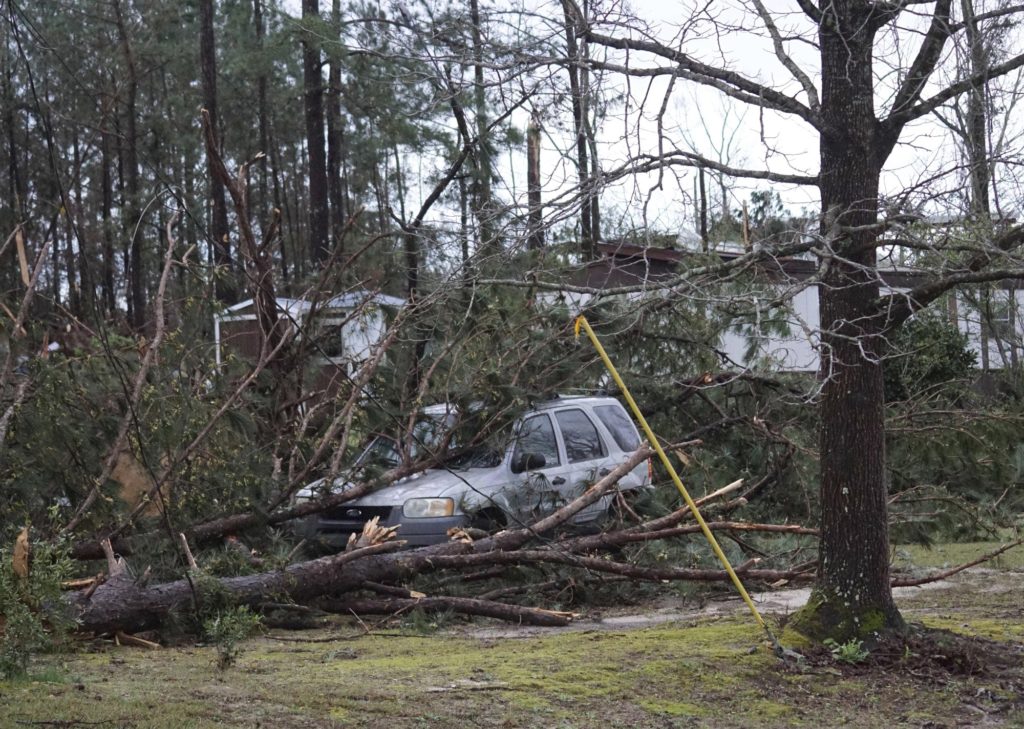
Rescuers began tearing through the rubble of mobile homes and houses Monday in search of survivors of a powerful tornado that rampaged through southeast Alabama and killed at least 23 people, including children. The trail of destruction was at least half a mile wide and overwhelmed rural Lee County’s coroners’ office, forcing it to call in help from the state. “It looks like someone almost just took a giant knife and scraped the ground,” Lee County Sheriff Jay Jones said of the devastation during a Monday morning news conference. Jones said children were among the dead, but he didn’t know exactly how many. And he said the number of deaths may rise as the search continues. “I have not seen this level of destruction ever in my time in Lee County,” said Jones, who has been sheriff since 1998. Drones flying overheard equipped with heat-seeking devices had scanned the area for survivors, but the dangerous conditions halted the search late Sunday, Jones said. The Sunday tornado, which had winds that appeared to be around 160 mph (257 kph) or greater, was part of a powerful storm system that also slashed its way across parts of Georgia, South Carolina and Florida. Levi Baker, who lives near the hard-hit area in Alabama, took a chain saw to help clear a path for ambulances and other first-responder vehicles. He said he saw bodies of dead people and dead animals. He said some houses were demolished and trees were uprooted or snapped in half. One house was swept off its foundation and was sitting in the middle of the road. “It was just destruction,” Baker said. “There were mobile homes gone. Frames on the other side of the road.” Jones said the twister traveled straight down a county road in the rural community of Beauregard reducing homes to slabs. Scott Fillmer was at home when the storm hit in Lee County. “I looked out the window and it was nothing but black, but you could hear that freight train noise,” Fillmer said. The National Weather Service confirmed late Sunday a tornado with at least an F3 rating caused the destruction in Alabama. Although the statement did not give exact wind estimates, F3 storms typically are gauged at wind speeds of between 158-206 mph (254-331 kph). In a tweet late Sunday, President Donald Trump said: “To the great people of Alabama and surrounding areas: Please be careful and safe. Tornadoes and storms were truly violent and more could be coming. To the families and friends of the victims, and to the injured, God bless you all!” Rita Smith, spokeswoman for the Lee County Emergency Management Agency, said about 150 first responders had quickly jumped in to help search the debris after the storm struck in Beauregard. At least one trained canine could be seen with search crews as numerous ambulances and emergency vehicles, lights flashing, converged on the area. On a country road in Beauregard on Monday, a giant pieces of metal from a farm building were suspended 20 feet (6 meters) in the air, attached to the lower halves of pine trees, making loud creaking sounds as the wind blew them into the pine branches. The top halves of most of those trees were snapped off. For an entire mile down the road, the scene was the same — pine trees cracked in half. One mile down the road, a mobile home crushed by two trees marked the end of the mile-long path of destruction. At the R&D Grocery on Monday morning in Beauregard, residents were constantly asking each other if they were okay. “I’m still thanking God I’m among the living,” said John Jones, who has lived in Beauregard for most of his life. School Superintendent Mack McCoy said some buses were damaged in the storm and winds tore through the roof of Smiths Station Elementary School. No deaths had been reported Sunday evening from storm-damaged Alabama counties other than Lee County, said Gregory Robinson, spokesman for the Alabama Emergency Management Agency. But he said crews were still surveying damage in several counties in the southwestern part of the state. Numerous tornado warnings were posted across parts of Alabama, Georgia, Florida and South Carolina on Sunday afternoon as the storm system raced across the region. Weather officials said they confirmed other tornadoes around the region by radar alone and would send teams out Monday to assess those and other storms. In rural Talbotton, Georgia, about 80 miles (130 kilometers) south of Atlanta, a handful of people were injured by either powerful straight-line winds or a tornado that destroyed several mobile homes and damaged other buildings, said Leigh Ann Erenheim, director of the Talbot County Emergency Management Agency. “The last check I had was between six and eight injuries,” Erenheim said in a phone interview. “From what I understand it was minor injuries, though one fellow did say his leg might be broken.” She said searches of damaged homes and structures had turned up no serious injuries or deaths there. Henry Wilson of the Peach County Emergency Management Agency near Macon in central Georgia said a barn had been destroyed and trees and power poles had been snapped, leaving many in the area without power. Authorities in southwest Georgia were searching door-to-door in darkened neighborhoods after a possible tornado touched down in the rural city of Cairo, about 33 miles (53 kilometers) north of Tallahassee, Florida, on Sunday evening. There were no immediate reports of serious injuries. Authorities said a tornado was confirmed by radar in the Florida Panhandle late Sunday afternoon. A portion of Interstate 10 on the Panhandle was blocked in one direction for a time in Walton County in the aftermath, said Don Harrigan, a meteorologist for the National Weather Service in Tallahassee. Republished with permission from the.Associated Press.
Democratic presidential hopefuls honor Selma march
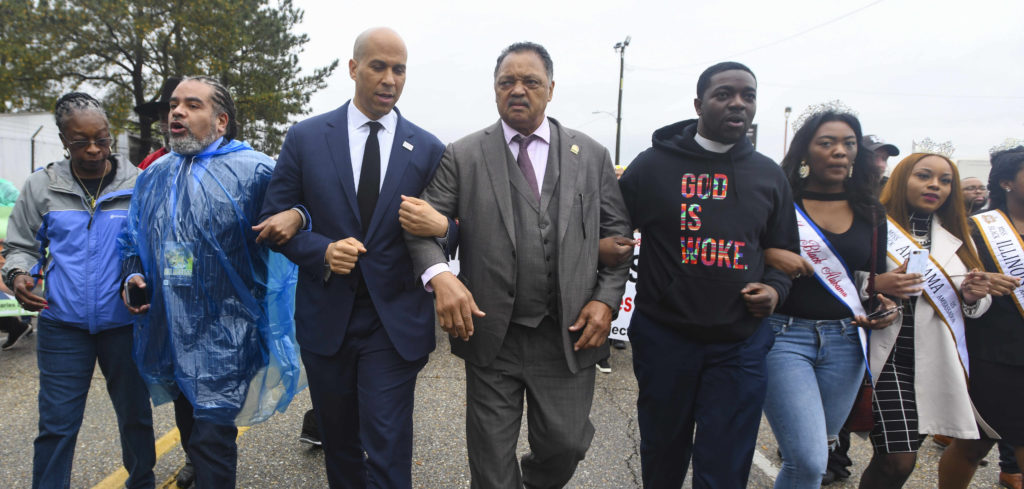
Thunder rolling above Brown Chapel AME Church, Democratic presidential candidate Cory Booker warned Sunday of a looming threat to American democracy and called for protecting the legacy of the civil rights movement with love and action. “It’s time for us to defend the dream,” Booker said in a keynote speech at Brown Chapel, which two generations ago was the starting point of a peaceful demonstration in support of voting rights that ended in beatings on the Edmund Pettus Bridge. The infamous “Bloody Sunday” on March 7, 1965, galvanized support for the passage of the Voting Rights Act that year. “It’s time that we dare to dream again in America. That is what it takes to make America great. It is up to us to do the work that makes the dream real,” said Booker, a New Jersey senator and one of three White House hopefuls who participated in events commemorating the march. Saying America faces challenges, Booker said: “People want to make it just about the people in the highest offices of the land. . People who traffic in hatred, people in office that defend Nazis or white supremacists, people that point fingers and forget the lessons of King. What we must repent for are not just the vitriolic words and actions of bad people, but the appalling silence and inaction of good people.” Also visiting Selma on Sunday were Sens. Bernie Sanders of Vermont and Sherrod Brown of Ohio. Joining them was Hillary Clinton, the Democratic nominee in 2016. Booker and Brown, along with Clinton and civil rights leader Jesse Jackson, marched with dozens of others Sunday afternoon to Edmund Pettus Bridge. Sanders had left for a campaign event in Chicago. The throng of marchers had set out from the church and sang freedom songs under a stormy sky as they headed to that sacred spot over the Alabama River to commemorate the peaceful protesters who were met with tear gas and clubs wielded by state troopers. This year’s commemoration came in the early days of a Democratic presidential primary campaign that has focused heavily on issues of race. Several candidates have called President Donald Trump a racist, while others have voiced support for the idea of reparations for the descendants of enslaved black Americans. Booker and Sanders have already announced their campaigns. Brown is still considering a White House bid. The three gathered for a unity breakfast in Selma to pay homage to its civil rights legacy and highlight how the movement shaped their personal narratives. For the New Jersey senator, much of the day felt personal. In Brown Chapel he sat next to Jackson, for whom he cast his first ballot as an 18-year-old during Jackson’s 1988 presidential campaign. He later marched to the bridge alongside Jackson, their arms locked together. In his speech, Booker linked the 1965 Selma demonstration to the lawyer who volunteered to help his family buy a home in a white neighborhood after they were discriminated against and repeatedly denied. “I would not be here if it wasn’t for marchers on a bridge who inspired a man a thousand miles away in New Jersey,” he said. “The dream is under attack. You honor history by emulating it, by us recommitting ourselves to it.” Brown, currently on a “Dignity of Work” tour inspired by King, returned to Selma for the fifth time. He frequently draws connections between civil rights and worker’s rights. A former secretary of state in Ohio, Brown also has a reputation as a leader on expanding voter participation. “We need to understand what happened here and we need to talk about it so we keep fighting on these issues,” Brown told reporters at the breakfast. “It’s clear we make progress and then we fall back because of Republican attacks on voting rights.” Claiming that the Georgia governor election was stolen from Democrat Stacey Abrams, Brown said: “It’s not just a Southern issue, of course. In the north we see all kinds of changes in voting laws. We see suppression of the vote in 2016, purging of voters in my state in a big way. This fight continues. It’s become personal in many ways because voting rights are so important to our country.” Sanders attended the 1963 March on Washington, which featured the Rev. Martin Luther King Jr.‘s “I Have A Dream” speech. Sanders has highlighted his civil rights and activist background as a young man at the University of Chicago. He is working to strengthen his relationship with black voters, with whom he struggled to connect in the 2016 Democratic primary that Clinton won. Appearing at Chicago’s Navy Pier, Sanders on Sunday night recalled his work with the campus chapter of the Congress of Racial Equality, protesting discrimination and housing segregation. He led one of the first sit-ins in the North and was arrested at a demonstration against segregation in Chicago schools in 1963. Sanders said while the Chicago activism was significant at the time, it didn’t compare to what was happening in the South. “We were protesting,” he told a rally of thousands. “They were putting their lives on the line, and some were getting killed.” “I must say that it is incomprehensible to me that, in the year 2019, we continue to have a president, a Supreme Court and Republican governors who still are trying to deny people of color and poor people the right to vote,” he said. “The reason I tell you all of this is because my activities here in Chicago taught me a very important lesson,” he said. “And that is that whether it is the struggle is against racism, or sexism, or homophobia, or corporate greed, or environmental devastation, or war and militarism or religious bigotry — real change never takes place from the top on down. It always takes place from the bottom on up when people, at the grassroots level, stand up and fight back.” In Selma, Clinton told those at Brown Chapel that the absence of crucial parts of the
How do Speaker McCutcheon and Governor Ivey get 25 more votes in the House to increase the gas tax?
It’s possible the gas tax increase doesn’t pass the Alabama legislature. For the past several weeks, our elected officials have been operating and talking as if the gas tax hike inevitably will pass. But it could fail. Actually, it may not even make it out of the House. Here’s how. There are 105 members of the Alabama House of Representatives. If the gas tax bill comes in a special session, as many now suspect it will, a simple majority of 53 votes will pass the tax hike in the House and move it up to the Senate. Right now, there are 28 highly probably votes in favor of the gas tax hike. These votes come from those who are in “leadership” or can be removed as chairmen of the House’s standing committees in the event of a no vote. Those votes probably are fairly solid votes in favor of raising the gas tax. That leaves 25 votes needed to pass the gas tax out of the House. If I’m a Democrat, I make the Republicans pass this tax increase alone. How does it benefit the Democrats to join the Republicans to pass this tax? Democrats are an endangered species in the Alabama Legislature, and taking pressure off of Republicans by passing their tax increases for them isn’t going to reverse their trend toward extinction. Rep. Bill Poole, who chairs the education funding committee and will sponsor the gas tax hike, reportedly is sizing up a lackey to sponsor a bill that will remove several hundred millions of dollars a year from the Education Trust Fund. In essence, the result of the gas tax may be trading school funding for road funding. That’s not exactly the platform of the Democratic Party. So assume the Democrats lock arms and sit out the gas tax, if for no other reason than to protect the education budget. So how do Speaker Mac McCutcheon and Governor Kay Ivey get 25 more votes in the House to increase the gas tax? After subtracting the 28 yes votes likely coming from budget chairs and members of leadership from 77 Republican House members, you have 49 Republican members walking around with the power to raise or kill the tax increase. These are split nearly evenly between freshmen and veteran Republicans. There are an astonishing 24 freshmen Republicans in the House. Not one of them ran on raising taxes, but they’re being asked to cast their very first vote in favor of raising taxes on Alabama’s middle class. I’m guessing a large percentage of these freshmen easily will take a hard pass on signing that suicide pact. Assume the freshmen vote no. That leaves 25 non-freshmen, non-chairmen, non-leadership Republicans available to vote yes on the gas tax increase. And assuming the Democrats and freshmen Republicans take a pass on raising taxes, every single one of them will be needed to pass the gas tax out of the House. Keep in mind these are folks thought so little of by Speaker McCutcheon that they weren’t asked to be in leadership or chair a committee. Maybe some of them don’t appreciate being overlooked and then asked to jump on a grenade and raise taxes. Or maybe some of them just don’t believe in raising taxes. For every member of this group of overlooked veterans of the Alabama Republican Caucus who votes no, the tax hikers will have to go find a Democrat or freshman Republican lawmaker to vote yes. Can they do it? Maybe. But maybe not. And if they can’t, that’s how the gas tax might fail. Baron Coleman is a lawyer, radio talk show host on News & Views on 93.1 FM, and political consultant based out of Montgomery, Ala.
‘No gas tax’ rally brings dozens to State House
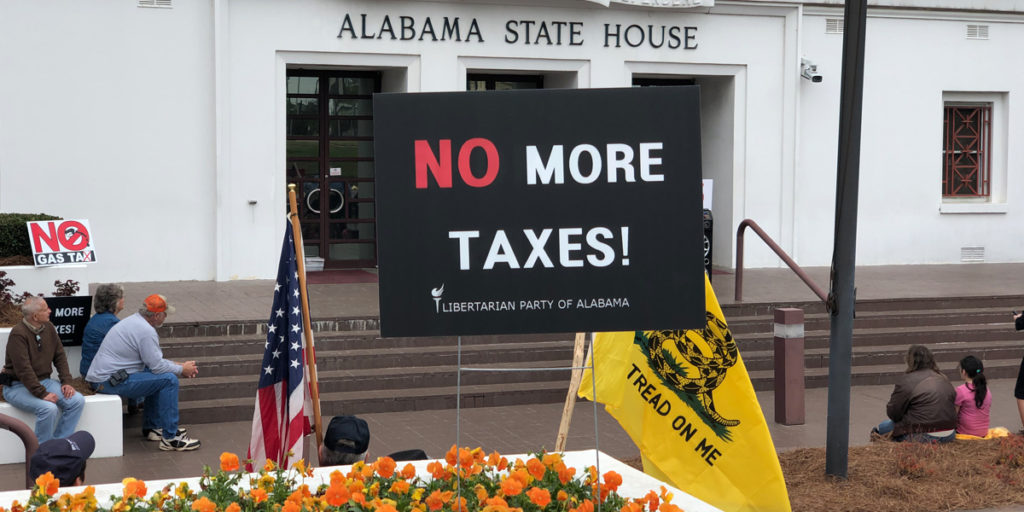
Opponents of Gov. Kay Ivey‘s gas tax proposal rallied against the $300 million tax increase bill on Saturday that they say breaks the promises candidates just made to their constituents this past election cycle Dozens of Alabamians showed up in protest on the steps of the State House in Montgomery including Alabama State Auditor Jim Zeigler who says one of the problems with the proposed gas tax increase is that it, “Has no expiration date.” “It will be in perpetuity. If gas prices go up to $2.50 or $3.00 a gallon we still have to pay the tax or when Trump goes up after President Trump is gone it goes up to $5 a gallon we still have to pay it,” Zeigler explained according to the Alabama Political Reporter. In January, Zeigler proposed a gas tax increase alternative dubbed “Plan Z,” which stands for “zero tax increases and zero congestion on our roads. Zeigler says Plan Z can provide about $900 million in new road construction funds from present revenues. Conservative’s for Better Leadership President Apryl Marie Fogel* “We need to call all of our elected officials and tell them that we don’t want this,” Fogel said according to APR. “66 percent of the gas tax will go to the Alabama Department of Transportation (ALDOT). Fogel explained further that 25 percent of the taxes raised will go to counties, and only 8.5 will go to towns and cities. “We need you. We need your neighbors. We need your Sunday school class” to call their legislators and the Speakers office and the Governor’s office and tell them to vote NO,” Fogel added. Other speakers included North Alabama Tea Party Chairman Charles Orr, Retired Air Force Colonel Mike Parsons, Frank Dillman on behalf of the Alabama Libertarian Party. Watch footage of the rally below: The gas tax increase proposal Last week, Ivey introduced the gas tax increase proposal as part of her Rebuild Alabama Infrastructure Plan as a means to pay for infrastructure improvements. “My Rebuild Alabama Infrastructure Plan is a comprehensive approach to a glaring issue affecting citizens in every corner of the state,” Ivey said announcing her plan. “After 27 years of stagnation, adequate funding is imperative to fixing our many roads and bridges in dire need of repair. By increasing our investment in infrastructure, we are also making a direct investment in public safety, economic development, and the prosperity of our state.” Editor’s note: Apryl Marie Fogel is also the publisher of Alabama Today.
