
Anti-gas tax PAC calls special session ‘governmental malpractice,’ tells legislators to ‘man up’

Alabama Gov. Kay Ivey on Tuesday called state lawmakers into an immediate special session focused on her proposed gas tax increase to pay for infrastructure improvements. On Wednesday afternoon, Stop the Alabama Gas Tax PAC said Alabamians should view the special session announcement from Ivey and the Legislature’s cooperation as, “governmental malpractice.” “Montgomery politicians are coming for your wallet and they’re coming fast,” said Ralph Long, Chairman of the Stop the Alabama Gas Tax PAC. “This special session, held at taxpayers’ expense, is a sly circumvention of the regular process so that Montgomery politicians can ram the largest gas-tax increase in state history down the throats of hardworking Alabamians.” Long is referring to the fact that in a special session, legislators need only a simple majority to pass a bill. That means, in the 105 members State House of Representatives, only 53 members need vote in support of it for it to move to the Senate. Stop the Alabama Gas Tax spokesperson Hannah Ford says the Alabama Legislature’s “Rebuild Alabama Act” is better termed the “Re-Tax Alabama Act.” Ford said specifics are lacking. “The primary projects mentioned in the Re-Tax Al-abama Act are port projects in Mobile and ‘electric vehicle charging infrastructure’ projects — a far cry from simple reparation of roads and bridges! Specific decisions about which additional projects to focus on will be left to a committee of bureaucrats.” “This special session to address the Re-Tax Alabama Act is governmental malpractice and must be stopped in its tracks before politicians win and taxpayers lose,” Ford added. Long says the Alabama Legislature has one constitutional duty: to balance the state budgets. He believes the special session side-steps that duty and puts the burden of “financial mismanagement on the backs of Alabama taxpayers.” “Legislators need to man up. Instead of doing the hard work to balance the budgets, they are making this massive tax hike a number one priority and putting the burden of their financial mismanagement on the backs of Alabama taxpayers. It’s unreal,” Long explained. The total cost of Ivey’s proposed gas tax is $55 a year, or $4.58 a month to the average driver, according to the Alabama Transportation Institute based on 12,000 annual miles and 22MPG.
Martha Roby to VA official: Somebody needs to feel the urgency
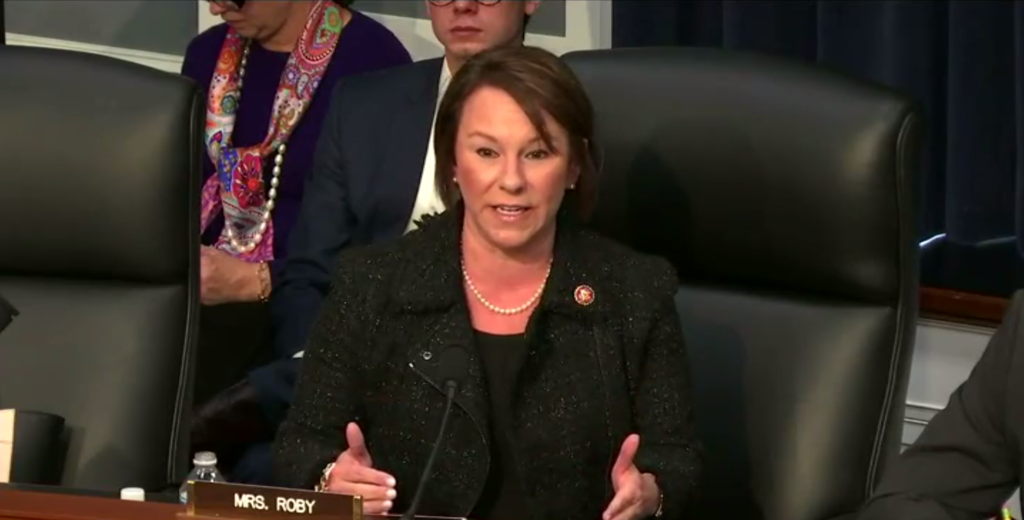
It’s time the Department of Veterans Affairs (VA) feels a sense of urgency regarding improving veterans’ health care services. That was Alabama 2nd District U.S. Rep. Martha Roby‘s message to the VA on Wednesday. “My frustration here is that there does not seem to be an urgency. Meanwhile, we have veterans who are suffering,” Roby said during a Military Construction, Veterans Affairs, and Related Agencies Appropriations Subcommittee in a hearing regarding the Department of Veterans Affairs’ electronic health record modernization. Roby, who has long been a vocal advocate for improving veterans’ health care services, highlighted the problems veterans in Central Alabama face when outside medical care providers have difficulty accessing their medical records and asked the hearing witnesses how the VA will improve the process of exchanging this information for outside providers. “How is the VA going to handle the exchange of health record information when we are utilizing outside providers?,” she asked. “This has been a huge issue in Central Alabama. Not only do we not have sufficient personnel to handle caring for the veteran within the VA, but we are also having a hard time recruiting outside providers because the VA constantly make it difficult to exchange medical records. Roby concluded, “If we are pushing our veterans to community care because we do not have the services inside the VA, then somebody needs to feel the urgency to get this done.” Watch Roby below: The full text of Roby’s remarks below. Thank you all for being here today. I think we can all agree that we’re here to make sure veterans are getting access to the best care we can give them in a timely fashion, and one of the issues veterans face when they go into the VA is that there may not be services offered in that brick and mortar facility to support the care they need. So, we use non-VA, outside providers to treat our veterans. As we are having this discussion about medical records, I’d like to ask: How is the VA going to handle the exchange of health record information when we are utilizing outside providers? This has been a huge problem in VISN 7, in the Central Alabama VA Health System. Not only do we not have sufficient personnel to handle caring for the veteran within the brick and mortar VA, but we are also having a hard time recruiting outside providers. They want to serve the veteran, and they want to provide medical care, but the VA constantly makes it difficult for the provider, and part of that deals with the exchange of medical records. I want to know how that issue fits into this equation. How are you going to make it easier, through data sharing, for the outside providers to integrate? The reality is, particularly in mental health care, the VA does not have the specialists necessary to care for veterans. When we have a veteran that we cannot care for inside the VA and we send them out into the community, there is a huge responsibility for those outside providers to communicate as it relates to the medical record itself. There is a lot of frustration from these outside providers that want to be community partners. This medical record exchange issue is a roadblock to their ability to provide the outside care. My frustration here is that there does not seem to be an urgency. I understand these things take time, but meanwhile, we have veterans who are suffering and not receiving the care they need. That is why I bring up the issue of outside providers and medical records. If we are pushing our veterans to community care because we don’t have the services inside the VA, then somebody has to feel the urgency to get this done.
Baron Coleman doubles down against gas tax, promises to run against Reed Ingram
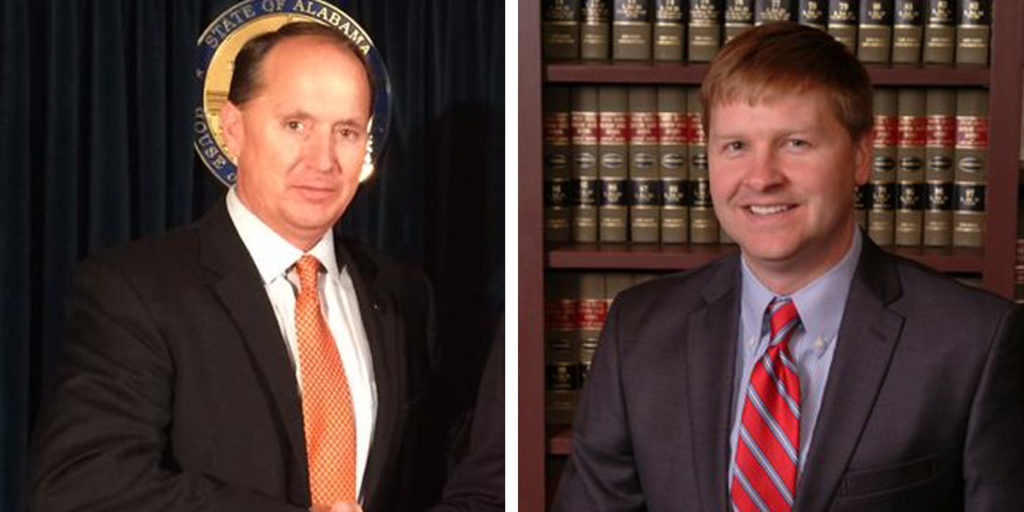
With the gas tax debate heating up on Goat Hill, Alabama residents across the state are waiting to see whether or not their representatives support the new tax. Baron Coleman — lawyer, radio talk show host and political consultant — is no different. On his radio show Wednesday, Coleman took a hard stand against Gov. Kay Ivey‘s gas tax and pledged to run against his own Representative in Montgomery, Reed Ingram, should he vote in favor of the tax. Ingram, who represents House District 75 (Pike Road), was first elected to office in 2014. A challenge from Coleman would be Ingram’s first — he easily sailed into office having not opposition in the Republican primary in both 2014 and 2018. Coleman presumably has a high name ID and would give Ingram quite the challenge. His conversational radio show, News and Views airs each week day from nine to noon on WACV 93.1 FM in the Montgomery market.
Revisions coming to gas tax bill to address hidden fees on electric, hybrid-electric cars
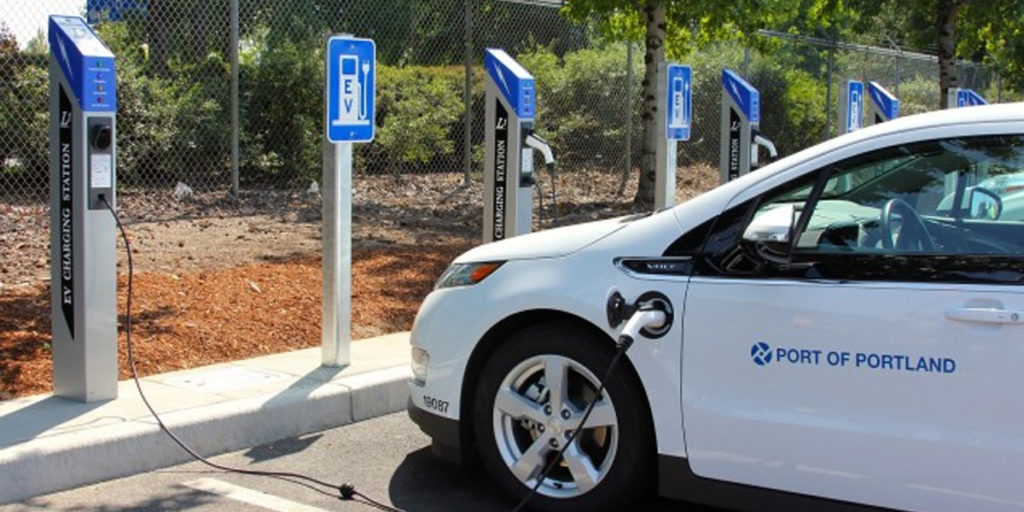
Just last week Gov. Kay Ivey proposed a plan to raise the state’s gas tax 10-cents to pay for infrastructure improvements, and already changes are being made to the bill. Alabama Daily News reports the plan’s accompanying legislation is being revised “to reduce and clarify fees on electric and hybrid vehicles, according to environmental groups.” Under scrutiny is a provision of the bill that includes a hidden fee on electric and hybrid-electric cars, added to the 10 cents per gallon tax on fuel. “The bill would set up a new $250 license and registration fee on electric vehicles and a $125 fee on hybrid-electric vehicles,” according to an article on AL.com. “Changes will lower a proposed fee on electric vehicles and limit fees to only ‘plug-in’ hybrid vehicles or battery electric vehicles,” reports ADN. The legislation, with changes, is expected to be re-filed on Wednesday.
Ilhan Omar’s Israel remarks expose Democrats’ simmering divisions

Back in January, the Democrats welcomed their brash young newcomers to Congress with smiles and hugs. That was before the new colleagues dragged the party’s simmering divisions over Israel out in the open. Provocative comments from Rep. Ilhan Omar of Minnesota have thrust the Democrats into an uncomfortable debate over Israel policy a few weeks before a high-profile conference at which senior Democrats typically make a show of support for the Jewish state. Increasingly, the rift appears as much generational as ideological, with newly elected Democrats showing less deference to the party line. Omar became the flash point after she suggested last week that Israel’s supporters are pushing U.S. lawmakers to take a pledge of “allegiance to a foreign country.” It’s at least the third time she has forced older, pro-Israel Democrats who run the House into awkward territory over U.S.-Israeli policy. Republicans have been happy to stoke the furor, with President Donald Trump calling Omar’s remarks “a dark day for Israel” and posting a photo of himself in Jerusalem. Inside the Democratic family, meanwhile, leaders are in a bind, torn between a need to admonish Omar and their desire to defend one of the first Muslim women elected to Congress. This time Omar is not apologizing. And this time pro-Israel Democrats led by Speaker Nancy Pelosi are not just warning her about the dangers of Jewish tropes. They are expected to offer a resolution condemning anti-Semitism on the House floor. Although no vote on the resolution is yet scheduled, Democrats said it could come as soon as Thursday. “Accusations of dual loyalty generally have an insidious, bigoted history,” an early draft of the resolution reads in part. “The House of Representatives acknowledges the dangerous consequences of perpetuating anti-Semitic stereotypes and rejects anti-Semitism as hateful expressions of intolerance that are contradictory to the values that define the people of the United States.” Pelosi and Majority Leader Steny Hoyer announced in a meeting of leading Democrats late Tuesday that the text will be updated to include anti-Muslim bias, according to a senior Democratic aide who spoke on condition of anonymity to discuss the private meeting. Other Democrats said an outpouring of support for Omar prompted leaders to consider broadening the measure to avoid dissension. Omar did not speak to reporters outside her office on Tuesday evening. “There is a lot emotional disquiet about the situation, and it’s a good time to restate our values,” said Rep. Jamie Raskin of Maryland, who is Jewish and a member of leadership, as he exited a meeting in Pelosi’s office. “That’s what I hope our resolution can do.” The text, which includes a history of bigotry against Muslims and blacks as well as Jews, sounds unobjectionable by itself. But the fact that senior Democrats felt obliged to put the House on-record on the topic points to a transformation in the country — mostly among Democrats — about supporting the Jewish state. In a poll by the Pew Research Center in January of last year, 46 percent of Americans said they sympathized more with Israel and 16 percent with the Palestinians in their Middle East discord. But Democrats are about evenly divided, with about a quarter sympathizing with each side and the rest saying they side with neither or don’t know — and in recent years they have become less likely to sympathize with Israel. Liberal Democrats were nearly twice as likely to say they sympathize more with the Palestinians (35 percent) than with Israel (19 percent). Older Americans were much more likely to say they sympathize with Israel than with the Palestinians, with more division among younger Americans. Omar, a Somali-American, says that what she’s questioning is the influence game in Washington and she worries that anything she says about Israel and its treatment of Palestinians will be construed as anti-Semitic. “Being opposed to (Prime Minister Benjamin) Netanyahu and the occupation is not the same as being anti-Semitic,” she tweeted on Sunday. “I am grateful to the many Jewish allies who have spoken out and said the same.” Democrats in Congress remain largely supportive of Israel. Pelosi, for example, often attends the American Israel Public Affairs Committee conference in Washington, which is coming up this month. Omar on Tuesday got a boost from allies who point out that she, too, has been the target of threats and bigotry. Rep. Alexandria Ocasio-Cortez suggested in a tweet that her fellow freshman was being treated unfairly. “No one seeks this level of reprimand when members make statements about Latinx + other communities,” the New York Democrat wrote. Jewish groups generally said they support the resolution — but … “We are concerned that the timing of this resolution will be seen as singling out and focusing special condemnation on a Muslim woman of color as if her views and insensitive comments pose a greater threat than the torrent of hatred that the white nationalist right continues to level against Jews, Muslims, people of color and other vulnerable minority groups,” said J Street, a nonprofit that says it’s a home for “pro-Israel, pro-Peace Americans.” Back home in Minnesota, a collection of elected officials started a #StandWithIlhan hashtag with a statement that reads in part: “We call on Democrats to stand with Ilhan against Republican efforts to pit Jews and Muslims against each other.” But there also was talk of finding a candidate to challenge her in 2020. “She is rapidly making herself a pariah in Congress, rather than an effective representative for her constituents,” said state Sen. Ron Latz, who is Jewish, lives in her district and has been critical of her recent statements on Israel. Earlier this year, Omar apologized for a 2012 tweet in which she said Israel had “hypnotized” America. And last month, she apologized for suggesting that members of Congress support Israel because they are paid to do so. That earned her stern rebukes from Pelosi and House Foreign Relations Committee Chairman Eliot Engel, among others. This time, Engel declared that Omar’s suggestion about divided
Auburn University constructing $22 million Advanced Structural Testing Laboratory

Auburn University is taking a big step as a leader in structural engineering research and instruction through the construction of a $22 million Advanced Structural Testing Laboratory. The 41,500-square-foot facility will include a high bay laboratory with specially engineered floors and walls capable of handling extreme structural testing loads; a geotechnical test chamber; a concrete materials research and testing laboratory; a wind testing facility, and faculty and graduate student spaces. The 4,700-cubic-foot geotechnical test chamber is one of the few across the nation included in a university laboratory. It will allow students and faculty to conduct testing that has been possible only in the field until now on structures such as foundations, anchorages and towers. In addition, the wind testing facility will allow replication of the dynamic wind loads induced by hurricanes, tornadoes and other extreme wind events on large-scale specimens. These unusual features, and many more, will accelerate research aimed at reducing the impacts during extreme events, and increase lifespan and safety of structures under all loading conditions. “Auburn is at the forefront of engineering education, and by providing our students opportunities for experiential learning, we’re ensuring our graduates emerge as industry leaders,” said Auburn University President Steven Leath. “This outstanding facility enables our researchers to deliver innovative solutions to pressing industry demands — something Auburn does best.” The laboratory will be near Auburn University Facilities Management offices on West Samford Avenue. The construction of the new facility will allow the Samuel Ginn College of Engineering to repurpose the structural laboratory space in the Harbert Engineering Center for other academic and research programs. “When you combine the strong floor and strong wall with the geotechnical testing capability and all the other materials testing capabilities, we think this will be one of the best laboratories in the country — if not the best,” said Steve Taylor, associate dean for research in the Samuel Ginn College of Engineering. “If I’m a civil engineering student who wants to be a structural engineer, this is going to be one of the best places to go to school in the nation.” This story originally appeared on Auburn University’s website.
Steve Flowers: State revenues up as Legislature prepares for session and crafting of state budgets
The Governor has been inaugurated and the Legislature has had its organizational session. The quadrennium has begun. Therefore, it is time for our state officials to get to work. Among the three branches of government, Legislative, Executive and Judicial, our 1901 Alabama Constitution renders our Legislative Branch as the most powerful. Some of you who witnessed the Wallace Era may disagree and point to the Executive Branch. That was a unique Era. Wallace had basically become “King” of Alabama politics from 1963 through 1986 with a couple of interlopers taking four-year residency in Wallace’s Governor’s Home on Perry Street. They left all of the wheelchair accessibility aspects and Wallace features designed for his paralysis and his cigar smoking bedroom in the Mansion alone. They probably assumed he would return after his constitutionally mandated hiatus. There will never be another politician that will control the reins of state government for five terms like Wallace did. He essentially established himself as “King of Alabama” in pretty much the same way as Franklin Delano Roosevelt did as President from 1932 until his death in 1945. Ironically and coincidentally, both ruled from wheelchairs. Wallace simply owned the State Legislature. He was like a dictator and legislators were his puppets. As a young legislator, I watched as Wallace’s lieutenants simply sent the Agenda for the day down from the Governor’s office, bypassing the Rules Committee completely. The Governor’s budget became the budget. If there was any pork in the budget, it went to Wallace’s loyal legislators. Thankfully, I represented Wallace’s home county of Barbour. Therefore, my district was on the pork list. In essence during that 20-year Wallace reign, the Legislature was simply an appendage of the Governor’s office. That is not the case today. The Legislature has assumed its inherent power. That power is derived from the power of the purse. The Legislature controls the appropriation of the state’s dollars, the ways and means of State Government if you will. It is the most powerful branch because it controls the purse strings. Thus the old political Golden Rule, “Those that control the gold make the rules.” Governor Kay Ivey and the State Legislature have a golden opportunity to have a successful four years. They are all of the same party and have a close working relationship. As Lt. Governor and presiding officer of the Senate for over six years, Kay built an excellent rapport with the Republican leadership in the State Senate. She understands the workings and machinations of the Legislature and she has built excellent relationships with members of both the House and Senate. She is especially close to the Senate leaders like Del Marsh, Jabo Waggoner and Greg Reed. The Legislature is overwhelmingly Republican. The Senate has 27 Republicans and only eight Democrats. There is an equally supermajority in the House. The numbers there are 77 to 28. The Legislature and Governor are also the recipients of outstanding financial news as they begin their first regular legislative session this week. Alabama is seeing the strongest tax growth since the Great Recession a decade ago. The tax dollars that makeup the Educational Trust Fund have grown by 6.9 percent over 2017. That is a whopping $428 million more dollars to work with in the crafting of the next fiscal year’s budget. The primary sources for funding the Education Budget are income and sales tax. Income taxes, the biggest source of school funding, grew by more than $300 million this past year. It appears that President Donald Trump and the Republican Congress’ passage of a tax cut package last year has been the stimulus for the growth in revenue for Alabama’s tax coffers. Even the beleaguered General Fund Budget is in better shape than was first thought. Our General Fund reaps its revenues from different taxes and tends to grow much more slowly than the Education Fund revenues. However, it grew by $76 million. This is a 2% gain, which puts the General Fund Projection close to $2 billion. The good news for Legislators as they prepare the budgets for next year is that both fund’s revenues have exceeded projections. See you next week. Steve Flowers is Alabama’s premier columnist and commentator, Steve has analyzed Alabama politics for national television audiences on CBS, PBS, ABC and the British Broadcasting Network. Steve has been an up close participant and observer of the Alabama political scene for more than 50 years and is generally considered the ultimate authority on Alabama politics and Alabama political history.
