
Jim Zeigler announces exploratory committee to test water for governor’s race

State Auditor Jim Zeigler is forming an exploratory committee to test the water for a possible run for governor next year. He announced Monday in a speech to the Common Sense Campaign, a conservative group in south Alabama. He would face incumbent Gov. Kay Ivey, who has announced for yet another term. Zeigler told the packed house of 80 people that having the announcement at a group named “Common Sense” fits well into his issues. Zeigler stated, “Gov. Ivey’s plan for an I-10 toll bridge between Mobile and Baldwin Counties did not make common sense. I was blessed to lead the citizen opposition that blocked the Ivey 2019 toll scheme. Gov. Ivey’s Amendment One made no common sense. It would have taken away the right to vote for members of the school board and made them all appointed by the governor. My wife Jackie Zeigler and I were blessed to lead the statewide ‘Vote No’ campaign that defeated Ivey’s Amendment One with 75% ‘no’ vote. “Gov. Ivey’s plan to waste over $3 billion on a prison rental scheme made no common sense. I was blessed to be one of the leaders that helped block the Ivey prison rental scheme,” Zeigler continued. “If I could keep the campaign about common sense and not about the millions of dollars and cents raised for Gov. Ivey by the Montgomery Insiders, I could win.” Zeigler has a deadline of Jan. 28 to make a decision but says he hopes to decide before the state Republican meeting on Aug. 26. The Republican primary is May 24, 2022, eleven months away. Zeigler is finishing his second term as State Auditor. However, he is term-limited and constitutionally prohibited from seeking a third term.
Paid in full? Biden, GOP struggle over infrastructure costs
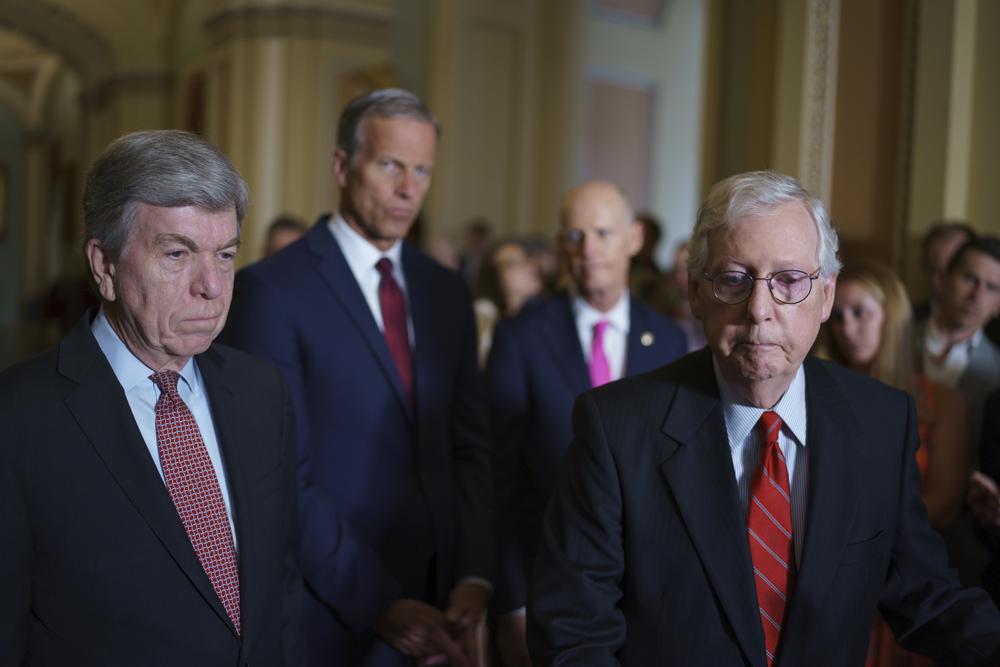
Congressional negotiators and the White House appear open to striking a roughly $1 trillion deal on infrastructure. But they are struggling with the hard part — how to pay for it. As President Joe Biden jumps back into the talks this week, the question of where the money will come from looms large. And time is running short to solve it. Biden wants to increase taxes for corporations and those households making more than $400,000 a year. Republicans have ruled that out, putting forward alternatives that Democrats find unacceptable. Both sides have said the infrastructure spending should be paid for and not add to the national debt. It’s a long-standing challenge with no easy solution, one that puts the bipartisan agreement around infrastructure in tension with the nettlesome realities of governing. It’s a problem that has thwarted previous attempts at an infrastructure bill, including during the Trump administration, and their ability to solve it now is likely to determine whether a bipartisan accord is possible. Senate Republican leader Mitch McConnell has said user fees are the way to go. But the White House and key Democratic lawmakers oppose increasing the user fee that has traditionally funded road and bridge construction, the federal gas tax, even if the increase is just allowing it to rise at the rate of inflation from its current level of 18.4 cents per gallon. The federal gas tax has not increased since 1993. “The president’s pledge was not to raise taxes on Americans making less than $400,000 a year, and the proposed gas tax or vehicle mileage tax would do exactly that,” said White House press secretary Jen Psaki. “So that is a nonstarter for him. I’d also note for the mathematicians in the room that only raises $40 billion, which is a fraction of what this proposal would cost.” Biden hosted two key Democratic senators, Joe Manchin of West Virginia and Kyrsten Sinema of Arizona, at the White House on Monday. He told them he was encouraged by the plans that were taking shape but still had questions about the policy and the financing for the proposal, a White House official said. Biden also said he was focused on budget resolution discussions. The two senators were among a group huddling late Monday at the Capitol, some emerging upbeat that a bipartisan deal was within reach. “Significant progress,” said Sen. Susan Collins, R-Maine. Sen. Jon Tester, D-Mont., said they were “very close” to having a full proposal from the bipartisan group as soon as Tuesday. One idea under consideration is reallocating money already approved as part of COVID-19 relief measures. Sen. Rob Portman, R-Ohio, said Sunday that they’re looking at repurposing more than $100 billion from COVID-19 relief to help pay for infrastructure. He put the onus on the White House to put forward other ideas since Democrats are balking at indexing the gas tax to inflation or creating a user fee for electric vehicles. “The administration, therefore, will need to come forward with some other ideas without raising taxes,” Portman said on NBC’s “Meet the Press.” “What we don’t want to do is hurt the economy right now as we’re coming out of this pandemic by raising taxes on working families.” With the gas tax likely out, other ideas include raising revenue from communication spectrum leases, and both parties are eyeing funds that could be raised by going after tax dodgers. The Republicans estimate about $63 billion could be raised by beefing up enforcement by the Internal Revenue Service. Democrats say the amount could be even higher. Another complication in the negotiations is that many Democrats question whether the size and scope of the infrastructure package being discussed by the White House and senators is adequate. Within the $1 trillion package, about $579 billion would be new spending, and the remainder would be a continuation of existing programs. Many Democrats are wary of a repeat of 2009 when Barack Obama was president, and they spent months negotiating the details of the Affordable Care Act with Republicans. Eventually, Democrats passed the package that became known as “Obamacare” on their own. “The amount of money that they are proposing is about one-quarter of what the president talked about in terms of new money. That’s not adequate,” said Sen. Bernie Sanders, I-Vt., on CNN’s “State of the Union.” Lawmakers are also hoping to influence more than the price tag of the infrastructure bill. One senator key to the talks, Manchin, unveiled his own draft proposal Monday for green energy infrastructure investments. The 423-page bill contains a wish list of energy-related proposals, and he’ll hold a hearing on the plan Thursday in the Senate Energy and Natural Resources Committee. Senate Majority Leader Chuck Schumer, D-N.Y., has described the infrastructure bill being negotiated as a good start. But he says most Democrats don’t believe it does enough on climate and also want it to address priorities like paid family leave. He is pushing a “two-track” approach that leaves open the possibility of a far larger bill without Republican votes. Using a special budget, the second infrastructure bill would only take a simple majority of 51 votes to pass. Such a measure could include more of the priorities laid out by Biden as part of his $1.8 trillion American Families Plan, such as paid family leave and universal pre-K for 3- and 4-year-olds. Sen. Lindsey Graham, R-S.C., warned the administration not to go that route. “I would just say to President Biden, you’ve got a party that’s divided. You’ve got a Republican Party that’s willing to meet you in the middle for a trillion dollars of infrastructure that could fundamentally change the way America does business in roads, ports, and bridges and accelerate electrical vehicles,” Graham said on “Fox News Sunday.” “You’ve got to decide what kind of president you are and what kind of presidency you want.” Republished with the permission of the Associated Press.
Alabama NewsCenter: Alabama Power Foundation releases annual report: ‘At the Point of Change’
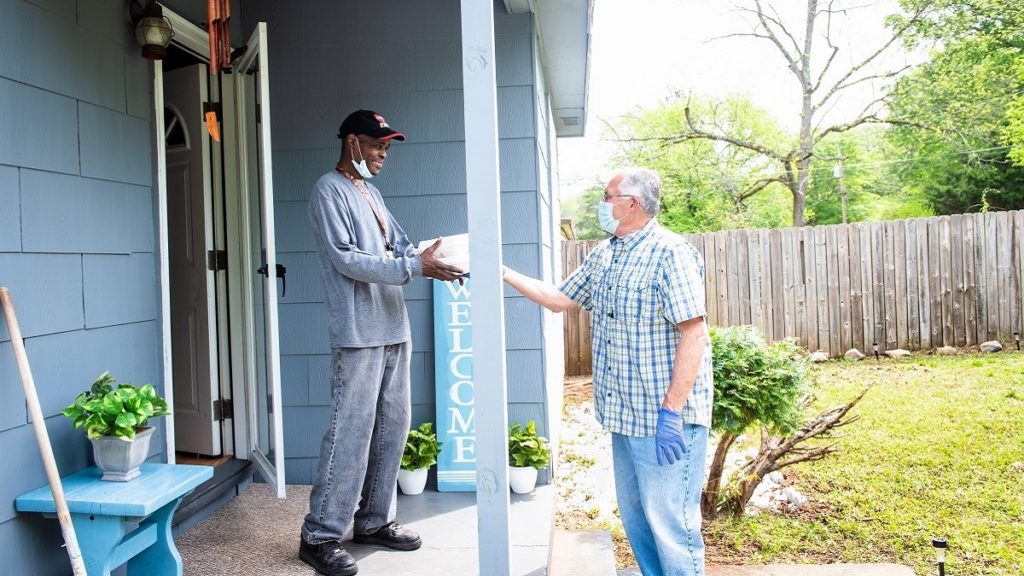
Alabama NewsCenter By Michael Sznajderman The Alabama Power Foundation on Monday released its 2020 Annual Report, highlighting the important work of nonprofits statewide during that extraordinary year. Titled “At the Point of Change,” the report examines moments during the last year when challenges turned into opportunities for positive change and how Alabama nonprofits took on those challenges to address critical needs across the state. “During a year that included a devastating pandemic, economic hardship, and a national reckoning around issues of racial and social justice and equity, Alabama’s philanthropic community answered the call,” said Tequila Smith, Alabama Power vice president of Charitable Giving and president of the Alabama Power Foundation. “The foundation’s annual report explores some of the many important projects and initiatives of our nonprofit partners – work that continues every day and is bringing real, positive change for Alabamians, Alabama communities, and for our state,” Smith said. The report features eight nonprofit organizations, from the Boys & Girls Club of Abbeville to The King’s Canvas in Montgomery, to Red Door Kitchen in Talladega. The report also provides an update on Alabama Power Foundation activities during 2020 and its priorities in 2021. Like others in Alabama’s philanthropic community, the Alabama Power Foundation pivoted in 2020 to meet critical needs while intensifying its focus on issues such as education, economic empowerment, and racial equity. Those efforts are ongoing, with the foundation also looking at new and innovative programs in these focus areas in coordination with other nonprofits and charitable organizations. The release of the 2020 Annual Report coincides with the foundation’s annual Elevate Conference, which brings together nonprofits from across Alabama for training sessions, seminars, and networking designed to help foster collaboration and increase their positive impact. Because of the pandemic, for the second year in a row, the conference is being held virtually. The conference concludes Tuesday. “We hope the annual report and the Elevate Conference provide valuable and useful information and resources to our nonprofit partners, to further their missions,” Smith said. The Alabama Power Foundation is committed to empowering communities, bridging the gaps of inequity, and improving the quality of life for all Alabamians. Funded by shareholder dollars, the foundation provides philanthropic support to Alabama communities, nonprofits, and educational institutions. To learn more about the Alabama Power Foundation and its charitable initiatives, please visit www.powerofgood.com.
In Senate vote, Joe Biden sees ‘step forward’ for elections bill
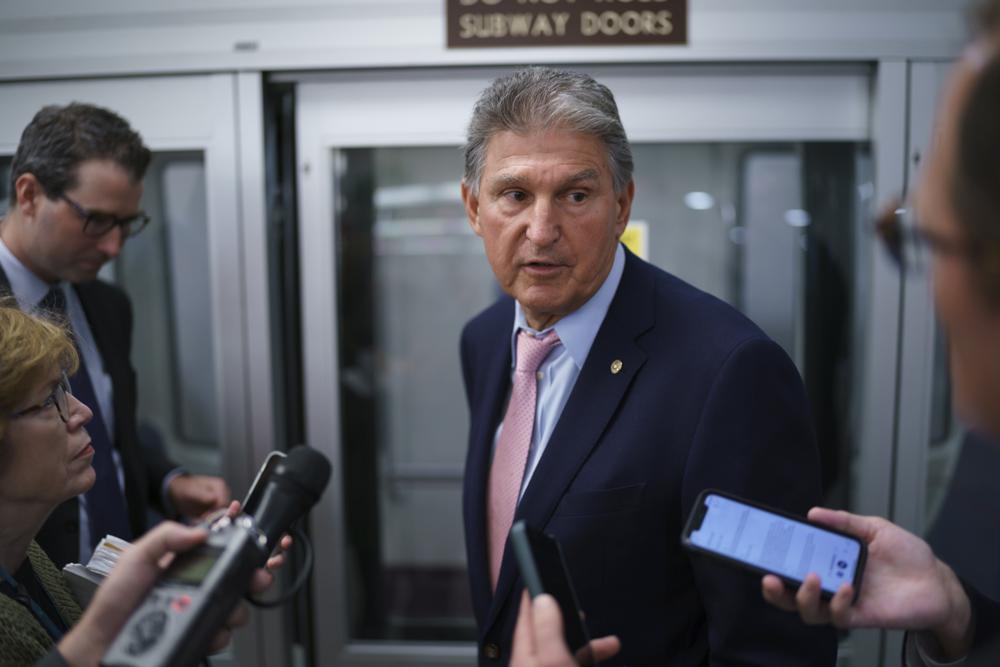
The White House said Monday it views the Senate’s work on an elections bill overhaul and changes being offered by Sen. Joe Manchin as a “step forward,” even though the Democrats’ priority legislation is expected to be blocked by a Republican filibuster. White House press secretary Jen Psaki said the revisions proposed by Manchin are a compromise, another step as Democrats work to shore up voting access and what President Joe Biden sees as “a fight of his presidency.” “The president’s effort to continue that fight doesn’t stop tomorrow at all,” Psaki said. The Senate is preparing for a showdown Tuesday, a test vote of the For the People Act, a sweeping elections bill that would be the largest overhaul of U.S. voting procedures in a generation. A top priority for Democrats seeking to ensure access to the polls and mail-in ballots made popular during the pandemic, and it is opposed by Republicans as a federal overreach into state systems. Manchin had been the sole holdout among Democrats in the Senate, declining to back his party’s bill. But late last week, the West Virginian aired a list of proposed changes that are being well received by his party, and a nod from the White House will give them currency. He has suggested adding a national voter ID requirement, which has been popular among Republicans and dropping other measures from the bill like its proposed public financing of campaigns. Among voting rights advocates, one key voice, Democrat Stacey Abrams, has said she could support Manchin’s proposal. Ahead of Tuesday’s vote, it is clear Democrats in the split 50-50 Senate will be unable to open debate, blocked by a filibuster by Republicans. In the Senate, it takes 60 votes to overcome the filibuster, and without any Republican support, the Democrats cannot move forward. “Will the Republicans let us debate it?” said Senate Majority Leader Chuck Schumer as he opened the chamber Monday. “We’re about to find out.” The Republican leader, Sen. Mitch McConnell of Kentucky, has said no Republican would support the bill, calling the legislation a “partisan power grab” that would erode local control of elections. While some Democrats want to change the filibuster rules to push the elections bill through, Manchin and other senators are opposed to taking that next move. Psaki said the administration’s hope is that the chamber’s 50 Democrats are aligned and that an unsuccessful vote will prompt the search for a new path. The White House didn’t give its full support to the Manchin alternative. But Psaki said the president “is appreciative of the efforts by Senator Manchin and others to continue to make progress on voting rights which he feels is a huge priority.” The sweeping voting reform bill is taking on fresh urgency as former President Donald Trump continues to challenge the outcome of the 2020 election and is urging Republican-led states that are imposing new voting rules in the states. State officials who certified the results of the 2020 election have dismissed Trump’s false claims of voter fraud and judges across the country who have dismissed multiple lawsuits filed by Trump and his allies. Trump’s own attorney general said at the time there was no evidence of widespread fraud that would change the outcome. The changes being put in place in many of the Republican states are being decried by voting rights advocates who argue the restrictions will make it more difficult for people to cast ballots, particularly minority residents in cities who tend to support Democrats. As the Senate action churns, more changes could be coming to the bill. Democrats want to add protections against intimidation at the polls and during the vote-counting process in the aftermath of the 2020 election. They propose enhancing penalties for those who would threaten or intimidate election workers and creating a “buffer zone” between election workers and poll watchers, among other possible changes. Rep. John Sarbanes, D-Md., a lead sponsor of the bill, said the effort underway is to “respond to the growing threat of election subversion in GOP-led states across the country.” Democrats also want to limit the ability of state officials to remove a local election official without cause. Georgia Republicans passed a state law earlier this year that gives the GOP-dominated legislature greater influence over a state board that regulates elections and empowers it to remove local election officials deemed to be underperforming. “The dangers of the voter suppression efforts we’re seeing in Georgia and across the nation are not theoretical, and we can’t allow power-hungry state actors to squeeze the people out of their own democracy by overruling the decisions of local election officials,” said Sen. Raphael Warnock, D-Ga., who is working to advance the proposal in the Senate. Republished with the permission of the Associated Press.
