
Tommy Tuberville, colleagues stand up for agriculture producers
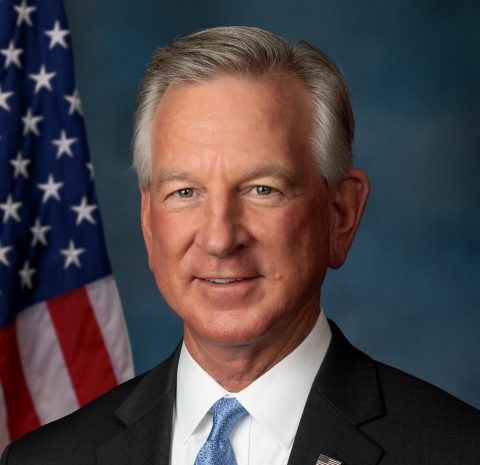
On Monday, Sen. Tommy Tuberville joined 31 colleagues in sending a letter to the Securities and Exchange Commission (SEC) to push back against overreach that would place climate disclosure regulations on farmers, ranchers, and agriculture producers. The senators are concerned about the proposed rule on “Enhanced and Standardization of Climate-Related Disclosures for Investors.” The proposed rule would require publicly-traded companies to include certain climate-related disclosures in their registration statements and periodic reports. The group believes this will impose burdensome greenhouse gas reporting requirements on all entities within a company’s value chain, including farmers and ranchers who fall outside of the SEC’s congressionally-provided authority. “The SEC’s congressionally-mandated mission is to protect investors; foster fair, orderly, and efficient markets; and facilitate capital formation,” the senators wrote. “However, this proposed rule moves well beyond the SEC’s traditional regulatory authority by mandating climate change reporting requirements that will not only regulate publicly traded companies, but will impact every company in the value chain. Should the SEC move forward with this rule, it would be granted unprecedented jurisdiction over America’s farms and ranches, creating an impractical regulatory burden for thousands of businesses outside of the scope of the SEC’s purview, including our nation’s farmers and ranchers,” they continued. Other signers include U.S. Senators John Hoeven (R-ND), Tim Scott (R-SC), Cynthia Lummis (R-WY), Roger Marshall (R-KS), James Risch (R-ID), Mike Crapo (R-ID), Steve Daines (R-MT), Thom Tillis (R-NC), Richard Burr (R-NC), Ted Cruz (R-TX), John Barrasso (R-WY), Bill Hagerty (R-TN), Tom Cotton (R-AR), Rick Scott (R-FL), Chuck Grassley (R-IA), Roger Wicker (R-MS), Deb Fischer (R-NE), Kevin Cramer (R-ND), John Kennedy (R-LA), Bill Cassidy (R-LA), Mike Braun (R-IN), Mike Rounds (R-SD), Joni Ernst (R-IA), James Lankford (R-OK), John Cornyn (R-TX), Jerry Moran (R-KS), Lindsay Graham (R-SC), John Thune (R-SD), Todd Young (R-Ind.), John Boozman (R-AR) and Josh Hawley (R-MO).
Today is last day to apply for absentee ballot by mail for Primary Runoff Election

The absentee voting period for the June 21st Primary Runoff Election began on May 25, 2022. Ahead of the June 21st Primary Runoff Election, Secretary of State John Merrill issued a press release reminding Alabama voters that Tuesday is the last day to apply for an absentee ballot by mail. Voters have an additional two days to apply for an absentee ballot by hand. Absentee ballot applications can be downloaded online or requested by visiting or calling the local Absentee Election Manager’s office. Important absentee voting deadlines are listed below: June 14, 2022: The last day that absentee ballot applications can be received by mail. June 16, 2022: The last day that absentee ballot applications can be returned by hand. June 17, 2022: The last day to return absentee ballots by hand to the Absentee Election Manager. June 21, 2022: Absentee ballots returned by mail must be received by the Absentee Election Manager no later than noon. Voters who are eligible to vote pursuant to the Uniformed and Overseas Absentee Voting Act (UOCAVA) will have until June 21, 2022, to postmark an absentee ballot.
Jim Zeigler: Alabama needs voter registration by parties

In Alabama, the Republican primary has effectively become a general election – where the voters are essentially choosing who will be elected. In statewide races, winning the Republican nomination is “tantamount to election.” As Alabama continues to elect Republicans statewide, Democrats will have more and more incentive to infiltrate the Republican primary and select candidates sympathetic to their agenda. We cannot have Democrats influencing Republican elections and vice versa. We must ensure Democrats are not exploiting this system of trust. Accordingly, we must ensure only Democrats are voting in the Democrat primaries, and only Republicans are voting in Republican primaries. A high priority as your Secretary of State would be working with the legislature to implement political party registration, where the voters of Alabama declare their party on their voter registration ahead of the primary election. Voters not declaring as Republicans will not vote in the Republican primary, and voters not declaring as Democrats will not vote in the Democratic primary. We must work with party leaders and leaders in the legislature to swiftly and unequivocally put an end to crossover voting. As your ‘watchman,’ I will promote safeguards to make sure no one is exploiting this system of trust. I will ensure election integrity by ensuring Republican voters are the only ones voting in the Republican primary. I believe a big part of protecting the integrity of the electoral process includes protecting the integrity of the party nominating process. A vote for Jim Zeigler is a vote for election integrity. Jim Zeigler runs in the June 21 runoff for the open seat of Secretary of State. He faces Rep. Wes Allen.
Jim Zeigler: Flag Day, the almost-forgotten day
I commemorate Flag Day each June 14 with flags and red-white-and-blue items at our home, the State Auditor’s office, my car, and even my clothes. Often, people will remark: “You’re getting ready for Independence Day mighty early,” or some other comment that lets me know they do not realize it is Flag Day, June 14. I call Flag Day “the almost-forgotten day.” It is not a federal holiday like Memorial Day or Independence Day, but it comes almost mid-way between them. It is easy to forget Flag Day since it is not a state or federal holiday. A patriotic song that commemorates our flag is not as well known as the Star-Spangled Banner, God Bless America, and God Bless the USA. It is “You’re a Grand Old Flag:” You’re a grand old flagYou’re a high-flying flagAnd forever in peace may you waveYou’re the emblem ofThe land I loveThe home of the free and the braveEv’ry heart beats trueUnder red, white and blueWhere there’s never a boast or bragBut should old acquaintance be forgotKeep your eye on the grand old flag June 14 was officially established as Flag Day by a proclamation of President Woodrow Wilson on May 30, 1916. On August 3, 1949, President Harry Truman signed an Act of Congress that designated June 14 as National Flag Day. The date coincides with the adoption of the flag by resolution of the Second Continental Congress in 1777. Interestingly, and probably surprisingly, the colors of the flag have no official meaning. The same colors are used in the Great Seal, though, and they do have meaning. Red represents valor and strength, white represents purity and innocence, and blue represents perseverance and justice. The Flag Code, part of the U.S. Code, contains specific instructions on how the flag is to be used and displayed and how it is to be destroyed by burning in a dignified manner. On Flag Day 2022, let us display our flag with gratitude for our country and the price that has been paid for our freedom, as well as with a resolve to remain “one nation under God, indivisible, with liberty and justice for all.” Jim Zeigler has been the State Auditor of Alabama since 2015.
Florida Gov. Ron DeSantis vetoes over $3.1 billion worth of proposed spending

Prior to signing Florida’s nearly $110 billion budget, Gov. Ron DeSantis went through it line by line, exercising his veto authority as part of what he says is his commitment to being a good steward of taxpayer money. The budget was approved by the state legislature during the regular legislative session earlier this year. Overall, DeSantis vetoed 425 line items, seven sections of the budget, and one bill. Doing so saved taxpayers $2,96 billion that would have come from the general revenue fund and $17.5 million from the trust fund. Overall, proposed spending vetoed by the governor totaled $3.13 billion. While the budget allocates a record amount of funding for higher education institutions and programs, DeSantis vetoed funding for some state college projects. He nixed a plan to allocate $22.4 million to remodel buildings at Pasco-Hernando State College, $75 million for a teaching facility at the University of South Florida, and $30 million for a new music building at the University of Florida, among others. Similarly, while the budget increased funding for a range of criminal justice and law enforcement programs, DeSantis vetoed some capital outlay expenses in this category. They include nixing $10 million for planning and design of correctional facilities, $840 million for correctional facility construction, $50 million for new construction of the Sixth District Court of Appeals, and $15 million for the Second District Court of Appeal, among others. With record amounts of funding for transportation projects also allocated in the budget, DeSantis also vetoed several transportation projects. They include $50 million to widen roads in Hernando County, $20.7 million for Crystal River Turkey Oak Bypass, and $35 million for a sports training and youth tournament complex, among others. DeSantis also vetoed three key significant expenditures, issuing transmittal notices explaining his veto for each. One involved purchasing $20 million worth of new aircraft and hiring new staff to facilitate state employee travel, blocking a plan to allocate $20 million every year for 30 years to the Board of Directors of the H. Lee Moffitt Cancer Center and Research Institute for construction and development of a county life sciences park, and nixing the legislature’s plan to create a state “inflation fund.” He also vetoed $300 million in grants and aid to local governments and non-state entities for fixed capital outlays for Everglades restoration, tens of millions allocated for numerous water improvement projects, and SB 2508, which he said would have imposed additional regulatory burdens on the South Florida Water Management District. Instead, DeSantis committed more than $1.2 billion for Everglades restoration and the protection of Florida’s water resources, with a total investment of more than $3.3 billion since 2019. This includes more than $270 million to fully fund all three years of the state’s first-ever Statewide Flooding Resilience Plan and an additional $180 million for the state’s next plan, which will be submitted later this year. “Governor Ron DeSantis made a promise on his second day in office to do more for Florida’s environment and resiliency,” Scott Wagner, vice chairman of the South Florida Water Management District, said in a statement. “The Governor has kept his promise to the people of Florida with record funding and the veto of Senate Bill 2508, and the South Florida Water Management District will continue our efforts to expedite restoration and infrastructure projects.” Chauncey Goss, Chairman of the South Florida Water Management District, also praised the veto of SB 2508, saying, “Floridians can be confident that the investments in Everglades restoration, water quality, and resiliency will all protect the quality of life for all South Floridians.” DeSantis’ veto was “another example of his commitment to the protection of Florida’s water resources … and his steadfast support of Everglades restoration and efforts to send water south.” DeSantis made “good on his promise to tackle flooding and sea level rise in Florida,” Kate Wesner, American Flood Coalition Florida director, said. “From fully funding every project on the first-ever Statewide Flooding and Sea Level Rise Resilience Plan to strengthening the state’s partnership with the Florida Flood Hub for Applied Research and Innovation at the University of South Florida, he has reassured us time and time again that sound science is driving environmental policy and action.” The budget included a record $1.24 billion in tax relief. And by the end of fiscal 2022, Florida will have reserves of more than $20 billion. Republished with the permission of The Center Square.
January 6 panel: Donald Trump ‘detached from reality’ in defeat
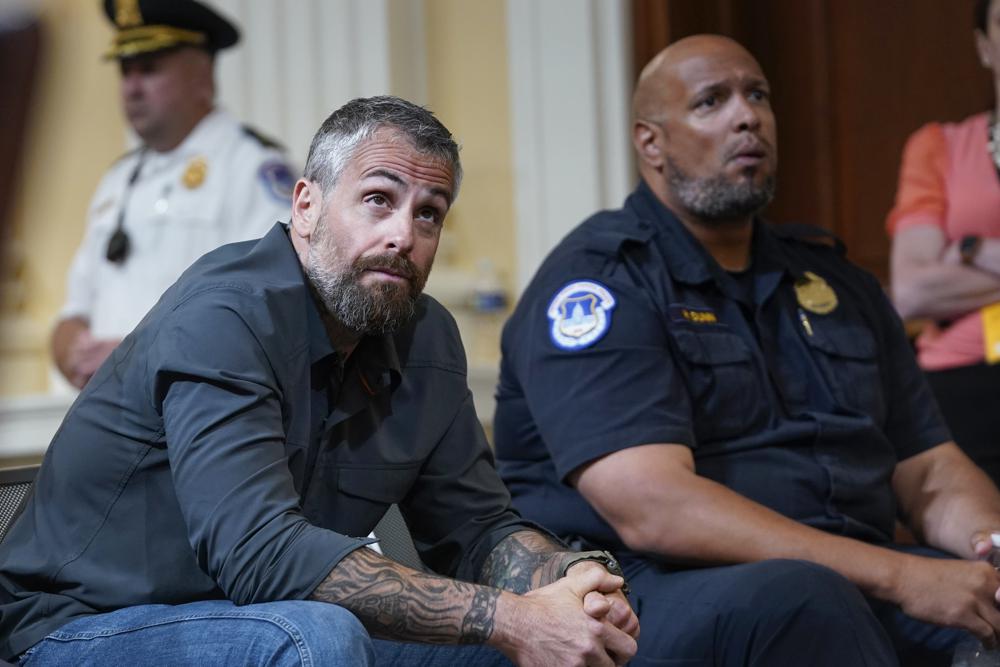
Donald Trump’s closest campaign advisers, top government officials, and even his family were dismantling his false claims of 2020 election fraud ahead of January 6, but the defeated president seemed “detached from reality” and kept clinging to outlandish theories to stay in power, the committee investigating the Capitol attack was told Monday. With gripping testimony, the panel is laying out in step-by-step fashion how Trump ignored his own campaign team’s data as one state after another flipped to Joe Biden and instead latched on to conspiracy theories, court cases, and his own declarations of victory rather than having to admit defeat. Trump’s “big lie” of election fraud escalated and transformed into marching orders that summoned supporters to Washington and then sent them to the Capitol on January 6 to block Biden’s victory. “He’s become detached from reality if he really believes this stuff,” former Attorney General William Barr testified in his interview with the committee. Barr called the voting fraud claims “bull——,” “bogus,” and “idiotic,” and resigned in the aftermath. “I didn’t want to be a part of it.” The House 1/6 committee spent the morning hearing delving into Trump’s claims of election fraud and the countless ways those around him tried to convince the defeated Republican president they were not true and that he had simply lost the election. The witnesses Monday, mostly Republicans and many testifying in prerecorded videos, described in blunt terms and sometimes exasperated detail how Trump refused to take the advice of those closest to him, including his family members. As the people around him splintered into a “team normal” headed by former campaign manager Bill Stepien and others led by Trump confidant Rudy Giuliani, the president chose his side. On election night, Stepien said, Trump was “growing increasingly unhappy” and refusing to accept the grim outlook for his presidency. Son-in-law Jared Kushner tried to steer Trump away from Giuliani and his far-flung theories of voter fraud. The president would have none of it. The back-and-forth intensified in the run-up to January 6. Former Justice Department official Richard Donoghue recalled breaking down one claim after another — from a truckload of ballots in Pennsylvania to a missing suitcase of ballots in Georgia —- and telling Trump “much of the info you’re getting is false.” Still, he pressed on with his false claims even after dozens of court cases collapsed. On Monday, an unrepentant Trump blasted the hearings in his familiar language as “ridiculous and treasonous” and repeated his claims. The former president, mulling another run for the White House, defended the Capitol attack as merely Americans seeking “to hold their elected officials accountable.” Nine people died in the riot and its aftermath, including a Trump supporter, shot and killed by Capitol police. More than 800 people have been arrested, and members of two extremist groups have been indicted on rare sedition charges over their roles in leading the charge into the Capitol. During the hearing, the panel also provided new information about how Trump’s fundraising machine collected some $250 million with his campaigns to “Stop the Steal” and others in the aftermath of the November election, mostly from small-dollar donations from Americans. One plea for cash went out 30 minutes before the January 6, 2021, insurrection. “Not only was there the big lie, there was the big ripoff,” said Rep. Zoe Lofgren, D-Calif. Chairman Rep. Bennie Thompson, D-Miss., opened Monday’s hearing saying Trump “betrayed the trust of the American people” and “tried to remain in office when people had voted him out.” As the hearings play out for the public, they are also being watched by one of the most important viewers, Attorney General Merrick Garland, who must decide whether his department can and should prosecute Trump. No sitting or former president has ever faced such an indictment. “I am watching,” Garland said Monday at a press briefing at the Justice Department, even if he may not watch all the hearings live. “And I can assure you the January 6 prosecutors are watching all of the hearings as well.” Biden was getting updates but not watching “blow by blow,” said White House press secretary Karine Jean-Pierre. Stepien was to be a key in-person witness Monday but abruptly backed out of appearing live because his wife went into labor. Stepien, who is still close to Trump, had been subpoenaed to appear. He is now a top campaign adviser to Trump-endorsed House candidate Harriet Hageman, who is challenging committee vice chair Rep. Liz Cheney in the Wyoming Republican primary. The panel marched ahead after a morning scramble and delay, with witness after witness saying Trump embraced and repeated his claims about the election, although those closest told him the theories of stolen ballots or rigged voting machines were simply not true. Stepien and senior adviser Jason Miller described how the festive mood at the White House on Election Night turned grim as Fox News announced Trump had lost the state of Arizona to Joe Biden, and aides worked to counsel Trump on what to do next. But he ignored their advice, choosing to listen instead to Giuliani, who was described as inebriated by several witnesses. Giuliani issued a general denial Monday, rejecting “all falsehoods” he said were being said about him. Stepien said, “My belief, my recommendation was to say that votes were still being counted, it’s too early to tell, too early to call the race.” But Trump “thought I was wrong. He told me so.” Barr, who had also testified in last week’s blockbuster opening hearing, said Trump was “as mad as I’d ever seen him” when the attorney general later explained that the Justice Department would not take sides in the election. Barr said when he would tell Trump “how crazy some of these allegations were, there was never; there was never an indication of interest in what the actual facts were.” For the past year, the committee has been investigating the most violent attack on the Capitol since the War of 1812, which some believe posed a grave threat to democracy. Monday’s hearing also featured live witnesses, including Chris Stirewalt, a
Alabama Supreme Court sets execution date for inmate
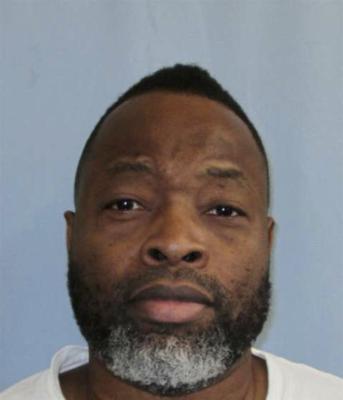
The Alabama Supreme Court has set an execution date of July 28 for a man convicted of killing his one-time girlfriend after breaking into her home in Jefferson County almost three decades ago, according to a court order made public Monday. Joe Nathan James Jr. would become the second Alabama inmate put to death this year unless a court intervenes. James, 49, was sentenced to die after being convicted of capital murder during a burglary in the killing of his one-time girlfriend, Faith Hall, in Birmingham. James, who had a history of stalking and harassing the woman, showed up at her apartment on Aug. 15, 1994, forced his way inside, and accused her of unfaithfulness, court documents show. James pulled a gun out of his waistband and shot the woman, who died of multiple gunshot wounds, and James was later arrested in California. A Jefferson County jury convicted James of capital murder in 1996 and voted to recommend the death penalty, which a judge imposed. The conviction was overturned when the Alabama Court of Criminal Appeals ruled that a judge wrongly admitted some police reports into evidence. James was retried and again sentenced to death in 1999, when jurors rejected defense claims that he was under emotional duress at the time of the shooting. Courts have since rejected appeals by James including claims that his lawyers were ineffective, and the state asked the court in March to set an execution date. James has never claimed to be innocent, the state argued, and he’s exhausted his appeals. In a hand-written appeal filed in federal court on his own behalf in April, James again claimed his lawyers were ineffective and said a judge wrongly admitted evidence and allowed prosecutors to ask improper questions. A judge hasn’t ruled on his petition, records show. While inmates can choose lethal injection or the electric chair, none has opted for electrocution. James’ execution would presumably be carried out by lethal injection since the state hasn’t said it is ready to conduct executions by an untried method called nitrogen hypoxia. Matthew Reeves was put to death in January by lethal injection in the state’s only execution so far this year. Republished with the permission of The Associated Press.
