
Gary Palmer, Barry Moore, and Mike Rogers support the Commitment to America

Following the rollout of the House Republicans’ Commitment to America, Congressmen Gary Palmer, Barry Moore, and Mike Rogers issued statements supportive of the new GOP Congressional platform. “Two years of total Democrat control in Washington, D.C. has left American families with the highest level of inflation in 40 years, children falling behind in schools, soaring energy costs, and an open southern border,” Palmer said in a press release. “Nearly 70% of Americans believe we are headed in the wrong direction, and the Democrats have no plan to address their concerns. However, my Republican colleagues and I have a plan. Our Commitment to America provides a framework for people to see how we intend to govern. It is backed by policies that build a strong economy, secure our nation, build a future based on freedom, and hold government accountable. House Republicans are ready to earn the support of the American people, and our Commitment shows we are focused on addressing issues important to them. I encourage everyone to read our Commitment to America for themselves and see the policies proposed to enact it.” “Record-high inflation, skyrocketing crime, & open borders – it’s clear that Democrat rule is wreaking havoc on our nation,” Rogers stated on Twitter. “American families deserve a strong economy, a safe & free nation, and government that’s accountable. That’s our commitment to you.” Rep. Moore said on Facebook, “We are facing 40-year high inflation, 12 cities with record high murder rates, a 60% gas price increase and over 2 million illegal border crossings this year. That’s why I’m joining my colleagues and committing to getting America back on the right track.” Republicans are hopeful that voters will give them control of one or both Houses of Congress. The Commitment to America is the platform that House Republicans are hoping will propel them into control of the U.S. House of Representatives. To connect with the author of this story, or to comment, email brandonmreporter@gmail.com.
Kari Mitchell Whitaker running as Libertarian candidate for Alabama House District 45
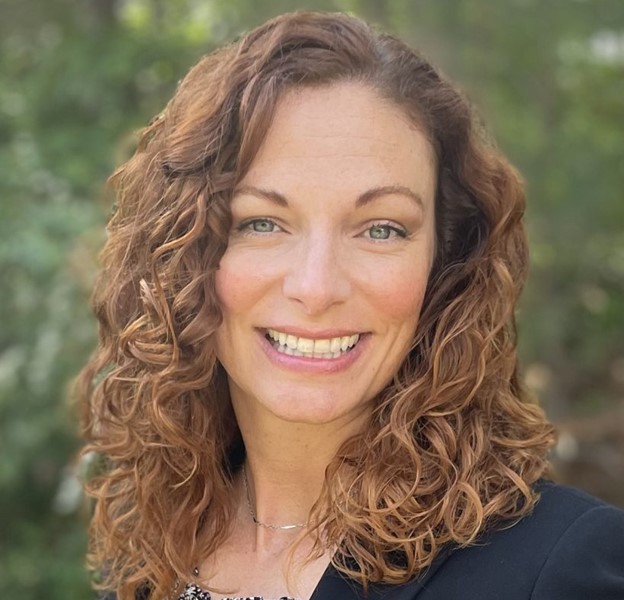
Kari Mitchell Whitaker is running as a Libertarian for Alabama House District 45. Whitaker is a resident of Dunnavant in Shelby County. She recently spoke at a Libertarian Party of Greater Birmingham event in Homewood at Jim ‘N Nick’s barbecue restaurant. Whitaker said that she decided to run as a Libertarian because she is disappointed with the two major parties. “You are on one team or another, and they are not representing the people,” Whitaker said. “I am running on three main issues: lower taxes, cut spending, and education,” Whitaker explained. “It is ridiculous that the majority of our taxes go to education.” Whitaker complained that educator unions have too much control of public education in Alabama. “As a homeschooling mom, I pay taxes for schools that I don’t use,” Whitaker said. “The taxes should go to parents for them to make the decision on where the child goes to get an education. The government should give parents a stipend that would be used for educational purposes. Arizona has a stipend program that has already been set up.” Whitaker also believes the gas tax should be repealed. “I want to repeal the gas tax,” Whitaker stated. “Free markets and economic freedom, that is going to stimulate their prosperity.” “We need to vote Libertarian to get out of this rut,” Whitaker said. “I trust people to make their own decisions about what is best for themselves and their families,” Whitaker continued. “The less the government meddles in our private lives and affairs, the better. I believe our current government has become too powerful, cumbersome, divisive, and corrupt — and I want to change that.” She is a pro-Life Libertarian. “According to the Non-aggression Principle (NAP) espoused by Libertarians, nobody should have the right to take another human being’s life, and I believe that this extends to unborn children.” Whitaker is running against Susan Dubose on the November 8 general election ballot. Dubose defeated incumbent Rep. Dickie Drake (R-Leeds) in the May 24 Republican primary. Whitaker is a small business owner, wife, and mother and is active in her church. To connect with the author of this story, or to comment, email brandonmreporter@gmail.com.
Terri Sewell votes in favor of public safety legislation
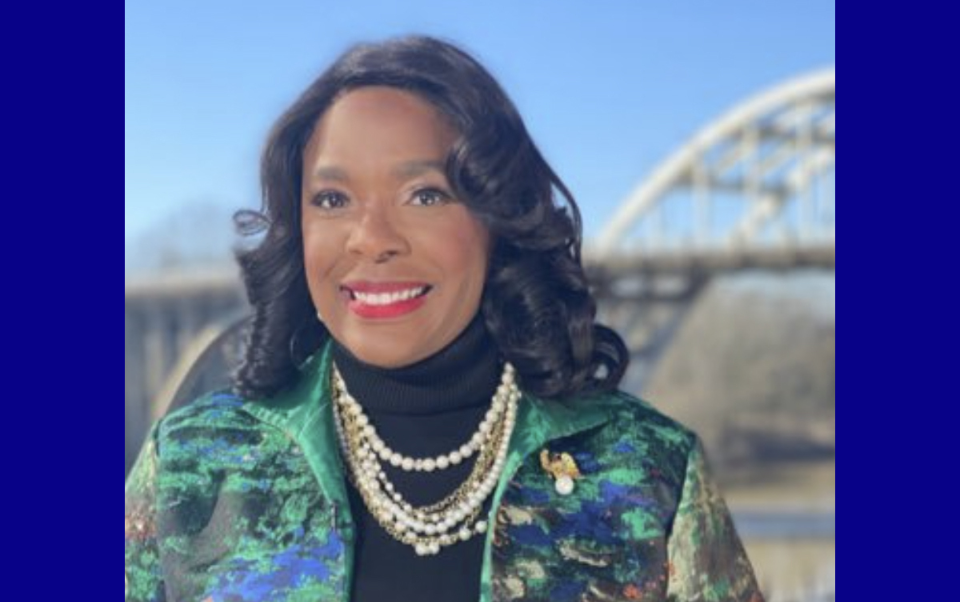
Congresswoman Terri Sewell voted in favor of four major public safety bills on Thursday. The Democratic bill’s sponsors hope they will deliver new federal resources to break the cycle of violence and build safer communities. This package of four bills passed the House of Representatives on Thursday. “Making our communities safer for our children and families has always been a top priority of mine in Congress, and that’s exactly what this legislation would do,” said Rep. Sewell. “Together, these bills would ensure that our local community organizations, local law enforcement, and especially rural police departments have the tools they need to keep Alabamians safe. With House passage of these bills, we’re one step closer to delivering deeply needed investments to prevent crime, boost community violence prevention, strengthen police accountability, and save lives.” The Invest to Protect Act was sponsored by Rep. Josh Gottheimer (D-New Jersey) and passed with a 360 to 64 vote. Nine Democrats and 55 Republicans voted against the bill. The legislation would allocate federal grants to small law enforcement agencies that encompass fewer than 125 officers. The Break the Cycle of Violence Act was sponsored by Rep. Steven Horsford (D-Nevada). It passed 220 to 207. Only one Republican, Rep. Brian Fitzpatrick (Pennsylvania), voted in favor. The legislation awards grants for coordinated community violence initiatives in areas that see a disproportionate amount of homicides and other forms of violence. The grants, from the Department of Health and Human Services, would be used to curb violent behavior. The Mental Health Justice Act was sponsored by Rep. Katie Porter (D-California). It awards funds to train and assign mental health professionals to respond to situations involving individuals with special behavioral needs, rather than sending law enforcement personnel. The measure passed 223 to 206, with three Republicans voting in favor. The VICTIM Act was sponsored by Rep. Val Demings (D-Florida). It creates a grant program that would give law enforcement agencies new funding to hire and train detectives to investigate homicides, sexual assaults, and other violent crimes. It also ensures that victim services are funded, staffed, and trained to address the needs of survivors and family members and provides federal funding to acquire and upgrade investigative technology to better process evidence. The bill passed in a 250 to 178 vote, with 30 Republicans joining all Democrats present in supporting the legislation. Sewell said that this legislation builds on President Joe Biden and Congressional Democrats’ ongoing work to build safer communities in Alabama and across the country. Sewell is in her sixth term representing Alabama’s Seventh Congressional District. To connect with the author of this story, or to comment, email brandonmreporter@gmail.com.
Tommy Tuberville questions VA Secretary Denis McDonough about priorities for veterans’ care
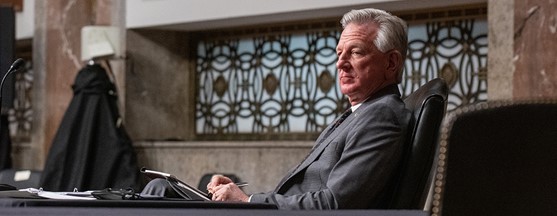
U.S. Senator Tommy Tuberville questioned U.S. Secretary of Veterans Affairs Denis McDonough about the department’s priorities regarding caring for veterans. A recent interim rule from the department authorizing abortion and abortion counseling services to be offered at its medical facilities has led to many questioning how the VA is implementing this new rule. Tuberville emphasized his strong opposition to the new policy. “I’m strongly opposed to the recent interim final rule that permits the VA to provide abortion services in every state, even in those states who have prohibited abortion,” Sen. Tuberville said. “For nearly two weeks now, the VA has authorized medical facilities to provide abortion services to enrolled veterans and certain dependents. At this time, do you know has the VA medical facility performed an abortion since this has started in the last two weeks? Do you know if there’s been one?” “I’m told that there has been one, yes,” McDonough said. “The interim final rule is silent on abortion restrictions after a certain point of pregnancy,” Tuberville said. “Does the VA have a plan on the abortion procedures up until the birth of a child?” “We provide health care to 300,000 women veterans of childbearing age,” McDonough said. “My hope is that no one would ever have to have faced the health or life-threatening, let alone rape or incest results to have this service, but because of the importance of ensuring the health and safety of those veteran patients, we have determined that we needed to do this.” Many states, including Alabama, have outlawed abortions. The Biden Veterans Affairs Department has announced that it plans to defy state laws and authorize abortions at federal VA facilities. “Many veterans suffer from sleep apnea due to medical conditions they manage as a result of their service. CPAP machines used to aid veterans’ sleep apnea have been in short supply since the pandemic – I think you know that – due to a chip shortage and a global recall on CPAPs,” Tuberville asked. “I understand there are some devices available that do not…require a chip and could be available to veterans today. We’re having a huge problem in our state. Would you consider it an ethical violation of the VA if the VA provider was not providing a CPAP if they knew it was available? And have you heard any problems with this?” “We’ll make sure we dig into that,” McDonough answered. “If there’s something, if there’s an available—clinically proven available option, then we’ll do it.” Sen. Tuberville represents Alabama in the United States Senate and is a member of the Senate Armed Services, Agriculture, Veterans Affairs, and HELP Committees. To connect with the author of this story, or to comment, email brandonmreporter@gmail.com.
Kay Ivey says Alan Miller’s victims did not choose to die by bullets
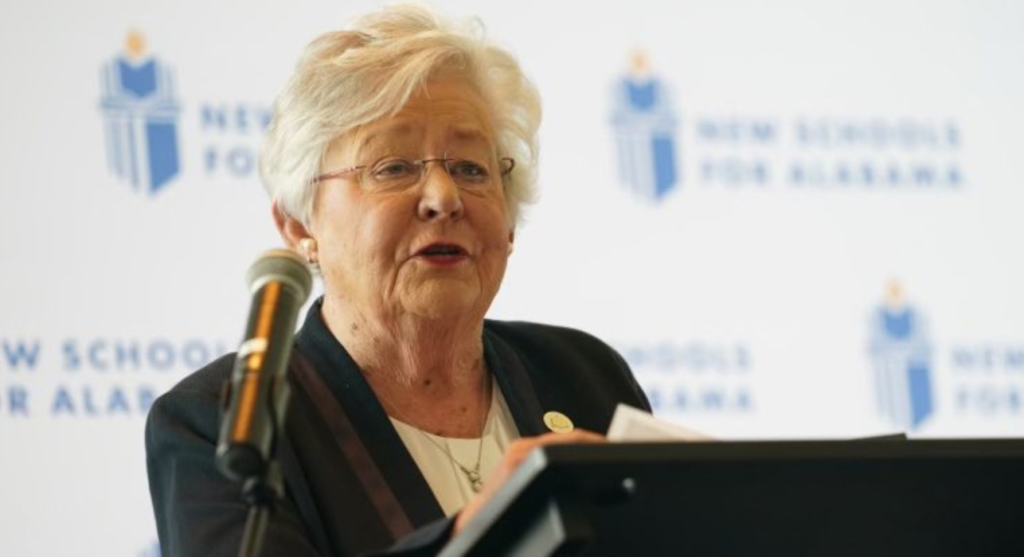
Gov. Kay Ivey commented late Thursday on the cancellation of the execution of Alan Eugene Miller after a federal appeals court refused to lift an injunction on the execution. “In Alabama, we are committed to law and order and upholding justice,” Ivey said in a press release. “Despite the circumstances that led to the cancellation of this execution, nothing will change the fact that a jury heard the evidence of this case and made a decision. It does not change the fact that Mr. Miller never disputed his crimes. And it does not change the fact that three families still grieve. We all know full well that Michael Holdbrooks, Terry Lee Jarvis, and Christopher Scott Yancey did not choose to die by bullets to the chest. Tonight, my prayers are with the victims’ families and loved ones as they are forced to continue reliving the pain of their loss.” Alabama Department of Corrections Commissioner John Hamm visited with the victims’ families prior to updating the press after the cancellation and relayed to them the governor’s prayers and concerns. The cancellation of Miller’s execution followed a 2-to-1 decision by the 11th U.S. Circuit Court of Appeals rejection of Alabama’s attempt to proceed with Miller’s execution. Miller has asked to die from nitrogen hypoxia instead of by lethal injection. The state says that it is not prepared to use the nitrogen hypoxia method yet and is, however, capable of killing by lethal injection. The court refused to lift the injunction by federal district Judge R. Austin Haffaker Jr. on the execution preventing the state from executing Miller. Alabama Attorney General Steve Marshall has stated that the state is appealing the ruling to the U.S. Supreme Court. Miller, age 57, was convicted of murdering Holbrooks, Jarvis, and Yancey in a workplace rage attack. Miller claims that the victims were spreading rumors about him. Gov. Ivey anticipates that the execution will be rescheduled as early as possible. To connect with the author of this story, or to comment, email brandonmreporter@gmail.com.
Paul DeMarco: Will Alabama follow the lead of other states to provide relief for taxpayers?
States around the Nation are flush with cash because of federal COVID relief dollars and increased tax revenue. At least 32 of those states have enacted either some sort of tax cut or rebate this past year. So the question is, will Alabama join those other communities around the country which provide some relief to state taxpayers? For years, there have been efforts by some Alabama lawmakers to remove the state sales tax on groceries, but it has gone nowhere. There has been some modest reduction of taxes, but nothing to the scale other states have made. Idaho just passed legislation to provide one-time rebates to their citizens that will cost the state $500 million, and Missouri is working on a $335 million income tax cut. There is already some talk of small rebates to Alabama taxpayers, but will this actually grow some legs and lead to the passage of a bill is a legitimate question. Bureaucrats and lobbyists in Montgomery will want to reign in any ideas of sending back money to state citizens as they want to continue to grow the size of government to benefit their interests. In addition, there were calls for a suspension of the Alabama gasoline tax, which was raised in 2019 by ten cents, but it never materialized. Alabama lawmakers are looking at ways to spend the record budgets they will have to appropriate in the upcoming 2023 legislative session. With inflation, record gas prices, and high food costs this past year, Alabama taxpayers should be part of the equation in the distribution of state dollars next year. Hopefully, Alabama state representatives and senators will have the courage to do their job to put their constituents’ interests first. Paul DeMarco is a former member of the Alabama House of Representatives and can be found on Twitter @Paul_DeMarco.
Steve Marshall, state AGs question legality of coding gun, ammo purchases with letter to credit card companies
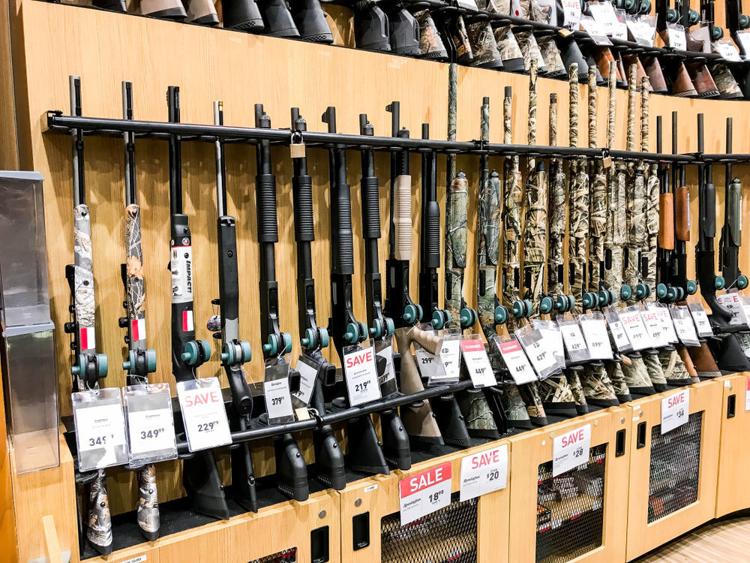
A group of 21 state attorneys general have written a letter to the CEOs of three credit card companies that questions the legality of their decision to code transactions at gun stores differently than other purchases. The letter came after three credit card companies – American Express, Visa, and Mastercard – decided to adopt a special code for transactions at gun stores which were previously labeled as general merchandise, a move decried by the 21 attorneys general. The attorneys general said that they’d “marshal the full scope of our lawful authority to protect our citizens and consumers from unlawful attempts to undermine their constitutional rights.” They also said the decision to code the gun store transactions differently came after pressure from groups and elected officials who oppose gun rights and amounted to “transnational collusion” by the three credit card companies. The attorneys general also said the new code could have a chilling effect on the Second Amendment rights of buyers. In the letter, the attorneys general said the new code could be used for such purposes as “infringing upon consumer privacy, inhibiting constitutionally protected purchases by selectively restricting the use of your payment systems, or otherwise withholding your financial services from targeted ‘disfavored’ merchants. The letter also says that the code will create a database of gun purchasers that could be leaked or hacked by those opposed to gun rights protected by the Second Amendment. Earlier this month, the International Organization for Standardization’s Registration and Maintenance Management Group – which is the international organization responsible for creating merchant category codes for credit card purchases – decided to create a separate code for transactions at gun stores. The move was hailed by pro-gun control groups and elected officials in several states, including New York. Everyone needs to do their part to combat gun violence. @AmericanExpress, @Mastercard & @Visa should categorize firearm purchases & flag suspicious activity – just like they do for millions of other transactions. Together we can help stop gun trafficking & keep New Yorkers safe.— Governor Kathy Hochul (@GovKathyHochul) September 7, 2022 The letter was signed by the attorneys general of Alabama, Alaska, Arkansas, Arizona, Florida, Georgia, Indiana, Kansas, Kentucky, Mississippi, Missouri, Nebraska, New Hampshire, Ohio, Oklahoma, South Carolina, Texas, Utah, Virginia, Wyoming, and West Virginia. Republished with the permission of The Center Square.
Alabama to expand broadband in rural counties through federal program

A federal investment aimed at improving broadband in rural areas in Alabama is in the works. Through the U.S. Department of Agriculture’s Rural Development ReConnect loan/grant program, according to a release, Alabama stands to rake in $28,817,588 in grants and another $24,865,787 as part of a loan that will extend high-speed internet access in 10 counties as part of the third round of grants. The funding was announced by USDA Secretary Tom Vilsack. “President [Joe] Biden’s commitment to high-speed internet in rural communities is foundational to ensuring that the nation’s economy continues to expand from the bottom up and the middle out,” Vilsack said in a release. “High-speed internet will improve the rural economy. It will help rural businesses grow and get access to new markets. It will help rural residents get access to more and better health care and educational opportunities. USDA knows rural America is America’s backbone, and prosperity here means prosperity for all.” A loan and grant, according to the release, totaling $49,731,574 will be used to construct a fiber-to-the premises network that will provide high-speed internet access to 15,989 people, 608 businesses, 52 education facilities, and 407 farms in Choctaw, Clarke, Dallas, Marengo, Perry and Wilcox counties. Pine Belt Telephone Company, the release reads, will work to ensure high-speed internet is affordable through the Federal Communications Commission’s Affordable Connectivity Program and is aimed at serving communities in Choctaw, Dallas, and Clarke counties that are deemed socially vulnerable. A second grant totaling $3,951,801, according to the release, will be delivered to Butler, Crenshaw, Lowndes, and Montgomery counties that will serve 1,812 people, 30 businesses, 53 farms, and four public schools. The FCC’s Affordable Connectivity and Lifeline Program will be used by Mon-Cre Telephone Cooperative Inc. to ensure discounts are made to qualifying users. Funding for the projects, according to the release, comes from the Infrastructure Investment and Jobs Act. Republished with the permission of The Center Square.
Permanent order blocking Joe Biden’s mask, vaccine mandate for Head Start could be appealed

With a permanent injunction issued in a case against President Joe Biden’s mask and vaccine mandate for Head Start child care centers, the only question is whether federal officials will appeal the ruling. U.S. District Judge Terry Doughty struck down the mandate on Wednesday, finding the edict poses a “substantial threat of irreparable injury” to the two dozen states that sued. He granted a permanent injunction against federal agencies enforcing the mandate, which required masks for toddlers and staff, as well as a requirement for a COVID vaccination or weekly tests for adults. Any appeal would be filed with the 5th U.S. Circuit Court of Appeals in New Orleans, which handles cases from Louisiana, Mississippi, and Texas. “I am grateful Judge Doughty applied the law and blocked this federal overreach from burdening some of our neighbors most in need,” Louisiana Attorney General Jeff Landry said. “As I said when we first filed suit, masking two-year-olds and force vaccinating teachers in our underserved communities would impede child development and cost jobs; fortunately, this attack has been thwarted.” Doughty found the Head Start teachers and 24 states that sued over the mandate would face a “substantial threat of irreparable injury” if it wasn’t struck down. “Plaintiff States will incur the increased cost of training and of enforcing the Head Start Mandate, will be unable to enforce their laws, and will have their police power encroached. The Court finds that this would be an irreparable injury,” Doughty wrote. “The Plaintiff States’ citizens will suffer irreparable injury by having a substantial burden placed on their liberty interests because they will have to choose between losing their jobs or taking the vaccine.” The lead plaintiff in the case, Louisiana preschool teacher Sandy Brick, was represented by the Pelican Institute and the Liberty Justice Center. “Louisiana teacher Sandy Brick has been serving her students through adversity and uncertainty for the last two years. Today, this decision vindicates her right to teach without sacrificing her freedom,” Sarah Harbison, an attorney with the Pelican Institute, said Wednesday. Liberty Justice Center attorney Daniel Suhr vowed to “continue to fight for teachers like Sandy and the low-income students they serve until every illegal and unjustified mandate is wiped from the books.” “Today’s decision is a significant step toward undoing the injustice perpetrated against everyday Americans throughout the COVID-19 crisis,” he said in a Wednesday release. Doughty, who previously struck down the Biden administration’s vaccine mandate for healthcare workers, explained the Head Start ruling boils down to a balance between the public interest and individual liberty. “Although vaccines arguably serve the public interest, the liberty interests of individuals mandated to take the COVID-19 vaccine outweigh any interest generated by the mandatory administration of vaccines,” he wrote. Doughty’s permanent injunction applies to Head Start programs in Louisiana, Alabama, Alaska, Arizona, Arkansas, Florida, Georgia, Indiana, Iowa, Kansas, Kentucky, Mississippi, Missouri, Montana, Nebraska, North Dakota, Ohio, Oklahoma, South Carolina, South Dakota, Tennessee, Utah, West Virginia, and Wyoming. Republished with the permission of The Center Square.
Appeals court blocks Alabama from lethally injecting Alan Miller
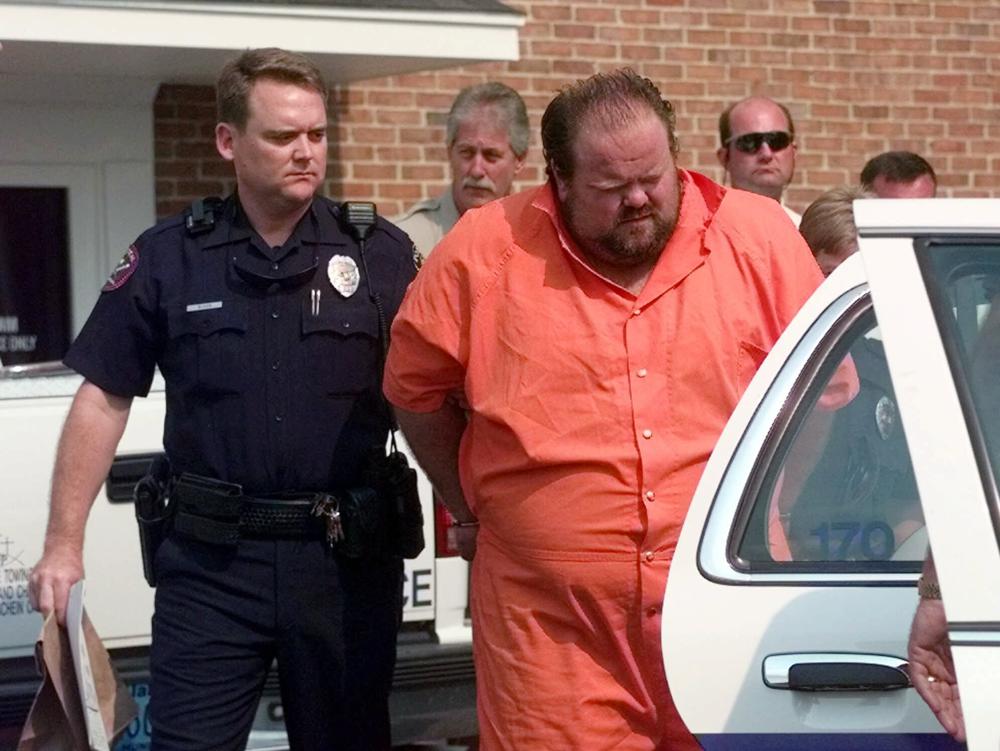
A federal appeals court on Thursday rejected Alabama’s attempt to proceed with the execution of an inmate who claims the state lost his paperwork selecting an alternative to lethal injection. In a 2-1 decision, the 11th U.S. Circuit Court of Appeals denied the state’s request to lift a recent injunction preventing the state from carrying out Thursday night’s scheduled execution of Alan Miller. The state is appealing the ruling to the U.S. Supreme Court, a spokesman for Alabama Attorney General Steve Marshall said. Miller, 57, was convicted of killing three people in a 1999 workplace rampage and was scheduled to die by lethal injection until the execution was blocked by a judge earlier this week. Miller testified that he turned in paperwork four years ago selecting nitrogen hypoxia as his execution method, putting it in a slot in his cell door for a prison worker to collect. U.S. District Judge R. Austin Huffaker Jr. issued a preliminary injunction blocking the state from killing Miller by any means other than nitrogen hypoxia. In refusing to lift the injunction, the appeals court on Thursday said it is “substantially likely” that Miller “submitted a timely election form even though the State says that it does not have any physical record of a form.” “Prison officials at Holman chose not to keep a log or list of those inmates who submitted an election form choosing nitrogen hypoxia,” the court said, finding that the state also did not demonstrate that it would “suffer irreparable harm” if the execution did not take place Thursday. Nitrogen hypoxia is a proposed execution method in which death would be caused by forcing the inmate to breathe only nitrogen, thereby depriving him or her of the oxygen needed to maintain bodily functions. It is authorized as an execution method in three states, but no state has attempted to put an inmate to death by the untested method. Alabama officials told the judge they are working to finalize the protocol. When Alabama approved nitrogen hypoxia as an execution method in 2018, state law gave inmates a brief window to designate it as their execution method. “That the state is not yet prepared to execute anyone by nitrogen hypoxia does not mean it will harm the state or the public to honor Miller’s timely election of nitrogen hypoxia. By contrast, if an injunction does not issue, Miller will be irrevocably deprived of his choice in how he will die — a choice the Alabama Legislature bestowed upon him,” Huffaker wrote. The state argues there is no evidence to corroborate Miller’s testimony that he turned in the form. “Miller offers no evidence aside from a self-serving affidavit,” lawyers for the state wrote. Prosecutors said Miller, a delivery truck driver, killed co-workers Lee Holdbrooks and Scott Yancy at a business in suburban Birmingham and then drove off to shoot former supervisor Terry Jarvis at a business where Miller had previously worked. Each man was shot multiple times, and Miller was captured after a highway chase. Trial testimony indicated Miller believed the men were spreading rumors about him, including that he was gay. A psychiatrist hired by the defense found that Miller suffered from severe mental illness but also said Miller’s condition wasn’t bad enough to use as a basis for an insanity defense under state law. Republished with the permission of The Associated Press.
