
Mighty Alabama Strike Force to deploy to Georgia to help Herschel Walker win Senate

Shelby County Republican Party Chair Joan Reynolds spoke at the River Region Republican Club meeting at the Farmer’s Market Café on Tuesday. The Mighty Alabama Strike Force, which she heads, will begin making trips on Sunday to Georgia to help football legend Herschel Walker, the Republican nominee for U.S. Senator, win the November 8 general election. Walker is challenging Democratic incumbent Raphael Warnock. Reynolds said that the idea for the Mighty Alabama Strike Force began when then-Congressman Spencer Bachus (R-AL06) noted that the National Republican Congressional Committee (NRCC) needed help with a congressional race in North Carolina and asked Reynolds for her help. “My job was to recruit volunteers and train them,” Reynolds said. “The volunteers were all from in the area. When I got back home, I said I need to get two or three people that can help me. I ended up spending two or three weeks in Durham. I realized then how important volunteers are.” “It started under the Bush Administration,” Reynolds explained of her involvement in out-of-state congressional campaigns. “That is what I have been doing for the last 14 years.” Reynolds said she took her first volunteers from Alabama to a Senate race in Arkansas, where they campaigned in Jonesboro. “In 2012, I was asked to go to Sioux City, Iowa,” to help the Mitt Romney campaign, Reynolds explained. “There was a religious factor there as they (Iowa voters) were not going to vote for a Mormon.” Reynolds is married to Alabama’s Republican National Committeeman Paul Reynolds. “Paul put together a busload,” Reynolds said. “It was a small used school bus, and they went to Sioux City. Coming back, they ran into a problem when they broke down. After that, I realized we needed some money.” “My volunteers did not mind staying in homes, but they would rather stay in hotels,” Reynolds said. “In 2014, we went to Indiana and campaigned for Bill Cassidy. We went to Tennessee and campaigned for Marsha Blackburn. We won both of those.” “In 2016, Donald Trump decided to run,” Reynolds said. “He was such a forceful figure that it was easy to get volunteers. It was also easy to raise money.” “We spend a week, or we won’t go,” Reynolds said of the duration of the trips. “We were asked to go to Florida in 2020.” “In 2021, I was asked by one of my donors to see if we can go to Virginia to go to campaign for Glenn Youngkin,” Reynolds said. “That was the first time we got involved in a governor’s race.” “That was the first time that we had to fly,” Reynolds said. “It was right after we were getting over COVID, and the economy was just opening up. I contacted every bus company in Alabama, and it was cheaper to fly.” Youngkin won his election. “He said it was so important that we came and actually talked to people in the Commonwealth,” Reynolds said. Reynolds asked for help from Republicans across Alabama. “We cannot do it without funding, and we cannot do it without volunteers,” Reynolds said. “We do not charge them (the volunteers) for their rooms or their transportation. There is no administrative fee, and I don’t get one red cent out of it, and that is ok because I don’t do for profit.” Reynolds said that volunteering is demanding. “If you cannot walk three miles, then don’t go,” Reynolds said. “You have to be able to use an iPhone, a google phone, or an android in order to be able to download the maps that we use.” “We do not go to Democrat homes,” Reynolds said. “We will run into some where people have moved and changed homes, but we go to Republican homes. We are strictly about getting out the Republican vote. We have got to get the turnout. The turnout (in the primaries) has been awful. Even in Shelby County, we were at a measly 18 percent.” “Lindy Blanchard is our inhouse Captain,” from the Montgomery area, Reynolds said. “She is going to Savannah.” Pat Wilson with the Montgomery Republican Women announced that Terri Hasdorff will speak to the group on Tuesday, October 26, about her book, Running into the Fire. “I still need poll watchers to make sure that our election is strong as it can be,” Wilson said. “I was disgusted when I looked at our voter turnout last time. Less than 15% of our voters cared enough about our county and state to come out and vote. We need to get people involved.” Greg Pool is the Chairman of the Montgomery County Republican Party. State Rep. Charlotte Meadows (R-Montgomery) and Republican House District 69 candidate Karla Knight Maddox also spoke to the group asking for their efforts to get out the vote in the Montgomery area. Maddox thanked the River Region Republicans for their help and said she had been working hard traveling around House District 69, campaigning and meeting people. Pool said the latest polling by the Alabama Republican Party has Maddox moving into an evenly split with the Democratic incumbent. Meadows said, “If Karla and I get elected, that will mean a Republican majority on our (Montgomery County) legislative delegation.” To connect with the author of this story, or to comment, email brandonmreporter@gmail.com.
Paul DeMarco: Alabama lawmakers should listen to citizens, not ACLU, when it comes to public safety
This past week the ACLU of Alabama issued a report critical of the Alabama Legislature’s approach to the criminal justice system. What was the ACLU’s beef with lawmakers? They argued that too many recent bills considered by the legislature would make it easier to put people in jail for breaking the law. The types of bills they disparaged were proposed to make the public safer. For example, they criticized passage of the Nick Risner Act, which prevents an inmate convicted of killing someone with a deadly weapon from being released early under Alabama’s “good time law.” Too many inmates convicted of violent crimes have gotten out of prison early, only to commit more of the same and create more victims. Sheffield Police Sgt. Nick Risner was shot and killed in the line of duty in October of 2021. The man charged with his murder had served only three years of a 10-year sentence for manslaughter when he was released from prison. The felon was released early on “good time” incentives which will now be restricted since the bill was signed into law by Governor Kay Ivey. Violent crime around the Nation has spiked, and one of the reasons has been the constant attack on law enforcement and the reduction of the number of police officers patrolling our streets. Alabama state representatives and senators need to take a hard pass on the ACLU and listen to their constituents who support their law enforcement officers and want public safety strengthened, not weakened. The ACLU pushes misguided policies that have been implemented and miserably failed in other places such as Minneapolis and New York City. Plus, victims’ rights advocates and prosecutors are in a far better position to recommend to legislators what is needed to address crime rather than a group like the ACLU, whose ideas have proven to lead to increases in violent crime and the number of victims. Another legislative session is around the corner. Voters should make it clear that crime is out of control in our state and that Alabama leaders should make public safety their most important priority. Paul DeMarco is a former member of the Alabama House of Representatives and can be found on Twitter @Paul_DeMarco.
Hurricane Ian moving through Central Florida as tropical storm
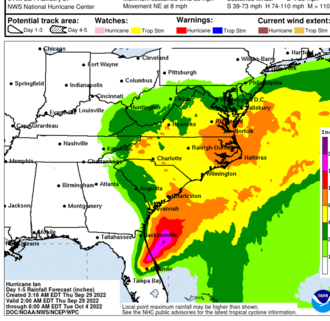
Hurricane Ian is producing “catastrophic flooding” across Central Florida as it churns slowly northward, the National Oceanic and Atmospheric Administration’s (NOAA) National Hurricane Center (NHC) reported at 7:00 a.m. CDT. Hurricane Ian came ashore along the southwestern Florida coast around 3:00 p.m. on Wednesday. The storm weakened overnight as it made its way overland and has been downgraded to a tropical storm. At 7:00 a.m. CDT, the center of Tropical Storm Ian was about 40 miles east of Orlando, Florida. Ian is moving toward the northeast near 8 mph. A turn toward the north-northeast is expected later today, followed by a turn toward the north and north-northwest with an increase in forward speed Friday and Friday night. On the forecast track, the center of Ian is expected to move off the east-central coast of Florida soon and then approach the coast of South Carolina on Friday. The center will move farther inland across the Carolinas Friday night and Saturday. Maximum sustained winds remain near 65 mph with higher gusts. Some re-intensification is forecast when it moves back across water, and Ian could be near hurricane strength when it approaches the coast of South Carolina on Friday. Weakening is expected Friday night and Saturday after Ian moves inland. Ian remains a powerful storm system with tropical-storm-force winds extending up to 415 miles from the center. Daytona Beach International Airport, far from the storm center, recently reported a sustained wind of 60 mph and a gust to 70 mph. The combination of storm surge and the tide will cause normally dry areas near the coast to be flooded by rising waters moving inland from the shoreline. Surge-related flooding depends on the relative timing of the surge and the tidal cycle and can vary significantly over short distances. Tropical storm conditions are occurring in parts of the warning area on the east and west coasts of Florida and should spread northward along Georgia, South Carolina, and North Carolina coasts today through Friday. Hurricane conditions are possible within the Hurricane Watch area in northeastern Florida, Georgia, and South Carolina through Friday. Widespread, life-threatening, catastrophic flash and urban flooding is occurring, with major to record flooding along rivers continuing across central Florida. Storm swells will increase along the coasts of Georgia, South Carolina, and North Carolina today. These swells are likely to cause life-threatening surf and dangerous rip currents on the Atlantic Coast. Governor Kay Ivey has pledged to provide support for the cleanup to Florida Gov. Ron DeSantis. Thousands of Floridians have evacuated to Alabama, and the state is opening shelters. Over a million homes in Florida are without power. Damage assessments will get underway later today when conditions improve. Residents and others are warned not to get out due to the risk of downed powerlines and still-rising floodwaters. To connect with the author of this story, or to comment, email brandonmreporter@gmail.com.
Republican Karla Knight Maddox running for Alabama House District 69
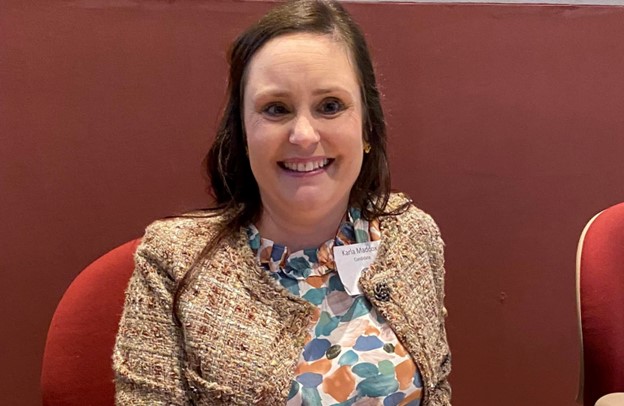
Karla Knight Maddox is the Republican nominee for Alabama House of Representatives District 69. District 69 includes much of southern Montgomery County and parts of Lowndes, Wilcox, and Autauga County. Long a safe Democratic district, this sprawling rural Black Belt district is now one of the most purple districts in the state due to migration and redistricting. Maddox is challenging Democratic incumbent Kelvin Lawrence who has represented District 69 since 2014. Maddox is a wife and mother in Autauga County who has suspended her small business to run full-time for this office. In a lengthy phone interview on Wednesday, Karla spoke with Alabama Today about her campaign. “There are a lot of eyes on this district,” Maddox said. “This district has been blue for so long that they were not aware that it was now winnable after the new lines were drawn.” “I talk to people all the time that thought they were in District 88, that just became aware that they are in District 69,” Maddox said. “Some people are still not aware that they are now in 69.” “There are 10,000 registered Republicans in this district and 9,000 registered Democrats,” Maddox explained. “I am not just talking to Republicans. That would be a waste of time, but I am also talking with Democrats, independents, Libertarians, and whatever third party groups people identify themselves as now.” Greg Pool is the chairman of the Montgomery County Republican Party. “I can’t believe how competitive this seat has gotten,” Pool told Alabama Today. “I want my children and my future grandchildren to be able to look back at the 2022 midterm election and realize that this election made a huge difference in their lives,” Maddox said. “I don’t make promises. I just don’t because too much can happen, but I am the person that the mayor, the county commission, the police chief, and the school board can come to with a problem, and I will do everything possible, including writing a grant for them to help them with that issue. I want to represent this district in a way that it has not been represented in a long time.” Alabama is one of a handful of states that taxes basic foodstuffs. “We have an opportunity to finally do away with the grocery tax,” Maddox said. “My plan is to take it off of fresh fruit and vegetables, meat, butter, eggs, bread, flour, and all the things that you need to prepare a meal for your family at home and keep it on Coca-Colas, Tostitos, beer, and all the extra things that you buy.” Maddox said that her plan would benefit families and low-income people without all of the cost of eliminating the tax altogether. “If the Legislature wants to pass a full removal of the grocery tax, I will support it,” Maddox said. “Either proposal, I will vote for it.” “My children are 16 and 13, and my grocery bill has doubled. That’s tough on families,” Maddox said. “Families need the help (the reduction on the food tax). With the cost of food now, there is not a lot of money left over for gas.” Maddox favors a lottery, but only if it is patterned after the Georgia Hope Scholarship lottery. Maddox grew up in Houston County but was in Georgia for her college years, where she attended college. “Gambling is already in Alabama,” Maddox said. “I am a huge fan of Georgia’s lottery scholarships. That helped pay for me to go to college: all of my tuition and part of my books. It also paid for my brother’s college and part of my sister’s.” The state of Alabama is expected to finish this week with approximately $2 billion in surplus that it did not need for anything in the 2022 fiscal year. That money has rolled over into the 2023 fiscal year that begins Saturday – October 1. Alabama Today asked Maddox what the state should do with that money: make tax rebates to citizens or use it to make strategic investments. “As a wife and mother, I like the tax rebates, but as a businesswoman, I can see making the investments with the money,” Maddox said. “I am still studying this issue. I need to see exactly what they are talking about before giving an opinion.” The state has been facing a lot of criticism lately on prisons. They are understaffed, aging, and the prisoners complain about the horrible conditions, violence, and the poor-quality food. There is currently a work stoppage by some of the inmates. “We have underfunded prisons and jails,” Maddox said. “We need to look at where these issues are coming from. We can find funding, but instead of putting a band-aid on the problem, we need also address what is causing the problem. In some cases, that teen or young adult would be better served in a mental health program rather than in jail or prison, and in some instances, drug rehab would be a better option rather than being locked up.” “If you are some drug kingpin, you are going to jail,” Maddox said, emphasizing that the state needs to be tough on crime. “I am in favor of the death penalty,” Maddox. “I do believe that some crimes are so bad that they need to be paid for through the death penalty.” “From the research I have done, lethal injection is the most humane method of execution,” Maddox said. Gov. Ivey recently awarded $82 million in grant money to build a middle mile network to expand rural broadband in the state. Alabama Today asked Maddox if that benefitted District 69. “Absolutely, that will definitely benefit district 69,” Maddox said. “Wilcox and Lowndes have big coverage gaps, and even here in Autauga County, the schools have to deploy the school buses out around the county to serve as mobile wi-fi hot spots so that the children can do their work on e-learning days.” “There is the cost of the driver and the fuel; how much money is that costing?” Maddox said. “Technology is a game-changer. We need broadband.” Maddox is a strong supporter of school choice in Alabama. “A lot
Kay Ivey celebrates win for religious liberty
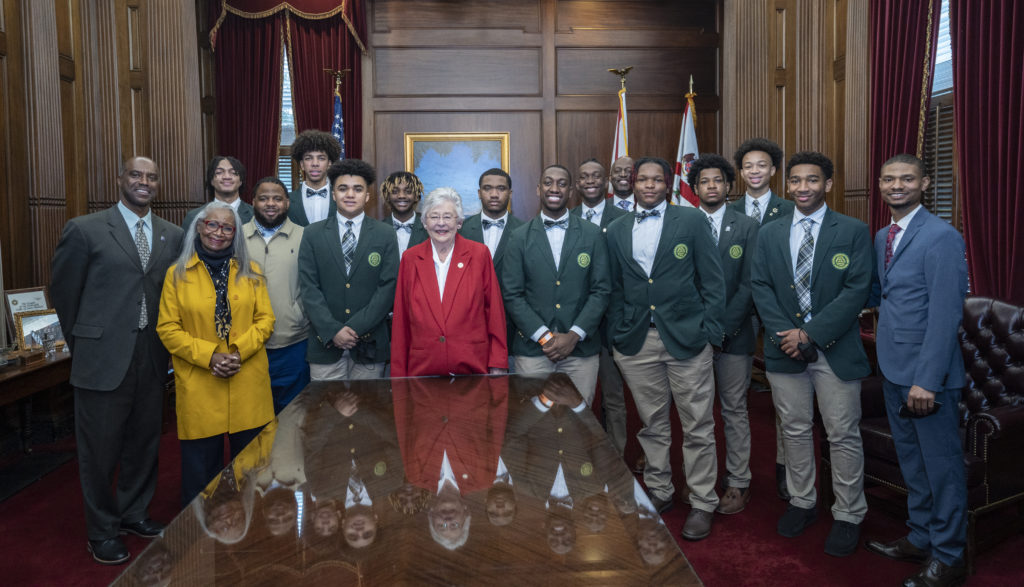
On Tuesday, the Alabama High School Athletic Association (AHSAA) voted to change a rule that had required teams to play on Saturday – even when their faith belief is that the Sabbath is on Saturday and athletic competitions, like work and other pursuits, should be avoided on the day of rest. Gov. Kay Ivey applauded the decision as a win for religious liberty in Alabama. Earlier this year, Governor Ivey hosted the Oakwood Adventist Academy boys basketball team in her office. The AHSAA has forced the team to forfeit their game in the Association’s semifinals because they would not set aside their religious beliefs and play the game as ordered. “Today’s vote by the Alabama High School Athletic Association is absolutely a win for religious liberty, and no doubt, is a testament to the Oakwood boys and their convictions,” Gov. Ivey said in a statement. “I hope that Alabamians – young and old – can look to these boys as an example. They stood strong in their faith and showed that good can come from a difficult situation. Here in Alabama, we will always stand up for religious freedom, and this rule change is certainly doing just that.” Gov. Ivey wrote a letter to AHSAA Executive Director Alvin Briggs questioning the decision to require the team to forfeit their game or not observe their Sabbath. In their meeting, the team members told the governor they hoped their experience would force a change so that this would never happen again. Seventh-Day Adventists, like Judaism and the Old Testament, hold that the seventh day – Saturday – is the Sabbath, not Sunday. Oakwood Academy is the oldest Black Seventh-Day Adventist school in the entire country. Oakwood Adventist Academy is represented by the Becket religious liberty group. The rule change came in response to a lawsuit filed earlier this year, Oakwood Adventist Academy v. Alabama High School Athletic Association. Becket said in a statement that Tuesday’s action by AHSAA will provide lasting protection for religious schools and their athletes and will serve as an example for other states. “We applaud AHSAA for doing the right thing,” said Todd McFarland, associate general counsel for the General Conference for Seventh-day Adventists. “The new rule allows the Oakwood Mustangs to give their all both in their faith and in their sport.” Consistent with the National Collegiate Athletic Association’s rule for religious accommodations, the new rule will guarantee that schools from minority faith traditions are not excluded from the playing field or pressured to abandon their beliefs for a shot at the big game. The First Amendment requires workable accommodations in state sports to allow participants of all faiths to compete on an equal basis. “This new rule is a win for both the Mustangs and the First Amendment,” said Joseph Davis, counsel at Becket. “We hope that other state athletic associations will follow AHSAA’s lead so that no school or student will ever be excluded from participating on account of their faith.” To connect with the author of this story, or to comment, email brandonmreporter@gmail.com.
Alabama prisoners refusing to work in 2nd day of protest
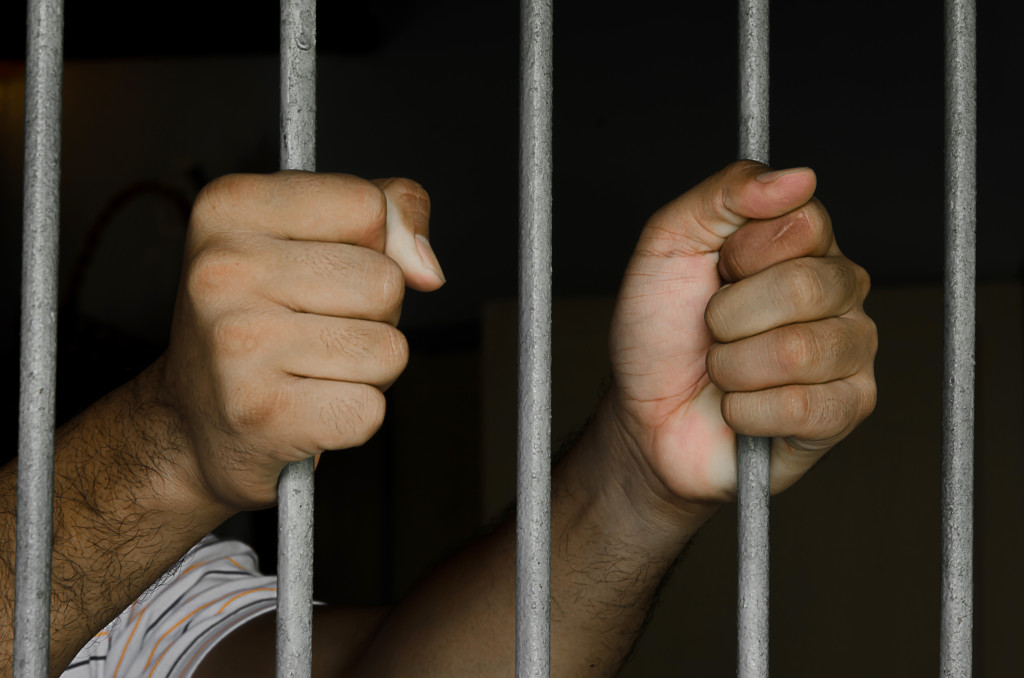
Alabama inmates were in their second day of a work strike Tuesday, refusing to labor in prison kitchens, laundries, and factories to protest conditions in the state’s overcrowded, understaffed lock-ups. Prisoners, including those who provide food, laundry, and janitorial services, refused to show up for work at major state prisons, leaving staff scrambling to keep the facilities running. “They are running a slaughterhouse,” Diyawn Caldwell, founder of the advocacy group Both Sides of the Wall, said of Alabama’s prison system, which the U.S. Department of Justice has called one of the most violent and understaffed in the country. Caldwell’s husband is incarcerated at a state prison. The Department of Justice has an ongoing civil lawsuit against Alabama over conditions in its prisons, saying the state is failing to protect male inmates from inmate-on-inmate violence and excessive force at the hands of prison staff. The 2020 lawsuit alleges that conditions in the prison system are so poor that they violate the ban on cruel and unusual punishment and that state officials are “deliberately indifferent” to the problems. Alabama officials have acknowledged problems in the prison system but dispute the Justice Department’s accusations. The Alabama Department of Corrections confirmed Tuesday that the work stoppage was “still active in most male facilities.” However, the department maintained that “facilities are operational and there have been no disruption of critical services, which include meals.” Family members of several inmates, however, said prisons were not distributing three daily meals and prisoners were given paper sacks containing corndogs or sandwiches. Inmate labor provides a vital role in keeping prisons functioning. “HOW LONG CAN 25 PEOPLE RUN A PRISON WITH 1000, 1800, 2300, etc. PRISONERS?” inmate organizers of the work stoppage wrote in a press statement about the strike. Caldwell said organizers are hoping to persuade federal officials to go ahead intervene in the prison system. She said they are also seeking a number of changes related to release and sentencing such as repealing the Habitual Felony Offender Act, establishing uniform criteria for parole that would guarantee release, streamlining the review process for medical furloughs and reviewing elderly incarcerated individuals for immediate release. Supporters, including family members, delivered the demands to the prison system headquarters after a protest on Monday. A spokesperson for Gov. Kay Ivey told reporters that the demands were unreasonable and thanked prison staff for maintaining facilities. “It is also important for these protestors to understand that a lot of their demands would require legislation, not unilateral action. Some of these demands suggest that criminals like murderers and serial child sex offenders can walk the streets, and I can tell you that will never happen in the state of Alabama where we will always prioritize the safety of our citizens,” Ivey’s office told news outlets. The strike, while not directly related, comes after photos of an emaciated inmate at Alabama‘s Elmore Correctional Facility went viral. Kastellio Vaughan’s sister had posted the photos to Facebook with the message, “Get Help.” The disturbing image prompted outrage and allegation of medical neglect. The prison system said that Vaughan had refused medical assessment and left the hospital following surgery against medical advice “This is horrific,” Ben Crump, an attorney representing Vaughan said in a statement. “Let’s be clear, the State of Alabama has tried to deflect any action or responsibility for Mr. Vaughan’s condition at every turn. The prison system issued a statement Tuesday saying that Vaughn had surgery for an obstructed bowel in August and was hospitalized in September for a complication. Both times he was discharged against medical advice, the prison system said, and has since refused medical assessment and medical treatment. “The ADOC offers medical assessment and treatment to all inmates but does not force them to accept that care,” the prison system said. Republished with the permission of The Associated Press.
Running on Empty: Petroleum reserve hits low point, gas prices begin to rise again
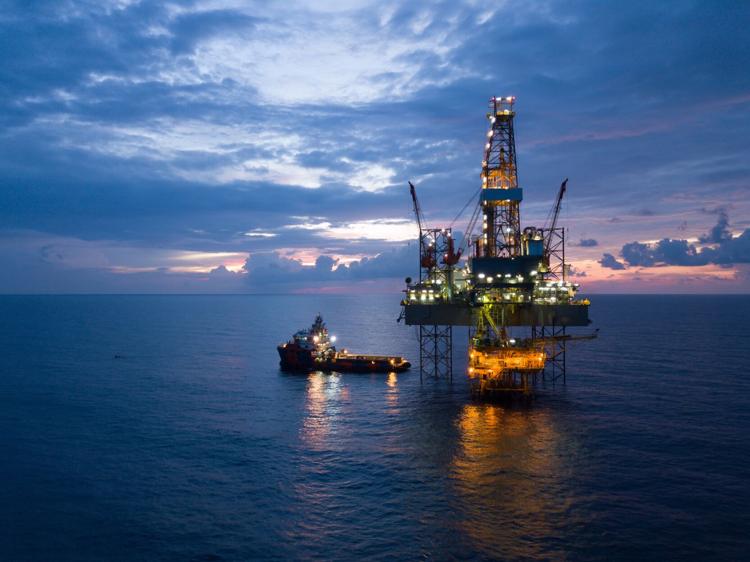
Gas prices are on the rise again just as the Strategic Petroleum Reserve hits a low point that many say is a problem. Gas prices hit record highs in the middle of June, surpassing a national average of $5 per gallon before starting a steady downward trend for several consecutive weeks. That streak ended last week, though, when gas prices began to tick back up. The current national average price for a gallon of regular gasoline is $3.77, up from $3.68 a week ago. The Biden administration also touted the lower gas prices last Tuesday, but the very next day, data showed they had begun to rise again. “Folks, gas prices are now back to levels they were at in early March,” Joe Biden wrote on Twitter. “That means nearly all of the increases since the beginning of Russia’s war in Ukraine have been wiped out.” At the same time, the Strategic Petroleum Reserve is at the lowest level in nearly four decades. Last week, the Office of the Strategic Petroleum Reserve announced the sale of another 10 million barrels of oil, bringing their total to 165 of the 180 million barrels Biden authorized for release. Biden has touted the lower prices and the relief they’ve brought to Americans as prices have dropped. Lawmakers, though, blasted Biden for using the petroleum reserves so extensively for short-term relief, saying he put the U.S. in a difficult position without addressing the root causes by encouraging more domestic oil production. “The Biden Administration can’t continue to tap the Strategic Petroleum Reserve and simultaneously say we don’t have an energy crisis or a need to increase domestic energy production,” said U.S. Rep. Garret Graves, R-La. “Their self-imposed mistakes are weakening our energy security.” Other critics pointed out an emergency could stress the already weakened reserves and put the reserves dangerously low. “Less than two years into his term, [Biden] has released more oil from the nation’s Strategic Petroleum Reserve than all previous presidents combined, causing our supply to fall to a historic low,” U.S. Rep. Michael Burgess, R-Texas, said. “This is a national security threat, and it is unacceptable.” The lower reserve level also spurred questions about whether hurricane Ian, expected to potentially hit the site of several petroleum storage sites, will affect the availability of reserves especially if another emergency arises. “I don’t have any concerns at this point that we’re going to have the ability to handle the fuel needs that we’re going to need in Florida,” FEMA Administrator Deanne Criswell said at a White House press briefing in response to those concerns. “We will continue to assess after the storm passes to see what the impacts are. We’ll make sure that we’re putting measures in place to support … any gaps that we might identify.” The higher gas prices come just ahead of the midterms and could have a major impact on lawmakers seeking reelection. Gas prices had become a political cudgel used against Democrats, especially alongside soaring inflation, but the drop of those prices in recent weeks largely disarmed Republicans. If gas prices continue to rise through election day, Republicans will have another weapon in their arsenal to use against the Biden administration and Democratic candidates. “If you’re wondering why the Biden admin won’t be talking about gas prices today, it’s because they’ve now risen for the 6th day in a row after being artificially lowered by releasing our Strategic Petroleum Reserve,” said Jennifer-Ruth Green, a Republican running for Congress in Indiana. Republished with the permission of The Center Square.
Ross Marchand: At long last, Postal Service ends Reseller program
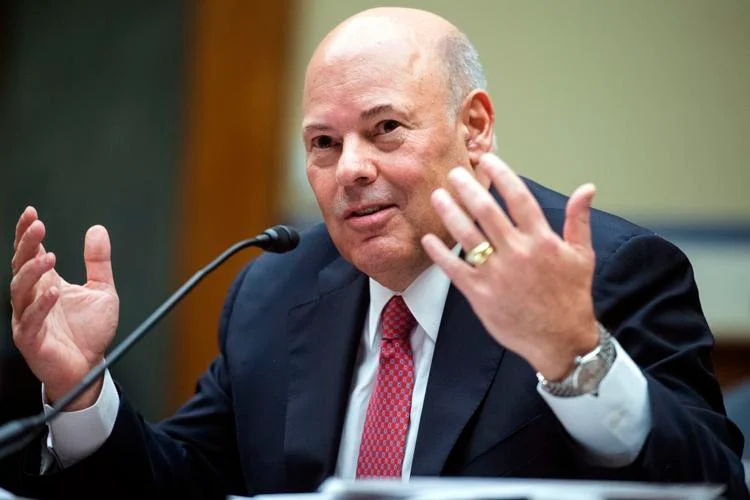
Too often, taxpayers have had to put up with costly government programs that only expand over time. America’s mail carrier has more than its fair share of red ink, and the agency’s mission creep and inefficient operations certainly haven’t helped. Due to dubious discounts supposedly passed along to bulk postage buyers, the U.S. Postal Service (USPS) has had real trouble raising revenue to meet growing expenses. For years, companies participating in the reseller program have used these discounts to pad profits while undermining the USPS’ business model. This program is, fortunately, coming to an end, giving taxpayers and consumers a rare cause for celebration. Other agencies should take the USPS’ lead and give much-needed scrutiny to floundering operations. Like most sellers, the USPS is eager to extend promotions as a way of getting new consumers and attracting large clients. Without the appropriate oversight, strategic discounts can easily spring leaks in any venture. The USPS learned this the hard way when it gave private resellers the green light to offer marked-down postage to bulk buyers. These middlemen strayed far from program guidelines, extending discounts to companies that didn’t buy enough postage to qualify for promotional rates. In 2017, the Capitol Forum (a watchdog group) used barcode scanning technology to decode the postage prices that middlemen were offering small postage buyers. They found that these small buyers were offered bottom-of-the-barrel prices by resellers even after the postal consumers emphasized how small their shipping volumes are. In some cases, these buyers paid just $10.26 on a three-pound parcel that should have cost $14.90. That $4.64 difference bolsters middlemen’s balance sheets because it ensures that customers will patronize them instead of going directly to the post office. But every cent of that total comes at the expense of postal profitability and subtracts from product cost coverage. For a while, this unsustainable arrangement operated free of scrutiny and cost the agency more than $200 million per year. The first shoe thankfully dropped at the beginning of 2019, when the USPS began divorcing itself from leading reseller Stamps.com. The agency nixed an “exclusive partnership” with the reseller, cutting off access to the lion’s share of deeply discounted postage. Despite this step in the right direction, the reseller program continued to limp along at a substantial cost. The USPS Inspector General (IG) released a heavily redacted report that analyzed, “[t]he complex role of middlemen and discounts in the USPS package business.” While most of the report is hidden behind a thick sludge of black ink, postal management wasn’t pleased by the findings. The IG notes, “management claimed that the OIG’s report contains commercially sensitive information and should only be disclosed to postal management… Management also disagreed with many of the OIG’s findings.” The IG regarded these clumsy attempts at secrecy as “an attack on the independence of the OIG and an attempt to keep important work from being disclosed to critical stakeholders.” Meanwhile, taxpayers and consumers were left wondering why the USPS was so afraid of discussing its supposedly innovative and money-making venture out in the open. Then-incoming Postmaster General Louis DeJoy rightly saw this postal drama as a major red flag and reportedly tried to immediately axe the program. There was (predictably) pushback from postal management, and progress proved slow. But it looks like DeJoy finally got his way; the program is scheduled to be unceremoniously kiboshed on October 1. At last, taxpayers and consumers can place some trust in beleaguered postal leadership. The $200 million in annual revenue gains won’t make up for multi-billion-dollar net losses, but reform has to start somewhere. Only time will tell if the USPS can fully get its act together and deliver for the American people. Ross Marchand is a senior fellow for the Taxpayers Protection Alliance. Republished with the permission of The Center Square.
New report: Oil spills from offshore transportation way down
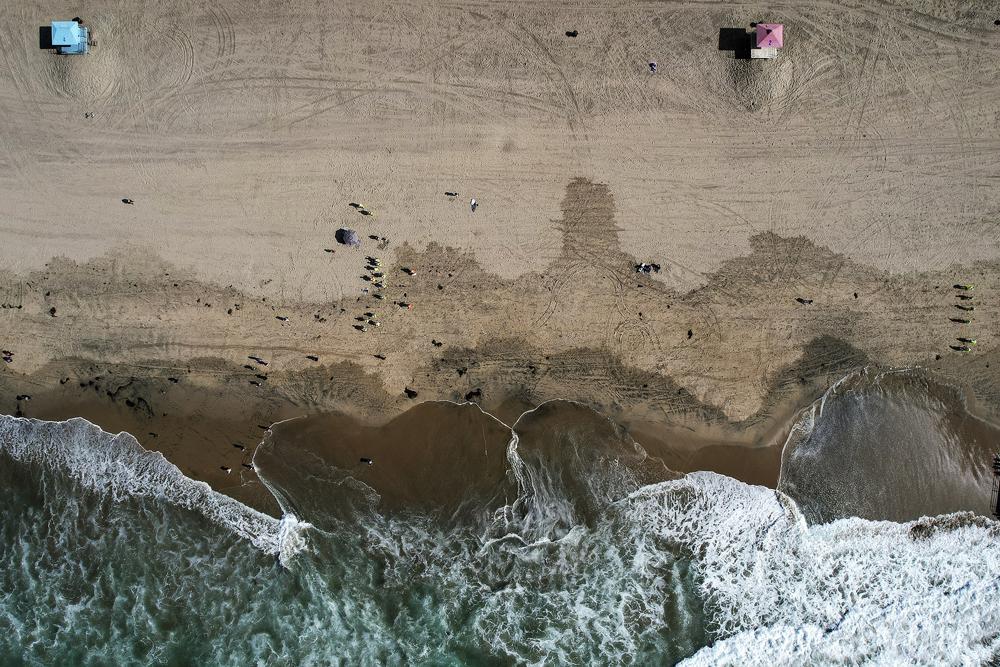
Oil and natural gas spills from tankers and pipelines in U.S. waters dropped dramatically from the last decade of the 1990s to one from 2010 through 2019, according to a federal report Wednesday. The amounts spilled and dumped in wastewater from drilling rigs and production platforms rose, but — if the disastrous 2010 Gulf of Mexico spill isn’t counted — the increase is mainly because there is more work offshore, said the National Academies of Sciences, Engineering, and Medicine. “It is evident that regulatory changes, advances in science and technology, and (for the most part) attention to safety would have helped to make North American waters less polluted with oil” without the Deepwater Horizon spill, the report said. But the BP well blew, killing 11 people and spewing millions of gallons (kiloliters) of oil into the Gulf of Mexico off Louisiana over months. Another big contributor during the past decade was the nation’s longest-running oil spill, also off Louisiana. The 497-page report was written by an international committee of academic and industry experts and reviewed by many others. “Overall, I think they have done a very comprehensive job,” said Anthony Knap, director of the Geochemical and Environmental Research Group at Texas A&M University, who was not an author or reviewer. Like a report released in 2003 this one — “Oil in the Sea IV: Inputs, Fates, and Effects” — said that oil in runoff, largely from cars and cities, is the biggest source of ocean oil pollution, with natural seeps second and spills in third place. But hard data on oil in rivers is so scarce and the range of possible amounts so huge that — although the report put the figure from the U.S. about 20 times the earlier estimate — it couldn’t say whether there was an actual increase. Increases in urban land area, population, and vehicle ownership make an increase “plausible … but it is unclear by how much,” the report said. “One of the big findings is, in general, we do not have adequate data,” committee chair Kirsi K. Tikka, of Ardmore Shipping and Pacific Basin Shipping, said in a phone interview Tuesday from London. Natural seeps of oil and natural gas from the ocean floor were estimated at nearly 30.8 million gallons (116,500 kiloliters) a year. That’s about 60% of the 1990s estimate, but the change is because recent estimates of seeps in the Gulf of Mexico and off California are more accurate, Tikka said. “We have more techniques to measure the seeps,” but those two areas are the only ones with data, she said. The spill data is the most accurate part of the report, Tikka said. “As you probably know, even on large oil spills, you never have exact numbers,” she added, “but those are the best we have available.” Spills from tanker ships fell from an average of 1.6 million gallons (6,175 kiloliters) a year in the last decade of the 1900s to 61,600 gallons (230 kiloliters) in the decade just past. Over the same period, pipeline spills went from nearly 585,000 gallons (2,210 kiloliters) a year to just under 117,000 gallons (440 kiloliters). Laws and regulations after the Exxon Valdez ran aground in 1989 near its namesake Alaska town account for much of the difference in tanker spills, Tikka said. Among other things, she noted, the Oil Pollution Act of 1990 phased in a requirement for double-hulled tankers in U.S. waters, and other countries and international bodies followed suit. Increased inspection and maintenance accounts for the reduction in pipeline spills, she said. Spills from offshore oil drilling and production rose sevenfold over the period to about 338,600 gallons (1,280 kiloliters) a year. And oil in well wastewater was estimated at about 2 million gallons (7,900 kiloliters) a year — about 2.5 times the estimate for the 1990s. The wastewater oil is likely an overestimate, Tikka said. Oil companies report the total amount of “produced water,” but not the amount of oil it held, so the report used the highest allowable percentage. “Most likely, the levels are less,” she said, adding that both figures reflect increased drilling and production. Without Deepwater Horizon, Tikka said in an email, “spillage per unit of production has decreased by 65% since the last … report, but remained relatively constant in the last 20 years.” Texas A&M’s Knap said in an email, “Just like discharges from ships, operators are far more diligent than they were in the past so a straight line from number of platforms to more oil is not a given. Republished with the permission of The Associated Press.
