
Amendment Four would ban changing Alabama election law within six months of an election
Voters will go to the polls on November 8 to elect their state, federal, and county leaders. Alabama voters will also decide what constitution they will live under for the next four years. There are a number of proposed amendments to the historic 1901 Constitution of Alabama for voters to consider. Amendment Four would forbid changes to election law within six months of any Alabama election. State Rep. Jim Carns carried the bill on the floor of the House. “This would keep the supermajority from passing a law that would benefit the supermajority within six months of an election,” Carns said. “This is to prevent this from happening in the future, and we do a lot of things to prevent things in the future.” A number of House Democrats opposed the bill. “I don’t see the need for this bill,” State Rep. Juandalynn Givan said. “You all are going to have a supermajority for a while. I continue to say that we are one second away from Jim Crow.” Jefferson County Republican Party Chairman Paul DeMarco supports ratification of Amendment 4. “If approved by voters, in the future, Alabama lawmakers would have to enact any changes to election law at least six months before any election that may be affected by the new statute,” explained DeMarco. “This amendment was proposed by State Representative Jim Carns after the 2020 presidential election. Some laws governing how votes could be considered or counted were changed around the country close to the last election. Just as in football, the rules of the game should not be changed while they are playing.” “Election laws should be no different, so voters have confidence in the integrity of the results,” DeMarco continue. “It is not fair to candidates or voters when the law governing access to the ballots are altered so close to the days the polls open. Hopefully, this Amendment will pass in November to go into effect before the next set of elections.” The text of Amendment 4 stated, “Proposing an amendment to the Constitution of Alabama of 1901, as amended; to provide that the implementation date for any bill enacted by the Legislature in a calendar year in which a general election is to be held and relating to the conduct of the general election shall be at least six months before the general election. (Proposed by Act 2021-284).” “State Amendment 4, if approved, provides that the implementation date for any legislative bill passed in a calendar year in which a general election is to be held and relating to the conduct of the general election shall be at least six months before the general election,” Secretary of State John Merrill wrote on Twitter. This amendment was introduced as House Bill 388 by Carns. On April 6, 2021, the House voted in favor 75 to 24. The Senate passed the amendment on April 22, 2021, in a 25 to 4 vote. Election integrity has been a major point of discussion since the 2020 election and those disputed results. The general election is on November 8. Voters need to bring a valid photo ID with them in order to participate in the election. To connect with the author of this story, or to comment, email brandonmreporter@gmail.com.
Kay Ivey urges voters to ratify Aniah’s Law
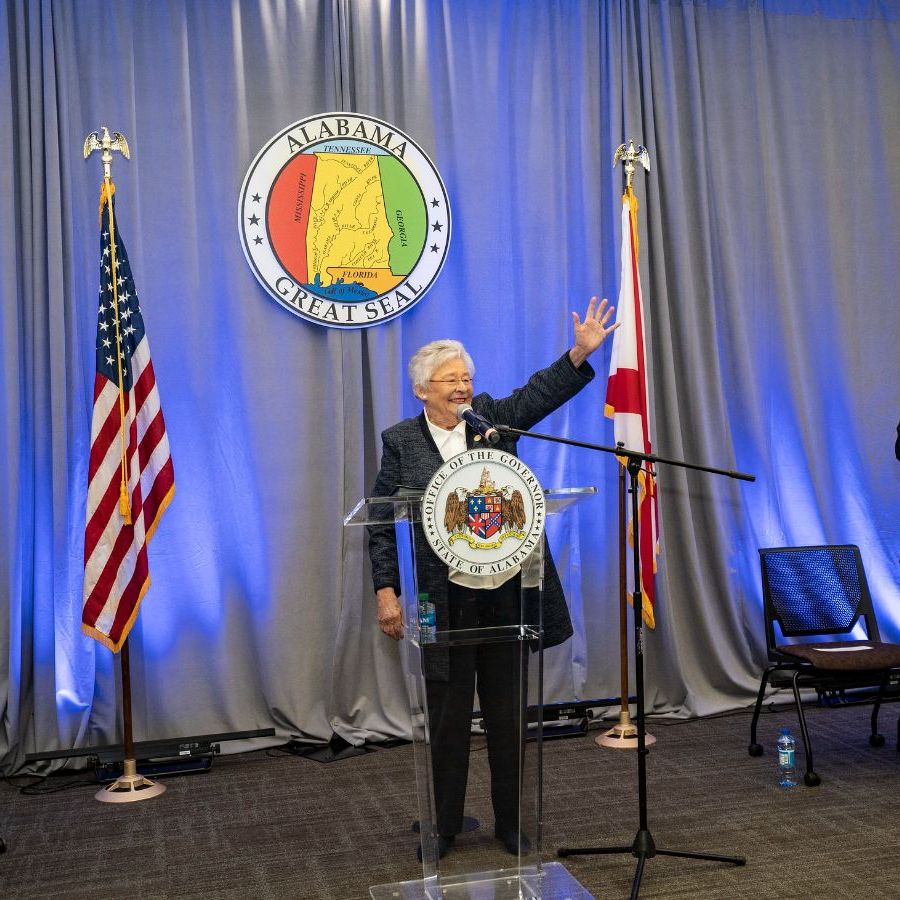
Alabama Governor Kay Ivey on Thursday issued a statement voicing her support for ratification of Aniah’s Law. Amendment one would allow judges to deny bail to violent criminals with a history of violent and anti-social behavior. It is named for college student, Aniah Blanchard, who in 2019 was kidnapped, raped, beaten, and brutally murdered by a violent felon who was out on bond awaiting trial for kidnapping. “Three years ago this week, the nation watched as Alabama learned the beginnings of an unjust tragedy that never should have taken place,” Gov. Ivey stated. “While we prayed for a different outcome, Aniah Blanchard’s untimely death revealed flaws in the judicial system. It is past time we fix those issues, but because of the unwavering dedication of Aniah’s family and the unanimous support by the Alabama Legislature, Amendment One, also known as Aniah’s Law, will be on the ballot this November. I encourage every Alabamian to join me in voting yes on Aniah’s Law to ensure no family would have to go through the pain of preventable tragedy. Public safety is a top priority, and Aniah’s Law won’t just bolster public safety, but also, honor and allow for Aniah to redefine Alabama’s judicial system to help save lives across the state.” The 1901 Constitution of Alabama, which is the oldest state constitution still in current use, is the longest constitution in the world. It has been frequently amended over the last 121 years, and an amendment requires passage both by a supermajority of both Houses of the Alabama Legislature and an affirmative vote by a vote of the people. If voters pass Amendment One, judges would be able to deny bail to a person charged with a violent felony following a hearing. This power would be extended to 13 first-degree offenses, including murder, assault, kidnapping, rape, sodomy, domestic violence, human trafficking, burglary, arson, robbery, sexual torture, terrorism, and aggravated child abuse. A no vote on Amendment One would mean that the law would stay as it is now, and Alabama judges will continue to have limited authority to deny bail to violent offenders unless the suspect is charged with a capital offense or poses a flight risk. There are numerous such proposed constitutional changes on this year’s election ballot. In addition to the amendments, three political parties: the Republicans, the Democrats, and the Libertarians, are vying for control of state government. A voter can pick which of the three they want to run state government. Alabama is one of six states (Alabama, Indiana, Kentucky, Michigan, Oklahoma, and South Carolina) that allows straight-ticket voting. Voters can also choose which candidate they want for each elected office and work their way all the way down the ballot. Ivey is running for a second term as Governor of Alabama. She faces Democratic nominee Yolanda Flowers and Libertarian nominee Dr. James “Jimmy” Blake. To connect with the author of this story, or to comment, email brandonmreporter@gmail.com.
Libertarian candidate for Governor, Jimmy Blake, discusses issues

On Wednesday, Libertarian nominee for Governor, Dr. James “Jimmy” Blake, addressed voters online in a forum hosted by the Jefferson County Libertarian Party at the Mountain Brook Library. Blake said he had recently attended the “Break the Chains” rally organized by the families of prisoners of the Alabama Department of Corrections (ADOC). Blake said that he was moved “When you heard the stories and saw the videos that the families brought in there.” “The people of Alabama are a very decent bunch of people, and I don’t know whether politicians think they will be seen as soft on crime or they think that people just don’t care,” Blake said, urging the state to care for its prisoners better. According to a report by the Trump Department of Justice, the Alabama prison system is the most dangerous in the country. The state is facing a DOJ lawsuit alleging that incarceration with ADOC is an unconstitutional “cruel and unusual punishment,” banned by the Eighth Amendment to the U.S. Constitution. Blake chastised legislators and the Ivey administration for not focusing on the problem. “I think we are focused on sending money to favored contractors,” Blake said, criticizing the state for “Spending $400 million that was supposed to go to the people for COVID relief” to build new mega prisons. Blake said that he favored housing the prisoners in a more humane environment. “They want people to be rehabilitated and not more dangerous than when they went in there,” Blake explained. Even though Blake is running for governor, he still weighed in on the U.S. Senate race to chastise Republicans. “They had a guy who was a small government conservative in Mo Brooks,” Blake said. “They said so many outrageous things about him that were untrue and then chose a BCA lobbyist (referring to Katie Britt). We have a guy who knows what the government is supposed to be doing in John Sophocleus.” Blake said that the Libertarian Party was created 50 years ago when Republican President Richard Nixon devalued the currency by getting off of the gold standard. “A 1964 dime is 95% silver,” Blake said. “It is worth over two dollars today. A 2022 Biden dime is worth ten cents, and in a year, it will be worth nine cents a year from now due to inflation.” Blake chastised incumbent Gov. Kay Ivey for rejecting structural tax changes and what he called the corrupt duopoly of the two major political parties. Blake argued against laws banning marijuana, saying that Prohibition only creates “black markets,” detailing how Prohibition in the 1920s increased crime and violence while also leading to harder alcohol and alcohol poisoning. “You wouldn’t have fentanyl” if drugs were legal, Blake said. “Your liability would be too high.” Blake is a former U.S. Air Force flight surgeon who flew nuclear strike F4 Phantom fighters in Europe during the Cold War. He graduated from Auburn University and went to medical school at UAB on an Air Force scholarship. Blake served eight years on the Birmingham City Council. He also led the RAPS group that opposed the MAPS effort by then Birmingham Mayor Richard Arrington to build a domed stadium and other projects by raising taxes across Jefferson County. Blake is a former chairman of the Libertarian Party of Alabama. He started the first free-standing “urgent care” healthcare clinic in Alabama – American Family Care. After leaving that business, Blake practiced medicine in the Hoover area. More recently, Blake has practiced emergency medicine at rural hospitals. Blake’s wife was killed in a tragic car accident. This is the first time Libertarians have had ballot access in Alabama in twenty years. Blake is challenging incumbent Gov. Ivey. Ivey has led the state since 2017. Yolanda Flowers is the Democratic Party nominee for Governor of Alabama. There are also two write-in candidates campaigning for governor. The general election is on November 8. Voters must have a valid photo ID to participate in any Alabama election. To connect with the author of this story, or to comment, email brandonmreporter@gmail.com.
AG Steve Marshall hosts 23rd Annual Alabama Law Enforcement Summit
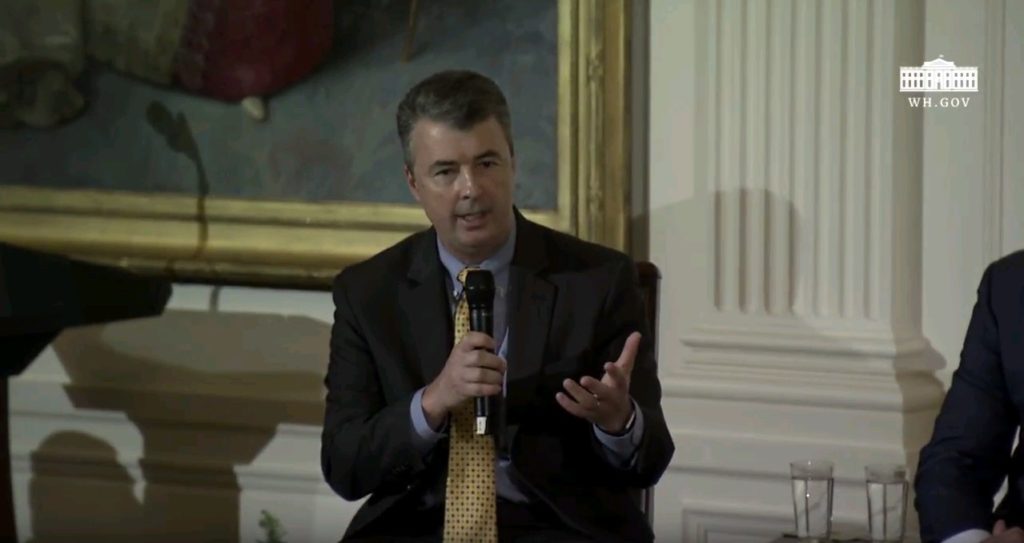
Alabama Attorney General Steve Marshall hosted hundreds of law enforcement officials from all over the state of Alabama for the 23rd annual Attorney General’s Law Enforcement Summit on Thursday. The 2022 summit offered a day of instruction for police officers, sheriff’s offices, and State law enforcement officials. “With over 400 law enforcement agencies in Alabama, our men and women in uniform protect diverse communities with many different challenges,” said AG Marshall. “Each year, it is my honor to host the Attorney General’s Law Enforcement Summit to share best practices and new legal information with Alabama law enforcement. It is not only a unique educational opportunity but a much-anticipated time for personnel to get to know their counterparts from across the state.” During the six-hour Summit, officials were updated on Alabama criminal law, personally delivered by Alabama Court of Criminal Appeals judges Chris McCool and Richard Minor. McCool and Minor were district attorneys before their election to the Court. That was followed by an in-depth training session focused on “Leadership During a Crisis,” provided by former South Carolina police chief Byron Snellgrove, whose community was thrust into the national spotlight during the investigation of the disappearance of a six-year-old girl. There was also a commemoration for fallen officers who lost their lives in the line of duty since last year’s Summit. Marshall recognized the sacrifices of the following fallen officers: Senior Trooper Jason Lynn Vice of the Alabama Law Enforcement Agency (ALEA), died on September 9, 2021, as a result of contracting COVID-19 in the line of duty. Trooper Vice served 15 years with ALEA and was assigned to the Highway Patrol Unit at the Tuscaloosa-Selma Highway Patrol Post. He is survived by his wife, two daughters, sister, father, grandmother, and stepfather. Ider Police Chief Buddy Ray Crabtree died on October 30, 2021, from complications as a result of contracting COVID-19 in the line of duty. Chief Crabtree served with the Ider Police Department for ten years and had previously served with the Bridgeport Police Department. He is survived by his wife, four children, and eight grandchildren. Constable Madison “Skip” Nicholson of the Wilcox County Constable’s Office died on December 1, 2021, after being shot while responding to a domestic disturbance call in Yellow Bluff. Nicholson was a 40-year Wilcox County law enforcement veteran, having served as full-time and reserve deputy sheriff and an elected constable. He was previously wounded in the line of duty. He is survived by his wife, two sons, a daughter, and eight grandchildren. Investigator Steven Ray Finley of the Madison County Sheriff’s Office died on January 14, 2022, due to contracting COVID-19 in the line of duty. Investigator Finley was a United States Army veteran and served with the Madison County Sheriff’s Office for 29 years. He is survived by his wife. Lieutenant Kevin Pounders of the Hanceville Police Department died on January 23, 2022, as a result of contracting COVID-19 in the line of duty. Lt. Pounders was a United States Marine Corps veteran who served with the Hanceville Police Department for 24 years. He is survived by his wife, son, grandchild, and mother. Deputy Sheriff Steve Bobbitt of the DeKalb County Sheriff’s Office died on February 3, 2022, as a result of contracting COVID-19 in the line of duty. Deputy Bobbitt served the DeKalb County Sheriff’s Office for 13 years. He is survived by his wife, two daughters, and one granddaughter. Corporal Keith Morgan of the Cherokee County Sheriff’s Office died on February 16, 2022, as a result of contracting COVID-19 in the line of duty. Cpl. Morgan served with the Cherokee County Sheriff’s Office for 12 years. He is survived by his wife and two daughters. Sergeant Christopher Michael Vaughn of the Cedar Bluff Police Department died on April 1, 2022, from a medical condition after assisting in a vehicle pursuit that resulted in a vehicle crash. Sgt. Vaughn served with the Cedar Bluff Police Department for six years and previously served with the Leesburg Police Department for seven years. He is survived by his wife, two sons, parents, and brother. Officer Darryl Wayne Fortner of the Vestavia Hills Police Department died on April 6, 2022, from complications as a result of contracting COVID-19 in the line of duty. Officer Fortner served with the Vestavia Hills Police Department for over seven years and previously served 20 years with the Birmingham Police Department. He is survived by his wife, son, daughter, three grandchildren, mother, and sister. Deputy Sheriff J’Mar Colin Abel of the Chambers County Sheriff’s Office died on June 20, 2022, from a vehicle crash while assisting the Roanoke Police Department in pursuing a suspect. Deputy Abel lost his life on his second anniversary with the Chambers County Sheriff’s Office. He is survived by his father and fiancée. Deputy Sheriff Bradly Steven Henry Johnson of the Bibb County Sheriff’s Office died on June 30, 2022, from a gunshot wound sustained the previous day while encountering a suspect who fired on Deputy Johnson and a second deputy. Deputy Johnson served with the Bibb County Sheriff’s Office for eight years. He is survived by his fiancée, two children, and his parents. Officer Ivan Mauricio Lopez of the Mount Vernon Police Department died on August 22, 2022, when a vehicle driving approximately 90 mph ran a stop sign and struck his patrol car. Officer Lopez served with the Mount Vernon Police Department for 12 years. He is survived by his wife and two daughters. Corrections Officer Rickey Cooper of the Alabama Department of Corrections died on August 27, 2022, after collapsing while on duty at Easterling Correctional Facility. Officer Cooper served with the Alabama Department of Corrections since 2007 and would have completed 15 years on September 4. He is survived by his mother, son, and two grandsons. “As with much of the nation, Alabama continues to experience an increase in law enforcement deaths in recent years,” AG Marshall observed. “The commitment to protect and serve is absolutely vital to the long-term safety of our cities and towns, yet it also comes with great risk. Too many of our best in uniform have lost their lives on duty, leaving behind families and friends. Law enforcement is not only a protection force but also a very big family, and it is important for us to come together each year to honor those we have
Hyundai supplier, Mobis, announce new factory bringing 400 jobs to Montgomery

Alabama Governor Kay Ivey joined executives of Hyundai Mobis in the Old House Chambers of the historic Alabama State Capital to announce the company’s plan to build a second manufacturing plant in the Montgomery area. Montgomery Chamber of Commerce Chairman Cedric Campbell said that Mobis plans to invest $205 million to open an EV battery module plant in Montgomery that will eventually employ at least 400 people. Once it reaches full production, the 450,000-square-foot facility will be able to supply over 200,000 EV batteries annually to the Hyundai Motor Manufacturing Alabama (HMMA) factory in Montgomery and the Kia Georgia plant. Hyundai plants to produce a luxury Genesis GV70 vehicle as well as an electric version of the popular Santa Fe sports utility vehicle. “Alabama’s auto manufacturing sector is evolving rapidly to capitalize on the EV revolution that is sweeping the industry, and this new Hyundai Mobis battery plant represents another milestone in that transition,” said Gov. Ivey. “We’re excited about the company’s new investment and what it represents for the next chapter of automaking in Alabama.” Mobis is one of the largest automotive suppliers in the world. “It is an honor to host you all in the state capital, and especially to have our friends from Korea, here today,” said Gov. Ivey. Ivey praised Hyundai. “We have watched the company grow more and more and have watched the company evolve to keep up with the ever-changing automotive industry,” said Ivey. “When you choose the state of Alabama to do business, you can expect the full support of the state of Alabama as well as from local government.” H.S. Oh is the vice president of the division that produces the electric powertrain business for Hyundai Mobis. Oh said that the new Alabama EV battery assembly facility will play a critical role in the company’s plans to expand its production network across the globe. “As the EV market continues to grow, having a strong production capacity will be key in allowing Hyundai Mobis to see continued growth in the market,” Vice President Oh stated. “We believe this new facility in Montgomery will be an important step in that process, and we are excited for the project to be underway.” “Governor Ivey, we thank you for the work that you, your cabinet, and your entire staff do for the state of Alabama, the Montgomery City, and the entire river region,” said Montgomery Mayor Steven Reed. “There are a lot of pieces that have to come together to have a $205 million dollar investment, especially one that produces over 400 jobs.” “We will be there every step of the way to get things up and running in this facility,” said Mayor Reed. Reed thanked the members of the industrial development board, the Governor, the county, and the Chamber of Commerce, “It is the hard work of the employees that make this possible. It is their hard work that allows us to recruit companies to this city and the river region.” “This is one of the best economic development years in memory, said Reed, who just last week welcomed Manna Beverages and Ventures to the city. “I am delighted to welcome the Mobus facility to Montgomery,” said HMMA President Ernie Kim. “Over the last ten years, Hyundai has enjoyed the support of the City of Montgomery and the State of Alabama. This facility will allow Hyundai to become a leader in electric vehicle production.” Isaiah Sankey is the Vice Chairman of the Montgomery County Commission. “Electrification of vehicles creates a green, clean economy,” said Sankey. “Electrification of vehicles makes me proud that Montgomery County will be part of cleaning up the environment.” “Thanks to the governor for all that you do that makes the state of Alabama great,” Sankey said. The EV battery module plant will expand Hyundai Mobis’ already large presence in Montgomery. Hyundai Mobis has operated a manufacturing facility on 83 acres in Montgomery since 2002 as the largest Tier 1 supplier to HMAA and Kia Georgia. The plant supplies the auto plants with complete cockpit modules and front and rear chassis modules, as well as bumper assemblies and instrument panels. “Hyundai Mobis’ investment project in Montgomery reflects an acceleration in the development of the EV supply chain in Alabama’s auto industry,” said Alabama Department of Commerce Secretary Greg Canfield in a statement. “We’re going to be a major production player in the EV market, and that’s going to trigger more growth within the sector.” Hyundai Mobis said that the construction of the new facility will be located on HMAA’s sprawling campus just off Interstate 65 in Montgomery. Construction is expected to begin as early as December. Production of EV battery assemblies is projected to begin in 2024. President Joe Biden has announced a goal of making the entire new American automobile production electric by 2030. To connect with the author of this story, or to comment, email brandonmreporter@gmail.com.
Amendment three aims to change powers of clemency of Alabama governors
Under current law, the Governor of Alabama may grant a reprieve or clemency to a prisoner who has been sentenced to death. It is common to see convicted murderers ask the Governor to commute their sentence of death to life in prison. This seldom happens, but it has happened in the past. Amendment three, which is on the ballot for the general election on November 8, would not take away the Governor’s power to grant mercy to a convicted murderer. However, if voters approve, it would require that the Governor also notify the victim’s family before granting any such clemency. Both Houses of the Alabama State Legislature approved this amendment during the 2022 Alabama Regular Legislative Session. Senate Bill 196 was sponsored by State Senator Steve Livingston and cosponsored by State Sen. Sam Givhan. Amendment three proposes, “An amendment to the Constitution of Alabama of 1901, to require the Governor to provide notice to the Attorney General and to the victim’s family prior to granting a reprieve or commutation to a person sentenced to death, and to void the reprieve or commutation if the Governor fails to provide notice.” Currently, the Governor has the power to postpone or reduce a death sentence to life in prison. This amendment will require the Governor to notify the Attorney General and the victim’s family before postponing or reducing a death sentence. Failure of the Governor to provide notice will void the Governor’s action and allow the Attorney General to seek a new execution date from the Alabama Supreme Court. If the majority of the voters vote “yes” on Amendment 3, the Governor will be required to provide notice to the Attorney General and to the victim’s family prior to postponing or reducing a death sentence to life in prison. If the majority of the voters vote “no” on Amendment 3, the Governor will not be required to provide notice. Because then Governor Fob James was hesitant to execute a woman, in 1999, he commuted the death sentence of convicted murderer Judith Ann Neeley before he left office. The family of 13-year-old Lisa Millican, who was brutally raped and murdered by Mrs. Neeley and her husband, were outraged by Gov. James’ actions. This amendment is the Legislature’s response to that decision over twenty years ago. The Alabama 1901 Constitution is the longest constitution in the country. To connect with the author of this story, or to comment, email brandonmreporter@gmail.com.
Tommy Tuberville: U.S. has too many ‘takers’ who don’t want to work
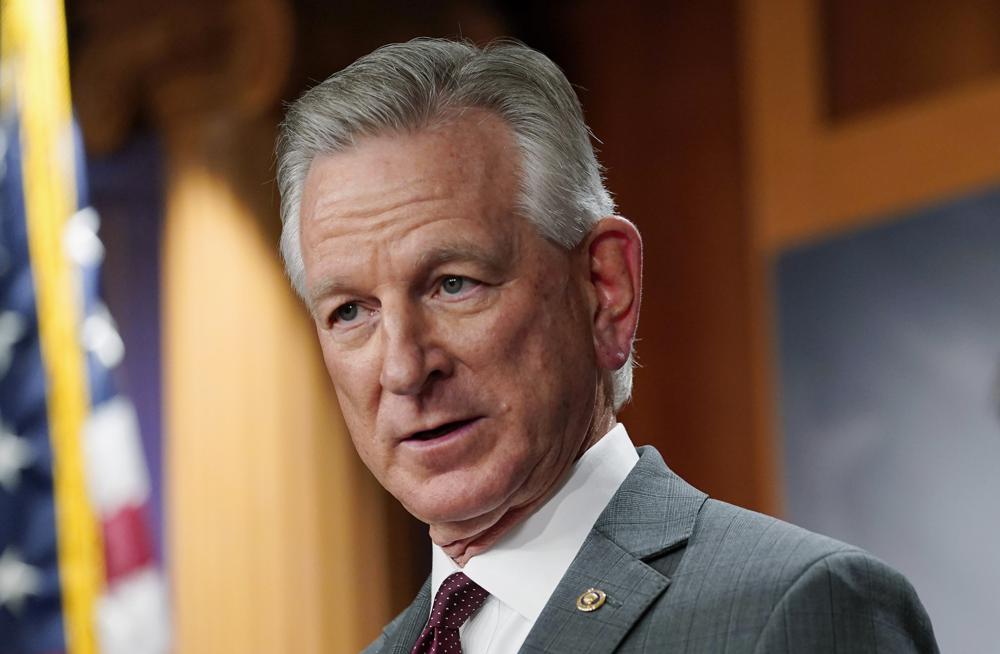
U.S. Sen. Tommy Tuberville said this week that the country has too many “takers” instead of workers and suggested that many in younger generations — including people in their 40s — don’t understand they need to work. Tuberville, 68, made the remarks while discussing the national worker shortage during a speech to business groups in south Alabama. “What’s happening in our country right now, we’re getting too many takers in our country,” Tuberville said Tuesday, according to Al.com. Later, he added, “They don’t want to go to work. We’ve got to get Generation X and these Millennials to understand that you have to tote your own load.” A spokeswoman for Tuberville, responding to a question from The Associated Press on Wednesday, said the state’s junior senator misspoke and meant to say Generation Z, which is loosely defined as people born in the late 1990s and early 2000s, instead of Generation X, which includes people in their 50s. Millennials are generally defined as people born between 1981 and 1996. The oldest millennials are entering their 40s. Tuberville made the remarks in Mobile on Tuesday. He was the featured speaker at a Forum Alabama breakfast presented by the Mobile Chamber and attended by local business leaders. He also spoke to news outlets during an appearance at Austal USA after touring the shipyard. The remarks about generational work ethic came two weeks after Tuberville was widely criticized for comments about race and crime. WALA-TV reported that Tuberville blamed government benefits. “We’re getting too many takers in our country,” the former college football coach said. “They’d rather take a (government) check.” While the federal government initially sent out trillions in pandemic relief funds, the COVID-19-related extended unemployment benefits and stimulus checks have ended. The last pandemic stimulus check was given out last year. Businesses nationwide have struggled to fill positions amid a dire worker shortage, prompting some companies to raise wages or offer perks such as college tuition reimbursement to try to lure workers. Economists have pointed to complex reasons for the worker shortage in the wake of the pandemic, including a rise in early retirements, a shortage of affordable child care, and other factors that have contributed to a workforce reshuffling. Tuberville’s comments came two weeks after he drew widespread criticism for saying at an election rally that Democrats support reparations for the descendants of enslaved people because “they think the people that do the crime are owed that.” In an interview with WALA-TV afterward, Tuberville maintained his comments were about crime, not race. “It had nothing to do with race. You know crime has no color,” he said. Tuberville rejected calls to apologize. “I would apologize if I meant anything about race, but it wasn’t. Like I said, race has no color. Reparation would have no color,” Tuberville said. Al.com reported that Tuberville deflected a question about the controversy. “We don’t have enough people right now paying the price for a lot of the crimes that are being made,” he said. “They don’t need to be rewarded for it. They need to understand that we can’t run a country — it’s like a football team. If you’ve got people going in different directions breaking all the rules, you’re not going to win.” Republished with the permission of The Associated Press.
State AGs want more time to comment on bank ESG regulations

Eighteen attorneys general are asking the Securities and Exchange Commission for more time to ponder climate change rules affecting financial firms. The comment period for the two rules expired in the spring. The SEC announced last month that comments on the rules and 10 others might not have been received or documented due to technical errors. The problems seemed to be limited to ones received in August, but the problem could go back to June 2021, the agency said. The SEC proposed an additional 14-day comment period to give people time to re-submit comments. The first rule, “Enhanced Disclosures by Certain Investment Advisers and Investment Companies about Environmental, Social, and Governance Investment Practices,” would require certain investment fund advisors to disclose greenhouse gas emissions in their portfolio. The rule was released by the SEC in May, and the public had 60 days to comment. The “Enhancement and Standardization of Climate-Related Disclosures for Investors” would require financial firms to add climate-related information in their annual reports. The comment deadline expired on May 20. Arkansas Attorney General Leslie Rutledge and 17 other attorneys general sent a letter to the SEC asking them to extend the comment period. “The liberal agenda pushing ESG regulations on banks is creating huge problems for businesses attempting to invest in American economic growth,” Rutledge said in a news release. “Public input shouldn’t be wrongly discarded due to a computer error. Giving the public more time to comment is just common sense.”Attorneys general from Alabama, Alaska, Arizona, Georgia, Indiana, Kansas, Kentucky, Louisiana, Mississippi, Montana, Ohio, Oklahoma, South Carolina, South Dakota, Texas, Utah, and West Virginia also signed the letter. Republished with the permission of The Center Square.
