
Attorneys brief legislators on ethics laws
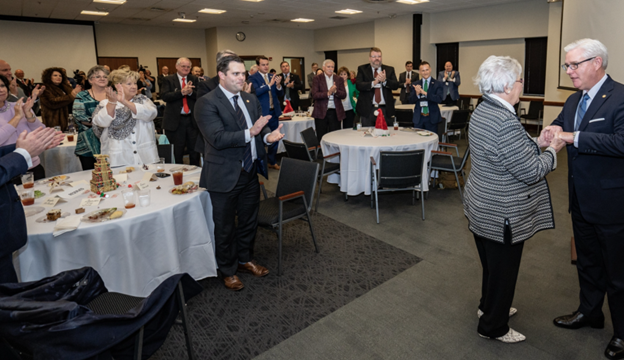
On Wednesday, members of the Alabama Legislature attended orientation training at the Alabama Statehouse. Among the many topics covered in the two-day seminar was ethics training. The presentation was led by Legislative Services Agency (LSA) General Counsel Jimmy Entrekin. The presenters were Greg Butrus, a Partner at Balch & Bingham, and Raymond Bell, a shareholder at Maynard, Cooper & Gale. “This presentation does not replace the official training on January 11 from Alabama Ethics Commission Director Tom Albritton,” Entrekin told the legislators – most of them new legislators. “Tom Albritton has a great session that he provides. We will have mandatory ethics training during the organizational session.” “We give advice on this (ethics and campaign finance) all the time,” Bell said. “We want you all to be able to come down here and serve your constituents and not have any problems with any legal issues.” “FCPA applies to your campaign political and electioneering activities,” Entrekin cautioned. “You are now more regulated than a coal mine in California.” “Ethics applies to all areas of your life that connect to your public service,” Bell said. “Be aware of lobbyist/principal restrictions. Know the rules or employ someone who does. Check first act later.” “Keep good records,” Bell advised. “A lot of what we come across is people forgetting to file something.” Bell explained that one major topic they address frequently is that campaign account funds can be used for expenses in furtherance of official duties. Still, campaign accounts cannot be used for personal expenses. The second major topic is conflicts of interest in the dual role of citizen legislators. Greg Butrus explained that campaign funds can be used to purchase things like office furniture/equipment used in constituent services. It can also be used for travel activities/mileage and meal reimbursements, inaugural expenses, computers, cell phones, vehicle-related purchases, and legal expenses. Prohibited uses include personal living expenses. “You want to be very careful,” Butrus said. “Common scenarios that bump into that gray area include cable tv. Is that for personal enjoyment or for news gathering? Cable TV in the office or on a device is an approved use of campaign dollars if used for information gathering, but what about sports channels?” “Purchasing a coffee maker for your office while the legislature is in session is an appropriate use, but can you take that coffee maker home with you at the end of the session? That is where you get into trouble,” Butrus warned. “With a coffee machine, you are not going to get into scrutiny, but if you are buying a $1000 cappuccino machine, that is another story,” Butrus said. One legislator asked if their personal phone records could be requested under the Freedom of Information Act. “I hate this answer, but it depends on a case-by-case basis,” Entrekin said. “We are trying to protect you.” Entrekin said that phone and email records of legislators are more protected than would be the records of someone in an executive branch position. “There is a good bit of stuff that is protected.” “In our world, we think of open records as separate from ethics,” Butrus said. “Legislative privilege is found to be pretty robust.” “My advice to folks is to be very conservative on the legislative side,” Bell said. “You have got to be very careful with something you bought with campaign money.” “If the campaign fund is paying for travel, make sure that it is connected with the campaign,” Butrus said. “Make sure you don’t double reimburse. Many organizations will reimburse you for your travel expenses.” Butrus explained that if a legislator travels to an event for campaign or office-related reasons, those travel expenses are a legitimate use of campaign dollars. However, if the group that you are speaking with reimburses the legislator for travel and that is not properly accounted for in the financial records, then that is illegally converting campaign funds for personal use. “It can be tricky, but the key to that is to keep good records and include why you spent that money,” Bell said. While staying in Montgomery for the session, Entrekin explained, “Campaign funds can be used for miles, lodging, or meals. Make sure you don’t double reimburse.” Legislators get a $100 per diem from the state for travel to Montgomery during official business. The campaign can cover any costs above that, but using campaign fund dollars for the full costs and then cashing the per diem check would be a double reimbursement and, thus, an illegal transfer of campaign funds for personal use. Butrus said legislators can use their campaign funds for legal expenses but warned, “That is very broad, but it is not unlimited. You can’t use it for your divorce or for child support, in criminal matters or something like that.” Butrus said candidates can make political party contributions with their campaign funds but explained, “There is a statutorial limit to how much money you can spend. You are limited to $5000 in a two-year period.” Butrus also warned about contributions that might be a felony violation of Alabama’s Pac to Pac law. He also cautioned about communications with a political action committee that might also be working on their behalf. “Make sure you don’t coordinate with them,” Butrus said. “Under the ethics law, if you have to stop and think about it, it is probably wrong,” Bell said, explaining the conflict of interest. “Remember with conflicts of interest. It is bigger than money.” “You have to be very careful when you come here and advocate for something that benefits you or your employer,” Bell said. “You should not get a benefit for passing a bill.” “This also applies to a family member,” Bell said. “You have to be careful that you are not passing a bill that benefits a family member.” “Tom Albritton does a great job in explaining that you are not expected not to have a conflict of interest,” Entrekin said. “Avoid acting in furtherance of an impermissible conflict of interest. The main thing that you deal with ethics law is how you
Kay Ivey announces Alabama’s November unemployment rate; holds steady at 2.7%

On Friday, Alabama Governor Kay Ivey announced that Alabama’s preliminary, seasonally adjusted November unemployment rate was 2.7%, unchanged from October but below November 2021’s rate of 3.1%. 63,043 persons were formally recognized as unemployed in November, up from 61,721 in October; but well below the 69,688 unemployed in November 2021. “It is encouraging to see that Alabama’s economy is supporting more jobs today than ever in our 203-year history,” said Gov. Ivey. “While we continue maintaining a low unemployment rate, the fact that our businesses are growing jobs is certainly something to be grateful for this holiday season. We will continue working hard to support Alabamians as we weather a challenging national climate.” Total employment is up 51,300 over the year. The largest gains were in the education and health services sector (+14,000), the professional and business services sector (+13,900), and the trade, transportation and utilities sector (+5,700), among others. Monthly gains were seen in the trade, transportation, and utilities sector (+8,100), the government sector (+1,600), and the professional and business services sector (+1,100), among others. “We continue to be encouraged by the job growth in Alabama,” said Labor Secretary Fitzgerald Washington. “Many of our industries are seeing record high employment, and wages are maintaining strong year-over-year growth as well.” Several industries are also seeing record-high levels of employment. These include the education and health services sector with 254,400 jobs, the professional and business services sector with 265,600, and the trade, transportation, and utilities sector with 409,200 jobs. Total private average weekly wages at $996.83 are down from October’s record high of $1,017.98 but are still $23.96 higher than a year ago. The counties with the lowest unemployment rates are Shelby County at 1.7%, Marshall and Cullman Counties at 1.8%, and Morgan and Clay Counties at 1.9%. The counties with the highest unemployment rates are Wilcox County at 8.4%, Perry County at 5.4%, and Dallas County at 5.2%. The major cities with the lowest unemployment rates are Homewood and Trussville at 1.5%, Vestavia Hills and Madison at 1.6%, and Alabaster and Hoover at 1.7%. The major cities with the highest unemployment rates are Selma at 6.2%, Prichard at 5.7%, and Bessemer at 3.8%. Alabama’s Labor Force participation rate dipped slightly to 57.1% from 57.2%. The national labor force participation rate also declined slightly from 62.2% to 62.1%. The national unemployment rate remains low at 3.7%. Ivey was recently re-elected in a landslide after a campaign that strongly emphasized her efforts in improving Alabama’s economy and her record on job creation. To connect with the author of this story, or to comment, email brandonmreporter@gmail.com.
Terri Sewell votes in favor of Puerto Rico Status Act
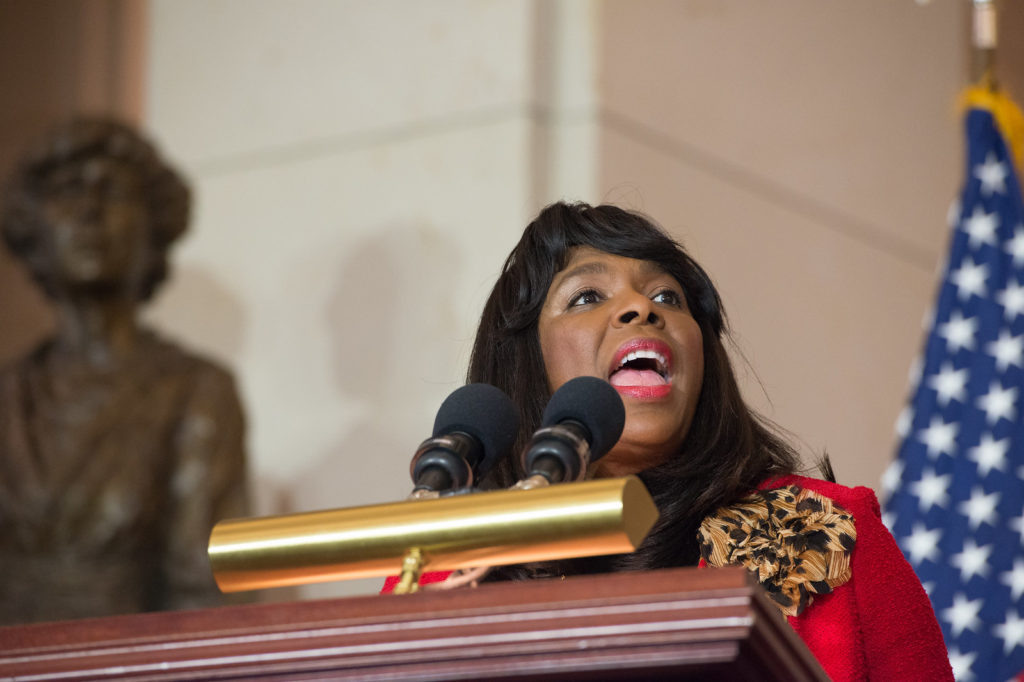
On Thursday, Congresswoman Terri Sewell voted in favor of H.R. 8393, the Puerto Rico Status Act. It would allow the residents of Puerto Rico to vote for their political status moving forward. The Puerto Rico Status Act is a compromise between the sponsors of two bills seeking to resolve Puerto Rico’s territorial status: the Puerto Rico Statehood Admissions Act and the Puerto Rico Self-Determination Act. It would provide residents an opportunity to select from three non-territorial, fully self-governing political status options: Statehood, Independence, and Sovereignty in Free Association with the United States. The bill passed the House of Representatives on a vote of 233 to 191. “I’m proud to stand in support of self-determination for the people of Puerto Rico in voting for the Puerto Rico Status Act,” Rep. Sewell stated. “For too long, the residents of Puerto Rico have been denied the opportunity to freely determine their own political status. This bill is about righting that wrong and placing the future of Puerto Rico back into the hands of Puerto Ricans where it belongs.” The Puerto Rico Status Act would: · Authorize a federally sponsored plebiscite to resolve Puerto Rico’s political status. · Specify and define Puerto Rico’s non-territorial status options: Independence, Sovereignty in Free Association with the United States, and Statehood. · Provide for an objective, nonpartisan, federally funded voter education campaign leading up to the vote. · Establish a process and timeline for the U.S. Department of Justice to review the plebiscite voter education materials and plebiscite ballot design. · Authorize necessary funds to carry out an initial plebiscite and, if necessary, a runoff plebiscite. · Describe the transition to and implementation of each status option in sufficient detail for eligible voters in Puerto Rico to make an informed choice about Puerto Rico’s future political status. · Ensure the result of the plebiscite is binding and implement the option that is chosen by a majority of eligible voters in Puerto Rico. Ending what they see as America’s colonial occupation of Puerto Rico is a goal of Progressive Democrats in Congress. “Today, for the first time in our nation’s history, the United States will acknowledge its role as a colonizing force and Puerto Rico’s status as an extended colony,” Congresswoman Alexandria Ocasio-Cortez said on the House floor. Congresswoman Nydia Velazquez was born and raised in Puerto Rico. “Congress’ unlimited plenary powers over Puerto Rico is reminiscent of the monarchical powers enjoyed by King George III, against which the founders of the American Republic so bravely fought,” Velazquez said. “If [Alexander] Hamilton and [James]Madison were alive today, they would be shocked to see how the anti-colonial Constitution they drafted in 1787 is currently used to legitimize colonialism in Puerto Rico even 300 years later.” The legislation now moves on to the Senate for its consideration. Sewell was recently re-elected to her seventh term representing Alabama’s Seventh Congressional District. To connect with the author of this story, or to comment, email brandonmreporter@gmail.com.
Dale Strong begins building congressional staff

On Monday, newly elected Congressman Dale Strong announced two senior staff appointments. The Yellowhammer News reported that Strong has hired veteran congressional staffer Payne Griffin and Yellowhammer News editor Dylan Smith to serve on his congressional staff. Payne Griffin is a former Sen. Jeff Sessions staffer. He has served in policy roles since 2014 in Congress and, with President Donald Trump’s administration, will serve as Strong’s chief of staff. “I am thrilled to have Payne Griffin leading my team in Washington,” said Strong. “His experience on Capitol Hill and in the Trump administration will be invaluable as I assemble my staff and work to protect and grow north Alabama.” Dylan Smith has been named as Strong’s district director. “Dylan Smith is one of our great young conservative leaders and, through his work in the media, he understands the issues that drive our local economies and affect north Alabama families,” said Strong. “I want my district staff to be proactive, and team with local leaders and businesses to help our communities achieve their full potential, and Dylan is the right guy to lead that effort.” Griffin most recently served as the deputy legislative director for U.S. Sen. Mike Braun. Prior to that, he was the deputy chief of staff at the Office of the U.S. Trade Representative during the Trump administration. Griffin worked for Sessions on trade policy and other economic issues. He has also previously worked for former Congressman Spencer Bachus and Rep. Mike Rogers. Prior to his joining the Yellowhammer News, Smith was the chairman of the Mountain Lakes Chamber of Commerce Board of Directors. Smith also sat on the former Jackson County Health Care Authority Board of Directors. Smith was the founding managing editor of the Jackson Blaze and a contributor to The Daily Caller. Smith served as vice chair of the Jackson County Republican Executive Committee, chairman of the Young Republicans of Northeast Alabama, and as a member of the Alabama Republican Party State Executive Committee. Dale Strong was recently elected to Congress, representing Alabama’s Fifth Congressional District. Strong is the longtime chairman of the Madison County Commission. CD5 was an open seat due to incumbent Congressman Mo Brooks’ decision to run for U.S. Senate – where he was defeated in the Republican primary runoff by Katie Britt, who ultimately won the Senate Seat. To connect with the author of this story, or to comment, email brandonmreporter@gmail.com.
Tommy Tuberville: NDAA will “Maintain our role as the leading superpower”
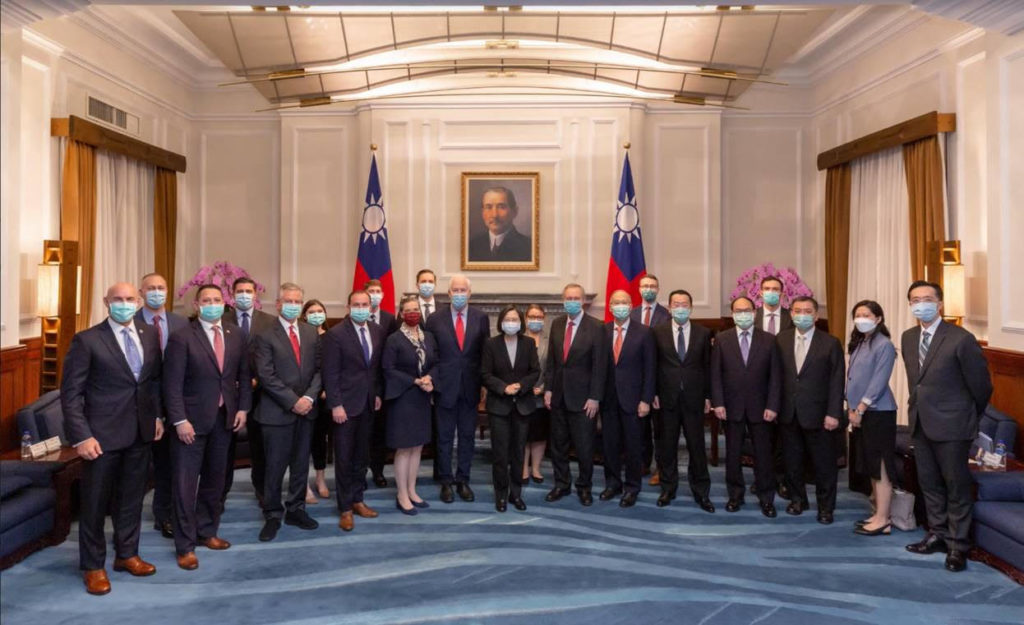
The U.S. Senate passed the final version of the 2023 National Defense Authorization Act (NDAA) on Thursday and sent it to President Joe Biden’s desk. U.S. Senator Tommy Tuberville said that the version of the NDAA that passed the Senate contained several key wins for Alabama. “The importance of passing a strong NDAA cannot be overstated,” said Senator Tuberville. “To maintain our role as the world’s leading superpower, we must also maintain the world’s most modern, prepared, and lethal military. Bolstering our force and military capabilities ensures we are ready to defeat any enemy at any time. I am proud of my work on the Senate Armed Services Committee to draft legislation that gives the military the tools it needs to keep our country safe.” Tuberville said that the FY23 NDAA contained several provisions that directly impacted Alabama. “Alabama has been at the forefront of America’s national defense network for decades,” Tuberville said. “More than 50,000 Alabamian service members and Department of Defense civilian officials work around the clock to defend the United States. The FY23 NDAA expands resources for our state to continue that work and provides for crucial updates and additions to America’s military.” The FY23 NDAA increases the overall topline spending by $45 billion over President Biden’s defense request. The NDAA provides a 4.6% pay raise for service members and additional hiring authorities and incentives in key sectors, including cybersecurity, advanced technology, and space personnel. The FY23 NDAA also grows the U.S. Navy, which was prioritized due to China’s rapid expansion of its navy. Tuberville said that the FY23 NDAA contained several of his priorities, including wins for Alabama. These include: The decision to locate Space Command at Redstone was the subject of independent investigations by the Government Accountability Office and the Department of Defense’s Inspector General, both of which found the selection of Redstone to be fair, logical, and fact-based. The final USSPACECOM basing decision is still under review, pending an announcement from the Secretary of the Air Force. Tuberville sought to expand U.S. Air Force and Space Force leaders the ability to support research and training activities for students planning to enter the national security space workforce. These opportunities will help advance the knowledge base and programs regarding space domain awareness, positioning, navigation, timing (PNT), hypersonics, and cybersecurity. Sen. Tuberville advocated fully funding and acknowledging the importance of the DoD’s National Security Space Launch (NSSL) program. 60% of the rockets to be used in Phase Two of the NSSL are manufactured in Alabama. Tuberville supported the authorization of funding for a third Arleigh Burke-class destroyer (DDG-51) and two Expeditionary Fast Transport (EPF) ships. Tuberville also opposed the early and unnecessary retirement of ships, including Littoral Combat Ships, landing dock ships, guided missile cruisers, and expeditionary transfer docks. The senator championed a reporting requirement to study the U.S. Navy’s repair and maintenance capabilities with special emphasis on readiness and expanded industrial base needs, in addition to research and analysis on the capacity of private shipyards in the U.S. Due to attempts to force the early retirement of several Littoral Combat Ships (LCS), Tuberville supported a provision to require the commander of U.S. Southern Command (USSOUTHCOM) to assess the potential benefits of assigning four–six LCSs to the combatant command. He also supported U.S. Strategic Command’s (USSTRATCOM) only unfunded priority — the Sea-Launched Cruise Missile (SLCM-N). The NDAA continues working towards the development of a nuclear Sea-Launched Cruise Missile. The Javelin missile, built in Troy, has decimated Russian armored forces in the Ukraine War. Since the U.S. has given away nearly half of our arsenal of Javelins to Ukraine, Tuberville pushed hard both replenish U.S. stocks and modernize the Javelin. At Tuberville’s insistence, the NDAA authorizes robust funding for developing and procuring a missile defense system for Guam. Tuberville advocated for a provision requiring a study on efforts to recruit and retain Army personnel who specialize in air and missile defense systems. Tuberville was proud to support policy provisions and funding authorization for the following military facilities across the state. Redstone Arsenal: Physics Laboratory ($44 million), Federal Bureau of Investigation (FBI) Warehouses ($53 million), Advanced Analysis Facility ($150 million), and Backup Power Generation ($11 million) for the Missile and Space Intelligence Center (MSIC). Tuberville also supported robust funding for the Army’s Future Vertical Lift (FVL) and Future Long Range Assault Aircraft (FLRAA) programs; Long-Range Precision Fires technology; Low Earth Orbit (LEO) Satellite capabilities; and Advanced air and missile defense technology and systems. The NDAA directs the Director of the Defense Intelligence Agency (DIA) to produce a report on ways to increase warning time for threats from an American adversary; it also authorizes the establishment of a position to serve as the Defense Intelligence Officer for Indications and Warning. The NDAA includes several provisions for Fort Rucker (Novasel). These include the procurement of additional CH-47 Chinook, UH-60 Black Hawks, and AH-64 Apache helicopters and procuring Army Air Traffic Control ground support systems to support Army Air Traffic Services Command, based at Fort Rucker. Tuberville supported DoD efforts at Aviation Training Center Coast Guard Base (Mobile, AL). These include $68 million in electronic support equipment for the U.S. Coast Guard. At the Montgomery Regional Airport (Dannelly Field – Air National Guard, 187th Fighter Wing), Tuberville supported: F-35 Weapons Load Crew Training. At Sumpter Smith Air National Guard Base – 117th Air Refueling Wing (Birmingham International Airport), Tuberville supported new security services and training facilities. For the Anniston Army Depot, Tuberville supported the procurement of additional Abrams tanks, the procurement of additional Stryker vehicles, and improved M88 recovery vehicles. After it came to his attention this spring that the horses used to pull the funeral caissons at Arlington National Cemetery were living in unsanitary conditions, Tuberville vowed to fix the issue. His colleagues agreed, and the NDAA requires the Secretary of the Army to implement the recommendations of the equine veterinarian’s inspection findings for the Fort Myer Caisson Barns/Paddocks and Fort Belvoir Caisson Pasture Facility. It also requires that the Secretary of the Army submit a master plan for the housing and care of all the horses within the care of the Old Guard, prioritizing their no-fail mission of honoring our nation’s heroes over other
Personnel Update: Don Harrison named General Counsel for the Alabama Department of Labor
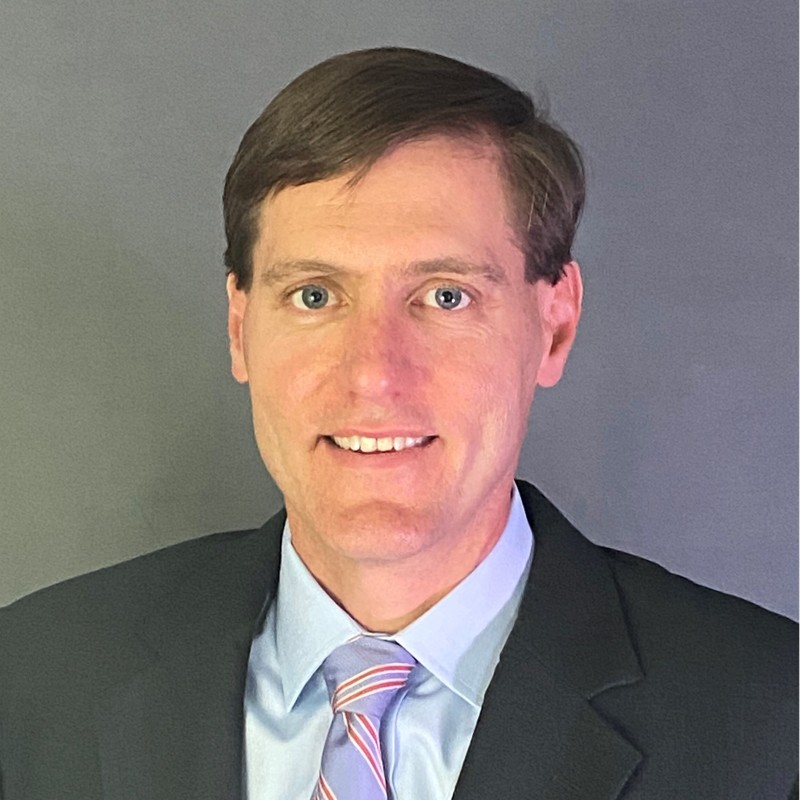
On Monday, Alabama Department of Labor Secretary Fitzgerald Washington announced that Don Harrison was being assigned the role of general counsel for the Department. “Effective immediately, Don Harrison is being named General Counsel and will transition to the Legal Division to take the place of Joey Ammons,” Washington wrote. “He will continue to serve as Deputy Secretary in this new role. I am confident that Don will provide great leadership to our Legal Division and the Department as a whole.” The Alabama Department of Labor connects Alabama employers with workers. It also administers the federal unemployment payments program, as well as job training programs and it oversees abandoned and reclaimed mine lands in the state. To connect with the author of this story, or to comment, email brandonmreporter@gmail.com.
Senate passes defense bill rescinding COVID vaccine mandate
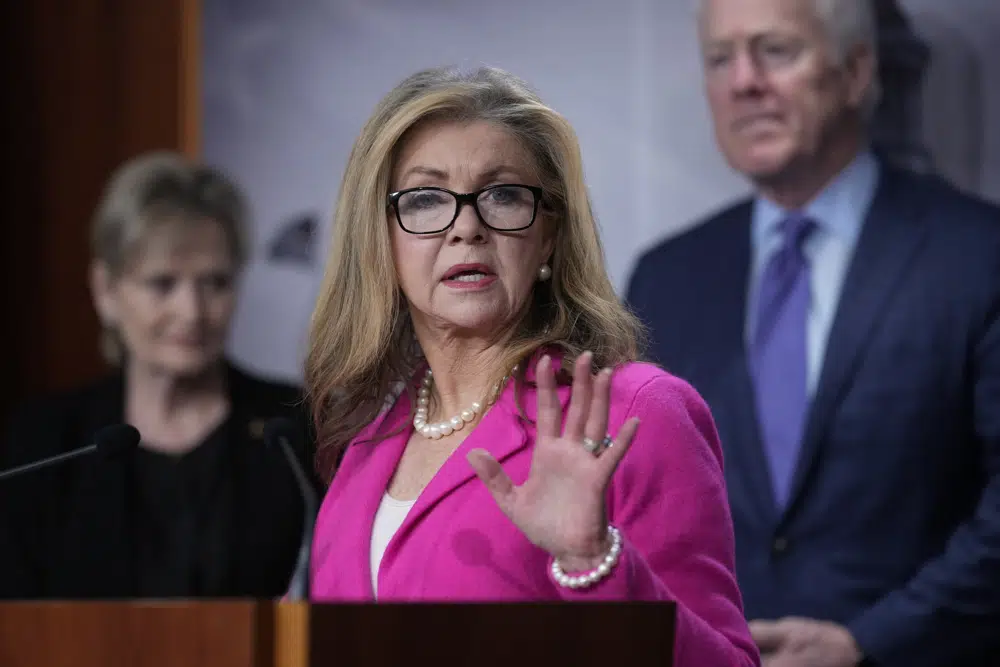
A bill to rescind the COVID-19 vaccine mandate for members of the U.S. military and provide nearly $858 billion for national defense passed the Senate on Thursday and now goes to President Joe Biden to be signed into law. The bill provides for about $45 billion more for defense programs than Biden requested and roughly 10% more than last year’s bill as lawmakers look to account for inflation and boost the nation’s military competitiveness with China and Russia. It includes a 4.6% pay raise for servicemembers and the Defense Department’s civilian workforce. The Senate passed the defense policy bill by a vote of 83-11. The measure also received broad bipartisan support in the House last week. To win GOP support for the 4,408-page bill, Democrats agreed to Republican demands to scrap the requirement for service members to get a COVID-19 vaccination. The bill directs Defense Secretary Lloyd Austin to rescind his August 2021 memorandum imposing the mandate. Before approving the measure, the Senate voted down a couple of efforts to amend it, including a proposal from Sen. Joe Manchin, D-W.Va., to speed the permitting process for energy projects. The effort had drawn fierce opposition from some environmental advocacy groups who worried it would accelerate fossil fuel projects such as gas pipelines and limit the public’s input on such projects. Manchin, who chairs the Senate Energy Committee, secured a commitment from Biden and Democratic leaders last summer to support the permitting package in return for his support of a landmark law to curb climate change. Machin’s legislation sets deadlines for completion of National Environmental Policy Act reviews for major energy and natural resource projects. It would require courts to consider litigation involving energy project permits on an expedited basis. It also directs federal agencies to permit the completion of a natural gas pipeline in his home state and Virginia “without further administrative or judicial delay or impediment.” “We’re on the verge of doing something unbelievable, but let me tell you, most of it will be for naught. Because without permitting reform, the United States of America is more litigious than any nation on earth,” Manchin told colleagues. Biden voiced his support for Manchin’s legislation a few hours before Thursday’s vote. He said far too many projects face delays and described Manchin’s amendment “as a way to cut Americans’ energy bills, promote U.S. energy security, and boost our ability to get energy projects built and connected to the grid.“ Not only did some environmental advocacy groups bash Manchin’s proposal, but so did many Republicans. Minority Leader Mitch McConnell, R-Ky., said it didn’t go far enough, calling it “reform in name only.” The amendment fell short of the 60 votes needed for passage, 47-47. An amendment from Sens. Ron Johnson, R-Wis., and Ted Cruz, R-Texas, also went down to defeat. It would have allowed for the reinstatement of those service members discharged for failing to obey an order to receive the COVID-19 vaccine and compensate them for any pay and benefits lost as a result of the separation. “People serving our military are the finest among us. Over 8,000 were terminated because they refused to get this experimental vaccine, and so I’m urging all of my colleagues to support Senator Cruz’s and my amendment,” Johnson said. But opponents worried about the precedent of rewarding members of the military who disobeyed an order. Rhode Island Sen. Jack Reed, the Democratic chairman of the Senate Armed Services Committee, said orders are not suggestions; they are commands. “What message do we send if we pass this bill? It is a very dangerous one,” Reed said. “What we’re telling soldiers is, ‘if you disagree, don’t follow the order, and then just lobby Congress, and they’ll come along, and they’ll restore your rank, or restore your benefits, or restore everything.’” The amendment failed, with 40 senators supporting it and 54 opposing it. The defense bill sets policy and provides a roadmap for future investments. Lawmakers will have to follow up with spending bills to bring many provisions to reality. It’s one of the final bills Congress is expected to approve before adjourning, so lawmakers were eager to attach their top priorities to it. The directive to rescind the vaccine mandate for service members proved to be among the most controversial provisions, but Democrats agreed to it to allow the bill to advance. As of early this month, about 99% of the active-duty troops in the Navy, Air Force, and Marine Corps had been vaccinated, and 98% of the Army. Service members who are not vaccinated are not allowed to deploy, particularly sailors or Marines on ships. There may be a few exceptions to that, based on religious or other exemptions and the duties of the service member. The vaccination numbers for the Guard and Reserve are lower, but generally, all are more than 90%. Republished with the permission of The Associated Press.
Lawsuit: Man ‘baked to death’ in overheated prison cell

A federal lawsuit against Alabama corrections officials charges that an inmate “baked to death” in an overheated prison cell two winters ago. Thomas Lee Rutledge died of hyperthermia on Dec. 7, 2020, at William E. Donaldson Correctional Facility in Bessemer. Rutledge had an internal temperature of 109 degrees when he was found unresponsive in the mental health cell, according to the lawsuit which was filed by the man’s sister and names prison staff, wardens, and contractors as defendants. Rutledge “was literally baked to death in his cell by excessive heat generated by the prison’s heating system,” according to an amended complaint filed November 30. The lawsuit contends that prison staff knew of problems with the heating system in the mental health unit before his death. The Alabama Department of Corrections did not immediately respond to an email seeking comment. The weather on the day Rutledge died was mild, with outdoor highs in the mid-40s Fahrenheit and a low of around 30, according to the lawsuit. “He was housed in a mental health ward, where inmates were confined to their cells around the clock, including eating and bathing in their cells. His death was the direct result of the deliberate indifference or malice of the prison officials, corrections officers, and maintenance personnel at Donaldson, and of the negligence and/or wantonness of the contractor entities,” the lawsuit stated. It added that an investigator who was on the ward that evening after Rutledge’s death commented in a recorded interview that when he opened a tray door to speak with another inmate, it was “hotter than three hells” and felt like “when you (are) getting something out of the oven and it hits your face.” The U.S. Department of Justice has an ongoing lawsuit against the state over prison conditions and mentioned the hyperthermia death in a court filing last year as an example of the “serious risks posed by dangerous conditions at Alabama’s prisons for men.” While Alabama has acknowledged challenges in its prison system, it disputes the Justice Department’s claim that conditions are unconstitutional. The DOJ’s lawsuit is expected to go to trial in 2024. Republished with the permission of The Associated Press.
Ashland Housing Authority settles discrimination lawsuit

The U.S. Justice Department announced Thursday that it has settled a discrimination lawsuit accusing an Alabama housing authority of steering residents to different low-income communities based on race. A federal judge this week approved the consent decree resolving the discrimination claims against the Housing Authority of Ashland and the private owners and agents of two of its low-income communities. The defendants disputed the accusations of discrimination but agreed to make changes to settle the case, according to the consent decree. The Justice Department in 2020 filed a lawsuit accusing the defendants of steering Black applicants away from four overwhelmingly white communities in predominately white neighborhoods and instead directing them to two predominantly Black communities in predominately Black neighborhoods. The lawsuit said that Black residents accounted for 30% of all the Housing Authority’s tenants but accounted for 65% and 73% of residents at two communities. “Racial steering is a patently unlawful practice that destabilizes communities, fuels racial tensions, and perpetuates modern-day racial segregation in communities across the country,” Assistant Attorney General Kristen Clarke for the Civil Rights Division said in a news release. Ashland is about 55 miles (90 kilometers) southeast of Birmingham. Republished with the permission of The Associated Press.
