
State legislature discusses use of American Rescue Plan funds
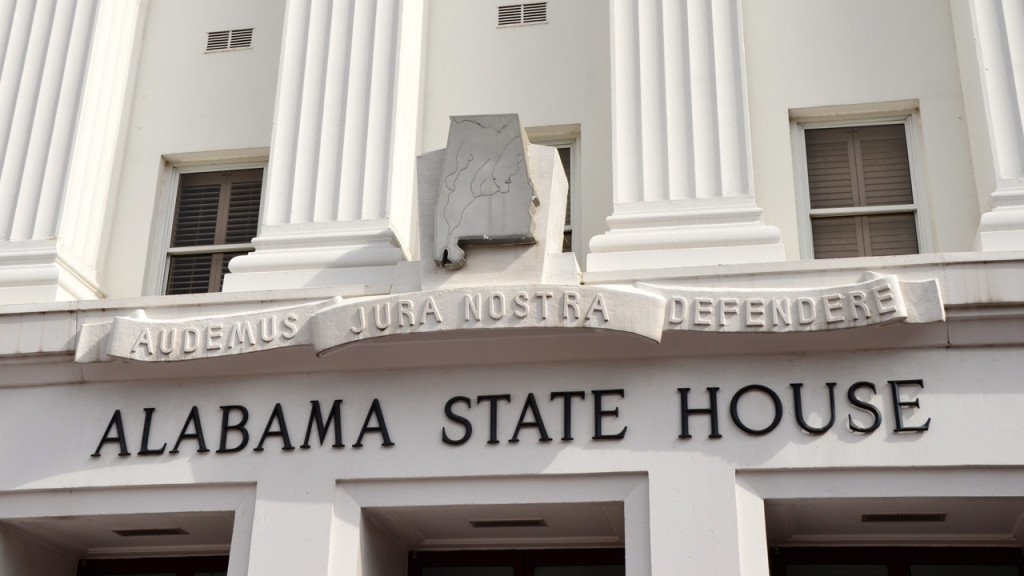
On Tuesday, the Joint Legislative Committee met to review state officials’ progress in spending the first billion dollars from the American Rescue Plan Act (ARPA) money. The state received this funding from the federal government to fight the COVID-19 global pandemic and make the state more resilient against future pandemics. State Sen. Greg Albritton presided over the meeting at the Statehouse across the street from Alabama’s historic Capitol Building. “This is not dealing with the General Fund or the Education Fund,” Sen. Albritton said. “It is not even dealing with ARPA 2 money. This is the Oversight Committee for the ARPA 1 money.” Kirk Fulford is the director of the Alabama Legislative Services Agency (LSA) fiscal division. “There were three tranches of federal money,” Fulford explained. “The first tranche was CARES Act which has mostly been appropriated. This is a total of several bills, not just the three.” “The funds must be spent by December 31, 2026,” Fulford said. “Alabama was appropriated $2.12 billion.” Fulford explained that Counties and cities of 50,000 people or more had already gotten their own money directly from the federal government. Smaller cities had to go through a grant program administered by the state. The state’s first tranche of money arrived in June 2021—the second in July 2022. The law requires the money to be split. “We treated this money separate and apart from either of our budgets due to the reporting requirements in how this money is utilized,” Fulford explained. Fulford explained that the Legislature had appropriated $225 million for water and sewer projects and $51 billion for broadband. $536 million of the money replaced lost state revenues due to the global pandemic. That money had fewer federal restrictions on how that could be spent. The state spent $400 million to build new prisons in Elmore and Escambia Counties. There will be no revenue replacement in the second tranche. Fulford explained that the state would have to stay within the specific guidelines outlined by the treasury with all of the second tranche of money. That money has not been appropriated yet. “You used $277 million for broadband infrastructure thus far,” Fulford said. “It doesn’t look like we are going to have any revenue replacement money going forward. Of the $953 billion appropriated to states, $223 billion was for lost revenue replacement.” Former State Rep. Bill Poole is now the state finance director. “We will be tightly bound to the ARPA guidance, unlike Round 1,” Poole said. “We have encountered many folks come to us and say that this state used their ARPA funds to fund this project or that,” Poole said. “That usually comes out of their Revenue Replacement funds.” Poole said the state does not qualify for any more Revenue Replacement funds, so there are fewer options for the tranche two money. “Quarterly reports are due every quarter,” to the federal government. Poole said, “That has been a substantial ordeal, and it will continue to be going forward. The federal reporting requirements are extremely complex.” In addition to the $400 million for prison construction money, the state Legislature has appropriated $80 million for hospitals and nursing homes. In 2022, the Legislature made an additional appropriation of $80 million for hospitals and nursing homes. “Those funds have been distributed,” Poole explained. “Alabama is eligible for $192 million for capital projects,” Poole said. “We were very pleased to see those (the state’s plans) approved by the Treasury. We hope to direct a substantial portion of the funds, if not all, to broadband.” “The state of Alabama has received no negative audit findings on ARPA funds,” Poole added. “The administrative costs have been held below one percent.” “Local governments and cities are receiving notices of audits in terms of CARES Act funds,” Poole announced. “If you don’t have a clear report, you are going to get an audit finding. You need to be able to show a positive outcome from the funding.” To connect with the author of this story or to comment, email brandonmreporter@gmail.com.
Terri Sewell tours storm damage
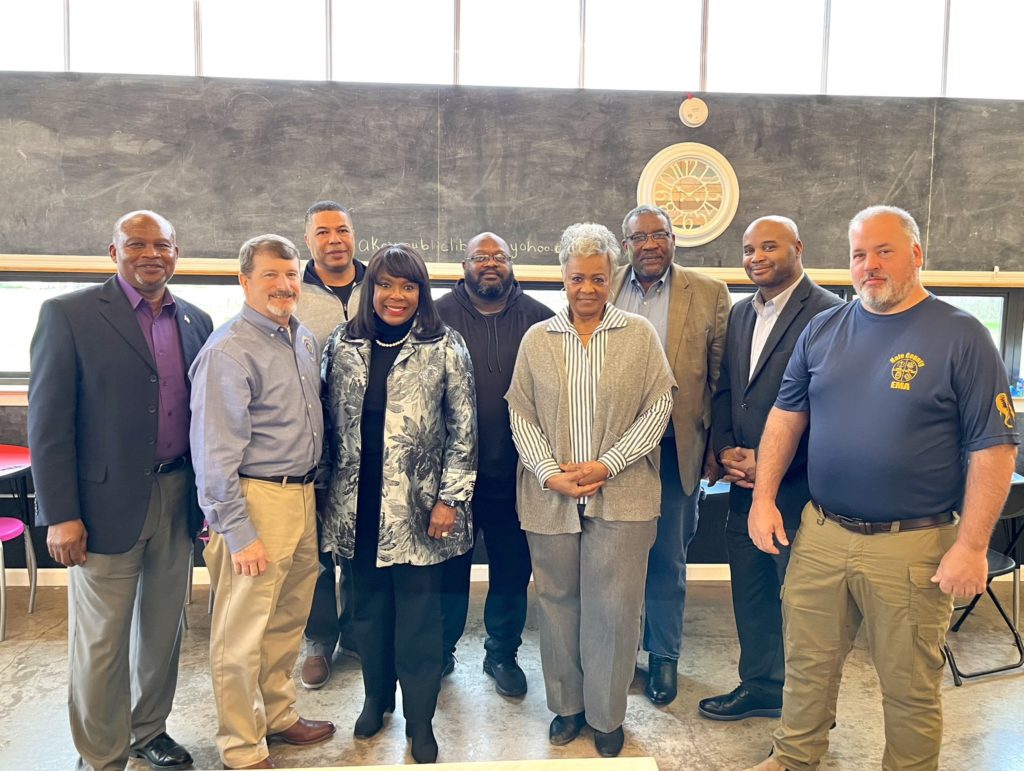
Congresswoman Terri Sewell toured Hale and Greene Counties, where she saw the damage resulting from the devastating storms on January 12. Sewell hosted two disaster relief roundtables with FEMA, the Alabama Emergency Management Agency (EMA), and local Hale, Greene, and Sumter County officials. “As your representative, I have made it my mission to ensure that our communities get the resources they need to rebuild better and stronger than before,” said Rep. Sewell. “To that end, strengthening our lines of communication and forging partnerships between every level of government are paramount. That’s why I spent the day surveying the damage and hosting disaster relief roundtables here in Hale and Greene Counties.” “Thanks to our tireless advocacy, additional federal assistance has been granted and is on its way to those who need it,” said Sewell. “To those affected, know that you are not alone. So long as there is a need, our federal, state, and local officials will continue to band together to offer relief.” Sewell brought together representatives from FEMA, Alabama EMA Director Jeff Smitherman, and local officials for a Hale County Disaster Relief Roundtable at Akron City Hall on Tuesday to discuss the latest in the recovery process. Sewell then traveled to Greene County, where she was joined by State Representative Curtis Travis and Eutaw Mayor Latasha Johnson for a driving tour of the storm damage. Sewell then hosted a Disaster Relief Roundtable at Eutaw City Hall. There she heard from local officials from Greene and Sumter Counties, including Sumter County Commission Chairman Marcus Campbell and Sumter County EMA Director Margaret Gulley. Sewell and officials then held a press conference with representatives from both Greene and Sumter County EMAs and local stakeholders. There has been an ongoing federal, state, and local partnership to recover and rebuild in areas devastated by the January 12 storms. “For the next 30 days, every county that was a part of the disaster declaration will get 100 percent federal assistance for public infrastructure,” Sewell explained. “If the town halls were destroyed or the post office was destroyed. The public road has debris on it.” “We have a promise that has been somewhat kept from our federal officer that if any of our elected officials call with clusters of people who need to be registered for FEMA that they will send their mobile unit to do that,” Sewell said. On January 26, Sewell led the Alabama Congressional Delegation in a letter urging President Joe Biden to increase the federal cost share for the FEMA Public Assistance program for debris removal and emergency protective measures to 100%. President Biden granted this request on Thursday, February 9. FEMA’s Public Assistance Program provides supplemental grants to state, tribal, territorial, and local governments and certain private non-profits so communities can quickly respond to and recover from major disasters or emergencies. Sewell is in her seventh term representing Alabama’s Seventh Congressional District. Sewell is a native of Selma. Before her election to Congress, she was an attorney for the City of Birmingham. To connect with the author of this story or to comment, email brandonmreporter@gmail.com.
Steve Flowers: Three great Alabama preachers
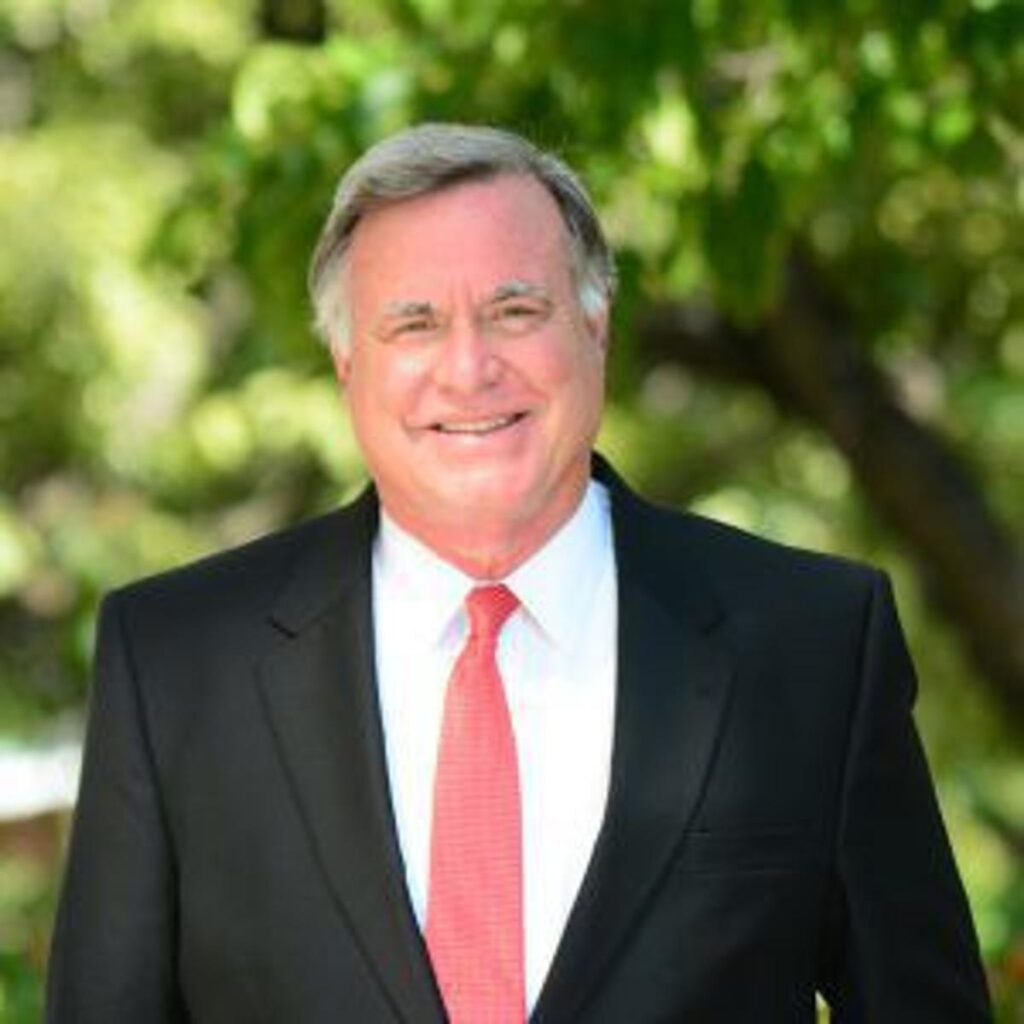
Many of you may be surprised to know that politicians and preachers are often friends while on earth. They actually run in the same circles in their communities as well as around the state. It has been my pleasure to have known a good many Godly ministers. During my lifetime here in our beloved state of Alabama, there have been some outstanding ministers, but three men stand out as legendary and will go down in the annals of Alabama history as the three greatest preachers of this generation. All three were Alabama born and bred. They had to have been born and chosen for their calling. Just to be in their presence makes you feel special. They are truly men of God. They are also true southern gentlemen with a keen sense of humility. These three ministers are Methodist Minister John Ed Mathison, Methodist Minister Karl Stegall, and Baptist Minister Buddy Gray. I will begin with the youngest first. Buddy Gray has been the pastor of the mega Baptist Church in Hoover – Hunter Street Baptist Church – for nearly 36 years. Buddy Gray built this mountain of a church in the heart of Hoover. He is beloved by his throng of congregates. He exudes love and humility. Buddy Gray grew up in Prattville. He knew at 16 that God was calling him to the ministry. He started preaching at rural churches, and along the way, he served as youth pastor at Hunter Street Baptist Church in Birmingham in the 1970s. Hunter Street was in a dying section with an attendance of 120. Soon after they called Buddy to be their minister, he had the foresight to see that his church needed to be in Hoover, the fastest-growing suburban area of Jefferson County. Today, 36 years later, Buddy’s vision is a sprawling landmark campus with a congregation of 4,500 active members. It is one of the largest and most prosperous churches in Alabama. Leaders in the Southern Baptist Convention refer to Hunter Street Baptist Church as one of the greatest churches in America. During his career, Buddy Gray has served at the state and national level of the Baptist Convention, including two one-year reigns as President of the Alabama Baptist State Convention. He and his wife, Tricia, have been a true team in the evangelical building of this great church. Dr. John Ed Mathison of Montgomery has rightfully been referred to as one of the greatest preachers in the history of the State of Alabama. He was born a Methodist minister. His father was a legendary Methodist minister, and his brother is a legend in his own right as a Methodist minister. John Ed served 36 years as Senior Minister of Frazer Methodist Church in Montgomery. Under his leadership, Frazer grew from 400 members to 9,000 and had the largest Sunday School attendance for any Methodist church in America. At the time of John Ed’s retirement in June 2008, Frazer had eight Sunday morning worship services, and its services were televised nationwide, reaching about 40 million homes. John Ed has been a sterling athlete over his lifetime. He was an all-state high school basketball player and an outstanding basketball player at Huntington College. He was consistently ranked #1 in his age division in tennis in Alabama and is in the Alabama Tennis Hall of Fame. He continues to write. I am proud to say that for the last decade, his column and mine have been adjacent to each other in the Montgomery Independent. Dr. Karl Stegall is a legend within the Alabama Methodist Church hierarchy. He is one of the best-known and most-loved Methodist ministers to serve in Alabama over the past 50 years. Stegall served with distinction at four separate Methodist churches in Alabama. He culminated his ministerial career as pastor of the First Methodist Church of Montgomery. He served as senior minister of this great traditional Methodist church in Cloverdale for 24 years. Dr. Stegall remains extremely involved in Montgomery Civic affairs. He is an erudite gentleman with impeccable class and manners. He has the most melodious Black Belt southern accent. He is an avid sports fan and a great Alabama historian. He has a myriad of talents and uses them all. He has been a confidante and minister to a great many Alabama governors and Montgomery business leaders. These three gentlemen are, without a doubt, three of the greatest ministers in Alabama of this century. I am proud to call them friends. See you next week. Steve Flowers is Alabama’s leading political columnist. His weekly column appears in over 60 Alabama newspapers. He served 16 years in the state legislature. Steve may be reached at: www.steveflowers.us.
House GOP meet with Volodymyr Zelenskyy as far right opposes more aid

A handful of congressional Republicans met Tuesday with Ukrainian President Volodymyr Zelenskyy in a signal of continued U.S. support even as hard-right members of the party vow to block future aid to the embattled country. The newly appointed chairman of the House Foreign Affairs Committee led a small delegation to Kyiv to meet with Zelenskyy for the first time since the start of the war a year ago and since Republicans won the majority in the House of Representatives in November. Chairman Mike McCaul and four other Republican lawmakers said they discussed at length what Ukraine’s military needs to fight off Russian aggression. Zelenskyy provided them with a list of weapons, including longer-range artillery and air-to-surface missile systems. The meeting came one day after President Joe Biden made an unannounced trip to Kyiv to reaffirm U.S. support for Ukraine as the war heads into its second year. Biden has been trying to keep the allies unified in their support for Ukraine as the war is expected to intensify with spring offensives. The biggest hurdle facing the president is House Republicans. McCaul’s visit Tuesday is the latest in a series of efforts by the Texas Republican to make the case to his party for why the U.S. should continue spending billions of dollars on the war effort. “We have seen time and again, the majority of Republicans and Democrats support our assistance to Ukraine. But the Biden administration needs to lay out their long-term strategy,” McCaul said in a statement. “There are some Members who would be more supportive if they saw a long-term strategy that was based on a Ukrainian victory rather than sending just enough support to prolong the war but not win it.” A spokesperson for McCaul noted the delegation has been focused on oversight and ensuring there are guardrails in place for any future aid to Ukraine. A far-right faction of the Republican Party has been expressing its opposition to continued U.S. support to Ukraine since last spring. That campaign intensified this month when a group of 11 House Republicans led by Rep. Matt Gaetz of Florida put forward a “Ukraine Fatigue” resolution. It stated that the U.S. “must end its military and financial aid to Ukraine” and urged the combatants to “reach a peace agreement.” “America is in a state of managed decline, and it will exacerbate if we continue to hemorrhage taxpayer dollars toward a foreign war,” Gaetz said. Thus far, the U.S. has provided four rounds of aid to Ukraine in response to Russia’s invasion, totaling about $113 billion, with some of the money going toward replenishment of U.S. military equipment that was sent to the front lines. Congress approved the latest round of aid in December. While the package was designed to last through the end of the fiscal year in September, much depends upon events on the ground. For his part, Zelenskyy has been working with both Democrats and Republicans to ensure their support once the country runs out of aid, likely to happen in late summer. “It’s really very important. We’re thankful for the U.S., for its people,” Zelenskyy said in a video posted by his office after the meeting. In comments later on social media, Zelenskyy added, “Thank you, American congressmen, for supporting Ukraine and understanding the importance of stepping up aid to help us achieve victory over the aggressor.” Republished with the permission of The Associated Press.
Alabama woman embezzled $200K from church, gets 5 years

An Alabama woman has been sentenced to five years in prison for wire fraud after she was convicted of embezzling more than $200,000 from the church where she worked for 12 years. U.S. District Judge Terry F. Moorer also sentenced Sharon Collins, 53, of Foley, to three years of supervised release and ordered her to pay more than $211,000 in restitution, al.com reported. Collins worked as a financial secretary for the First Baptist Church in Foley between May 2007 and July 2019. She was responsible for managing the church’s accounting system, preparing financial reports, and managing church-issued credit cards. According to prosecutors, Collins used church funds to make hundreds of electronic transactions using unauthorized church-issued credit cards to cover the costs of trips to New Orleans and Las Vegas, a cruise, jewelry, and funding a bachelor’s degree. Prosecutors said Collins later admitted to making several false statements, including lying about having the church’s approval to make the purchases. Republished with the permission of The Associated Press.
Striking Alabama coal miners offer to return to work

Alabama coal miners who have been on strike for almost two years have offered to return to work. The United Mine Workers of America sent a letter February 17 to executives at Warrior Met Coal Inc. offering an unconditional return to work while the union and the company continue to negotiate a new labor agreement. Cecil E. Roberts, international president of the UMWA, said in a statement Monday that the union has received a response from the company but wants answers to a few questions “before we can discuss the next steps with our members.” About 1,100 union members at Warrior Met Coal facilities in Brookwood, Alabama, went on strike on April 1, 2021. Workers say they sacrificed pay and benefits in 2016 as a cost-saving measure to help keep the mines open, but that those concessions have not been restored. Warrior Met contends it offered workers a competitive package that would protect jobs and the company’s future. “We have been locked into this struggle for 23 months now, and nothing has materially changed. The two sides have essentially fought each other to a draw thus far, despite the company’s unlawful bargaining posture the entire time,” Roberts said in a statement about the offer to end the strike. In a statement, Warrior Met Coal said it appreciates the decision to call for members to return to work, al.com reported. “We have responded to the UMWA and asked for its cooperation and assistance so that we can begin the process for a safe and orderly return to work by those employees who have been on strike and have expressed a desire to return to work,” the company stated. Each employee is asked to undergo a physical, drug screening, and regulatory safety training. The company also said it needs “additional information from the UMWA” to begin the process. “We look forward to the UMWA’s cooperation in these efforts to return the striking miners to work while we continue to negotiate in good faith to reach a new contract,” the company stated. Erin E. Bates, communications director for the United Mine Workers of America, wrote in an email that, “We think it is important that Alabama workers, not the out-of-state scabs, get paid for the jobs that they are experienced in.” Bates said it is also important for safety reasons to bring back UMWA inspectors and experienced miners. The company has brought in replacement workers during the strike. Both the union and Warrior Met have blamed each other for the prolonged strike, which centers on the company’s mining operations southwest of Birmingham. The union is striking at Warrior Met’s No. 4 and No. 7 mines, a preparation plant, and a central shop, all in Tuscaloosa County. The union and Warrior Met reached an agreement to end the walkout a few days after it began, but members rebuffed the settlement. In May, Warrior Met reported a net income of $146.2 million in the first quarter, compared with a loss of $21.4 million for the same period last year. The company said the strike cost it $6.7 million for the quarter because of security and other expenses and having the mines idle cost $3 million. Warrior Met said it produced 1.5 million short tons of coal in the first quarter compared with 2.2 million short tons in the first quarter last year. Republished with the permission of The Associated Press.
