On Tuesday, the Joint Legislative Committee met to review state officials’ progress in spending the first billion dollars from the American Rescue Plan Act (ARPA) money. The state received this funding from the federal government to fight the COVID-19 global pandemic and make the state more resilient against future pandemics.
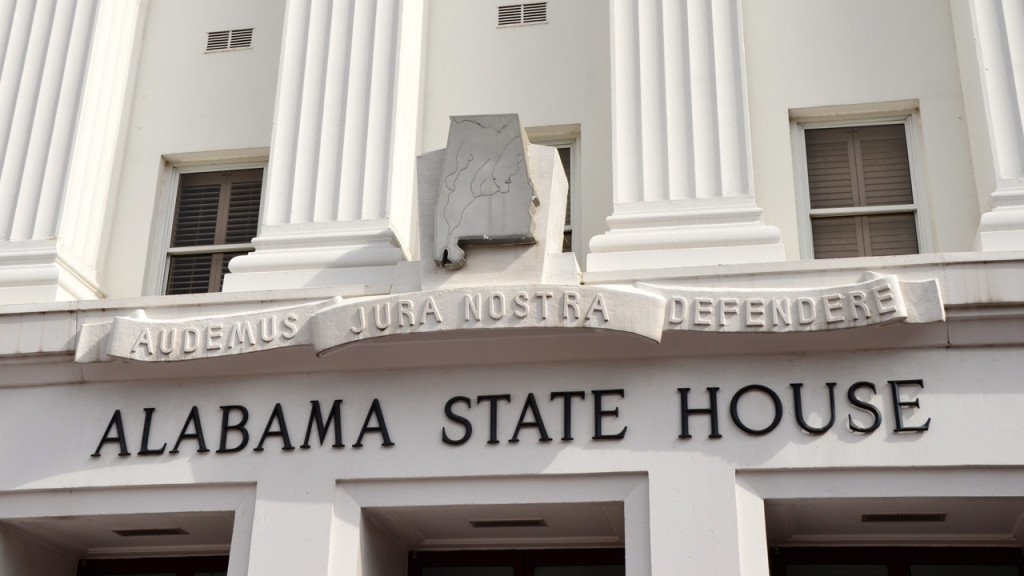
State Sen. Greg Albritton presided over the meeting at the Statehouse across the street from Alabama’s historic Capitol Building.
“This is not dealing with the General Fund or the Education Fund,” Sen. Albritton said. “It is not even dealing with ARPA 2 money. This is the Oversight Committee for the ARPA 1 money.”
Kirk Fulford is the director of the Alabama Legislative Services Agency (LSA) fiscal division.
“There were three tranches of federal money,” Fulford explained. “The first tranche was CARES Act which has mostly been appropriated. This is a total of several bills, not just the three.”
“The funds must be spent by December 31, 2026,” Fulford said. “Alabama was appropriated $2.12 billion.”
Fulford explained that Counties and cities of 50,000 people or more had already gotten their own money directly from the federal government. Smaller cities had to go through a grant program administered by the state. The state’s first tranche of money arrived in June 2021—the second in July 2022. The law requires the money to be split.
“We treated this money separate and apart from either of our budgets due to the reporting requirements in how this money is utilized,” Fulford explained.
Fulford explained that the Legislature had appropriated $225 million for water and sewer projects and $51 billion for broadband. $536 million of the money replaced lost state revenues due to the global pandemic. That money had fewer federal restrictions on how that could be spent. The state spent $400 million to build new prisons in Elmore and Escambia Counties. There will be no revenue replacement in the second tranche.
Fulford explained that the state would have to stay within the specific guidelines outlined by the treasury with all of the second tranche of money. That money has not been appropriated yet.
“You used $277 million for broadband infrastructure thus far,” Fulford said. “It doesn’t look like we are going to have any revenue replacement money going forward. Of the $953 billion appropriated to states, $223 billion was for lost revenue replacement.”
Former State Rep. Bill Poole is now the state finance director.
“We will be tightly bound to the ARPA guidance, unlike Round 1,” Poole said.
“We have encountered many folks come to us and say that this state used their ARPA funds to fund this project or that,” Poole said. “That usually comes out of their Revenue Replacement funds.”
Poole said the state does not qualify for any more Revenue Replacement funds, so there are fewer options for the tranche two money.
“Quarterly reports are due every quarter,” to the federal government. Poole said, “That has been a substantial ordeal, and it will continue to be going forward. The federal reporting requirements are extremely complex.”
In addition to the $400 million for prison construction money, the state Legislature has appropriated $80 million for hospitals and nursing homes. In 2022, the Legislature made an additional appropriation of $80 million for hospitals and nursing homes.
“Those funds have been distributed,” Poole explained.
“Alabama is eligible for $192 million for capital projects,” Poole said. “We were very pleased to see those (the state’s plans) approved by the Treasury. We hope to direct a substantial portion of the funds, if not all, to broadband.”
“The state of Alabama has received no negative audit findings on ARPA funds,” Poole added. “The administrative costs have been held below one percent.”
“Local governments and cities are receiving notices of audits in terms of CARES Act funds,” Poole announced. “If you don’t have a clear report, you are going to get an audit finding. You need to be able to show a positive outcome from the funding.”
To connect with the author of this story or to comment, email brandonmreporter@gmail.com.
Related
Share via: