
Jefferson County Judge Anne Lamkin Durward dies
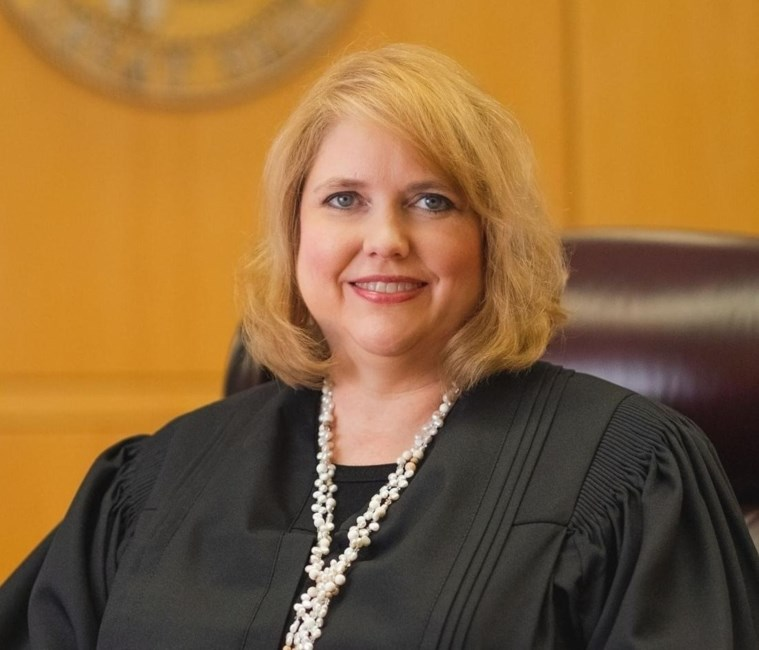
Jefferson County Judge Anne Lamkin Durward died on Saturday. She was 54. Durward was also the sitting President of the American Academy of Matrimonial Lawyers Foundation (AAML). The AAML Foundation made the announcement on their Facebook. “With profound sadness, I must share the news that Anne Lamkin Durward, President of the AAML Foundation, passed away unexpectedly on May 27. She was at home with her husband John and their dogs Duke and Laney. We express our deep sorrow and condolences to John and Anne’s family. Her funeral arrangements will be shared when they are finalized.” “Anne was a brilliant ray of sunshine who was loved and respected by everyone she met. I honestly can’t remember when a frown or a cross word ever passed her lips. She earned the title “The Honorable” in a landslide election a few years ago, and no one was more deserving. Anne was the benchmark of professionalism, enthusiasm, grace, and charm. She had a knack for putting others at ease.” “Social media can’t express my affection for Anne, but if you want to know a little more about her, scroll through Anne’s Facebook feed. She had literally hundreds of friends in the American Academy of Matrimonial Lawyers and International Academy of Family Lawyers. As President of the AAML Foundation, Anne traveled tirelessly as a goodwill ambassador to state chapters. She was proud to be a winning coach of the Cumberland School of Law moot court team, and an active member of the Birmingham Bar Association Women Lawyers Section. She was the second-most enthusiastic Alabama college football fan in her household (Roll Tide!). Anne touched our lives in a gentle, positive way. Her impact will be strong and lasting. We will miss her terribly.” Judge Durward presided over cases in the domestic relations division. Gov. Kay Ivey appointed Durward in 2020 to serve as domestic relations judge in Jefferson County, and she was elected in her own right in the 2022 election. She is a native of Mountain Brook, a graduate of Mountain Brook High School, and an alumnus of Washington and Lee University in Virginia as well Cumberland School of Law at Samford University. Anne is survived by her husband of twenty-three years, G. John Durward Jr.; her parents Dr. Thomas G. Lamkin and Mrs. Anne Lamkin; her younger brothers Thomas G. Lamkin, Jr. (Kelly), and Robert F. Lamkin (Angelina); her father-in-law Gerard J. Durward, her brother-in-law Michael P. Durward (Melissa); her niece Annelise and nephew Griffin Lamkin, and nephews Robert Jr., David and Daniel Lamkin and her canine children Duke and Laney. Prior to serving as a judge, Judge Durward practiced for 25 years in the area of family and domestic matters at Massey, Stoser & Nichols, P.C., where she was a shareholder and authored Child Custody: Modern Trends and Observations published in Child Custody Litigation and Settlements (Aspatore 2013). In addition to the State of Alabama, Judge Durward is admitted to practice in the United States Supreme Court, the Eleventh Circuit Court of Appeals, and the Northern, Middle, and Southern Districts of Alabama. At Cumberland School of Law, Judge Durward was the Managing Editor of the American Journal of Trial Advocacy and served on both the Henry Upsom Sims Moot Court Board and the Cumberland Trial Advocacy Board. She was awarded as one of the Cumberland School of Law’s Top 20 Female Lawyers for 2020, the Cumberland 2021 Alumni of the Year Award, the Cumberland 2022 Community Affairs Committee Award for Outstanding Community Service, and the Pro Bono Service Award recipient. Judge Durward is a Fellow of the Alabama Law Foundation and a Life Fellow and past President of the Board of Directors of the Birmingham Bar Foundation, having co-led the founding of the organization’s Fellows program. Judge Durward was an active member in the Birmingham Bar Association, serving as a Past Secretary-Treasurer of its Executive Committee, an active member in the Family Law, Women Lawyers (Board member) and Probate Sections and Entertainment Committee of the organization, and was a member of the Magic City Bar Association. Judge Durward twice served as President of the Legal Aid Society of Birmingham, served on its Board of Trustees, and was a member of the Board of Directors for the Birmingham Bar Volunteer Lawyers Program. Judge Durward was recognized by the Birmingham Bar Foundation with the 2018 Excellence Award. She has served as a speaker for multiple continuing legal education seminars for the Alabama State Bar, the American Bar Association, and other national and international organizations. Judge Durward was selected to Class IV of the Leadership Forum of the Alabama State Bar. She served as President and remains on the Advisory Board of DELTA, Inc., which is a charitable organization formed by members of the Birmingham Alumnae Chapter of Delta Sigma Theta Sorority to maintain a life development center in Birmingham’s Green Acres neighborhood and support community programs for youth and adults. She also served on the Community Affairs Committee, as a Sustainer of the Birmingham Ballet Guild, a member of the Washington & Lee University Alumni Chapter Board, and as a member of the Women’s Committee of 100. She serves on the Board of Directors of the Alabama Men’s Hall of Fame and on the Dean’s Executive Council at the Orlean Beeson School of Education at Samford University. Judge Durward also is a member of the United Fellowship Breakfast Forum, Inc., Kiwanis Club of Birmingham, and the Judge James Edwin Horton American Inns of Court. Judge Durward has been listed for multiple years in the Best Lawyers in America for Family Law, the Top Attorneys and Top Women Attorneys in Birmingham, and in SuperLawyers, and is AV Rated in Martindale Hubbell. There will be a Celebration of Life service on June 8, 2023, at 3:00 p.m. at St. Luke’s Episcopal Church at 3736 Montrose Rd., Mountain Brook, AL 35213. Visitation will be at 2:00 p.m. in Graham Hall at the church. Memorials can be sent to the American Academy of Matrimonial Lawyers Foundation, the Birmingham Bar Foundation, or a charity of your
USDA designates parts of Alabama a disaster area due to unseasonably cold temperatures that impact farmers

On Friday, Alabama Governor Kay Ivey and Commissioner of Agriculture and Industries Rick Pate announced that the U.S. Department of Agriculture issued a disaster designation for portions of Alabama at Governor Ivey’s request. Last week, the governor sent the request to the secretary of USDA for a disaster designation due to a drop in temperatures in March. The counties impacted by the designation are as follows: Baldwin, Henry, Elmore, Houston, and Montgomery counties were directly impacted. Contiguous counties that may have been impacted are Autauga, Pike, Barbour, Conecuh, Geneva, Bullock, Covington, Crenshaw, and Dale Counties, as well as Okaloosa County in Florida and Early, Clay, and Stewart Counties in Georgia. “Alabama’s farmers are vital to Alabamians and Americans alike,” said Governor Ivey. “They put the food on our tables and are a center point of our economy. This much needed disaster designation will help these hardworking men and women recover from lost crops resulting from an unpredictable change of temperature. I know this will help a good deal, and I am certainly proud to have the backs of our farmers during this recovery process and always.” “Our department has worked closely with the Governor’s Office and USDA leadership over the past week,” said Commissioner Pate. “We have learned of numerous impacts to the fruit and vegetable industry based on the late March freeze. We want to thank Governor Ivey and our federal partners for expediting the secretarial disaster designation.” Fruit trees in the flowering stage are particularly vulnerable when impacted by a cold snap, and it appears that the late cold snap impacted a number of orchards in southern counties. Also affected were vegetable farms that had just put transplants. Those young plants are routinely put out in the southern counties of Alabama in the early weeks of March. A number of those farms appear to have lost those plants and been forced to replant, postponing the eventual harvest by weeks. “During the period from March 18, 2023, through March 20, 2023, the state of Alabama experienced extreme cold temperatures resulting in a total loss of blueberries in southwest Alabama and a significant loss of peaches in central Alabama. There are also reports of stunted strawberry yields due to this cold weather event, and at least one producer has reported a loss of carrots due to low temperatures. It is reasonable to conclude that more crop production was likely impacted,” Governor Ivey wrote in the letter requesting the disaster declaration. Affected farmers may be eligible for emergency loans from USDA. To be eligible, farmers must suffer at least a 30% production reduction in a primary crop and be in a designated or contiguous county. Losses to quality, such as receiving a reduced price for flood-damaged crops, may be eligible for assistance. All loan applicants must also meet additional criteria unique to the Emergency Loan program. The loan applicant must be an established farmer and either the owner-operator or tenant-operator of the farm at the time of the disaster. The loan applicants must intend to continue farming. The loan applicants must get written declinations of credit from organized commercial lending institutions. If the loan is greater than $100,000 and less than $300,000, only one letter is required. If the loan is greater than $300,000, 2 letters of declination are required. If the loan amount requested is $100,000 or less, this requirement is determined on a case-by-case basis at the Agency’s discretion. The Agency must receive the loan applications no later than eight months after the disaster is declared or designated. The loss and/or damage to the farm operation must be directly attributed to the stated reason for the disaster declaration. Crop insurance is not required at the time of the loss but will be a requirement for the coming year in order to receive a loan. The maximum loan amount for an Emergency loan is $500,000. Yet, the amount a loan applicant may receive is limited to the actual amount of production or physical loss caused by the disaster. Physical loss loans are based on the amount needed to replace the lost property, such as stored grain, equipment, and livestock. Repayment terms are based on the useful life of the security, a loan applicant’s repayment ability, and the type of loss involved. The repayment schedule will require at least one payment every year. Emergency loans for annual operating expenses must be repaid within 12 months and not to exceed 18 months if an extended term is necessary for the production cycle of the agricultural commodity. Interest rates are calculated and posted on the 1st of each month. The interest rate charged is always the lower rate in effect at the time of loan approval or loan closing for the type of loan wanted. For information on whether or not your farm may be eligible for this or other programs, contact your local Farm Service Agency office. To connect with the author of this story or to comment, email brandonmreporter@gmail.com.
Katie Britt and colleagues introduce legislation to combat fentanyl and illegal immigration
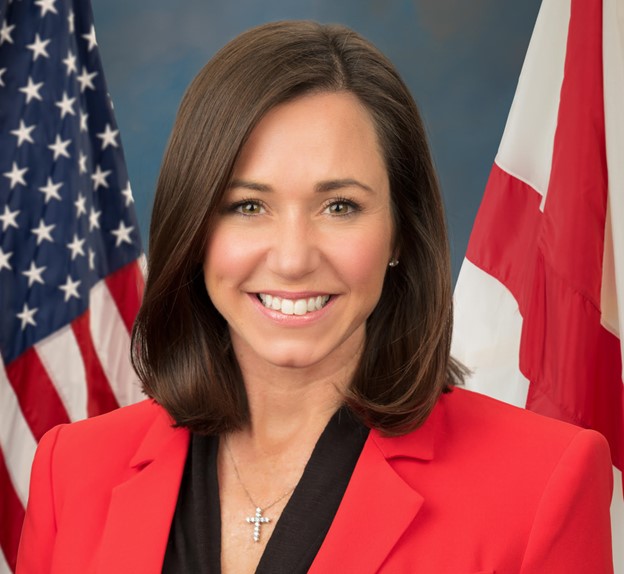
U.S. Senator Katie Britt joined colleagues to introduce the FEND Off Fentanyl Act and the Stop Dangerous Sanctuary Cities Act. The Fentanyl Eradication and Narcotics Deterrence (FEND) Off Fentanyl Act is a bipartisan bill designed to target the flow of the deadly narcotic into the United States by empowering the U.S. Department of the Treasury to target, sanction, and block the financial assets of transnational criminal organizations trafficking fentanyl. In addition, the proceeds from any seized assets would be used to further law enforcement efforts. “The people who are truly profiting from trafficking fentanyl, from the precursor producers in China to the ruthless cartels in Mexico, are well-financed, well-organized, and well-connected,” said Senator Britt. “Giving the Treasury Department the tools to impose meaningful penalties will help ensure that we can curb the deadly flow of fentanyl into our country and work to end the devastation that this poison has brought to our communities, schools, and families.” Fentanyl is now the leading cause of death for Americans under the age of 45, and more than 150 people die each day from overdoses related to fentanyl. This bill is led by Sen. Sherrod Brown (D-Ohio). “I hear over and over from Ohioans that we need new, more powerful tools to prevent the flow of these drugs to our communities,” said Brown. “Our bipartisan bill targets these drugs at the source. We are going after the illicit fentanyl supply chain, from China through Mexico, to help stop increasingly dangerous forms of this drug before they ever reach our communities.” The Stop Dangerous Sanctuary Cities Act will empower local law enforcement and ensure they can work with federal authorities to enforce existing immigration laws. This bill would also pull taxpayer-funded grants from municipalities that adopt “sanctuary cities” policies which forbid their police departments from cooperating with federal authorities in immigrant enforcement actions. “Ensuring that our citizens can live the American Dream regardless of their zip code starts with public safety,” Sen. Britt stated. “At a time when our nation is facing an unprecedented crisis at our southern border, we can’t have municipalities picking and choosing what laws they want to follow. I’m proud to support Senator Cruz’s effort to stop the dangerous policies of sanctuary cities and put power back into the hands of law enforcement.” The legislation is led by Sen. Ted Cruz (R-Texas). “So-called ‘sanctuary cities’ refuse to enforce the laws on the books and release violent criminals in our country illegally—including rapists and murders—who go on to prey on both American citizens and the immigrant community,” Sen. Cruz said. “Moreover, many of these sanctuary jurisdictions actively prevent state and local law enforcement from coordinating with their federal counterparts. They release murderers, rapists, and burglars who end up preying on the community. That is wrong. The American people, and Texas communities in particular, are tired of seeing our laws flouted and the crime that often accompanies illegal immigration. These jurisdictions need to be held accountable, and I will do everything I can to enforce our immigration laws.” Sen. Tommy Tuberville is also one of the co-sponsors. Senator Britt has made three visits to the border since being sworn into office in January. To connect with the author of this story or to comment, email brandonmreporter@gmail.com.
AG Steve Marshall applauds Senate passage of gang legislation
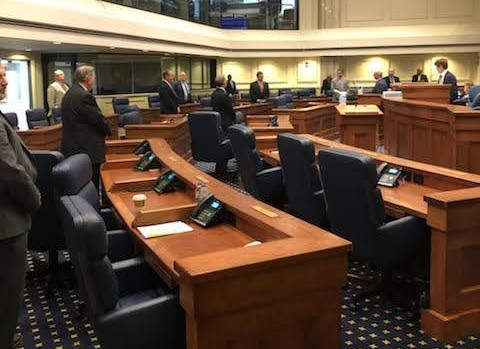
On Wednesday, Alabama Attorney General Steve Marshall issued a statement applauding the state Senate’s passage of legislation that would crack down on gang members who commit felonies and which would try some youthful offenders as adults if their crimes were gang-related. Senate Bill 143 (SB143) is sponsored by State Senator Will Barfoot (R-Pike Road). As written, SB143 provides penalty enhancements for felonies committed to further the interests of any criminal enterprise, attaches a mandatory minimum sentence to the possession or use of a firearm during the commission of certain crimes, and certifies individuals aged 16 and older as adults when charged under the Act. “My Office worked hand-in-hand with law enforcement to develop the Gang Prevention Act, as we continue to see the proliferation of violent street groups in too many of our communities,” said Attorney General Marshall. “Gang violence is a cancer, and tough sentences are the antidote. I applaud the Senate for moving forward with this legislation and prioritizing the safety of our citizens.” As the Chief Law Enforcement Officer of Alabama, Marshall is advocating for the Alabama Gang Prevention Act and the recently passed Deputy Brad Johnson Act dealing with correctional incentive time. In April, 162 Sheriffs and Chiefs of Police from across the state called on the legislature to pass the Alabama Gang Prevention Act. The original legislation was heavily amended on the Senate floor, The amended version of the bill defines “CRIMINAL ENTERPRISE” as “Any combination, confederation, alliance, network, conspiracy, understanding, or other similar arrangement in law or in fact, including a street gang as defined in Section 13A-6-26, of three or more persons, through its membership or through the agency of any member, that engages in a course or pattern of criminal activity.” A “CRIMINAL ENTERPRISE MEMBER” is defined as “An individual who meets three or more of the following: a. Admits to criminal enterprise membership. b. Is voluntarily identified as a criminal enterprise member by a parent or guardian. c. Is identified as a criminal enterprise member by a reliable informant. d. Adopts the style of dress of a criminal enterprise. e. Adopts the use of a hand sign identified as used by a criminal enterprise. f. Has a tattoo identified as used by a criminal enterprise. g. Associates with one or more known criminal enterprise members. h. Is identified as a criminal enterprise member by physical evidence. i. Has been observed in the company of one or more known criminal enterprise members four or more times. Observation in a custodial setting requires a willful association. This paragraph may be used to identify criminal enterprise members who recruit and organize in jails, prisons, and other detention settings. j. Has authored any communication indicating responsibility for the commission of any crime by a criminal enterprise.” SB143 has strong bipartisan support, passing 32 to 0 in the Alabama Senate. Gangs are terrorizing schools, parks, young people, and businesses across many parts of Alabama. It now goes to the Alabama House of Representatives for their consideration. The House has assigned SB143 to the House Judiciary Committee. It will be considered by the Committee on Wednesday at 1:30 p.m. in Room 423 of the Statehouse. The House Judiciary Committee has already voted to advance similar legislation in the House – House Bill 191. HB191 was killed when the House of Representatives would not consider it on the House floor on Thursday. Wednesday will be Day 28 of the 2023 Alabama Regular Legislative Session. The regular session is limited to no more than 30 legislative days. To connect with the author of this story or to comment, email brandonmreporter@gmail.com.
Barry Moore votes against student loan giveaway
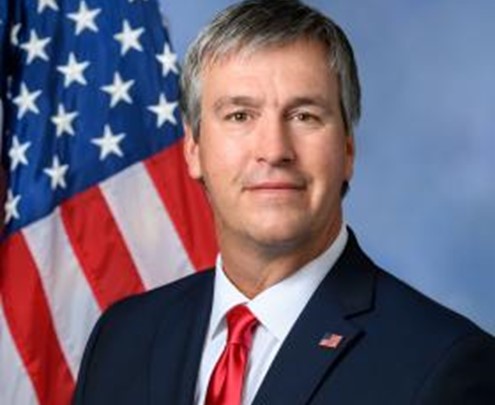
On Friday, Congressman Barry Moore voted in support of H.J. Res 45, a Congressional Review Act (CRA) resolution that would overturn President Joe Biden’s $400 billion student loan debt forgiveness, saying that it is unconstitutional. “Biden’s $400 billion dollar giveaway takes the burden off student loan borrowers’ and puts it squarely on the backs of American taxpayers to the tune of $1 trillion,” said Moore. “This radical decision to punish hard-working Americans who never took out student loans or worked hard to pay them back was made unilaterally by President Biden, and today House Republicans reminded him that the Constitution requires that he work with us.” The Congressional Review Act (CRA) resolution to overturn President Biden’s student loan transfer plan was sponsored by Congressman Bob Good (R-Virginia). “President Biden’s student loan transfer scheme merely shifts the costs from student loan borrowers onto the backs of taxpayers to the tune of hundreds of billions of dollars,” Congressman Good told the Daily Caller. “I am proud to lead the fight against President Biden’s reckless, unilateral, and unauthorized actions on student loans that would unfairly penalize those who worked hard to pay off their loans or who never took them out in the first place.” “Since his first day in office, President Biden has worked to circumvent the courts and congressional authority to provide backdoor free college through the student loan program,” said Congresswoman Virginia Foxx. “The president is leveraging the nation’s financial future with his radical agenda that, taken together, could end up costing taxpayers nearly $1 trillion. This is why it’s so important for Congress to pass this resolution and remind the president that he cannot act unilaterally like a dictator to get his way.” “Student loan forgiveness is regressive, inequitable, and it will not stimulate the economy,” the House Republican Policy Committee wrote. “Instead, it will create an incentive for students to accumulate more debt and award as much as $192 billion to the top 20 percent of income earners. Forgiveness is fundamentally unfair because it will ultimately be paid by taxpayers—many who have faithfully paid off their student loans, worked hard to pay for college, or chose not to go to college at all.” Barry Moore is in his second term representing Alabama’s Second Congressional District. He is a veteran and a small businessman who served two terms in the Alabama House of Representatives from 2010 to 2018. To connect with the author of this story or to comment, email brandonmreporter@gmail.com.
