
Inaugural Alabama Medical Cannabis Conference to be held in Birmingham

The Alabama Cannabis Industry Association (ACIA) announced they are holding the Inaugural Alabama Medical Cannabis Conference on Friday, July 14, and Saturday, July 15. The conference will be at the Birmingham Sheraton Hotel at 2101 Richard Arrington Jr. Boulevard North. “On June 12, 2023, the Alabama Medical Cannabis Commission made the historic announcement of the State of Alabama’s first legal medical cannabis license awards,” Alabama Cannabis Industry Association President Chey Garrigan said. “In the days following this landmark announcement, issues arose that raised questions about the calculations of the scores. As a result, the Alabama Medical Cannabis Commission has stayed the formal issuing of the licensing, as has a trial court.” “Since early 2019, Alabama Cannabis Industry Association has been the only voice of Alabama’s Cannabis Industry,” said Garrigan. “From the very beginning, our focus has been on providing Alabamians with a demonstrable medical need, the same relief that most of the nation already have legal access to. Our focus has never wavered.” Garrigan said the conference will include roundtable discussions, panel topics, and networking opportunities. The conference includes learning opportunities from leaders and innovators in cannabis cultivation, retail, and extraction. The conference will provide information about the technical, operational, and strategical tools that are vital to thrive in this ever-challenging, ever-changing industry. “Our membership-based association is governed by a member Board of Directors and member Advisory Board with backgrounds in medical and adult-use cannabis licensed facility operations, as well as healthcare, law, science, law enforcement, security, commercial real estate, finance, government, and public affairs,” Garrigan said. “Our inaugural conference will feature nationally recognized experts in the cannabis space that has been featured on TED talk and widely publicized Cannabis periodicals. For more information about the conference, go to Alabamacannaconference.com. The Alabama Medical Cannabis Commission (AMCC) is the agency that the state Legislature created and tasked with regulating medical cannabis in Alabama. The AMCC recently announced that it had awarded 21 business licenses to grow, process, transport, and/or analyze medical cannabis in Alabama. Four days later, the Commission put a hold on the issuing of the licenses due to some issues with the scoring of the applications. The Commission is holding an independent review of the scoring; meanwhile, a court has put a stay on awarding any licenses pending a hearing. This puts the whole industry on hold pending the review and the outcome of the pending litigation. It will be sometime in 2024 before legal Alabama-grown medical cannabis is available in Alabama. To connect with the author of this story or to comment, email brandonmreporter@gmail.com.
Katie Britt backs bipartisan legislation to solidify American sanctions on Iran
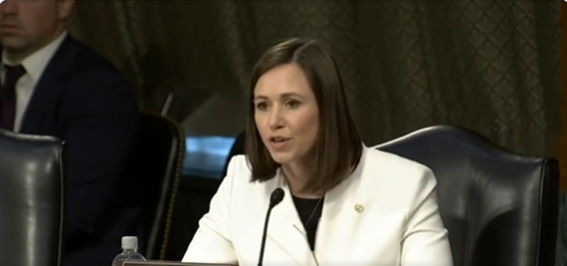
U.S. Senator Katie Britt recently joined Presidential candidate U.S. Senator Tim Scott (R-South Carolina) and Senators Maggie Hassan (D-New Hampshire), Bill Hagerty (R-Tennessee), and Jacky Rosen (D-Nevada) in cosponsoring the Solidify Iran Sanctions Act (SISA) to make permanent the Iran Sanctions Act of 1996. “This legislation sends an important bipartisan message to Iran that the United States will not tolerate continued threats to American national security,” said Sen. Britt. “Peace is achieved through strength. We must stand firm against bad actors and ensure that, first and foremost, our homeland is protected against aggression. I will always fight for America’s safety, and this act is a strong step to safeguard our nation’s future.” “As evidenced by the recent Iranian-backed drone strike in Syria that tragically killed South Carolinian Scott Dubis and the recent seizure of a U.S.-bound oil tanker, it is clear that Iran continues to engage in destabilizing activities that threaten the safety of America, Israel, and our other partners in the region,” Sen. Scott said. “Cementing these sanctions will apply pressure on Iran and help restrain this regime from developing weapons that threaten safety and security around the world.” “We must do everything that we can to prevent Iran from building a nuclear weapon and stop its support of terrorism,” said Sen. Hassan. Cementing these sanctions would advance national security by restraining Iran from engaging in malign activities that threaten the United States and its allies. SISA would also ensure that America’s sanctions regime continues to apply pressure on Iran amid its continuing dangerous nuclear escalation. In 1996, Congress passed the Iran Sanctions Act (ISA), which allowed the president to impose secondary sanctions on Iran’s energy sector. Throughout the years, ISA provisions were expanded to include other Iranian industries. ISA consists of “triggers” that place sanctions on firms or entities that violate U.S. sanctions under this law. As Iran continues its nuclear enrichment towards a weapons-grade level, it is essential that the United States solidifies its pivotal sanctions to apply pressure toward the rogue regime. The Solidify Iran Sanctions Act removes the sunset provision in the ISA and signals that the U.S. remains firmly committed to sanctioning the regime until it changes its malign behavior. A companion bill was introduced in the House of Representatives by Rep. Michelle Steel (R-California), Rep. Michael McCaul (R-Texas), the Chairman of the House Committee on Foreign Affairs, and Rep. Susie Lee (D-Nevada). There were international sanctions on Iran, but those went away in the Iran nuclear deal negotiated during the Obama administration. President Donald Trump reimposed U.S. sanctions, but the rest of the international community did not follow America’s lead. President Joe Biden has made some overtures towards negotiating a new deal with Iran, but Iran has not been receptive. U.S. Secretary of State Antony Blinken said on Wednesday that there was no nuclear deal with Iran on the table. “There is no agreement in the offing, even as we continue to be willing to explore diplomatic paths,” Blinken said at the Council on Foreign Relations in New York. “We’ll see by their actions.” Blinken called on Iran to “not take actions that further escalate the tensions” with the United States and the Middle East. Katie Britt was elected to the U.S. Senate in 2022 To connect with the author of this story or to comment, email brandonmreporter@gmail.com.
Tuberville tells reporters U.S. must ‘figure out a pathway to reduce spending’
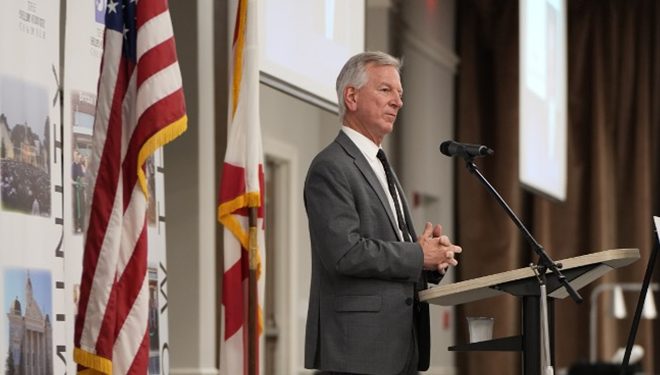
On Tuesday, U.S. Senator Tommy Tuberville told reporters that Congress should be working on the growing national debt but that the Democrats are blocking efforts to address that issue. Currently, the United States has historically low unemployment, record-high federal tax revenues, and no large combat operations overseas for the first time in over 20 years. The COVID-19 global pandemic is behind us, yet the federal government is spending more than $1.5 trillion a year above what the government takes in. Alabama Today asked Tuberville if this was the time to address the deficit. Tuberville argued that the Democrats want to raise taxes, but that would be a mistake. “The American people are taxed to death,” Tuberville said. “We have got to figure out a pathway to reduce spending.” “We cannot live with $32 trillion in debt,” Tuberville said. “We need leadership in the White House to get this over,” Tuberville. “We just raised the debt limit $4 trillion.” “There needs to be a lot of work done in this Congress,” Tuberville said. “We are at $110 billion in Ukraine. I didn’t vote for any of that – and I am for Ukraine.” Tuberville said that if Congress raises taxes, it “is going to run some people out of business.” “We ran a lot of businesses out of business during COVID,” Tuberville argued. Tuberville also spoke out against the Biden Administration’s energy policies. “Our economy is in bad shape, but it is self-inflicted,” Tuberville said. “It is a disaster right now.” “Go to a store, the inflation rate – It is more like 20 to 25 percent. The American people deserve better.” Tuberville was asked about the redistricting issues that are confronting the Legislature. “I have not really looked at it,” Tuberville said. “We have no input.” Tuberville announced that in two weeks, he will announce a bipartisan bill to reform college athletics. “Joe Manchin and I have been working for one year on college athletics. Two weeks from now, Joe Manchin and I will go on stage to introduce our bill. We have got a bill right now. There could be some changes, but I think we are on the right track. Hopefully, we can get it passed. We have to get reality back to college athletics. I have always been for athletes being compensated, but right now, we are putting money over education.” Tuberville said that it is his goal that athletes also have the tools, not just to get paid now, but “to be successful in life after sports.” Senator Tuberville spoke to reporters in Pelham after he addressed the Pelham Chamber of Commerce at the Pelham Civic Center Complex about his work in Washington on behalf of the people of Alabama. To connect with the author of this story or to comment, email brandonmreporter@gmail.com.
Terri Sewell hopeful two of Alabama’s seven congressional districts will become majority-minority
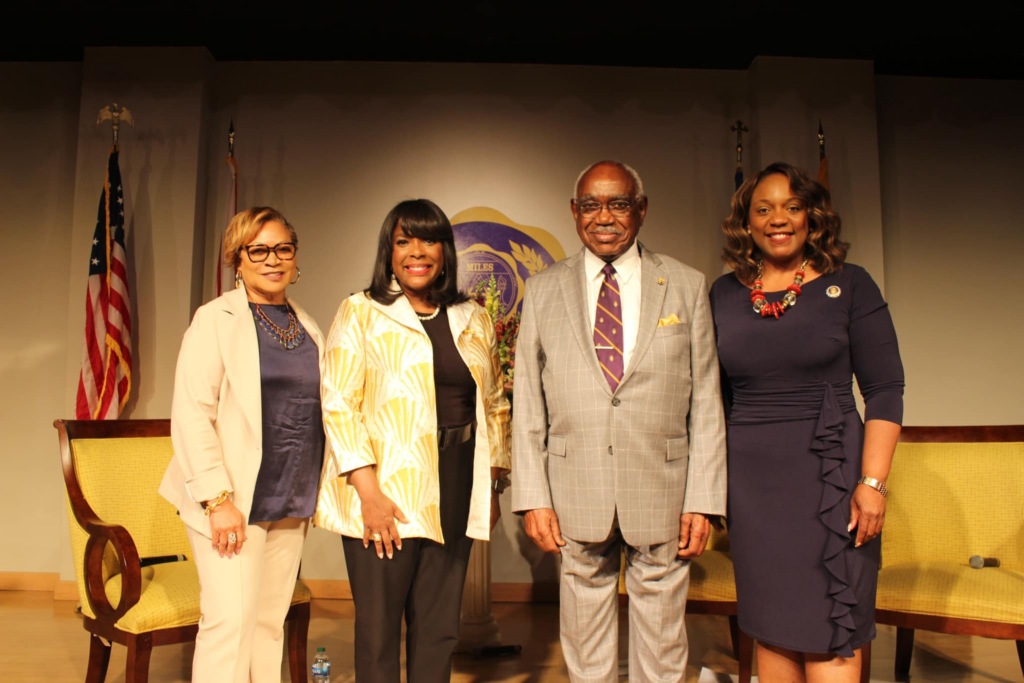
Congresswoman Terri Sewell (D-AL07) participated in a symposium on the Milligan v. Allen decision at Miles College on Tuesday. There Sewell said she would not be satisfied with less than “50 percent plus one or more” African American in two of Alabama’s congressional districts. The Legislature redistricted the state in 2021, but the federal courts have since ruled that the Legislature’s redistricting violated the Voting Rights Act of 1965 and have ordered the Legislature to draw two majority-minority districts or at least two districts that were largely minority. Sewell said that the recent Supreme Court decision affirming the three-judge panel of the Eleventh Circuit Court of Appeals decision was a surprise given previous court decisions by this current court. “We all expected the Supreme Court to once again gut the Voting Rights Act,” Sewell said. “I am so excited about the historic nature of our victory,” Sewell said. “It was a historic victory for not just Black Americans, but it was a victory for democracy.” Sewell continued, “It is going to force the Alabama Legislature to draw a new congressional districting map by July 21. It (the ruling) does not say that we have to have two majority minorities districts.” On Twitter, Sewell wrote, “The fight for voting rights is the fight of a lifetime. We’ve made progress, but if we are not vigilant about advancing it, we will lose it. Thank you @MilesCollege for hosting this critical and timely discussion! I was honored to join these distinguished guests!” Retired federal Judge U.W. Clemons said that he felt that the map adopted would be one that kept counties together as much as possible. “I think the three-judge panel will give great deference to the map that respects the integrity of the counties,” Clemons said. “I am looking for 50% (Black voters) plus more in each of the districts,” Sewell said. “I am convinced that not only will this decision affect Alabama, it will affect the nation,” Clemons said. “The Supreme Court abided by the precedent set in Thornburgh versus Gingrich.” Clemons explained that “three conditions” exist for creating a majority-minority district under the Thornburgh v. Gingrich precedent. “It has to have a large enough population of minority voters,” Clemons explained. “It has to be able to draw a cohesive district, and there has to be a history of the majority voting in a racially polarizing way. We meet all of those conditions here in Alabama.” “Brown versus the Topeka Board of Education was first argued before the Supreme Court in 1952,” Clemons said. Clemons explained that the ruling determined that separate but equal education was inherently unequal. “That ruling was the first evidence during my life for that there was a God,” Clemons said, adding that this ruling also was likely due to God. Clemons is retired from the federal bench, but he is not retired. “This ruling has the potential to reshape this nation,” Clemons said. Clemons said concerns about the public popularity of the current court may have motivated Chief Justice John Roberts to write this opinion in Milligan versus Allen. “This court has the lowest credibility of any Supreme Court that has ever sat,” Clemons said. “The Chief Justice felt that he had to try to maintain at least some credibility with the public. It is a signal that he, as a chief justice, is representing the nation.” “The Milligan case will have profound impact across this nation,” Sewell said. State Senator Merika Coleman (D-Birmingham) said. “It truly is profound what has happened with the Milligan case.” Coleman continued, “Of course, there will be some people who will try to do something that is not what the court said. A Senator I will not name here told me on the phone: We are just going to give you two districts that are 47% African American.” Coleman said that the maps that the Legislature draws will still have to be shown to Milligan and the other plaintiffs in the case, and they can either accept them or ask that the three-judge panel appoint a special master to draw the districts. “If they draw two districts that are 47% African American, a special master will have to come in,” Coleman said. “We want to be able to draw those districts ourselves.” “We already have a safe African American congressional district,” Coleman said. Coleman said that both districts need to be “50 percent plus one or more Black voting age population.” “We have a real opportunity to pick our candidate of choice,” Coleman said. “I have absolutely no faith that the Alabama Legislature is going to do the right thing. It never has,” Clemons said. “The courts are going to do it.” “Neither Democrats or Republicans want the special master to come in,” Coleman said. “Congressional District Two is the one where my former colleague Barry Moore is.” “The Legislature is going to do what it usually does,” Clemons said, “In 1872, we had one Black member of Congress. In 1874, we had one member of Congress.” Alabama would not have another Black member of Congress until Earl Hilliard in 1992. Hilliard’s Seventh Congressional District was 65% African American. Today the Seventh Congressional District is represented by Sewell. “It was 61% African American before redistricting,” Sewell explained. “It dropped to 55% in this redistricting. “It would not be fair for it to fall to below 50%.” Clemons said that it is important that Blacks are united politically. “If the Black Community had four political parties and all four were equal in strength, we would not be politically cohesive,” Clemons said. “For better or worse, most Black communities are Democrats. Frankly, our being Democrats means that we are politically cohesive.” Sewell said that, “Change comes when ordinary people fight to do better, and they work on the ground.” Sewell predicted that if the Democrats pick up a new majority-minority seat in Alabama, Louisiana, Arkansas, Georgia, Florida, and South Carolina, “the first African-American man Hakeem Jeffries will become the Speaker of the House.” The Governor has called a special session for redistricting to start on July 17.
Steve Flowers: Friends and neighbors politics
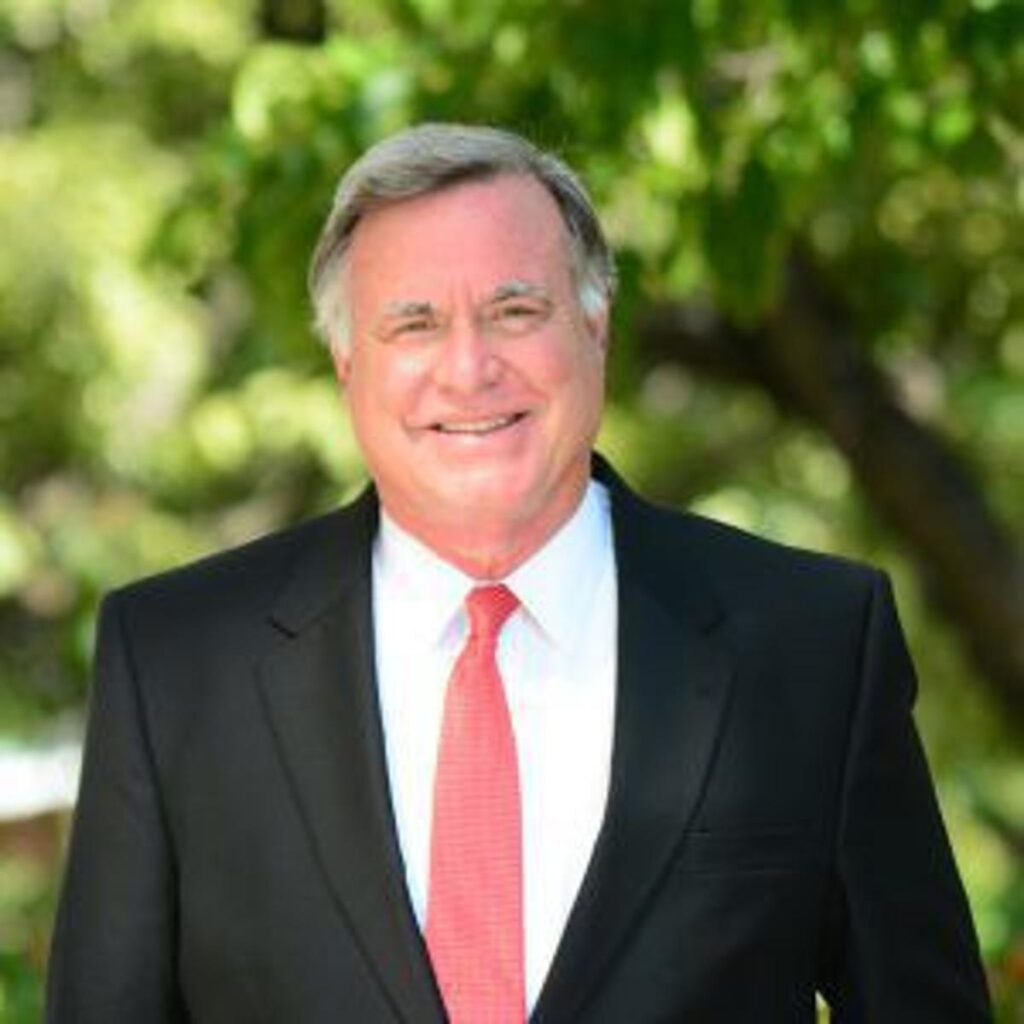
Last week I discussed young State Auditor Andrew Sorrell. Recently, when I had him on my Montgomery television show, we discussed his successful race for State Auditor. He understands the golden rule of politics, “money is the mother’s milk of politics.” In his 2022 race, he raised an amazing, record-breaking $714,000 and was able to outspend his opponents 7-to-1. More impressively, he spent the 7-to-1 advantage prudently and wisely. He designed and produced his own television ads, which cut out a 20% distribution and production charge. The most impressive revelation was that he wisely used his personal campaign time in locales where he took advantage of friends and neighbors politics. His opponent, Rusty Glover, had a very strong base of support in Mobile, where he had been a state representative, state senator, and taught school for years. Stan Cooke, his other opponent, was a well-known preacher in Jefferson County. Therefore, he acknowledged that these two urban enclaves would vote for their native sons, which they did. Sorrell realized that this left him as the only North Alabama candidate. He was from the Muscle Shoals, Tuscumbia, Florence area, and he worked in the Tennessee Valley area as their boy. He carried the vote-rich North Alabama. He also worked and cultivated the Wiregrass, where there was no hometown candidate. He did well there, also, with the help of television. In the runoff with Glover out, Sorrell swooped down to Mobile/Baldwin, garnered Glover’s votes, and trounced Cooke. What surprised me was that in 2022 the old “friends and neighbors premise” still prevailed, and even more surprising that it existed in a low-profile down-ballot race. I have been preaching and telling you about the pervasive friends and neighbors politics in Alabama for the last 20 years in my columns. When folks come to visit with me in anticipation of running a statewide race, I make them aware that it still exists, especially in the governor’s races. Those of us who are students of southern and Alabama politics attribute the highlighting of friends and neighbors theory to the brilliant southern political scientist Dr. V. O. Key Jr. In Dr. Key’s textbook, Southern Politics in State and Nation, written in 1948, he points out that friends and neighbors politics has existed in the South for decades. I am here to tell you that it still exists today. What is friends and neighbors? It is simply a trend whereby folks will vote for someone from their neck of the woods. Alabamians will vote overwhelmingly for a candidate from their county and adjacent counties. When I taught Southern Politics to college classes, I would tell the students this habit of voting for the hometown boy in Alabama politics was so pervasive that if a candidate from their county or neck of the woods was running statewide and were a well-known drunk or crook, they would vote for him. They might say, “I know ole Joe is a drunk or crook, but he’s my drunk or crook.” You can look at every governor’s race in the last 80 years and see our local friends and neighbors voting for the hometown candidate when you dive into the numbers. It is unmistakable. Dr. Key illustrates it well, first in the 1946 races for governor, Congress, and U.S. Senate. There was an open U.S. Senate when Roosevelt appointed our liberal senator, Hugo Black, to the Supreme Court. The congressman from the Tennessee Valley, John Sparkman, won the Senate Seat riding a 75% hometown vote from Madison and Morgan counties. That Tennessee Valley Congressional Seat was won by Scottsboro lawyer Bob Jones because he got an unheard-of 97.8% of the vote in Jackson County. In that same year, Big Jim Folsom won the 1946 governor’s race because he had two hometowns. Big Jim was born and raised near Elba in Coffee County but spent his adult life in Cullman in north Alabama. In that 1946 race, Big Jim garnered 72% in Cullman and 77% in Coffee in the first primary, where his statewide average was 28% in the crowded field. You can point to countless examples in all governor’s races since 1946. There are clear-cut examples of localism and regionalism voting for the candidate from your neck of the woods. Friends and neighbors politics is still alive and well. See you next week. Steve Flowers is Alabama’s leading political columnist. His weekly column appears in over 60 Alabama newspapers. He served 16 years in the state legislature. Steve may be reached at www.steveflowers.us.
Ted Cruz calls for special counsel to investigate Attorney General Merrick Garland
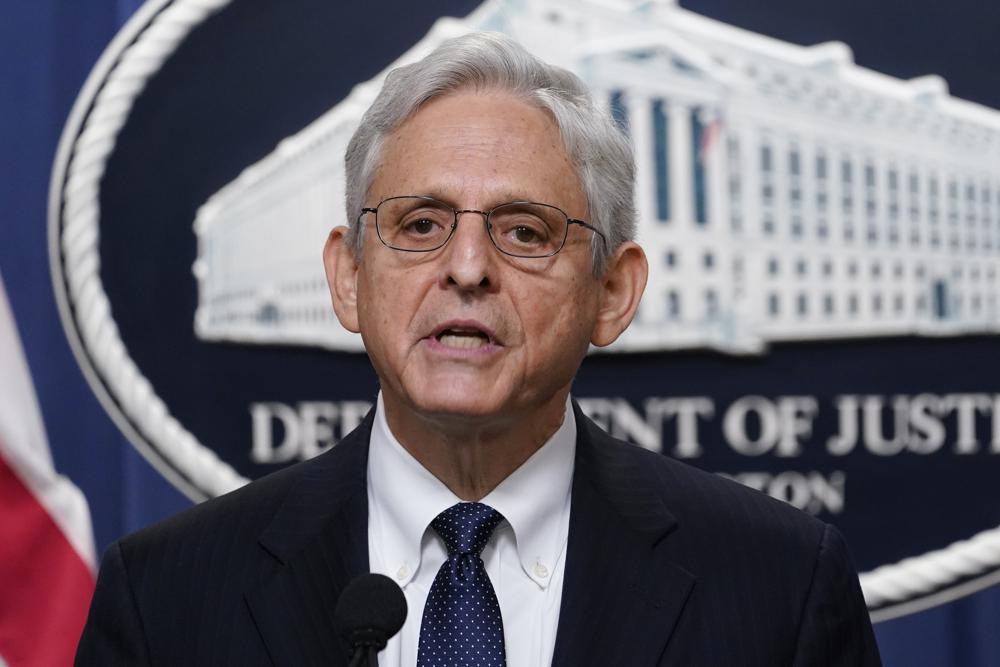
U.S. Sen. Ted Cruz, R-Texas, is calling for a special counsel to investigate Attorney General Merrick Garland over perjury and obstructing justice claims. Cruz did so as U.S. House Speaker Kevin McCarthy, R-California, said the House would begin an impeachment inquiry into Garland after IRS whistleblowers came forward to members of Congress alleging Garland blocked an investigation into Hunter Biden, President Joe Biden’s son, and lied about it under oath. McCarthy tweeted, “We need to get to the facts, and that includes reconciling these clear disparities. U.S. Attorney David Weiss must provide answers to the House Judiciary Committee. If the whistleblowers’ allegations are true, this will be a significant part of a larger impeachment inquiry into Merrick Garland’s weaponization of the DOJ.” IRS whistleblower Gary Shapley testified before Congress that the U.S. Attorney in charge of an investigation into Hunter Biden, David Weiss, said he wanted to bring charges but was prevented from doing so by Garland. McCarthy also told Fox News the inquiries would start by July 6. In his podcast, “Verdict with Ted Cruz,” on Monday, Cruz said, “The evidence is mounting and mounting and mounting … it is getting so bad even the corrupt corporate media cannot ignore this anymore.” Cruz played a clip of Garland saying at a news conference, “I certainly understand that some have chosen to attack the integrity of the Justice Department … by claiming that we do not treat like cases alike,” referring to what senators have argued when comparing how President Biden and former President Donald Trump have been treated by the department. “Nothing could be further from the truth. We make our cases based on the facts and the law,” Garland said. Cruz said Garland is “the one who has politicized this process and is burning down the integrity of the Department of Justice to the ground. The people accusing him work for him … they are his own … employees, and they’re … mad.” Cruz said Garland’s response was self-righteous and compared him to a despot. He also said what Garland said was “objectively false: ‘We use the same standards for everyone.’ Well, OK, you’re name is Biden you can have classified documents everywhere … but if you’re Trump, we’re sending in the stormtroopers.” “It’s time the Department of Justice needs to appoint a special counsel to investigate Merrick Garland for obstruction of justice and perjury,” he said. Cruz cited Shapley’s testimony, which indicated that Garland committed perjury and lied under oath to Congress. Garland then removed him from the case, which Cruz said is illegal and needs to be investigated. Cruz called for an investigation after he previously called out the deputy director of the FBI over bribery allegations related to both the president and his son, and is still demanding answers. Cruz also welcomed the House impeachment inquiry, saying, “There is serious evidence that Merrick Garland lied to me, under oath, when I questioned him about his role in obstructing the Hunter Biden probe.” When asked by Newsmax’s James Rosen about the accusations, White House spokesman John Kirby walked out of the room and wouldn’t answer questions. At another press briefing, when similar questions were asked, another White House spokesperson said she didn’t know what the reporters were referring to and didn’t have a comment. When asked if the White House believed Garland committed perjury, she smirked and made several facial expressions, shaking her head, and said, “I don’t have any comment on this.” Republished with the permission of The Center Square.
Rivalry between Donald Trump and Ron DeSantis deepens with dueling New Hampshire campaign events
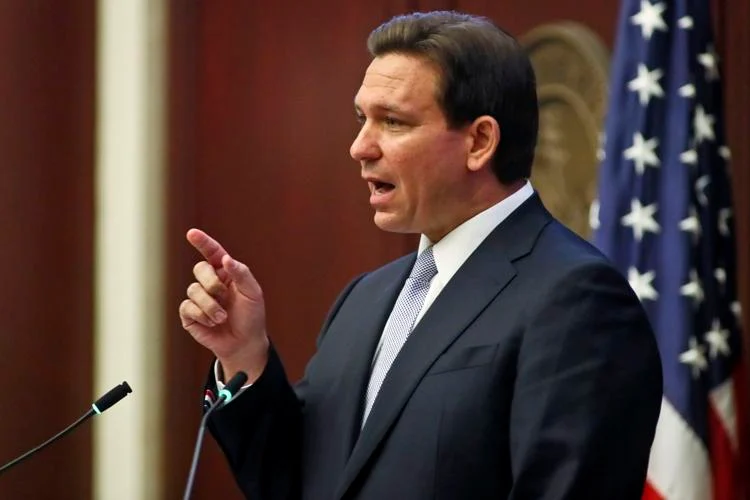
The rivalry between Florida Gov. Ron DeSantis and former President Donald Trump deepened Tuesday as the two leading Republican White House candidates mocked each other during dueling events in the critical early voting state of New Hampshire. Addressing a town hall in Hollis, DeSantis vowed to “actually” build the U.S.-Mexico border wall that Trump tried but failed to complete as president. He also pledged to tear down Washington’s traditional power centers in ways that Trump fell short. Speaking later at a Republican women’s luncheon in Concord, Trump countered that DeSantis was being forced to settle for second place in the primary and accused the governor of supporting cuts to Social Security, Medicare, and other entitlement programs as a way to tame federal spending. Beyond the rhetoric, the conflicting events demonstrated each candidate’s evolving strategy. DeSantis took extensive audience questions — a trademark in New Hampshire politics that he eschewed during his previous visit to the state, drawing criticisms that he was stilted and overly scripted. Trump, meanwhile, offered a free-wheeling speech for more than an hour. He didn’t take questions in Concord, and reporters covering the event were confined to a pen, chaperoned to the bathroom, and told they could not speak to attendees in the conference center ballroom or even in the hallways. But the former president answered questions at a subsequent stop in Manchester, where he opened his New Hampshire campaign office. DeSantis, asked about people who had twice voted for Trump because of his promises to “drain the swamp” in Washington, used his answer to draw some of his sharpest contrasts yet with the former president. “He didn’t drain it. It’s worse today than it’s ever been,” DeSantis said. He added that such promises don’t go far enough because a subsequent president “can just refill it.” “I want to break the swamp,” DeSantis said, pledging to take power out of Washington by instructing Cabinet agencies to halve the number of employees there. DeSantis has tried to gain ground on Trump by questioning the former president’s continued hold on the national Republican party. At his town hall, the governor slammed the GOP’s “culture of losing” under Trump and mentioned the “massive red wave” that many in the GOP predicted but that never materialized nationally in last year’s midterm elections. “We had a red wave in Florida,” DeSantis said, noting he easily won reelection last fall. “But that’s because we delivered results in Florida.” Many leading Republicans remain fiercely loyal to Trump, but there is some evidence that the attacks against the former president are resonating. Speaking about Trump on Tuesday, House Speaker Kevin McCarthy, a California Republican, said, “Can he win that election? Yeah, he can win that election.” “The question is, is he the strongest to win the election?” McCarthy continued on CNBC’s “Squawk Box.” “I don’t know that answer.” He clarified later in the day to the conservative news outlet Breitbart that Trump “is stronger today than he was in 2016.” In his own speech, Trump noted that polls show him with large primary leads. He seized on DeSantis saying that, while Social Security and other programs need to be guaranteed for older adults, there may be work “in a bipartisan way to figure out how do you strengthen this” when it comes to younger people. “You can bet he’ll be doing it later,” Trump said of cuts to the programs. “And he’ll be doing it to you.” Trump also vowed to “drain the swamp once and for all” but used the slogan more to criticize President Joe Biden than the Florida governor. “You can’t drain the swamp if you’re part of the swamp, and Joe Biden and other opponents, many of them, are all owned, controlled, bought and paid for, 100%,” Trump said. The former president also largely echoed DeSantis’ sentiments in promising that “this election will be the end of the world for the corrupt political class in our nation’s capital.” DeSantis was also asked about the pro-Trump mob that overran the U.S. Capitol in January 2021, and responded, “If it’s about relitigating things that happened two or three years ago, we’re going to lose.” “I had nothing to do with what happened that day. Obviously, I didn’t enjoy seeing it,” DeSantis said. “But we’ve got to go forward on this stuff. We cannot be looking backwards.” That, too, clashed with Trump, who repeated baseless claims Tuesday that he was denied a second term by election fraud. Numerous federal and local officials, a long list of courts, top former campaign staffers, and even Trump’s own attorney general have all said there is no evidence of the fraud he alleges. The candidates’ simultaneous visits highlighted the role that New Hampshire, the first-in-the-nation GOP primary state, will play in deciding the next Republican presidential nominee. Much of the focus of the early primary has been on Iowa and South Carolina, where evangelical Christians are dominant. Spending time in New Hampshire, by contrast, gives the candidates were testing their messages in front of a more libertarian-leaning electorate. Trump’s first-place finish in New Hampshire’s 2016 Republican primary, after losing Iowa to Texas Sen. Ted Cruz, helped propel him to party dominance. But his Democratic rivals won the state in the 2016 and 2020 general elections. Before his speech Tuesday, Trump announced that his New Hampshire team features 150-plus dedicated activists and organizers throughout the state’s 10 counties. Sabrina Antle, from the town of Henniker, said she couldn’t afford to attend the Concord lunch. She and her 9-year-old daughter tried to see the former president later in Manchester, but that event reached capacity before they got in. “I’m a Trumper, but I wouldn’t be upset with Ron DeSantis because I think he’d do a stand-up job,” Antle said. “I just don’t know if he has the attitude Trump has, just the assertiveness.” DeSantis’ campaign angered some members of the New Hampshire Federation of Republican Women by scheduling his town hall around the same time Trump was addressing the group’s luncheon. It called DeSantis’ event “an attempt to steal focus from” its
Supreme Court rejects GOP in North Carolina case that could have reshaped elections beyond the state
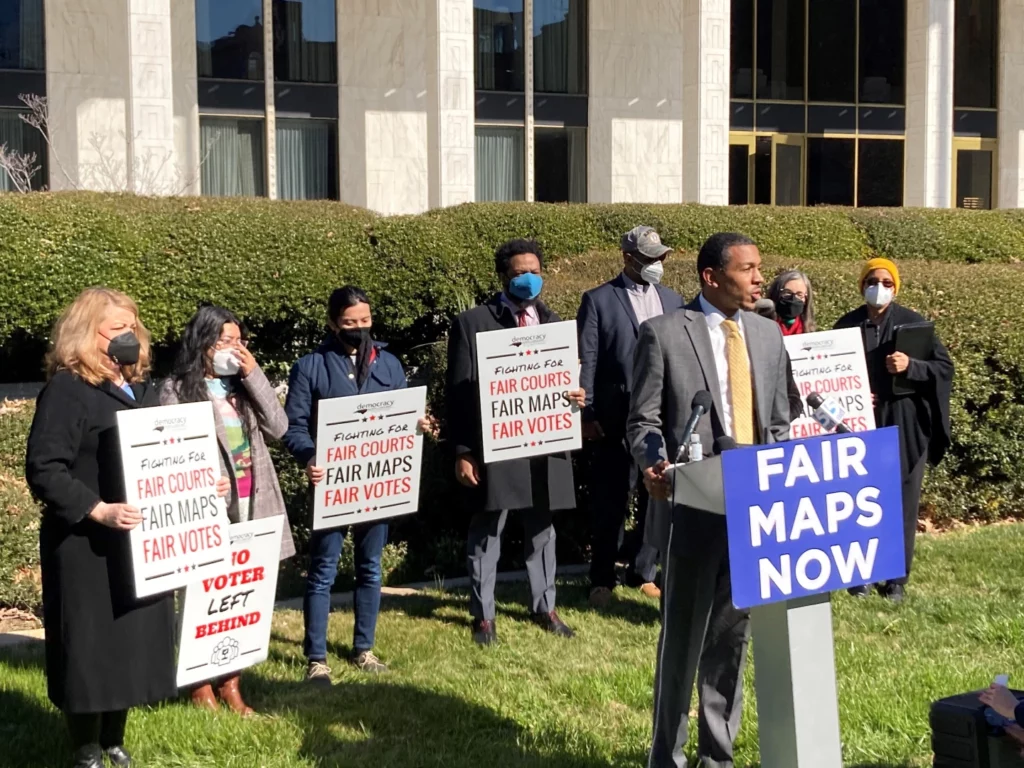
The Supreme Court ruled Tuesday that state courts can curtail the actions of their legislatures when it comes to federal redistricting and elections, rejecting arguments by North Carolina Republicans that could have dramatically altered races for Congress and president in that state and beyond. The justices, by a 6-3 vote, upheld a decision by North Carolina’s top court that struck down a congressional districting plan as excessively partisan under state law. The high court did, though, indicate there could be limits on state court efforts to police elections for Congress and president, suggesting that more election-related court cases over the issue are likely. Chief Justice John Roberts wrote for the court that “state courts retain the authority to apply state constitutional restraints when legislatures act under the power conferred upon them by the Elections Clause. But federal courts must not abandon their own duty to exercise judicial review.” The decision was the fourth major case of the term in which conservative and liberal justices joined to reject the most aggressive legal arguments put forth by conservative state elected officials and advocacy groups. Earlier decisions on voting rights, a Native American child welfare law, and a Biden administration immigration policy also unexpectedly cut across ideological lines on the court. Major rulings are expected by Friday on the future of affirmative action in higher education, the administration’s $400 billion student loan forgiveness plan, and a clash of religious and LGBTQ rights. The practical effect of Tuesday’s decision is minimal in North Carolina, where the state Supreme Court, under a new Republican majority, already has undone its redistricting ruling. Another redistricting case from Ohio is pending, if the justices want to say more about the issue before next year’s elections. Justices Samuel Alito, Clarence Thomas, and Neil Gorsuch would have dismissed the North Carolina case because of the intervening state court action. Vice President Kamala Harris said in a statement that the decision “preserves state courts’ critical role in safeguarding elections and protecting the voice and the will of the American people.” The Democratic administration defended the power of state courts in the case. Former President Barack Obama, in a rare public comment on a court decision, applauded the outcome as “a resounding rejection of the far-right theory that has been peddled by election deniers and extremists seeking to undermine our democracy.” At the same time, the leader of a Republican redistricting group said he was pleased the court made clear there are limits on state courts. The decision “should serve as a warning to state courts inclined to reach beyond the constitutional bounds of judicial review. This is a first, positive step toward reining in recent overreaches of state courts,” Adam Kincaid, president and executive director of the National Republican Redistricting Trust, said in a statement. Derek Muller, a University of Iowa law professor and elections expert, said Tuesday’s decision leaves some room to challenge state court rulings on federal election issues, “but these are likely to be rare cases.” “The vast majority of state court decisions that could affect federal elections will likely continue without any change,” Muller said. The North Carolina case attracted outsized attention because four conservative justices had suggested that the Supreme Court should curb state courts’ power in elections for president and Congress. Opponents of the idea, known as the independent legislature theory, had argued that the effects of a robust ruling for North Carolina Republicans could be reached much further than just that one state’s redistricting. Potentially at stake were more than 170 state constitutional provisions, over 650 state laws delegating authority to make election policies to state and local officials, and thousands of regulations down to the location of polling places, according to the Brennan Center for Justice at the New York University School of Law. The justices heard arguments in December in an appeal by Republican leaders in the North Carolina Legislature. Their efforts to draw congressional districts heavily in their favor were blocked by a Democratic majority on the state Supreme Court on grounds that the GOP map violated the state Constitution. A court-drawn map produced seven seats for each party in last year’s midterm elections in the highly competitive state. The question for the justices was whether the U.S. Constitution’s provision giving state legislatures the power to make the rules about the “times, places and manner” of congressional elections cuts state courts out of the process. Former federal appeals court judge Michael Luttig, a prominent conservative who has joined the legal team defending the North Carolina court decision, said in the fall that the outcome could have transformative effects on American elections. “This is the single most important case on American democracy — and for American democracy — in the nation’s history,” Luttig said. Leading Republican lawmakers in North Carolina told the Supreme Court that the Constitution’s “carefully drawn lines place the regulation of federal elections in the hands of state legislatures, Congress, and no one else.” During nearly three hours of arguments, the justices seemed skeptical of making a broad ruling in the case. Liberal and conservative justices seemed to take issue with the main thrust of a challenge asking them to essentially eliminate the power of state courts to strike down legislature-drawn, gerrymandered congressional district maps on grounds that they violate state constitutions. In North Carolina, a new round of redistricting is expected to go forward and produce a map with more Republican districts. The state’s Democratic governor, Roy Cooper, praised Tuesday’s decision, but also implicitly acknowledged that it does nothing to inhibit Republicans who control the legislature from drawing a congressional map that is more favorable to them. Cooper, who by state law can’t block redistricting plans approved by lawmakers, said that “Republican legislators in North Carolina and across the country remain a very real threat to democracy as they continue to pass laws to manipulate elections for partisan gain by interfering with the freedom to vote.” Republished with the permission of The Associated Press.
