
Robert Aderholt introduces bill to keep federal government from using lease agreements to punish pro-life states
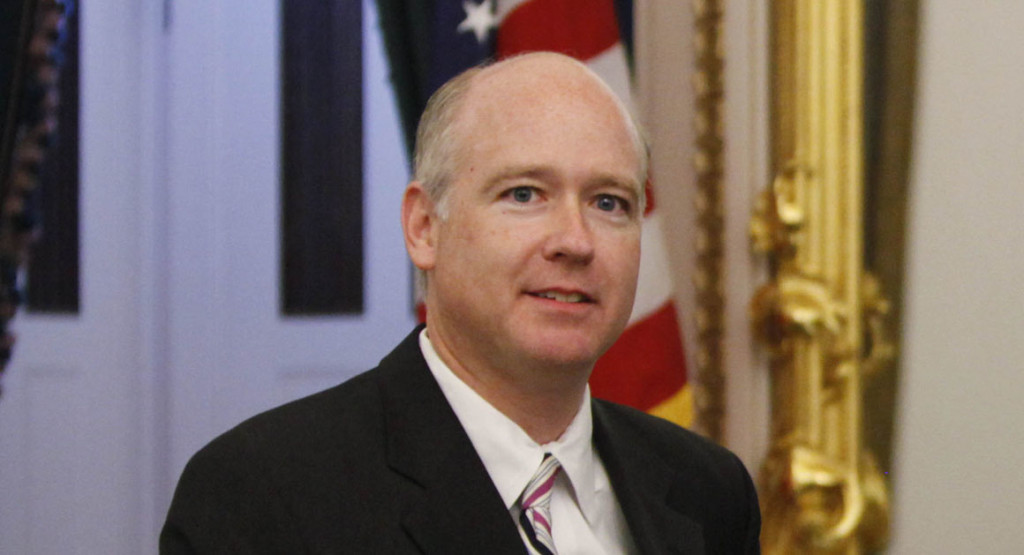
Congressman Robert Aderholt introduced a bill last week to prohibit the Administrator of General Services from constructing or acquiring buildings or entering into leases based on the legality or availability of abortions in the respective state. “The Biden Administration continues to inject abortion politics into otherwise non-partisan areas of the federal government, such as locations of federal offices,” Aderholt said in a statement. “This blatantly partisan practice threatens, and insults, states’ rights in protecting the unborn. That is not a precedent I want to see set in this country.” “President Biden cannot be permitted to punish states for enacting laws the Supreme Court has clearly ruled are within the rights of the states,” said Aderholt. The bill has so far garnered the support of 14 original co-sponsors, including Congressmen Dale Strong (R-AL05), Jerry Carl (R-AL01), and Barry Moore (R-AL02). “I am proud to join Congressman Aderholt’s bill preventing the Biden Administration from punishing states that do not adhere to its radical abortion agenda,” said Rep. Carl. “Abortion politics should play no role in the placement of federal buildings across the country.” “Decisions like this have historically been non-partisan and should have nothing to do with laws that states legally decide to enact,” said Rep. Moore. “The Biden Administration’s dangerous partisanship has been clear as they work to deny Space Command to the state that came in first place during a rigorous, merit-based process. I thank Rep. Aderholt for his work on legislation to ensure attacks on states’ rights such as this one cannot happen again.” “Threats from the Biden Administration to punish states who protect life create an incredibly dangerous precedent,” said Rep. Strong. “I am proud to co-sponsor this bill, which sends a clear message to the Biden administration: the protection of unborn life is not up for negotiation in states like Alabama.” “The Biden Administration is undermining the rule of law by doing an end-run of the SCOTUS ruling that empowers states to make their own laws surrounding abortion policy,” said House Budget Committee Chair Jodey Arrington (R-Texas). “This political gamesmanship has no place in strategic military decisions, including attempts to hold up SPACECOM’s relocation to Alabama.” “The Supreme Court ruled that abortion is a state issue,” said Rep. Doug LaMalfa (R-California). “President Biden is wrong to try and arbitrarily punish states that don’t surrender to his policy wishes. These kinds of polarizing issues should not be decided by executive fiat at the national level. Let the individual states in the Union chart their own courses and decide their own abortion laws with the input of their voters. That’s how federalism works.” “The Biden Administration has continuously proven that it will put its radical agenda above states’ rights, the rule of law, and our Constitution,” said Rep. Debbie Lesko (R-Arizona). “I’m proud to join Congressman Aderholt on his bill that would prevent the federal government from using a state’s pro-life laws against them when executing leases.” The General Services Administration (GSA) is the executive agency responsible for real estate and facility procurement, leasing, and development for the federal government. Since the Dobbs v. Jackson Women’s Health Organization decision last year, the Biden Administration has prioritized the federalization of abortion access, as well as penalized states that have enacted laws to protect the unborn. There are reports that the Biden Administration intends to halt plans to move the U.S. Space Command headquarters to Alabama due to “the state’s restrictive abortion laws.” The bill’s intent is consistent with a Senate companion bill introduced by Sen. Roger Marshall (R-Kansas). President Joe Biden, meanwhile, has not loosened his staunchly pro-abortion stance. “The stakes could not be higher for women across America,” Biden said. “I will continue to fight politically-driven attacks on women’s health. But let’s be clear – the American people must continue to use their vote as their voice, and elect a Congress who will pass a law restoring the protections of Roe v Wade.” Robert Aderholt has represented Alabama’s Fourth Congressional District since he was first elected in 1996. To connect with the author of this story or to comment, email brandonmreporter@gmail.com.
HUD Secretary Marcia Fudge to visit Birmingham today

U.S. Department of Housing and Urban Development (HUD) Secretary Marcia Fudge will visit Birmingham today to make a major announcement. She will be joined by Congresswoman Terri Sewell and Birmingham Mayor Randall Woodfin. Sec. Fudge is expected to announce a major federal investment in affordable housing and community development. “I look forward to welcoming Housing and Urban Development Secretary Marcia Fudge to the City of Birmingham this Wednesday and to participate in the major announcement and tour,” said Rep. Sewell. “I have been working with the City of Birmingham to address the housing needs in the Smithfield, College Hills, and Graymont neighborhoods. If awarded, this funding would be the catalyst for transformational change in the City of Birmingham.” Secretary Fudge is the 18th Secretary of the U.S. Department of Housing and Urban Development. Secretary Fudge served as U.S. Representative for the 11th Congressional District of Ohio from 2008 to March 9, 2021. She was a member of several Congressional Caucuses and past Chair of the Congressional Black Caucus. In 1999, Secretary Fudge was elected the first female and first African American mayor of Warrensville Heights, Ohio, a position she held for two terms. As a former mayor, Secretary Fudge has seen firsthand the need for economic development and affordable housing. She prioritized improving the City’s tax base and expanded opportunities for affordable housing. Secretary Fudge’s career in public service began in the Cuyahoga County Prosecutor’s Office, rising to the rank of Director of Budget and Finance. While the Birmingham-Hoover metropolitan area remains the largest metro area in the state, Birmingham itself has been in a long slow decline since its zenith at over 340,900 people in 1960. Today Birmingham has a population of just over 192,557. Fast-growing Huntsville is now the largest city in Alabama. Montgomery, though also in decline, has a slightly larger population than Birmingham. Recent annexation elections in Mobile mean that that city has vaulted into second place ahead of both Birmingham and Montgomery. Birmingham officials are eager to address the decaying housing problem as well as crime in order to stem the tide of migration out of the city limits. Fudge will join Woodfin, Sewell, and community leaders at a press conference to announce the expected federal investment in affordable housing for the city. They will also be joined by Dontrelle Young-Foster, President, and CEO of the Housing Authority of the Birmingham District (HABD), and Karen Lawrence, Smithfield Court Resident. The announcement is scheduled for 10:20 a.m. CT in the Smithfield Court Community. To connect with the author of this story or to comment, email brandonmreporter@gmail.com.
Alabama Republican Party has sold nearly all tickets to Donald Trump dinner

If you plan to see President Donald Trump when he comes to Montgomery on August 4, you need to buy those tickets today because the Alabama Republican Party reports that their dinner with Trump event is nearly sold out. “With less than ten days to go, only a few tickets remain for the Alabama Republican Party’s Summer Dinner with President Donald J. Trump,” the Alabama Republican Party announced late Tuesday in a press statement. “The response we’ve received since we announced President Trump as our keynote speaker has been overwhelming,” said Alabama Republican Party Chairman John Wahl. “We expect individual tickets to be sold out imminently, and sales for table sponsors will shut down on Friday, if not sooner.” The dinner will take place on Friday, August 4, 2023, at the Renaissance Montgomery Hotel at the Convention Center. The evening will kick off with a reception at 6 p.m. and dinner at 7 p.m. “We are excited at this opportunity to raise the profile of our state by hosting the GOP frontrunner for president and giving Alabamians the chance to interact with him,” Wahl said. “Alabama is a Super Tuesday state and will play an important role in selecting our Party’s nominee.” To purchase tickets and sponsorships, go to the Alabama Republican Party’s website. Trump previously headlined the ALGOP’s 2021 Cullman fundraiser, where more than 50,000 people braved wet conditions and mud to see the former President. Florida Governor Ron DeSantis spoke to the Alabama Republican Party in March at their Winter Dinner fundraiser. Trump was elected President in 2016, defeating former Secretary of State Hillary Clinton. Trump failed to win reelection in 2020, losing the presidency to former Vice President Joe Biden. Trump is seeking a Trump v. Biden rematch, but he faces a crowded Republican primary field that includes: DeSantis, former Vice President Mike Pence, former Arkansas Governor Asa Hutchinson, former South Carolina Governor Nikki Haley, businessman Vivek Ramaswamy, U.S. Senator Tim Scott, former New Jersey Governor Chris Christie, Miami Mayor Francis Suarez, and others. Trump remains the early polling frontrunner, despite being age 77 and facing indictments in at least three courts. At this point, Biden’s only serious roadblock to the Democratic nomination is former Congressman Robert Kennedy. The Alabama Presidential Primary will be on Tuesday, March 5. To connect with the author of this story or to comment, email brandonmreporter@gmail.com.
Katie Britt votes to advance water projects bill
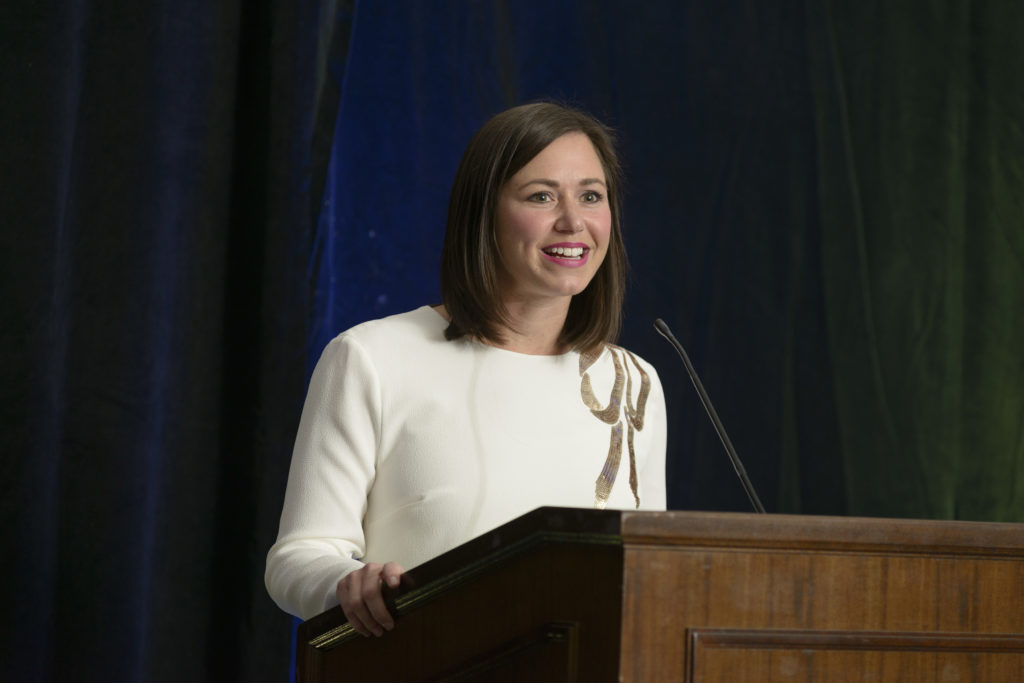
U.S. Senator Katie Britt, a member of the Senate Committee on Appropriations, joined her colleagues in advancing the Fiscal Year 2024 Energy and Water Development Appropriations Act. The bill appropriates more than $72 million in direct investments Senator Britt secured for projects across Alabama. “From the rivers that wind across Alabama to Mobile Harbor, our state’s waterways are critical connectors that drive opportunity, recreation, and economic growth in every corner of our great state,” said Sen. Britt. “These investments would help ensure Alabama remains beautiful and a sweet home to do business long into the future.” In the bill, Britt prioritized investing in key Alabama priorities, including the following: · $20.6 million to revitalize and repair the George W. Andrews Lock and Dam on the Apalachicola, Chattahoochee, and Flint Rivers at Columbia, Alabama. · $18.4 million for dredging, maintenance, and operations on the Tennessee-Tombigbee Waterway. · $12.1 million for dredging, maintenance, and operations on the Black Warrior and Tombigbee Rivers · $11.2 million for dredging, maintenance, and operations in Mobile Harbor. · $10.5 million for dredging, maintenance, and operations on the Alabama-Coosa-Tallapoosa River System Senator Britt also supported programmatic language in the bill that would set aside $200 million for the Appalachian Regional Commission, which serves 37 counties in Alabama, and $30.1 million for the Delta Regional Authority, which serves 20 counties across the state. The Fiscal Year 2024 Energy and Water Development Appropriations Act provides $58.095 billion in total funding for the Department of Energy, Army Corps of Engineers, Bureau of Reclamation, and independent agencies. Senator Dianne Feinstein (D-California) Chairs the Senate Appropriations Subcommittee on Energy and Water Development. “Our energy and water infrastructure need significant investment to meet the needs of Americans throughout the country, particularly in the West,” said Sen. Feinstein. “This bill will help modernize our water systems to improve and increase dam safety, water storage, water recycling, desalination projects, and more. And as we experience new heat records, our bill also makes key investments in expanding clean energy and fighting against climate change. I want to thank Ranking Member [John] Kennedy for being a partner in moving forward this important bipartisan legislation.” Senator Patty Murray (D-Washington) Chairs the Senate Appropriations Committee. “This is a strong bipartisan bill that keeps America’s lights on and water flowing to our farms, propels cutting-edge scientific research, ensures nuclear security, and advances key environmental cleanup efforts,” said Chairwoman Murray. “These investments are key to making sure communities have the water resources they need to grow crops, strengthening our competitiveness globally, furthering clean energy research and capacity, and so much else. I’m also glad we are able to provide new resources to maintain our ports and harbors, which are so critical to trade, tourism, and even people’s daily commutes.” The bill provides $8.934 billion in total funding for the Corps of Engineers. The bill provides a historic $2.77 billion for the Harbor Maintenance Trust Fund to improve navigation through dredging ports, maintain waterways, and ensure efficient water transport. The bill also includes funding for critical inland waterways navigation projects. The bill continues investments in critical construction projects to protect communities from extreme weather events and more frequent flooding. The bill also expands the Water Infrastructure Financing Program to include levees, allowing low-interest loans for communities to make improvements and increase protection from flood events. The Bureau of Reclamation receives $1.921 in funding to deliver reliable water and hydroelectric power to the western United States. The bill includes $186 million for Western drought programs under the Water Infrastructure Improvements for the Nation (WIIN) Act, which supports long-term drought strategies, including water storage, water recycling and reuse, and desalination. The bill includes funding to support rural water supply projects and critical grant programs that invest in research and innovative applications of water-saving technologies. The bill provides $17.3 billion for the Department of Energy’s non-defense programs. The bill provides $8.43 billion in new directed funding—$330 million over fiscal year 2023—for the Office of Science. This funding will help implement the bipartisan CHIPS and Science Act of 2022. The Office of Science is the largest federal sponsor of basic research in the physical sciences and supports 22,000 researchers at 17 national laboratories and more than 300 universities. The bill provides $3.5 million in new funding for industrial emissions and technology coordination to coordinate clean industrial research, development, demonstrations, and deployment across the Department of Energy. The bill provides $3.686 billion for energy efficiency and renewable energy programs, $227 million above fiscal year 2023. This includes increases in wind energy, water technologies, and advanced manufacturing. The bill provides $200 million for Cybersecurity. The bill provides $1.55 billion for Nuclear Energy research and development, including funding for microreactor development and accident-tolerant fuel important for nuclear reactor safety. The bill provides $75 million for the Indian Energy Policy and Programs and updates the Tribal Loan Guarantee Program to help Tribal Nations deploy clean energy. The bill also provides $32.8 billion for atomic energy defense activities for the Department of Energy, including Nuclear National Security, and $18.8 billion for Weapons Activities, $1.7 billion above fiscal year 2023, including $142 million above the request for Savannah River plutonium pit production, and a nearly $400 million or 110 percent increase above fiscal year 2023 for the Uranium Processing Facility in Oak Ridge, Tennessee. The Fiscal Year 2024 Energy and Water Development Appropriations Act now moves to the full Senate for consideration. Katie Britt was elected to the Senate in 2022. To connect with the author of this story or to comment, email brandonmreporter@gmail.com.
Steve Flowers: Big Jim Folsom, Alabama’s most uninhibited governor
This week begins a four-part series of stories surrounding Alabama’s most legendary colorful governor, James E. “Big Jim” Folsom. Big Jim Folsom was the epitome of unbridled candidness. Late in his second term, he had been on a week-long trip to the Port City of Mobile with his buddies. Still, he had to come back to Montgomery to give a speech at the national convention of the American Textile Manufacturers Association. It was a large and distinguished crowd of executives from all over the country, and they were meeting in Alabama, so the governor was to give them his official welcoming speech. While Big Jim was vacationing in Mobile, someone in his office had written him a nice speech. Big Jim had never seen the speech prior to getting up to address the audience. He started reading the speech, and it sounded somewhat dry and full of statistics. Big Jim dutifully continued reading, “We want to welcome y’all to Alabama. Alabama is truly a textile state. We’ve got 200,000 people employed in the textile industry, and it means $40 million to our economy. We produce 4 million articles a week.” At that point, Big Jim looked up from reading and said, “I’ll be doggone, “I didn’t know that.” An all-time favorite Big Jim story happened in the mid-1950s during his second term as governor at the annual Southern Governors Conference. The assembled governors and other dignitaries were scheduled to be guests at a nearby U.S. Naval station to witness an air show. Big Jim had a reputation for enjoying libations. The governors were scheduled to gather at the waterfront at 6:00 a.m., and many doubted Big Jim would make it at that hour since he would have partied most of the night before. That was indeed the case, but nevertheless, he arrived at the pier on time. It was obvious that he had not slept. He was still wearing the same suit and tie, he was unshaven, and his hair was askew, but he was raring to go. The governors, dignitaries, and aides were motored in small boats out to a huge aircraft carrier, which then sailed 125 to 200 miles offshore for a state-of-the-art air show previously seen only by high-ranking naval officers and cabinet members. The sky was perfect. The sea was calm; it was a beautiful day. The crowd gathered on the flight deck. An admiral gave a glowing speech about naval aviation and how important and accident-free it had become. The admiral introduced the pilot, and then some enlisted men went through the crowd handing out earmuff devices to protect the observers’ hearing from the sound of the jet. Big Jim may have looked a little funnier than the rest of the governors in his earmuffs because of his size and dishevelment. He was six feet nine inches tall. The airshow began. The jet got louder and louder as it whined down the airstrip and made a perfect takeoff. Then suddenly, there was total silence. The jet flamed out, the engine quit running, the plane crashed into the water and was lost in the ocean. There was complete bedlam aboard the carrier. Sirens went off, divers prepared to enter the water, and emergency helicopters prepared for takeoff. Then miraculously, word came that the pilot had bailed out of the plane before it sank and was not injured. He was shaken up and wet but alive. The crowd gave a rousing cheer of relief that the pilot’s life had been spared. By this time, everyone had taken off their earmuffs except Big Jim, who was still standing on the deck with his earmuffs on and his mouth wide open in amazement. Folsom had been watching the scene in absolute astonishment. He could not believe his bloodshot eyes. Finally, he could contain himself no longer. Because he was still wearing his earmuffs, he did not realize how loud he was talking, and in a voice you could hear for miles, Big Jim boomed, “Admiral, if that ain’t a show, I’ll kiss your ass.” See you next week. Steve Flowers is Alabama’s leading political columnist. His weekly column appears in over 60 Alabama newspapers. He served 16 years in the state legislature. Steve may be reached at www.steveflowers.us.
Tommy Tuberville and Joe Manchin propose NIL reform legislation
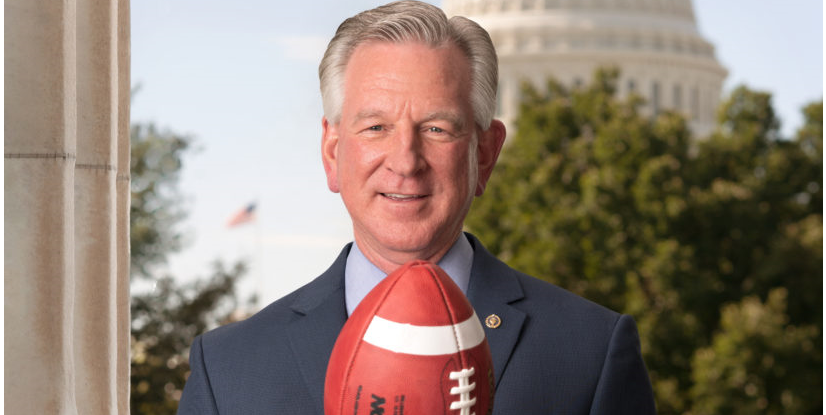
On Tuesday, U.S. Senators Tommy Tuberville (R-Alabama) and Joe Manchin (D-West Virginia) introduced the Protecting Athletes, Schools, and Sports (PASS) Act of 2023 to reform name image and likeness (NIL) standards in college sports. The sponsors say that their legislation protects student-athletes, maintains fair competition and compensation, strengthens transparency, and preserves the time-honored tradition of college sports. “Student-athletes should be able to take advantage of NIL promotional activities without impacting their ability to play collegiate sports,” Sen. Tuberville said. “But we need to ensure the integrity of our higher education system, remain focused on education, and keep the playing field level. Our legislation with Senator Manchin will set basic rules nationwide, protect our student-athletes, and keep NIL activities from ending college sports as we know it.” “As a former college athlete, I know how important sports are to gaining valuable life skills and opening doors of opportunity,” Sen. Manchin said. “However, in recent years, we have faced a rapidly evolving NIL landscape without guidelines to navigate it, which jeopardizes the health of the players and the educational mission of colleges and universities. Our bipartisan legislation strikes a balance between protecting the rights of student-athletes and maintaining the integrity of college sports. I urge my colleagues on both sides of the aisle to consider this commonsense legislation as a way to level the playing field in college athletics.” The sponsors claim that two years after the U.S. Supreme Court decided National Collegiate Athletics Association v. Alston (Alston), this bipartisan legislation would finally create a national standard for Name, Image, and Likeness (NIL). This bill marks the culmination of a year-long initiative in which the Senators actively engaged with stakeholders to create these commonsense guidelines for the NIL system. Specifically, the PASS Act would protect student-athletes by requiring collectives and boosters to be affiliated with a college or school. It would also encourage establishing a national standard for NIL. The PASS Act would preserve Title IX and ensure that nothing in the PASS Act affects the rights of any student-athletes or any programs funded through Title IX. Sponsors say that it also protects higher education institutions by ensuring that schools, conferences, and associations are not liable for their efforts to comply with the PASS Act; and by prohibiting NIL agreements that involve alcohol, drugs, or conflict with existing school and conference licenses. It also requires student-athletes to ask permission to make use of existing intellectual property (IP). Sponsors say that the PASS Act would preserve the future of college sports by prohibiting inducements. They also claim that it also improves the transparency of NIL activities by requiring agents and collectives to register with a regulating body and establishes a public-facing website to publish anonymized NIL data, and enquires all NIL contracts to be disclosed within 30 days. The PASS Act moderate the Transfer Portal by requiring student-athletes to complete their first three years of academic eligibility before allowing them to transfer without penalty, subject to a few exceptions. Tuberville and Manchin say that it ensures the health and safety of student-athletes by guaranteeing health insurance for sports-related injuries for uninsured student-athletes for eight years following graduation from a 4-year institution. The PASS Act would also require institutions generating more than $20 million and $50 million in athletics revenue to pay out-of-pocket expenses for two and four years, respectively. It also requires institutions to honor the original scholarship commitment made to a student-athlete and implements a Uniform Standard Contract for student-athlete use for NIL deals. Sponsors say the bill will also enhance the curriculum on financial literacy, NIL rights, and related legal and regulatory issues while strengthening enforcement and oversight by directing the NCAA to oversee and investigate NIL activities and report violations to the Federal Trade Commission. In June 2021, the NCAA Division I Board of Directors announced an “interim” policy suspending its rules relating to NIL compensation until federal legislation is enacted or until the NCAA adopts new rules. Following this announcement, there has been a push for Congress to act swiftly to provide clarity on NIL compensation. In 2022, Senators Manchin and Tuberville solicited feedback from athletic leaders, including university athletic directors, administrators, associations, collectives, and student-athlete groups, to build consensus around this bipartisan legislation. “The NCAA is transforming how it serves student-athletes by mandating Division I schools offer enhanced health, wellness, and academic protections and is moving ahead to support student-athletes as they monetize their NIL rights, but there are some challenges facing college sports that only Congress can address,” said NCAA President Charlie Baker. “The NCAA is encouraged by the significant, student-athlete centric reforms included in the Protecting Athletes, Schools, and Sports Act of 2023 (“PASS Act”), introduced today in the United States Senate. This important legislation is a major step in the right direction to ensure the health and safety of student-athletes, includes key measures to increase consumer protections and transparency in the NIL market, and aims to protect women’s and Olympic sports. There is clearly growing bipartisan interest in taking legislative action to create a stable, sustainable, and equitable foundation for future generations of student-athletes, and we are committed to working with all stakeholders to get this done.” “Auburn University appreciates the efforts undertaken by Senators Tommy Tuberville and Joe Manchin to create a national framework for NIL that establishes clear rules and addresses the patchwork of conflicting state laws governing collegiate athletics,” said Auburn University President Christopher B. Roberts. “We look forward to continuing to work with these offices, other members of the House and Senate, and the Southeastern Conference as this process continues.” “We love and celebrate collegiate athletics, but the landscape has changed dramatically as schools and student-athletes are now forced to navigate a patchwork of inconsistent regulations regarding Name, Image, and Likeness,” said West Virginia University President Gordon Gee. “This is not sustainable. That is why I am so glad for Sen. Manchin’s leadership and encourage Congress to provide the necessary direction at the federal level to create a pathway for establishing a common set of ground rules related to NIL, as well setting guard rails around the transfer portal.” “We are appreciative to the Senators for
Ron DeSantis cuts a third of his presidential campaign staff as he mounts urgent reset
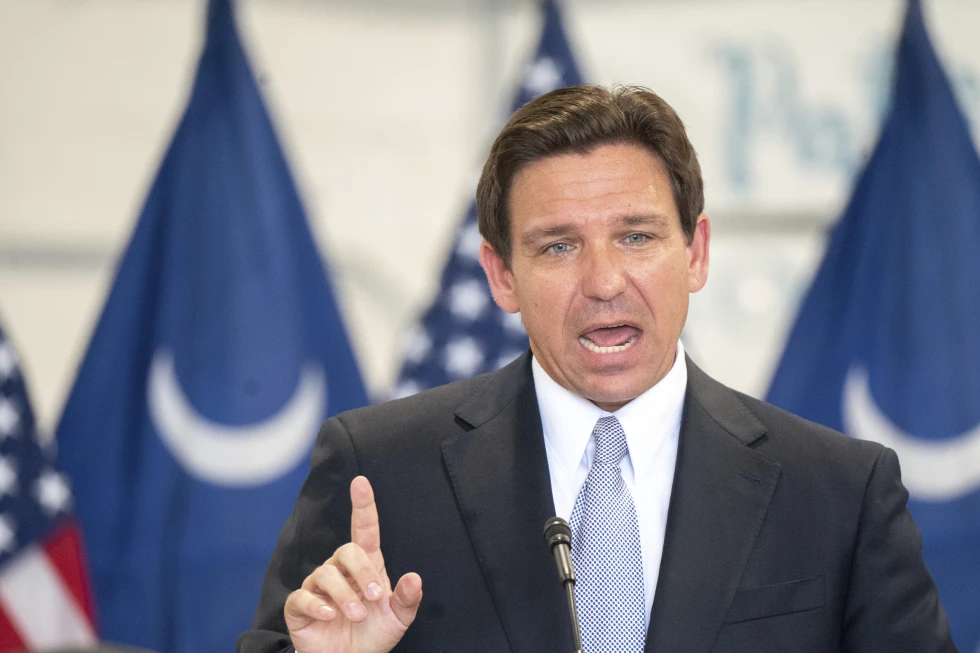
Republican presidential contender Ron DeSantis is cutting far more campaign staff than previously thought as he works to reset his stumbling campaign amid unexpected financial trouble. DeSantis, long considered former President Donald Trump’s chief rival in the GOP’s 2024 primary contest, has cut a third of his campaign staff — or 38 people, according to campaign aides who spoke on the condition of anonymity to discuss internal campaign strategy. The dramatic staffing cuts include the “less than 10” employees that the DeSantis team revealed letting go earlier in the month just as federal filings showed that his campaign was burning through cash at an unsustainable rate, even before launching a substantial paid advertising campaign. “Following a top-to-bottom review of our organization, we have taken additional, aggressive steps to streamline operations and put Ron DeSantis in the strongest position to win this primary and defeat Joe Biden,” DeSantis campaign manager Generra Peck said in a statement. “DeSantis is going to lead the Great American Comeback, and we’re ready to hit the ground running as we head into an important month of the campaign.” Revelations about the staffing cuts came on the same day DeSantis was involved in a multi-car accident on a Tennessee highway in the midst of a fundraising tour. The Florida governor was not hurt, according to his campaign and law enforcement. A female staff member was treated for a minor injury. The latest revelations mark a new low for a presidential candidate who entered the Republican primary this spring with sky-high expectations as Republican primary voters signaled a willingness to move on from Trump. Yet two months later, the 44-year-old DeSantis stands a distant second in most polls as GOP operatives and donors alike question his readiness for the national stage. Trump’s allies immediately celebrated the news of DeSantis’ latest campaign struggles on social media. “TURMOIL IN TALLAHASSEE,” the Trump campaign tweeted. Still, with the first votes of the primary season still six months away, DeSantis has time to recover as Trump’s allies brace for the possibility of a third criminal indictment. DeSantis’ team has quietly expressed confidence for months that voters would eventually tire of Trump’s escalating legal troubles and personal baggage. But that same baggage, playing out in the U.S. legal system just as the GOP primary intensifies, is leaving precious little oxygen for him and his rivals to break through. And Trump’s standing with Republican primary voters seems to be growing stronger with every new legal challenge. Still, DeSantis’ team has raised a stunning $150 million for his presidential ambitions so far. The vast majority, $130 million, has gone to a super PAC run by allies who cannot legally coordinate with the campaign. The DeSantis campaign itself raised more than $20 million in the first six weeks he was in the race, though federal filings released over the weekend revealed that he and his team had burned through more than $8 million in a spending spree that included more than 100 paid staffers, a large security detail and luxury travel. Republished with the permission of The Associated Press.
Nashville school shooter’s writings reignite debate over releasing material written by mass killers

In Tennessee, a request for police to release a school shooter’s private writings has morphed into a complex multiparty fight that pits the parents of traumatized students against a coalition of local news outlets, nonprofits, and a Republican lawmaker — with both sides claiming their position is in the public interest. The person who killed three 9-year-old children and three adults at a private Christian elementary school in Nashville on March 27 left behind at least 20 journals, a suicide note, and a memoir, according to court filings. But there is no national standard governing if, or how, such writings are made public. Shooters sometimes release their writings themselves over the internet, prompting a race to suppress their spread. In 2019, the white supremacist who killed 51 worshippers at mosques in Christchurch, New Zealand, posted his anti-immigrant screed online. Five months later, a man who killed 23 at a Texas Walmart published a racist diatribe on the same message board. In other cases, killers have sent documents directly to news outlets, leaving them the decision of what to publish. NBC was criticized by victims’ families in 2007 for airing videos the Virginia Tech shooter mailed to the network in the midst of his killing spree. Where a killer’s writings are seized as part of a search warrant — as is the case in The Covenant School shooting — the decision of what to release and when often rests with a local police chief or sheriff and is ultimately governed by state-specific public records laws. After a supervisor at a Virginia Walmart fatally shot six co-workers last November, police took only a few days to release his rambling last note. Michigan State University campus police waited less than a month to release a grievance-filled note from the person who killed three students there in February. Nashville police said they will release the Covenant shooter’s writings but not until they close the investigation, which could take a year. In the face of this delay, multiple groups have sued for access, including a state senator, The Tennessean newspaper, and a gun-rights organization. On the other side, The Covenant School, the church that shares its building, and many of the school’s parents want to keep the records private. Such a fight is unusual but not unprecedented. A similar legal battle in the 2000s led to the eventual release of most of the Columbine killers’ writings, audiotapes, and videotapes. In that case, Columbine parents fought for access to the records, believing they would show a cover-up by the local sheriff. In the Covenant shooting, it’s the parents who want the shooter’s writings kept secret. Erin Kinney, mother of one of the slain children, filed a declaration with the court stating she has not seen the shooter’s writings but believes there are no answers to be found in them. “I do not believe there was any motivation other than a desire for death, and there is nothing that could ever make the horrible act of killing children make sense,” Kinney writes. “The public release of these writings will not prevent the next attack. There is nothing in the journals to satisfy the yearning, overactive minds of the conspiracy theorists.” The Covenant case is complicated by the fact that the shooter, who police say was “assigned female at birth,” seems to have identified as a transgender man. U.S. Sen Josh Hawley, of Missouri, is among those promoting a theory that the shooting was a hate crime against Christians. The refusal to release the writings has fueled speculation — particularly in conservative circles — regarding what they might contain and conspiracy theories about why the police won’t release them. In the legal battle over the writings, both sides argue their position will prevent future shootings. The coalition seeking the writings says their public release will help experts better understand mass shootings and develop policies to thwart them. A group of more than 60 Tennessee House Republicans said in an open letter that the Covenant writings will be critical for their debate of school safety legislation at an August special session called by the governor. But the parents say releasing the writings is dangerous and will inspire copycats. There is a growing movement to deny mass killers notoriety after their deaths, limiting the use of their names and images, so posthumous fame won’t be a motivating factor for future killings. Whether their writings should also be suppressed is a subject of some disagreement, even among mass shooting experts. “Perpetrators are looking to make headlines,” said Jillian Peterson, a criminology professor at Hamline University and president of The Violence Project. “Perpetrators are looking to be famous for that. And so when we spread their videos, and their words, and their pictures, and their writings — we’ve seen that before, that it does inspire copycats.” Adam Lankford, a professor of criminology at the University of Alabama who studies mass shootings, said he thinks there is a way to make a killer’s writings public without inspiring copycats. The biggest problem is killers are sometimes made into celebrities, with their names and photos splashed across news reports for weeks, he said. “I don’t think a manifesto in isolation is likely to inspire an attack if you can’t see who that person is and start to identify with them,” he said. “But if you’re already obsessed with that individual, then, you know, that obsession can extend to obsessing about that person’s words.” Beyond the debate over the public good, however, lies the issue of Tennessee’s open records law, which has no special exception for the writings of mass shooters. Richard Hollow, who represents The Tennessean and state Sen. Todd Gardenhire, said the parents should try to change the law if they don’t want the records released. That’s what happened after the Sandy Hook shooting, where parents successfully pushed Connecticut lawmakers to bar the release of certain homicide victim photos and delay the release of some audio recordings. In the Covenant case, the families are making the novel claim that they have rights as victims under the Tennessee Constitution
