
Tommy Tuberville introduces farm legislation

On Wednesday, U.S. Senator Tommy Tuberville (R-Alabama) introduced two pieces of legislation—the Farm Board Act and the Mid-South Oilseed Double Cropping Study Act of 2023—to improve opportunities and representation for Alabama’s agriculture community. “Agriculture is the foundation of our economy,” Sen. Tuberville said. “That’s why I am proud to work on a bipartisan basis with Senators Warnock and Welch to introduce the Farm Board Act, legislation that will work to ensure our livestock producers have a seat at the table on the FCIC Board. The U.S. Department of Agriculture (USDA) continues to unveil more risk management tools to help our cattle and livestock producers in Alabama, and we want the Board to reflect their needs. I am also proud to stand united with my fellow Senators from Alabama and Tennessee to advocate for a new revenue opportunity for our farmers in the Southeast to produce canola and rapeseed. With the growing demand for renewable diesel and sustainable aviation fuels, our producers will have enhanced opportunities to use productive acres during the winter months to earn a paycheck; now we just need the data to address the crop insurance gaps.” The Farm Board Act is led by Senators Tuberville, Raphael Warnock (D-Georgia), and Peter Welch (D-Vermont). The legislation would change the Federal Crop Insurance Corporation’s (FCIC) ten-member Board of Directors. The FCIC is a government-owned corporation that finances the federal crop insurance program’s (FCIP’s) operations. Crop insurance is vitally important to farmers, especially with high input costs. Presently there are four seats for agricultural producers on the board, one of which must be a specialty crop producer. This bill designates two of the remaining three open seats for farmers on the FCIC Board and then leaves the final seat open. The changes would not immediately affect the current structure of the board as this legislation would apply to appointments to the Board for a period of service beginning October 1, 2024, or later. “The members of the Federal Crop Insurance Corporation Board of Directors should reflect the farmers who their policies impact,” said Sen. Warnock. “The FCIC plays a crucial role in ensuring farmers aren’t financially ruined by a poor season or a natural disaster. I’m proud to partner with Senator Tuberville on this effort to ensure livestock and underserved producers have a seat at the FCIC Board’s table—this representation will be a net positive for Georgia farmers and families.” Jimmy Parnell is the President of the Alabama Farmers Federation. “As the Federal Crop Insurance Corporation and RMA continue to introduce more risk management tools for livestock producers, it is important to have farmers on the board who produce both row crops and livestock to offer their perspective,” said President Parnell. “We appreciate Senator Tuberville’s continued support of agriculture and particularly the livestock sector,” the Alabama Cattlemen’s Association said in a statement. “Changes to risk management programs have allowed increased access for cattlemen to utilize these tools effectively, so representation on this board is greatly appreciated.” The Mid-South Oilseed Double Cropping Study Act of 2023 is led by Senators Tommy Tuberville, Katie Britt (R-Alabama), Bill Hagerty (R-Tennessee), and Marsha Blackburn (R-Tennessee). The legislation would request a study from the USDA Risk Management Agency (RMA) on the gap in crop insurance coverage for certain winter oilseed crops, specifically canola and rapeseed, and double cropping policies. For farmers to take advantage of opportunities in renewable diesel and Sustainable Aviation Fuel, they need the assurance that crop insurance—such as Catastrophic Risk Protection, Yield Protection, Revenue Protection, or Revenue Protection with Harvest Price Exclusion—will be eligible in their counties for these crops and practices. To address crop insurance gaps that may exist, RMA and FCIC need analysis of winter oilseed crop and double-cropping production practices and opportunities. The diversification of our energy markets is dependent on adding new, cost-effective, and sustainable options is necessary. As a result, the agriculture industry has the opportunity not only to feed the world but also to fuel the world. There is a growing demand for renewable diesel and Sustainable Aviation Fuel (SAF), which can be met with the increased production of oilseed crops like canola and rapeseed crops. Tommy Tuberville was elected to the United States Senate in 2020 and is a member of the Senate Armed Services, Agriculture, Veterans Affairs, and HELP Committees. To connect with the author of this story or to comment, email brandonmreporter@gmail.com.
Katie Britt says that children are paying the price for Biden’s border crisis
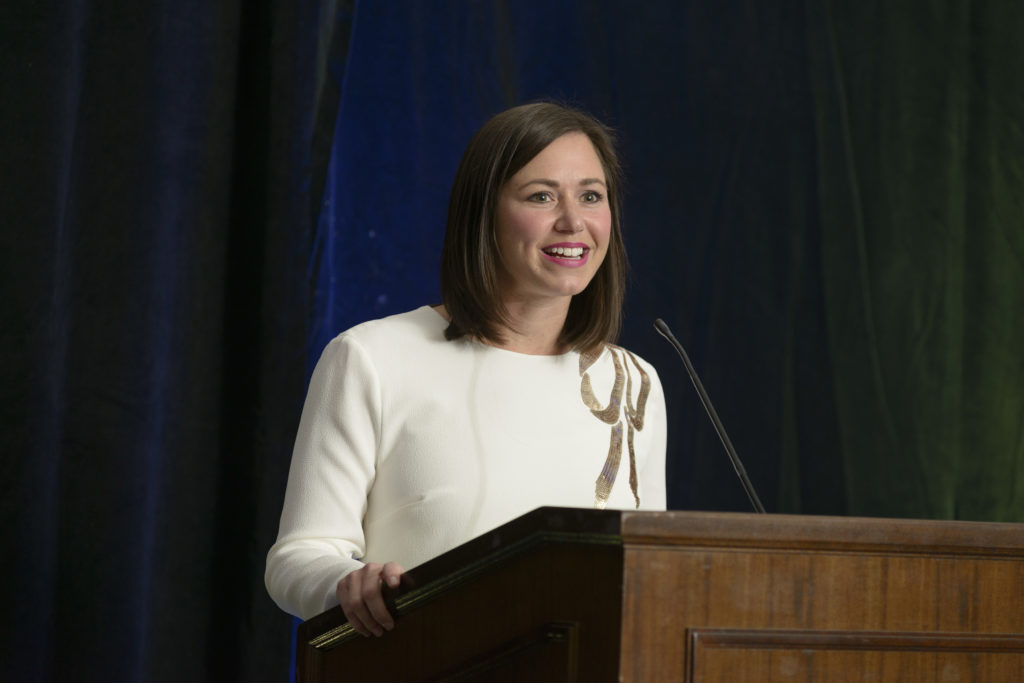
U.S. Senator Katie Britt last week participated in a press conference with a group of colleagues highlighting how the border crisis and how it has continued to endanger vulnerable children and empower dangerous drug cartels. Britt was joined at the press conference by Senators John Cornyn (R-Texas), James Lankford (R-Oklahoma), Ted Budd (R-North Carolina), John Hoeven (R-North Dakota), and Ron Johnson (R-Wisconsin). According to a FOX report, more than 300,000 unaccompanied minors have entered the United States since Joe Biden took office. Nearly 85,000 of these children are now missing and unaccounted for – presumably somewhere in the United States. “Here we are, Senate Republicans, standing here again talking about the very same topic – the toll that the Biden Border Crisis is taking not only on Americans but the migrants that are being used and abused to further someone else’s cause,” said Sen. Britt. “Make no mistake; this is both a national security and a humanitarian crisis.” “Now, I have been to the border,” Britt said. “I went three times in the first two months in office because I wanted the real, unvarnished truth. I asked them, ‘Tell me even what you think I don’t want to hear. I want to know the full set of facts.’ And one fact is that our courageous Border Patrol agents, ICE, National Guard, and local law enforcement are doing every single thing possible to make sure that Americans maintain their safety and that they help end this crisis, but the bottom line is they’re overextended, and they’re under-resourced.” “What has stuck with me the most are the stories that I heard when I was down there,” said Britt. “I saw a little baby, six months old, shivering and wet from just getting pulled out of the river with her parents. I saw a little pair of shoes on the ground next to the riverbank. That little pair of shoes has a story. But we need you to help us tell that story. I looked in the eyes of a CBP agent when he said that one of the hardest days he’s ever had in his entire life was pulling the lifeless body of a woman from the Rio Grande who was pregnant with twins.” “Folks, this is having real implications on real people, and the only people that are benefiting from Joe Biden’s failed policies are not Americans, not these migrants,” said Britt. “We need the American people to stand up and stand with us and say ‘enough is enough.’ When you think about these 300,000 unaccompanied children that have come across — let me tell you something. I’m a Momma. Do you think I’m going to let my child wander in hopes that someone finds them on the other side of the border? Absolutely not.” “I have talked to these young women, and it wasn’t that they were raped every day,” said Britt. “It was how many times a day they were raped. Folks, this has real implications. You look at the real stories of a 13-year-old boy who is being sent to be a day laborer all day long. He’s not living the American Dream. He’s paying back what his parents owe, or he promised to a drug cartel.” The press conference was led by Sen. Cornyn. “300,000 children had been placed with sponsors in the United States… in 85,000 of those placements, the 30-day wellness call that is typically made by the administration went unanswered,” Sen. Cornyn said. “What’s happening to them – whether they’re going to school, whether they’re getting health care, whether they’re being recruited for gangs, whether they’re being trafficked for sex, or just simply neglected or abused – the Biden administration doesn’t know, and the truth is, they don’t care.” “I’ve wondered, as a border state Senator, what’s it going to take to get the attention of the Biden administration to finally do something about the Biden border crisis?” Cornyn continued. “How about 108,000 dead Americans – dead because they consumed some of the drugs that are smuggled across the southwestern border, including 71,000 from fentanyl. How many more people need to die?” During a hearing of the Senate Committee on Appropriations earlier this year, Britt questioned U.S. Secretary of Health and Human Services Xavier Becerra about how the Administration’s cutting of corners and bureaucratic failures have put more children in harm’s way. “[T]he UAC Program is plagued by deficiencies and poor management which, combined with this Administration’s reckless and irresponsible policies, encourage illegal immigration, and, I believe, has put the lives of children and their well-being at risk,” said Britt in the hearing. “I won’t try to refute some of the things you said that are inaccurate,” Becerra said. In a hearing held last week by the House Committee on Homeland Security, border proponents exposed allegations that the Biden administration has “threatened our national security and the safety of every American” with its negligent border policies. These policies include ending a Donald Trump measure known as Migrant Protection Protocols (“Remain in Mexico”), which made illegal immigrants wait in Mexico instead of releasing them in the U.S. pending a hearing that may not occur for years. “The cartels have essentially taken over,” said House Committee on Homeland Security Chairman Mark E. Green, a medical doctor and Republican congressman from Tennessee. Katie Britt is the Ranking Member of the Homeland Security Subcommittee for the Senate Committee on Appropriations. Britt was elected to the Senate in 2022. To connect with the author of this story or to comment, email brandonmreporter@gmail.com.
AG Steve Marshall leads 21-State coalition protecting children from sex-modification procedures
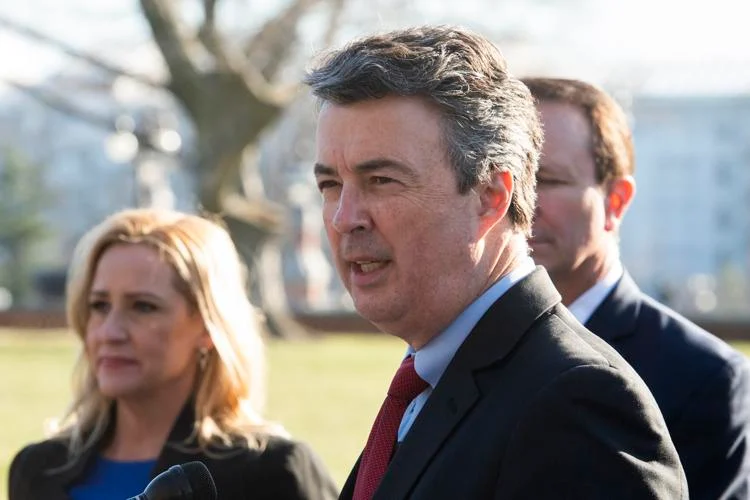
On Wednesday, Alabama Attorney General Steve Marshall filed a multistate brief in the U.S. Court of Appeals for the Sixth Circuit in support of Kentucky’s and Tennessee’s bans on experimental and life-altering sex modification procedures for children. The 21-state brief is co-led by Alabama and Arkansas. The brief highlights what the AGs call the dishonesty of advocacy groups like the World Professional Association for Transgender Health (WPATH) that urge courts to defer to them on issues of pediatric sex modification. The brief argues that the Constitution gives states, not WPATH, the authority to protect children from sterilizing medical interventions pushed by LGBTQ+ groups. “In the past, federal courts have erroneously held that states have a constitutional obligation to adhere to WPATH Standards of Care,” said AG Marshall. “Let’s remember these standards say that castration is ‘medically necessary’ for a male who identifies as a ‘eunuch’ and that sterilizing sex-modification treatments for children with gender dysphoria is ‘medically necessary gender-affirming care.’ We hope the Sixth Circuit will soon make it clear that the Constitution puts states and not WPATH in charge of regulating healthcare.” The AGs state that while healthcare authorities in Europe have recently conducted systematic evidence reviews that led them to sharply curb access to sex-modification procedures for minors, the brief argues that “American medical organizations have run in the opposite direction: advocating unfettered access to transitioning treatments while quashing members’ calls to review the evidence.” The brief continues: “While medical organizations are certainly capable of establishing true, evidence-based standards of care, they have utterly failed to act responsibly when it comes to pediatric sex-modification procedures. Until they do so, states like Kentucky and Tennessee are forced to step in to protect children.” In Kentucky, Attorney General Daniel Cameron secured a legal victory on July 14, pausing the district court’s decision which had prevented enforcement of a section of Senate Bill 150. The law protects children from the irreversible effects of experimental drug treatments like puberty blockers and cross-sex hormones. SB 150 is now fully in force. “Today’s ruling is a win for parents and children,” AG Cameron said. “I’m grateful to the district court for doing what the law requires, which is protecting Kentucky kids from the irreversible harms that these experimental drug treatments would cause. Moving forward, my office will continue to defend Senate Bill 150 and stand up for the right of children to be children, free from the influences of leftist activists and radical gender ideology.” The Kentucky General Assembly passed SB 150 during the 2023 Regular Session. The legislation prioritizes the health, safety, and welfare of children and safeguards them from, among other things, irreversible medical treatments, and ideological indoctrination in schools. Democratic Governor Andy Beshear vetoed the sweeping legislation, and the General Assembly overrode his veto by overwhelming margins. Lawyers from the American Civil Liberties Union and the National Center for Lesbian Rights sued to block enforcement of a section of the law that would revoke the licenses of physicians who perform so-called “gender-affirming care” on minors. Last month, the district court ruled in their favor, prompting Attorney General Cameron to immediately seek emergency relief in both the district court and the Sixth Circuit. “By securing a stay of the district court’s injunction, Attorney General Cameron demonstrates his willingness to fight for the rule of law and the protection of Kentucky’s children,” said State Representative Jennifer Decker, who helped pass the legislation in the House. “It is well within the legislature’s power to ban the experimental use of off-label drugs that cause long-term, irreversible consequences for children, and it is fortunate that today’s ruling allows SB 150 to take effect pending the Attorney General’s appeal.” In March, WPATH stated, “Both the World Professional Association for Transgender Health (WPATH) and the US affiliate, the United States Professional Association for Transgender Health (USPATH), vehemently oppose the broad and sweeping legislation being introduced and ratified in states across the country to ban access to gender-affirming health care to transgender and gender diverse (TGD) people. WPATH’s long-standing Standards of Care for Transgender and Gender Diverse People, now in its eighth version (SOC8), explain in detail the science- and evidence-based benefits of gender-affirming care for TGD people. Any legislation that restricts or prohibits access to this care is against best practice medical standards and is condemned by WPATH and USPATH.” The Standard of Care from WPATH states, “Given the lifelong implications of medical treatment and the young age at which treatments may be started, adolescents, their parents, and care providers should be informed about the nature of the evidence base. It seems reasonable that decisions to move forward with medical and surgical treatments should be made carefully. Despite the slowly growing body of evidence supporting the effectiveness of early medical intervention, the number of studies is still low, and there are few outcome studies that follow youth into adulthood.” Attorney General Marshall co-led the brief in support of Kentucky and Tennessee with Arkansas Attorney General Tim Griffin. The brief was signed by Alabama, Arkansas, Florida, Georgia, Idaho, Indiana, Iowa, Kansas, Louisiana, Mississippi, Missouri, Montana, Nebraska, North Dakota, Ohio, Oklahoma, South Carolina, South Dakota, Texas, Utah, and West Virginia. To connect with the author of this story or to comment, email brandonmreporter@gmail.com
HUD Secretary Fudge announces $50 million grant to revitalize neighborhoods in Birmingham

On Wednesday, U.S. Department of Housing and Urban Development (HUD) Secretary Marcia Fudge came to Birmingham to announce a $50 million HUD Choice Neighborhoods Implementation (CNI) Grant to revitalize the Smithfield, College Hills, and Graymont neighborhoods. Fudge made the announcement at a press conference Wednesday morning, where she was joined by Congresswoman Terri Sewell (D-AL07), Birmingham Mayor Randall Woodfin, Housing Authority of the Birmingham District (HABD) President and CEO Dontrelle Young-Foster, as well as community members. The historic funding will be used to construct nearly one thousand mixed-income affordable housing units. “This is a truly exciting and historic day for the City of Birmingham!” said Rep. Sewell. “With this monumental $50 million grant from the Department of Housing and Urban Development, we will be able to revitalize the historic Smithfield, College Hills, and Graymont neighborhoods with new, affordable housing units. Not only will this project allow residents to live more comfortably and affordably, but it will attract millions in new investments. I want to thank Mayor Woodfin, the Housing Authority of the Birmingham District, and the Birmingham City Council for their collaboration on this important project. We are so grateful to Secretary Fudge for traveling to Birmingham and the entire Biden-Harris Administration for continuing to pour into our communities.” “This investment represents HUD’s commitment to creating new housing for Birmingham residents and communities across the country,” said HUD Sec. Fudge. “When we envision the future of public housing investment, we think of programs like Choice Neighborhoods. These awards promote the innovative collaboration needed to tackle the affordable housing crisis. A community-driven, whole-of-government approach to neighborhood revitalization is what leads to impactful changes in the neighborhoods that need it the most.” “This $50 million grant will be transformative for the Smithfield community and its residents,” said Mayor Woodfin on Facebook. “The City of Birmingham will match these grant funds with $35 million over 8 years.” “The City plans to purchase Parker High’s 11 surplus acres of land and make way for the construction of 350 new affordable multi-family units on that land,” Woodfin added. “An estimated 1,100 new affordable housing units will be built across the entire Smithfield community.” Woodfin said the “entire plan is estimated to generate $242 million in new economic activity in our community.” “The awarding of this grant has changed the destiny of our community,” Woodfin said. “With the support of the federal government and our local partners, we will wrap our arms around this area to create a new Smithfield, one that honors its rich legacy as well as being a pioneer for innovative neighborhoods for the future.” The $50 million in funding is part of a $370 million nationwide investment by the Biden Administration’s Department of Housing and Urban Development. HABD received the maximum possible award under the Choice Neighborhoods Implementation Grant Program, which helps revitalize and transform distressed public and/or assisted housing and neighborhoods across the country. The Housing Authority of the Birmingham District (HABD) and the City of Birmingham were awarded a $50,000,000 Choice Neighborhoods Implementation Grant for the Smithfield Court public housing property and surrounding Smithfield, College Hill, and Graymont neighborhoods. The City of Birmingham and the Housing Authority of the Birmingham District have led a community-driven effort to change the narrative for the Smithfield, College Hill, and Graymont neighborhoods. The resulting plan for neighborhood investment was written with input from residents and community stakeholders. Their plan aligns with other once-in-a-generation investments, including a $10.8 million Good Jobs Challenge grant from the U.S. Department of Commerce’s Economic Development Administration, a planned workforce/high-tech library hub, the University of Alabama at Birmingham’s Blazer Core’ City as Classroom,’ Live Health Smart Alabama expansion area programs, and 60 new for sale homes. Choice Neighborhoods hopes to build on this local momentum as part of a larger effort to transform these historic neighborhoods into areas of opportunity for generations to come. The Choice Neighborhoods Transformation Plan calls for redeveloping the 456 severely distressed public housing units that comprise the 88-year-old Smithfield Court. The new Smithfield Court will include 920 new mixed-income apartments for families and seniors, including a one-for-one replacement of the original public housing units. To connect with the author of this story or to comment, email brandonmreporter@gmail.com.
Law to address Alabama’s growing doctor shortage goes into effect August 1

A new Alabama law designed to increase the number of doctors practicing in the state goes into effect next Tuesday. An increasing number of rural counties do not have a primary care physician, and many rural hospitals are operating without an obstetrician, orthopedist, or cardiologist. Many more counties are one or two retirements away from a healthcare crisis. Alabama needs more physicians just to meet current healthcare demands, according to the Medical Association of the State of Alabama. This shortage of doctors strains the healthcare system and means patients can experience delays in getting medical care. The Physician Workforce Act was approved by the Legislature and signed by Gov. Kay Ivey in May. This new law will: Dr. George Koulianos, a Mobile doctor, serves as President of the Medical Association of the State of Alabama. “The Physician Workforce Act will expand the pool of trained physicians practicing in our state, improve patient access to timely care, and put Alabama on the path toward a healthier future,” said Dr. Koulianos. Starting August 1: For more information on the Physician Workforce Act, visit alabamamedicine.org. To connect with the author of this story or to comment, email brandonmreporter@gmail.com
Tommy Tuberville advocates for Space Command to go to Huntsville
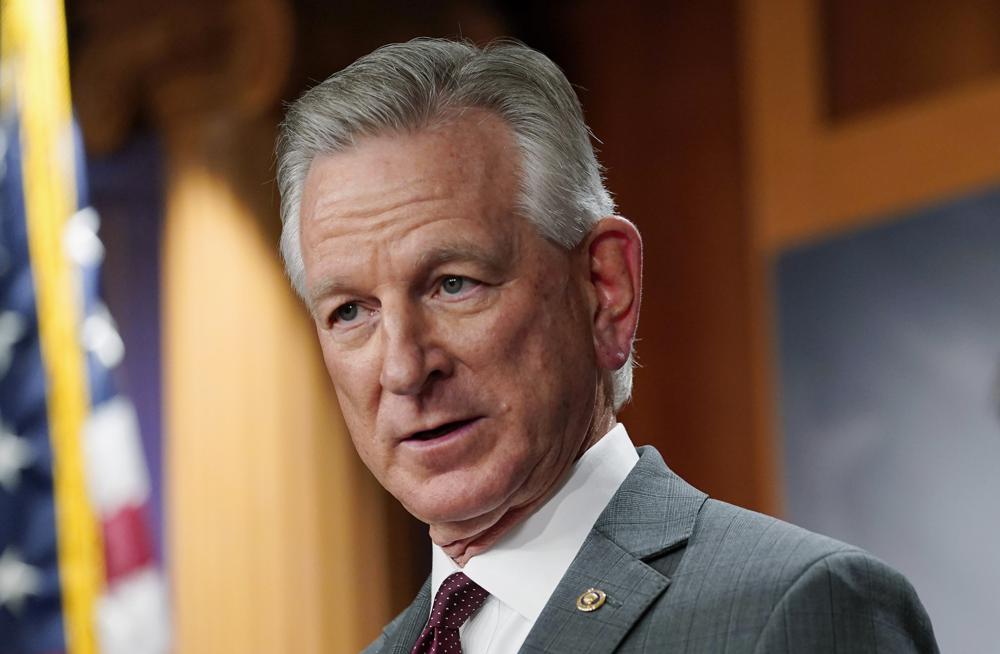
U.S. Senator Tommy Tuberville, during a Senate Armed Services Committee (SASC) hearing on Wednesday, questioned Lieutenant General Gregory Gulliot and Lieutenant General Stephen Whiting about why Space Command was not being relocated to Huntsville’s Redstone Arsenal as the Pentagon had planned. Gen. Gulliot is the nominee to be General and Commander of NORTHCOM, while Gen. Stephen Whiting is the nominee to be General and Commander of SPACECOM. Since assuming office more than two years ago, Sen. Tuberville has been a vocal advocate for the permanent relocation of U.S. Space Command to Redstone Arsenal in Huntsville. Tuberville questioned Lt. Gen. Whiting on Space Command’s workforce and cyber operations, reiterating the importance of bringing SPACECOM to Huntsville. During the hearing, Tuberville also spoke regarding troop assignments and the growing threat of China. Tuberville asked, “General Guillot, several conversations with General [Glen] VanHerck over the last few years, he talked about NORTHCOM’s need for more assigned troops, and I know you’re coming from another command, but have you had conversations with him about your possible move to the commander of that of NORTHCOM?” Gen. Guillot answered, “Senator, I haven’t talked with him directly about that. But in the function of my current job, I’m in several video teleconferences with General VanHerck and other leaders where the topic you mentioned is discussed.” “I would hope you’d get back with me on that once you’re assigned to that and let us know what we need to do to help,” Tuberville said. “As you’ve heard today, a lot of questions have been about certain things that’s killing our people in this country and not overseas. So, thank you for that,” Tuberville continued. “General Whiting, I’m not going to make a long dissertation about this, but of course, Space Command is very new, and we in Alabama, in Huntsville, are excited about Space Command being assigned to Huntsville in Redstone Arsenal after 21 different criteria. A lot of things we’re going through and with a fine-tooth comb, and we were excited about that. But, you know, unfortunately, politics has got involved, and that’s not you. But, you know, for a few months now, I’ve heard nothing because of some things that I’m involved in about readiness of our military. It’s been three years, and we do not have a permanent home yet for space command. And it’s a shame that we’ve gotten into politics. Of course, it’s moved slower up here. But even for Washington, it’s very slow for this to have happened to us, have a permanent home for Space Command. So, hopefully, we get that done in the near future. But I’d like to ask you a couple of questions. How’s Space Command doing in regard to its workforce? I know you’ve been there for a while. And what do we need to do to improve? Because it’s very new to our country and for the world.” Gen. Whiting answered, “Thank you, Senator. I appreciate you highlighting our workforce because despite the incredible space capabilities and satellites we bring, and our rockets, it is our people that are our most critical asset, and we have to ensure as a nation that we have military and civilians who want to join our space enterprise, national security space enterprise, and are willing to be a part of that. So, I think it’s important that we invest in those STEM activities that inspire our young men and women to join into space.” “How big a role does cyber play in SPACECOM, and what are we doing to make sure that we have enough? One of my sons is in cyber, but it’s very new, and it’s very complicated,” Tuberville asked. “What are we doing to make sure we have enough people to be involved and in what we do in Space Command through cyber?” Gen. Whiting answered, “Senator, I like to say that the soft underbelly of our space capabilities is cyber because our networks, our space networks, truly are global in nature, but they also reach out to 22,000 miles above the Earth’s surface to geosynchronous orbit. And that creates a lot of novel cyber-attacks surface. And while potential adversaries like Russia and China could attack us in the space domain directly, they would rather attack us in the cyber domain because it’s cheaper for them and it’s harder for us to attribute. So, we must work, if confirmed, I must work with the services and, in particular, U.S. Space Force to execute the excellent plan they’ve laid in place to pivot hundreds of guardians into the cyber defense workforce to defend our space capabilities from cyber-attack.” Tuberville asked, “Have we done any studies to where we stand with other countries, even our allies, too, in terms of cyber, the education part? You know, where do we stand: good, bad, indifferent?” Gen. Whiting answered, “Senator, I believe the United States is at the absolute forefront of cyber capability. And if confirmed, I would look to work with U.S. Cyber Command on ensuring that we’re leveraging all of that partnership work they do with others to best defend U.S. Space Command in the cyber domain.” Tuberville asked, “One last question. What’s our top threat in space theater right now? What would be your thoughts?” Gen. Whiting answered, “Senator, our top threat is the growing Chinese counter-space capabilities, both from reversible threats like jamming all the way up to the direct-ascent a-sats and laser capabilities we’ve seen them testing.” Tuberville represents Alabama in the United States Senate. He, like Biden, was elected in 2020. To connect with the author of this story or to comment, email brandonmreporter@gmail.com
Joe Biden looks to provide relief from extreme heat as record temperatures persist

With millions of Americans facing broiling heat across the Southwest, President Joe Biden on Thursday plans to announce new steps to improve weather forecasts and make drinking water more accessible, according to the White House. He’ll be joined by the leaders of the Federal Emergency Management Agency and the National Oceanic and Atmospheric Administration. Karine Jean-Pierre, the White House press secretary, described the heat wave as “a difficult time” and said Biden was treating climate change with “the urgency it requires.” Climate activists and some Democrats have pushed Biden to declare a climate “emergency,” but the White House has resisted. The mayors of Phoenix and San Antonio, two cities that have suffered from the heat waves, are expected to participate in the White House event virtually. Phoenix has seen at least 26 days in a row of temperatures exceeding 110 degrees. Maricopa County, where the city is located, reported recently that there were 18 heat-associated deaths between April 11 and July 15. Another 69 deaths remain under investigation. There were 425 heat-associated deaths in the county last year. San Antonio saw 15 straight days of 100-plus degrees. At least 13 deaths in Texas have been blamed on the extreme heat. Thursday’s announcement follows other steps that the administration has taken to adapt to increasing threats from extreme heat. Among those it is highlighting: The Department of Labor is developing a standard for how workplaces deal with heat. The proposed rule by the Occupational Safety and Health Administration would require employers to provide adequate water and rest breaks to outdoor workers, as well as medical services and training to address signs and symptoms of heat-related illness. OSHA is holding meetings this summer to hear comments on how the heat standard would affect small businesses. In order to keep low-income populations cool, the Department of Health and Human Services expanded its Low Income Home Energy Assistance Program to provide more access to air conditioning and cooling centers such as libraries, senior centers, or other public buildings. The Environmental Protection Agency also has provided assistance to help communities develop cooling centers within schools. The National Oceanic and Atmospheric Administration has been helping cities and towns map “heat islands” with dense buildings and fewer trees, and the Department of Agriculture issued guidance for creating more tree canopy coverage, which helps with cooling environments. In addition, the administration launched a website called heat.gov with interactive maps, weather forecasts and tips for keeping cool amid record-breaking heat. More than 100 members of Congress, led by Texas Democratic Reps. Greg Casar and Sylvia Garcia, and Rep. Judy Chu, D-Calif., have called on the administration to implement the new heat standard for outdoor workers as quickly as possible. “We know extreme weather events such as heat waves are becoming more frequent and more dangerous due to climate change. Urgent action is needed to prevent more deaths,″ the lawmakers wrote in a letter Monday. The United Farm Workers and other groups also called on OSHA to immediately issue a nationwide rule protecting outdoor workers after farm worker deaths this month in Florida and Arizona. “Farm workers need and deserve the access to shade, water, and paid breaks,’’ said UFW President Teresa Romero. “How many more workers will we let dangerous heat and callous employers kill before this nation acts?” Douglas Parker, assistant Labor secretary for occupational safety and health, called heat illness prevention a top priority. As OSHA works toward a final rule, the agency is enhancing enforcement efforts “to make sure employers and workers understand the dangers of heat illness and how to prevent it,’’ Parker said in a statement. Casar, 34, a freshman lawmaker from Austin, staged a “thirst strike” Tuesday outside the U.S. Capitol, forgoing water breaks for nearly nine hours, to protest a new Texas law that bans local governments from requiring water breaks and other safety measures for outdoor workers. Casar called the law “insane″ and accused Republican Gov. Greg Abbott of being “on the wrong side of history.’’ At least 42 workers died in Texas between 2011 and 2021 from environmental heat exposure, according to the U.S. Bureau of Labor Statistics. “Democrats are going to stand up for common sense and for working people,″ Casar said. Ladd Keith, an assistant professor at the University of Arizona who studies heat policy and governance, said the record-breaking heat much of the nation is experiencing “is very much in line with climate change projections.” While not surprising, “they’re certainly a continuation of a concerning trend of climate impacts that we’ve seen,” he said. Despite the recent headlines, rising temperatures have typically not received the same level of attention as other climate risks, such as flooding and wildfires. Keith said. “Heat has just not been a topic at the national level or local level that we’ve even considered addressing until the last couple of years,” he said. However, Keith said the administration has ramped up its focus because of searing weather events, such as the heat dome in the Pacific Northwest in 2021 that prompted record temperatures and dozens of deaths across the region. OSHA fined a Florida farm supervisor last month for exposing workers to excessive heat after a 28-year-old worker from Mexico died at a farm in Parkland, Florida. Investigators determined the worker’s death could have been prevented if a labor contractor had followed established safety practices regarding heat-related hazards. Republished with the permission of The Associated Press.
Sen. Mitch McConnell freezes during press conference, raises concerns
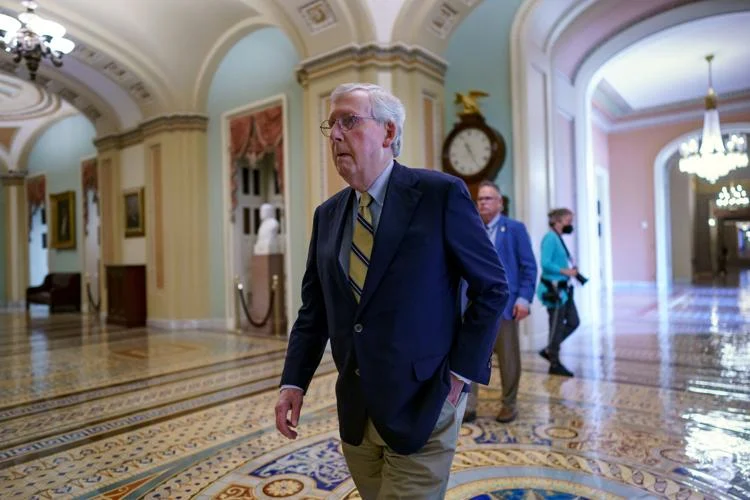
Senate Minority Leader Mitch McConnell, R-Ky., raised concerns Wednesday when he froze during a news conference. In the middle of his remarks to the media, McConnell stared ahead and stopped talking. After an awkward pause, fellow lawmakers ushered him to his office. “Hey Mitch, anything else you want to say, or should we just go back to your office?” Sen. John Barrasso, R-Wyo., said to McConnell. “Do you want to say anything else to the press?” McConnell returned to answer press questions, telling reporters he was “fine.” McConnell, 81, suffered a fall and ensuing concussion and broken rib earlier this year. Q: “Could you address what happened here at the start of the press conference and was it related to your injury from earlier this year where you suffered a concussion?” Sen. McConnell: “I’m fine.” Q: “You’re fine? You’re fully able to do your job?” McConnell: “Yeah.” pic.twitter.com/Can1RtzqmM— CSPAN (@cspan) July 26, 2023 Republished with the permission of The Center Square.
