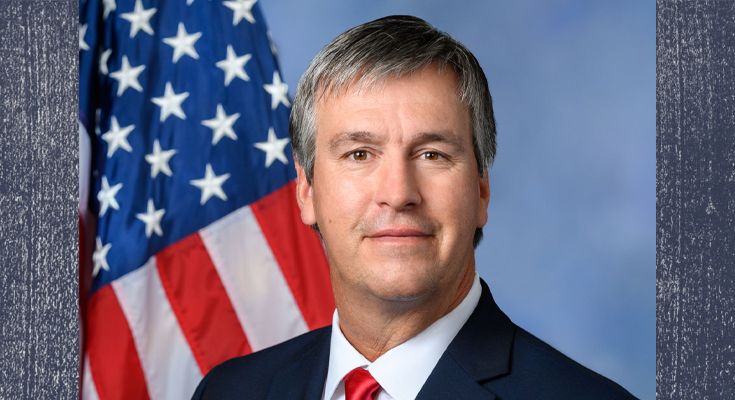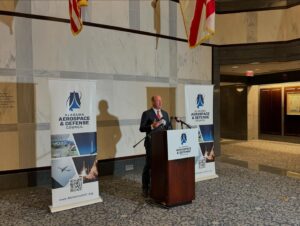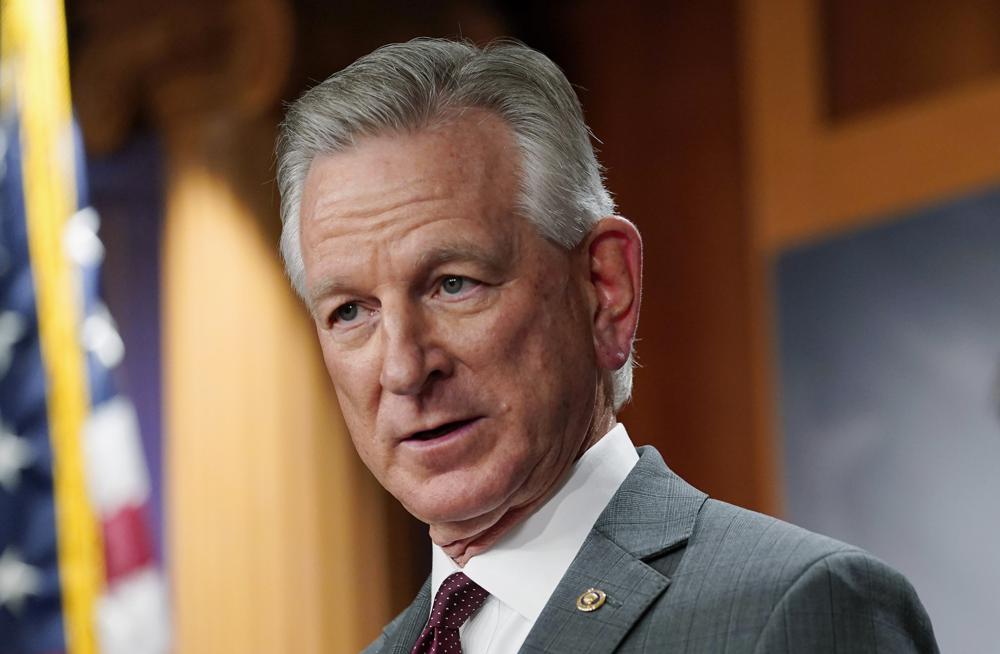
U.S. Senator Tommy Tuberville, during a Senate Armed Services Committee (SASC) hearing on Wednesday, questioned Lieutenant General Gregory Gulliot and Lieutenant General Stephen Whiting about why Space Command was not being relocated to Huntsville’s Redstone Arsenal as the Pentagon had planned.
Gen. Gulliot is the nominee to be General and Commander of NORTHCOM, while Gen. Stephen Whiting is the nominee to be General and Commander of SPACECOM.
Since assuming office more than two years ago, Sen. Tuberville has been a vocal advocate for the permanent relocation of U.S. Space Command to Redstone Arsenal in Huntsville.
Tuberville questioned Lt. Gen. Whiting on Space Command’s workforce and cyber operations, reiterating the importance of bringing SPACECOM to Huntsville. During the hearing, Tuberville also spoke regarding troop assignments and the growing threat of China.
Tuberville asked, “General Guillot, several conversations with General [Glen] VanHerck over the last few years, he talked about NORTHCOM’s need for more assigned troops, and I know you’re coming from another command, but have you had conversations with him about your possible move to the commander of that of NORTHCOM?”
Gen. Guillot answered, “Senator, I haven’t talked with him directly about that. But in the function of my current job, I’m in several video teleconferences with General VanHerck and other leaders where the topic you mentioned is discussed.”
“I would hope you’d get back with me on that once you’re assigned to that and let us know what we need to do to help,” Tuberville said.
“As you’ve heard today, a lot of questions have been about certain things that’s killing our people in this country and not overseas. So, thank you for that,” Tuberville continued. “General Whiting, I’m not going to make a long dissertation about this, but of course, Space Command is very new, and we in Alabama, in Huntsville, are excited about Space Command being assigned to Huntsville in Redstone Arsenal after 21 different criteria. A lot of things we’re going through and with a fine-tooth comb, and we were excited about that. But, you know, unfortunately, politics has got involved, and that’s not you. But, you know, for a few months now, I’ve heard nothing because of some things that I’m involved in about readiness of our military. It’s been three years, and we do not have a permanent home yet for space command. And it’s a shame that we’ve gotten into politics. Of course, it’s moved slower up here. But even for Washington, it’s very slow for this to have happened to us, have a permanent home for Space Command. So, hopefully, we get that done in the near future. But I’d like to ask you a couple of questions. How’s Space Command doing in regard to its workforce? I know you’ve been there for a while. And what do we need to do to improve? Because it’s very new to our country and for the world.”
Gen. Whiting answered, “Thank you, Senator. I appreciate you highlighting our workforce because despite the incredible space capabilities and satellites we bring, and our rockets, it is our people that are our most critical asset, and we have to ensure as a nation that we have military and civilians who want to join our space enterprise, national security space enterprise, and are willing to be a part of that. So, I think it’s important that we invest in those STEM activities that inspire our young men and women to join into space.”
“How big a role does cyber play in SPACECOM, and what are we doing to make sure that we have enough? One of my sons is in cyber, but it’s very new, and it’s very complicated,” Tuberville asked. “What are we doing to make sure we have enough people to be involved and in what we do in Space Command through cyber?”
Gen. Whiting answered, “Senator, I like to say that the soft underbelly of our space capabilities is cyber because our networks, our space networks, truly are global in nature, but they also reach out to 22,000 miles above the Earth’s surface to geosynchronous orbit. And that creates a lot of novel cyber-attacks surface. And while potential adversaries like Russia and China could attack us in the space domain directly, they would rather attack us in the cyber domain because it’s cheaper for them and it’s harder for us to attribute. So, we must work, if confirmed, I must work with the services and, in particular, U.S. Space Force to execute the excellent plan they’ve laid in place to pivot hundreds of guardians into the cyber defense workforce to defend our space capabilities from cyber-attack.”
Tuberville asked, “Have we done any studies to where we stand with other countries, even our allies, too, in terms of cyber, the education part? You know, where do we stand: good, bad, indifferent?”
Gen. Whiting answered, “Senator, I believe the United States is at the absolute forefront of cyber capability. And if confirmed, I would look to work with U.S. Cyber Command on ensuring that we’re leveraging all of that partnership work they do with others to best defend U.S. Space Command in the cyber domain.”
Tuberville asked, “One last question. What’s our top threat in space theater right now? What would be your thoughts?”
Gen. Whiting answered, “Senator, our top threat is the growing Chinese counter-space capabilities, both from reversible threats like jamming all the way up to the direct-ascent a-sats and laser capabilities we’ve seen them testing.”
Tuberville represents Alabama in the United States Senate. He, like Biden, was elected in 2020.
To connect with the author of this story or to comment, email brandonmreporter@gmail.com
Related
Share via: