
Medical Marijuana Commission awards cannabis industry licenses
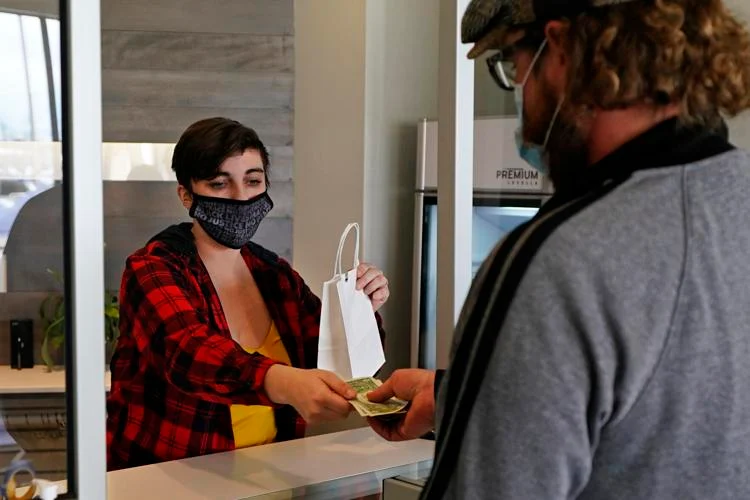
On Thursday, the Alabama Medical Cannabis Commission (AMCC) awarded medical cannabis licenses to 24 different entities for the inaugural Alabama cannabis industry – under authority granted to the Commission by the Alabama Legislature in 2021. Five entities were granted integrated facility licenses: · Insa Alabama, LLC · Flowerwood Medical Cannabis, LLC · Southeast Cannabis Company, LLC · Sustainable Alabama, LLC · TheraTrue Alabama, LLC In June, Flowerwood, Southeast Cannabis, Sustainable Alabama, and TheraTrue were awarded integrator licenses by the AMCC as well as Verano Alabama, LLC. Those license awards were suspended just days later after the AMCC discovered tabulation errors in the tabulation of the scores. Verano was not awarded a license in this do-over by the Commission, but Insa Alabama was. Seven entities were awarded cultivator licenses on Thursday: · Gulf Shore Remedies, LLC · Pure by Sirmon Farms, LLC · Blackberry Farms, LLC · Twisted Herb Cultivation, LLC · I AM FARMS · Greenway Botanicals, LLC · CRC of Alabama, LLC In the previous round of awards, Blackberry Farms, LLC, Gulf Shore Remedies, Pure by Sirmon Farms, and Twisted Herb Cultivation all received awards. All four still received awards on Thursday, but they were joined by I AM FARMS, Greenway, and CRC of Alabama. This was still less than the twelve maximum cultivator licenses allowed by the 2021 enabling legislation. Four entities were granted marijuana processor licenses. · Enchanted Green, LLC · 1819 Labs, LLC · Organic Harvest Lab, LLC · Jasper Development Group Inc. In June, all four of the same entities were awarded licenses. There was no change in this category on Thursday. On Thursday, the AMCC voted to give medical cannabis dispensary licenses to: · Yellowhammer Medical Dispensaries, LLC · CCS of Alabama, LLC · RJK Holdings AL, LLC · Statewide Property Holdings AL, LLC CCS of Alabama, Yellowhammer Medical, RJK Holdings, and Statewide Properties received awards in June as well. There were no changes by the AMCC in this category. Three entities were granted secure transporter licenses on Thursday. · Tyler Van Lines, LLC · International Communication, LLC · XLCR, Inc. In June, the Commission announced awards to International Communication and Tyler Van Lines. Alabama Secure Transport, LLC received an award in June but was replaced by XLCR, Inc. in Thursday’s grant awards. The AMCC awarded only one license for the certified state testing laboratory. That award went to Certus Laboratories – the same as in June. Rex Vaughn, a farmer, has replaced Dr. Steven Stokes, an oncologist, as the Chairman of the Commission. “Since the Commission’s inception, we have worked to develop a fair, honest, and equitable process to select licensees,” explained Chairman Rex Vaughn. “It is regrettable that the tabulation errors occurred. However, we have acknowledged the miscalculations and have taken the necessary steps to ensure that the data provided to the Commission was accurate. We are sincerely appreciative of the Court for allowing us to take corrective actions.” According to the AMCC, the University of South Alabama (USA) was engaged by the AMCC to coordinate the application review process and recruit evaluators to assess the scored exhibit items for all 90 applicants. USA utilized 66 evaluators with experience relevant to the application content to review one of eight scoring categories: (1) Financial Ability; (2) Business/Management Approach; (3) Operations Plans & Procedures; (4) Facility Suitability & Infrastructure; (5) Security Plan; (6) Personnel; (7) Quality Control & Testing; or (8) Marketing & Advertising. Each scored exhibit was independently reviewed by two evaluators to assess the applicant’s solvency, stability, suitability, capability, projected efficiency, and experience, both in relation to any baseline set by the Commission, as well as in comparison with other applicants. Applicants who did not receive awards in June brought a lawsuit asking a judge to stay those awards. Nothing happened on Thursday that is likely to satisfy those plaintiffs, so the next phase of this process could potentially be in a Montgomery courtroom. To connect with the author of this story or to comment, email brandonmreporter@gmail.com.
Alabama Medical Cannabis Commission awards licenses
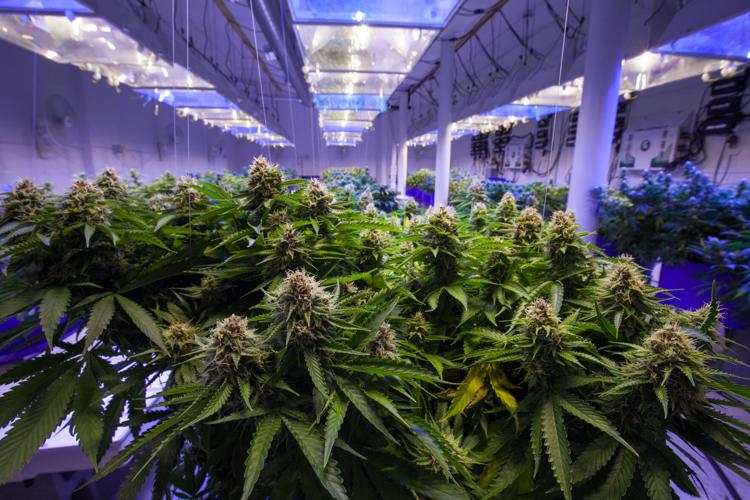
On Thursday, the Alabama Medical Cannabis Commission (AMCC) met in Montgomery to award licenses to 24 entities for the fledgling Alabama medical cannabis industry. These 24 were chosen from a pool of 90 applications accepted by the Commission. The AMCC had previously awarded 23 medical cannabis licenses in June. Errors were later discovered in how the scores were tabulated, so the licensing process was suspended pending an outside review of the AMCC’s processes, and those license awards were stayed. Confident that those problems are behind them, the AMCC awarded the licenses on Thursday. Rex Vaughn is the Chairman of the Commission. “Since the Commission’s inception, we have worked to develop a fair, honest, and equitable process to select licensees,” explained Chairman Vaughn. “It is regrettable that the tabulation errors occurred. However, we have acknowledged the miscalculations and have taken the necessary steps to ensure that the data provided to the Commission was accurate. We are sincerely appreciative of the Court for allowing us to take corrective actions.” Dr. Sam Blakemore is the Vice Chairman of the AMCC and a pharmacist. “Formulating the application process, assessing all 90 applications, and making determinations on who to award licenses to has been a monumental task,” explained Vice Chairman Blakemore. “We received numerous applications from applicants who would make terrific licensees, which made the selection process extremely competitive. I have spent countless hours reviewing the applications myself and feel confident that we have selected a great slate of licensees.” The Commission awarded licenses for marijuana growers, processors, transporters, dispensaries, and integrated facilities. An integrated facility does everything under one entity. There were also licenses awarded for cannabis laboratories. The most sought-after license was the one for integrated facilities. The University of South Alabama (USA) was engaged by AMCC to coordinate the application review process and recruit evaluators to assess the scored exhibit items for all 90 applicants. USA utilized 66 evaluators with experience relevant to the application content to review one of eight scoring categories: (1) Financial Ability; (2) Business/Management Approach; (3) Operations Plans & Procedures; (4) Facility Suitability & Infrastructure; (5) Security Plan; (6) Personnel; (7) Quality Control & Testing; or (8) Marketing & Advertising. Chey Garrigan is the founder and executive director of the Alabama Cannabis Industry Association (ALCIA) – an affiliate of the National Cannabis Industry Association (NCIA). “The Alabama Cannabis Industry Association congratulates the ones who were awarded Alabama’s first historical medical cannabis licenses,” Garrigan said in a statement. “This is only the beginning.” ‘Now, it’s time to get to work and provide products for patients with a qualifying illness,” Garrigan said. “Patient count will be the deciding factor to a licensee’s success or failure.” The Alabama Medical Cannabis Industry Coalition, which represents several of the entities that were awarded licenses, also responded to Thursday’s AMCC licensure awards. “We applaud the efforts of the commission today,” the Cannabis Coalition said in a written statement. “The additional review by the independent auditors KPMG, along with procedural changes by the board, delivered what should be a respected decision. There will, of course, be those who are disappointed because they didn’t win. Everyone knew there would be losers because there were more applicants than there were licenses. And, of course, there will be litigation because, among those who lost, there are deep pockets.” There is a strong likelihood that applicants denied by the AMCC on Thursday will seek relief from the courts. There have already been several lawsuits during the application process. “We need to bring closure to this portion of the process and move towards verifying the ability of the awardees to deliver on what they have promised,” the Cannabis Coalition added. “In this next stage, the new licensees must show their ability to deliver on their commitments. We need to see this next step completed so that we can determine if there will be new vacancies among the segments to which other applicants could fill the void.” Both the ACIA and the Cannabis Coalition felt additional legislation is needed. “On the federal level, we support the Safe Banking Act,” Garrigan said. “We (ALCIA) are one of very few Southern Cannabis Associations included in the petitions that influence both our U.S. Senators to openly support safe banking.” Under current federal law, banks may not be involved in the cannabis industry as marijuana remains illegal. This means that business-to-business transactions and consumer-to-business transactions are normally done with large amounts of cash rather than credit cards or checks. U.S. Senator Tommy Tuberville (R-Alabama) has advocated for the passage of the Safe Banking Act to allow these businesses to access the banking system. The Alabama Legislature passed, and Governor Kay Ivey (R) signed legislation making medical cannabis legal in the state of Alabama in 2021. That legislation established the AMCC and authorized it to regulate the establishment of a medical cannabis industry in Alabama. Medical cannabis will be tightly regulated in Alabama. All of the cannabis will be grown and processed in Alabama. The state will not export or import products to other states into Alabama. Dispensaries in the state will not honor medical cannabis cards from other states. THC limits are tightly controlled by the original legislation, except where the patient is terminal. No smokable product will be sold, and no raw plant product will be sold. “Home-grow” of marijuana plants for personal use will remain illegal in Alabama. Garrigan said that the Legislative session will begin early next year to consider adjustments to the original legislation. “We have begun to draft bills and secure sponsors in the Legislature,” Garrigan said. “The legislature will return in 2024,” the Cannabis Coalition said. “They have the ability to expand licenses if they feel the process wasn’t perfect or there are additional needs.” Only doctors who have gone through special training will be allowed to issue marijuana recommendations, and only patients with one of the listed qualifying conditions may receive a recommendation for cannabis from their doctor. The AMCC said that Under the rules promulgated by the Alabama Board of Medical Examiners, physicians may begin the certification process to recommend medical cannabis to patients
NOAA Fisheries releases first ever National Seafood Strategy
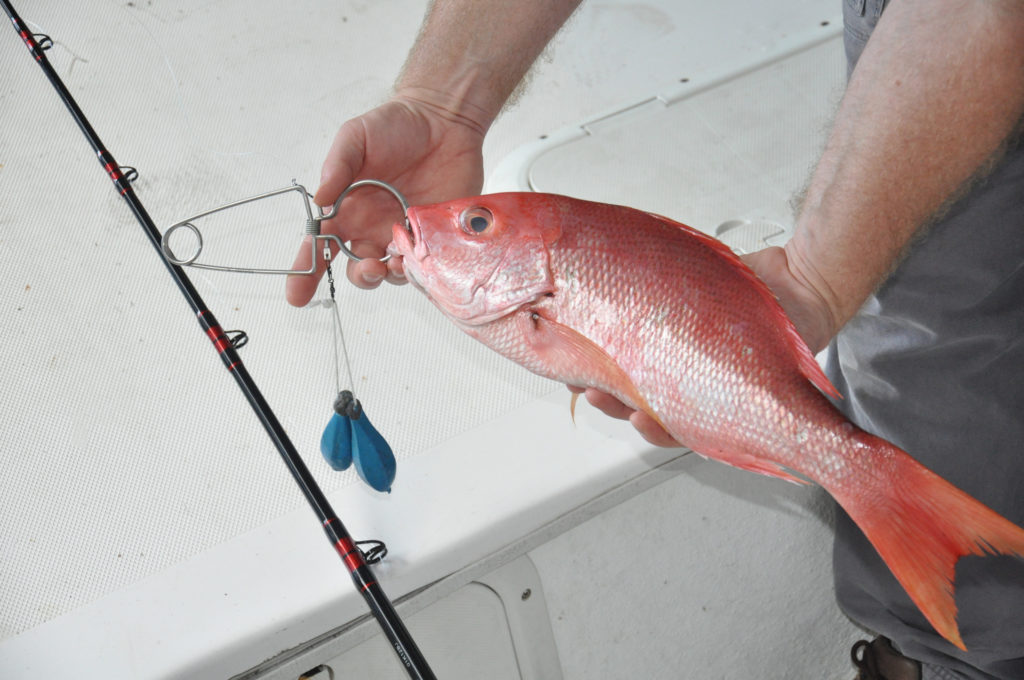
On Wednesday, the National Oceanic Atmospheric Administration Fisheries division released the first-ever National Seafood Strategy. The strategy highlights the vital services the federal government provides to support the seafood sector and outlines ways that NOAA can enhance its resilience in the face of climate change and other stressors. NOAA Fisheries has released the National Seafood Strategy after several rounds of stakeholder input and a public comment period earlier this year. NOAA says that the strategy underscores NOAA’s strong commitment to seafood sector resilience and aligns with the Biden Administration’s goals for economic recovery, environmental sustainability, and climate resilience. The White House Conference on Hunger, Nutrition, and Health highlighted the need for increased seafood consumption in the United States, which NOAA believes this strategy addresses. The U.S. seafood industry has to deal with climate change, new technologies, other ocean uses, significant labor shortages, and aging infrastructure. NOAA says that the National Seafood Strategy outlines NOAA Fisheries’ direction for supporting a thriving domestic U.S. seafood economy and describes the government’s approach to enhancing the resilience of the seafood sector in the face of climate change and other stressors. The U.S. seafood sector contributes to the nation’s climate-ready food production and to meeting critical domestic nutritional needs; while supporting jobs, the economy, and the competitiveness of the U.S. seafood sector. NOAA said that it plans to achieve its vision by focusing on four goals: 1) Maintain or increase sustainable U.S. wild capture production 2) Increase sustainable U.S. aquaculture production 3) Foster access to domestic and global markets for the U.S. seafood industry 4) Strengthen the entire U.S. seafood sector NOAA said that public comments and stakeholder input were integral to finalizing the strategy and helping guide the direction of our work to support the seafood sector. “We received more than 150 separate comments, about a quarter of which were from organizations, including fishing, aquaculture, and seafood associations, non-profits, NGOs, aquariums, and state agencies,” NOAA stated in the release. “In addition, five regional fishery management councils provided comment letters. Many of the comments were used to strengthen and improve the strategy, particularly to clarify phrases or context, such as adding descriptions of other agency strategies and policies. One significant change from the draft is the addition of an Equity and Environmental Justice objective under Goal 4.” NOAA said that the new National Seafood Strategy will reinforce NOAA Fisheries’ critical science and management support to the seafood sector. NOAA said the “stakeholders recognize that the science conducted by the agency to support management of wild capture fisheries and seafood farming is essential for the well-being of the U.S. seafood sector. The industry needs NOAA Fisheries and other federal agencies to provide more support for and attention to adaptation to climate change, changing markets, and new ocean uses; new domestic sources of seafood supply (wild capture and aquaculture); fair trade; workforce development; and recapitalizing and modernizing seafood infrastructure.” Over the past decades, one area of contention between NOAA and state of Alabama officials has been the number of red snapper in the Gulf of Mexico and the limits NOAA places on private anglers and commercial fishermen. The state believes NOAA has, in the past, significantly undercounted the red snapper population and the fishery’s health. To connect with the author of this story or to comment, email brandonmreporter@gmail.com.
Rep. Mike Rogers says that the U.S. will not be intimidated by China and Russia
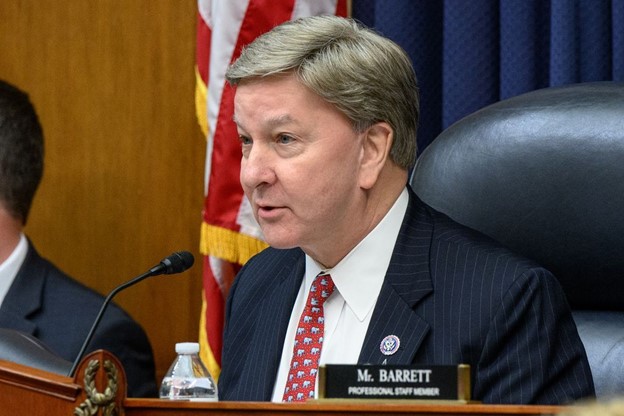
Congressman Mike Rogers (R-AL03) released a statement on China and Russia’s continued cooperation – including a recent joint naval patrol near Alaska. “Continued cooperation between China and Russia is a stark reminder of the challenge we face: for the first time in history, the United States must deter two near-peer nuclear adversaries simultaneously,” Rogers said. “It’s clear that China and Russia’s recent naval patrol was meant to intimidate the United States. By investing in the modernization of our nuclear deterrent, the bedrock of U.S. national security, the FY24 National Defense Authorization Act sends a strong message to both China and Russia: The United States cannot be intimidated.” The 2024 NDAA increases the amount of money the United States spends on nuclear weapons by 110% over FY2023 to $32 billion. China has passed the United States as the largest Navy in the world. “While this administration dithers, the CCP is rapidly growing and modernizing its navy,” Rogers said. “It already controls the largest Navy in the world. Our fleet of 296 ships was eclipsed years ago by a Chinese fleet of over 350 ships. In two short years, the DoD predicts the CCP will control over 400 battle force ships. I don’t understand how this administration can conclude reducing the size of our fleet will somehow deter China.” China has also passed the U.S. in the number of ICBM launchers deployed – though the U.S. has a larger total number of warheads. “The head of U.S. Strategic Command has informed us that China has surpassed the U.S. in the number of ICBM launchers – this should serve as a wake-up call for the United States,” Rogers and other congressional leaders wrote. “It is not an understatement to say that the Chinese nuclear modernization program is advancing faster than most believed possible. We have no time to waste in adjusting our nuclear force posture to deter both Russia and China. This will have to mean higher numbers and new capabilities.” Russia’s recent invasion of Ukraine and Russian President Vladimir Putin’s increased belligerence has effectively ended the three decades of peaceful relations between Russia and the West following the collapse of the USSR. “Putin’s unprovoked, full-scale invasion of Ukraine has lasted a year too long,” Reps. Rogers, Michael McCaul, and Mike Turner wrote. “The people of Ukraine have shown unmatched strength and courage, and with the aid of Western weaponry, they have decimated Russia’s war machine. In supporting Ukraine’s fight, House Republicans have also continued to conduct robust oversight of U.S. assistance – protecting the American taxpayer while ensuring these weapons continue to make an impact on the battlefield.” China President Xi Jinping meanwhile has been open about his own territorial ambitions toward Taiwan. President Joe Biden has said that the U.S. would intervene militarily if China were to invade Taiwan, saying the burden to protect Taiwan is “even stronger’ after Russia’s invasion of Ukraine. It was one of the most forceful presidential statements in support of self-governing in decades. Mike Rogers is the Chairman of the House Armed Services Committee that is tasked with writing the House version of the NDAA. Rogers is in his eleventh term representing Alabama’s Third Congressional District. To connect with the author of this story or to comment, email brandonmreporter@gmail.com.
Steve Marshall sends letter critical of an EPA proposed new rule on Power Plants
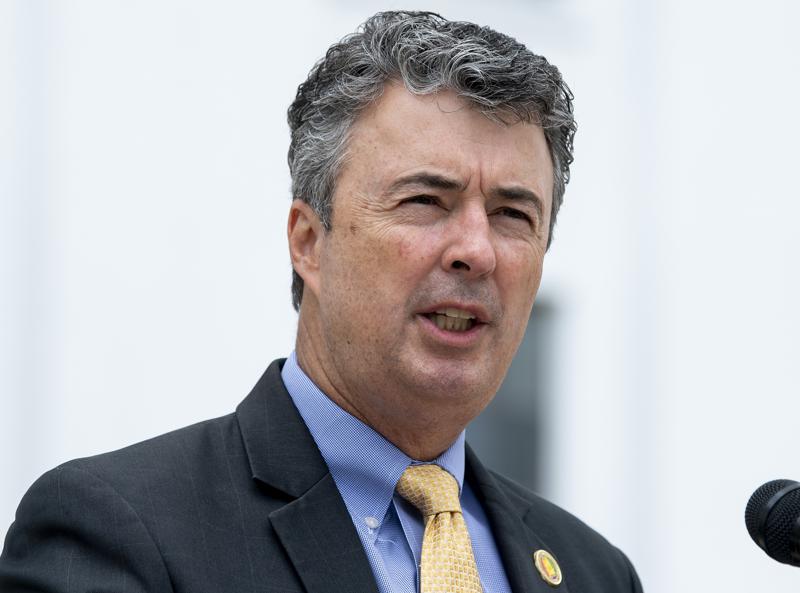
Americans are complaining that their power bills are too high. Those bills could be a lot higher if a controversial new U.S. Environmental Protection Agency’s (EPA) proposed new on existing coal, natural gas, and oil-fired power plants goes into effect. On Thursday, Alabama Attorney General Steve Marshall signed a 21-state coalition letter opposing the new EPA proposed rule. The controversial EPA proposal, Marshall claims unlawfully, attempts to use a narrow regulatory provision in the Clean Air Act to force existing power plants into retirement en masse. The U.S. Supreme Court blocked the EPA in a similar scheme just last year in the West Virginia v. EPA decision. “Just as our coalition was successful before the Supreme Court, this letter reminds the EPA that its authority is subject to authorization from Congress,” said Marshall. “As the last line of defense, I will continue to combat these out-of-control agencies who set illegal standards that will lead to devastating economic consequences for our great state.” The letter explains how the authors believe the EPA’s proposal violates the Supreme Court’s 2022 decision. They claim that Congress has not given the EPA statutory authorization to remake the electricity grids. In its latest proposal, the EPA tries to sidestep that decision by forcing a massive shift in electricity production indirectly: by setting standards reliant on theoretical technology that, as it exists today, cannot be used by the regulated power plants to meet the criteria. The result is intended: the plants will close, and the nation’s electrical grid will be transformed without Congress’s input or State involvement in the regulatory process, both of which the Clean Air Act requires. Nationwide, nearly 30 million American households struggle to pay their energy bills and qualify for federal subsidies for impoverished people. According to the latest, preliminary federal data, less than 3% receive it for their summer bills because supply is less than the demand for the program. In May, EPA proposed new regulations for power plants’ greenhouse gas (GHG) emissions, like carbon dioxide. Under the new rules, coal- and gas-fired plants that wanted to stay open would have to lower their GHG output by 90 percent within the next decade or otherwise switch to alternative forms of energy production. The rules are part of President Biden’s pledge “to create a carbon pollution-free power sector by 2035.” The U.S. electric industry has told the EPA that its rules are counterproductive and based on unproven technology. The Edison Electric Institute (EEI) is a trade association that “represents all U.S. investor-owned electric companies,” providing “electricity for nearly 250 million Americans” across all 50 states and Washington, D.C. Tom Kuhn is the EEI President and CEO. “EEI and our member companies support regulations for GHG emissions,” Kuhn said. “We share EPA’s long-term clean energy vision for our sector.” Kuhn said EEI member companies had significantly lowered their carbon outputs below 2005 levels “not because they are forced to by federal regulation, but instead because they are committed to delivering resilient clean energy to their customers.” The EEI expressed concerns that complying with the new rules would be difficult. “Electric companies are not confident that the new technologies EPA has designated to serve as the basis for proposed standards for new and existing fossil-based generation will satisfy performance and cost requirements on the timelines that EPA projects,” the EEI said. “This will impact electric companies’ efforts to deliver affordable and reliable electricity to customers.” It is estimated that the new rules will cost consumers over $900 million in additional electricity costs by 2030 and, if implemented, will make the U.S. electric grid less reliable. The EPA and the Biden Administration insist that the new rules are needed to fight climate change. Attorney General Marshall joined attorneys general from Arkansas, Georgia, Idaho, Indiana, Iowa, Kentucky, Louisiana, Mississippi, Missouri, Montana, Nebraska, New Hampshire, Ohio, Oklahoma, South Carolina, South Dakota, Texas, Utah, and Virginia in the West Virginia-led letter. To connect with the author of this story or to comment, email brandonmreporter@gmail.com.
4th person charged in riverside brawl in Alabama that drew national attention

Police in Alabama said Thursday that a fourth person has been arrested on a misdemeanor assault charge in connection with a riverside brawl that drew national attention. Major Saba Coleman of the Montgomery Police Department said the 21-year-old woman turned herself in to be arrested. She is the fourth person charged with assaulting a Black riverboat crew co-captain in a riverside brawl in Alabama’s capital city. The melee, where sides largely broke down along racial lines, began Saturday evening when a moored pontoon boat blocked the city-owned Harriott II riverboat from docking in its designated space along the riverfront so more than 200 passengers could disembark. The riverboat co-captain took another vessel to shore to move the pontoon boat and was attacked by several white people from the private boat, police said. Video showed him being punched and shoved. Riverboat crew members later confronted the pontoon boat party, and more fighting broke out, police said. Video of the brawl circulated on social media and put a national spotlight on Alabama’s capital city. Republished with the permission of The Associated Press.
FEC moves toward potentially regulating AI deepfakes in campaign ads

The Federal Election Commission has begun a process to potentially regulate AI-generated deepfakes in political ads ahead of the 2024 election, a move advocates say would safeguard voters against a particularly insidious form of election disinformation. The FEC’s unanimous procedural vote on Thursday advances a petition asking it to regulate ads that use artificial intelligence to misrepresent political opponents as saying or doing something they didn’t — a stark issue that is already being highlighted in the current 2024 GOP presidential primary. Though the circulation of convincing fake images, videos, or audio clips is not new, innovative generative AI tools are making them cheaper, easier to use, and more likely to manipulate public perception. As a result, some presidential campaigns in the 2024 race — including that of Florida GOP Gov. Ron DeSantis — already are using them to persuade voters. The Republican National Committee in April released an entirely AI-generated ad meant to show the future of the United States if President Joe Biden is reelected. It employed fake but realistic photos showing boarded-up storefronts, armored military patrols in the streets, and waves of immigrants creating panic. In June, DeSantis’ campaign shared an attack ad against his GOP primary opponent Donald Trump that used AI-generated images of the former president hugging infectious disease expert Dr. Anthony Fauci. SOS America PAC, which supports Miami Mayor Francis Suarez, a Republican, also has experimented with generative AI, using a tool called VideoAsk to create an AI chatbot in his likeness. Thursday’s FEC meeting comes after the advocacy group Public Citizen asked the agency to clarify that an existing federal law against “fraudulent misrepresentation” in campaign communications applies to AI-generated deepfakes. The panel’s vote shows the agency’s intent to consider the question, but it will not decide whether to actually develop rules governing the ads until after a 60-day public comment window, which is likely to begin next week. In June, the FEC deadlocked on an earlier petition from the group, with some commissioners expressing skepticism that they had the authority to regulate AI ads. Public Citizen came back with a new petition identifying the fraudulent misrepresentation law and explaining it thought the FEC did have jurisdiction. A group of 50 Democratic lawmakers led by House Rep. Adam Schiff also wrote a letter to the FEC urging the agency to advance the petition, saying, “Quickly evolving AI technology makes it increasingly difficult for voters to accurately identify fraudulent video and audio material, which is increasingly troubling in the context of campaign advertisements.” Republican Commissioner Allen Dickerson said in Thursday’s meeting he remained unconvinced that the agency had the authority to regulate deepfake ads. “I’ll note that there’s absolutely nothing special about deepfakes or generative AI, the buzzwords of the day, in the context of this petition,” he said, adding that if the FEC had this authority, it would mean it also could punish other kinds of doctored media or lies in campaign ads. Dickerson argued the law doesn’t go that far, but noted the FEC has unanimously asked Congress for more authority. He also raised concerns the move would wrongly chill expression that’s protected under the First Amendment. Public Citizen President Robert Weissman disputed Dickerson’s points, arguing in an interview Thursday that deepfakes are different from other false statements or media because they fraudulently claim to speak on a candidate’s behalf in a way that’s convincing to the viewer. “The deepfake has an ability to fool the voter into believing that they are themselves seeing a person say or do something they didn’t say,” he said. “It’s a technological leap from prior existing tools.” Weissman said acknowledging deepfakes are fraud solves Dickerson’s First Amendment concerns, too — while false speech is protected, fraud is not. Lisa Gilbert, Public Citizen’s executive vice president, said under its proposal, candidates would also have the option to prominently disclose the use of artificial intelligence to misrepresent an opponent, rather than avoid the technology altogether. She argued action is needed because if a deepfake misleadingly impugning a candidate circulates without a disclaimer and doesn’t get publicly debunked, it could unfairly sway an election. For instance, the RNC disclosed the use of AI in its ad, but in small print that many viewers missed. Gilbert said the FEC could set guidelines on where, how and for how long campaigns and parties need to display these disclaimers. Even if the FEC decides to ban AI deepfakes in campaign ads, it wouldn’t cover all the threats they pose to elections. For example, the law on fraudulent misrepresentation wouldn’t enable the FEC to require outside groups, like PACs, to disclose when they imitate a candidate using artificial intelligence technology, Gilbert said. That means it wouldn’t cover an ad recently released by Never Back Down, a super PAC supporting DeSantis, that used an AI voice cloning tool to imitate Trump’s voice, making it seem like he narrated a social media post. It also wouldn’t stop individual social media users from creating and disseminating misleading content — as they long have — with both AI-generated falsehoods and other misrepresented media, often referred to as “cheap fakes.” Congress, however, could pass legislation creating guardrails for AI-generated deceptive content, and lawmakers, including Senate Majority Leader Chuck Schumer, have expressed intent to do so. Several states also have discussed or passed legislation related to deepfake technology. Daniel Weiner, director of the Elections and Government Program at the Brennan Center for Justice, said misinformation about elections being fraudulently stolen is already a “potent force in American politics.” More sophisticated AI, he said, threatens to worsen that problem. “To what degree? You know, I think we’re still assessing,” he said. “But do I worry about it? Absolutely.” Republished with the permission of The Associated Press.
