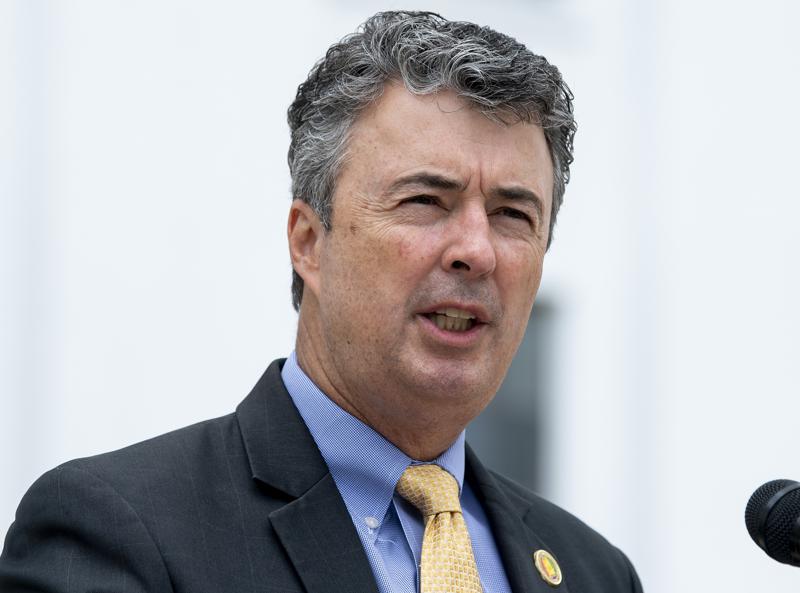
Americans are complaining that their power bills are too high. Those bills could be a lot higher if a controversial new U.S. Environmental Protection Agency’s (EPA) proposed new on existing coal, natural gas, and oil-fired power plants goes into effect. On Thursday, Alabama Attorney General Steve Marshall signed a 21-state coalition letter opposing the new EPA proposed rule.
The controversial EPA proposal, Marshall claims unlawfully, attempts to use a narrow regulatory provision in the Clean Air Act to force existing power plants into retirement en masse. The U.S. Supreme Court blocked the EPA in a similar scheme just last year in the West Virginia v. EPA decision.
“Just as our coalition was successful before the Supreme Court, this letter reminds the EPA that its authority is subject to authorization from Congress,” said Marshall. “As the last line of defense, I will continue to combat these out-of-control agencies who set illegal standards that will lead to devastating economic consequences for our great state.”
"As the last line of defense, I will continue to combat these out-of-control agencies who set illegal standards that will lead to devastating economic consequences for our great state."
— Attorney General Steve Marshall (@AGSteveMarshall) August 9, 2023
The letter explains how the authors believe the EPA’s proposal violates the Supreme Court’s 2022 decision. They claim that Congress has not given the EPA statutory authorization to remake the electricity grids. In its latest proposal, the EPA tries to sidestep that decision by forcing a massive shift in electricity production indirectly: by setting standards reliant on theoretical technology that, as it exists today, cannot be used by the regulated power plants to meet the criteria. The result is intended: the plants will close, and the nation’s electrical grid will be transformed without Congress’s input or State involvement in the regulatory process, both of which the Clean Air Act requires.
Nationwide, nearly 30 million American households struggle to pay their energy bills and qualify for federal subsidies for impoverished people. According to the latest, preliminary federal data, less than 3% receive it for their summer bills because supply is less than the demand for the program.
In May, EPA proposed new regulations for power plants’ greenhouse gas (GHG) emissions, like carbon dioxide. Under the new rules, coal- and gas-fired plants that wanted to stay open would have to lower their GHG output by 90 percent within the next decade or otherwise switch to alternative forms of energy production. The rules are part of President Biden’s pledge “to create a carbon pollution-free power sector by 2035.”
The U.S. electric industry has told the EPA that its rules are counterproductive and based on unproven technology. The Edison Electric Institute (EEI) is a trade association that “represents all U.S. investor-owned electric companies,” providing “electricity for nearly 250 million Americans” across all 50 states and Washington, D.C.
Tom Kuhn is the EEI President and CEO.
“EEI and our member companies support regulations for GHG emissions,” Kuhn said. “We share EPA’s long-term clean energy vision for our sector.”
Kuhn said EEI member companies had significantly lowered their carbon outputs below 2005 levels “not because they are forced to by federal regulation, but instead because they are committed to delivering resilient clean energy to their customers.”
The EEI expressed concerns that complying with the new rules would be difficult.
“Electric companies are not confident that the new technologies EPA has designated to serve as the basis for proposed standards for new and existing fossil-based generation will satisfy performance and cost requirements on the timelines that EPA projects,” the EEI said. “This will impact electric companies’ efforts to deliver affordable and reliable electricity to customers.”
It is estimated that the new rules will cost consumers over $900 million in additional electricity costs by 2030 and, if implemented, will make the U.S. electric grid less reliable.
The EPA and the Biden Administration insist that the new rules are needed to fight climate change.
Attorney General Marshall joined attorneys general from Arkansas, Georgia, Idaho, Indiana, Iowa, Kentucky, Louisiana, Mississippi, Missouri, Montana, Nebraska, New Hampshire, Ohio, Oklahoma, South Carolina, South Dakota, Texas, Utah, and Virginia in the West Virginia-led letter.
To connect with the author of this story or to comment, email brandonmreporter@gmail.com.
Related
Share via: