
Rep. Jerry Carl says terrorist organizations are taking advantage of America’s open border
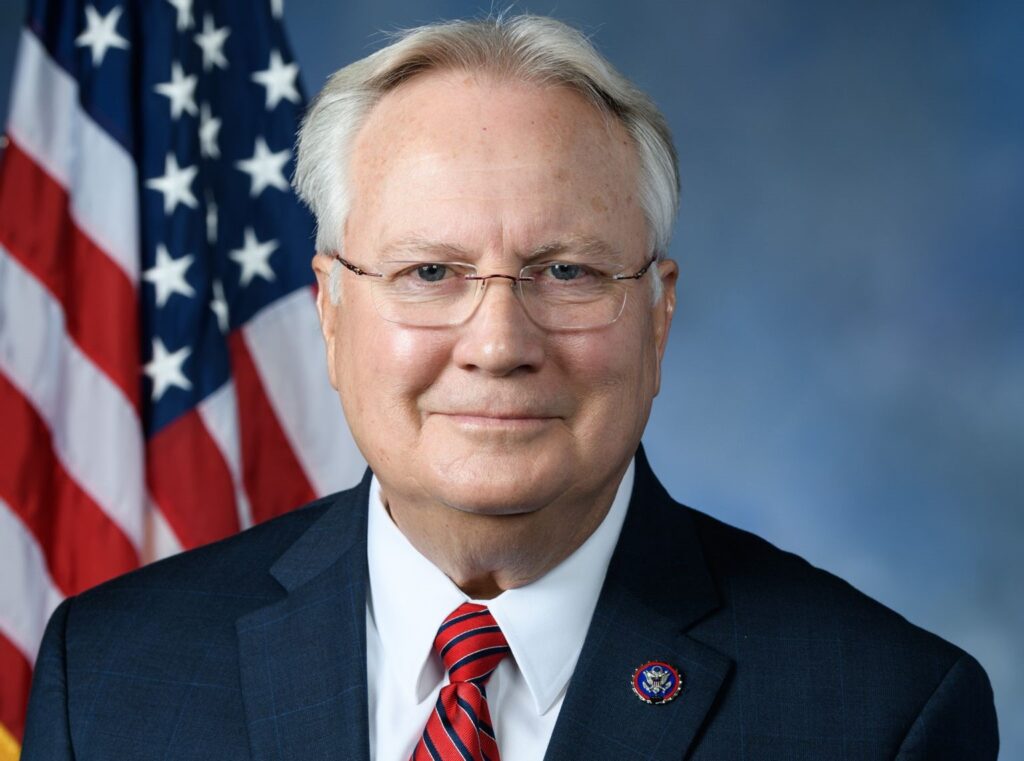
On Tuesday, Congressman Jerry Carl (R-AL01) referenced a CNN article about an individual with ISIS ties who was discovered smuggling migrants over the U.S. southern border when he expressed concerns that terrorist organizations are taking advantage of U.S. border policies. “This is just another horrific example of the terrible things going on at the southern border,” Carl wrote on Twitter. “Terrorist organizations are taking full advantage of our open borders, and it’s making ALL our communities less safe.” According to original reporting by CNN, the FBI is investigating more than a dozen migrants from Uzbekistan and other countries allowed into the U.S. after they sought asylum at the southern border. This is not unusual, as over six million migrants have entered the U.S. since Joe Biden became President. What set off alarm bells at Homeland Security was when U.S. intelligence officials found that the migrants traveled with the help of a smuggler with ties to ISIS. The FBI says that no specific ISIS plot has been identified here. They are, however, still working to “identify and assess” all of the individuals who gained entry to the United States, according to a statement from National Security Council spokesman Adrienne Watson. They are also closely scrutinizing a number of the migrants as possible criminal threats, according to two U.S. officials. The government says that there is no evidence at this point to justify detaining anyone. That said, an urgent classified intelligence report was circulated to President Biden’s top Cabinet officials in their morning briefing book. Some counterterrorism officials say this incident shows that the U.S. is deeply vulnerable to the possibility that terrorists could sneak across the southern border by hiding amid the surge of migrants entering the country in search of asylum. Congressman Barry Moore (R-AL02) also shared the same CNN article that was initially shared by the House Republican Caucus. “More than a dozen Uzbek nationals entered into our country with the help of an ISIS smuggler, and now we are scrambling to find them,” Rep. Moore said on Twitter. “If our border was secure, these incidents wouldn’t happen. #BidenBorderCrisis” Congressmen Carl and Moore are in their second terms in the U.S. House of Representatives. To connect with the author of this story or to comment, email brandonmreporter@gmail.com.
United Launch Alliance postpones launch of SILENTBARKER mission

On Tuesday, United Launch Alliance (ULA) announced that it had postponed the launch of an important military mission due to approaching Hurricane Idalia, which hit the Florida coast as a CAT II Hurricane overnight. ULA released a statement: “The launch of the United Launch Alliance Atlas V SILENTBARKER/NROL-107 mission for the National Reconnaissance Office (NRO) and the United States Space Force has been delayed due to the impending tropical storm. Out of an abundance of caution for personnel safety, a critical national security payload, and the approaching Tropical Storm Idalia, the team made the decision to return the rocket and payload to the vertical integration facility (VIF). We will work with our customers and the range to confirm our next launch attempt and a new date will be provided once it is safe to launch.” NRO, United Launch Alliance, and Space Systems Command (SSC) hosted a pre-launch press conference with journalists and Partners in Space. NRO Director Dr. Christopher Scolese, Space Force Lt. Gen. Michael Guetlein, and ULA CEO Tory Bruno discussed the importance of SILENTBARKER/#NROL107, underscoring the element of partnership in this joint mission just hours before the mission was scrubbed due to the rapidly worsening weather forecast. The U.S. Space Force and the NRO have numerous satellites in geosynchronous orbit, and the SILENTBARKER mission poised for liftoff will help track potential threats to those multibillion-dollar assets. “Geosynchronous orbit is far away,” Scolese said. “Ground-based systems have a harder time seeing what’s up there. This provides us the capability of being in this same orbit so that we’re closer to what’s happening up there. It will not be looking at the ground; it will be looking at space.” “The idea of the mission is to put a satellite into geosynchronous orbit and then to be looking at that orbital regime and get a sense of what’s happening day to day,” Scolese said. “Satellites do move in geosynchronous orbit. You’ve heard about communications satellites moving from one location to another to provide better coverage to other areas.” This has been a very busy week for the team at ULA. Their first Vulcan rocket is now atop its Cape Canaveral launch pad for the next phase of qualification testing in preparation for the inaugural flight. Vulcan represents the next generation of rocket technology for the company, which builds its rockets at its rocket assembly plant in Decatur. ULA is a jointly owned venture between Boeing and Lockheed. To connect with the author of this story or to comment, email brandonmreporter@gmail.com.
State Rep. David Cole arrested for voter fraud
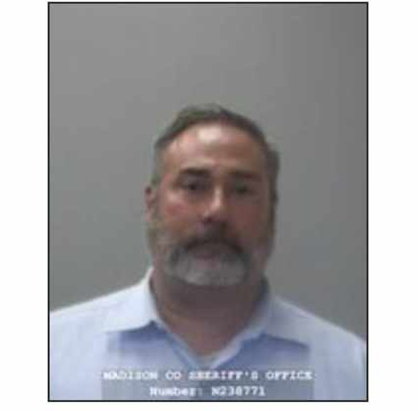
On Tuesday, State Representative David Cole (R-Huntsville) was arrested on charges of voting at an unauthorized voting location. Tuesday’s arrest is part of a lengthy investigation of Cole’s residency. Investigators are conducting a probe into whether or not Cole actually lives in the district that he represents – District 10. Under Alabama law, you must vote at the polling place you are assigned based on residency. Speaker of the House Nathaniel Ledbetter (R-Rainsville) issued a statement on Tuesday following the arrest. “This afternoon, the Speaker’s Office became aware of David Cole’s arrest on the charge of fraud—voting at an unauthorized location,” Speaker Ledbetter said. “As this is an ongoing investigation, we are still waiting to learn more details as they become available.” “In recent years, the Alabama House has prioritized legislation that promotes election integrity, and we believe that any allegation of fraud must be addressed regardless of the party, public official, or candidate involved,” Ledbetter continued. “Alabamians may remain confident that their elections are conducted honestly, their votes are cast and counted fairly, and their ballot boxes are secure. Now, it is up to a court of law to determine the validity of the allegations Cole is facing, and I anticipate Alabama’s election laws will withstand their true intent.” His election opponents brought the matter up before the November election, but Cole, the Republican nominee, won anyway. Libertarian Elijah Boyd has brought a pending legal action against Cole, and there are media reports that authorities do believe that there may be merit to the accusations. Cole, a doctor, owns a big house outside of the district. He claims to rent another house in the district, but he apparently never sold the home that he owns, and his critics maintain that he and his wife do not live at the address he wrote on his qualifying papers. Cole’s tenure in the Legislature has been overshadowed by the looming residency litigation. Cole was reportedly booked into the Madison County Jail, where he is being held on a $2,500 bond. Cole serves as Medical Director of Occupational Health Group. He and his wife, Melanie, have three children. They are members of First Baptist Church of Huntsville and St. John the Baptist Church in Madison. David is a graduate of Arkansas State University and received his Doctorate Degree in Medical Services from the University of Arkansas. If convicted, Cole would be the second member of the Alabama House of Representatives convicted of crimes this year. The other being former State Rep. Fred Plump (D-Birmingham). Cole, like Plump, was elected for the first time in 2022. To connect with the author of this story or to comment, email brandonmreporter@gmail.com.
Steve Flowers: Summer Political Happenings
As the long, hot summer ends and Labor Day approaches, let’s take a look back at what occurred over the last three summer months politically. First of all, it was one of the hottest summers on record. Temperatures soared into the hundreds as early as late June. On one of those late June days, one of the hottest political events of the year occurred. The annual Tomato Sandwich Lunch event hosted by Alabama Agriculture Commissioner Rick Pate was the biggest yet. The twentieth annual Tomato Sandwich Lunch held at the Ed Teague Arena near the Garrett Coliseum was a must-be event for Alabama political elite. The Tomato Sandwich Lunch promotes produce from local farmers and encourages people to eat Alabama-grown products. Alabama-based vendors donate all of the food for the event. Commissioner Rick Pate was a master host to over 500 attendees. In attendance were U.S. Senator Katie Britt, State Treasurer Young Boozer, and Lt. Governor Will Ainsworth. PSC member Jeremy Oden came from Cullman, and State Board of Education President Wayne Reynolds came from Athens. State Judges in attendance were Supreme Court Judge Greg Cook, Criminal Appeals Court Judge Bill Cole, and Civil Appeals Court Judges Matt Friday and Bill Thompson. Legislators spotted were State Senators Josh Carnley and Will Barfoot, as well as Representatives Jerry Starnes, Margie Wilcox, Van Smith, and Ed Oliver. There were dozens of local County Commissioners from all over the state. Many of the state’s most prominent lobbyists were there, along with many of the Governor’s Cabinet members. Alabama Power Government Affairs guru Houston Smith and Alfa Executive Director Paul Pinyan were prominent. In fact, most of Alfa’s governmental affairs folks were at this very fun and political event. During the summer, everybody and their brother, or at least everyone who ever won a 4-H speaking contest, entered the race for the Republican nomination for President. There must be 20 people running against Donald Trump for the GOP nomination. This is just what Trump was hoping for. It splinters the anti-Trump vote to such a degree that it virtually assures him the nomination. During the summer, the U.S. Supreme Court decided that Alabama’s Congressional districts were gerrymandered to keep Black voters from being able to elect a second Black Democrat to Congress. Alabama currently has six white Republican Congressmen and one Black Democratic Congresswoman, Terri Sewell. In July, former Alabama Supreme Court Justice Mike Bolin won a special election to fill a seat on the five-member Jefferson County Commission. His election was like manna from Heaven for the Jefferson County Republican Party. The commissioner, who departed this important seat, was a Republican. The commission had a three to two Republican majority. Therefore, it was an important election for the state’s largest and most important county. Mike Bolin had just retired from the Alabama Supreme Court after 18 years on the state’s high tribunal. He had been Probate Judge of Jefferson County for 16 years prior to his service on the Supreme Court. He only retired from the Supreme Court due to a state law that prevents judges from running for reelection after age 70. Bolin is Jefferson County through and through and one of the most respected gentlemen and public servants in Jefferson County and Alabama. The imperial county of Jefferson is fortunate that Judge Mike Bolin was available and ready to serve. His swearing-in ceremony occurred on a sweltering hot July 31. The large Jefferson County Courthouse commission chambers was overflowing. It was a congregation of who’s who of Jefferson County politics. Hope you had a good summer. Happy football season and happy Labor Day! See you next week. Steve Flowers is Alabama’s leading political columnist. His weekly column appears in over 60 Alabama newspapers. He served 16 years in the state legislature. Steve may be reached at www.steveflowers.us.
Alabama describes proposed nitrogen gas execution; seeks to become first state to carry it out
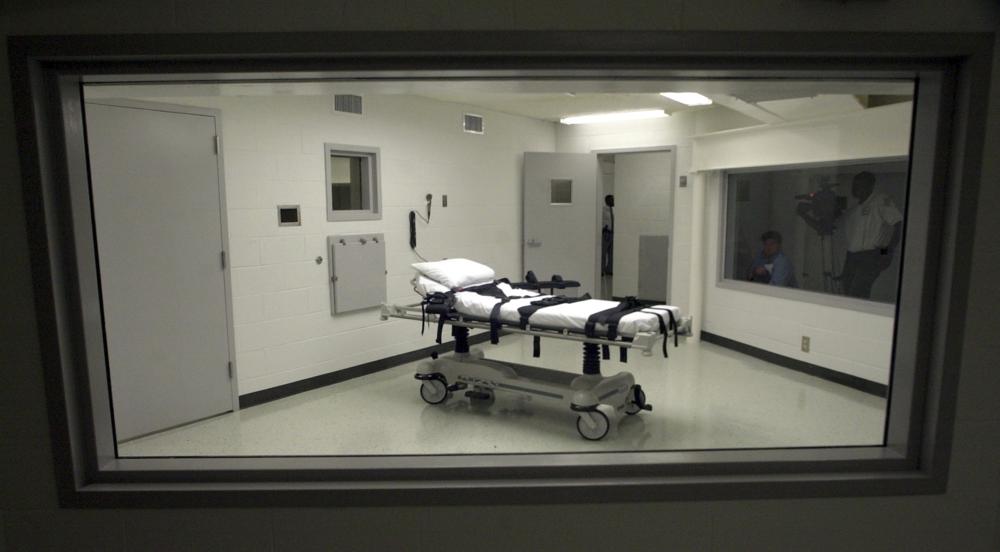
Alabama’s proposed procedures to carry out executions with nitrogen gas include fitting a mask over the inmate’s face and replacing their breathing air with nitrogen until their heart stops. The state described the procedures for the proposed new execution method in a redacted court filing. Alabama is seeking to become the first state to execute a prisoner using nitrogen. Nitrogen hypoxia has been authorized as an execution method in Alabama, Oklahoma, and Mississippi, but no state has used the method to carry out a death sentence. Nitrogen makes up 78% of the air inhaled by humans and is harmless when inhaled with proper levels of oxygen. Under the proposed execution method of nitrogen hypoxia, an inmate would be forced to breathe only nitrogen, depriving them of oxygen needed to maintain bodily functions and causing them to die. Alabama Attorney General Steve Marshall on Friday asked the Alabama Supreme Court to set an execution date for Kenneth Smith, 58, using nitrogen hypoxia as the method of execution. The attorney general’s office included a redacted copy of the protocol in a court filing asking a judge to dismiss a lawsuit filed by Smith. Smith, in seeking to block the state’s second attempt to execute him by lethal injection, had argued that nitrogen should be available. According to the protocol, the inmate would be escorted into the execution chamber, now used for lethal injections, placed on the gurney, and have a mask fitted over their face. The warden would then read the death warrant and give the inmate a chance to give a final statement up to two minutes long. Execution team members would then make a final inspection of the mask. The warden, from another room, would then “activate the nitrogen hypoxia system.” “After the nitrogen gas is introduced, it will be administered for 15 minutes or five minutes following a flatline indication on the EKG, whichever is longer,” the procedures stated. If Alabama carries out an execution by nitrogen, it will be the first new execution method since lethal injection was introduced in the 1970s. Deborah Denno, a death penalty expert at Fordham Law School, said that unlike lethal injection and electrocution, which have been used for decades, “experts could only speculate about how a state might conduct a nitrogen hypoxia execution.” She said the filed Alabama protocol does not provide answers because of its vagueness and heavy redactions. “This is a vague, sloppy, dangerous, and unjustifiably deficient protocol made all the more incomprehensible by heavy redaction in the most important places,” Denno wrote in an email. John Palombi, an attorney representing several death row inmates, said, “It will be difficult to fully analyze this protocol until a far less redacted version is made available.” “This is a complex procedure, and we have every right to be concerned when the Department of Corrections is not transparent about it, particularly when they have had such a bad track record recently,” Palombi wrote in an email. Alabama attempted to execute Smith by lethal injection last year, but called off the execution because of problems inserting an IV into his veins. It was the state’s second such instance within two months of being unable to put an inmate to death and its third since 2018. The day after Smith’s aborted execution, Gov. Kay Ivey announced a pause on executions to conduct an internal review of lethal injection procedures. The state resumed lethal injections last month. Alabama lawmakers approved nitrogen hypoxia as an alternate execution method in 2018 as death penalty states faced difficulty obtaining lethal injection drugs and ongoing litigation challenging the humaneness of lethal injection. “It’s readily available. It’s 78% of the air we breathe, and it will be a lot more humane to carry out a death sentence,” Trip Pittman, the former Alabama state senator who proposed the new execution method, said. Pittman said the inmate will pass out — similar to how aircraft passengers pass out when a plane depressurizes — and then die. Pittman disputed criticism that the method is experimental. He said that while no state has carried out a death sentence with nitrogen, people have died by breathing nitrogen during industrial accidents and suicide attempts, so the effects are known. Smith was one of two men convicted in the 1988 murder-for-hire slaying of Elizabeth Sennett. The other man convicted in the killing was executed in 2010. Charles Sennett, the victim’s husband and a Church of Christ pastor, killed himself when the investigation began to focus on him as a possible suspect, according to court documents. Republished with the permission of The Associated Press.
The math problem: Kids are still behind. How can schools catch them up?

On a breezy July morning in South Seattle, a dozen elementary-aged students ran math relays behind an elementary school. One by one, they raced to a table, where they scribbled answers to multiplication questions before sprinting back to high-five their teammate. These students are part of a summer program run by the nonprofit School Connect WA, designed to help them catch up on math and literacy skills lost during the pandemic. There are 25 students in the program, and all of them are one to three grades behind. One 11-year-old boy couldn’t do two-digit subtraction. Thanks to the program and his mother, who has helped him each night, he’s caught up. Now, he says math is challenging, but he likes it. Other kids haven’t fared so well. Across the country, schools are scrambling to catch up students in math as post-pandemic test scores reveal the depth of missing skills. On average, students’ math knowledge is about half a school year behind where it should be, according to education analysts. Children lost ground on reading tests, too, but the math declines were particularly striking. Experts say virtual learning complicated math instruction, making it tricky for teachers to guide students over a screen or spot weaknesses in problem-solving skills. Plus, parents were more likely to read with their children at home than practice math. The result: Students’ math skills plummeted across the board, exacerbating racial and socioeconomic inequities in math performance. And students aren’t bouncing back as quickly as educators hoped, supercharging worries about how they will fare in high school and whether science, tech, and medical fields will be available to them. ___ The Education Reporting Collaborative, a coalition of eight newsrooms, is documenting the math crisis facing schools and highlighting progress. Members of the Collaborative are AL.com, The Associated Press, The Christian Science Monitor, The Dallas Morning News, The Hechinger Report, Idaho Education News, The Post and Courier in South Carolina, and The Seattle Times. ___ Students had been making incremental progress on national math tests since 1990. But over the past year, fourth and eighth-grade math scores slipped to the lowest levels in about 20 years, according to data from the National Assessment of Educational Progress, known as the “Nation’s Report Card.” “It’s a generation’s worth of progress lost,” said Andrew Ho, a professor at Harvard University’s Graduate School of Education. At Moultrie Middle School in Mount Pleasant, South Carolina, Jennifer Matthews has seen the pandemic fallout in her eighth-grade classes. Her students have shown indifference to understanding her pre-algebra and Algebra I lessons. “They don’t allow themselves to process the material. They don’t allow themselves to think, ‘This might take a day to understand or learn,’” she said. And recently, students have been coming to her classes with gaps in their understanding of math concepts. Basic fractions, for instance, continue to stump many of them, she said. Using federal pandemic relief money, some schools have added tutors or piloted new curriculum approaches in the name of academic recovery. But that money has a looming expiration date: The September 2024 deadline for allocating funds will arrive before many children have caught up. Like other districts across the country, Jefferson County Schools in Birmingham, Alabama, saw students’ math skills take a nosedive from 2019 to 2021. Leveraging pandemic aid, the district placed math coaches in all of their middle schools. The coaches help teachers learn new and better ways to teach students. About 1 in 5 public schools in the United States have a math coach, according to federal data. The efforts appear to be paying off: State testing shows math scores have started to inch back up for most of the Jefferson County middle schools. In Pittsburgh’s school system, which serves a student population that is 53% African American, special education teacher Ebonie Lamb said it’s “emotionally exhausting” to see the inequities between student groups. But she believes those academic gaps can be closed through culturally relevant lessons, and targeting teaching to each student’s skill level. Lamb said she typically asks students to do a “walk a mile in my shoes” project in which they design shoes and describe their lives. It’s a way she can learn more about them as individuals. Ultimately, those connections help on the academic front. Last year, she and a co-teacher taught math in a small group format that allowed students to master skills at their own pace. “All students in the class cannot follow the same, scripted curriculum and be on the same problem all the time,” she said. Adding to the challenge of catching kids up is debate over how math should be taught. Over the years, experts say, the pendulum has swung between procedural learning, such as teaching kids to memorize how to solve problems step-by-step, and conceptual understanding, in which students grasp underlying math relationships. “Stereotypically, math is that class that people don’t like. … For so many adults, math was taught just as memorization,” said Kevin Dykema, president of the National Council of Teachers of Mathematics. “When people start to understand what’s going on, in whatever you’re learning, but especially in math, you develop a new appreciation for it.” Teaching math should not be an either-or situation, said Sarah Powell, a professor at the University of Texas at Austin who researches math instruction. A shift too far in the conceptual direction, she said, risks alienating students who haven’t mastered the foundational skills. “We actually do have to teach, and it is less sexy, and it’s not as interesting,” she said. In Spring, Texas, parent Aggie Gambino has often found herself searching YouTube for math videos. Giada, one of her twin 10-year-old daughters, has dyslexia and also struggles with math, especially word problems. Gambino says helping her daughter has proved challenging, given instructional approaches that differ from the way she was taught. She wishes her daughter’s school would send home information on how students are being taught. “The more parents understand how they’re being taught,” she said, “the better participant they can be in their child’s learning.” Even at a nationally recognized magnet
