
True or false? Fact checking Hillary Clinton’s DNC speech
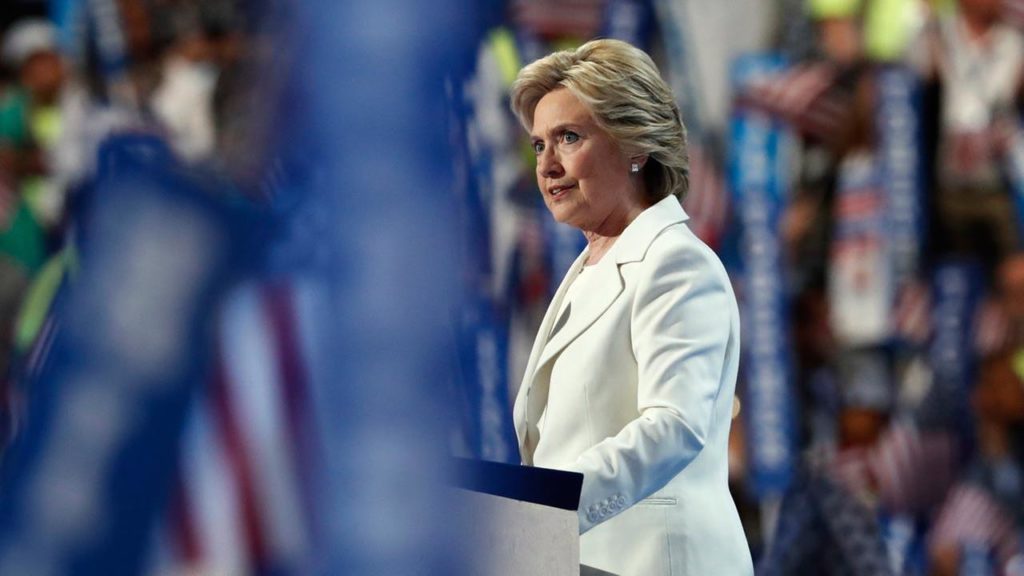
In her speech accepting the Democratic nomination, Hillary Clinton wrongly implied Donald Trump has proposed banning Islam in America and sketched out a plan for defeating Islamic State militants that merely mirrors what the U.S. is already trying to do. Clinton spoke Thursday night to the largest TV audience she is likely to have until the presidential debates, meaning many Americans were probably hearing of her agenda for the first time. Although she brings plenty of policy detail when stacked against the broad-brush ideas of her Republican rival, in some cases there’s less than meets the eye to what she says she will do. A college education, for example, might not end up as debt-free for everyone as she suggested. For his part, Trump spun a story about the Iran nuclear deal that was more fiction than fact at an Iowa rally that preceded Clinton’s convention speech. A look at some of the claims from the political maelstrom: CLINTON: “I’ve laid out my strategy for defeating ISIS. We will strike their sanctuaries from the air, and support local forces taking them out on the ground. We will surge our intelligence so that we detect and prevent attacks before they happen. We will disrupt their efforts online to reach and radicalize young people in our country. It won’t be easy or quick, but make no mistake – we will prevail.” THE FACTS: Clinton might as well have said she laid out President Barack Obama‘s strategy for defeating Islamic State militants. Everything she mentioned, the Obama administration already is trying to do. — CLINTON: “Bernie Sanders and I will work together to make college tuition-free for the middle class and debt-free for all.” THE FACTS: Tuition-free for students who go to an in-state public college or university. Debt-free is a harder lift. Clinton has adopted parts of Sanders’ plans to defray some of the costs of higher education. Under her proposal, the government would pay for tuition at in-state colleges and universities for students from families earning less than $125,000 a year. That would leave students still bearing the cost of room and board, which makes up more than half of the average $18,943 sticker price at a four-year public university, according to the College Board. Experts worry about other impacts: Will colleges raise tuition once the government starts paying, increasing the cost to taxpayers? Will more students flock to public colleges because of the subsidy, also raising costs? — CLINTON: “In my first 100 days, we will work with both parties to pass the biggest investment in new, good-paying jobs since World War II.” THE FACTS: It would be the biggest since World War II only if you don’t count Obama’s $814 billion 2009 stimulus. Clinton doesn’t have price tags on all her proposals, but the bulk of the investment appears to be her plan to spend $275 billion over five years on roads, bridges and other infrastructure. Obama’s stimulus included infrastructure as well as tax cuts and aid to state and local governments, all intended to boost the economy and hiring. — CLINTON: “We will not ban a religion.” THE FACTS: Trump never proposed banning Islam in the U.S., as Clinton seems to suggest. He proposed a freeze on the entry of all foreign Muslims into the U.S., then adapted the idea with several iterations. Recently he said he’d stop immigration from any country compromised by terrorism, or impose “extreme vetting” on people coming from places with a history of terrorism. He’s also spoken in support of surveillance on mosques in the U.S. As contentious as his thinking has been on the subject, it hasn’t extended to outlawing a religion. — TRUMP, boasting about how he would have conducted talks with Iran over reducing its nuclear weapons capabilities: “I would have said sorry, we can’t give you the $150 billion back. We want to give you the money back, but we don’t have it. It’s not there.” THE FACTS: The Iranians immediately would have called Trump’s bluff. That’s because the U.S. never had $150 billion to give back in the first place. Iran had foreign assets spread across numerous banks and countries before it struck a deal with the U.S. and other countries to limit its nuclear program in exchange for the lifting of international sanctions. The sanctions meant Tehran couldn’t access these funds abroad. But Iran’s government knew very well where its money was. Much of the revenue came from Iran’s oil sales to China, India, Japan and South Korea. These countries were able to purchase Iranian petroleum before the July 2015 nuclear agreement, but U.S. financial restrictions made it all but impossible to facilitate payments. So the money mainly sat in escrow in those countries, instead. These were not funds within the grasp of a U.S. president. Trump’s comment also doesn’t reflect how banks work. Money is fungible. If you have a bank account, it doesn’t mean specific bills of currency or bars of gold are sitting in a box waiting for you to pick them up. The can’t-find-your-money argument doesn’t work. Trump got the sum wrong, too. Iranian and U.S. officials agree that the amount of frozen funds totaled about $100 billion. — CLINTON, on taxing the wealthy and corporations: “Because when more than 90 percent of the gains have gone to the top 1 percent, that’s where the money is.” THE FACTS: While vague, Clinton’s claim probably relies on outdated figures and exaggerates inequality. Her assertion echoes similar claims made by Sanders during the primary campaign, though it’s not clear if she is referring to income or wealth or over what time frame. According to Emmanuel Saez, the University of California at Berkeley economist whose research on the wealthiest 1 percent helped spark the Occupy Wall Street protests, income gains have been more widely shared in recent years. The top 1 percent captured 52 percent of the growth in incomes from 2009 through 2015, still a hefty amount. But that’s down from the 2009 through
Police and protesters credited with restraint at convention

Bernie Sanders‘ devoted followers were careful to pick up after themselves and wore hats embroidered with a dove to remind everyone to remain peaceful. And the police, instead of hauling demonstrators off to jail, issued them $50 tickets for disorderly conduct and released them with a complimentary bottle of water. As the Democratic National Convention drew toward a close Thursday afternoon, Philadelphia police reported making a four-day total of only 11 arrests, and officers and protesters alike were credited with showing restraint and courtesy. The rallies and marches that some feared would result in violence and mass disruptions instead brought a festival-like atmosphere at times to City Hall and Broad Street. “I’m very happy so far with everyone,” Police Commissioner Richard Ross said. He said his officers “took pride in what they did all week. Very patient, tolerant and courteous is what I was hearing from a lot of people.” Mary Catherine Roper, deputy legal director of Pennsylvania’s American Civil Liberties Union, said the department’s hands-off approach helped keep things calm. “This is what it looks like when you just let people get their message out: lots of expression and very little conflict,” she said. As of Thursday afternoon, in addition to the 11 people arrested, about 100 protesters had been ticketed and fined. The ticketed demonstrators were briefly detained, their hands zip-tied behind their backs, but not technically arrested. Less than two months before the convention, the city passed legislation allowing police to write the equivalent of traffic tickets instead of making criminal arrests for many nuisance crimes, such as disorderly conduct, blocking a street and failure to disperse. “I think it’s helped,” the police commissioner said. “What it does for us is that it gets people in and out of our hands. We’re able to get people back on those lines and keep things moving. I’m sure people appreciate being written up for a citation and handed a bottle of water.” During the Republican convention in Cleveland last week, a heavy police presence and fewer than expected protesters helped authorities maintain order. Only about two dozen arrests were made. In Philadelphia, the number of protesters was likewise much lower than expected. About 35,000 protesters each day were anticipated. But the turnout on Monday was put at about 5,500, and it dwindled to 1,500 by Wednesday. Stifling humidity and temperatures in the high 90s may have kept the crowds down. Also, a severe thunderstorm that rolled through Monday evening scattered protesters gathered outside the Wells Fargo Center on the convention’s opening night, and heavy rain cut short a Sanders rally on Thursday afternoon. Police de-escalated situations by separating groups of opposing protesters but allowing them to continue to express themselves, said Eric Ferrero, an Amnesty International deputy executive director who helped oversee teams of observers in Philadelphia and Cleveland. “What we have seen so far in Philadelphia is largely peaceful protests around the city and police protecting people’s right to protest,” he said. He also gave credit to demonstrators, who are “protesting peacefully and who have a strong point of view they want to get across, but do it (in a) peaceful and orderly fashion.” Andy Billotti, a Sanders supporter from Middletown, Maryland, has been protesting all week and said the police have been excellent. He also said the protesters have been courteous. “Berners are a peaceful group,” he said. He attributed that to their general mindset and a desire not to “put a bad light on Bernie Sanders.” Weeks before the convention, Philadelphia clergy teamed up with a legal collective to hold a series of workshops for demonstrators on protesting nonviolently. Throughout the protests, some demonstrators have urged others to remain calm. It happened Tuesday night near the Wells Fargo Center when one demonstrator was shaking a temporary crowd-control fence and others told him to stop. He did. Police also showed patience with protesters outside the convention hall. Demonstrators climbing the fences Tuesday were helped down safely by police before the officers zip-tied their hands. On Wednesday night, officers smiled and talked with protesters, allowing them to secure their belongings before taking them into custody. Philadelphia wanted to avoid a repeat of 2000, when it arrested more than 400 protesters at the Republican National Convention, only to see most cases end in acquittals. Republished with permission of the Associated Press.
Lady Gaga hits stage for invite-only show for DNC delegates

Lady Gaga hit the stage at an invitation-only concert Thursday for delegates to the Democratic National Convention, covering classic songs from Woody Guthrie, Neil Young, the Beatles and others. Gaga opened with a jazzy version of Guthrie’s “This Land is Your Land” and then Young’s “Old Man.” She was introduced by Democratic U.S. Sen. Cory Booker, who called her a star who’s not afraid to speak out about sexual violence and mental health. She closed out her set with the Beatles’ “Come Together” and then sang Edith Piaf‘s “La Vie en Rose” as an encore. Lenny Kravitz, who also performed inside the convention on Wednesday night, ended his set Thursday by shouting, “We, the people! We, the people! We, the people!” DJ Jazzy Jeff spun tunes in between their sets. The show gives Camden, one of the country’s most impoverished cities, time in the Democratic convention spotlight. George Norcross and Susan McCue, president of General Majority PAC and a former chief of staff to U.S. Senate Majority Leader Harry Reid, hosted the “Camden Rising” event, held hours before Hillary Clinton formally accepts the Democratic Party’s nomination for president. Norcross is credited with working with Republican Gov. Chris Christie to help in redevelopment efforts in Camden, many partially funded through state grants and tax credits. The insurance executive is a Democratic superdelegate along with his brother, U.S. Rep. Donald Norcross. Both are supporting Clinton. Clinton delegate Suzanne Perkins, 47, of Ann Arbor, Michigan, said she thinks celebrities can help influence delegates and voters. After Kravitz’s set, she said Bernie Sanders supporters in her delegation who like his music and politics heard his support for Clinton and might think, “Maybe I ought to open my mind. Here’s a guy whose politics I agree with and he endorsed her.” Republished with permission of the Associated Press.
Democratic Convention: what to watch for on Day 4
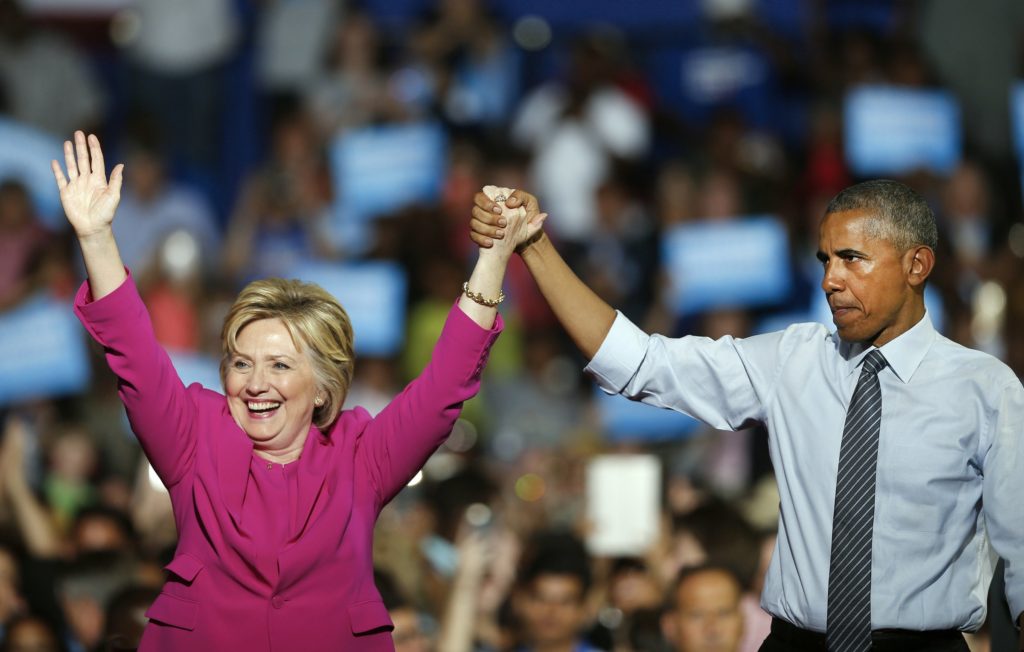
On the final night of the Democratic National Convention, Hillary Clinton will take the stage to formally accept her party’s nomination. But not before a bevy of speakers stand up and speak on her behalf, highlighting issues facing women with a strong emphasis on workplace fairness and pay. Among those speakers is Clinton’s daughter, Chelsea, who will introduce her mother to close out the evening, mirroring Ivanka Trump introducing her father at the RNC. Themed “Stronger Together,” the DNC reveals “Hillary will speak about her vision for our country — her belief that we are stronger together and that America is at its best when we work together to solve our problems.” The list of Thursday’s key primetime speakers: Hillary Clinton: the Democratic Party’s nominee for President of the United States Chelsea Clinton: daughter of Democratic presidential nominee Hillary Clinton John Allen: retired general Henrietta Ivey: Henrietta is a home care worker helping to lead the Fight for $15. Beth Mathias: Beth works two jobs and her husband works the night shift at a factory in Ohio. Jensen Walcott and Jake Reed: Jensen was fired from her job at a pizza restaurant in Bonner Springs, Kansas, for asking her boss why she was paid 25 cents less than her male co-worker and friend, Jake. Khizr Khan: Khan’s son was one of 14 American Muslims who died serving the United States in the 10 years after the Sept. 11, 2001 terrorist attacks. Candidates of the Democratic Senatorial Campaign Committee Chad Griffin: President of the Human Rights Campaign Gene Karpinski: League of Conservation Voters President Sean Patrick Maloney: Co-Chair of the Congressional LGBT Equality Caucus Congressman from New York Sarah McBride: LGBT rights activist Barbara Mikulski: U.S. Senator from Maryland
Bradley Cooper’s DNC appearance irks conservatives
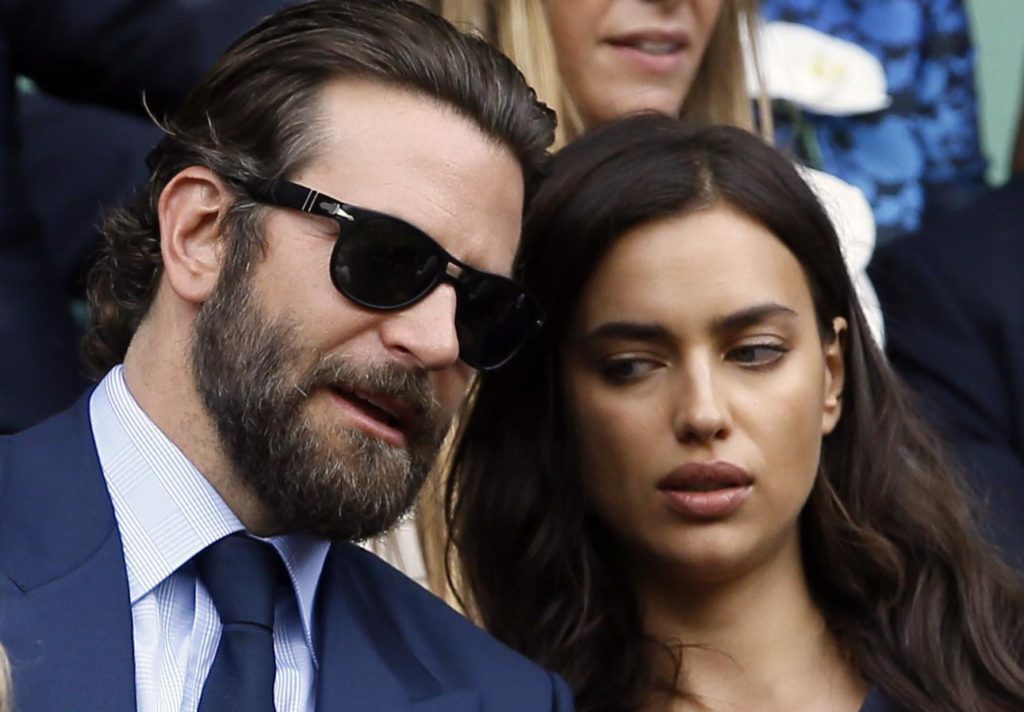
Bradley Cooper‘s appearance at the Democratic National Convention has irked some conservative fans of the actor’s portrayal of Navy SEAL Chris Kyle in 2014’s “American Sniper.” Cooper was spotted by TV cameras Wednesday night seated at the meeting in Philadelphia alongside his Russian model girlfriend, Irina Shayk. Some Twitter users say they plan to boycott Cooper’s future films over his presence at the convention. Another commented that they thought his experience playing Kyle would have rubbed off on him. The complaints have been mocked by others who say Cooper was simply acting a role when playing Kyle and conservatives shouldn’t be surprised. Cooper earned an Oscar nomination for “American Sniper,” which became a blockbuster thanks in part to an enthusiastic reception among conservatives moviegoers. Cooper was born and raised in Philadelphia. Republished with permission of the Associated Press.
Barack Obama returns to convention stage to make case for Hillary Clinton

President Barack Obama acknowledged Wednesday that his hopes for a new tone in politics, embodied in the rousing Democratic convention speech he delivered 12 years ago, never materialized. Still, he says he remains undaunted. In 2004, he was the obscure Senate candidate from Illinois whose words catapulted him to the center of American political consciousness. On Wednesday night, he steps on the convention stage as the battle-hardened president hoping his legacy won’t be eroded by the outcome of the election to replace him. It’s hard to overstate what Obama has at stake as he implores voters to elect Hillary Clinton. Take Republican Donald Trump at his word, and if elected, he’d undo just about everything Obama has done, from climate change and immigration to trade and foreign relations. Obama has cast Trump as dangerous and unprepared. In an interview aired hours before his remarks, he said Trump lacks “basic knowledge about the world” and has shown no interest in learning more about it. Democrats should be “running scared’ about the real political challenge Trump poses, he said in an interview aired Wednesday on NBC’s “Today” show. Obama’s speech will also be a moment to revisit his political story and words that captivated Democrats in Boston and beyond. His scolding of pundits who carve up America into red and blue states, and his declaration that there is no black or white America but “we are one people” looks largely aspirational after a decade of increased political polarization and months of heighten racial tensions. “I’m the first to admit that when I spoke in 2004, when I ran in 2008, my hope, my expectation was that we could lift up all that common ground and create a new way of doing business in Washington and a new political tenor, a new political tone that was more respectful and more practical in trying to solve problems,” he said. “And that hasn’t happened. But it doesn’t keep me from wanting to keep on trying.” After his wife, Michelle Obama, brought delegates to their feet with a stirring speech Monday evening, Obama stayed up late into the night fine-tuning his words, the White House said. His speech will combine an affirmation of Clinton’s judgment and fortitude with a rebuke of the scare tactics he accuses Trump of deploying. “The president will talk about who we are as a country and that we are better united than divided, and that we’re better together than apart,” said White House spokesman Eric Schultz. That Democrats are so eager for Obama to grace the convention stage is a reflection of how dramatically things have changed from just two years ago, when Democrats practically begged an unpopular Obama to keep his distance from the campaign trail. His approval ratings have since recovered, though a solid majority of Americans still feel the country is moving in the wrong direction. His vice president, Joe Biden, also addresses the convention on Wednesday, in a reminder to some Democrats that the candidate they wanted this year was the one they couldn’t have. With his last State of the Union address behind him, Obama’s speech in Philadelphia will be one of his final opportunities to define and defend his tenure with a massive audience watching. Tens of millions have been tuning into the conventions in primetime this year. Democrats are hoping that Obama is uniquely positioned to persuade wary voters that Clinton is right for the job and to vouch for the trustworthiness of a nominee most voters say they still don’t trust. White House officials have described him as a “convert” to Clinton’s cause who, after fighting her bitterly in the 2008 Democratic primary, saw her abilities firsthand when he picked her as secretary of state. Republished with permission of the Associated Press.
Democratic Convention: what to watch for on Day 3
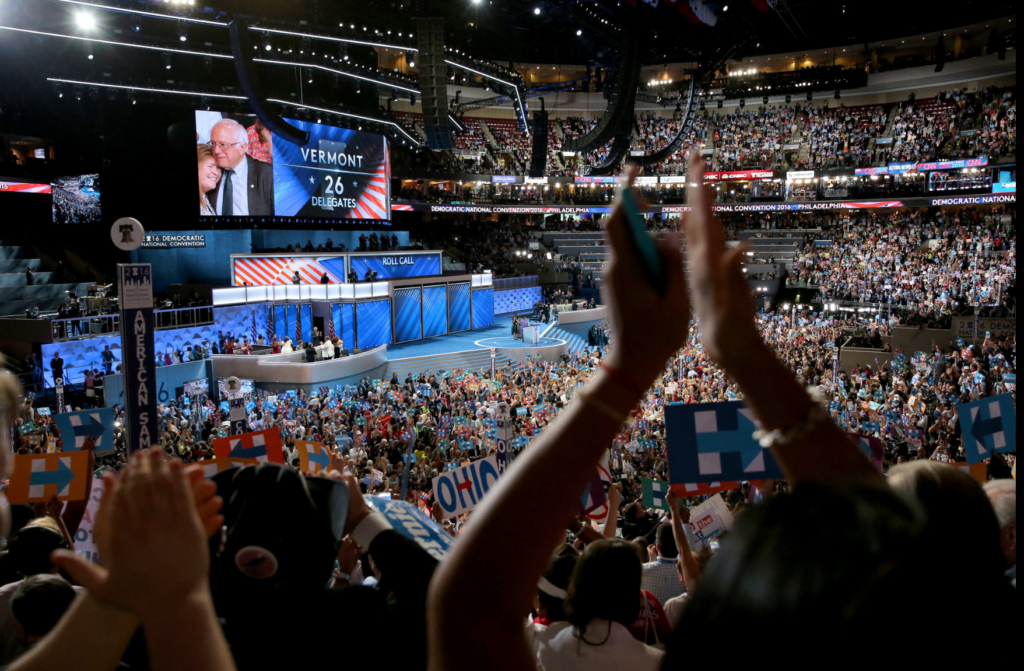
Tuesday night Hillary Clinton officially clinched her party’s nomination, becoming the first woman nominated to run for president of the United States by a major party. The historic moment was not without tension as Bernie Sanders supporters, still reeling over Friday’s email leaks that revealed thousands of emails showing DNC officials were attempting to undercut the Vermont senator during his primary campaign against Clinton, stormed out of the convention hall after Clinton won the nomination. Wednesday, President Barack Obama will take the stage and make a prime-time pitch for Clinton, where he will argue for progressive policies that he’s worked on the past eight years — calling for her to be his successor to help maintain them. Themed “Working Together,” Wednesday’s speakers will take an in-depth look at just how high the stakes are in this election, making the case for how they believe Clinton has the experience and steadiness to bring people together to tackle the big challenges and get real results. The list of Wednesday’s key primetime speakers: Barack Obama: President of the United States Joe Biden: Vice President of the United States Tim Kaine: Democratic Vice-Presidential nominee and U.S. Senator from Virginia Leon Panetta: served as the 23rd Secretary of Defense from July 2011 to February 2013. Ilyse Hogue: President of NARAL Pro-Choice America Charles Ramsey: former Philadelphia police commissioner Stephanie Schriock: President of Emily’s List Jamie Dorff: her husband was an Army helicopter pilot from Minnesota who died while on a search and rescue mission in northern Iraq. Felicia Sanders and Polly Sheppard: two of the three survivors of the Mother Emanuel Church shooting in Charleston, South Carolina. Erica Smegielski: Erica’s mother, Dawn, was the principal of Sandy Hook Elementary School and was killed while trying to protect her students.
Joe Henderson: The Big Dog has his say
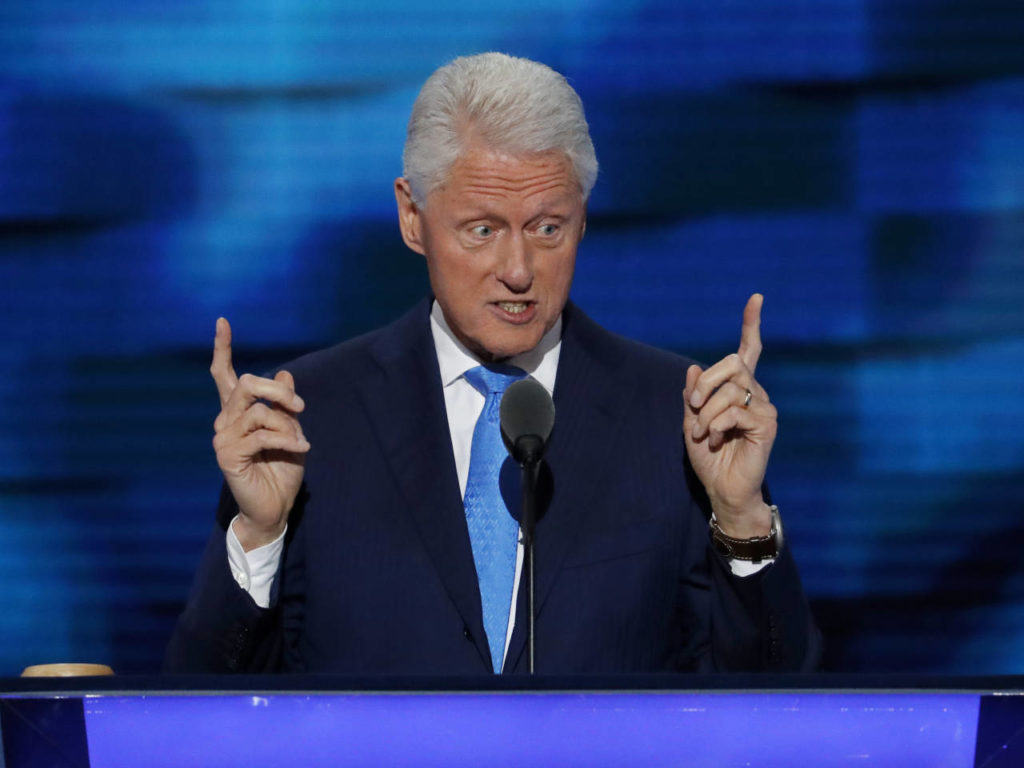
If you weren’t saying it out loud Tuesday night, you had to be at least thinking about Bill Clinton’s multiple marital infidelities as he spun the story of his courtship and undying love for Hillary. I assume this was a calculated risk by Camp Clinton to show Hillary as a woman of strength, smarts and family. But the puppy-dog pursuit by the Big Dog to win her hand in marriage also, like it or not, reminded the world again that he didn’t keep up his end of the “forsaking all others” part of the wedding vows. Some things just stick to a couple’s hide like they’re super-glued. At least a fair part of the Republican hatred (yep, hatred) of Hillary is her failure to punch her wandering hubby in the nose during those dark days. They paint her as a woman of opportunity, refusing to kick her husband to the curb because it would hurt her own political ambition. At least part of that is certainly true, but we aren’t electing a Sunday School teacher to sit in the Oval Office. If that were the case, Jimmy Carter would have gone down in history as one of the great presidents. And lest Republicans forget, their man has a few (thousand) skeletons in his closet as well. That brings us to the second part of Bill Clinton’s as-always lengthy turn at the microphone. If the first part reminded us that his behavior toward his wife was abominable, the second laid out a compelling argument why she is more than prepared to assume the duties of the most powerful office in the world. Let the Big Dog speak! Democrats have generally done a good job this week skirting around the controversies of WikiLeaks, Debbie Wasserman Schultz, and upset Bernie Sanders’ supporters. About 200 of them walked out of the convention Tuesday, when Clinton was formally named the nominee of the Democratic Party. Even the expected move by Sanders to declare her the nominee by acclimation failed to soothe some of his most dedicated backers. But the Bernie or Bust crowd actually blew it. If they wanted to make a ruckus, they should have stayed in the arena and made their protest in front of national TV cameras. As it was, well, who cares? With the story of possible Russian involvement in the WikiLeaks fiasco gaining legs, it’s possible Democrats will have navigated a potentially crushing week and emerge from the convention well-positioned to win. Bill Clinton’s portrait of his wife as a dedicated champion of those overlooked by society was compelling. He painted her as someone with a proven record of tackling the most difficult tasks, paying attention to details (that Trump famously has little use for), and standing strong against what she considers social injustice. President Barack Obama will layer on to that with his Wednesday night address. It should set Hillary up in grand style for her acceptance speech to close the convention Thursday, and then it’s up to her and Democrats going forward to convince America to choose her. So far, both parties have basically run on the platform that you vote for them because the other candidate is terrible. So give Bill Clinton credit for one thing. After a nation had lowered its collective raised eyebrows at the cuddly cute story he tried to spin at first, he laid out a solid case to vote for his wife — and not simply against Donald Trump. ___ Joe Henderson has had a 45-year career in newspapers, including the last nearly 42 years at The Tampa Tribune. He has covered a large variety of things, primarily in sports but also hard news. The two intertwined in the decade-long search to bring Major League Baseball to the area. Henderson was also City Hall reporter for two years and covered all sides of the sales tax issue that ultimately led to the construction of Raymond James Stadium. He served as a full-time sports columnist for about 10 years before moving to the metro news columnist for the last 4 ½ years. Henderson has numerous local, state and national writing awards. He has been married to his wife, Elaine, for nearly 35 years and has two grown sons — Ben and Patrick.
Democratic Convention: what to watch for on Day 2
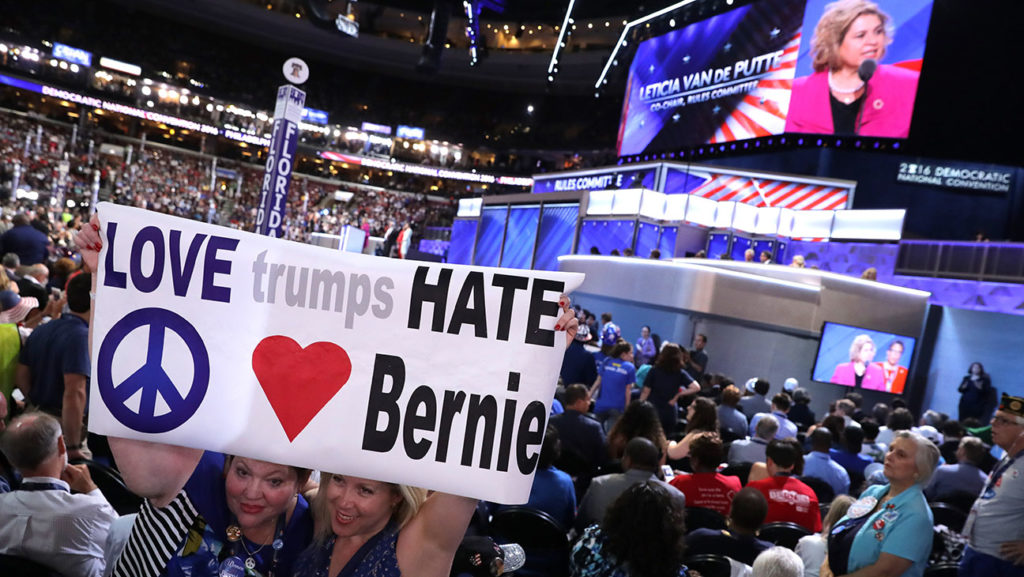
To say Day One of the 2016 Democratic National Convention was eventful, would be an understatement. Filled with drama and chants of “Bernie! Bernie!” interrupting speeches throughout the evening, the Democratic Party endeavored to move past the weekend’s email leak scandal where thousands of emails showing DNC officials were attempting to undercut Vermont Sen. Bernie Sanders during his primary campaign against presumptive nominee Hillary Clinton. Unity was supposed to be the theme of the first day, but it certainly didn’t feel that way Monday night. Tuesday the Party will continue to push forward with a day themed, “A lifetime of fighting for families,” and will highlight how Hillary has spent her career working to make a difference for children, families, and our country. Clinton will also formally become Party’s nominee pending a roll call vote. The list of Tuesday’s speakers: Bill Clinton: Former U.S. President Mothers of the Movement: Gwen Carr, mother of Eric Garner; Sybrina Fulton, mother of Trayvon Martin; Maria Hamilton, mother of Dontré Hamilton; Lucia McBath, mother of Jordan Davis; Lezley McSpadden, mother of Michael Brown; Cleopatra Pendleton-Cowley, mother of Hadiya Pendleton; Geneva Reed-Veal, mother of Sandra Bland. Nancy Pelosi: U.S. Congresswoman from California and House Democratic Leader Donna Brazile: Democratic National Committee vice chair of voter registration and participation Jason Carter: Former Georgia state senator Cecile Richards: President of Planned Parenthood Action Fund Jelani Freeman: Grew up in foster care and is a former intern in Hillary Clinton’s Senate office Thaddeus Desmond: child advocate social worker Dynah Haubert: a lawyer who works for a disability rights organization Kate Burdick: staff attorney at the Juvenile Law Center in Philadelphia. Anton Moore: runs a nonprofit community group that strives to bring awareness and educate youth on gun violence Dustin Parsons: a fifth grade teacher at an elementary school in Arkansas Students from Eagle Academy in New York, NY Joe Sweeney: a detective with the NYPD on September 11, 2001 Lauren Manning: one of the most catastrophically wounded survivors of 9/11 Ryan Moore: has spondyloepiphyseal Dysplasia dwarfism and has known Hillary Clinton since 1994
Viewers DNC Guide: Tuesday’s roll call says it all
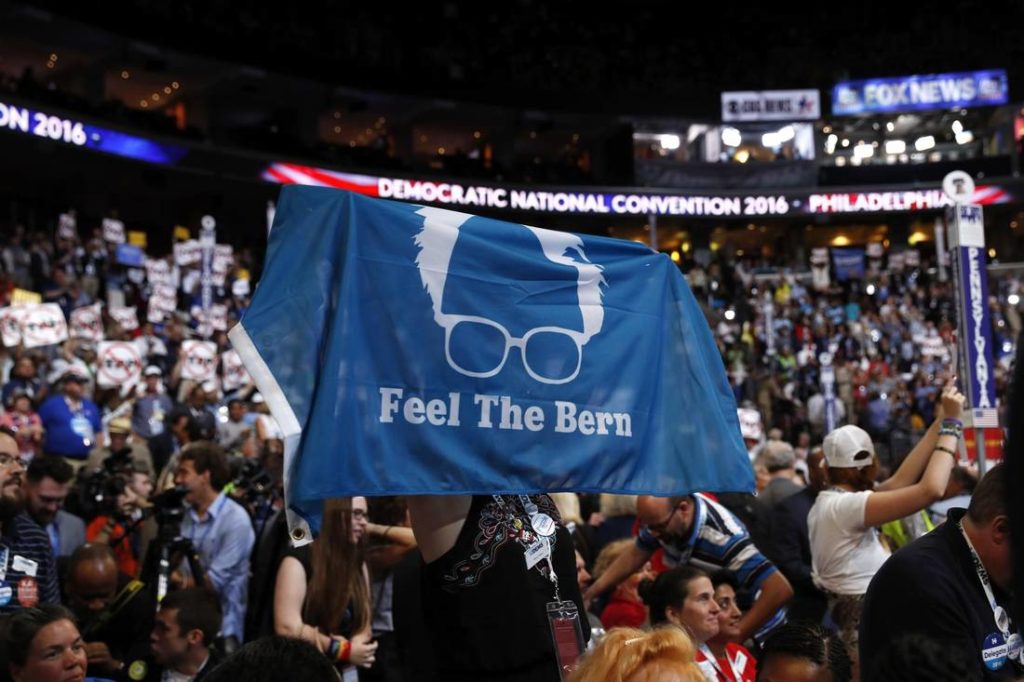
For all of the hoopla attached to a political convention, it all comes down to this: that moment when the presumptive nominee becomes the nominee outright. On Tuesday night, Hillary Clinton is to become the first woman presidential nominee of a major party. The result is foreordained, but the roll call of the states will nonetheless be an emotional coda for Bernie Sanders supporters whose passion and energy took the Vermont senator from fringe candidate to serious contender. Some things to watch for at the Democratic convention on Tuesday: ROLL CALL All of the energy and angst of the hard-fought primary battle between Clinton and Sanders will culminate in the roll call of the states. Each state delegation will get a chance to announce how its delegates are voting. Sanders delegates have pushed to have their votes fully tallied. Sanders has left open the possibility that Clinton could receive the nomination by acclamation — or unanimous nomination — at the end of the roll call. That may not satisfy his delegates. Some are ready to boo or even walk out if there is a unanimous nomination. In 2008, Clinton halted the roll call midway through to call for then-Sen. Barack Obama‘s approval by acclamation, or unanimous vote. FIRST DUDE The spouse of a presidential nominee always gets some love at a party convention. And Bill Clinton‘s speech Tuesday night will pique extra interest since he hopes to be the first first man. Bill Clinton also carries the extra title of ex-president and is a beloved figure to party faithful. But the former president carries with him the baggage of numerous scandals and investigations from his years in the White House. And Clinton, famously protective of his wife, can get in trouble when he gets carried away in defending her. Watch how he’s introduced: Hillary Clinton has joked that she’s still working on what to call her husband if she’s elected, offering “first dude” and “first mate” as possibilities. MOTHERS OF THE MOVEMENT Hoopla and celebration will give way to a somber moment when the convention showcases “mothers of the movement” — women whose children have died in gun violence. The speakers will include the mothers of Eric Garner and Michael Brown, both killed by police. The moment will not be without controversy: Philadelphia’s police union complained that Clinton was showcasing killings by police without giving equal time to the families of fallen officers. Clinton’s campaign responded that two members of law enforcement also are on the convention schedule. MANNERS, MANNERS Will they heed their leader? Sanders’ supporters are bringing a lot of emotion to the convention hall with them, and their leader is having trouble containing it. Sanders has sent out text messages and emails asking his supporters “as a personal courtesy” to him to “not engage in any kind of protest on the floor.” The Vermont senator said in an email that the movement’s credibility “will be damaged by booing, turning of backs, walking out or other similar displays.” Republished with permission of the Associated Press.
Democratic Convention: what to watch for on Day 1
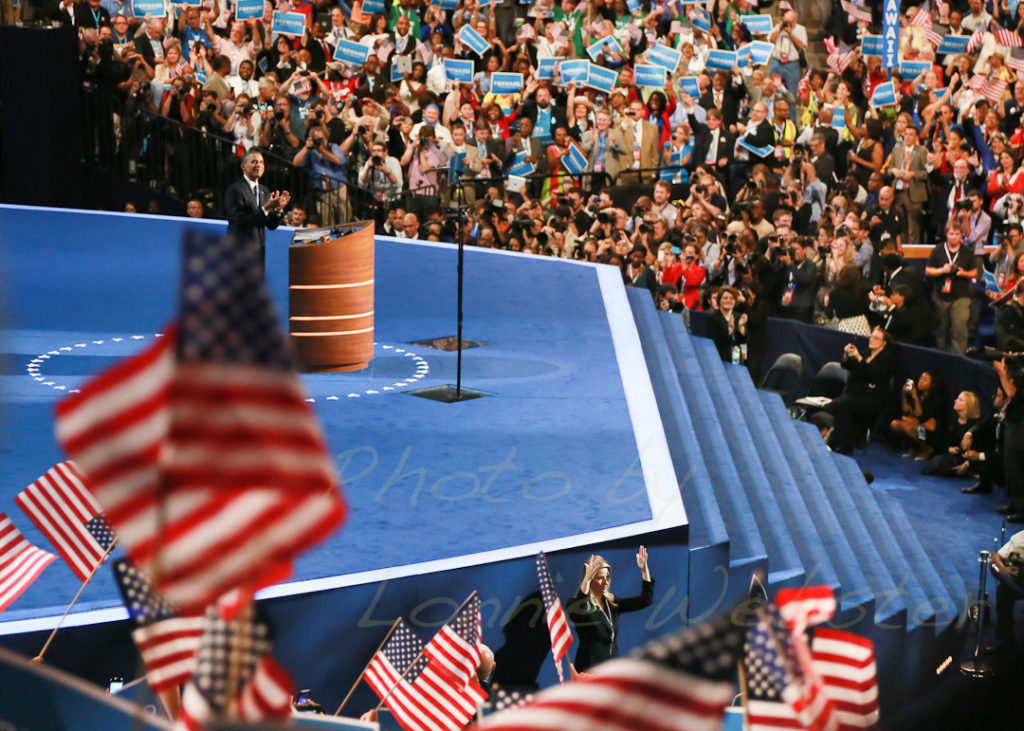
The Democratic National Convention — a four-day event where presidential hopeful Hillary Clinton is poised to officially be selected as the party’s presidential nominee — kicks off in Philadelphia Monday. Following suit of the Republican Convention just last week, Democrats wasted little time Monday showing that their party is just as dysfunctional and divided as their GOP counterparts. In the wake of Friday’s leak of thousands of emails showing DNC officials were attempting to undercut Vermont Sen. Bernie Sanders during his primary campaign against Clinton enraged his delegates and has led to large protests in the City of Brotherly Love. The leak also prompted the resignation of Democratic National Committee Chairwoman Debbie Wasserman Schultz. Monday morning the Florida Congressman was greeted with boos by delegates, and hours later she announced she would not gavel in the convention, recognition her presence on the stage would only further showcase Democrats’ deep divisions. Hoping to reunite the party behind Clinton, the DNC’s Day 1 theme will be “United Together” and will focus on putting the future of American families front and center, where speakers will advocate for building an economy that works for everyone, not just those at the top, and where everyone has a chance to live up to their God-given potential. The full list of Monday’s speakers: Pam Livengood: has been personally affected by the growing substance abuse epidemic Karla & Francisca Ortiz: an American citizen but her parents, including her mother, Francisca, are undocumented and live in fear of deportation Keith Ellison: Democratic U.S. Congressman from Minnesota Lily Eskelsen Garcia: National Education Association President Raul Grijalva: Democratic U.S. Congressman from Arizona Tina Kotek: Oregon House Speaker Mary Kay Henry: SEIU President Joe Kennedy: Democratic U.S. Congressman from Massachusetts Dan Malloy: Governor of Connecticut and Chair of the Democratic Governors Association Sean McGarvey: Building Trades President Jeff Merkley: U.S. Senator from Oregon Linda Sanchez: Democratic U.S. Congresswoman from California Lee Saunders: AFSCME President Randi Weingarten: American Federation of Teachers President Anastasia Somoza: an advocate for Americans with intellectual and developmental disabilities Astrid Silva: a Mexican immigrant who has who has benefited from Mr. Obama’s executive actions deferring deportation Richard L. Trumka: president of the AFL-CIO Elizabeth Warren: Democratic U.S. Senator from Massachusetts Bernie: Sanders: U.S. Senator from Vermont and Hillary Clinton’s chief rival for the Democratic nomination Michelle Obama: First Lady of the United States
Hillary Clinton’s turn: Guide to the Democratic National Convention
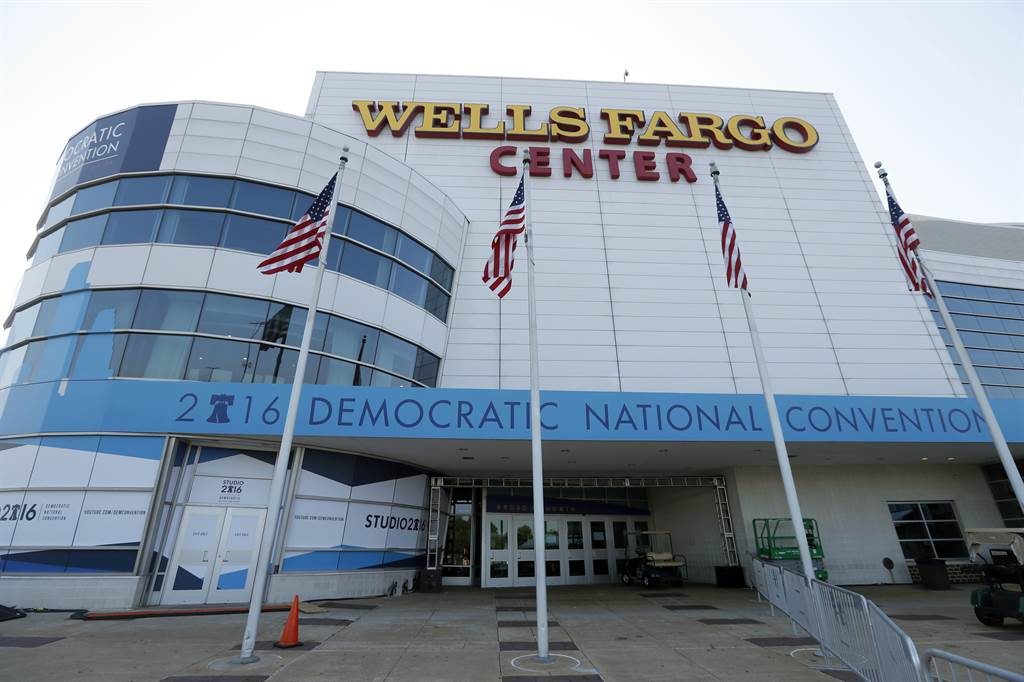
It’s Hillary Clinton‘s turn. The Democratic National Convention opening Monday in Philadelphia is Clinton’s chance to hit reset after a vigorous primary against Bernie Sanders and the unlikely movement that formed behind the Vermont senator. Sanders, a self-described democratic socialist, has endorsed Clinton, but many of his supporters have not. Some of them were dismayed by her choice of Sen. Tim Kaine, D-Va., as her running mate. Last week’s Republican National Convention in Cleveland exposed deep, lingering reservations about Donald Trump from within his own party. The Democratic gathering is expected to be a more smoothly choreographed display of unity among Clinton, Sanders and Democratic lawmakers and voters. What to know about the week: THE POINT Both parties use their national conventions to formally nominate candidates for president and vice president. Party leaders showcase their nominees, and the prime-time speeches by the candidates and prominent politicians win some of the largest television audiences of the campaign. That makes the convention a critical opportunity for a party to introduce its candidates to the country. Democrats also will adopt its platform, which lays out policy principles but has no binding effect. THE LOCATION The Wells Fargo Center, home to the NHL’s Philadelphia Flyers and the NBA’s Philadelphia 76ers, is the convention site. The arena has been transformed with stages, platforms, cameras and lights. Democrats are hoping that city’s historical role in the founding of American democracy will serve as a powerful backdrop for the themes they’ll highlight. WHO’S GOING More than 5,000 delegates are among the 50,000 people set to be in Philadelphia. They include alternates, lawmakers, special guests, journalists and protesters. Among the delegates, about 15 percent are superdelegates, mainly members of Congress and members of the Democratic National Committee. At the GOP convention, a striking number of prominent Republican lawmakers and party leaders were nowhere to be seen, including the party’s previous two presidents and its two most recent presidential nominees. In contrast, bold-name Democrats have been eagerly vying for a chance to speak in Philadelphia. Most Democratic senators and House members are expected to attend. THE SCHEDULE First lady Michelle Obama is set to speak Monday. That’s also when Sanders will give his speech — a closely watched moment for signs of whether his loyal supporters will line up behind Clinton, as he’s asked them to do. Former President Bill Clinton, the candidate’s husband, is the speech to watch Tuesday. A day later, President Barack Obama and Vice President Joe Biden come to Philadelphia. On Thursday, the final night, Chelsea Clinton will introduce her mother for her speech accepting the Democratic nomination. Kaine, who made his debut as Clinton’s running mate at a joint appearance Saturday, will give a speech introducing himself to the country. Officials haven’t yet said when, but the running mate typically speaks Wednesday. Other scheduled speakers are Massachusetts Sen. Elizabeth Warren, New Jersey Sen. Cory Booker, New York Mayor Bill de Blasio and House Minority Leader Nancy Pelosi. THE ENTERTAINMENT Shoop Dogg, Lady Gaga, Lenny Kravitz and Cyndi Lauper will appear in Philadelphia during the convention. Fergie will perform at The Creative Coalition’s gala. THE ROLL CALL States will get a chance to announce how their delegates are voting in the formal roll call Tuesday. It’s a high point for Sanders delegates; they’re pushing to have their votes fully tallied. In 2008, Clinton halted the roll call midway through to call for then-Sen. Barack Obama’s approval by acclamation, or unanimous vote. Sanders says he favors a state-by-state roll call, but he hasn’t indicated exactly what he will do. There’s a total of 4,763 delegates. It takes 2,382 to win the Democratic nomination. Clinton arrives in Philadelphia with 2,814 delegates to Sanders’ 1,893, according to an Associated Press count. That includes the superdelegates, who can vote for any candidate they choose. This year, those superdelegates overwhelmingly backed Clinton. The remaining 4,051 are pledged delegates, won by the candidates based on the results of state primaries and caucuses. THE PROTESTS If there are any fireworks in Philadelphia, expect them to come from Sanders supporters. They have said they plan to show up in full force. Philadelphia officials estimate between 35,000 and 50,000 people will demonstrate across the city each day. Activists have put the estimate higher, at roughly 100,000. Among the groups planning to demonstrate are gun control advocates, the group Occupy DNC Convention and Trump supporters from Pennsylvania. Republished with permission of the Associated Press.
