
Haley Barbour handicaps Donald Trump’s VP picks

The former head of the national Republican Party has plugged Newt Gingrich as one possible vice presidential pick for likely GOP presidential nominee Donald Trump. “I think of it as six words: Speaker of the House Newt Gingrich,” Haley Barbour said on Tuesday’s “Morning Joe” program on MSNBC. Barbour, a lobbyist, served as chair of the Republican National Committee in 1993-97 before becoming governor of Mississippi between 2004-12. Gingrich, Speaker of the U.S. House of Representatives in 1995-99, co-wrote the GOP’s “Contract with America” legislative agenda for the 1994 midterm election. He also unsuccessfully ran for the GOP presidential nomination in 2012. “There’s some obvious things like (Ohio Gov.) John Kasich,” Barbour said, according to a transcript. “Kasich says he’s not interested, but that’s normally the response of somebody who gets asked by the press or gets asked by somebody else. That’s different than being asked by the candidate, ‘Will you be my running mate?’” “But Newt is a bright, bright, bright guy,” Barbour added. “I think there are just some other geographical advantages with some other people. Marco Rubio, again, critical state, Florida. Popular guy. Very attractive, young.” New Mexico Gov. “Susana Martinez came up in the previous story,” Barbour said. “Outstanding governor in a tough state. Really a great person. So there are lots of choices.” Barbour, however, made clear he wasn’t “privy to any (inside) information”: “Newt is one of those people that’s on the list, apparently.”
‘Self-funded’ Donald Trump preparing to seek big-donor money
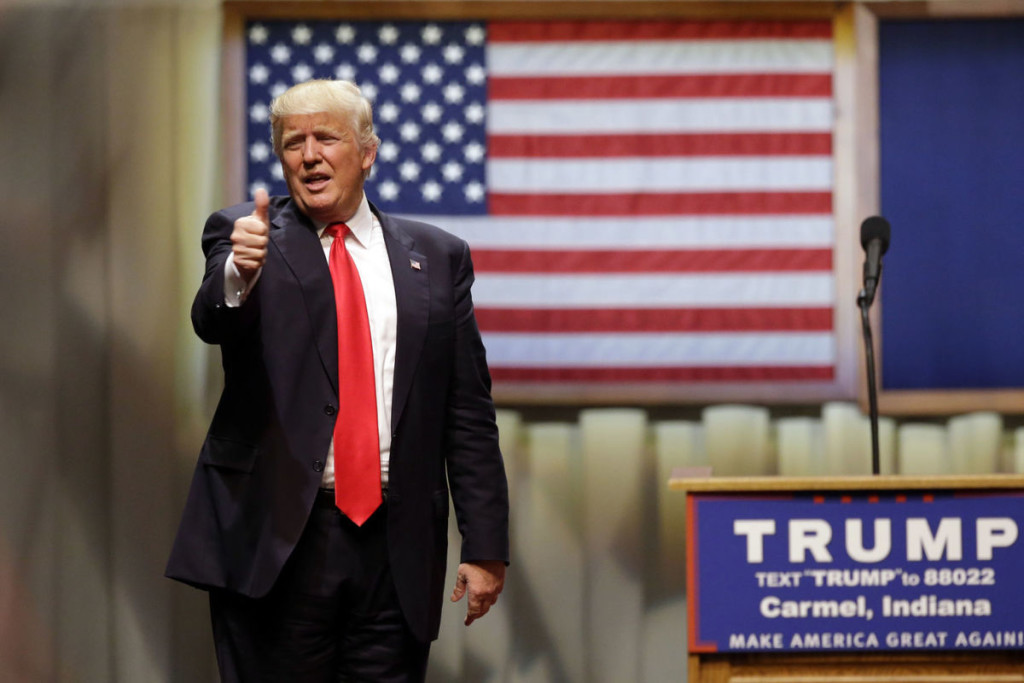
The billionaire presidential candidate who prides himself on paying his own way and bashed his competition for relying on political donors now wants their money — and lots of it. Donald Trump, the presumptive Republican presidential nominee, recently hired a national finance chairman, scheduled his first fundraiser and is on the cusp of signing a deal with the Republican Party that would enable him to solicit donations of more than $300,000 apiece from supporters. His money-raising begins right away. The still-forming finance team is planning a dialing-for-dollars event on the fifth floor of Trump Tower in New York, and the campaign is at work on a fundraising website focused on small donations. In addition to a May 25 fundraiser at the Los Angeles home of real estate developer Tom Barrack, he’ll hold another soon thereafter in New York. The political newcomer faces a gargantuan task: A general election campaign can easily run up a $1 billion tab. For the primary race, Trump spent a tiny fraction of that amount — he’s estimated $50 million of his own money, plus about $12 million from donors who sought his campaign out on their own. Trump told The Associated Press in an interview this week that he will spend minimally on a data operation that can help identify and turn out voters. And he’s betting that the media’s coverage of his rallies and celebrity personality will reduce his need for pricey television advertising. Yet he acknowledged that the general-election campaign may cost “a lot.” To help raise the needed money, he tapped Steven Mnuchin, a New York investor with ties in Hollywood and Las Vegas but no political fundraising experience. “To me this is no different than building a business, and this is a business with a fabulous product: Donald Trump,” Mnuchin said in an interview at a financial industry conference in Las Vegas. Trump’s new national finance chairman said prospective donors are “coming out of the woodwork” and he’s been fielding emails and phone calls from people he hasn’t heard from in 20 years. More experienced fundraisers are coming aboard, too, such as Eli Miller of Washington, Anthony Scaramucci of New York and Ray Washburn of Dallas. All three helped raise money for candidates Trump defeated in the primary. To convey the amount of work needed to vacuum up money, Scaramucci, part of 2012 GOP nominee Mitt Romney’s finance team, recently shared Romney’s old fundraising calendar with Trump. He said Trump was receptive to a schedule that has 50 to 100 fundraisers over the summer. Scaramucci said he didn’t expect Trump to grovel for donors. “But is he going to say thank you and be appreciative? Of course. He’s very good one-on-one. He’s a hard guy not to like.” Trump’s dilemma: By asking for money, he could anger supporters who love his assertion that he’s different from most politicians because he isn’t beholden to donors. He’s tried to navigate these tricky waters by saying he wants only to raise money to benefit the party and help elect other Republicans. But his planned joint fundraising agreement with Republican officials also provides a direct route to his own campaign coffers. Such an arrangement could work like this: For each large contribution, the first $2,700 or $5,400 goes to Trump’s campaign, the next $33,400 goes to the Republican National Committee, similar amounts could go to national party accounts and the rest is divided evenly among various state parties the candidate selects. Democrat Hillary Clinton set up such a victory committee in September, and it had collected $61 million by the end of March. She also counts on several super PACs. They’ve landed million-dollar checks from her friends and supporters and already scheduled $130 million in TV, radio and internet ads leading up to Election Day. Trump is only now beginning to turn his attention to this kind of big money. A decision on how fully to embrace outside groups is fraught with possible charges of hypocrisy, since he has called them “corrupt.” Still, wealthy Trump supporters have several options. On Thursday, Doug Watts, former communications director for Ben Carson’s 2016 bid, said he’d started a group called the Committee for American Sovereignty. Its advisers include former Trump resorts executive Nicholas Ribis Sr. and longtime GOP donor Kenneth Abramowitz. The group aims to raise $20 million before the GOP convention in July. Another entity, Great America PAC, has struggled to get off the ground but hopes to raise $15 million to $20 million in the next few months, said its chief fundraiser, Eric Beach. The group recently brought on Ronald Reagan‘s campaign manager Ed Rollins, whom Trump has praised. The super PAC raised more than $450,000 last month, its fundraising reports due next week to the Federal Election Commission will show. But it had not yet generated enough cash to cover the more than $1 million in satellite TV ads it has booked. In June, Rollins will go to the Texas ranch of billionaire oil investor T. Boone Pickens, who said Wednesday he intends to help finance Trump’s effort. While that meeting is not a fundraiser, it’s an opportunity for the super PAC to make a pitch to Pickens and his wealthy friends. One Trump emissary to the world of major donors is billionaire investor Carl Icahn, who made calls to Pickens and others to gauge their interest in Trump. Some are biting, either because of support for Trump or a desire to keep Clinton out of office. Among the latter group is Stanley Hubbard, a Minnesota broadcast billionaire who spent money trying to “stop Trump.” Having failed in that quest, he said he’s prepared to write a check to stop Clinton. Republished with permission of the Associated Press.
Donald Trump says he’s narrowed potential VPs to 5 or 6 experienced politicians, has not ruled out Chris Christie
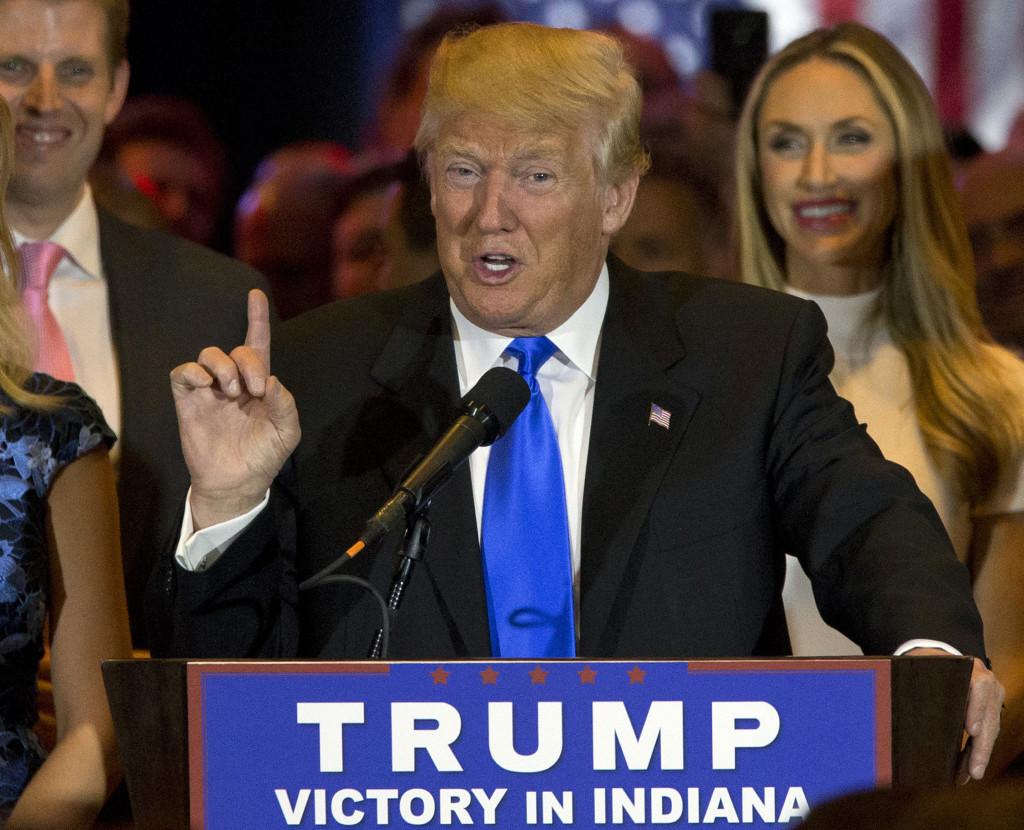
Donald Trump, the Republicans’ presumptive presidential nominee, says he’s narrowed his list of potential running mates to “five or six people,” all with deep political resumes. He says he has not ruled out New Jersey Gov. Chris Christie, a former rival who has embraced the billionaire’s campaign with gusto. “I have a list of people that I would like,” Trump said Tuesday in an interview with The Associated Press. The real estate mogul and former reality television star said he’s giving special weight to political experience because he wants a vice president who can help him “with legislation, getting things through” Washington if he wins the White House. “We don’t need another business person,” said Trump, who touts himself as one of the best in that category. He also said choosing a person who’s previously held elected office would help with the process of looking into the person’s background, in part because that person already would have been checked out by voters, the news media and to some extent the government. “For the most part, they’ve been vetted over the last 20 years,” he said. If he selects a military or business person, he said, “the vetting is a whole different story. Whereas the politicians are, generally speaking, pretty well vetted.” Trump would not reveal the full list of possible running mates, but said his decision this week to appoint Christie to head his White House transition team did not mean the New Jersey governor was out of consideration. “No, not at all,” he said. Trump’s vice presidential pick could be crucial to easing the concerns of Republicans who worry about their presumptive nominee’s lack of political experience, as well as his temperament to serve as commander in chief. Tapping a political insider would also be a way for Trump to signal a willingness to work with the party establishment he has thoroughly bashed throughout the primary. Former Texas Gov. Rick Perry and former Arizona Gov. Jan Brewer are among the Republicans who have suggested they would be open to joining Trump on the GOP ticket. Others, including Trump’s former primary rival Marco Rubio, have ruled out being considered. “I have never sought, will not seek and do not want to be considered for vice president,” the Florida senator wrote in a Facebook post Monday. Trump’s campaign manager, Corey Lewandowski, has been chosen to run the vetting effort “with a group” that includes former rival Ben Carson and Trump himself, he said. “Honestly, we’re all running it. It’s very much a group effort,” said Trump, adding that he’s in no rush to announce his pick. “I do think I don’t want to make a decision until the actual convention. Not even before it. I mean until it,” he said. Republished with permission of the Associated Press.
Donald Trump fires back after Paul Ryan withholds support
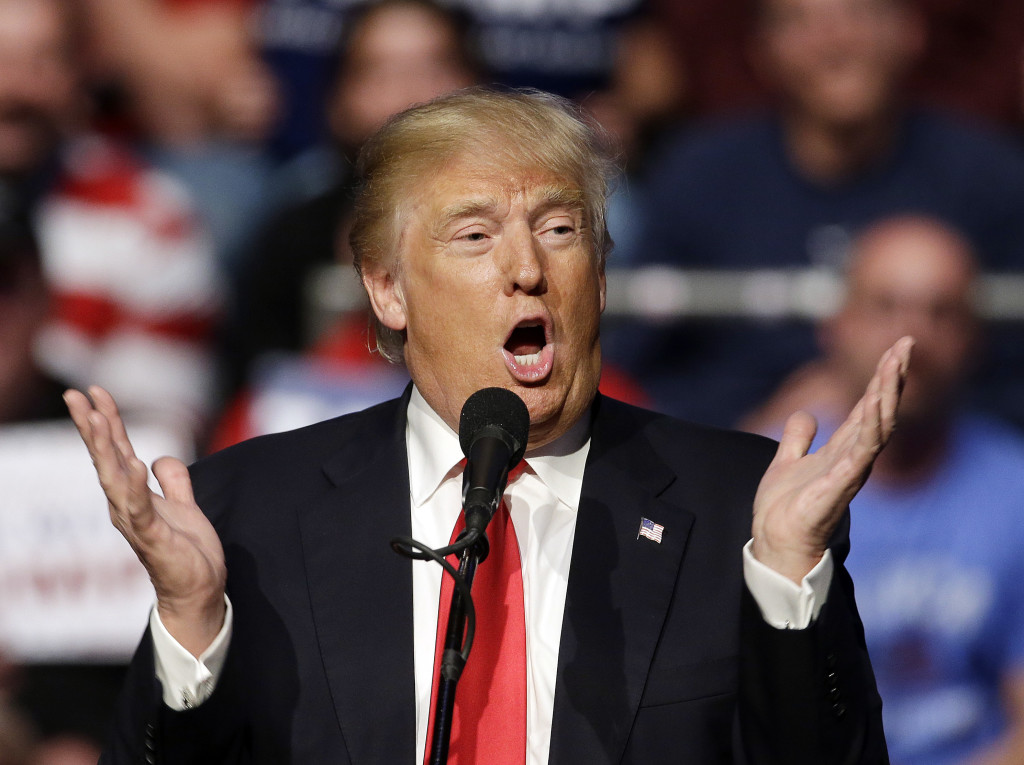
Donald Trump says he’s “not ready to support” House Speaker Paul Ryan‘s agenda after the country’s top elected GOP official said he’s not ready to back Trump as the party’s presidential nominee. In a statement released by his campaign, Trump says, “Perhaps in the future we can work together and come to an agreement about what is best for the American people.” Trump says Americans have been “been treated so badly for so long that it is about time for politicians to put them first!” Ryan said on CNN earlier Thursday that he’s “just not ready” to support Trump’s candidacy, even though the billionaire businessman is the presumptive GOP nominee. The statement from the popular Ryan is further evidence of how much resistance remains inside the party to Trump’s candidacy. Republished with permission of the Associated Press.
Poll: Americans have an unfavorable view of the GOP
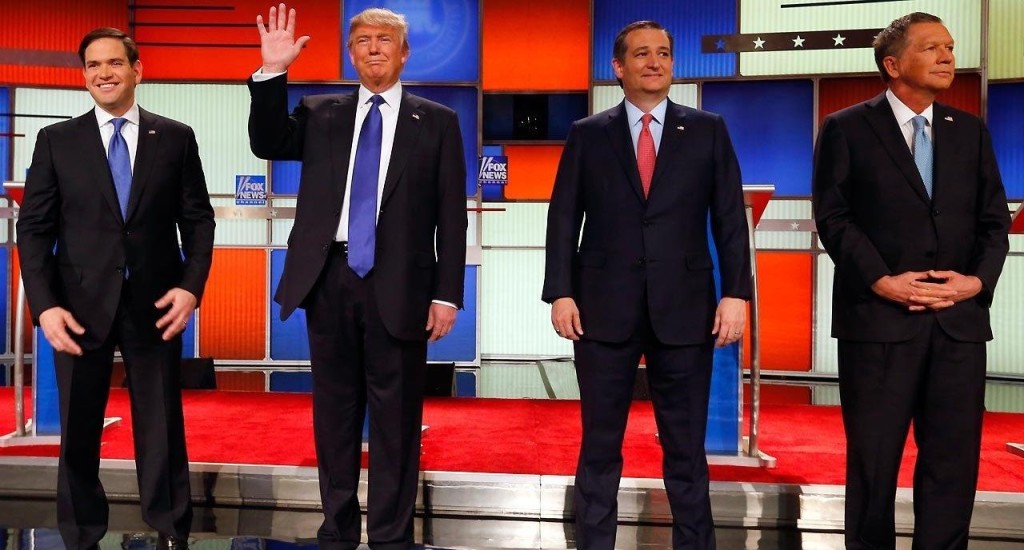
The Republican Party may have an image problem. According to a report by the Pew Research Center, 62 percent of Americans have an unfavorable view of the Republican Party. That’s up since October, when 58 percent of people said they had an unfavorable view of the GOP. The survey found 33 percent of the public has a favorable impression of the Republican Party. When it comes to the Democratic Party, 50 percent of adults said they had an unfavorable opinion of the party; while 45 percent of adults said they had a favorable opinion. The national survey of 2,008 adults found Democrats had a far more favorable impression of their party than Republicans. The study found 88 percent of Democrats viewed their party favorably, while 68 percent of Republicans had a favorable opinion of their party. When it comes to independents, 28 percent have a favorable opinion of the GOP. Of those independents who consider themselves Republican-leaning, 50 percent have a negative view of the party. The survey, conducted April 12 through April 19, found that 37 percent of independents had a favorable impression of the Democratic Party; while 63 percent of Democratic-leaning independents had a favorable view of the Democratic Party. “Overall, a quarter of the public now expresses unfavorable opinions of both political parties,” the report said. “This is driven in part by the growing share of Republicans and Republican leaners who view the GOP negatively, and by the overwhelming shares in both parties who view the opposing party unfavorably.” According to the report, the negative ratings in both parties are “higher today than in previous presidential election years.” Seven percent of adults had unfavorable opinions of both parties in 2000; while 18 percent of adults viewed the parties unfavorably in 2012.
Republican donors deny Ted Cruz, John Kasich needed funds, data show

It seems like a logical pairing: Republican donors who despise Donald Trump, and two GOP presidential hopefuls sticking it out to keep him from the nomination. Yet such a financial cavalry never arrived for Ted Cruz and John Kasich, ignoring their impassioned pleas for financial help. Donors who gave as much as allowed by law to establishment darlings Jeb Bush or Marco Rubio have mostly disappeared from the political landscape, according to an Associated Press analysis of campaign finance records. Less than 3 percent of the nearly 14,600 donors who gave the $2,700 limit to Bush or Rubio have also ponied up the maximum amount to Kasich or Cruz. By not writing those checks, they’re depriving Cruz and Kasich of as much as $39 million each in their final push to topple Trump, who has formidably deep pockets and has loaned $36 million to his own campaign. Trump trounced his competitors in Tuesday’s elections, putting him in a stronger position to win the nomination outright in the next six weeks of voting. The quest to stop him has grown so dire that Cruz on Wednesday took the unusual step of announcing a running mate, Carly Fiorina. Earlier, he and Kasich agreed to divide up some remaining primary states to improve their chances of beating Trump. But donors’ continued shunning of Cruz and Kasich is one reason they haven’t had more success. “There are a significant number of major fundraisers in the Republican Party whose networks are exhausted and donors who are worn thin emotionally from the effort they made for a candidate who is no longer in the race,” said Wayne Berman, a longtime Republican fundraiser. “That combination has led to many, many people sitting on the sidelines.” He’s speaking from experience. Berman was the national finance chairman for Rubio and chose not to raise money for any other candidate after the Florida senator dropped out March 15. Both Kasich and Cruz have feverishly pitched themselves to donors as the candidate best able to unify the party. It has been a particularly tough fit for Cruz, a first-term Texas senator who has made his name as an unrelenting conservative fighter — even against those in his own party. He’s had a healthy core of his own donors, including roughly 3,900 who have given the maximum amount. In fact, Cruz is the best Republican campaign fundraiser of the 2016 cycle, and started April with $8.8 million cash on hand. Still, this critical stage of the race has called for extra outreach, particularly with expensive contests such as California coming up and Cruz in need of better primary performances to derail Trump. Cruz has stepped up his requests of donors who might not have otherwise considered him. He and his wife, a Goldman Sachs manager on leave, talked to New York financiers last week at the Harvard Club of New York City. They’re seldom responding, AP’s analysis shows. Through the end of March, just 186 Bush-Rubio maxed-out donors gave the maximum to Cruz. Fred Zeidman, a Houston-based fundraiser for Bush’s failed bid, is one of them. He said he felt he “owed” the donation to Cruz because of his strong support of Israel, Zeidman’s top issue. “I wanted to show him my appreciation for that,” Zeidman said. Still, Zeidman said he can understand why lots of former Bush and Rubio donors are reluctant. “At this point, many of them feel like the main objective should be to beat the Democratic nominee, so they’re keeping their powder dry until the general election, in effect just letting the primary system sort itself out,” he said. Kasich, the governor of Ohio, has attracted 174 maxed-out donors who also gave the maximum to Bush and Rubio. He’s won over some of the party’s top female donors, including Anna Mann, Rupert Murdoch’s ex-wife; Lynne Walton, a Wal-Mart heiress; and Helen DeVos, wife of Amway founder Richard DeVos. But Kasich has been in desperate need of more donors willing to give as much as they can. He started April with just $1.2 million cash on hand. The AP analysis is based on reports of campaign contributions filed with the Federal Election Commission from the beginning of the 2016 presidential election cycle through the end of March. The AP looked at donors who gave the maximum primary amount to Bush or Rubio with those who had given the maximum primary amount to the Democratic and Republican candidates still in the race, comparing each donor’s name, city, state and zip code. Because the analysis excluded donors if any of the information didn’t match, it could result in a slight undercount. The analysis revealed another troubling finding for Cruz and Kasich: Democratic front runner Hillary Clinton attracted about the same number of Bush-Rubio donors as did their campaigns. About a dozen Bush-Rubio donors have also given to Trump. A tiny core of 15 Bush-Rubio donors continued to hedge their bets by maxing out to both Cruz and Kasich — continuing their spread-the-love approach this election cycle. Stanley Hubbard, a billionaire Minnesota broadcast executive, has doled out checks of $2,500 or more to Scott Walker, Jeb Bush, Marco Rubio, Ben Carson, Carly Fiorina, Chris Christie and John Kasich. Of his multi-layered giving, Hubbard told the AP a few months ago that he wanted anyone other than Trump or Cruz at the top of the GOP ticket because he saw either of them as devastating for the party’s down-ballot prospects. Trump’s continued dominance led him to revise that view: He gave Cruz a check of $2,700 on March 31. “He’s not my first choice, no,” Hubbard said last week. He said he has no regrets about his heretofore fruitless campaign gifts. “Not a bit. When you give to politicians, sometimes you lose. That’s the way it works.” Republished with permission of the Associated Press.
The ballad of Jeff Sessions and Donald Trump
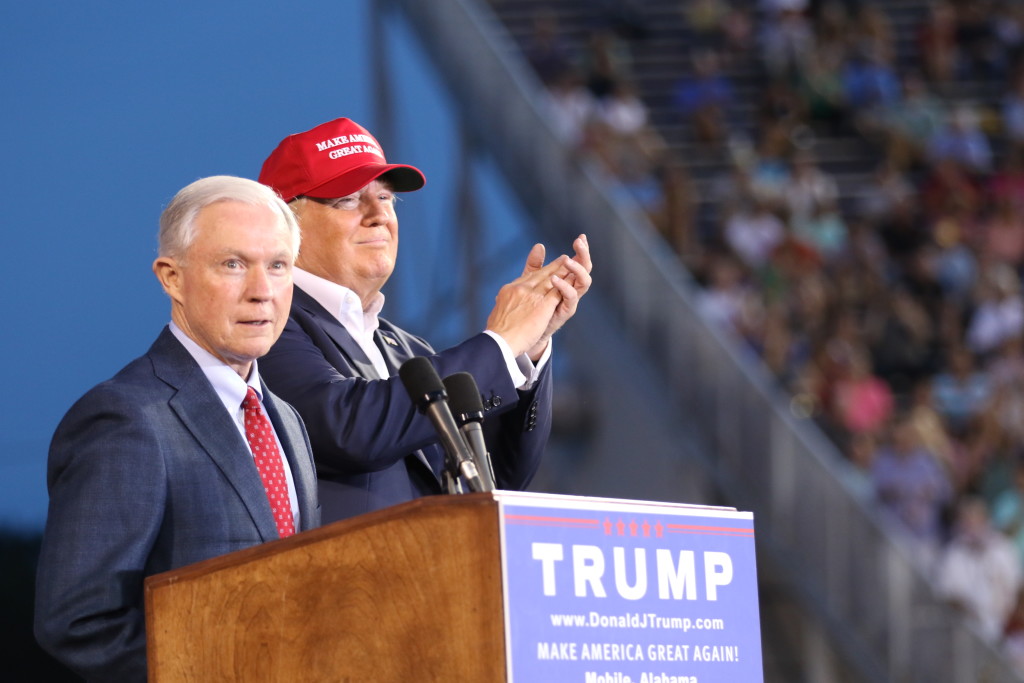
U.S. Sen. Jeff Sessions and Donald Trump go way back. How, exactly? The United Nations of course, writes Elise Viebeck of the Washington Post. As Viebeck explains, a $1.2 billion proposed renovation of the U.N.’s New York City headquarters brought the two men together in opposition. Trump, whose Trump World Tower is across the street from the building, sharply criticized the move saying the organization was “a mess,” and that the 10-figures project was “unnecessary.” Sessions — no fan of the U.N. either — heard about Trump’s views and looked him up: [T]he Alabama Republican and former Sen. Tom Coburn (R-Okla.) invited him to come to Washington to talk about building renovation and air his criticism of the U.N. project at a Senate subcommittee hearing. The result was the best congressional testimony Sessions says he had ever heard. Even now, as Trump’s sole Senate endorser and the heart of his presence in Washington, Sessions loves telling the story. That’s partly because he likes to do his Trump impression. “Y’all are gettin’ taken to the cleaners!” Sessions said while mimicking Trump in a recent interview, his accent drifting somewhere between Queens and the Alabama Gulf Coast. “There is no way it should cost that much! … If you give it to me, I’ll save you a billion dollars!” The relationship persists, writes Viebeck, and culminated in Sessions’ endorsement of Trump despite Texas Sen. Ted Cruz‘s aggressive wooing of Sessions. Their rapport has also come to have a personal basis, political affinities aside: Eleven years have passed since that hearing, and sitting in his office on Capitol Hill, Sessions can’t suppress his natural affection for Trump. So perhaps it’s no surprise that the ultra-conservative southerner has become Trump’s main man in Washington as the leading presidential campaign careens toward the Republican convention. “I think he can win, and I believe he will,” Sessions said. “He will need to continue to flesh out the details of his policies. But his instinctive response to Americans’ current situation has been pretty darn good.” Sessions described why he thinks Trump appeals to a large swath of voters that are seemingly his opposite — neither rich nor well-educated — and why his ostentatious lifestyle and private jet don’t put off supporters. “I do think it’s one of the charms he has. It’s more of a blue-collar attitude, but he is so proud of that plane!” Sessions said. “He doesn’t try to be cool, like, ‘I’m a rich person.’ He says, ‘Let me show you this, let me show you that!’ He takes you around and he wants to show you his towers.” Could Sessions even be a VP pick for Trump, who has said he wants a consummate insider to help balance his outsider, populist-driven style? Don’t count it out, writes Viebeck: A Trump-Sessions ticket would permanently link the political odd couple, with their collision of North and South, brash and mild, business and politics. But the two are already joined by their controversial drive to pull the GOP — and through it, the country — toward nativism on immigration, trade and foreign policy. “Sessions and Trump are united in the conviction that public policy in the United States should be tailored toward the interests of American citizens,” said Stephen Miller, a longtime Sessions aide who departed for Trump’s campaign in January. “That should be a non-controversial thought, but it is not in our politics today.”
Outside groups deal themselves in for GOP delegate game

After burning through millions of dollars in a mostly failed attempt to sway Republican primary voters, big-money outside groups opposing Donald Trump have turned to a far smaller target audience: the delegates who will actually choose the presidential nominee. Our Principles, which is devoted to keeping Trump from winning, and super PACs backing Ted Cruz and John Kasich are spending their time and money researching the complex process of delegate selection and reaching out to those party insiders. None of the groups have put up ads for Tuesday’s New York primary. Delegates are the people – typically longtime Republicans and state party activists – who will have their say at the GOP convention this summer in Cleveland if Trump does not lock up the nomination first in the remaining voting contests. The hot pursuit of such low-profile people by outside groups is yet another unprecedented twist in a history-defying presidential primary season. The delegate focus comes after the groups’ earlier efforts turned out to be money not particularly well spent. GOP-aligned groups spent at least $218 million on presidential television and radio ads, according to advertising tracker Kantar Media‘s CMAG. In one example, last month Our Principles put $2.3 million into ads trying to persuade Florida voters to ditch Trump, but he won the state anyway. “At this stage, the delegate fight is the most important part of the race,” said Tim Miller, a spokesman for Our Principles. “The work we’re doing on it is how we get the biggest bang for our buck.” The Trump, Cruz and Kasich campaigns all pay specialists to help them with their own delegate strategy. Yet the outside groups can’t resist crafting a role for themselves. By law, candidates cannot direct their helpful super PACs on how to spend money on paid communications. However, candidates and the outside groups keep a close eye on what the others are doing. At a donor event last weekend at the Venetian casino resort in Las Vegas, pro-Cruz super PAC officials explained to a rapt audience how they are diving into data about Republican delegates. That super PAC event took place on the same floor as a Cruz campaign finance event, which delved into similar material. Douglas Heye, a former communications director for the Republican National Convention, said the organizational nature of a potential delegate fight plays into Cruz’s strengths. The Texas senator has cultivated relationships with conservative leaders across the country. Now they’re helping him woo delegates. “Cruz hasn’t done things in haphazard fashion,” said Heye, who opposes Trump but is otherwise unaligned. “It takes a real team and the hard work of surrogates and coalitions to succeed at mastering the process in all 50 states.” New Day for America, a super PAC backing Kasich, is “executing a delegate outreach strategy,” said spokeswoman Connie Wehrkamp. She declined to give details. — THE FREE AGENTS There are two phases to this fight for delegates. The first involves free agents in states where voters don’t have a say. Each time an anti-Trump delegate is selected, it gets a little harder for the front-runner to reach the 1,237 he needs to avoid a contested convention. Our Principles has keenly focused on these delegates, who hail from North Dakota, Colorado and Wyoming. The group began reaching out via online advertising back in February, Federal Election Commission filings show. It then worked the phones and mailed literature. Finally, at the state convention site in Colorado Springs last weekend, three of its paid employees and about a half-dozen volunteers distributed “voter guides” likening Trump to President Barack Obama. In both Colorado and North Dakota, Trump was shut out of delegates. Wyoming selects delegates this weekend. — POTENTIAL CONVERTS If Trump can’t win outright, most of the delegates who are initially pledged to him by state rules gain the freedom to vote at the convention for whomever they choose. That’s why the three candidates are looking to make friends with them. Incidentally, there are few rules limiting the ways candidates and outside groups can influence the delegates, Republican election lawyers say. So it’s easy to imagine a deep-pocketed super PAC paying for delegates’ accommodations in Cleveland and giving them other perks. Our Principles’ Miller said the group is assessing what it will do in this second phase of the delegate hunt. Another Trump opponent, the Washington group Club for Growth, has also at least temporarily stopped its TV ads. Spokesman Doug Sachtelben said that while it hasn’t done anything with delegates yet, “nothing is off the table.” Pro-Trump forces are also keen to get into the game. “We’re running ads and a data program to fill as many delegate slots as we can with delegates who like Trump,” said Jesse Benton, a spokesman for Great America PAC. The group has reported to the FEC its plans to spend more than $1 million in ads across the country – some aiming to whip up anger about a potential contested convention. “Donald Trump will have the most delegates by a wide margin, but the GOP establishment is determined to deny him the nomination in any way possible, even if it means a contested convention,” a narrator says in one. Callers are asked to give money to the super PAC as a show of support for Trump. Republished with permission of the Associated Press.
Donald Trump campaign: manager “absolutely innocent” of assaulting reporter

The Donald Trump campaign issued a swift response to the criminal charges which came down on campaign manager Corey Lewandowski on Monday, saying he is “absolutely innocent” of misdemeanor battery. Police allege Lewandowski grabbed former Breitbart reporter Michelle Fields at a press conference in Florida earlier this month after Fields attempted to ask Trump a question. According to first-hand accounts of the incident, Fields was “clearly roughed up” and fell to the ground after Lewandowski grabbed her by the arm. “Mr. Lewandowski was issued a Notice to Appear and given a court date. He was not arrested. Mr. Lewandowski is absolutely innocent of this charge,” read the Trump campaign’s statement. “He will enter a plea of not guilty and looks forward to his day in court. He is completely confident that he will be exonerated.” The campaign added Lewandowski is represented in the case by attorneys Scott Richardson of the law office of Scott N. Richardson, P.A. in West Palm Beach, and Kendall Coffey of Coffey Burlington in Miami, and that all inquires regarding the suit should be directed to counsel. Lewandowski turned himself in to police early Tuesday morning. Fields quit her post at Breitbart, a conservative online publication, citing a lack of support from the site’s leadership amid her ordeal.
Donald Trump scrambles to address delegate fight
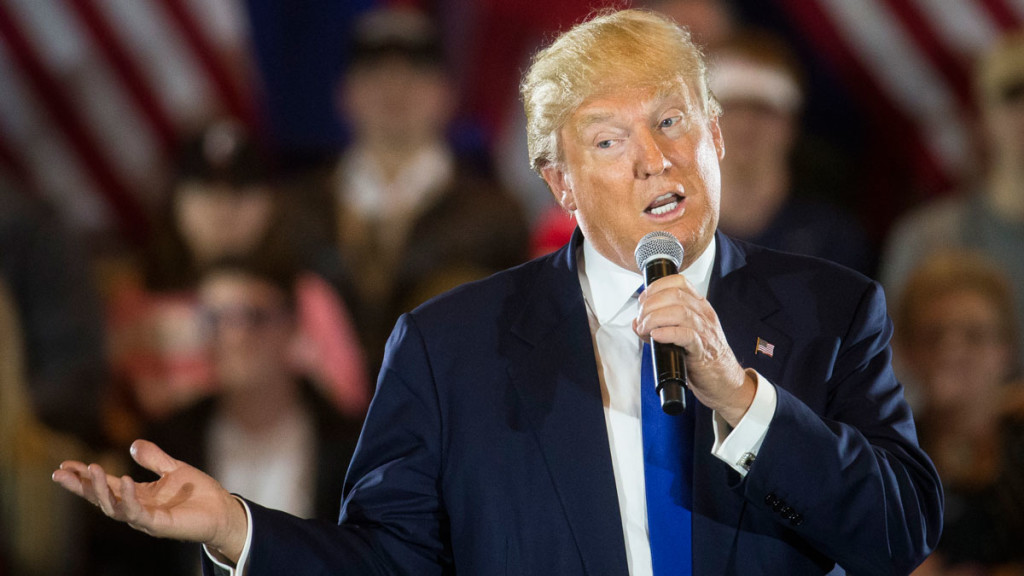
He is the Republican Party’s undisputed front-runner, yet Donald Trump‘s White House aspirations may now depend on a messy fight for delegates he is only now scrambling to address. Trump’s campaign on Monday vowed to pursue legal action against the Republican National Committee to protect his recent victory in Louisiana, one of many states that feature complicated rules allowing campaigns to influence the presidential nominating process weeks or months after their votes have been counted. A similar process plays out nationwide every four years. Yet Trump’s outsider candidacy is so far driven largely by media coverage instead of the on-the-ground organization that rival Ted Cruz boasts. Now, Trump must play catch up — especially in the chase for delegates previously bound to former candidate Marco Rubio. “A lot of Trump’s support has been through earned media, so you haven’t had the need to really focus on that aspect of it,” said Jason Osborne, one of several former Ben Carson aides tapped in recent weeks to undertake Trump’s delegate outreach. “But that doesn’t mean you can’t get up to speed pretty quickly on it.” Indeed, Trump’s campaign on Tuesday will announce plans to open a Washington, D.C. office to run its delegate operation and congressional relations team, said campaign senior adviser Barry Bennett. In addition to the new space, Bennett said Trump has hired a veteran political operative to serve as the campaign’s convention manager. Paul Manafort, a seasoned Washington hand with decades of convention experience, will oversee the campaign’s “entire convention presence” including a potential contested convention, said Bennett. The move marks a major escalation in Trump’s willingness to play by party rules and build alliances in a political system he has so far shunned. It comes as Trump faces a Republican nomination battle that will almost certainly extend until the final day of primary voting on June 7 — or even to the party’s July national convention in Cleveland — if he fails to secure the delegate majority needed to become the presumptive nominee. In a campaign season so far defined by extraordinary insults and extreme rhetoric, the 2016 Republican presidential nomination fight could ultimately be decided by lawmakers, party activists and lawyers. Selecting the people who will be delegates at the national convention is a tedious process governed by rules that vary from state to state. In some states, like New Hampshire and California, the candidates submit slates of delegates — actual people who would presumably be loyal at a contested convention. In states like Louisiana, Iowa, Nevada and many others, delegates are selected at state and congressional district conventions and caucuses. To prevent mischief, the national party adopted a rule requiring delegates to vote, on the first ballot at the convention, to vote for the candidate who won them. “Honestly, I’m new to the operation. It’s obviously not perfect,” said Trump aide Ed Brookover, who was Carson’s former campaign manager. Brookover vowed Trump would have “an active presence” at every one of the upcoming lower-profile conventions and caucuses where delegates are selected. That includes this weekend’s state convention in North Dakota, where 25 delegates will be selected. All of them — in addition to the state’s three national committee members — will be free to support the candidate of their choosing at the GOP’s national July convention. Carson himself will appear in North Dakota on Trump’s behalf, Brookover said, as part of outreach efforts that include hospitality suites for delegates, campaign surrogates, parliamentarians and support staff for all upcoming contests. It takes 1,237 delegates to win the Republican nomination. Trump, with 739 delegates, is the only candidate with a realistic path to clinching the nomination by the end of the primaries on June 7. Rubio’s recent exit gave Trump’s rivals an opening to help make his path harder. Most delegates are free to support the candidate of their choice if their preferred candidate drops out. The Florida senator suspended his campaign earlier in the month after accumulating 166 delegates — a trove that Cruz’s campaign is aggressively courting. A dispute in Louisiana highlights Trump’s challenge. Rubio won five delegates in Louisiana’s March 5 primary, people who became free agents after he suspended his campaign. At Louisiana’s subsequent GOP convention, Cruz’s campaign secured all of Rubio’s delegates, as well as five others who were uncommitted. As a result, Cruz could end up with more delegates from Louisiana, even though Trump narrowly won the state’s popular vote. Bennett said the campaign would formally challenge the certification of Louisiana’s delegates during the Republican National Committee’s summer meeting. Trump is most upset, he said, that Cruz’s campaign pushed its Louisiana supporters onto the national convention’s powerful rules committee. Bennett predicted Trump would accumulate 1,460 delegates before the convention, making legal action unnecessary. That’s more than enough to claim the nomination outright even if Cruz successfully peels away some of his support in the coming months. Louisiana GOP executive director Jason Dore, one of the uncommitted delegates for the state, acknowledged Cruz has had a stronger ground game in Louisiana than Trump and has worked on attracting delegates since the beginning. As for the threat of a lawsuit, Dore said: “I don’t know who he’d be suing because these 10 delegates are free to support whoever they want under the rules. The party or I can’t force them to vote any way.” He said the delegate allocation formulas were crafted in compliance with the RNC. “We consulted with the RNC and followed their advice,” Dore said. Republished with permission of the Associated Press.
Marco Rubio donors to remain secret indefinitely
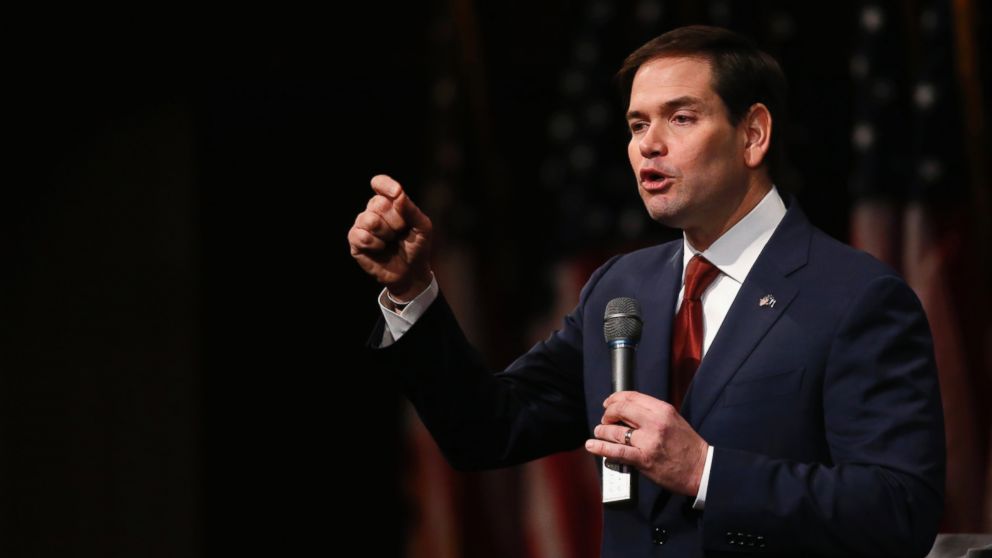
Much was made of Jeb Bush‘s relentless maneuvering when it came to early fundraising, but the actual dark money pioneer of 2016 may well be U.S. Sen. Marco Rubio. As Shane Goldmacher writes in POLITICO, the Florida senator’s top moneymen allies at Conservative Solutions Project managed to stake out a novel arrangement that will allow the sources of more than $10 million in funding for opposition research, mailers, and TV ads will remain forever unknown to the public. “It is now the model for a how a candidate can inject unlimited, secret, corrupting money into their campaigns to benefit their election,” said Fred Wertheimer, president of Democracy 21, a campaign watchdog group. “That is precisely the kind of model that we do not need in America.” The pro-Rubio nonprofit, known as the Conservative Solutions Project, was created in early 2014 and run by some of the same political operatives who would later lead for his super PAC, including South Carolina strategist Warren Tompkins. Both groups can accept unlimited donations from donors, but unlike like the super PAC, the nonprofit can keep its contributors hidden from the public — permanently. The Conservative Solutions Project operates under the “social welfare” 501(c)4 section of the tax code, which requires such groups not be primarily involved in political matters. The pro-Rubio nonprofit has claimed not to be directly involved in electoral politics. Yet the group paid for a raft of polling and research in the early primary states of Iowa, New Hampshire and South Carolina, as well as in Rubio’s home state of Florida. It bought millions in TV ads that aired in those early states, and it filled the mailboxes of Republican voters there with pro-Rubio literature. In fact, the Conservative Solutions Project was the second biggest TV advertiser of the 2016 campaign last year — trailing behind only Jeb Bush’s super PAC, according to a media tracker. Loose nonprofit tax laws, and an unusual filing schedule set up by its creators, ensure the pro-Rubio nonprofit will file little paperwork covering the primary period until April 2017 — months after the next president is sworn in. And even then, no donors will be named. “If you are trying to obscure your activities, they’re perfect,” Robert Maguire, a nonprofit investigator for the Center for Responsive Politics, said of 501(c)4s. Though a spokesman representing both Conservative Solutions Project and Rubio’s super PAC defends the “social welfare” designation saying the former was not involved in explicit electioneering, the two groups shared staffs and buildings. Their ads also aired only in states key to Rubio’s electoral success – Iowa, New Hampshire and South Carolina – where his campaign’s “3,2,1 strategy” sought to launch Rubio to the top of the GOP field. The supposed firewalls between Rubio’s political backers and backers of his social welfare rely on cutting the baloney extremely thin, writes Goldmacher: The nonprofit’s broadcast ads ran through November 22 in Iowa and New Hampshire. About a week later the Rubio super PAC picked up where it left off. The same ad buying firm, Target Enterprises, executed the ad reservations for both the Rubio super PAC and nonprofit. “They could not have been more blatant with the way this took place,” Wertheimer said. At some television stations, such as WMUR in Manchester and KCCI in Des Moines, the forms the television stations filed with the Federal Communications Commission listed the nonprofit as spending on behalf of “Marco Rubio 2016.” When that became public, the nonprofit’s attorney sent letters to some stations asking to correct those records, arguing their ads starring Rubio were not actually about Rubio. “CSP does not make candidate-related, political expenditures,” wrote Cleta Mitchell, the group’s lawyer and a prominent GOP attorney, of the Conservative Solutions Project. “All public communications are centered around important policy debates and concerns.” Some of Rubio’s rivals, particularly from the Jeb Bush camp, tried to make an issue of the questionable fundraising and disclosure tactics employed by the pro-Rubio 501(c)4. But this year’s slash-and-burn primary season was not well-suited for that kind of nuance, writes Goldmacher. Bush’s team, in particular, tried to highlight Rubio’s use of nonprofit as they battled over fundraising totals. “Haven’t seen the Rubio news release on frugality did it include the $6 million in secret money TV ads they saved money on?” as Bush communications director Tim Miller tweeted in October. The issue, however, never really broke through. “You’re talking about two of the most boring and convoluted fields of law: campaign finance and nonprofit tax law,” said Maguire, the nonprofit investigator. “Trying to explain that in an election where you have someone as outrageous as Donald Trump — it’s hard to do.”
After Donald Trump endorsement, NASCAR leader faces the fallout
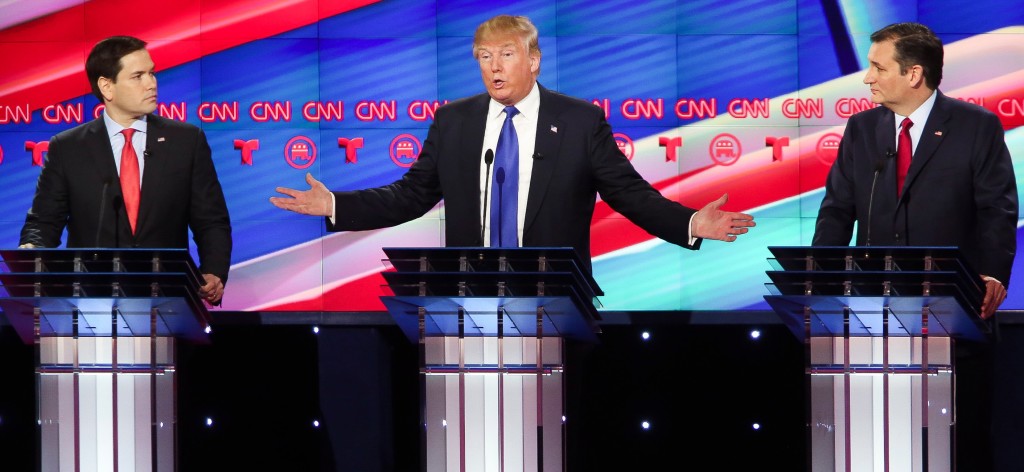
When Brian France endorsed Donald Trump for president, the chairman and chief executive of NASCAR thought of it as nothing more than a “routine endorsement.” He’s been dealing with the fallout ever since. France’s decision to personally back the front-runner for the Republican nomination has roiled a sport his family built from the ground up. It’s threatened a decade of work to broaden NASCAR’s appeal among minorities, upset one of the most powerful teams in the sport and risked a break with the corporate sponsors that are its financial lifeblood. “I was frankly, very surprised, that my diversity efforts for my whole career would have been called into question, over this, in my view, a routine endorsement,” France said Wednesday in an interview with The Associated Press. France acknowledged he’s had to have conversations with sponsors since making the endorsement, which came as NASCAR is seeking a new main sponsor for its top series. “I made a few phone calls and clarified some things,” he said. “That kind of goes with the territory.” France’s appearance at a Trump rally the day before last week’s Super Tuesday elections fits with the sport’s history of occasionally blending politics with the action at the track. France’s grandfather, NASCAR founder Bill France Sr., endorsed George Wallace for president. Its all-time winningest driver, Richard Petty, celebrated his 200th victory with President Ronald Reagan and ran for statewide office in North Carolina in the 1990s. France told the AP on Wednesday he backed Barack Obama in 2008 and actively participated in the campaign, shifting his support to Mitt Romney four years later. “I supported Obama. I went to his rallies. I parted with my hard-earned money. There was a movement going on, and I was really thrilled with the idea of the first African-American president,” he said. “I did the same for Mitt Romney. In both of those cases, I have never agreed with all of their policies.” But Trump is a candidate unlike any other in recent memory, drawing intense criticism for the racial undertones of his rhetoric and policies. The billionaire has called immigrants from Mexico rapists and drug dealers, has vowed to forcibly deport the 11 million people living in the country illegally and seeks to temporarily bar Muslims from entering the U.S. Trump has also earned the explicit or implicit backing of a slew of white nationalist leaders, including former Ku Klux Klan leader David Duke. Mexican President Enrique Pena Nieto has compared his language to that of Adolf Hitler and Benito Mussolini. It’s into that cauldron that France inserted himself and his sport — admittedly without knowing all of what Trump has proposed. “I don’t even know all their policies, truthfully,” France said. He said he likes Trump’s “business approach” and his status as a Washington outsider. He also cited the electricity around the Trump campaign and a friendship with one of Trump’s sons, Donald Trump Jr., that dates back nearly two decades. “I’m not supporting him for all of his views, or his immigration views,” France said. “I happen to be very enamored by the excitement he’s brought and the voter turnout that it is creating.” That excitement is what got Chase Elliott into a jam just two weeks into his new job at Hendrick Motorsports, where he’s taking the place of retired superstar Jeff Gordon. The son of NASCAR Hall of Famer Bill Elliott, the rookie has been cast as the sport’s next superstar. To the surprise of everyone at Hendrick Motorsports, France was joined by Elliott at the Trump rally in Georgia where he offered his endorsement. At 20, Elliott has yet to vote in his first presidential election. Trump called Elliott to the microphone, and the young driver stumbled through a few remarks before sheepishly joining his father and the rest of the NASCAR contingent off to the side. A person familiar with the situation told the AP that Elliott, intrigued by the election process, agreed to an invitation from NASCAR to fly on a NASCAR plane to the Trump event in Elliott’s home state of Georgia. It never occurred to the rising star to give his team or sponsors a heads-up, the person said, and Elliott realized he was in over his head when he began receiving heavy criticism on social media. The person spoke on condition of anonymity, because the person was not authorized to discuss the details of Elliott’s involvement. While France does not regret his own participation in the Trump rally, he does feel badly for Elliott. “You never want to see anybody get their true positions distorted in the way that has happened,” France said. France is also trying to protect his record on diversity. He said NASCAR has spent “tens of millions of dollars” on a program aimed at boosting the participation of minorities in the sport. That program includes Japanese-American driver Kyle Larson, who competes in the top-level Sprint Cup, and Darrell Wallace Jr., a driver in the second-tier Xfinity Series who is black and who came up through NASCAR’s diversity program. NASCAR has also invested heavily in developing Mexican driver Daniel Suarez, who has risen to the Xfinity Series and currently leads its standings. Some of Suarez’s current corporate backing comes from Mexican billionaire Carlos Slim Domit, whose family’s TV production company cut ties with Trump last year after the real estate mogul announced his signature plan to build a wall along the U.S. southern border. Asked about France’s endorsement last week, Suarez told reporters: “I think Brian can do everything he wants on his own, but NASCAR is different. I’m in NASCAR, I’m not in Brian France, whatever.” Marcus Lemonis, the CEO of Camping World, the longtime title sponsor of NASCAR’s third-tier Truck Series, wrote an open letter to NASCAR last year saying his company would boycott the season-ending banquets if they returned to a Trump-owned property. After France’s endorsement of Trump, the Lebanese-born Lemonis wrote on Twitter: “There is no place for politics/any political endorsements in
