
Donald Trump, Hillary Clinton continue dominance in 2016 primaries
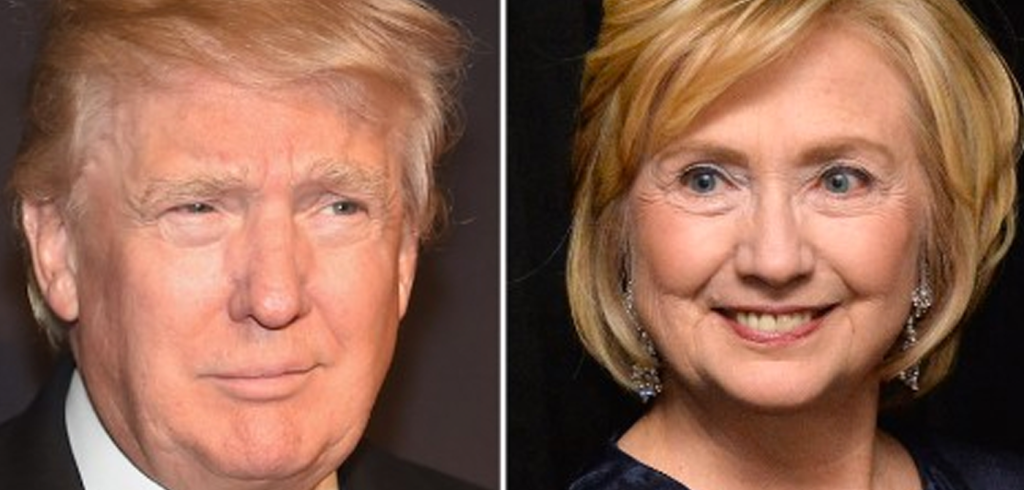
Republican front-runner Donald Trump swept to victory in the Mississippi and Michigan presidential primaries Tuesday, deepening his grip on the GOP nominating contest despite fierce efforts to block his path. Democrat Hillary Clinton easily carried Mississippi but was locked in a close race with rival Bernie Sanders in Michigan. The primaries offered Trump and Clinton a chance to pad their leads and start turning toward the general election. But Sanders was hoping to prevent a Clinton coronation with a strong showing in Michigan, the night’s biggest prize and the first Midwestern industrial state to vote in the 2016 race. With votes in Michigan still being counted, Clinton glossed over race with Sanders and jabbed at the Republicans and their chaotic nomination fight. “Every time you think it can’t get any uglier, they find a way,” she said. “As the rhetoric keeps sinking lower, the stakes in this election keep rising.” Trump, too, turned an eye toward the Democrats and November, emphasizing the importance of helping Republican senators and House members get elected in the fall. Having entered Tuesday’s contests facing a barrage of criticism from rival candidates and outside groups, he reveled in overcoming the attacks. “Every single person who has attacked me has gone down,” Trump said at one of his Florida resorts. In his typically unorthodox style, the billionaire was flanked by tables packed with his retail products, including steaks, bottled water and wine. While a handful of recent losses to Texas Sen. Ted Cruz have raised questions about Trump’s durability, Tuesday’s contests marked another lost opportunity for rivals to slow his momentum. Next week’s winner-take-all primaries in Ohio and Florida loom especially large as perhaps the last chance to stop him short of a long-shot contested convention fight. Ohio Gov. John Kasich was in a fight for second place in Michigan and hoping for a boost heading into next week’s crucial contest in his home state. For Florida Sen. Marco Rubio, a favorite of Republican elected officials, Tuesday marked the latest in a series of disappointing nights. He emerged from Michigan and Mississippi with no delegates. Rubio insisted he would press on to his home state’s primary in Florida. “It has to happen here, and it has to happen now,” Rubio told supporters Tuesday during a rally in Sarasota. If Rubio and Kasich can’t win at home, the GOP primary appears set to become a two-person race between Trump and Cruz. The Texas senator is sticking close to Trump in the delegate count and with six states in his win column, he’s argued he’s the only candidate standing between the brash billionaire and the GOP nomination. During a campaign stop at a North Carolina church Tuesday, Cruz took on Trump for asking rally attendees to pledge their allegiance to him. He said the move strikes him as “profoundly wrong” and is something “kings and queens demand” of their subjects. “I’m not here asking any of you to pledge your support of me,” Cruz said, to thunderous applause and cheers. “I’m pledging my support of you.” Republicans were also holding contests Tuesday in Hawaii and Idaho. GOP candidates were fighting for 150 delegates, while 179 Democratic delegates were at stake in the party’s two primaries. The economy ranked high on the list of concerns for voters heading to the polls in Michigan and Mississippi. At least 8 in 10 voters in each party’s primary said they were worried about where the American economy is heading, according to exit polls conducted by Edison Research for The Associated Press and television networks. Among Democrats, 8 in 10 voters in both states said the country’s economic system benefits the wealthy, not all Americans. Sanders has sought to tap into that concern, energizing young people and white, blue-collar voters with his calls for breaking up Wall Street banks and making tuition free at public colleges and universities. Michigan, with big college towns and a sizeable population of working-class voters, should be a good fit for him. But Clinton has led in polling. The results in Mississippi underscored Clinton’s overwhelming strength with black voters and Sanders’ stunning inability to draw support from voters who are crucial to Democrats in the general election. Clinton carried nearly 9 in 10 black voters in Mississippi, mirroring her margins in other Southern states with large African-American populations. With Tuesday’s wins, Trump leads the Republican field with 428 delegates, followed by Cruz with 315, Rubio with 151 and Kasich with 52. Winning the GOP nomination requires 1,237 delegates. Among Democrats, Clinton had accumulated 1,134 delegates and Sanders 502, including superdelegates. Democrats need 2,383 delegates to win the nomination. Republished with permission of the Associated Press.
Donald Trump says attack ad will work in his favor

GOP presidential front-runner Donald Trump says he thinks a negative ad that features clip after bleeped-out clip of him swearing publically is actually going to help him with voters. Trump said Tuesday he was a little concerned by the ad from the American Future Fund Political Action until he saw it. He said he thinks that “it’s better than any ad I’ve ever taken for myself.” Trump said he “can be more presidential than anybody” but that right now he’s focused on beating his rivals. He adds that, “people are sick and tired of being politically correct.” Trump says that in some of the instances shows in the ad he was joking. In others, he says he was demonstrating “a certain toughness that we need in our country.” He adds that if he had a choice between taking the ad down and letting it run, he’d say, “let it run.” Republished with permission of the Associated Press.
Donald Trump wins Mississippi primary
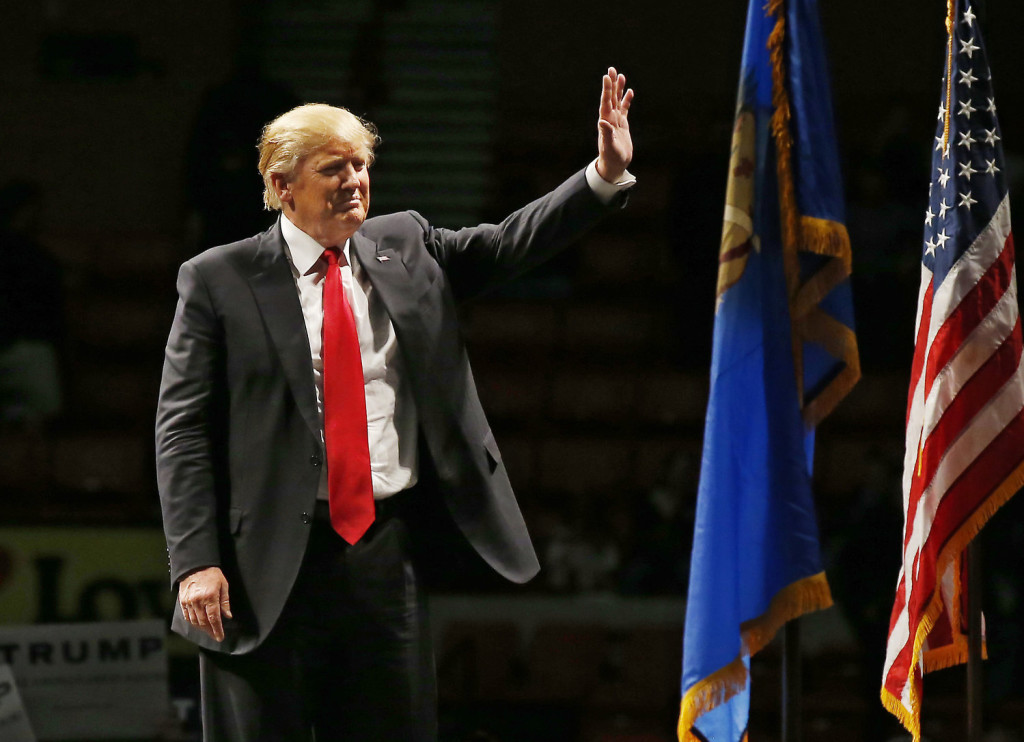
Donald Trump has won the Republican presidential primary in Mississippi, edging out Texas Sen. Ted Cruz to post his 13th state victory of the 2016 White House race. The billionaire businessman extends his lead for the highly contested Republican nomination amid a growing outcry by party elites against his unorthodox candidacy. Heading into Tuesday’s contests, Trump led the Republican field with 384 delegates, followed by Cruz with 300, Marco Rubio with 151 and John Kasich with 37. Winning the GOP nomination requires 1,237 delegates. Republished with permission of the Associated Press.
Trump University plaintiff seeks to withdraw from lawsuit
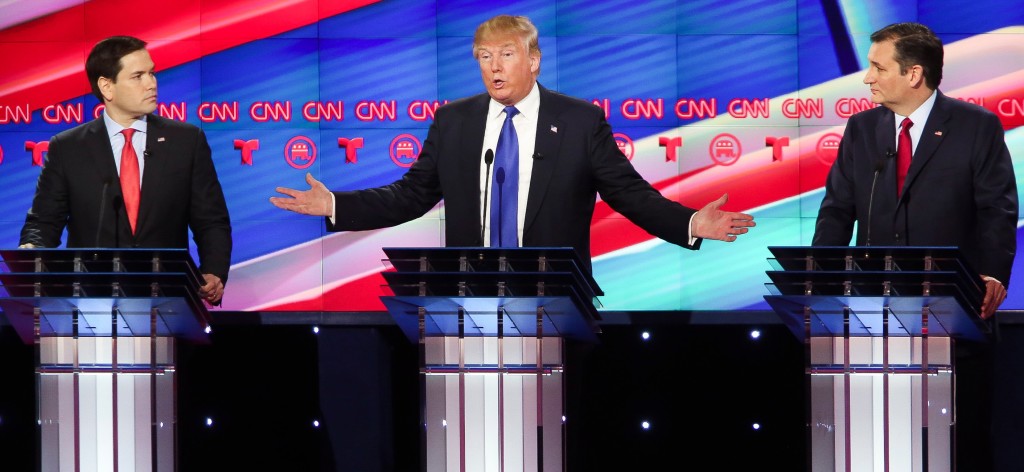
Tarla Makaeff has had enough of Donald Trump after spending six years fighting him in court. The Southern California yoga instructor wants to withdraw from a federal class-action lawsuit that says Trump University fleeced students with an empty promise to teach them real estate. Her lawyers said the Republican presidential front-runner and his team have put her “through the wringer” and made the prospect of a trial unbearable. A judge will consider the request Friday, four days before Florida and Ohio hold their primaries. Trump’s attorneys say the lawsuit should be dismissed if Makaeff is allowed to withdraw, arguing that their trial strategy centers on her. They deposed her four times and identify her as “the critical witness” in a court filing. Makaeff’s attorneys say Trump’s argument that their client is indispensable to the billionaire’s defense “is illogical to the point of being nearly incomprehensible.” They note the judge allowed two plaintiffs to withdraw last year; three others would remain. The tussle in one of three lawsuits against Trump University comes as the case nears trial, possibly this summer. A trial date has not been set, but a final pretrial conference is scheduled for May 6 and Trump appears on a list of defense witnesses who may testify at trial. The lawsuit has figured prominently in the presidential campaign, fueled by legal filings and Trump’s statements. In depositions that took place in December and January and were released last week, Trump acknowledged that he never met instructors whom his marketing described as hand-picked, and that some unqualified candidates had “slipped through the cracks.” The Better Business Bureau said Tuesday that it rated Trump University a D- in 2010, which improved to A+ by January 2015 as the business appeared to wind down and older complaints automatically rolled off its books. Makaeff attended a three-day “Fast Track to Foreclosure” workshop for $1,495 in 2008 and later enrolled in the “Trump Gold Elite” program for $34,995, spending a total of about $60,000 on seminars in a year, her attorneys say. In April 2010, she sued in San Diego federal court. Trump sued for defamation, seeking $1 million. Makaeff prevailed on appeal, and a judge last year ordered Trump to pay $798,779 in her legal fees. Trump and his attorneys are trying to frame much of their case around Makaeff, saying she gave instructors high marks in surveys after the courses. “The reason they want her out of the case is she is a horrible, horrible witness. She’s got in writing that she loves it. And I could have settled it and when I saw her documentation … Why would I give her money? Probably should have settled it, but I just can’t do that. Mentally I can’t do it. I’d rather spend a lot more money and fight it,” Trump said at a rally in Arkansas last month, according to a transcript. In last week’s Republican debate, Trump said Makaeff wants to withdraw “because it’s so bad for her.” “She simply did not put in the time, work, and perseverance necessary to achieve success,” Trump’s lawyers wrote the judge last month. Makaeff’s attorneys say the yoga instructor was unaware of Trump’s “false advertising” when she filled out the surveys and didn’t want to risk alienating anyone who might advance her career. Makaeff didn’t imagine she would be subjected to criticism under the glare of a presidential campaign, her attorneys say. She has been deposed for a total of nearly 16 hours and suffered anxiety about finances while Trump sued her for defamation. “Understandably, Makaeff wants her life back without living in fear of being disparaged by Trump on national television,” they wrote in a court filing last week. Makaeff declined to comment through an attorney. In a statement to the court, she said she was grieving her mother’s death. “I am very concerned about the toll that the trial would take on my emotional and physical health and well-being,” she wrote. Trump has also addressed criticism of the lawsuit by pointing to the judge’s ethnic background. Asked on “Fox News Sunday” last month what U.S. District Judge Gonzalo Curiel‘s ethnicity has to do with the case, Trump replied: “I think it has to do perhaps with the fact that I’m very, very strong on the border, very, very strong at the border, and he has been extremely hostile to me.” Curiel, who was nominated by President Barack Obama and joined the bench in 2012, declined to comment on Trump’s remarks. Republished with permission of the Associated Press.
Campaign donors having second thoughts about Marco Rubio

Just when Republican presidential candidate Marco Rubio needs them the most, big-dollar contributors from the party’s wealthy main stream are having second thoughts about his future in the 2016 race. Fresh misgivings about Rubio’s path forward are the latest — and potentially the most debilitating — in a series of obstacles that threatens the Florida senator’s future in this rollercoaster Republican campaign. “Super Tuesday came and Rubio didn’t do as well as some of us hoped. So people are saying, ‘Let’s see how this thing shakes out,’” said Craig Duchossois, who contributed $500,000 last year to a group that backed former Florida Gov. Jeb Bush. “I’m holding back,” the Chicago-based investor said of his own plans. Despite flashes of potential in recent weeks, Rubio has struggled to reconnect with the tea party voters who made him a favorite during their national breakthrough six years ago, instead watching them flock to presidential rivals Donald Trump and Ted Cruz. Rubio campaign officials concede that Rubio likely cannot remain in the race without winning in Florida, where public polls show him second to Trump. Rubio’s team says the campaign’s polling shows the race tightening, with Trump leading by single digits, slightly less than recent public polling. Rubio, elected to the Senate in 2010, also has not fully harnessed the financial muscle of the GOP old-guard eager to derail Trump, despite the shift in focus by many to Rubio after Bush quit the race last month. The result is a Catch-22 for Rubio, who needs the money to win the March 15 primary in his home state of Florida, while donors wait out those results for signs of his long-term viability. “We’ll see what happens on next Tuesday in Florida,” said Ron Gidwitz, another Chicago GOP donor who turned from Bush to Rubio. “We’ll see how real he is at that point.” Rubio had about $5 million in available cash at the beginning of last month, less than half of what Cruz had on hand. Trump has said he can afford to finance his own campaign, though he has received contributions. Duchossois and Gidwitz were among a wave of main stream GOP donors who moved quickly to Rubio when Bush quit the race on Feb. 20 after failing to meet expectations in Iowa, New Hampshire and South Carolina. Rubio, on the other hand, finished in strong third in Iowa, rebounded from a disappointing fifth-place showing in New Hampshire to grab second place in South Carolina, feeding the GOP establishment’s hopes. And yet Rubio’s momentum stalled again in the days leading up to March, when 11 states held Republican nominating contests. Afterward, Rubio turned from only indirectly critiquing Trump for months to an all-out assault on the businessman’s character and ethics, as well as his appearance and manliness. Duchossois and others who pinned their hopes to him said they were turned off by Rubio’s taunts, including calling Trump’s “the worst spray tan in America” and equating Trump’s disproportionately small hands with his manhood. “You just don’t do that,” said Bill Kunkler, another Chicago Republican who backed Bush but stopped short of the pivot to Rubio. “In Rubio, I don’t see the presidential gravitas.” Some potential Rubio donors are also concerned that Rubio can’t generate sufficient momentum for Florida based on his victories so far: Minnesota’s lightly attended March 1 caucuses and the Puerto Rico primary on Sunday. Rubio ceremonially relaunched his two-week campaign in Florida on March 1, and vowed he would never yield to pressure to step aside for Trump, especially in Florida where he was speaker of the state House before seeking the 2010 Senate seat. Rubio insists he feels “real good about the map as we move forward,” telling the Associated Press Sunday he believes voters across the GOP spectrum want “an optimistic message of conservatism,” not just the “anger and frustration” Trump has tapped. Rubio campaign officials also have said Florida races can swing quickly, especially when backed by a sustained advertising blitz. They point to the 2012 GOP primary when eventual nominee Mitt Romney surged past Newt Gingrich in part on the strength of $8.8 million in anti-Gingrich ads by a pro-Romney group. Heading into the week, the top Republican advertiser in Florida was Conservative Solutions PAC, a group promoting Rubio, which this month planned to spend more than $4 million attacking Trump. Three other anti-Trump groups plan to spend a combined $4 million attacking the billionaire front runner before the March 15 primary. Republished with permission of the Associated Press.
Donald Trump reverses stance on torture and targeting civilians
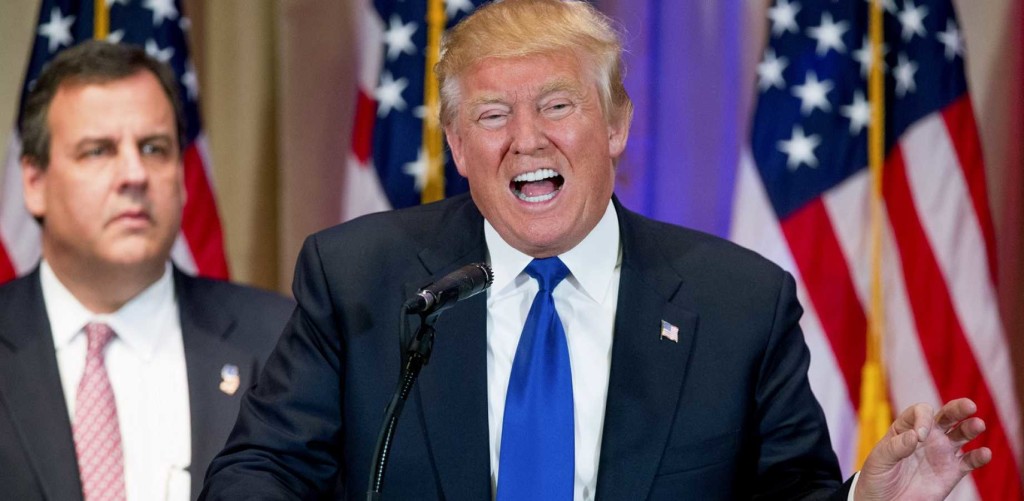
Donald Trump retreated Friday from his promise that if elected president he would order the military to kill family members of militants who threaten the United States. Trump’s campaign issued a statement quoting him as saying he would not order the military to take actions contrary to international or U.S. law. But fewer than 24 hours earlier, in Thursday’s GOP debate, Trump stuck to his position on targeting family members of militants and on an expansive use of torture against captured militants. When a debate moderator asked him what he would do if the military refused to carry out such orders, Trump replied: “They’re not going to refuse me. Believe me.” The use of torture and the killing of civilians are barred by the Geneva Conventions, to which the United States is a signatory. Congress outlawed waterboarding and any so-called enhanced interrogation techniques after the administration of George W. Bush carried out such acts against suspected al-Qaida fighters. Members of the U.S. military are bound by duty and tradition to refuse orders they know to be illegal. This includes intentionally targeting civilian noncombatants. The issue drew additional attention this week when more than 100 Republican defense and national security figures, including former senior Pentagon officials, issued a statement blasting Trump’s foreign policy positions and calling his embrace of the expansive use of torture “inexcusable.” Defining when aggressive interrogation techniques such as waterboarding amount to torture is a matter of debate, but Trump had made clear that as president he would not hesitate to go beyond waterboarding. “We should go for waterboarding and we should go tougher than waterboarding,” he said at Thursday’s debate. He also had defended his position on targeting the family of militants, which he first raised in a “FOX and Friends” interview last December. “The other thing with the terrorists is you have to take out their families. When you get these terrorists, you have to take out their families. They care about their lives, don’t kid yourself. When they say they don’t care about their lives, you have to take out their families.” On Friday, however, Trump reversed course. “I will use every legal power that I have to stop these terrorist enemies,” the statement issued by his campaign said. “I do, however, understand that the United States is bound by laws and treaties and I will not order our military or other officials to violate those laws and will seek their advice on such matters. I will not order a military officer to disobey the law. It is clear that as president I will be bound by laws just like all Americans and I will meet those responsibilities.” The Trump campaign also has announced that Sen. Jeff Sessions, an Alabama Republican and member of the Senate Armed Services Committee, is Trump’s adviser on national security matters during the campaign. Sen. Lindsey Graham, an early contender for the Republican presidential nomination, said Friday he wrote to Gen. Joseph Dunford, chairman of the Joint Chiefs of Staff, asking his views on whether the intentional targeting of noncombatant family members of militants, including children, is legal under the laws of war. Graham, a former military lawyer, also asked Dunford what advice he would give troops if ordered to target such civilians. Republished with permission of the Associated Press.
Paul Ryan not interested in presidential run this year
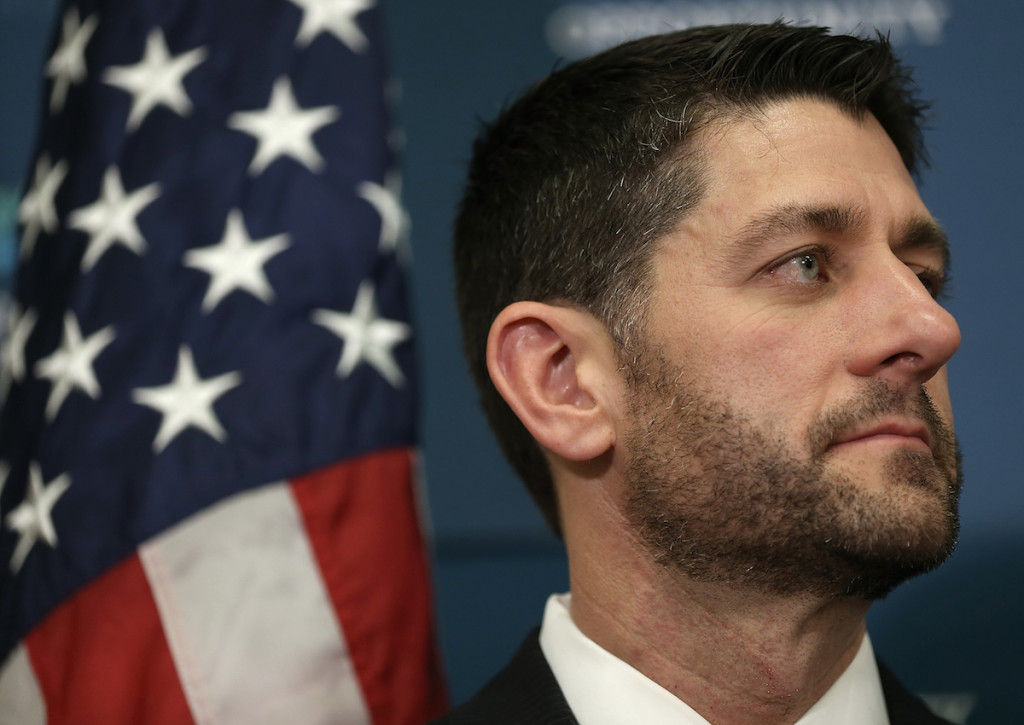
Amid extraordinary Republican infighting over Donald Trump, the word from House Speaker Paul Ryan is nope, he’s not running for president. The professed lack of interest from Ryan, R-Wis., came Friday in a letter from a lawyer representing him to the Federal Election Commission. The note by Timothy E. Kronquist disavows the Committee to Draft Speaker Ryan, a political action committee that filed papers with the FEC on Thursday. “The speaker has not, and does not, explicitly or implicitly, authorize, endorse, or otherwise approve of the organization’s formation or activities, and he is not involved with the organization in any way,” the letter says. “Speaker Ryan has repeatedly announced publicly that he is not running for president in 2016.” Ryan spokeswoman AshLee Strong added in an emailed comment, “He is flattered, but not interested.” The GOP has been knotted in turmoil since Trump took a big lead in convention delegates Tuesday by winning seven state primaries. GOP 2012 presidential nominee Mitt Romney and other leading Republicans have talked publicly about blocking the billionaire businessman from winning the nomination, and talk has turned to alternative GOP figures. The letter does not specifically address what Ryan would do if Republicans, tied in knots at their July convention in Cleveland, begged him to accept the nomination. Ryan was Romney’s vice presidential running mate and has deep respect across the GOP. Last fall, he rose to the speaker post when he was pressured to take the job after the abrupt resignation of his predecessor, John Boehner, R-Ohio. The letter said Ryan hopes “donors and supporters are not confused by, or misled into supporting, this organization.” David Satterfield, listed as treasurer of the committee, did not immediately return an email seeking comment. Republished with permission of the Associated Press.
Fox gets 16.9 million viewers for GOP debate

The 16.9 million people who saw Fox News Channel’s coverage of the Republican presidential debate on Thursday have made it the fourth most-watched debate in a primary season ever. The Nielsen company said Friday that’s also the fourth most-watched Republican debate of the 2016 campaign cycle, a testament to the extraordinary interest these events have had for television viewers. The debate stages are getting less crowded, with the Detroit debate featuring Donald Trump, Ted Cruz, Marco Rubio and John Kasich. It was the 11th Republican debate so far; the Democrats have had six. The two previous debates on Fox News Channel reached 24 million viewers last August and 12.5 million in January. The next Democratic debate is Sunday. Former U.S. Secretary of State Hillary Clinton and Vermont Sen. Bernie Sanders will debate at 8 p.m. Sunday in Flint, Mich. Republished with permission of the Associated Press.
New Mexico Gov. Susana Martinez throws support behind Marco Rubio
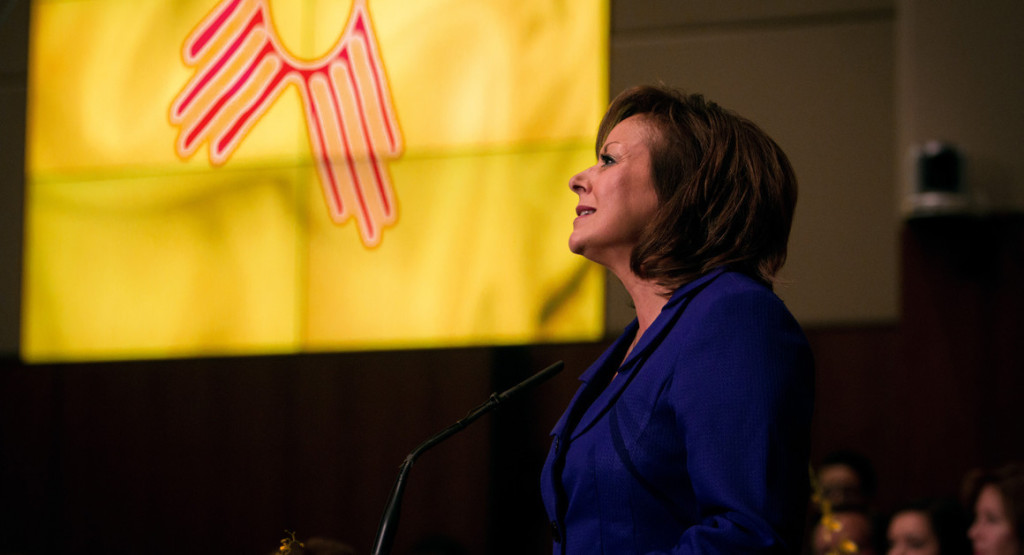
New Mexico Gov. Susana Martinez is throwing her support behind Marco Rubio. Martinez announced Thursday she was endorsing Rubio. The New Mexico Republican is expected to campaign with the Florida Republican in Kansas and Florida later this week. “Marco Rubio is a compelling leader who can unite the country around conservative principles that will improve the lives of all Americans,” she said in a statement. Martinez is the first Hispanic female governor in the United States. She’s also the first female governor in New Mexico’s history. She currently serves as the chairwoman of the Republican Governors Association. According to POLITICO, which first reported the endorsement this morning, Martinez wouldn’t commit to back Republican frontrunner Donald Trump if he becomes the Republican nominee. “The stakes for our great country are too high — and the differences between the candidates too great — for me to remain neutral in this race,” said Martinez in a statement. “I wholeheartedly trust Marco to keep us safe and ensure a better tomorrow, and I look forward to campaigning with him later this week.”
Marco, it’s the length of your coffin that matters
One of my favorite short stories is Tolstoy’s classic, “How Much Land Does a Man Need?“ In it, Tolstoy introduces us to Pahom, an ordinary Russian with extraordinary ambitions who wants to own vastly more land. Satan arranges for Pahom to meet a landowning rural family, the Bashkirs, who make the striving Pahom a remarkable offer: Pahom can walk across their vast holdings with a shovel and mark the territory he wishes to own, and if he makes it back to the starting point by sunset to complete the circle, he will own everything within the boundary he marked. Pahom begins the task buoyed by his boundless greed, and by late afternoon he finds himself far from the starting point. So, he runs to the starting point to beat the setting sun, but he arrives exhausted and breathless and dies on the spot where he began. Later, Pahom is buried in a grave six feet long, and we learn at last how much land a man needs. Marco Rubio seems obsessed with size of Donald Trump’s hands, but like Tolstoy’s Pahom, Florida’s junior Senator could better spend his time pondering the wages of blind ambition. For two years, Rubio has harbored a gross miscalculation; that is, that there is no downside for him running for president. His belief was that even if he lost the primary or general election, he will have exposed the Rubio brand to donors, voters, and the media on a national stage, and that exposure alone is worth the risk of losing. But, here he is wrong, for to be exposed as a treacherous callow loser is a powerfully negative thing, and to fail to win your own state amplifies the effect even more. By the time Rubio arrives at sundown at the place where he started, he risks not only losing this race but all future races. Why do I say treacherous and callow? Treacherous, because Rubio has that lean and hungry look that drives him to turn without compunction on those who fostered his career. For almost a decade Jeb Bush was instrumental in creating a Golden Era for Republicans in Florida in which conservative programs and ideas could quickly take root and grow. Bush catalyzed nothing short of a revolution in state government where all the big pieces – education, healthcare, criminal justice, tax policy, social services — were re-imagined and branded with a conservative, forward-thinking Republican stamp. Rubio was one of the many beneficiaries of the success of these programs that allowed him to receive accolades for, frankly, victories not of his making. One would think that given this boost from Bush and the personal interest Bush took in advancing Rubio’s credibility and career, Rubio might have paused before deciding to challenge his ostensible friend and political godfather. Rubio never hesitated. He went for the kill. Callow, because Rubio is too naïve and immature to realize that there is a high price to be paid for treachery and failure. Although Bush is now out of the race, Bush’s powerful friends and supporters are not out of Florida. One of the most remarkable but least discussed aspects of this cycle has been how little support Rubio has received from the colleagues who worked with him shoulder to shoulder in the Florida legislature. It is profoundly revealing and would be to a normal person a cause for intense self-examination. (Alas, Rubio is not a normal person.) In fact, it shows that for decades to come it will be the Bush crowd, and not the Rubio gang, that will be making the business and political decisions that guide the economy and political power structure of the Sunshine State. Many of them have remarked to me that they will never forgive Marco for his heedless ambition. And, Rubio is likely to soon learn the price of high-profile failure in his home state of Florida. Bush had the smarts to get out why the getting was good, but Rubio seems determined to ride out this race until he has proven to everyone’s satisfaction that he can be defeated in Florida by the short-fingered vulgarian, Donald Trump. In the process, he has lowered himself to Trump’s level with penis jokes and spray-tan putdowns; the sort of sophomoric and un-presidential banter that that will remain in the minds of voters long after Rubio has skipped off the public stage in his high-heel boots. As a side note, I assume nobody is more pleased with Rubio’s suspension of reality than Adam Putnam who one day might have to post up against Rubio in a gubernatorial primary. If Rubio loses in Florida on March 15th, Putnam is given a powerful narrative to discount Rubio as a gubernatorial candidate going into the next election cycle. If Rubio were smart, humble, or merely had the instinct for self-preservation found in the average rodent he would get out of the race before the virtually inevitable failure he faces on his home turf in 13 days. He is behind Trump in every Florida poll (wildly in some cases), and in the deeply conservative Panhandle he is behind both Trump and Cruz. Unless lightning strikes, Rubi is going to lose, and he’s going to lose big. And the losing doesn’t end after that ignominious failure. It’s only beginning at that point. Unless he starts playing it smart, despite his remorseless striving Rubio’s political career will get at a very young age what most of us hope to delay for many decades: six feet of dirt and no more.
Donald Trump looks to extend dominance as GOP starts to panic
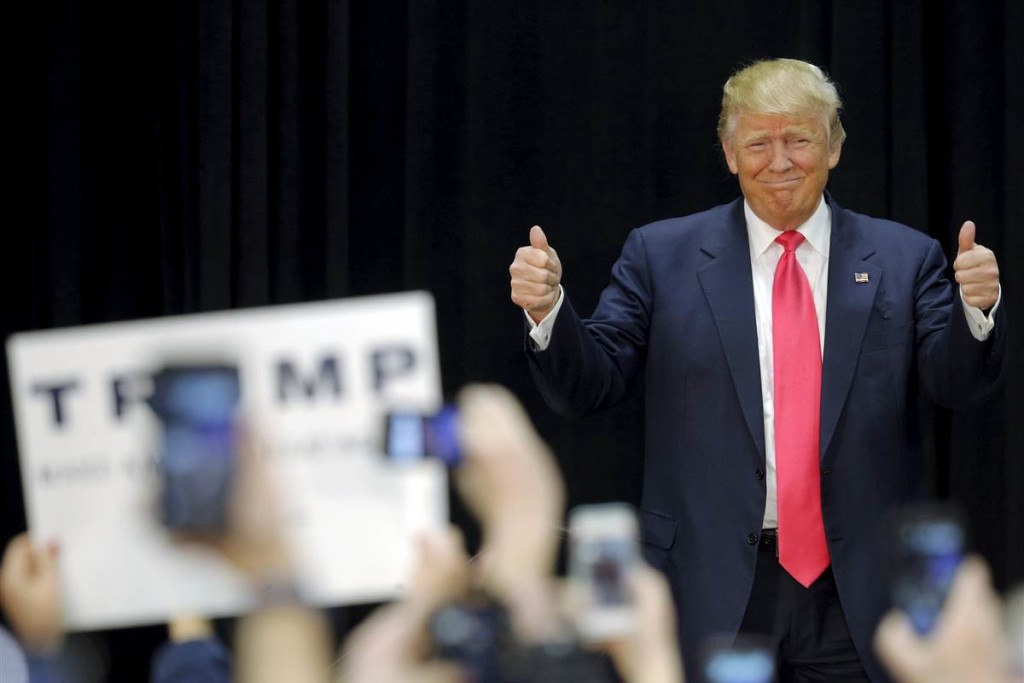
Donald Trump looks to extend his dominance as Ted Cruz and Marco Rubio scramble for delegates in presidential primary contests across 11 states on a Super Tuesday, stained by panic from Republican leaders even before the results were known. Fearing a Trump sweep, Republican officials across the nation lashed out at the billionaire businessman’s temperament and command of the issues in the hours before voting began. Having won three consecutive primary elections, Trump was poised to tighten his grasp on the GOP nomination in primary elections from Georgia to Massachusetts and Texas to Arkansas. “These are challenging times for the Republican Party,” Arkansas Gov. Asa Hutchinson, who wanted to stay neutral in the GOP primary but endorsed Rubio last week. “Those that care deeply, as myself, probably should have been engaged earlier in trying to show that Donald Trump is not the right one to lead the conservative movement and to lead our party.” The comments came during a wild prelude to Super Tuesday that featured a dispute over the Klu Klux Klan, a violent clash between a photographer and a secret service agent, and extraordinary criticism from several Republican governors and senators who refused to say whether they would support their party’s front-runner should Trump win the nomination. A confident Trump brushed off his critics on Tuesday morning, suggesting that he’s helping to grow the party and even attracting Democrats to the GOP. “We’re getting people into the party that they’ve never had before,” he told ABC’s “Good Morning America.” ”I can tell you the one person Hillary Clinton doesn’t want to run against is me.” Trump was seeking to sweep a series of contests across the South, which would be a massive blow for Cruz, in particular. The Texas senator, a favorite of the region’s social conservatives and evangelical Christians, long expected the South to be his firewall, but now simply hopes to emerge with a victory in his home state. Rubio’s goal on Super Tuesday is even more modest. He’s seeking to stay competitive in the delegate count while eyeing a win in his home state of Florida on March 15. Republican officials have rallied behind Rubio over the last week, but he’s failed to win a single state so far and could very well continue the winless streak on Tuesday. Ohio Gov. John Kasich and retired neurosurgeon Ben Carson remain in the race, but neither is expected to be a major factor on Super Tuesday. With some fearing Trump’s delegate lead could become insurmountable by the middle of the month, the best hope for Rubio, Cruz and Kasich could be a contested national convention in July. But even that could be optimistic should Trump continue to dominate. Republicans spent months largely letting Trump go unchallenged, wrongly assuming that his populist appeal with voters would fizzle. Now party leaders are divided between those who pledge to fall in line behind Trump if he wins their party’s nomination and others who insist they can never back him. An Associated Press survey of GOP senators and governors across the country showed just under half of respondents would not commit to backing Trump if he’s the nominee. Their reluctance foreshadowed a potentially extraordinary split in the party this fall. “Right now we are in a very dangerous place,” said former Minnesota Sen. Norm Coleman. “You’ve got a con man and a bully who is moving forward with great speed to grab the party’s mantle to be its standard bearer,” Coleman, who backs Rubio, said in an interview with The Associated Press. “That’s almost incomprehensible.” Republished with permission of the Associated Press.
Paul Ryan: GOP nominee must reject bigotry
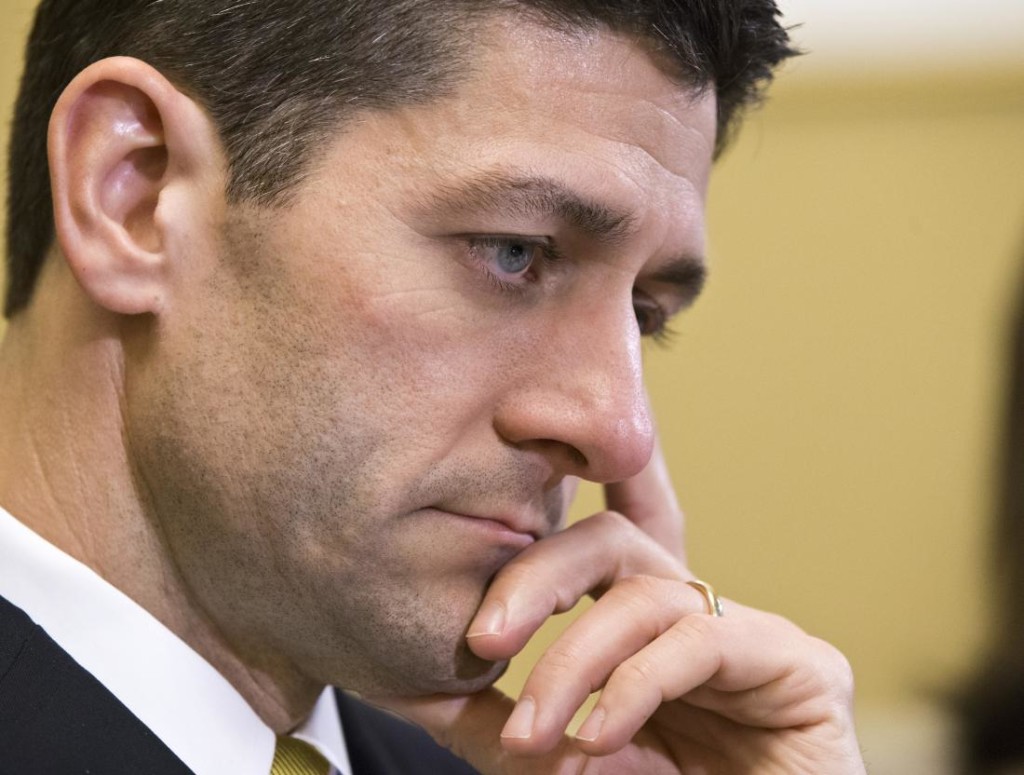
House Speaker Paul Ryan said Tuesday anyone who wants to be the Republican presidential nominee must reject any racist group or individual. Ryan made the tacit swipe at GOP front runner Donald Trump as voters in 11 states holding Republican contests headed to the polls on Super Tuesday. Ryan told reporters Tuesday that the GOP is the party of President Abraham Lincoln and “this party does not prey on people’s prejudices.” Ryan was apparently referring to Trump’s appearance Sunday on CNN when he declined to disavow the support of former Ku Klux Klan leader David Duke and other white supremacists. “When I see something that runs counter to who we are as a party and a country I will speak up. So today I want to be very clear about something: If a person wants to be the nominee of the Republican Party there can be no evasion and no games. They must reject any group or cause that is built on bigotry,” Ryan said. Trump subsequently disavowed Duke, blaming his interview performance Sunday on a bad earpiece. Ryan again said he plans to support whomever emerges as the GOP nominee but bemoaned the current discourse in the party and said it was time to get back to focusing on how Republicans would solve the nation’s problems. “We are the party of Lincoln,” Ryan added. “We believe all people are created equal in the eyes of God and our government. This is fundamental. And if someone wants to be our nominee they must understand this.” Ryan was the GOP vice presidential nominee in 2012. He said he has tried to avoid commenting on the presidential race but felt a need to speak up. “I try to stay out of the day-to-day ups and downs of the primary,” Ryan said. “But I’ve said when I see something that runs counter to who we are as a party and a country I will speak up.” Republished with permission of the Associated Press.
