
Paul DeMarco: Alabama lawmakers should listen to citizens, not ACLU, when it comes to public safety
This past week the ACLU of Alabama issued a report critical of the Alabama Legislature’s approach to the criminal justice system. What was the ACLU’s beef with lawmakers? They argued that too many recent bills considered by the legislature would make it easier to put people in jail for breaking the law. The types of bills they disparaged were proposed to make the public safer. For example, they criticized passage of the Nick Risner Act, which prevents an inmate convicted of killing someone with a deadly weapon from being released early under Alabama’s “good time law.” Too many inmates convicted of violent crimes have gotten out of prison early, only to commit more of the same and create more victims. Sheffield Police Sgt. Nick Risner was shot and killed in the line of duty in October of 2021. The man charged with his murder had served only three years of a 10-year sentence for manslaughter when he was released from prison. The felon was released early on “good time” incentives which will now be restricted since the bill was signed into law by Governor Kay Ivey. Violent crime around the Nation has spiked, and one of the reasons has been the constant attack on law enforcement and the reduction of the number of police officers patrolling our streets. Alabama state representatives and senators need to take a hard pass on the ACLU and listen to their constituents who support their law enforcement officers and want public safety strengthened, not weakened. The ACLU pushes misguided policies that have been implemented and miserably failed in other places such as Minneapolis and New York City. Plus, victims’ rights advocates and prosecutors are in a far better position to recommend to legislators what is needed to address crime rather than a group like the ACLU, whose ideas have proven to lead to increases in violent crime and the number of victims. Another legislative session is around the corner. Voters should make it clear that crime is out of control in our state and that Alabama leaders should make public safety their most important priority. Paul DeMarco is a former member of the Alabama House of Representatives and can be found on Twitter @Paul_DeMarco.
Texas-like abortion bill would let citizen sue providers
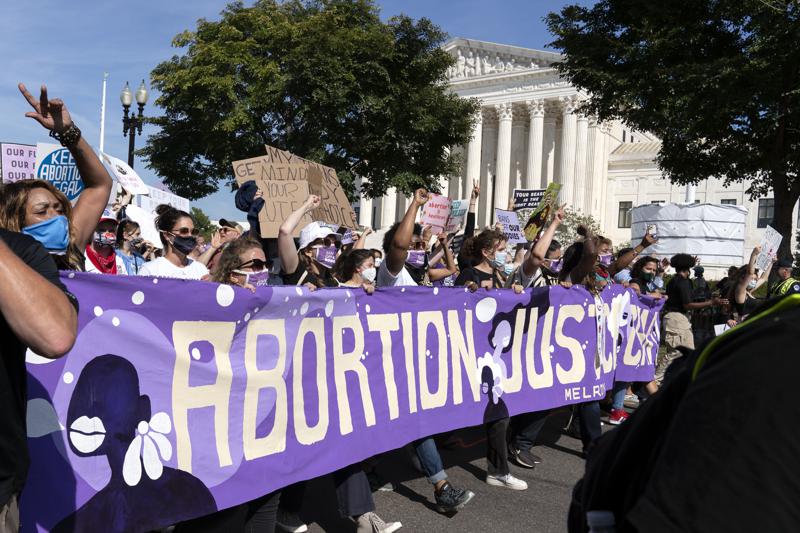
A group of Alabama lawmakers have proposed legislation similar to a Texas law that would ban most abortions and allow anyone to file civil lawsuits against violators and collect damages. Alabama is the latest GOP-led state to see lawmakers propose legislation to mimic the Texas law and its novel citizen-enforcement provision. The U.S. Supreme Court on Friday left in place Texas’ ban on most abortions but said providers could sue to challenge the ban. A Texas judge on Thursday ruled the citizen enforcement mechanism is unconstitutional but left the near-total ban on abortions in place. The bill titled the “Alabama Heartbeat Act” was filed ahead of the 2022 legislative session. It would prohibit medical providers from performing an abortion once cardiac activity is detected, usually around six weeks and before some women know they are even pregnant. The measure would allow private citizens to file civil lawsuits against anyone who “aids or abets” an abortion and to collect at least $10,000 in damages for each performed abortion. Providers in Texas say abortions have become virtually inaccessible since the law was signed. Republican Rep. Jamie Kiel of Russellville, the primary sponsor of the legislation, said the bill mirrors the Texas law, noting that it has not been struck down yet. “A recent (National Public Radio) article reported that in the 101 days since the law was enacted, 75-100 babies are now being saved every day in Texas. That’s what I want for Alabama. To protect the right to life of the 16 babies who are murdered here daily,” Kiel said. Twenty-three Republicans in the 105-member House of Representatives have signed on as sponsors of the bill. Kaitlin Welborn, a reproductive rights attorney with the American Civil Liberties Union of Alabama, urged lawmakers to reject the proposal and said it will be quickly challenged if it passes. “Alabama legislators have filed a bill that bans abortion at 6 weeks of pregnancy and pits neighbor against neighbor in an illegal bounty-hunting scheme. HB 23 mirrors the anti-abortion legislation that most recently passed in Texas, even though their abortion ban is deeply unpopular and blatantly unconstitutional,” Welborn said in a statement. Alabama Gov. Kay Ivey in 2019 signed into law a near-total ban on abortion in the state, with no exceptions for rape and incest, but the law was blocked from taking effect by a federal judge. The legislative session begins January 11. Republished with the permission of the Associated Press.
Federal judge blocks Alabama’s strict abortion ban

A federal judge on Tuesday blocked Alabama’s near-total abortion ban from taking effect next month and called the law — part of a wave of new abortion restrictions by conservative states — clearly unconstitutional. U.S. District Judge Myron Thompson issued a preliminary injunction temporarily blocking Alabama from enforcing the law that would make performing an abortion a felony in almost all cases. The ruling came after abortion providers sued to block the law from taking effect Nov. 15. The injunction was widely expected and will remain in place until Thompson decides the full case. “Alabama’s abortion ban contravenes clear Supreme Court precedent,” Thompson wrote in an accompanying opinion. “It violates the right of an individual to privacy, to make choices central to personal dignity and autonomy. It diminishes the capacity of women to act in society, and to make reproductive decisions. It defies the United States Constitution.” Energized by new conservatives on the U.S. Supreme Court, Alabama and other conservative states have attempted to enact new restrictions on abortion in the hopes of getting Supreme Court justices to reconsider Roe v. Wade, the landmark 1973 decision that legalized abortion nationwide. A number of states attempted to ban abortion once a fetal heartbeat is detected. The Alabama law went further by attempting to ban almost all abortions with no exceptions for cases of rape and incest. Passed by the Republican-led legislature, the 2019 Alabama Human Life Protection Act would make performing an abortion at any stage of pregnancy a felony punishable by up to 99 years or life in prison for the abortion provider. The only exceptions would be when there is a serious health risk to the mother or the fetus has a lethal anomaly that would cause it to die shortly after birth. None of the state bans has taken effect. Some have already been blocked, and elsewhere courts are considering requests to put them on hold while legal challenges play out. “This is not only a victory for the people of Alabama — it’s a victory for the entire nation. We said it from the start: This ban is blatantly unconstitutional, and we will fight it every step of the way,” said Staci Fox, president and CEO of Planned Parenthood Southeast. Planned Parenthood was one of the groups that sued to block the law. Randall Marshall, executive director of the American Civil Liberties Union of Alabama, said the decision was expected. “Abortion remains legal in Alabama. The state’s repeated attempts to push abortion out of reach by enacting unconstitutional laws restricting abortions has already cost taxpayers nearly 2 ½ million dollars,” Marshall said. “This ill-advised law will cost taxpayers more money.” Supporters of the Alabama law have also said they anticipated the action but hope to eventually convince the U.S. Supreme Court to roll back abortion rights. Alabama Republican Rep. Terri Collins, who sponsored the ban, said the ruling “is merely the first of many steps on that legal journey.” “As we have stated before, the state’s objective is to advance our case to the U.S. Supreme Court where we intend to submit evidence that supports our argument that Roe and Casey were wrongly decided and that the Constitution does not prohibit states from protecting unborn children from abortion,” Alabama Attorney General Steve Marshall said in statement. In a measured statement, Alabama Gov. Kay Ivey said the ban reflects Alabamians beliefs, but that she also supports the “rule of law.” “This legislation passed with overwhelming support in the Alabama Legislature and was signed into law as a testament to Alabamians’ longstanding belief that every human life is sacred. We must continue doing all we can to protect life,” Ivey said. Republished with the permission of the Associated Press.
Supreme Court: Donald Trump can use pentagon funds for border wall

The Supreme Court cleared the way for the Trump administration to tap billions of dollars in Pentagon funds to build sections of a border wall with Mexico. The court’s five conservative justices gave the administration the green light on Friday to begin work on four contracts it has awarded using Defense Department money. Funding for the projects had been frozen by lower courts while a lawsuit over the money proceeded. The court’s four liberal justices wouldn’t have allowed construction to start. The justices’ decision to lift the freeze on the money allows President Donald Trump to make progress on a major 2016 campaign promise heading into his race for a second term. Trump tweeted after the announcement: “Wow! Big VICTORY on the Wall. The United States Supreme Court overturns lower court injunction, allows Southern Border Wall to proceed. Big WIN for Border Security and the Rule of Law!” The Supreme Court’s action reverses the decision of a trial court, which initially froze the funds in May, and an appeals court, which kept that freeze in place earlier this month. The freeze had prevented the government from tapping approximately $2.5 billion in Defense Department money to replace existing sections of barrier in Arizona, California and New Mexico with more robust fencing. The case the Supreme Court ruled in began after the 35-day partial government shutdown that started in December of last year. Trump ended the shutdown in February after Congress gave him approximately $1.4 billion in border wall funding. But the amount was far less than the $5.7 billion he was seeking, and Trump then declared a national emergency to take cash from other government accounts to use to construct sections of wall. The money Trump identified includes $3.6 billion from military construction funds, $2.5 billion in Defense Department money and $600 million from the Treasury Department’s asset forfeiture fund. The case before the Supreme Court involved just the $2.5 billion in Defense Department funds, which the administration says will be used to construct more than 100 miles (160 kilometers) of fencing. One project would replace 46 miles (74 kilometers) of barrier in New Mexico for $789 million. Another would replace 63 miles (101 kilometers) in Arizona for $646 million. The other two projects in California and Arizona are smaller. The other funds were not at issue in the case. The Treasury Department funds have so far survived legal challenges, and Customs and Border Protection has earmarked the money for work in Texas’ Rio Grande Valley but has not yet awarded contracts. Transfer of the $3.6 billion in military construction funds is awaiting approval from the defense secretary. The lawsuit at the Supreme Court was brought by the American Civil Liberties Union on behalf of the Sierra Club and Southern Border Communities Coalition. The justices who lifted the freeze on the money did not give a lengthy explanation for their decision. But they said among the reasons they were doing so was that the government had made a “sufficient showing at this stage” that those bringing the lawsuit don’t have a right to challenge the decision to use the money. Alexei Woltornist, a spokesman for the Justice Department, said in a statement, “We are pleased that the Supreme Court recognized that the lower courts should not have halted construction of walls on the southern border. We will continue to vigorously defend the Administration’s efforts to protect our Nation.” ACLU lawyer Dror Ladin said after the court’s announcement that the fight “is not over.” The case will continue, but the Supreme Court’s decision suggests an ultimate victory for the ACLU is unlikely. Even if the ACLU were to win, fencing will have already been built.House Speaker Nancy Pelosi, Democrat-California, issued a statement accusing Trump of trying to “undermine our military readiness and steal from our men and women in uniform to waste billions on a wasteful, ineffective wall that Congress on a bipartisan basis has repeatedly refused to fund.” She said the Supreme Court’s decision “undermines the Constitution and the law.” Senate Democratic Leader Chuck Schumer of New York called the decision “deeply regrettable and nonsensical.” Justices Ruth Bader Ginsburg, Sonia Sotomayor and Elena Kagan would not have allowed construction to begin. Justice Stephen Breyer said he would have allowed the government to finalize the contracts for the segments but not begin construction while the lawsuit proceeded. The administration had argued that if it wasn’t able to finalize the contracts by Sept. 30, then it would lose the ability to use the funds. The administration had asked for a decision quickly. The Supreme Court is on break for the summer but does act on certain pressing items. By Jessica Gresko Associated Press. Republished with permission of the Associated Press.
New black sheriff, court officer in Birmingham rethinking policing
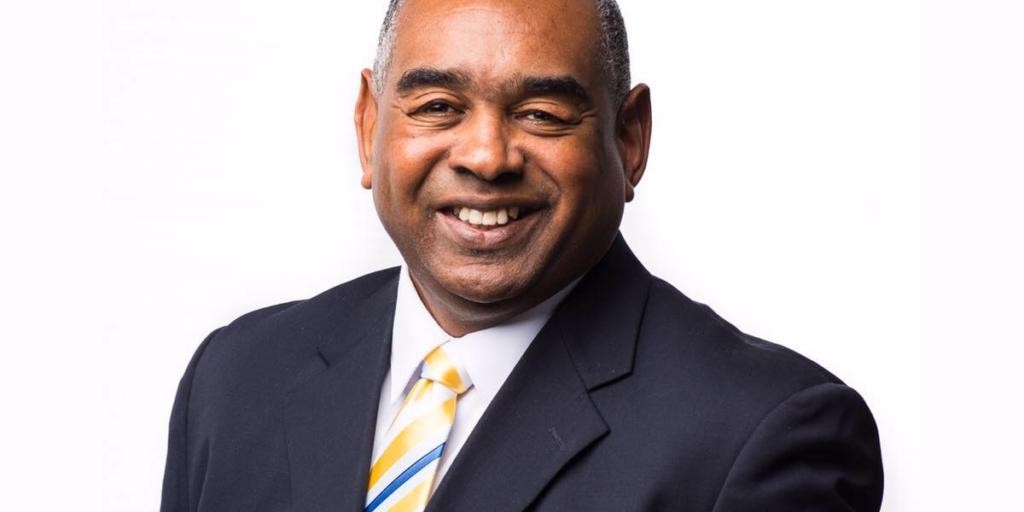
Veteran Alabama law enforcement officer Mark Pettway grew up in a black neighborhood called “Dynamite Hill” because the Ku Klux Klan bombed so many houses there in the 1950s and ’60s. Now, after becoming the first black person elected sheriff in Birmingham – on the same day voters elected the community’s first black district attorney – Pettway sees himself as part of a new wave of officers and court officials tasked with enforcing laws and rebuilding community trust fractured by police shootings, mass incarceration, and uneven enforcement that critics call racist. In a state where conservative politicians typically preach about getting tough on crime, Jefferson County’s new sheriff ran and won on an alternative message. He favors decriminalizing marijuana, opposes arming school employees, supports additional jailhouse education programs to reduce recidivism and plans for deputies to go out and talk to people more often, rather than just patrolling. “Going forward we need to think about being smarter and not being harder,” said the Democrat Pettway, 54. While the nation’s law enforcement officers are still mostly white men, and groups including the American Civil Liberties Union and Black Lives Matter call for sweeping changes in the criminal justice system, minorities appear to be making gains nationwide. In Pettway’s case, strong turnout by African-American voters, combined with national concern over police shootings of unarmed people of color, helped him defeat longtime Sheriff Mike Hale, a white Republican, said professor Angela K. Lewis, interim chair of political science at the University of Alabama at Birmingham. Winners in other cities attributed their success to similar factors. Houston voters elected 17 black women as judges in the midterms. Even before the election, nearly the entire criminal justice system in the Georgia city of South Fulton, near Atlanta was run by black women, including the chief judge, prosecutor, chief clerk and public defender. They’re offering more chances for criminal defendants to avoid convictions through pre-trial programs and increased use of taxpayer-funded lawyers to protect the rights of the accused. Chief Judge Tiffany C. Sellers of South Fulton’s municipal court said officials also explain court procedures in detail to defendants, many of whom haven’t been in court before and are scared. “Black and brown people often feel disenfranchised from the system, and I want them to understand what is going on,” Sellers said. “At the end of the day they may not like what I did with their case, but at least they know I explained things to them.” Midterms voters in five North Carolina counties elected black Democratic sheriffs for the first time, including Gerald Baker in Wake County. He defeated a longtime Republican incumbent by campaigning on ending the county’s participation in a Trump administration program to detain people suspected of being in the country illegally and advocating for greater police accountability. The message resonated in a county where a deputy and two highway troopers were charged in the beating of a black man earlier this year. Kyron Hinton suffered injuries including a broken nose, multiple dog bites and a fractured eye socket. “If we make a mistake out here in the actions that we take then we should take responsibility for those things,” Baker said in an interview after the election. Yet despite gains by people of color, officials like Baker still represent a minority in U.S. law enforcement. A Justice Department report released in 2013 showed that law enforcement agencies had become more racially and ethnically diverse over a 26-year period, yet the nation’s overall law enforcement community remained overwhelmingly white and male. Local police departments, which typically patrol inside city police jurisdictions, were about 73 percent white, the report said. Sheriff’s offices, which usually patrol in less urban areas and often operate county jails, were even whiter, at about 78 percent white. The report said research found that African-American, Latino and Asian-American communities were all underrepresented within police agencies relative to the populations they served. The disparity was greatest among blacks in areas where black population is proportionately largest, said the report. In Birmingham, Sheriff-elect Pettway of Jefferson County said he wants to increase hiring among minorities and women after he takes office in January. The department’s roughly 680-person staff should better reflect the county’s population, which is almost evenly split between blacks and whites, he said. Some of Pettway’s positions track those of the National Organization of Black Law Enforcement Executives, with about 3,000 members in all levels of police work. The group opposes arming teachers and held a conference last year aimed at broadening communication between police and community members. Pettway said he plans to increase the use of police body cameras, which he said was a big selling point during his campaign. “People loved that. With all the things that have been happening in law enforcement, people wanted accountability,” he said. Republished with permission from the Associated Press.
Donald Trump signs order denying asylum to illegal border crossers
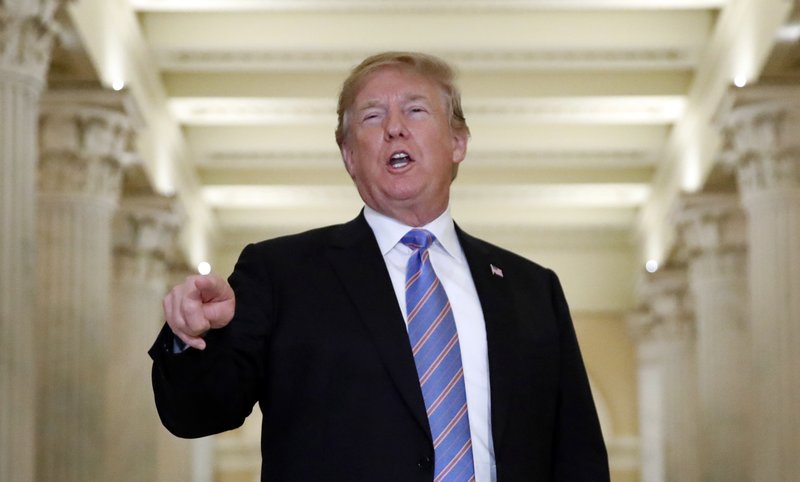
President Donald Trump issued an order Friday to deny asylum to migrants who enter the country illegally, tightening the border as caravans of Central Americans slowly approach the United States. The plan was immediately challenged in court. Trump invoked the same powers he used last year to impose a travel ban that was upheld by the Supreme Court. The new regulations are intended to circumvent laws stating that anyone is eligible for asylum no matter how he or she enters the country. About 70,000 people per year who enter the country illegally claim asylum, officials said. “We need people in our country but they have to come in legally,” Trump said Friday as he departed for Paris. The American Civil Liberties Union and other legal groups swiftly sued in federal court in Northern California to block the regulations, arguing the measures were clearly illegal. “The president is simply trying to run roughshod over Congress’s decision to provide asylum to those in danger regardless of the manner of one’s entry,” said ACLU attorney Lee Gelernt. The litigation also seeks to put the rules on hold while the litigation progresses. It wasn’t clear whether the case would go before a judge before the rules go into effect Saturday. They would be in place for at least three months but could be extended, and don’t affect people already in the country. Trump’s announcement was the latest push to enforce a hard-line stance on immigration through regulatory changes and presidential orders, bypassing Congress, which has not passed any immigration law reform. But those efforts have been largely thwarted by legal challenges and, in the case of family separations this year, stymied by a global outcry that prompted Trump to retreat. Officials said the asylum law changes are meant to funnel migrants through official border crossings for speedy rulings instead of having them try to circumvent such crossings on the nearly 2,000-mile (3,200-kilometer) border. Border Patrol agents in Yuma said they arrested nearly 450 migrants in Western Arizona this week. But the busy ports of entry already have long lines and waits, forcing immigration officials to tell some migrants to turn around and come back to make their claims. Even despite that, illegal crossings are historically low. Backlogs have become especially bad in recent months at crossings in California, Arizona and Texas, with some people waiting five weeks to try to claim asylum at San Diego’s main crossing. “The arrival of large numbers … will contribute to the overloading of our immigration and asylum system and to the release of thousands … into the interior of the United States,” Trump said in the proclamation, calling it a crisis. Administration officials said those denied asylum under the proclamation may be eligible for similar forms of protection if they fear returning to their countries, though they would be subject to a tougher threshold. Those forms of protection include “withholding of removal” — which is similar to asylum, but doesn’t allow for green cards or bringing families — or protection under the United Nations Convention Against Torture. Homeland Security officials said they were adding staffing at the border crossings to manage the expected crush, but it’s not clear how migrants, specifically families, would be held as their cases are adjudicated. Family detention centers are largely at capacity. Trump has said he wanted to erect “tent cities,” but nothing has been funded or decided. The U.S. is also working with Mexico in an effort to send some migrants back across the border. Right now, laws allow only Mexican nationals to be swiftly returned and increasingly those claiming asylum are from Central America, not Mexico. Trump pushed immigration issues hard in the days leading up to Tuesday’s midterm elections, railing against the caravans that are still hundreds of miles from the border. He has made little mention of the issue since the election, but has sent troops to the border in response. As of Thursday, there were more than 5,600 U.S. troops deployed to the border mission, with about 550 actually working on the border in Texas. Trump also suggested he’d revoke the right to citizenship for babies born to non-U.S. citizens on American soil and erect massive “tent cities” to detain migrants. Those issues were not addressed by the regulations. But Trump insisted the citizenship issue would be pushed through. “We’re signing it. We’re doing it,” he said. The administration has long said immigration officials are drowning in asylum cases partly because people falsely claim asylum and then live in the U.S. with work permits. In 2017, the U.S. fielded more than 330,000 asylum claims, nearly double the number two years earlier and surpassing Germany as highest in the world. Migrants who cross illegally are generally arrested and often seek asylum or some other form of protection. Claims have spiked in recent years and the immigration court backlog has more than doubled to 1.1 million cases in about two years, Syracuse University’s Transactional Records Access Clearinghouse reported this week. Generally, only about 20 percent of applicants are approved. It’s unclear how many people en route to the U.S. will even make it to the border. Roughly 5,000 migrants — more than 1,700 under the age of 18 — sheltered in a Mexico City sports complex decided to depart Friday for the northern city of Tijuana, opting for the longer but likely safer route to the U.S. border. Similar caravans have gathered regularly over the years and have generally dwindled by the time they reach the southern border, particularly to Tijuana. Most have passed largely unnoticed. Republished with permission from the Associated Press.
Judge rules Cullman County’s bail system illegally discriminates against the poor
People who fall victim to what many deem a “two-tiered” system of justice that’s based on wealth, won a significant victory in Cullman County, Ala. on Thursday when a federal court judge ruled that the practice of jailing those who cannot afford cash bail is unconstitutional. U.S. District Court Judge Madeline Haikala entered a preliminary injunction order that prohibits Cullman County from continuing to discriminate against the poor through its bail system, which many deem a “two-tiered” system of justice that’s based on wealth. Her decision follows a memorandum opinion entered last week explaining why the county’s practices were illegal. As the Court explained, “Cullman County’s discriminatory bail practices deprive indigent criminal defendants in Cullman County of equal protection of the law” and its justifications for using a bail schedule are “illusory and conspicuously arbitrary.” This preliminary injunction will remain in effect while the lawsuit challenging the practice is fully resolved and permanent relief is ordered. The suit was brought by the Southern Poverty Law Center(SPLC), Civil Rights Corps, the American Civil Liberties Union (ACLU) and the American Civil Liberties Union of Alabama on behalf of Bradley Hester, who was held on a $1,000 bond he could not afford. “Today was a big win for all Cullman County residents because no longer will the county be allowed to treat residents with means differently than those without in our criminal justice system,” said Sam Brooke, deputy legal director, the Southern Poverty Law Center. “Jails are not meant to warehouse people who have not been convicted of a crime, particularly where, as here, the rich are able to buy their freedom and impoverished people are left to languish in jail. This form of wealth-based discrimination that keeps people in jail just because they cannot afford their freedom is unconstitutional. We will continue to fight to eliminate wealth-based justice.” Katherine Hubbard, attorney, Civil Rights Corps, says most municipal courts have already moved away from cash. bail. “Today’s decision affirms that progress, and encourages more, recognizing that our district and circuit courts still have a long way to go,” she said. “We look forward to working with the county officials to ensure their new practices comply with the preliminary injunction order, and we will continue our litigation against Cullman County until permanent relief is implemented.” “The federal court’s decision today acknowledges what policy makers, advocates, and state courts across the country are recognizing: that locking people up simply based on poverty is unacceptable, and that a just bail system must provide robust protections to ensure that those presumed innocent are released pretrial, while only the most severe cases will require detention,” added Brock Boone, staff attorney, ACLU of Alabama. Brock continued, “Cullman County is in many ways typical of courts across Alabama. Far too often, its bail system results in people being locked away pretrial simply because they could not pay. Courts throughout Alabama, and the country, are setting bail above what people can pay, without any protections to ensure that this draconian penalty is used only when absolutely necessary.” Others moving away from cash bail Last month, California became the first state to fully abolish cash bail, a step backers said would create a more equitable criminal justice system, that’s not as dependent on a person’s wealth. “Several U.S. cities and states have in recent years reduced their reliance on bail, arguing the system unfairly confines poor people, creating overcrowded jails and extra costs for taxpayers,” the Wall Street Journal reported. Those who have been accused of crimes will instead be assessed, released on their own recognizance, given conditions for their release (GPS trackers, placed on house arrest) or held in jail.
ACLU of Alabama outlines how to cut the state’s prison population in half
Out of the 2+ million people who are behind bars in this country, about 90 percent are held in local jails and state prisons, which is why the American Civil Liberties Union (ACLU) of Alabama has released a new report outlining how Alabama in particular can cut incarceration rates in half. Currently, 28,296 people are locked up in Alabama prisons, says the ACLU of Alabama. According to the Alabama Department of Corrections (ADOC), state facilities are are at 160 percent of their intended occupancy — the most overcrowded system in the country — as they’re collectively designed to hold only only 13,000 prisoners. The ACLU of Alabama says prosecutors, judges, the state’s parole board and state lawmakers have the ability to change these stats if they pursue reforms like changing drug sentencing laws and sentencing enhancement laws, reducing sentencing ranges, and addressing its juvenile justice system. The new report is a part of the ACLU’s Smart Justice 50-State Blueprints project, a comprehensive, state-by-state analysis of how states can transform their criminal justice system and cut incarceration in half. In the coming weeks, the ACLU of Alabama will convene briefings with advocates and policymakers to share the findings of the Blueprint and discuss strategies on how to move the criminal justice reform agenda further forward. “If Alabama were to follow these and other reforms in this Smart Justice 50-State Blueprint, 12,511 fewer people would be in prison in Alabama by 2025, saving nearly $470 million that could be invested in schools, services, and other resources that would strengthen communities,” reads the report’s website. According to the report, Alabama can dramatically reduce its prison population by implementing just a few sensible reforms: Reducing the amount of time people spend in prison by reforming harsh drug laws by amending the criminal code Doing away with direct and discretionary transfers of juveniles to adult court. Increasing the value threshold that defines whether a property offense is a misdemeanor or a felony. Eliminating or significantly scaling back mandatory minimum sentences. Repealing Alabama’s Habitual Felony Offender Act, which is one of the most punitive habitual offender laws in the country. Releasing aging people in prison who pose no threat to public safety. Looking back 2015, more than 70 percent of people in Alabama county jails had not been convicted of a crime and were still awaiting trial. According to the ACLU of Alabama, “practices like this that are funneling more people into prison and having them stay there for longer and longer periods of time is creating a strain on Alabama’s budget.” In fact, in 2016, Alabama spent nearly half a billion dollars of its general fund on corrections, which represents an increase of 126 percent since 1985, a figure that far outpaces growth in spending on higher education. “Alabama voters, advocates, policymakers, and prosecutors have a crucial choice to make: continue our over-reliance on incarceration that is stifling our state and hurting our communities, or move forward by building a new, more compassionate, more humane systems of accountability that puts people before prisons,” said Randall Marshall, executive director of the ACLU of Alabama.
Federal appeals court blocks Alabama anti-abortion law

The 11th Circuit U.S. Court of Appeals in Atlanta blocked Alabama anti-abortion legislation on Wednesday, that would have outlawed a commonly used second-trimester dismemberment abortion procedure. The legislation, SB363: the Unborn Child Protection from Dismemberment Abortion Act, originally passed in 2016 and called for a ban on dilation and evacuation abortions; during which the fetus is removed in pieces with forceps. This type of procedure accounts for approximately 95 percent of all abortions in the second trimester. The legislation also allowed an exception in the event of a “serious health risk to the mother.” Executive director of the American Civil Liberties Union of Alabama, Randall Marshall told the Associated Press that the ruling means “Alabama politicians can’t put an “ideological agenda” over a woman’s health and decision-making.” “I am disappointed that the 11th Circuit sided with the lower court in this case, but it is encouraging that the court recognized the State’s important and legitimate interests in ending barbaric abortion procedures—in this case, procedures that literally tear apart babies living inside their mothers’ wombs,” Attorney General Steve Marshall said in a statement. “Our legal team is carefully considering whether we will petition the Supreme Court for review of this case. We expect to reach a decision soon.” In June of 2016 the ACLU filed a lawsuit against the restrictions, saying they would dramatically cut abortion access and close the state’s two busiest clinics — the West Alabama Women’s Clinic in Tuscaloosa and the Alabama Women’s Center in Huntsville. According to the Alabama Department of Public Health, the clinics in Huntsville and Tuscaloosa performed 72 percent of the 8,080 abortions in Alabama in 2014. Scheduled to take effect on Aug. 1 of 2016, U.S. District Judge Myron Thompson temporarily blocked the enforcement of the new law in July of that year.
Over 1,800 immigrant children reunited by deadline
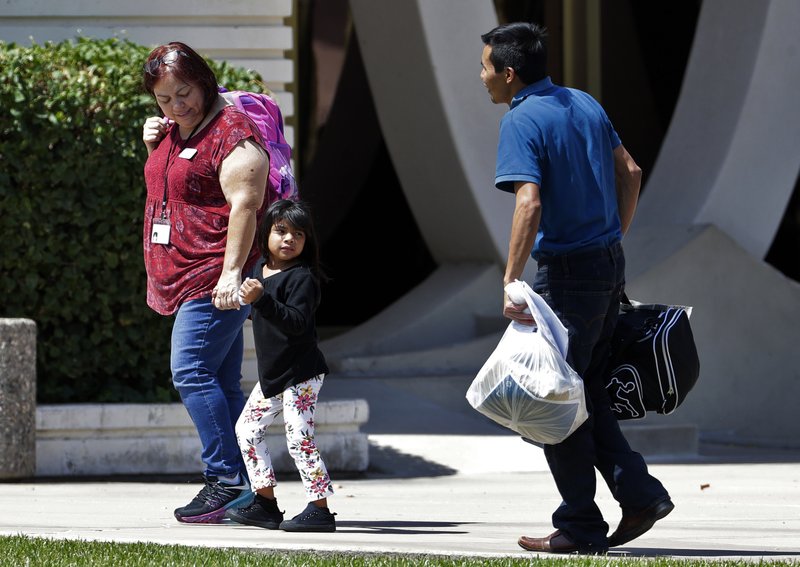
Shy children were given a meal and a plane or bus ticket to locations around the U.S. as nonprofit groups tried to smooth the way for kids reunited with their parents following their separations at the U.S. Mexico border. The Trump administration said Thursday that more than 1,800 children 5 years and older had been reunited with parents or sponsors hours before the deadline. That included 1,442 children who were returned to parents who were in U.S. Immigration and Customs Enforcement custody, and another 378 who were released under a variety of other circumstances. But about 700 more remain separated, including 431 whose parents were deported, officials say. Those reunions take more time, effort and paperwork as authorities fly children back to Guatemala, El Salvador and Honduras. On Friday morning, Homeland Security officials said they had reunified all eligible parents with children — but noted many others were not eligible because they have been released from immigration custody, are in their home countries or chose not to be reunited. Updated figures were not made public, but new data was expected to be released Friday at a court hearing in San Diego held by the judge overseeing the reunification process. “The administration will continue to make every effort to reunify eligible adults with their children,” a Homeland Security statement said. Now the federal judge in San Diego who ordered the reunifications must decide how to address the hundreds of still-separated children whose parents have been deported, as well as how much time, if any, reunified parents should be allowed to file asylum claims. Lee Gelernt, an attorney for the American Civil Liberties Union representing separated parents, said Thursday it was unclear how long it might take to find the parents returned to their homelands. “I think it’s just going to be really hard detective work and hopefully we’re going to find them,” he said. U.S. District Judge Dana Sabraw will also consider the ACLU’s request to give reunified parents at least a week to consider if they wish to seek asylum. The government opposes the waiting period, and Sabraw has put a hold on deporting reunified families while the issue is decided. On a parallel legal front over treatment of immigrant children, U.S. District Judge Dolly Gee in Los Angeles will be asked Friday to appoint a special monitor to oversee detention facilities. Children described horrid conditions in a voluminous report filed this month over whether the Trump administration is meeting its obligations under a long-standing settlement governing how young immigrants should be treated in custody. As the deadline neared, small groups of children were led in and out of Lutheran Social Services in Phoenix all day Thursday, sometimes holding hands with a worker from the center. Children and parents wore matching hospital-like identification bracelets and carried belongings in white plastic bags. The men sported shoes without laces that were taken away while in immigration detention. Support worker Julisa Zaragoza said some kids were so afraid of losing their parents again they didn’t want to go to the bathroom alone. “These families have been through a lot,” she said. The federal government was supposed to reunify more than 2,500 children who were separated from their parents under a new immigration policy designed to deter immigrants from coming here illegally, but the policy backfired amid global outrage over crying children taken from their parents. President Donald Trump ended the practice of taking children from parents and Sabraw ordered the government to reunite all the families by the end of Thursday, nevertheless indicating some flexibility given the enormity of the effort. Chris Meekins, the head of the office of the assistant secretary for preparedness and response for Health and Human Services, said the government would continue to reunify families with eligible parents throughout the evening. In most cases the families are released and the parents typically get ankle-monitoring bracelets and court dates to appear before an immigration judge. Faith-based and other groups have provided meals, clothing, legal advice, plane and bus tickets and even new shoe laces. A charitable organization called FWD.US, founded by technology leaders including Microsoft founder Bill Gates, Facebook CEO Mark Zuckerberg and Dropbox founder Drew Houston was paying for the airline tickets, the bus tickets and the lodging for all the families newly reunited in the Phoenix area to get them to relatives living all over the United States, said Connie Phillips of Lutheran Social Services. She said a phone company donated 500 mobile phones for the migrants, each with six months of free service. There were scattered reunions in various locations Thursday, including about 15 in Phoenix, said Phillips. The main immigrant-assistance center in El Paso, Texas, has been receiving about 25 reunified families daily. Some children who had not seen their parents in weeks or months seemed slow to accept that they would not be abandoned again. Jose Dolores Munoz, 36, from El Salvador, was reunited with his 7-year-old daughter last Friday, nearly two months after they were separated, but he said his daughter cries when he leaves the house. “She is afraid,” Munoz said. “Yesterday I left her crying, she is telling me, ‘You are not coming back.’” Those who remain separated from their children include Lourdes de Leon of Guatemala. She surrendered to authorities at the border and was deported on June 7, while her 6-year-old son, Leo, remained in the U.S. De Leon said Guatemalan consular officials told her signing a deportation order would be the easiest way to reunite with Leo. “He is in a shelter in New York,” de Leon said. “My baby already had his hearing with a judge who signed his deportation eight days ago. But I still do not know when they are going to return him to me.” At the Lutheran center, Phillips said the parents and kids have opened up as they go through an assessment process with workers. She said the outpouring of donations has been comforting. “We have seen a lot of people come
ACLU files suit against State of Alabama in transgender license case
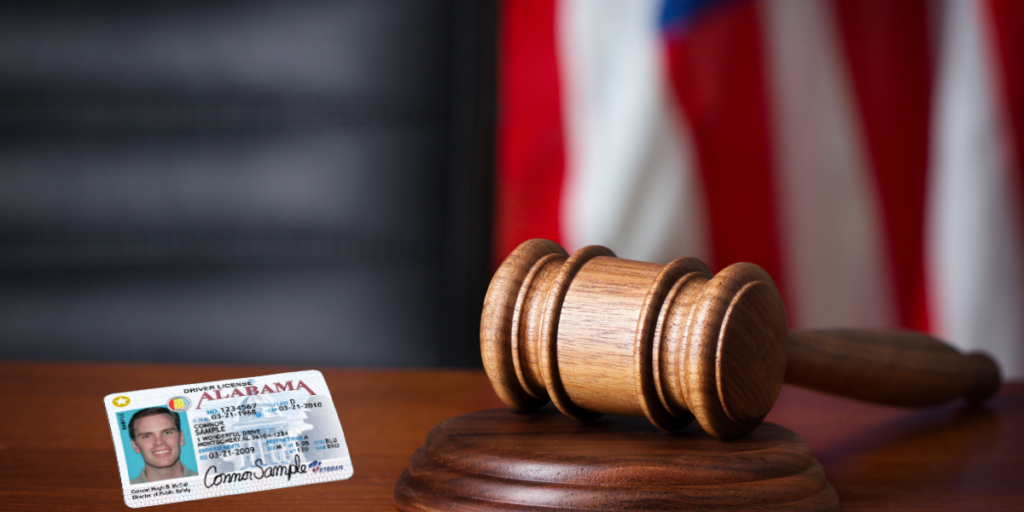
“Mr. Doe experiences distress whenever he sees the gender listed on his own license” states the American Civil Liberties Union (ACLU) lawsuit against the Alabama Law Enforcement Agency (ALEA). The suit was filed on Tuesday and claims the State of Alabama restricts the rights of transgender people by not allowing them to choose which gender their state issued ID identifies them as. Alabama is one of only nine states that requires proof of reassignment surgery before the gender on the state issued ID can be changed. Both trans-rights activists and the ACLU consider this a restriction of the rights of those who identify as transgender who either select not to have the surgery, or are unable to afford it. The ACLU, and two Alabama trans women, Darcy Corbitt and Destiny Clark, believe that by changing this policy trans people will be safer, and more comfortable during everyday activities. “Corbitt was loudly called an “it” in a public area of a crowded driver license office” and “Clark avoids lawful activities that could lead her to have to show her license,” states the lawsuit. According to AL.com, “Eighty percent of the transgender people in Alabama don’t have identification that accurately reflects their gender.” Clark’s motivation behind the lawsuit is to clear a path for younger transgender’s, and to protect them from some of the embarrassment she has experienced. Corbitt believes that the state does not have the right to define their gender identities as their worth. Below is an ACLU video featuring Darcy and Destiny, two of the transgender plaintiffs who are going to court as part of the suit:
US Supreme Court weighs case on detention of immigrants
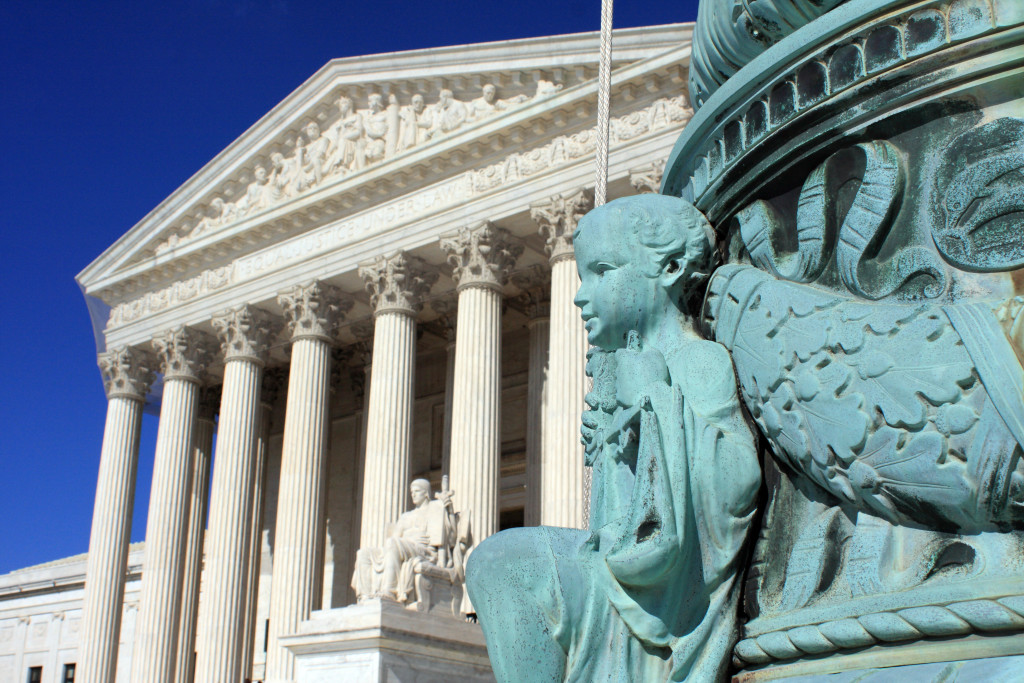
The Supreme Court wrestled for a second time Tuesday with whether the government can indefinitely detain certain immigrants it is considering deporting without providing a hearing. An eight-member court, deadlocked 4-4, didn’t decide the issue last year. Now that Justice Neil Gorsuch has joined the court he will presumably break a tie. But the justices seemed to struggle Tuesday with the issue just as they did when the case was first heard last November. The case the justices were hearing is a class-action lawsuit brought by immigrants who’ve spent long periods in custody. The group includes some people facing deportation because they’ve committed a crime and others who arrived at the border seeking asylum. The San Francisco-based U.S. Court of Appeals for the 9th Circuit ruled for the immigrants, saying they generally should get bond hearings after six months in detention, and then every six months if they continue to be held. The court said the government must show why they should remain locked up. The government disputes that ruling, a position shared by the Obama and Trump administrations. The American Civil Liberties Union, which brought the case on behalf of the immigrants, says about 34,000 immigrants are being detained on any given day in the United States, and 90 percent of immigrants’ cases are resolved within six months. But some cases take much longer. In the case before the justices, Mexican immigrant Alejandro Rodriguez was detained for more than three years without a bond hearing. He was fighting deportation after being convicted of misdemeanor drug possession and joyriding, and was ultimately released and allowed to stay in the United States. The court’s liberal justices suggested sympathy for immigrants like Rodriguez who face lengthy detention. Justice Stephen Breyer said that in most other cases where someone is detained they get a hearing to determine whether they should be freed. “We give triple ax murderers, at least people who are accused of such, bail hearings,” Breyer said. Justice Elena Kagan told the government’s lawyer, Malcolm Stewart, that asylum seekers have some constitutional rights, such as “not to be tortured, not to be placed in hard labor.” She suggested a similar right “not to be placed in arbitrary confinement.” But the appeals court’s decision that a hearing is necessary at six months and every six months thereafter seemed to give other justices pause. Justice Samuel Alito told ACLU lawyer Ahilan Arulanantham that “it’s quite something to find six months in the Constitution.” “Where does it say six months in the Constitution? Why is it six? Why isn’t it seven? Why isn’t it five? Why isn’t it eight?” he asked. A decision in the case, Jennings v. Rodriguez, 15-1204, is expected by June. Republished with permission from the Associated Press.
