
Donald Trump replaces 90-day ban with new travel restrictions
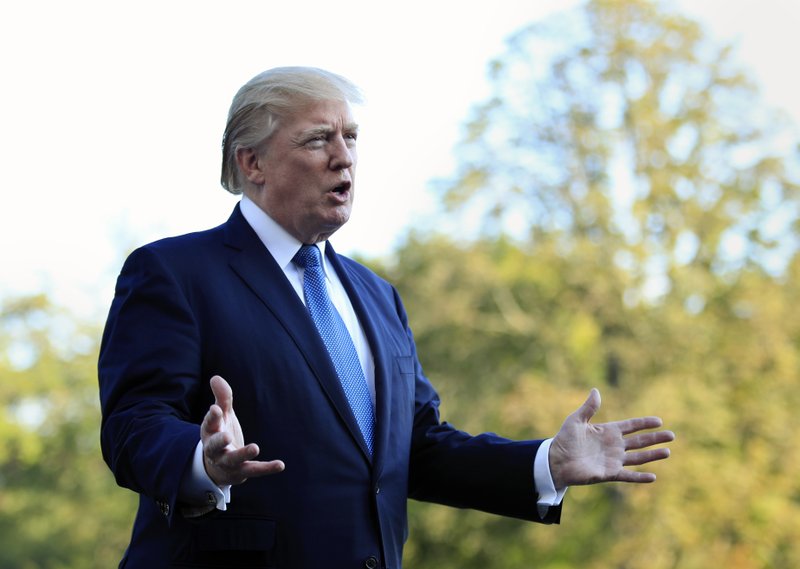
President Donald Trump has signed a proclamation imposing strict new restrictions on travelers from a handful of countries, including five that were covered by his expiring travel ban. Administration officials say the new measures are required to keep the nation safe. The indefinite restrictions apply to citizens of Chad, Iran, Libya, Somalia, Syria, Yemen and North Korea. As part of the presidential proclamation signed Sunday, the U.S. will also bar the entry of certain Venezuelan government officials and their immediate families. The changes will take effect October 18. The announcement came the same day that Trump’s temporary ban on visitors from six Muslim-majority countries was set to expire, 90 days after it went into effect. That ban had barred citizens of Iran, Libya, Somalia, Sudan, Syria and Yemen who lacked a “credible claim of a bona fide relationship with a person or entity in the United States” from entering the U.S. Only one of those countries, Sudan, will no longer be subject to travel restrictions. “Making America Safe is my number one priority. We will not admit those into our country we cannot safely vet,” Trump tweeted late Sunday after the new policy was announced. Unlike the first iteration of Trump’s travel ban, which sparked chaos at airports across the country and a flurry of legal challenges after being hastily written with little input outside the White House, officials stressed they had been working for months on the new rules, in collaboration with various agencies and in conversation with foreign governments. To limit confusion, valid visas would not be revoked as a result of the proclamation. The order also permits, but does not guarantee, case-by-case waivers for citizens of the affected countries. The restrictions are targeted at countries that the Department of Homeland Security says fail to share sufficient information with the U.S. or haven’t taken necessary security precautions. DHS has spent recent months working to develop a new security baseline, which includes factors such as whether countries issue electronic passports with biometric information, report lost or stolen passports to INTERPOL, an international law enforcement body, and share information about travelers’ terror-related and criminal histories. Citizens of countries that don’t meet the standard will face restrictions until they make changes to bring them into compliance. The new rules include the suspension of all immigrant visas for nationals of Chad, Iran, Libya, North Korea, Syria, Yemen and Somalia, and the suspension of non-immigrant visas, such as for business and tourism, to nationals of Chad, Libya, North Korea, Syria and Yemen. Citizens of Iran will not be eligible for tourism and business visas, but remain eligible for student and cultural exchange visas if they undergo additional scrutiny. Such additional scrutiny will also be required for Somali citizens applying for all non-immigrant visas. Critics have accused Trump of overstepping his legal authority and violating the U.S. Constitution’s protections against religious bias each time he has ordered new travel restrictions. And the inclusion of Venezuela and North Korea appeared to be an attempt to block challenges from advocacy groups and others who have called the restrictions a ban on Muslims. Trump during his campaign called for a “total and complete shutdown of Muslims entering the United States.” The U.S. had already imposed wide-ranging sanctions on certain high-ranking Venezuelan government officials to protest the government’s attempts to consolidate power. “The fact that Trump has added North Korea — with few visitors to the U.S. — and a few government officials from Venezuela doesn’t obfuscate the real fact that the administration’s order is still a Muslim ban,” said Anthony D. Romero, executive director of the American Civil Liberties Union, which has been challenging the ban in court. “President Trump’s original sin of targeting Muslims cannot be cured by throwing other countries onto his enemies list.” But administration officials argue the measure is necessary to keep Americans safe. Republished with permission from the Associated Press.
Politicians blocking people on social media ignites debate

An emerging debate about whether elected officials violate people’s free speech rights by blocking them on social media is spreading across the U.S. as groups sue or warn politicians to stop the practice. The American Civil Liberties Union this week sued Maine Gov. Paul LePage and sent warning letters to Utah’s congressional delegation. It followed recent lawsuits against the governors of Maryland and Kentucky and President Donald Trump. Trump’s frequent and often unorthodox use of Twitter and allegations he blocks people with dissenting views has raised questions about what elected officials can and cannot do on their official social media pages. Politicians at all levels increasingly embrace social media to discuss government business, sometimes at the expense of traditional town halls or in-person meetings. “People turn to social media because they see their elected officials as being available there and they’re hungry for opportunities to express their opinions and share feedback,” said Anna Thomas, spokeswoman for the ACLU of Utah. “That includes people who disagree with public officials.” Most of the officials targeted so far – all Republicans – say they are not violating free speech but policing social media pages to get rid of people who post hateful, violent, obscene or abusive messages. A spokeswoman for Maryland Gov. Larry Hogan called the Aug. 1 lawsuit against him “frivolous” and said his office has a clear policy and will “remove all hateful and violent content” and “coordinated spam attacks.” The ACLU accused Kentucky Gov. Matt Bevin of blocking more than 600 people on Facebook and Twitter. His office said he blocks people who post “obscene and abusive language or images, or repeated off-topic comments and spam.” Spokesmen for Utah Sen. Orrin Hatch and Rep. Mia Love, who were singled out by the ACLU, said people are rarely blocked and only after they have violated rules posted on their Facebook pages to prevent profanity, vulgarity, personal insults or obscene comments. “We are under no obligation to allow Senator Hatch’s Facebook page to be used as a platform for offensive content or misinformation,” spokesman Matt Whitlock said. Katie Fallow, senior staff attorney at Columbia University’s Knight First Amendment Institute, which sued Trump last month, said there’s no coordinated national effort to target Republicans. The goal is to establish that all elected officials – no matter the party – must stop blocking people on social media. “If it’s mainly used to speak to and hear from constituents, that’s a public forum and you can’t pick and choose who you hear from,” Fallow said. Rob Anderson, chairman of Utah’s Republican Party, scoffed at the notion that politicians are violating free-speech rights by weeding out people who post abusive content. “You own your Facebook page and if you want to block somebody or hide somebody, that’s up to you,” Anderson said. “Why else is there a tab that says hide or block?” Court decisions about how elected officials can and cannot use their accounts are still lacking in this new legal battleground, but rules for public forums side with free-speech advocates, said Erwin Chemerinsky, dean of the University of California-Berkeley Law School. For instance, lower court rulings say the government can’t deny credentials to journalists because their reporting is critical, he said. “These are government officials communicating about government business. They can’t pick or choose based on who they like or who likes them,” Chemerinsky said. But public officials may be able to legally defend the way they police their social media pages if they prove their decisions are applied evenly. “It’s got to content-neutral,” Chemerinsky said. Trump’s use of social media and the Supreme Court’s decision in June striking down a North Carolina law that barred convicted sex offenders from social media is driving the increased attention to the issue, said Amanda Shanor, a fellow at the Information Society Project at Yale Law School. “More and more of our political discussion is happening online,” Shanor said. “It’s more important that we know what these rules are.” Republished with permission of The Associated Press.
2 federal judges find new Donald Trump travel ban discriminatory
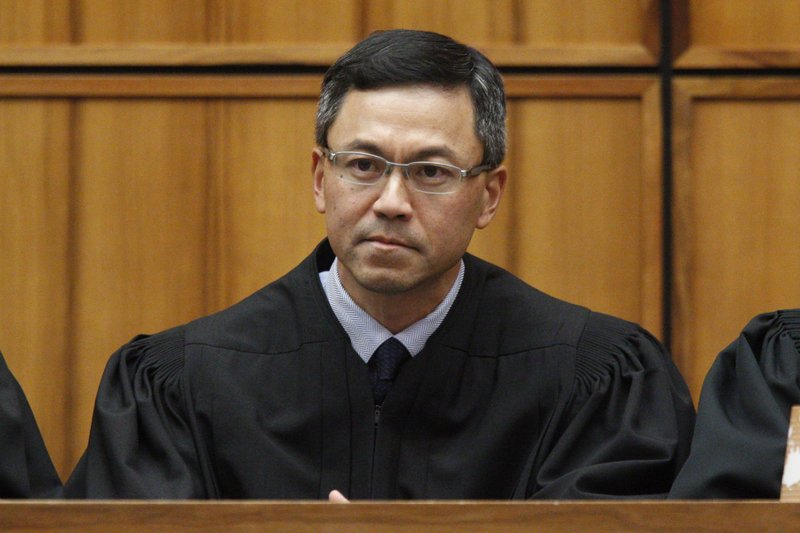
Rejecting arguments from the government that President Donald Trump‘s revised travel ban was substantially different from the first one, judges in Hawaii and Maryland blocked the executive order from taking effect as scheduled on Thursday, using the president’s own words as evidence that the order discriminates against Muslims. The rulings in Hawaii late Wednesday and in Maryland early Thursday were victories for civil liberties groups and advocates for immigrants and refugees, who argued that a temporary ban on travel from six predominantly Muslim countries violated the First Amendment. The Trump administration argued that the ban was intended to protect the United States from terrorism. In Greenbelt, Maryland, U.S. District Judge Theodore Chuang — who was appointed by then-president Barack Obama — called Trump’s own statements about barring Muslims from entering the United States “highly relevant.” The second executive order removed a preference for religious minorities from the affected countries, among other changes that the Justice Department argued would address the legal concerns surrounding the first ban, which was also blocked in court. “Despite these changes, the history of public statements continues to provide a convincing case that the purpose of the Second Executive Order remains the realization of the long-envisioned Muslim ban,” Chuang said. The initial ban sparked chaos at U.S. airports and widespread criticism around the world when it was signed in January. It was later blocked by a judge in Washington state, a ruling that was upheld by the 9th U.S. Circuit Court of Appeals. In Honolulu, U.S. District Judge Derrick Watson criticized what he called the “illogic” of the government’s arguments and cited “significant and unrebutted evidence of religious animus” behind the travel ban. He also noted that while courts should not examine the “veiled psyche” and “secret motives” of government decision-makers, “the remarkable facts at issue here require no such impermissible inquiry.” Watson also wrote, referring to a statement Trump issued as a candidate, “For instance, there is nothing ‘veiled’ about this press release: ‘Donald J. Trump is calling for a total and complete shutdown of Muslims entering the United States.’” The White House and the Justice Department had no immediate comment on Thursday. The case was argued in court by acting U.S. Solicitor General Jeffrey Wall, who said the ban “doesn’t say anything about religion. It doesn’t draw any religious distinctions.” Speaking Wednesday evening at a rally in Nashville, Tennessee, Trump called the ruling in Hawaii an example of “unprecedented judicial overreach” and said his administration would appeal it to the U.S. Supreme Court. He also called his new travel ban a watered-down version of the first one, which he said he wished he could implement. “We’re going to win. We’re going to keep our citizens safe,” the president said. “The danger is clear. The law is clear. The need for my executive order is clear.” While the Hawaii order only halts the ban temporarily, Chuang’s ruling in Maryland took the form of a preliminary injunction, which will remain in effect indefinitely as the case is litigated. Chuang was also the first judge to stop the ban outside the 9th Circuit, which has a liberal reputation. “Unless and until the president realizes that this is a battle in which he’s going to keep losing and decides to do the right thing and abandon this course, for as long as he’s on it we’ll keep litigating it and I think we’re going to keep winning,” said Omar Jadwat, who argued the case for the American Civil Liberties Union in Maryland. Chuang did not block the entire executive order, saying the plaintiffs didn’t sufficiently develop their argument that a temporary ban on refugees discriminates on the basis or religion. Plaintiffs in the Maryland case also had sought to stop a portion of the order that would reduce the number of refugees allowed to enter the country this fiscal year from 110,000 to 50,000. Still, the judge’s order is hugely meaningful for many plaintiffs, including a man in Texas whose same-sex fiancé is seeking a visa to enter the United States from Iran, said Justin Cox, an attorney with the National Immigration Law Center who also argued the Maryland case. “This Muslim ban was threatening to either separate or continue to separate families who’ve already been separated for months and years,” Cox said. “It has real-world consequences and we were obviously very glad to see that Judge Chuang recognized those and rejected the government’s frankly callous argument that our clients have already been waiting and another few months couldn’t possibly be irreparable.” If the administration appeals Watson’s decision at the 9th Circuit level, the matter would be heard by different judges from the three who ruled on the case last month. That’s because the panel of judges assigned to such cases rotates every month, said court spokesman David Madden. The 9th Circuit on Wednesday declined to reconsider the 3-0 decision not to reinstate the original ban. In a dissent, five judges said they considered that decision incorrect and wanted it vacated. The hearings in Maryland and Hawaii were two of three held Wednesday in federal courts around the country. U.S. District Judge James Robart in Seattle, who blocked the initial travel ban last month, did not immediately rule on a request from an immigrant-rights group to block the revised version. In all, more than half a dozen states are trying to stop the ban. Republished with permission of The Associated Press.
ACLU files ethics complaint against Jeff Sessions over Senate testimony
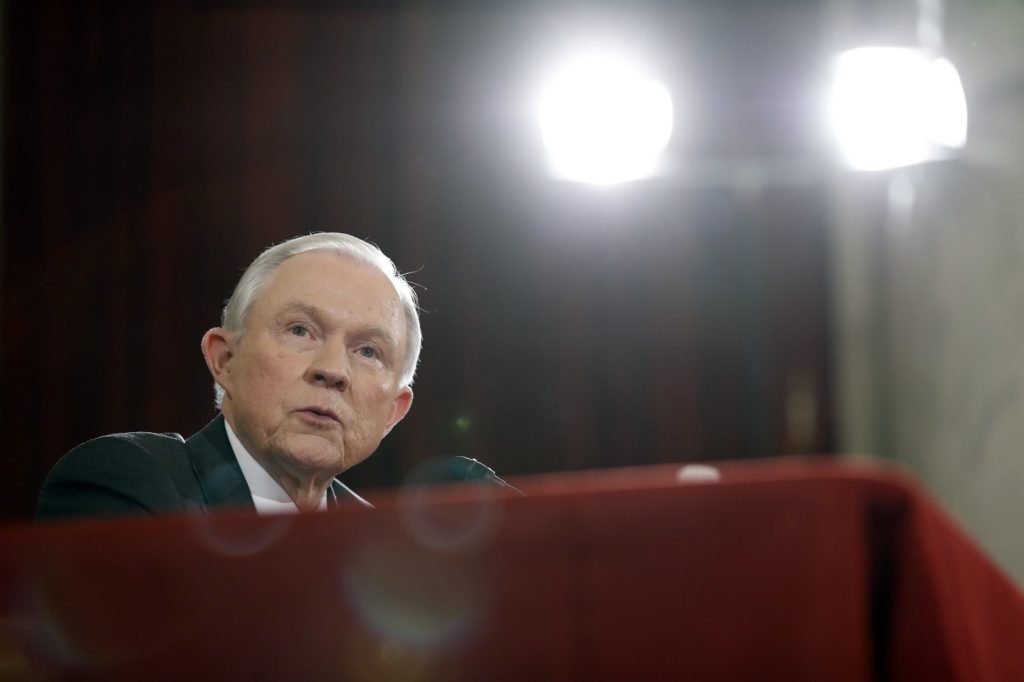
The American Civil Liberties Union (ACLU) has filed an ethics complaint against Attorney General Jeff Sessions over his false testimony to the the U.S. Senate Judiciary Committee. The complaint, filed Thursday with the Alabama State Bar, asks the body to investigate a potential rules violation after Sessions made false statements during sworn testimony at his confirmation hearing for attorney general. In his confirmation hearing, then-Senator Sessions was asked about any contact he had with members of the Russian government and responded at the time that he “did not have any communications with the Russians.” It has since come to light that Sessions met with Russia’s ambassador to the United States on at least two occasions. “False testimony made under oath is one of the most serious ethical offenses a lawyer can make and one any state bar should investigate vigorously,” said ACLU National Political Director Faiz Shakir. “Alabamians and Americans from all walks of life should be assured that the organizations responsible for regulating lawyers in their state takes ethical violations seriously — no matter how powerful that lawyer may be.” Alabama State Bar rules state that it is professional misconduct for a lawyer to “engage in conduct involving dishonesty, fraud, deceit, or misrepresentation.” Sessions has been a member of the bar since 1973. In the complaint, the ACLU says the report of the meetings with the Russian ambassador “does not square” with Sessions’s sworn Jan. 10 Senate testimony. “Few events are more corrosive to a democracy than having the Attorney General make false statements under oath about a matter the Justice Department is investigating,” added Christopher Anders, deputy director of the ACLU’s legislative office. “Jeff Sessions told a falsehood to the Senate, and did nothing to correct his statement until he was exposed by the press more than a month later. No attorney, whether just starting out as a new lawyer or serving as the country’s top law enforcement officer, should lie under oath. The Alabama bar must investigate this wrong fully and fairly.” The filed complaint can be read below:
Supreme Court could decide transgender case. Or not.
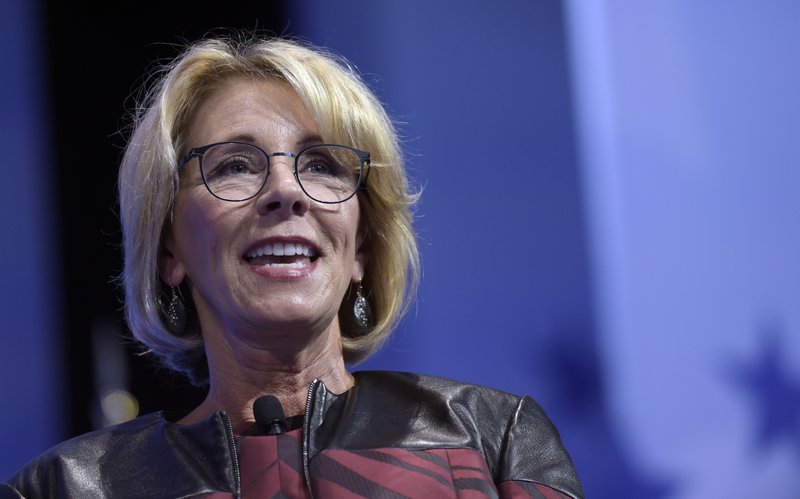
Both the transgender teen who sued to use a boys’ bathroom and the Virginia school board that won’t let him still want the Supreme Court to issue a definitive ruling in their ongoing dispute, even after the Trump administration retreated from an Obama-era policy on bathroom use. The big issue for both sides is whether the main federal law barring sex discrimination in education protects high school senior Gavin Grimm and other transgender students. Grimm was born a girl but identifies as a boy. The Virginia teen has been issued an amended birth certificate identifying him as a male, received hormone treatments and underwent chest reconstruction surgery. His lawyers said in court papers filed Thursday that prohibiting him from using the boys’ restroom is discrimination “on the basis of sex.” The Gloucester County school board said the law known as Title IX was “intended to erase discrimination against women in classrooms, faculties and athletics.” It does not include gender identity, the board said. But the withdrawal on Wednesday of joint Education and Justice Department guidance to school systems gives the high court an easy out if it is seeking to avoid a major ruling on transgender rights. The appeals court that sided with Grimm relied on the Obama administration’s reading of the anti-discrimination law and an Education Department regulation to hold that Grimm should be allowed to use a restroom that conforms to his chosen gender. The Trump administration’s decision to abandon Obama’s restroom guidance set off tensions within the Cabinet. Education Secretary Betsy DeVos expressed reluctance to rescind protections for transgender students and clashed with Attorney General Jeff Sessions, who supported it, according to a person familiar with the conversations but not authorized to speak publicly about internal discussions and so requested anonymity. After Wednesday’s the announcement, DeVos released her own statement, stressing that the administration had a “moral obligation” to protect LGBT students, which she said was “not only a key priority for the department, but for every school in America.” Speaking Thursday to the Conservative Political Action Conference, however, she framed it as a legal matter, “a very huge example of the Obama administration’s overreach.” The court on Thursday asked both sides to say what they think it should do following the administration’s action. Now that the basis for the appellate ruling has disappeared, the justices could return the case to the 4th U.S. Circuit Court of Appeals in Richmond, Virginia, and direct it to decide for itself what the law and regulation require. No appeals court has yet to do so and the high court typically won’t take up a major legal issue until after several courts around the country have weighed in. Similar cases are making their way through other courts of appeal. The temptation to wait may be even stronger because the court has been one justice short for more than a year, since Justice Antonin Scalia‘s death. President Donald Trump has nominated Judge Neil Gorsuch, but there is no chance Gorsuch could join the court in time for the March 28 argument in the Virginia case. “If I were a justice on the court, my inclination would be to say that I’d much rather be reviewing a lower court opinion that looked at the Title IX question,” said Case Western Reserve University law professor Jonathan Adler. Adler signed onto a legal brief in support of the school board that dealt with when courts should defer to federal agencies. That issue is no longer part of the case. There are some reasons why the justices might want to resolve the issue before the court breaks for the summer. Joshua Block, the American Civil Liberties Union lawyer who is representing Grimm, said the administration’s actions have created confusion and “only underscore the need for the Supreme Court to bring some clarity here.” Some strategic considerations may be at work as well. The outcome is likely to divide the liberal and conservative justices. The four liberal justices would need Justice Anthony Kennedy‘s vote to form a majority. It’s not clear he’s with them. Back in August, five justices voted to block the 4th circuit ruling ordering the school district to allow Grimm to use the boys’ restroom, at least until the high court finished its review of the case. At the time, Justice Stephen Breyer said he was providing the necessary fifth, majority-making vote as a courtesy to Kennedy and the other more conservative justices. It is impossible to know whether the court was spurred to act in August because of its concern about when courts should rely on agencies’ interpretations of laws and regulations, or the larger issue of Title IX protections. Fourteen states already prohibit discrimination against transgender students, according to the Human Rights Campaign. Republished with permission of The Associated Press.
U.S. Justice Department to dispatch fewer election observers
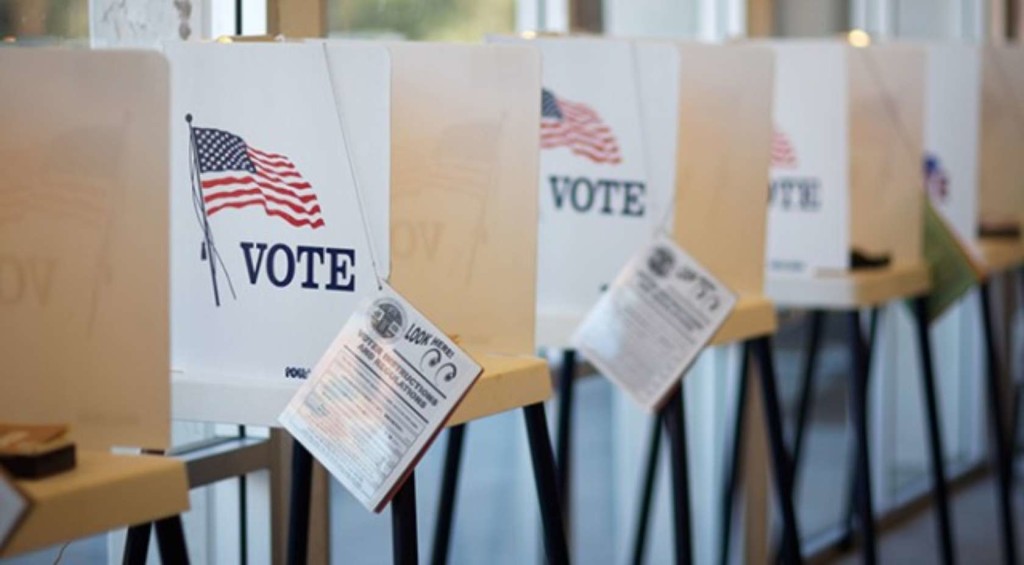
Justice Department officials are warning that they will be dispatching fewer specially trained election observers this year as a result of a Supreme Court opinion that gutted a key provision of the Voting Rights Act. The reduction is likely to diminish the department’s ability to detect voter intimidation and other potential problems at the polls. It comes as more than a dozen states have adopted new voting and registration rules, and as Republican candidate Donald Trump warns without evidence that the Nov. 8 election will be rigged and exhorts his followers to be vigilant against unspecified fraud. “It’s cause for concern,” said Dale Ho, director of the ACLU’s Voting Rights Project. “It’s hard to know ahead of time how significant a problem it’s going to be.” Justice Department officials said they still will dispatch hundreds of staffers to the polls and expect to have them in at least as many states as during the 2012 election, when they sent more than 780 to 23 states. “We have been doing everything we can through our monitoring program to be able to be as effective as we can be” in ensuring fair elections, said Vanita Gupta, head of the Justice Department’s Civil Rights Division. But, she said, there’s no way to “sugar coat” the impact of the court’s 2013 Shelby County v. Holder opinion, which invalidated a cornerstone of the 1965 voting law. In a video being released Wednesday, Attorney General Loretta Lynch said that though the court’s decision had reined in the Justice Department’s power, the government would work to “ensure that every voter can cast his or her ballot free of unlawful intimidation, discrimination, or obstruction.” The exact number of personnel will not be revealed until closer to Election Day. Most of the staffers will be so-called election monitors, who have less authority than federally trained election observers and rely on the cooperation of local officials to do their jobs. Unlike monitors, federal observers enjoy unfettered access inside polling places on Election Day and cannot be removed. The federal observer program has provided an important safeguard during previous elections, especially in places that tried to suppress the votes of blacks, Latinos and other minorities, said Kristen Clarke, president of the Lawyers’ Committee for Civil Rights Under Law. In past elections, for example, observers were sent to Greensboro, Alabama, after white election officials tried to deny access to black voters and to Pike County, Georgia, when an after-hours voter registration session was open to whites only. Observers and monitors have long been relied upon to defuse tensions, deter intimidation and encourage faith in the fairness of the electoral process. “They have the imprimatur of the federal government behind them that is giving them the rights and responsibilities to be in polling places,” said Nicole Austin-Hillery, director and counsel of the Washington, D.C., office of the Brennan Center for Justice. This year, as in past elections, staffers are responsible for making sure voters aren’t treated differently because of race or gender, that disabled voters are being accommodated and that voters who need them have bilingual election materials, Lynch said in her message. Still, this presidential election will be the first since the Shelby County opinion. That ruling threw out a requirement that jurisdictions with a history of voting discrimination, mostly in Southern states, seek approval from the federal government before changing the way they hold elections. The opinion opened the door to state law changes decried by voting rights advocates, including stringent new voter ID requirements. Beyond that, it nullified a formula the department had long relied on to allocate observers to jurisdictions nationwide. The department now says it will send observers only to the handful of jurisdictions that are subject to a federal court order authorizing their presence. Those include Alameda County in California; St. Landry Parish in Louisiana; Orange County in New York; and some smaller communities in Alaska. In 2012, by contrast, the department said it sent observers to 17 jurisdictions in 10 states. Benard Simelton, president of the Alabama State Conference of the NAACP, said he expected his group to try to compensate for any decline in observers by having its own monitors outside polling places. “If we see that they have a distressed look on their face, we will go up to them and specifically ask did they have problems voting,” he said. “Hopefully through that process, we will be able to take the information and channel it to the different organizations.” Republished with permission of the Associated Press.
ACLU-Alabama files lawsuit for Christian woman’s right to headscarf in license photo
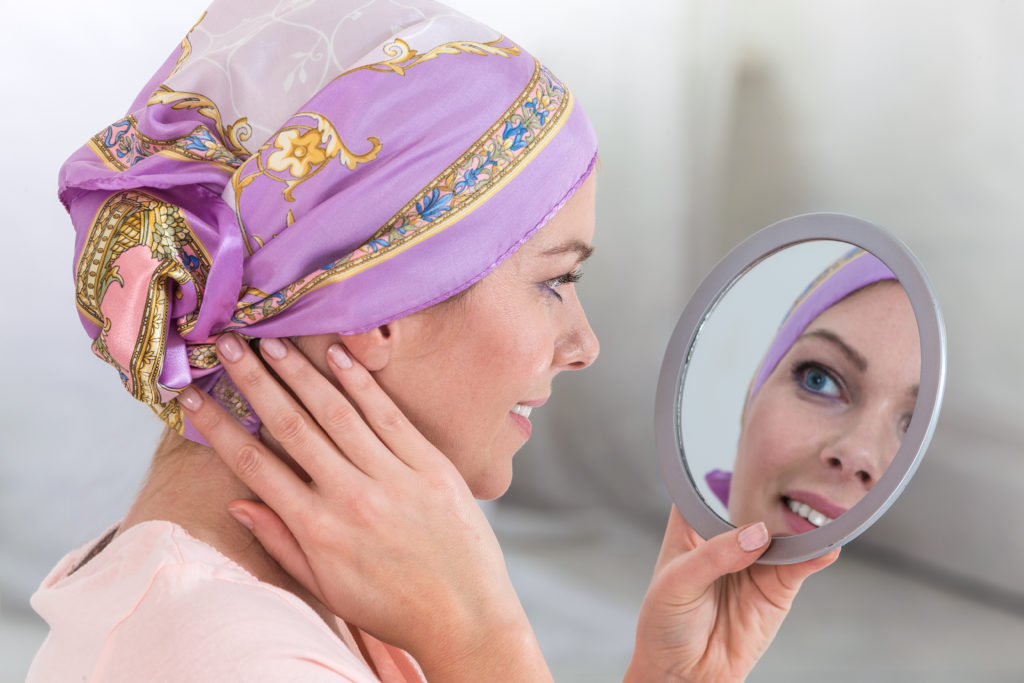
When Yvonne Allen of Tuskegee, Ala., went to renew her license in December, she was reportedly forced to remove the headscarf she wears for religious reasons. The clerk explained to her only Muslim women were allowed to cover their hair in the photos. On Tuesday, the American Civil Liberties Union of Alabama filed a lawsuit on her behalf. “I was devastated when they forced me to remove my headscarf to take my driver’s license photo,” Allen said in a statement released by the ACLU. “Revealing my hair to others is disobedient to God. I should have the same right as people of other faiths to be accommodated for my religious beliefs.” Lee County’s refusal to grant Allen a religious accommodation contradicts state rules and violates her rights under the First Amendment to the U.S. Constitution and the Alabama Constitution, according to the lawsuit. On Wednesday, the Alabama chapter of America’s largest Muslim civil liberties and advocacy organization, the Council on American-Islamic Relations (CAIR) showed their support for the suit, saying that Christian women in Alabama should be able to wear a headscarf for a driver’s license photo, just as Muslim women and Sikh men are allowed to wear religious head coverings. “Alabamans of all faiths should have the right to wear religious apparel in driver’s license photos,” said CAIR-Alabama Executive Director Khaula Hadeed. “The right to practice one’s faith is a universal right, one that should not be limited to Muslims and Sikhs.” In 2004, Alabama changed a policy that prohibited the wearing of head scarves and turbans in driver’s license photos. The new policy allowed head coverings for religious and medical reasons.
Federal judge blocks Alabama’s new anti-abortion laws

A federal judge has temporarily blocked enforcement of two new Alabama abortion laws banning abortion clinics near schools and outlawing a commonly used second-trimester dismemberment abortion procedure. U.S. District Judge Myron Thompson ruled Wednesday that enforcement of the two new abortion laws in Alabama will be on hold until after a hearing in October. The laws, passed by the Alabama Legislature this spring and signed by Gov. Robert Bentley, were scheduled to take effect on Aug. 1. The American Civil Liberties Union in June filed a lawsuit against the restrictions, saying they would dramatically cut abortion access and close the state’s two busiest clinics — the West Alabama Women’s Clinic in Tuscaloosa and the Alabama Women’s Center in Huntsville. According to the Alabama Department of Public Health, the clinics in Huntsville and Tuscaloosa performed 72 percent of the 8,080 abortions in Alabama in 2014. Judge Thompson granted a temporary restraining order on enforcement of the laws — agreed to by both parties — to allow the state time to respond and to allow the court to consider the case. Thompson has scheduled an Oct. 4 hearing on a request from abortion providers to permanently block both laws.
Phil Williams takes stand against ACLU lawsuit over pro-life law
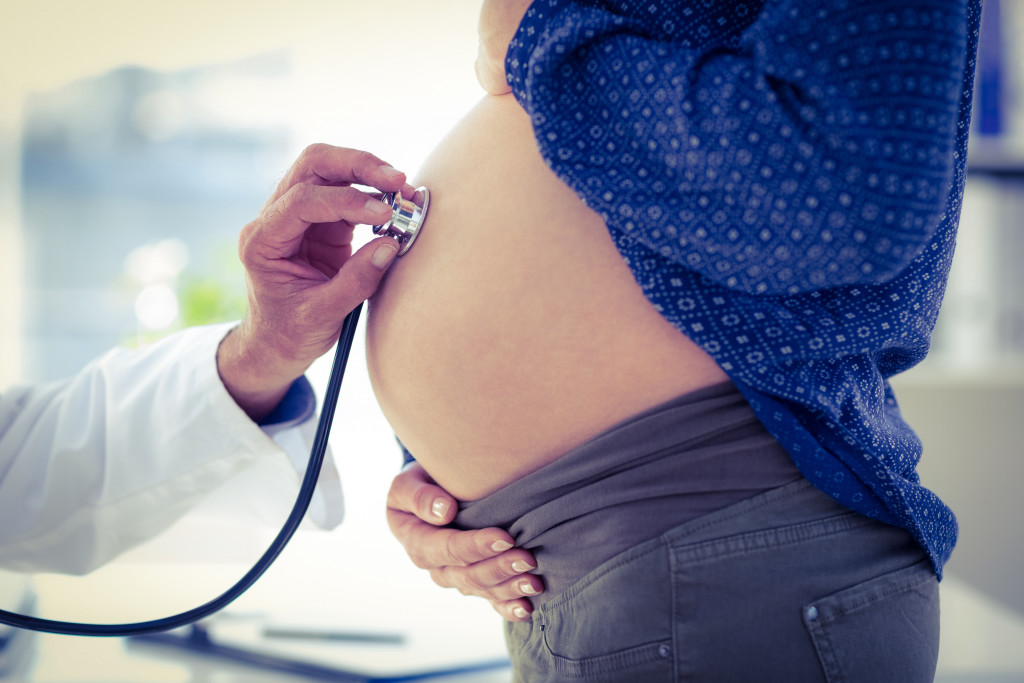
The American Civil Liberties Union (ACLU) filed a lawsuit against pro-life legislation sponsored by Rainbow City-Republican state Senator Phil Williams during the 2016 Alabama legislative session last week. The lawsuit challenges SB363, the Unborn Child Protection from Dismemberment Abortion Act, which prohibits a procedure called dilation and evacuation (“D&E” abortion), which accounts for approximately 95 percent of all abortions in the second trimester. It allows an exception only in the event of a “serious health risk to the mother.” According to Life News, “the ACLU argued that the laws restrict women’s access to abortion by closing abortion clinics and ‘severely curtailing’ second-trimester abortions in Alabama. Its lawyers also argued that dismemberment abortions are safe, common second-trimester procedures that women should have access to.” Williams responded Tuesday and slammed the ACLU for the lawsuit. “Last week, the ACLU filed a misguided legal challenge against the Unborn Child Protection from Dismemberment Act (SB363), which prohibits the gruesome abortion of unborn children by dismemberment,” Williams said in a statement where he cited a U.S. Supreme Court opinion in the case of Stenberg v. Carhart by Justice Anthony Kennedy, describing the procedure: “The fetus, in many cases, dies just as a human adult or child would: It bleeds to death as it is torn limb from limb.” “Life is a gift from God and protecting life is a primary duty of any court or legislature,” Williams continued. “The people’s representatives in the Alabama Legislature overwhelmingly approved the passage of the Unborn Child Protection from Dismemberment Act, and I am confident the courts will uphold its legality.” The law has been signed by Gov. Robert Bentley and is slated to go into effect August 1.
Complaint challenges Alabama ban on abortion clinics near schools
The American Civil Liberties Union is challenging two new Alabama abortion restrictions, one banning clinics near schools and another banning a common second-trimester abortion procedure. The complaint filed Thursday said the location restriction would force two of the state’s five abortion clinics to close. Alabama lawmakers voted earlier this spring to ban abortion clinics within 2,000 feet of a public K-8 schools. They also banned a commonly used second-trimester abortion procedure known as dilation & evacuation. ACLU attorney Andrew Beck said the laws are unconstitutional restrictions designed to prevent women from accessing abortions. The filing in Montgomery federal court seeks to amend an existing lawsuit over a requirement that clinic backup doctors have hospital admitting privileges. A spokeswoman for Alabama Gov. Robert Bentley said the governor did not have an immediate response. Republished with permission of The Associated Press.
Alabama judge: Feds should issue same-sex marriage licenses
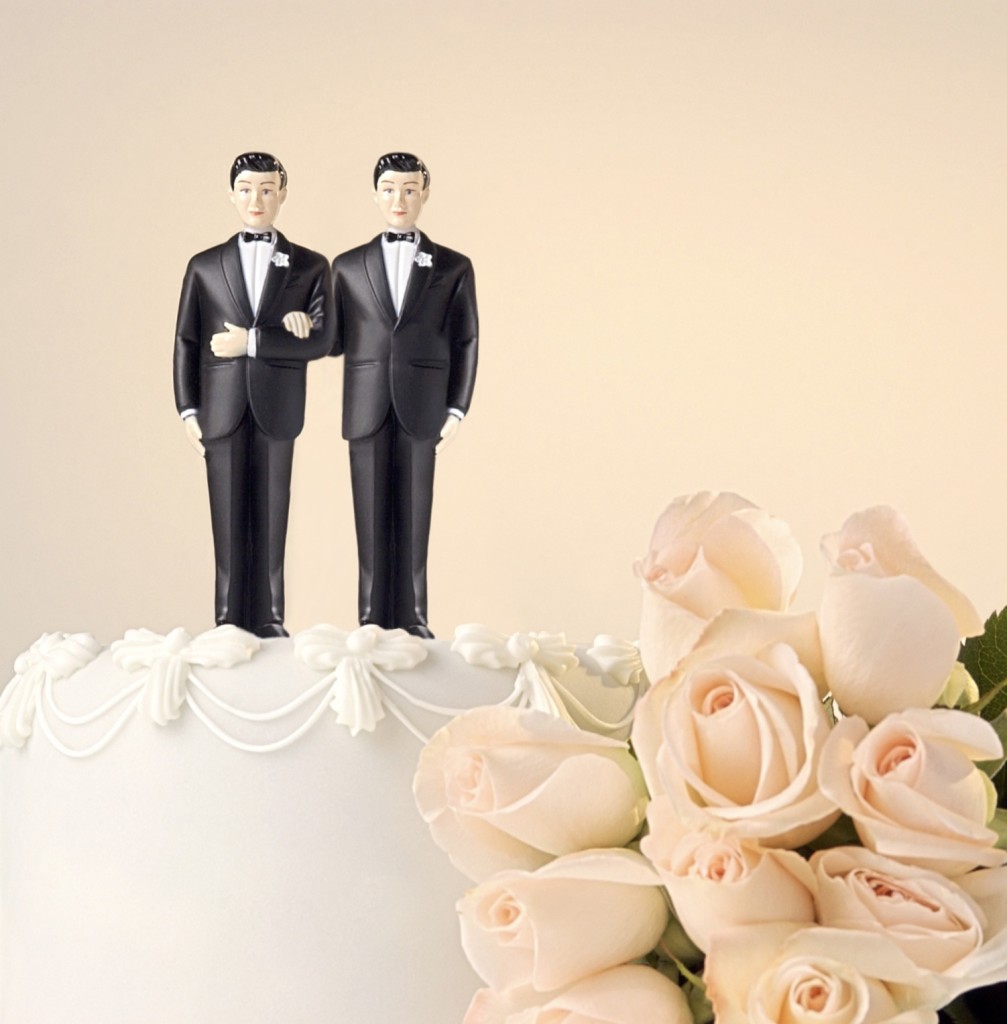
An Alabama probate judge is asking the state’s Supreme Court for a way out of issuing marriage licenses to same-sex couples. Elmore County Probate Judge John Enslen filed a petition Monday that says the federal government, not state offices, should issue marriage licenses to same-sex couples. The federal government is responsible for upholding and enforcing other laws created at the federal level and already issues licenses through numerous agencies, Enslen said in the petition. The petition asks the court to order judges statewide not to issue same-sex marriage licenses or recognize licenses that Enslen says have been issued in contradiction to the Alabama Constitution. “Born solely from a strained interpretation of the U.S. Constitution, the new same-sex marriage license is a child of the federal government, not the State of Alabama,” Enslen wrote in the petition. Enslen also asks that the Alabama Supreme Court declare it will only recognize same-sex marriage licenses if they have been issued by the federal government or by states that have their own gay marriage laws. The petition is the second of its kind to be filed with the state’s high court, said ACLU-Alabama Executive Director Susan Watson. “They would really be hard pressed to come out and say that Alabama isn’t bound by the Supreme Court decision,” she said. “I think it’s just typical Alabama mindset in that they don’t want to do what the federal government tells them to do.” Elmore County, just north of Montgomery, is one of nine counties in the state that has stopped issuing marriage license altogether, Watson said. Officials in Alabama counties that are no longer issuing marriage licenses are using a segregation-era state law to avoid licensing gay and lesbian couples. The law says probate courts “may” issue rather than “shall” issue marriage licenses. “We’re taking a strong look at that because the Supreme Court ruling stated that marriage was a fundamental right,” Watson said. “So the fact that these judges are not issuing licenses to anyone is denying them their fundamental right to marry.” Republished with permission of the Associated Press.
Abortion clinic files lawsuit over state regulation
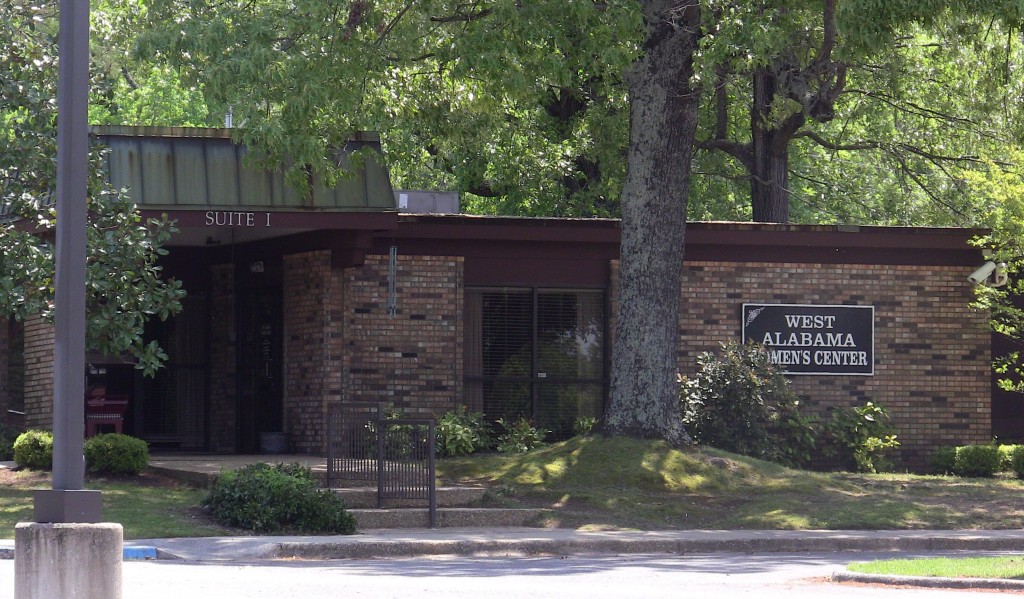
A Tuscaloosa abortion clinic is suing the state over a regulation that could cause the facility to permanently close. West Alabama Women’s Center filed the federal lawsuit last week against state health officials over a regulation that requires abortion doctors to have admitting privileges at a local hospital or a contract with a physician who does to handle patients with complications. The requirement is not new. However, the clinic’s previous physician retired and the new doctor has been unable to gain admitting privileges or find a local gynecologist to take the contract. Susan Watson of the American Civil Liberties Union says the regulation is unnecessary. She says doctors face harassment by anti-abortion activists if they work with clinics. The clinic is one of five abortion providers in Alabama. Republished with permission of The Associated Press.
