
Supreme Court rules in favor of Black Alabama voters in unexpected defense of Voting Rights Act
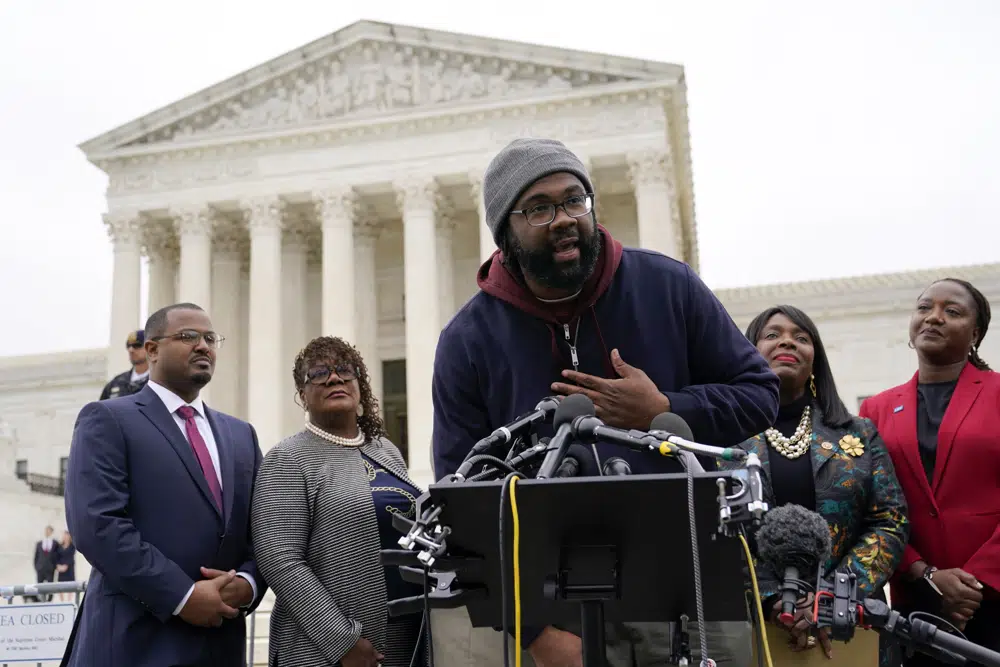
The Supreme Court on Thursday issued a surprising 5-4 ruling in favor of Black voters in a congressional redistricting case from Alabama, with two conservative justices joining liberals in rejecting a Republican-led effort to weaken a landmark voting rights law. Chief Justice John Roberts and Justice Brett Kavanaugh joined with the court’s liberals in affirming a lower-court ruling that found a likely violation of the Voting Rights Act in an Alabama congressional map with one majority Black seat out of seven congressional districts in a state where more than one in four residents is Black. The state now will have to draw a new map for next year’s elections. The decision was closely watched for its potential effect on control of the closely divided U.S. House of Representatives. Because of the ruling, Republican-led legislatures in Alabama and Louisiana will have to redraw maps so that they could increase Black representation. The outcome was unexpected in that the court had allowed the challenged Alabama map to be used for the 2022 elections — and in arguments last October, the justices appeared willing to make it harder to challenge redistricting plans as racially discriminatory under the Voting Rights Act of 1965. The chief justice himself suggested last year that he was open to changes in the way courts weigh discrimination claims under the part of the law known as section 2. But on Thursday, Roberts wrote that the court was declining “to recast our section 2 case law as Alabama requests.” Roberts was part of conservative high-court majorities in earlier cases that made it harder for racial minorities to use the Voting Rights Act in ideologically divided rulings in 2013 and 2021. The other four conservative justices dissented Thursday. Justice Clarence Thomas wrote that the decision forces “Alabama to intentionally redraw its longstanding congressional districts so that black voters can control a number of seats roughly proportional to the black share of the State’s population. Section 2 demands no such thing, and, if it did, the Constitution would not permit it.” The Biden administration sided with the Black voters in Alabama. Attorney General Merrick Garland applauded the ruling: “Today’s decision rejects efforts to further erode fundamental voting rights protections, and preserves the principle that in the United States, all eligible voters must be able to exercise their constitutional right to vote free from discrimination based on their race.” Evan Milligan, a Black voter and the lead plaintiff in the case, said the ruling was a victory for democracy and people of color. “We are grateful that the Supreme Court upheld what we knew to be true: that everyone deserves to have their vote matter and their voice heard. Today is a win for democracy and freedom not just in Alabama but across the United States,” Milligan said. The case stems from challenges to Alabama’s seven-district congressional map, which included one district in which Black voters form a large enough majority that they have the power to elect their preferred candidate. The challengers said that one district is not enough, pointing out that overall, Alabama’s population is more than 25% Black. A three-judge court, with two appointees of former President Donald Trump, had little trouble concluding that the plan likely violated the Voting Rights Act by diluting the votes of Black Alabamians. The panel ordered a new map drawn. But the state quickly appealed to the Supreme Court, where five conservative justices prevented the lower-court ruling from going forward. At the same time, the court decided to hear the Alabama case. Louisiana’s congressional map had separately been identified as probably discriminatory by a lower court. That map, too, remained in effect last year and now will have to be redrawn. Partisan politics underlies the case, and in a closely divided House of Representatives, Thursday’s ruling could have a significant effect. Republicans who dominate elective office in Alabama have been resistant to creating a second district with a Democratic-leaning Black majority, or close to one, that could send another Democrat to Congress. The judges found that Alabama concentrated Black voters in one district, while spreading them out among the others to make it much more difficult to elect more than one candidate of their choice. Alabama’s Black population is large enough and geographically compact enough to create a second district, the judges found. Denying discrimination, Alabama argued that the lower court ruling would have forced it to sort voters by race and insisted it was taking a “race-neutral” approach to redistricting. At arguments in October, Justice Ketanji Brown Jackson scoffed at the idea that race could not be part of the equation. Jackson, the court’s first Black woman, said that constitutional amendments passed after the Civil War and the Voting Rights Act a century later were intended to do the same thing, make Black Americans “equal to white citizens.” Republished with the permission of The Associated Press.
Senate Committee advances legislation to bar protests at individual residences
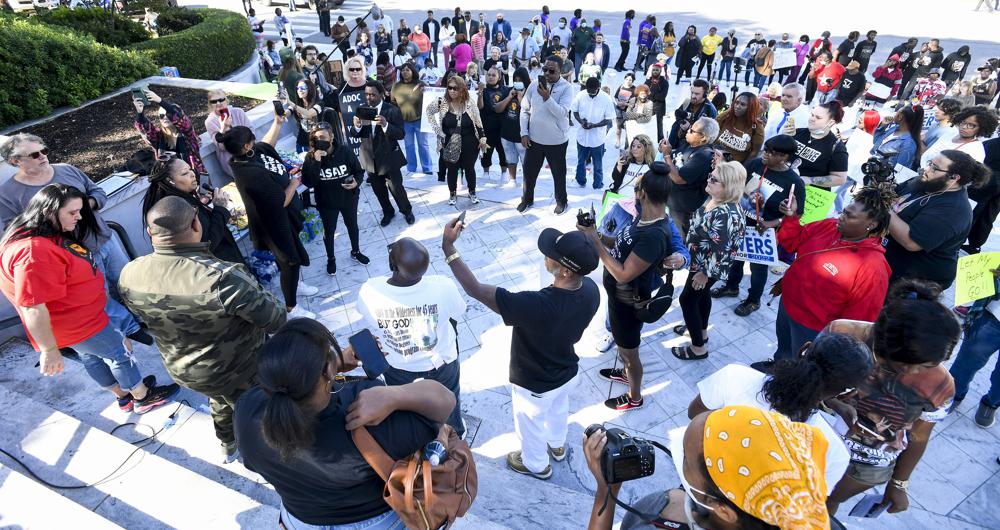
On Thursday, the Alabama Senate Veterans and Military Affairs Committee voted to advance legislation prohibiting protests and picketing outside individual residences. Senate Bill 199 is sponsored by State Senator Arthur Orr (R-Decatur). Orr said that this legislation was inspired by the protests outside of Justice Brett Kavanaugh’s house following the release of a draft opinion overturning the Roe v. Wade decision. Orr said, “Protesters come out to the house and protested on the sidewalk with bullhorns and created a nuisance.” Orr said that he felt that the state of Alabama did not want that, so he drafted legislation to ban such tactics. “I showed it to Judiciary Chairman [Will] Barfoot, and he had some ideas,” Orr said. Sen. Will Barfoot said, “No person at or near a person’s residence. I think that is pretty vague. I think we need to tighten that up.” Sen. Andrew Jones is the Chairman of the Senate Veterans and Military Affairs Committee. The synopsis states, “This bill would prohibit a person from picketing or protesting at or near the residence of any individual intending to harass or intimidate. This bill would require law enforcement officers to ask a person who is protesting to peacefully leave the premises before placing that person under arrest.” This offense would be a class C misdemeanor. If local law enforcement can’t or won’t enforce this statute, it authorizes the Alabama Law Enforcement Agency to do so. This legislation would allow municipalities or counties to adopt ordinances or resolutions to regulate the time and noise level of any picketing or protesting in a residential area and provide criminal penalties for violations.” The committee voted to give SB199 a favorable report. It could be considered by the full Senate as early as Tuesday. While the protests outside of Supreme Court Justices’ homes made national news, there have been instances of protests outside of individual residences in Alabama. Protesters protested outside the home of Hoover Mayor Frank Brocato following the shooting of Emantic “E.J.” Bradford Jr. in the Galleria Mall by a Hoover police officer. In the case of the Supreme Court Justices, legal experts generally agree that targeted, stationary protests outside of a justice’s home are already prohibited under federal law — an effort to protect judges from undue pressures or influence. U.S. Sen. Katie Britt and other Republicans maintain that the Biden administration ordered the federal marshals to protect the judges but not to remove the protestors. Tuesday will be day 11 of the 2023 Alabama Regular Legislative Session. The Alabama Constitution limits the Legislature to no more than thirty legislative days during a regular session. To connect with the author of this story or to comment, email brandonmreporter@gmail.com.
Supreme Court weighs ‘most important case’ on democracy
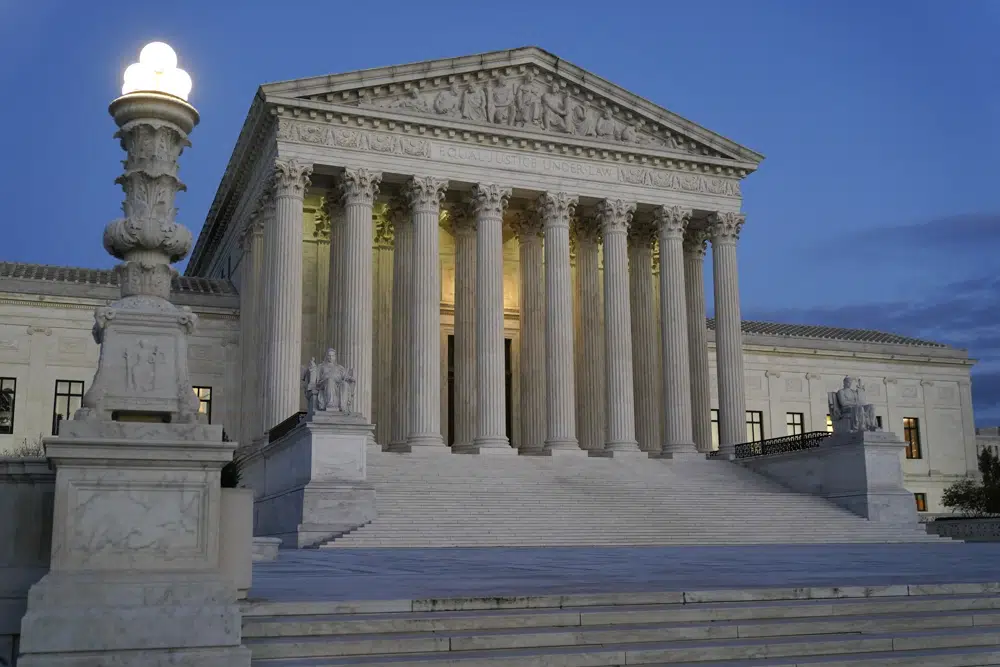
The Supreme Court is about to confront a new elections case, a Republican-led challenge asking the justices for a novel ruling that could significantly increase the power of state lawmakers over elections for Congress and the presidency. The court is set to hear arguments Wednesday in a case from North Carolina, where Republican efforts to draw congressional districts heavily in their favor were blocked by a Democratic majority on the state Supreme Court because the GOP map violated the state constitution. A court-drawn map produced seven seats for each party in last month’s midterm elections in highly competitive North Carolina. The question for the justices is whether the U.S. Constitution’s provision giving state legislatures the power to make the rules about the “times, places and manner” of congressional elections cuts state courts out of the process. “This is the single most important case on American democracy — and for American democracy — in the nation’s history,” said former federal judge Michael Luttig, a prominent conservative who has joined the legal team defending the North Carolina court decision. The Republican leaders of North Carolina’s legislature told the Supreme Court that the Constitution’s “carefully drawn lines place the regulation of federal elections in the hands of state legislatures, Congress, and no one else.” Three conservative justices already have voiced some support for the idea that the state court had improperly taken powers given by the Constitution when it comes to federal elections. A fourth has written approvingly about limiting the power of state courts in this area. But the Supreme Court has never invoked what is known as the independent state legislature theory. It was, though, mentioned in a separate opinion by three conservatives in the Bush v. Gore case that settled the 2000 presidential election. If the court were to recognize it now, opponents of the concept argue, the effects could be much broader than just redistricting. The most robust ruling for North Carolina Republicans could undermine more than 170 state constitutional provisions, over 650 state laws delegating authority to make election policies to state and local officials, and thousands of regulations down to the location of polling places, according to the Brennan Center for Justice at the New York University School of Law. Luttig, who advised former Vice President Mike Pence that he had no authority to reject electoral votes following the 2020 election, is among several prominent conservatives and Republicans who have lined up against the broad assertion that legislatures can’t be challenged in state courts when they make decisions about federal elections, including congressional redistricting. That group includes former California Gov. Arnold Schwarzenegger, law professor Steven Calabresi, a founder of the conservative Federalist Society, and Benjamin Ginsberg, a longtime lawyer for Republican candidates and the party. “Unfortunately, because of ongoing and widespread efforts to sow distrust and spread disinformation, confidence in our elections is at a low ebb,” Ginsberg wrote in a Supreme Court filing. “The version of the independent state legislature theory advanced by Petitioners, in this case, threatens to make a bad situation much worse, exacerbating the current moment of political polarization and further undermining confidence in our elections.” The arguments are taking place a day after the final contest of the 2022 midterms, the Georgia Senate runoff between Democratic Sen. Raphael Warnock and Republican Herschel Walker. In that contest, state courts ruled in favor of Democrats to allow for voting on the Saturday before the election, over the objections of Republicans. Jason Snead, of the conservative Honest Elections Project, said the case is an opportunity for the high court to rein in out-of-control state courts which are being pushed by Democratic attorneys to effectively create new rules governing voting, including the Georgia example. “We’ve seen a fairly pervasive attempt to use courts to rewrite election laws if those laws don’t suit partisan agendas,” Snead said in a call with reporters. “That’s not something we want to see when it flies in the face of the Constitution.” He is among proponents of the high court’s intervention who argue the case doesn’t represent “a threat to democracy.” The justices can instead write a narrow opinion that places limits on state courts without upsetting the choices New York and other states have made to restrict partisan redistricting, a group of New York voters wrote in a court filing. The New Yorkers implicitly recognize that if the court gives more power to state legislatures over drawing congressional lines, Republicans may not necessarily benefit. During the last redistricting cycle, states that used independent redistricting commissions rather than legislatures were largely Democratic-dominated ones. Commissions drew 95 House seats in states with Democratic legislatures and governors, as opposed to only 12 in states with GOP control. A ruling that grants legislatures ultimate power over redistricting could eradicate those commissions and let Democrats redraw a major chunk of the House map. “The bottom line is the impact of this fringe theory would be terrible,” said former Attorney General Eric Holder, chairman of the National Democratic Redistricting Committee. “It could unleash a wave of gerrymandering from both parties.” Even less dramatic changes may not necessarily tilt the GOP’s way on a national redistricting map that was essentially fought to a draw, and where state court rulings cost Democrats about as many House seats as Republicans. The Supreme Court refused to step into the North Carolina case in March, allowing the court-drawn districts to be used this year. Justices Samuel Alito, Neil Gorsuch, and Clarence Thomas dissented. Writing for the three, Alito said, “there must be some limit on the authority of state courts to countermand actions taken by state legislatures when they are prescribing rules for the conduct of federal elections. I think it is likely that the applicants would succeed in showing that the North Carolina Supreme Court exceeded those limits.” Justice Brett Kavanaugh has separately written about the need for federal courts to police the actions of state courts when it comes to federal elections. Chief Justice John Roberts’ record on this question gives both sides some hope. In 2015,
Steve Flowers: National trends do not affect Alabama
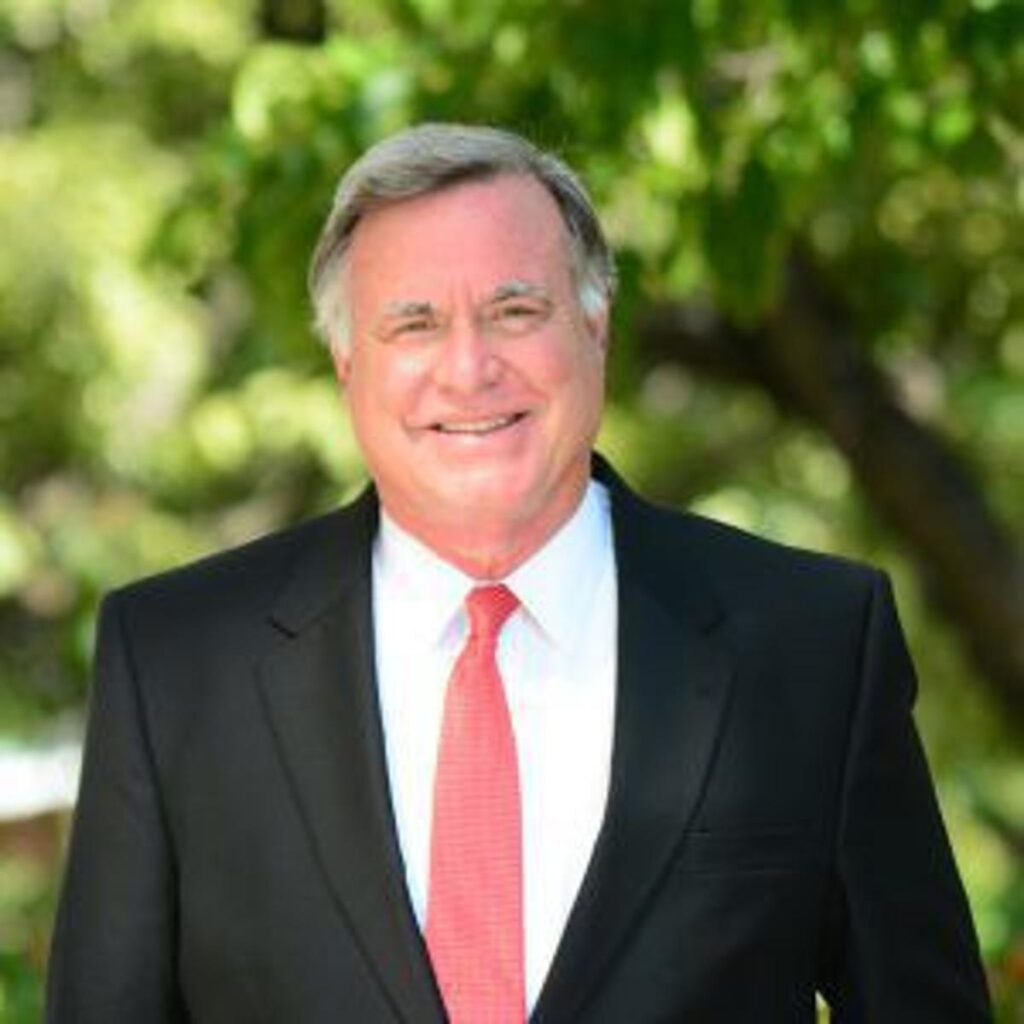
As mentioned last week, all polling points to a significant Republican pickup of congressional seats in the upcoming November General Election. It is a historical fact that the party that loses the White House in a presidential year picks up congressional seats in the following midterm elections. Furthermore, Democrats are in disfavor because of runaway inflation. Voters blame Joe Biden and the Democratic Congress for the inflated price of gas, groceries, and everything else. Americans vote their pocketbook. It’s the economy that counts, is what they say. We, however, in Alabama will vote party no matter what is going on in the economy. Over 60% of Alabamians will vote Republican. Although, the libertarian party fielding a slate of state candidates may skew these numbers. We have six Republican congressional seats, all white men, and one Democratic congressional seat held by an African American woman. It would not matter if the inflation rate was 30% and a Republican was in the White House, we would still elect six Republican congressmen and one Democratic congressperson. We do not fit into national politics. We are automatically placed in the Republican column for presidential elections, regardless of the Democratic or Republican nominees. We are colored red way before the election night numbers are counted. Both of our U.S. Senate seats are held by Republicans. When Katie Britt won the Republican Primary in June, the race was over. This race will be on the ballot next month. However, Katie Britt will win. Winning the Republican Primary in the Heart of Dixie is tantamount to election. The same was true for the Democratic Party in Alabama six decades ago. Folks, when we change, we change. We do not do things halfway. Sixty years ago, every statewide official was a Democrat. Every state judge was a Democrat. Our entire congressional delegation was Democratic. Today, not only is our congressional delegation 6-to-1 Republican, our legislature, both Senate and House, is 75% Republican. Every statewide elected official in Alabama is a Republican. The Republican control of Alabama politics today is so dominating that we could safely be called a one-party state, again, when it comes to statewide politics. A prevailing theme has continued in Alabama for over a century, and it is still pronounced today. Our state is divided politically based on race. Over 84% of whites vote Republican, and almost all, 96% of Black voters, vote Democratic. It is that simple; most parts of the country vote based on pocketbook issues, but Alabama and the Deep South vote on race and religion. Therefore, the national congressional numbers in the U.S. House may change to Republican, but we are Republican regardless. Our legislature will not change the congressional makeup of Alabama’s delegation from 6-to-1 Republican. However, that does not mean that the Federal Courts will not. African American Democratic lawmakers filed suit in federal court in the Northern District of Alabama late last year, asking the court to change the lines to create a second Black-majority congressional district. They argued that the current six Republican seats to one Democratic seat majority, which has been in effect since 1992, blatantly violates their Constitutional rights under the 1965 Voting Rights Act. If you put a percentage of the Black citizens, who, as we have said vote straight Democratic, into having one African American Democratic Congressman, that gives Black voters 13% of the representation. The Black population of Alabama is 27%. The argument that there should be two majority-minority districts has some merit. A three-judge federal panel made up of two Republican appointed jurists and one Democratic appointee agreed with the plaintiffs and ruled in their favor. They ordered the state legislature to go back to the drawing board and map out a second African American Democratic district. The Supreme Court intervened on January 24 and stayed the lower court’s decision. However, the stay was granted not on the merits of the case, but because it was too close to Alabama’s election, which had already begun. Supreme Court Justice, Brett Kavanaugh, wrote that the high courts have set precedents that federal courts should not disrupt state election procedures close to the time of an election. We have not seen the last of this ssue. We could see our congressional line-up change to five Republicans and two Democrats in the 2024 election. We will see. Steve Flowers is Alabama’s leading political columnist. His weekly column is in over 60 Alabama newspapers. He served 16 years in the state legislature. Steve may be reached at www.steveflowers.us.
Justices mull latest challenge to landmark voting rights law
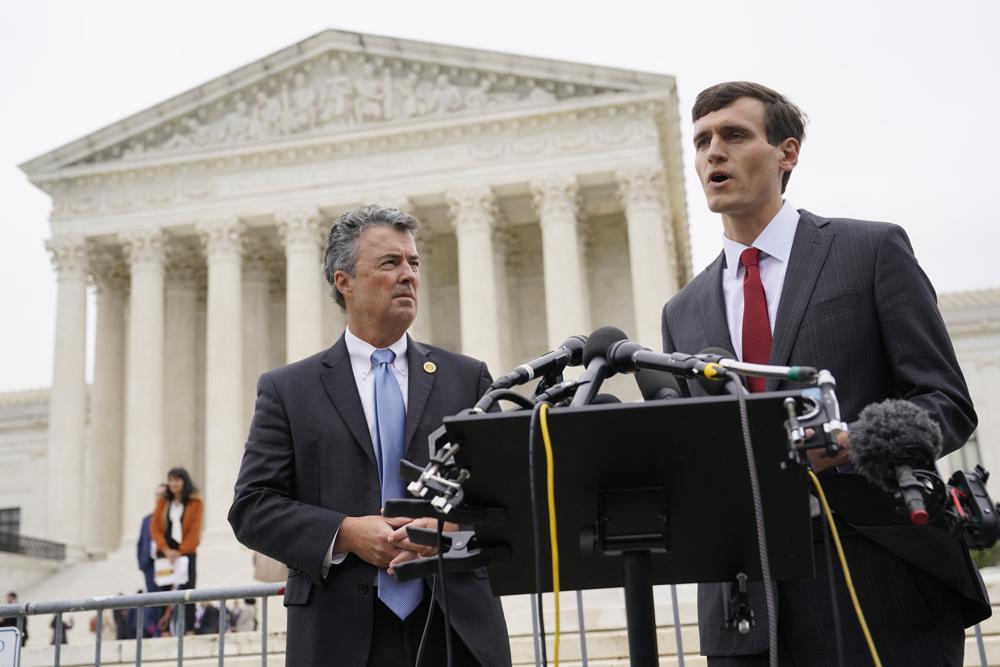
The Supreme Court’s conservative majority appeared open Tuesday to making it harder to create majority Black electoral districts, in an Alabama case that could have far-reaching effects on minority voting power across the United States. The justices heard two hours of arguments in the latest showdown over the federal Voting Rights Act, with lawsuits seeking to force Alabama to create a second Black majority congressional district. About 27% of Alabamians are Black, but they form a majority in just one of the state’s seven congressional districts. The court’s conservatives, in a 5-4 vote in February, blocked a lower court ruling that would have required a second Black majority district in time for the November elections. A similar ruling to create an additional Black majority district in Louisiana also was put on hold. Conservative high-court majorities have made it harder for racial minorities to use the Voting Rights Act in ideologically divided rulings in 2013 and 2021. A ruling for Alabama in the new case could weaken a powerful tool that civil rights groups and minority voters have used to challenge racial discrimination in redistricting. Some conservative justices seemed sympathetic to Alabama’s arguments that the court should insist on a “race-neutral” approach to redistricting and should make it harder for people claiming racial discrimination in voting to clear an early legal hurdle. Against pushback from Justice Ketanji Brown Jackson and the other liberal justices, Justice Samuel Alito said it’s too easy for people suing over discrimination in redistricting to win because the first bar in the legal test is too low — simply showing that another political district could be drawn in which minority residents make up a majority of voters. In practice, Alito said, “will not the plaintiffs always run the table?” The outcome appears to rest with Justices Amy Coney Barrett and Brett Kavanaugh. Their questions suggested they may be open to a more narrow win for Alabama than the broadest outcome the state is asking for, which might even allow states to dismantle existing districts where racial minorities make up more than half the voters. Even the state’s “least far-reaching argument,” as Alito put it, would result in many fewer districts drawn to give racial minorities the opportunity to elect their candidates of choice, the court’s three liberal justices said. Jackson, the court’s first Black female justice who was hearing her second day of arguments, disagreed with arguments made by Alabama’s lawyer, Edmund LaCour Jr., that redistricting has to be done without regard to race. Constitutional amendments adopted after the Civil War were intended to give a “constitutional foundation for a piece of legislation that was designed to make people who had less opportunity and less rights equal to white citizens,” Jackson said. The Voting Rights Act “by its plain text is doing that same thing.” Justice Elena Kagan referred to the Voting Rights Act as not only “an important statute” but “one of the great achievements of American democracy” while acknowledging that recent Supreme Court cases have cut back on the law. “Now, in recent years, the statute has fared not well in this court,” she said. “You’re asking us essentially to cut back substantially on our 40 years of precedent and to make this, too, extremely difficult to prevail on, so what’s left?” Kagan said to LaCour. Partisan politics underlies the case. Republicans who dominate elective office in Alabama have been resistant to creating a second district with a Democratic-leaning Black majority that could send another Democrat to Congress. Two appointees of President Donald Trump were on the three-judge panel that unanimously held that Alabama likely violated the landmark 1965 law by diluting Black voting strength. The judges found that Alabama has concentrated Black voters in one district, while spreading them out among the others to make it impossible for them to elect a candidate of their choice. Alabama’s Black population is large enough and geographically compact enough to create a second district, the judges found. Alabama argues that the lower court ruling would force it to sort voters by race and the state insists it is taking a “race neutral” approach to redistricting. That argument could resonate with conservative justices, including Chief Justice John Roberts. He has opposed most consideration of race in voting both as a justice and in his time as a lawyer in Republican presidential administrations. Roberts said little Tuesday to telegraph his vote. Justices Clarence Thomas and Neil Gorsuch also had little or nothing to say in court, but Thomas, in particular, has voted consistently to limit the reach of anti-discrimination laws. The arguments were the first Supreme Court case involving race for Jackson. A challenge to affirmative action in college admissions is set for arguments on October 31. A decision in Merrill v. Milligan is expected by late June. Republished with the permission of The Associated Press.
Kay Ivey blasts Supreme Court decision to halt “Remain in Mexico” policy

On Thursday, the U.S. Supreme Court ruled the Biden administration can end the Trump-era immigration policy called the Migrant Protection Protocols. The “Remain in Mexico” policy was at the center of efforts to deter asylum-seekers, forcing some to wait in Mexico. The legal fight in the immigration case was about whether U.S. immigration authorities, with far less detention capacity than needed, had to send people to Mexico or whether they had the discretion under federal law to release asylum-seekers into the United States while they awaited their hearings. The Department of Homeland Security began to implement the Migrant Protection Protocols (MPP) in January 2019. Under MPP, certainnon-Mexican nationals arriving by land from Mexico were returned to Mexico to await the results of their removal proceedings under section 1229a of the Immigration and Nationality Act (INA). Joe Biden suspended the program on his first day in office in January 2021. Lower courts ordered it reinstated in response to a lawsuit from Republican-led Texas and Missouri. Chief Justice John Roberts wrote that an appeals court “erred in holding that the” federal Immigration and Nationality Act “required the Government to continue implementing MPP.” Brett Kavanaugh noted that in general, when there is not enough detention capacity, both releasing asylum-seekers into the United States and sending them back to Mexico “are legally permissible options under the immigration statutes.” Along with Justice Kavanaugh, John Roberts, Stephen Breyer, Sonia Sotomayor, and Elena Kagan all ruled in favor of the Biden administration. Gov. Kay Ivey released a statement regarding the decision, saying that ending the policy only exacerbated the border crisis. “The Biden Administration’s decision to end President Trump’s Remain in Mexico policy is contributing to the full-blown crisis at the Southern Border and is having devastating effects on both U.S. citizens and migrants,”. Ivey stated. “This was reasonable, good policy, and ending this policy only exacerbates the problem, plain and simple. DHS does not have the capacity to detain the massive flow of individuals, and instead of choosing this clearly effective and legal option, they are releasing these people all across the country.” Ivey promised to continue to provide resources to border states. Ivey concluded, “Where the federal government has refused to secure the Southern Border, states like Texas, Alabama, and our neighbors have stepped up to provide resources. We will continue our fight to demand action from our government.”
Ketanji Brown Jackson sworn in, becomes 1st Black woman on Supreme Court
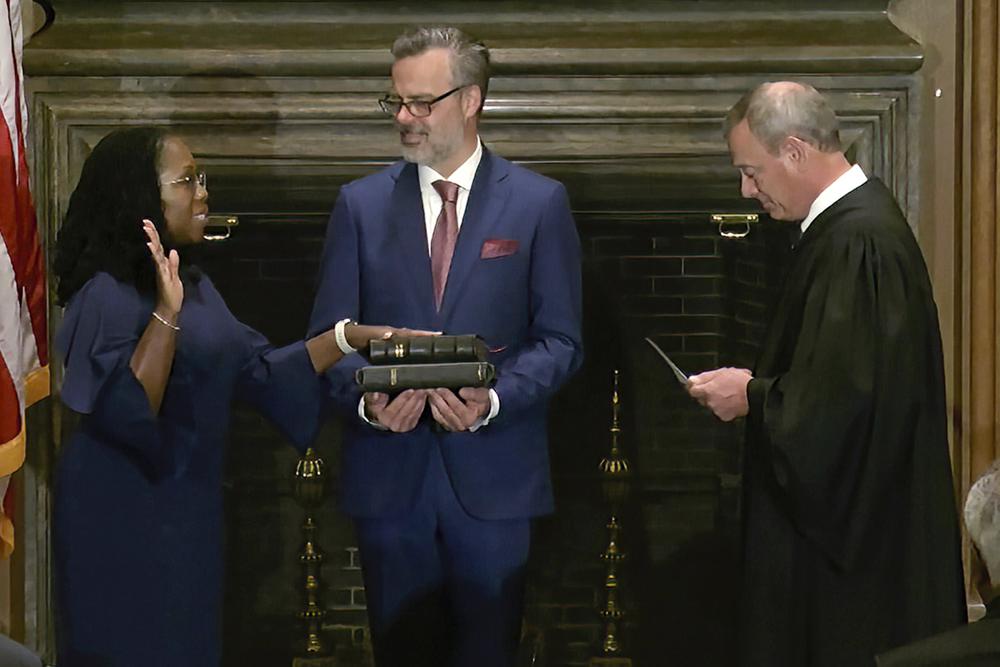
Ketanji Brown Jackson was sworn in to the Supreme Court on Thursday, shattering a glass ceiling as the first Black woman on the nation’s highest court. The 51-year-old Jackson is the court’s 116th justice, and she took the place of the justice she once worked for. Justice Stephen Breyer’s retirement was effective at noon. Moments later, joined by her family, Jackson recited the two oaths required of Supreme Court justices, one administered by Breyer and the other by Chief Justice John Roberts. “With a full heart, I accept the solemn responsibility of supporting and defending the Constitution of the United States and administering justice without fear or favor, so help me God,” Jackson said in a statement issued by the court. “I am truly grateful to be part of the promise of our great Nation. I extend my sincerest thanks to all of my new colleagues for their warm and gracious welcome.” Roberts welcomed Jackson “to the court and our common calling.” The ceremony was streamed live on the court’s website. All the justices except for Neil Gorsuch attended the swearing-in, the court said. There was no immediate explanation for Gorsuch’s absence. Jackson, a federal judge since 2013, is joining three other women — Justices Sonia Sotomayor, Elena Kagan, and Amy Coney Barrett. It’s the first time four women will serve together on the nine-member court. Biden nominated Jackson in February, a month after Breyer, 83, announced he would retire at the end of the court’s term, assuming his successor had been confirmed. Breyer’s earlier-than-usual announcement and the condition he attached was a recognition of the Democrats’ tenuous hold on the Senate in an era of hyper-partisanship, especially surrounding federal judgeships. The Senate confirmed Jackson’s nomination in early April, by a 53-47 mostly party-line vote that included support from three Republicans. Jackson had been in a sort of judicial limbo since, remaining a judge on the federal appeals court in Washington, D.C., but not hearing any cases. Biden elevated her to that court from the district judgeship to which she was appointed by President Barack Obama. Glynda Carr, president of Higher Heights for America, an organization that advocates for the growth of Black women’s political power, said the timing of Jackson’s swearing-in was bittersweet. “Although we celebrate her today, one Black woman or a cohort of Black women can’t save this democracy alone. We are a piece of it and we are doing our work, our part. She’s going to forever reshape and shape that court. But she’s just a piece of the work that needs to happen moving forward,” Carr said. Because of Jackson’s appointment, Judith Browne Dianis, a Black lawyer in Washington, said she intends to end her protest against joining the Supreme Court Bar. She started it when Justice Clarence Thomas was confirmed in 1991. She said that even the series of conservative rulings from the court over the past week cannot take away from the significance of Thursday’s ceremony. “This is a momentous occasion and it’s still a beautiful moment,” said Dianis, executive director of the civil rights group Advancement Project. But, Dianis added, “she’s joining the court at a time when conservatives are holding the line and trying to actually take us back, because they see the progress that’s being made in our country. It’s like the Civil War that never ended. That’s the court that she’s joining.” Jackson will be able to begin work immediately, but the court will have just finished the bulk of its work until the fall, apart from emergency appeals that occasionally arise. That will give her time to settle in and familiarize herself with the roughly two dozen cases the court already has agreed to hear starting in October as well as hundreds of appeals that will pile up over the summer. She helps form the most diverse court in its 232-year history and is the first former public defender to be a justice. The court that Jackson is joining is the most conservative that it has been since the 1930s. She is likely to be on the losing end of important cases, which could include examinations of the role of race in college admissions, congressional redistricting and voting rights that the court, with its 6-3 conservative majority, will take up next term. Today’s court now is surrounded by fencing, and justices and their families have 24-hour protection by the U.S. Marshals, the result of a law passed days after a man carrying a gun, knife and zip ties was arrested near Justice Brett Kavanaugh’s Maryland house after threatening to kill the justice. The bill was introduced in May shortly after the leak of a draft court opinion that would overrule Roe v. Wade and sharply curtail abortion rights in roughly half the states. The court issued final opinions earlier Thursday after a momentous and rancorous term that included overturning Roe v. Wade’s guarantee of the right to an abortion. One of Thursday’s decisions limited how the Environmental Protection Agency can use the nation’s main anti-air pollution law to reduce carbon dioxide emissions from power plants, a blow to the fight against climate change. Republished with the permission of The Associated Press.
Supreme Court: Joe Biden can end Donald Trump-era asylum policy
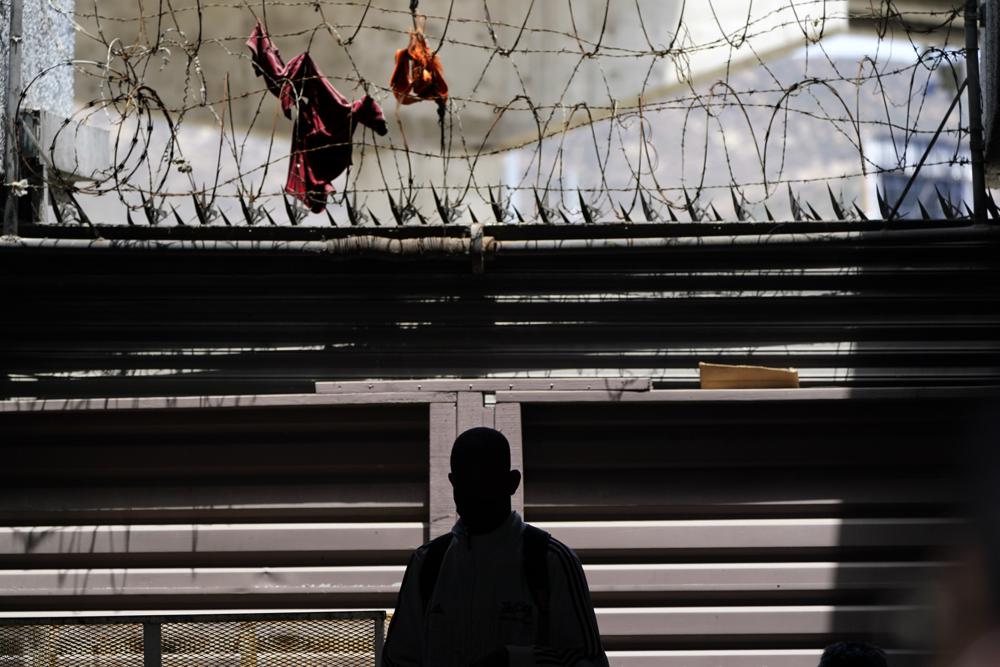
The Supreme Court said Thursday the Biden administration can scrap a Trump-era immigration policy that was at the center of efforts to deter asylum-seekers, forcing some to wait in Mexico. Two conservative justices joined their three liberal colleagues in siding with the White House. The justices’ decision came in a case involving former President Donald Trump’s “Remain in Mexico” policy, formally known as Migrant Protection Protocols, which enrolled about 70,000 people after it was launched in 2019. President Joe Biden suspended the program on his first day in office in January 2021. But lower courts ordered it reinstated in response to a lawsuit from Republican-led Texas and Missouri. The current administration has sent far fewer people back to Mexico than did the Trump administration. The ruling was released on the same day that the court dealt the administration a blow in an important environmental case about the nation’s main anti-air pollution law. That ruling could complicate the administration’s plans to combat climate change. The heart of the legal fight in the immigration case was about whether U.S. immigration authorities, with far less detention capacity than needed, had to send people to Mexico or whether those authorities had the discretion under federal law to release asylum-seekers into the United States while they awaited their hearings. After Biden’s suspension of the program, Homeland Security Secretary Alejandro Mayorkas ended it in June 2021. In October, the department produced additional justifications for the policy’s demise, but that was to no avail in the courts. Chief Justice John Roberts wrote that an appeals court “erred in holding that the” federal Immigration and Nationality Act “required the Government to continue implementing MPP.” Joining the majority opinion was fellow conservative Brett Kavanaugh, a Trump-appointee, as well as liberal justices Stephen Breyer, Sonia Sotomayor, and Elena Kagan. Kavanaugh also wrote separately and noted that in general, when there is insufficient detention capacity, both releasing asylum-seekers into the United States and sending them back to Mexico “are legally permissible options under the immigration statutes.” Cornell University law professor Stephen Yale-Loehr, an immigration expert, said the Biden administration does not need to take any further action to end the policy but that Texas and Missouri can pursue a challenge over whether the administration followed appropriate procedure in ending the program. Texas Attorney General Ken Paxton said in a statement that the decision was “unfortunate.” He argued it would make “the border crisis worse. But it’s not the end. I’ll keep pressing forward and focus on securing the border and keeping our communities safe in the dozen other immigration suits I’m litigating in court.” Because of lower court decisions, MPP resumed in December, but the administration has registered only 7,259 migrants in the program, about 6 of every 10 of them Nicaraguans. The administration has said it would apply the policy to nationalities that are less likely to be subject to pandemic-era asylum limits. Strained diplomatic relations with Nicaragua makes it extremely difficult for the U.S. to expel people back to their homeland under the pandemic rule, known as Title 42 authority. U.S. authorities stopped migrants 1.2 million times on the Mexico border from December through May, illustrating the limited impact that “Remain in Mexico” has had under Biden. Democratic-led states and progressive groups were on the administration’s side in the case. Republican-run states and conservative groups sided with Texas and Missouri. The case is Biden v. Texas, 21-954. Republished with the permission of The Associated Press.
Supreme Court overturns Roe v. Wade; states can ban abortion

The Supreme Court has ended constitutional protections for abortion that had been in place nearly 50 years in a decision by its conservative majority to overturn Roe v. Wade. Friday’s outcome is expected to lead to abortion bans in roughly half the states. The decision, unthinkable just a few years ago, was the culmination of decades of efforts by abortion opponents, made possible by an emboldened right side of the court that has been fortified by three appointees of former President Donald Trump. The ruling came more than a month after the stunning leak of a draft opinion by Justice Samuel Alito, indicating the court was prepared to take this momentous step. It puts the court at odds with a majority of Americans who favored preserving Roe, according to opinion polls. Alito, in the final opinion issued Friday, wrote that Roe and Planned Parenthood v. Casey, the 1992 decision that reaffirmed the right to abortion, were wrong the day they were decided and must be overturned. “We hold that Roe and Casey must be overruled. The Constitution makes no reference to abortion, and no such right is implicitly protected by any constitutional provision,” Alito wrote. Authority to regulate abortion rests with the political branches, not the courts, Alito wrote. Joining Alito were Justices Clarence Thomas, Neil Gorsuch, Brett Kavanaugh, and Amy Coney Barrett. The latter three justices are Donald Trump appointees. Thomas first voted to overrule Roe 30 years ago. Chief Justice John Roberts would have stopped short of ending the abortion right, noting that he would have upheld the Mississippi law at the heart of the case, a ban on abortion after 15 weeks, and said no more. Justices Stephen Breyer, Sonia Sotomayor, and Elena Kagan — the diminished liberal wing of the court — were in dissent. “With sorrow—for this Court, but more, for the many millions of American women who have today lost a fundamental constitutional protection—we dissent,” they wrote. The ruling is expected to disproportionately affect minority women who already face limited access to health care, according to statistics analyzed by The Associated Press. Thirteen states, mainly in the South and Midwest, already have laws on the books that ban abortion in the event Roe is overturned. Another half-dozen states have near-total bans or prohibitions after 6 weeks of pregnancy, before many women know they are pregnant. In roughly a half-dozen other states, the fight will be over dormant abortion bans that were enacted before Roe was decided in 1973 or new proposals to sharply limit when abortions can be performed, according to the Guttmacher Institute, a research group that supports abortion rights. More than 90% of abortions take place in the first 13 weeks of pregnancy, and more than half are now done with pills, not surgery, according to data compiled by Guttmacher. The decision came against a backdrop of public opinion surveys that find a majority of Americans oppose overturning Roe and handing the question of whether to permit abortion entirely to the states. Polls conducted by The Associated Press-NORC Center for Public Affairs Research and others also have consistently shown about 1 in 10 Americans want abortion to be illegal in all cases. A majority are in favor of abortion being legal in all or most circumstances, but polls indicate many also support restrictions, especially later in pregnancy. The Biden administration and other defenders of abortion rights have warned that a decision overturning Roe also would threaten other high court decisions in favor of gay rights and, even potentially, contraception. But Alito wrote in his draft opinion that his analysis addresses abortion only, not other rights that also stem from a right to privacy that the high court has found implicit, though not directly stated, in the Constitution. Abortion is different, Alito wrote, because of the unique moral question it poses. Whatever the intentions of the person who leaked Alito’s draft opinion, the conservatives held firm in overturning Roe and Casey. In his draft, Alito dismissed the arguments in favor of retaining the two decisions, including that multiple generations of American women have partly relied on the right to abortion to gain economic and political power. Changing the composition of the court has been central to the anti-abortion side’s strategy. Mississippi and its allies made increasingly aggressive arguments as the case developed, and two high-court defenders of abortion rights retired or died. The state initially argued that its law could be upheld without overruling the court’s abortion precedents. Then-Gov. Phil Bryant signed the 15-week measure into law in March 2018, when Justices Anthony Kennedy and Ruth Bader Ginsburg were still members of a five-justice majority that was mainly protective of abortion rights. By early summer, Kennedy had retired and was replaced by Justice Brett Kavanaugh a few months later. The Mississippi law was blocked in lower federal courts. But the state always was headed to the nation’s highest court. It did not even ask for a hearing before a three-judge panel of the 5th U.S. Circuit Court of Appeals, which ultimately held the law invalid in December 2019. By early September 2020, the Supreme Court was ready to consider the state’s appeal. The court scheduled the case for consideration at the justices’ private conference on Sept. 29. But in the intervening weeks, Ginsburg died, and Barrett was quickly nominated and confirmed without a single Democratic vote. The stage now was set, although it took the court another half year to agree to hear the case. By the time Mississippi filed its main written argument with the court in the summer, the thrust of its argument had changed, and it was now calling for the wholesale overruling of Roe and Casey. The first sign that the court might be receptive to wiping away the constitutional right to abortion came in late summer when the justices divided 5-4 in allowing Texas to enforce a ban on the procedure at roughly six weeks, before some women even know they are pregnant. That dispute turned on the unique structure of the
Supreme Court expands gun rights, with nation divided

In a major expansion of gun rights after a series of mass shootings, the Supreme Court said Thursday that Americans have a right to carry firearms in public for self-defense, a ruling likely to lead to more people legally armed. The decision came out as Congress and states debate gun-control legislation. About one-quarter of the U.S. population lives in states expected to be affected by the ruling, which struck down a New York gun law. The high court’s first major gun decision in more than a decade split the court 6-3, with the court’s conservatives in the majority and liberals in dissent. Across the street from the court, lawmakers at the Capitol sped toward passage of gun legislation prompted by recent massacres in Texas,New York and California. Senators cleared the way for the measure, modest in scope but still the most far-reaching in decades. Also Thursday, underscoring the nation’s deep divisions over the issue, the sister of a 9-year-old girl killed in the school shooting in Uvalde, Texas, pleaded with state lawmakers to pass gun legislation. The Republican-controlled legislature has stripped away gun restrictions over the past decade. President Joe Biden said in a statement he was “deeply disappointed” by the Supreme Court ruling. It “contradicts both common sense and the Constitution, and should deeply trouble us all,” he said. He urged states to pass new laws. “I call on Americans across the country to make their voices heard on gun safety. Lives are on the line,” he said. The decision struck down a New York law requiring people to demonstrate a particular need for carrying a gun in order to get a license to carry a gun in a concealed way in public. The justices said that requirement violates the Second Amendment right to “keep and bear arms.” Justice Clarence Thomas wrote for the majority that the Constitution protects “an individual’s right to carry a handgun for self-defense outside the home.” That right is not a “second-class right,” Thomas wrote. “We know of no other constitutional right that an individual may exercise only after demonstrating to government officers some special need.” California, Hawaii, Maryland, Massachusetts, New Jersey, and Rhode Island all have laws similar to New York’s. Those laws are expected to be quickly challenged. Gov. Kathy Hochul, D-N.Y., said the ruling came at a particularly painful time, with New York mourning the deaths of 10 people in a shooting at a supermarket in Buffalo. “This decision isn’t just reckless. It’s reprehensible. It’s not what New Yorkers want,” she said. Gun control groups called the decision a significant setback. Michael Waldman, president of the Brennan Center for Justice and an expert on the Second Amendment, wrote on Twitter that the decision could be the “biggest expansion of gun rights” by the Supreme Court in U.S. history. Republican lawmakers were among those cheering the decision. Tom King, president of the plaintiff New York State Rifle and Pistol Association, said he was relieved. “The lawful and legal gun owner of New York State is no longer going to be persecuted by laws that have nothing to do with the safety of the people and will do nothing to make the people safer,” he said. “And maybe now we’ll start going after criminals and perpetrators of these heinous acts.” The court’s decision is somewhat out of step with public opinion. About half of the voters in the 2020 presidential election said gun laws in the U.S. should be made more strict, according to AP VoteCast, an expansive survey of the electorate. An additional one-third said laws should be kept as they are, while only about 1 in 10 said gun laws should be less strict. About 8 in 10 Democratic voters said gun laws should be made more strict, VoteCast showed. Among Republican voters, roughly half said laws should be kept as they are, while the remaining half closely divided between more and less strict. In a dissent joined by his liberal colleagues, Justice Stephen Breyer focused on the toll from gun violence. Since the beginning of this year, “there have already been 277 reported mass shootings — an average of more than one per day,” Breyer wrote. He accused his colleagues in the majority of acting “without considering the potentially deadly consequences” of their decision. He said the ruling would “severely” burden states’ efforts to pass laws “that limit, in various ways, who may purchase, carry, or use firearms of different kinds.” Several other conservative justices who joined Thomas’ majority opinion also wrote separately to add their views. Justice Samuel Alito criticized Breyer’s dissent, questioning the relevance of his discussion of mass shootings and other gun death statistics. Alito wrote that the court had decided “nothing about who may lawfully possess a firearm or the requirements that must be met to buy a gun” and nothing “about the kinds of weapons that people may possess.” “Today, unfortunately, many Americans have good reason to fear they will be victimized if they are unable to protect themselves.” The Second Amendment, he said, “guarantees their right to do so.” Justice Brett Kavanaugh, joined by Chief Justice John Roberts, noted the limits of the decision. States can still require people to get a license to carry a gun, Kavanaugh wrote, and condition that license on “fingerprinting, a background check, a mental health records check, and training in firearms handling and in laws regarding the use of force, among other possible requirements.” Backers of New York’s law had argued that striking it down would lead to more guns on the streets and higher rates of violent crime. Gun violence, on the rise during the coronavirus pandemic, has spiked anew. Gun purchases have also risen. In most of the country, gun owners have little difficulty legally carrying their weapons in public. But that had been harder to do in New York and the handful of states with similar laws. New York’s law, in place since 1913, says that to carry a concealed handgun in public, a person applying for a license has to show “proper cause,” a specific need to
State attorneys general ask Department of Justice to investigate violence against pro-life groups
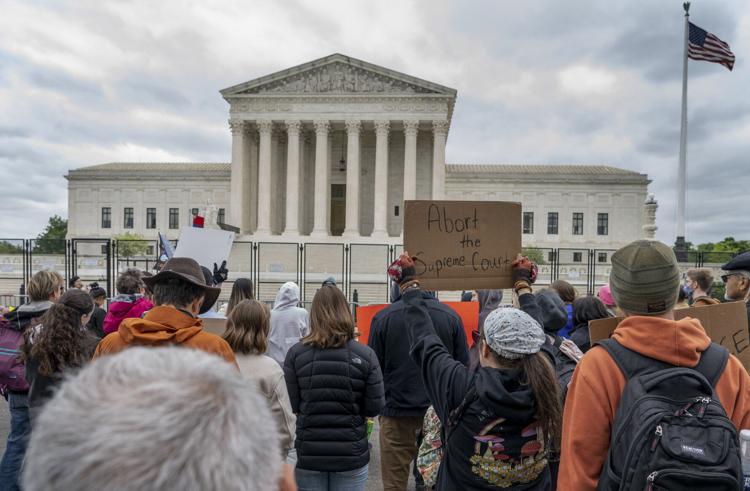
The attorneys general of 19 states want the U.S. Department of Justice to investigate what they say is growing violence targeting pro-life groups nationwide. Last month, Politico published a leaked draft U.S. Supreme Court opinion, apparently revealing the nation’s highest court is poised to overturn Roe v. Wade, which established abortion as a constitutional right, and Casey v. Planned Parenthood. The leaked opinion, purportedly penned by Justice Samuel Alito, comes in Dobbs v. Jackson Women’s Health Organization, a challenge to Mississippi’s 15-week abortion ban. Since then, groups have protested nationwide, including outside the homes of Supreme Court justices. Additionally, authorities arrested a California man who they say planned to murder Supreme Court Justice Brett Kavanaugh, and abortion advocates have firebombed or vandalized at least two dozen pregnancy centers nationwide. “Inaction is intolerable in our nation of laws, and it violates your oath of office,” the attorneys general wrote. “Yet, in recent weeks, you have continued to allow illegal actions seemingly because they advance (in the minds of some) the pro-abortion cause.” The letter added: “Intentional or not, budding domestic terrorists have apparently received the message: the Department of Justice is going easy on those who use violence in furtherance of favored viewpoints.” According to officials, the attacks began about a month ago, and the FBI said it planned to investigate last week. “President [Joe] Biden’s Department of Justice yet again has its priorities absolutely backward,” Georgia Attorney General Chris Carr said in an announcement. “They did not hesitate to investigate parents who spoke out at school board meetings but are now dragging their feet to address the violent crimes committed against pro-life organizations,” Carr added. “Public safety should not be a partisan issue, and it is past time for the U.S. Attorney General to take strong, uniform, and decisive action to hold accountable those who are responsible for these attacks.” Ohio Attorney General Dave Yost sent the letter to U.S. Attorney General Merrick Garland. In addition to Georgia and Ohio, attorneys general from Alabama, Alaska, Arizona, Arkansas, Florida, Indiana, Kansas, Kentucky, Mississippi, Missouri, Nebraska, Oklahoma, South Carolina, Texas, Utah, Virginia, and West Virginia co-signed the letter.
Armed man arrested for threating to kill Justice Brett Kavanaugh
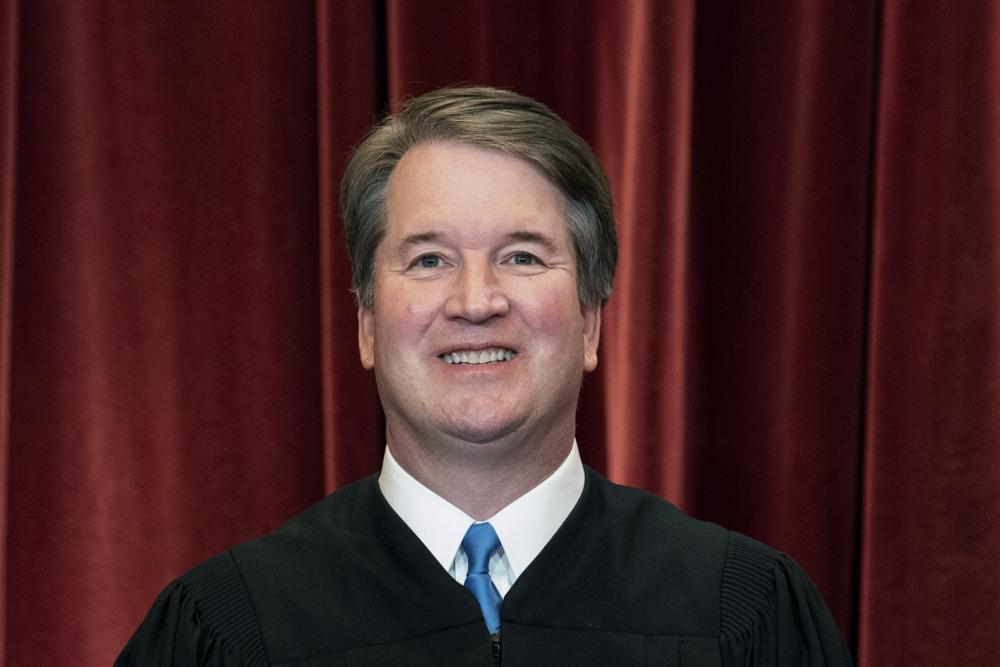
A man carrying a gun, a knife, and zip ties was arrested Wednesday near Justice Brett Kavanaugh’s house in Maryland after threatening to kill the justice. Nicholas John Roske, 26, of Simi Valley, California, was charged with the attempted murder of a Supreme Court justice. During a court hearing, he consented to remain in federal custody for now. Roske was dressed in black when he arrived by taxi just after 1 a.m. outside Kavanaugh’s home in a Washington suburb. He had a Glock 17 pistol, ammunition, a knife, zip ties, pepper spray, duct tape, and other items that he told police he would use to break into Kavanaugh’s house and kill him, according to a criminal complaint and an affidavit filed in federal court in Maryland. Roske said he purchased the gun to kill Kavanaugh and that he also would kill himself, the affidavit said. Roske told police he was upset by a leaked draft opinion suggesting the Supreme Court is about to overrule Roe v. Wade, the landmark abortion case. He also said he was upset over the school massacre in Uvalde, Texas, and believed Kavanaugh would vote to loosen gun control laws, the affidavit said. The court currently is weighing a challenge to New York’s requirements for getting a permit to carry a gun in public, a case that could make it easier to be armed on the streets of New York and other large cities. When he got out of the taxi, Roske was spotted by two U.S. Marshals who are part of round-the-clock security provided to the justices following the leak of the draft opinion last month. But Roske was only apprehended after he called 911 in Montgomery County, Maryland, and said he was having suicidal thoughts and planned to kill Kavanaugh, having found the justice’s address online. Roske was still on the phone when Montgomery County police arrived on the scene, according to the affidavit. At his initial appearance in federal court in Greenbelt, Maryland, Roske paused several times before responding to routine inquiries from U.S. Magistrate Judge Timothy J. Sullivan during the 10-minute hearing. Asked if he understood what was happening and whether he was thinking clearly, Roske paused, then said, “I think I have a reasonable understanding, but I wouldn’t say I’m thinking clearly.” Roske said he is taking medication but did not say what it is or why he is on it. He also said he is a college graduate. Andrew Szekely, a federal public defender who is representing Roske, declined to comment on the case after the hearing. Roske’s next court date was tentatively set for June 22. The attempted murder charge carries a maximum term of 20 years in prison. Earlier Wednesday, Attorney General Merrick Garland told reporters, “This kind of behavior is obviously behavior we will not tolerate. Threats of violence and actual violence against the justices, of course, strike at the heart of our democracy, and we will do everything we can to prevent them and to hold people who do them accountable.” President Joe Biden praised authorities for quickly apprehending the man, deputy White House press secretary Andrew Bates said in an email. There have been protests at the homes of Kavanaugh and other justices, as well as demonstrations at the court, where a security fence rings the building, and nearby streets have been closed. A Homeland Security Department report said the draft opinion, leaked in early May, has unleashed a wave of threats against officials and others and increased the likelihood of extremist violence. Republished with the permission of The Associated Press.
