
Supreme Court blocks Texas law on social media censorship

A divided Supreme Court has blocked a Texas law, championed by conservatives, that aimed to keep social media platforms like Facebook and Twitter from censoring users based on their viewpoints. The court voted in an unusual 5-4 alignment Tuesday to put the Texas law on hold, while a lawsuit plays out in lower courts. Chief Justice John Roberts and Justices Stephen Breyer, Sonia Sotomayor, Brett Kavanaugh, and Amy Coney Barrett voted to grant the emergency request from two technology industry groups that challenged the law in federal court. The majority provided no explanation for its decision, as is common in emergency matters on what is informally known as the court’s “shadow docket.” Justices Clarence Thomas, Samuel Alito, Elena Kagan, and Neil Gorsuch would have allowed the law to remain in effect. In dissent, Alito wrote, “Social media platforms have transformed the way people communicate with each other and obtain news.” It’s not clear how the high court’s past First Amendment cases, many of which predate the internet age, apply to Facebook, Twitter, TikTok, and other digital platforms, Alito wrote in an opinion joined by fellow conservatives Thomas and Gorsuch but not Kagan. The order follows a ruling last week by the 11th U.S. Circuit Court of Appeals that found a similar Florida law likely violates the First Amendment’s free speech protections. Republican elected officials in several states have backed laws like those enacted in Florida and Texas that sought to portray social media companies as generally liberal in outlook and hostile to ideas outside of that viewpoint, especially from the political right. The Texas law was initially blocked by a district judge, but then allowed to take effect by a panel of the New Orleans-based 5th U.S. Circuit Court of Appeals. Republished with the permission of The Associated Press.
‘Still in shock.’ Abortion defenders, foes stunned by leak

The phones inside an Alabama abortion clinic were ringing off the hook: the callers wanted to know if abortion remains legal. And, if so, for how long? A leaked Supreme Court draft opinion was ricocheting around the world. As Dalton Johnson, the clinic’s owner, read it Monday night, he was struck by the bluntness of the language that would end the constitutional right to an abortion, closing clinics in about half of American states, including his. “I’m still in shock,” Johnson said Tuesday as he scrambled to reassure his staff and patients they would continue providing abortions as long as they’re allowed in Alabama. People on both sides of the abortion divide have been expecting the Supreme Court this summer to reverse the landmark 1973 Roe v. Wade case that legalized abortion nationwide. But many said the draft opinion was nevertheless stunning, forcing them to reckon with the reality the nation is likely to enter soon. “I can’t stop crying,” said an elated Mississippi state Rep. Becky Currie, who sponsored the 2018 law that is the basis for the Supreme Court case. “I am not quite sure I have the words to express how I feel right now, but God has had his hands on that bill since the beginning.” The leaked draft, published late Monday by Politico, is a 98-page opinion in Dobbs v. Jackson Women’s Health Organization, which challenged the constitutionality of the Mississippi bill that banned abortion after 15 weeks. If the decision stands as written, it would also overturn Planned Parenthood v. Casey, a 1992 decision that protected abortion services even though it allowed states to add some limitations. “Roe was egregiously wrong from the start,” the draft opinion states. It was signed by Justice Samuel Alito, a member of the court’s 6-3 conservative majority. According to Politico, four other justices — Clarence Thomas, Neil Gorsuch, Brett Kavanaugh, and Amy Coney Barrett — have agreed with the opinion. The draft opinion was written in February, and the language could change before the court issues its final ruling. As written, it would give states the power to decide the legality of abortion. Roughly half, largely in the South and Midwest, are likely to quickly ban abortion. Abortion clinics in those states opened Tuesday morning, still seeing patients but uncertain about the future. The daily rituals unfolded as they always do: some protesters screamed at people walking inside while other abortion opponents prayed, clinic escorts tried to shield patients and hustle them in the doors. “Please overturn Roe v. Wade,” said Barbara Beavers, who stood outside the clinic in Jackson, Mississippi, on Tuesday, gently trying to persuade people against going inside. “Have mercy on our unborn children. We’re destroying our future, killing our babies.” Inside clinics, the news prompted frantic phone calls, and abortion providers across America rushed to tell their patients that the clinics remained open. “I immediately felt sick to my stomach,” said Tammi Kromenaker, who owns a clinic in Fargo, North Dakota. “And 20 million thoughts started going through my head about what can we do? What does my staff need to hear? What do our patients need to hear?” She posted a notice on their website: “If you have an appointment at Red River Women’s Clinic, your appointment is safe.” In Charleston, West Virginia, Katie Quinonez had barely slept the night before; she was having nightmares about the Supreme Court. She rushed into the clinic Tuesday morning, terrified that her patients would misunderstand the news and think that abortion was immediately outlawed. They posted on social media that abortion remains legal and the clinic is open, but they don’t know for how much longer. She had been bracing for this news. “But there was still this visceral reaction, this very devastating feeling,” Quinonez said. “This is a red alert moment. This is beyond a red alert moment. The building is on fire.” At Johnson’s clinic in Huntsville, women called to ask whether they can still get an abortion. Johnson said his first call of the morning was from a woman who had an abortion scheduled for Friday and wanted to come in Tuesday instead. The staff held a meeting, and Johnson says he asked them to focus on those still coming for abortions who need their help. The opinion was just a draft, he told them, and cautioned that it wasn’t the final decision. Dr. Cheryl Hamlin, an OB-GYN from Boston, travels South about once a month to do abortions at Mississippi’s only abortion clinic. She said a lot of her patients won’t be able to afford the costs of going out of state to have an abortion, including paying for hotels and taking time off work. Meanwhile, states that continue to allow abortions “are going to be overflowing with patients,” she said. Some anti-abortion activists were skeptical that the draft would become reality, fixating instead on the fact that it was leaked the press and whether that implied political posturing. “I’m hopeful,” said Dennis Westover, a 72-year-old retired electrical engineer, a regular protester outside the clinic in Charleston, West Virginia. But he was suspicious that someone leaked it as ammunition in the country’s intractable culture wars. “When our Supreme Court stuff starts to be leaked, it’s egregious,” he said. “One side or the other did it for a political motive to stir up some kind of stink.” In Louisville, Kentucky, protester Angela Minter said she prayed the draft opinion will be the final one. “I’m excited today,” Minter said. “I believe it’s an indication of what’s to come.” Minter thinks that’s God answering her prayers: She’s been coming to the clinic most mornings since 2004. Patients tried to dodge her and the other protesters screaming outside. “Don’t murder your baby,” one man shouted at a young woman. Clinic escorts in orange vests helped her into the building. The Louisville clinic was closed for a week last month after the legislature banned abortion, until a court intervened. But if Roe falls, it will likely be shuttered again. “I
Court rejects GOP redistricting plans in North Carolina, Pennsylvania

In a victory for Democrats, the Supreme Court has turned away efforts from Republicans in North Carolina and Pennsylvania to block state court-ordered congressional districting plans. In separate orders late Monday, the justices are allowing maps selected by each state’s Supreme Court to be in effect for the 2022 elections. Those maps are more favorable to Democrats than the ones drawn by the states’ legislatures. In North Carolina, the map most likely will give Democrats an additional House seat in 2023. The Pennsylvania map also probably will lead to the election of more Democrats, the Republicans say, as the two parties battle for control of the U.S. House of Representatives in the midterm elections in November. The justices provided no explanation for their actions, as is common in emergency applications on what is known as the “shadow docket.” While the high court did not stop the state court-ordered plans from being used in this year’s elections, four conservative justices indicated they want it to confront the issue that could dramatically limit the power of state courts over federal elections in the future. The Republicans argued that state courts lack the authority to second-guess legislatures’ decisions about the conduct of elections for Congress and the presidency. “We will have to resolve this question sooner or later, and the sooner we do so, the better. This case presented a good opportunity to consider the issue, but unfortunately, the court has again found the occasion inopportune,” Justice Samuel Alito wrote in a dissent from the Supreme Court’s order, joined by Justices Neil Gorsuch and Clarence Thomas. Justice Brett Kavanaugh made a similar point but said he didn’t want to interfere in this year’s electoral process, which already is underway. The filing deadline in North Carolina was Friday. The state courts were involved because of partisan wrangling and lawsuits over congressional redistricting in both states, where the legislatures are controlled by Republicans, the governors are Democrats, and the state Supreme Courts have Democratic majorities. In Pennsylvania, Democratic Gov. Tom Wolf vetoed the plan the Republican-controlled Legislature approved, saying it was the result of a “partisan political process.” The state, with a delegation of nine Democrats and nine Republicans, is losing a seat in the House following the 2020 Census. Republicans said the map they came up with would elect nine Democrats and eight Republicans. State courts eventually stepped in and approved a map that probably will elect 10 Democrats, the GOP argued. North Carolina is picking up a seat in the House because of population gains. Republican majorities in the Legislature produced an initial plan most likely to result in 10 seats for Republicans and four for Democrats. The governor does not have veto power over redistricting plans in North Carolina. After Democrats sued, the state’s high court selected a map that likely will elect at least six Democrats. Lawsuits are continuing in both states, but the Supreme Court signaled in Monday’s orders that this year’s elections for Congress in North Carolina and Pennsylvania would take place under the maps approved by the states’ top courts. Republished with the permission of the Associated Press.
Justices seem to favor docs convicted in pain pill schemes
In a case stemming from the opioid addiction crisis, the Supreme Court on Tuesday appeared ready to side with two imprisoned doctors who wrote thousands of prescriptions for pain medication in short periods. The justices signaled they would rule that the doctors’ trials were unfair because they were prevented from mounting a “good faith” defense that they did not intend any harm to patients. Justice Brett Kavanaugh said that prosecutors must prove that doctors knew they were illegally prescribing powerful pain drugs in violation of the federal Controlled Substances Act because the stakes are so high. Juries sometimes make close calls in criminal cases, Kavanaugh said, and if a doctor is on the losing end of a close call, “you go to prison for 20 years.” The court is weighing appeals from Xiulu Ruan of Mobile, Alabama, and Shakeel Kahn, who practiced medicine in Ft. Mohave, Arizona, and Casper, Wyoming. Ruan is serving a 21-year federal prison term. Kahn is in prison for up to 25 years. A favorable ruling could lead to new trials or the dismissals of charges against them. The case comes to the court amid record numbers of drug overdose deaths, many from the highly lethal opioid fentanyl. Members of both parties in Congress also are calling for a nimble, new national plan to reduce overdose deaths that include reducing the supply of illicit drugs and increasing treatment for addiction. As is often true of Supreme Court cases, which focus on legal principles rather than the facts, the justices were less interested in the details of the doctors’ actions than they were in the fairness of the criminal cases against them. Ruan and a partner, James Couch, were convicted of overprescribing medications at their Physicians Pain Specialists of Alabama clinic and a pharmacy. The two doctors wrote 66,892 prescriptions in 2014, investigators said. They grossed $20 million between 2012 and a raid in 2015, prosecutors said. Kahn was convicted of conspiracy to unlawfully distribute and dispense controlled substances resulting in death, including oxycodone, an opioid pain reliever, and fentanyl, a synthetic opioid. Jessica Burch, of Lake Havasu City, Arizona, was a patient of Kahn’s who died from an overdose in 2015. He wrote nearly 15,000 prescriptions for controlled substances between 2011 and the end of 2016, totaling nearly 2.2 million pills and of which nearly half were oxycodone, prosecutors said. Justice Samuel Alito, a former federal prosecutor, appeared to be the only member of the court who was clearly on the government’s side. Justice Department lawyer Eric Feigin said the court shouldn’t buy the doctors’ arguments. “They want to be free of any obligation even to undertake any minimal effort to act like doctors when they prescribe dangerous, highly addictive, and, in one case, lethal dosages of drugs to trusting and vulnerable patients,” Feigin said. Lawrence Robbins, representing Ruan, said the law should give doctors and their patients enough room to “make the best choices for the individual care of what is often invisible and yet real and intractable pain.” A decision is expected by late June. Republished with the permission of the Associated Press.
High court’s Alabama ruling sparks alarm over voting rights
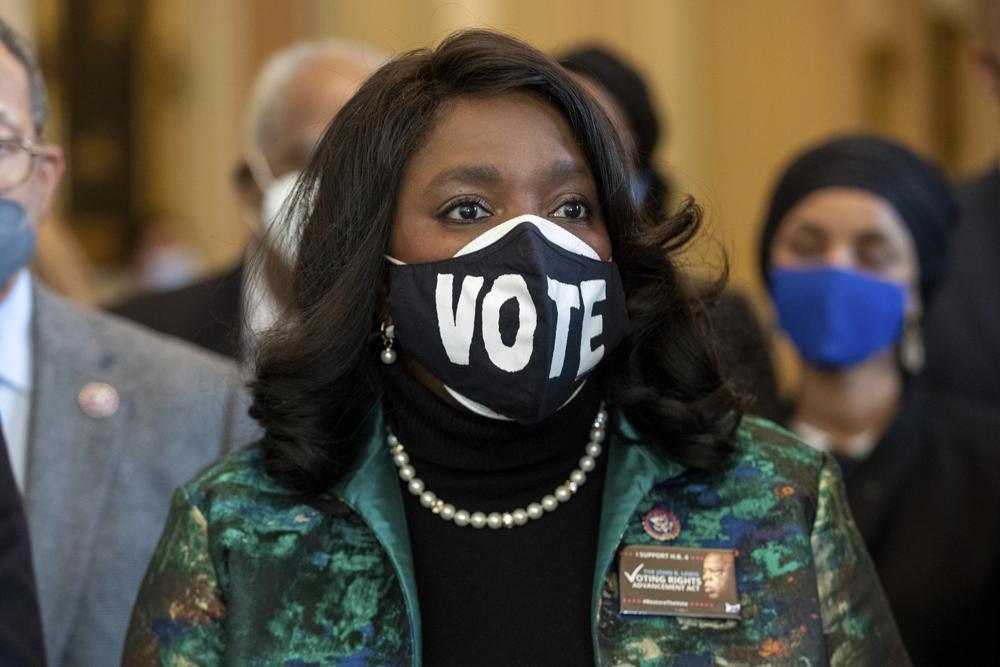
The Supreme Court’s decision to halt efforts to create a second mostly Black congressional district in Alabama for the 2022 election sparked fresh warnings Tuesday that the court is becoming too politicized, eroding the Voting Rights Act and reviving the need for Congress to intervene. The Supreme Court’s conservative majority put on hold a lower court ruling that Alabama must draw new congressional districts to increase Black voting power. Civil rights groups had argued that the state, with its “sordid record” of racial discrimination, drew new maps by “packing” Black voters into one single district and “cracking” Black voters from other districts in ways that dilute their electoral power. Black voters are 26% of Alabama’s electorate. In its 5-4 decision late Monday, the Supreme Court said it would review the case in full, a future legal showdown in the months to come that voting advocates fear could further gut the protections in the landmark Civil Rights-era law. It’s “the latest example of the Supreme Court hacking away at the protections of the voting rights act of 1965,” said Sen. Dick Durbin, D-Ill., chairman of the Judiciary Committee. “Congress must act. We must restore the Voting Rights Act.” The outcome all but ensures Alabama will continue to send mostly white Republicans to Washington after this fall’s midterm elections and applies new pressure on Congress to shore up voter protections after a broader elections bill collapsed last month. And the decision shows the growing power of the high court’s conservative majority as President Joe Biden is under his own pressures to name a liberal nominee to replace retiring Justice Stephen Breyer. Rep. Terri Sewell, the only Black representative from Alabama, said the court’s decision underscores the need for Congress to pass her bill, the John R. Lewis Voting Rights Advancement Act, to update and ensure the law’s historic protections. “Black Alabamians deserve nothing less,” Sewell said in a statement. The case out of Alabama is one of the most important legal tests of the new congressional maps stemming from the 2020 census count. It comes in the aftermath of court decisions that have widely been viewed as chiseling away at race-based protections of the Voting Rights Act. Alabama and other states with a known history of voting rights violations were no longer under federal oversight, or “preclearance,” from the Justice Department for changes to their election practices after the court, in its 2013 Shelby v. Holder decision, struck down the bill’s formula as outdated. As states nationwide adjust their congressional districts to fit population and demographic data, Alabama’s Republican-led Legislature drew up new maps last fall that were immediately challenged by civil rights groups on behalf of Black voters in the state. Late last month, a three-judge lower court, which includes two judges appointed by former President Donald Trump, had ruled that the state had probably violated the federal Voting Rights Act by diluting the political power of Black voters. This finding was rooted, in part, in the fact that the state did not create a second district in which Black voters made up a majority or close to it. Given that more than one person in four in Alabama is Black, the plaintiffs had argued the single Black district is far less than one person, one vote. “Black voters have less opportunity than other Alabamians to elect candidates of their choice to Congress,” the three-judge panel wrote in the 225-page ruling. The lower court gave the Alabama legislature until Friday to come up with a remedial plan. Late Monday, the Supreme Court, after an appeal from Alabama, issued a stay. Justices Brett Kavanaugh and Samuel Alito, part of the conservative majority, said the lower court’s order for a new map came too close to the 2022 election. Chief Justice John Roberts joined his three more liberal colleagues in dissent. “It’s just a really disturbing ruling,” said Sen. Cory Booker, D-N.J., a member of the Judiciary Committee, who called the Supreme Court’s decision “a setback to racial equity, to ideals of one person, one vote.” Rep. Joyce Beatty, D-Ohio, and the chair of the Congressional Black Caucus said the decision “hits at the guts of voting rights.” She told The Associated Press: “We’re afraid of what will happen from Alabama to Texas to Florida and even to the great state of Ohio.” White House Press Secretary Jen Psaki said the court decision exposes the need for Congress to legislate to protect voting rights. The erosion of those rights is “exactly what the Voting Rights Act is in place to prevent.” Critics went beyond assailing the decision at hand to assert that the court has become political. “I know the court likes to say it’s not partisan, that it’s apolitical, but this seems to be a very political decision,” said Democratic Sen. Chris Van Hollen of Maryland. Rep. Hakeem Jeffries, D-N.Y., tweeted that the court majority has “zero legitimacy.” Rep. Barbara Lee, D-Calif., tweeted that the court’s action was “Jim Crow 2.0.” Alabama Republicans welcomed the court’s decision. “It is great news,” said Rep. Mo Brooks, who is running for the GOP nomination for Senate. He called the lower court ruling an effort to “usurp” the decisions made by the state’s legislature. The justices will, at some later date, decide whether the map produced by the state violates the voting rights law, a case that could call into question “decades of this Court’s precedent” about Section 2 of the act, Justice Elena Kagan wrote in dissent. Section 2 prohibits racial and other discrimination in voting procedures. Voting advocates see the arguments ahead as a showdown over voting rights they say are being slowly but methodically altered by the Roberts court. The Supreme Court in the Shelby decision did away with the preclearance formula under Section 5 of the Voting Rights Act. And last summer, the conservative majority in Bronvich vs. the Democratic National Committee upheld voting limits in an Arizona case concerning early ballots that a lower court had found discriminatory under Section 2. With the Alabama case, the court
Supreme Court sides with GOP in Alabama election map case
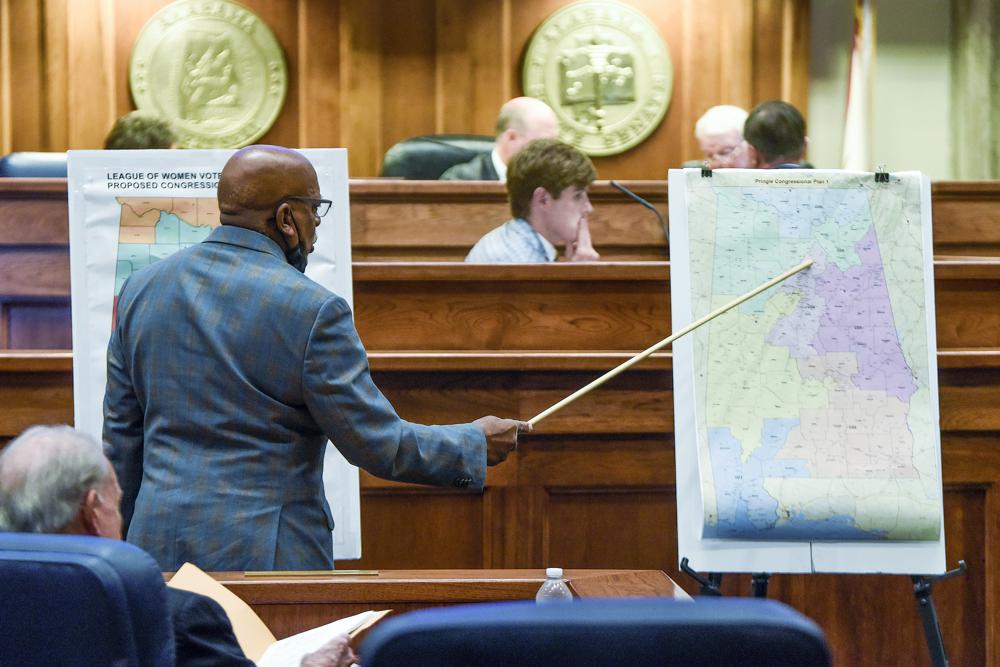
The Supreme Court on Monday put on hold a lower court ruling that Alabama must draw new congressional districts before the 2022 elections to increase Black voting power. The high court order boosts Republican chances to hold six of the state’s seven seats in the House of Representatives. The court’s action, by a 5-4 vote, means the upcoming elections will be conducted under a map drawn by Alabama’s Republican-controlled legislature that contains one majority-Black district, represented by a Black Democrat, in a state in which more than a quarter of the population is Black. A three-judge lower court, including two judges appointed by former President Donald Trump, had ruled that the state had likely violated the federal Voting Rights Act by diluting the political power of Black voters by not creating a second district in which they made up a majority, or close to it. Justices Brett Kavanaugh and Samuel Alito, part of the conservative majority, said the lower court acted too close to the 2022 election cycle. Chief Justice John Roberts joined his three more liberal colleagues in dissent. The justices will, at some later date, decide whether the map produced by the state violates the landmark voting rights law, a case that could call into question “decades of this Court’s precedent about Section 2 of the VRA,” Justice Elena Kagan wrote in dissent. That decision presumably will govern elections in 2024 through the end of the decade in Alabama and could affect minority political representation elsewhere in the country, too. Alabama lawmakers redrew the state’s congressional districts following the results of the 2020 census. Several groups of voters sued, arguing that the new maps diluted the voting power of Black residents. In a unanimous ruling in late January, the three judges said that the groups were likely to succeed in showing that the state had violated the Voting Rights Act. As a result, the panel ordered lawmakers to redraw the districts so Black voters would be a majority, or close to it, in two districts, not one. The ruling ran more than 200 pages. The panel wrote that “we do not regard the question … as a close one.” Alabama asked the Supreme Court to put the ruling on hold while it appeals, and the justices agreed. The state argued that it drew the new map guided by race-neutral principles and that the new map is similar to past maps. More than a dozen mostly Republican-led states had filed a brief urging the justices to side with Alabama and allow it to use the maps it originally drew. Deuel Ross, a lawyer for Alabamians who sued, called the state’s congressional districts “a textbook case of a Voting Rights Act violation” and said the high court’s decision to intervene is disheartening. But the facts are clear, Ross, a lawyer with the NAACP Legal Defense and Educational Fund, wrote in an email to The Associated Press. “Alabama’s current congressional map violates the Voting Rights Act,” he said. “The litigation will continue, and we are confident that Black Alabamians will eventually have the congressional map they deserve — one that fairly represents all voters.” Roberts, who typically votes against consideration of race, wrote that he shares some of Alabama’s concerns but still would have let the redrawn districts govern the 2022 election and have future elections governed by the ultimate outcome in the case. Kavanaugh, writing to explain his vote, stressed that the court has repeatedly declined in the past to change the rules close to an election. “When an election is close at hand, the rules of the road must be clear and settled. Late judicial tinkering with election laws can lead to disruption and to unanticipated and unfair consequences for candidates, political parties, and voters, among others. It is one thing for a State on its own to toy with its election laws close to a State’s elections. But it is quite another thing for a federal court to swoop in and re-do a State’s election laws in the period close to an election,” he wrote in an opinion Alito joined. Taking issue with Kavanaugh, Kagan noted that the lower court ruled months before any votes will be cast. She criticized the conservatives for using the emergency application process known as the shadow docket “to signal or make changes in the law, without anything approaching full briefing and argument.” Republished with the permission of the Associated Press.
Supreme Court allows January 6 committee to get Donald Trump documents
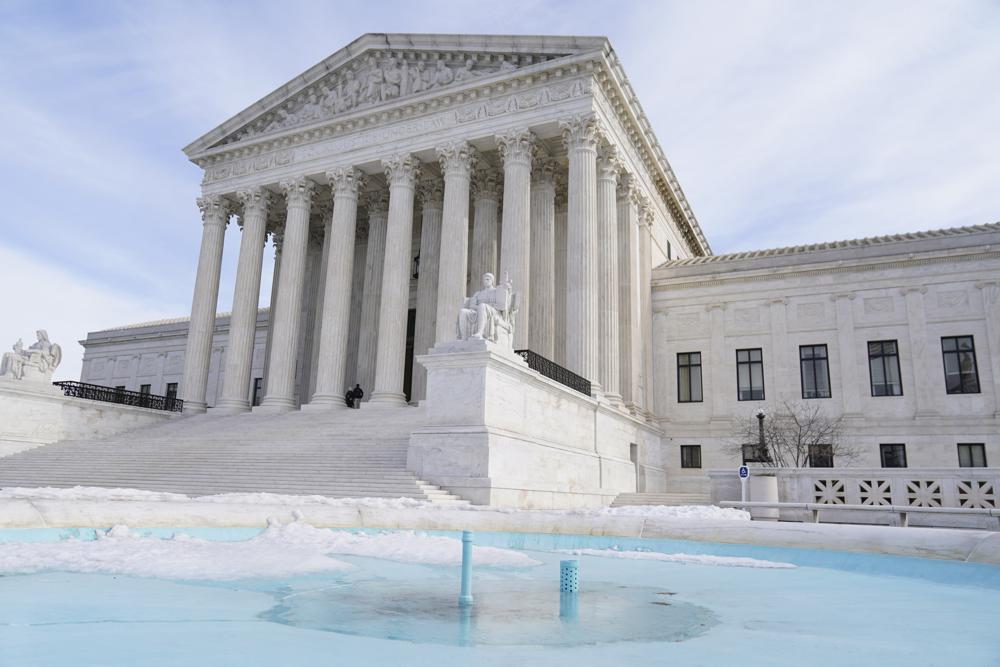
In a rebuff to former President Donald Trump, the Supreme Court is allowing the release of presidential documents sought by the congressional committee investigating the January 6 insurrection. The justices on Wednesday rejected a bid by Trump to withhold the documents from the committee until the issue is finally resolved by the courts. Trump’s lawyers had hoped to prolong the court fight and keep the documents on hold. Following the high court’s action, there is no legal impediment to turning over the documents, which are held by the National Archives and Records Administration. They include presidential diaries, visitor logs, speech drafts, and handwritten notes dealing with Jan. 6 from the files of former chief of staff Mark Meadows. The House committee agreed to defer its attempt to get some documents at the request of the Biden White House. The current administration was concerned that releasing all of the Trump administration documents sought by the committee could compromise national security and executive privilege. Alone among the justices, Clarence Thomas said he would have granted Trump’s request to keep the documents on hold. Trump’s attorneys had asked the high court to reverse rulings by the federal appeals court in Washington and block the release of the records even after President Joe Biden waived executive privilege over them. In an unsigned opinion, the court acknowledged there are “serious and substantial concerns” over whether a former president can win a court order to prevent disclosure of certain records from his time in office in a situation like this one. But the court noted that the appeals court determined that Trump’s assertion of privilege over the documents would fail under any circumstances, “even if he were the incumbent.” It said the issue of a former president’s ability to claim executive privilege would have to wait for another day. The court took issue with the conclusion of the appeals court that downplayed a former president’s interests, suggesting that the current president could, in essence, ignore his predecessor’s claims. Justice Brett Kavanaugh, who worked in the White House under President George W. Bush, wrote separately to argue that “a former President must be able to successfully invoke the Presidential communications privilege for communications that occurred during his Presidency, even if the current President does not support the privilege claim.” But Kavanaugh, a Trump appointee, did not object to the outcome Wednesday. Before and after the riot, Trump promoted false theories about election fraud and suggested the “real insurrection” was on Election Day, when he lost to Biden. Repeating arguments they made before lower courts, Trump’s attorneys had urged the justices to step in, arguing that the case concerned all future occupants of the White House. Former presidents had “a clear right to protect their confidential records from premature dissemination,” Trump’s lawyers said. “Congress cannot engage in meandering fishing expeditions in the hopes of embarrassing President Trump or exposing the President’s and his staff’s sensitive and privileged communications ‘for the sake of exposure,’” they added. But the House committee responded in its high court brief that although the facts of the case are “unprecedented,” the decision was “not a difficult one.” There was no explanation for the timing of the court’s action. But the National Archives told the appeals court and Trump’s lawyers that it would turn over some documents it asserted were not part of the court case on Wednesday absent a new court order. Also on Wednesday, the House committee investigating the Capitol insurrection issued subpoenas to leaders of an alt-right group who appeared at events promoting baseless claims of voter fraud after the 2020 election. The committee demanded records and testimony from Nick Fuentes and Patrick Casey — internet personalities who have promoted white supremacist beliefs — regarding what lawmakers say is their promotion of unsupported claims about the election and their presence on Capitol grounds on January 6, 2021. Since its creation last summer, the committee has interviewed almost 350 people as it seeks to create a comprehensive record of the attack and the events leading up to it. Republished with the permission of the Associated Press.
Supreme Court halts COVID-19 vaccine rule for U.S. businesses

The Supreme Court has stopped a major push by the Biden administration to boost the nation’s COVID-19 vaccination rate, a requirement that employees at large businesses get a vaccine or test regularly and wear a mask on the job. At the same time, the court is allowing the administration to proceed with a vaccine mandate for most health care workers in the U.S. The court’s orders Thursday came during a spike in coronavirus cases caused by the omicron variant. The court’s conservative majority concluded the administration overstepped its authority by seeking to impose the Occupational Safety and Health Administration’s vaccine-or-test rule on U.S. businesses with at least 100 employees. More than 80 million people would have been affected, and OSHA had estimated that the rule would save 6,500 lives and prevent 250,000 hospitalizations over six months. “OSHA has never before imposed such a mandate. Nor has Congress. Indeed, although Congress has enacted significant legislation addressing the COVID–19 pandemic, it has declined to enact any measure similar to what OSHA has promulgated here,” the conservatives wrote in an unsigned opinion. In dissent, the court’s three liberals argued that it was the court that was overreaching by substituting its judgment for that of health experts. “Acting outside of its competence and without legal basis, the Court displaces the judgments of the Government officials given the responsibility to respond to workplace health emergencies,” Justices Stephen Breyer, Elena Kagan, and Sonia Sotomayor wrote in a joint dissent. President Joe Biden said he was “disappointed that the Supreme Court has chosen to block common-sense life-saving requirements for employees at large businesses that were grounded squarely in both science and the law.” Biden called on businesses to institute their own vaccination requirements, noting that a third of Fortune 100 companies already have done so. When crafting the OSHA rule, White House officials always anticipated legal challenges — and privately, some harbored doubts that it could withstand them. The administration nonetheless still views the rule as a success at already driving millions of people to get vaccinated and encouraging private businesses to implement their own requirements that are unaffected by the legal challenge. The OSHA regulation had initially been blocked by a federal appeals court in New Orleans, then allowed to take effect by a federal appellate panel in Cincinnati. Both rules had been challenged by Republican-led states. In addition, business groups attacked the OSHA emergency regulation as too expensive and likely to cause workers to leave their jobs at a time when finding new employees already is difficult. The National Retail Federation, the nation’s largest retail trade group, called the Supreme Court’s decision “a significant victory for employers.” The vaccine mandate that the court will allow to be enforced nationwide scraped by on a 5-4 vote, with Chief Justice John Roberts and Justice Brett Kavanaugh joining the liberals to form a majority. The mandate covers virtually all health care workers in the country, applying to providers that receive federal Medicare or Medicaid funding. It affects 10.4 million workers at 76,000 health care facilities as well as home health care providers. The rule has medical and religious exemptions. Biden said that decision by the court “will save lives.” In an unsigned opinion, the court wrote: “The challenges posed by a global pandemic do not allow a federal agency to exercise power that Congress has not conferred upon it. At the same time, such unprecedented circumstances provide no grounds for limiting the exercise of authorities the agency has long been recognized to have.” It said the “latter principle governs” in the healthcare arena. Justice Clarence Thomas wrote in dissent that the case was about whether the administration has the authority “to force healthcare workers, by coercing their employers, to undergo a medical procedure they do not want and cannot undo.” He said the administration hadn’t shown convincingly that Congress gave it that authority. Justices Samuel Alito, Neil Gorsuch, and Amy Coney Barrett signed onto Thomas’ opinion. Alito wrote a separate dissent that the other three conservatives also joined. Decisions by federal appeals courts in New Orleans and St. Louis had blocked the mandate in about half the states. The administration already was taking steps to enforce it elsewhere. More than 208 million Americans, 62.7% of the population, are fully vaccinated, and more than a third of those have received booster shots, according to the federal Centers for Disease Control and Prevention. All nine justices have gotten booster shots. The courthouse remains closed to the public, and lawyers and reporters are asked for negative test results before being allowed inside the courtroom for arguments, though vaccinations are not required. The justices heard arguments on the challenges last week. Their questions then hinted at the split verdict that they issued Thursday. A separate vaccine mandate for federal contractors, on hold after lower courts blocked it, has not been considered by the Supreme Court. Republished with the permission of the Associated Press.
Justices signal they’ll OK new abortion limits, may toss Roe v. Wade
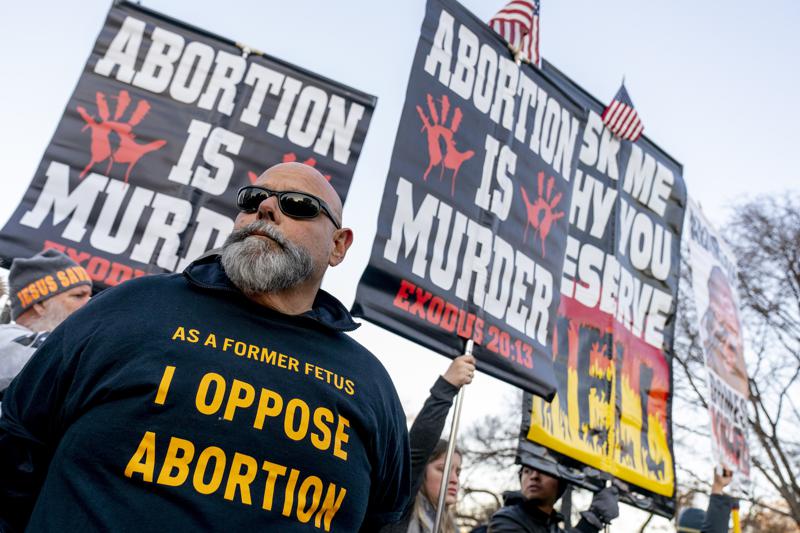
In the biggest challenge to abortion rights in decades, the Supreme Court’s conservative majority on Wednesday signaled they would allow states to ban abortion much earlier in pregnancy and may even overturn the nationwide right that has existed for nearly 50 years. With hundreds of demonstrators outside chanting for and against, the justices led arguments that could decide the fate of the court’s historic 1973 Roe v. Wade decision legalizing abortion throughout the United States and its 1992 ruling in Planned Parenthood v. Casey, which reaffirmed Roe. The outcome probably won’t be known until next June. But after nearly two hours of arguments, all six conservative justices, including three appointed by former President Donald Trump, indicated they would uphold a Mississippi law that bans abortion after 15 weeks of pregnancy. At the very least, such a decision would undermine Roe and Casey, which allow states to regulate but not ban abortion up until the point of fetal viability, at roughly 24 weeks. And there was also substantial support among the conservative justices for getting rid of Roe and Casey altogether. Justice Clarence Thomas is the only member of the court who has openly called for overruling the two cases. Justice Brett Kavanaugh, a Trump appointee, asked whether the court would be better off withdrawing completely from the abortion issue and letting states decide. “Why should this court be the arbiter rather than Congress, the state legislatures, state supreme courts, the people being able to resolve this?” Kavanaugh asked. “And there will be different answers in Mississippi and New York, different answers in Alabama than California.” Abortion would soon become illegal or severely restricted in roughly half the states if Roe and Casey are overturned, according to the Guttmacher Institute, a research organization that supports abortion rights. Legislatures in many Republican-led states are poised for action depending on the Supreme Court’s ruling. People of color and lesser means would be disproportionately affected, supporters of abortion rights say. The court’s three liberal justices said that reversing Roe and Casey would significantly damage the court’s own legitimacy. “Will this institution survive the stench that this creates in the public perception that the Constitution and its reading are just political acts?” Justice Sonia Sotomayor asked. In unusually strong terms for a high-court argument, Justice Stephen Breyer warned his colleagues they “better be damn sure” before they throw away the established abortion decisions. Public opinion polls show support for preserving Roe, though some surveys also find backing for greater restrictions on abortion. Among the conservatives, Chief Justice John Roberts appeared most interested in a less sweeping ruling that would uphold the Mississippi law but not explicitly overrule Roe and Casey. Republished with the permission of the Associated Press.
Texas abortion ban stays in force as justices mull outcome
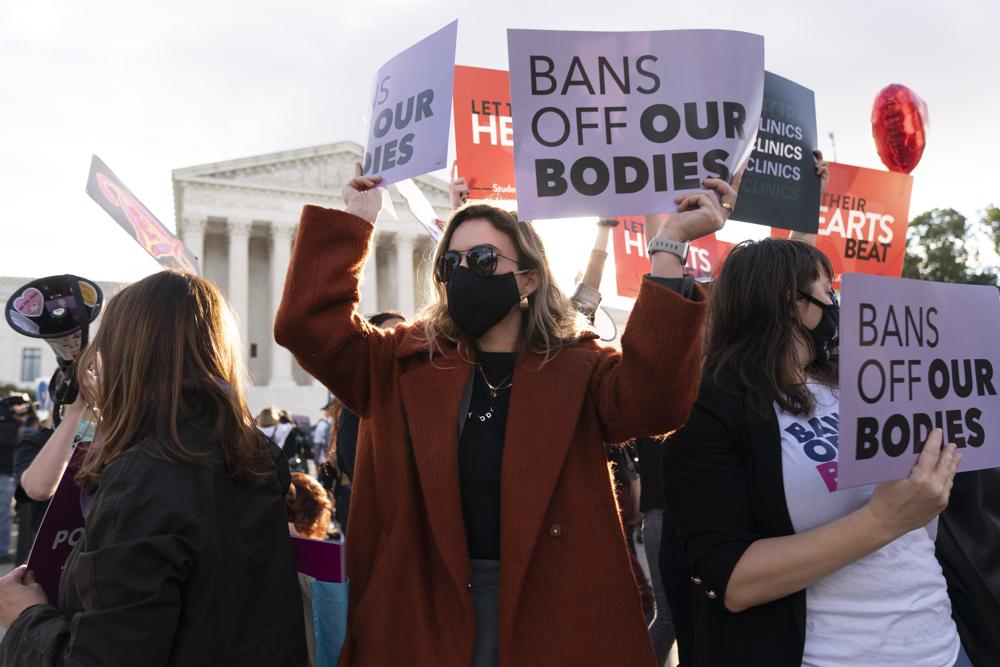
More than two weeks have passed since the Supreme Court’s extraordinarily rushed arguments over Texas’ unique abortion law without any word from the justices. They raised expectations of quick action by putting the case on a rarely used fast track. And yet, to date, the court’s silence means that women cannot get an abortion in Texas, the second-largest state, after about six weeks of pregnancy. That’s before some women know they’re pregnant and long before high court rulings dating to 1973 that allow states to ban abortion. There has been no signal on when the court might act and no formal timetable for reaching a decision. The law has been in effect since Sept. 1, and the court has been unable to muster five votes to stop it, said Mary Ziegler, a legal historian at Florida State University’s law school. “While there is some sense of urgency, some justices had more of a sense of urgency than others,” Ziegler said. Meanwhile, the justices are two weeks away from hearing arguments in another abortion case with potentially huge implications for abortion rights in the United States. The court will take up Mississippi’s call to overrule the two major Supreme Court rulings that, starting in 1973, have guaranteed a woman’s right to an abortion. The state law at issue bans abortions after 15 weeks, well before the point at which a fetus can survive outside the womb. Viability, typically around 24 weeks, has been the dividing line: Before it, states can regulate but not ban abortion. Even before the justices decide what to do about Mississippi’s law and the fate of Roe v. Wade and Planned Parenthood v. Casey, Texas’ law has effectively changed the standard, at least for the time being. It bans abortion after cardiac activity is detected in the fetus, usually around six weeks, and deputizes ordinary citizens to enforce the law in place of state officials who normally would do so. The law authorizes lawsuits against clinics, doctors, and anyone who “aids or abets” an abortion that is not permitted by law. It was designed to make federal court challenges difficult, if not impossible. Federal courts have had no trouble preventing other bans on abortion early in pregnancy from taking effect when they have relied on traditional enforcement. The Texas law is doing what its authors intended. In its first month of operation, a study published by researchers at the University of Texas found that the number of abortions statewide fell by 50% compared with September 2020. The study was based on data from 19 of the state’s 24 abortion clinics, according to the Texas Policy Evaluation Project. Texas residents who left the state seeking an abortion also have had to travel well beyond neighboring states, where clinics cannot keep up with the increase in patients from Texas, according to a separate study by the Guttmacher Institute. The Supreme Court is weighing complex issues in two challenges brought by abortion providers in Texas and the Biden administration. Those issues include who, if anyone, can sue over the law in federal court, the typical route for challenges to abortion restrictions, and whom to target with a court order that ostensibly tries to block the law. Under Supreme Court precedents, it’s not clear whether a federal court can restrain the actions of state court judges who would hear suits filed against abortion providers, court clerks who would be charged with accepting the filings, or anyone who might someday want to sue. People who sue typically have to target others who already have caused them harm, not those who might one day do so and not court officials who are just doing their jobs by docketing and adjudicating the cases. The justices’ history with the Texas law goes back to early September when, by a 5-4 vote, they declined to stop it from taking effect. At the time, five conservative justices, including the three appointees of President Donald Trump, voted to let the law take effect. Chief Justice John Roberts joined the court’s three liberals in dissent. The abortion providers had brought the issue to the court on an emergency basis. After they were rebuffed, the Justice Department stepped in with a suit of its own. U.S. District Judge Robert Pitman granted the Justice Department’s request for an order that put the law on hold. Pitman wrote in a 113-page ruling that the law denied women in Texas their constitutional right to an abortion, and he rejected the state’s arguments that federal courts shouldn’t intervene. But just two days later, the 5th U.S. Circuit Court of Appeals overrode Pitman and allowed the law to go back into effect. The Justice Department made its own emergency appeal to the Supreme Court. Rather than rule on that appeal, the court decided to hear the two suits just ten days later and without the benefit of an appellate court decision. At the arguments, two Trump appointees appeared to have doubts about the Texas law. Justices Amy Coney Barrett and Brett Kavanaugh questioned whether the law allowed people who are sued to air their constitutional claims in court and whether it would lead to a spate of copycat laws on abortion and other rights protected by the Constitution. The court seemed particularly concerned about the “chilling effect” similar laws would produce on other constitutional rights, including speech, religion, and gun possession, said Sarah Marshall Perry, a legal fellow at the Heritage Foundation. The court’s intervention has few counterparts in recent history, and those include Bush v. Gore, the fight over the publication of the government’s secret history of the Vietnam War known as the Pentagon Papers, and Richard Nixon’s effort to keep from handing over the Watergate tapes that ultimately doomed his presidency. The justices have never said why they opted to hear the Texas cases so quickly or how soon they might be decided. The time since the arguments is less than a blink of an eye in high-court terms, where months typically elapse between arguments and a decision. But the justices themselves created the expectation
Providers urge Supreme Court to reject 15-week abortion ban
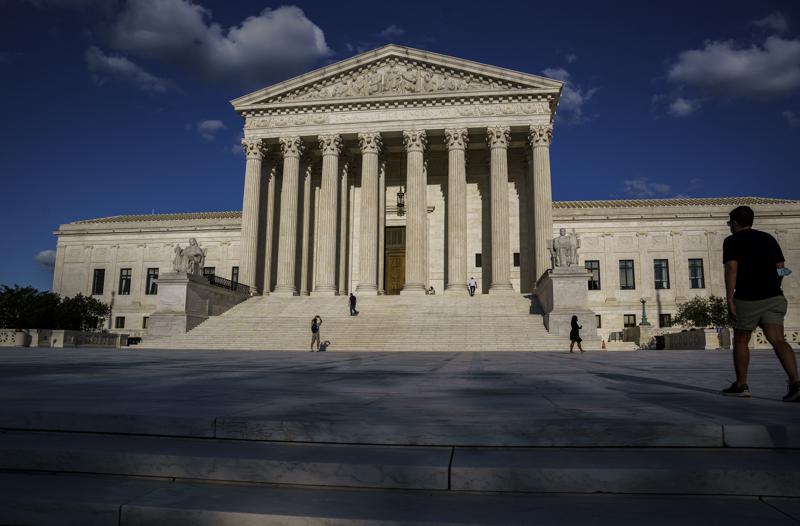
Abortion providers urged the Supreme Court Monday to reject Mississippi’s 15-week prohibition on most abortions, saying a decision to uphold it would “invite states to ban abortion entirely.” The filing with the high court comes at a time of significant peril for abortion rights in the U.S., with a Supreme Court reshaped by three conservative justices appointed by former President Donald Trump. Mississippi already has told the court it should overrule its 1973 decision in Roe v. Wade that established a nationwide right to abortion. Less than two weeks ago, the justices by a 5-4 vote allowed a Texas law to take effect that prohibits abortions once medical professionals can detect cardiac activity, usually around six weeks. The court did not rule on the merits of the law, which the Biden administration and Texas clinics have challenged in federal court. If the court upholds the Mississippi law, it would lead quickly to the elimination of abortion services in large sections of the Midwest and South, where states have aggressively pursued abortion restrictions, the providers told the court. Mississippi’s legal stance is “a request that the Court scuttle a half-century of precedent and invite states to ban abortion entirely,” the providers wrote. The change in the composition of the court appears to be driving the case to overturn Roe. The court had rejected state appeals of similar laws in the past. Of the Trump appointees, Justices Brett Kavanaugh and Amy Coney Barrett took seats previously held by Anthony Kennedy and Ruth Bader Ginsburg, justices who voted to uphold abortion rights. Kavanaugh once served as a law clerk to Kennedy. But the makeup of the court is not sufficient to justify a dramatic change in the law, the providers wrote. “Unless the Court is to be perceived as representing nothing more than the preferences of its current membership, it is critical that judicial protection hold firm absent the most dramatic and unexpected changes in law or fact,” the providers wrote. A day earlier, Barrett and Justice Stephen Breyer, the leader of the court’s diminished liberal wing, argued in separate appearances that it’s wrong to view the court in partisan terms. Barrett was among the conservative justices who allowed the Texas law to take effect. The Mississippi 15-week law was enacted in 2018 but was blocked after a federal court challenge. The state’s only abortion clinic, Jackson Women’s Health Organization, remains open and offers abortions up to 16 weeks of pregnancy. About 100 abortions a year are done after the 15th week, the providers said. More than 90% of abortions in the U.S. take place in the first 13 weeks of pregnancy, according to the Centers for Disease Control and Prevention. The state has said its law would not affect many women, but the providers countered by saying that argument “is at odds with the recognition of constitutional rights in general. The very essence of a constitutional right is that the government cannot outright prohibit a certain subset of people, no matter how small, from exercising that right.” The case hasn’t yet been scheduled for arguments, which could take place in the late fall or early winter. A decision is not expected until June, and the outcome could be an issue in next year’s state and congressional campaigns. Republished with the permission of the Associated Press.
CDC issues new eviction ban for most of U.S. through Oct. 3

The Centers for Disease Control and Prevention issued a new eviction moratorium that would last until Oct. 3, as the Biden administration sought to quell intensifying criticism from progressives that it was allowing vulnerable renters to lose their homes during a pandemic. The ban announced Tuesday could help keep millions in their homes as the coronavirus’ delta variant has spread, and states have been slow to release federal rental aid. It would temporarily halt evictions in counties with “substantial and high levels” of virus transmissions and would cover areas where 90% of the U.S. population lives. The announcement was a reversal for the Biden administration, which allowed an earlier moratorium to lapse over the weekend after saying a Supreme Court ruling prevented an extension. That ripped open a dramatic split between the White House and progressive Democrats who insisted the administration do more to prevent some 3.6 million Americans from losing their homes during the COVID-19 crisis. Speaking at the White House on Tuesday, Joe Biden said he pushed the CDC to again consider its options. But he still seemed hesitant as to whether the new moratorium could withstand lawsuits about its constitutionality, saying he has sought the opinions of experts as to whether the Supreme Court would approve the measure. “The bulk of the constitutional scholarship says that it’s not likely to pass constitutional muster,” Biden said. “But there are several key scholars who think that it may, and it’s worth the effort.” The president added that the moratorium — even if it gets challenged in court — “will probably give some additional time” for states and cities to release billions of dollars in federal relief to renters. Politically, the extension could help heal a rift with liberal Democratic lawmakers who were calling on the president to take executive action to keep renters in their homes. The administration had spent the past several days scrambling to reassure Democrats and the country that it could find a way to limit the damage from potential evictions through the use of federal aid. But pressure mounted as key lawmakers said it was not enough. Top Democratic leaders joined Rep. Cori Bush, D-Mo., who has been camped outside the U.S. Capitol for several days. The freshman congresswoman once lived in her car as a young mother and pointed to that experience to urge the White House to prevent widespread evictions. As she wiped her eyes before a crowd at the Capitol after the CDC’s announcement, Bush said she was shedding “joyful tears.” “My God, I don’t believe we did this,” she said. “We just did the work, just by loving folks to keep millions in their homes.” House Speaker Nancy Pelosi said it was a day of “extraordinary relief.” “The imminent fear of eviction and being put out on the street has been lifted for countless families across America. Help is Here!” Pelosi said in a statement. Administration officials had previously said a Supreme Court ruling stopped them from setting up a new moratorium without congressional backing. When the court allowed the eviction ban to remain in place through the end of July by a 5-4 vote, one justice in the majority, Brett Kavanaugh, wrote that Congress would have to act to extend it further. But on Tuesday, the CDC cited the slow pace of state and local governments disbursing housing aid as justification for the new moratorium. Aside from the moratorium, Biden has insisted that federal money is available — some $47 billion previously approved during the pandemic — that needs to get out the door to help renters and landlords. “The money is there,” Biden said. The White House has said state and local governments have been slow to push out that federal money and is pressing them to do so swiftly. Treasury Secretary Janet Yellen briefed House Democrats Tuesday about the work underway to ensure the federal housing aid makes it to renters and landlords. She provided data so that lawmakers could see how their districts and states are performing with distributing the relief, according to a person on the call. The treasury secretary tried to encourage Democrats to work together, even as lawmakers said Biden should act on his own to extend the eviction moratorium, according to someone on the private call who insisted on anonymity to discuss its contents. Yellen said on the call, according to this person, that she agrees “we need to bring every resource to bear” and that she appreciated the Democrats’ efforts and wants “to leave no stone unturned.” The CDC put the initial eviction ban in place as part of the COVID-19 response when jobs shifted, and many workers lost income. The ban was intended to hold back the spread of the virus among people put out on the streets and into shelters, but it also penalized landlords who lost income as a result. National Apartment Association president and CEO Bob Pinnegar said the organization “has always held the same position — the eviction moratorium is an unfunded government mandate that forces housing providers to deliver a costly service without compensation and saddles renters with insurmountable debt.” Democratic lawmakers said they were caught by surprise by Biden’s initial decision to end the moratorium even though the CDC indicated in late June that it probably wouldn’t extend the eviction ban beyond the end of July. Rep. Maxine Waters, the powerful chair of the Financial Services Committee, has been talking privately for days with Yellen and urged the treasury secretary to use her influence to prod states to push the money out the door. But Waters also called on the CDC to act on its own. After the CDC’s announcement Tuesday, Waters released a statement thanking Biden “for listening and for encouraging the CDC to act! This extension of the moratorium is the lifeline that millions of families have been waiting for.” Republished with the permission of the Associated Press.
