
James Comey testimony leaves question about Jeff Sessions unanswered
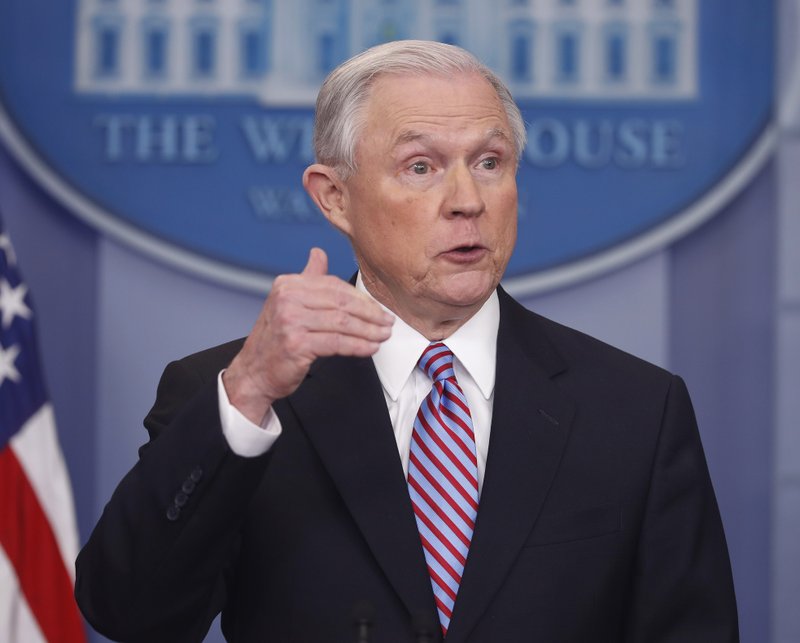
Ousted FBI Director James Comey provided a lot of answers during his public testimony before a Senate committee, but he left one substantial question unanswered: How did the FBI know Attorney General Jeff Sessions was going to step aside from the investigation into the Trump campaign’s Russia ties? The Justice Department responded late Thursday, saying that after consultations with department ethics officials Sessions recused himself because of his involvement in Trump’s 2016 presidential campaign, “for that reason, and that reason alone.” The department’s statement did not directly respond to Comey’s comment that he was “aware of facts” that would make Sessions’ continued involvement in the Russia probe problematic. Nor did it explain why Comey said he could not discuss those reasons in public. Comey testified that President Donald Trump had expressed hope he would end an FBI investigation into former national security adviser Michael Flynn. Comey said the request made him uncomfortable, but he chose not to relay that information to Sessions because he was convinced the attorney general would recuse himself from Russia-related matters. Career Justice Department officials had been recommending he step aside, Comey said. Sessions, a close Trump adviser, withdrew from the Russia investigation March 2 after acknowledging two previously undisclosed contacts with Russian Ambassador Sergey Kislyak last summer and fall. The Justice statement Thursday made no mention of that issue. Sens. Patrick Leahy, D-Vt., and Al Franken, D-Minn., last week released a letter urging the FBI to investigate whether Sessions had falsely testified under oath when he said at his January confirmation hearing that he hadn’t had any contacts with Russia. In addition to the two meetings that Sessions has acknowledged, the senators pointed to the possibility of a separate encounter at an April 2016 Trump campaign event that Sessions and Kislyak attended. The Justice Department has acknowledged that Sessions was at the Mayflower Hotel event in Washington, but said there were no private or side conversations that day. Comey’s statement resonated Thursday on Capitol Hill. Democratic lawmakers, some of whom were already concerned that Sessions’ involvement in Comey’s May 9 firing violated his recusal, said they would make it a top priority. The fact that information about Sessions was classified and Comey couldn’t answer “means there’s something out there that he knows about that the public doesn’t, and that he thinks bears on a need for Sessions to recuse himself in matters that relate to Russia,” said Sen. Sheldon Whitehouse, D-R.I. Sen. Ron Wyden, D-Ore., said he could “spend a lot of time on this in the days ahead.” Comey also said he didn’t know whether Sessions had violated the terms of his recusal, and that would depend on whether the reason for his firing was related to the Russia investigation. Justice Department spokesman Ian Prior said Sessions “has not been briefed on or participated in any investigation within the scope of his recusal.” Meanwhile Thursday, White House spokeswoman Sarah Huckabee Sanders said Trump “absolutely” has confidence in Sessions. The statement came two days after White House spokesman Sean Spicer declined to say whether Trump had confidence in his attorney general. Republished with permission of The Associate Press.
White House looks for ways to undermine James Comey’s credibility
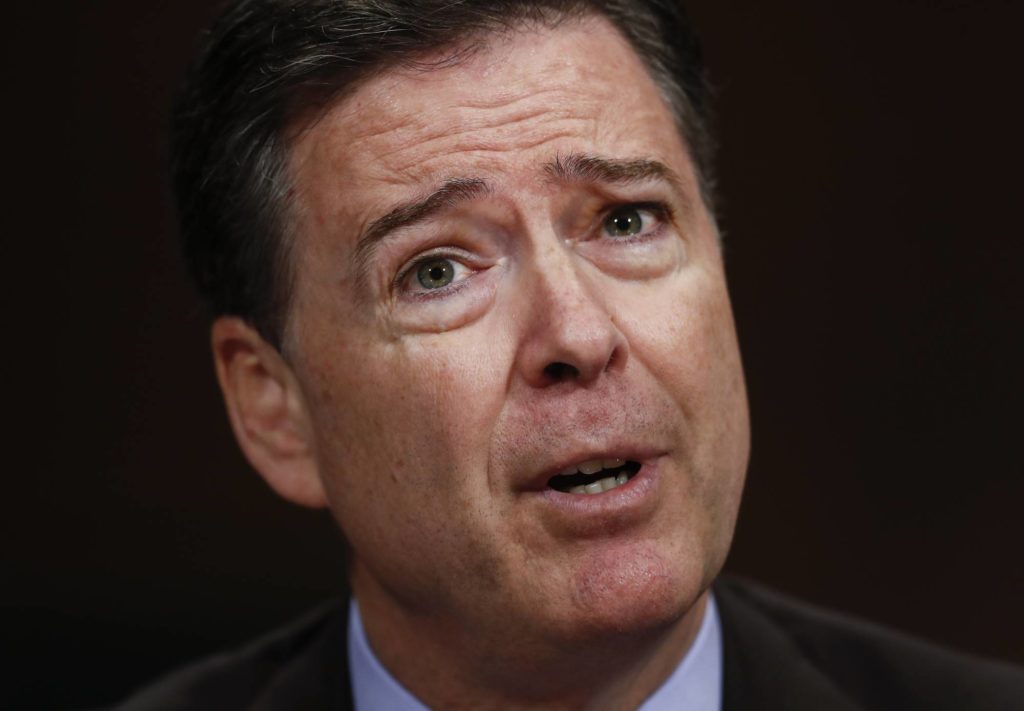
With fired FBI Director James Comey’s highly anticipated congressional testimony just a day away, the White House and its allies are scrambling for ways to offset potential damage. Asked Tuesday about the testimony, President Donald Trump was tight-lipped: “I wish him luck,” he told reporters. Comey’s testimony Thursday before the Senate intelligence committee could expose new details regarding his discussions with Trump about the federal investigation into Russia’s election meddling. Comey could also bring up other aspects of his dealings with the Trump administration. On Tuesday evening a person familiar with the situation said Comey had told Attorney General Jeff Sessions that he did not want to be left alone with Trump. The person, who was not authorized to discuss the matter by name and spoke on condition of anonymity, told The Associated Press the comment was made because of concerns Comey had about Trump. It was not immediately clear when the conversation occurred. But The New York Times, which first reported the interaction with Sessions, said it came after Trump had asked Comey in February to end an FBI investigation into Trump’s first national security adviser, Michael Flynn. Justice Department spokesman Ian Prior declined to comment. He said Sessions “doesn’t believe it’s appropriate to respond to media inquiries on matters that may be related to ongoing investigations.” Trump’s White House and its allies are crafting a strategy aimed at undermining Comey’s credibility. Both White House officials and an outside group that backs Trump plan to hammer Comey in the coming days for misstatements he made about Democrat Hillary Clinton’s emails during his last appearance on Capitol Hill. An ad created by the pro-Trump Great America Alliance — a nonprofit “issues” group that isn’t required to disclose its donors — casts Comey as a “showboat” who was “consumed with election meddling” instead of focusing on combating terrorism. The 30-second spot is slated to run digitally on Wednesday and appear the next day on CNN and Fox News. The Republican National Committee has been preparing talking points ahead of the hearing, which will be aired live on multiple TV outlets. An RNC research email Monday issued a challenge to the lawmakers who will question Comey. There’s bipartisan agreement, the email says, that Comey “needs to answer a simple question about his conversations with President Trump: If you were so concerned, why didn’t you act on it or notify Congress?” Comey’s testimony marks his first public comments since he was abruptly ousted by Trump on May 9. Since then, Trump and Comey allies have traded competing narratives about their interactions. The president asserted that Comey told him three times that he was not personally under investigation, while the former director’s associates allege Trump asked Comey if he could back off an investigation into Michael Flynn, who was fired as national security adviser because he misled the White House about his ties to Russia. Democrats have accused Trump of firing Comey to upend the FBI’s Russia probe, which focused in large part on whether campaign aides coordinated with Moscow to hack Democratic groups during the election. Days after Comey’s firing, the Justice Department appointed a special counsel, former FBI Director Robert Mueller, to oversee the federal investigation. The new revelation about Comey’s uneasiness with Trump brings to mind a posting last month by Comey friend Benjamin Wittes on his Lawfare blog, in which he said Comey “saw it as an ongoing task on his part to protect the rest of the Bureau from improper contacts and interferences from a group of people he did not regard as honorable.” Despite the mounting legal questions now shadowing the White House, Trump has needled Comey publicly. In a tweet days after the firing, he appeared to warn Comey that he might have recordings of their private discussions, something the White House has neither confirmed nor denied. White House officials appear eager to keep the president away from television and Twitter Thursday, though those efforts rarely succeed. White House spokesman Sean Spicer said the president plans to attend an infrastructure summit in the morning, then address the Faith and Freedom Coalition’s “Road to Majority” conference at 12:30 p.m. “The president’s got a full day on Thursday,” Spicer said. The White House had hoped to set up a “war room” stocked with Trump allies and top-flight lawyers to combat questions about the FBI and congressional investigations into possible ties between the campaign and Russia. However, that effort has largely stalled, both because of a lack of decision-making in the West Wing and concerns among some potential recruits about joining a White House under the cloud of investigation. “If there isn’t a strategy, a coherent, effective one, this is really going to put us all behind the eight ball. We need to start fighting back. And so far, I don’t see a lot of fight,” said Barry Bennett, a former Trump campaign aide. Still, Trump supporters say they are willing to step in to help the White House deflect any accusations from Comey. “If we feel he crosses a line, we’ll fire back,” said Ed Rollins, chief strategist of Great America PAC, the political arm of the group airing the Comey ad. Republished with permission of The Associated Press.
Steve Flowers: Sizing up the U.S. Senate sprint

Well, folks, the field is set for the sprint to fill the open U.S. Senate seat of Jeff Sessions. The primary Aug. 15 is less than three months away. There will probably be a run-off Sept. 26, and the winner of that GOP run-off will be our Junior Senator from Alabama. In the Heart of Dixie, winning the Republican nomination is tantamount to election. The Dec. 12 General Election will be a coronation for the winner of the Sept. 26 Republican primary. It was an interesting closing day of qualifying Wednesday. It was unbelievable how many people showed up to qualify. Eleven candidates are running in the Republican primary and amazingly, the Democrats fielded eight candidates. It was like ants coming out of the woodwork. It was similar to our olden days of Alabama politics when everybody and their brother ran for an open governor’s race or a seldom seen open Senate race. We ought to refer to this race as an ant race rather than a horse race. Of the 19 candidates, only about five are viable contenders. Therefore, about 14 of these folks are running for the fun of it. In fact, we use to refer to them as “run for the fun of it” candidates. The most colorful run for the fun of it candidate in Alabama political history was Ralph “Shorty” Price. Shorty ran for governor every four years. He usually finished last. His slogan was smoke Tampa Nugget cigars, drink Budweiser beer and vote for Shorty Price. His campaign platform declared that he would change the term of governor from four years to two years. He would say if you are not smart enough to steal enough as governor in two years, you ain’t smart enough to be governor. My guess is that if someone put Shorty’s name on this Aug. 15 ballot, he would run sixth out of the 12-person GOP field, posthumously. He would probably win the Democratic nomination from the grave. The party leaders were probably glad to see them all show up. The raked in $3,400 a pop from each qualifier. You wonder what motivates those also-ran candidates to put their names on the ballot. Maybe they just want to see their name on the ballot, maybe their Aunt Susie left them $5,000 with the stipulation that they had to use it to run for the U.S. Senate, or they want to tell their grandchildren one day that they ran for the U.S. Senate. They can omit that they ran 11th. Maybe they won a 4-H speaking contest when they were in school and figured their destiny was to be a U.S. Senator. It is similar to someone trying to walk on to Bear Bryant’s or Nick Saban’s football team, and Bryant or Saban grants them permission to get a uniform if only for a day and try out. That bold soul who had to be hit by John Hannah like a tackling dummy can truthfully say to their grandson, “I played football at Alabama for Bear Bryant.” Actually, Alabama’s Sixth Congressional Jefferson/Shelby U.S. Representative, Gary Palmer, was elected to Congress by his doing the above thing while in college at Alabama. Some people suspect that his saying he played for Bear Bryant helped propel him to victory when he was elected a few years ago. Well, let’s give them just due and list them for you. I will list them in order of how I would handicap the field as the race for the Republican nomination begins. The two frontrunners are Roy Moore, followed by Luther Strange. Congressman Mo Brooks is within striking distance of Big Luther. State Senator Trip Pittman and Dr. Randy Brinson could be players if they come up with $5 million to spend on the race. Right now, they are unknown to more than 95 percent of the electorate. If Mo Brooks can raise and spend $3 million, or if Brinson or Pittman can pony up $5 million, one of these three could probably knock Luther out of the run-off. Roy Moore is in the run-off – he leads the crowded field. These six brave souls are in for the fun of it. Hopefully, their next-door neighbor or grandmother will vote for them, James Paul Baretta, Joseph Breault, Dom Gentile, Karen Jackson, Mary Maxwell and Bryan Peeples. Enjoy the race. I will keep you posted. Next week I will analyze and handicap the race in-depth. See you next week. ___ Steve Flowers is Alabama’s leading political columnist. His weekly column appears in over 60 Alabama newspapers. He served 16 years in the state Legislature. Steve may be reached at www.steveflowers.us.
Perry Hooper Jr. declines U.S. Senate run, backs Luther Strange
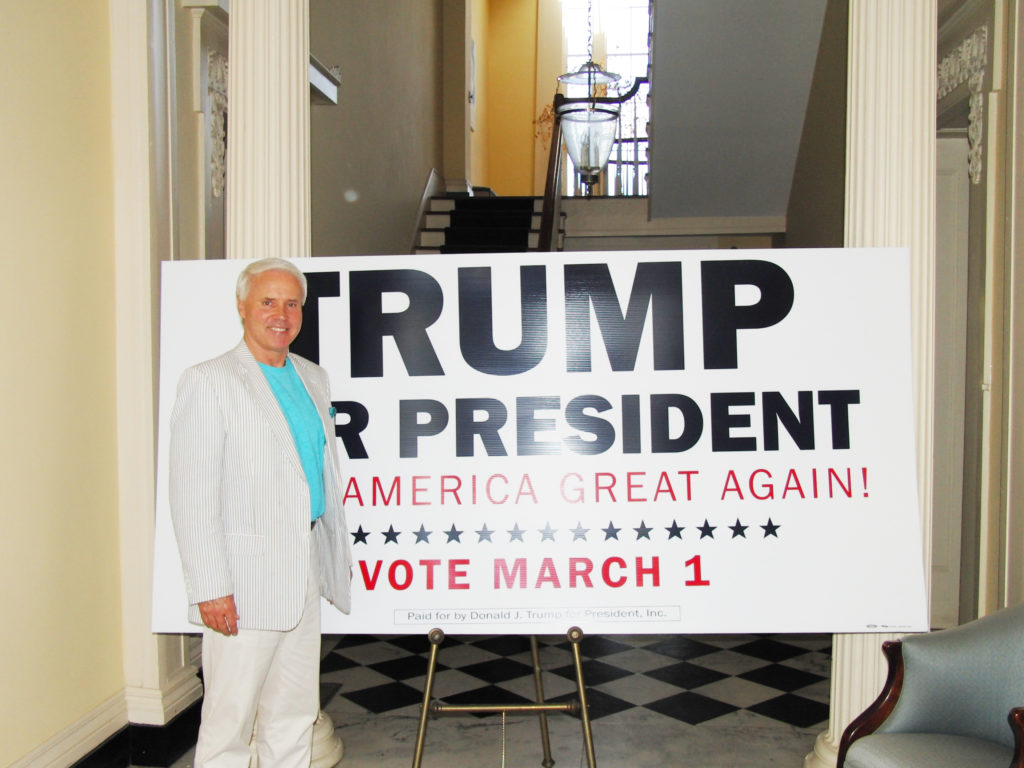
Former state Rep. Perry Hooper Jr. will not run in the special election for U.S. Senate. Instead, Hooper, who served as Alabama co-chair of Donald Trump‘s campaign, is endorsing current Sen. Luther Strange. According to AL.com, the Montgomery Republican had sought the appointment by then-Gov. Robert Bentley to succeed Jeff Sessions after he became Trump’s Attorney General. In the end, Bentley chose Strange, Alabama’s attorney general at the time. Hooper held a news conference on the Capitol steps in Montgomery Wednesday morning, where he explained that he made the decision not to enter the race last week. While all the candidates in the race would make “competent” senators, Hooper said Strange was the best to put forward Trump’s agenda. “We need a strong conservative in Washington who will take up the mantle of Jeff Sessions and support the Trump agenda,” Hooper told reporters. “Every vote Sen. Strange has cast is exactly how Jeff Sessions would have voted.” Hooper is endorsing Strange based on his vote to confirm Neil Gorsuch for the U.S. Supreme Court and his Strange’s support of a bill to cut funding to sanctuary cities, using that money to build Trump’s wall on the country’s southern border. He added: “He has assured me that he will be a strong Trump floor leader in repealing and replacing Obamacare, cutting taxes on working Americans, reducing regulations that are stifling economy, rebuilding our border military and ensuring our border security.” Watch Hooper’s endorsement below:
Del Marsh not running for U.S. Senate seat
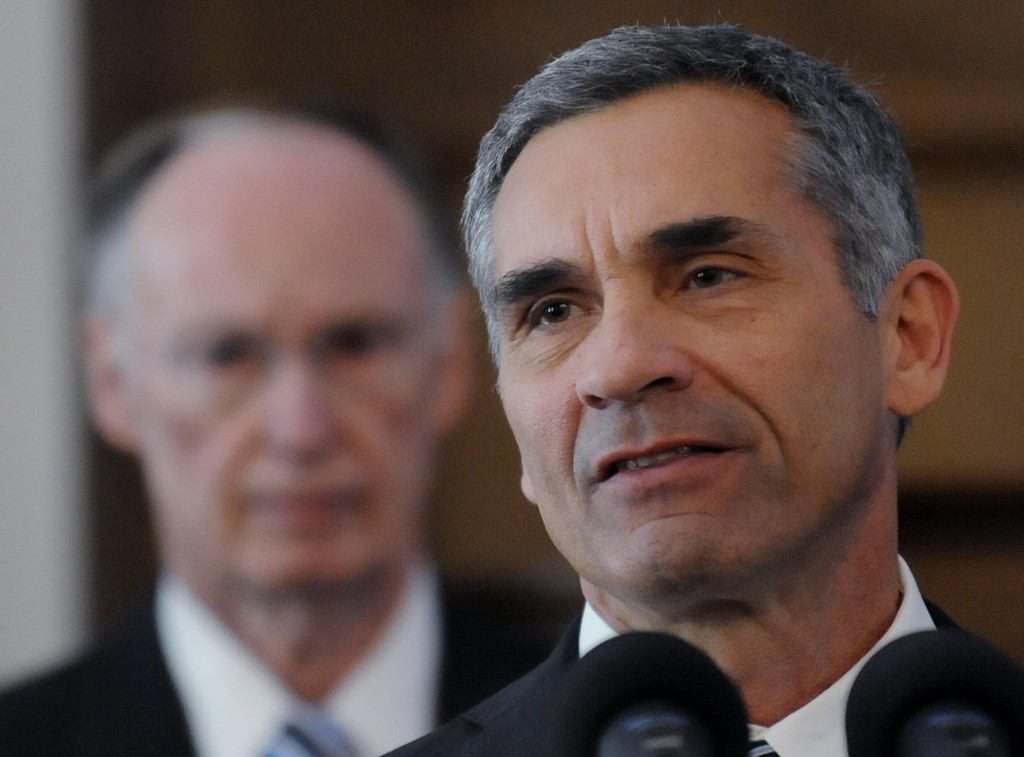
State Sen. Del Marsh will not be seeking the U.S. Senate seat previously held by Attorney General Jeff Sessions. Marsh, an Anniston Republican, has served as Alabama Senate President Pro Tem since 2010. Currently in the race for the Republican nomination are Sen. Luther Strange, who had been appointed by former Gov. Robert Bentley in February, Huntsville Congressman Mo Brooks, former state Supreme Court Chief Justice Roy Moore, state Rep. Ed Henry of Hartselle, Christian Coalition of Alabama President Randy Brinson, Dominic Gentile and Birmingham business executive Bryan Peeples. AL.com is reporting that 5 p.m. today is the deadline for candidates enter the special election for U.S. Senator. The Republican primary is Aug. 15. According to the Alabama Republican Party, also qualifying for the race are Mary Maxwell and Joseph F. Breault. Democratic candidates include Michael Hansen of the environmental advocacy group Gasp; former U.S. Attorney Doug Jones; Mobile resident Robert Kennedy Jr.; and Orange Beach’s Jason Fisher, who serves as vice president of direct marketing firm Ruffalo Noel-Levitz. Today’s announcement puts end to speculation Marsh would enter the race. Earlier this month, Marsh met with members of the National Republican Senatorial Committee. “I don’t consider Gov. Bentley’s hand-chosen senator to be the incumbent,” Marsh told NRSC officials. “I think the people will choose that in an election cycle.”
Steve Flowers: Looking at the thoroughbreds in governor’s derby
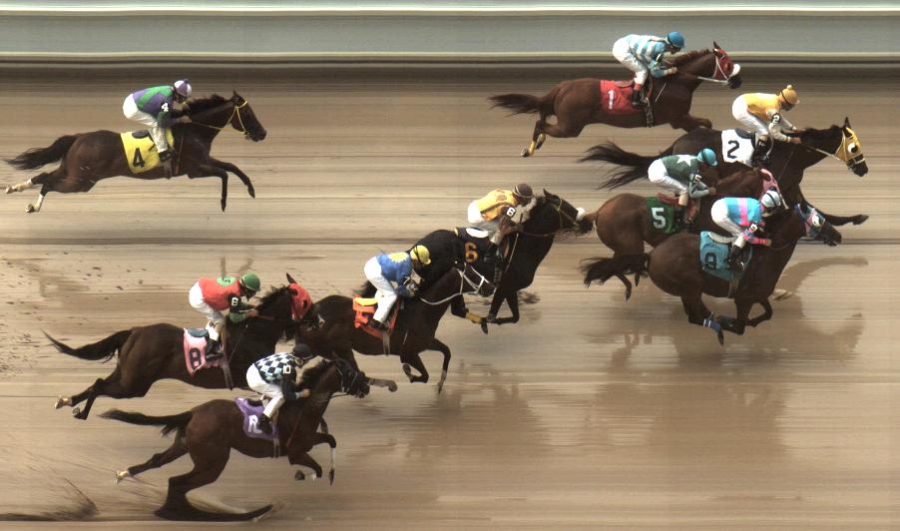
The race for our open U.S. Senate seat will be the marquee political event for the remainder of this year. It will be a great show. However, we have a sensational and pivotal 2018 governor’s race evolving simultaneously. This much-anticipated gubernatorial derby will be affected by the preliminary Senate horse race. The political landscape has changed dramatically with the decisive move by new Governor Kay Ivey to call for the election of Jeff Sessions’ successor to the Senate this year. Unlike in olden days where running a preliminary statewide race was a steppingstone to getting elected four years later, in recent years, losing statewide is not good — especially if that loss has occurred within less than six months. Therefore, three or more thoroughbreds are removed from the governor’s race. One will be in the Senate and the other two will be exiled to Buck’s Pocket and will not be players in the governor’s race. You can remove Roy Moore, Luther Strange and any unknown wealthy person, who can and will spend 5 to 10 million dollars of their own money. This unknown rich man will either be Senator or gone from the scene. Roy Moore’s removal from the governor’s race is the most significant change to the gubernatorial track. His evangelical base, which probably accounts for 20-30 percent of a GOP primary vote, will be splintered among the field. As I peruse the horses grazing in the pasture, let’s take a look at them because the race begins in less than a month, with fundraising for the June 2018 primaries beginning June 6. Before I mention some horses, who look to be front-runners, let me say that most of these folks ain’t ponies. Kay Ivey is 72. She would have probably gone out to pasture had she not become governor. With 18 months as governor she begins to look very gubernatorial. If she decides to run, she will be running as the incumbent and will be a viable horse, if not the front-runner. Huntsville Mayor, Tommy Battle, 61, is going to be a player in this race. He has done an exemplary job as mayor of Alabama’s most important and successful city. Folks, if we did not have Huntsville, we would be last in everything. Battle is popular in his neck of the woods and will come out of the Tennessee Valley with a good many votes. The “Yella Fella,” Jimmy Rane, 70, may make the race for governor. He is a successful businessman worth $600 million, according to Forbes Magazine. His business success has not gone to his head. He is and would come across as a “good ole guy.” Jack Hawkins, the 72-year-old Chancellor of the Troy University System, would be the best-qualified person to be governor. If you put his resume into a merit system roster, the computer would print out his name. He would also be an attractive candidate. Besides building and presiding over a university system for 30 years, he is tall, handsome, and very articulate and exudes honesty and integrity. He would also be the only Marine in the race. David Carrington, 69, is a Jefferson County Commissioner and successful businessman. He could garner significant support from the Birmingham business community. He also should have some name identification from being seen on Birmingham television for six years. John McMillan, 75, is one of the best-liked and successful statewide officeholders in Alabama. He has had a stellar eight-year reign as Agriculture Commissioner. John is a native of Baldwin County, which is one of Alabama’s fastest growing and largest Republican counties. If there is a large field, a strong vote in his home county could catapult him into a runoff. What about the other statewide officeholders? Twinkle Cavanaugh and John Merrill are younger than the aforementioned horses. At 50, they could sit out this race and come back either four or eight years later. Most observers expect Twinkle to run for Lt. Governor. She would be a favorite in that race. John Merrill probably stays another term as Secretary of State, which is prudent. If he and Twinkle bide their time, they would be the front-runners for governor next time around. Two older horses in secondary statewide office are question marks. Young Boozer, 68, is term-limited from running again for Treasurer. He is mum on his plans. State Auditor Jim Ziegler, 68, has garnered a lot of press the last few years from that benign office. Folks would be wise to not underestimate him. However, his best race would be for Attorney General. He would enter as the favorite in that race. See you next week. ___ Steve Flowers is Alabama’s leading political columnist. His weekly column appears in over 60 Alabama newspapers. He served 16 years in the state Legislature. Steve may be reached at www.steveflowers.us.
US prosecutors told to push for more, harsher punishments
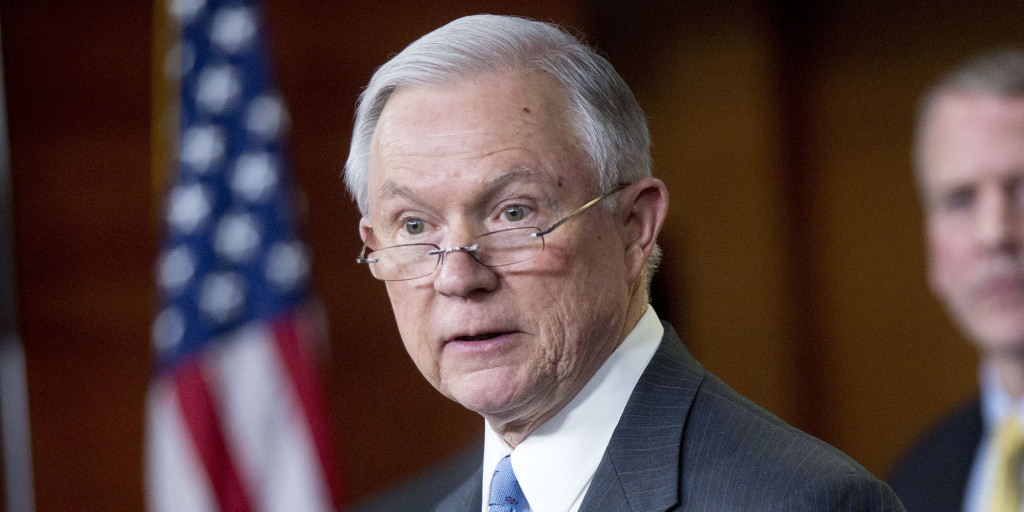
Attorney General Jeff Sessions is directing federal prosecutors to pursue the most serious charges possible against the vast majority of suspects, a reversal of Obama-era policies that is sure to send more people to prison and for much longer terms. The move has long been expected from Sessions, a former federal prosecutor who cut his teeth during the height of the crack cocaine epidemic and who has promised to make combating violence and drugs the Justice Department‘s top priority. “This policy affirms our responsibility to enforce the law, is moral and just, and produces consistency,” Sessions wrote in a memo sent Thursday night to U.S. attorneys and made public early Friday. The move amounts to an unmistakable undoing of Obama administration criminal justice policies that aimed to ease overcrowding in federal prisons and contributed to a national rethinking of how drug criminals were prosecuted and sentenced. Critics said the change will subject more lower-level offenders to unfairly harsh mandatory minimum sentences. Sessions contends a spike in violence in some big cities and the nation’s opioid epidemic show the need for a return to tougher tactics. “The opioid and heroin epidemic is a contributor to the recent surge of violent crime in America,” Sessions said in remarks prepared for a Thursday speech in Charleston, West Virginia. “Drug trafficking is an inherently violent business. If you want to collect a drug debt, you can’t, and don’t, file a lawsuit in court. You collect it by the barrel of a gun.” The policy memo says prosecutors should “charge and pursue the most serious, readily provable offense” — something more likely to trigger mandatory minimum sentences. Those rules limit a judge’s discretion and are typically dictated, for example, by the quantity of drugs involved in a crime. The memo concedes there will be cases in which “good judgment” will warrant a prosecutor to veer from that rule. But any exceptions will need to be approved by top supervisors, and the reasons must be documented, allowing the Justice Department to track the handling of such cases by its 94 U.S. attorney’s offices. And even if they opt not to pursue the most serious charges, prosecutors are still required to provide judges with all the details of a case when defendants are sentenced, which could lengthen prison terms. The requirements “place great confidence in our prosecutors and supervisors to apply them in a thoughtful and disciplined manner, with the goal of achieving just and consistent results in federal cases,” the memo states. The directive rescinds guidance by Sessions’ Democratic predecessor, Eric Holder, who told prosecutors they could in some cases leave drug quantities out of charging documents so as not to trigger long sentences. Holder’s 2013 initiative, known as “Smart on Crime,” was aimed at encouraging shorter sentences for nonviolent drug offenders and preserving Justice Department resources for more serious and violent criminals. Though Holder did say that prosecutors ordinarily should charge the most serious offense, he instructed them to do an “individualized assessment” of the defendant’s conduct. And he outlined exceptions for not pursuing mandatory minimum sentences, including if a defendant’s crime does not involve violence or if the person doesn’t have a leadership role in a criminal organization. The Obama policy shift coincided with U.S. Sentencing Commission changes that made tens of thousands of federal drug prisoners eligible for early release, and an Obama administration clemency initiative that freed convicts deemed deserving of a second chance. Combined, those changes led to a steep decline in a federal prison population that now stands at just under 190,000, down from nearly 220,000 in 2013. Nearly half of those inmates are in custody for drug crimes, records show. Obama administration officials cited that decline and a drop in the overall number of drug prosecutions as evidence that policies were working as intended. They argued prosecutors were getting pickier about the cases they were bringing and were seeking mandatory minimum sentences less often. Still, some prosecutors felt constrained by the Holder directive and expressed concern that they’d lose plea bargaining leverage — and a key inducement for cooperation — without the ability to more freely pursue harsher punishments. Sessions and other Justice Department officials argue Holder’s approach sidestepped federal laws that impose such sentences and created inconsistency across the country in the way defendants are punished. Even while in the Senate, Sessions repeatedly asserted that eliminating mandatory minimums weakened the ability of law enforcement to protect the public. Advocates for the previous policy said the change will revive the worst aspects of the drug war. “It looks like we’re going to fill the prisons back up after finally getting the federal prison population down,” said Kevin Ring, president of Families Against Mandatory Minimums. “But the social and human costs will be much higher.” Republished with permission of The Associated Press.
GOP super PAC plans $2.6 million in TV ads for Luther Strange
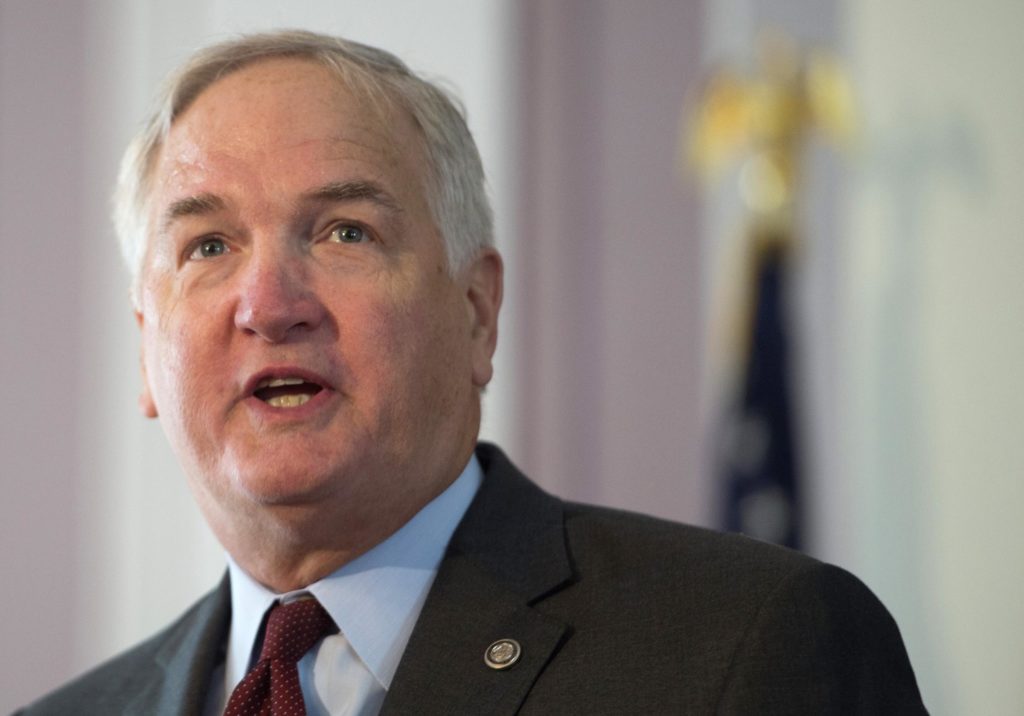
The Senate Leadership Fund on Monday reserved a $2.6 million television ad buy on behalf of U.S. Sen. Luther Strange of Alabama, bidding to ward off challengers for the seat previously held by Attorney General Jeff Sessions. The super political action committee, which has ties to Senate Majority Leader Mitch McConnell, made the show of fiscal force ahead of an August GOP primary on which Strange will face several challengers, including former Alabama Chief Justice Roy Moore. Senate Leadership Fund spokesman Chris Pack told The Associated Press the buy is just the start of what the group plans on spending to support the Republican senator. The ads will start July 11 and run through the Aug. 15 primary. “A lot of people in glass houses are throwing stones in Alabama, and they will quickly realize that this won’t be going unanswered. This $2.65 million buy is just an initial down payment on Senate Leadership Fund’s commitment to supporting Senator Strange,” Pack said. Ever since a series of messy Republican primaries led to losses of winnable Senate races in 2010 and 2012, Republicans led by McConnell of Kentucky have worked aggressively to defeat fringe primary candidates in Senate races. Their goal has been to ensure that GOP Senate primaries produce mainstream Republican candidates who can go on to win the general election. The Senate Leadership Fund is run by a former McConnell chief of staff. The Alabama race is expected to be contentious. But the muscle flexing by the super PAC also sends a message that the challengers to Strange should prepare for a high-spending campaign. Strange was appointed to the Senate in February by then-Gov. Robert Bentley, who resigned last month amid fallout from an alleged affair with a top staffer. Bentley had planned for a 2018 Senate election, but new Gov. Kay Ivey, moved it up to this year, setting up what’s expected to be a four-month demolition derby among Alabama’s dominant Republicans. Bentley resigned to stop an impeachment push, pleading guilty to misdemeanor campaign finance violations to end a state investigation. Challengers are expected to try to batter Strange on his connection to Bentley, since Strange was state attorney general at the time of his Senate appointment. Three other Republicans have so far announced runs for the seat including Moore, who was suspended from his judicial duties after he urged defiance of the landmark U.S. Supreme Court decision legalizing same-sex marriage. Party qualifying for the race runs until May 17. While Alabama has not elected a Democrat to the U.S. Senate in more than 20 years, a number of Democrats, including at least two state legislators, are considering running. Republished with permission of The Associated Press.
Steve Flowers: Handicapping the ‘great show’ Senate Special Election

The decisive move by newly minted Governor, Kay Ivey, to declare a Special Election for the Jeff Sessions’ Senate Seat this year rather than next year changes the entire complexion of who will sit in that coveted seat. It also redefines the landscape of an ever changing and pivotal Alabama political scene. This next year will be an adventure as we elect a Senator and concurrently the 2018 Governor’s Race will begin its evolution. We have already seen the downfall of a sitting governor this year and by Sept. 26, we will see the election of a new junior U.S. Senator. There is an assumption that only a Republican can win statewide office in Alabama and winning the GOP primary is tantamount to election. The decision by Governor Ivey was the right decision. Most folks would assume that “forthwith” means this year rather than next year. It was also a wise political move by Ms. Ivey if she wants to run for a full term. Ivey’s calling for the Special Election for Sessions’ seat immediately, could be the death knell for Luther Strange. By December, he may go from being the newest and tallest member of the U.S. Senate to the shortest serving senator in Alabama history. His defeat could be very inglorious and humiliating. With the election being this year, it will be the only show in town. It will be a spectacle. Every politician who is in any office can run without risking his or her current posts. In other words, everyone has a free shot. Therefore, it will be a free-for-all. Everyone will run against poor Big Luther and the Bentley taint. They will use their campaign resources to give you the unmitigated details of how Luther got put in that seat by ole Bentley. You will be told so many times that Bentley and Luther got together in a backroom with Rebekah and brokered a deal to sell Luther the Senate seat in return for Luther not prosecuting Bentley and Rebekah that you will know the story by heart. Luther will be as tarnished and feathered as ole Bentley. In about two weeks, when the Washington PAC’s see the polling that reveals Luther is in trouble, his campaign resources will be less than he expected and he may not be able to defend against the onslaught of negative ads. The question becomes, who will be the early frontrunners? Roy Moore enters as the favorite. His evangelical base becomes crystallized in a large field. It will probably reserve him a place in the Sept. 26 run-off. Who will be the other candidate in the runoff? It may very well not be Luther Strange. The U.S. Senate is a select club. A cursory look around the chamber reveals very wealthy people or celebrities. Senate seats are bought by wealthy individuals in a good many cases. We have some people in Alabama who could very easily buy the Senate seat. The short period of time that exists to raise money for an Aug. 15 election even further enhances the advantage for someone who can self-finance and write a big check. The name on most lists is the “Yella Fella,” Jimmy Rane. He would sell. He is a natural salesman. Folks close to Yella Fella get the feeling that he does not want to go to Washington at this time in his life. However, he is adamant and determined that Luther Strange will not remain in the seat. Therefore, he may bankroll another candidate through a super PAC. Rumor has it that he will get behind Del Marsh. Marsh has his own money also. However, he needs more money because he is totally unknown to Alabama voters. I will keep you posted on the developments. I do not know how many of these folks will join the fray but this is how I will handicap the horses at this time. Jimmy Rane and Roy Moore are one and two. Other possibilities are Congressman Robert Aderholt, Congressman Bradley Byrne, Luther Strange, Secretary of State John Merrill, Congressman Mo Brooks, State Auditor Jim Ziegler, State Sen. Del Marsh, Trump Trumpeter Perry Hooper Jr., State Sen. Slade Blackwell, State Sen. Trip Pittman, ADECA Director Jim Byard, State Senator Arthur Orr, and State Rep. Ed Henry. It will be a great show. See you next week. ••• Steve Flowers is Alabama’s leading political columnist. His weekly column appears in over 60 Alabama newspapers. He served 16 years in the state Legislature. Steve may be reached at www.steveflowers.us.
Mayors grapple with grant threat after meeting with Jeff Sessions
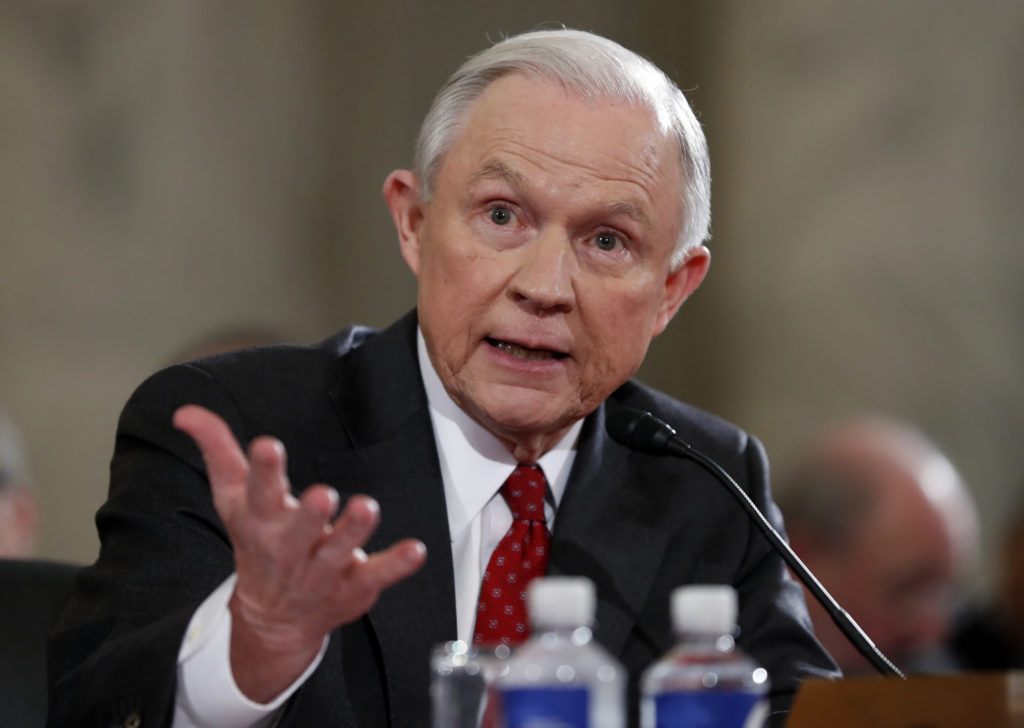
Mayors from several U.S. cities threatened with the loss of federal grants emerged from a meeting with the attorney general Tuesday saying they remain confused about how to prove their police aren’t prohibited from cooperating with immigration authorities — a requirement for the money. The Justice Department has warned some jurisdictions that they could lose some law enforcement grant money if they don’t prove their local police and sheriffs are able to share information with federal immigration authorities about the citizenship status of people in their custody. Attorney General Jeff Sessions has labeled cities that bar such information-sharing as “sanctuary cities.” “We want all jurisdictions to enthusiastically support the laws of the United States that require the removal of criminal aliens, as many jurisdictions already do,” Sessions said in a statement released after the meeting with representatives of the U.S. Conference of Mayors. But the officials who met with Sessions said practical questions remain about how to follow the rules. For example, does that mean a sheriff’s department must tell Immigration and Customs Enforcement about an inmate’s incarceration by phone? Or will an inmate’s fingerprint information, taken by the jail and then shared with the FBI and ICE, be enough? And how long can a local jail hold someone for immigration authorities without violating their rights? “We got more clarity than we’ve ever received, but we also have other thorny issues to sort through,” said Jorge Elorza, the mayor of Providence, Rhode Island, after the hour-long meeting. It was the first time the delegation of mayors met with Sessions since the department sent nine jurisdictions letters on Friday warning they would lose key grant money unless they document cooperation with immigration authorities. The jurisdictions, which include the state of California and major cities like Chicago, New York and Philadelphia, were places the Justice Department’s inspector general previously identified as having barriers to information-sharing among local police and immigration officials. Some disputed they met the “sanctuary city” title. New Orleans Mayor Mitch Landrieu, whose city received one of the letters, said he provided Sessions with proof of compliance during Tuesday’s meeting but remained stunned the city received a warning in the first place, as it drafted its policies in consultation with federal immigration and Homeland Security officials. The delegation also included mayors from Columbia, South Carolina; Gary, Indiana; and Austin, Texas. The meeting touched on a number of other concerns related to the Trump administration’s immigration policies they said remain confusing. On a number of immigration issues, “we hear very different messages from (Homeland Security), DOJ and also the White House,” Elorza said. “Just give us clarity and please have one, clear policy so we can know where we stand.” Republished with permission of The Associated Press.
Alabama Supreme Court upholds suspension of Roy Moore, will decide on Senate run next week
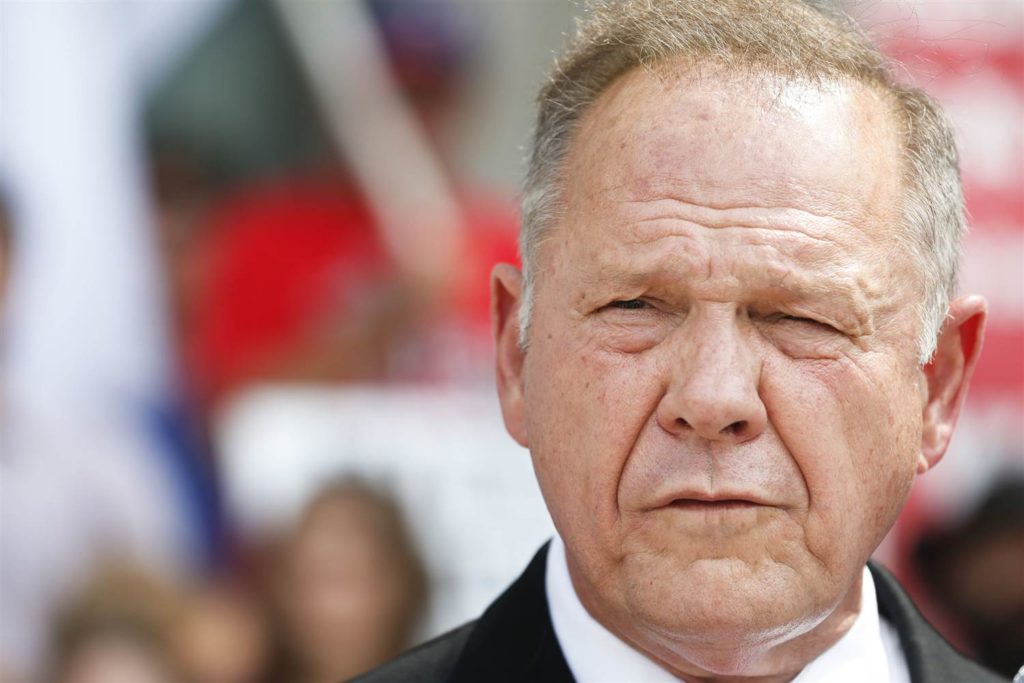
The Alabama Supreme Court this week reaffirmed the removal of Roy Moore as chief justice. Moore has hinted he may run for the U.S. Senate seat vacated by now U.S. Attorney General Jeff Sessions in February and currently held by former Alabama Attorney General Luther Strange. Moore said he would make a decision on a Senate run sometime next week. In a news conference, Moore blasted the prosecution as “politically” motivated, arguing that he remains Chief Justice even with the suspension over his administrative order against the issuance of marriage licenses to same-sex couples. “I have done my duty under the laws of this state to stand for the undeniable truth that God ordained marriage as the union of one man and one woman,” Moore told reporters assembled at the Alabama State Capitol’s Old Supreme Court Chambers. As there are no federal issues in the case, Moore is unable to appeal the ruling. “This is it,” he said. Southern Poverty Law Center president Richard Cohen had filed an ethics complaint against Moore, and issued a statement after the ruling: “Roy Moore’s violation of the Canons of Judicial Ethics was egregious. He got what he deserved. We’ll all be better off without the Ayatollah of Alabama as our chief justice.”
Justice Dept threatens sanctuary cities in immigration fight
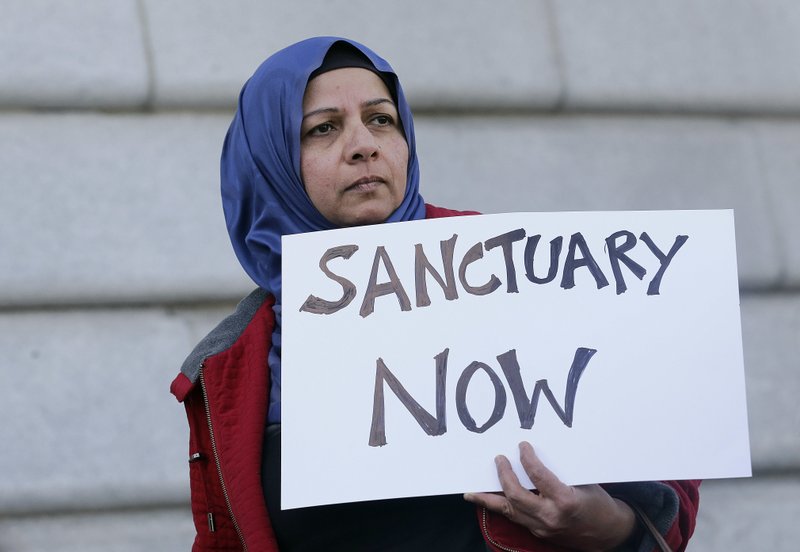
The Trump administration intensified its threats to crack down on so-called sanctuary cities that refuse to comply with federal immigration authorities, sending letters Friday to nine jurisdictions warning it would withhold coveted law enforcement grant money unless they document cooperation. The letters went to officials in California and in major cities including New York, Chicago, Philadelphia and New Orleans, all places the Justice Department‘s inspector general has identified as limiting the information local law enforcement can provide to federal immigration authorities about those in their custody. Attorney General Jeff Sessions has increasingly warned that the administration will punish communities that refuse to cooperate with efforts to find and deport immigrants in the country illegally. In a statement Friday, the Justice Department said the recipients of its letters are “crumbling under the weight of illegal immigration and violent crime.” After a raid led to the arrests of 11 MS-13 gang members in California’s Bay Area “city officials seemed more concerned with reassuring illegal immigrants that the raid was unrelated to immigration than with warning other MS-13 members that they were next,” the department said. The federal law in question says state and local governments may not prohibit police or sheriffs from sharing information about a person’s immigration status with federal authorities. Friday’s letters warn officials they must provide proof from an attorney that they are following the law or risk losing thousands of dollars in federal grant money that police agencies use to pay for anything from body cameras to bulletproof vests. The money could be withheld in the future, or terminated, if they fail to show proof, wrote Alan R. Hanson, acting head of the Office of Justice Programs, which administers the grant program, which is the leading source of federal justice funding to state and local communities. The targeted jurisdictions also include Clark County, Nevada; Cook County, Illinois; Miami-Dade County, Florida; and Milwaukee County, Wisconsin. They were highlighted in a May 2016 report by the Justice Department’s inspector general that found they have policies or rules that interfere with information-sharing among local law enforcement and immigration agents. The Orleans Parish Sheriff’s Office, for example, has a policy to decline all requests by Immigration and Customs Enforcement to keep a suspected deportable immigrant in its custody long enough for immigration authorities to arrest the person unless that person is charged with certain violent crimes, according to the report. It also pointed to a Miami-Dade County rule that allows its corrections department to honor detainer requests only if ICE agrees in writing to reimburse the county for costs and only if the inmate has a prior felony conviction, among other constraints. The Obama administration warned cities after the report’s release that they could miss out on grant money if they did not comply with the law, but it never actually withheld funds. The grants in question are based on population and support an array of programs, technology and equipment for local law enforcement agencies, which can use the money at their discretion. Sessions said earlier this week that sanctuary cities undermine efforts to fight violent gangs. Republished with permission of The Associated Press.
