
Roy Moore making unspecified ‘announcement’ Wednesday, possibly challenging Luther Strange
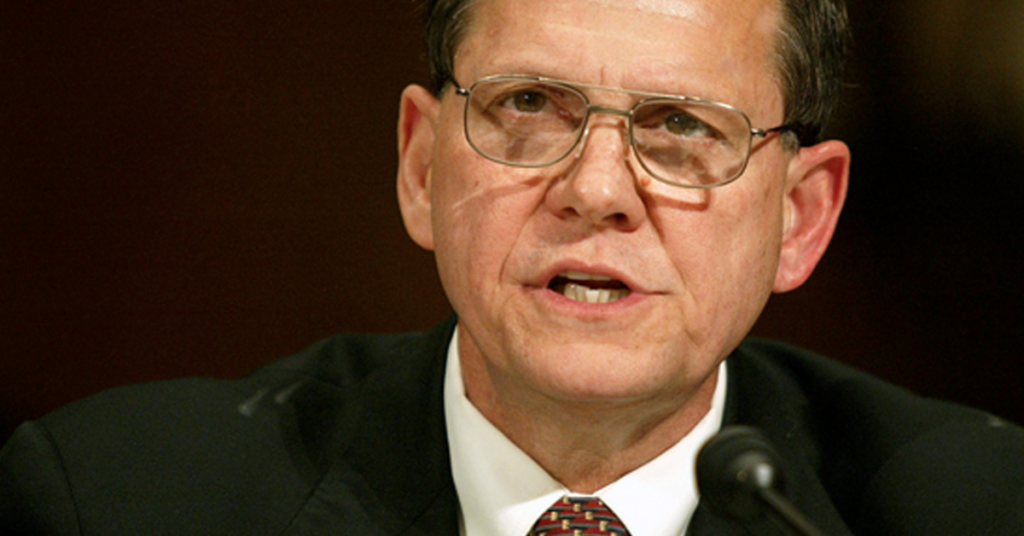
Roy Moore might be posing a challenge for interim U.S. Sen. Luther Strange. News 5 is reporting the suspended Alabama Chief Justice will hold a news conference Wednesday afternoon for an unspecified “announcement.” What is fueling speculation is the news conference was called at once after newly named Gov. Kay Ivey signed a proclamation advancing the special election for the Senate seat vacated in February by U.S. Attorney General Jeff Sessions. Then-Gov. Robert Bentley — who had interviewed Moore for the Senate seat — scheduled the election for 2018, in line with the midterm elections. But Ivey rescheduled the primary Aug. 15, a runoff Sept. 26 and the general election Dec. 12. Moore was one of about two dozen candidates brought in Bentley to interview for the seat, which ultimately went to then-Attorney General Strange. Bentley resigned April 10 and was booked into Montgomery County jail on a pair of misdemeanor campaign-finance charges. The Republican pled guilty to both as part of a deal to avoid facing four felony charges. Under suspension after a conviction on judicial ethics charges related to a gay marriage order, News 5 says Moore’s checkered political past made him a controversial choice for the Senate. Since his suspension, however, Moore has been looking for a return to public service, even a possible return to the Alabama Supreme Court. Moore’s news conference will be 1:30 p.m. Wednesday at the State Capitol.
Steve Flowers: Alabama’s bizarre political theatrics would make a great movie
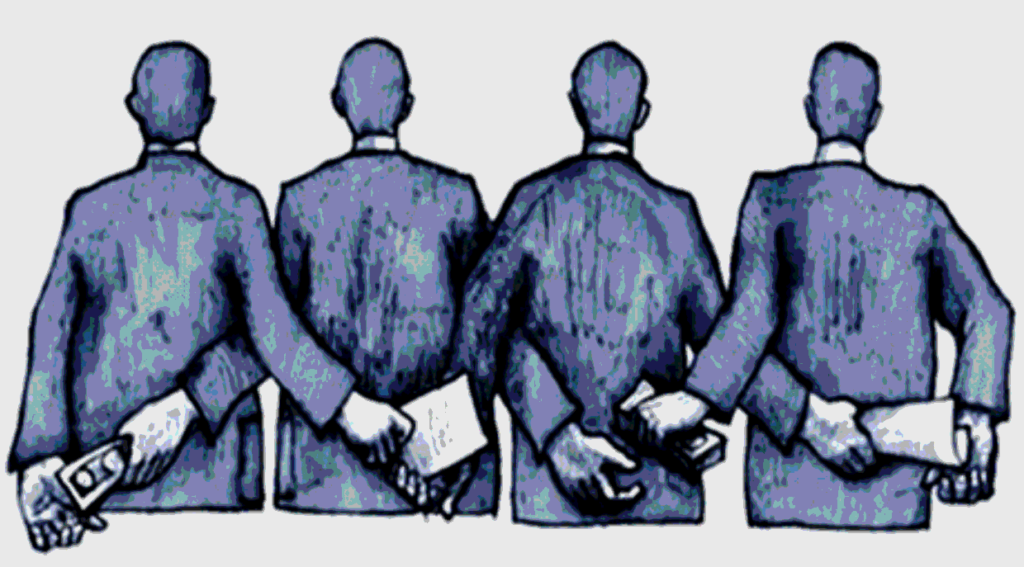
We in the Deep South have a unique history of political theatrics. The only northern states that rival our colorfulness are New Jersey and Illinois. In those two states, you are expected to be corrupt, especially Chicago. Our most colorful southern state has always been Louisiana. The parishes and bayous of the Pelican State gave us Huey Long and other characters. No other states can hold a candle to Louisiana’s brazen corruption. They not only expect their politicians to steal and cavort, they frown on them if they do not. The environment of Louisiana politics is bred toward corruption and debauchery. They not only gave us the glamour of the King Fish, Huey Long, they are proud of their infamous reputation. Well folks if you look at us here in the good old Heart of Dixie over the past few years we are probably giving Louisiana a run for its money. A cursory look at the record reveals that our Speaker of the House of Representatives, Mike Hubbard, was caught and convicted of taking bribes for sponsoring and passing legislation. Our 74-year-old doctor Governor Robert Bentley fell in love with his 44-year-old No. 1 adviser, lost all his wits, and has resigned from office in disgrace. He pleaded guilty to a misdemeanor charge and agreed never to run for office again. The House of Representatives was poised to impeach him had he not resigned. Ole Bentley had become an irrelevant clown and fodder for late night talk shows. The State is better off with Lt. Governor, Kay Ivey, serving out the remaining 20 months of Bentley’s term. Bentley, in a charade promulgated by his desire to not be indicted for his shenanigans, gave the U.S. Senate Seat vacated by Jeff Sessions to the sitting Attorney General Luther Strange to avoid prosecution. Therefore, our new junior U.S. Senator is in Washington with the taint of Bentley’s scandal hovering over his head with the appearance that he is there due to audacious collusion. We have an even richer novel that has transpired in Jefferson County, our most populous and supposedly urbane county. It made national news a year ago when the Mayor and President of the City Council got into a fistfight in the Birmingham City Hall. However, a new development is even more bizarre. During the fall elections, Democrats won all the Jefferson County judgeships. Along with the judgeships, Jefferson County voters elected a Democratic District Attorney. Democrat Charles Henderson beat incumbent Republican Brandon Falls by over 10,000 votes. Get this folks, the sitting DA trumps up a perjury charge against the new DA a few days before he was to take office. Falls convened a grand jury Jan. 12 and returned an indictment the next day Jan. 13. Henderson was to take office the following Monday. As anybody knows, a prosecutor can indict a potato for anything at any time. This scenario proves that point. The loser, Falls, got the winner, Henderson, indicted for perjury. This is so bizarre and corrupt a situation that it makes the aforementioned stories pale in comparison. It makes Jefferson County and Alabama look like a Third World banana republic. There are rampant rumors that the State’s top watchdog, Prosecutor Matt Hart, is camped out in Jefferson County and massive indictments are on the way. It has been over 70 years since Louisiana had a similar scenario. Nobody has been as brash in between. The Louisiana King Fish Huey Long was assassinated on the steps of the capitol in Baton Rouge. Huey Long’s brother, Earl Long, followed his famous older brother as governor. Earl was one colorful character. His opponents decided to seize power from Earl. They took control of the state police and had Earl arrested and put in the state insane asylum. One of the best political movies ever is entitled “Blaze” starring Paul Newman and it illustrates this story of Louisiana political lore. I recommend it for entertainment. These past two years in Alabama politics would make for a good movie. This latest Jefferson County fiasco would have to be a part of the plot. Look out Louisiana; we’ve got some good theater in the Heart of Dixie. See you next week. ___ Steve Flowers is Alabama’s leading political columnist. His weekly column appears in over 60 Alabama newspapers. He served 16 years in the state Legislature. Steve may be reached at www.steveflowers.us.
Gov. Kay Ivey schedules Senate special election in line with state law
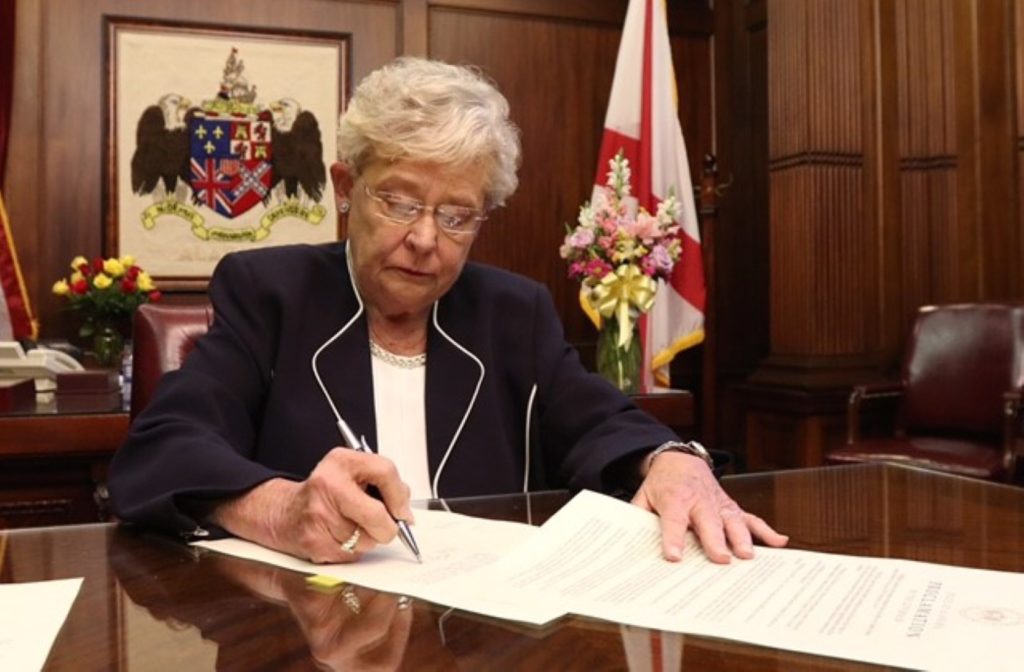
Alabama Gov. Kay Ivey signed a proclamation Tuesday morning to reschedule the special election date for the U.S. Senate seat vacated by now-Attorney General Jeff Sessions. The new primary date is Aug. 15, with a runoff set for Sept. 26; the general election is Dec. 12, a year ahead of the previously scheduled election date. In February, Gov. Robert Bentley temporarily appointed then-Attorney General Luther Strange to the Senate seat until Alabama could hold a special election. Bentley originally scheduled the special election to coincide with the 2018 regular election cycle, a primary in June and general election in November. “I promised to steady our ship of state. This means following the law, which clearly states the people should vote for a replacement U.S. Senator as soon as possible,” Ivey said in a statement. “The new US Senate special election dates this year are a victory for the rule of law.” Ivey signed the proclamation at 9:21 a.m. “This is not a hastily-made decision,” Ivey added. “I consulted legal counsel, the finance director, Speaker [Mac] McCutcheon, Senate President Del Marsh, and both budget chairmen since the cost to the General Fund could be great. However, following the law trumps the expense of a special election.” Alabama statute says that if a Senate seat vacancy occurs more than four months before a general election, the governor is required to call a special election “forthwith.” Bentley interpreted “forthwith” to mean an announcement, not the actual election. Senator Strange is taking the change of date in stride. “As I’ve said for months, I’m a candidate and I’m ready to run whether the election is next month or next year,” said Strange. “As the only announced candidate for this office, I will spend the next several months being the best Senator I can be, upholding Alabama values and working with President Donald Trump to drain the swamp and help make America great again. The people of Alabama deserve nothing less and ultimately it will be up to them to decide who will represent them in Washington.”
Jeff Sessions plans crackdown on violent gangs, especially MS-13
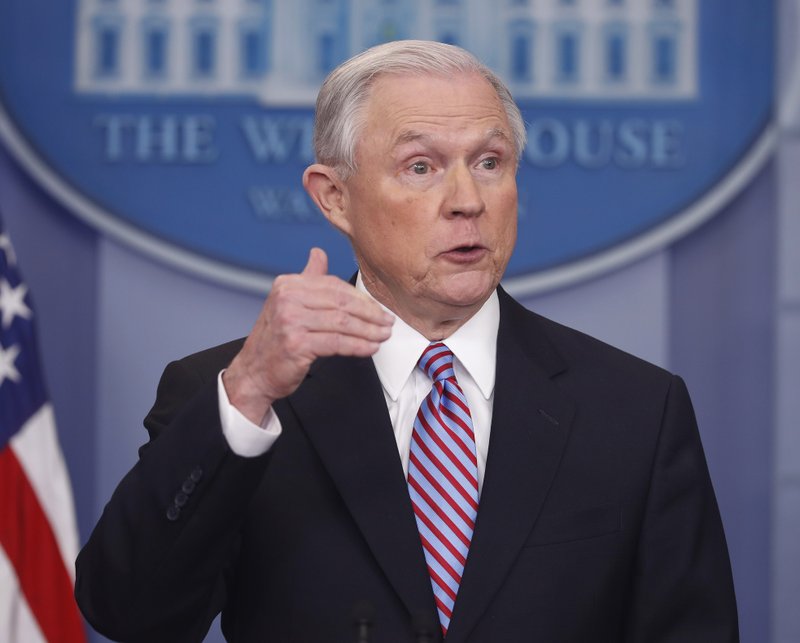
Attorney General Jeff Sessions says the Justice Department will crack down on violent gangs. Sessions on Tuesday singled out one organization in particular, the MS-13 street gang. Its members are suspected in the killings of four people last week in Long Island. Sessions says in prepared remarks that gangs like MS-13 “represent one of the gravest threats to American safety.” He says tougher enforcement of immigration and border crimes will curb gang activity. And he says cities that protect people in the country illegally make efforts to fight gang violence more difficult. He says so-called sanctuary cities are “aiding these cartels to refill their ranks.” Sessions was speaking before a meeting with federal law enforcement officials to discuss ways to combat organized crime. Republished with permission of The Associated Press.
Luther Strange reporting solid fundraising for 2018 Senate special election
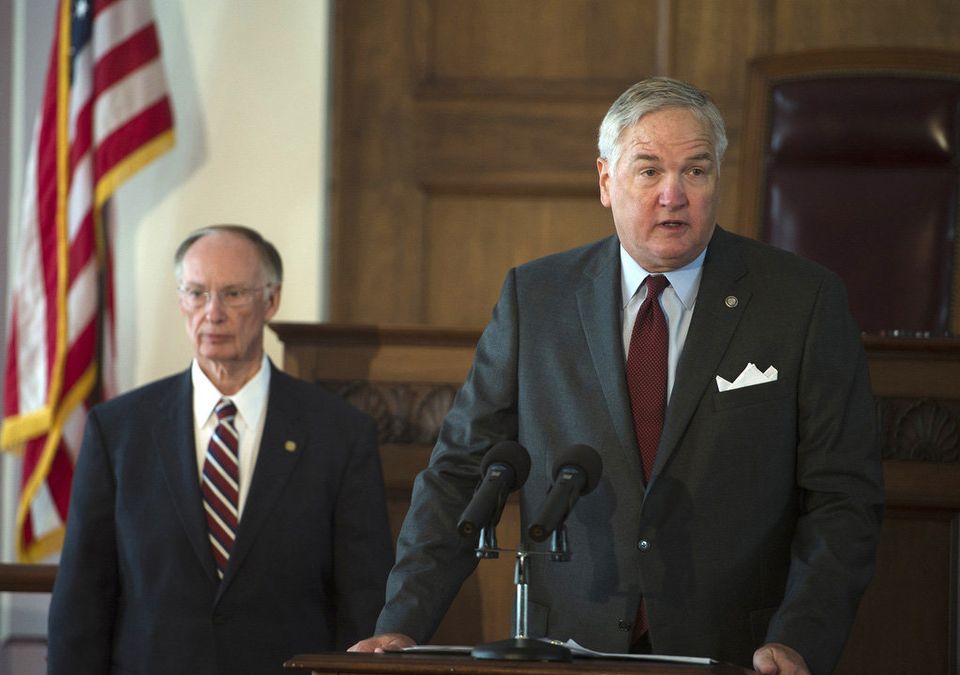
Newly appointed U.S. Sen. Luther Strange, selected by Gov. Robert Bentley to replace Jeff Sessions after he became U.S. Attorney General, is posting robust fundraising numbers ahead of a 2018 special election. According to AL.com, Strange’s campaign expects to report raising $673,802 to the Federal Elections Commission, with $763,612 cash-on-hand. A primary for the special election is tentatively scheduled June 5, 2018, for the General Election Nov. 6, 2018. However, Alabama Governor Kay Ivey – who took over after Bentley’s resignation this week after accusations of ethics and campaign finance violations – could move the date up. While Strange is the only announced candidate so far, AL.com reports that before the appointment, nearly a dozen people have expressed interest in the Senate race. In February, Bentley appointed Strange to the Senate seat in February only four months after Strange, who was Alabama Attorney General at the time, called on the House committee to suspend its investigation of the governor’s impeachment, claiming his office was conducting “necessary related work.” The controversial appointment led attorney Sam McClure to file an ethics complaint with the Alabama State Bar. Steve Marshall, Bentley’s choice to replace Strange as AG, has confirmed to reporters his office is conducting an investigation into the governor.
Jeff Sessions to tour Arizona-Mexico border Tuesday
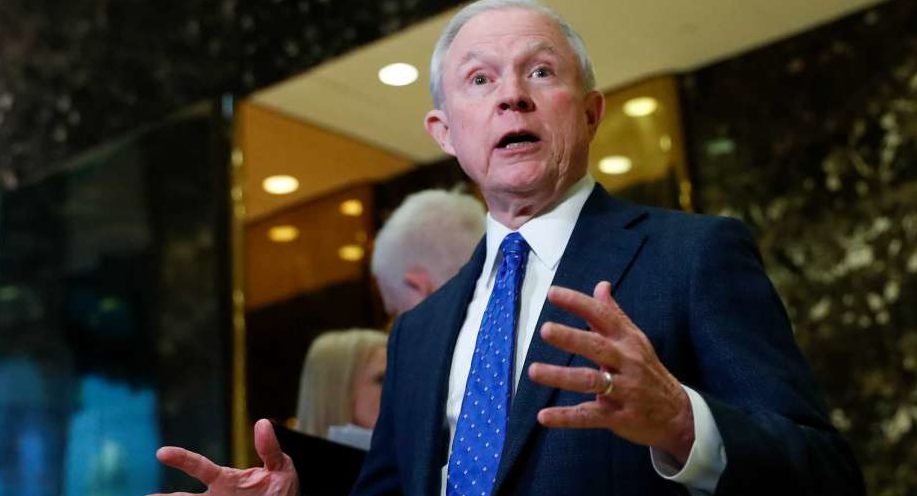
U.S. Attorney General Jeff Sessions on Tuesday will take a tour of the U.S.-Mexico border during a visit to Arizona. Sessions will tour what is mostly rough terrain along the international border in Nogales, Arizona, about roughly 70 miles (113 kilometers) south of Tucson. Sessions has made immigration enforcement a key Justice Department priority, saying he will speed up deportations of immigrants in the country illegally who were convicted of federal crimes. Sessions has also defended federal immigration authorities who make arrests at courthouses, a practice advocates and the California Supreme Court chief justice say impedes on people’s access to justice and deters immigrants from reporting crimes and going to court. The Tucson Sector, which comprises most of Arizona, was once the busiest area for illegal border crossings and drug smuggling, but movement has shifted in the past few years to the Rio Grande Valley in Texas. The Arizona area saw about 65,000 arrests last fiscal year, roughly half the number agents made in 2012, according to Border Patrol data. Marijuana seizures have also dropped by about 28 percent from 1 million pounds in 2012 to 728,000 last year. In March, Sessions said that the Justice Department will expand an existing program aimed at holding deportation hearings for immigrants while they are still in federal prison known as the Institutional Hearing Program. Holding the hearings before the inmates’ sentences are finished would allow the government to deport them immediately when they’re released, as opposed to waiting until they go through an immigration court. Sessions’ proposal would set up 14 federal prisons and six contract facilities for immigration removal proceedings. Following the border tour, Sessions will deliver a keynote speech at an International Association of Chiefs of Police conference in Litchfield Park, Arizona. He’ll also speak with service members at Luke Air Force Base near Phoenix. Republished with permission of The Associated Press.
Jeff Sessions’ Justice Dep’t will end forensic science commission
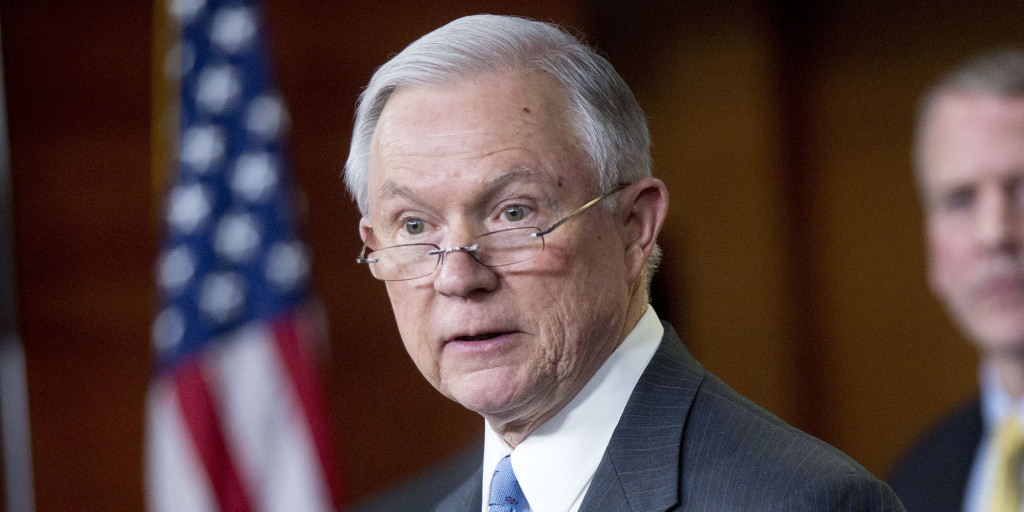
Attorney General Jeff Sessions said Monday he is ending an Obama-era partnership with independent scientists that aimed to improve the reliability of forensic science, as longstanding concerns remain about the quality of such evidence in court cases. The Justice Department will not renew the National Commission on Forensic Science, a panel of judges, defense attorneys, researchers and law enforcement officials that had been advising the attorney general on the use of scientific evidence in the criminal justice process. The department will instead appoint an in-house adviser and create an internal committee to study improvements to forensic analysis, Sessions said. Their tasks will include a broad look at the personnel and equipment needs of overburdened crime labs. “As we decide how to move forward, we bear in mind that the department is just one piece of the larger criminal justice system,” said Sessions in a statement, adding that most forensic science is done by state and local laboratories and used by local prosecutors. The Obama administration formed the commission in 2013 to address wide-ranging concerns about problematic forensic techniques. The Justice Department also is reconsidering an effort launched last year to review forensic sciences practiced by the FBI. That review sought to determine whether other scientific disciplines have been tainted by flawed testimony, a problem that surfaced in 2015 when the Justice Department revealed that experts had overstated the strength of their evidence in many older cases dating back decades involving microscopic hair analysis. The disbanding of the commission was yet another way in which Sessions is shifting away from his Obama-era predecessors, who pushed for changes in forensic science and tried to establish federal standards. Last year, for example, acting on the commission’s recommendations, the Justice Department announced a new code of professional responsibility for its forensic science laboratories and also cautioned its examiners and prosecutors to use restraint in discussing the strength of their findings, among other standards. Sessions, who frequently articulates a tough-on-crime agenda, called the availability of accurate forensic analysis “critical to integrity in law enforcement, reducing violent crime and increasing public safety.” He said the Justice Department would seek public comment on how to improve crime labs and “strengthen the foundations of forensic science.” The National Association of Criminal Defense Lawyers said it was disappointed by the move. Association President Barry Pollack said the commission was important because it allowed “unbiased expert evaluation of which techniques are scientifically valid and which are not.” Republished with permission of The Associated Press.
Steve Flowers: Luther Strange feeling heat over ‘brazen’ Senate appointment
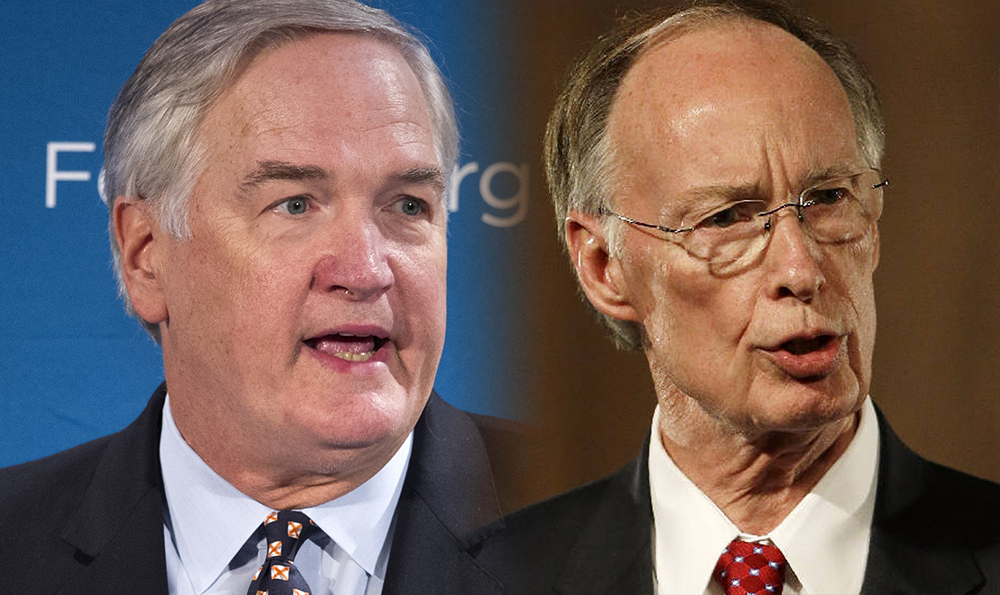
Lots of folks are still mad about our lame duck governor Robert Bentley naming Attorney General Luther Strange to Jeff Sessions Senate seat. If the sitting attorney general of a state openly states that he is investigating the governor for misfeasance and then that governor appoints that attorney general to the Senate seat it looks funny. It gives new meaning to the word collusion. This brazen move has incensed legislators who have heard from their constituents back home. It has especially upset members of the House Judiciary Committee. They were asked to cease the impeachment proceedings last year in deference to Strange’s request to lead an investigation of the governor’s shenanigans. Needless to say, they have reinstated their impeachment proceedings against old Bentley with renewed vigor. Several legislators have taken issue with the governor’s calling for the Senate seat election in 2018, rather than immediately. The constitution says the election should be held forthwith. That is open to interpretation. The more prudent path is 2018, since there are elections anyway. That is traditionally the way it has been done in the state in the past. However, most seats in bygone days were vacated by the death of one of our senators and the governor usually appointed the deceased senator’s widow for the remaining year or so on the term. She was considered a caretaker to the seat. There has been so much grief and acrimony to Strange’s appointment that he may be a caretaker. I have never before seen a governor treated with such disdain and irreverence by a legislature as ol’ Bentley. They probably will not technically impeach the ol’ fellow. He only has about 20 months left in his tenure and he is essentially impeached from power anyway. Most of them look at him as a buffoon or clown. He has about as much relevance in the legislative process as one of the former goats that used to graze on Goat Hill. The ultimate fallout from Bentley’s actions and unpopularity may accrue to Luther Strange in his election race in 14 months. Winning the GOP primary in this Senate race is tantamount to election in Alabama. Therefore, the race is in June of next year. Big Luther stands a good 6 feet 9 inches. His height is daunting. He was actually a college basketball player at Tulane. Luther spent the first 20 years of his career as a corporate lobbyist in Washington. Seeing the power and deference of being a U.S. Senator made an impression. He came home to run for a secondary constitutional office and get ready to run for a Senate seat vacated by either of his friends, Richard Shelby or Jeff Sessions. He chose the right stepping stone job, Attorney General. Big Luther is basically a shy and reserved fellow. He is not a natural politician. He was on the right course when he initially said that he would not seek nor accept Bentley’s appointment and that he was running for the post independent of the discredited governor’s appointment. He changed his mind and met with Bentley and took the appointment. His trusted advisors convinced him that folks have short memories and that over the next year as a sitting U.S. Senator he can raise so much Washington campaign cash that he can outspend his opposition to such an extent that it will wash away the taint of the Bentley appointment. He may be right. That may be a good bet. However, folks may be smarter and more cognizant of bold brazen backroom deals than some think. Just ask Bill Baxley how that worked out in 1986 when some Democratic Party leaders got behind closed doors and selected Baxley to be the Democratic nominee over Charlie Graddick who got the most votes. The people were so incensed they elected an unknown Republican named Guy Hunt as Governor. However, there is the pragmatic side of the equation. During that 1986 debacle Bill Baxley, who was lieutenant governor, had become close with the King of Alabama politics, Gov. George Wallace. Wallace was in his last term as governor and Baxley had sensed a backlash might occur with such an audacious brazen move by his Democratic Party buddies, so he went to Wallace for his advice. Ole Wallace took a puff on his cigar and looked at Baxley wryly and said, “Bill you know what they call a governor who gets to be governor by a backroom deal?” Baxley asked “What?” Wallace said, “They call him Governor.” See you next week. ___ Steve Flowers is Alabama’s leading political columnist. His weekly column appears in over 60 Alabama newspapers. He served 16 years in the state Legislature. Steve may be reached at www.steveflowers.us.
Jeff Sessions: Ferguson emblem of tense relationship with police

Ferguson, Missouri, has become “an emblem of the tense relationship” between law enforcement and those it serves, especially minority communities, Attorney General Jeff Sessions said Friday during a visit to St. Louis. Sessions, speaking to a gathering of law enforcement leaders at the federal courthouse that sits roughly 12 miles from Ferguson, said the Justice Department will work with them to battle the rising tide of violent crime in America. He said he supports “proactive, up-close policing — when officers get out of their squad cars and interact with everyone on their beat — that builds trust, prevents violent crime, saves lives and creates a good atmosphere.” But Sessions said that sort of police work has become increasingly difficult in what he called “an age of viral videos and targeted killings of police.” “Unfortunately, in recent years law enforcement as a whole has been unfairly maligned and blamed for the crime and unacceptable deeds of a few in their ranks,” Sessions said. “Amid this intense public scrutiny and criticism, morale has gone down, while the number in their ranks killed in the line of duty has gone up.” Ferguson, he said, has become “an emblem of the tense relationship between law enforcement and the communities we serve, especially our minority communities.” Ferguson became a flashpoint after 18-year-old Michael Brown, who was black and unarmed, was killed by white officer Darren Wilson on Aug. 9, 2014. Months of often violent protests followed the shooting. A St. Louis County grand jury and the Justice Department cleared Wilson of wrongdoing in November 2014, and he resigned that same month. But the Justice Department investigation under then-Attorney General Eric Holder found significant racial profiling and bias in both Ferguson’s police department and municipal court. The city and the Justice Department settled a lawsuit last year that requires significant changes in policing. That process is ongoing. Sessions is taking a far different approach than Holder. Civil rights investigations of police were common during the Obama administration. Sessions has suggested that civil rights investigations hinder police, causing them to back off out of fear of scrutiny of their every move. In fact, some have labeled the phenomenon the “Ferguson Effect.” Ferguson Police Chief Delrish Moss, who attended the speech, said he was encouraged by Sessions’ commitment to battling violent crime. And Moss believes the Justice Department remains steadfast in working with Ferguson leaders to eliminate racial bias. “We’re working with the Department of Justice, in fact, on a weekly basis,” Moss said. “They remain as committed as they always have been to the reforms we’ve agreed upon.” President Ronald Reagan chose Sessions for a federal judgeship in the 1980s, but the nomination was rejected amid concerns about racially charged comments and his failed prosecution of three black civil rights activists on voting fraud charges. Denise Lieberman, a St. Louis lawyer with the civil rights group Advancement Project, said Sessions’ approach is concerning at a time when allegations of violence by police are at an all-time high. “We also know that the role of the Department of Justice is absolutely critical to ensuring that policing agencies are complying with the law, and they are a crucial step in bringing accountability to policing,” Lieberman said. “We see that right here in Ferguson.” Sessions told the St. Louis audience he has ordered the creation of a crime-fighting task force that brings together the leaders of the FBI, DEA, ATF and U.S. Marshals Service. He said battling the heroin and opioid epidemic is a crucial element of the fight to stem violent crime. Republished with permission of The Associated Press.
Abrupt dismissals spark turmoil among federal prosecutors
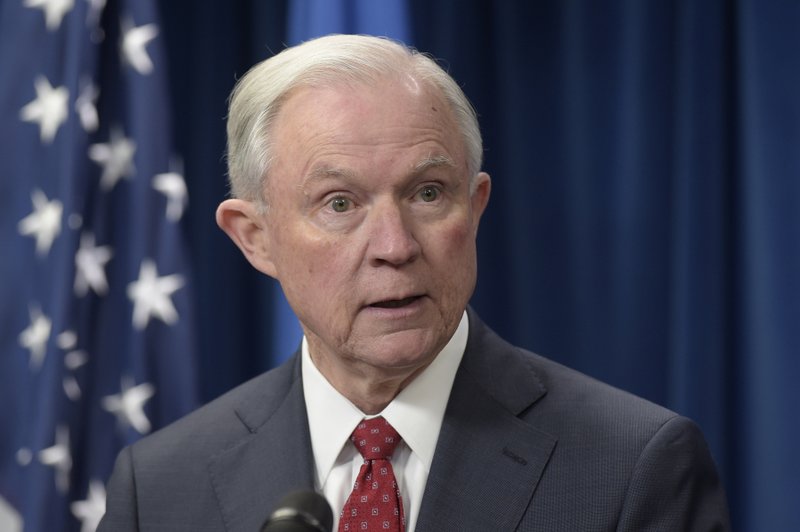
Two days before Attorney General Jeff Sessions ordered dozens of the country’s top federal prosecutors to clean out their desks, he gave those political appointees a pep talk during a conference call. The seemingly abrupt about-face Friday left the affected U.S. attorneys scrambling to brief the people left behind and say goodbye to colleagues. It also could have an impact on morale for the career prosecutors who now must pick up the slack, according to some close to the process. The quick exits aren’t expected to have a major impact on ongoing prosecutions, but they gave U.S. attorneys little time to prepare deputies who will take over until successors are named. “It’s very, very gut-level reaction,” said Steven Schleicher, a former prosecutor who left Minnesota U.S. Attorney Andrew Luger’s office in January and was still in contact with people there. The request for resignations from the 46 prosecutors who were holdovers from the Obama administration wasn’t shocking. It’s fairly customary for the 93 U.S. attorneys to leave their posts once a new president is in office, and many had already left or were making plans for their departures. Sessions himself was asked to resign as a U.S. attorney in a similar purge by Attorney General Janet Reno in 1993. But the abrupt nature of the dismissals — done with little explanation and not always with the customary thanks for years of service — stunned and angered some of those left behind in offices around the country. Former prosecutors, friends and colleagues immediately started reaching out to each other on a growing email chain to express condolences and support, commiserating about how unfair they felt the situation was. One U.S. attorney was out of state on Friday and was forced to say goodbye to his office by a blast email, said Tim Purdon, a former U.S. attorney from North Dakota who was included on the email chain. Some of those ousted were longtime prosecutors who had spent their careers coming up through the ranks of the Justice Department. John W. Vaudreuil, U.S. attorney for the Western District of Wisconsin, became an assistant U.S. attorney in that office in 1980. Another, Richard S. Hartunian of the Northern District of New York, joined the Justice Department in the 1990s. “All of these U.S. attorneys know they serve at the pleasure of the president. No one complains about that,” said John Walsh, an Obama-era appointee as U.S. attorney in Colorado who resigned in July. “But it was handled in a way that was disrespectful to the U.S. attorneys because they were almost treated as though they had done something wrong, when in fact they had not.” Peter Neronha, who had served since 2009 as U.S. attorney for Rhode Island, said even before Friday he had been preparing for his eventual departure and had written a resignation statement to be released upon his exit. He said he knew his time was limited but had been eager to stay on to see through a major public corruption prosecution and to speak with students about the perils of opioid addiction. “When that was done, I was going to go anyway — whether I got 24 hours’ notice, or two weeks’ notice, or two months’ notice. It doesn’t really matter,” Neronha said. Whenever there’s a change in presidential administration, he said, “I think it would be unwise not to be ready.” It’s not clear why the Justice Department asked the prosecutors to exit so quickly. Sessions gave no warning during the Wednesday conference call in which he articulated his agenda for fighting violent crime. “The attorney general did not mention on that call, ‘Stay tuned for changes,’” Neronha said. Much of the public attention since Friday has focused on Preet Bharara, the high-profile Manhattan federal prosecutor who said he was fired despite meeting with then-President-elect Donald Trump and saying he was asked to remain. Trump himself did apparently make an attempt to speak with Bharara in advance of the Friday demand for resignations. The president reached out through a secretary on his staff to Bharara a day earlier but the two men never spoke, according to a person told about the conversation but who requested anonymity. The White House on Sunday said the president reached out to thank Bharara for his service and to wish him good luck. The Justice Department on Friday did say it would not accept the resignations of Dana Boente, now the acting deputy attorney general, and Rod Rosenstein, the Maryland prosecutor who’s been nominated for the deputy role. On Sunday, some Democrats condemned the demand for resignations in highly partisan comments. Maryland Rep. Elijah Cummings, the top Democrat on the House Oversight Committee, suggested Trump might have fired Bharara to thwart a potential corruption investigation, and believed the move added to a lack of trust of the administration. Republished with permission of The Associated Press.
ACLU files ethics complaint against Jeff Sessions over Senate testimony
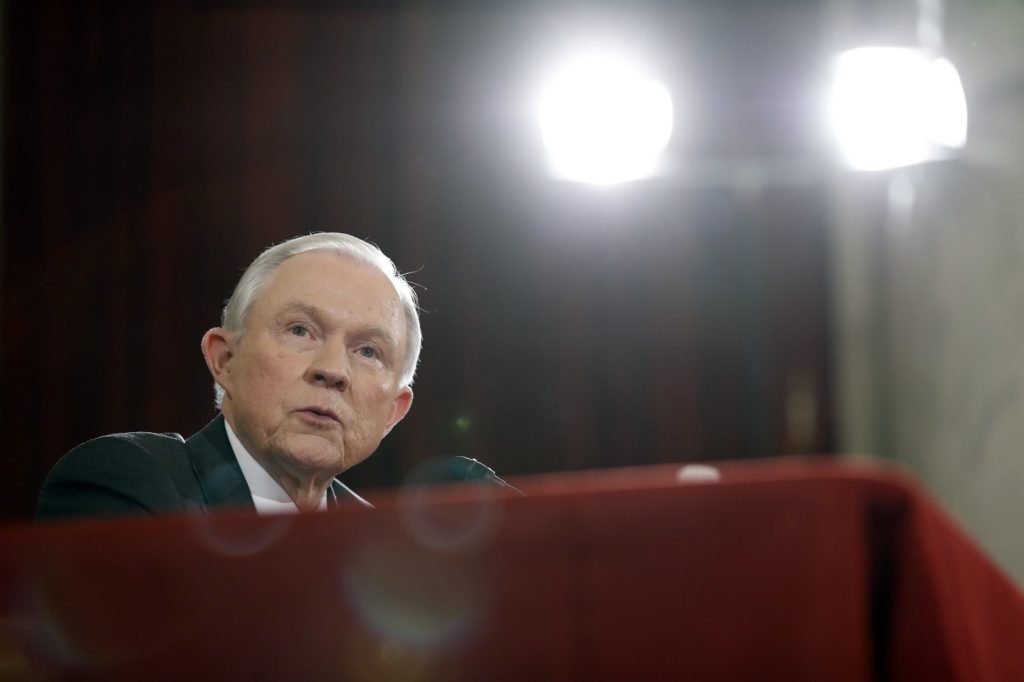
The American Civil Liberties Union (ACLU) has filed an ethics complaint against Attorney General Jeff Sessions over his false testimony to the the U.S. Senate Judiciary Committee. The complaint, filed Thursday with the Alabama State Bar, asks the body to investigate a potential rules violation after Sessions made false statements during sworn testimony at his confirmation hearing for attorney general. In his confirmation hearing, then-Senator Sessions was asked about any contact he had with members of the Russian government and responded at the time that he “did not have any communications with the Russians.” It has since come to light that Sessions met with Russia’s ambassador to the United States on at least two occasions. “False testimony made under oath is one of the most serious ethical offenses a lawyer can make and one any state bar should investigate vigorously,” said ACLU National Political Director Faiz Shakir. “Alabamians and Americans from all walks of life should be assured that the organizations responsible for regulating lawyers in their state takes ethical violations seriously — no matter how powerful that lawyer may be.” Alabama State Bar rules state that it is professional misconduct for a lawyer to “engage in conduct involving dishonesty, fraud, deceit, or misrepresentation.” Sessions has been a member of the bar since 1973. In the complaint, the ACLU says the report of the meetings with the Russian ambassador “does not square” with Sessions’s sworn Jan. 10 Senate testimony. “Few events are more corrosive to a democracy than having the Attorney General make false statements under oath about a matter the Justice Department is investigating,” added Christopher Anders, deputy director of the ACLU’s legislative office. “Jeff Sessions told a falsehood to the Senate, and did nothing to correct his statement until he was exposed by the press more than a month later. No attorney, whether just starting out as a new lawyer or serving as the country’s top law enforcement officer, should lie under oath. The Alabama bar must investigate this wrong fully and fairly.” The filed complaint can be read below:
AG Jeff Sessions clarifies testimony on Russian contacts
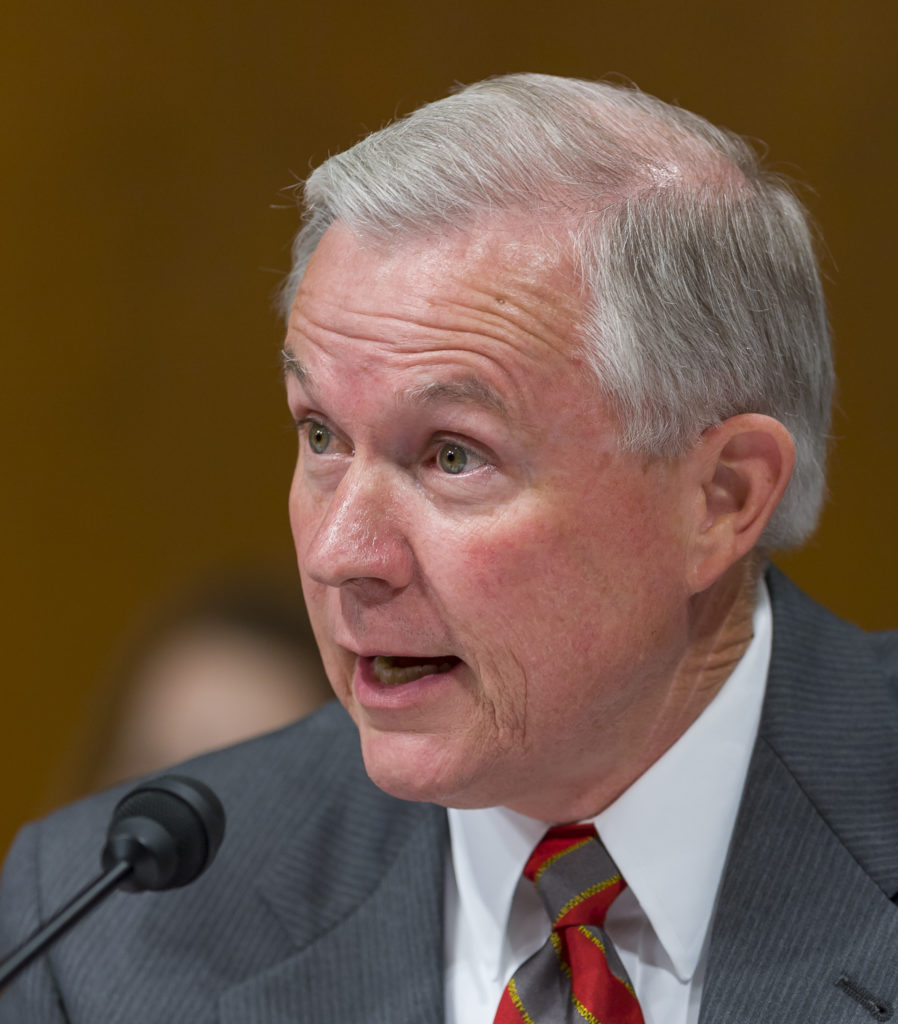
Attorney General Jeff Sessions has clarified his confirmation hearing testimony to acknowledge having spoken twice last year with the Russian ambassador. The filing Monday amends testimony Sessions gave in January when he said he did not have communications with the Russians. Sessions last week acknowledged that he had spoken with the ambassador once at the Republican National Convention last July and again at a meeting in his Senate office in September. He agreed to recuse himself from any investigations involving the Trump campaign and Russian interference in the presidential election. Sessions maintains in Monday’s filing that he had answered the question honestly. He says he didn’t mention communication with the ambassador because the question had not asked about it. Republished with permission of The Associated Press.
