
Alabama Democratic Party opens candidate qualifying on Friday

The Alabama Democratic Party opened its candidate qualifying on Friday. Alabama Presidential Delegate qualifying will open on October 16, 2023, at 9:00 a.m. CDT. The big news this year is that Alabama’s Second Congressional District looks like it could be open as incumbent Republican Congressman Barry Moore (R-AL02) has been drawn out of his district by the court-appointed special master assigned to redistrict the state. Moore has said that he will wait before deciding what to do next. At present, he and GOP Congressman Jerry Carl now live in the First Congressional District. When Moore was re-elected in 2022, Congressional District 2 was 30% Black. The federal courts have ordered the state to draw a second Congressional District that is majority minority “or something close to it.’ The maps drawn by the special master have increased the Black voter percentage in the Second Congressional District to between 48.7% and 50.5%. This makes Congressional District 2 much friendlier for Democrats than it was previously. Austin Vigue has already announced that he is running for Congress in what now appears to be an open seat. In addition to the seven congressional seats, numerous county offices are on the ballot in 2024, including the Public Service Commission President, Chief Justice of the Supreme Court, Supreme Court Associate Justice, and other judicial seats. Candidate qualifying opened on September 29, 2023, at 9:00 a.m. CDT. Individuals interested in running for office as a Democrat or serving as a delegate to the Democratic National Convention may submit a Declaration of Candidacy and pay the appropriate qualifying fees at the Alabama Democratic Party Headquarters at 501 Adams Avenue, Montgomery, AL 36104, or online. Democratic candidate qualifying will close on Friday, November 10, 2023, at 5:00 p.m. CST, 116 days before the primary election, as required by Alabama Code § 17-13-5(a). “The 2024 Election Cycle is vital for Alabama Democrats,” said Alabama Democratic Party Chairman Randy Kelley. “We have an opportunity to elect a 2nd Democrat to the U.S. House, win state races, and re-elect President [Joe] Biden so that he may complete his historic agenda. Alabama has benefited greatly from President Biden’s policies, including the Bipartisan Infrastructure Law, with over $3.2 billion allocated for roads, bridges, high-speed internet, and other major projects. We will do our part by winning seats for local, state, and national offices.” “We are excited to work with candidates that stand for Democratic values and who will move Alabama forward,” Kelley continued. “I would like to commend those who are seeking elected office and answering the call to serve others. Running for office is an endeavor that requires many sacrifices in a candidate’s life. Your time and efforts will make a difference for the people of Alabama. The Alabama Democratic Party will be here to support our candidates and guide them to victory.” To connect with the author of this story or to comment, email brandonmreporter@gmail.com.
California Senator Dianne Feinstein dies at age 90
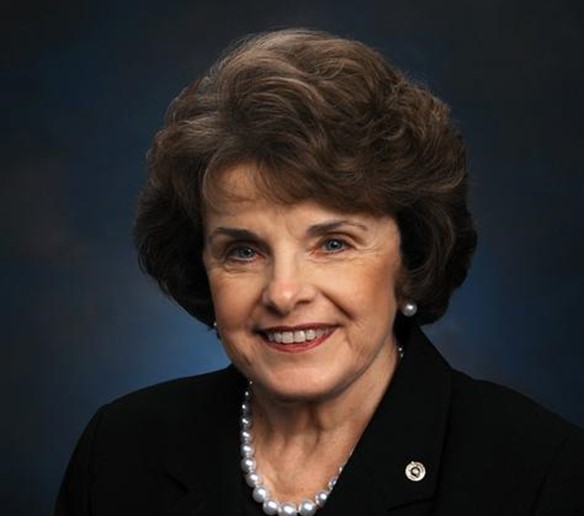
U.S. Senator Dianne Feinstein of California has died, the Associated Press reported. She was 90 years old. Feinstein died on Thursday night at her home in Washington, D.C. Feinstein’s chief of staff, James Sauls, said in a statement, “Sadly, Senator Feinstein passed away last night at her home in Washington, D.C. Her passing is a great loss for so many, from those who loved and cared for her to the people of California that she dedicated her life to serving. Senator Feinstein never backed away from a fight for what was just and right. At the same time, she was always willing to work with anyone, even those she disagreed with, if it meant bettering the lives of Californians or the betterment of our nation. There are few women who can be called senator, chairman, mayor, wife, mom and grandmother. Senator Feinstein was a force of nature who made an incredible impact on our country and her home state. She left a legacy that is undeniable and extraordinary. There is much to say about who she was and what she did, but for now, we are going to grieve the passing of our beloved boss, mentor and friend.” Feinstein was born on June 22, 1933, and was the oldest sitting U.S. Senator. Many leaders had expressed concern about her health in the past few years and questioned if she was fit to continue to work as a Senator. Feinstein stepped down as the top Democrat on the Judiciary panel after the 2020 elections. In February, she announced that she planned to retire at the end of 2024 when her term was up. Elected to the Senate in 1992, Feinstein was seen as more of a centrist Democrat and was known to work to find common ground with Republicans. “In San Francisco, she showed enormous poise and courage in the wake of tragedy and became a powerful voice for American values. Serving in the Senate together for more than 15 years, I had a front-row seat to what Dianne was able to accomplish,” President Joe Biden said in a statement. “Dianne made her mark on everything from national security to the environment to protecting civil liberties. She’s made history in so many ways, and our country will benefit from her legacy for generations.” “As we mourn with her daughter Katherine and the Feinstein family, her team in the Senate, and the people of California, we take comfort that Dianne is reunited again with her beloved Richard. May God Bless Dianne Feinstein.” Senate Majority Leader Chuck Schumer wrote on X, “Sen. Dianne Feinstein was a friend, a hero, a leader who changed the Senate and America for the better. Mourning this tremendous loss—we’re comforted in knowing how many mountains she moved, lives she impacted, glass ceilings she shattered. America’s a better place because of her.” Senator Katie Britt wrote on X, “Dianne Feinstein lived a life of service, blazing a path for women in the Senate and girls across our nation. In the face of tragedy and tribulations throughout her career, she was fearless. Our prayers are with her loved ones.” Senator Tommy Tuberville said, “Sad to hear about the loss of my friend Dianne Feinstein. Grateful I got to know her. Keeping her family and loved ones in my thoughts and prayers.”
Louisiana lawmakers aim to fix shrimp industry crisis caused by cheap imports

By Victor Skinner | The Center Square contributor A legislative task force convened this week to brainstorm ways to address a crisis in the Louisiana shrimp industry brought on by a flood of imported seafood. The Legislature’s Seafood Safety Task Force met on Wednesday to review state policies for imported seafood in the wake of an ongoing shrimp crisis forcing many Louisiana shrimpers to stay on the dock. Gov. John Bel Edwards last month requested an emergency disaster declaration from the federal government at the behest of the Louisiana Shrimp Association, which has raised the alarm about the safety of imported shrimp that have driven dockside prices below $1 per pound. The Southern Shrimp Alliance made the same requests for disaster declarations from governors in North and South Carolina, Georgia, Alabama, Florida, Mississippi, and Texas. The task force, initially created in 2009, was revived with Senate Resolution 159, sponsored by Sen. Fred Mills, R-Parks, who chaired Wednesday’s meeting. The Louisiana Shrimp Association has repeatedly highlighted how imports of 1.8 billion pounds of farm-raised foreign shrimp have created a record-high global supply and rock bottom prices, despite concerns over harmful antibiotics, chemicals, and toxins that put consumers at risk of food-borne illnesses. The association contends most Louisiana restaurants serve imported shrimp and other seafood but do not clearly label it as required by state law. Despite 2,671 violations since the law was enacted in 2019, the state has not imposed fines available through a separate law. State health officials told the task force that limited funding has also restricted testing of imported seafood, with just 11 inspections in 2023. A lack of oversight on the federal level prompted Republican U.S. Rep. Garret Graves to introduce legislation in August to provide more FDA funding for testing. Along with Edwards’ request for an emergency disaster declaration, he penned a letter to President Joe Biden last month “asking for additional funding for testing of imported shrimp by the Food and Drug Administration, as well as support for random testing, seizure and destruction of shrimp that contain banned substances, and implementation of a quota on the amount of shrimp imported from other countries,” the governor wrote in a letter to Louisiana Shrimp Association. The task force on Wednesday discussed the possibility of sending health inspectors to more of the state’s major ports to improve testing before products reach the state’s 58 distributors, but state health officials noted that would require cooperation with federal authorities that control the ports. Mills suggested officials could possibly intercept transport trucks on state roadways before they reach distributors. Other suggestions centered on adopting a law similar to Texas that bans the use of imported shrimp as bait. A 2020 study by the LSU Agricultural Center that tested imported shrimp from locations in the Baton Rouge area found prohibited antibiotics in 70% of samples, findings that further substantiated prior studies. The task force meeting followed several bills or resolutions introduced in the 2023 legislative session aimed at addressing foreign imports, from increasing the fine in the labeling law to $1,000 to resolutions asking Congress to ban shrimp and crawfish imports and for the FDA and Louisiana Department of Health to improve testing. While multiple resolutions were adopted, the increased labeling fines for restaurants and retailers failed in committee amid pushback from the Louisiana Restaurant Association. The Louisiana Seafood Safety Task Force is expected to meet again in October. Republished with the permission of The Center Square.
Republicans kick off President Joe Biden’s impeachment inquiry
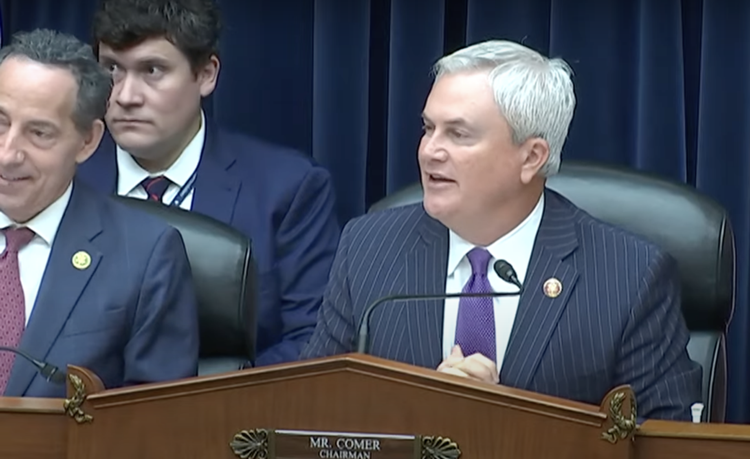
By Casey Harper | The Center Square U.S. House Republicans launched the first impeachment inquiry Thursday into President Joe Biden, who faces an array of allegations around bribery and financial impropriety related to personal business dealings spearheaded by his son, Hunter Biden. Republicans say they have significant evidence to back allegations that Hunter Biden received more than $20 million from several overseas entities in China, Ukraine, Russia, and more. Hunter also faces gun and tax-related legal difficulties. The impeachment inquiry, though, forces Republicans to focus on how much President Biden, in particular, was involved and benefited from these alleged dealings as Democrats argue the evidence is lacking. “Evidence reveals that then-Vice President Joe Biden spoke, dined, and developed relationships with his family’s foreign business targets,” House Oversight Committee Chair Rep. James Comer, R-Ky., said in his opening statement, referring in part to testimony from IRS whistleblowers and long-time business associate of Hunter Biden, Devon Archer. “These business targets include foreign oligarchs who sent millions of dollars to his family,” Comer added. “It also includes a Chinese national who wired a quarter of a million dollars to his son.” The wire in question from a Chinese national broke headlines this week and added further weight to the allegations against the president. Comer said this week that multiple wire transfers from Chinese nationals listed the president’s home address in Wilmington, Delaware, as the beneficiary address. “This happened when Joe Biden was running for President of the United States. And Joe Biden’s home is listed as the beneficiary address,” Comer said. “To date, the House Oversight Committee has uncovered how the Bidens and their associates created over 20 shell companies – most of which were created when Joe Biden was Vice President – and raked in over $24 million between 2014 to 2019. “We’ve also identified nine members of the Biden family who have participated in or benefited from these business schemes,” Comer added. House Speaker Kevin McCarthy, who launched the impeachment inquiry earlier this month, referenced those wire transfers when speaking with reporters ahead of the hearing. “While Joe Biden was running for president and told, and his attorney told too, that they received no money from China, we now know that yes, it came from Beijing,” McCarthy said. “It came from Jonathan Li, and the address on the wire is Joe Biden’s address. And then you find out, how did he meet this Jonathan Li? Well, he took Hunter Biden on Air Force Two when he went to China, and then Hunter had him meet the vice president then. “The vice president … he wrote letters of recommendation for his children too,” McCarthy added. The House Ways and Means Committee also released documents and communications earlier this week, including one with Hunter Biden “bragging in a 2017 email to a Chinese business executive that he negotiated a contract for $10 million per year for ‘introductions alone.’” Democrats remained steadfast during the hearing, arguing that there is no evidence against President Biden, specifically. U.S. Rep. Jamie Raskin, D-Md., the ranking member on the committee, called it “preposterous,” and a “fairy tale.” “They’ve got nothing on Joe Biden,” Raskin said, arguing that former President Donald Trump and Rudy Giuliani sparked this “conspiracy theory.” They also pointed to the indictments facing former President Donald Trump, who faces 91 charges across several states and from the federal government for his handling of classified documents, alleged ‘hush money’ payments to an adult film star, and his role in allegedly working to overturn the 2020 presidential election results. “It’s scandalous to use impeachment to establish a counterfeit moral equivalence between President Biden, an honorable public servant who has never been indicted or convicted of anything in his career of more than 50 years in public life,” Raskin said. “…and Donald Trump, a twice impeached president who’s recently been found in court to have sexually abused and defamed a woman and fraudulently inflated the value of his real estate properties…” Democrats also blasted Republicans for focusing on impeachment when the federal government is just days away from shutting down if Congress does not pass a new spending measure. “They are wasting time and taxpayer dollars in an illegitimate impeachment inquiry when we’re about 48 away or so from an extreme MAGA Republican government shutdown, and this is what they’re focused on?” House Minority Leader Hakeem Jeffries, D-N.Y., told reporters. Republished with the permission of The Center Square.
Nonprofit group warns of increasing number of overdose deaths
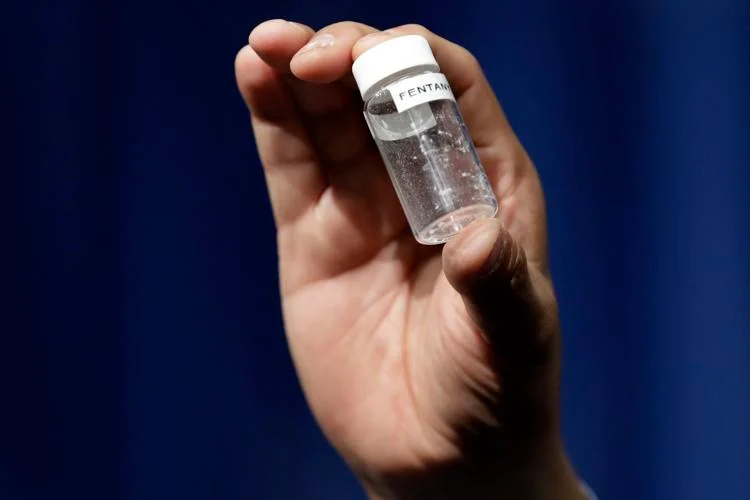
A nonprofit organization’s analysis of government data estimates drug overdose deaths increased 1.7% in 2023 to reach a new record high. The CDC estimates that more than 111,000 Americans died from a drug overdose in the 12-month period that ended in April. More than 77,000 of those deaths involved fentanyl and other synthetic opioids other than methadone. Both are record highs and increases over the prior year, according to Families Against Fentanyl. The Families Against Fentanyl analysis of CDC data found that illicit fentanyl and other synthetic opioid deaths increased 4.9%. The report comes as federal, state and local governments are working to reduce opioid deaths. Oregon had the highest rate of increase in fentanyl deaths in the nation, with a one-year increase of more than 67%, compared to a national average of 4.9%. The state also ranked second highest in the nation for increases in overdose deaths overall, with an increase of 23%, according to the Families Against Fentanyl report. In Washington, overdose deaths increased by over 34%, the highest one-year increase in the nation. Washington also ranked second highest in the nation for increases in fentanyl deaths, with an increase of 65%, according to the Families Against Fentanyl report. Families Against Fentanyl previously asked President Joe Biden to designate illicit fentanyl as a weapon of mass destruction to reduce fentanyl deaths, which have doubled in 30 states in two years. Fentanyl, which is 80 to 100 times more potent than morphine, is used daily in hospitals around the country for everything from epidurals during childbirth to pain management for cancer patients. However, illicit fentanyl is driving the country’s overdose epidemic. Illicit fentanyl is primarily made in foreign labs. It is then smuggled into the United States, most often through Mexico, according to the U.S. Drug Enforcement Administration. Illicit fentanyl is often mixed with other drugs or made into pills made to resemble prescription opioids.
Congress faces looming government shutdown
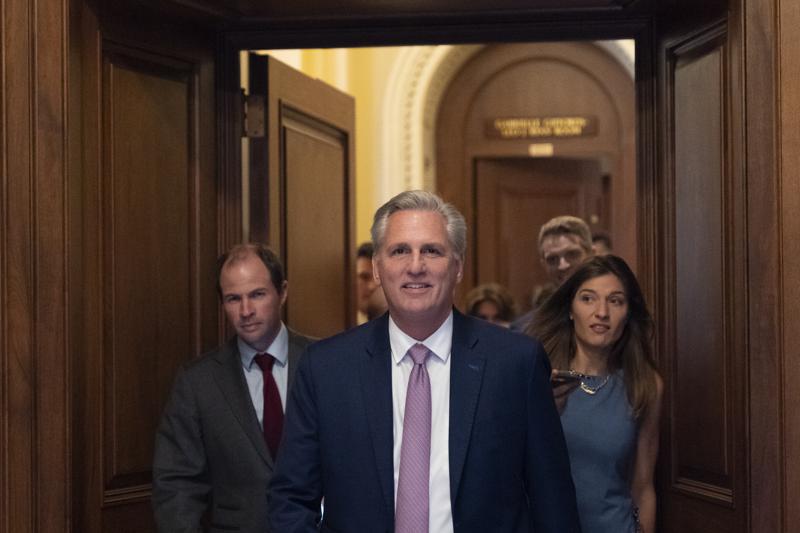
By Casey Harper | The Center Square Lawmakers are scrambling to avoid a partial government shutdown this week. Funding for the federal government runs out at the end of September, Saturday at midnight, and lawmakers are still far from getting agreement on a deal that President Joe Biden can sign into law. In the House, Speaker Kevin McCarthy, R-Calif., has been unable to persuade enough conservative Republicans to back his push for a Continuing Resolution, a temporary funding measure to buy time. McCarthy may have to work with Democrats to get enough votes on a C.R., but that could jeopardize his position as Speaker. McCarthy won the speakership after a grueling series of votes, and House Republicans have been adamant that they can vote to remove McCarthy at any time. Senate Democrats have already begun shifting blame onto House Republicans and McCarthy, pointing out House Republicans had time to pass individual spending bills but did not get them done in time. “I’ve never seen a group that is as hellbent on a shutdown as these crazy MAGA Republicans, that small group,” Senate Majority Leader Chuck Schumer, D-N.Y., told CNN, referring to holdout House Republicans. Schumer is working on passing a temporary funding measure that can be sent to the House and give Republicans a tough choice: let the government shut down or pass the Senate’s hard-to-stomach version of the spending measure. Ukraine funding in particular has become a divisive issue that could kill any funding bill. Democrats and many Republicans support it, but a growing contingent of Republicans say taxpayers should no longer keep sending the large sums overseas. McCarthy has blasted some of the holdouts, for whom Ukraine funding has been a sticking point. “This is a whole new concept of individuals that just want to burn the whole place down,” McCarthy told reporters last week. Meanwhile, Senate Democrats are unlikely to favor any measure McCarthy can get passed that appeases conservative Republicans. While many essential government services would continue operating, many others across a range of federal agencies would be paused if the government shuts down. Democrats in the past have blasted Republicans for threatening the paychecks of those employees, though they will get back pay once the government reopens. The shutdown would affect over 2 million civilian employees and military members. “Nearly a hundred thousand of my constituents won’t get paid during a shutdown. It’s a disaster for Northern Virginia,” Rep. Don Beyer, D-Va., wrote on social media. “They have families who depend on them, and they don’t deserve this. Republicans must honor the Speaker’s agreement with the President, and prevent a shutdown.” Former President Donald Trump, who has emboldened some Republican holdouts with his support, argued to Republicans that Biden would be blamed if the government shut down. “The Republicans lost big on Debt Ceiling, got NOTHING, and now are worried that they will be BLAMED for the Budget Shutdown,” Trump wrote on social media Sunday evening. “Wrong!!! Whoever is President will be blamed, in this case, Crooked (as Hell!) Joe Biden!” “WE NEED NEW, & REAL, REPUBLICAN LEADERSHIP IN THE UNITED STATES SENATE, NOT A CLONE OF MITCH, & WE NEED IT NOW!!!” Trump added. Meanwhile, fiscal experts warn that the federal government’s continued debt spending is unsustainable and will continue to have major consequences for taxpayers. Earlier this month, news broke that the U.S. national debt surpassed $33 trillion, the highest ever. The U.S. Congressional Budget Office released earlier this month its estimate of the federal deficit 11 months into the fiscal year. That deficit hit about $1.5 trillion. At the same time last year, the deficit was under one trillion dollars. As The Center Square previously reported, within a few years the cost of interest payments on the national debt will soon cost taxpayers more than spending on national defense. In fact, interest payments on the national debt are on pace to become the largest expense for the federal government. A key impact of that debt spending is higher inflation, which has soared in recent years and spiked again in August. Debt spending is offset in part by printing more money, increasing the money supply and inflation as a result. Food and gas prices in particular have risen. The U.S. Department of Agriculture projects food prices will continue to rise through 2024. Republished with the permission of The Center Square.
Rep. Terri Sewell announces $23.8 million to address blocked crossings and improve railroad infrastructure

On Monday, Congresswoman Terri Sewell (D-AL07) announced a $23.8 million grant to alleviate blocked railroad crossings and improve rail infrastructure and safety in Alabama’s Seventh Congressional District. “Today marks a major step forward in our fight against blocked railroad crossings in Alabama’s 7th Congressional District,” said Rep. Sewell. “This funding from President [Joe] Biden’s Bipartisan Infrastructure Law represents a critical part of our long-term strategy to alleviate blocked railroad crossings and will go a long way in improving the quality of life for those living in and around Birmingham. Securing this funding was truly a team effort, and I want to thank the City of Birmingham and our local leaders for their hard work in developing such a strong proposal and Norfolk Southern for their significant financial commitment to this project. I was so proud to advocate for this funding at the federal level and will continue working with our state and local partners to address blocked railroad crossings.” The funding comes from the Consolidated Rail and Infrastructure Safety and Improvements (CRISI) grant program through the U.S. Department of Transportation’s (DOT) Federal Railroad Administration (FRA). The grants are divided into two. The City of Birmingham was awarded an $8 million grant to alleviate dangerous blocked railroad crossings, while the Alabama Department of Transportation (ALDOT) was awarded $15.8 million for track and bridge improvements in the Black Belt and Central Alabama. “I want to thank the Alabama Department of Transportation for their work putting together this proposal,” said Sewell. “We know that the Black Belt is in dire need of infrastructure investments, and this project will make a big difference!” Darrell O’Quinn is a member of the Birmingham City Council. “It’s hard not to get a little emotional thinking about what this will mean for the residents of this area,” said Councilman O’Quinn. “This is an opportunity to drastically improve the quality of life for so many of my neighbors. I’d like to take a moment and thank our partners at Norfolk Southern, who own the rail corridor in question. They have been a tremendous partner in moving this initiative forward and will be committing $1.5 million in funding to this initial planning and engineering grant. It’s the largest financial commitment they’ve made to a project of this type, ever. My office has remained in close contact with their representatives over the last several years, and we could not have gotten to this point without their dedication to improve the lives of those living near their tracks.” In Birmingham, the $8 million CRISI grant will improve two segments of Norfolk Southern’s railway line. The money will be used to develop plans for various track, bridge, signal, and road realignments to reduce blocked crossings and improve community access. This will include grade separations and the closure of multiple crossings. In the Black Belt, the $15.8 million CRISI grant will go to ALDOT for final design and construction activities to complete various track-related and bridge improvements on two short-line rail lines within the state, the Eastern Alabama Railway (EARY) and Meridian & Bigbee Railroad (MNBR). The project will improve system and service performance by increasing maximum allowable speeds on both rail corridors, enhancing storage capacity, and improving safety. These grants are part of the $1.4 billion announced by the Biden Administration. This money is part of President Biden’s Bipartisan Infrastructure Law. Rep. Sewell was the only member of Alabama’s Congressional Delegation to vote in favor of the Bipartisan Infrastructure Law. Almost all of this money comes from deficit spending as the national debt has soared past $33 trillion. Sewell is in her seventh term representing Alabama’s Seventh Congressional District. To connect with the author of this story or to comment, email brandonmreporter@gmail.com.
Tommy Tuberville opposes more military aid for Ukraine

On Friday, U.S. Senator Tommy Tuberville (R-Alabama) joined Senator J.D. Vance (R-Ohio), Congressman Chip Roy (R-Texas), and dozens of colleagues in sending a bicameral letter to the White House rejecting further U.S. funding for the war in Ukraine. “Your request cites President [Joe] Biden’s pledge that ‘we will stand with Ukraine as it defends its sovereignty for as long as it takes’…” Vance, Roy, Tuberville, etc. wrote. “These statements imply an open-ended commitment to supporting the war in Ukraine of an indeterminate nature, based on a strategy that is unclear, to achieve a goal yet to be articulated to the public or the Congress.” “The American people deserve to know what their money has gone to,” Vance, Roy, and the other members of Congress wrote. “How is the counteroffensive going? Are the Ukrainians any closer to victory than they were 6 months ago? What is our strategy, and what is the president’s exit plan? What does the administration define as victory in Ukraine? What assistance has the United States provided Ukraine under Title 10? It would be an absurd abdication of congressional responsibility to grant this request without knowing the answers to these questions. For these reasons—and certainly until we receive answers to the questions above and others forthcoming—we oppose the additional expenditure for war in Ukraine included in your request.” Tuberville has long criticized the amount of support the United States has sent to Ukraine. “The war in Ukraine is a disaster for the United States,” Tuberville told Alabama Today in April. “We jumped in all four feet, knowing that we didn’t have enough munitions to help Ukraine. We don’t want to put boots on the ground. I am all for Ukraine, but you have got to have an opportunity to win, and we don’t have one person that has any insight in terms of diplomacy from this White House or this administration. Secretary [Antony] Blinken has done zero. You know, the Chinese laugh at the guy. President Biden needs to be on the phone every day to stop this. We have gotten hundreds of thousands of people killed. There is all kinds of rumors about money that has been stolen from the American taxpayer that is going over there. We don’t know.” “Five years from now, we’re going to find out that between the Clintons and a number of American private equity firms and other hyper-global corporations that, you’re going to find a lot of people have gotten rich from this, and it’s really sad and it is really despicable because of course, the Ukrainians didn’t invite the war on themselves,” Sen. Vance told Jesse Waters on Fox News. I have disagreements with their leadership but not with the people. But you can almost see the elites of Washington and New York City salivating over acquiring more power and more money for themselves on the backs of the Ukrainian war effort. Anybody who doesn’t see this for what it is, I think, is blind to the reality. It’s one of the reasons why, Jesse, we have to start asking tough questions about how long is this going to go on?” President Biden reiterated his support for Ukraine’s war effort in a speech to the United Nations General Assembly earlier this week. “If we allow Ukraine to be carved up, is the independence of any nation secure? I respectfully suggest the answer is no. We have to stand up to this naked aggression today and deter other would-be aggressors tomorrow,” Biden said. “That’s why the United States, together with our allies and partners around the world, will continue to stand with the brave people of Ukraine as they defend their sovereignty and territorial integrity and their freedom.” Tuberville was elected to the U.S. Senate in 2020. To connect with the author of this story or to comment, email brandonmreporter@gmail.com.
Shutdown inches closer as U.S. House GOP fails to pass defense bill, lawmakers exit D.C.
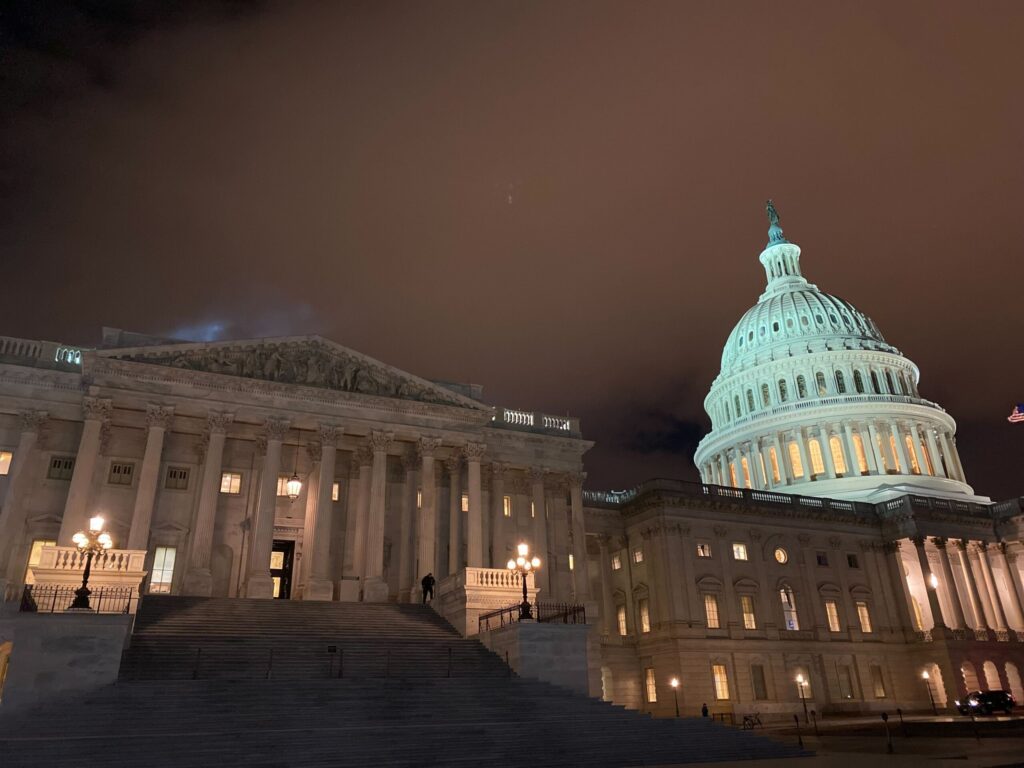
by Jennifer Shutt, Alabama Reflector September 21, 2023 WASHINGTON — U.S. House Republicans were unable for a third time Thursday to begin debate on the Defense funding bill, throwing another wrench into Speaker Kevin McCarthy’s leadership tenure. The 212-216 vote that rejected the rule for the $826 billion Defense spending measure was unexpected, coming less than a day after House GOP lawmakers gathered in a room in the Capitol basement to broker a path forward. Arizona Rep. Eli Crane and Georgia Rep. Marjorie Taylor Greene switched their votes to oppose the rule, after voting on Tuesday to adopt it. Colorado Rep. Ken Buck and South Carolina Rep. Ralph Norman both supported adoption of the rule on Thursday after opposing it earlier in the week. Other Republicans voting no included Andy Biggs of Arizona, Dan Bishop of North Carolina, and Matt Rosendale of Montana. The rule would have allowed the House to begin officially debating the bill and voting on nearly 200 amendments. The failed vote led McCarthy to reverse course on the schedule, with many lawmakers heading home for the weekend on Thursday instead of sticking around for votes throughout the weekend. McCarthy had said exactly one week ago, “When we come back, we’re not going to leave. We’re going to get this done.” The update to the House schedule sent around Thursday afternoon said ”ample notice will be given ahead of any potential votes tomorrow or this weekend.” The stalemate and change of plans does not bode well for efforts to approve the short-term spending bill that’s needed to stave off a partial government shutdown when the new fiscal year begins Oct. 1. McCarthy has yet to unify his members amid deep disagreements about how much the federal government should spend and what policy restrictions should be included in full-year bills as well as the stopgap measure. The ongoing dispute has ground the House chamber to a halt as McCarthy searches for a way to unify his razor-thin majority without turning to Democrats to pass a bipartisan bill. Arkansas Republican Rep. Steve Womack, a senior appropriator, said Thursday that his fellow lawmakers need to accept the Senate will re-work any partisan bills the House sends over. “Remember, this is all going to go to the Senate, so people don’t need to get real hot and bothered over where we are today,” Womack said. “It’s going to be based on what comes back and whether or not it can get to the floor.” Discussions among House Republicans, he said, are likely to become “heated” once the Senate re-works a short-term spending bill and sends it back to the House for a final approval vote. Infighting and political differences within the House Republican Conference have so far prevented GOP lawmakers from reaching agreement on their opening offer on a short-term spending bill, which is also called a continuing resolution or CR. Defense spending bill falters Before the Thursday vote, McCarthy had been somewhat optimistic the House could finally approve the rule and begin debate on the full-year Defense spending measure. Greene wrote on X that she switched her vote “because they refused to take the war money for Ukraine out and put it in a separate bill.” The rule approved 184 amendments for floor debate and votes, including one from Florida’s Matt Gaetz that would have prohibited “security assistance for Ukraine.” Crane wrote on X on Thursday that he believes votes “on CRs, omnibus bills and raising the debt ceiling should never take place.” “I’m going to do whatever I can to change the way this place works,” he wrote. Oklahoma Republican Rep. Tom Cole, chair of the Rules Committee, switched his vote on Thursday to a no vote after voting yes a few minutes earlier. The procedural maneuver allows him to bring the rule back up for a vote at a later time. The whip count error appeared to be a surprise for Defense Appropriations Chair Ken Calvert, a California Republican; ranking member Betty McCollum, a Minnesota Democrat; and staff — all of whom were seated at the tables on the House floor ready to lead debate on the measure. The Republican table held thick white binders as well as a large accordion folder, all filled with paperwork, and the Democratic table was stacked with paperwork as well. It’s highly unlikely that staff would have brought all the materials needed to debate the bill and amendments if they knew the rule vote was going to fail. ‘At least a short-term shutdown’ In addition to strong disagreement among House Republicans about the full-year spending bills, the House GOP Conference has yet to solidify a plan to pass the short-term stopgap spending bill that’s needed to hold off a funding lapse. Idaho Republican Rep. Mike Simpson, chair of the Interior-Environment spending subcommittee, said he expects there will be “at least a short-term shutdown” as the House and Senate try to reach agreement on a short-term spending bill. “That’s a lot of work to do in a very short time,” Simpson said. House Freedom Caucus Chair Scott Perry, a Pennsylvania Republican, said Thursday that he hasn’t seen details on any new short-term spending bills that might come to the floor. “I haven’t seen the language of any additional CR,” he said. Kansas Sen. Jerry Moran, the top Republican on the Commerce-Justice-Science spending panel, said he’s “hoping the House chaos is set aside.” “I keep saying I’m not voting for another CR again, but I keep voting for them because the outcome is worse with a shutdown,” Moran said. “But this just needs to be resolved in the House. I don’t think there’s a problem in the Senate that would cause a shutdown.” Any short-term spending bill will have to be bipartisan in order to get through the Democratically controlled Senate, where at least 60 votes are needed to limit debate on legislation. That could take more time than lawmakers have before Oct. 1, he said. “Nothing about this is conducive to getting
Katie Britt cosponsors bipartisan bill to permanently end budget brinkmanship
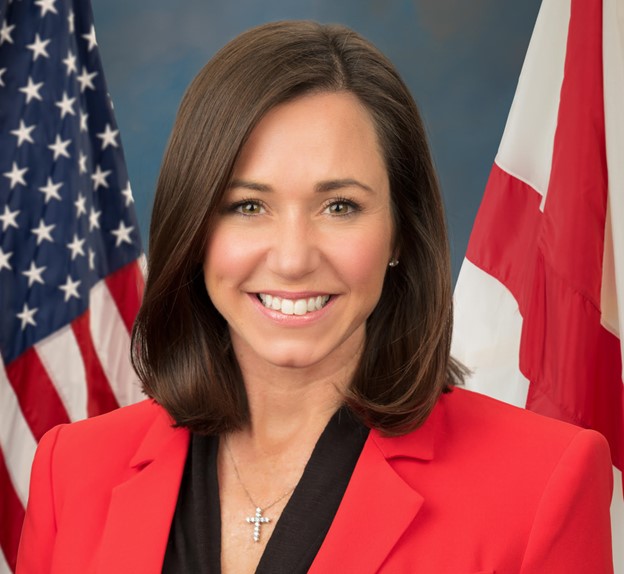
On Wednesday, U.S. Senator Katie Britt (R-Alabama) joined a bipartisan group of 11 colleagues as a co-sponsor of Senator James Lankford’s (R-Oklahoma) Prevent Government Shutdowns Act of 2023. This legislation would permanently end the practice of shutting down the federal government and disrupting critical services if Congress fails to enact spending bills by the start of the next fiscal year. Under the bill’s provisions, if Congress does not enact all 12 appropriations on time, an automatic 14-day Continuing Resolution (CR) would be triggered and keep funding at the previous fiscal year’s levels. If there is no resolution at the end of two weeks, automatic 14-day CRs would go into effect on a rolling basis until either all appropriations bills are enacted or a long-term CR is enacted. “The American people are tired of seeing critical government services being held hostage while Congress irresponsibly pushes to pass massive spending bills at the last minute,” said Sen. Britt. “Taxpayers shouldn’t be forced to keep paying the price for this budgetary political brinksmanship. This commonsense bill would ensure we have a fail-safe mechanism in place that will take these drastic options off the table, so members of the Senate and the House have time to draft the best bills possible in a transparent, accountable, and judicious manner.” While the federal government is operating under the automatic CRs, the legislation would require Congress to meet every day, including weekends, and members of Congress could not use any official funds for travel. They also could not consider any other measures other than appropriations bills. The travel restrictions would also apply to congressional staff and officials from the White House Office of Management and Budget (OMB). Lankford said that restraint is needed to balance the budget. Lankford said, “To put this in context, with the record revenue that’s coming in this year at about $4.8 trillion, if we were spending the same this year as we did in 2018, a short five years ago. If we were spending the same this year as we were in 2018 prior to COVID, we would have a $700 billion surplus this year rather than an almost $2 trillion deficit—this year—because the record amount of revenue coming in this year compared to what our spending was five years ago, we would have been in surplus this year. But we’re not, and it’s at $1.5 trillion over that. We have a very serious issue. We should have very hard conversations about our revenue, about our spending, about the direction that we’re actually heading, and about how do we get out of a $33 trillion debt.” In addition to Senator Britt, co-sponsors of Senator Lankford’s bill include Senators Maggie Hassan (D-New Hampshire), Ron Johnson (R-Wisconsin), Angus King (I-Maine), Rick Scott (R-Florida), Mark Kelly (D-Arizona), Steve Daines (R-Montana), Kyrsten Sinema (I-Arizona), Bill Cassidy (R-Louisiana), Mike Braun (R-Indiana), John Barrasso (R-Wyoming), Chuck Grassley (R-Iowa), and Cynthia Lummis (R-Wyoming). Senator Britt is also a co-sponsor of Senator Braun’s No Budget, No Pay Act. That legislation would bar members of Congress from getting paid until they passed a budget. President Joe Biden has not submitted a balanced budget since entering the White House. Katie Britt was elected to the U.S. Senate in 2022. She serves on the Appropriations Committee tasked with passing each of the 12 appropriations bills. CRs go around the committee by a handful of powerful Senators who craft the CR with the White House to keep the government funded. Often, those CR writers are able to insert earmarks and other language into a CR or omnibus spending bill that is never vetted by committee. To connect with the author of this story or to comment, email brandonmreporter@gmail.com.
Chuck Schumer brings votes on senior military commanders in response to Tommy Tuberville’s effort to bring military confirmations forward
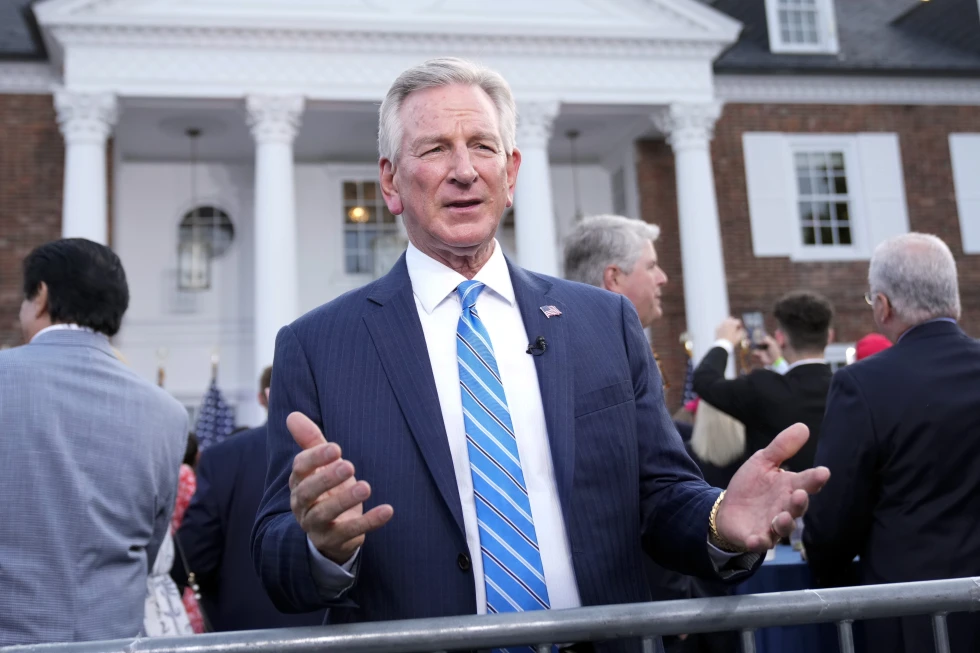
U.S. Senator Tommy Tuberville (R-Alabama) has been criticized for months for his holds on military promotions. On Wednesday, Tuberville attempted to bring the nomination of the candidate of General Eric Smith for Marine Corps Commandant to the floor. Senator Chuck Schumer (D-New York), in response, himself brought forward the nominations of senior officers – something that, as Majority Leader, he could have done at any time in this process. The Senate voted overwhelmingly Wednesday to advance President Joe Biden’s nomination of U.S. Air Force General Charles “C.Q.” Brown to become the next chairman of the Joint Chiefs of Staff. The Senate voted 89-8 to advance to a final vote on Brown’s nomination. Tuberville has refused to give unanimous consent to batches of senior-level Defense Department promotions for the last seven months until President Biden reversed his abortion policy, which was an end around Congress and state laws. Brown will replace outgoing Chairman Mark Milley, whose term ends October 1. A vote on final passage for Brown took place Wednesday evening, and Brown was confirmed 83 to 11. Tuberville was one of the 11 Republican Senators who voted to reject Brown’s confirmation. Schumer moved to set votes on three key military leaders: Brown, Gen. Eric Smith to become commandant of the Marine Corps, and Gen. Randy George to serve as chief of staff of the Army. Alabama Republican Party Chairman John Wahl released a statement praising Tuberville. “For months, Democrats and the mainstream media have been attacking Senator Tuberville with the claim that his holds on DOD promotions were putting our national security at risk,” Wahl said. “However, today’s actions by Chuck Schumer prove there was absolutely nothing stopping Senate Democrats from bringing up military promotions on a case-by-case basis. Instead of being honest and having an open debate on the root issue – using taxpayer money to fund abortions – liberal pundits and Democrat elected officials let this situation drag on as they played party politics. The reason? To vilify Alabama’s Republican senior Senator, who is simply trying to uphold the Hyde Amendment – which prohibits the use of taxpayer funds for abortion – and the Constitution, which gives the power of the purse to Congress.” “The Alabama Republican Party is thankful to Senator Tuberville for exposing the hypocrisy of the left, as well as the Pentagon’s unconstitutional use of taxpayer money to fund abortions,” Wahl continued. “Now that the truth on this issue has been revealed for all Americans to see, it is my hope that the Pentagon will end its unlawful policy. Until then, we will continue to support Senator Tuberville and his stand for life and fiscal responsibility.” Schumer’s maneuver was in response to Tuberville’s announced plan to force votes on Smith in the coming days, a move rarely put to use by rank-and-file senators in the minority. “To be clear, my hold is still in place,” Tuberville said Wednesday night on the floor of the Senate. “I reserve the right to seek another cloture position on the nominees in the future, so that’s where we stand today.” The Senate can confirm every Defense Department nominee through ordinary order, but that would require the Senators to spend much more time on the Senate floor doing their jobs: voting and going through normal parliamentary procedures. To connect with the author of this story or to comment, email brandonmreporter@gmail.com.
Governors ask Joe Biden for ‘honest, accurate’ information on illegal immigration

(The Center Square) – Twenty-four Republican governors said illegal immigration burdens every state and asked President Joe Biden for “honest” and “accurate” information about the situation. A letter sent Tuesday blamed Biden’s policies for a surge in illegal crossings at the southern border. “States are on the front lines, working around-the-clock responding to the effects of this crisis: shelters are full, food pantries empty, law enforcement strained, and aid workers exhausted,” the letter said. “As governors, we call on you to provide honest, accurate, detailed information on where the migrants admitted at the southern border are being relocated in the United States, in addition to comprehensive data on asylum claim timelines and qualification rates, and successful deportations. We ask for this information immediately, but also regularly as the crisis at the southern border continues.” The influx of illegal immigrants places a financial burden on the states, the governors said. “Analysts estimate the annual net cost of illegal immigration for the United States at the federal, state, and local levels is at least $150.7 billion,” the letter said. “States are forced to provide financial, educational, and medical support to migrants entering our country illegally– support that is skyrocketing in cost due to record inflation and the unprecedented influx of migrants into our states.” The governors said more than 5.8 million have crossed the southern border illegally. The problem has also grown at the northern border, where illegal immigration has increased by 850% in some cases, according to the letter. The situation is now a public safety issue as 244 people who crossed the border were on the terror watchlist, they said. A contact within U.S. Customs and Border Protection has regularly provided The Center Square with unpublished data categorized as “gotaways,” or people who enter illegally but don’t’ file asylum or immigration-related claims. They are most often men of military age, according to the source, granted anonymity for fear of career reprisal. Of the 8.6 million estimated to have entered the U.S. illegally, 1.6 million are gotaways. “Absent transparency from your administration, though, we cannot know how many terrorists have evaded capture and are now freely moving about the country,” the letter said. “Your administration admitted under oath to Congress that cartels prioritize the southern border as a major corridor and exploit it daily for human and narcotics trafficking.” The illegal immigration issue affects their Democratic colleagues, too, the governors said. Massachusetts Gov. Maura Healey called illegal immigration a “federal crisis of inaction many years in the making” earlier this month when calling on the Department of Homeland Security to ease the work authorization process. New York City will house more than 2,000 migrants at a New York City airfield after an agreement was made last week with the Biden administration. Mayor Eric Adams describes the situation as a “financial tsunami” that will destroy the city if it doesn’t get more state or federal help. The letter is signed by the governors of Alabama, Alaska, Arkansas, Florida, Georgia, Idaho, Indiana, Iowa, Mississippi, Missouri, Nebraska, Nevada, New Hampshire, North Dakota, Ohio, Oklahoma, South Carolina, South Dakota, Tennessee, Texas, Utah, Virginia, West Virginia and Wyoming. Republished with the permission of The Center Square.
