
Tommy Tuberville says net neutrality rules would be burdensome government involvement in broadband

U.S. Senators Tommy Tuberville and Katie Britt joined U.S. Senators John Thune (R-South Dakota) and Ted Cruz (R-Texas) in pushing back against the Federal Communications Commission’s (FCC) proposal to reinstate Obama-era broadband regulations. In a letter to FCC Chairwoman Jessica Rosenworcel, the senators warned that reviving these burdensome regulations would devastate the free market, leading to fewer choices and slower speeds for broadband customers. “Our country faces real challenges,” the Senators wrote. “A lack of public-utility regulations for the internet is not one of them. Instead, the FCC and the Biden administration should be focusing on bipartisan efforts to address real problems, such as addressing rampant waste, fraud, and abuse in the federal government’s broadband subsidy programs, and regulatory and permitting obstacles to broadband deployment, both of which divert funds and resources from the goal of connecting unserved Americans.” Net neutrality rules were passed under former President Barack Obama and then rescinded under former President Donald Trump. They could return under a new push by FCC chair Rosenworcel. The rules would reclassify broadband access as an essential service on par with other utilities like water or power. “For everyone, everywhere, to enjoy the full benefits of the internet age, internet access should be more than just accessible and affordable,” Rosenworcel said at an event at the National Press Club. “The internet needs to be open.” The proposed rules would return fixed and mobile broadband service to its status as an essential telecommunications service under Title II of the Communications Act. It would also prohibit Internet service providers from blocking or throttling lawful Internet traffic and from selling “fast lanes” that prioritize some traffic over others in exchange for payment. The move comes after Democrats took majority control of the five-member FCC on Monday for the first time since President Joe Biden took office in January 2021 when new FCC Commissioner Anna Gomez was sworn in. Rosenworcel said the FCC will vote in October to take public comment on the proposed rules. Net neutrality is the principle that internet providers treat all web traffic equally. Telecom companies say the rules can undermine investment in broadband and introduce uncertainty about acceptable business practices. Telecommunications companies argue that they should be able to control the pipes they built and own. Tuberville serves on the U.S. Senate Agriculture, Nutrition, and Forestry (AG) Committee. Tuberville has championed expanding broadband access for rural and agricultural communities. He has made that one of his 2023 Farm Bill priorities because he understands the importance of reliable internet access for successful farming operations. Tuberville is the Ranking Member of the AG Subcommittee on Rural Development and Energy. His first hearing as a Ranking Member focused on expanding broadband access for rural areas, with discussions revolving around streamlining the application and permitting process, service speeds, broadband deployment infrastructure, and prioritizing internet access to rural communities. To connect with the author of this story or to comment, email brandonmreporter@gmail.com.
Texas Gov. Greg Abbott: More than 50,000 illegal border crossers bused to sanctuary cities

By Bethany Blankley | The Center Square contributor Texas has bused more than 50,000 people who’ve illegally entered the U.S. and were unlawfully released into the U.S., Gov. Greg Abbott said Friday. The majority have been bused to New York City, followed by Chicago, Washington, D.C., Philadelphia, Denver, and Los Angeles. Abbott began the busing strategy in April 2022. He first sent foreign nationals who illegally entered the U.S. in Texas to Washington, D.C. Since then, over 12,500 people chose to be transported to the nation’s capital. Last year, he expanded the strategy to send people to New York City, Chicago, and, Philadelphia. Since last August, Texas bused more than 18,500 people to New York City and over 13,500 people to Chicago. Since last November, Texas bused over 3,200 people to Philadelphia. This year, he began busing people to Denver and Los Angeles. So far, more than 3,200 people have arrived in Denver since May 18 and over 940 to Los Angeles since June 14. The governor recently directed additional buses to Eagle Pass and El Paso, Texas, after a surge of people came roughly two weeks ago. He said he was sending them to self-declared sanctuary cities to provide much-needed relief to overrun Texas border towns. “Until President [Joe] Biden upholds his constitutional duty to secure America’s southern border, Texas will continue to deploy as many buses as needed to relieve the strain caused by the surge of illegal crossings,” Abbott said. Adults must sign a waiver for themselves and minors under their care, provide their Department of Homeland Security documentation, and choose which of the six self-described sanctuary cities they want to go to. Texas border mayors and county judges have been instructed to notify the Texas Department of Emergency Management of any DHS-facilitated drop-off in their communities so the agency can help move people out of Texas. The majority seeking Texas-taxpayer-funded transportation north are choosing to go to the cities of New York and Chicago, according to state data. The same is true for those arriving in El Paso. Chicago and New York City remain the primary destinations, however, Denver has been added as a third destination. The Democratic-led city of El Paso began its own busing strategy over a year ago, but it’s funded through money it receives from FEMA. The city says the current wave of people began arriving in April 2022; “the sudden surge began in late August.” The overwhelming majority are coming from Venezuela, roughly 70%; the remainder are from Ecuador, El Salvador, Haiti, Nicaragua, and Cuba. As of Friday, Oct. 6, the city of El Paso was releasing 1,534 border crossers into the community every day. Roughly 480 people are being bused to Chicago, New York City, and Denver every day from El Paso. Every day, five charter buses full of people are leaving El Paso and arriving in Chicago. New York City and Denver are each receiving three charter buses full of people a day, according to city data. Republished with the permission of The Center Square.
Biden administration released billions to Iran weeks before Israeli attack
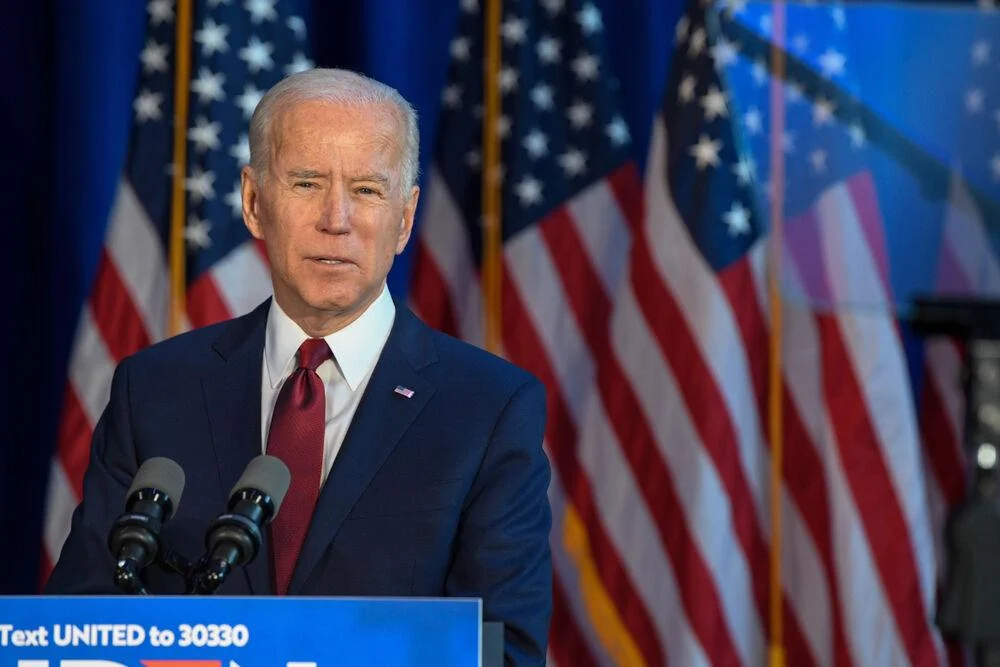
By Casey Harper | The Center Square The Iranian-backed terrorist group Hamas killed hundreds of Israelis and injured hundreds more in a barrage of surprise attacks early Saturday morning, just weeks after the Biden administration authorized $6 billion to the group’s biggest backer: Iran. The Hamas attack included a combination of thousands of missiles fired into Israel as well as Hamas terrorists who infiltrated Israel, killing and capturing civilians, according to reports from multiple news outlets and relevant governments. Iranian foreign ministry spokesperson Nasser Kanani praised Hamas after the attack. Immediately after the attacks, President Joe Biden took fire for releasing billions of dollars to Iran, a known backer of Hamas that funnels money to the terrorist group. “Just weeks ago, the Biden administration handed over $6 billion to Iran, and today, innocent Israelis were murdered by Iran-backed Hamas terrorists,” Sen. Marsha Blackburn, R-Tenn., said in a statement after the attacks. “We must continue to support our strongest ally in the Middle East and their right to defend themselves against these unprovoked, horrific attacks. I stand with Israel and join many around the world in praying for the safety and security of its people.” The Biden administration told Congress last month it released the billions of dollars that had been held up by U.S. sanctions as well as releasing five Iranian nationals detained in the U.S. in exchange for the release of five Americans detained in Iran. “Biden’s decision to release $6 billion in frozen assets to Iran serves as a stark reminder of the consequences that took place following the Iran Nuclear Agreement under the Obama/Biden administration,” Rep. Cory Mills, R-Fla., wrote on X, formerly known as Twitter. “This pattern is clear: each time funds are released to Iran, the largest state sponsor of terrorism, proxy militias in the region persistently launch attacks, aiming to destabilize and target Western allies and Americans. “Examining the precision and coordination of the recent attack, it’s highly plausible that the recent $6 billion, in addition to the many more billions made available to Iran after Biden lifted sanctions, provided the necessary funding to execute this assault,” Mills added. U.S. Treasury Under Secretary Brian Nelson said on X that the funds that were part of the September deal had not yet been spent and were reserved for humanitarian purposes only. Critics quickly pointed out that the money is fungible, and Iran’s knowledge of the coming money could have impacted how it spent other funds not under the U.S.’ watch. “All of the money held in restricted accounts in Doha as part of the arrangement to secure the release of 5 Americans in September remains in Doha,” he said. “Not a penny has been spent.” President Joe Biden addressed the attacks before reporters on Saturday. “You know, when I spoke with Prime Minister Netanyahu this morning, I told him the United States stands with the people of Israel in the face of these terrorist assaults,” Biden said. “Israel has the right to defend itself and its people. Full stop. There is never justification for terrorist acts. And my administration’s support for Israel’s security is rock solid and unwavering.” Republished with the permission of The Center Square.
White House cancels $9 billion in student debt for 125,000 Americans
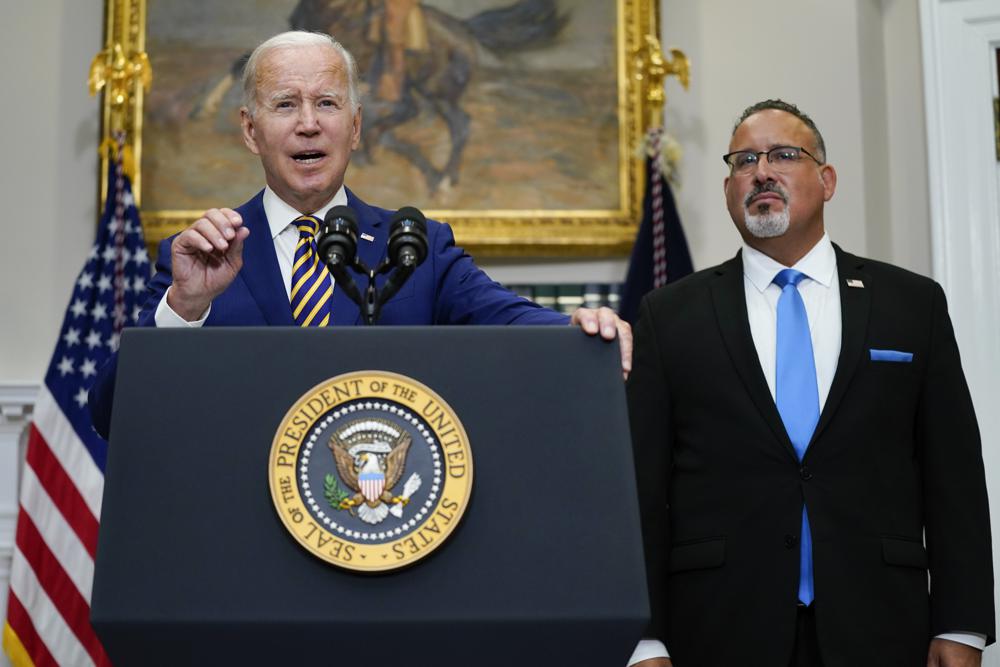
The White House announced Wednesday another round of student loan debt forgiveness months after the U.S. Supreme Court blocked a broader effort by President Joe Biden to cancel some student loan debts. Biden said that an additional 125,000 Americans were approved for $9 billion in debt relief through fixes made to income-driven repayment and Public Service Loan Forgiveness, and by canceling debt for borrowers with total and permanent disabilities. The administration’s plan provides $5.2 billion in additional debt relief for 53,000 borrowers under Public Service Loan Forgiveness programs, almost $2.8 billion in new debt relief for nearly 51,000 borrowers through fixes to income-driven repayment and $1.2 billion for nearly 22,000 borrowers who have a total or permanent disability who have been identified and approved for discharge through a data match with the Social Security Administration, according to the White House. In July, the Department of Education announced that $39 billion in federal student loan debt for about 800,000 borrowers would be discharged. In June, the U.S. Supreme Court struck down Biden’s plan to cancel hundreds of billions of dollars in debt through the HEROES Act. That plan would have forgiven $10,000 per qualifying borrower and up to $20,000 for Pell Grant recipients. In Biden v. Nebraska, the Supreme Court ruled the administration’s plan to cancel $10,000 in loan debt for people making up to $125,000 or married couples making up to $250,000 exceeded the scope of the 2003 HEROES Act. Chief Justice John Roberts wrote for the majority in the 6-3 ruling that the 20-year-old federal law allows “modest adjustments” in loan forgiveness programs but not sweeping changes that “transform them.” Republished with the permission of The Center Square.
Steve Scalise, Jim Jordan announce bids to replace Kevin McCarthy as Speaker of the House

By Casey Harper | The Center Square House Judiciary Chair Rep. Jim Jordan, R-Ohio, and Majority Leader Steve Scalise, R-La, both announced Wednesday their bid to replace Kevin McCarthy, R-Calif., as Speaker of the House. A vote for a new Speaker is reportedly not expected until Oct. 11, giving lawmakers about a week to plan their next move. McCarthy, who was pushed out after striking a deal with Democrats to keep the government open, said he does not plan to run again for the position. “I think Matt has planned this all along,” McCarthy told reporters. “It didn’t matter what transpired. He would’ve done it if we were in shutdown or not.” Scalise’s and Jordan’s announcement comes after a handful of House Republicans joined Democrats to oust Kevin McCarthy, R-Calif., from his role as Speaker of the House, the first time Congress has ever done so. Now, the House has until mid-November to elect a new Speaker and pass some kind of spending measure or face a government shutdown. Scalise sent a letter to House Republicans asking for their support. “Our strength as a Conference comes from our unity, and we have seen when we unite as a Conference, we can deliver wins for the American people,” the letter said. “Now we need to take those unified positions and work to extract conservative wins from the Democrat Senate and White House by leveraging upcoming deadlines. While we need to be realistic about what can be achieved, if we stay united, we can preserve leverage for the House to secure tangible wins in our impending policy fights.” Jordan sent a similar letter to his fellow Republicans asking for their support. “We must address rising crime in major cities and reject soft-on-crime, pro-criminal policies,” the letter said. “We must get our fiscal house in order and reduce spending so that we can leave more to the next generation than a crushing deficit. We must do our constitutional oversight of the federal bureaucracy to ensure they work for the American people not the other way around. And we must continue working to secure the border and protect our national security. “I respectfully ask for your support for Speaker of the House of Representatives,” the letter added. Jordan’s move was welcomed by some Republicans like Rep. Matt Gaetz, R-Fla., who filed the motion to oust McCarthy. “We should get to electing a new, more conservative and more trustworthy Speaker immediately,” Gaetz wrote on X, formerly known as Twitter. “I’m calling on [Patrick McHenry] who is currently the Speaker Pro Tem, to reconsider the decision that he just made to send everyone in Congress home for a week. This is not the time to go home for a week. We should stay and elect a new Speaker.” Other potential frontrunners to replace McCarthy include Majority Whip Tom Emmer, R-Minn., and Rep. Kevin Hern, R-Okla, who suggested he might run. Some lawmakers spoke out to make clear they are not running. “While I appreciate the confidence of some colleagues and their request that I step into the Speaker race, my team and I have been doing important work on the Homeland Security Committee – and we still have much more to do to hold President [Joe] Biden and Secretary [Alejandro] Mayorkas for one of the worst national security failures in the history of the country,” Rep. Mark Green, chair of the Homeland Security Committee, wrote on X. “Therefore, I am not throwing my name into the race,” he added. With the existing divide in the party, it may be impossible for any Speaker to be successful. “The most important issue facing the next House speaker is soaring federal debt pushing the nation to the brink of fiscal disaster,” Chris Edwards, an expert at the Cato Institute, told The Center Square. “Interest rates on 10-year government bonds have shot up far above projections to 4.8 percent and rising, which will raise the burden of accumulated debt to crushing levels. “America needs a new House speaker – and presidential candidates – who put spending restraint and debt reduction as top national priorities,” he added. Republished with the permission of The Center Square.
Kevin McCarthy ousted from speakership
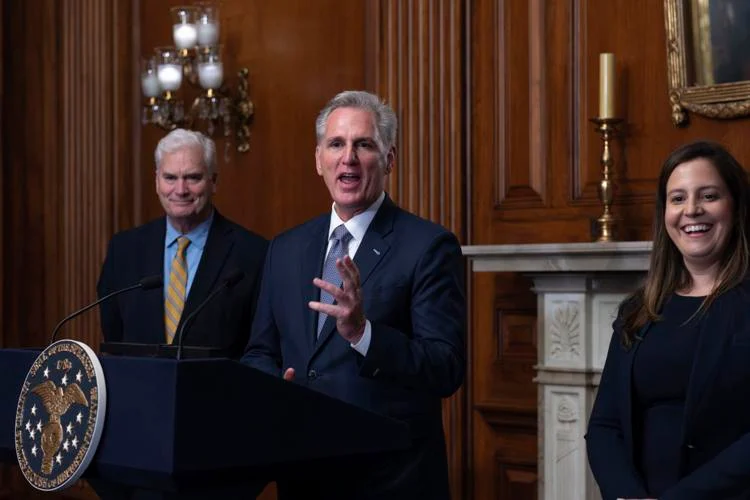
By Casey Harper | The Center Square The House of Representatives voted 216-210 Tuesday to vacate the Speakership, leaving the position open and likely kicking off a marathon of votes to either replace or reinstate California Republican Kevin McCarthy. A handful of House Republicans joined Democrats to oust McCarthy on Tuesday afternoon. McCarthy told reporters earlier Tuesday that he expected to survive the proceedings. As party leadership, he chose to bring the motion to vacate up quickly for a vote Tuesday afternoon. “You know, if I counted how many times somebody wanted to knock me out, I would have been gone a long time ago,” he told reporters. McCarthy only took on the speakership earlier this year after more than a dozen votes while holdout Republicans demanded concessions. One of those concessions was that a single lawmaker could file a motion to vacate the speakership and force a vote, something U.S. Rep. Matt Gaetz, R-Fla., started off when filing the motion to vacate late Monday. Gaetz said McCarthy broke his promises, pointing in particular to the latest Continuing Resolution to fund the government until mid-November. That deal with House Democrats provided for disaster relief and essentially maintained spending at current levels to buy more time just hours before a government shutdown over the weekend. McCarthy was able to whittle down the lawmakers who voted against him last time around to get the votes he needed to become Speaker, and he may be able to do it again unless another strong Republican successfully challenges him. Currently, there is no obvious choice to replace McCarthy. “I think Matt has planned this all along,” McCarthy told reporters. “It didn’t matter what transpired. He would’ve done it if we were in shutdown or not. I firmly believe it is the right decision to keep government open, to make sure our military is still paid, our border agents are still paid, and if that makes a challenge based upon whether or not I should be Speaker, I’ll take that fight.” Gaetz warned over the weekend that he would file the motion to vacate. He has demanded answers about an alleged side deal he says McCarthy made with the White House over more Ukraine funding, a sticking point and red line for some conservative Republicans who are unwilling to send the large sums overseas any longer. “I rise to raise a question,” Gaetz said from the House floor Monday. “What was the secret side deal on Ukraine? House Democrats and President [Joe] Biden have said that as Speaker McCarthy was asking Republicans to vote for a Continuing Resolution to take up the plus-up Ukraine money, that the Speaker of the House was actually cutting a side deal to bring Ukraine legislation to this floor with President Biden and House Democrats.” As The Center Square previously reported, Gaetz and other Republicans have pushed for passing all 12 appropriations bills in the traditional procedure instead of repeated Continuing Resolutions with topline numbers decided by a handful of members. But McCarthy says certain Republicans have slowed the appropriations process so that Congress did not meet the government shutdown deadline in time. Lawmakers passed several of those appropriations in the House already, though not enough to fully fund the government. Several were passed at the last minute last week before the shutdown. Now, the House must continue to hold votes for a new Speaker, with either McCarthy being reinstated or another taking his place all as the next shutdown deadline draws nearer. “I have enough Republicans where at this point next week one of two things will happen: Kevin McCarthy won’t be the Speaker of the House or he will be the Speaker of the House working at the pleasure of the Democrats,” Gaetz told reporters Monday evening. Republished with the permission of The Center Square.
Three judge panel to meet today to consider Alabama congressional maps
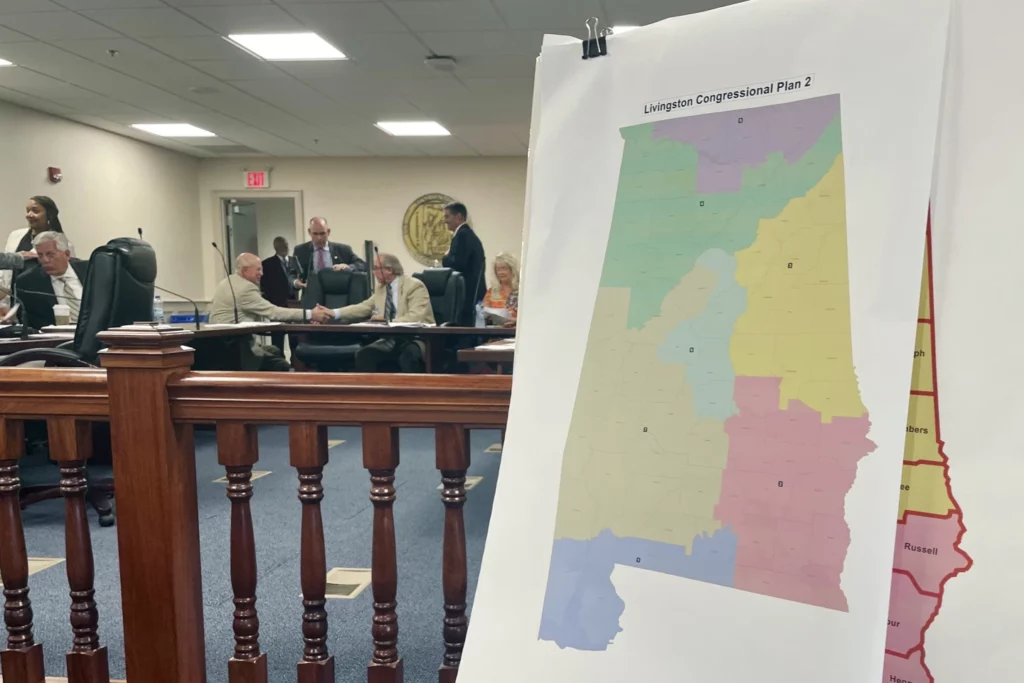
On Tuesday, a federal three-judge panel will meet to consider three Alabama congressional redistricting maps drawn by the court-appointed special master Richard Allen. The court appointed Allen after rejecting a map drawn by the Alabama Legislature in a July special session, which the judge said violates Section 2 of the Voting Rights Act of 1965. The court rejected a motion by Alabama Attorney General Steve Marshall to stay the proceeding while the State appeals. The U.S. Supreme Court has also rejected Marshall’s request for a stay. The three maps dramatically redraw Alabama’s Congressional Districts 1 and 2, putting Republican incumbents Jerry Carl and Barry Moore in the same districts. In the three plans, Congressional District 2 could have between 48.7% Black voters and 50.1%, depending on which plan the court approves. “We have an opportunity to elect a 2nd Democrat to the U.S. House, win state races, and re-elect President [Joe] Biden so that he may complete his historic agenda,” Alabama Democratic Party Chairman Randy Kelley said. “Alabama has benefited greatly from President Biden’s policies, including the Bipartisan Infrastructure Law, with over $3.2 billion allocated for roads, bridges, high-speed internet, and other major projects. We will do our part by winning seats for local, state, and national offices.” If one of these three maps is adopted, given the fact that over 80% of White Alabamians vote Republican and over 90% of Black Alabamians vote Democratic, this means that Democrats have a likely chance of winning Congressional District 2 in the 2024 election. The three maps comply with the three-judge panel’s order that the congressional redistricting map includes two majority-minority districts “or something close to it.” In 2021, the Alabama Legislature passed congressional redistricting that closely followed the existing seven congressional districts, which included one majority-minority district – the Seventh Congressional District. In 2022, the three-judge panel declared that the 2021 redistricting likely violated the Voting Rights Act of 1965 and ordered the Legislature to draw a new map. The state appealed to the Supreme Court, and the court stayed the order of the three-judge panel. In June, the Supreme Court ruled that the three-judge panel’s order had likely been right. In a 5 to 4 Supreme Court ruling, the Court remanded the case back to the three-judge panel who ordered the state legislature to prepare a new congressional redistricting map with two majority-minority districts “or something close to that.” In July, the Alabama Legislature met in a special session to consider redistricting. Instead of following the court’s orders, the Legislature merely increased the Black voting age population in CD2 from 30% to 39.9%. The three-judge panel accused the Legislature of defying the court and threw out the 2023 redistricting map. They then appointed a special master and ordered him to prepare new congressional redistricts for the state. He created three maps, all dividing Mobile County between Congressional District 1 and Congressional District 2 – something the Legislature claimed they could not do. Marshall has vowed to continue to appeal. To connect with the author of this story or to comment, email brandonmreporter@gmail.com.
Matt Gaetz threatens motion to vacate Kevin McCarthy, demands answers on alleged Ukraine deal
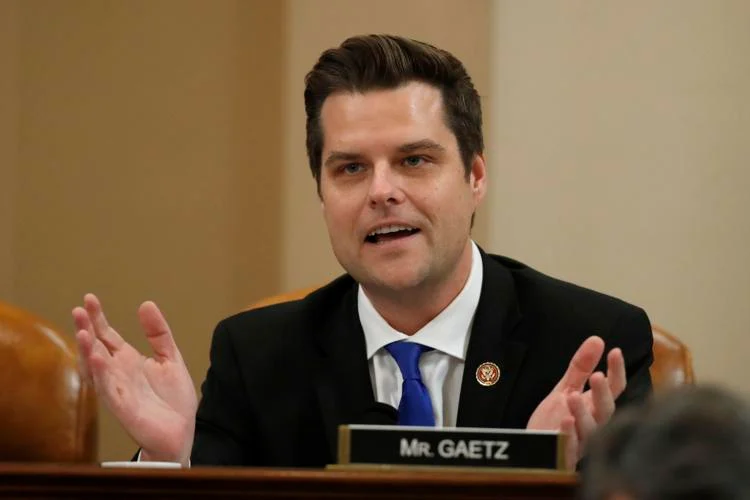
By Casey Harper | The Center Square U.S. House Speaker Kevin McCarthy worked with Democrats to fund the government with just hours to spare on Saturday, but that move may cost him his role as speaker. Now, Congress has bought itself about 45 more days to once again fund the government or face a shutdown, but possibly replacing a House speaker in that time would dramatically complicate that effort. U.S. Rep. Matt Gaetz, R-Fla., who has been McCarthy’s most outspoken critic, said on CNN’s “State of the Union” Sunday that he will file a motion to vacate McCarthy this week. Gaetz and some other Republicans have been adamant about no longer passing short-term spending resolutions and returning to the traditional method of passing a budget via 12 separate appropriations bills. “I think we need to rip off the Band-Aid,” Gaetz said. “I think we need to move on with new leadership that can be trustworthy.” However, Gaetz said before the motion on Monday that he wanted answers from McCarthy concerning an alleged “secret side deal on Ukraine” the Speaker made with President Joe Biden. “I rise to raise a question,” Gaetz said from the House floor Monday. “What was the secret side deal on Ukraine? House Democrats and President Biden have said that as Speaker McCarthy was asking Republicans to vote for a Continuing Resolution to take up the plus-up Ukraine money, that the Speaker of the House was actually cutting a side deal to bring Ukraine legislation to this floor with President Biden and House Democrats.” Gaetz went on to suggest those answers could help rally support for his anti-McCarthy effort. “There may be other votes coming today or later this week that could be implicated by the answers to these questions,” Gaetz continued. “Members of the Republican party might vote differently on a motion to vacate and if they heard what the Speaker had to share with us about his secret side deal with Joe Biden on Ukraine. I’ll be listening. Stay tuned.” McCarthy was narrowly elected as Speaker after more than a dozen votes as several conservative House Republicans held out, demanding concessions from leadership. One of those concessions was that a single disgruntled member could file a motion to remove McCarthy as Speaker. McCarthy has managed to avoid that motion so far, but the near shutdown of the government drew even more scrutiny of the Speaker and at least one Republican threatening to file the motion to remove McCarthy. On Friday, McCarthy put forward a Continuing Resolution that cut spending, bolstered the border, and kept the government open for another 30 days. A cadre of more than 20 Republicans voted against the measure, effectively killing it since no Democrats would support the spending cuts and border policies. The failure of that attempt raised concerns that the government would in fact partially shut down at midnight Sunday morning. But McCarthy called lawmakers back to work Saturday and passed a bipartisan “clean” 45-day extension, meaning current spending levels were extended with some funding for disaster relief. The Senate quickly approved the measure, and Biden signed it just before midnight. Notably, that measure omitted more funding for Ukraine in its war against the Russian invasion, a war that Republicans have become increasingly less willing to fund. After Gaetz’s ongoing opposition to McCarthy, some Republicans have discussed trying to oust him from his position. Gaetz is currently being probed by the ethics committee, and the findings of that inquiry could theoretically drum up the 2/3 support needed to oust a sitting lawmaker. The probe reportedly centers around allegations of public corruption, sexual misconduct, and drug use. Gaetz fired back in a fundraising post on X, formerly known as Twitter, on Monday afternoon. “They want to expel me from Congress for holding [Speaker McCarthy] to his own word,” Gaetz said. “They want me gone so they can spend your money and destroy our country without a battle. Help me fight back. Every little bit counts. Join my team. Fight with me.” Republished with the permission of The Center Square.
Democratic governors to Joe Biden: Migrant crisis is ‘untenable,’ border ‘too open’
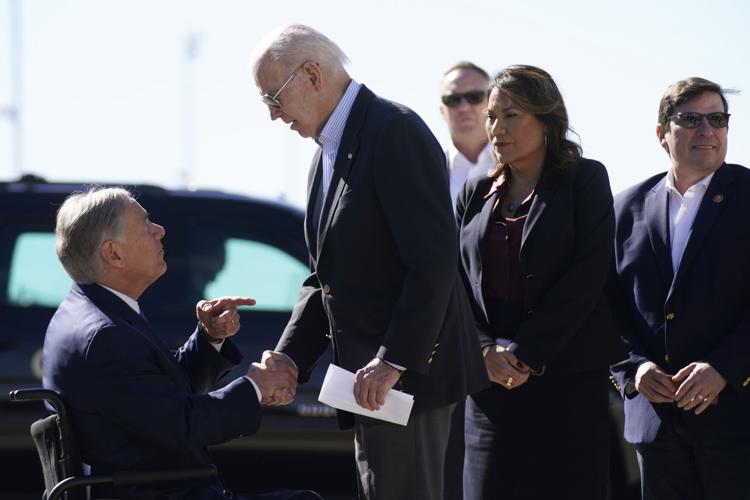
By Greg Bishop | The Center Square Illinois Gov. J.B. Pritzker is telling President Joe Biden the number of migrants arriving to Chicago from the southern U.S. border is accelerating. The situation is overwhelming, untenable and uncoordinated, he added. In a letter Pritzker sent the White House Monday, the governor said “the humanitarian crisis is overwhelming our ability to provide aid to the refugee population.” More than 15,000 migrants have arrived in Chicago in the past 13 months. With the letter, Pritzker joined a growing list of Democrats calling on the White House to do more. “Unfortunately, the welcome and aid Illinois has been providing to these asylum seekers has not been matched with support by the federal government,” the letter first reported by Capitol Fax said. “Most critically, the federal government’s lack of intervention and coordination at the border has created an untenable situation for Illinois.” Illinois taxpayers have covered more than $330 million on services for the migrants, a number Pritzker said is growing each day. “That’s a massive amount of money for a state still overcoming the health and economic effects of COVID-19,” Pritzker said. “Add to that the over $100 million the city of Chicago contributed.” Pritzker told Biden the situation is “untenable” and “requires your immediate help beyond the coming work authorizations for some of the asylum seekers.” The Biden administration should have one person provide oversight of the nation’s efforts at the border, Pritzker said, noting there are too many different federal department contacts who are not coordinated with each other. “A single office with an identified leader must be assigned to work for the cities and states across the silos of government to manage the challenges we all face,” Pritzker said. “It is time for the federal government to take a much more active role in managing the transport and destination of the transport of asylum seekers.” Pritzker said it is untenable to allow “just one state to lay the burden upon a certain few states run by Democrats …” While Texas Gov. Greg Abbott, a Republican, has been critical of Biden’s handling of the border by overseeing transportation of migrants crossing the southern U.S. border to Chicago, New York City, Washington D.C., and elsewhere, Democratic Mayor of El Paso Oscar Leeser has also been involved. In Arizona Monday, Gov. Katie Hobbs also expressed frustration with the flood of illegal border crossers and told The Center Square that the busing policy of some migrants from Arizona to other areas of the country is still in effect. “Yeah. As we’re seeing increases in folks coming in the NGO network at their capacity, we’re continuing to provide support, and that includes busing,” she said. In New York, a senior advisor to New York City Mayor Eric Adams urged Biden to “close the border.” “The federal government needs to do its job,” Adams’ advisor Ingrid Lewis-Martin told PIX 11. “We need the federal government, the Congress members, the Senate, and the president to do its job: Close the borders.” New York Gov. Kathy Hochul told CBS Sunday that the border “is too open right now.” “People coming from all over the world are finding their way through, simply saying they need asylum, and the majority of them seem to be ending up in the streets of New York, and that is a real problem for New York City,” she said. White House press secretary Karine Jean-Pierre addressed border security concerns. “You have a president that has delivered record funding, record funding to make sure that we have additional … border patrol federal employees at the border,” Jean-Pierre said. “We’ve made clear that attempting to cross the border unlawfully will result in prompt removal, a five-year ban on reentry, and potential criminal prosecution.” Among other recommendations Pritzker offered Biden include waiving fees for temporary protected status applications, increasing the logistical coordination and data collection, provide financial support to state, local government and non-government organizations for housing, food and social services, and approve Illinois’ requests for Medicaid waivers, housing vouchers, and federal coordination and support. “Today, Illinois stands mostly unsupported against this enormous strain on our state resources,” Pritzker said. “Mr. President, I urge you … and the rest of your administration to take swift action.” Republished with the permission of The Center Square.
Tommy Tuberville questions defense nominee about Afghanistan withdrawal and lax border security
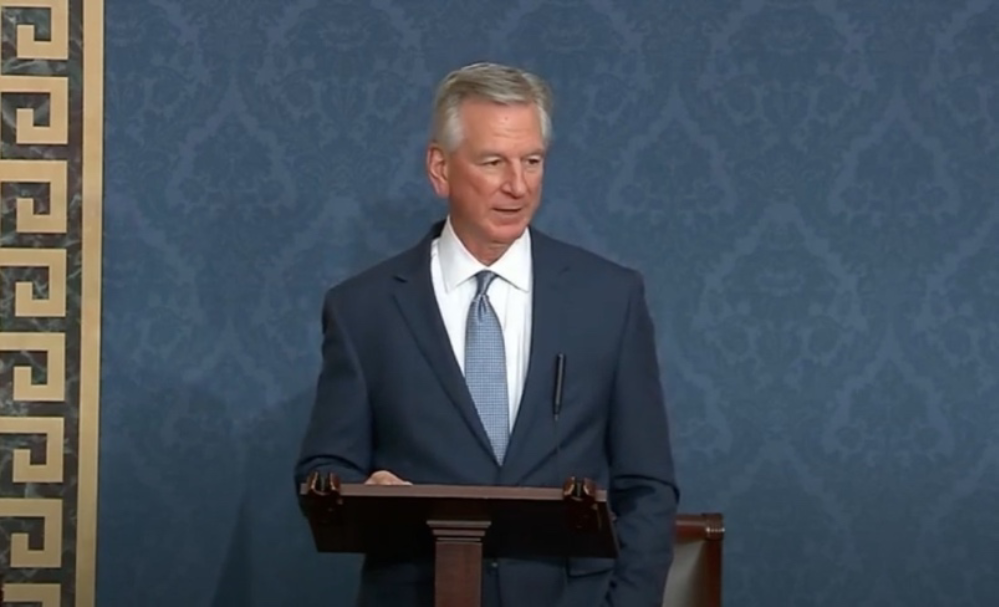
On Friday, U.S. Senator Tommy Tuberville (R-Alabama) questioned Joe Biden’s nominee for Under Secretary of Defense for Policy, Derek H. Chollet. Chollet was testifying before the Senate during his confirmation hearing before the Senate Armed Services Committee (SASC). Sen. Tuberville questioned Chollet on the Biden administration’s withdrawal from Afghanistan, why the Biden Administration has not secured the southern border, and why the Department of Defense has not done more to stop the flow of fentanyl coming across the Southern Border. Sen. Tuberville asked, “What do you think was the biggest misstep in the Afghanistan withdrawal in your thoughts after looking at it?” “I think there are so many lessons that we have to learn as a country [from] the 20-year engagement we had in Afghanistan. 2,400 troops lost 20,000 injured, $2 trillion spent,” Chollet answered. “It’s why I applaud what Congress did with the support of this committee – the leadership of this committee – to create the Afghan War Commission. And, if confirmed, I pledged to you that I will do whatever I can to support the work of that commission because it’s critically important that we learn the lessons and apply the lessons of that 20-year engagement in Afghanistan.” Tuberville asked, “So, do you think we made some mistakes in the withdrawal?” Chollet answered, “I think, Senator, that there, of course, were mistakes made over that 20-year period. Absolutely.” “We had less than 100 overdoses a year. Now fentanyl is number one in our state, and we will lose over a thousand people this year,” said Tuberville. “What do we tell the families [whose] kids are dying because of fentanyl – and we won’t do anything at the border. What do we tell them?” “I really appreciate you asking this question because shining a light on the scourge that is fentanyl and the damage it is doing in so many communities across this country is absolutely critical,” said Chollet. “I can say that State Department Secretary [Antony] Blinken has tried to make this into a global issue. Fentanyl is the number one killer of Americans 18 to 49, and it’s a problem that we cannot solve alone because of the elaborate supply chain that creates fentanyl that ends up in U.S. communities. So, just last week in New York, Secretary Blinken hosted a meeting of foreign ministers to talk about ways that countries can work together to try to fight the scourge of fentanyl because it’s not just the U.S. alone that is facing this challenge. Synthetic opioids are ravaging the Middle East and Asia as well. So, we have absolutely got to get at this problem. One of the things that I will do, if confirmed, at DoD is to understand DoD’s role and see what more DoD can do to get at this problem.” “It doesn’t seem like that we have everything in order from the DoD. In May, the Administration sent 1,500 troops to the border,” Tuberville stated. “In August, we pulled out 1,100. And a few days ago, we sent 800 back. If confirmed, I hope we get a little bit more consistency down there. I don’t know if you’ve been down there, but it’s a complete mess. We need to save our kids.” Chollet is the current counselor of the U.S. Department of State. President Biden has appointed him to serve as Under Secretary of Defense for Policy, and he is awaiting confirmation. Chollet’s confirmation is presently on hold due to Sen. Tuberville’s holds on Defense Department nominees due to the Senator’s objection to President Biden’s abortion policy. Tuberville asked Chollet about the current impasse between Tuberville and the White House. “From where I sit – look, we need our team on the field,” Chollet told Tuberville. “Given the challenges that we face in the world from the pacing threat from China and to the threat of Russia. We need all the team on the field. We can’t fight with one hand tied behind our back. The job that I have been nominated for – the senior civilian in the Pentagon – I am going to want my military teammates on the field as well. We need to get this resolved as quick as possible.” Senator Tuberville represents Alabama in the United States Senate and is a member of the Senate Armed Services, Agriculture, Veterans Affairs, and HELP Committees. He was first elected in 2020. To connect with the author of this story or to comment, email brandonmreporter@gmail.com.
Congress passes deal to keep government funded
On Saturday, the U.S. House of Representatives passed a continuing resolution (C.R.) to keep the U.S. government funded and avoid a crippling government shutdown. President Joe Biden signed the bipartisan C.R., giving both houses of Congress another 45 days to finish their 12 funding bills for the 2024 fiscal year, which began on October 1. U.S. Senator Tommy Tuberville blamed Senate Majority Leader Chuck Schumer (D-New York) for not bringing the bills to the floor for regular order. “I am glad that the government is not going to shut down. But this is no way to run a government. This entire spectacle up here never should have happened,” Sen. Tuberville said. “This Clown Show in Washington needs to learn how to govern. That means passing 12 appropriations bills, which a bipartisan group of Senators on the Appropriations Committee did a long time ago. But Chuck Schumer and the Democrats who run Washington don’t want to do that. We cannot lurch from crisis to crisis anymore. We need to finally get to regular order and govern like adults.” Sen. Katie Britt (R-Alabama) blamed President Biden for a lack of leadership. “After completely unnecessary political fire drills, ultimately both chambers were able to come together not only to keep the federal government open but reject President Biden’s misguided supplemental request,” said Sen. Britt. “Now, we will be able to pay our troops, the Border Patrol, and Capitol Police and help our neighbors in Florida and the people of Hawaii recover. We will continue the critical fight for border security while we work to pass responsible appropriations bills through regular order. In the coming weeks, I’ll work with my colleagues to advance spending measures that are judicious, strategic, transparent, and accountable.” Both Houses of Congress were working on a bipartisan C.R. to keep the government funded. The House of Representatives passed theirs Saturday afternoon in a 335 to 91 vote. Senate Majority Leader Mitch McConnell (R-Kentucky) then announced that the Republicans in the Senate would be withdrawing their support for the Senate bill and instead be backing the House bill. Congresswoman Terri Sewell (D-AL07) voted for the bipartisan 45-day C.R. “While I remain frustrated that my Republican colleagues have brought us to the brink of a costly and devastating government shutdown, I am grateful that Speaker [Kevin] McCarthy has finally chosen to work with Democrats at the last minute to extend government funding,” said Rep. Sewell. “While this measure is not perfect, it avoids deep cuts that House Republicans attempted to push through earlier this week and provides critical disaster relief funding that communities in Alabama depend on.” The House version of the C.R. was then voted on and passed by the Senate on Saturday night. The government is funded, but no deal has been reached on federal spending or addressing the crisis on the U.S. southern border. To connect with the author of this story or to comment, email brandonmreporter@gmail.com.
Congress passes stopgap funding bill, avoiding shutdown
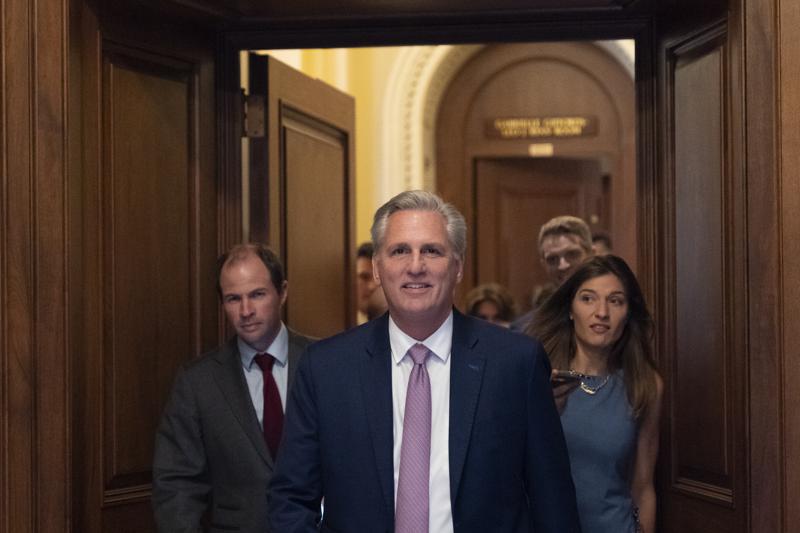
By Dan McCaleb | The Center Square President Joe Biden late Saturday night signed a stopgap funding bill that will temporarily keep the federal government open. The president’s signature came shortly after Republican House Speaker Kevin McCarthy, with a midnight Saturday deadline looming before a partial government shutdown, brokered a deal with Democrats on what he called a “clean funding bill.” The measure, which will keep the federal government open into mid-November, includes $16 billion in disaster relief funding but no additional financial aid for Ukraine, according to several national media outlets. It passed the House, 335-91, and then moved to the Senate, where it passed 88-9. “I just signed a law to keep the government open for 47 days. There’s plenty of time to pass Government funding bills for the next fiscal year, and I strongly urge Congress to get to work right away,” Biden tweeted. “The American people expect their government to work. Let’s make sure it does.” The brokered deal could have significant implications for McCarthy. The more conservative members of the House Republican caucus opposed the measure, and U.S. Rep. Matt Gaetz told CNN Sunday that he will try to remove McCarthy from his leadership post this week. Republished with the permission of The Center Square.
