
Donald Trump’s 100-days promises: Fewer than half carried out
Sure enough, the big trans-Pacific trade deal is toast, climate change action is on the ropes and various regulations from the Obama era have been scrapped. It’s also a safe bet President Donald Trump hasn’t raced a bicycle since Jan. 20, keeping that vow. Add a Supreme Court justice — no small feat — and call these promises kept. But where’s that wall? Or the promised trade punishment against China — will the Chinese get off scot-free from “the greatest theft in the history of the world”? What about that “easy” replacement for Obamacare? How about the trillion-dollar infrastructure plan and huge tax cut that were supposed to be in motion by now? Trump’s road to the White House, paved in big, sometimes impossible pledges, has detoured onto a byway of promises deferred or left behind, an AP analysis found. Of 38 specific promises Trump made in his 100-day “contract” with voters — “This is my pledge to you” — he’s accomplished 10, mostly through executive orders that don’t require legislation, such as withdrawing the U.S. from the Trans-Pacific Partnership trade deal. He’s abandoned several and failed to deliver quickly on others, stymied at times by a divided Republican Party and resistant federal judges. Of 10 promises that require Congress to act, none has been achieved and most have not been introduced. “I’ve done more than any other president in the first 100 days,” the president bragged in a recent interview with AP, even as he criticized the marker as an “artificial barrier.” In truth, his 100-day plan remains mostly a to-do list that will spill over well beyond Saturday, his 100th day. Some of Trump’s promises were obviously hyperbole to begin with. Don’t hold your breath waiting for alleged Army deserter Bowe Bergdahl to be dropped out of an airplane without a parachute, as Trump vowed he’d do at many of his campaign rallies. China’s leader got a fancy dinner, complete with “beautiful” chocolate cake at Mar-a-Lago this month, not the promised “McDonald’s hamburger” and humble pie. But many promises were meant to be taken seriously. Trump clearly owes his supporters a Mexico border wall, even if it doesn’t end up being a foot taller than the Great Wall of China. One page of his 100-day manifesto is devoted to legislation he would fight to pass in 100 days. None of it has been achieved. The other page lists 18 executive actions and intentions he promised to pursue — many on Day One. He has followed through on fewer than a dozen, largely through the use of executive orders, and the White House is boasting that he will set a post-World War II record when he signs more this week. That’s a change in tune. “We need people in Washington that don’t go around signing executive orders because they can’t get people into a room and get some kind of a deal that’s negotiated,” he declared in New Hampshire in March 2015. “We need people that know how to lead, and we don’t have that. We have amateurs.” Efforts to provide affordable child care and paid maternity leave, to make college more affordable and to invest in urban areas have been all but forgotten. That’s despite the advantage of a Republican-controlled Congress, which the White House failed to pull together behind Trump’s first attempt to repeal and replace “Obamacare.” An AP reporter who followed Trump throughout the presidential campaign collected scores of promises he made along the way, from the consequential to the fanciful. Here are some of them, and his progress so far: ___ ENERGY and the ENVIRONMENT: — Lift President Barack Obama‘s roadblocks on the Keystone XL and Dakota Access pipelines. Done. Keystone XL is revived and construction of the Dakota Access is completed. — Lift restrictions on mining coal and drilling for oil and natural gas. Done. Trump has unraveled a number of Obama-era restrictions and initiated a review of the Clean Power Plan, which aimed to restrict greenhouse gas emissions at coal-fired power plants. — Cancel payments to U.N. climate change programs and pull out of the Paris climate accord Nope. Trump has yet to make a decision on Paris. His aides are torn. ___ ECONOMY and TRADE: — Pass a tax overhaul. “Just think about what can be accomplished in the first 100 days of a Trump administration,” he told his supporters again and again in the final weeks of the campaign. “We are going to have the biggest tax cut since Ronald Reagan.” He promised a plan that would reduce rates dramatically both for corporations and the middle class. Nowhere close. Trump has scrapped the tax plan he campaigned on, and his administration’s new package is in its early stages, not only missing the first 100 days but likely to miss a new August deadline set by Treasury Secretary Steven Mnuchin. Some details may emerge this week. —Designate China a currency manipulator, setting the stage for possible trade penalties because “we’re like the piggy bank that’s being robbed. We can’t continue to allow China to rape our country, and that’s what they’re doing.” Abandoned. Trump says he doesn’t want to punish China when it is cooperating in a response to North Korean provocations. He also says China has stopped manipulating its currency for unfair trade advantage. But China was moving away from that behavior well before he took office. Also set aside: repeated vows to slap high tariffs on Chinese imports. —Announce his intention to renegotiate or withdraw from the North American Free Trade Agreement. Backtracked, in essence. A draft of his administration’s plan for NAFTA proposes only a mild rewrite. But in his AP interview, he threatened anew to terminate the deal if his goals are not met in a renegotiation. — Direct his commerce secretary and trade representative to identify all foreign trading abuses that unfairly hurt American workers. Done. Trump has initiated plenty of studies over the past 100 days. — Slap a 35 percent tariff on goods from
Once critical of global deals, Donald Trump slow to pull out of any
The “America First” president who vowed to extricate America from onerous overseas commitments appears to be warming up to the view that when it comes to global agreements, a deal’s a deal. From NAFTA to the Iran nuclear agreement to the Paris climate accord, President Donald Trump‘s campaign rhetoric is colliding with the reality of governing. Despite repeated pledges to rip up, renegotiate or otherwise alter them, the U.S. has yet to withdraw from any of these economic, environmental or national security deals, as Trump’s past criticism turns to tacit embrace of several key elements of U.S. foreign policy. The administration says it is reviewing these accords and could still pull out of them. A day after certifying Iran’s compliance with the nuclear deal, Secretary of State Rex Tillerson attacked the accord and listed examples of Iran’s bad behavior. His tone suggested that even if Iran is fulfilling the letter of its nuclear commitments, the deal remains on unsure footing. Yet with one exception — an Asia-Pacific trade deal that already had stalled in Congress — Trump’s administration quietly has laid the groundwork to honor the international architecture of deals it has inherited. It’s a sharp shift from the days when Trump was declaring the end of a global-minded America that negotiates away its interests and subsidizes foreigners’ security and prosperity. Trump had called the Iran deal the “worst” ever, and claimed climate change was a hoax. But in place of action, the Trump administration is only reviewing these agreements, as it is doing with much of American foreign policy. Douglas Brinkley, a presidential historian at Rice University, said Trump may be allowing himself to argue in the future that existing deals can be improved without being totally discarded. “That allows him to tell his base that he’s getting a better deal than Bush or Obama got, and yet reassure these institutions that it’s really all being done with a nod and a wink, that Trump doesn’t mean what he says,” Brinkley said. So far, there’s been no major revolt from Trump supporters, despite their expectation he would be an agent of disruption. This week’s reaffirmations of the status quo came via Tillerson’s certification of Iran upholding its nuclear deal obligations and the administration delaying a decision on whether to withdraw from the Paris climate accord. The president had previously spoken about dismantling or withdrawing from both agreements as part of his vision, explained in his inaugural address, that “every decision on trade, on taxes, on immigration, on foreign affairs will be made to benefit American workers and American families.” The Iran certification, made 90 minutes before a midnight Tuesday deadline, means Tehran will continue to enjoy relief from U.S. nuclear sanctions. Among the anti-deal crowd Trump wooed in his presidential bid, the administration’s decision is fueling concerns that Trump may let the 2015 accord stand. Tillerson on Wednesday sought to head off any criticism that the administration was being easy on Iran, describing a broad administration review of Iran policy that includes the nuclear deal and examines if sanctions relief serves U.S. interests. The seven-nation nuclear deal, he said, “fails to achieve the objective of a non-nuclear Iran” and “only delays their goal of becoming a nuclear state.” On the climate agreement, the White House postponed a meeting Tuesday where top aides were to have hashed out differences on what to do about the non-binding international deal forged in Paris in December 2015. The agreement allowed rich and poor countries to set their own goals to reduce carbon dioxide and went into effect last November, after the U.S., China and other countries ratified it. Not all of Trump’s advisers share his skeptical views on climate change — or the Paris pact. Trump’s position on trade deals also has evolved. He had promised to jettison the North American Free Trade Agreement with Mexico and Canada unless he could substantially renegotiate it in America’s favor, blaming NAFTA for devastating the U.S. manufacturing industry by incentivizing the use of cheap labor in Mexico. Now his administration is only focused on marginal changes that would preserve much of the existing agreement, according to draft guidelines that Trump’s trade envoy sent to Congress. The proposal included a controversial provision that lets companies challenge national trade laws through private tribunals. Trump has followed through with a pledge to pull the U.S. out of the Trans-Pacific Partnership, a sweeping free trade deal President Barack Obama negotiated. The agreement was effectively dead before Trump took office after Congress refused to ratify it. Even Trump’s Democratic opponent in the presidential race, Hillary Clinton, opposed the accord. But on NATO, Trump has completely backed off his assertions that the treaty organization is “obsolete.” His Cabinet members have fanned out to foreign capitals to show America’s support for the alliance and his administration now describes the 28-nation body as a pillar of Western security. Republished with permission of The Associated Press.
Repeal and replace — The end of traditional conservatism
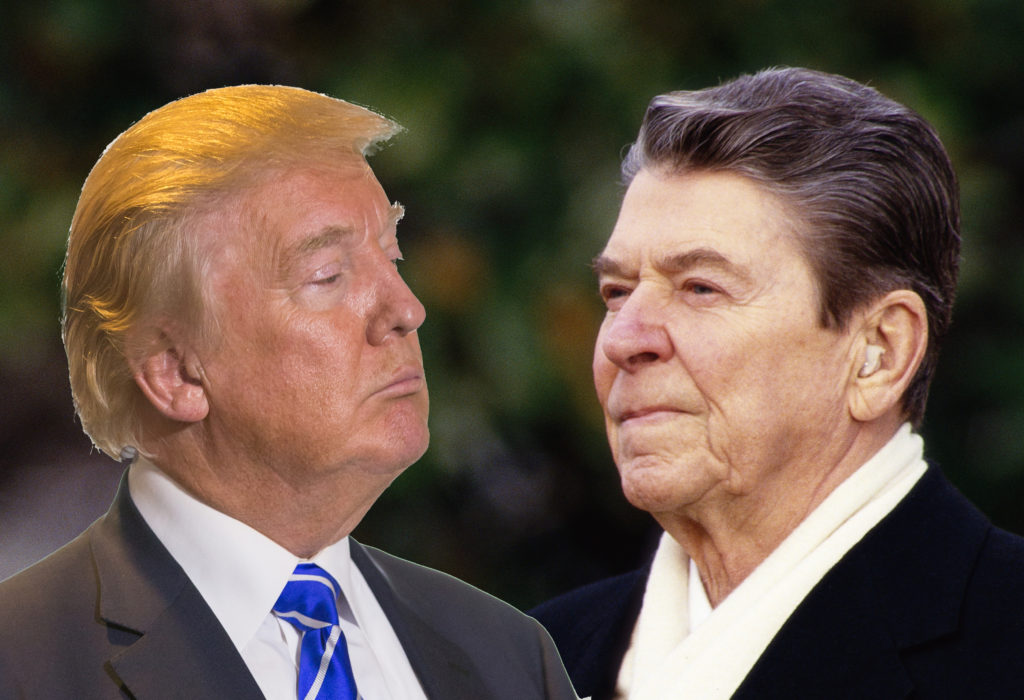
As a lifelong Republican and a former Fellow at the conservative Heritage Foundation, I have always preferred voting for the Republican and conservative candidate. Preferably, the candidate is both Republican and conservative, although that is not always the case. For only the second time in my life, I did not vote for the Republican presidential nominee: I found him neither Republican nor conservative. I know there are different strands of conservatism: classical, neo-cons, libertarians, religious and economic conservatives. I found Donald Trump to be none of the above. Trump did appeal to conservatives by supporting regulatory reform, lower taxes, unleashing the private sector and rolling back the administrative state. At the same time, Trump supported existing entitlements like Social Security and Medicare, which he called untouchable, and backed new entitlements like a paid family leave program. Until the election of Trump, Republicans venerated Ronald Reagan and his brand of conservatism. This included support for free trade, a centerpiece of conservative economic policy. Trump has denounced free trade by withdrawing from the Trans-Pacific Partnership which conservatives uniformly backed. Trump also plans to end the North American Free Trade Agreement (NAFTA) which Republicans helped to pass. Another litmus test for modern conservatism was for America to play a major role in world affairs. Reagan addressed the first Conservative Political Action Committee (CPAC) meeting in 1974 and argued that America “cannot escape our destiny, nor should we try to do so.” Reagan cited Pope Pius XII’s remarks after World War II that “Into the hands of America, God has placed the destinies of mankind.” Under Trump, American First has become the guiding philosophy. Republicans and conservatives have generally opposed entitlements and big government. Trump has made Social Security and Medicare untouchable, even though most conservatives believe these programs are not sustainable given the demographic changes in American society. Trump has called for a $1 trillion infrastructure bill, in addition to an expansive family leave policy. How do you pay for these entitlements and increase defense spending while cutting taxes? Shortly after being elected president, Trump helped negotiate a deal with Carrier in Indiana that promised government benefits to Carrier in exchange for keeping jobs in Indiana. That deal struck many conservatives as another example of “crony capitalism.” The government picks and chooses winners and losers instead of letting market forces work their will. Where most presidents have had a shaky relationship with the press, Trump is the first to call the press “enemies of the American public.” Where Reagan called the Soviets the “evil empire,” Trump has praised Vladimir Putin and asserted the moral equivalency between American and Soviet policy. Trump clearly has flip-flopped back and forth between the Democratic and Republican Party, but has actually spent more time as a Democrat. He only registered as a Republican a couple of years before announcing his candidacy. Trump may or not be a lifetime member of the GOP, but has he held consistent conservative values? Let’s look at his own words and actions. At the 2016 CPAC meeting, delegates threatened to walk out if Trump appeared. He was viewed as a false prophet of conservatism and he eventually withdrew as a speaker. At the 2017 CPAC meeting, Trump was hailed as the conquering hero. A full 86 percent of the delegates approved of Trump’s job performance and 80 percent believed Trump was “realigning the conservative movement.” As presidential counselor Kellyanne Conway observed, “well, I think by tomorrow this might be TPAC.” During his 48-minute address to the 2017 CPAC delegates, Trump no mention of Reagan, who has been the face of the modern conservative movement for four decades. Trump made no mention of “liberty” or the “constitution.” Trump made no reference to keeping government small and limited, and only once uttered the word “conservative,” which seemed odd for an audience of conservatives. Trump said: “Our victory was a victory. . . for conservative values.” The one common thread between Reagan and Trump was their appeal to working-class Americans. In 1977, Reagan told CPAC: “The New Republican Party I am speaking about is going to have room for the man and the woman in the factories, for the farmer, for the cop on the beat.” In his 2017 CPAC address, Trump said: “The GOP will be, from now on, the Party of the American worker. … We will not answer to donors or lobbyists or special interests.” (Although, being a billionaire will be considered an asset for all cabinet nominees.) One congressional staffer, after hearing Trump’s CPAC speech, called him “a moderate disguised as a conservative.” Conservative radio host John Ziegler described Trump’s CPAC speech as having the tone “it was written from a liberal perspective, in that greater government involvement was the foundational answer for nearly every problem.” Another delegate described Trump as “a fairly liberal conservative,” whatever that may mean. If CPAC is any indication, Trump is reshaping the conservative movement at breathtaking speed. Ideology is conforming to an individual, and not vice versa. “Repeal and Replace” was the centerpiece of Trumpism. We all thought he was referring to “Obamacare.” Now we know that “repeal and replace” referred to conservatism in America. Traditional conservative values have been abandoned and replaced by whatever Trump happens to say today. ___ Darryl Paulson is Emeritus Professor of Government at the University of South Florida in St. Petersburg.
Commerce nominee Wilbur Ross declares he is pro-trade, pro-union
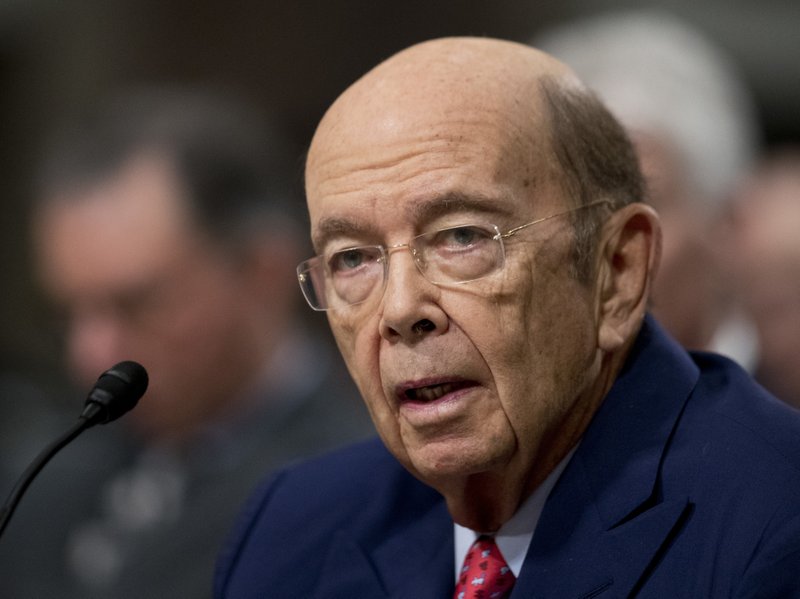
President-elect Donald Trump‘s pick for commerce secretary said Wednesday that he favors “sensible trade,” is pro-union and believes his vast business dealings have given experience fighting other countries’ unfair trade practices. Billionaire investor Wilbur Ross cited his relationship with the United Steelworkers Union, which has endorsed him for the Cabinet post, as proof that he will work to protect American jobs. “I’m pro-trade. But I’m pro-sensible trade, not trade that is detrimental to the American worker and to the domestic manufacturing base,” Ross told the Senate Commerce, Science and Transportation Committee. “I think I’ve probably had more direct experience than any prior cabinet nominee has had with unfair trade in the steel business, in the textile business, in the auto parts business and other sectors,” Ross said. Worth an estimated $2.9 billion, Ross has extensive business ties around the globe. Supporters say that makes him ideal to represent American business interests abroad. “I believe his extensive management experience in the private sector, and his understanding of the challenges faced by workers and businesses alike, will equip him well for the job of leading the Department of Commerce,” said Sen. John Thune, R-S.D., the committee chairman. During Ross’ hearing, Thune revealed that Ross had a household employee from 2009 to 2016 who could not provide documentation that he or she was in the U.S. legally. Ross said the employee provided a driver’s license and a Social Security number when hired. Ross said he rechecked the documentation for all of his household employees after he was nominated, and the employee could not provide it. Ross said the employee was fired. “We did the best that we thought we could do in order to verify the legality of the employment and it turned out that was incorrect,” Ross said. “But we did pay all the withholdings, so did that employee.” Such transgressions have derailed cabinet nominees in the past. But Sen. Bill Nelson of Florida, the top Democrat on the committee, questioned Ross only briefly about it. Trump has said Ross will play a big role in American trade policy. Trump’s views on trade are at odds with many congressional Republicans. He has pledged to re-negotiate existing trade deals and scrap a pending one with Asian countries. Ross said the North American Free Trade Agreement, involving the U.S., Canada and Mexico, “is logically the first thing for us to deal with.” “That will be a very, very early topic in this administration,” Ross added. The commerce secretary has several roles in promoting American business interests in the U.S. and abroad. The department works on trade issues, working to attract foreign investment in the U.S. The department also oversees agencies that manage fisheries, weather forecasting and the Census Bureau, which will conduct a census in 2020. Ross said he has unique experience at that agency; he was a census-taker while he attended business school. Unlike the president-elect, Ross has agreed to divorce himself from a vast financial empire. Ross has signed an ethics agreement with the Office of Government Ethics. In it, he agrees to divest from 40 different businesses and investments within 90 days of being confirmed. He agreed to divest from 40 more within 180 days. Among the businesses he will separate himself from is WL Ross & Co., the private equity firm he founded in 2000. Trump has had a run-in with the head of the ethics agency because he says he won’t completely divest himself from his business empire. Instead, Trump says he will turn control of his business over to his sons. Walter Shaub Jr., who directs the office, said Trump’s plan is insufficient to avoid conflicts of interest. Nelson praised Ross for divesting from most of his personal holdings. “I believe that’s the right thing to do and it tells me you’re committed to doing the job the right way by placing the public’s interests ahead of your own,” Nelson said. “It’s my hope that President-elect Trump will follow your lead and the example you set.” Republished with permission of The Associated Press.
GOP team addresses America Saturday
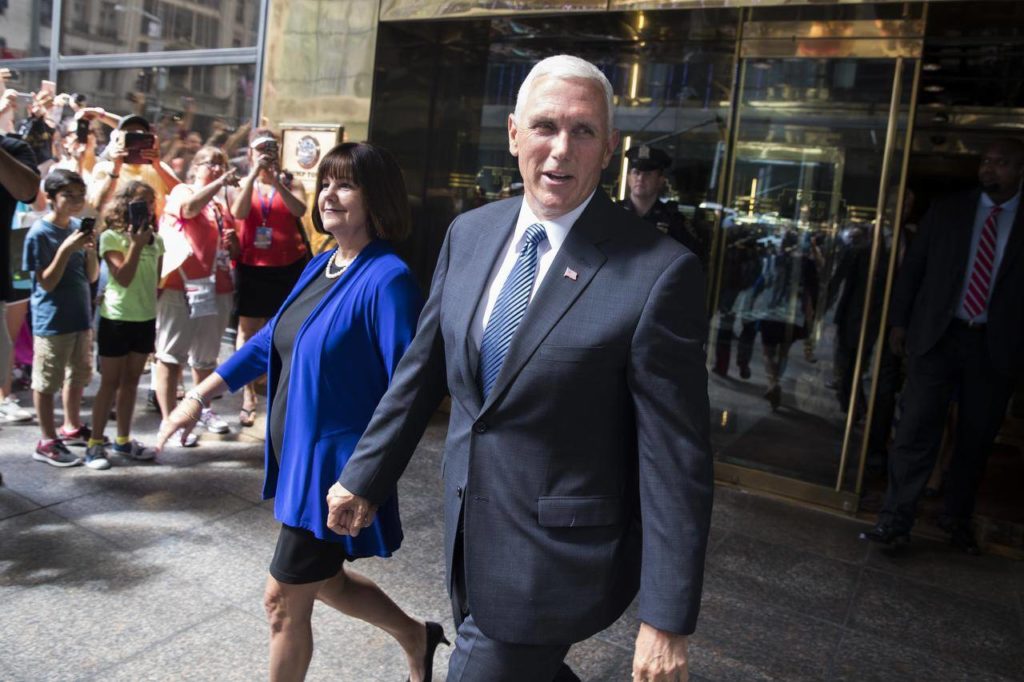
After frenzied, final decision-making, Donald Trump announced Indiana Gov. Mike Pence as his running mate Friday, adding an experienced politician with deep Washington connections to the Republican presidential ticket. Trump’s pick was aimed in part at easing some Republicans’ concerns about his temperament and lack of political experience. Pence spent 12 years in Congress before being elected governor and his demeanor is as calm as Trump’s is fiery. While some conservatives are skeptical of Trump’s political leanings, Pence has been a stalwart ally on social issues. Yet Pence is largely unknown to many Americans. And his solidly conventional political background runs counter to Trump’s anti-establishment mantra. The two men scheduled a news conference for Saturday in New York to present themselves to America as the Republican team that will take on Hillary Clinton and her Democratic running mate in November. The duo will head to Cleveland next week for the Republican National Convention. As Pence arrived for a private meeting with Trump Friday, he told reporters he “couldn’t be more happy for the opportunity to run with and serve with the next president of the United States.” In choosing Pence, Trump appears to be looking past their numerous policy differences. The governor has been a longtime advocate of trade deals such as NAFTA and the Trans-Pacific Partnership, both of which Trump aggressively opposes. Pence also has been critical of Trump’s proposed temporary ban on foreign Muslims entering the United States, calling the idea “offensive and unconstitutional.” The reaction to the Pence choice from Republican officials was overwhelmingly positive — no small feat for Trump, given how polarizing he’s been within his own party. “It was a pick that clearly shows he is pivoting to the general election,” said GOP chairman Reince Priebus, who was in the midst of an interview with The Associated Press when Trump announced his decision. “He is choosing a person who has the experience inside and outside Washington, Christian conservative, very different style that I think shows a lot of maturity.” Pence, a staunchly conservative 57-year-old, served six terms in Congress before being elected governor and could help Trump navigate Capitol Hill. He is well-regarded by evangelical Christians, particularly after signing a law that critics said would allow businesses to deny service to gay people for religious reasons. Clinton’s campaign moved quickly to paint him as the “most extreme pick in a generation.” “By picking Mike Pence as his running mate, Donald Trump has doubled down on some of his most disturbing beliefs by choosing an incredibly divisive and unpopular running mate,” said John Podesta, Clinton’s campaign chairman. Clinton spent Friday holding meetings in Washington about her own vice presidential choice. Massachusetts Sen. Elizabeth Warren, a favorite of liberals and one of the Democrats’ most effective Trump critics, and Colorado Gov. John Hickenlooper, were seen in separate cars that left Clinton’s home. Housing Secretary Julian Castro also met with Clinton, according to a person familiar with the meeting who spoke on condition of anonymity to describe the private gathering. Trump spent weeks weighing vice presidential contenders, including former House Speaker Newt Gingrich and New Jersey Gov. Chris Christie, and only zeroed in on Pence in recent days. In fact, the selection process appeared on the verge of sliding out of control in the final hours before the announcement, sparking speculation that Trump might be changing his mind. Word that Pence would be joining the Republican ticket began trickling out in news reports Thursday before Trump had made a final decision or called Pence to offer him the job, according to a Republican familiar with the situation. Trump was in California for fundraisers, separated from his closest aides, and was fuming about leaks that he viewed as an attempt to pressure him into the decision. Still, Trump called Pence Thursday afternoon to offer him the job and ask him to fly to New York for a Friday morning news conference. Pence accepted and boarded a private plane, along with his wife. A few hours later, a huge truck barreled through a crowded holiday celebration in Nice, France, killing more than 80 people. With Pence sitting in a New York hotel, Trump decided to postpone the announcement. The billionaire businessman then went on Fox News to say he had not yet settled on his “final, final” choice. He also held a midnight conference call with his top aides to discuss the situation, according to two people with knowledge of the call. By Friday, plans were back on track. Trump sent out a Twitter message saying he was pleased to announce Pence as his running mate. Moments later, one of Pence’s aides filed paperwork with the Indiana Secretary of State’s office withdrawing him from the governor’s race. Pence was up for re-election, and state law prohibits candidates from being on ballots in two contests. Trump’s formal announcement came about an hour before Pence’s noon Friday deadline for withdrawing. Paul Manafort, Trump’s campaign chairman, strongly rejected suggestions that the candidate considered changing his mind about Pence. “Never waffled once he made his decision,” Manafort wrote in an email. Gingrich, one of the finalists for the vice presidential spot, said he was “very comfortable” with Trump’s decision and praised Pence as someone who could help unite the party. But as of Friday afternoon, Gingrich had yet to share his support with Trump himself. He told The Associated Press he had not received a call from Trump telling him he wasn’t getting the job. Meanwhile, Trump did speak with Christie, according to a person familiar with their conversation. Ironically, Christie traveled with Trump to Indiana in April to help introduce the candidate to Pence when Trump was trying to win his endorsement ahead of India’s primary. Pence endorsed Trump’s rival Ted Cruz instead. Republished with permission of the Associated Press.
Donald Trump takes on trade deals in Pennsylvania speech
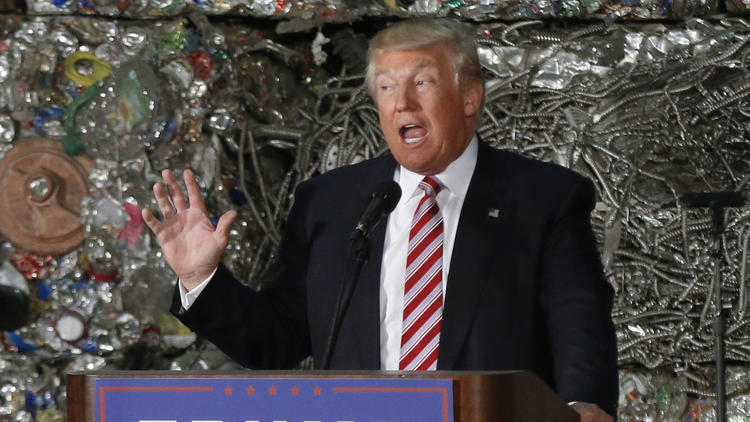
Republican Donald Trump took aim at U.S. free trade deals in a speech delivered in Western Pennsylvania Tuesday that painted his likely Democratic rival Hillary Clinton as a champion of the kind of globalization that has pushed manufacturing jobs overseas. “This wave of globalization has wiped out totally, totally our middle class,” said Trump, standing in front of stacks of compressed metal on the floor of Alumisource, a plant that provides aluminum scrap and other raw materials to the aluminum and steel industries. “It doesn’t have to be this way. We can turn it around and we can turn it around fast.” The speech, delivered in the heart of America’s struggling rust belt, stressed a central premise of his campaign: that global free trade – a Republican Party staple for decades – has hurt American workers because deals have been negotiated poorly. Trump has vowed to bring back manufacturing jobs, in part, by slapping tariffs on goods produced by companies that move manufacturing jobs offshore. It’s a message that he’s hoping will continue to resonate with the white, working class voters, who powered his primary campaign. Trump, in his speech, portrayed Clinton as an agent of a status quo “that worships globalism over Americanism” and criticized her past support for the Trans-Pacific Partnership, which he described as “the deathblow for American manufacturing.” He said the North American Free Trade Agreement, which was signed by Bill Clinton, was a “disaster” and pointed to the Clintons support for normalizing trade relations with China. He said that, as president, he would dramatically overhaul the way the country approaches trade, threatening to wield new tariffs and taxes to push his way. “Ladies and gentlemen, It’s time to declare our economic independence once again,” he said. He vowed to renegotiate North American Free Trade Agreement to get a better deal “by a lot, not just a little,” for American workers – and threatened to withdraw the U.S. from the deal if his proposals aren’t agreed. “We already have a trade war. And were losing badly,” Trump said. The setting was a change of scenery for the presumptive GOP nominee. It’s a change of setting for Trump, who typically favors his own ritzy golf clubs and ballrooms for formal speeches. Monessen, the sleepy manufacturing city of about 7,500 about an hour south of Pittsburgh, has been especially hard-hit by the decline in steel industry. The speech comes as Trump, facing sliding poll numbers and a far larger Clinton operation, is working to re-tool his message for the general election. In addition to a slew of new hires, Trump has been delivering a series of prepared speeches aimed at calming the nerves of GOP donors and others concerned about his often combative style. Clinton’s positon on trade has been a frequent attack line for Trump. Clinton announced her opposition to the Pacific trade deal last October, saying it failed to meet her test of providing good jobs, rising wages and protecting national security. She raised specific concerns about a potential for currency manipulation by China and provisions that she said would benefit pharmaceutical companies at the expense of patients. That marked a striking reversal for the former secretary of state, who promoted the deal in dozens of appearances during Obama’s first term. During a 2012 trip to Australia, she called it the “gold standard in trade agreements.” Video clips of Clinton talking about the trade deal are stored on YouTube, giving her opponents footage that could be used in television ads to highlight her shifting positions. Trump heads later to St. Clairsville, Ohio, for a rally at the eastern campus of Ohio University. It will be Trump’s first visit to the crucial battleground state since he secured enough delegates to become his party’s presumptive nominee. Trump will also stop in Wheeling, West Virginia, for an invitation-only fundraiser with coal magnate Robert Murray. Trump has promised to revive the coal industry, while Clinton has emphasized cleaner fuel sources. Republished with permission of The Associated Press.
House approves fast-track trade bill with little Alabama support
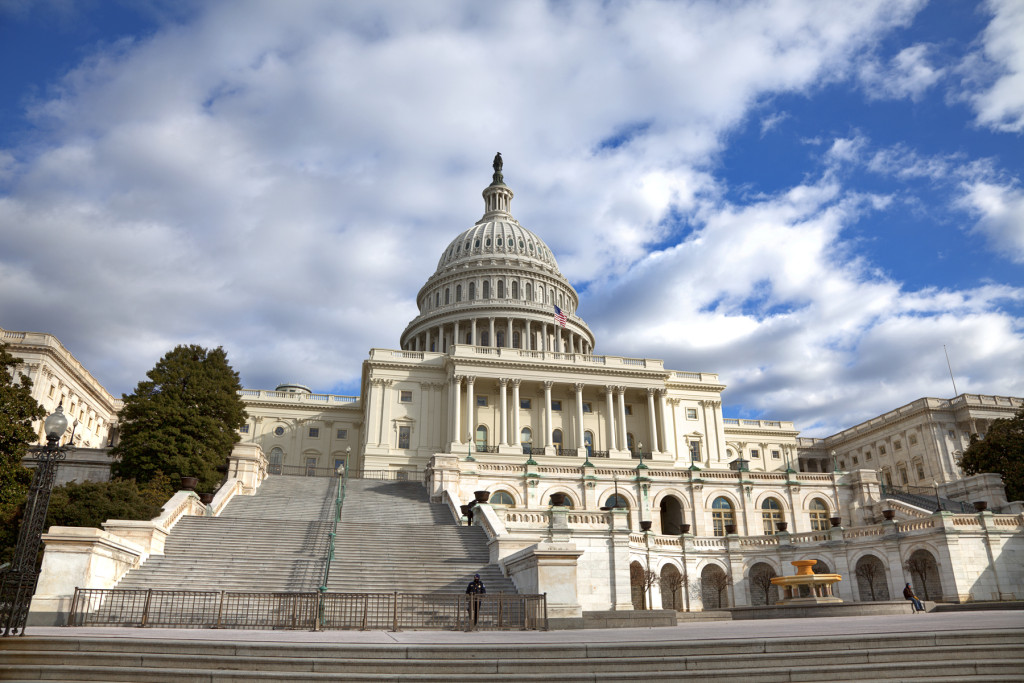
The House took the first of many steps toward reviving President Barack Obama‘s trade agenda Thursday, by narrowly passing controversial fast-track trade authority for the President. The 218-208 vote, with three of Alabama’s seven members voting yes, came less than a week after the trade legislation was quashed by the President’s own party. In last week’s vote, House GOP leadership paired the fast-track bill, Trade Promotion Authority (TPA), with a measure known as Trade Adjustment Assistance (TAA), which gives aid to workers displaced by trade. Both measures needed to be approved in separate votes for the entire package to move forward. Thursday’s vote stripped the fast-track bill of the the worker assistance provisions while still granting the president fast-track authority to negotiate a massive, 12-nation Trans-Pacific Partnership (TPP) trade deal. The bill now moves on to the Senate, where White House and GOP leaders are standing by, hoping to make a deal with pro-trade Democrats. Here’s a quick look at how the members of the Alabama Delegation voted and statements from their office: Representative Bradley Byrne (R – 01): Did not vote Representative Martha Roby (R – 02): Voted for TPA Representative Mike Rogers (R – 03): Voted for TPA Representative Robert Aderholt (R – 04): Voted against TPA Representative Mo Brooks (R – 05): Voted against TPA Representative Gary Palmer (R – 06): Voted against TPA Representative Terri A. Sewell (D – 07): Voted for TPA Roby: “There’s no question that trade supports jobs in Alabama, and it’s our responsibility to make sure trade agreements we enter into benefit American workers and serve our nation’s strategic global interests,” Rep. Roby said. “That’s why this Trade Promotion bill is important. It puts Congress in a much better position to ratify good multi-lateral trade agreements and to stop bad ones.” Sewell: “I continue to believe that President Obama should be given the same trade promotion authority as past Presidents. I trust that President Obama will do right by the American people, and the people of Alabama’s 7th Congressional District. President Obama has our backs, and we should have his. “President Obama has been unwavering in his support for promoting fair trade that protects American jobs and workers. I trust that President Obama will continue to protect the interests of the nation he has been elected to serve, and to uphold the values we hold dear. “I am deeply disappointed that Congress has yet to reauthorize the Trade Adjustment Assistance (TAA). TAA is a vital lifeline for displaced workers that provides the needed resources for training, employment services, and relocation allowances. Globalization and automation — irrespective of trade agreements — have created a need for greater support services for workers who lost their jobs through no fault of their own. It is my hope that my colleagues will reconsider the TAA vote because I strongly believe that TPA and TAA go hand in hand.”
