
Robert McCollum running for Probate Judge of Tallapoosa County

Businessman Robert McCollum on Monday announced his candidacy for Judge of Probate in Tallapoosa County. “I am Robert McCollum. I am formally announcing my candidacy for the Republican nomination for Probate Judge of Tallapoosa County,” McCollum said in a statement. “I was born and raised in Tallapoosa County.” “I have grown to love and care about my community,” McCollum said. “As your Probate Judge, I will strive to serve my fellow citizens as a fair and just judge in the cases of estate settlements, adoptions, guardianships, etc. I will represent my fellow citizens in a way that will make them proud.” McCollum promised, “As your probate judge, I will maintain election integrity by ensuring as well as providing proof of paper ballot and no machines are connected to the internet. I will also strive to protect the county from any cyber-attacks, and we will not even consider paying any ransom to those behind it.” McCollum expressed his concern that the people of Alabama and Tallapoosa County are too heavily taxed. “Lastly, I will work with the county commission to lower the tax on vehicles and put money back in the citizens of this county’s pocket to help them during times of rising cost of living,” McCollum said. “I will be a watchman against wasteful spending of your tax dollars in Tallapoosa County.” Robert McCollum was previously a candidate for Public Service Commission in 2022. He lost in the Republican primary runoff to popular incumbent Commissioner Chip Beeker. McCollum is a Horseshoe Bend High School graduate and a small business owner. “I was in everything from construction to truck rental and vending machines,” McCollum said. “I enjoyed every minute of it.” McCollum will be challenging incumbent Talmadge East in the Republican primary. East has served as a probate judge since 2018. He previously worked as the political director for Steve Marshall for Attorney General. He was a businessman and previously worked for the West Virginia Legislature. The Republican primary will be on Tuesday, March 5, 2024. The Alabama Republican Party says that the Executive Committee has not yet voted on when candidate qualifying with the party will formally begin. To connect with the author of this story or to comment, email brandonmreporter@gmail.com
Alabama rushes to adopt new congressional map amid disagreement on what district should look like
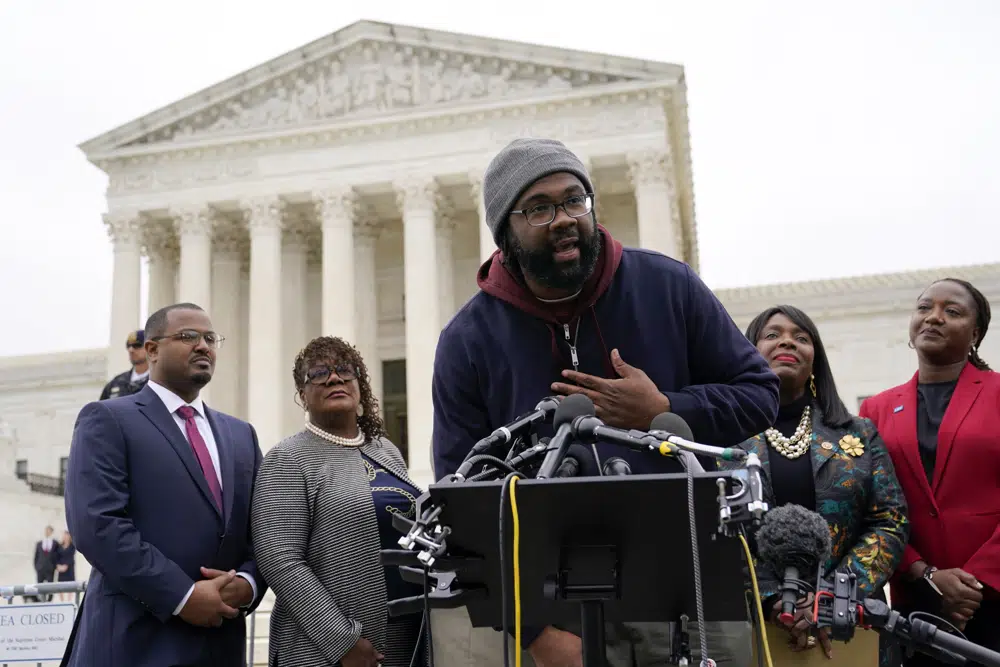
Federal judges that ordered Alabama to draw new congressional lines said the state should have a second district where Black voters are the majority “or something quite close to it” and have an opportunity to elect a representative of their choice. What exactly that map should look like is in dispute as lawmakers rush to draw new lines. Alabama lawmakers convene in a special session Monday tasked by the court with adopting a new map by the end of the week. The directive comes after a surprise U.S. Supreme Court ruling that affirmed the lower court’s ruling that Alabama’s existing congressional map — with a single Black district — likely violated the Voting Rights Act. The group of voters who sued the state and won before the Supreme Court have proposed the creation of a second district where Black residents are 50.5% of the population. But Alabama Republicans, who hold a lopsided majority in the Alabama Legislature and will control the redistricting process, have not ceded they must create a second majority-Black district and have pointed to proposals with lower percentages of Black voters. The GOP majority will release their proposed map on Monday. “Even among the plaintiffs suing the state, the meaning of an equal opportunity to elect candidates of choice is in dispute,” House Speaker Pro Tempore Chris Pringle, who serves as co-chairman of the state redistricting committee, said during a public hearing Thursday. The U.S. Supreme Court last month affirmed a lower-court ruling finding Alabama likely violated the Voting Rights Act with a congressional map that had only one majority Black district out of seven in a state where more than one in four residents is Black. The three-judge panel gave Alabama until Friday to adopt a new map and submit it for review. “The appropriate remedy is a congressional redistricting plan that includes either an additional majority-Black congressional district or an additional district in which Black voters otherwise have an opportunity to elect a representative of their choice,” the three-judge panel wrote in its 2022 ruling, adding that it will need to include two districts in which “Black voters either comprise a voting-age majority or something quite close to it.” The Supreme Court decision was cheered by voting rights groups who said it would give Black voters a greater voice in the Deep South state. “The eyes of the nation are looking at you. I know it’s hard. I know you have people that you answer to,” Evan Milligan, the lead plaintiff in the case that went to the U.S. Supreme Court, told lawmakers. “But if you can cut out the noise, look within, you can look to history. You can make a mark in history that will that will set a standard for this country.” Milligan, a longtime resident of Montgomery, said he is six generations removed from slavery. “My son and daughter are the seventh generation. When I look at them, I want to commit to them inheriting an Alabama that allows them an opportunity to lead, to dream and to make contributions to the community, the same that you want for your children and your grandchildren,” Milligan said. The Supreme Court decision sets up Alabama’s first significant revamp of its congressional districts since 1992, when Alabama was ordered by the courts to create its first majority-Black district. That led to the state electing its first Black member of Congress since Reconstruction. The district has been represented by a Black Democrat ever since. Partisan politics underlies the looming redistricting fight. Republicans who dominate elective office in Alabama have been resistant to creating a second district with a Democratic-leaning Black majority, or close to one, that could send another Democrat to Congress. Democrats cheered the possibility of gaining a seat or at least a swing district in the GOP-dominated state. Alabama Attorney General Steve Marshall, who represents the state in the redistricting lawsuit, wrote in a letter to the committee that plaintiffs had initially argued for a “fair chance” to compete but now want more. “Now they demand a plan that provides not just a ‘fair chance’ to compete, but instead a guarantee of Democratic victories in at least two districts,” Marshall wrote. Marshall said the plaintiffs’ proposed map divides voters based on “stereotypes about how voters of certain races will vote.” Joe Reed, chairman of the Alabama Democratic Conference — the state’s oldest Black political organization — urged lawmakers to compromise with plaintiffs on a plan. He said state lawmakers can either draw a plan that the court will approve or the court will draw it for them. “We know there will be two majority Black districts,” Reed said. Republished with the permission of The Associated Press.
AG Steve Marshall opposes Biden administration plan to phase out gas-powered vehicles
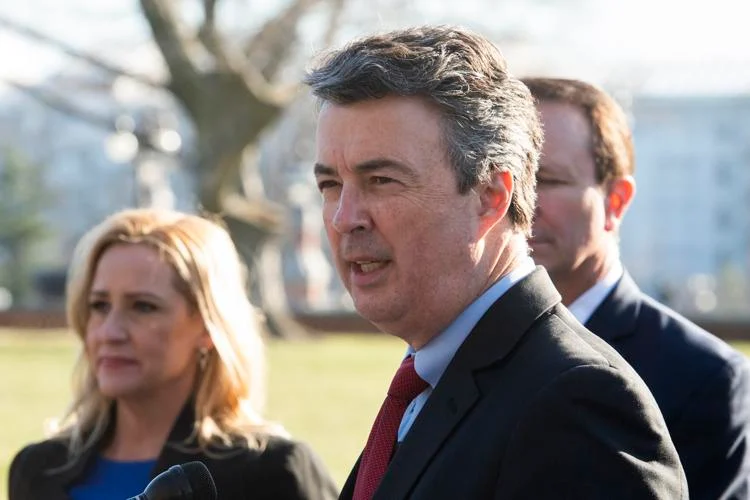
Alabama Attorney General Steve Marshall on Thursday released a statement denouncing the Biden Administration’s plan mandating the phasing out of gas-powered vehicles. This move, Marshall argues, would compel the restructuring of the entire automobile industry around the production of electric vehicles (EVs). The proposal by the Biden Administration and the Environmental Protection Agency would boost certain EV sales from 8.4% of total vehicle sales to 67% by 2032. Attorney General Marshall signed onto the 25-state coalition letter opposing the EPA plan, arguing the move would damage our economy, undermine the reliability of our electrical grids, threaten our national security, and drastically increase costs for families and businesses. “Yet again, President [Joe]Biden has prioritized his radical and illogical environmental agenda over the economic realities facing working-class Americans, and this time he’s targeting affordable gas-powered vehicles,” said Attorney General Marshall. “Consumers are already experiencing record high energy prices and painful inflation, and this proposal will only prolong and exacerbate the inflationary pressures that are plaguing our economy. I will always stand guard against Biden’s radical agenda, and I will never stop fighting for consumers and businesses in our state.” “President Biden wants to use the power of government to force a massive shift in demand for automobiles, with the government putting its thumb on the scale in favor of EVs. But Americans don’t want what he is selling,” said Kentucky Attorney General Daniel Cameron. “This is the latest head-in-the-sand approach to achieving the left’s impossible green-energy fantasies. Government shouldn’t pick winners and losers, and an EPA rule that would kill gas-powered vehicles does just that.” The coalition’s letter argues that the aggressive shift to EVs is counterproductive, misguided, and unrealistic. The nation’s power grids not only lack the capacity to accommodate the demands of the new proposed rule, but the grid is also lacking the stability to compensate for these new stringent demands. The EPA’s plan undercuts American energy independence. Additionally, this fast-and-furious approach to electrification will have devastating consequences for our automotive supply chain by making us overly dependent on foreign adversaries, like China, for the raw minerals required for electric vehicle production. According to the Republicans Attorney Generals, at the end of 2022, the average electric vehicle sold for $61,448. Consequently, the coalition argues that it is not the right time to complicate the automobile manufacturing process, which will increase the average price per vehicle. Consumers are already experiencing record inflation, historic gasoline prices, and high utility bills. Attorney General Marshall signed on to the letter with attorneys general in Alaska, Arkansas, Florida, Idaho, Indiana, Iowa, Kansas, Kentucky, Louisiana, Mississippi, Missouri, Montana, Nebraska, North Dakota, Ohio, Oklahoma, South Carolina, South Dakota, Tennessee, Texas, Utah, Virginia, West Virginia, and Wyoming. President Biden meanwhile defended his climate policies. “We passed the infrastructure law with 500,000 EV chargers,” said Biden. “And they’re going to — 500,000. They can — and guess what? It’s going to create a — we’re capping 100,000 wells in the United Sta- — 100,000. Remember all the heat about what was going on in West Virginia and — and south — west — Western Pennsylvania? Well, these same guys who dug those wells — guess what? — they’re getting paid to cap them. And it’s working. And we’re rebuilding. And we’re putting a new environmental plant where that old steel plant used to be in — in Wharton, West Virginia. Fuel economy rules. We cut emissions in half by 30 — by 2032.” To connect with the author of this story or to comment, email brandonmreporter@gmail.com.
AG Steve Marshall applauds Supreme Court ruling upholding Christian web designer’s right to deny service to a gay wedding
On Friday, Alabama Attorney General Steve Marshall welcomed a 6 to 3 U.S. Supreme Court ruling that protects a Denver area Christian web designer’ from having to build a website for a gay couple’s same-sex wedding in violation of her Christian principles and beliefs. 303 Creative and its owner, Lorie Smith, is a graphic artist and website designer in Colorado. Smith expanded her business into wedding website design. Smith’s deeply held Christian beliefs prohibit her from promoting same-sex weddings. Colorado’s anti-discrimination law forbids businesses from denying service to LGBTQ+ persons seeking service. Under that law, if Smith designed and promoted custom websites for opposite-sex weddings, she would have to design and promote custom websites for same-sex weddings too. Smith filed a suit claiming that the law violated her First Amendment rights to practice her religion and her free speech rights and that the Colorado law as such is a blatant violation of the Bill of Rights. The lower court ruled against her. Undeterred, Smith appealed to the Tenth Circuit Court of Appeals, which also ruled against Smith, and then appealed to the Supreme Court. The Supreme Court’s opinion in 303 Creative v. Elenis reaffirms that the First Amendment prohibits the government from forcing citizens, including business owners, from speaking messages with which they disagree. In the 6-3 opinion, the Supreme Court reversed the Tenth Circuit Court of Appeals decision against Smith. “The Constitution and our First Amendment prevail,” Marshall said in a statement. “All Americans enjoy the right to freedom of conscience, and that freedom means the government cannot coerce anyone to speak against their deeply held beliefs,” said Attorney General Marshall. “Today’s decision confirms that state and local government are not ‘immune to the demands of the Constitution.’” In June 2022, Attorney General Marshall signed on to a 20-state amicus brief urging the Supreme Court to protect the First Amendment rights of business owners. The brief argued in support of Smith. Liberty Counsel, a nonprofit legal advocacy group that defends religious liberty, also filed an amicus brief in favor of the web designer’s right to deny service. Liberty Counsel said in a statement that the Colorado state law censors and coerces the speech of creative professionals whose religious beliefs do not conform to state-accepted beliefs. Liberty Counsel Founder and Chairman Mat Staver said, “This is a great victory for the right of individual speech and expression. The state cannot force people to convey a government-approved message against their religious beliefs or individual choice. Film, theater, art, and other creative expression would not exist if the government could censor the message.” Justice Neil Gorsuch wrote the opinion, which was joined by Chief Justice John Roberts, and Justices Samuel Alito, Clarence Thomas, Brett Kavanaugh, and Amy Coney Barrett. The three liberal Justices, Sonia Sotomayor, Elena Kagan, and Kentanji Brown Jackson, dissented. “The First Amendment protects an individual’s right to speak his mind regardless of whether the government considers his speech sensible and well-intentioned or deeply ‘misguided,’ and likely to cause ‘anguish’ or ‘incalculable grief.’ Equally, the First Amendment protects acts of expressive association,” Justice Gorsuch wrote. “Generally, too, the government may not compel a person to speak its own preferred messages. Nor does it matter whether the government seeks to compel a person to speak its message when he would prefer to remain silent or to force an individual to include other ideas with his own speech that he would prefer not to include. All that offends the First Amendment just the same.” “Applying these principles to this case, we align ourselves with much of the Tenth Circuit’s analysis,” Gorsuch continued. “The Tenth Circuit held that the wedding websites Ms. Smith seeks to create qualify as ‘pure speech’ under this Court’s precedents. We agree. It is a conclusion that flows directly from the parties’ stipulations. They have stipulated that Ms. Smith’s websites promise to contain ‘images, words, symbols, and other modes of expression.’ They have stipulated that every website will be her ‘original, customized’ creation. And they have stipulated that Ms. Smith will create these websites to communicate ideas—namely, to ‘celebrate and promote the couple’s wedding and unique love story’ and to ‘celebrate and promote’ what Ms. Smith understands to be a true marriage. We part ways with the Tenth Circuit only when it comes to the legal conclusions that follow. While that court thought Colorado could compel speech from Ms. Smith consistent with the Constitution, our First Amendment precedents laid out above teach otherwise.” “Nor is it any answer, as the Tenth Circuit seemed to suppose, that Ms. Smith’s services are ‘unique,’” Gorsuch continued. “In some sense, of course, her voice is unique; so is everyone’s. But that hardly means a State may coopt an individual’s voice for its own purposes.” “The First Amendment extends to all persons engaged in expressive conduct, including those who seek profit (such as speechwriters, artists, and website designers),” Gorsuch wrote. If anything is truly dispiriting here, it is the dissent’s failure to take seriously this Court’s enduring commitment to protecting the speech rights of all comers, no matter how controversial—or even repugnant—many may find the message at hand.” Justice Sotomayor wrote the dissent. “Today, the Court, for the first time in its history, grants a business open to the public a constitutional right to refuse to serve members of a protected class,” Sotomayor wrote. “New forms of inclusion have been met with reactionary exclusion. This is heartbreaking. Sadly, it is also familiar. When the civil rights and women’s rights movements sought equality in public life, some public establishments refused. Some even claimed, based on sincere religious beliefs, constitutional rights to discriminate. The brave Justices who once sat on this Court decisively rejected those claims.” The last day of Pride Month perhaps ironically ends with a Supreme Court ruling affirming that LGBTQ+ rights do not mean that the state can deprive other citizens of their free speech and religious liberty rights. The Human Rights Campaign (HRC) released a statement denouncing the decision. “This decision by the Supreme Court is a dangerous step backward, giving some businesses the power to
Steve Marshall says Supreme Court decision does away with all “governmentally imposed discrimination based on race”
On Thursday, Alabama Attorney General Steve Marshall issued a statement today following the landmark U.S. Supreme Court ruling in Students for Fair Admissions, Inc. v. President and Fellows of Harvard College. In a 6-3 decision written by Chief Justice John Roberts, the majority’s opinion held that racial discrimination in university admissions violates the Constitution’s prohibition on governmental discrimination based on race. “This landmark decision makes clear ‘the core purpose of the Equal Protection Clause: doing away with all governmentally imposed discrimination based on race,” Marshall stated. “Ivy League appeals to diversity do not justify discriminating against prospective students based on the color of their skin.” In May 2022, Attorney General Marshall joined a coalition of 19 states supporting the challengers’ cases before the Supreme Court. The brief decried Harvard’s and the University of North Carolina at Chapel Hill’s discrimination against Asian-American applicants. The conservative AGs argued that racial discrimination in admissions is unnecessary to ensure applicants have a fair shot at obtaining quality higher education. The Biden Department of Justice supported both Universities in their vigorous defense of their admissions policies. Thursday’s ruling was a defeat for the Biden Administration. “Today, the Court once again walked away from decades of precedent and made — as the dissent has made clear,” said President Joe Biden. “The dissent states that today’s decision, quote, ‘rolls back decades of precedent and momentous progress.’ End of quote. I agree with that statement from the dissents — from the dissent.” “The Court has effectively ended affirmative action in college admissions,” Biden continued. “And I strongly — strongly disagree with the Court’s decision.” “We all know it: Discrimination still exists in America. Discrimination still exists in America. Discrimination still exists in America,” Biden stated. “Today’s decision does not change that. It’s a simple fact. If a student has — has overcome — had to overcome adversity on their path to education, a college should recognize and value that. Our nation’s colleges and universities should be engines of expanding opportunity through upward mobility. But today, too often, that’s not the case.” Biden continued, “Colleges and universities should continue their commitment to support, retain, and graduate diverse students and classes. We can’t go backwards. You know, I know today’s Court decision is a severe disappointment to so many people, including me, but we cannot let the decision be a permanent setback for the country. We need to keep an open door of opportunities. We need to remember that diversity is our strength. We have to find a way forward. We need to remember that the promise of America is big enough for everyone to succeed.” Biden was asked by a reporter, “President Biden, the Congressional Black Caucus said the Supreme Court has “thrown into question its own legitimacy.” Is this a rogue Court?” “This is not a normal Court,” Biden responded. To connect with the author of this story or to comment, email brandonmreporter@gmail.com.
AG Steve Marshall applauds victory against illegal Macon County gambling facility

Last week Alabama Attorney General Steve Marshall released a statement applauding a recent ruling enforcing Alabama’s gambling laws by permanently enjoining any facility in Macon County from offering “electronic bingo.” “Electronic bingo machines are a blatant violation of state law, and the Alabama Supreme Court has reaffirmed this time and time again,” said AG Marshall. “Similar to the facilities in Morgan, Houston, and Lowndes Counties, the Macon County facilities are permanently prohibited from using electronic bingo machines moving forward.” 🚨NEW | AG Marshall Victorious Against Illegal Macon County Gambling Facilities.🚨 https://t.co/jazFIG8PJN — Attorney General Steve Marshall (@AGSteveMarshall) June 13, 2023 In the case State of Alabama v. Epic Tech Inc. et al., the Court agreed with the Attorney General’s office that VictoryLand was operating illegal gambling devices for play in Macon County. The Circuit Court granted the State of Alabama’s request to permanently enjoin and prohibit the casinos from offering so-called “electronic bingo” machines at VictoryLand. The order also prohibits the Macon County Sheriff from issuing bingo licenses, receiving funds, and permitting the illegal slot machines to operate in Macon County. Gambling machines are forbidden by the Alabama Constitution. Attorney General Marshall’s legal actions are a continuation of his efforts to enforce state gambling laws and are part of an ongoing and multifaceted investigation that began in 2017. In April, the Attorney General’s Office executed search warrants and received temporary restraining orders against 14 illegal gambling facilities in Jefferson County—four of those he had previously taken legal action against in 2019. The resolution of this case in Macon County leaves only one case pending (in Greene County) from five that were simultaneously filed in October 2017. In each of the resolved cases, General Marshall has been able to shut down illegal gambling operations as illegal nuisances under Alabama law. A number of counties do have constitutional amendments allowing the playing of charity bingo. However, the Court has previously ruled on a number of occasions that bingo is a game played on paper cards, and there is no such thing as “electronic bingo” under Alabama law. The Court has made several previous rulings. VictoryLand is reportedly defying the Court and the rule of law to continue to operate, this time by replacing their illegal electronic bingo machines with legacy horse racing machines where people can put their money in a machine to watch a video of historical horse or dog races that they can bet on. Greenetrack in Greene County has adopted a similar tactic to stall for time to continue operating under the legally dubious supposition that a video gambling machine is actually legal horse or dog racing – both dog tracks can legally hold actual dog races and can legally have betting on simulcast racing. Studies show that electronic gambling machines are one of the most addictive forms of gambling. The Alabama State Legislature is reportedly considering a gambling constitutional amendment. Illegal casino owners hope that by lobbying the Legislature, they can be given carte blanche to operate gambling monopolies legally by the state of Alabama. Speaker of the House Nathaniel Ledbetter (R-Rainsville) told reporters that although gambling did not come up in the 2023 legislative session, it is not a dead issue. “We have an ad hoc committee meeting,” Ledbetter told reporters. “They report to me every two weeks.” Ledbetter said that he was providing the new members with information about gambling in this session; but that he expected legislation on gaming in a future session. The Alabama Legislature will return for a special session next month to address congressional redistricting after the current districts were declared in violation of the 1965 Voting Rights Act. Alabama Governor Kay Ivey could bring up the gambling issue in the call for that special session. Ivey has said that the failure to get comprehensive gambling legislation passed was the biggest regret of her first term. Gambling legislation would require a constitutional amendment and a vote of the people. Getting it on the ballot in the 2024 presidential election would mean passage by the Legislature in next year’s regular or special session before then. To connect with the author of this story or to comment, email brandonmreporter@gmail.com.
Alabama set to receive $249 million in opioid settlement

Last week, AG Steve Marshall announced the final approval of $17.3 billion in opioid agreements with drug makers Teva and Allergan and pharmacies CVS and Walgreens. The defendants have committed to the deal and will start releasing funds to a national administrator later this summer. Alabama will receive $248,948,247. “The opioid crisis is a blight on our society and has had costly effects on our communities,” stated Marshall. “My office will never stop holding those responsible companies accountable for the irreparable harm to our state.” The settlements require Teva’s opioid business to provide stringent injunctive relief that, among other things, will prevent all opioid marketing and ensure systems are in place to prevent drug misuse. Allergan is also required to stop selling opioids for the next 10 years. CVS and Walgreens have agreed to injunctive relief that requires the pharmacies to monitor, report, and share data about suspicious activity related to opioid prescriptions. This court-ordered injunctive relief will help ensure a crisis like this does not happen again. In April 2022, Alabama received a $276 million settlement with two pharmaceutical manufacturers and one pharmaceutical distributor to resolve the State’s lawsuit for their role in exacerbating the opioid crisis in the state. That settlement included Endo Pharmaceuticals, Johnson and Johnson, and McKesson. Teva and Allergan negotiations were led by Attorneys General from North Carolina, Iowa, California, Illinois, Maryland, Massachusetts, New York, Pennsylvania, Tennessee, Texas, Vermont, Virginia, and Wisconsin. CVS and Walgreens negotiations were led by Attorneys General from North Carolina, California, Colorado, Connecticut, Delaware, Illinois, Indiana, Iowa, Kentucky, Louisiana, Massachusetts, Nebraska, New York, Ohio, Pennsylvania, Rhode Island, Tennessee, and Texas.
Democratic leadership address the Supreme Court rejection of Alabama’s congressional redistricting
On Thursday, the United States Supreme Court ruled that Alabama must redraw the state’s congressional map to allow an additional Black majority district to account for the fact that the state is 27% Black. The Alabama House Democratic Caucus and the Alabama Legislative Black Caucus both applauded the ruling. Alabama House Minority Leader Anthony Daniels (D-Huntsville) said, “During a severely short and limited map-drawing process, our Caucus spoke at length about our view of the law and provided ways the state could craft at least two districts that reflect fair political opportunities for African American voters.” “We are therefore pleased that the Supreme Court affirmed the decision of the unanimous district court, which found the Alabama maps were discriminatory,” Daniels continued. “We stand ready to participate meaningfully with our colleagues to create a new map that fully complies with the law.” Rep. Terri Sewell wrote on Twitter, “Wow!!! The Supreme Court just upheld Section 2 of Voting Rights Act of 1965 and protected the voices of Black and minority voters. This is a historic victory not only for Black voters in Alabama, but for Democracy itself.” In a press release, Sewell said, “This is a historic victory, not only for Black voters in Alabama, but for Democracy itself. With this decision, the Supreme Court is saying loudly and clearly that the voices of minority voters matter and that fair representation must be upheld. I know that John Lewis and the Foot Soldiers of the Voting Rights Movement are smiling as they look down on us. Today, their sacrifice was rewarded. Our work is not over. We must continue the fight for fair representation by passing the John R. Lewis Voting Rights Advancement Act to restore the full protections of the Voting Rights Act of 1965.” State Senator Merika Coleman (D-Birmingham) is the Chair of the Alabama Legislative Black Caucus. “From the beginning of this case, we have strongly denounced racial gerrymandering and will continue our efforts to ensure that districts are drawn equitably and fairly,” said Sen. Coleman. “I applaud Chief Justice (John) Roberts for preserving Section 2 of the Voting Rights Act. This is a major victory for Black voters in Alabama, as well as the entire nation.” State Representative Napoleon Bracy, Jr. (D-Prichard) is the Vice Chair of the Alabama Black Legislative Caucus. “In a resounding victory for fair representation, the Supreme Court’s unexpected decision stands as a powerful testament to the importance of upholding the Voting Rights Act,” Rep. Bracy said. “By prohibiting racial gerrymandering in Alabama, the Court reaffirms the principle that every citizen’s voice deserves to be heard, regardless of their race. This ruling sends a clear message that political power should not be diluted through discriminatory practices, ensuring that the spirit of democracy remains strong and inclusive in Alabama.” In 2021, the Alabama state legislature produced new congressional maps which closely paralleled the previous 2012 redistricting with just one Black majority district. In a narrow 5-4 decision, the majority of the Court sided with the plaintiffs and affirmed that Section 2 of the Voting Rights Act requires the Alabama legislature to draw a second district where minority voters can elect a candidate of their choice. The decision will also have an impact across the South, as today’s decision clears the way for additional minority districts to be drawn in other states with challenged maps, like Georgia and Louisiana. “It is hard to imagine many more fundamental ‘prerequisites’ to voting than determining where to cast your ballot or who you are eligible to vote for,” Chief Justice John Roberts wrote. The 34-page decision in Milligan penned by Roberts recommits to the Voting Rights Act’s promise as the foundation for justice for all, not just some. Roberts was joined by Justices Sonia Sotomayor, Elena Kagan, Kentaji Brown Jackson, and Brett Kavanaugh. Jeff Loperfido is the Interim Chief Counsel for Voting Rights at the Southern Coalition for Social Justice. “This is a great day for democracy and for the voting rights of Black and Brown communities throughout the South who continue to be the targets of discriminatory laws that seek to silence their voices and stifle their growing political power,” said Loperfido. “The Court’s forceful repudiation of Alabama’s extreme and disingenuous ‘race-blind’ mapping theory is a testament to the important role the Voting Rights Act plays in rooting out discriminatory electoral practices.” The Legal Defense Fund (LDF), American Civil Liberties Union, ACLU of Alabama, Hogan Lovells LLP, and Wiggins, Childs, Pantazis, Fisher & Goldfarb brought the case in November 2021 on behalf of Evan Milligan, Khadidah Stone, Letetia Jackson, Shalela Dowdy, Greater Birmingham Ministries, and the Alabama State Conference of the NAACP. It was argued before the Court on Oct. 4, 2022. The case goes back to the three-judge panel of the Eleventh Circuit Court of Appeals in Atlanta that originally ruled against the State of Alabama. The Supreme Court had stayed its ruling last year at the request of Alabama Governor Kay Ivey, Alabama Attorney General Steve Marshall, and then-Secretary of State John Merrill. The three-judge panel will decide whether to order the Legislature to redraw the districts following the orders of the Court or order the state to adopt a zoning map drawn by the courts. Two alternative maps were presented to the Court by the plaintiffs. The easiest thing would be for the three judges to order the state to accept one of those maps. Whatever happens, Alabama’s Congressional maps will look substantially different than they are today by the end of the year. This will likely impact hundreds of thousands of Alabama voters. The major party primaries for the congressional districts will be on March 6. To connect with the author of this story or to comment, email brandonmreporter@gmail.com.
Legislature passes bill requiring Alabama Ethics Commission to share exculpatory evidence with the accused
On Tuesday, both houses of the Alabama Legislature voted to pass a conference committee version of legislation requiring that the Alabama Ethics Commission share evidence uncovered that would exonerate persons accused of wrongdoing. Senate Bill 103 was sponsored by State Sen. Arthur Orr (R-Decatur). It was carried in the House by State Representative Cynthia Almond (R-Tuscaloosa). Sen. Orr said that the changes in the bill had to do with the whistle-blower protection act. Rep. Almond explained when the bill was on the House floor, “What the bill does is require the ethics commission to turn over exculpatory information once the matter has gone through the investigative phase.” This legislation is in response to a controversial advisory opinion issued last year by the Alabama Ethics Commission. It was stated that it was the position of the Commission that it does not have a legal responsibility to share any exonerating evidence with the attorneys of persons the Commission is investigating. Alabama Attorney General Steve Marshall strongly objected to that position. Marshall said that this violated the rules of evidence and that failing to disclose exculpatory evidence could jeopardize the integrity of future prosecution. In response, the Attorney General’s office has sued the Alabama Ethics Commission to force the Commission to overturn the policy. Marshall has even gone so far as to argue that any referral to prosecute someone from the Ethics Commission is “worthless,” given the possibility that the Ethics Commission’s staff had suppressed evidence showing that the accused may actually be innocent of the crimes they have been charged with. “Thus, the respondent can neither be confident that he fully understands the case against him, nor that the exculpatory evidence has been considered by the Ethics Commission before it votes on whether to refer the matter for prosecution or administrative resolution,” the lawsuit states. “In either case, the respondent’s legal defense is impeded.” According to the synopsis, “This bill would require the State Ethics Commission, before referring a case for prosecution of an alleged ethics or campaign finance violation or before resolving a violation administratively, to provide the person who allegedly violated the law with exculpatory evidence in the possession of the commission.” Passage of SB103 means that the Ethics Commission will have to share any evidence it finds indicating that the accused may be innocent of whatever crimes they have been accused of. Both Houses voted to concur with the conference committee version of SB103 on the last day of the regular session. The Alabama Constitution limits the regular session to no more than thirty legislative days. To connect with the author of this story or to comment, email brandonmreporter@gmail.com.
AG Steve Marshall applauds bill that corrects fatal flaw in parole statute

On Thursday, Alabama Governor Kay Ivey signed legislation to prevent criminals facing serious pending charges from getting out on parole. House Bill 131 (HB131) was sponsored by State Representative Wes Kitchens (R-Guntersville) and carried in the Senate by State Sen. Sam Givhan (R-Huntsville). Alabama Attorney General Steve Marshall applauded the signing of HB131 to correct a fatal flaw in Alabama’s parole system. HB131 was proposed after the infamous Jimmy O’Neal Spencer case exposed a statutory loophole that allowed a prisoner with pending charges to still be considered for parole before those charges were properly resolved. “Throughout the session, this legislature has prioritized the correction of deficiencies within our criminal justice system,” said Attorney General Marshall. “HB131 closes an important loophole to ensure that no offender be released on parole while new charges are pending. This is a public safety issue, but it also spares crime victims of having to show up and relive their experiences at parole hearings that are unnecessary.” In August 2022, Jimmy O’Neal Spencer – who was serving two life sentences and was awaiting trial on three capital-murder charges – was given a parole hearing. The parole board at the time denied Spencer’s parole, but Marshall said that this peculiar loophole in our parole system needed to be closed. According to the synopsis, “Under existing law, prisoners in the custody of the Department of Corrections are eligible for parole in certain circumstances. This bill would provide that a prisoner is not eligible for parole if he or she has been duly charged with a new offense that has not been disposed.” “If you are a prisoner facing serious charges that carry penalties by more than six months, you can’t be up for parole,” Kitchens said. Spencer, a lifetime career criminal, came up for parole even though he was then facing three charges of capital murder for the slayings of Colton Lee, Martha Reliford, and Marie Martin. Crimes he committed after the previous Parole Board granted him parole even though he was serving two life sentences. An angry Gov. Ivey replaced the Board members in the wake of this and other debacles for their leniency that was widely condemned as far too reckless. The new Parole Board denied Spencer’s parole application, but that could have ended differently with much more lenient parole commissioners. The signing of this legislation has closed that loophole in existing statute. 2023 has been a good legislative session for Marshall. He said that as the Chief Law Enforcement Officer of Alabama, he has led on three public safety initiatives this legislative session, including the Deputy Brad Johnson Act and SB143, creating sentencing enhancements for members of criminal enterprises, including gangs. Each bill has been met with overwhelming bipartisan support. The legislature has also imposed stiffer penalties on exhibition driving, organized retail theft, and deadly fentanyl traffickers. The state is in the process of building two new mega prisons in Elmore and Escambia Counties. Marshall is serving his second elected term as attorney general following his landslide re-election last year. Tuesday is the final day of the 2023 Alabama Regular Legislative Session. To connect with the author of this story or to comment, email brandonmreporter@gmail.com.
Alabama House passes legislation requiring Alabama Ethics Commission to share exculpatory evidence with the accused
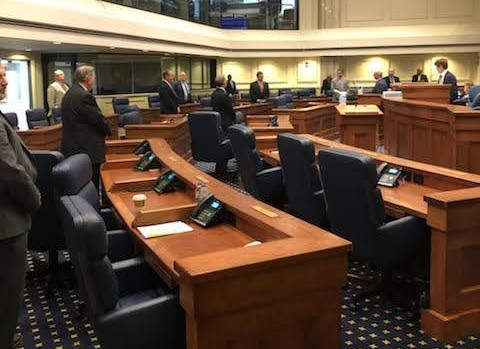
On Wednesday, the Alabama House of Representatives voted to pass Senate legislation requiring that the Alabama Ethics Commission share evidence uncovered that would exonerate persons accused of wrongdoing. Senate Bill 103 is sponsored by State Sen. Arthur Orr (R-Decatur). It is carried in the House by State Representative Cynthia Almond (R-Tuscaloosa). Rep. Almond explained, “What the bill does is require the ethics commission to turn over exculpatory information once the matter has gone through the investigative phase.” Almond asked that the House adopt a substitute version of the bill. The substitute adds the following passage, “If the commission or its employees disclose information to the respondent that the commission or employees believe is exculpatory, neither the commission nor its employees are liable for violating the restrictions relating to secrecy and nondisclosure of information provided in subsections (c) and (d) of Section 36-25-4, Code of Alabama 1975.” The House adopted the Almond substitute 102 to 0. This legislation is in response to an advisory opinion issued last year by the Alabama Ethics Commission stating that the Commission does not have to share any exonerating evidence with the attorneys of persons being investigated by the Commission. Alabama Attorney General Steve Marshall strongly objected to that position. He claimed that that position, which is counter to the rules of evidence in an Alabama courtroom, makes prosecuting any cases referred to the Attorney General’s office by the Commission problematic at best. The Attorney General’s office has sued the Ethics Commission to force the Commission to overturn the policy. Marshall has gone so far as to argue that any referral to prosecute someone from the Ethics Commission is “worthless” when it is highly possible that either in the trial or later when that conviction is appealed, it becomes known that there was exculpatory evidence already known to the Ethics Commission, but that evidence had been intentionally suppressed by the Ethics Commission or its staff. “Thus, the respondent can neither be confident that he fully understands the case against him, nor that the exculpatory evidence has been considered by the Ethics Commission before it votes on whether to refer the matter for prosecution or administrative resolution,” the lawsuit states. “In either case, the respondent’s legal defense is impeded.” According to the synopsis. “This bill would require the State Ethics Commission, before referring a case for prosecution of an alleged ethics or campaign finance violation or before resolving a violation administratively, to provide the person who allegedly violated the law with exculpatory evidence in the possession of the commission.” Passage of SB103 would mean that the Ethics Commission would have to share any evidence that it finds indicating that the accused may have been innocent of whatever crimes they have been charged with the accused and their attorneys before the Commission issues its judgment as well as before it refers any cases to the attorney general’s office or a district attorney for criminal prosecution. The Commission’s counsel has argued in court filings that this would “have a chilling effect” on the work of the Commission. SB103 passed the House of Representatives by a vote of 102 to 0. That afternoon, it returned to the Alabama Senate to consider the House substitute. Sen. Orr asked that the Senate vote to nonconcur with the House version of the legislation. That motion passed the Senate 34 to 0. The legislation now goes to a conference committee for its consideration. If the conference committee of Almond, Orr, and two additional members from each House are able to work out a compromise version of the bill, that conference committee version will still have to be approved by both Houses of the Legislature. Thursday will be day 29 of the regular session. The Alabama Constitution limits the regular session to no more than thirty legislative days. To connect with the author of this story or to comment, email brandonmreporter@gmail.com.
Gov. Kay Ivey announces plan to execute James Barber
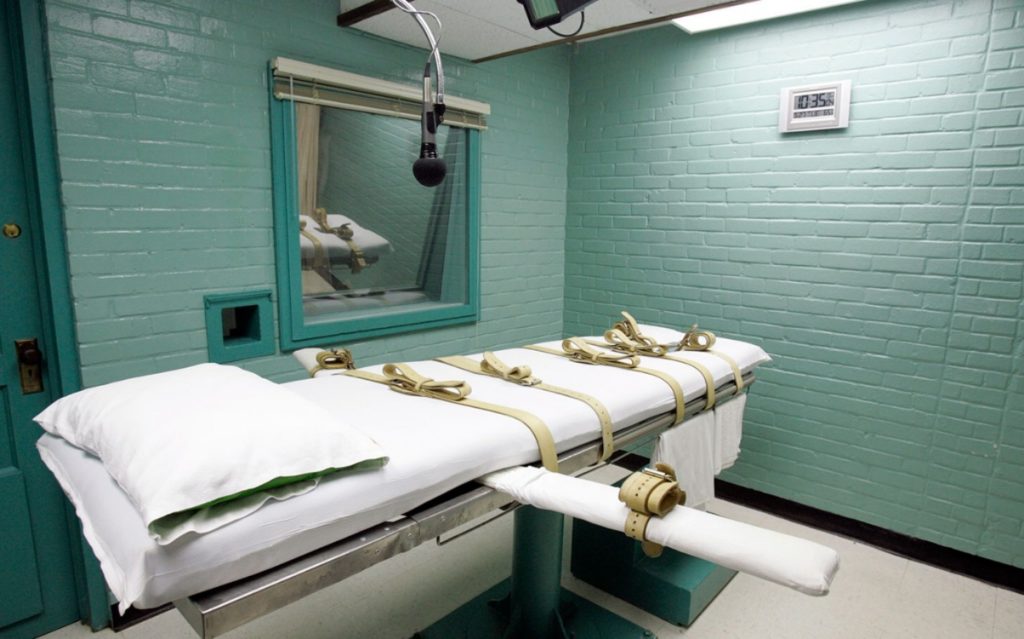
Governor Kay Ivey on Tuesday announced she has set the time frame for the execution of James Barber to occur beginning at midnight on Thursday, July 20 and expiring at 6:00 a.m. on Friday, July 21, 2023. The Alabama Supreme Court’s order authorizing Ivey to set an execution order was shared with the press. “On February 24, 2023, the State of Alabama filed a motion requesting that this Court, pursuant to Rule 8(d)(1), Ala. R. App. P., enter an order authorizing the Commissioner of the Department of Corrections to carry out James Barber’s sentence of death within a time frame set by the governor. Upon due consideration of such motion, IT IS ORDERED that the Motion is GRANTED. IT IS FURTHER ORDERED that the Commissioner of the Department of Corrections is authorized to carry out James Barber’s sentence of death within a time frame set by the Governor of the State of Alabama IT IS FURTHER ORDERED that the Governor shall set a time frame, which shall not begin less than 30 days from the date of this order, within which the Commissioner of the Department of Corrections shall carry out James Barber’s sentence of death IT IS FURTHER ORDERED that the Clerk of this Court shall transmit forthwith a certified copy of this Order electronically or by mailing a copy thereof by United States mail, postage prepaid, to the following · the attorney of record for James Edward Barber; · the Governor of Alabama; · the Attorney General of Alabama; · the Commissioner of the Department of Corrections; · the Clerk of the Alabama Court of Criminal Appeals; and · the Clerk of the Alabama Supreme Court · the Clerk of the Madison Circuit Court This Order authorizing the Commissioner to carry out James Barber’s sentence of death constitutes the execution warrant for James Barber.” Ivey followed that authorization with her order on Tuesday to Commissioner John Hamm. James Barber is being executed by lethal injection for his 2001 murder of Dorothy Epps. Barber, a handyman, robbed and killed his elderly neighbor, Epps – age 75, in Harvest in Madison County in 2001. The execution was delayed last year when Ivey asked for a moratorium to review what went wrong in the attempted execution of Kenneth Eugene Smith. After a short review of the state’s death penalty protocols, Ivey has authorized AG Steve Marshall to pursue new executions. If this process is like previous execution attempts, anti-death penalty activists will file motions at the Alabama Supreme Court and U.S. Supreme Court in the hours before the schedule seeking a stay in carrying out the death penalty. This is a legal tactic used to stall for time as the execution window winds down. Some previously condemned men have resisted efforts to allow the technician to find and tap a vein to carry out the execution. If those delay tactics successfully run out the clock past 6:00 a.m. on July 21, then Ivey would have to seek another court order to carry out the execution, and the whole process of executing Barber for his crimes could be delayed months. To connect with the author of this story or to comment, email brandonmreporter@gmail.com.
