
Terri Sewell lone legislator to vote in support of Respect for Marriage Act

Six of the seven U.S. Representatives for Alabama are Republicans, so it is no surprise that all six voted against the latest bill to pass the House. The Respect for Marriage Act aims to repeal and replace laws that would outlaw same-sex or interracial marriage. The U.S. House overwhelmingly approved the legislation with 267 yeas and 157 nays. That means 47 Republicans — almost one-fifth of the GOP lawmakers — voted in favor of the bill. Rep. Terri Sewell was the lone Alabama leader who voted in support of the bill, while Congressmen Robert Aderholt, Mo Brooks, Jerry Carl, Barry Moore, Gary Palmer, and Mike Rogers were nays. In 1996, the Defense of Marriage Act (DOMA) was passed and signed into law by Bill Clinton. The bill defined marriage as the union of one man and one woman and allowed states to refuse to recognize same-sex marriages granted under the laws of other states. However, the Supreme Court ruled the laws unconstitutional in the cases of United States v. Windsor (2013) and Obergefell v. Hodges (2015). With the current conservative majority in the U.S. Supreme Court, and because that court has already reversed the controversial abortion rulings in Roe v. Wade, leaders are trying to protect other rights that Supreme Court Justice Clarence Thomas already asked his colleagues to rule on. Thomas wrote that past rulings from the Court regarding gay rights and contraception rights should be reconsidered and that those rulings “were demonstrably erroneous decisions.” Justice Samuel Alito argued for a more narrow interpretation of the rights guaranteed to Americans, noting that the right to an abortion was not spelled out in the Constitution. The cases Thomas mentioned were Griswold vs. Connecticut, the 1965 ruling in which the Supreme Court said married couples have the right to obtain contraceptives; Lawrence v. Texas, which established the right to engage in private sexual acts; and the 2015 ruling in Obergefell v. Hodges, which ruled there is a right to same-sex marriage. “Today, I proudly voted to protect marriage equality in Alabama and across the country,” stated Rep. Sewell in a press release. “As the Supreme Court comes after our hard-fought personal liberties, right-wing extremists are now threatening to strip away Americans’ right to marry the person they love. With the Respect for Marriage Act, House Democrats are taking urgent action to enshrine marriage equality into federal law and prohibit states from discriminating against same-sex and interracial couples. We will not go back!” While Sewell described this legislation as needed and urgent, Rep. Moore disagreed, arguing that the court’s ruling on those issues were set precedent. “With inflation at a 41-year high, a new record for border crossings set in June at over 191,000, and violent crime plaguing the country, it is outrageous that Democrats are focused on unnecessary legislation that repeals a law struck down by the courts years ago,” said Moore in a press release. “Despite mischaracterizations Democrats are using to justify their urgency, the Supreme Court made it clear in Dobbs that their decision should not be used to cast doubt on precedents that have nothing to do with abortion.” The bill now heads to the Senate. .
Terri Sewell’s legislation to create the Black Belt National Heritage Area passes House
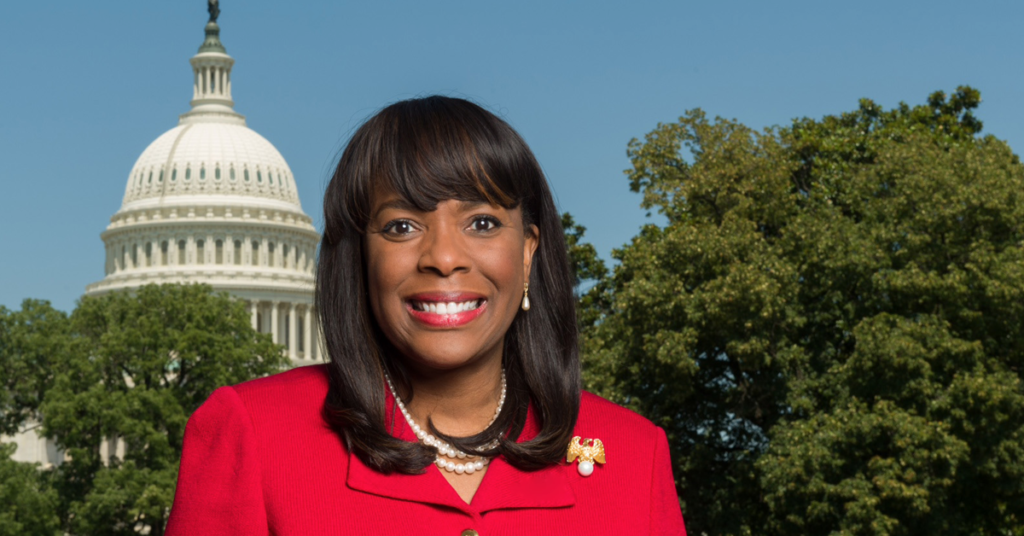
U.S. Rep. Terri Sewell announced that her bill, H.R. 3222, the Black Belt National Heritage Area Act, passed the House of Representatives by a bipartisan vote of 365-57. The bill was introduced by Sewell in May 2021 and aims to designate areas within the 19 counties in Alabama’s Black Belt as a National Heritage Area. Through public-private partnerships, National Heritage Areas are able to leverage funding for long-term projects that have substantial economic and environmental benefits. The bill will now make its way to the U.S. Senate. “I’m thrilled to announce that the House has passed my bill to create the Black Belt National Heritage Area!” commented Sewell. “As the birthplace of the Civil Rights and Voting Rights movements, the Black Belt is where some of the most consequential chapters of American history played out. This designation will not only help preserve the rich history of the region, but will also open up new economic and tourism opportunities. As a proud daughter of the Black Belt, I thank my colleagues for passing this critical bill and will continue working to get it signed into law.” According to Sewell’s press release, National Heritage Areas are established by Congress to help with efforts to protect and promote communities that are regarded as distinctive because of their culture, history, resources, and environment. These historic areas are authorized to receive up to $1 million in federal funding annually to preserve, protect and promote important sites. Under the Alabama Black Belt National Heritage Area Act, the University of West Alabama would collaborate with the National Park Service and Black Belt communities to determine a strategic management plan. Dr. Tina Naremore Jones, Vice President of the Division of Economics Workforce Development at the University of West Alabama, explained how the funding would help tell the stories of Alabama’s Black Belt. “The story of Alabama’s Black Belt could not be more relevant with ongoing conversations exploring the multifaceted aspects of our country’s past, present, and future. For Alabama’s Black Belt with its famously rich soils and landscapes have had a profound impact on the culture, history, and politics of this country,” Naremore Jones commented. “Through designation as a National Heritage Area, we can shine a spotlight on these stories and bring them to prominence and ensure that future generations cannot only learn but appreciate our shared heritage. Designation is also important in that it helps us continue to build local capacity through shared resources. Our grassroots organizations have been steadfast supporters of this effort, and we are thankful for Congresswoman Sewell and Senator Shelby’s leadership in moving this legislation forward.” Emily Jones, Southeast Regional Director for The National Parks Conservation Association, thanked Congressman Sewell and Senator Richard Shelby for their efforts. “By calling for an Alabama Black Belt National Heritage Area, Congresswoman Terri Sewell and Senator Richard Shelby have taken a stand for centuries of rich Alabama history and breathtaking Southern lands and waters, including the last remaining prairie east of the Mississippi River,” stated Jones. “The Alabama Black Belt was named for its soil, but this region has also served as fertile ground for Black history and the Civil Rights Movement. Civil rights leaders like John Lewis put blood, sweat, and tears into their work to organize and register Black voters here in the 1960s. Now more than ever, it’s imperative that we honor their contributions to the ongoing fight for the American right to vote.” Jones continued, “This new National Heritage Area would help local organizations work to protect Alabama history and natural resources and generate economic growth in the Black Belt region. A new designation would help raise the profile of the beautiful Talladega and Tuskegee National Forests, the Cahaba, Alabama and Tombigbee Rivers, and the Choctaw and Cahaba National Wildlife Refuges, as well as tell important stories of civil rights activism and the forced removal of Native tribes from this land.”
Terri Sewell announces $2.5 Million in grant funding to preserve Alabama HBCUs

Rep. Terri Sewell announced that the National Park Service (NPS) will award $2.5 million to five Historically Black Colleges and Universities (HBCUs) in Alabama. The funding will be used to preserve historic structures on the campuses of Alabama State University, Miles College, Selma University, Alabama A&M University, and Stillman College. Sewell serves as Vice-Chair of the Congressional HBCU Caucus. The funding is part of a $9.7 million investment by NPS in HBCUs nationwide. Since the 1990s, the NPS has awarded more than $87 million in grants to over 85 of the remaining active HBCUs. Congress gives funding for the program through the Historic Preservation Fund which uses revenue from federal oil and gas leases on the Outer Continental Shelf, providing assistance for a broad range of preservation projects without expending tax dollars. The following Alabama HBCUs will receive funding: Alabama State University – $500,000 for the G.W. Trenholm Hall Preservation Project Miles College – $500,000 for the Williams Hall Historic Preservation Project Selma University – $500,000 to preserve the Historic Dinkins Memorial Hall Alabama A&M University – $500,000 for restoration and renovation of Carnegie Hall Library Stillman College – $500,000 to transform Sheppard Library into a Civil Rights museum “I’m thrilled to announce that the National Park Service is investing $2.5 million to preserve historic structures on the campuses of Alabama’s HBCUs. This is a big win for Alabama!” stated Sewell. “Alabama’s HBCUs have played such a pivotal role in shaping the history of our nation, and I was so proud to help make this funding available which will be used to preserve these cherished institutions. As Vice-Chair of the Congressional HBCU Caucus, I remain committed to ensuring the vitality of Alabama’s HBCUs. Fighting for funding like this will continue to be one of my top legislative priorities!” Selma University President Stanford E. Angion, Ed.D. stated, “On behalf of everyone at Selma University, we are elated to receive the grant award. We are so appreciative of Congresswoman Sewell’s support of the university. This funding will go a long way in helping our students at Selma University and the entire community of Selma, Alabama.” “For more than 180 years, Historically Black Colleges and Universities have provided high-level academics, opportunities, and community for generations of students,” said NPS Director Chuck Sams. “These grants enable HBCUs to preserve the noteworthy structures that honor the past and tell the ongoing story of these historic institutions.” Accredited HBCUs are eligible to apply for this grant program. HBCU grants can fund pre-preservation studies, architectural plans and specifications, historic structure reports, campus preservation plans, and National Register nominations.
Alabama leaders respond to Supreme Court ruling on conceal and carry gun rights

The Supreme Court ruled on Thursday that Americans have a right to carry firearms in public for self-defense. The decision came out as Congress and states debate gun-control legislation. The decision struck down a New York law that required people to demonstrate a particular need for carrying a gun in order to get a license to carry a gun in a concealed way in public. Justice Clarence Thomas wrote in his opinion, “Nothing in the Second Amendment’s text draws a home/public distinction with respect to the right to keep and bear arms.” President Joe Biden said in a statement he was “deeply disappointed” by the Supreme Court ruling. It “contradicts both common sense and the Constitution, and should deeply trouble us all,” he said. Alabama leaders and lawmakers are responding to the decision. Rep. Barry Moore stated on Twitter, “The right to bear arms is not a second-tier right! An attack on #2A is an attack on ALL our constitutional rights. This decision makes clear: no state can require an American citizen to petition their government for permission to exercise a right guaranteed by the Constitution.” Rep. Terri Sewell expressed dismay over the ruling. “Today’s Supreme Court ruling on gun violence defies the Constitution and common sense! As our nation mourns a string of senseless killings, the Court is making it more difficult for local governments and law enforcement to keep Americans safe from gun violence,” Sewell stated on Twitter. “This ruling only makes it more critical for Congress to act quickly. I look forward to considering the Senate’s bipartisan gun violence prevention legislation. Our communities are counting on us!” Rep. Jerry Carl stated, “Today’s ruling is good news and ensures all law-abiding Americans have the right to defend themselves and their families without the government interfering.” Rep. Robert Aderholt also spoke out in favor of the Supreme Court ruling. Rep. Mike Rogers stated, “I’m thrilled that SCOTUS upheld our second amendment rights in their ruling today. The right of the people to keep and bear arms, shall not be infringed.” Gov. Kay Ivey said the ruling was a win for common sense and for gun rights. “It’s time folks keep a level head on issues dealing with our constitutional rights as Americans, and that is exactly what our U.S. Supreme Court did through its decision today,” Ivey stated on Twitter. “While we Alabamians do not have to worry about our rights being infringed upon, law-abiding citizens in states like New York are fighting simply for their right to bear arms. Today, the U.S. Supreme Court held that the Second Amendment means exactly what it says: A citizen’s right to carry a firearm in public should not be subject to the whims of a government bureaucrat. This is a win for the Second Amendment and win for common sense.” California, Hawaii, Maryland, Massachusetts, New Jersey, and Rhode Island all have similar laws to New York’s. Those laws are expected to be quickly challenged.
Terri Sewell supports bipartisan bill to bolster mental health and substance use care
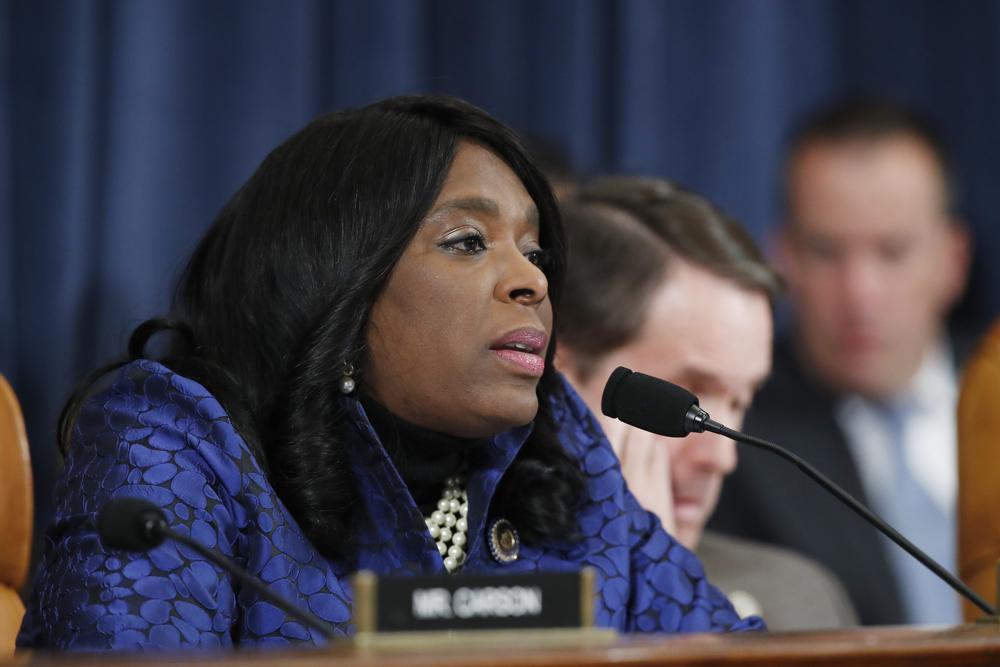
Yesterday Rep. Terri Sewell announced her support for a bipartisan legislative package that aims to strengthen access to care for mental illness and substance use disorders. Sewell has been committed to mental health access, previously voting for $4 billion of funding for mental health and substance use services through the American Rescue Plan. Sewell voted for the bipartisan bill called Restoring Hope for Mental Health and Well-Being Act. It will reauthorize key Substance Abuse and Mental Health Services Administration (SAMHSA) and Health Resources and Services Administration (HRSA) programs to address the national mental health and substance use disorder crises. The bill will expand more than 30 federal programs to address widespread shortages in mental health professionals and other barriers to care. This legislation passed the House with an overwhelmingly bipartisan vote of 402-20. “It’s no secret that our nation suffers from a mental health crisis which was only made worse by the hardship and isolation of the COVID-19 pandemic,” said Rep. Sewell. “Congress has a responsibility to provide the resources Alabamians need to seek care during times of need. Today, I proudly voted to strengthen Alabamians’ access to mental health and substance use services. This legislation marks a critical step toward addressing our mental health crisis by removing barriers to care and investing in our mental health workforce.” Suicide remains the second leading cause of death among young people between the ages of 10 and 34. Additionally, more than 2 million Americans suffer from an opioid use disorder, and nearly 108,000 Americans died due to a drug overdose last year. However, approximately 122 million Americans live in areas experiencing a shortage of qualified mental health professionals. The Restoring Hope for Mental Health and Well-Being Act will bridge these gaps and connect Americans to urgently needed health services: Strengthening Crisis Resources, including suicide prevention, mental health support, substance use disorder services, recovery housing, and other services. Addressing America’s Opioid Epidemic by easing access to life-saving treatments and strengthening training requirements for practitioners who prescribe controlled substances. Investing in the Behavioral Health Workforce through additional training grants and state funding. Supporting Young People’s Mental Health by strengthening pediatric mental health care, Medicaid behavioral health services, and suicide prevention resources for college students. The House is also preparing to advance the STRONG Veterans Act to strengthen mental health services and suicide prevention resources for veterans.
2 U.S. veterans from Alabama reported missing in Ukraine
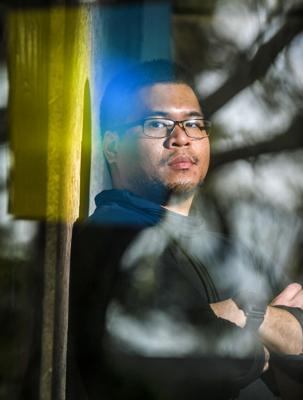
Two U.S. veterans from Alabama who were in Ukraine assisting in the war against Russia haven’t been heard from in days and are missing, members of the state’s congressional delegation said Wednesday. Relatives of Andy Tai Ngoc Huynh, 27, of Trinity, and Alexander Drueke, 39, of Tuscaloosa, have been in contact with both Senate and House offices seeking information about the men’s whereabouts, press aides said. Rep. Robert Aderholt said Huynh had volunteered to go fight with the Ukrainian army against Russia, but relatives haven’t heard from him since June 8, when he was in the Kharkiv region of northeastern Ukraine, which is near the Russian border. Huynh and Drueke were together, an aide to Aderholt said. “As you can imagine, his loved ones are very concerned about him,” Aderholt said in a statement. “My office has placed inquires with both the United States Department of State and the Federal Bureau of Investigation trying to get any information possible.” Rep. Terri Sewell said Drueke’s mother reached out to her office earlier this week after she lost contact with her son. The U.S. State Department said it was looking into reports that Russian or Russian-backed separatist forces in Ukraine had captured at least two American citizens. If confirmed, they would be the first Americans fighting for Ukraine known to have been captured since the war began on February 24. “We are closely monitoring the situation and are in contact with Ukrainian authorities,” the department said in a statement emailed to reporters. It declined further comment, citing privacy considerations. John Kirby, a national security spokesman at the White House, said Wednesday that the administration wasn’t able to confirm the reports about missing Americans. “We’ll do the best we can to monitor this and see what we can learn about it,” he said. However, he reiterated his warnings against Americans going to Ukraine. “Ukraine is not the place for Americans to be traveling,” he said. “If you feel passionate about supporting Ukraine, there’s any number of ways to do that that that are safer and just as effective.” A court in Donetsk, under separatist control, sentenced two Britons and a Moroccan man to death last week. The Britons and Moroccan were accused of being mercenaries and seeking the violent overthrow of the separatist government in the Donetsk region. The Russian military has said it considers foreigners fighting with Ukraine to be mercenaries and claims they are not protected as combatants under the Geneva Convention. Huynh’s fiancee, Joy Black, posted publicly on Facebook that his family was in contact with the Drueke family and government officials and that nothing had been confirmed other than that the two were missing. “Please keep Andy and Alex, and all of their loved ones in prayer. We just want them to come home,” she wrote. U.S. Rep. Adam Kinzinger tweeted that the Americans “have enlisted in the Ukrainian army, and thus are afforded legal combatant protections. As such, we expect members of the Legion to be treated in accordance with the Geneva convention.” It was unclear whether Kinzinger, an Illinois Republican, had any further information about the men. He was commenting on a tweet sent earlier Wednesday by Task Force Baguette, a group of former U.S. and French servicemen, saying that two Americans fighting with them were captured a week ago. The group said Ukrainian intelligence confirmed the information. Early in the war, Ukraine created the International Legion for foreign citizens who wanted to help defend against the Russian invasion. Huynh spoke to his local newspaper, the Decatur Daily, shortly before flying to Eastern Europe in April. He explained that he was studying robotics at Calhoun Community College but couldn’t stop thinking about Russia’s invasion. “I know it wasn’t my problem, but there was that gut feeling that I felt I had to do something,” Huynh told the Decatur Daily. “Two weeks after the war began, it kept eating me up inside, and it just felt wrong. I was losing sleep. … All I could think about was the situation in Ukraine.” He said he decided to fly out once he learned that young Ukrainians were being drafted into service. “Right when they turned 18, they were forced to enlist in the military to defend their homeland,” Huynh said. “Honestly, that broke my heart. I would say that is probably the moment where I decided that I have to do something.” According to the newspaper, Huynh enlisted in the Marines when he was 19 and served for four years, though he did not see active combat. He was born and raised in Orange County, California, to Vietnamese immigrants and moved to northern Alabama two years ago to be closer to his fiancee, the newspaper reported. Republished with the permission of The Associated Press.
Terri Sewell secures $33 million in water infrastructure funding for Alabama projects
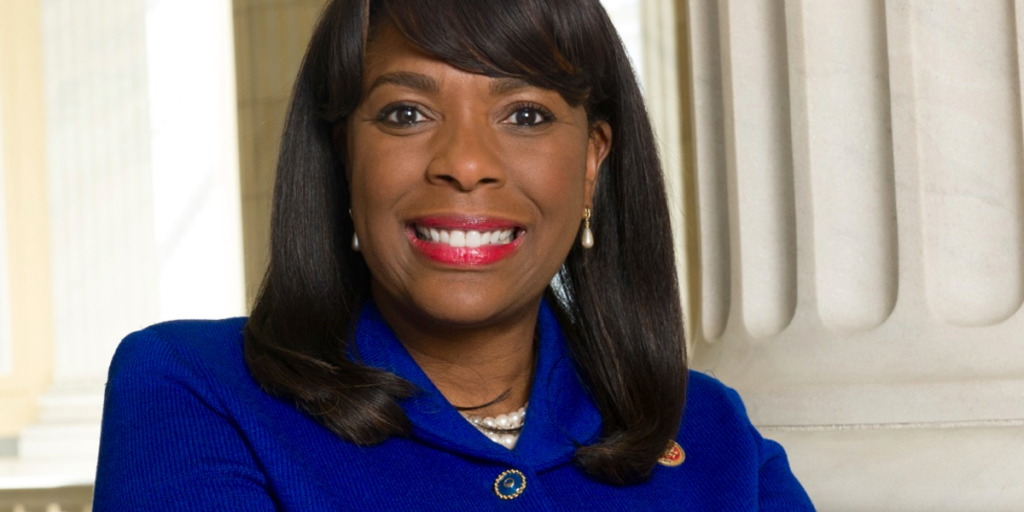
Rep. Terri Sewell announced today that she voted to pass the bipartisan Water Resources Development Act (WRDA) of 2022. The legislation authorizes crucial investments in America’s ports, inland waterways, flood management systems, ecosystems, and other water resources infrastructure. Sewell secured funding of over $33 million in this legislation for the Selma River Stabilization Project and the Birmingham and Bessemer Valley Creek Flood Risk Management Project. WRDA passed the House today and will now make its way to the U.S. Senate. The bill aims to improve U.S. water infrastructure by authorizing the study and construction of locally-driven projects developed in cooperation and consultation with the U.S. Army Corps of Engineers. Additionally, it will strengthen the U.S. economy through investment in ports, harbors, and inland waterways and build more resilient communities by restoring natural infrastructure and ensuring new infrastructure helps to mitigate the effects of natural disasters, extreme weather, and sea-level rise. The $33 million in funding includes: $15,533,100 for the Selma Flood Risk Management and River Bank Stabilization Project, and $17,725,000 for the Birmingham and Bessemer Valley Creek Flood Risk Management Project. “I fought hard to include funding for the Selma River Erosion Project in the Water Resources Development Act, and I’m thrilled to announce that over $15 million was approved for this project by the House of Representatives today!” stated Sewell. “This critical funding will help assist the Army Corps of Engineers as they work to stabilize the Selma River Bank and mitigate flooding in our community.” “Our Birmingham and Bessemer communities know just how frustrating and dangerous Valley Creek’s frequent flooding can be,” Sewell continued. “That’s why I fought to include over $17 million in the Water Resources Development Act to address this flooding and find long-term solutions. I’m thrilled that this funding was approved by the House of Representatives and will continue to work to improve the resiliency of Valley Creek.”
Alabama congressional races to feature one runoff in June

Control of Alabama’s seven-member congressional delegation likely will remain firmly in Republican hands, but not without a contest. Two GOP candidates are in a runoff for the open District 5 seat in north Alabama, and three Republican incumbents and the only Democratic member face opposition in November. All the incumbents will be heavy favorites to return to Washington. Neither District 1 Republican Rep. Jerry Carl of Mobile nor Rep. Gary Palmer of Hoover in District 6 had any opposition, meaning each will get another two-year term. Here is a look at the races in the state’s remaining five congressional districts: DISTRICT 2 First-term GOP Rep. Barry Moore of Enterprise did not have any primary opposition and will face Democrat Phyllis Harvey-Hall in November. Harvey-Hall, a teacher and community volunteer, defeated newcomer Vimal Patel in Tuesday’s election in heavily Republican southeast Alabama. DISTRICT 3 Republican Rep. Mike Rogers of Saks, who was first elected 20 years ago, easily defeated Michael Joiner of Pell City for the GOP nomination in east-central Alabama. Rogers will face Democrat Lin Veasey in the fall. DISTRICT 4 Democrat Rick Neighbors, a veteran and longtime apparel worker from Phil Campbell, defeated Rhonda Gore for the chance to go up against GOP Rep. Robert Aderholt, a 12-term incumbent from Haleyville. Solidly Republican, District 4 covers most of northwest Alabama. DISTRICT 5 The lone runoff in Alabama’s congressional races will occur in north Alabama’s 5th District, where Republican Rep. Mo Brooks gave up the seat to run for Senate. Madison County Commission chair Dale Strong and Casey Wardynski, a former Huntsville school superintendent, advanced to a runoff that will be held June 21. The winner will face Democrat Kathy Warner-Stanton of Decatur, who defeated Charlie Thompson in the primary. DISTRICT 7 Rep. Terri Sewell of Selma, the only Democrat in the state delegation, did not have any primary opposition and will face Republican nominee Beatrice Nichols of Moundville in November. The sprawling district includes the Black Belt of west Alabama plus parts of Birmingham and Montgomery. Republished with the permission of The Associated Press.
Terri Sewell announces $3.6 million in funding to preserve Civil Rights sites
Rep. Terri Sewell announced over $3.6 million in funding from the National Park Service’s (NPS) African American Civil Rights Grant Program that is being awarded to preserve historic sites in Alabama related to Civil Rights and the African American struggle for equality. “I am thrilled that over $3.6 million in funding from the National Park Service is being invested into Alabama to preserve the living history of the Civil Rights Movement,” stated Sewell. “As the Representative of America’s Civil Rights District, I’m proud to lead the congressional effort every year to increase funding for the National Park Service Civil Rights Historic Preservation Grant Program to ensure that America’s civil rights history lives on. This is a big win for the State of Alabama and the many Foot Soldiers and Freedom Fighters on whose shoulders we stand.” According to Sewell’s press release, the grant program helps document, interpret, and preserve sites, and stories related to the African American struggle to gain equal rights as citizens. The grants are funded by the Historic Preservation Fund (HPF) and administered by the NPS. Established in 1977, the HPF is authorized at $150 million per year through 2023 and has provided more than $2 billion in historic preservation grants to States, Tribes, local governments, and nonprofit organizations. Administered by the NPS, HPF funds are appropriated annually by Congress to support various historic preservation projects to help preserve the nation’s cultural resources. Dr. Charles P. Everett IV, President of the Mount Zion AME Center Foundation, praised Sewell’s efforts to secure the funding. “The Genesis of our success began with Congresswoman Sewell,” stated Everett. “She provided information through grant workshops, which assisted our efforts in forming a team to work towards a successful application. We believe that when God gives you a vision, the provision will follow. We are grateful to the Congresswoman, God, and the entire Mount Zion A.M.E. Center Foundation Team.” The National Park Service has awarded the following grants, which total $3,665,408, for the following historic sites in Alabama: $500,000 to Birmingham’s Saint Paul United Methodist Church for preservation, restoration, and repair $50,000 to the Birmingham Black Radio Museum for the permanent exhibit at the Carver Theatre $499,799 to Auburn University for stabilization and exterior rehabilitation of the Tankersley Rosenwald School in Hope Hull $469,500 to the Alabama Historical Commission for stabilization and preservation of the Schooner Clotilda in Mobile, the Last-known Slave Ship to Import Enslaved Africans to the United States $500,000 to the Mount Zion Center Foundation, Inc. in Montgomery for the rehabilitation of the Mount Zion AME Zion Church Memorial Annex $50,000 to the Alabama Historical Commission for the Freedom Rides Museum Interior Exhibit Plan in Montgomery $50,000 to the City of Montgomery for the civil engineering of “The Civil Rights Movement in Montgomery, Alabama: The Planned Destruction of a Prosperous African American Community” $46,588 to Auburn University for “Memory and the March: Oral Histories with Selma’s Foot Soldiers” $500,000 to the Historic Brown Chapel AME Church Preservation Society, Inc. for the preservation of Selma’s endangered Historic Brown Chapel AME Church $500,000 to the Historic Tabernacle Baptist Church Selma AL Legacy Foundation, Inc. for critical systems and accessibility upgrades to Historic Tabernacle Baptist Church $499,521 to the Selma Center for Nonviolence, Truth & Reconciliation for rehabilitation of the Historic Sullivan Building for use as a community and culture center
Alabama U.S. House races to feature the fewest open seats since 2018
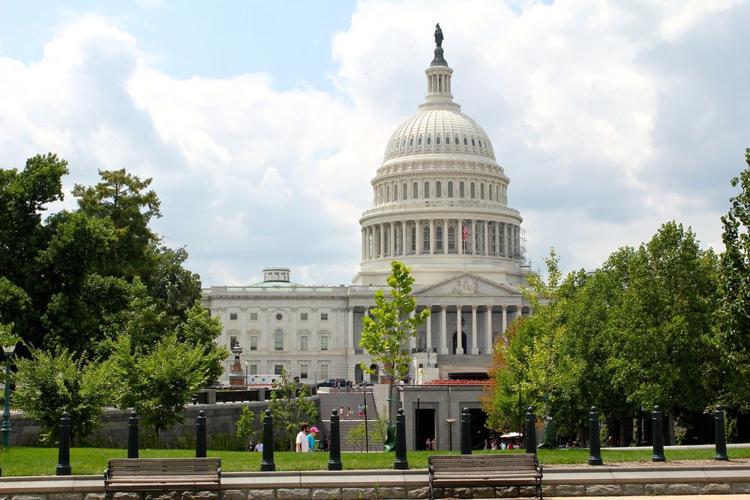
The filing deadline for candidates running for Congress in Alabama this year was Feb. 11, 2022. Twenty-two candidates are running for Alabama’s seven U.S. House districts, including thirteen Republicans and eight Democrats. That’s 3.14 candidates per district, less than the 3.57 candidates per district in 2020 and 3.28 in 2018. Here are some other highlights from this year’s filings: This is the first election to take place under new district lines following the 2020 census. Alabama was apportioned seven districts, the same number it was apportioned after the 2010 census. Six districts are currently represented by Republicans, and one district – the 7th – is represented by a Democrat, Rep. Terri Sewell. This number has not changed since 2010 when Sewell was first elected. Sewell will face a general election challenger for the first time since 2012, making this year the first time in a decade that Democrats are not guaranteed to win a seat because no Republicans filed. Two districts – the 1st and the 6th – are guaranteed to Republicans since no Democrats filed for election, the highest number since 2016. One district – the 5th – is open, with incumbent Rep. Mo Brooks (R) running for the U.S. Senate. Brooks was first elected in 2010, and eight candidates – two Democrats and six Republicans – are running to replace him. The eight candidates running in the 5th district are the most running for one seat this year. That’s one less than in 2020, when nine candidates – two Democrats and seven Republicans – ran for the 2nd district. This year’s open seat is one more than in 2012, the previous post-redistricting election year. There were two open seats in 2020, no open seats in 2018 and 2016, and one open seat in 2014. There are two contested Republican primaries this year, the lowest number since at least 2012. There are three contested Democratic primaries, one more than in 2020 but one less than in 2018. Five incumbents – four Republicans and one Democrat – will not face any primary challengers. Alabama and two other states — Arkansas and Georgia — are holding primary elections on May 24. A primary candidate must win a majority of the vote in order to be declared the winner in Alabama. If no candidate wins a majority of the vote, the top two finishers will advance to a June 21 runoff. Republished with the permission of The Center Square.
Alabama lawmakers react to U.S. Supreme Court leak on Roe v. Wade reversal

According to a Politico report, a leaked draft opinion suggests the U.S. Supreme Court may be set to overturn the 1973 Roe v. Wade case that legalized abortion in the U.S. According to the report, the leaked document was labeled a “1st Draft” of the “Opinion of the Court” in a case challenging Mississippi’s ban on abortion after 15 weeks, a case known as Dobbs v. Jackson Women’s Health Organization. A decision in the case is expected before the court begins its summer recess in late June or early July. Alabama leaders are reacting to the news and to the leak, something that is extremely rare for the Supreme Court. Many condemned the leak saying that it was meant to disrupt the court’s decision. Gov. Kay Ivey stated on Twitter, “This unprecedented leak is concerning, outrageous and a blatant attempt to manipulate the sacred procedures of the U.S. Supreme Court. Those responsible should be held accountable. My prayer is that Roe v. Wade is overturned and that life prevails. Tonight let us say a prayer for life and that our Justices remain steadfast in their convictions. Here in Alabama, we will continue fighting for the unborn.” Congressman Barry Moore issued a statement on the leaked Supreme Court draft opinion calling it “dangerous” and blaming Democrats and their “radical agenda.” “Tonight’s outrageous and unprecedented leak is astonishingly dangerous and further proof that nothing obstructing the Left’s radical agenda is safe, despite the consequences,” said Moore. “I am terribly concerned for the repercussions of this leak and the broader dangers of an ideology in which the ends always justify the means. “Much remains unknown about this draft opinion, and even if it is authentic, justices can change positions on cases up until the last minute. But nothing can change the fact that Roe was a horrendous, politically-charged decision by an activist court with, at best, weak Constitutional footing. It is my sincere hope that Roe is overturned and this country’s tragic and shameful era of the widespread and indiscriminate legal termination of the lives of millions of unborn children can start to be brought to a close. “We don’t know how the next days and weeks will unfold, but with great conviction I believe that our country needs our fervent prayer now more than ever,” Moore concluded. Rep. Robert Aderholt released a statement agreeing with the reversal of Roe V. Wade. Aderholt called the ruling “deeply flawed.” “I have read the news reports on the draft opinion indicating that the high court is set to overturn Roe V. Wade. We, of course, will have to wait and see if this report is true when the court actually releases its official opinion in the coming weeks; however, if the opinion stands, then it is a great decision for the protection of innocent life in America,” stated Aderhold. “The original arguments of Roe V. Wade in 1973 were deeply flawed and attempted to create a constitutional right to privacy where one did not exist.” Aderholt continued, “Let’s be clear, though. The overturning of Roe will not make abortion illegal. It will simply leave the legality up to each individual state. While this will certainly reduce abortions by a great number, there will sadly still be thousands of abortions in states where it will remain legal. I’m glad to say Alabama will not be one of them. “However, we cannot take this decision for granted. I will always remain committed to protecting the most vulnerable among us, and there are none more vulnerable than the unborn. Regardless of the decision, we must continue to fight to protect the lives of our unborn children. And as Co-Chairman of the Congressional Coalition on Adoption, I will continue to support meaningful alternatives to abortion.” Rep. Jerry Carl stated on Twitter, “Last night’s leak of the Supreme Court draft opinion to potentially overturn Roe v. Wade is a shameful attempt by the radical pro-abortion Left to sway our Supreme Court justices. All life is made in the image of God, and I will never stop fighting to protect life at all stages!” Rep. Terri Sewell stated on Twitter, “The draft opinion by SCOTUS is a devastating blow to women’s reproductive rights. A woman’s personal health decisions should be made between her and her doctor. The Senate must pass the #WHPA so that women everywhere can access a full range of reproductive health care services.” President Joe Biden reacted to the news, calling on voters and elected officials to protect women. “If the court does overturn Roe, it will fall on our nation’s elected officials at all levels of government to protect a woman’s right to choose,” Biden stated. “And it will fall on voters to elect pro-choice officials this November. At the federal level, we will need more pro-choice Senators and a pro-choice majority in the House to adopt legislation that codifies Roe, which I will work to pass and sign into law.”
Alabama NAACP honors difference makers at annual gala
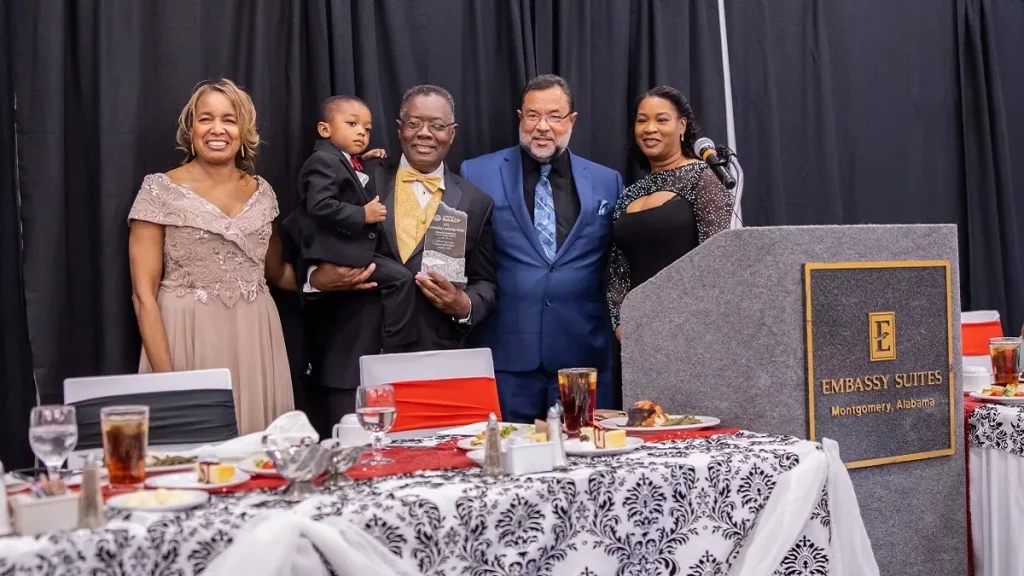
The Alabama NAACP recently held its annual Bridge Crossing Gala. The event, in its 57th year, was at the Embassy Suites Conference Center in Montgomery. Speakers included U.S. Rep. Terri Sewell, Montgomery Mayor Steven Reed, and the Rev. Jesse Jackson. Darlena Battle, Corporate Relations specialist for Alabama Power, emceed the event. As part of the festivities, several people and organizations were honored for their commitment to diversity and building a better Alabama. Students and NAACP members made up the honorees, who included: Outstanding Leadership: Benard Simelton, Alabama NAACP president. Foot Soldiers Scholarship Contributor: Regions Bank. Shining Star Award: Carlos King, creator and executive producer of the “Love & Marriage Huntsville” reality show. Foot Soldiers Scholarship Award: Alyssa Miles, Andrea Wainwright. Gamechanger: Jasmine Washington Cook, Raven Perry-Beach. Trailblazer: Patricia A. Haley. Foot Soldier: Bobby Diggs. Humanitarian: Alec Barnett. Living History: Les Brown. Unsung Hero: Brenda Debose. The NAACP was founded in 1909 with a vision to “ensure a society in which all individuals have equal rights and there is no racial hatred or racial discrimination,” according to the association’s website. It is the nation’s largest civil rights organization, with “over 2 million activists fighting for change and for justice.” For more information about the NAACP and its programs, please visit www.alnaacp.org. Republished with the permission of the Alabama News Center.
