
$4.2 million in YouthBuild grants awarded to greater Birmingham region

Rep. Terri Sewell announced that the greater Birmingham region will receive over $4.2 million in grant funding from the United States Department of Labor (DOL) for job training and educational opportunities for at-risk youth. The funding is awarded through DOL’s YouthBuild program and will be used to develop apprenticeship and other career pathway models that help prepare at-risk youth for jobs in construction and other in-demand industries. The awards are part of a $90 million investment to grow America’s clean energy workforce with education and training for young adults. Sixty-eight grants were awarded to organizations in 28 states and Puerto Rico. Participants will engage in classroom learning that will prepare them for work-based learning opportunities, building and rehabilitating affordable housing for low-income or homeless families in their communities. Additionally, the YouthBuild funding announcement included criteria that awarded bonus points to applicants that demonstrated their ability to provide training in green construction techniques, training the next generation of workers for resilience and clean energy careers of the future. The following organizations were named as recipients of DOL’s YouthBuild grant program: Bessemer Housing Authority – $1,500,000 Housing Authority of Birmingham District (HABD) – $1,500,000 Cornerstone Revitalization Foundation – $1,259,237 Sewell expressed excitement for the funding and its investment in youth. “I’m thrilled that the greater Birmingham region will be receiving over $4.2 million from the Department of Labor!” stated Rep. Sewell. “This announcement is truly a win-win for our community. By connecting at-risk youth with job training and education, this funding will provide our most vulnerable young adults with the resources they need to succeed, all while growing our green energy workforce. Once again, I applaud the Biden-Harris Administration for making transformational investments in our community!” “We are delighted to be awarded the Department of Labor YouthBuild Grant to help provide the youth of Bessemer, Alabama with additional resources, furthering their education and preparing them to become productive citizens in our community,” commented Courtney Coleman, Executive Director of the Bessemer Housing Authority. “We believe these funds along with our community partners will work together to ‘Build Better Lives’ and ‘Deliver Hope,’ which is the mission here at the Bessemer Housing Authority.” HABD Board Chairman Dr. Anthony Hood stated, “This is a monumental win for our agency. This award allows us to equip our most promising youth with the tools needed to thrive in an ever-competitive workforce. The demand for skilled trades and apprenticeships has never been stronger, and this grant allows us to place our young people on a direct path to the careers of the future.” YouthBuild programs also train young people for employment in healthcare, information technology, manufacturing and logistics, culinary arts, and hospitality.
Terri Sewell and Robert Aderholt show support for Huntsville as the preferred location for U.S. Space Command Headquarters
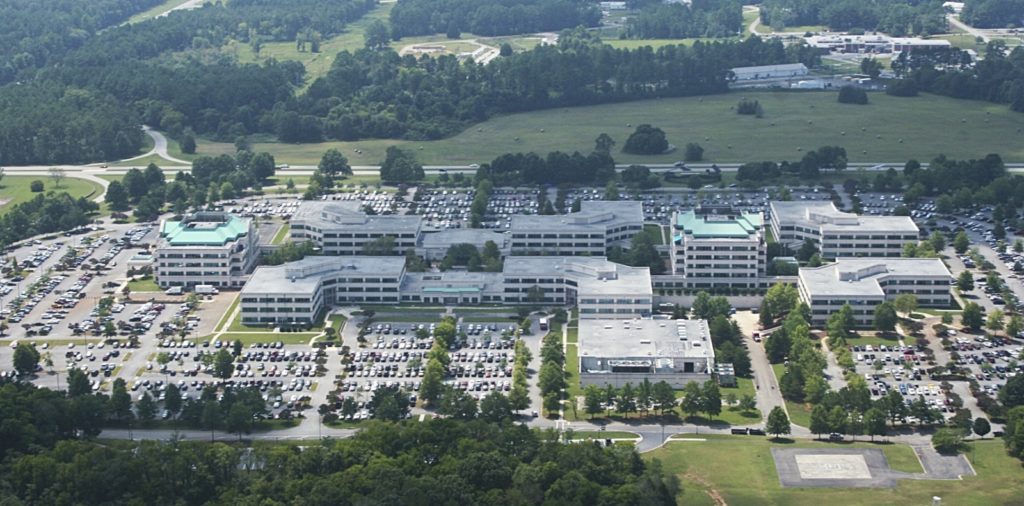
U.S. Reps. Terri Sewell and Robert Aderholt released a joint statement in support of Redstone Arsenal in Huntsville as the preferred location for U.S. Space Command Headquarters. Redstone Arsenal in Huntsville, Alabama was chosen by the U.S. Air Force to be the permanent site for the U.S. Space Command headquarters. Alabama was selected over five other states, including Colorado, where Space Command is provisionally located. The Associated Press reported that Colorado officials lambasted the move, arguing that military officials had recommended to Trump that Space Command should remain at the Peterson Air Force Base in Colorado Springs. However, they claim they were “overruled for politically motivated reasons.” They did not say what those alleged political reasons were. Congressional colleagues from locations that lost the competition requested two government agencies, the Government Accountability Office (GAO) and the Department of Defense Office of Inspector General, investigate the U.S. Air Force’s basing process. The GAO report will be publicly released in the coming weeks. Sewell and Aderholt stated, “There is no better place for our nation’s Space Command headquarters than the Rocket City. Huntsville is the world’s premier hub for space exploration and innovation and we resoundingly support the 2021 decision to locate it there. We stand by the Air Force’s decision that Huntsville is the best and only home for U.S. Space Command. We look forward to reviewing the Government Accountability Office’s report and remain confident that an objective analysis of the facts will yield the same conclusion.” Sewell stated on Twitter, “There is no better place for the U.S. Space Command headquarters than the Rocket City and I am confident that an objective analysis of the facts will yield the same conclusion.” On March 8th, General James H. Dickinson, Commander of U.S. Space Command, was asked if a move of Space Command away from its temporary home might result in operational disruptions or delays to the mission. The General responded, “I would say we are a couple or three years away from full operational capability … wherever I’m located.”
Steve Flowers: Congressional lines and Congressmen will remain the same
For several years leading up to the 2010 Census count, the national projections were that Alabama would lose one of our seven congressional districts and drop to six. When the count was taken, we surprised ourselves and the nation and kept our seven seats in the United States Congress. Therefore, the legislature’s task in drawing our seven congressional districts was relatively easy. Except for some tweaking here and there due to growth in Madison, Limestone, Lee, Shelby, and especially Baldwin counties, and the loss of population in the Black Belt, our congressional district lines were kept basically the same as they have been for the past few decades. We essentially have six of our seven districts that are safe Republican seats. We have one dedicated majority minority African American Democratic Congressional District. That Democratic seat is held by Congresswoman Terri Sewell. She has been in that seat for over a decade and has become a respected leader in the Democratic House leadership. The Democrats are in the majority, which makes her a powerful member of the House. However, most political experts and polling indicate that this year’s election will bring a swing of 30 or more Republican seat pickups or takeovers, thus making the Republicans the majority party. This will be beneficial for Alabama since six of our seven seats are held by Republicans. It will be particularly beneficial to folks in the fourth district, who have Robert Aderholt (R-Haleyville) as their Congressman. Aderholt is the most senior member of our delegation and is the ranking Republican on the House Appropriation Committee. Congressman Mike Rogers (R-Anniston) is also gaining ground in seniority. He is a ranking member of the Armed Services Committee. Congressman Gary Palmer (R-Jefferson) represents the suburban areas of metro-Jefferson, Hoover, and Shelby. It is considered one of the most Republican House districts in America. We have two freshmen Republican Congressmen who are finishing their first two years in the House. Jerry Carl (R-Mobile) represents the coastal first district of basically Mobile and Baldwin Counties. He has taken to Congress like a duck to water. Barry Moore (R-Enterprise) represents the second district made up of the Wiregrass and the fast-growing Pike Road area of Montgomery, as well as the populous counties of Autauga and Elmore. All six of the aforementioned incumbents will be reelected without opposition. The only excitement in Congressional politics in the Heart of Dixie will play out in the fifth district. This Huntsville-Tennessee Valley seat is currently held by Mo Brooks, who has opted to run for the U.S. Senate, thus leaving a seldom seen open congressional seat contest. There are six Republicans vying for this open fifth district seat. The contestants are Dale Strong, Paul Sanford, Casey Wardynski, Harrison Wright, Andy Blalock, and John Roberts. Madison County Commission Chairman Dale Strong appears to be the strongest candidate. He is far outdistancing the field in polling and fundraising. Some say that he could eclipse the field without a runoff. The most ardent challengers will be former State Senator Paul Sanford and former Huntsville City School Superintendent Casey Wardynski. Dr. Wardynski has done a good job fundraising. There will be a large turnout in this congressional race. In fact, this Huntsville-Madison-Limestone Tennessee Valley area of the state will more than likely have the largest percentage turnout in the state. Not only is there an open congressional seat, but Mo Brooks is the local candidate for the open U.S. Senate Seat, and popular, incumbent Republican state school board member, Wayne Reynolds, will also be on the ballot with token opposition. In addition, the only hotly contested Republican State Senate race between Tom Butler and Bill Holtzclaw is in the Madison-Limestone area. There are also three open hotly contested State House races, including filling the seats of Speaker Mac McCutcheon and veteran House member Howard Sanderford. There is also a hotly contested open sheriff’s race in Limestone County. Furthermore, the phantom candidate for the U.S. Senate, Mike Durant, claims Huntsville as his home. All of these ingredients are a recipe for a larger turnout in the Tennessee Valley than the rest of the state on May 24. The Congressional lines and six of seven congressmen will remain the same for this 2022 election cycle. However, hold the phone. The federal courts could change that for 2024. See you next week. Steve Flowers is Alabama’s leading political columnist. His weekly column appears in over 60 Alabama newspapers. Steve served 16 years in the state legislature. Steve may be reached at: www.steveflowers.us.
Rep. Terri Sewell joins bipartisan bill to protect employer-provided worksite health clinics
Last week Reps. Terri Sewell and Brad Wenstrup introduced bipartisan bill H.R. 7487, the Employee Access to Worksite Health Services Act. The bill would protect employees’ access to health care at their workplace health center by correcting a provision of the tax code that currently disincentivizes employers from offering worksite health clinics. Worksite health clinics are offered by many large employers and state and local governments. They play a critical role in the health and well-being of employees across the nation. In 2021, more than 60 percent of large companies offered worksite health clinics. “Workers in Alabama and across this nation rely on their employer’s worksite health clinics to access critical health care services. These clinics make our communities healthier and offer countless benefits to companies and the workers they employ,” stated Sewell. “We must ensure that our tax code rewards—not penalizes—employers for making these clinics available at the workplace. The Employee Access to Worksite Health Services Act is a commonsense bill that does just that. I’m proud to partner with Congressman Brad Wenstrup to introduce this bill and urge my colleagues on both sides of the aisle to give it their full support.” Wenstrup, lead Republican sponsor, argued that the bill will correct how the tax system currently disincentivizes employers from offering worksite health clinics. Under Internal Revenue Code Section 223, employees are prohibited from contributing pre-tax dollars to a Health Savings Account (HSA) if they also receive certain supplemental health benefits at no cost or under fair market value. Employers are then forced to limit the scope of services offered to HSA enrollees or deny them access enjoyed by other employees and their family members. Wenstrup stated, “Our communities here in Ohio and across the country rely on worksite health clinics to provide valuable resources which keep people healthier longer by providing interventions and preventative healthcare. Our tax system currently disincentivizes employers from offering worksite health clinics, and this bill corrects that. I’m happy to work with Congresswoman Terri Sewell, Congressman Mike Kelly, and Congressman Earl Blumenauer on this important legislation and I hope my colleagues will do the same; let’s keep America’s employees healthy.” The bill will amend IRC Section 223 to clarify that accessing services provided through a worksite health clinic does not render an individual ineligible to make pretax contributions to their HSA.
Rep. Terri Sewell announces over $76 Million for Alabama transit projects
Today, U.S. Rep. Terri Sewell announced $76 million of funding from the Bipartisan Infrastructure Law to upgrade and expand local transit in Alabama. The funding will create even more manufacturing jobs, in addition to the 2,900 manufacturing jobs already created in Alabama in the last year. $11,791,104 of these funds have been allocated for local transit projects in Birmingham, and $4,124,766 will go to local transit projects in Montgomery. This investment will allow local transit authorities to buy new buses and railcars, address repair backlogs, modernize fleets, and transition to new technologies that reduce carbon emissions. “Today’s announcement is yet another example of how the Bipartisan Infrastructure Law is delivering for Alabamians,” said Rep. Sewell in a press release. “Alabama’s transit systems are in dire need of repair. This funding, which I was proud to help secure, will help us upgrade and expand our transit systems to reduce commute times and help connect our communities, all while creating good-paying jobs.”
Terri Sewell only Alabama lawmaker to vote yes to Democrat led $35-a-month insulin cap bill
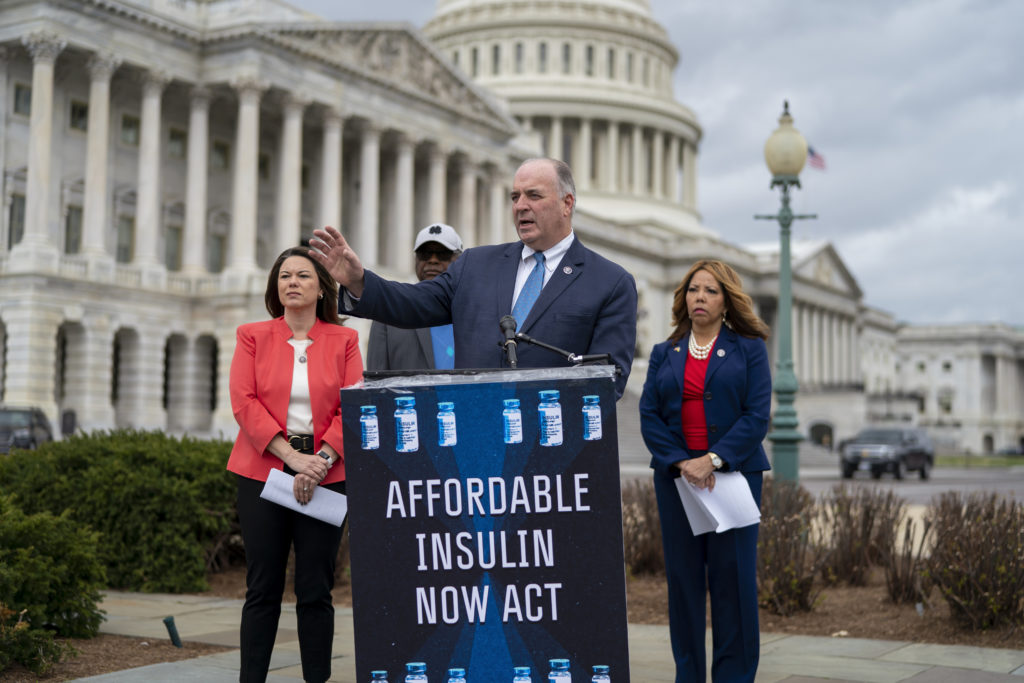
The House on Thursday passed a bill capping the monthly cost of insulin at $35 for insured patients, part of an election-year push by Democrats for price curbs on prescription drugs at a time of rising inflation. Rep. Terri Sewell was the only yea for the bill while the rest of the Alabama legislature voted nay. Experts say the legislation, which passed 232-193, would provide significant relief for privately insured patients with skimpier plans and for Medicare enrollees facing rising out-of-pocket costs for their insulin. Some could save hundreds of dollars annually, and all insured patients would get the benefit of predictable monthly costs for insulin. The bill would not help the uninsured. But the Affordable Insulin Now Act will serve as a political vehicle to rally Democrats and force Republicans who oppose it into uncomfortable votes ahead of the midterms. For the legislation to pass Congress, 10 Republican senators would have to vote in favor. Democrats acknowledge they don’t have an answer for how that’s going to happen. “If 10 Republicans stand between the American people being able to get access to affordable insulin, that’s a good question for 10 Republicans to answer,” said Rep. Dan Kildee, D-Mich., a cosponsor of the House bill. “Republicans get diabetes, too. Republicans die from diabetes.” Public opinion polls have consistently shown support across party lines for congressional action to limit drug costs. But Rep. Cathy McMorris Rodgers, R-Wash., complained the legislation is only “a small piece of a larger package around government price controls for prescription drugs.” Critics say the bill would raise premiums and fails to target pharmaceutical middlemen seen as contributing to high list prices for insulin. Sen. Chuck Grassley, R-Iowa, said Democrats could have a deal on prescription drugs if they drop their bid to authorize Medicare to negotiate prices. “Do Democrats really want to help seniors, or would they rather have the campaign issue?” Grassley said. The insulin bill, which would take effect in 2023, represents just one provision of a much broader prescription drug package in President Joe Biden’s social and climate legislation. In addition to a similar $35 cap on insulin, the Biden bill would authorize Medicare to negotiate prices for a range of drugs, including insulin. It would penalize drugmakers who raise prices faster than inflation and overhaul the Medicare prescription drug benefit to limit out-of-pocket costs for enrollees. Biden’s agenda passed the House only to stall in the Senate because Democrats could not reach consensus. Party leaders haven’t abandoned hope of getting the legislation moving again and preserving its drug pricing curbs largely intact. The idea of a $35 monthly cost cap for insulin actually has a bipartisan pedigree. The Trump administration had created a voluntary option for Medicare enrollees to get insulin for $35, and the Biden administration continued it. In the Senate, Republican Susan Collins of Maine and Democrat Jeanne Shaheen of New Hampshire are working on a bipartisan insulin bill. Georgia Democratic Sen. Raphael Warnock has introduced legislation similar to the House bill, with the support of Sen. Majority Leader Chuck Schumer of New York. Stung by criticism that Biden’s economic policies spur inflation, Democrats are redoubling efforts to show how they’d help people cope with costs. On Thursday, the Commerce Department reported a key inflation gauge jumped 6.4% in February compared with a year ago, the largest year-over-year rise since January 1982. But experts say the House bill would not help uninsured people, who face the highest out-of-pocket costs for insulin. Also, people with diabetes often take other medications as well as insulin. That’s done to treat the diabetes itself, along with other serious health conditions often associated with the disease. The House legislation would not help with those costs, either. Collins says she’s looking for a way to help uninsured people through her bill. About 37 million Americans have diabetes, and an estimated 6 million to 7 million use insulin to keep their blood sugars under control. It’s an old drug, refined and improved over the years, that has seen relentless price increases. Steep list prices don’t reflect the rates insurance plans negotiate with manufacturers. But those list prices are used to calculate cost-sharing amounts that patients owe. Patients who can’t afford their insulin reduce or skip doses, a strategy born of desperation, which can lead to serious complications and even death. Economist Sherry Glied of New York University said the market for insulin is a “total disaster” for many patients, particularly those with skimpy insurance plans or no insurance. “This will make private insurance for people with diabetes a much more attractive proposition,” said Glied. Republished with the permission of the Associated Press.
Tommy Tuberville & Terri Sewell lead bipartisan effort to support defense textile manufacturers
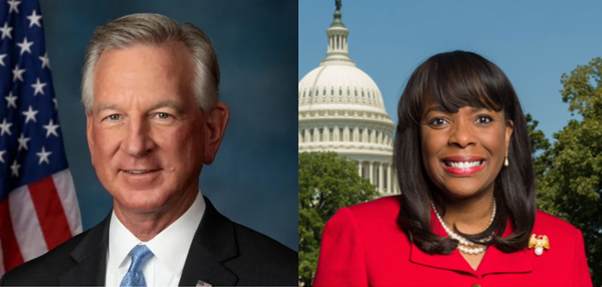
Sen. Tommy Tuberville (R-AL) and Rep. Terri Sewell (D-AL-07) sent a letter to the Department of Defense (DOD) Under Secretary of Defense for Acquisition and Sustainment, Andrew Hunter, asking for action on behalf of America’s defense clothing and textile manufacturers. The letter addressed concerns with operational constraints being placed on companies from COVID and inflation and emphasized their importance to military readiness and national security. “The C&T base enables military readiness, ensuring that America’s warfighters have access to the mission-critical textiles, apparel, and equipage to protect our nation…” Tuberville and Sewell wrote. “Without immediate action, many of these companies will be forced to withdraw from all military-related business or close operations outright. Our nation’s manufacturers, manufacturing workforce, and men and women in uniform need swift, targeted action from the administration,” the Members of Congress continued. A copy of the letter is below. March 8, 2022 The Honorable Andrew HunterUnder Secretary of Defense for Acquisition and Sustainment Department of Defense3010 Defense PentagonWashington DC 20301-3010 Dear Mr. Hunter: We write to request your assistance regarding the U.S. Clothing and Textile (C&T) Manufacturing Defense Industrial Base. The C&T base enables military readiness, ensuring that America’s warfighters have access to the mission-critical textiles, apparel, and equipage to protect our nation. The men and women who wear the cloth of the nation do so proudly. We are proud that 100% of these items are manufactured in the United States. On average, the Department of Defense (DOD) procures nearly $2 billion worth of military textiles, helmets, armor, footwear and clothing annually, through the purchase of over 8,000 items. Dozens of U.S. factories, employing tens of thousands of U.S. workers in the textile, apparel, and footwear industries are proud to support our warfighters. For 80 years, Congress has recognized that an effective national defense requires robust domestic capacity for textiles and clothing. The Berry Amendment ensures that these vital industries are called out for different and enhanced procurement procedures relative to other government procurement. Although the Berry Amendment protects the C&T base from offshore competition, it cannot insulate the base from problematic contracting practices, unpredictable DOD demand, and increases in material and labor costs. Each of these factors have made it unsustainable to continue to produce clothing, ballistic protection, and equipage for the U.S. military. Many companies are now operating on Firm Fixed Price contracts that were awarded before the current COVID economic and health crises were realized. Fixed price contracts make it impossible for companies to react to changing business conditions — such as those that have whipsawed domestic industry over the past two years. Costs for labor, health care, freight, energy, and materials have all suddenly and unexpectedly increased by double digits over the past 18 months and show no sign of abatement. Many manufacturers are unable to offer competitive wages, further exacerbating acute labor shortages. These higher costs coupled with a lack of economic price adjustment mechanisms from DOD mean companies are often forced to perform on contracts at a financial loss simply to retain business and keep workers employed in the hopes that a future contract will make up for current losses. Even if they can eke out a slim profit, these companies rarely have enough to reinvest in their business for training or equipment. Unfortunately, many companies with long track records of supporting the warfighter have already left the industrial base. In just the past few years, longtime industry stalwarts such as Campbellsville Knits (Kentucky), Racoe Manufacturing (Tennessee), and DeRossi & Sons (New Jersey) have all closed. The C&T manufacturers who support our military readiness request your immediate help to make sure the Department of Defense has the authority and funding necessary so that Berry-compliant C&T contracts in distress can be adjusted to give U.S. companies and their workers the wherewithal to survive. Without immediate action, many of these companies will be forced to withdraw from all military-related business or close operations outright. Our nation’s manufacturers, manufacturing workforce, and men and women in uniform need swift, targeted action from the administration. Thank you for your attention to this request — we look forward to working with you to resolve this pressing issue.
$8,379,355 in funding for 7th congressional district championed by Terri Sewell
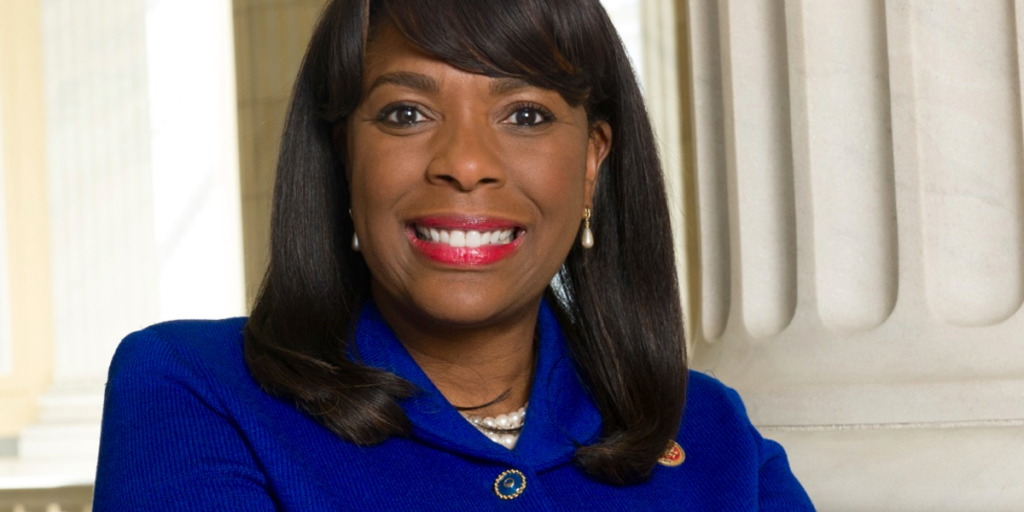
Rep. Terri Sewell announced that she voted to fund $8,379,355 in Community Project Funding for Alabama’s 7th Congressional District. This funding was included in the appropriations government funding package. Sewell explained that these funds will help with some of the most pressing needs in Alabama’s communities. According to Sewell, the twelve-bill government funding package will help middle-class families with the cost of living, create jobs, vulnerable citizens, and work to help small businesses. “I was so pleased to secure $8,379,355 in Community Project Funding in this bill which responds directly to the needs of our communities in Alabama’s 7th Congressional District,” stated Sewell. “These investments will uplift underserved areas and foster economic development across our district, and I know they will make a real difference in the lives of so many. I am proud to have fought for this funding which will make our community healthier, safer, stronger, and even more resilient.” Sewell championed funding for 9 projects that will directly benefit the residents of Alabama’s 7th District. These include: $550,000 for Community Oriented Policing Services in Selma, Alabama $474,355 for Small Business Accelerator Program in Jefferson County $3,000,000 for North Birmingham Elementary School Redevelopment Project $700,000 for Lowndes County for Septic Tank Installations $480,000 for City of Marion for Source Water Rehabilitation Project $300,000 for West Central Alabama Area Health Education Center, Demopolis, AL for a community health worker initiative and purchase of equipment $1,500,000 for Cornerstone Revitalization Foundation, Inc., Birmingham, AL for workforce development activities, including opportunities to obtain a GED, postsecondary credentials, and stipends $575,000 for Hill Hospital, York, AL for facilities and equipment $800,000 for Stillman College, Tuscaloosa, AL for facilities and equipment The legislation will be voted on by the Senate later this week.
Alabama leaders support call for U.S. sanctions on Russia

U.S. Congress is largely backing President Joe Biden’s decision to confront Russia with potentially escalating sanctions for the crisis in Ukraine. Russian troops launched their anticipated attack on Ukraine on Thursday, as President Vladimir Putin cast aside international condemnation and sanctions, warning other countries that any attempt to interfere would lead to “consequences you have never seen.” Alabama’s congressional delegation is reacting to the invasion, calling on harsh sanctions, possibly even worse than what the Biden Administration is calling for currently. House Armed Services Committee Lead Republican Mike Rogers, along with other House Armed Services Committee members, released the following statement, “The last few hours have laid bare for the world to witness the true evil that is Vladimir Putin. Today, we stand resolute with the Ukrainian people and resolve to provide them with the tools they need to withstand and repel this unprovoked attack. Every drop of Ukrainian and Russian blood spilled in this conflict is on Putin’s hands, and his alone. “In response, we are committed to enacting the strongest possible sanctions and export controls to cripple Russia’s ability to make war, punish its barbarity and relegate the Putin regime to the status of an international pariah. We cannot respond like we did in 2008 or 2014. The world must never forget or forgive this heinous act.” Rep. Jerry Carl stated on Twitter, “Putin’s invasion of Ukrainian sovereign territory is an act of pure evil, and he should be met with resolve and strength to support #Ukraine and its people. The United States stands with the people of Ukraine and our NATO allies, and I strongly urge @POTUS to enact the toughest possible sanctions to cripple Russia and prevent them from continuing unprovoked attacks.” Rep. Terri Sewell issued a statement commending Biden’s call for sanctions. “I have been closely watching the troubling situation in Ukraine. America must continue to stand for democratic values around the world, and I commend President Biden for standing up to Russian President Vladimir Putin and sending the clear message that America is committed to NATO,” Terri stated. “I was glad to see President Biden attempt to exhaust every diplomatic option possible to avoid a war in Ukraine, and I applaud him for the strong sanctions he announced yesterday. If Russia chooses to continue on this path, there will be swift and severe consequences, including additional crippling sanctions. “As Americans, we will continue to stand with the Ukrainian people and our European allies and support their sovereignty and democratic values.” Congressman Robert Aderholt condemned Russia’s actions, stating in a press release, “What we have seen over the past few hours in Ukraine is truly heartbreaking. Vladimir Putin has attacked a sovereign nation without cause. This is something that has not occurred in Europe since World War II. “Ukraine is a peaceful, freedom-loving people. This invasion is a brutal effort by Putin to stamp out a democratic nation on his doorstep. This invasion will lead to thousands of innocent deaths. I am praying for, and encourage us as a nation, to stand with the Ukrainian people during this dark time.” Barry Moore called the attack “unprovoked” and criticized President Biden. “Vladimir Putin’s invasion of the sovereign nation of Ukraine is unprovoked and evil, but despite what President Biden says, this aggression was not inevitable,” said Moore in a press release. “President Biden’s history of weakness and delayed action opened the door for Putin to continue the annexation of former Soviet territory that began with the invasion of Crimea during the Obama Administration. Pseudo-toughness, passive support and platitudes will never be enough to stop immoral autocrats like Putin. We must never forget what is happening today – and why it happened. I hope you’ll join me in praying for the people of Ukraine as they fight for their freedoms and calling on the Administration to – for once – act decisively and hold Putin accountable for this heinous aggression.” Rep. Mo Brooks condemned the attacks. In a press release, Brooks stated, “Communist dictator Vladimir Putin’s unprovoked invasion of Ukraine is barbaric and evil. Putin brought war to a peaceful people. Unfortunately, Ukrainians are learning the hard way that freedom and a republican form of government are never granted, they are hard-won.” Brooks concluded, “While Putin’s Ukrainian invasion and murders are heinous, this is first and foremost a problem for Western Europe to resolve. America should impose maximum economic sanctions to force a hefty price on Russia for its brutal Ukraine invasion. America should wait and consider military assistance to our European allies only if Europe asks and, even then, only if Europe takes the lead military role in whatever defensive measures, if any, Europe decides is appropriate to counter Russia’s barbaric invasion of an otherwise peaceful nation.” Brook continued his criticism of Biden on social media and praised former President Donald Trump’s handling of Russia. On Twitter, Brooks stated, “Joe Biden has all the strength of a marshmallow. President Trump, on the other hand, had it right and was very forceful in dealing with authoritarian dictator Vladimir Putin.” Over the weekend, Sen. Tommy Tuberville attended the Munich Security Conference with a bipartisan delegation to discuss tensions in Eastern Europe. Tuberville stated, “As we’ve seen from Putin’s aggression, strongly-worded statements don’t stop wars. Rather than discuss a diplomatic resolution, Putin chose to invade Ukraine and test world order. His actions must be met with a tough and targeted response.” Tuberville also called for European countries to contribute more to their own security, stating, “For 80 years, Americans have sacrificed to bring security and peace to the European continent. The events of the past 24 hours underscore that it is time for Europe to contribute more to its own security. The United States should support Ukraine and provide assistance to Ukraine’s military through weapons and funding for emergency equipment while leveling tough and targeted sanctions to halt Russian escalations and cripple Russia’s economy. The incremental sanctions issued by President Biden today are a weak response – the time to have imposed harsh sanctions was yesterday. “Allies and adversaries across the globe
Across the bridge: Terri Sewell carries torch for voting bill
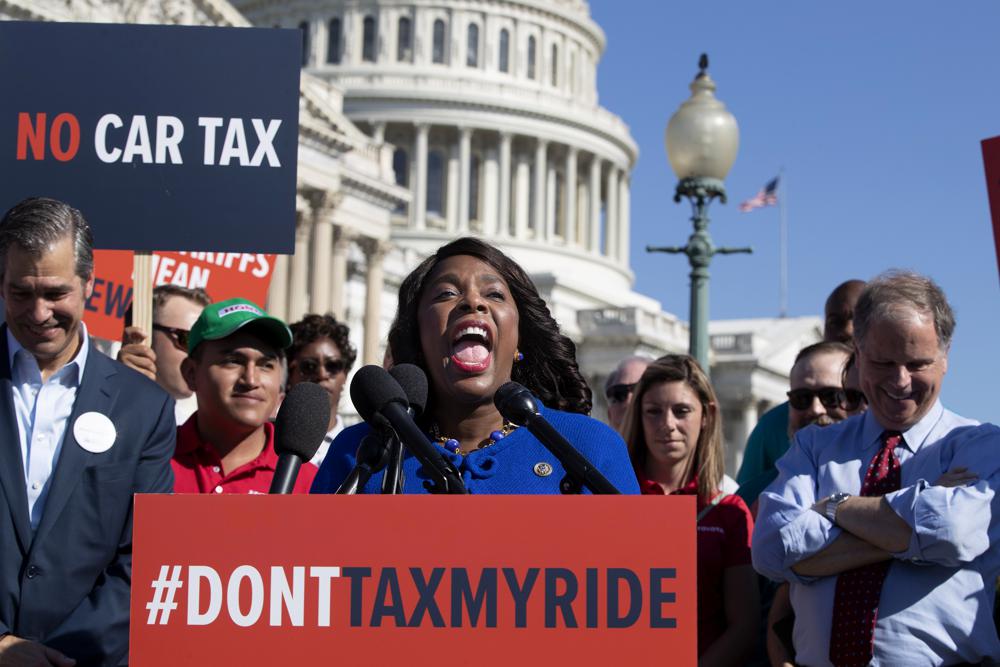
Growing up in the civil rights epicenter of Selma, Alabama, Terri Sewell heard all the stories. About the police violence during the “Bloody Sunday” march at the Edmund Pettus Bridge. About the beating of the young man who went on to become Rep. John Lewis. About the blood that was shed and the lives undone to ensure Black people would finally have the right to vote when the Voting Rights Act of 1965 became law. As she set out for the Ivy League, law school, and eventually Congress, Sewell focused on the civil rights battles to come. Income inequality, she thought, would be her work for the new era. Then the Supreme Court gutted the Voting Rights Act. And the fight of her parents’ and teachers’ and neighbors’ generation suddenly became her own. “Never in a million years did I think that I — 57 years later — would have the cause for which John Lewis and those foot soldiers marched become my cause, too,” Sewell said in an interview. “We fought that. They were bludgeoned on a bridge for the right to vote — the equal right of every American to vote,” she said. “But so it is.” The Democratic congresswoman’s journey from rural Selma to the halls of Congress offers a vivid portrait of the nation’s progress toward ending voter discrimination, but also of accumulating setbacks in the long campaign for voting rights. Her work trying to restore the Voting Rights Act is testing the resolve of a nation that celebrates its civil rights heroes of the past but cannot muster support in Congress to update what has historically been a popular, bipartisan law. Since the Supreme Court in 2013 struck down part of the law, many states free from federal oversight have been imposing new rules, changing polling times, and even installing limits on handing out water for those waiting in line — changes that voter advocates say could make it more difficult to cast ballots in this year’s elections. Wade Henderson, interim president of the Leadership Conference on Civil and Human Rights, said of Sewell: “She’s emerged as someone who is uniquely qualified to play the role that history seems to have given her.” Elected in 2010 as the first Black congresswoman from Alabama, Sewell arrived at the Capitol about as backbench as it gets, among a new handful of Democrats in a Republican tea party wave. That was a tough start for the first Black valedictorian at Selma High School and someone who can boast of attending college with both Obamas, Michelle Obama at Princeton, and the future president at Harvard Law. Coming from a long line of “preachers and teachers,” she confides she really wanted to be an actor but recalled her late father’s admonitions: “We’re not eating cornflakes for dinner for you to be majoring in theater at Princeton University.” Her family’s church in Selma was the historic Brown Chapel AME Church, the starting point for the historic voting rights marches and the place that Lewis — the future congressman, who died in 2020 — and others would return years later to commemorate “Bloody Sunday.” Her mother was the city’s first Black city councilwoman. “For me, growing up in Selma, Alabama, I didn’t have to read in the history books about these amazing foot soldiers,” said Sewell, who is 57. Many of them were “ordinary Alabamians,” she said, and once the marches were over, and the voting rights bill became law, “They went on with their lives, and many of them were my neighbors and my church members.” In Congress, Sewell put her public finance law background to work trying to preserve the historic civil rights sites in her district, which stretches across the state’s Black Belt to her current home in Birmingham. One bill she steered into law awarded the Congressional Gold Medal to the four Black girls killed in the 1963 bombing at the city’s 16th Street Baptist Church. The region has been so underserved that when “Selma” the movie opened in 2014, her mom pointed out there was no movie theater open in town for a screening. Residential yard sewage remains a stubborn problem because of lagging public investment in wastewater systems. “We can’t just come to Selma and walk across that bridge and keep on walking,” she said ahead of next month’s anniversary of the marches. “It’s a city that is dying on the vine, a city that needs economic revitalization.” Two years after Sewell took office, the Supreme Court’s stunning decision to reject the Voting Rights Act’s “preclearance” formula governing state election changes thrust the congresswoman to the forefront alongside Lewis to try to salvage the law, which had been seen as among the most enduring achievements of the Civil Rights era. Since the court’s decision, every session of Congress, she has introduced legislation, now called the John R. Lewis Voting Advancement Act. It failed in the Senate in January, part of a broader bill halted by a Republican filibuster and two Democrats unwilling to change the rules for passage. For Sewell, it was a reminder of how the battle of the earlier civil rights generation has swiftly, intractably become her own. “That’s very much part of the experience of Black leaders,” said Sherrilyn Ifill, the president and director-counsel of the NAACP Legal Defense and Educational Fund. “If you are a Black person in leadership, and you care about and love your community, the circumstances in which Black people live in this country will compel you, sooner or later … to become a civil rights activist.” Alabama is again at the center of the nation’s voting rights debate. Shelby County, not far from Selma, brought the court case in which Chief Justice John Roberts writing for the conservative majority, argued, “Our country has changed in the past 50 years.” The Roberts court will hear another Alabama case, expected later this year. The state, where one in four voters is Black, is asking the high court to reject the creation of a second, mostly Black congressional seat, despite a lower court’s finding that having just
Alabama legislators urge caution on Amtrak decision

All nine members of the United States congressional delegation from Alabama sent a letter to Cynthia Brown, Chief of the Section of Administration at the Surface Transportation Board, discouraging a decision that would mandate Amtrak service along the Gulf Coast without a needed feasibility study. The study would measure potential consequences for the national rail network and supply chain. The letter also cites a number of infrastructure improvements that would be necessary to mitigate the effects of passenger rail service on the Port of Mobile’s operations and related freight rail traffic. The congressional delegation letter was signed by U.S. Senators Richard Shelby and Tommy Tuberville, along with U.S. Representatives Robert Aderholt, Mike Rogers, Mo Brooks, Terri Sewell, Gary Palmer, Jerry Carl, and Barry Moore. According to the Surface Transportation Board, the National Railroad Passenger Corporation (Amtrak) filed an application with the Board on March 16, 2021, seeking an order requiring CSX Transportation, Inc. (CSXT), and Norfolk Southern Railway Company (NSR) to allow Amtrak to operate additional intercity passenger trains, consisting of two round-trips per day, over the rail lines of CSXT and NSR between New Orleans, Louisiana, and Mobile, Alabama. The Board announced that it will hold the first phase of a public hearing in this docket on February 15, 2022. Shelby stated on Twitter, “I led the AL delegation in a letter to the STB as it considers mandating passenger service on the Gulf Coast – which without the necessary data & infrastructure improvements, threatens to significantly impact Mobile’s Port & related freight rail traffic.” The letter reads in part, “As proposals to initiate passenger rail service in the Gulf Coast have been discussed, multiple entities have understandably expressed concern about the impact such service would have on commerce in and around Mobile, including federal and state government officials, freight operators, the Alabama State Port Authority, and several of the Port of Mobile’s customers. In response to these concerns, Amtrak, in conjunction with CSX and Norfolk Southern, agreed to conduct a joint feasibility study to determine the impact passenger rail service would have on freight operation in Mobile. … Despite this agreement among all parties, Amtrak announced plans to begin passenger rail service without completing the ongoing study.” The members continued, “As a delegation, we are particularly concerned about the effects of Gulf Coast passenger rail service on the Port of Mobile, which in recent years has experienced tremendous growth. … In sum, a decision by the Board to mandate Amtrak service in this case will have significant consequences for the national rail network and supply chain, as well as set a precedent for expansion of Amtrak service. We urge you to uphold the Board’s long-standing commitment to an efficient and reliable rail network.” The letter also argued that making sure infrastructure improvements would priority to the project. “If the Board mandates service, it should ensure that this unprecedented level of funding is used by Amtrak to pay for the necessary infrastructure improvements to support its proposed service and that shippers and entities who rely on the freight and intermodal rail network are made whole. Our ports and shippers should not have to bear the cost of facilitating Amtrak’s passenger rail service expansion, and the Board should ensure any decision sets a precedent of safeguarding our country’s shippers and ports,” the letter stated.
Alabama set to receive millions in first round of infrastructure funding

Rep. Terri Sewell announced this week that the first round of federal transit funding under the Bipartisan Infrastructure Law is heading to Alabama. The Infrastructure law aims to strengthen public transportation systems, support transit jobs across the state, and make other investments, including new bus and railcar acquisitions, facility upgrades and other key projects. “The Bipartisan Infrastructure Law is continuing to deliver for Alabama!” stated Sewell. “This transformative legislation includes the largest transit investment in American history, with billions coming to Alabama to improve reliability and support good-paying jobs. This week’s announcement of the first round of transit funding is a critical victory for our economy and I am committed to working with our state and local leaders to ensure that Alabamians feel the benefits of these investments.” Rep. Sewell is the only legislator that supported the Infrastructure bill. Sewell commented on Twitter, “BIG NEWS: The first round of transit funding from the Bipartisan Infrastructure Law is heading to Alabama!! As the only Member of Congress from Alabama to vote for this law, I was proud to help secure this transformative funding for our state!” The Bipartisan Infrastructure Law was signed by President Joe Biden in November 2021. The law became the largest-ever investment in America’s public transit. Transit systems have suffered from decades of underinvestment, causing disruptions and increasing travel times for passengers. These investments will be administered by the U.S. Department of Transportation’s Federal Transit Administration. The funding totals nearly $6 billion in funding and will be made available to transit agencies, states, and Tribal governments across the country for the first 4.5 months of fiscal year 2022. This first round of transit funding includes: $18,210,370 in flexible funding to help communities make transit safer and more efficient, funding new buses and rail cars, track and station repairs, and other safety initiatives. $3,437,118 to upgrade bus fleets and repair old buses and bus facilities. At least $2,413,467 to support transit for seniors and persons with disabilities, funding key resources such as wheelchair lifts, mobility management programs, and accessible transit vehicles.
