
Two days left for Alabamians to apply for federal assistance from January 12 storms
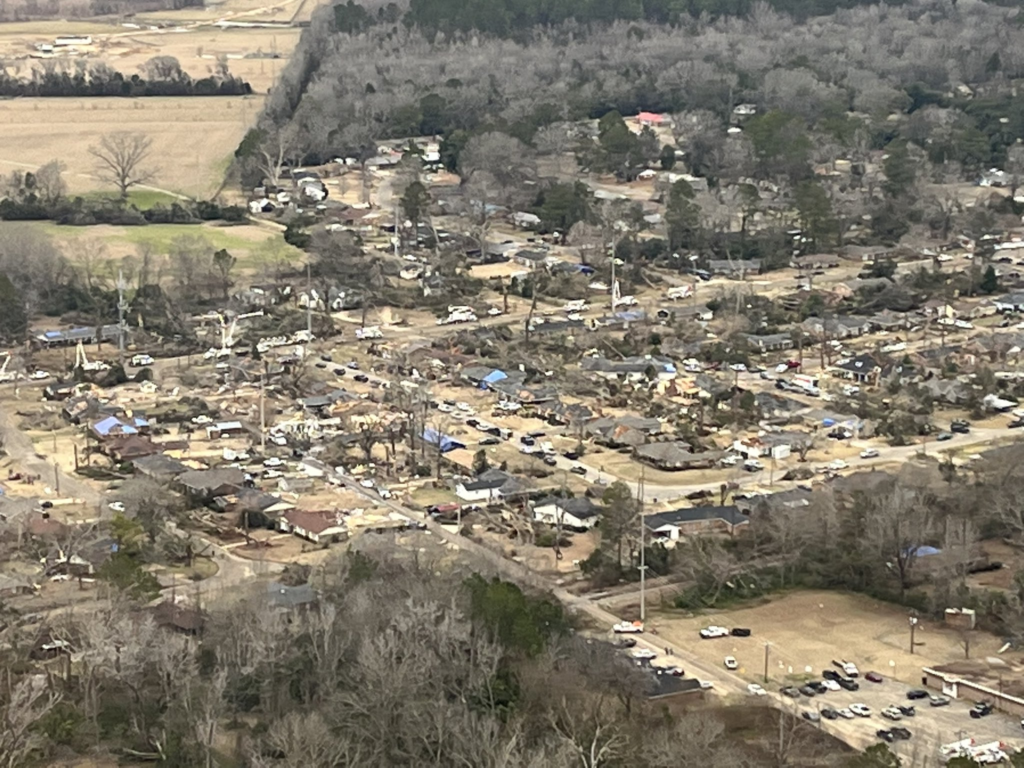
On Tuesday, Congresswoman Terri Sewell reminded Alabamians that homeowners and renters who sustained damage to their primary property due to the January 12th severe storms, straight-line winds, and tornadoes have two days left to apply for federal assistance. The deadline is March 16, 2023, for survivors to apply for federal assistance in Autauga, Coosa, Dallas, Elmore, Greene, Hale, Mobile, Morgan, Sumter, and Tallapoosa counties. “Following the January 12th storms, I have made it my mission to get our communities the resources needed to rebuild better and stronger than before,” said Rep. Sewell. “In order to take advantage of the individual assistance available, my constituents in the eligible counties have until this Thursday, March 16th to submit an application. I remain committed to ensuring my constituents can benefit from the critical assistance available right now!” Homeowners and renters in the designated counties can apply for assistance in three ways: 1) Call the FEMA Helpline at 800-621-3362. The helpline is open, and help is available from 6:00 a.m. to 10:00 p.m. CT. 2) Go online to DisasterAssistance.gov 3) Download the free FEMA mobile app for smartphones. You can view an accessible video on how to apply for assistance here. When applying, homeowners and renters will need: · A current phone number where you can be contacted · Your address at the time of the disaster and the address where you are now staying · Your Social Security Number · A general list of damage and losses · Banking information if you choose direct deposit · If insured, the policy number or the agent and/or the company name If you are unable to locate important documents, FEMA will help you to identify other ways to verify your information. Disaster assistance should not a substitute for insurance and cannot compensate for all losses caused by a disaster. The assistance is intended to meet basic needs and supplement disaster recovery efforts. Contact FEMA for more information. Nine Alabamians were killed in the January 12 storms. Terri Sewell is in her seventh term representing Alabama’s Seventh Congressional District. To connect with the author of this story or to comment, email brandonmreporter@gmail.com.
Terri Sewell says that voting rights struggle continues today
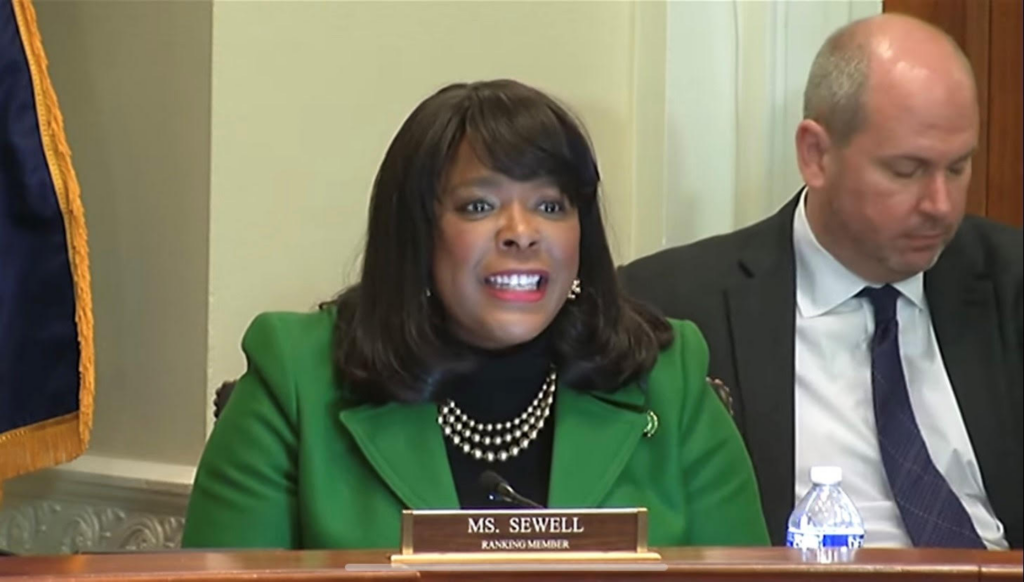
Congresswoman Terri Sewell said that the voting rights struggle continues today. Sewell made her comments during a hearing of the Committee on House Administration Subcommittee on Elections, where she is the Ranking member. As Ranking Member, Sewell serves as the highest-ranking Democrat on the Subcommittee, which has jurisdiction over the administration of federal elections. “Providing oversight over federal election administration and ensuring every American has free and equitable access to the ballot is vital to our democracy,” Sewell said. “I represent Alabama’s Seventh Congressional District, a district with a long, storied history in this country’s struggle for free and fair access to the ballot. I am excited to join this Committee and continue this critical work.” “Last weekend, we marked the 58th anniversary of Bloody Sunday in my hometown of Selma with President [Joe] Biden, a bipartisan delegation of Members of Congress, civil rights leaders, and many of the surviving Foot Soldiers of the March from Selma to Montgomery,” Sewell said. “This annual pilgrimage serves as a reminder that the violent struggle for voting rights and equal access to the ballot is not one of the distant past. As we sit here today discussing the 2022 midterm elections, we must not lose sight of the fact that the struggle for equal voting rights that occurred on the Edmund Pettus Bridge 58 years ago continues today.” Many Republicans and supporters of former President Donald Trump question the results of the election, a narrative that Sewell rejected. “There were successes in the 2022 midterms, to be sure. Millions of Americans cast their ballots, those ballots were counted, and election workers across the country performed admirably despite the threats and harassment they have faced over the last two years,” Sewell said. “The election was secure, as it was in 2020. Those who continued perpetuating the Big Lie that the last presidential election was stolen and who traffic in falsehoods about the security of our elections lost many of their races for critical statewide offices.” Many states have passed election laws to improve the integrity of future elections following the 2020 controversy. These include voter ID laws, bans on ballot harvesting, bans on curbside voting, paper ballot requirements, advance voter registration, etc. Sewell rejected efforts to make voting more difficult. “Furthermore, according to the Brennan Center for Justice, in 2022, at least 12 states enacted laws that expand access to the vote,” Sewell continued. “On the opposite side of the spectrum, however, the Brennan Center found that another 12 states enacted restrictive or election interference legislation. We should applaud increases in voter turnout, not respond to them with new restrictions.” Many on the left claim that tightening voter integrity laws adversely impact minority communities. “Additionally, while many minority communities overcame barriers to cast their ballot – it does not make those barriers fair, and it certainly does not justify or validate their existence,” Sewell said. “In the years since the Supreme Court’s egregious decision in Shelby County v. Holder, states with a history of voter discrimination are no longer required to preclear their voting laws to ensure they are not discriminatory, allowing a wave of anti-voter laws to be adopted across the country. Today, the Supreme Court continues to dismantle the Voting Rights Act.” “I am proud to be the lead sponsor of the John R. Lewis Voting Rights Advancement Act, a bill that would update and reinstate the full force of the Voting Rights Act, a law that protected voters from discrimination for more than 50 years. Additionally, House Democrats have repeatedly passed pro-democracy legislation that would protect voters’ access to the ballot,” Sewell concluded. To connect with the author of this story or to comment, email brandonmreporter@gmail.com.
Joe Biden headed to Selma to commemorate Bloody Sunday
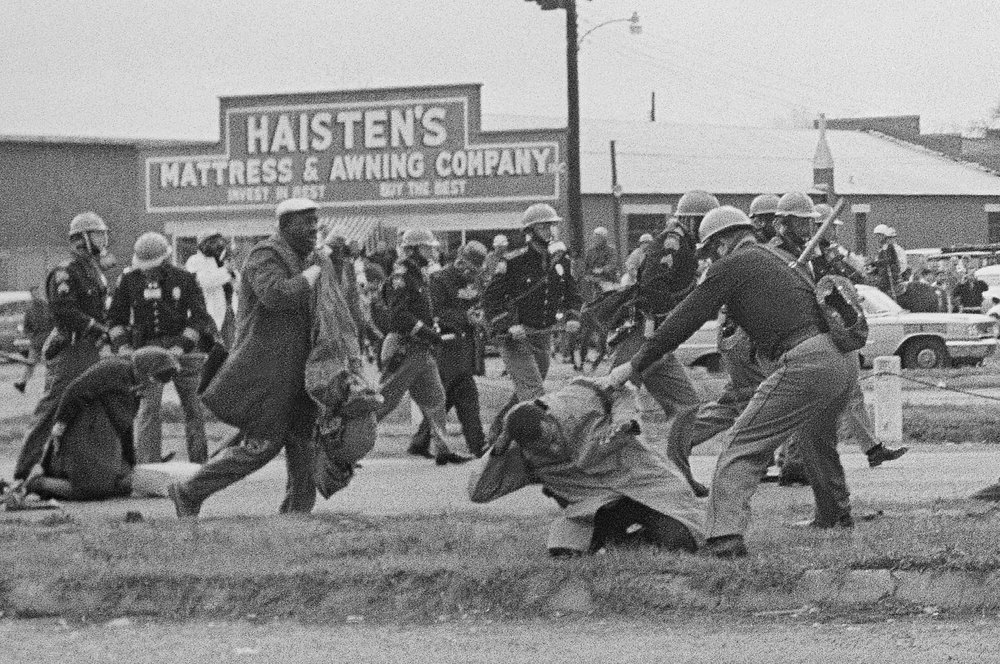
On Tuesday, Congresswoman Terri Sewell announced that President Joe Biden will join her in Selma on March 5 to commemorate the 58th Anniversary of Bloody Sunday, where voting rights marchers were beaten by Alabama State Troopers to prevent them from marching to Montgomery. Bloody Sunday proved to be a turning point in the civil rights movement that led to the passage of the Voting Rights Act of 1965. Rep. Sewell invited President Biden to visit Selma during his 2023 State of the Union Address. The visit comes after President Biden granted Rep. Sewell and the Alabama legislative delegation’s request to increase the federal cost share for FEMA’s public assistance program—including funding for debris removal and emergency protective measures—from 75% to 100% following the January 12th storms. “I am thrilled that President Biden has accepted my invitation to visit Selma for the 58th anniversary of Bloody Sunday,” said Rep. Sewell. “As Selma continues to recover from the January 12th storms, President Biden’s presence will send a clear message that our community is not alone and shows that the federal government will continue to be a partner in rebuilding Selma and Dallas County. I look forward to welcoming the President to my hometown as we reflect on the sacrifices of the Foot Soldiers in the name of equality and justice for all.” Sewell is a native of Selma and the first Black woman to represent Alabama in the United States Congress. “On Sunday, March 7, 1965, time stopped and blood spilled as brave and righteous Americans sought to cross a bridge named after a Klansman in Selma, Alabama, to reach the other side of justice,” Biden said in a statement last year. “Led by the late John Lewis, they marched to secure their sacred right to vote. Their heroism was met by batons and tear gas. They were beaten, but not defeated. Their absolute courage forced America to look in the mirror and Congress to act. Soon after, President [Lyndon] Johnson signed the Voting Rights Act of 1965.” “In Selma, the blood of John Lewis and so many other courageous Americans sanctified a noble struggle,” said Biden. “We are determined to honor that legacy by passing legislation to protect the right to vote and uphold the integrity of our elections, including the John Lewis Voting Rights Advancement Act and the Freedom to Vote Act.” Biden previously attended the Bloody Sunday Commemoration just ahead of the 2020 Democratic Presidential primary. Sewell’s endorsement, combined with Biden’s personal campaigning at the annual commemoration event, helped Biden win the Alabama Democratic Presidential Primary and effectively propelled the former Vice President to the Democratic nomination for the Presidency. While the voting rights marchers were ultimately victorious in their struggle for equality, Selma itself has been in severe decline since the 1960s. According to the Census Bureau just 17,625 persons lived in Selma in 2022 -down from 23,720 in 1990 – a 25.7% decrease. In 2022, just 50.1% of Selma residents 16 years and older are in the workforce, and per capita income is just $19,262. The closing of Craig Air Force Base in 1977 was a shock to Selma’s economy that it never was able to overcome. To connect with the author of this story or to comment, email brandonmreporter@gmail.com.
Katie Britt and Tommy Tuberville join bipartisan group to support rural hospitals

On Friday, U.S. Senators Katie Britt and Tommy Tuberville joined a bipartisan group of fourteen Senators urging the extension of a policy that is helping rural hospitals in states like Alabama continue to deliver quality care. The two Alabama Republicans joined in a letter to Centers for Medicare and Medicaid Services (CMS) Administrator Chiquita Brooks-LaSure formally requesting a four-year extension of the Low Wage Index Hospital Policy, which allows hospitals in rural areas to compete for and retain high-quality staff by increasing reimbursements to hospitals in rural areas with lower overall wages. Without action, Medicare payments to these hospitals will reduce after September 30, 2023. Sen. Britt is a member of the subcommittee for Labor, Health and Human Services, Education, and Related Agencies of the Senate Committee on Appropriations. “Our rural families and communities depend on the medical services and potentially life-saving treatments that local hospitals provide,” said Sen. Britt. “Every Alabamian deserves access to quality care and the opportunity to thrive in safe, strong communities – no matter their zip code.” The four-year AWI adjustment by CMS for bottom quartile hospitals was first passed by the Trump administration in August 2019. Then, Sens. Richard Shelby and Doug Jones represented Alabama in the Senate. “For two decades, Alabama has been fighting the unfair Medicare reimbursements and today receives a rate that is just 67 percent of the national average,” Sen. Jones explained in 2019. “This rule adjustment will bring balance to Medicare reimbursement for Alabama, particularly our rural hospitals and hospitals across the country,” explained then-Sen. Shelby. “For years, I’ve been working with Alabama’s hospitals and the delegation to advocate for increased Medicare reimbursements for Alabama’s hospitals, which are currently reimbursed at the lowest rates in the country,” Congresswoman Terri Sewell stated when the rule was passed. “Today’s announcement is great news for Alabama’s hospitals, especially those in rural areas of the state where every dollar counts. With over 88 percent of rural Alabama hospitals operating in the red, it is critical that we do everything we can to help our hospitals provide the services needed to keep Alabamians healthy. Recalculating the way Medicare reimburses Alabama hospitals is a crucial step in achieving that goal.” “Unfortunately, due to disruptions in the marketplace caused by the COVID-19 pandemic, we have not had the opportunity to see the true impact of the Low Wage Index Hospital Policy envisioned by CMS,” the Senators wrote in their letter. “Extending the Low Wage Index Hospital Policy for four additional years will allow hospitals and the agency to better understand the policy’s true impact in a more normal environment.” Senators Britt and Tuberville were joined by Senators Mark Warner (D-Virginia), Marsha Blackburn (R-Tennessee), Tim Kaine (D-Virginia), Joe Manchin (D-West Virginia), John Boozman (R-Arkansas), Shelley Moore Capito (R-West Virginia), Roger Wicker (R-Mississippi), Cindy Hyde-Smith (R-Mississippi), Bill Hagerty (R-Tennessee), James Lankford (R-Oklahoma), Tim Scott (R-South Carolina), and Tom Cotton (R-Arkansas). Without a renewal and extension of the rule, CMS will revert back to compensating rural hospitals at 60 to 75% of the rates as hospitals in many major metropolitan areas based on the assumption that the cost of living and, thus, wages are less in the rural areas. The difficulty with that theory is that there is an intense nationwide competition for medical professionals who all go to the same medical and nursing schools. Rural hospitals already struggle to hire competent medical professionals due to the small rural populations. This means fewer patients seeking care, particularly specialized care, than in a major city hospital. If Medicare and Medicaid reimburse those hospitals for significantly less than the major hospitals will, then attracting and retaining staff at the rural hospitals becomes problematic. To connect with the author of this story or to comment, email brandonmreporter@gmail.com.
Terri Sewell announces $500,000 for student initiatives at Birmingham-Southern College
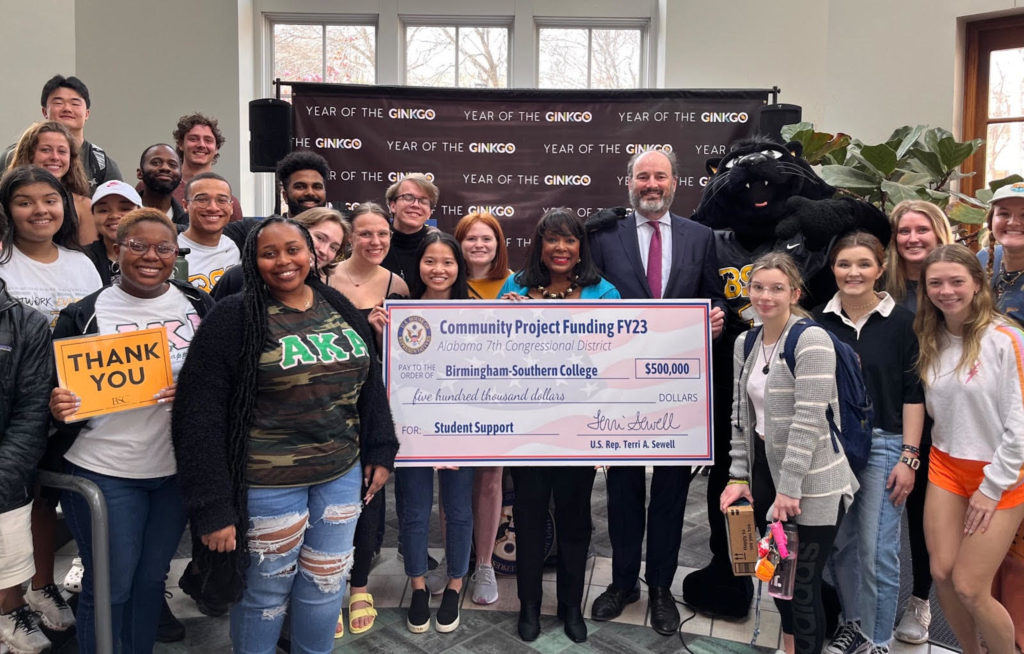
On Wednesday, Congresswoman Terri Sewell announced that Birmingham-Southern College (BSC) had been awarded $500,000 in federal funding for an experiential learning and civic engagement student initiative. Sewell was joined by BSC President Daniel Coleman and members of the student body for the funding announcement. “I was so proud to present a check for half a million dollars in federal funding to Birmingham-Southern College for experiential learning and student support,” said Rep. Sewell. “My team and I fought hard to ensure that funding for this project was included in this year’s government funding package so that students can benefit from high-impact internships and jobs during their time at BSC and beyond. Birmingham-Southern is a pillar of our community, and I urge our partners at the state and local level to do what they can to support this cherished institution and its students during this critical time.” At Wednesday’s press conference, Sewell presented a check for $500,000 to President Coleman and members of the student body. This funding is part of the $42.8 million Sewell helped secure in the Fiscal Year 2023 government funding package for local projects in Alabama’s Seventh Congressional District. The $500,000 in federal funding will strengthen the institution’s ability to facilitate placement in high-impact internships and jobs through multiple offerings of the Krulak Institute for Leadership, Experiential Learning and Civic Engagement on campus. Birmingham Southern College has recently made headlines over its well-documented financial difficulties. President Coleman has asked the Legislature, as well as the City of Birmingham and Jefferson County, for a substantial financial bailout. The small private college has been a fixture in Birmingham for over a century and has a broad alumni base. “Those efforts continue daily — even hourly — and have been encouraging enough to keep us moving forward with the plan,” BSC President Coleman said recently. “While we all wish we had a final (and positive) answer by now, the simple truth is that when public funds are involved, there are many, many moving parts and decision-makers. So we are working closely with our allies in Montgomery and statewide, and we expect to know something more definitive by the time the Alabama Legislature convenes on March 7, if not before.” The State Legislature will likely take up appropriating the ARPA money early in the Alabama regular legislative session that begins in less than two weeks. Sewell is in her seventh term representing Alabama’s Seventh Congressional District. She has been supportive of BSC and its efforts to seek taxpayer assistance to remain open. To connect with the author of this story or to comment, email brandonmreporter@gmail.com.
Terri Sewell tours storm damage
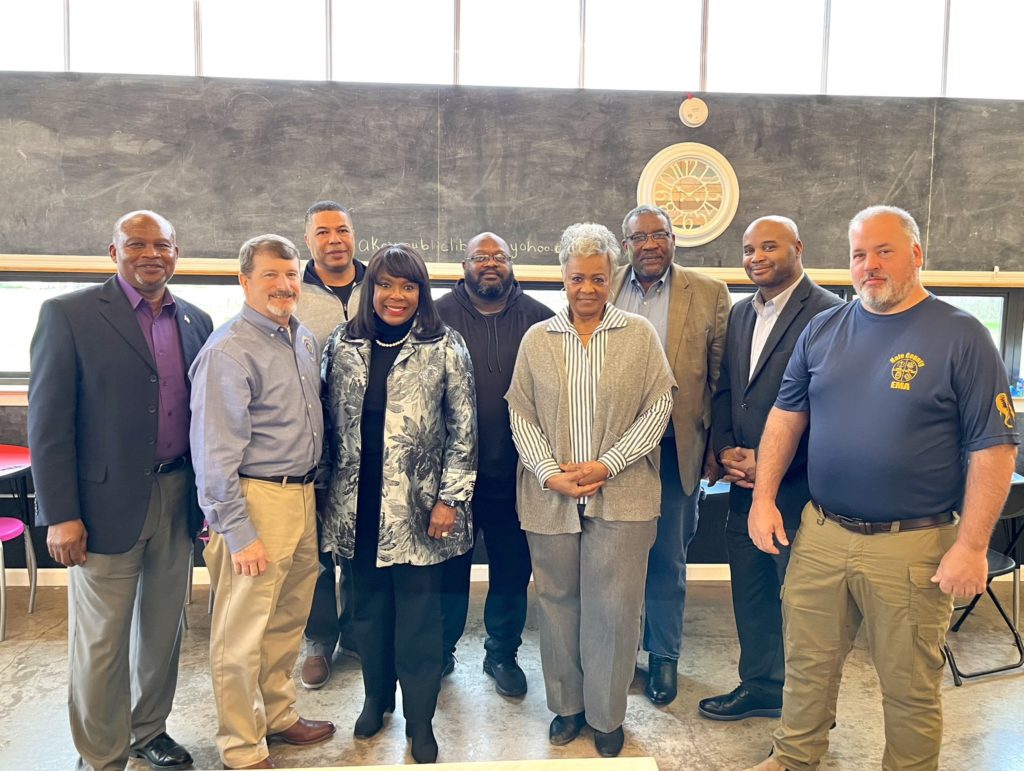
Congresswoman Terri Sewell toured Hale and Greene Counties, where she saw the damage resulting from the devastating storms on January 12. Sewell hosted two disaster relief roundtables with FEMA, the Alabama Emergency Management Agency (EMA), and local Hale, Greene, and Sumter County officials. “As your representative, I have made it my mission to ensure that our communities get the resources they need to rebuild better and stronger than before,” said Rep. Sewell. “To that end, strengthening our lines of communication and forging partnerships between every level of government are paramount. That’s why I spent the day surveying the damage and hosting disaster relief roundtables here in Hale and Greene Counties.” “Thanks to our tireless advocacy, additional federal assistance has been granted and is on its way to those who need it,” said Sewell. “To those affected, know that you are not alone. So long as there is a need, our federal, state, and local officials will continue to band together to offer relief.” Sewell brought together representatives from FEMA, Alabama EMA Director Jeff Smitherman, and local officials for a Hale County Disaster Relief Roundtable at Akron City Hall on Tuesday to discuss the latest in the recovery process. Sewell then traveled to Greene County, where she was joined by State Representative Curtis Travis and Eutaw Mayor Latasha Johnson for a driving tour of the storm damage. Sewell then hosted a Disaster Relief Roundtable at Eutaw City Hall. There she heard from local officials from Greene and Sumter Counties, including Sumter County Commission Chairman Marcus Campbell and Sumter County EMA Director Margaret Gulley. Sewell and officials then held a press conference with representatives from both Greene and Sumter County EMAs and local stakeholders. There has been an ongoing federal, state, and local partnership to recover and rebuild in areas devastated by the January 12 storms. “For the next 30 days, every county that was a part of the disaster declaration will get 100 percent federal assistance for public infrastructure,” Sewell explained. “If the town halls were destroyed or the post office was destroyed. The public road has debris on it.” “We have a promise that has been somewhat kept from our federal officer that if any of our elected officials call with clusters of people who need to be registered for FEMA that they will send their mobile unit to do that,” Sewell said. On January 26, Sewell led the Alabama Congressional Delegation in a letter urging President Joe Biden to increase the federal cost share for the FEMA Public Assistance program for debris removal and emergency protective measures to 100%. President Biden granted this request on Thursday, February 9. FEMA’s Public Assistance Program provides supplemental grants to state, tribal, territorial, and local governments and certain private non-profits so communities can quickly respond to and recover from major disasters or emergencies. Sewell is in her seventh term representing Alabama’s Seventh Congressional District. Sewell is a native of Selma. Before her election to Congress, she was an attorney for the City of Birmingham. To connect with the author of this story or to comment, email brandonmreporter@gmail.com.
Terri Sewell announces $52 million in EPA funding to expand access to clean drinking water

Congresswoman Terri Sewell announced that the State of Alabama will receive $52,638,000 in federal grant dollars from the U.S. Environmental Protection Agency (EPA) to address emerging contaminants in drinking water. This funding was made possible by the Biden Administration’s Build Back Better Infrastructure Act. This is part of the EPA’s Emerging Contaminants in Small or Disadvantaged Communities (EC-SDC) Grant Program, designed to promote access to safe and clean water in small, rural, and disadvantaged communities. “I am thrilled that the Environmental Protection Agency is providing over $52 million to Alabama communities to expand access to clean water in our rural and underserved communities,” said Rep. Sewell. “I am proud to be the only member of the Alabama Congressional Delegation to vote in favor of President [Joe] Biden’s Bipartisan Infrastructure Law because grant programs like this will make a world of difference in the lives of Alabamians. Every American deserves access to safe and clean water, and this investment is a transformative step forward.” Specifically, there is a concern by the federal government that there may be excessive Per- and Polyfluoroalkyl Substances (PFAS) in Drinking Water across Alabama. It is possible that ingesting PFAS could cause increased cholesterol levels, changes in liver enzymes, hormone disruption and increased risk for thyroid disease, decreased odds of women becoming pregnant, and/or high blood pressure or pre-eclampsia during pregnancy. The infrastructure bill invests $5 billion over five years to help communities reduce PFAS in drinking water. EPA announced that the funds are part of an allotment of $2 billion to states and territories that can be used to prioritize infrastructure and source water treatment for pollutants like PFAS and other emerging contaminants and to conduct water quality testing. “EPA’s Emerging Contaminants Grant Program is a solid community investment for the Southeast region,” said EPA Region 4 Administrator Daniel Blackman. “The expansion of safe and clean water access to small, rural, and disadvantaged communities is crucial to the protection of human health and the environment.” EPA is also releasing the Emerging Contaminants in Small or Disadvantaged Communities Grant Implementation document. The implementation document provides states and communities with the information necessary to use this funding to address local water quality and public health challenges. These grants will enable communities to improve local water infrastructure and reduce emerging contaminants in drinking water by implementing solutions such as installing necessary treatment solutions. In addition to this new grant, EPA is also working to propose a PFAS NPDWR in the coming weeks. The draft proposed rule is currently undergoing interagency review, and EPA will issue the proposed rule for public comment when it clears the Office of Management and Budget (OMB). The agency anticipates finalizing the rule by the end of 2023. The infrastructure bill, the American Rescue Plan Act and the 2023 omnibus spending bill passed in December all have new funds to address water systems. Access to clean drinking water has been an issue in many communities in rural Alabama, including in the Black Belt. Terri Sewell is in her seventh term representing Alabama’s Seventh Congressional District. To connect with the author of this story or to comment, email brandonmreporter@gmail.com.
Steve Flowers: Our congressional delegation has garnered good committee assignments
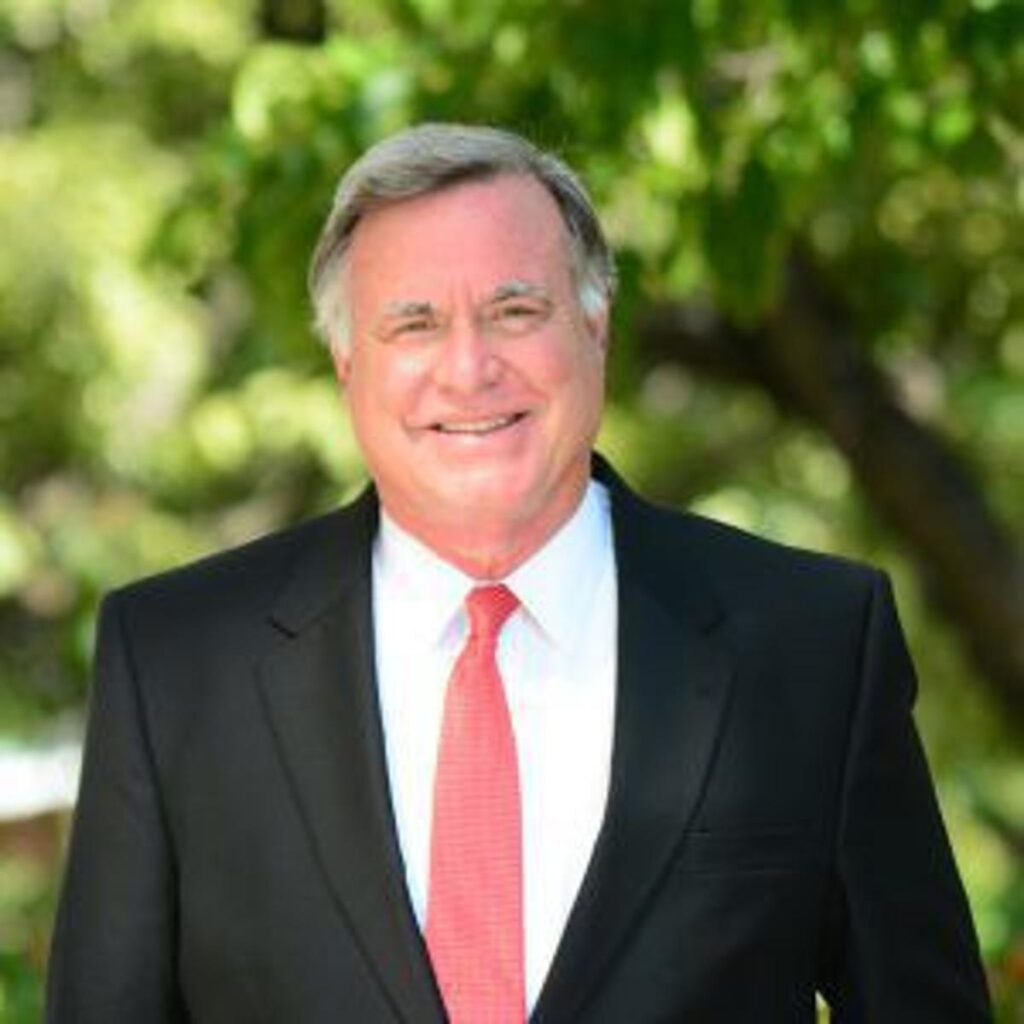
For the past several decades, Alabama’s power has been centered around the U.S. Senate – primarily because of Richard Shelby’s immense power and influence. During Senator Shelby’s 36-year tenure, he chaired the Intelligence, Banking, and Rules Committees. However, he became immensely powerful his last six years as Chairman of the Appropriations Committee. Shelby practically moved Washington to Alabama when it came to bringing home procured earmarked funds to the Heart of Dixie. We received more federal funding than any state in America. National publications labeled Shelby the Greatest Pork King in federal history, surpassing the late Senator Robert Byrd of West Virginia. Less we forget, Shelby also had a very respected and tenured wingman in Senator Jeff Sessions, who served with distinction for 20 years in the Senate. They were a great team. In the halls of Congress, and especially in the U.S. Senate, seniority equates to power, and we had it. However, we who follow Alabama politics have been cautioning you that our day of reckoning would arrive in January 2023, when Richard Shelby retired from the Senate, and that day has arrived. Alabama will never be able to raid the federal vault like Shelby has done. Fortunately, as he was walking out the door, he brought so much largesse home with him that it will take other states ten years to catch up. Under the U.S. Senate seniority system, it will take young Katie Britt about ten years before she will have any impact and influence in the Senate. Katie Britt took office with zero years seniority, and that places her 99th in seniority status in the U.S. Senate. Our senior U.S. Senator, Tommy Tuberville, has two years seniority. That places him 89th in seniority in the 100-member Senate. However, we have several members of our U.S. House delegation who are garnering some seniority and are emerging as powerful members of the lower body. Therefore, for at least the next decade, our power in Washington will be in the U.S. House of Representatives. Jefferson/Shelby 6th District Congressman Gary Palmer (R-Hoover) has been instrumental in helping to garner extremely good committee assignments for our six Republican members of Congress. Palmer, who is a quiet, policy-issues congressman, was the founder and leader of the Alabama Policy Institute prior to going to Congress. Therefore, it was apropos that he would gravitate to the 30-member Republican Party Steering Committee. This committee has emerged as a powerful entity in the past decade. They essentially chose the House Committee Assignments along with Speaker Kevin McCarthy. Congressman Gary Palmer will serve as Chairman of the House GOP Policy Committee. He will also retain his position on the House Energy and Commerce Committee. This committee has jurisdiction over healthcare, which is vital to UAB – the heart and soul of the 6th District. Congressman Robert Aderholt (R-Haleyville) is our senior Congressman. He got to Washington at a very young age. He is now only 57 years old and has 28 years seniority. He is one of the cardinals on the House Appropriations Committee and is now chairman of the Subcommittee on Labor, Health, and Human Resources. This committee will be very important to Alabama because of the biomedical research going on in Birmingham and Huntsville. If the Republicans maintain their majority into 2025, Aderholt is in line to become Chairman of the House Appropriations Committee. Congressman Mike Rogers (R-Saks/Anniston) has emerged as Chairman of the House Armed Service Committee. This is a very important coup for Alabama and an impressive appointment for Mike Rogers. The U.S. Military has a very large footprint and importance in the Heart of Dixie. Defense dollars dominate Alabama’s economy. In addition to Rogers, two of our newest members of Congress have scored seats on the Armed Services Committee – Representative Jerry Carl (R-Mobile) and Representative Dale Strong (R-Huntsville). Both Carl and Strong are bright stalwart stars for our congressional delegation. They have also become close friends and allies. In addition to garnering a seat on the Armed Services Committee, Jerry Carl has been placed on the Appropriations Committee. He will be a workhorse for his coastal Alabama district. Freshman Congressman Dale Strong’s appointment to the Armed Services Committee is a great feather for Strong, given the importance of the Redstone Arsenal and the immense amount of defense dollars in Huntsville. Representative Barry Moore (R-Enterprise) landed an appointment to the prestigious Judiciary Committee. Alabama’s lone congressional Democrat, Representative Terri Sewell, will retain her position as Chief Deputy Whip within the Democratic caucus. Sewell will also continue to serve on the powerful and prestigious House Ways and Means Committee. The paradigm of our power in Washington has moved to the U.S. House of Representatives. See you next week. Steve Flowers is Alabama’s leading political columnist. His weekly column appears in over 60 Alabama newspapers. He served 16 years in the state legislature. Steve may be reached at: www.steveflowers.us.
Federal disaster aid increases to 100% for January 12 tornadoes
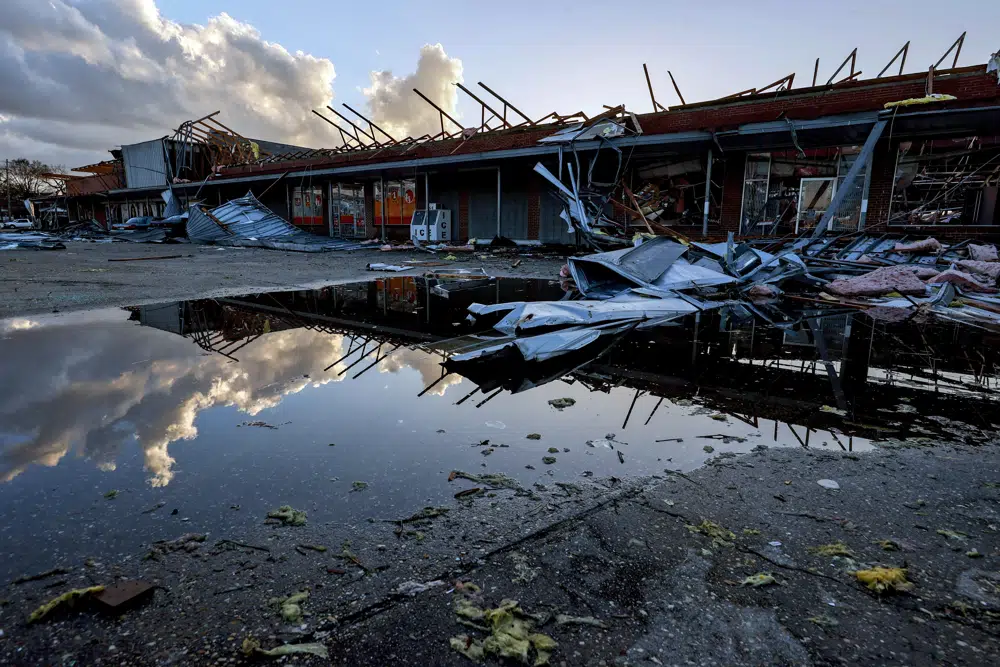
President Joe Biden authorized an increase for the FEMA Public Assistance for debris removal and emergency protective measures by local government following the January 12th Storms. The emergency protective measures have been increased to 100 percent of the total eligible costs for a 30-day period of the State’s choosing within the first 120 days of the incident period. This is in response to a letter submitted by Senator Katie Britt, Representative Terri Sewell, and the entire Alabama Delegation urging the President to increase the federal cost share for FEMA public assistance from 75% to 100%. The Alabama congressional delegation had asked the administration for the amended disaster declaration. “I am beyond thankful to President Biden for this GREAT NEWS! From the beginning, President Biden has worked swiftly to respond to our calls by expediting the major disaster declaration for the State of Alabama,” said Sewell. “Now, with this critical increase in FEMA Public Assistance, I am confident that we will build back stronger than before. I thank Governor [Kay] Ivey and my colleagues in the Alabama Congressional Delegation for their support throughout this process. These critical resources will not only allow us to expedite the cleanup of all the properties destroyed by the storm, but our communities will also have the opportunity to build back stronger and to create a better future for the people of Alabama.” “These crucial funds will help Alabama families, small businesses, and communities rebuild and recover. I am grateful for the President’s continued support of an expedited and robust federal disaster response to assist our state’s people,” said Britt. “We are forever indebted to the incredible first responders, law enforcement officers, and volunteers who have devoted countless hours, as well as their talents and resources, to these valiant efforts. My office will remain actively engaged with local, state, and federal partners throughout the recovery process.” Congressman Barry Moore said, “I’m pleased that our request for 100 percent federal share for debris removal and protective measures as a result of the terrible January 12th storms has been granted by FEMA. If you need assistance, apply online at https://DisasterAssistance.gov or by calling 1-800-621-3362.” “I want to thank President Joseph R. Biden, Jr., Congresswoman Terri Sewell, Coach Tommy Tuberville, Senator Katie Britt, and Governor Kay Ivey for working together with the City of Selma, Dallas County and the entire tornado destruction area to provide the 100% reimbursement declaration,” said Selma Mayor James Perkins Jr. said in a statement. “This is truly a blessing for Selma. Thank you and I thank God for ‘favor’.” FEMA’s Public Assistance Program provides supplemental grants to state, tribal, territorial, and local governments, and certain types of private non-profits so communities can quickly respond to and recover from major disasters or emergencies. After an event like a hurricane, tornado, earthquake, or wildfire, communities need help to cover their costs for debris removal, life-saving emergency protective measures, and restoring public infrastructure. The Federal Cost Share relates only to public assistance provided to governmental entities and does not include individual assistance. Uninsured individuals in the designated areas who have been impacted by the January 12th storms still must apply for individual assistance at www.DisasterAssistance.gov, by calling 800-621-FEMA (3362), or by visiting the FEMA website. To connect with the author of this story, or to comment, email brandonmreporter@gmail.com.
Birmingham Southern College is still seeking a taxpayer bailout
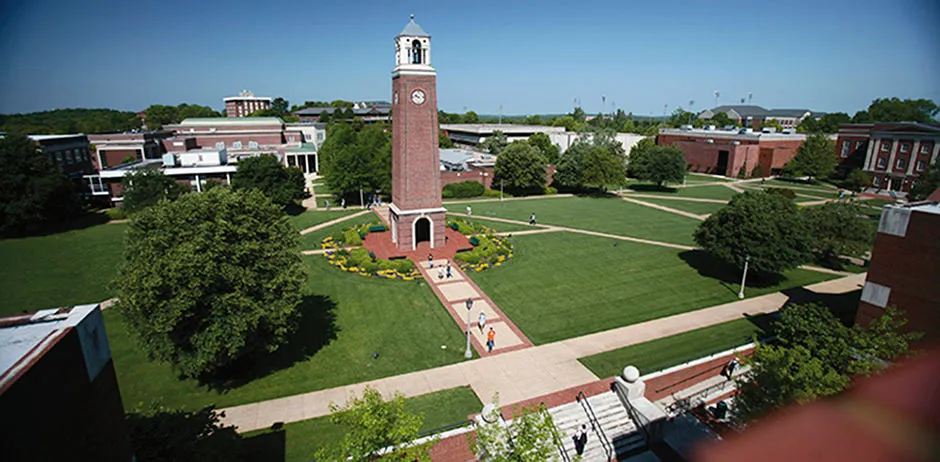
Over the weekend, students at troubled Birmingham Southern College (BSC) received emails from the administration stating that the college was still seeking a $37 million taxpayer bailout from the State of Alabama and local governments. “Those efforts continue daily — even hourly — and have been encouraging enough to keep us moving forward with the plan,” BSC President Daniel Coleman told students in the email. “While we all wish we had a final (and positive) answer by now, the simple truth is that when public funds are involved, there are many, many moving parts and decision-makers. So we are working closely with our allies in Montgomery and statewide, and we expect to know something more definitive by the time the Alabama Legislature convenes on March 7, if not before.” BSC’s Young Alumni Council hosted a live webinar on Monday telling students “how to effectively advocate with elected officials for the causes you care about.” The event will be led by two members of Congresswoman Terri Sewell’s Chief of Staff, Hillary Beard, and Legislative Coordinator Robyn Gulley. “Until we know more, we will operate as usual,” Coleman said. “As of today, Birmingham-Southern College has experienced great demand, with both our application and admitted student numbers at a five-year high. Applications have experienced a 25 percent growth, and admitted students are tracking a 33 percent growth since the same point in time last year. Over the past four years, the College has consistently experienced growth in both metrics.” BSC is a private college. Despite this, President Coleman has requested that state legislators give the college $30 million – $12.5 million in American Rescue Plan Act (ARPA) money and a $17.5 million appropriation from the education trust fund (ETF) budget – to give the college cash on hand and allow it to continue to operate. If the state legislature appropriates that $30 million bailout, BSC wants $2.5 million from the Jefferson County Commission and another $5 million from the Birmingham City Council to also provide bailout dollars. With those millions of dollars in hand, BSC will appeal to its donor base to pledge their dollars to get the college’s fundraising back on track. Coleman hopes to be able to raise the endowment to $200 million by the end of 2026. Enrollment had been declining, and BSC was hit hard by the lengthy COVID-19 closures. The administration, however, blames most of its current financial distress on a building program in the mid-2000s and the 2008/2009 recession that combined drew heavily upon the college’s endowment. While the economic downturn played a large role in the decline of BSC, much of the blame for BSC’s failure has been on those ambitious construction projects that were built while David Pollick was BSC’s President. BSC administrators have said that without the massive taxpayer-funded bailout, they won’t be able to accept incoming freshmen for the fall semester and will have to close its doors. The Legislature will likely take up appropriating the ARPA money early in the Alabama regular legislative session that begins on March 7. To connect with the author of this story or to comment, email brandonmreporter@gmail.com.
Joe Biden set to give his State of the Union address tonight
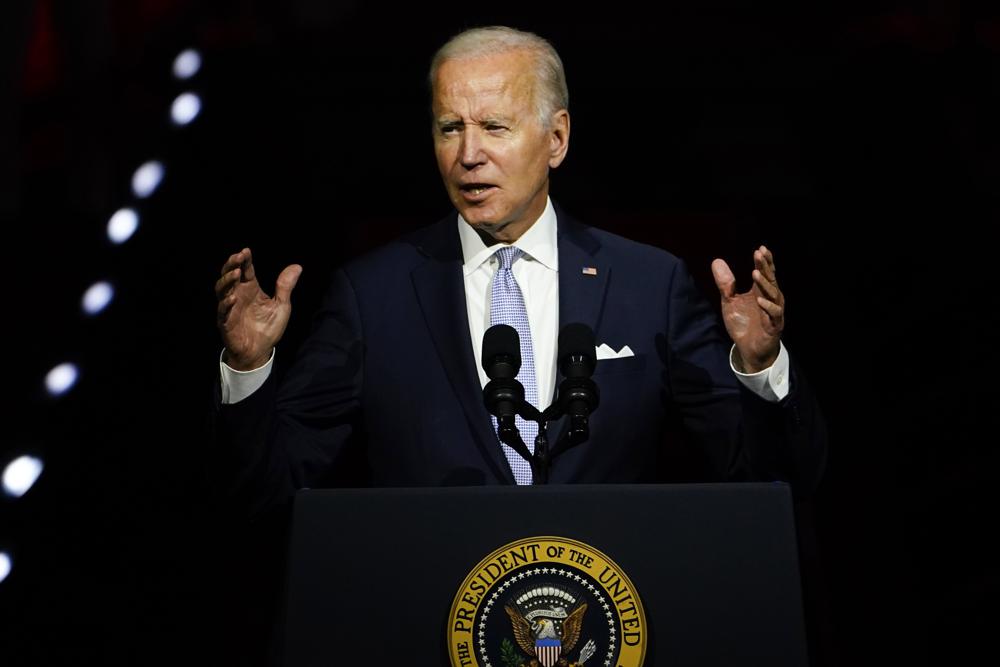
President Joe Biden will deliver his State of the Union address to a joint session of Congress tonight, where he will lay out his agenda for the upcoming year. President Biden’s speech will begin at 8:00 p.m. CST and will be streamed online and on multiple major networks on TV and radio. Biden and his top aides spent the weekend in Camp David preparing the address to Congress and the nation. The State of the Union address comes following a stellar January jobs report on Friday, growing tensions with China following the shooting down of a Chinese balloon in American air space, and amidst a war between Russia and Ukraine where the Ukrainians are being supported by the U.S. and our western allies. While the Democrats picked up seats in the Senate during last November’s midterms, the Republicans now control the U.S. House of Representatives, and Republican Kevin McCarthy has replaced Nancy Pelosi as the Speaker of the House. President Biden is faced with a standoff with McCarthy and the Republicans over raising the debt ceiling. Republicans have said they would like to decrease federal spending to limit inflation as a condition for raising the debt ceiling. He has said that he is not willing to negotiate with House Republicans on spending to get the needed debt ceiling increase. The Treasury Department in January implemented “extraordinary measures” to prevent the U.S. from a government default on the debt. The U.S. has until June before the government can’t pay its bills. The U.S. national debt is in excess of $31.5 trillion and growing. President Biden is expected to press Congress to pass the George Floyd Justice in Policing Act. The Civil Rights community is pushing the administration hard on policing reform. Biden may also urge Congress to pass a new assault weapons ban. Congresswoman Terri Sewell will be accompanied by survivors of the recent tornado touchdown in Selma. “The Curry’s of Selma will be my special guest at the State of the Union representing the survivors of the Jan 12th tornadoes that ripped through Selma and Dallas Co.,” said Rep. Sewell on social media. “Their beautiful home destroyed! But they were unharmed! God is Good!” Biden has not yet announced his decision on whether or not he will run for a second term as president in the 2024 election. Biden is not expected to make that announcement in his address, but political observers will watch the speech closely, looking for any clues to his intentions. A Republican response will follow President Biden’s address. Arkansas Governor Sarah Huckabee Sanders will present the GOP response to the Biden address. “I am grateful for this opportunity to address the nation and contrast the GOP’s optimistic vision for the future against the failures of President Biden and the Democrats,” Gov. Sanders said. “We are ready to begin a new chapter in the story of America – to be written by a new generation of leaders ready to defend our freedom against the radical left and expand access to quality education, jobs, and opportunity for all.” To connect with the author of this story or to comment, email brandonmreporter@gmail.com.
Mike Rogers and Adam Smith announce subcommittee rosters on House Armed Services Committee
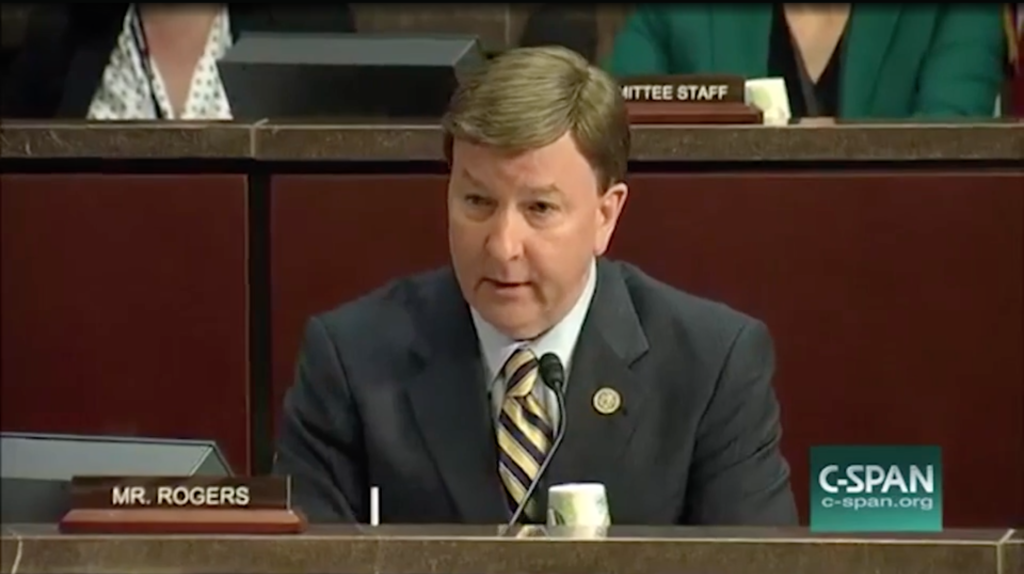
On Wednesday, House Armed Services Committee Chairman Mike Rogers and Ranking Member Adam Smith announced the following Chairmen, Ranking Members, and subcommittee rosters for the 118th Congress selected by Chairman Rogers and the Democratic Committee Caucus. “We must ensure that our military focuses on lethality and capability,” Chairman Rogers said. “Over the next two years, the House Armed Services Committee will provide our warfighters with the resources and weapons they need to deter and, if necessary, defeat any adversary anywhere in the world.” Chairman Rogers named Rob Wittman as Vice Chairman, and Ranking Member Smith named Pat Ryan as Vice Ranking Member. Alabama Congress members Terri Sewell and Dale Strong also serve on the Armed Services Committee. “The State of Alabama has long played a central role in advancing U.S. defense capabilities, and as a member of the House Armed Services Committee, I am excited to do my part to support the brave men and women working to keep our nation safe and secure,” said Rep. Sewell. “We in Alabama’s 7th Congressional District are proud to be home to Maxwell Air Force Base, the 187th Fighter Wing, the 117th Air Refueling Wing, and countless men and women in uniform that profoundly serve our country. I look forward to leveraging my position on the Armed Services Committee to advocate for their needs in this new Congress.” “When I was sworn in as your Representative, I took an oath to protect and defend the Constitution,” said Rep. Strong. “My first responsibility is to provide for a strong national defense. Serving on the Armed Services Committee will allow me to directly advocate for the commonsense policies that strengthen our national security and best serve America’s men and women in uniform.” The House Armed Services subcommittee Chairmen, Ranking Members, and rosters, with members listed in order of subcommittee seniority, are as follows: Cyber, Information Technology, and Innovation: Mike Gallagher (R-Wisconsin) – Chairman Matt Gaetz (R-Florida) Lisa McClain (R-Michigan) Pat Fallon (R-Texas) Dale Strong (R-AL05) Morgan Luttrell (R-Texas) Jen Kiggans (R-Virginia) Nick LaLota (R-NY) Rich McCormick (R-Texas) Ro Khanna (D-California) – Ranking Member Seth Moulton (D-Massachusetts) Bill Keating (D-Massachusetts) Andy Kim (D-New Jersey) Elissa Slotkin (D-Michigan) Jared Golden (D-Maine) Pat Ryan (D-New York) Chris Deluzio (D-Pennsylvania) Intelligence and Special Operations: Jack Bergman (R-Michigan) – Chairman Austin Scott (R-Georgia) Elise Stefanik (R-New York) Trent Kelly (R-Mississippi) Ronny Jackson (R-Texas) Nancy Mace (R-South Carolina) Morgan Luttrell (R-Texas) Cory Mills (R-Florida) Ruben Gallego (D-Arizona) – Ranking Member Bill Keating (D-Massachusetts) Jason Crow (D-Colorado) Elissa Slotkin (D-Michigan) Sara Jacobs (D-California) Jeff Jackson (D-North Carolina) Jimmy Panetta (D-California) Military Personnel: Jim Banks (R-Indiana) – Chairman Elise Stefanik (R-New York) Matt Gaetz (R-Florida) Jack Bergman (R-Michigan) Michael Waltz (R-Florida) Brad Finstad (R-Minnesota) James Moylan (R-Guam) Mark Alford (R-Missouri) Cory Mills (R-Florida) Andy Kim (D-New Jersey) – Ranking Member Chrissy Houlahan (D-Pennsylvania) Veronica Escobar (D-Texas) Marilyn Strickland (D-Washington) Jill Tokuda (D-Hawaii) Don Davis (D-North Carolina) Terri Sewell (D-AL07) Steven Horsford (D-Nevada) Readiness: Michael Waltz (R-Florida) – Chairman Joe Wilson (R-South Carolina) Austin Scott (R-Georgia) Mike Johnson (R-Louisiana) Carlos Gimenez (R-Florida) Brad Finstad (R-Minnesota) Dale Strong (R-AL05) Jen Kiggans (R-Virginia) James Moylan (R-Guam) John Garamendi (D-California) – Ranking Member Jason Crow (D-California) Mikie Sherrill (D-New Jersey) Veronica Escobar (D-Texas) Marilyn Strickland (D-Washington) Gabriel Vasquez (D-New Mexico) Jill Tokuda (D-Hawaii) Don Davis (D-North Carolina) Seapower and Projection Forces: Trent Kelly (R-Mississippi) – Chairman Rob Wittman (R-Virginia) Scott DesJarlais (R-Tennessee) Mike Gallagher (R-Wisconsin) Jack Bergman (R-Michigan) Mike Johnson (R-Louisiana) Ronny Jackson (R-Texas) Nancy Mace (R-South Carolina) Jen Kiggans (R-Virginia) Mark Alford (R-Missouri) Joe Courtney (D-Connecticut) – Ranking Member John Garamendi (D-California) Donald Norcross (D-New Jersey) Jared Golden (D-Maine) Sara Jacobs (D-California) Chris Deluzio (D-Pennsylvania) Jimmy Panetta (D-California) Strategic Forces: Doug Lamborn (R-Colorado) – Chairman Joe Wilson (R-South Carolina) Mike Turner (R-Ohio) Elise Stefanik (R-New York) Scott DesJarlais (R-Tennessee) Don Bacon (R-Nebraska) Jim Banks (R-Indiana) Michael Waltz (R-Florida) Dale Strong (R-AL05) Seth Moulton (D-Massachusetts) – Ranking Member John Garamendi (D-California) Donald Norcross (D-New Jersey) Salud Carbajal (D-California) Ro Khanna (D-California) Chrissy Houlahan (D-Pennsylvania) Gabriel Vasquez (D-New Mexico) Tactical Air and Land Forces: Rob Wittman (R-Virginia) – Chairman Mike Turner (R-Ohio) Doug Lamborn (R-Colorado) Sam Graves (R-Missouri) Don Bacon (R-Nebraska) Lisa McClain (R-Michigan) Pat Fallon (R-Texas) Carlos Gimenez (R-Florida) Nick LaLota (R-New York) Rich McCormick (R-Georgia) Donald Norcross (D-New Jersey) – Ranking Member Joe Courtney (D-Connecticut) Ruben Gallego (D-Arizona) Salud Carbajal (D-California) Mikie Sherrill (D-New Jersey) Pat Ryan (D-New York) Jeff Jackson (D-North Carolina) Steven Horsford (D-Nevada) Rogers was elected to his eleventh term representing Alabama’s Third Congressional District. Before his congressional service, Rogers represented Calhoun County in the Alabama State Legislature. Rogers also served on the Calhoun County Commission. He is an attorney. He and his family live in Saks. To connect with the author of this story or to comment, email brandonmreporter@gmail.com.
