
Alabama third in nation in auto exports
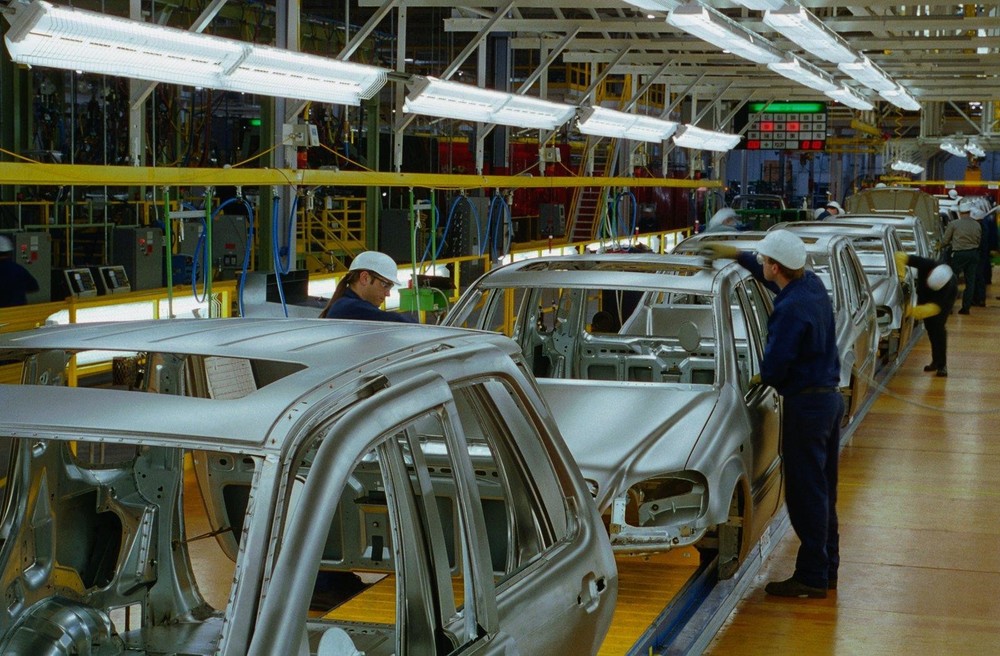
According to a survey conducted by the Alabama Department of Commerce; Alabama is the third in the nation in auto exports. Mercedes-Benz is the state’s top exporter, responsible for $5 billion in shipments every year. Alabama exported a total of $7.75 billion in automobiles in 2017, coming up short of only Michigan and South Carolina. “Customers around the globe continue to seek the high-quality, high-performance products of Alabama’s auto industry, and our skilled auto workers continue to deliver what they’re looking for,” said Greg Canfield secretary of the Alabama Department of Commerce, in a news release. “The success of Alabama exports, and particularly automotive exports, helps create jobs and transform communities here at home.” Alabama-made vehicles were shipped to six continents in 2017. China was the leading market, accepting more than $2.2 billion in Alabama-built vehicles exports, a 10 percent increase from last year. Hilda Lockhart, director of Commerce’s Office of International Trade, said China is a good growth market for vehicles. “Their GDP continues to grow, and the middle class income level is increasing – thus buying cars,” Lockhart told the Associated Press. “As for Africa, this market continues to have a growing population and a lot of the people are moving to the cities. The main transportation is vehicles via the roads,” said Lockhart. “If the trend continues, Africa is an emerging market and is home to some of the top fastest-growing economies in the world.” Other top importers of Alabama-built vehicles were: Germany, Canada, Mexico, Belgium, South Korea, Australia, United Arab Emirates, India, South Africa, Chile and Saudi Arabia. Alabama’s Honda Manufacturing plant exports 8 to 10 percent of its annual output of SUVs, minivans and pickups. Exports of Honda products are limited because the plant only produces left-hand-drive vehicles, and some of their models are too large for countries with narrow roads and high fuel costs. Honda’s Alabama products were exported mostly to Canada, Mexico, Central and South America, South Korea and the Middle East. Hyundai’s Alabama plant exported nearly 5 percent of its SUVs and sedans last year. Most vehicles were exported to Canada, while some went to Puerto Rico and El Salvador.
Alabama exports set new record in 2017

Gov. Kay Ivey announced on Thursday that in 2017 Alabama exports reached a record setting $21.7 billion, up 6 percent from 2016’s export total of $20.5 billion. “We’ve seen Alabama exports continue to expand in recent years, strengthening our economy at home and creating more opportunities for our citizens,” said Ivey. “The companies sending Alabama-made products to markets across the world are not just large, multinational companies, but also small and medium-sized companies located in communities across the state, setting a new annual export record is just another example of the economic success that Alabama is enjoying right now.” Alabama exports have grown 21 percent since 2011, and 50 percent in the last ten years. “Exporting is a fundamental economic pillar that supports growth in our state, and increasing demand for Alabama-made products around the globe underscores the success of our dynamic manufacturing sector,” said secretary of the Alabama Department of Commerce, Greg Canfield. “Growing export activity contributes economic vitality and spurs job creation across the state.” Alabama businesses exported goods to over 180 countries. According to a press release from the governor’s office, the top five markets were: Canada: $4.14 billion China: $3.62 billion Germany: $2.94 billion Mexico: $2.9 billion Japan:$682.6 million Exports to China and Mexico both grew by 10 percent, while shipments to Japan jumped 30 percent. Transportation machinery was Alabama’s No. 1 export, cars were the largest export in this category. Aircraft, spacecraft and auto parts, were the other top exports. Other exports were chemicals, minerals and paper. “With much of the world’s purchasing power located outside the U.S., Alabama companies are looking at markets beyond our borders for growth opportunities, exports enhance the quality of life for all Alabamians and elevate prosperity in the state. Creating jobs through exports for the state’s citizens is key to accelerating Alabama globally.” said director of the Commerce Department’s Office of International Trade, Hilda Lockhart. In 2017, Alabama ranked No. 22 in the nation in export volume, moving up one spot from 2016.
Kimber to open Alabama firearms manufacturing facility with 366 jobs

American firearms manufacturer Kimber Manufacturing, said Tuesday that it’s opening a new manufacturing plant in Troy, Ala., where it expects to employ 366 workers. The company said it will invest $38 million in the production facility over the next five years. “Due to an unprecedented year-over-year growth in demand, every time the company has embarked upon a planned expansion, the newly created capacity is exhausted before the expansion is complete,” said James Cox, Kimber’s chief financial officer. “As we continue to move into uncharted waters in regards to Kimber product demand, it was important to us to build a facility that will allow us to secure a significant new plateau of capacity.” Alabama Gov. Kay Ivey says Kimber’s investment in Troy will create a significant number of high-paying design engineering and manufacturing jobs. “With talented Alabamians already manufacturing a wide range of high-quality products that are in demand around the globe, the state can offer Kimber an ideal business environment and a skilled workforce for its expansion project,” Ivey said. “Kimber’s investment in Troy will create a significant number of high-paying design engineering and manufacturing jobs, and we are committed to helping the company find long-lasting success in Alabama.” Once a small manufacturing company based in Yonkers, N.Y, Kimber has grown rapidly over the past 21 years. The new manufacturing facility in Troy will be Kimber’s sixth U.S. location. “We are pleased with the impressive track record that Alabama has with attracting and retaining world-class manufacturing companies,” said Leslie Edelman, Kimber’s president and chief executive officer. “Growing our company intelligently depends significantly on being in the right manufacturing environment, and in Troy, we have a community dedicated to our long-term success. Working with the Alabama Department of Commerce as well as Mayor Jason Reeves and his team has been a pleasurable and rewarding experience.” Greg Grogan, Kimber’s chief operating officer, said the company will build a large, automated, state-of-the-art design engineering and manufacturing facility in Troy to support Kimber’s strategic growth plans. It should be operational by early 2019. “We will be building a large, automated, state-of-the-art design engineering and manufacturing facility in Troy to support Kimber’s growth plan and strategy,” said Grogan. “Troy offers us expansion with a passionate workforce, affordable utility costs, a pro-business environment, experienced local training support, and long-term incentives from the State of Alabama and the City of Troy alike. This expansion, in conjunction with our existing manufacturing facilities, talented and experienced employees, and best-in-class products provides for exciting times here at Kimber.” “This is a dream come true for the City of Troy and for me personally; a firearms manufacturing company with such a stellar brand as Kimber, creating jobs and capital investment for the community,” City of Troy Mayor Jason Reeves added. “Troy has a strong manufacturing base and Kimber will certainly, positively add to that.”
Alabama Launchpad selects 2 innovative Birmingham startups for funding

Two Birmingham firms prevailed in the latest round of the Alabama startup competition that has pumped millions of dollars into innovative ideas across the state. The Alabama Launchpad Startup Competition Finale, at Iron City, featured six teams that made pitches in front of a panel of judges and a live audience. The winner of the seed track, and the top prize of $100,000, was INFLCR, which equips innovative college athletic programs with critical social media tools to empower their student athletes to be brand ambassadors on social media. A $50,000 prize went to the winner of the concept track, Edify Online Corp. It’s an exchange of independent teaching talents from universities and communities that work together to achieve important milestones for higher-education students. A program of the Economic Development Partnership of Alabama that began in 2006, Alabama Launchpad has invested $4 million in companies that have created more than 500 jobs and raised $50 million in capital. Angela Till, deputy secretary of the Alabama Department of Commerce, said the agency supports startups as they transform their ideas into the next generation of companies. “At the same time we continue efforts to attract new investment, new jobs and great companies to the state, we share the same goal as Alabama Launchpad on helping companies start, stay and grow in Alabama,” she said. “Fostering the state’s entrepreneurial community is part of Alabama’s strategic economic development plan that is in place. “We are excited at the Department of Commerce about partnering with EDPA in the Launchpad program to help these companies grow.” All of Alabama benefits from the partnership, which diversifies the economy and creates more jobs, Till added. Expanding Launchpad Alabama Launchpad is the most active early-stage investor in Alabama, according to PitchBook, which tracks the public and private equity markets. The program has recently been updated and is expanding its reach. Upgrades to the original statewide competition include a more efficient application process that now judges entrants along two tracks: concept-stage entrepreneurs launching businesses and seed-stage businesses accelerating growth. The competition also has a shorter, two-month schedule compared to five months in the past. And only the best concept business and seed stage business win cash prizes, although every entrant will receive valuable feedback and exposure to capital providers in the state. Meanwhile, two regional contests have spun off in the Shoals and in Auburn. Like the statewide program, the regional ones offer local entrepreneurs the chance to compete for funding and receive valuable mentoring. EDPA President Steve Spencer said the driver of Alabama Launchpad is key to the state’s economic success. “Innovation is the nucleus of what will move this state forward,” he said. This story originally appeared on the Alabama Department of Commerce’s Made in Alabama website. Republished with permission from the Alabama NewsCenter.
Manufacturing jobs on rise in Dothan area
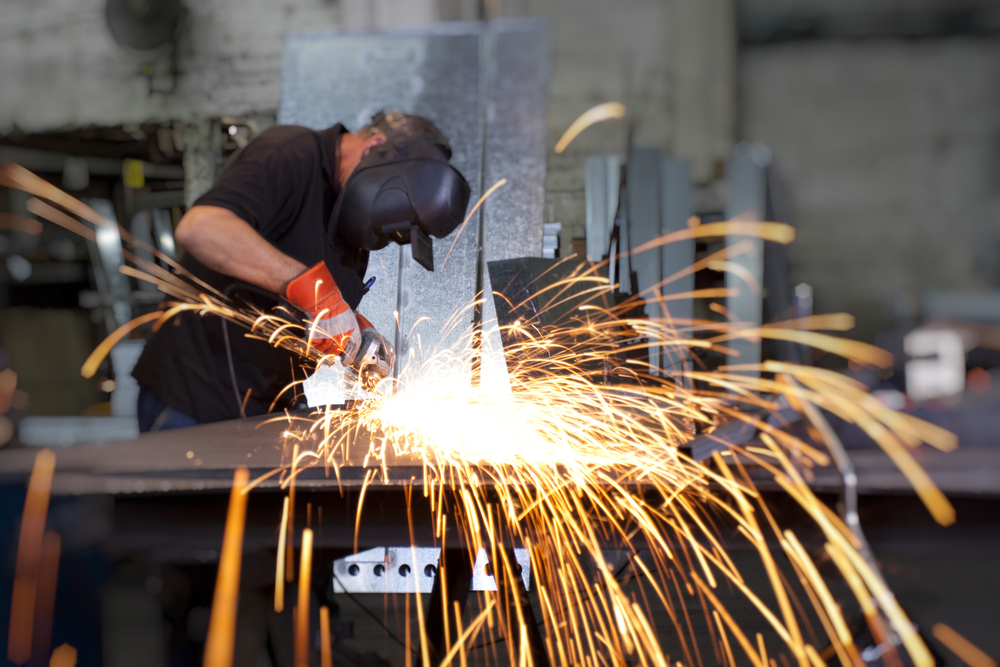
Manufacturing jobs are on the rise in southeast Alabama. The Dothan Eagle reports that Houston County experienced a 21 percent increase in manufacturing jobs within the past year. It topped all other counties in Alabama by a substantial margin. Greene County experienced the second-largest increase at 15.5 percent. In the past year, Houston County’s unemployment rate fell from 6.1 percent to 4.2 percent. About 1,400 more jobs exist in the area. Dothan Area Chamber of Commerce president Matt Parker says the biggest percentage of growth occurred in the 22- to 24-year-old sector. He attributed that success to partnerships with Alabama Industrial Development Training, the Alabama Department of Commerce, Dothan Area Career Center and Wallace Community College and investments in programs like Southeast Alabama Works and K-12 programs. Republished with permission from the Associated Press.
Alabama forest products industry poised for gains after strong year
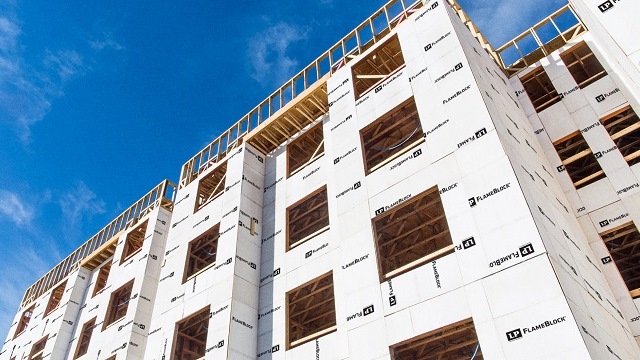
After a banner year for the forest products industry in Alabama, the sector is primed for even more growth and innovation. Last year, Alabama recorded forest products industry projects involving $1.2 billion in new investment and more than 1,000 anticipated jobs, according to the Alabama Forestry Association and the 2016 New and Expanding Industry Report issued by the Alabama Department of Commerce. The investment total made forest products the state’s top Accelerate Alabama target industry for 2016, surpassing the juggernaut automotive and aerospace industries, which recorded impressive totals of their own. Accelerate is the state’s strategic economic development growth plan. Forest products is a cyclical industry and is on a prolonged upswing after a severe industry recession, said Ken Muehlenfeld, director of the Forest Products Development Center at AIDT, the state’s top workforce training agency. “Demand is expanding across many industry segments,” he said. “Alabama is benefiting by virtue of its strong timber resource base, competitive cost structure, pro-business environment and targeted economic development strategy.” Industry innovation Meanwhile, innovation is being seen across the industry, in both products and processes, Muehlenfeld said. “A good example of product innovation would be the announcement in June by International Beams, which is building the first plant of its kind in the eastern U.S. to produce a new engineered wood product, cross-laminated timber, in Dothan,” he said. “Another would be Kronospan, which is making huge investments at its existing facility in Calhoun County to add a variety of value-added downstream products.” As for process innovation, Two Rivers Lumber Co. and Weyerhaeuser Co. are building state-of-the-art sawmills in West Alabama. “A number of existing sawmill operations are upgrading their process technology to improve product recovery, production capacity and cost efficiency,” Muehlenfeld said. New product Another example of innovation in Alabama’s forest products industry can be found in Clarke County, at Louisiana-Pacific Corp.’s $265 million operation near Thomasville, which employs nearly 200 people. The company, a leading manufacturer of engineered wood building products, last year spent $15 million to install a new LP FlameBlock production line at the Clarke County facility, and it is now the sole LP production source for this innovative product. FlameBlock, which has a fire-rated sheathing that slows the spread of a fire, is used on interior and exterior wall assemblies and roof deck applications of single-family or multi-family homes and businesses. In Clarke County, Alabama workers manufacture the panel itself and, in a separate process, apply the coating that makes it fire-rated. “This is the first coating line we have at LP,” said Lorraine Russ, business product manager for the company. Changes in U.S. building codes have driven the need for the product, she said. “As we all become more aware of how we can build better buildings, so fire is less of a risk, codes have been put in place to combat the risk,” she said. “This product is a great example of how we can support those code changes.” Current trends in the building industry include more wood frame construction in multifamily dwellings, along with single-family homes being built closer together on zero lot lines. FlameBlock also helps improve efficiency and reduce labor costs and construction time on job sites. Builders don’t have to install a separate fire-rated panel in addition to a structural one; FlameBlock serves as both. Russ said the company is anticipating 15 percent year-over-year growth in FlameBlock sales. The new LP FlameBlock production line puts the spotlight on the Clarke County operation, which has been recognized by the company for its 2016 safety record and with environmental awards for a successful reuse program for wood ash. “LP Clarke County plays an important role in our company’s largest business segment – oriented strand board,” LP Clarke County Plant Manager Wayne Young said. He added, “One reason LP leadership selected Clarke County for the LP FlameBlock production line is because of our strong workforce. Our team of employees has a winning spirit and the quest to make a quality product that represents Clarke County and Alabama very well.” Forestry resources Alabama has the second-largest commercial timberland base in the U.S., with 23 million acres. Forestry is the state’s second-largest manufacturing industry, producing an estimated $14.8 billion worth of products in 2013, the latest data available. The industry directly employs 42,500 Alabamians with an annual payroll estimated at $2.1 billion. Key projects in 2016 included Kronospan, an Austrian maker of laminate flooring, which announced a $362 million expansion of its Calhoun County facility, and Lenzing, also based in Austria, which is investing $293 million to expand production of eco-fibers at its plant in Mobile. Muehlenfeld said he is optimistic about the current industry cycle. “I think we have a good bit further to run with regard to this industry expansionary cycle. Housing starts are still well below their equilibrium level, and only at about 60 percent of the pre-recession peaks. The demographics indicate strong demand for wood products is likely.” Alabama is well-situated to capitalize, Muehlenfeld said. “We have an abundance of high-quality timber that’s being grown much faster than we’re using it. This suggests that we can sustainably support significantly more manufacturing capacity, with a very favorable outlook for wood costs,” he said. Republished with permission of Alabama NewsCenter.
Bolta marks opening of $49 million Alabama auto parts plant

Global auto parts supplier Bolta Group announced the opening of its new $48.7 million production facility at the Tuscaloosa County Airport Industrial Park. The factory will employ 350 people by the end of 2018. State and local officials joined members of Bolta’s global management team at an on-site ceremony to celebrate completion of the 200,000-square-foot facility. Anil Puri, chairman of Bolta’s U.K.-based parent company, Purico Group, said the Tuscaloosa factory will play an important role in Bolta’s plans to expand its international footprint. In addition to Alabama, Bolta has advanced production facilities in Germany and Mexico and plans for a location in Eastern Europe. “Internationalization is crucial to our development, since it is our ambition to be able to manufacture exactly where our customers need us,” Puri said. “This opening today is an important milestone for the company as a whole and will lead us to the next stages of our corporation’s history.” U.S. Rep. Robert Aderholt said Bolta’s decision to make a significant investment in Alabama serves to solidify and advance Alabama’s reputation as the “new heart of American automotive production.” “Companies like Bolta are driving the robust growth that Alabama’s automotive manufacturing industry has been experiencing, which has created jobs and lifted communities across the state,” said Greg Canfield, secretary of the Alabama Department of Commerce. “We have forged a strong relationship with Bolta, and we’ll continue to assist this top-notch company and its growing Alabama workforce.” Growing automotive cluster Bolta, founded in Nuremberg, Germany, in 1921, manufactures integrated modules as well as individual parts, like nameplates and decorative trims, for the international automotive industry. The company’s new Tuscaloosa County facility has 200 employees as a ramp-up continues. “Our success depends on the skills and expertise of our employees. We have found an extremely dedicated workforce here in Tuscaloosa, willing and able to learn and apply these specialized skills,” said Bolta U.S. Managing Director and Vice President Johannes Carl. “On the base of this strong workforce, Bolta US offers expertise as well as process and production capabilities for a wide range of surface requirements and creates innovative solutions you will see on tomorrow’s cars,” Carl added. Dara Longgrear, executive director of the Tuscaloosa County Industrial Development Authority, welcomed Bolta to the growing automotive cluster in Tuscaloosa. “Bolta’s focus on technology, high quality and customer satisfaction is a wonderful fit for our existing international manufacturing community,” Longgrear said. Republished with permission of Alabama NewsCenter.
EDPA projects new image with Birmingham HQ, digital wall
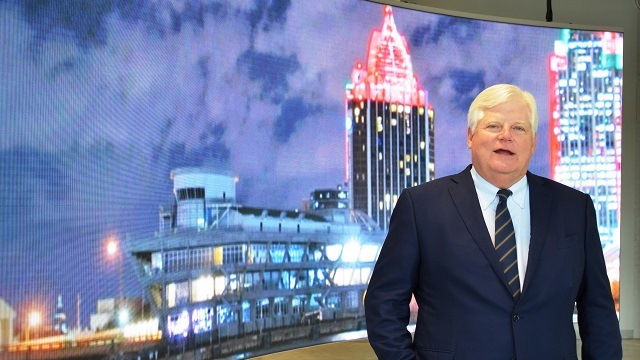
For years, the Economic Development Partnership of Alabama had a bird’s-eye view of the state’s largest city. From its home on top of Red Mountain in the august-sounding World Business Center, EDPA projected an image befitting Alabama’s only statewide private economic development entity. In January, EDPA came down from the mountain, planting its new headquarters at ground zero of Birmingham’s modern renaissance. From the former Merita bread bakery (now the Bakers Row development), EDPA neighbors Railroad Park and Regions Field at the corner of First Avenue South and 14th Street. EDPA is now a street-level organization and everything from the new headquarters’ décor to its 34-foot-long video wall speaks to the change. “Moving down here is as much about image as it is anything,” EDPA CEO Steve Spencer said. “This part of town is becoming the hub of activity.” When EDPA or the Alabama Department of Commerce are hosting a prospective company at a meeting in the new EDPA facility, Spencer said the story of what’s happening outside the building is apparent but so are the multiple successes playing continuously on the video screen. “When companies come here and visit, we want them to get an impression that this is what it’s like,” Spencer said. And companies are visiting and leaving impressed. “We’ve got some great companies looking at the state right now,” Spencer said. “We, of course, work in concert, with (the Alabama Department of) Commerce. We don’t compete. We don’t do the same things. We support them, they support us. We work together very well.” From Innovation Depot on the other side of the railroad tracks to UAB two blocks to the south, EDPA’s new location helps paint a picture for the kind of companies the city and state are looking to attract. “We’ve got two or three companies looking at the state right now that are high-tech companies,” Spencer said. “All it will take is one and that opens the door, just like Mercedes opened the door for the automotive industry. We just get one, and it will open the door for that entire industry, that entire segment to come to Alabama.” As impressive as the location is in Birmingham, Spencer said there are similar hubs of activity in a number of states throughout the state and they can tell that story, too. “This is kind of the way you attract people now. Our objective is to get people to move to the state,” he said. “Now, getting companies to move here is great, but getting people to move here is how you get companies to move here.” By literally projecting success on 320 square feet with more than 1 million pixels, the state’s successes are on full display 24 hours per day. “This was our way of being able to project – in a little bit of a dramatic way – what’s going on in the state,” Spencer said. “And it projects out into the street. You don’t have to be in a meeting in the building to see it. In fact, that’s not what it’s for at all.” Spencer said EDPA is seeking additional footage that helps tell the state’s success stories from manufacturing to research to food and culture. Republished with permission of Alabama NewsCenter.
Alabama wins Silver Shovel award for economic development
Area Development, an economic development-focused publication, awarded Alabama a Silver Shovel for solid business recruitment and support in 2016, keeping alive a winning streak stretching back a decade. In announcing the award, Area Development noted that Alabama’s economic development team continues to build on a proven track record of success. “It’s almost like a stuck record in Alabama, but it’s playing beautiful music that economic development officials will never tire of hearing,” the publication says. “Automotive and aerospace manufacturing continues to drive healthy economic activity, enough for yet another Silver Shovel honor covering the news from 2016.” Area Development’s Gold and Silver Awards recognize the overall economic development effectiveness of state economic development efforts. Alabama has won one of the awards each year since 2006, when it won a Gold Shovel. It won another Gold in 2012 and three Silver awards in the years since then. “This award confirms once again that Alabama is one of the most attractive locations in the U.S. for business expansion and job-creating investment,” Gov. Kay Ivey said. “It’s a priority of my administration to position Alabama for the kind of sustained economic growth that opens new opportunities for our hard-working citizens and declares to the world that Alabama is open for business,” she added. Growth engines Montgomery Mayor Todd Strange welcomes Gerhardi at a groundbreaking ceremony in Montgomery. (Contributed) Area Development pointed to a “combination of good victories” in the auto manufacturing sector that will spur growth in Alabama. It noted that the state’s top five 2016 auto projects, from companies that include Lear, Gerhardi and MollerTech, involve 1,400 anticipated jobs.“Good automotive news keeps building upon itself,” the publication says. Area Development also said the aerospace industry is elevating its growth in Alabama, with major expansions from companies such as Boeing Co., which is adding 470 jobs to its substantial state presence, and UTC Aerospace, which is adding 260 jobs in Foley. “Four more top projects are flying in from the aerospace and aviation technologies industry, led by Boeing’s plans in Huntsville,” Area Development notes. “It’s part of a restructuring of its Strategic Defense & Intelligence System division that will transfer some jobs in and potentially create more, according to company officials. “Altogether, the top aviation/aerospace-related projects will add a thousand jobs to the state’s economic picture.” Accelerating an ‘evolution’ The state’s 2016 economic development results are outlined in the Alabama Department of Commerce’s New & Expanding Industry Report, released earlier this year. The report provides a detailed look at 405 projects recorded in the state during a solid year of business recruitment and support. The UTC Aerospace Systems facility in Foley is expanding to serve Airbus’ A320 Family assembly line in Mobile, creating 260 jobs. (Contributed) “Alabama’s economic development team is committed to creating high-caliber, technology-based jobs in strategic industry sectors that we believe will flourish in the future and accelerate an evolution in the state’s economy,” said Greg Canfield, secretary of the Alabama Department of Commerce. “Winning the Silver Shovel award for the fourth consecutive year shows that we are on the right track,” he said. Since 2012, economic development activity in Alabama has attracted $24.5 billion in investment and almost 90,000 jobs, according to Commerce Department figures. Exact totals for 2016 were $4.199 billion in capital investment and 14,707 new and future jobs. Alabama joined Utah, Iowa and South Carolina in claiming Silver Shovel awards given to states with populations between 3 million and 5 million residents. This story originally appeared on the Alabama Department of Commerce’s Made in Alabama website. Republished with permission of Alabama NewsCenter.
Amazon to open $30 million Alabama ‘sortation center’
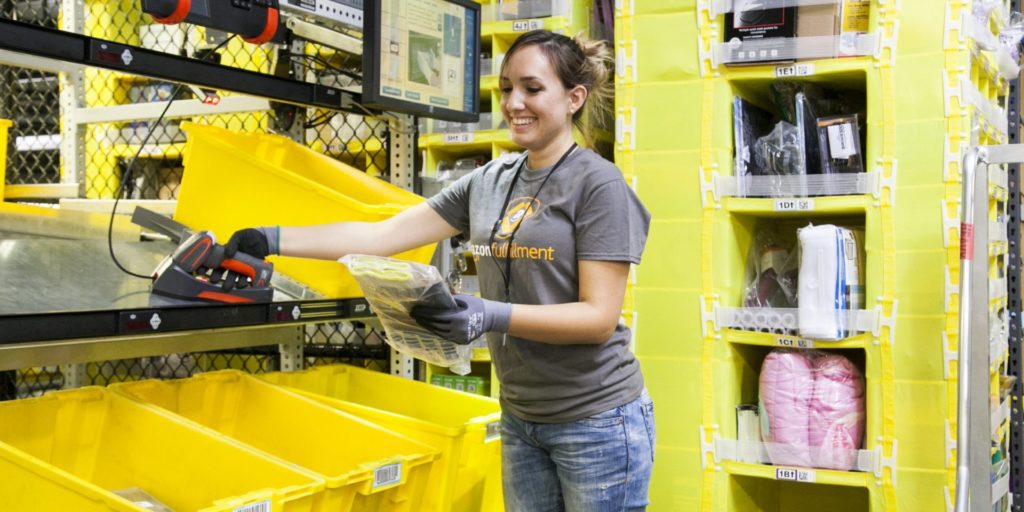
Amazon plans to invest nearly $30 million to open a 362,000-square-foot “sortation center” in Mobile, a facility that allows the Internet retail giant to accelerate deliveries of products purchased online. The Amazon center in west Mobile off Interstate 10 will ultimately employ more than 360 part-time employees, though that number could rise by 1,000 in busy periods. The site is expected to open later this year. “There are a lot of contributing factors that go into our thought process on where to place a new customer fulfillment or sortation center. Most importantly, we want to make sure our facilities are placed as close to the customer as possible to ensure we can offer a great Prime service and fast shipping speeds to customers,” said Ashley Robinson, strategic communications manager for Amazon. “We also look at the workforce and we’ve found great talent in abundance in Mobile County,” she added. Partnership approach The Mobile Area Chamber of Commerce teamed with the Alabama Department of Commerce, the Mobile County Commission and the City of Mobile to work on this project since early 2017. The center is a partnership between Amazon and Johnson Development Associates. “This will be the first Alabama hub for Amazon’s vast distribution network, and we will work with the Internet retailer and our allies in Mobile to develop a partnership that can lead to other opportunities over time,” said Greg Canfield, secretary of the Alabama Department of Commerce. “Having a world-class company like Amazon making a significant investment in Alabama is always a positive development,” he said. Troy Wayman, the Mobile Chamber’s vice president of economic development, said the Amazon project represents another example of how Mobile’s distribution infrastructure and workforce continue to draw the attention of an international company. “Amazon is one of the most successful and innovative companies in the world, and we could not be more excited to welcome their first major location in Alabama,” said Mayor Sandy Stimpson. “Mobile is open for business, and the best is yet to come.” Added Mobile County Commissioner Jerry Carl, “This helps America and the world know that Mobile is a great place to do business.” This story originally appeared on the Alabama Department of Commerce’s Made in Alabama website. Republished with permission of Alabama NewsCenter.
Alabama exports surging in unexpected corners of the world
It’s clear that 2016 was a stellar year for Alabama exports, with rising shipments in a number of markets worldwide, signaling even more optimism for the future. The top five destinations for state goods and services – Canada, China, Germany, Mexico and the United Kingdom – remained relatively unchanged from 2015 and most showed year-over-year growth. Overall, Alabama-made goods were shipped to 189 countries. A number of them, while not among the top five, showed significant growth in 2016, including Kuwait, Russia, Taiwan and the United Arab Emirates. The Alabama Department of Commerce is always studying trade trends among state businesses and manufacturers, using the information to plan seminars and trips aimed at helping companies boost their export business, said Hilda Lockhart, director of Commerce’s Office of International Trade. Economic engine With Alabama’s 2016 exports reaching a record $20.55 billion, increasing 6.4 percent from the previous year, officials are looking to build on that momentum, Lockhart said. “We know rising exports for Alabama companies in overseas markets means greater potential for new jobs and investment back home,” Lockhart said. “International trade is truly a local economic engine, and Alabama workers and communities benefit from the growth.” U.S. Commerce Department figures show the state’s exports have risen 15 percent since 2011 and 48 percent since 2006. Vehicles are the state’s top export, by a large margin. Other key categories include chemicals, primary metals, paper products and non-electrical machinery, a category that includes combustion engines, agricultural machinery, metalworking machine tools and much more. Lockhart offered a closer look at some of the fastest-growing markets for Alabama exports, and what’s driving them: KUWAIT: Alabama’s exports to the Persian Gulf country increased to $104.9 million in 2016, a 285 percent spike from the previous year. The largest increases were in fabricated metal products, chemicals and paper. “This year Alabama was Kuwait’s No. 1 trading partner in the nation for fabricated metal products, perhaps due to the country’s recent expenditures on various hydrocarbon and petrochemical refineries, such as the $10 billion Olefins 3 plant,” Lockhart said. Currently in the pre-execution phase, the Olefins 3 plant will produce 1.4 million tons of ethylene a year when it is completed. The petrochemical is commonly used in the manufacturing process. RUSSIA: Shipments of state exports to Russia rebounded in 2016 to $102.1 million, after a poor showing the previous year, with major increases in the export of non-electrical machinery, chemicals and paper. Alabama was Russia’s No. 5 trading partner among U.S. states for non-electrical machinery products.Russia’s demand for machinery is “driven by the government’s strategy to modernize Russian industry across several sectors, including power generation, transportation, defense, automotive and aerospace,” according to the U.S. Foreign Commercial Service. Lockhart said the drop in exports in 2015 likely occurred because of the contraction in the price of oil that year, which caused a recession in Russia and other oil-producing countries. TAIWAN: Exports from Alabama to Taiwan nearly doubled in 2016, increasing to approximately $200 million. The largest gains were in chemicals, computer and electronic products, and paper. “Chemical exports alone accounted for more than half of the 2016 total, showing a two-year increase from $19.6 million in 2014 to $102.7 million in 2016,” Lockhart said. The state was Taiwan’s No. 6 trading partner in the nation for chemicals, predominantly in the category of basic chemicals, which include industrial gases used in the semiconductor production process. Lockhart said the semiconductor industry, including manufacturing, design and packaging, is a cornerstone of the Taiwanese IT economy, so it is likely that the increased exports are feeding into this sector. UAE: Alabama firms shipped $467.8 million in exports to the United Arab Emirates in 2016, an increase of more than 100 percent compared to exports just two years earlier. Much of the growth took place in the categories of transportation equipment, non-electrical machinery and chemicals. The state was the UAE’s No. 5 trading partner in the U.S. for transportation equipment, with this category alone accounting for $396.2 million of the export total for the year. “Aerospace products make up the bulk of these transportation equipment exports as the UAE develops its burgeoning satellite and Mars mission programs, expands its military and increases investment in the commercial airline industry,” Lockhart said. Meanwhile, other up and coming markets have shown significant growth over the past five years, and they could be potential targets of new, increased efforts to fuel trade, Lockhart said. The countries include Vietnam, Oman, the Bahamas, Denmark, Finland, Kenya, Liberia, Hungary and Bosnia-Herzegovina. This story originally appeared on the Alabama Department of Commerce’s Made in Alabama website. Republished with permission of Alabama NewsCenter.
Wal-Mart to invest $135M in Alabama import distribution center
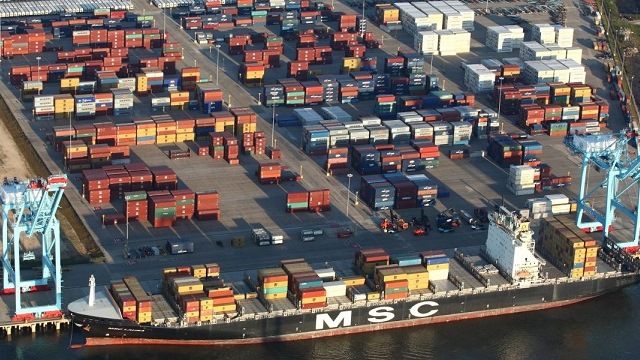
Retail giant Wal-Mart Stores Inc. plans to invest at least $135 million to open a massive import distribution facility in Mobile County, creating 550 jobs and providing a major boost to the Port of Mobile. Wal-Mart’s new 2.5 million-square-foot facility will service about 800 stores with products primarily shipped through the Alabama port’s container terminal. The company’s plans were announced today at a groundbreaking ceremony at APM Terminals. “As you know, there’s been a tremendous competition for the distribution center that Wal-Mart is going to build here in Mobile,” Glen Wilkins, public affairs director for the retailer, said at the ceremony. He added, “I think we did a great job choosing Mobile. I think that was a fantastic idea.” ‘Powerful catalyst’ The Alabama facility will be Walmart’s sixth import distribution center in the nation as the retailer expands its logistics network. The Port of Mobile is one of the nation’s busiest deep-water ports. (Contributed) “Wal-Mart’s decision to locate an import distribution center in Mobile County is a clear signal that Alabama is serious about creating jobs for its citizens and expanding the potential of the Port of Mobile,” Gov. Robert Bentley said. “Wal-Mart is making a substantial investment in Alabama, and we look forward to expanding our valuable partnership with the company through this project,” he added. The Wal-Mart distribution center will become an important player in the Port of Mobile’s container business. The facility is expected to generate cargo volume of approximately 50,000 TEUs, or twenty-foot equivalents, a standard unit of measure in container transportation. “Wal-Mart’s distribution and logistics center in Mobile County will enhance Alabama’s connection to the global economy and provide a major boost in cargo volume to the Port of Mobile,” said Greg Canfield, secretary of the Alabama Department of Commerce, who spoke at today’s ceremony. “The Wal-Mart hub will act as a powerful catalyst for job creation and significantly increase the operations of the world’s largest retailer in the state.” Port credit Canfield added that the Wal-Mart distribution center project is the first to qualify for a “port credit” incentive adopted in 2016 by the Legislature as part of the Alabama Renewal Act. Denson White of APM Terminals checks on the unloading and loading of containers. APM will be the site of a $135 million Wal-Mart import distribution center, officials announced today. (Mike Kittrell/Alabama NewsCenter) The port credit is meant to stimulate cargo traffic and job growth at facilities such as the Port of Mobile. The 4,000-acre seaport is one of the nation’s busiest deep-water ports, handling more than 50 million tons of cargo annually. Wal-Mart qualified for a port credit totaling $3 million. Bentonville, Arkansas-based Wal-Mart already has more than 38,000 workers in Alabama. The 550 full-time jobs being created at the import distribution center in Mobile will have an average annual wage of $35,000, plus benefits. Some salaried workers will earn more than $50,000, Wal-Mart said. The Alabama State Port Authority and APM Terminals joined the state and local economic development team that worked on “Project Beverly,” as it was code-named during the recruitment. “We are excited about how this facility will help us serve customers from Alabama to the Great Lakes and the economic impact it will have through local job creation and future economic development in the Mobile area,” said Jeff Breazeale, Wal-Mart’s vice president of Direct Import Logistics. “We are grateful to the State of Alabama, Mobile County, the City of Mobile and the Alabama State Port Authority for the support we have received throughout this process, and we look forward to a strong relationship with the community for years to come.” This story originally appeared on the Alabama Department of Commerce’s Made in Alabama website. Republished with permission of Alabama NewsCenter.
