
Jr League of Birmingham hosts engaging and informative roundtable series
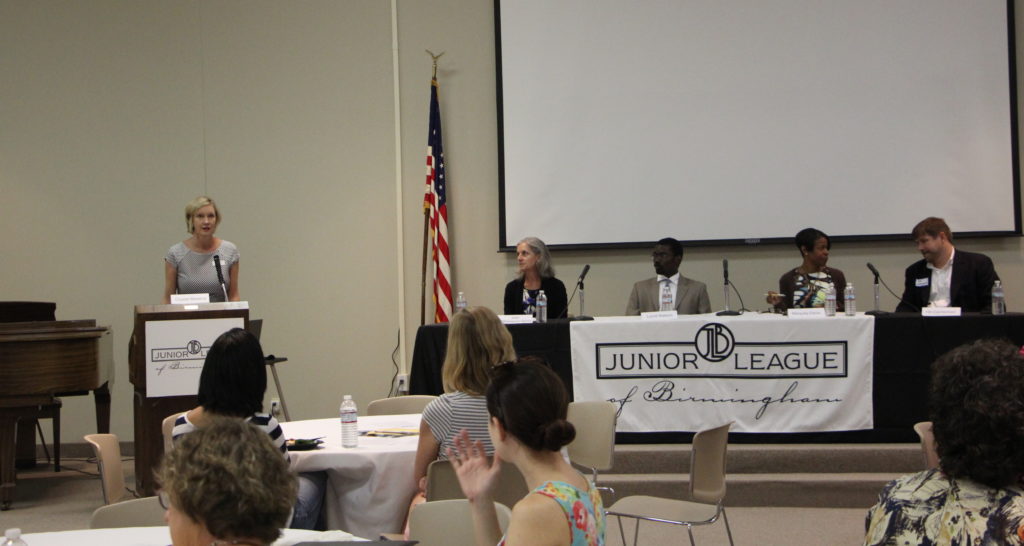
For nearly 100 years, the Junior League of Birmingham (JLB) has been a source of constant support in the Magic City. Dating back to 1922, the now-2,500-member League has actively supplied volunteers to some of the city’s greatest needs. From volunteering during the throes of the Great Depression and World Wars, to pioneering community projects, to proffering annual community endowments — the League has played a part in it all. Staying ever true to its mission of “improving the community through the effective action and leadership of trained volunteers,” the League continues to give back to the Birmingham community. This League year, JLB has hosted a series of community roundtables on important issues that matter to Alabamians — a possible Alabama lottery, legislative issues including Medicaid, predatory lending, prison reform, as well as race relations. The League took on the topic of race relations back in August, following a Pew Research Center report on the state of race relations in America. For JLB leaders, the report served as a stark reminder that the issue of racial inequality is just as urgent as ever. They hosted the event as a way to hear from community leaders to discuss racial matters affecting the community and ways to heal. “Discussion of police interactions with minority communities; institutions and interpersonal racism; and ‘safe spaces’ are dominating popular literature, film, television, talk shows and newspaper column inches. It seems everyone, everywhere, is talking about race in some capacity. The issue of racial inequality is truly not a trendy issue; it is an entrenched issue,” said a JLB press release. The roundtable, which was open to the public, featured panelists Joan Witherspoon-Norris, director of social justice at the YWCA; Lyord Watson, a preacher and philanthropist; Marquita Furness Davis, executive director for the Jefferson County Committee for Economic Development (JCCEO); and Hill Carmichael, the director of Urban Ministry. When moderator Crystal Maxena asked the first question, “Do we need to have conversations about race in Birmingham?” It was Witherspoon-Norris’ response that set the tone of the day, “So many of us are emotionally charged about race. Racism is so insidious that sometimes it’s hard to know what it is.” “There are so many indicators that racism is alive and well,” Witherspoon-Norris continued. “The systems that run our society – banking, predatory lending, education, criminal justice – every indicator says that racism is thriving. If we want to fix that so that people have a fair shot, regardless of that race, we definitely need to talk about it.” Alabama Today publisher Apryl Marie Fogel attended the event and said, “What struck me most about the event was the diversity of the panel and the audience; this contributed to a lively and informative conversation. The Junior League of Birmingham did a great job of hosting an engaging panel and of reaching out within the community to encourage a broad range of attendees each of whom pledged their support to improving race relations within our city.” Little over a month later, JLB hosted another roundtable on the hot-topic issue of a possible state lottery. There, the JLB encouraged leaders from across the state to discuss the current legislation in Montgomery surrounding the lottery and how it would effect our state and the local economy. Panelist included Joe Godfrey, Executive Director, Alabama Citizens Action Program; Nat Winn, Jr., President and CEO, Greenetrack; as well as Stephanie Bryan, Tribal Chair and CEO for the Poarch Creek Band of Indians. JLB chose to tackle the topic immediately after a proposed constitutional amendment to allow a lottery in the state of Alabama died in late August in the state Senate. Gov. Robert Bentley had proposed the lottery to help fund the state’s budget shortfall. Earlier this month, the League held its third roundtable of the “League year,” which annually spans from June-May, where they took a look at issues being discussed in the current legislative session of the Alabama Legislature including Medicaid, predatory lending and prison reform. Guin Robinson, Director of Community Outreach, Jefferson Community College, moderated the panel and discussion, which featured several members of the state legislature including state Reps. David Faulkner, Connie Rowe, Rod Scott, Rodger Smitherman and Jabo Waggoner. This particular roundtable, open to the public, became heated as voters starting shouting at the panel over the fact the Legislature has not raised the state’s minimum wage as well as Gov. Robert Bentley‘s prison construction plan. Fogel said, “I believe there’s a perception when it comes to the junior league that it’s just a social organization but what I’ve learned from the outreach and hosting of these events is that first and foremost this is a group women invested in making our city and the surrounding area stronger, safer and better.”
Steve Flowers: Trying times for Alabama Legislature
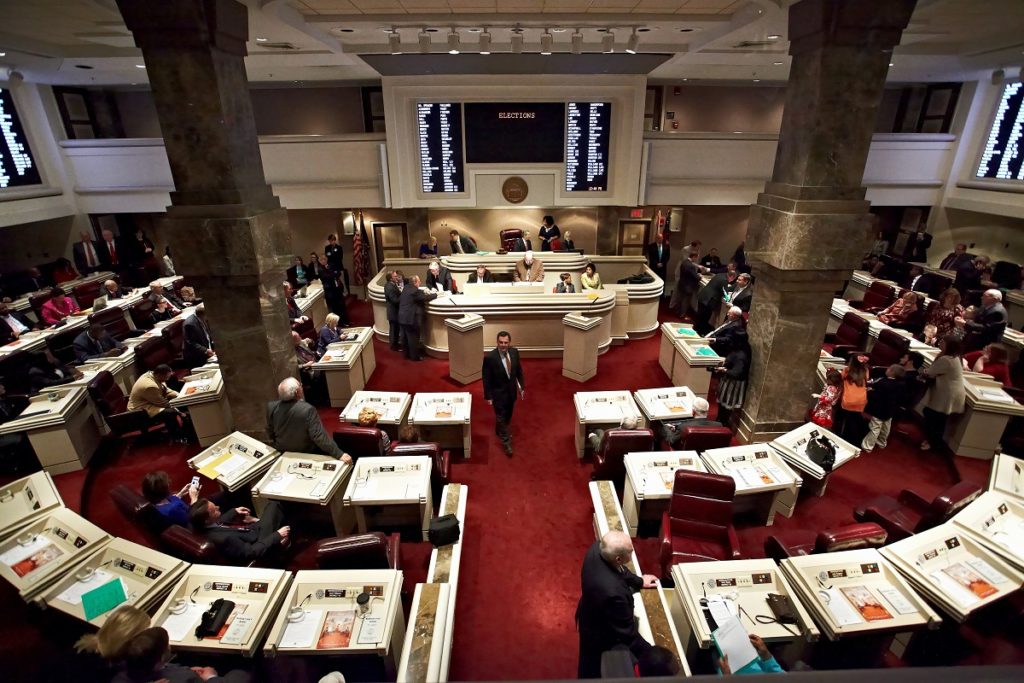
This third year of the quadrennium Regular Session of the legislature has recently gotten a lot more complex. These next four months will be trying times for the Alabama Legislature. They will not only have to deal with a beleaguered General Fund Budget that has to feed a money-eating monster named Medicaid, they have an overcrowding problem in the state prisons to deal with as well as major public school systems being taken over by the state because of mismanagement and underfunding. They now have been dealt a body blow that affects their own backyards. They will have to draw new legislative lines that will need to be in effect by June because legislative elections essentially begin this June. The primaries for 2018 political offices will be held in early June next year. All 105 House seats and all 35 Senate seats are up for election. The bell rings this June 6 for all state races to begin raising money. Folks, money is the mother’s milk of politics. It usually determines who wins a race. Campaign money equates into name identification and in most legislative races it really boils down to name identification. Therefore, they will covertly make dealing with this reapportionment wrench a paramount priority. Almost five years ago, a lawsuit, which appeared at the time to be a perfunctory Hail Mary, was brought by the Alabama Legislative Black Caucus and the Alabama Democratic Conference. At the time it seemed like a vague and nebulous concept of a case. The Legislative Black Caucus and ADC argued that the Republican-controlled Legislature drew lines that moved black voters who vote Democratic into overwhelmingly populated black districts that prohibited them from forming alliances with like-minded white voters. The crux of the case, is that it diluted their influence in the legislature. The case surprisingly meandered through the courts all the way to the U.S. Supreme Court. The Supreme Court broke new ground when it even heard the case and set new precedent with its ruling. Prior to this, the Supreme Court had held a state legislature could draw lines along political paths as long as it did not discriminate against black voters. The case was remanded back to the 11th Circuit to seek a remedy. The Supreme Court sets the law. The federal judges in Alabama had to decide how to implement the ruling. When you look at the districts there is no question that the lines were drawn politically to put all black voters into almost all black districts to be represented by black Senators or black Representatives. This stacking also placed most whites in almost all white districts represented by white Senators and white Representatives. The federal judges ruled January 20, Inauguration Day, that 12 districts in Alabama must be redrawn in order to comply with the U.S. Supreme Court decision. The 2 to 1 majority of U.S. Federal Judges Keith Watkins and Bill Pryor ruled that only 12 districts were stacked. U.S. District Judge Myron Thompson wrote that he would have found 12 more districts unconstitutional. Regardless of whether 12 or 24 of the districts are out of sync, the legislative districts will have to be redrawn. When you tinker with even one district it affects the whole map. There is a ripple effect which will require redrawing most if not all of the districts in both the Senate and the House. However, the bottom line is that most of the districts in the state will change very little and more importantly it will not change the party makeup of the Legislature. You will probably have the same overwhelming Republican super majority in both chambers of the state Legislature. In Alabama politics, essentially whites are Republicans and blacks are Democrats. There is very little deviation. Therefore, the redistricting will have minimal or no partisan effect. However, long-term it lays the foundation for a possible future coalition between black Democrats and moderate Republicans to bridge a bipartisan coalition leadership. See you next week. ___ Steve Flowers is Alabama’s leading political columnist. His weekly column appears in over 60 Alabama newspapers. He served 16 years in the state Legislature. Steve may be reached at www.steveflowers.us.
When will Robert Bentley, Legislature answer ‘the call,’ put lottery on Nov. ballot?

During the past couple of months, everywhere I go people continually ask me why in the world the Legislature could not simply put the issue of whether they could vote for or against a lottery on the November ballot. The fact that this inquiry has lingered for this long tells me that folks are upset about this travesty. They are mad at the Legislature. However, the blame lies with the governor. Indeed, the Legislature met in a special session to address this issue of whether or not to put the lottery proposal on the ballot and let you vote on this lingering issue. Most polls indicate that the good people of Alabama would vote in favor of it, provided there are no sweetheart deals, hidden chicanery or favoritism in the proposal. Most Republicans would vote in favor of it because they are tired of their money being sent to Georgia, Florida and Tennessee to help their schools, roads and indigents rather than keep their money at home helping Alabamians. Folks in the Heart of Dixie are going to buy lottery tickets. They are just going to buy them in our surrounding states. It was noticeable that a good many of the legislators, who represent border counties, voted against the referendum. This is similar to bygone days when most of the dry counties in the state continued to vote dry due to an ironic coalition between the bootleggers and preachers. I seriously think that some of these border counties are reaping a bonanza in gas tax revenue from the throng of cars headed to border states to buy lottery tickets. They say that cars are backed up for miles around every state border when these super Powerball extravaganzas occur. Well, to answer your questions, it is difficult to pass anything in a congress or Legislature. That is why they have the old adage, “It takes an act of Congress to get something accomplished.” In Alabama, extraordinary special sessions of the Legislature are the way to go to get something accomplished if you are the governor. The Legislature has to address what the governor calls the legislature into session for, it is called “the call.” George Wallace was a master of using special sessions to get what he wanted done. He would call them repeatedly. However, before he called them, he would have his ducks in a row. He would have called you on the phone, had you visit with him one on one in his office at the capitol or at the governor’s mansion. He would know what the vote count was on his issue before he called a special session. He would not waste taxpayer money on a session without any accomplishment. Well folks, our good ole doctor Governor Bentley ain’t George Wallace. Ole Bentley did waste money that the state General Fund does not have to squander. That is why the special session was called. It was designed to help bolster the beleaguered General Fund. Bentley failed because he did just the opposite of Wallace. He did not call any legislators. They heard about the session on the news. Even though Gov. Bentley shoulders the blame for failure to at least put the lottery issue on the ballot, he has shown profound leadership with his creation of an advisory council on gambling. This is a prudent, rational, and unbiased approach to the entire gambling issue. Bentley is right when he says the issue of gambling in the state is something that will never end unless we come together and figure out a way for the people of this state to have a say in its resolution. This advisory panel has done a thorough job of studying this issue. Jim Byard and Clinton Carter, two bright stars in Bentley’s cabinet, have led the comprehensive study of gaming. The commission looked at what other states are doing to reap revenue from gambling that already exists to get a clearer picture of what a lottery would generate for state coffers. They have looked at all gambits of gambling in the state, not just the lottery. They are designing a long-term approach to present to the legislature. The administration has extended the panel’s deadline to report to the legislature from January 31 to June, probably because they do not want to deal with gambling during this legislative session. The final solution must allow Alabamians to vote on this issue. See you next week. ___ Steve Flowers is Alabama’s leading political columnist. His weekly column appears in over 60 Alabama newspapers. He served 16 years in the state legislature. Steve may be reached at www.steveflowers.us.
Ala. lawmakers begin budget hearings ahead of regular session

Alabama lawmakers heard budget goals on Monday ahead of the legislative session that begins next week. In the preliminary budget hearings, Medicaid Commissioner Stephanie Azar told lawmakers the state’s Medicaid agency will look for an estimated $44 million this legislative session. She noted the figure is subject to change, dependent upon what happens in Washington, D.C. “We need to make sure we are at the table and make sure the state doesn’t end up in a worse position from a financial standpoint,” Azar told the room. The 2017 regular session is scheduled to begin Tuesday, Feb. 7.
Ala. Speaker Mac McCutcheon appoints new committee chairmen
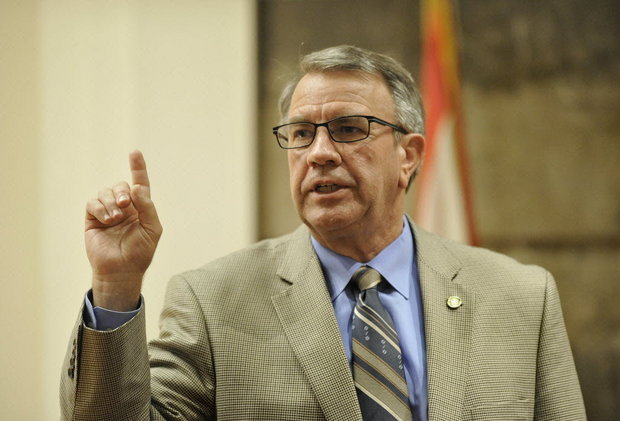
With the Alabama Legislature poised to kick-off it’s 2017 regular session less than two months away, on Feb. 7, Alabama’s newly elected House Speaker is busy this holiday getting things ready. On Monday, the Monrovia-Republican announced the members who will chair the chambers’ Rules, Internal Affairs, Public Safety and Homeland Security, Commerce and Small Business, and Insurance committees when the Legislature convenes for in 2017. “Each of these legislators is a proven leader and possesses a skill set that makes them uniquely qualified to chair their committees,” McCutcheon said in a news release. “Chairing a legislative committee significantly increases a lawmaker’s workload and demands a much greater time commitment, so I appreciate their willingness to serve in these important leadership positions.” Here’s who’s McCutcheon has chosen as chairs: Troy-Republican, state Rep. Alan Boothe will chair the powerful House Rules Committee, which determines each day’s work agenda and decides which bills will come to the floor for debate and consideration. Boothe has served in the House since 1998 and previously served on the Troy City Council. He chaired the House Internal Affairs Committee, but will relinquish that post in order to lead the Rules Committee. Anniston-Republican, state Rep. Randy Wood will take over as chair of the House Internal Affairs Committee, which is tasked with considering bills pertaining to the operations and ethics of the Alabama Legislature. It also holds disciplinary power over members who violate the body’s rules. Wood was elected to the House in 2002 and previously held a seat on the Calhoun County Commission. Wood will relinquish his chairmanship of the House Public Safety and Homeland Security committee to serve in his new role. Morris-Republican, state Rep. Allen Treadaway, a captain in the Birmingham Police Department, will chair the House Public Safety and Homeland Security Committee. Treadaway, who was elected to the House in 2006, was a member of the committee and has been elevated to its leadership. Birmginham-Republican, state Rep. Jim Carns, a businessman with experience in manufacturing, will lead the House Commerce and Small Committee. Carns served in the Alabama House from 1990 to 2002 and returned to the body following a special legislative election in 2011. He also served as a member of the Jefferson County Commission. Albertville-Republican, state Rep. Kerry Rich (has been selected to chair the House Insurance Committee. Rich has served in the House since 2010 but was previously elected to two terms from 1974 to 1978 and from 1990 to 1994. The owner and manager of several radio stations throughout his career, he was also a member of former Alabama Gov. Fob James’ cabinet in the mid-1990s.
55% of the Alabama Legislature is on Twitter

Years ago, a lawmaker’s official website used to be sole clearinghouse for information — functioning as hub of schedule updates, press releases, contact information, and more. While those websites aren’t going anywhere any time soon, gone are the days where they’re the only platform lawmakers use to communicate with constituents. But with the advent of social media — Facebook, Twitter, Instagram, to name but a few — it’s become increasingly important for members to take the extra effort to engage more directly, and frequently with those who put them in office. In 2016, 78 percent of Americans had at least one social media profile, making a strong argument that if lawmakers want to continue to be re-elected they should go where the people are — online. Which is why Alabama Today wanted to see just how many Alabama lawmakers have a social media presence on Twitter — a digital platform where users “tweet” 140-character messages to the world, and one another. In our research, we found that 55 percent of the current 135 member Legislature is on Twitter. To break it down further, we found 77 percent of the Senate is on Twitter, while on 47 percent of the House has jumped on the platform. Further still, the make-up of the Alabama Legislature on Twitter is 56 percent Republicans and 49 percent Democrats. But merely having an account on Twitter by no means the users are active. We discovered the vast majority of Alabama lawmakers on the platform only used to first get elected, and that most accounts are years out of date, like Rep. Thad McClammy who’s not tweeted since 2009, or Sen. Rodger Smitherman who’s not tweeted since 2010. While others, like Sen. J.T. Waggoner (R-AL-16) and Rep. April Weaver seem to have missed the entire point of being a public official with a Twitter account in the first place — to communicate with constituents — and have their accounts hidden behind privacy filters. Then there’s the smallest population of users, like RepublicanRep. Victor Gaston and Democrat Rep. Barbara Boyd who have created accounts, but have never actually tweeted from. Take a look at our findings: Alabama State Senate Sen. Greg Albritton (R-AL-22): N/A Sen. Gerald Allen (R-AL-21): @SenGeraldAllen Sen. Billy Beasley (D-AL-28): @senbillybeasley Sen. Slade Blackwell (R-AL-15): @SladeBlackwell Sen. Dick Brewbaker (R-AL-25): @dick_brewbaker Sen. Paul Bussman (R-AL-4): @PaulBussman Sen. Clyde Chambliss (R-AL-30): @Clyde_SD30 Sen. Linda Coleman (D-AL-20): @senlindacoleman Sen. Gerald Dial (R-AL-13): @sengeralddial Sen. Priscilla Dunn (D-AL-19): N/A Sen. Vivian Figures (D-AL-33): @vivian_figures Sen. Rusty Glover (R-AL-34): N/A Sen. Bill Hightower (R-AL-35): @hightower_bill Sen. Jimmy Holley (R-AL-31): N/A Sen. Bill Holtzclaw (R-AL-2): @billholtzclaw Sen. Steve Livingston (R-AL-8): N/A Sen. Del Marsh (R-AL-12): @SenatorDelMarsh Sen. Jim McClendon (R-AL-11): @SenJimMcClendon Sen. Tim Melson (R-AL-1): N/A Sen. Arthur Orr (R-AL-3): @SenatorAOrr Sen. Trip Pittman (R-AL-32): @PittTrippman Sen. Greg Reed (R-AL-5): N/A Sen. Quinton Ross (D-AL-26): @SenQuintonRoss Sen. Henry Sanders (D-AL-23): @SenHankSanders Sen. Paul Sanford (R-AL-7): @CitizenLawmaker Sen. Clay Scofield (R-AL-9): @ALConservative Sen. Shay Shelnutt (R-AL-17): @shelnutt417 Sen. Bobby Singleton (D-AL-24): N/A Sen. Harri Anne Smith (I-AL-29): @HarriAnneSmith Sen. Rodger Smitherman (D-AL-18): @alsenateprotem Sen. Larry Stutts (R-AL-6): @Larry_Stutts Sen. J.T. Waggoner (R-AL-16): @JaboWaggoner (protected account) Sen. Cam Ward (R-AL-14): @sencamward Sen. Tom Whatley (R-AL-27): @SenTomWhatley Sen. Phil Williams (R-AL-10): @SenPhilWilliams Alabama State House of Representatives Rep. Will Ainsworth (R-AL-27): @WillAinsworth27 Rep. Louise Alexander (D-AL-56): N/A Rep. Alan Baker (R-AL-66): N/A Rep. Mike Ball (R-AL-10): N/A Rep. George Bandy (D-AL-83): N/A Rep. Paul Beckman (R-AL-88): @RepPaulBeckman Rep. Elaine Beech (D-AL-65): N/A Rep. Marcel Black (D-AL-3): @marcel_black42 Rep. Chris Blackshear (R-AL-80): @chrisblackshear Rep. Alan Boothe (R-AL-89): N/A Rep. Barbara Boyd (D-AL-32): @131Babs (never Tweeted) Rep. Napoleon Bracy (D-AL-98): @hiphopstaterep Rep. K.L. Brown (R-AL-40): @RepKLBrown Rep. James Buskey (D-AL-99): N/A Rep. Mack Butler (R-AL-30): @RepMackButler Rep. Jim Carns (R-AL-48): @JimCarns Rep. Donnie Chesteen (R-AL-87): @DonnieChesteen Rep. Adline Clarke (D-AL-97): N/A Rep. Steve Clouse (R-AL-93): @RepSteveClouse Rep. Merika Coleman-Evans (D-AL-57): N/A Rep. Terri Collins (R-AL-8): @RepTerriCollins Rep. Danny Crawford (R-AL-5): N/A Rep. Anthony Daniels (D-AL-53): @anthonydaniels Rep. Randy Davis (R-AL-96): N/A Rep. Dickie Drake (R-AL-45): N/A Rep. Barbara Drummond (D-AL-103): @Drummond103 Rep. Christopher England (D-AL-70): @RepEngland70 Rep. Allen Farley (R-AL-15): @RepAllenFarley Rep. David Faulkner (R-AL-46): @RepFaulkner Rep. Joe Faust (R-AL-94): N/A Rep. Bob Fincher (R-AL-37): N/A Rep. Craig Ford (D-AL-28): @RepCraigFord Rep. Berry Forte (D-AL-84): N/A Rep. Matt Fridy (R-AL-73): @MattFridy Rep. Danny Garrett (R-AL-44): @DannyGarrett44 Rep. Victor Gaston (R-AL-100): @VictorGastonAL (never Tweeted) Rep. Juandalynn Givan (D-AL-60): @RepJuandaGivan Rep. Lynn Greer (R-AL-2): N/A Rep. Dexter Grimsley (D-AL-85): N/A Rep. Laura Hall (D-AL-19): @RepLauraHall Rep. Micky Hammon (R-AL-4): @RepMickyHammon Rep. James Hanes (R-AL-23): N/A Rep. Corey Harbison (R-AL-12): N/A Rep. Alan Harper (R-AL-61): N/A Rep. Ed Henry (R-AL-9): @Ed_Henry_HD9 Rep. Jim Hill (R-AL-50): N/A Rep. Alvin Holmes (D-AL-78): N/A Rep. Mike Holmes (R-AL-31): N/A Rep. Ralph Howard (D-AL-72): N/A Rep. Steve Hurst (R-AL-35): N/A Rep. Reed Ingram (R-AL-75): N/A Rep. Thomas Jackson (D-AL-68): N/A Rep. Ken Johnson (R-AL-7): @KenCJohnson Rep. Ronald Johnson (R-AL-33): N/A Rep. Mike Jones (R-AL-92): N/A Rep. John Knight (D-AL-77): @alrep77 Rep. Kelvin Lawrence (D-AL-69): @Lawrencekj Rep. Nathaniel Ledbetter (R-AL-24): @RepLedbetter24 Rep. Paul Lee (R-AL-86): N/A Rep. Richard Lindsey (D-AL-39): N/A Rep. James Martin (R-AL-42): N/A Rep. Artis McCampbell (D-AL-71): N/A Rep. Thad McClammy (D-AL-76): @thadmcclammy Rep. Mac McCutcheon (R-AL-25): @MacDistrict25 Rep. Stephen McMillan (R-AL-95): @RepMcMillan Rep. Mike Millican (R-AL-17): N/A Rep. Arnold Mooney (R-AL-43): @Arnoldfor43 Rep. Barry Moore (R-AL-91): @RepBarryMoore Rep. Mary Moore (D-AL-59): N/A Rep. Johnny Morrow (D-AL-18): N/A Rep. Becky Nordgren (R-AL-29): @RepBeckNordgren Rep. Jim Patterson (R-AL-21): N/A Rep. Phil Pettus (R-AL-1): N/A Rep. Dimitri Polizos (R-AL-74): N/A Rep. Bill Poole (R-AL-63): @GoBillPoole Rep. Chris Pringle (R-AL-101): @ChrisPringle101 Rep. Kerry Rich (R-AL-26): N/A Rep. John Rogers (D-AL-52): N/A Rep. Connie Rowe (R-AL-13th): @rowe_reprowe13 Rep. Howard Sanderford (R-AL-20): N/A Rep. Roderick Scott (D-AL-55): N/A Rep. Chris Sells (R-AL-90): N/A Rep. David Sessions (R-AL-105): N/A Rep. Randall Shedd (R-AL-11th): N/A Rep. Harry Shiver (R-AL-64): N/A Rep. Kyle South (R-AL-16): @RepSouth16 Rep. David Standridge (R-AL-34): @JudgeStandridge Rep. Patricia Todd (D-AL-54): @RepTodd Rep. Allen Treadaway (R-AL-51): N/A Rep. Mark Tuggle (R-AL-81): @MarkMTuggle Rep. Tim Wadsworth (R-AL-14): @AlabamaLaw Rep. Pebblin Warren (D-AL-82): N/A Rep. April Weaver (R-AL-49): @aprilcweaver (protected account) Rep. Isaac Whorton (R-AL-38): N/A Rep. Ritchie Whorton (R-AL-22): N/A Rep. Margie Wilcox (R-AL-104): N/A Rep. Jack Williams (R-AL-102): @AlabamaWilliams Rep. Jack Williams (R-AL-47): @RepJack Rep. Phillip Williams (R-AL-6): : @PhilHouse44 Rep. Rich Wingo (R-AL-62): N/A Rep. Randy Wood (R-AL-36): N/A
A breakdown of 14 amendments approved by Alabama voters
While the presidential race may have taken center stage on Tuesday, Alabama voters were presented with up to 14 additional ballot measures proposing changes to the Alabama Constitution, all of which were approved. Ratified in 1901, the Constitution frequently sees amendments come Election Day, and now has over 900. On Tuesday, some amendments were statewide while others were only seen in specific localities. Below is a summary of the 14 approved constitutional amendments: Amendment 1: Board of Trustees for Auburn University: Establishes procedures to ensure that no more than three of the members of the Auburn University Board of Trustees shall have terms that expire in the same calendar year, and adds two at large members to the board. Amendment 2: State Park funding Protects money generated by and for state parks from being moved to other government functions. Also allows the state to use private vendors to run hotels and amenities at more state parks. Amendment 3: Local rules governing amendments Allows the state Legislature to decide by resolution if proposed constitutional amendments affecting a specific local area shall be voted on statewide or only in the affected county. Amendment 4: Administrating county business Authorizes each county commission in the state to establish, subject to certain limitations, certain programs related to the administration of the affairs of the county including controlling weeds, junkyards, litter and rubbish, noise, pollution, sewage and animal control without having to ask permission from the state Legislature. Amendment 5: Separation of powers Repeals and rewrites sections of the Alabama Constitution concerning separation of powers to modernize language — such as the removal of the phrase “to wit” — without making any substantive changes. Amendment 6: Impeachment rules Establishes that a two-thirds majority vote of the Alabama Senate is required to remove an impeached public official from office. Previously, no margin was specified for removal. Amendment 7: Etowah County sheriff’s office Requires employees of the Etowah County Sheriff’s Office — except for the chief deputy, chief of detention, chief of administration, chief of investigation, director of communications, and food service manager — be under the authority of the Personnel Board of the Office of the Sheriff of Etowah County. Amendment 8: Labor and unions Adds Alabama’s right-to-work law in the Constitution, stipulating that employers cannot require employees to join unions or pay union dues. Amendment 9: Pickens County judge Makes an exception in the age limit for judges to allow someone up to age 75 to be elected or appointed to the office of Judge of Probate of Pickens County. Amendment 10: Calhoun County land Prevents cities and towns outside Calhoun County from being able to exercise police jurisdiction within Calhoun County. Amendment 11: Tax revenue Allows cities and counties to sell certain property they own for less than fair market value if it is located in areas specially designated as suitable for certain major manufacturing facilities in order to incentivize the establishment and improve various types of manufacturing facilities. Amendment 12: Baldwin County transportation Authorizes the state Legislature to create a toll road and bridge authority for a city or town in Baldwin County and they would oversee the construction and operation of toll roads and bridges within the city or town. Also authorizes the authority to issue revenue bonds to finance the projects. Amendment 13: Elected official age restrictions Repeals age restrictions for elected and appointed officials, with the exception of judges. The provision would also prevent lawmakers from approving new age caps without voters’ consent. Amendment 14: Budget, validating local laws Validates hundreds of local laws passed under a now disputed legislative procedure.
Kay Ivey: The stage is set for budget reform
The end of the 2016 fiscal year is rapidly approaching with the current fiscal year ending on the last day of September. After five legislative sessions, our budget challenges remain a high priority and our fiscal future is shaky. The Alabama Legislature just completed the third Special Session in the last 12 months, along with two Regular Sessions, totaling five Legislative Sessions in the last 20 months. Based on statutory requirements, the Legislature has been obligated 300 calendar days during this period to conduct legislative business. On top of legislative duties while in session, Legislators have also been busy with budget and Medicaid hearings, as well as other obligations regarding their responsibilities as a Legislator. It is clear the Legislature has devoted a tremendous amount of time dealing with the General Fund Budget and the ever-increasing demands of Medicaid. Over the past year, the Legislature has struggled to identify an additional $85 million to fully fund Medicaid at $785 million. When I took office in 2011, the Medicaid appropriation was $345 million. During the past five years, funding for Medicaid has continued to increase and is expected to reach $865 million for Fiscal Year 2018, which begins a year from now. Before I leave office as Lieutenant Governor, the General Fund appropriation for Medicaid will be approaching $1 billion. For more than a decade, funding for Medicaid has grown at a double digit pace while the General Fund overall has increased by a single digit each year. Using our current budget models, in five years Medicaid and Corrections will consume nearly 100% of the General Fund. Recent Special Sessions called by the Governor have included requests for additional revenues as a result of increased taxes or revenue generated through a statewide lottery—most of the Governor’s proposals did not pass. However, one measure that did pass was an increased cigarette tax. As a result, the cigarette tax revenue is expected to have a substantial increase of $190 million this year. Alabama has one of the most unique budget models in the country. The vast majority of Alabama’s revenues are committed (or earmarked), representing one of the highest levels in the country. For almost a decade, Alabama has operated state government on one-time and non-reoccurring money either from the federal government, the State’s Trust Fund or the State’s Rainy Day Fund. The most recent Special Session was no different with current obligations and road projects funded through one-time BP Settlement monies as a result of the 2010 Deep Water Horizon disaster. Many believe the reality of our situation will result in a fiscal “train wreck” in the near future. Current budgets, earmarked revenues and growing demands for Medicaid, Corrections, Mental Health and Human Resources are on an unavoidable path that will provide extremely limited funds for the remainder of state government. On an optimistic note, Alabama continues to enjoy marginal economic growth with unemployment down to 5.4%, the lowest in nearly a decade. As more Alabama citizens enter the workforce, they and the businesses that employ them will contribute to our economy resulting in increased revenues to support our budgets. There may be light at the end of the tunnel with the recent creation of the Joint Legislative Task Force on Budget Reform (HJR62) led by Speaker Mac McCutcheon and President Pro Tem Del Marsh. The task force will begin evaluating and recommending budget reform proposals to be considered by the Legislature. I applaud Pro Tem Marsh and Speaker McCutcheon for providing the leadership to begin the process to consider budget reform. It is my understanding that the focus will be to determine how best to fund state government with existing revenues. Possible solutions include freeing up earmarked revenues and revaluating existing tax credits and deductions that will provide flexibility within our budgets and allow Legislators to prioritize and fund essential services of state government. Senator Clyde Chambliss and Representative Danny Garrett will lead the task force as co-chairs, along with Senator Greg Albritton, Senator Linda Coleman, Senator Bill Hightower, Senator Bobby Singleton, Senator Phil Williams, Rep. Anthony Daniels, Rep. Allen Farley, Rep. John Knight, Rep. Chris Pringle, Rep. Kyle South and Rep. Rich Wingo. The task force is expected to meet monthly prior to the upcoming Regular Session. The first meeting is set for Wednesday, September 28. As we near the end of this fiscal year, the Alabama Department of Revenue is projecting we will collect a record amount of revenue exceeding $10 billion. Even with a record amount of revenue, our antiquated budget models continue to create major obstacles to fulfilling our needs. The challenges we face with our budgeting process will not go away unless we begin to look further than the year ahead and start to implement solutions that fundamentally change the way we prioritize our needs and budget our revenues. After marginal success in recent special sessions and our continued appetite to operate on one-time money, the stage is set for true budget reform. It will take bold leadership and courage by Legislators to make decisions that will have a long-term impact on the future of our State. Now that the stage is set, I am encouraged by the opportunity before us and am hopeful we may accomplish this task with the attention and hard work of the task force members. ••• Kay Ivey is the lieutenant governor of Alabama. Elected in 2010, she was the first Republican woman to hold the office in Alabama’s history.
Federal audits request Alabama to pay back nearly $100 million for improperly claimed Medicaid funds

2016 has been a rough year for the state of Alabama and things don’t look like they’ll be getting any easier any time soon. In a speech Thursday, State Auditor Jim Zeigler brought public attention to the results of federal audits of the Alabama Medicaid Agency that his office received Wednesday. According to two July 2016 reports from the Office of Inspector General at the U.S. Department of Health and Human Services (HHS), Alabama overcharged the HHS by nearly $100 million for Medicaid services delivered years ago. Report one, titled Alabama Claimed Millions in Unallowable School-Based Medicaid Administrative Costs, concludes the state did not get their school-based administrative costs approved properly. According to the report, some state employees were listed more than once on state’s list of school officials dedicated to Medicaid. It recommends a $75,274,946 refund to the federal government. The second report, titled Alabama Did Not Comply with Federal and State Requirements for Claiming Medicaid Certified Public Expenditures for Federal Fiscal Year 2010, concludes Alabama used the wrong inflation factor when calculating requests for federal money to pay for service at privately run hospitals that didn’t qualify for the payments. It recommends the state refund the $21,302,31 to the federal government. Combined, the two reports call for a total of $96,577,257 to be refunded to the federal government, which equates to roughly 14 percent of the general fund budget the state Legislature has appropriated to Medicaid services for Fiscal Year 2016. While the audits do not fall under the authority the State Auditor’s Office, Zeigler points out the state will essentially lose out on the money it’s receiving from the BP oil spill settlement to repay these debts. “Alabama will lose $75 million of that [settlement] money because it failed a federal audit — and failed badly,” said Zeigler. “What the BP settlement gave, the failed audit will take away.” Zeigler’s Thursday speech in Fairhope comes less than 24 hours after the Alabama Legislature approved distribution for the oil spill settlement money that sent an additional $120 million to Medicaid for 2016-2017. “The Bentley administration has reached a new low point in mismanagement,” Zeigler continued. “They did not bring to the attention of the Legislature that the failed audits would grab all of the new BP Medicaid money for 2017 and part for 2018.”
Alabama lawmakers try to break deadlock on BP oil spill money
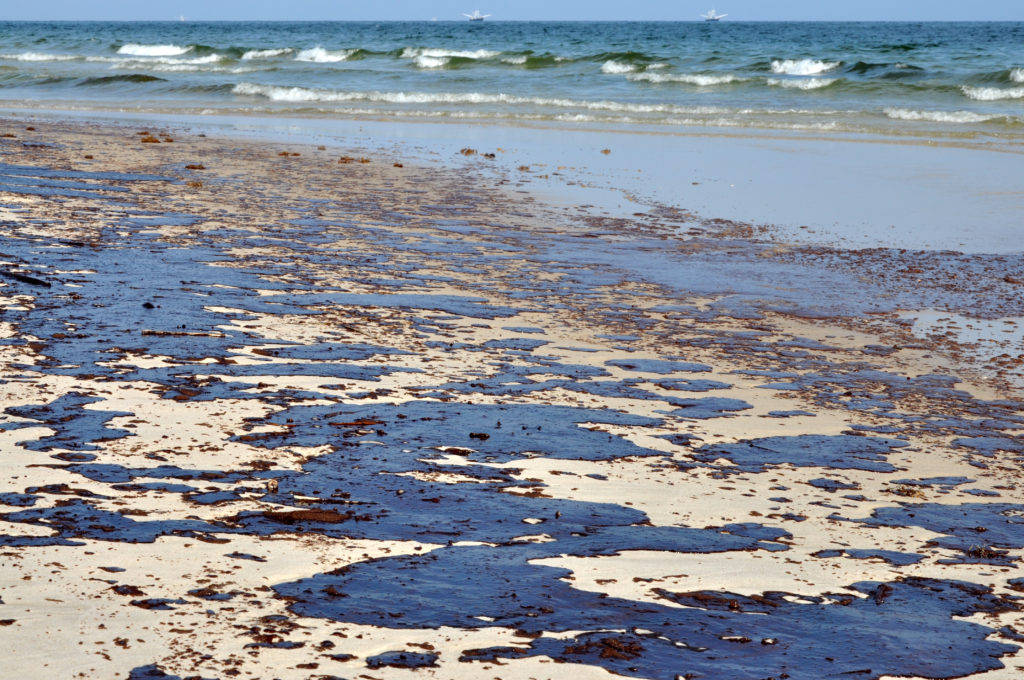
Alabama lawmakers on Wednesday made a last-ditch effort to break a deadlock on how to spend the funds from a settlement related to the 2010 oil spill in the Gulf of Mexico. A conference committee attempted to strike a middle ground between lawmakers who want money for road projects in coastal counties and others who want to steer money to the state’s cash-strapped Medicaid program. The House of Representatives approved the conference committee’s plan on an 87-9. It now moves the Alabama Senate where divisions among senators are sharper. “This is possibly, at this point in time, the best that we are going to be able to do. There was compromise on all sides,” Senate President Pro Tem Del Marsh, R-Anniston, said. Alabama is set to receive $850 million in compensation for economic damages from the largest offshore oil spill in U.S. history. State lawmakers are considering taking a smaller amount up font — a projected $640 million — by doing a bond issue. But first they must agree on how to use the money. Lawmakers have been deadlocked over how much of the money to use for debt payment, Medicaid or road projects. The proposed compromise would steer $120 million to south Alabama road projects and $120 million to Medicaid over the next two years. It would also use $400 million to repay money borrowed from other state coffers during past budget shortfalls. The House had initially approved a bill that would have steered $191 million to road projects in Mobile and Baldwin counties, Some senators in both parties argued Wednesday the state should put more money to the state’s struggling Medicaid program. Sen. Arthur Orr, R-Decatur, said Medicaid could need an additional $200 million or more in coming years, and the settlement funds were the best hope to help fill that funding gap. Sen. Rodger Smitherman, D-Birmingham, said the plan gave “crumbs” to the Medicaid program while lawmakers were fixated on building projects and paying interest-free debt. Senators are expected to debate the bill through Wednesday afternoon. Gov. Robert Bentley brought lawmakers into special session to debate a proposed state lottery and other ways to try to get additional money to the state’s perpetually cash-strapped Medicaid program. With the lottery bill dead for the special session, the oil spill settlement bill took center stage in the final days of the special session. Marsh said lawmakers risked getting no additional money for Medicaid if they end the special session without approving the bill. Republished with permission of the Associated Press.
Alabama lawmakers form task force to tackle earmarks, credits and tax relief
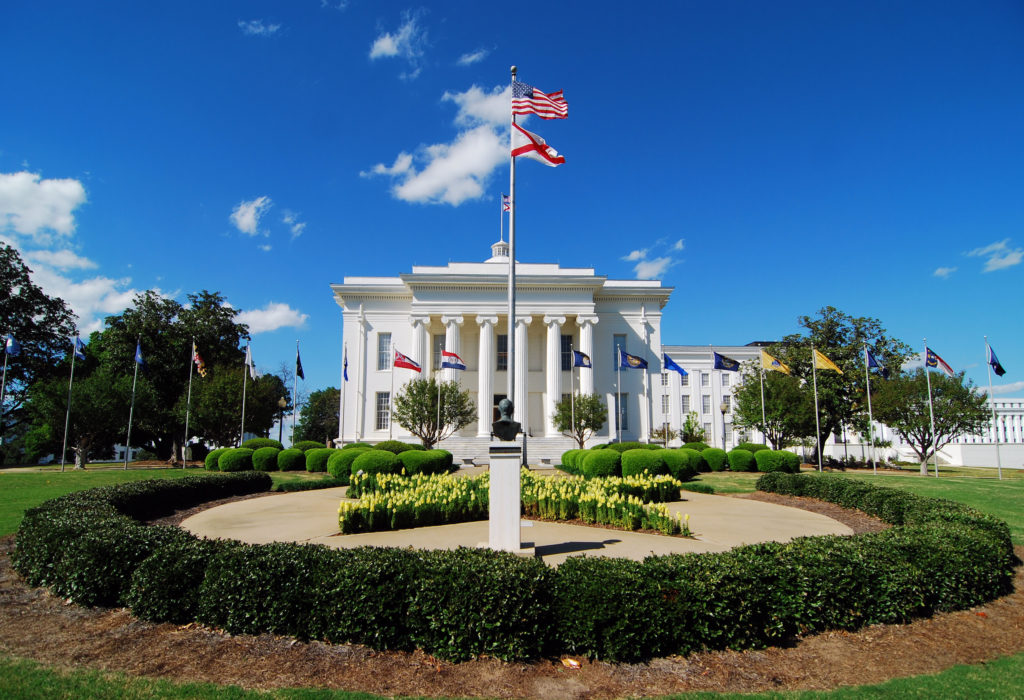
Currently over 90 percent of Alabama’s tax dollars are earmarked for specific government programs or services — the highest percentage of earmarked dollars of any state — leaving the state Legislature with virtually no flexibility to allocate taxpayer dollars, especially in times of budget austerity. In an effort to remedy this situation, which has created a perennial budget shortfall, the Alabama Senate Tuesday passed a resolution creating a task force of lawmakers to identify long-term budget reforms. The 14-member bipartisan Joint Legislative Task Force on Budget Reform will be comprised of seven senators and seven members of the House of Representatives. The group will begin meeting later this month, where they will evaluate the following five ideas: Biennial budgeting cycles for both the General Fund and the Education Trust Fund budgets. Plans to un-earmark tax revenue, to increase legislative oversight of state departments and give flexibility to policymakers. Methods for requiring state entities to undergo greater performance and program reviews. Proposals to carefully evaluate the efficiency of all existing state tax credits, deductions, and exemptions. (Currently, more than $4.5 billion in tax revenue is given out via tax credits, deductions, and exemptions, and many of these are decades old). Identify areas where tax relief can be provided to Alabama’s families, without significantly impacting state budgets. “Since 2010, we have cut over $1 billion annually in state government spending,” Anniston Republican and Senate Pro Tem Del Marsh said in a news release. “The reality is, however, that further budget reform is needed to put our state on a sound fiscal footing for the coming years and position Alabama for strong economic growth, and I am committed to achieving those goals without raising taxes.” The task force is charged with reporting its findings and recommendations to the Alabama Legislature by the fifth legislative day of the 2017 Regular Session.
With lottery dead, Alabama lawmakers focus on BP oil spill funds
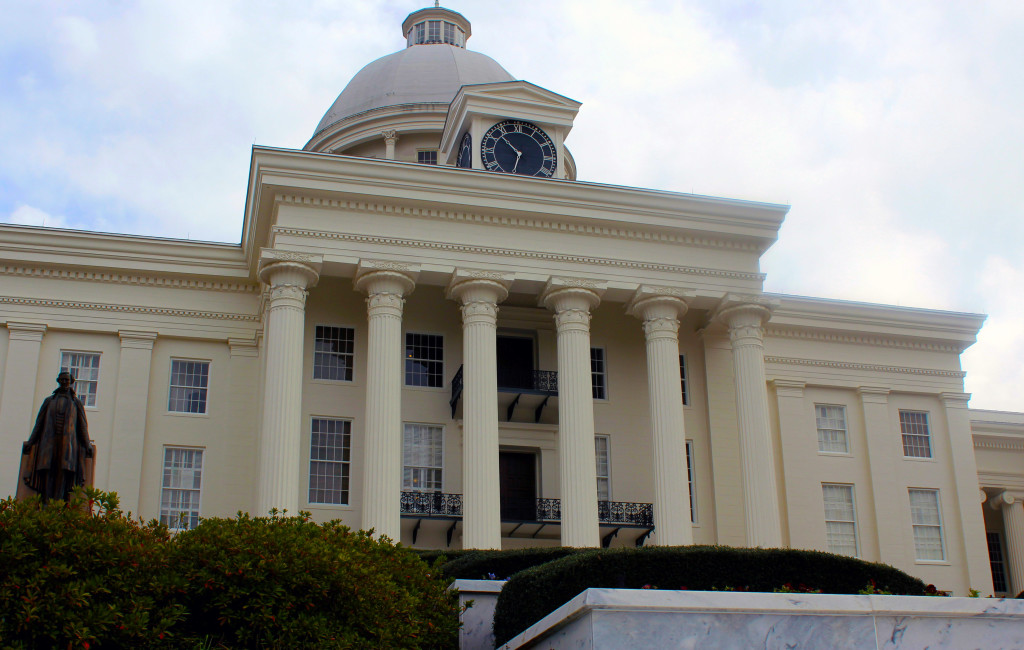
Alabama lawmakers will focus on legislation dividing the state’s nearly $1 billion in oil spill settlement money when they resume a special session Tuesday on Medicaid funding. With lottery legislation dead for the session, the bill takes center stage as the only option before lawmakers to get additional money to the state’s Medicaid program. Legislators are deadlocked over the best use of the money intended to compensate the state for economic damages suffered during the 2010 oil spill in the Gulf of Mexico. They have been split over how much to use for building roads in coastal counties and how much to use for paying state debt and funding Medicaid. “I’m not real optimistic. You are going to have a group that is very forceful about using the money for debt repayment and/or Medicaid. And you have a group that is willing to lock it down on getting money to south Alabama,” Senate President Pro Tem Del Marsh, R-Anniston, said. The Alabama Senate on Tuesday will resume debate on a House-passed plan that would use the BP money for debt payment and roads. Marsh said if lawmakers can’t reach an agreement Tuesday, there could be a sentiment to go ahead and end the special session Tuesday instead of returning for the final two days. Alabama’s general fund is getting $1 billion over the next 18 years, under the state’s settlement with BP. Under the bill, the state would take a smaller amount of the remaining $850 million in payments up front — a projected $640 million— by doing a bond issue. About $450 million would be used for paying back money borrowed during past budget shortfalls and $191 million would be used for two state road projects in coastal counties. Paying debt early would free up about $70 million in help fill a projected $85 million hole in next year’s Medicaid budget. Lawmakers from south Alabama have been adamant that won’t take less, or at least not much less, for the road projects. Sen. Bill Hightower, R-Mobile, said coastal Alabama suffered the brunt of the damage from the oil spill and should get more benefit from the money. “The money is there because the oil spilled along the coast. That’s where the damage occurred,” Hightower said. Other lawmakers have said they want to see more money go to the state’s Medicaid program, arguing south Alabama received its own direct compensation funds from BP. Sen. Arthur Orr, R-Decatur, said the problem is not just next year’s Medicaid budget. He said Medicaid is facing “catastrophic shortfalls” in 2018 and 2019. “I think it is extremely important we try to address Medicaid funding shortfalls anticipated for 18 and 19,” Orr said. “There will be definitely some alternative offered that would support Medicaid significantly over a three-year period.” Sen. Trip Pittman, R-Montrose, introduced an amendment to reduce the road money by $15 million and send it to Medicaid. “That should give the $85 million that Medicaid needs next year,” Pittman said. Hightower said the Pittman amendment would be acceptable, but it is unclear if the additional few million would be enough to bridge the deep divisions in the Senate. Gov. Robert Bentley brought lawmakers into special session to consider a lottery bill and other means to get money to the state’s perpetually cash-strapped Medicaid program. “Lottery is dead so it’s all BP now,” Rep. Steve Clouse, chairman of the House Ways and Means Committee, said. Pittman said lawmakers, after propping up budgets in past with borrowed money, eventually have to make a choice: Raise revenue or make cuts. “You have to do one or the other,” Pittman said. Republished with permission of the Associated Press.
