
Meet the four Republicans running for Mike Hubbard’s legislative seat

Four Republicans are vying for former House Speaker Mike Hubbard‘s legislative seat in the Alabama House of Representatives. Hubbard was immediately removed from office in June when he was found guilty on 12 counts of public corruption. Following the jury’s decision, Gov. Robert Bentley set the timeline for special election, indicating major party candidates had to qualify with their respective parties by Thursday, July 14. Friday, the Alabama Republican Party announced Jay Conner, Joe Lovvorn, Brett Smith and Sandy Toomer all qualified to run for the Lee County District 79 seat. No Democrats choose to run in the special election. Here’s an look at the four candidates who have qualified to run for Hubbard’s vacant seat: Jay Conner Conner has been a leader in the Auburn community for over 30 years, serving in leadership positions such as chairman of the Lee County Board of Equalization, member of the Lee/Russell Metropolitan Planning Organization and the Auburn Chamber of Commerce board of directors. Conner has also served on task force committees with the city of Auburn in the areas of green space, watershed and downtown development. He is a licensed real estate broker and development manager. “I’m running for the Alabama House of Representatives in District 79 because we need true, honest, and genuine representation,” Conner said in a news release. “The people of District 79 should speak for themselves through a representative who will craft legislation and vote in accordance with our residents’ will, not for the benefit of those gaming the system.” Joe Lovvorn A veteran firefighter and businessman, Lovvorn earned both his undergraduate degree and his MBA from Auburn University, and is currently a Realtor and the owner/franchisee of Two Men and a Truck. “I have spent my life working to make our community a better place to live and raise a family,’’ Lovvorn said. “That goal will not change, and I have the experience to make it happen. I’m asking the voters for this opportunity, and I won’t disappoint.’’ Brett Smith A founding partner of Auburn-based Huff Smith Law Firm, Smith is a member of both the Alabama and Florida State Bars. His practice areas include small business, nonprofit and charitable organizations law. “I enter this race today with the specific intent to be an alternative to the tired and bland politician we have all grown so accustomed to in politics,” Smith said in the release. “As the Bible says, we are useless if we are lukewarm, better off discarded if we lose our saltiness.” Sandy Toomer Former Ecuadorian missionary, Toomer is currently the owner of Toomer’s Coffee Roasters in Auburn. Toomer previously challenged Hubbard for the District 79 seat in 2014. “We’ve been given a gift, and a second opportunity earlier than expected to start some change, and I think it needs to start right here in Lee County in District 79,” Toomer said of Hubbard’s removal from office. The primary election will be held Sept. 13. If a primary runoff is needed, it will take place Nov. 29 and the special general election will be Feb. 7, 2017.
Robert Bentley sets Sept. 13 special election for Mike Hubbard’s vacated seat
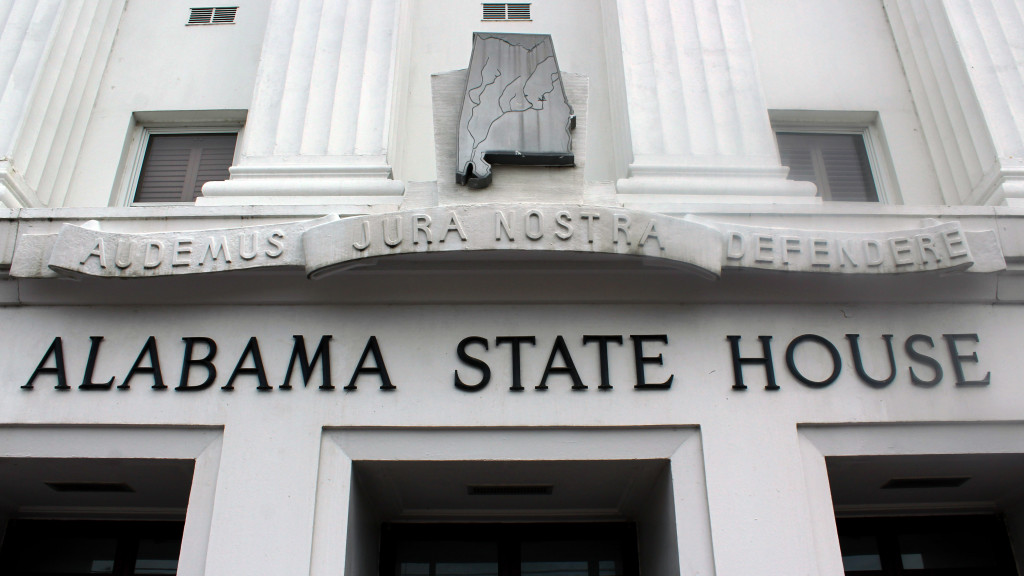
Governor Robert Bentley released Friday the timeline for a special election to replace convicted House Speaker Mike Hubbard’s seat in the Alabama House of Representatives. If a primary election is needed for Lee County’s House District 79 seat, party members will cast their votes Tuesday, Sept. 13, according to a news release from the governor’s office. If a primary runoff is needed, it will take place Nov. 29 and the special general election will be Feb. 7, 2017. Major party candidates will have to qualify with their respective parties by July 14. Third-party and independent candidates have to file the necessary paperwork with the Alabama Secretary of State by Sept. 13 at 5 p.m. Hubbard was automatically removed from office after being convicted of 12 felony ethics violations on June 10. He will be sentenced July 8, where he faces a maximum penalty of two to 20 years imprisonment and fines of up to $30,000 for each count. House Speaker Pro Tem Victor Gaston is currently filling the Speaker’s role until a new Speaker is elected when the House is next in session.
Gerald Dial: Away from the spotlight, commendable work is being done for Alabama
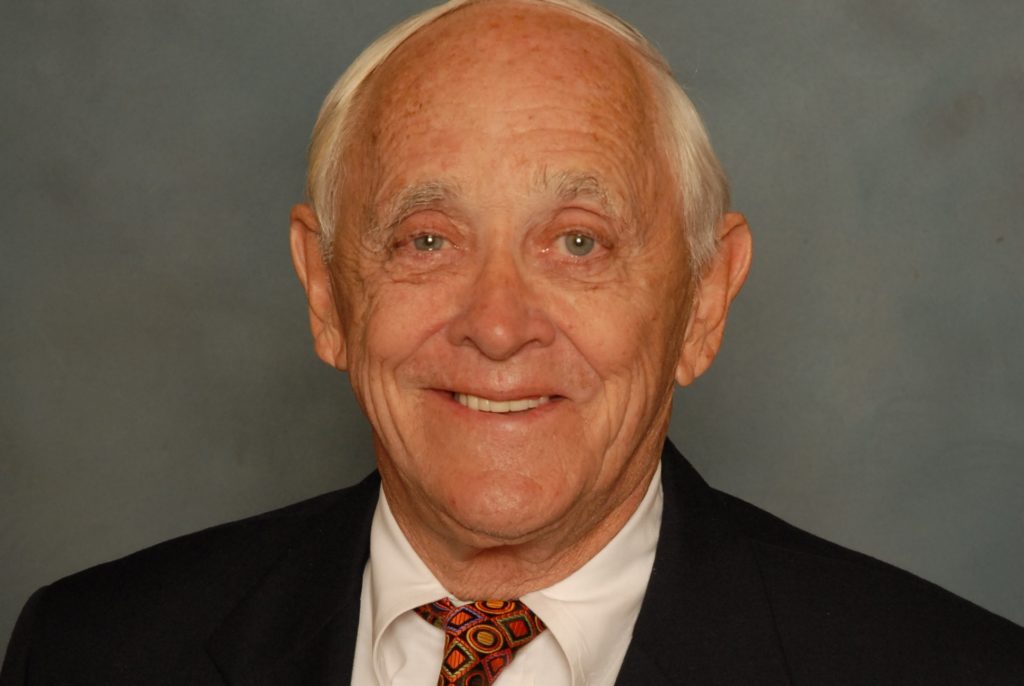
The people of east Alabama have elected me 10 different times to serve in the Alabama Legislature. It has been a tremendous honor to serve as a citizen-legislator, first in the House of Representatives and now in the state Senate. I love this state, am proud to call it home, and believe Alabamians are some of the best folks in the entire country. Therefore, it has been painful to see our state mocked in the national media the past few months, as several of our elected officials have made unwise decisions that do not reflect well on their character. At church, the grocery store, and local restaurants I have talked to many people who, in despair, wonder aloud if all politicians are corrupt, incompetent, or a combination of the two. I want to assure you: most people who serve in the Legislature are there for the right reasons. We want to improve our state and protect Alabama’s freedoms from an encroaching federal government. Quietly, away from the headlines about political corruption, there is good work being done for our state. During this past legislative session, I helped secure funding for the Alabama Ahead Act, which will connect every school in our state with high-speed wireless Internet infrastructure. Alabama will be among the first states in the country to have wireless Internet at each of its K-12 schools. The state of Alabama will invest $15 million for the project, to be matched by $83 million in federal funds. I am honored to serve as chairman of an oversight committee comprised of legislators and educators that will guide the implementation process of the Ahead Act (my co-chair will be Senator Jim McClendon of Springville, another champion for the movement). I am excited about the learning opportunities the Ahead Act will make possible in our classrooms. A high school economics class could Skype with entrepreneurs to learn the basics of starting a business. A geography/world history class could interact via text and video chat with peers at a school in Kenya. The possibilities are nearly endless! I am also privileged to serve as a member on the Armory Commission of Alabama, which oversees and manages the facilities and buildings of the state’s National Guard units. In 2014, Alabamians approved a $50 million bond issue to refurbish our National Guard armories so our Guard members can have a safe and healthy environment to work and train in. Combined with federal matching funds, the state will have more than $75 million over the next three years to pay for facility upgrades at Alabama’s National Guard armories. This has been particularly exciting for me because along with Senator Tom Whatley of Auburn, I helped craft the legislation that made the 2014 bond issue possible. Soon, every K-12 school in Alabama will have wireless Internet, while the state has stepped forward to upgrade the facilities of our National Guard armories. The news headlines will focus on the mistakes a few politicians have made. While I believe we should hold our elected officials accountable, please remember that behind the scenes, many of your fellow citizens in the Legislature are working hard to improve our great state. ••• Gerald Dial represents District 13 in the Alabama Senate, which includes all or parts of Randolph, Lee, Cleburne, Clay, Cherokee, and Chambers counties. He serves as chairman of the Senate Health & Human Services Committee. Gerald and his wife Faye reside in Lineville.
Daily fantasy sports websites comply with Alabama Attorney General’s order to leave

Daily Fantasy Sports (DFS) websites DraftKings and FanDuel have reached an agreement with Alabama Attorney General Luther Strange to cease operations in the state after the AG’s office declared the relatively new practice to constitute illegal gambling last month. In DFS, participants pay to create a roster of players, then pit their roster against those of other participants. Whomever’s roster performs the best that day within a particular pool wins prize money through the site. “I am pleased to report that fantasy sports operators DraftKings and FanDuel have complied with my order that they halt paid contests within the State of Alabama,” said Strange. “As Attorney General, it is my duty to uphold Alabama law, including the laws against illegal gambling. The daily fantasy sports operations violate state law because a player stakes something of value on a contest of chance in order to win a prize. While there is a measure of skill involved in creating a fantasy sports roster, in the end, contestants have no control over the performance of the players on their rosters. This activity is illegal under Alabama law.” In addition to ceasing operations in the state, DraftKings and FanDuel must process user requests from Alabama-based IP addresses to withdraw their account balances within seven business days of receiving such requests, according to the AG’s office. According to Alabama Code Section 13A-20-12, a person participates in gambling if he or she “stakes or risks something of value upon the outcome of a contest of chance or a future contingent event not under his control or influence, upon an agreement or understanding that he or someone else will receive something of value in the event of a certain outcome.” Gambling in Alabama is illegal, with a few exceptions including buying securities and commodities, insurance, and some grandfathered activities. DFS sites often contend they are games of skill, not of chance, and thus aren’t covered under most states’ gambling laws, but Strange argues this is not sufficient to keep them legal in Alabama. Two bills which would have undone the AG’s actions are stalled indefinitely in their houses of origin in the Alabama Legislature. With only two days left in the 2016 Regular Session, it is now virtually impossible for either of them to be considered during this session.
23 Alabama legislators sign Robert Bentley articles of impeachment
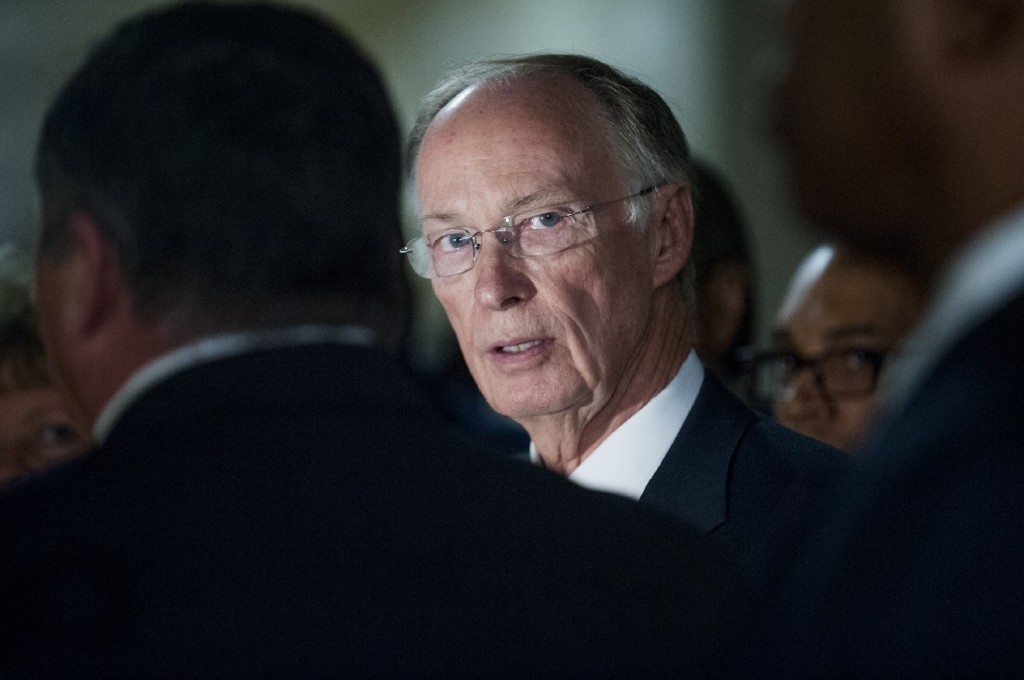
Twenty-three members of the Alabama House of Representatives have signed a resolution authored by Republican from Hartselle Ed Henry calling for the impeachment of Governor Robert Bentley in light of an alleged affair and the possibility of improper use of taxpayer funds. The resolution’s signatures slightly exceeded the 21 needed to file the resolution, according to a separate resolution sponsored and passed by Rep. Matt Fridy, Republican of Montevallo Tuesday which established the procedures for impeachment. An impeachment clause exists in the Alabama Constitution, but has never been used on a constitutional officer. Under the procedure resolution, 63 members of the 105-member house will have to vote to begin the Senate-led trial. The Resolution has been referred to the House Judiciary Committee for further action. While the majority of the impeachment resolution’s signees are Republicans who have previously called for the Governor’s resignation, it took a few Democrats signing on to meet the new procedure’s requirements. The following representatives signed the resolution calling for the governor’s impeachment. Ed Henry (Sponsor) Will Ainsworth (Republican of Guntersville) Mike Ball (Republican of Madison) Mack Butler (Republican of Gadsden) Danny Crawford (Republican of Athens) Allen Farley (Republican of Pleasant Grove) Craig Ford (Democrat of Gadsden) Tommy Hanes (Republican of Bryant) Mike Holmes (Republican of Wetumpka) Reed Ingram (Republican of Montgomery) Arnold Mooney (Republican of Birmingham) Barry Moore (Republican of Elba) Johnny Mack Morrow (Democrat of Red Bay) Becky Nordgren (Republican of Gadsden) Jim Patterson (Republican of Meridianville) David Sessions (Republican of Grand Bay) David Standridge (Republican of Oneonta) Patricia Todd (Democrat of Birmingham) Isaac Whorton (Republican of Valley) Ritchie Whorton (Republican of Owens Cross Roads) Margie Wilcox (Republican of Mobile) Jack W. Williams (Republican of Georgetown) Phil Williams (Republican of Harvest) Below is the entire text of the articles of impeachment. ARTICLES OF IMPEACHMENT AGAINST GOVERNOR BENTLEY. WHEREAS, in 2010, Governor Bentley was elected the 53rd Governor of the State of Alabama and was reelected to a second term in 2014; and WHEREAS, Section 173 of the Constitution of Alabama of 1901 provides that the Governor and other constitutional officers of this state may be impeached upon the adoption of articles of impeachment by this body and upon trial by the Senate, acting as a court of impeachment; and WHEREAS, two formal complaints have been filed with the Alabama Ethics Commission to determine whether Governor Bentley violated state ethics laws by misusing state property; and WHEREAS, in recognition of the gravity of the adoption of these articles of impeachment and upon findings that Governor Bentley has violated the public trust, this body concludes Governor Bentley should be impeached for cause; now therefore, BE IT RESOLVED BY THE HOUSE OF REPRESENTATIVES OF THE LEGISLATURE OF ALABAMA, That Governor Bentley is impeached for cause and that the following articles of impeachment, based upon the findings in this resolution, be transmitted to the Senate for trial as provided in Section 173 of the Constitution of Alabama of 1901: ARTICLE I. Willful Neglect of Duty. Credible evidence exists to create probable cause to believe that, in his conduct while Governor of the State of Alabama, he willfully neglected his duty as Governor by failing to faithfully execute the laws of this state and by refusing to perform his constitutional and statutory duties. ARTICLE II. Corruption in Office. Credible evidence exists to create probable cause to believe that, in his conduct while Governor of the State of Alabama, he unlawfully misused state property, misappropriated state resources, and consistently acted in violation of law to promote his own personal agenda.
Alabama House committee passes weakened payday lending reform

The House Financial Services Committee voted Wednesday to approve a version of the payday lending reform bill already passed by the Alabama Senate, but neither side of the debate is particularly happy with the outcome. Weaker than the original legislation, the substitute bill offered during the committee meeting Wednesday restricts payday lenders to making loans at 15 percent for minimum terms of 28 days, which cuts the APR of such loans significantly, but not as much as reformers had hoped. The move is seen as a compromise, and the original bill’s sponsor Danny Garrett, a Republican of Trussville, said it means “[w]e’re moving to the point where we’ll have reform this year.” Besides the increase in the amount of interest allowed, one of the biggest issues reformers have with the new bill is the maintenance of the inability to pay off the loans in installments, one of the features they say keep low-income borrowers trapped in a cycle of debt. In a public hearing on the previous Wednesday, a member of the payday lending industry said the original bill would be an “extinction event” for the entire sector. Blake calls payday loan bill a “global extinction event” for payday lenders. #alpolitics — Tim Lockette (@TLockette_Star) April 20, 2016 A database created by the Alabama Department of Banking found Alabamians took out 462,209 loans over a 10-week period. A total of $146 million was borrowed, or an average of about $14 million each week. A coalition of activists from across the state have fought for years to bring reform to the table. The Alliance for Responsible Lending in Alabama (ARLA) has members from the Arise Citizens’ Policy Project, Alabama Appleseed, the Alabama State Conference of the NAACP, the Alabama Citizens’ Action Program, the Southern Poverty Law Center, and the Federation of Republican Women. While opponents of reform say such loans are sometimes necessary to help low-income families through tough times, ARLA policy analyst Stephen Stetson wrote in an op-ed last month that what can appear to be a helping hand for those in need can be an “anchor” holding them in a cycle of poverty. “We all want a world where people can get the kinds of credit they need. But that requires putting some brakes on a system that all too often acts as an engine for poverty, handing out extremely high-cost loans to desperate folks who may treat them as a lifeline. Too often, those ‘lifelines’ instead end up as anchors, dragging people into financial quicksand.” But regardless of the compromise, the changes made to the bill may mean reform is dead in the water this year, as it will have to be re-passed by the Senate, and this time under the body’s unanimous consent rules, with just a few days left in the Regular Session.
Gambling not a problem in Alabama, will legislation change that?

Alabama lawmakers on Tuesday begin the home stretch of the 2016 legislative session, and despite passing the state’s General Fund and Education budgets, one dilemma remains unsolved: the shortfall in the state’s Medicaid funding. With five legislative meeting days remaining, lawmakers in Montgomery are scrambling for creative fixes on how to handle a projected $85 million shortfall for next year’s Medicaid funding. Overtime lawmaking and special session looms in the Legislature’s future. Historically one of the most talked about, and most controversial, solutions to help generate revenue — a state lottery. Despite the fact Alabama could benefit greatly from the revenue a state lottery would generate — Missouri is expecting to generate “several million” dollars from fantasy contest regulation (an industry slated to rake in about $20 billion by 2020) and South Dakota has raised nearly $2.5 billion through its state lottery — state lawmakers appear poised to avoid a vote on the topic, letting another year tick by with no long-term budget solution. Being in the Bible Belt may be the biggest reason Alabamians have long opposed a state lottery, which was last voted on nearly 17 years ago under then-Gov. Don Siegelman. And new data from the personal finance website WalletHub may strengthen the debate against a state lottery — the Yellowhammer State ranks the 3rd least gambling-addicted state in America. Perhaps it’s simply a matter of access, but Alabamians are able to avoid the economic consequences of a gambling addiction, which affects slightly more than 2 percent of all U.S. adults. According to the Mayo Clinic, “gambling can stimulate the brain’s reward system much like drugs such as alcohol can, leading to addiction.” That addiction can lead to serious economic consequences. On a societal level, compulsive gambling costs an estimated $6 billion per year, according to a study by the National Council on Problem Gambling. Gambling addiction in Alabama (1=Most Addicted, 25=Avg.): 34th: Number of casinos per capita 34th: Number of gaming Machines per capita 44th: Lottery sales per Capita 40th: Number of gambling-related arrests per capita 20th: Legality of daily fantasy sports 18th: NCPG (National Council on Problem Gambling) affiliation Take a look at how Alabama’s gambling addiction, or rather lack thereof, compares to the rest of the country: Source: WalletHub Whether or not the Legislature will consider a state lottery to help fund the Medicaid shortfall during the remaining days of Legislative session remains to be seen.
Pediatricians say state Medicaid cuts will reduce kids’ health care access

The state’s leading association of practicing pediatric doctors warned looming cuts to state Medicaid program could hurt Alabama’s children big time on Tuesday. The Alabama Chapter of the American Academy of Pediatrics held a conference call with reporters, warning them planned a planned reduction in the amount of money allocated to Medicaid will lead to a downward spiral in levels of care and quality. “Regardless of where you live in the state, the expected cuts to Alabama’s Medicaid program will significantly impact care to all children,” said Cathy Wood, MD, a pediatrician at Partners in Pediatrics Clinic in Montgomery and the president of the group. “Alabama’s children need homes for their medical care. Cutting Medicaid will disrupt a very fragile healthcare system in our state and we fear will ultimately crush it,” said Wood. Lawmakers in the Alabama Senate approved a budget which included $85 million fewer dollars for Medicaid-funded care than the state Medicaid Agency said it requires to keep care at the same – already underwhelming – status quo levels. Gov. Robert Bentley – who once went out on a political limb to support expanding Medicaid under the Affordable Care Act – now seems to have backed down to pressure, saying he would direct the agency to make cuts to sustain the program according to the new budget figures rather than seek greater funding. 500,000 children are enrolled in Medicaid, meaning nearly a huge share of the most vulnerable populations in America are relying on the outcome of the budget battle. The pediatricians said Tuesday that if the current budget were enacted, close to half would stop taking Medicaid for a portion of their patients, such as new patients, or patients from a certain geographic are, while about half would have to lay off staff. Additionally, the doctors’ group reported, more than one-third would stop taking Medicaid altogether, while one-sixth said they would retire or move out of state, depending on where they were in their careers.
Alabama legislative preview: April 19 – April 22, 2016
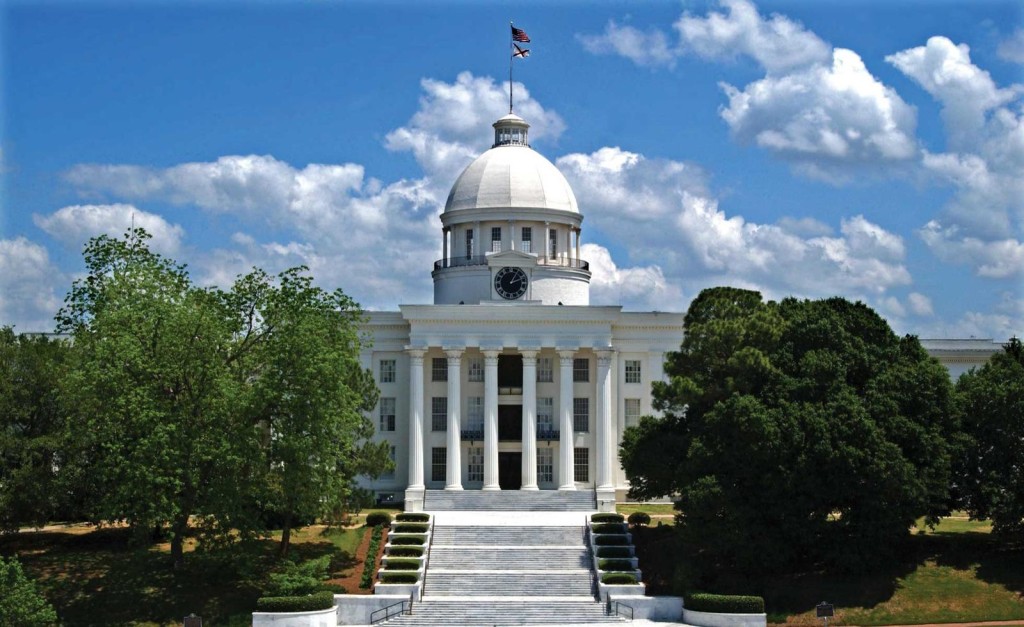
As the clock begins to wind down on the Alabama Legislature’s 2016 Regular Session, the heat will begin to build under legislators and special interests looking to pass their legislative priorities in the remaining eight working days available to lawmakers. Here’s your weekly sneak peek at some of the most important legislation that will be considered in the Alabama House and Senate. House — Convenes Tuesday at 1:30PM Education Trust Fund: Both houses of the Alabama Legislature have passed their own versions of the year’s education budget, but the differences send the legislation to a conference committee before final passage can be decided. Among the most controversial sections of the Senate-passed bill is the inclusion of an amendment that would only allow teachers who obtain higher degrees to earn raises if their advanced degree is in an “area of need.” The Senate bill also includes the first pay raise for teachers since 2008. On Wednesday the House Ways and Means Committee will consider SB287 authorizing the Alabama Corrections Institution Finance Authority to issue up to $800 million in bonds to construct and renovated the state’s overcrowded prisons. Senate — Convenes Tuesday at 2:00PM SB186 “The Voting Rights Restoration Act” would amend the process under which convicted felons can have their ability to vote restored, expediting the process, as well as requiring state and county prisons, jails, and correctional facilities to post information about how felons can apply. Sponsored by Sen. Linda Coleman-Madison (D-Birmingham) SB78 Increases the number of years qualifying rural physicians can receive a $5,000 income tax credit from 5 to 10 years, and adds dentists practicing in rural areas to those eligible for it. Sen. Gerald Dial (R-Lineville) SB304 Would allow Alabama Sheriffs to issue and renew the concealed weapons permits of any eligible Alabamian, regardless of county. Currently Sheriffs may only issue permits to those who reside in their county. Sponsored by Sen. Jabo Wagonner (R-Vestavia Hills) SB360 Would close Alabama’s primaries, requiring people to register with their party of choice at least 14 days before the primary vote is held. Such a measure has been particularly popular in a year where first-time and crossover voters have arguably decided primary elections in several states. Sponsored by Sen. Tom Whatley (R-Opelika) SB372 Creates a new provision in Alabama’s controversial “chemical endangerment of a child” law, allowing the consumption of controlled substances under the “good faith” supervision of a physician. The chemical endangerment law came under fire last fall after a searing investigation by AL.com and ProPublica. Sponsored by Sen. Clyde Chambliss (R-Montgomery) The House and Senate general fund budget committees have scheduled a joint meeting Wednesday to discuss the Medicaid shortfall.
Alabama lawmakers to hold hearings on state’s Medicaid dilemma

The countdown is on for Alabama lawmakers to come up with a solution for $85 million shortfall to fund the state’s Medicaid program in the eight remaining legislative days — or else risk coming back for a special session. Part of an ongoing budget impasse, funding for the state’s Medicaid program — which covers approximately a million Alabamians — has been an hot-button topic in the Legislature this year. Last month Alabama Gov. Robert Bentley vetoed the state’s General Fund budget over the lack of Medicaid funding, but lawmakers bucked his veto and voted to override it. The House and Senate general fund budget committee have scheduled a joint meeting Wednesday to discuss the Medicaid shortfall. Bentley and Alabama Medicaid Commissioner Stephanie Azar have said the program will see cuts in Medicaid services without additional funds, which could force the state to eliminate prescription drug coverage for adults, adult eyeglasses, prosthetics, outpatient dialysis, or requiring patients to go to one big box pharmacy, among other possibilities. “I think today it is very important for recipients to know that their access to care is at risk and for the Medicaid providers in the state to start preparing for the impact of these cuts,” Azar said.
Alabama Senate passes education budget, teacher pay raise

The Alabama Senate passed Wednesday evening the Education Trust Fund budget, funding education in the state, as well as the first pay raise for teachers in several years. In the largest education budget from the state since 2008’s financial crash which sent the state’s budgets careening, the $6.3 billion expenditure funds everything from K-12 public classrooms to the implementation of new educational technology. Senate President Pro Tem Del Marsh commended Sen. Arthur Orr (R-Decatur), the bill’s sponsor in the Senate, for his work in shepherding the legislation through the upper house, but said the state still has a long way to go in improving education. “Alabama is still 46th and 50th in reading and math, respectively, and only 16% of our high school graduates are college ready according to American College Testing (ACT),” Marsh said in a press release. “Education affects every part of this state and I cannot look of these numbers and accept the status quo. I am still committed to reforming our education system until there is noticeable improvement and all children are able to receive a high quality education. I look forward to working with those in the education community who share my concerns on new and innovative reforms for next year,” said Marsh. A separate bill will give 4 percent pay increases to teachers, educational staff, and administrators making less than $75,000 annually, as well as a 4 percent raise to all principals and assistant principals, and a 2 percent raise to other teachers and staff making above that amount. “They have not received a true pay raise since 2008,” said Orr. “Here we are looking at the 2017 budget. In education and most businesses, you have to attract good people, and the way to attract good people is how you compensate them. We need to compensate people in education accordingly to get the best that we can.” Though the original bill has already passed the House, it will likely be sent to a conference committee to reconcile small changes made during passage in the Senate.
Alabama lawmakers return to decisions on budget, prisons
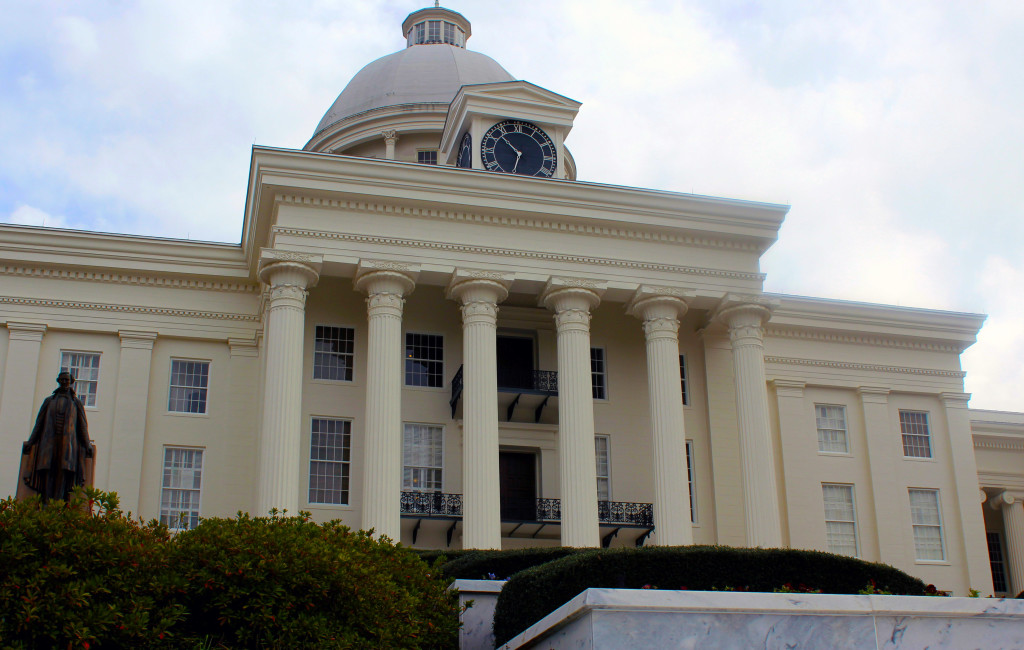
Alabama lawmakers return from spring break Tuesday with decisions ahead of them on several major pieces of legislation. The session can last until May 16. Here is what to look for in the final weeks of the 2016 legislative session. GENERAL FUND BUDGET VETO: Gov. Robert Bentley is expected to veto the state’s general fund budget over Medicaid funding. The lawmaker-passed spending plan provides $85 million less than what Bentley says is needed to adequately fund the state’s Medicaid program. Legislative leaders have said they plan to override the governor’s veto, a procedure that requires a majority vote of all the members in the Senate and House. ___ FALLOUT FROM GOVERNOR’S SCANDAL: Bentley recently admitted that he had “inappropriate” conversations with a top female staffer after racy recordings surfaced. The admission comes as the politically wounded governor is trying to make headway on his budget and prison construction proposals. At least one lawmaker has said he wants to consider an impeachment resolution, but other Republicans called that discussion premature. ___ GASOLINE TAX: The proposal would raise the state’s gasoline tax to pay for road and bridge construction. The proposal would raise the gasoline tax by 6 cents per gallon. The tax would then be adjusted every four years to equal the average tax in Alabama’s four border states. ___ PAYDAY LOAN: The bill would put a Colorado-style restriction on the payday loan industry by giving borrowers at least six months to pay back the loan instead of just a few days or weeks. The bill would also require that people be allowed to make installment payments. ___ PRISON CONSTRUCTION: The governor is seeking an $800 million bond issue to build four new large prisons — three for men and one for women. Most existing prisons would be closed under the plan. The governor’s major initiative for the session is still awaiting its first floor vote. ___ LOTTERY: Lottery bills have so far stalled in the Alabama Legislature under a mix of opposition to gambling, disagreements on how a state lottery should be structured and a push to include casino gambling. The bills, so far, have not gotten a floor vote in either chamber. ___ TENURE/TEACHER EVALUATIONS: The bill would extend the time to obtain tenure from three to five years. It would also create an evaluation system in which 25 percent of a teacher’s annual evaluation score would come from measures of student achievement growth by using ACT Aspire or other test scores. Senate President Pro Tem Del Marsh named the bill his priority for the session, but it has hit opposition from the Alabama Education Association. Marsh said he is anxious to try to get to the bill to the Senate floor. ___ Republished with permission of the Associated Press.
