
Sandra Day O’Connor, who made history as the first woman on the Supreme Court, dies at 93
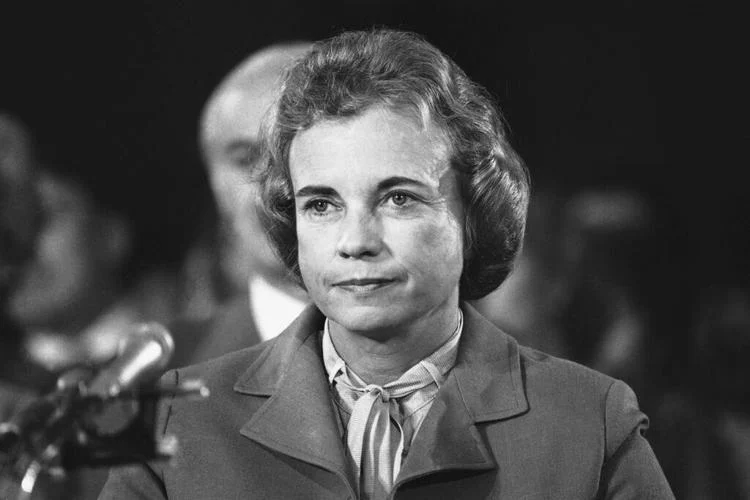
Ashley Murray, Alabama Reflector WASHINGTON — The first woman to serve on the nation’s highest court is dead at 93. Sandra Day O’Connor, a groundbreaking justice on the U.S. Supreme Court, died Friday in Phoenix, Arizona of complications related to advanced dementia, probably Alzheimer’s, and a respiratory illness, according to an announcement from the court. President Ronald Reagan nominated O’Connor in 1981, and she was confirmed by the full Senate, 99-0, in September of that year. The moderate O’Connor, who served on the bench until her retirement in 2006, was often the decisive vote in major cases that reached the Supreme Court in her nearly quarter-century as associate justice. The justices issued rulings in high-profile cases during O’Connor’s tenure, including Bush v. Gore, which settled the 2000 presidential contest in George W. Bush’s favor, and Planned Parenthood of Southeastern Pennsylvania v. Casey, a 5-4 decision that affirmed the constitutional right to an abortion but with leeway for states to impose some restrictions. O’Connor sided with the majority in both cases. “She was consequential,” journalist and historian Evan Thomas told the National Archives in 2019 while promoting his biography “First: Sandra Day O’Connor.” She cast the so-called “swing vote” 330 times in 24 years, Thomas said. “And where it really mattered was in abortion rights and affirmative action,” he said, referring to several cases, including Grutter v. Bullinger, which upheld the consideration of race in the University of Michigan’s law school admissions. In 2022, O’Connor’s successor, Justice Samuel Alito, wrote the majority opinion overturning Planned Parenthood v. Casey and Roe v. Wade, striking down abortion rights at the federal level. A ‘true public servant’ and ‘trailblazer’ Chief Justice John Roberts said in a statement Friday that O’Connor “blazed a historic trail as our Nation’s first female Justice.” “She met that challenge with undaunted determination, indisputable ability, and engaging candor. We at the Supreme Court mourn the loss of a beloved colleague, a fiercely independent defender of the rule of law, and an eloquent advocate for civics education. And we celebrate her enduring legacy as a true public servant and patriot,” he said. Senate Minority Leader Mitch McConnell of Kentucky said in a statement that the “nation mourns the passing of a towering figure in the history of American law.” “… From her election as the first female Majority Leader in the history of American legislatures to her confirmation as the first female Justice of the U.S. Supreme Court, Sandra Day O’Connor led with a brilliance and conviction that disarmed resistance. Her vote on the court frequently determined the majority in landmark cases, and the legacy of her role in landmark decisions reviving federalism during her first several terms on the Court continues to resound in Constitutional jurisprudence,” McConnell said. In the mid-1990s and 2000, O’Connor provided decisive votes in two 5-4 decisions that found federal laws unconstitutional under the Commerce Clause, including sections of the Violence Against Women Act and a federal law that criminalized carrying a firearm within 1,000 feet of schools. Senate Majority Leader Chuck Schumer of New York said O’Connor was the “conscience of the Court.” Schumer said in a statement issued Friday that O’Connor “was one of the true historic figures of the 20th century. In decision after decision, Sandra Day O’Connor was often the key vote in defending the rights of Americans—in protecting clean air, in protecting women’s rights, in protecting against discrimination, in protecting voting rights. I join Americans all across the country in mourning her passing today.” Speaker of the House Mike Johnson of Louisiana described O’Connor as a “trailblazer” and “legal giant” in a Friday morning post on X. “As the first woman to ever serve on the Supreme Court, Justice O’Connor inspired a generation of women — including the five female Justices that succeeded her — to chart a path that previously seemed unattainable,” he said. “Despite never serving as Chief Justice, she was widely regarded as the most powerful Justice on the bench during her tenure.” The women who followed O’Connor’s appointment to the court included Ruth Bader Ginsburg, nominated by former President Bill Clinton in 1993; Sonia Sotomayor and Elena Kagan in 2009 and 2010, both nominated by former President Barack Obama; Amy Coney Barrett, nominated by former President Donald Trump in 2020; and Ketanji Brown Jackson, nominated by President Joe Biden in 2022. Obama released a statement Friday recounting the well-known story of O’Connor’s challenges finding a job in the legal field as a woman in the 1950s, when she was asked about her typing skills and offered work as a legal secretary. “Fortunately for us, she set her sights a little higher – becoming the first woman to serve as a U.S. Supreme Court justice,” Obama said. “As a judge and Arizona legislator, a cancer survivor and child of the Texas plains, Sandra Day O’Connor was like the pilgrim in the poem she sometimes quoted – forging a new path and building a bridge behind her for all young women to follow. Michelle and I send our thoughts to Sandra’s family and everyone who learned from and admired her.” From the Southwest to the nation’s capital O’Connor was born on March 26, 1930, in El Paso, Texas, and grew up on a ranch in Arizona. She graduated near the top of her law school class at Stanford University in 1952. O’Connor began her law career as deputy county attorney of San Mateo County, California, followed by a position as a civilian attorney for Quartermaster Market Center, Frankfurt, Germany, from 1954 to 1957. O’Connor practiced law in Maryvale, Arizona, until 1960 and went on to serve as assistant attorney general of Arizona from 1965 to 1969. She followed her time in the attorney general’s office with multiple terms in the Arizona State Senate beginning in 1969 and eventually serving as the body’s majority leader. In 1975, she was elected as a Maricopa County Superior Court judge and served until 1979, when she was appointed to the Arizona Court
Federal appeals court rejects Alabama Congressional redistricting map
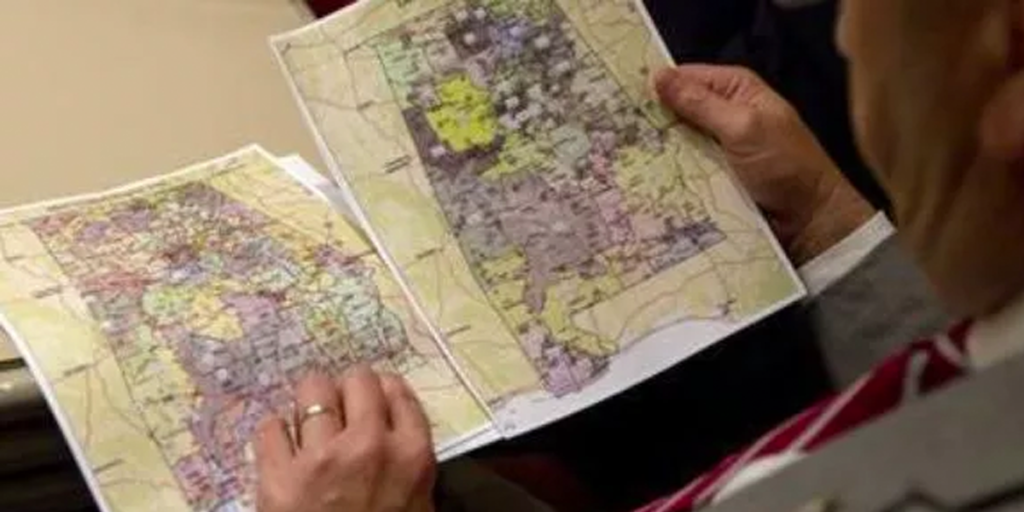
On Tuesday, a three-judge panel struck down the Alabama Legislature’s new congressional redistricting map. The Court is expected to appoint a special master to redraw Alabama’s congressional map because the state Legislature refused to draw a map compliant with the Court’s previous order to draw a map with two majority-minority districts. In June, the Court ordered the state to submit a map with two majority-minority districts or something close to that. Instead, Alabama Republicans simply drew a map increasing the percentage of Black voters in Republican Congressman Barry Moore’s Second Congressional District from 30% to 39.9%. “We are not aware of any other case in which a state legislature — faced with a federal court order declaring that its electoral plan unlawfully dilutes minority votes and requiring a plan that provides an additional opportunity district — responded with a plan that the state concedes does not provide that district,” the judges wrote in a 196-page ruling. The plaintiffs in the Milligan v Allen case that challenged the original 2021 redistricting as not compliant with the Voting Rights Act of 1965 rejected the second map. On Tuesday, the Court issued a ruling agreeing with the plaintiffs. None of this was unexpected. Alabama Attorney General Steve Marshall in August told the Alabama Republican Executive Committee meeting in Montgomery that he was skeptical of the three-judge panel ruling in favor of the state. The state lost a narrow 5 to 4 decision before the U.S. Supreme Court. The Court in June affirmed that the three-judge panel in Atlanta was correct in its initial 2022 decision to halt Alabama’s election under the 2021 redistricting. After the initial judgment, the three-judge panel’s decision to block the 2022 election, the Supreme Court ruled that the three-judge panel likely had been right that the 2021 redistricting was not compliant with the Voting Rights Act. The special master has been given until September 25 to redraw Alabama’s Congressional districts, creating a second majority-minority district. The state is expected to ask the Supreme Court to stay the three-judge panel ruling and hear this case as they did last year. The state will likely ask the Supreme Court to again stay the three-judge panel’s ruling to allow the 2024 elections to take place under the partisan 2022 redistricting. The plaintiffs suing the state will undoubtedly challenge any legal maneuvering by the state of Alabama. State Senators close to the redistricting decision explained to Alabama Today that the state is staking its hope on Supreme Court Justice Brett Kavanaugh switching sides and voting with the four conservative jurists: Samuel Alito, Amy Coney Barrett, Clarence Thomas, and Neil Gorsuch. All of this is dependent on the Supreme Court even considering the case. They are not obligated by law to take up the matter. Kavanaugh voted with Chief Justice John Roberts, who wrote the decision for the majority. The three-judge panel is comprised of one Clinton appointee, Circuit Judge Stanley Marcus, and two Trump appointees, District Judge Anna Manasco and District Judge Terry Moorer. Candidate qualifying with the two major political parties begins in October, so the state needs to know what the district boundaries will look like by October 1. If this decision is applied to other southern states, including Texas and Florida, Democrats could pick up as many as twelve new majority-minority districts, likely flipping control of the U.S. House of Representatives to the Democrats in the 2024 elections. To connect with the author of this story or to comment, email brandonmreporter@gmail.com.
AG Steve Marshall applauds Supreme Court ruling upholding Christian web designer’s right to deny service to a gay wedding
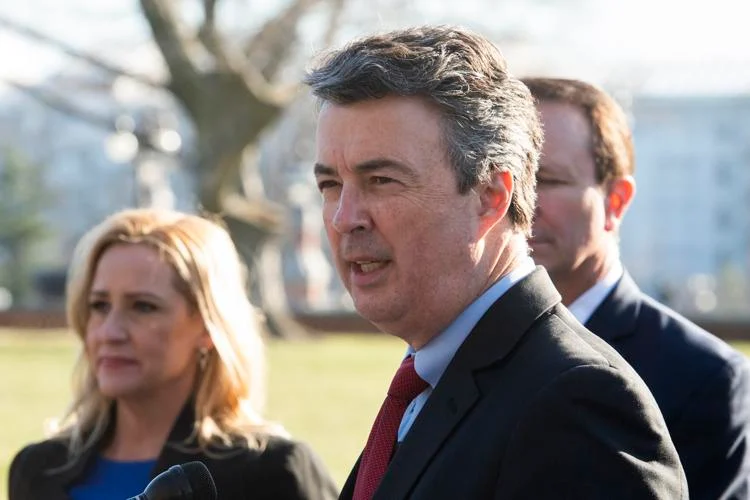
On Friday, Alabama Attorney General Steve Marshall welcomed a 6 to 3 U.S. Supreme Court ruling that protects a Denver area Christian web designer’ from having to build a website for a gay couple’s same-sex wedding in violation of her Christian principles and beliefs. 303 Creative and its owner, Lorie Smith, is a graphic artist and website designer in Colorado. Smith expanded her business into wedding website design. Smith’s deeply held Christian beliefs prohibit her from promoting same-sex weddings. Colorado’s anti-discrimination law forbids businesses from denying service to LGBTQ+ persons seeking service. Under that law, if Smith designed and promoted custom websites for opposite-sex weddings, she would have to design and promote custom websites for same-sex weddings too. Smith filed a suit claiming that the law violated her First Amendment rights to practice her religion and her free speech rights and that the Colorado law as such is a blatant violation of the Bill of Rights. The lower court ruled against her. Undeterred, Smith appealed to the Tenth Circuit Court of Appeals, which also ruled against Smith, and then appealed to the Supreme Court. The Supreme Court’s opinion in 303 Creative v. Elenis reaffirms that the First Amendment prohibits the government from forcing citizens, including business owners, from speaking messages with which they disagree. In the 6-3 opinion, the Supreme Court reversed the Tenth Circuit Court of Appeals decision against Smith. “The Constitution and our First Amendment prevail,” Marshall said in a statement. “All Americans enjoy the right to freedom of conscience, and that freedom means the government cannot coerce anyone to speak against their deeply held beliefs,” said Attorney General Marshall. “Today’s decision confirms that state and local government are not ‘immune to the demands of the Constitution.’” In June 2022, Attorney General Marshall signed on to a 20-state amicus brief urging the Supreme Court to protect the First Amendment rights of business owners. The brief argued in support of Smith. Liberty Counsel, a nonprofit legal advocacy group that defends religious liberty, also filed an amicus brief in favor of the web designer’s right to deny service. Liberty Counsel said in a statement that the Colorado state law censors and coerces the speech of creative professionals whose religious beliefs do not conform to state-accepted beliefs. Liberty Counsel Founder and Chairman Mat Staver said, “This is a great victory for the right of individual speech and expression. The state cannot force people to convey a government-approved message against their religious beliefs or individual choice. Film, theater, art, and other creative expression would not exist if the government could censor the message.” Justice Neil Gorsuch wrote the opinion, which was joined by Chief Justice John Roberts, and Justices Samuel Alito, Clarence Thomas, Brett Kavanaugh, and Amy Coney Barrett. The three liberal Justices, Sonia Sotomayor, Elena Kagan, and Kentanji Brown Jackson, dissented. “The First Amendment protects an individual’s right to speak his mind regardless of whether the government considers his speech sensible and well-intentioned or deeply ‘misguided,’ and likely to cause ‘anguish’ or ‘incalculable grief.’ Equally, the First Amendment protects acts of expressive association,” Justice Gorsuch wrote. “Generally, too, the government may not compel a person to speak its own preferred messages. Nor does it matter whether the government seeks to compel a person to speak its message when he would prefer to remain silent or to force an individual to include other ideas with his own speech that he would prefer not to include. All that offends the First Amendment just the same.” “Applying these principles to this case, we align ourselves with much of the Tenth Circuit’s analysis,” Gorsuch continued. “The Tenth Circuit held that the wedding websites Ms. Smith seeks to create qualify as ‘pure speech’ under this Court’s precedents. We agree. It is a conclusion that flows directly from the parties’ stipulations. They have stipulated that Ms. Smith’s websites promise to contain ‘images, words, symbols, and other modes of expression.’ They have stipulated that every website will be her ‘original, customized’ creation. And they have stipulated that Ms. Smith will create these websites to communicate ideas—namely, to ‘celebrate and promote the couple’s wedding and unique love story’ and to ‘celebrate and promote’ what Ms. Smith understands to be a true marriage. We part ways with the Tenth Circuit only when it comes to the legal conclusions that follow. While that court thought Colorado could compel speech from Ms. Smith consistent with the Constitution, our First Amendment precedents laid out above teach otherwise.” “Nor is it any answer, as the Tenth Circuit seemed to suppose, that Ms. Smith’s services are ‘unique,’” Gorsuch continued. “In some sense, of course, her voice is unique; so is everyone’s. But that hardly means a State may coopt an individual’s voice for its own purposes.” “The First Amendment extends to all persons engaged in expressive conduct, including those who seek profit (such as speechwriters, artists, and website designers),” Gorsuch wrote. If anything is truly dispiriting here, it is the dissent’s failure to take seriously this Court’s enduring commitment to protecting the speech rights of all comers, no matter how controversial—or even repugnant—many may find the message at hand.” Justice Sotomayor wrote the dissent. “Today, the Court, for the first time in its history, grants a business open to the public a constitutional right to refuse to serve members of a protected class,” Sotomayor wrote. “New forms of inclusion have been met with reactionary exclusion. This is heartbreaking. Sadly, it is also familiar. When the civil rights and women’s rights movements sought equality in public life, some public establishments refused. Some even claimed, based on sincere religious beliefs, constitutional rights to discriminate. The brave Justices who once sat on this Court decisively rejected those claims.” The last day of Pride Month perhaps ironically ends with a Supreme Court ruling affirming that LGBTQ+ rights do not mean that the state can deprive other citizens of their free speech and religious liberty rights. The Human Rights Campaign (HRC) released a statement denouncing the decision. “This decision by the Supreme Court is a dangerous step backward, giving some businesses the power to
Minority Leader Anthony Daniels says Supreme Court decision threaten to roll back decades of progress
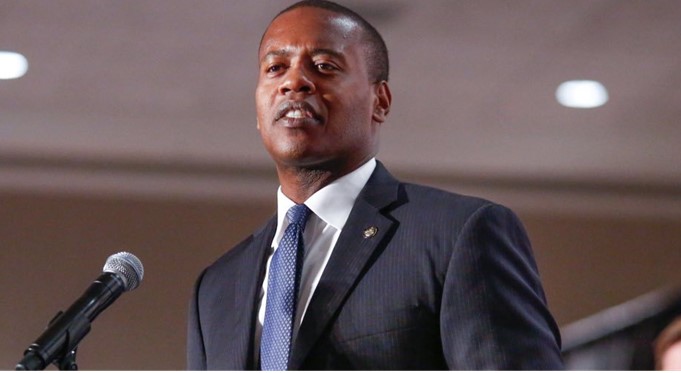
State Representative Anthony Daniels (D-Huntsville), Minority Leader of the Alabama House of Representatives, released a statement on the landmark Supreme Court decision in Students for Fair Admissions Inc. v. President and Fellows of Harvard College. Daniels said he was concerned that the decision threatened to overturn decades of progress in the country. “We are an increasingly diverse country that is still grappling with a legacy of racism and the resultant and ongoing disparities based upon race,” said Leader Daniels. “Rather than encourage solutions to address those disparities, the Court today deepened them. It also widened existing and growing political divisions.” “Today’s Supreme Court ruling pretends these racial disparities don’t exist, despite overwhelming evidence that shows they impact test scores, student achievement, and access to educational and economic opportunity for so many individuals and families,” Daniels continued. “The irony is that at least two members of the majority are the direct beneficiaries of affirmative action and related policies.” Daniels continued. “Justice [Amy] Coney Barrett attended a law school with gender balance, and Justice [Clarence] Thomas benefitted from Yale’s affirmative action program. The fact that they benefited from these or related policies to put them on the path to career success (and the highest court in the land) but now want to erect a roadblock for others is not only disappointing, but it’s also downright wrong.” Daniels continued, “We desperately wish they could connect their individual stories of advancement to the promises that our Constitution is supposed to uphold for all. Simply put: your success story is not only a matter of where you came from. It’s also a matter of how you got there. This decision is deeply disappointing and terribly cynical. It threatens to roll back decades of progress in our educational institutions and our society. Sadly, it also reveals what some of us have long known – many qualified and privileged Americans either can’t or won’t recognize the opportunities afforded to them along the way.” “Furthermore, the majority opinion actually reveals that arguments for Affirmative Action must have some merit as it exempts military academies from the ban that it’s unilaterally applying to the rest of America,” said Daniels. “In the words of Justice Ketanji Brown Jackson, “The Court has come to rest on the bottom-line conclusion that racial diversity in higher education is only worth potentially preserving insofar as it might be needed to prepare Black Americans and other underrepresented minorities for success in the bunker, not the boardroom (a particularly awkward place to land, in light of the history the majority opts to ignore).” “Race is a fact of life in America,” concluded Daniels. “Again, as Justice Brown Jackson wrote, “Deeming race irrelevant in law does not make it so in life.” This decision means that educational institutions will now have to work harder to reflect the diversity of our country and the unifying values of equality and fairness that can never be taken for granted. And it’s up to us to help them do it.” Harvard Dean David N. Hempton responded to the news the Supreme Court had found against their admissions policy. Hempton wrote, “Today, the Supreme Court delivered its decision in Students for Fair Admissions v. President and Fellows of Harvard College. The Court held that Harvard College’s admissions system does not comply with the principles of the equal protection clause embodied in Title VI of the Civil Rights Act. The Court also ruled that colleges and universities may consider in admissions decisions “an applicant’s discussion of how race affected his or her life, be it through discrimination, inspiration, or otherwise.” We will certainly comply with the Court’s decision.” “Harvard must always be a place of opportunity, a place whose doors remain open to those to whom they had long been closed, a place where many will have the chance to live dreams their parents or grandparents could not have dreamed,” Hempton said. “For almost a decade, Harvard has vigorously defended an admissions system that, as two federal courts ruled, fully complied with longstanding precedent. In the weeks and months ahead, drawing on the talent and expertise of our Harvard community, we will determine how to preserve, consistent with the Court’s new precedent, our essential values.” “Harvard must always be a place of opportunity, a place whose doors remain open to those to whom they had long been closed, a place where many will have the chance to live dreams their parents or grandparents could not have dreamed,” Hempton stated. “For almost a decade, Harvard has vigorously defended an admissions system that, as two federal courts ruled, fully complied with longstanding precedent. In the weeks and months ahead, drawing on the talent and expertise of our Harvard community, we will determine how to preserve, consistent with the Court’s new precedent, our essential values.” Colleges and universities across this country will have to review their admissions policies to ensure that they comply with this ruling and are not discriminating on the basis of race. To connect with the author of this story or to comment, email brandonmreporter@gmail.com.
Supreme Court strikes down affirmative action in college admissions and says race cannot be a factor
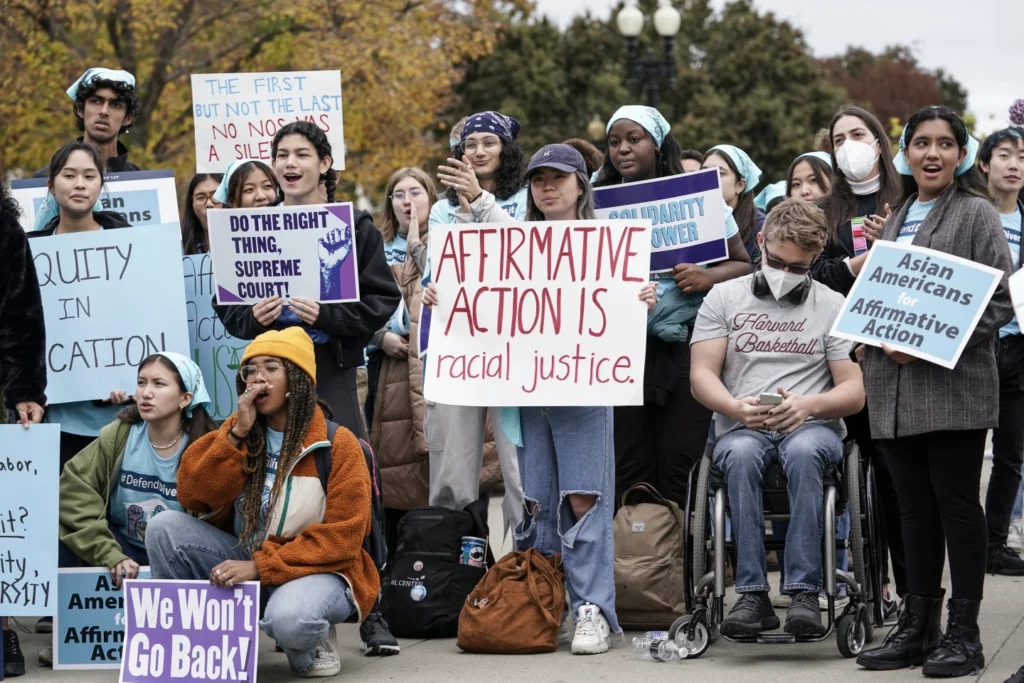
The Supreme Court on Thursday struck down affirmative action in college admissions, forcing institutions of higher education to look for new ways to achieve diverse student bodies. The court’s conservative majority overturned admissions plans at Harvard and the University of North Carolina, the nation’s oldest private and public colleges, respectively. Chief Justice John Roberts said that for too long, universities have “concluded, wrongly, that the touchstone of an individual’s identity is not challenges bested, skills built, or lessons learned but the color of their skin. Our constitutional history does not tolerate that choice.” Justice Clarence Thomas, the nation’s second Black justice who had long called for an end to affirmative action, wrote separately that the decision “sees the universities’ admissions policies for what they are: rudderless, race-based preferences designed to ensure a particular racial mix in their entering classes.” Justice Sonia Sotomayor wrote in dissent that the decision “rolls back decades of precedent and momentous progress.” Both Thomas and Sotomayor took the unusual step of reading a summary of their opinions aloud in the courtroom. In a separate dissent, Justice Ketanji Brown Jackson — the court’s first Black female justice — called the decision “truly a tragedy for us all.” The vote was 6-3 in the North Carolina case and 6-2 in the Harvard case. Jackson sat out the Harvard case because she had been a member of an advisory governing board there. The Supreme Court had twice upheld race-conscious college admissions programs in the past 20 years, including as recently as 2016. But that was before the three appointees of former President Donald Trump joined the court. At arguments in late October, all six conservative justices expressed doubts about the practice, which had been upheld under Supreme Court decisions reaching back to 1978. Lower courts also had upheld the programs at both UNC and Harvard, rejecting claims that the schools discriminated against white and Asian American applicants. The college admissions disputes are among several high-profile cases focused on race in America, and were weighed by the conservative-dominated, but most diverse court ever. Among the nine justices are four women, two Black people, and a Latina. The justices earlier in June decided a voting rights case in favor of Black voters in Alabama and rejected a race-based challenge to a Native American child protection law. The affirmative action cases were brought by conservative activist Edward Blum, who also was behind an earlier affirmative action challenge against the University of Texas as well as the case that led the court in 2013 to end the use of a key provision of the landmark Voting Rights Act. Blum formed Students for Fair Admissions, which filed the lawsuits against both schools in 2014. The group argued that the Constitution forbids the use of race in college admissions and called for overturning earlier Supreme Court decisions that said otherwise. Blum’s group also contended that colleges and universities can use other, race-neutral ways to assemble a diverse student body, including by focusing on socioeconomic status and eliminating the preference for children of alumni and major donors. The schools said that they use race in a limited way, but that eliminating it as a factor altogether would make it much harder to achieve a student body that looks like America. At the eight Ivy League universities, the number of nonwhite students increased by 55% from 2010 to 2021, according to federal data. That group, which includes, Native American, Asian, Black, Hispanic, Pacific Islander, and biracial students, accounted for 35% of students on those campuses in 2021, up from 27% in 2010. The end of affirmative action in higher education in California, Michigan, Washington state, and elsewhere led to a steep drop in minority enrollment in the states’ leading public universities. They are among nine states that already prohibit any consideration of race in admissions to their public colleges and universities. The others are Arizona, Florida, Georgia, Nebraska, New Hampshire, and Oklahoma. In 2020, California voters easily rejected a ballot measure to bring back affirmative action. A poll last month by The Associated Press-NORC Center for Public Affairs Research showed 63% of U.S. adults say the court should allow colleges to consider race as part of the admissions process, yet few believe students’ race should ultimately play a major role in decisions. A Pew Research Center survey released last week found that half of Americans disapprove of considerations of applicants’ race, while a third approve. The chief justice and Jackson received their undergraduate and law degrees from Harvard. Two other justices, Elena Kagan and Neil Gorsuch, went to law school there, and Kagan was the first woman to serve as the law school’s dean. Every U.S. college and university the justices attended, save one, urged the court to preserve race-conscious admissions. Those schools — Yale, Princeton, Columbia, Notre Dame, and Holy Cross — joined briefs in defense of Harvard’s and UNC’s admissions plans. Only Justice Amy Coney Barrett’s undergraduate alma mater, Rhodes College, in Memphis, Tennessee, was not involved in the cases. Republished with the permission of The Associated Press.
Supreme Court preserves law that aims to keep Native American children with tribal families

The Supreme Court on Thursday preserved the system that gives preference to Native American families in foster care and adoption proceedings of Native children, rejecting a broad attack from some Republican-led states and white families who argued it is based on race. The court left in place the 1978 Indian Child Welfare Act, which was enacted to address concerns that Native children were being separated from their families and, too frequently, placed in non-Native homes. Tribal leaders have backed the law as a means of preserving their families, traditions, and cultures and had warned that a broad ruling against the tribes could have undermined their ability to govern themselves. The “issues are complicated,” Justice Amy Coney Barrett wrote for a seven-justice majority that included the court’s three liberals and four of its six conservatives, but the “bottom line is that we reject all of petitioners’ challenges to the statute.” Justices Clarence Thomas and Samuel Alito dissented, each writing that Congress lacks the authority to interfere with foster care placements and adoptions, typically the province of the states. The decision, Alito wrote, “disserves the rights and interests of these children.” But Justice Neil Gorsuch, a Colorado native who has emerged as a champion of Native rights since joining the court in 2017, wrote in a separate opinion that the decision “safeguards the ability of tribal members to raise their children free from interference by state authorities and other outside parties.” The leaders of tribes involved in the case called the outcome a major victory for tribes and Native children. “We hope this decision will lay to rest the political attacks aimed at diminishing tribal sovereignty and creating instability throughout Indian law that have persisted for too long,” said a joint statement from Cherokee Nation Principal Chief Chuck Hoskin Jr., Morongo Band of Mission Indians Chairman Charles Martin, Oneida Nation Chairman Tehassi Hill, and Quinault Indian Nation President Guy Capoeman. President Joe Biden, whose administration defended the law at the high court, noted that he supported the law 45 years ago when was a Democratic senator from Delaware. “Our Nation’s painful history looms large over today’s decision. In the not-so-distant past, Native children were stolen from the arms of the people who loved them,” Biden said in a statement. Congress passed the law in response to the alarming rate at which Native American and Alaska Native children were taken from their homes by public and private agencies. The law requires states to notify tribes and seek placement with the child’s extended family, members of the child’s tribe, or other Native American families. Three white families, the state of Texas, and a small number of other states claimed the law is unconstitutional under the equal protection clause because it was based on race. They also contended it puts the interests of tribes ahead of children and improperly allows the federal government too much power over adoptions and foster placements, areas that typically are under state control. The lead plaintiffs in the Supreme Court case — Chad and Jennifer Brackeen of Fort Worth, Texas — adopted a Native American child after a prolonged legal fight with the Navajo Nation, one of the two largest Native American tribes, based in the Southwest. The Brackeens are trying to adopt the boy’s 5-year-old half-sister, known in court papers as Y.R.J., who has lived with them since infancy. The Navajo Nation has opposed that adoption. At last fall’s arguments, several conservative justices expressed concern about at least one aspect of the law that gives preference to Native parents, even if they are of a different tribe than the child they are seeking to adopt or foster. Among them was Justice Brett Kavanaugh, who was in the majority Thursday in favor of the tribes. But Kavanaugh injected a cautionary note in a separate opinion focused on the preferences for Native foster and adoptive parents. “In my view, the equal protection issue is serious,” Kavanaugh wrote, commenting that the race of prospective parents and children could be used to reject a foster placement or adoption, “even if the placement is otherwise determined to be in the child’s best interests.” The Supreme Court dealt with that issue by determining that neither Texas nor the parents had legal standing to make that argument in this case. The Brackeens and others can make those arguments in state court proceedings, the justices said. Matthew McGill, who represented the Brackeens at the Supreme Court, said he would press a racial discrimination claim in state court. “Our main concern is what today’s decision means for the little girl, Y.R.J . — now five years old — who has been a part of the Brackeen family for nearly her whole life. The Court did not address our core claim that ICWA impermissibly discriminates against Native American children and families that wish to adopt them, saying it must be brought in state court,” McGill said in a statement. All the children who have been involved in the current case at one point are enrolled or could be enrolled as Navajo, Cherokee, White Earth Band of Ojibwe, and Ysleta del Sur Pueblo. Some of the adoptions have been finalized, while some are still being challenged. More than three-quarters of the 574 federally recognized tribes in the country and nearly two dozen state attorneys general across the political spectrum had called on the high court to uphold the law. The Supreme Court had twice taken up cases on the Indian Child Welfare Act before, in 1989 and in 2013, that have stirred intense emotion. Before the Indian Child Welfare Act was enacted, between 25% and 35% of Native American children were being taken from their homes and placed with adoptive families, in foster care, or in institutions. Most were placed with white families or in boarding schools in attempts to assimilate them. Republished with the permission of The Associated Press.
Supreme Court weighs ‘most important case’ on democracy
The Supreme Court is about to confront a new elections case, a Republican-led challenge asking the justices for a novel ruling that could significantly increase the power of state lawmakers over elections for Congress and the presidency. The court is set to hear arguments Wednesday in a case from North Carolina, where Republican efforts to draw congressional districts heavily in their favor were blocked by a Democratic majority on the state Supreme Court because the GOP map violated the state constitution. A court-drawn map produced seven seats for each party in last month’s midterm elections in highly competitive North Carolina. The question for the justices is whether the U.S. Constitution’s provision giving state legislatures the power to make the rules about the “times, places and manner” of congressional elections cuts state courts out of the process. “This is the single most important case on American democracy — and for American democracy — in the nation’s history,” said former federal judge Michael Luttig, a prominent conservative who has joined the legal team defending the North Carolina court decision. The Republican leaders of North Carolina’s legislature told the Supreme Court that the Constitution’s “carefully drawn lines place the regulation of federal elections in the hands of state legislatures, Congress, and no one else.” Three conservative justices already have voiced some support for the idea that the state court had improperly taken powers given by the Constitution when it comes to federal elections. A fourth has written approvingly about limiting the power of state courts in this area. But the Supreme Court has never invoked what is known as the independent state legislature theory. It was, though, mentioned in a separate opinion by three conservatives in the Bush v. Gore case that settled the 2000 presidential election. If the court were to recognize it now, opponents of the concept argue, the effects could be much broader than just redistricting. The most robust ruling for North Carolina Republicans could undermine more than 170 state constitutional provisions, over 650 state laws delegating authority to make election policies to state and local officials, and thousands of regulations down to the location of polling places, according to the Brennan Center for Justice at the New York University School of Law. Luttig, who advised former Vice President Mike Pence that he had no authority to reject electoral votes following the 2020 election, is among several prominent conservatives and Republicans who have lined up against the broad assertion that legislatures can’t be challenged in state courts when they make decisions about federal elections, including congressional redistricting. That group includes former California Gov. Arnold Schwarzenegger, law professor Steven Calabresi, a founder of the conservative Federalist Society, and Benjamin Ginsberg, a longtime lawyer for Republican candidates and the party. “Unfortunately, because of ongoing and widespread efforts to sow distrust and spread disinformation, confidence in our elections is at a low ebb,” Ginsberg wrote in a Supreme Court filing. “The version of the independent state legislature theory advanced by Petitioners, in this case, threatens to make a bad situation much worse, exacerbating the current moment of political polarization and further undermining confidence in our elections.” The arguments are taking place a day after the final contest of the 2022 midterms, the Georgia Senate runoff between Democratic Sen. Raphael Warnock and Republican Herschel Walker. In that contest, state courts ruled in favor of Democrats to allow for voting on the Saturday before the election, over the objections of Republicans. Jason Snead, of the conservative Honest Elections Project, said the case is an opportunity for the high court to rein in out-of-control state courts which are being pushed by Democratic attorneys to effectively create new rules governing voting, including the Georgia example. “We’ve seen a fairly pervasive attempt to use courts to rewrite election laws if those laws don’t suit partisan agendas,” Snead said in a call with reporters. “That’s not something we want to see when it flies in the face of the Constitution.” He is among proponents of the high court’s intervention who argue the case doesn’t represent “a threat to democracy.” The justices can instead write a narrow opinion that places limits on state courts without upsetting the choices New York and other states have made to restrict partisan redistricting, a group of New York voters wrote in a court filing. The New Yorkers implicitly recognize that if the court gives more power to state legislatures over drawing congressional lines, Republicans may not necessarily benefit. During the last redistricting cycle, states that used independent redistricting commissions rather than legislatures were largely Democratic-dominated ones. Commissions drew 95 House seats in states with Democratic legislatures and governors, as opposed to only 12 in states with GOP control. A ruling that grants legislatures ultimate power over redistricting could eradicate those commissions and let Democrats redraw a major chunk of the House map. “The bottom line is the impact of this fringe theory would be terrible,” said former Attorney General Eric Holder, chairman of the National Democratic Redistricting Committee. “It could unleash a wave of gerrymandering from both parties.” Even less dramatic changes may not necessarily tilt the GOP’s way on a national redistricting map that was essentially fought to a draw, and where state court rulings cost Democrats about as many House seats as Republicans. The Supreme Court refused to step into the North Carolina case in March, allowing the court-drawn districts to be used this year. Justices Samuel Alito, Neil Gorsuch, and Clarence Thomas dissented. Writing for the three, Alito said, “there must be some limit on the authority of state courts to countermand actions taken by state legislatures when they are prescribing rules for the conduct of federal elections. I think it is likely that the applicants would succeed in showing that the North Carolina Supreme Court exceeded those limits.” Justice Brett Kavanaugh has separately written about the need for federal courts to police the actions of state courts when it comes to federal elections. Chief Justice John Roberts’ record on this question gives both sides some hope. In 2015,
Justices mull latest challenge to landmark voting rights law
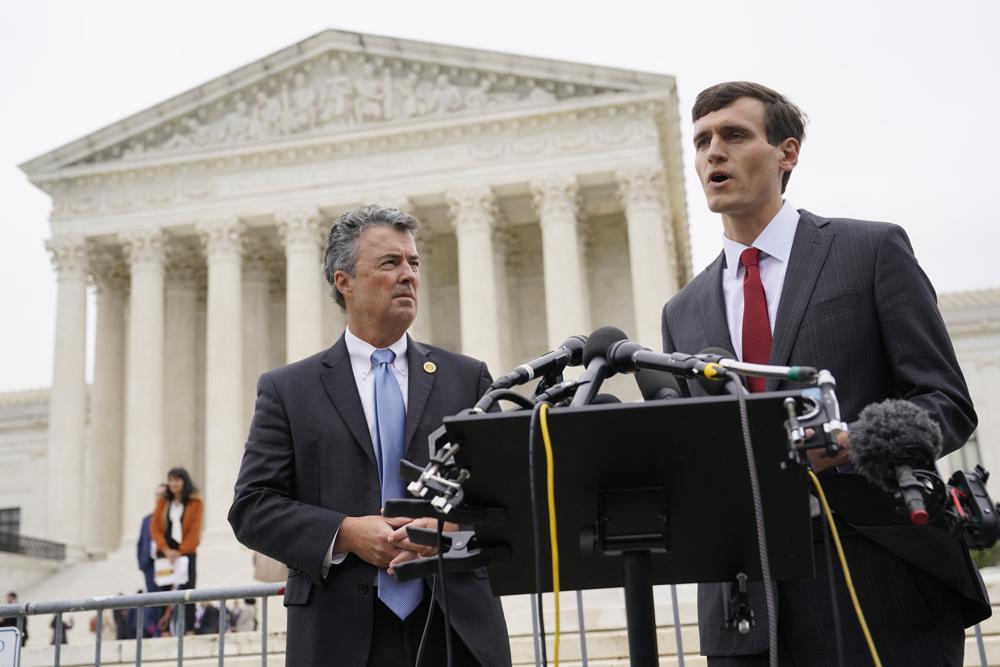
The Supreme Court’s conservative majority appeared open Tuesday to making it harder to create majority Black electoral districts, in an Alabama case that could have far-reaching effects on minority voting power across the United States. The justices heard two hours of arguments in the latest showdown over the federal Voting Rights Act, with lawsuits seeking to force Alabama to create a second Black majority congressional district. About 27% of Alabamians are Black, but they form a majority in just one of the state’s seven congressional districts. The court’s conservatives, in a 5-4 vote in February, blocked a lower court ruling that would have required a second Black majority district in time for the November elections. A similar ruling to create an additional Black majority district in Louisiana also was put on hold. Conservative high-court majorities have made it harder for racial minorities to use the Voting Rights Act in ideologically divided rulings in 2013 and 2021. A ruling for Alabama in the new case could weaken a powerful tool that civil rights groups and minority voters have used to challenge racial discrimination in redistricting. Some conservative justices seemed sympathetic to Alabama’s arguments that the court should insist on a “race-neutral” approach to redistricting and should make it harder for people claiming racial discrimination in voting to clear an early legal hurdle. Against pushback from Justice Ketanji Brown Jackson and the other liberal justices, Justice Samuel Alito said it’s too easy for people suing over discrimination in redistricting to win because the first bar in the legal test is too low — simply showing that another political district could be drawn in which minority residents make up a majority of voters. In practice, Alito said, “will not the plaintiffs always run the table?” The outcome appears to rest with Justices Amy Coney Barrett and Brett Kavanaugh. Their questions suggested they may be open to a more narrow win for Alabama than the broadest outcome the state is asking for, which might even allow states to dismantle existing districts where racial minorities make up more than half the voters. Even the state’s “least far-reaching argument,” as Alito put it, would result in many fewer districts drawn to give racial minorities the opportunity to elect their candidates of choice, the court’s three liberal justices said. Jackson, the court’s first Black female justice who was hearing her second day of arguments, disagreed with arguments made by Alabama’s lawyer, Edmund LaCour Jr., that redistricting has to be done without regard to race. Constitutional amendments adopted after the Civil War were intended to give a “constitutional foundation for a piece of legislation that was designed to make people who had less opportunity and less rights equal to white citizens,” Jackson said. The Voting Rights Act “by its plain text is doing that same thing.” Justice Elena Kagan referred to the Voting Rights Act as not only “an important statute” but “one of the great achievements of American democracy” while acknowledging that recent Supreme Court cases have cut back on the law. “Now, in recent years, the statute has fared not well in this court,” she said. “You’re asking us essentially to cut back substantially on our 40 years of precedent and to make this, too, extremely difficult to prevail on, so what’s left?” Kagan said to LaCour. Partisan politics underlies the case. Republicans who dominate elective office in Alabama have been resistant to creating a second district with a Democratic-leaning Black majority that could send another Democrat to Congress. Two appointees of President Donald Trump were on the three-judge panel that unanimously held that Alabama likely violated the landmark 1965 law by diluting Black voting strength. The judges found that Alabama has concentrated Black voters in one district, while spreading them out among the others to make it impossible for them to elect a candidate of their choice. Alabama’s Black population is large enough and geographically compact enough to create a second district, the judges found. Alabama argues that the lower court ruling would force it to sort voters by race and the state insists it is taking a “race neutral” approach to redistricting. That argument could resonate with conservative justices, including Chief Justice John Roberts. He has opposed most consideration of race in voting both as a justice and in his time as a lawyer in Republican presidential administrations. Roberts said little Tuesday to telegraph his vote. Justices Clarence Thomas and Neil Gorsuch also had little or nothing to say in court, but Thomas, in particular, has voted consistently to limit the reach of anti-discrimination laws. The arguments were the first Supreme Court case involving race for Jackson. A challenge to affirmative action in college admissions is set for arguments on October 31. A decision in Merrill v. Milligan is expected by late June. Republished with the permission of The Associated Press.
Ketanji Brown Jackson sworn in, becomes 1st Black woman on Supreme Court
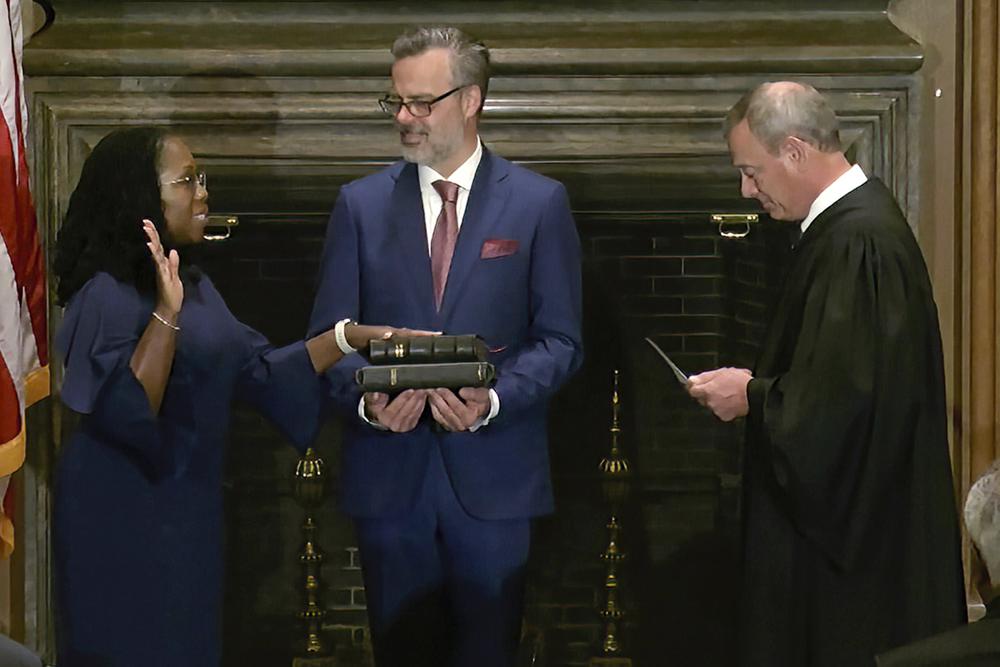
Ketanji Brown Jackson was sworn in to the Supreme Court on Thursday, shattering a glass ceiling as the first Black woman on the nation’s highest court. The 51-year-old Jackson is the court’s 116th justice, and she took the place of the justice she once worked for. Justice Stephen Breyer’s retirement was effective at noon. Moments later, joined by her family, Jackson recited the two oaths required of Supreme Court justices, one administered by Breyer and the other by Chief Justice John Roberts. “With a full heart, I accept the solemn responsibility of supporting and defending the Constitution of the United States and administering justice without fear or favor, so help me God,” Jackson said in a statement issued by the court. “I am truly grateful to be part of the promise of our great Nation. I extend my sincerest thanks to all of my new colleagues for their warm and gracious welcome.” Roberts welcomed Jackson “to the court and our common calling.” The ceremony was streamed live on the court’s website. All the justices except for Neil Gorsuch attended the swearing-in, the court said. There was no immediate explanation for Gorsuch’s absence. Jackson, a federal judge since 2013, is joining three other women — Justices Sonia Sotomayor, Elena Kagan, and Amy Coney Barrett. It’s the first time four women will serve together on the nine-member court. Biden nominated Jackson in February, a month after Breyer, 83, announced he would retire at the end of the court’s term, assuming his successor had been confirmed. Breyer’s earlier-than-usual announcement and the condition he attached was a recognition of the Democrats’ tenuous hold on the Senate in an era of hyper-partisanship, especially surrounding federal judgeships. The Senate confirmed Jackson’s nomination in early April, by a 53-47 mostly party-line vote that included support from three Republicans. Jackson had been in a sort of judicial limbo since, remaining a judge on the federal appeals court in Washington, D.C., but not hearing any cases. Biden elevated her to that court from the district judgeship to which she was appointed by President Barack Obama. Glynda Carr, president of Higher Heights for America, an organization that advocates for the growth of Black women’s political power, said the timing of Jackson’s swearing-in was bittersweet. “Although we celebrate her today, one Black woman or a cohort of Black women can’t save this democracy alone. We are a piece of it and we are doing our work, our part. She’s going to forever reshape and shape that court. But she’s just a piece of the work that needs to happen moving forward,” Carr said. Because of Jackson’s appointment, Judith Browne Dianis, a Black lawyer in Washington, said she intends to end her protest against joining the Supreme Court Bar. She started it when Justice Clarence Thomas was confirmed in 1991. She said that even the series of conservative rulings from the court over the past week cannot take away from the significance of Thursday’s ceremony. “This is a momentous occasion and it’s still a beautiful moment,” said Dianis, executive director of the civil rights group Advancement Project. But, Dianis added, “she’s joining the court at a time when conservatives are holding the line and trying to actually take us back, because they see the progress that’s being made in our country. It’s like the Civil War that never ended. That’s the court that she’s joining.” Jackson will be able to begin work immediately, but the court will have just finished the bulk of its work until the fall, apart from emergency appeals that occasionally arise. That will give her time to settle in and familiarize herself with the roughly two dozen cases the court already has agreed to hear starting in October as well as hundreds of appeals that will pile up over the summer. She helps form the most diverse court in its 232-year history and is the first former public defender to be a justice. The court that Jackson is joining is the most conservative that it has been since the 1930s. She is likely to be on the losing end of important cases, which could include examinations of the role of race in college admissions, congressional redistricting and voting rights that the court, with its 6-3 conservative majority, will take up next term. Today’s court now is surrounded by fencing, and justices and their families have 24-hour protection by the U.S. Marshals, the result of a law passed days after a man carrying a gun, knife and zip ties was arrested near Justice Brett Kavanaugh’s Maryland house after threatening to kill the justice. The bill was introduced in May shortly after the leak of a draft court opinion that would overrule Roe v. Wade and sharply curtail abortion rights in roughly half the states. The court issued final opinions earlier Thursday after a momentous and rancorous term that included overturning Roe v. Wade’s guarantee of the right to an abortion. One of Thursday’s decisions limited how the Environmental Protection Agency can use the nation’s main anti-air pollution law to reduce carbon dioxide emissions from power plants, a blow to the fight against climate change. Republished with the permission of The Associated Press.
Supreme Court overturns Roe v. Wade; states can ban abortion

The Supreme Court has ended constitutional protections for abortion that had been in place nearly 50 years in a decision by its conservative majority to overturn Roe v. Wade. Friday’s outcome is expected to lead to abortion bans in roughly half the states. The decision, unthinkable just a few years ago, was the culmination of decades of efforts by abortion opponents, made possible by an emboldened right side of the court that has been fortified by three appointees of former President Donald Trump. The ruling came more than a month after the stunning leak of a draft opinion by Justice Samuel Alito, indicating the court was prepared to take this momentous step. It puts the court at odds with a majority of Americans who favored preserving Roe, according to opinion polls. Alito, in the final opinion issued Friday, wrote that Roe and Planned Parenthood v. Casey, the 1992 decision that reaffirmed the right to abortion, were wrong the day they were decided and must be overturned. “We hold that Roe and Casey must be overruled. The Constitution makes no reference to abortion, and no such right is implicitly protected by any constitutional provision,” Alito wrote. Authority to regulate abortion rests with the political branches, not the courts, Alito wrote. Joining Alito were Justices Clarence Thomas, Neil Gorsuch, Brett Kavanaugh, and Amy Coney Barrett. The latter three justices are Donald Trump appointees. Thomas first voted to overrule Roe 30 years ago. Chief Justice John Roberts would have stopped short of ending the abortion right, noting that he would have upheld the Mississippi law at the heart of the case, a ban on abortion after 15 weeks, and said no more. Justices Stephen Breyer, Sonia Sotomayor, and Elena Kagan — the diminished liberal wing of the court — were in dissent. “With sorrow—for this Court, but more, for the many millions of American women who have today lost a fundamental constitutional protection—we dissent,” they wrote. The ruling is expected to disproportionately affect minority women who already face limited access to health care, according to statistics analyzed by The Associated Press. Thirteen states, mainly in the South and Midwest, already have laws on the books that ban abortion in the event Roe is overturned. Another half-dozen states have near-total bans or prohibitions after 6 weeks of pregnancy, before many women know they are pregnant. In roughly a half-dozen other states, the fight will be over dormant abortion bans that were enacted before Roe was decided in 1973 or new proposals to sharply limit when abortions can be performed, according to the Guttmacher Institute, a research group that supports abortion rights. More than 90% of abortions take place in the first 13 weeks of pregnancy, and more than half are now done with pills, not surgery, according to data compiled by Guttmacher. The decision came against a backdrop of public opinion surveys that find a majority of Americans oppose overturning Roe and handing the question of whether to permit abortion entirely to the states. Polls conducted by The Associated Press-NORC Center for Public Affairs Research and others also have consistently shown about 1 in 10 Americans want abortion to be illegal in all cases. A majority are in favor of abortion being legal in all or most circumstances, but polls indicate many also support restrictions, especially later in pregnancy. The Biden administration and other defenders of abortion rights have warned that a decision overturning Roe also would threaten other high court decisions in favor of gay rights and, even potentially, contraception. But Alito wrote in his draft opinion that his analysis addresses abortion only, not other rights that also stem from a right to privacy that the high court has found implicit, though not directly stated, in the Constitution. Abortion is different, Alito wrote, because of the unique moral question it poses. Whatever the intentions of the person who leaked Alito’s draft opinion, the conservatives held firm in overturning Roe and Casey. In his draft, Alito dismissed the arguments in favor of retaining the two decisions, including that multiple generations of American women have partly relied on the right to abortion to gain economic and political power. Changing the composition of the court has been central to the anti-abortion side’s strategy. Mississippi and its allies made increasingly aggressive arguments as the case developed, and two high-court defenders of abortion rights retired or died. The state initially argued that its law could be upheld without overruling the court’s abortion precedents. Then-Gov. Phil Bryant signed the 15-week measure into law in March 2018, when Justices Anthony Kennedy and Ruth Bader Ginsburg were still members of a five-justice majority that was mainly protective of abortion rights. By early summer, Kennedy had retired and was replaced by Justice Brett Kavanaugh a few months later. The Mississippi law was blocked in lower federal courts. But the state always was headed to the nation’s highest court. It did not even ask for a hearing before a three-judge panel of the 5th U.S. Circuit Court of Appeals, which ultimately held the law invalid in December 2019. By early September 2020, the Supreme Court was ready to consider the state’s appeal. The court scheduled the case for consideration at the justices’ private conference on Sept. 29. But in the intervening weeks, Ginsburg died, and Barrett was quickly nominated and confirmed without a single Democratic vote. The stage now was set, although it took the court another half year to agree to hear the case. By the time Mississippi filed its main written argument with the court in the summer, the thrust of its argument had changed, and it was now calling for the wholesale overruling of Roe and Casey. The first sign that the court might be receptive to wiping away the constitutional right to abortion came in late summer when the justices divided 5-4 in allowing Texas to enforce a ban on the procedure at roughly six weeks, before some women even know they are pregnant. That dispute turned on the unique structure of the
Supreme Court blocks Texas law on social media censorship

A divided Supreme Court has blocked a Texas law, championed by conservatives, that aimed to keep social media platforms like Facebook and Twitter from censoring users based on their viewpoints. The court voted in an unusual 5-4 alignment Tuesday to put the Texas law on hold, while a lawsuit plays out in lower courts. Chief Justice John Roberts and Justices Stephen Breyer, Sonia Sotomayor, Brett Kavanaugh, and Amy Coney Barrett voted to grant the emergency request from two technology industry groups that challenged the law in federal court. The majority provided no explanation for its decision, as is common in emergency matters on what is informally known as the court’s “shadow docket.” Justices Clarence Thomas, Samuel Alito, Elena Kagan, and Neil Gorsuch would have allowed the law to remain in effect. In dissent, Alito wrote, “Social media platforms have transformed the way people communicate with each other and obtain news.” It’s not clear how the high court’s past First Amendment cases, many of which predate the internet age, apply to Facebook, Twitter, TikTok, and other digital platforms, Alito wrote in an opinion joined by fellow conservatives Thomas and Gorsuch but not Kagan. The order follows a ruling last week by the 11th U.S. Circuit Court of Appeals that found a similar Florida law likely violates the First Amendment’s free speech protections. Republican elected officials in several states have backed laws like those enacted in Florida and Texas that sought to portray social media companies as generally liberal in outlook and hostile to ideas outside of that viewpoint, especially from the political right. The Texas law was initially blocked by a district judge, but then allowed to take effect by a panel of the New Orleans-based 5th U.S. Circuit Court of Appeals. Republished with the permission of The Associated Press.
‘Still in shock.’ Abortion defenders, foes stunned by leak

The phones inside an Alabama abortion clinic were ringing off the hook: the callers wanted to know if abortion remains legal. And, if so, for how long? A leaked Supreme Court draft opinion was ricocheting around the world. As Dalton Johnson, the clinic’s owner, read it Monday night, he was struck by the bluntness of the language that would end the constitutional right to an abortion, closing clinics in about half of American states, including his. “I’m still in shock,” Johnson said Tuesday as he scrambled to reassure his staff and patients they would continue providing abortions as long as they’re allowed in Alabama. People on both sides of the abortion divide have been expecting the Supreme Court this summer to reverse the landmark 1973 Roe v. Wade case that legalized abortion nationwide. But many said the draft opinion was nevertheless stunning, forcing them to reckon with the reality the nation is likely to enter soon. “I can’t stop crying,” said an elated Mississippi state Rep. Becky Currie, who sponsored the 2018 law that is the basis for the Supreme Court case. “I am not quite sure I have the words to express how I feel right now, but God has had his hands on that bill since the beginning.” The leaked draft, published late Monday by Politico, is a 98-page opinion in Dobbs v. Jackson Women’s Health Organization, which challenged the constitutionality of the Mississippi bill that banned abortion after 15 weeks. If the decision stands as written, it would also overturn Planned Parenthood v. Casey, a 1992 decision that protected abortion services even though it allowed states to add some limitations. “Roe was egregiously wrong from the start,” the draft opinion states. It was signed by Justice Samuel Alito, a member of the court’s 6-3 conservative majority. According to Politico, four other justices — Clarence Thomas, Neil Gorsuch, Brett Kavanaugh, and Amy Coney Barrett — have agreed with the opinion. The draft opinion was written in February, and the language could change before the court issues its final ruling. As written, it would give states the power to decide the legality of abortion. Roughly half, largely in the South and Midwest, are likely to quickly ban abortion. Abortion clinics in those states opened Tuesday morning, still seeing patients but uncertain about the future. The daily rituals unfolded as they always do: some protesters screamed at people walking inside while other abortion opponents prayed, clinic escorts tried to shield patients and hustle them in the doors. “Please overturn Roe v. Wade,” said Barbara Beavers, who stood outside the clinic in Jackson, Mississippi, on Tuesday, gently trying to persuade people against going inside. “Have mercy on our unborn children. We’re destroying our future, killing our babies.” Inside clinics, the news prompted frantic phone calls, and abortion providers across America rushed to tell their patients that the clinics remained open. “I immediately felt sick to my stomach,” said Tammi Kromenaker, who owns a clinic in Fargo, North Dakota. “And 20 million thoughts started going through my head about what can we do? What does my staff need to hear? What do our patients need to hear?” She posted a notice on their website: “If you have an appointment at Red River Women’s Clinic, your appointment is safe.” In Charleston, West Virginia, Katie Quinonez had barely slept the night before; she was having nightmares about the Supreme Court. She rushed into the clinic Tuesday morning, terrified that her patients would misunderstand the news and think that abortion was immediately outlawed. They posted on social media that abortion remains legal and the clinic is open, but they don’t know for how much longer. She had been bracing for this news. “But there was still this visceral reaction, this very devastating feeling,” Quinonez said. “This is a red alert moment. This is beyond a red alert moment. The building is on fire.” At Johnson’s clinic in Huntsville, women called to ask whether they can still get an abortion. Johnson said his first call of the morning was from a woman who had an abortion scheduled for Friday and wanted to come in Tuesday instead. The staff held a meeting, and Johnson says he asked them to focus on those still coming for abortions who need their help. The opinion was just a draft, he told them, and cautioned that it wasn’t the final decision. Dr. Cheryl Hamlin, an OB-GYN from Boston, travels South about once a month to do abortions at Mississippi’s only abortion clinic. She said a lot of her patients won’t be able to afford the costs of going out of state to have an abortion, including paying for hotels and taking time off work. Meanwhile, states that continue to allow abortions “are going to be overflowing with patients,” she said. Some anti-abortion activists were skeptical that the draft would become reality, fixating instead on the fact that it was leaked the press and whether that implied political posturing. “I’m hopeful,” said Dennis Westover, a 72-year-old retired electrical engineer, a regular protester outside the clinic in Charleston, West Virginia. But he was suspicious that someone leaked it as ammunition in the country’s intractable culture wars. “When our Supreme Court stuff starts to be leaked, it’s egregious,” he said. “One side or the other did it for a political motive to stir up some kind of stink.” In Louisville, Kentucky, protester Angela Minter said she prayed the draft opinion will be the final one. “I’m excited today,” Minter said. “I believe it’s an indication of what’s to come.” Minter thinks that’s God answering her prayers: She’s been coming to the clinic most mornings since 2004. Patients tried to dodge her and the other protesters screaming outside. “Don’t murder your baby,” one man shouted at a young woman. Clinic escorts in orange vests helped her into the building. The Louisville clinic was closed for a week last month after the legislature banned abortion, until a court intervened. But if Roe falls, it will likely be shuttered again. “I
