
Report recommends changes to Alabama’s education system
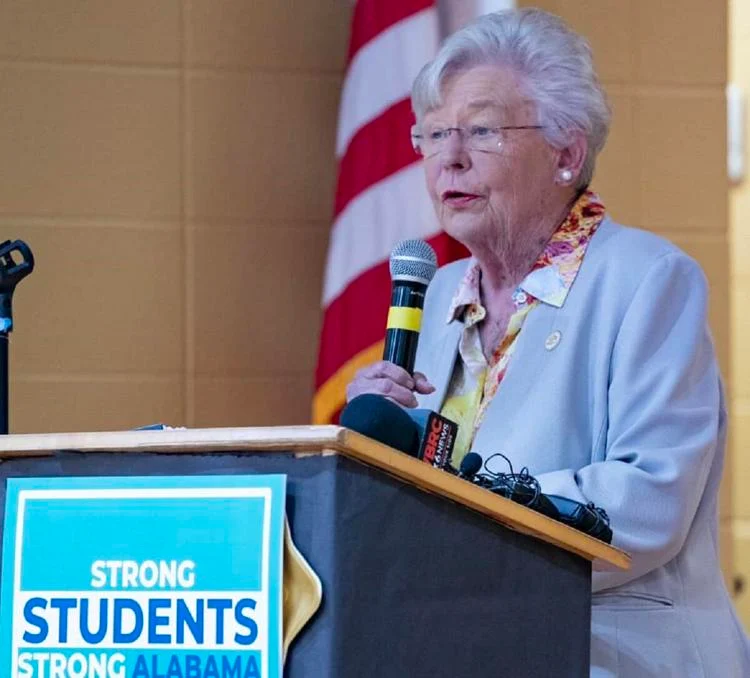
Recommendations have been made to improve education at the student and educator levels in Alabama by the Governor’s Commission on Teaching and Learning. The state should promote quality teaching and learning, offer more support for both impoverished and low-performing schools, bolster data collection and accountability, and improve the retention and development of educators, the report says. “These recommendations won’t just serve as mere guidelines; they are a blueprint – a roadmap to our goal of positioning Alabama among the top 30 states on the National Assessment of Educational Progress, or NAEP, which is known as the nation’s report card,” Gov. Kay Ivey said in a release. “They are vital guidelines as we navigate toward a brighter future for our children – one where opportunities flourish and aspirations are nurtured.” The commission recommended full implementation of the Alabama Literacy Act passed in 2019, which requires third graders to read on grade level before being advanced to fourth grade. It also recommended that kindergarten be mandatory, an expansion of the number of assistant principals at schools, and more computer science programs. The commission said in the report that the state’s prekindergarten program should be expanded to help poorer school districts. It also recommended creating a financial incentive program for struggling school districts to reduce chronic absenteeism. Another key item from the commission was the expansion of the state’s Turnaround Schools program, which pours personnel and money into struggling school districts to help them improve scores. The commission said the state Board of Education should change the state’s report card for districts and individual schools to expand transparency and ensure that every graduating high school student is considered college and career ready measured by an examination. The commission consisted of: • Business Education Alliance President and former State Superintendent of Education Joe Morton. • State Superintendent Eric Mackey. • State Sen. Donnie Chesteen, R-Geneva. • State Rep. Alan Baker, R-Brewton. • State Rep. Barbara Drummond, D-Mobile • Montgomery City Schools Superintendent Melvin Brown. • Wetumpka High School Principal Kyle Futral. • Mountain Brook Schools Superintendent Dicky Barlow. • Booker T. Washington teacher Reggie White. • Alabama Parent Teacher Association President Donna McCurry. • Alabaster City Schools School board member Derek Henderson. • Retired Mississippi State Superintendent Carey Wright. • Whiteboard Advisors CEO, and co-founder, Ben Wallerstein. Republished with the permission of The Center Square.
Speaker Nathaniel Ledbetter appoints House Members to serve on a study commission evaluating Alabama’s labor force participation

Alabama has the lowest unemployment rate in state history. There are job openings all over the state that businesses and governments cannot fill, yet the state has one of the country’s worst labor force participation rates. That Alabamians are choosing to stay home rather than join the booming economy has increasingly perplexed state leaders. “Despite having one of the lowest unemployment rates in the country and a record number of Alabamians working, the percentage of Alabamians participating in the labor force is lower than almost any other state,” Governor Kay Ivey wrote recently. “While we are increasing that by the tens of thousands, we have to change this statistic. Getting folks off the sidelines and into the labor force is my next priority.” On Monday, Speaker of the House Nathaniel Ledbetter announced members of the Alabama House of Representatives that will serve on an ad hoc committee studying Alabama’s labor force participation rates and identifying barriers to workforce entry. “Alabama is witnessing record-breaking economic growth and historically low unemployment rates,” Ledbetter said. “Despite these numbers, in Alabama, there are roughly 140,000 job openings and, at the same time, 48,834 unemployed workers across our state. That means we are lacking nearly 100,000 workers over 16 years old, which puts our labor force participation rate at a mere 57 percent—one of the lowest rates in the entire country.” The House members appointed to serve on the study commission will be Rep. Reed Ingram (R–Pike Road), who will serve as the Chairman of the Committee. Rep. Danny Garrett (R–Trussville); Rep. Donna Givens (R–Robersdale); House Minority Leader Anthony Daniels (D–Huntsville); Rep. James Lomax (R–Huntsville); Rep. Barbara Drummond (D–Mobile); Rep. Mike Kirkland (R–Scottsboro); Rep. Bill Lamb (R–Tuscaloosa); Rep. Kelvin Lawrence (D–Hayneville); Rep. Curtis Travis (D–Tuscaloosa); Rep. Chris Pringle (R–Mobile); Rep. Matt Woods (R–Jasper); Rep. Wes Kitchens (R–Guntersville); Rep. Jim Carns (R–Birmingham); and House Majority Leader Scott Stadthagen (R–Hartselle). “Over the coming months, it will be imperative for this group to build on the progress of, and collaborate with, existing entities such as the Lt. Governor’s Commission on 21st Century Workforce, the Alabama Community College System, Alabama higher-education institutions, and essential stakeholders across the private sector,” Ledbetter said. The study commission is expected to address areas including extending adequate childcare to families, examining the correlation between productivity growth and labor output, ensuring wages and salaries are competitive, addressing workforce housing concerns, and offering improved and more expansive mental health programs and services to citizens. “An insufficiency of resources such as these creates barriers to workforce entry as much as an absence of quality education,” Ledbetter postulated. The study commission is slated to host their first meeting on Thursday, October 5, at 10:00 a.m. in room 617 of the Alabama State House. To connect with the author of this story or to comment, email brandonmreporter@gmail.com.
Nathaniel Ledbetter announces House members who will serve on labor force participation study
With unemployment still sitting at a record low of 2.1%, the state is looking for ways to increase the number of Alabamians in the workforce. Speaker of the House Nathaniel Ledbetter announced on Monday key House members that will serve on an ad hoc committee studying Alabama’s labor force participation rates and identifying barriers to workforce entry. In July, Gov. Kay Ivey said labor force participation was a top priority. “Despite having one of the lowest unemployment rates in the country and a record number of Alabamians working, the percentage of Alabamians participating in the labor force is lower than almost any other state,” Gov. Ivey wrote in an op-ed. “While we are increasing that by the tens of thousands, we have to change this statistic. Getting folks off the sidelines and into the labor force is my next priority.” In September, Alabama Department of Labor Secretary Fitzgerald Washington announced that Alabama’s Labor Force Participation Rate (LFPR) rose only slightly in August to 57.0%. This is up from last August’s rate of 56.9%. “Alabama is witnessing record-breaking economic growth and historically low unemployment rates,” Ledbetter said in a press release. “Despite these numbers, in Alabama, there are roughly 140,000 job openings and, at the same time, 48,834 unemployed workers across our state. That means we are lacking nearly 100,000 workers over 16 years old, which puts our labor force participation rate at a mere 57 percent—one of the lowest rates in the entire country.” “Yet again, we are announcing record-breaking economic statistics this month,” said Secretary Washington. “While our labor force participation rate remained unchanged, we are continuing to work with marginalized groups to get them into our labor force.” The House Members serving on the study commission will be Rep. Reed Ingram (R–Pike Road) – Chairman; Rep. Danny Garrett (R–Trussville); Rep. Donna Givens (R–Robersdale); Rep. Anthony Daniels (D–Huntsville); Rep. James Lomax (R–Huntsville); Rep. Barbara Drummond (D–Mobile); Rep. Mike Kirkland (R–Scottsboro); Rep. Bill Lamb (R–Tuscaloosa); Rep. Kelvin Lawrence (D–Hayneville); Rep. Curtis Travis (D–Tuscaloosa); Rep. Chris Pringle (R–Mobile); Rep. Matt Woods (R–Jasper); Rep. Wes Kitchens (R–Guntersville); Rep. Jim Carns (R–Birmingham); Rep. Scott Stadthagen (R–Hartselle). “Over the coming months, it will be imperative for this group to build on the progress of, and collaborate with, existing entities such as the Lt. Governor’s Commission on 21st Century Workforce, the Alabama Community College System, Alabama higher-education institutions, and essential stakeholders across the private sector,” stated Ledbetter. Some specific areas the study commission will address are extending adequate childcare to families, examining the correlation between productivity growth and labor output, ensuring wages and salaries are competitive, addressing workforce housing concerns, and offering improved and more expansive mental health programs and services. “An insufficiency of resources such as these creates barriers to workforce entry as much as an absence of quality education,” Ledbetter concluded.
Federal court hearing on redistricting case set for today
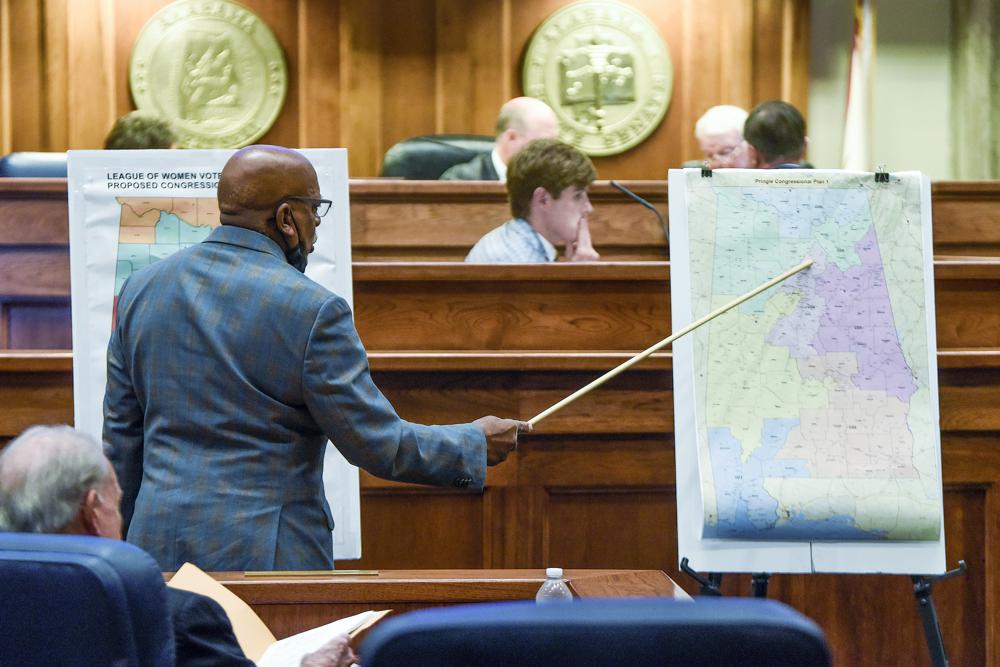
The entire political world in Alabama will be watching Monday to see what the court does with Alabama’s disputed redistricting case. A hearing is scheduled for Monday, August 14, in federal court at 9:00 a.m. CDT at the Hugo L. Black United States Courthouse in Birmingham. The hearing will focus on whether the map recently passed by the Alabama State Legislature complies with section two of the Voting Rights Act of 1965. Civil rights groups sued the state challenging the redistricting map that the Legislature passed in 2021. A three-judge panel of the Eleventh Circuit Court of Appeals in Atlanta ordered a halt to the 2022 election over concerns the map violated the 58-year-old Voting Rights Act. The U.S. Supreme Court intervened at the request of the state and allowed the election to proceed with the 2021 map. In June, the Supreme Court ruled in a 5 to 4 ruling that the congressional map likely violated the VRA and referred the case back to the three-judge panel. The Legislature was given until July 21 to submit a new map. The parties that sued the state and Alabama Democrats had wanted the Legislature to submit a map with two majority-minority districts. The Legislature, voting along party lines, refused and instead introduced and passed a controversial new map that simply increased Alabama’s Second Congressional District from 30% Black to 39.9%. That map kept the Gulf Coast, the Wiregrass, and Montgomery County whole; but was denounced by Democrats. The civil rights groups suing the state in federal court in Allen versus Milligan are asking the court to reject this new map. Members of the Alabama House Democratic Caucus, including House Minority Leader Anthony Daniels (D-Huntsville), will be outside the courtroom on Monday to issue their response following the conclusion of Monday’s hearing. Joining Daniels will be Caucus Chair Barbara Drummond (Mobile), Caucus Policy Chair Adline Clarke (Mobile), Caucus Secretary/ Treasurer Kelvin Lawrence (Hayneville), Rep. Patrice McClammy (Montgomery), Rep. Phillip Ensler (Montgomery), Rep. Chris England (Tuscaloosa), Rep. Patrick Sellers (Birmingham), Rep. Rolanda Hollis (Birmingham), Rep. Curtis Travis (Tuscaloosa), Rep. Napoleon Bracy (Mobile), Rep. Tashina Morris (Montgomery), Rep. A.J. McCampbell (Demopolis), and Rep. Sam Jones (Mobile) to comment on the court proceeding. “As we gather for the August 14th federal court hearing in Birmingham, Alabama, surrounded by the hallowed sites of the Civil Rights movement, we are reminded that this moment is inseparable from that struggle,” Daniels said. “We hope and pray that this court hearing, this next step, is a step forward on a continued path towards fair representation for all.” The Alabama House Democratic Caucus endorsed a redistricting plan, proposed by the Milligan and Caster plaintiffs, that would have created two majority Black congressional districts while respecting traditional redistricting guidelines. That map was rejected by the Republican supermajority and largely excluded from consideration during the legislative process. The major party primaries are on March 5, with candidate qualifying opening on October 16, so knowing where the congressional district lines are for that pending election is of some importance. To connect with the author of this story or to comment, email brandonmreporter@gmail.com.
State Legislators updated on the progress of the Numeracy Act
On Tuesday, members of the House Ways and Means Education Committee and the House Education Policy Committee held a joint meeting where they received an update from the Alabama State Department of Education (ALSDE) on the progress of implementing the changes in elementary math education that the Legislature ordered during the passage of the Numeracy Act. Dr. Karen Anderson is the director of ALSDE’s Office of Mathematics Improvement (OMI). She previously worked with ALSDE’s Office of School Improvement. “We are gearing up to prepare for NAEP in 2024,” Dr. Anderson said. “We are hoping to gain and improve on our stance when NAEP is given (in 2024).” Anderson said the goal is to ensure third-grade elementary students are at or above grade level in math. “An elementary school teacher should not engage in any practice that minimizes sense making and understanding of mathematics concepts,” Anderson said. “When a student is identified as having a deficiency in math, immediate action is taken,” Anderson said of the new teaching standards for math. Anderson said that the LETRS (Language Essentials for Teachers of Reading and Spelling) program used to improve reading performance is excellent, but “we are still searching for that equivalence in math.” Anderson said it establishes elementary and postsecondary mathematics task forces and provides mathematics coaches and training. Anderson said her office has had difficulty finding vendors for their new program. “We put out an RFP (request for proposal) for a fractional reasoning screener, and we got no response,” Anderson said. “Two companies said that they would develop one for us.” The Office of Mathematics Improvement has released another RFP seeking a qualified vendor. Anderson said the act also establishes the Alabama Mathematics Summer Achievement Program. “There are 18 OMI regional coordinators,” Anderson said. “Coordinators are assigned where the need is greatest.” Anderson said that currently, OMI has 83 schools receiving full and limited support. “The numeracy act provides very specific instruction for what instruction looks like in the classroom,” Anderson said. Specifically, that means there will be 60 minutes of instruction for Tier 1. “Math is not just a sit-and-get strategy,” Anderson said. “There is a real focus on classroom discourse and problem-solving. It should not be 100% sit and get.” “Immediate intervention is to be received if a math deficiency is identified,” Anderson said. “They are immediately provided with multi-tiered support.” Anderson said that she often hears folks say that they simply don’t like math. “That has really upset me,” Anderson said. “I am appalled to hear that.” Anderson said that some parents say, “I can’t do math. My father could not do math, and my son probably will not be able to do math.” Anderson said that OMI is “working to change that (mindset). Everyone can learn math.” “This is the first year that every student identified with a mathematical deficiency was invited to attend a math camp,” Anderson continued. “Thank you for providing that funding.” “Grades K-3 should have their mathematics embedded in their reading instruction,” Anderson explained. Anderson extolled the benefits of the Fun Zone program. “Fun Zone is comprised of 8 different tasks,” Anderson said. “We have trained more than 800 teachers in Fun Zone. Those that implemented Fun Zone as it was designed to be used saw improvement across the board.” “Thank you for the funding of math coaches,” Anderson said. “205 schools in all 11 regions will have math coaches. Math coaches trained by AMSTI. The Alabama coaching framework is foundational to all of the training.” “There are a number of external partnerships that we are working on,” Anderson explained. “174 areas require data under the Alabama Numeracy Act.” “We have gone across the state to provide professional development,” Anderson added, “Regional coordinators have been invited to provide a framework for what is in the law.” Anderson said there will be repercussions for schools not achieving the ALSDE goals. “If not successful after four years, even more strict consequences will be imposed,” Anderson said. “By fall of 2027, all K-5 schools will have a math coach in the school.” The House Ways and Means Education Committee is chaired by State Rep. Danny Garrett (R-Trussville). “We have to make sure that we are implementing the Numeracy Act,” Garrett said. “How is the task force functioning? Is there any areas of dissension or disagreement that we should be aware of?” Anderson replied, “No. We do have very spirited conversations, but I find those spirited conversations very uplifting.” “I have heard from people who were against the Numeracy Act to begin with who are concerned with how things are going,” Garrett said. “There is always a lot of Monday morning quarterbacking,” Anderson said. “Things are not going as quickly as I would have liked. We are getting things recommended as quickly as we can.” Anderson said that she has issued an RFP for intervention materials. “Twelve vendors have submitted packages,” said Anderson. “Are you comfortable then that there is the urgency that we seek? At this point, what do you look at to see if we are on track?” Garrett asked. “I don’t have a lot of data,” Anderson said. “The coordinators just came on in January. They have been working on building relationships.” “Is the state department ready for (school) interventions in 2025?” Garrett asked. “If we were expected now, we are not ready, but we are on track to be ready,” Anderson said. “I think we have a very good law and a very good plan,” said Garrett. Rep. Terri Collins (R-Decatur) asked about the tools available to implement the plan. “NUMBERS is not even close to LETRS,” Anderson said. Collins asked about OGAP (Ongoing Assessment Project. “OGAP is pretty sophisticated training,” Anderson said. “We have many teachers working on emergency certificates. We need to make sure that teachers have the proper pedagogy to be ready for OGAP.” “We have got ongoing meetings with our IT team,” Anderson said. “We are building structures as we need them.” Many legislators were at the Southern Legislative Conference (SLC) in Charleston, South Carolina, last week. Rep. Allen Baker (R-Brewton) said, “For those who weren’t present at SLC, Dr. Anderson- she is
Black lawmakers say Alabama GOP’s proposed new congressional map insults the Supreme Court
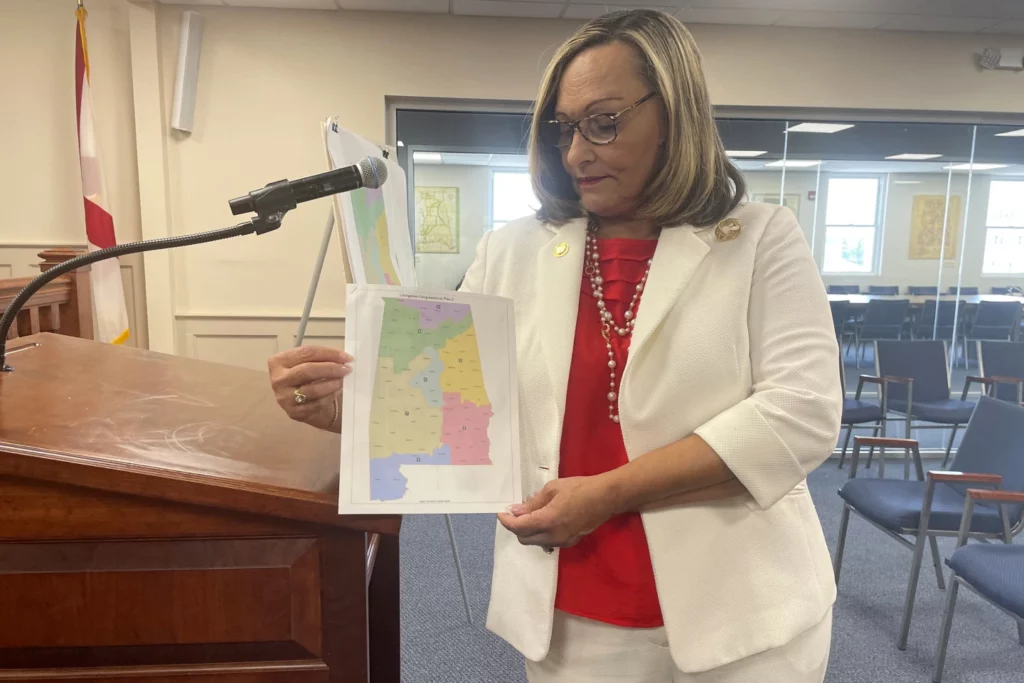
Alabama Republicans advanced new congressional lines Wednesday, a proposed map that Black lawmakers called an insult after the U.S. Supreme Court ordered the legislature to redraw districts to give Black voters a greater voice in elections. The House of Representatives voted 74-27 to approve the GOP plan, which does not establish the second majority-Black district sought by plaintiffs who won the Supreme Court case. Instead, the GOP would increase the percentage of Black voters to 42% in the district. That’s enough, GOP lawmakers said, to consider it a political swing district — where either a Republican or Democrat could get elected — in compliance with the court. The bill now moves to the Alabama Senate. “This is really a slap in the face, not only to Black Alabamians, but to the Supreme Court,” Rep. Barbara Drummond, D-Mobile, said during the floor debate. Rep. Prince Chestnut, a Democrat from Selma, said, “Once again, the state decided to be on the wrong side of history.” “We’re fighting the same battles that they were fighting 100 years ago, 50 years ago, 40 years ago, right here today,” Chestnut said. “Once again, the (Republican) super majority decided that the voting rights of Black people are nothing that this state is bound to respect. And it’s offensive. It’s wrong.” State lawmakers face a Friday deadline to adopt new lines after the U.S. Supreme Court in June upheld a finding that the current state map — with one majority-Black district out of seven in a state that is 27% Black — likely violates the federal Voting Rights Act. Republican House Speaker Pro Tempore Chris Pringle argued that the proposed lines satisfy the court requirement to provide greater “opportunity” to Black voters. The GOP-backed House plan would increase the percentage of Black voters in the 2nd Congressional District, now represented by Republican Barry Moore, from about 31% to 42.4%. “We’ve drawn a district that provides an opportunity for the minorities to elect a candidate of their choosing,” Pringle said. “The court said we had to provide an opportunity, and that’s what that district does.” A group of voters who challenged the existing congressional plan said white Republicans drew the map “to maintain power by packing one-third of Black Alabamians” into a single majority-Black district while leaving lopsided white majorities in every other district. Alabama now sends one Black congresswoman to Washington — Rep. Terri Sewell, whose 7th congressional district is majority Black — and six white Republicans. The appellate ruling that struck down the existing congressional map said Alabama should have “either an additional majority-Black congressional district, or an additional district in which Black voters otherwise have an opportunity to elect a representative of their choice.” The language reinforced by the Supreme Court specified that a new map should include two districts in which “Black voters either comprise a voting-age majority or something quite close to it.” Black lawmakers said Wednesday that history shows that Black candidates generally don’t win in Alabama unless they run in a majority-Black district. “We’ve been held back too long. We’re human beings. We’re Alabama citizens. We work. We do things, but we don’t have the representation that we need,” said Rep. Pebblin Warren, a Democratic lawmaker from Tuskegee. Republicans hold a lopsided majority in the Alabama Legislature and will control what ultimately passes. Representatives on Wednesday voted down an effort by Democrats to bring up a plan, backed by plaintiffs who won the Supreme Court case, that would create a second majority-Black district. The Alabama Senate planned to vote later Wednesday on a proposal that’s similar but would put even a lower percentage of Black voters in the 2nd congressional district — 38.31%. Once a new GOP map passes, the fight will shift quickly back to the courts. Republicans, who have been resistant to creating a Democratic district, are wagering that they’ll be successful in a second round of appeals. The three-judge panel could step in and draw up its own plan if they deem it unacceptable. “You can save your time. You can save your money because we’re going to have a special master drawing this map,” Rep. Chris England, D-Tuscaloosa, said. Republished with the permission of The Associated Press.
Controversial anti-vaping legislation carried over in the Alabama Senate
The Alabama Legislature passed dozens of bills on Thursday, with time running out on the 2023 Alabama Regular Legislative Session. Controversial anti-vaping legislation was not one of them. That bill was carried over in the Senate after widespread opposition lobbied Senators not to pass the bill. House Bill 319 (HB319) is sponsored by State Representative Barbara Drummond (D-Mobile). It is being carried in the Alabama Senate by State Senator Garlan Gudger (R-Cullman). Sen. Gudger said, “We do have a few amendments.” State Senator Tim Melson (R-Florence) said the Alabama Cancer Action Network opposed the bill. “This isn’t a quack organization,” Melson said. “They and the Heart Association and the lung people are against this bill.” Gudger said, “They want all tobacco and nicotine in existence eliminated.” “I don’t know how you are going to move it,” Melson said. “I can’t support this if they are against it.” Sen. Rodger Smitherman (D-Birmingham) said, “I think it is a crying shame that instead of doing something, they would rather do nothing. Doing nothing here is going to continue to allow these kids to continue vaping.” “They are going to continue vaping like I don’t know what,” Smitherman said. “They want to yank us around like a yoyo. Look at the impact if you don’t do anything.” Smitherman compared the Senator’s unwillingness to pass health legislation not supported by health associations to the failure of his plan to require a formal due process for school discipline decisions because it was universally opposed by the Alabama state school superintendents. “You care more about these little folks that call you, like the superintendents, than you do the little children,” Smitherman said. Smitherman said that Drummond had a negotiated bill. “She negotiated with them, and they agreed with what that bill was,” Smitherman said. “That’s not right.” “I am not going to stop fighting for the kids,” Smitherman said. “If you don’t pass this bill, they are going to vape for a whole year.” HB319 creates a registry of vape sellers. The Alcohol and Beverage Control Board would run the registry and enforce the bill. It also limits vaping to people 21 and above and fines underage people who vape. “For the sake of the children, take out the due process,” Smitherman told Gudger. Sen. Shay Shelnut (R-Trussville) told Gudger to “carry this over at the call of the chair.” Gudger finally asked that the bill be carried over at the call of the chair. It never came back that day. Gudger later told reporters, “(Health groups) want all tobacco eliminated, and we can’t do that. They want their way or nothing.” Groups like the Alabama Heart Association have opposed this legislation because they object to people who vape being fined by the state and claim that it does not go far enough in regulating tobacco companies. Jada Shaffer is the senior regional lead of governmental affairs for the American Heart Association. “As the mother of a son who started using chewing tobacco at 14 and purchased it at our local gas station, I know this is a problem all too well,” said Shaffer. “I am pleading with lawmakers to take bold steps in ensuring that no child is exposed again to these deadly products and that the retailers in Alabama are held accountable if they sell to minors. Big tobacco targeted kids with fruity flavors and successfully addicted a whole new generation of kids to nicotine. And now they are shifting the blame to kids and penalizing them. HB319/SB271 further victimizes Alabama’s children all over again.” House Bill 319 could be brought back when the Legislature meets for its last day of the session on Tuesday. The legislation would have to be approved by the Senate – and then the House of Representatives would have to vote to accept any changes made by the Senate for it to reach the Governor’s desk. Any legislation not on the Governor’s desk by the close of the legislative day on Tuesday will have to be brought back next year as the regular session will end. The legislature is limited to a maximum of thirty days by the Alabama Constitution. To connect with the author of this story or to comment, email brandonmreporter@gmail.com.
Controversial anti-vaping legislation carried over in the Alabama Senate

The Alabama Legislature passed dozens of bills on Thursday, with time running out on the 2023 Alabama Regular Legislative Session. Controversial anti-vaping legislation was not one of them. That bill was carried over in the Senate after widespread opposition lobbied Senators not to pass the bill. House Bill 319 (HB319) is sponsored by State Representative Barbara Drummond (D-Mobile). It is being carried in the Alabama Senate by State Senator Garlan Gudger (R-Cullman). Sen. Gudger said, “We do have a few amendments.” State Senator Tim Melson (R-Florence) said that the Alabama Cancer Action Network is opposing this bill. “This isn’t a quack organization,” Melson said. “They and the heart association and the lung people are against this bill.” Gudger said, “They want all tobacco and nicotine in existence eliminated.” “I don’t know how you are going to move it,” Melson said. “I can’t support this if they are against it.” Sen. Rodger Smitherman (D-Birmingham) said, “I think it is a crying shame that instead of doing something, they would rather do nothing. Doing nothing here is going to continue to allow these kids to continue vaping.” “They are going to continue vaping like I don’t know what,” Smitherman said. “They want to yank us around like a yoyo. Look at the impact if you don’t do anything.” Smitherman compared the Senator’s unwillingness to pass health legislation not supported by health associations to the failure of his plan to require a formal due process for school discipline decisions because it was universally opposed by the Alabama state school superintendents. “You care more about these little folks that call you, like the superintendents, than you do the little children,” Smitherman said. Smitherman said that Drummond had a negotiated bill. “She negotiated with them, and they agreed with what that bill was,” Smitherman said. “That’s not right.” “I am not going to stop fighting for the kids,” Smitherman said. “If you don’t pass this bill, they are going to vape for a whole year.” HB319 creates a registry of vape sellers and assigns that and enforcement of the bill to the Alcohol and Beverage Control Board. It also limits vaping to people 21 and above and fines underage persons who vape. “For the sake of the children, take out the due process,” Smitherman told Gudger. Sen. Shay Shelnutt (R-Trussville) told Gudger to “carry this over at the call of the chair.” Gudger finally asked that the bill be carried over at the call of the chair. It never came back that day. Gudger later told reporters, “(Health groups) want all tobacco eliminated, and we can’t do that. They want their way or nothing.” Groups like the Alabama Heart Association have opposed this legislation because they object to young people who vape being fined by the state and claim that it does not go far enough in regulating tobacco companies. Jada Shaffer is the senior regional lead of governmental affairs for the American Heart Association. “As the mother of a son who started using chewing tobacco at 14 and purchased it at our local gas station, I know this is a problem all too well,” said Shaffer. “I am pleading with lawmakers to take bold steps in ensuring that no child is exposed again to these deadly products and that the retailers in Alabama are held accountable if they sell to minors. Big tobacco targeted kids with fruity flavors and successfully addicted a whole new generation of kids to nicotine. And now they are shifting the blame to kids and penalizing them. HB319/SB271 further victimizes Alabama’s children all over again.” House Bill 319 could be brought back on Tuesday. If it does not pass the Senate – and then the House of Representatives approves any changes made by the Senate by the end of the legislative day on Tuesday, the legislation will die as Tuesday is Day 30 of the legislative session – the legislature is limited to a maximum of thirty days by the Alabama Constitution. To connect with the author of this story or to comment, email brandonmreporter@gmail.com.
Alabama Heart Association opposes penalties on teen smokers

On Wednesday, the Alabama Senate Judiciary Committee gave a favorable report to legislation that would penalize both the sellers of vape products to persons under age 21 as well as the youthful offenders themselves. The Alabama Heart Association urged legislators not to penalize the young tobacco users themselves. The Alabama Heart Association joined a chorus of advocates in a letter to lawmakers calling for lawmakers to remove penalties on kids and hold the tobacco industry accountable. House Bill 319 (HB319), sponsored by State Representative Barbara Drummond (D-Mobile), was advanced by the Committee and could be considered on the Senate floor as early as Thursday. Senate Bill 271, sponsored by State Senator Garlan Gudger (R-Cullman), is the Senate companion bill to HB319. The American Heart Association and partners claim that the bill is disguised as a policy to help Alabama’s youth, but in its current form would be harmful to children and give a pass to those selling tobacco products, including e-cigarettes, to minors. The expresses opposition to language in HB319/SB271, saying it further emboldens big tobacco companies. Jada Shaffer is the senior regional lead of governmental affairs for the American Heart Association. “As the mother of a son who started using chewing tobacco at 14 and purchased it at our local gas station, I know this is a problem all too well,” said Shaffer. “I am pleading with lawmakers to take bold steps in ensuring that no child is exposed again to these deadly products and that the retailers in Alabama are held accountable if they sell to minors. Big tobacco targeted kids with fruity flavors and successfully addicted a whole new generation of kids to nicotine. And now they are shifting the blame to kids and penalizing them. HB319/SB271 further victimizes Alabama’s children all over again.” The Alabama Heart Association said that nicotine is a highly addictive drug. The AHA said that their research shows that many students use e-cigarettes and other tobacco products to self-medicate for depression, anxiety, and other mental health concerns. The American Heart Association warns that many e-cigarettes deliver dangerously high levels of nicotine and should never be used by youth. The U.S. Surgeon General warns that nicotine exposure during adolescence may harm brain development and impact learning, memory, and attention. Additionally, brain changes induced by nicotine exposure can make youth more susceptible to addiction to other substances. “The industry spent billions of dollars creating appealing flavors and vapes that were easily hidden from our children,” Schaffer added. “The industry created this problem, and now they want to further punish kids.” Specifically, the Heart Association objects to provisions in HB319/SB27 that would penalize Alabama youths for nicotine addiction while not addressing the real problem of keeping these products out of kids’ hands. The Heart Association added that the bill requires no annual retail compliance check, allows for tobacco and e-cigarettes to be sold at self-service displays, and further wastes state resources on an FDA registry that is not required by the federal Tobacco 21 law. The American Heart Association claims that there is no evidence that putting kids in the court system with fines, suspending kids, or even making them do community service helps with a nicotine addiction. Instead, says Shaffer, kids need help with nicotine addiction through cessation and counseling. According to American Heart Association resources, even though the legal sales age for tobacco is 21, 75% of youth reported they were not refused a sale when trying to buy these products. In 2021 tobacco companies spent $9.1 billion nationwide and approximately $202.2 million in Alabama targeting youth with their products and marketing, including selling tobacco products in candy, fruit, and minty menthol flavors in gas stations, convenience stores, and grocery stores. In 2019, 26.7% of Alabama high school youth reported using tobacco products, including e-cigarettes. Dr. Ronald Lazar, M.D., professor of neurology and neurobiology at the University of Alabama at Birmingham and a member of the local American Heart Association board of directors “It is no secret that tobacco use causes a wide range of health issues, both long and short-term,” said Dr. Lazar. “As a physician, it concerns me when I learn the youngest of patients are smoking and consuming tobacco products, including e-cigarettes. Holding tobacco retailers more accountable for the sale and marketing of these products would mean a safer world for our kids.” At least 44% of teens in the US attend school within 1,000 feet of a tobacco retailer, and 77% of public schools are within a 10-minute walk of a tobacco retailer, which contributes to youth tobacco rates remaining high. “Make no mistake, tobacco companies have grown bolder in their efforts to keep people addicted and misinformed,” added Shaffer. “They support watered-down and less effective tobacco-control measures as a public relations ploy to divert the attention from proven measures. Meaningful change in Alabama requires a comprehensive tobacco retail licensure program, adequate funding for tobacco cessation, comprehensive smoke-free air laws, and increased tobacco taxes. We hope lawmakers will remove the penalties on kids and hold the industry accountable.” SB271 failed to reach the Senate floor by the 27th legislative day of the session, meaning that constitutionally it does not have time to pass. HB319 has been passed by the committee and is awaiting action by the Senate. SB316 is sponsored by Sen. Vivian Figures (D-Mobile). It also bans people below age 21 from using vape or electronic cigarette devices. It is a different piece of legislation than SB271/HB319 and is not opposed by the Heart Association. HB316 passed the Senate unanimously on Wednesday and is awaiting action by the House Judiciary Committee. An earlier version of this article incorrectly identified Figures as the sponsor of SB271. The Legislature will meet next Wednesday for day 27 of the 2023 Alabama Regular Legislative Session. To connect with the author of this story or to comment, email brandonmreporter@gmail.com.
House passes legislation making it illegal for persons under 21 to possess or purchase vape products
On Tuesday, May 16, the Alabama House of Representatives passed legislation to prevent children from being able to buy vape products. The bill bans the sale of vapes to anyone under 21. It also established the Alcohol Beverage Control Board as the agency tasked with enforcing these regulations. House Bill 319 (HB319) is sponsored by State Representative Barbara Drummond. “This is another bite at the vaping apple,” Drummond said. “The purpose of this bill is to protect young people under 21 from vaping,” Drummond said. “This makes it illegal to purchase, possess, or transport any vaping products.” HB319 expands the definition of electronic nicotine delivery systems to include vape products that do not contain nicotine. Drummond explained that her previous legislation was difficult to enforce. “We will now have an opportunity for ABC to help,” Drummond said. “I have gotten 1200 vaping violations this year.” “There will be consequences for those kids that are continually vaping in our communities,” Drummond added. Drummond asked that the body adopt the substitute version of the bill prepared by the House Judiciary Committee. Rep. A.J. McCampbell (D-Livingston) said, “I am glad to know that we are going to have something out there, and I look forward to voting for it.” “Our children are exposed to a lot of things that frankly they should not be exposed to,” McCampbell said. Drummond said, “This is for the health of our young people.” “We did not have the enforcement,” in my previous bill Drummond said. Under existing law, there is no fee for a permit to distribute tobacco, tobacco products, electronic nicotine delivery systems, e-liquids, or alternative nicotine products. This bill would require a one-time application fee and an annual permit fee for the distribution of those products and would provide for the distribution of those fees. “We do not get any money from this industry now,” Drummond explained. “I have worked with more groups on this piece of legislation.” Drummond said, “I am only concerned with young people 21 years and younger.” McCampbell said, “You have evolved from one level of understanding and moved to another level of understanding on this topic.” Rep. Mark Shirey said, “We are going to have some long-term health problems from vaping.” Drummond explained that the bill creates “a graduated penalty process for those young people who vape and who continue to vape, especially on school campuses.” The House voted to adopt the committee substitute. Rep. David Faulkner brought an amendment to the bill as substituted. “It has how the fees should be collected and how the fees should be distributed,” explained Faulkner. “On the punishment on sellers, it makes this penalty a ‘shall’ so they will receive that punishment. It is not an issue of ‘may.’” Drummond said. “I think this will be a great amendment, and I appreciate you working with me.” Rep. Napoleon Bracy asked, “Can you tell me a little about the penalties? The penalties are enforced by the ABC Board?” “Yes, that is correct,” Faulkner said. “It is a graduated penalty. So on a first violation, a $500 fine, or subsequent $700, then $1000. Eventually, you will lose your permit.” The amendment was adopted on a vote of 101 to 0. Rep. Curtis Travis said, “It is a major problem for school systems. Thank you for bringing this bill.” Rep. Ron Bolton said, “I want to thank you for bringing this bill and the bipartisan way that you worked on it.” HB319 passed the Alabama House of Representatives 100 to 1. It now goes to the Senate for their consideration. Vape industry representatives have contacted Alabama Today and expressed their unhappiness with the definitions in the bill. Additionally, they insist that their products are far safer than smoking and that further cracking down on vape products in Alabama will only lead to products being brought across state lines. HB319 has been referred to the Senate Judiciary Committee, which meets next on Wednesday at 8:30 a.m. in Room 325 of the Statehouse. The committee agenda has not been posted as of press time. Tuesday will be day 24 of the 2023 Alabama Regular Legislative Session. To connect with the author of this story or to comment, email brandonmreporter@gmail.com.
Alabama House passes bipartisan $45 million in tax cuts bill

On Tuesday, the Alabama House of Representatives voted to pass legislation eliminating all state income taxes on workers getting paid overtime. The sponsor estimates this amount to be a $40 million income tax cut for hourly workers. House Bill 217 (HB217) is sponsored by House Minority Leader Anthony Daniels. “This will put money back into the local economy because those workers will spend that money in their local areas,” Daniels explained. “This helps the hourly workers.” Daniels was asked what states have this. “This is a new idea that has never been tested, which is why we have a three-year sunset in case we need to go back and look at this,” Daniels said. “A lot of employers say that their employers will not work overtime because of the tax hit that they receive. This will allow companies to increased production with a smaller workforce.” Rep. Barbara Drummond said, “You have created a box that no one else has. I applaud you for bringing this bill.” Rep. Danny Garrett said, “The three-year sunset is so that we have an opportunity to evaluate it.” “I think this gets our labor force participation and productivity up,” Garrett said. Rep. Napoleon Bracy said, “In my day job, I have a responsibility to hire 1,200 people in the next three years. It is very hard to find them. The craft workers at our facility work Monday through Thursday ten hours a day. They are off Friday, Saturday, and Sunday. It is real hard to get them to come in on their off days because the tax burden is so heavy on them.” “The hospitals are real excited about this,” Bracy added. “This lets us get more from the workers that we already have.” State Rep. John Rogers asked, “How much is this going to cost the employer?” Daniels said, “This will cost the employer nothing. For the employee, they will see less money taken from their checks.” Rogers asked, “This will help us with corrections officers?” Daniels said, “This will encourage them to work longer hours because they get to keep more of that money.” House Majority Leader Scott Stadthagen said, “This is what we are down here for to make a difference.” “From what I am hearing along the borders, they are losing workers to other states,” Daniels said. “This will help with that.” The House voted to adopt the committee sub. State Rep. Paul Lee asked, “What does an employer have to do?” Daniels answered, “They just don’t collect the tax after the first forty hours. There are no fines or fees with this.” “This will not go into effect this calendar year,” Daniels explained. “This will go into effect in the next calendar year.” “The cost will be about $45 million,” Daniels estimated. The lost revenue will come from the education trust fund (ETF) budget. “The local economy will benefit more from this than the state,” Daniels said. What workers would have paid in income taxes will be spent at local stores and businesses, so that will bring in $1.8 million in additional sales taxes.” Lee said, “This is a very good Republican bill, and I appreciate you bringing it.” HB217 passed the House of Representatives 105 to 0. 100 members signed on as cosponsors of this legislation. This legislation will now go to the Senate for their consideration. Wednesday will be day 17 of the 2023 Alabama Regular Legislative Session. To connect with the author of this story or to comment, email brandonmreporter@gmail.com.
Legislature votes to regulate psychoactive cannabinoids

On Wednesday, the Alabama Legislature approved legislation that set the minimum age to purchase psychoactive cannabinoids at 21. The House of Representatives made several changes to the legislation when they passed it on Tuesday. Specifically, the House voted to jettison a 5% tax on the products that the Senate had included in their version of the bill. The House substitute also added a requirement for stores to put those products out of the reach of children and in child-proof containers. On Wednesday afternoon, the Senate voted to concur with the House changes and send the legislation to the Governor. Senate Bill 66 (SB66) is sponsored by State Senator Tim Melson. It was carried in the Alabama House of Representatives by State Representative Russell Bedsole. Bedsole explained that the legislation deals with psychoactive cannabinoids: Delta 8 and Delta 10. “This legislation contains penalties if you are caught selling this,” Bedsole said. “There are penalties if you are caught in possession of these if you are under 21.” Bledsole explained that these products are packaged in such a way that they are designed and target children. “There is no oversight,” Bedsole said. “Oftentimes, the THC content is much higher than advertised on the packaging.” Rep. Juandalynn Givan said, “Thank you for bringing this. We have had some problems in Jefferson County with students purchasing candies and getting sick. We need to get a handle on what is going on with these candies. We had an incident with a young girl last week in Jefferson County who got really sick from one of these candies.” Givan said that these products sold on the shelves differ from marijuana. “The weed man is my friend,” Givan said. “This bill has nothing to do with the weed man. This is being sold in the open market in convenience stores on the shelf. There is also a problem with cough syrup and other products on the shelf.” “People don’t realize how dangerous these products are,” Bedsole said. “I hope there is a task force like Steve Marshall used to shut these bingos down,” Givan said. “I pray that there is a task force that goes into these stores.” Rep. Chris Sells said, “It is a great bill. I support anything that helps the children.” Rep. Anthony Daniels said, “I don’t understand why we have not to this point cracked down on this. It has had a negative impact on our communities.” Bedsole said, “Originally, this had a tax of five percent on it when it came out of the Senate. That tax has been removed.” “This product must be placed in a place not accessible to children,” Bedsole said. “This product should be behind the counter.” “There will be some form of community service for those below 21 found to be in possession,” Bedsole said, Rep. Barbara Drummond said, “I am so happy to see this bill as well as others that will come. I am for anything that we can do to protect children.” Rep. John Rogers asked, “How do you stop an adult from giving it to the kids?” “You can ask that question about so many laws that are on our books,” Bedsole answered. “We believe this bill is a good first step.” “The sub that came out of committee did not have an additional tax,” Bedsole said. The House voted to adopt the committee substitute 105 to 0. “I have a friendly amendment,” said Rep. Reed Ingram. “All the amendment does is that all the packaging has to be in a child-resistant container.” Bedsole replied, “I do consider the amendment to be a friendly amendment.” The House voted to adopt the Ingram amendment 105 to 0. Rep. Ron Bolton brought an amendment that raised the penalty for a third offense for violating this statute to $400. “The judge could still make the decision to require community service,” Bolton said. SB66 passed the House 105 to 0 On Wednesday, it returned to the Senate. Sen. Melson asked that the Senate concur with the House changes. “All they actually did was remove the tax that we had,” Melson said. “They also put it behind the counter and also put it in child-proof containers. I would like to concur with the House.” The full Senate voted to concur 33 to 0. SB66 now goes to the Governor for her consideration. Thursday will be day 18 of the 2023 Alabama Regular Legislative Session. To connect with the author of this story or to comment, email brandonmreporter@gmail.com.
