
Democratic activists still not quite ready for Hillary Clinton
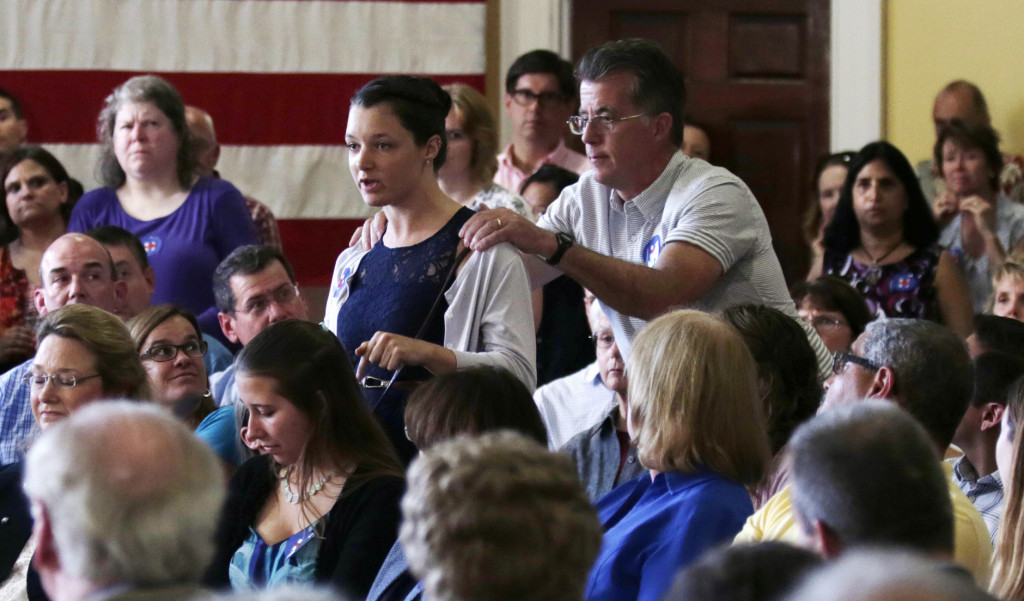
Three months into Hillary Rodham Clinton‘s campaign for president, there are fresh warning signs she may be falling short with some Democratic voters whose enthusiasm will be essential to her success in 2016. While Clinton remains the front-runner for her party’s nomination, new polling by Associated Press-GfK shows a drop in her favorability rating among Democrats. Financial disclosure documents filed by her campaign show the bulk of her money coming from big donors, hinting at low enthusiasm with average supporters. And she’s facing pushback on her positions from some liberal activists on the campaign trail and at party gatherings. Clinton was noticeably absent from the roster of speakers expected this week in Phoenix at the Netroots Nation convention, an annual gathering of about 3,000 liberal activists and organizers who frequently volunteer on presidential campaigns. Vermont Sen. Bernie Sanders, a rival for the Democratic nomination, and Massachusetts Sen. Elizabeth Warren planned to address the conference. Several attendees said the two liberal luminaries were pushing Clinton to the left but that they still had reservations about her candidacy. “I think a lot of people will talk themselves into thinking what a great president Hillary Clinton will be,” said Jose Martinez Diaz, a 36-year-old Democratic digital organizer from Washington, D.C. Sanders had captured the imagination of many progressives, but few expect him to mount a serious challenge to Clinton, he said, adding, “I think there will be a lot of people who will be disappointed.” Republicans have been raising tens of millions of dollars to fuel their own nomination fight, yet they have already devoted significant time and resources to damaging Clinton’s image. An AP-GfK poll released this week found her standing falling among Democrats, with about 70 percent of Democrats giving Clinton positive marks, an 11-point drop from an April survey. Nearly a quarter of Democrats now say they see Clinton in an unfavorable light. Campaigning in New Hampshire on Thursday, Clinton brushed off the poll findings. “I don’t like seeing that, obviously,” she said of the poll. “But I think people know that I will fight for them.” She added, “I’m very pleased with the support I have.” Part of Clinton’s decline may be because of questions about her character, an issue Republicans have pushed as a central theme of their campaign. Nearly 6 in 10 voters said they did not view Clinton as compassionate, saying the word described her “slightly” or “not well at all.” Just 3 in 10 said the word “honest” described her either very or somewhat well. The percentage of respondents calling Clinton at least somewhat inspiring also slipped from 44 percent to 37 percent. Even the number of voters saying Clinton is at least somewhat decisive, previously a strong point for the former secretary of state and New York senator, fell from 56 percent in April to 47 percent in the new poll. “I think a lot of people are tired of Hillary Clinton and want something new,” said Kristen Millnick of Washington, D.C., who was among hundreds of activists started arriving at Netroots Nation on Thursday. Many attendees gave Clinton credit for putting forward populist ideas to expand and protect voting rights, overhaul the immigration system and prosecute rogue Wall Street traders. But they are still looking for policy details that would signal she would fully embrace the party’s base on a number of issues. “People want to believe she will go big,” said Adam Green, co-founder of the Progressive Change Campaign Committee. “The burden of proof is on her to show that she will go big and bold in the populist direction.” A stop Thursday in Dover, N.H., underscored the balancing act Clinton faces in the party. After she resisted pleas from a voter to immediately ban fossil fuels, protestors organized by a liberal environmental group unfurled a banner and erupted in shouts. Clinton said she respected their “passion and urgency” but that she could not “responsibly” promise to ban the use of fossil fuels because of their economic impact. “That may not be a satisfactory answer to you,” she said. “I don’t want to say I would do something that I would know would be very difficult to do until we get everything moving in the right direction.” She also stopped short of supporting a $15 minimum wage, telling reporters later that she was working with Democrats in Congress “who are trying to determine how high it can be raised.” Clinton has also come up lukewarm on another measure of Democratic enthusiasm: money. Of the $47.5 million that Clinton raised, less than one-fifth has come from contributions of $200 or less. Sanders, meanwhile, pulled in more than three-quarters of his $15.2 million haul from small-dollar donors. The fundraising reports filed with the Federal Election Commission this week offered a preview of the flood of Republican money Clinton will face during the campaign. GOP candidates and their linked outside groups have raised at least $320 million so far, according to an AP tally of FEC documents and the financial totals provided groups that have yet to report. The five Democratic candidates and their groups have reported raising roughly $80 million, the bulk of which will benefit Clinton. The AP-GfK Poll of 1,004 adults was conducted online July 9 through 13, using a sample drawn from GfK’s probability-based KnowledgePanel, which is designed to be representative of the U.S. population. The margin of sampling error for all respondents is plus or minus 3.4 percentage points. Respondents were first selected randomly using phone or mail survey methods, and later interviewed online. People selected for KnowledgePanel who didn’t otherwise have access to the Internet were provided access with no cost to them. Republished with permission of The Associated Press.
Bernie Sanders on low end of earners among candidates
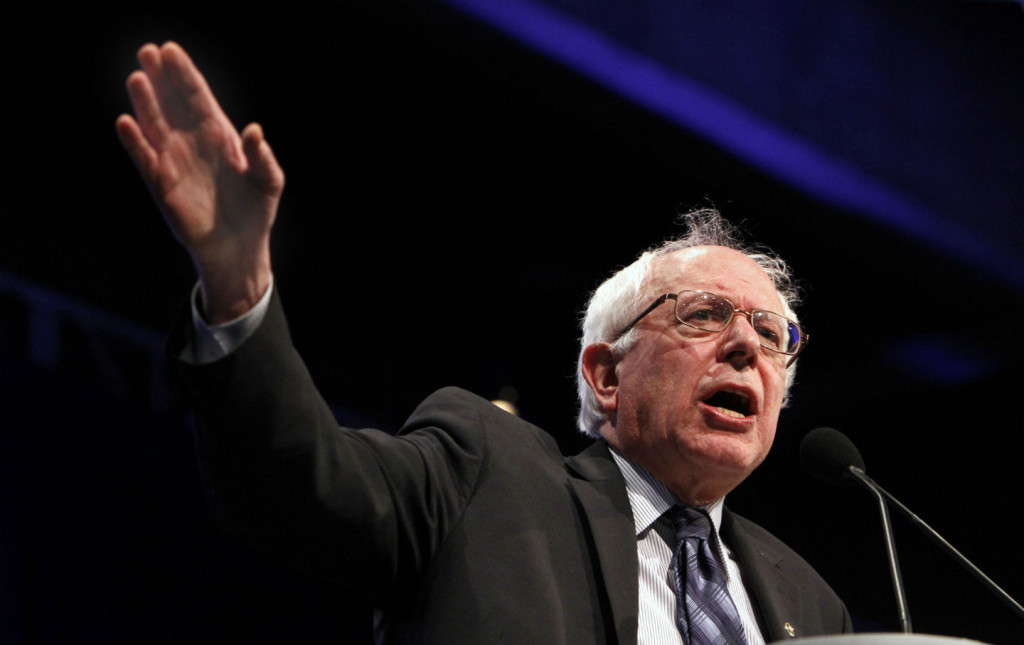
As you might expect of a candidate who labels himself a Democratic socialist, Bernie Sanders is at the low end of earners among candidates for president in 2016. But the Vermont independent, a candidate for the Democratic nomination, earns a $174,000 Senate salary that puts him among the top 5 percent of Americans in income. The Sanders campaign produced a new financial disclosure form Thursday, nearly identical to one it filed with the Federal Elections Commission on May 29. It shows Sanders got less than $2,000 total for three speaking appearances since last fall, including $850 for appearing on the HBO talk show “Real Time With Bill Maher.” Sanders reported donating the speaking fees to Vermont charities. He also got a $5,000-a-year pension from the city of Burlington for his time as mayor. Sanders also listed 28 retirement fund accounts belonging to his wife, Jane O’Meara Sanders, worth between $194,000 and $735,000. The disclosure forms only ask for a range of values, such as between $1,001 and $15,000. Meanwhile, Democratic candidate Martin O’Malley and his wife, Catherine Curran O’Malley, last year earned a solid $270,000 in wages, plus a $61,000 pension from his time as mayor and council member in Baltimore. O’Malley is competing with Sanders to be the liberal alternative to the overwhelming Democratic front-runner Hillary Rodham Clinton. Both men’s earning paled in comparison to Clinton’s. Her May financial disclosure form, showed that she and her husband, former President Bill Clinton, earned more than $25 million in speaking fees since the beginning of 2014. Republished with permission of The Associated Press.
Presidential primary brief: 484 days until Election Day
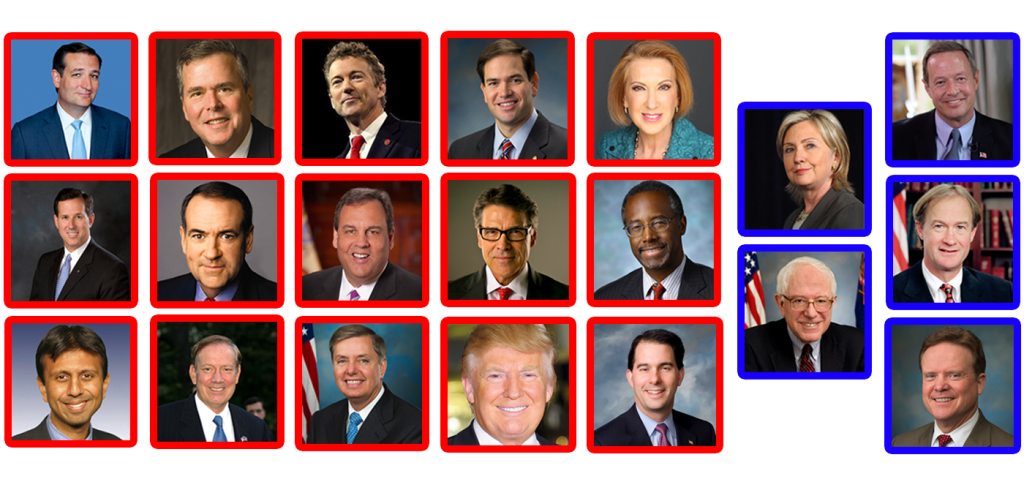
Welcome to the Monday presidential primary brief provided by Alabama Today. Every week you can find your latest headlines on the presidential primary races as we count down the days until Election Day. 230 days until AL Presidential Primary 484 days until Election Day Convention Dates: Republican July 18-21 2016, Democratic July 25-28 2016 Weekly Headlines: Scott Walker announces campaign blitz after 2016 announcement Republican Jim Gilmore to enter 2016 race for president Biden campaign team taking shape Press Clips: Global warming will play major role in 2016 presidential election (The Patriot News 7/12/15) Pope Francis in mid-June issued an encyclical calling for the world to combat global warming. It was developed with advice from the best scientists in the world, including world-‐famous British physicist/cosmologist Stephen Hawking. The Dalai Lama has endorsed the message. This will force a titanic, worldwide discussion on the issue — partly a scientific debate, partly a food fight from deniers, skeptics and people who honestly feel we have better things to spend our money on. Only one poll number right now tells us anything meaningful about the 2016 election (Washington Post 7/10/15) Although the 2016 election is nearly 500 days away, the nation — or at least the nation’s political junkies — remain hungry for news about the presidential campaign. But what news is there? Polls. So far — in 2015 alone! — no fewer than 57 polls have asked voters to choose between hypothetical nominees Republican Jeb Bush and Democrat Hillary Rodham Clinton. So it’s useful to be mindful that “trial heat” polls conducted now have zero ability to predict the winner of an election that’s 16 months away. Polls don’t even tell us much about primaries and caucuses that are six months away. Upcoming polls to lock in GOP debate Field (Politico 7/7/15) John Kasich may be the last Republican to enter the presidential fray, but his timing could be the best: Exactly two weeks after the splash of his planned announcement on July 21, Fox News Channel will average together the latest polls of the Republican Field and determine which 10 of the 16 announced candidates will participate in the First debate in Cleveland. Making the cut gives a candidate the platform to stand out in a crowded Field; not making the cut leaves him or her knocking on the door. Immigration reform key issue in 2016 election (USA Today 7/6/15) At her job at an investment management firm in small-‐town Nebraska, Analy Gonzalez is “constantly reminded” of the economic strain immigrant workers face. Gonzalez, who often works with migrant workers, says she sees firsthand the need for immigration reform, particularly for young immigrants. “Speaking about immigration reform is something that you grow up with having an immigrant family,” the 25-‐year-old says. “A lot of the people that I help are immigrants working really difficult jobs with no education, just trying to get by.” Jim Webb clarifies position on the Confederate flag (CBS News 7/9/15) Democratic presidential candidate and former Virginia Sen. Jim Webb said Thursday that the Confederate Flag at the South Carolina Capitol has “long been due to come down,” but he also called for some historical perspective on the issue, suggesting people should not use the debate over the flag to demonize the South. “The Confederate battle flag was a battle flag. It assumed a lot of unfortunate racist and divisionist overtones during the civil rights era,” Webb said in an interview on CBS This Morning, his first with a national broadcast outlet since announcing his candidacy earlier this month. The demographics of 2016 look brutal for Republicans (Washington Post 7/10/15) If you want to understand why the debates over the Confederate flag and Donald Trump’s immigration outbursts have so many senior Republicans reaching for their acid reflux pills, take a look at this bracing new demographic analysis from Charlie Cook and David Wasserman. Cook and Wasserman note that historical patterns should favor the GOP in the 2016 presidential election, because the same party rarely keeps the White House after previously holding it for two terms. But that advantage will be swimming upstream against these demographics. How Bernie Sanders plans to win and change Washington (CBS News 7/12/15) Sen. Bernie Sanders, I-Vermont, says he’ll be able to build a giant grassroots movement of support to win the Democratic nomination and the 2016 election, but that he’ll also go one step further than President Obama did successfully harness his grassroots support to change Washington. In an interview on CBS’ Face the Nation Sunday, Sanders said that the president ran “one of the great campaigns in the history of the United States of America” in 2008, but he also made a mistake by trying to negotiate fair compromises with Republicans and their leadership in Congress.
Can independent Bernie Sanders get on NH Democratic primary ballot?
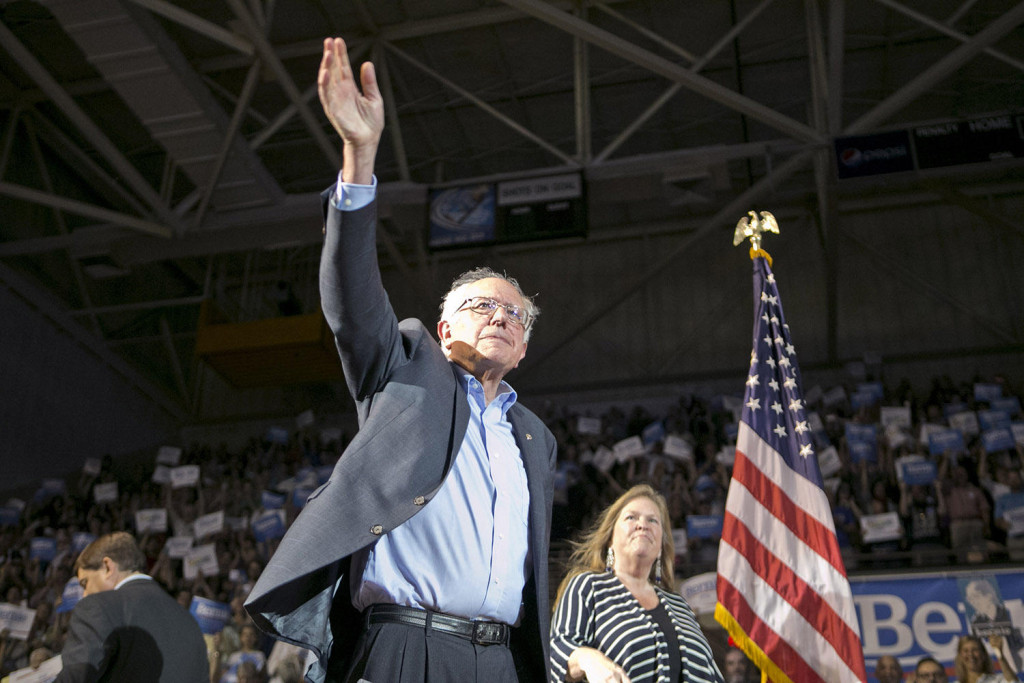
From his run for mayor of Burlington to numerous campaigns for Congress, Vermont Sen. Bernie Sanders has for more than three decades eschewed traditional party labels in his pursuit of political office, winning election after election as an independent. As he seeks the presidency as a Democrat, that unwillingness to be pigeonholed could be a liability in New Hampshire. To get on the ballot in the first-in-the-nation primary state, candidates must fill out paperwork that requires them to identify as a registered member of a political party. “I don’t know if it will be a problem,” New Hampshire Secretary of State Bill Gardner said when asked whether Sanders’ independent status could keep him off the ballot. New Hampshire officials won’t take up a case against Sanders without a complaint, Gardner said. A formal challenge to Sanders’ eligibility would likely make its way to the state’s Ballot Law Commission, the arbiter of such questions. Former Republican U.S. Rep. Charlie Bass raised the issue of Sanders’ eligibility in a recent Washington Post opinion piece. “In short, Sanders is not a Democrat, has not been elected as a Democrat, has never served as a Democrat and cannot plausibly claim, at least in New Hampshire, to be a Democrat,” Bass wrote. Sanders’ campaign isn’t worried. “We think it will work out,” Sanders’ spokesman Michael Briggs told The Associated Press. “The senator has said that he’ll do whatever it takes that he can do to qualify for the ballot.” Although New Hampshire’s form asks candidates to declare their party registration, Vermont is one of a number of states where voters do not register with a party. Candidates, however, must consent to run in a specific party’s primary, said Chris Winters, Vermont’s deputy secretary of state. In Sanders’ 2006 and 2012 elections to the U.S. Senate, he consented to run in the Democratic primary. After getting the most votes in that contest, Sanders then rejected the nomination and ran as an independent in the general election, Winters said. In the past, Sanders often has said he doesn’t see enough daylight between Democrats and Republicans, arguing that both are too aligned with moneyed interests. During an unsuccessful 1986 race for governor as an independent, Sanders said, “It is time to stop the Tweedledee, Tweedledum politics of the Republican and Democratic parties.” It’s not as if his home-state Democrats are pining for a national party standard-bearer: Vermont Democrats including Gov. Peter Shumlin, former Gov. Howard Dean and Sen. Patrick Leahy are all backing former Secretary of State Hillary Rodham Clinton in the 2016 campaign. In Congress, Sanders caucuses with Democrats and is the party’s ranking member on the Senate Budget Committee. State and national Democratic officials don’t think the paperwork question will affect Sanders. “He is a Democratic candidate for president,” said Ray Buckley, chairman of the New Hampshire Democratic Party. He said the state party would immediately go to court to have Sanders’ name placed on the ballot if there is a challenge. So far, other Democrats expected on the ballot are Clinton, former Rhode Island Gov. Lincoln Chafee, former Maryland Gov. Martin O’Malley and former U.S. Sen. Jim Webb of Virginia. Clinton’s campaign says it is prepared for a competitive primary and fully expects Sanders to be on the New Hampshire primary ballot. Gardner, a staunch protector of the state’s primary, said the wording about being registered in a party is included to help ensure integrity in elections. In New Hampshire, a voter must register with a particular party to vote in that party’s primary. “What applies to the voters, applies to the candidates,” he said. But, Gardner said, it’s too early to speculate on Sanders’ political fate. “It’s a whole series of hypotheticals,” he said. Republished with permission of The Associated Press.
Hillary Clinton jabs Republican field on immigration policy
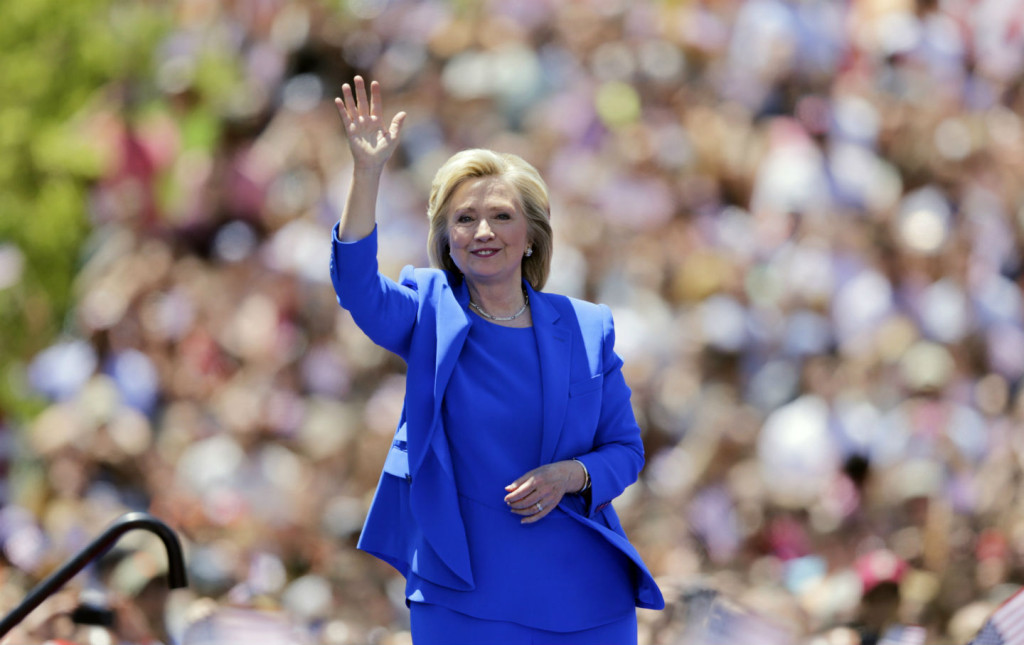
Hillary Rodham Clinton said a Republican in the White House would mark a “big U-turn” for the nation and assailed the GOP presidential field’s stance on an immigration overhaul. Asked about Jeb Bush, the Democratic presidential candidate said: “He doesn’t believe in a path to citizenship. If he did at one time, he no longer does.” In an interview Tuesday with CNN, Clinton said the Republican presidential contenders range “across a spectrum of being either grudgingly welcome or hostile toward immigrants.” Campaigning in one of the most liberal pockets of Iowa, Clinton offered herself up as a Democratic standard-bearer at a time when her main Democratic rival, Sen. Bernie Sanders of Vermont, has generated big crowds and stoked interest among progressives. Clinton also addressed criticism that she has avoided scrutiny, taking questions from reporters and then sitting down for her first national television interview since starting her campaign. Clinton cited her husband’s eight years in office as a time of strong economic growth that helped not only the wealthy but the poor as well. She said Republicans afterward left President Barack Obama to tend to an economic crisis. “Right now our country deserves to keep moving forward, not to do a big U-turn going back to where we came from,” Clinton said at the Iowa City Public Library. “That didn’t work before. It won’t work again.” She told CNN she planned to outline some of her economic policies Monday. Clinton has said any immigration legislation needs to include a path to “full and equal citizenship.” She has defended Obama’s use of executive actions to shield millions of immigrants living in the U.S. illegally from deportation. In the interview, Clinton said she was “disappointed” in Republican candidate Donald Trump for his disparaging comments about Mexican immigrants along “with the Republican Party for not responding immediately and saying, `Enough, stop it.’” Clinton demurred in discussing the possibility of another Bush-Clinton campaign – Bill Clinton defeated President George H.W. Bush in 1992 – but lumped former Florida Gov. Jeb Bush in with other Republicans who have opposed immigration overhauls in Congress. Bush, in his 2013 book “Immigration Wars,” called for a process that would allow people living in the U.S. illegally to remain, as long as they take a series of steps. He wrote that withholding citizenship is a suitable penalty for those who have broken the law. Bush’s co-author, Clint Bolick, said the former Florida governor would probably bend to support citizenship, if that was necessary to strike a deal on immigration. Bush spokeswoman Emily Benavides said in a statement that Bush “believes in a conservative legislative solution to fix our broken immigration system that includes earned legal status for those currently in the country after they pay fines and taxes, learn English and commit no substantial crimes while securing our border.” During the CNN interview, Clinton defended her decision to delete some of her emails as secretary of state from her private email server, saying, “Everything I did was permitted by law and regulation.” She said she used one device for email, although an email message obtained by The Associated Press earlier this year showed Clinton used an iPad for email, in addition to her BlackBerry, while she was secretary of state. Rep. Trey Gowdy, chairman of the House Select Committee on Benghazi, responded Tuesday, saying “the committee does not know why or when she chose to wipe clean her personal server, but we do know her way of doing things provided an incomplete public record.” The committee sought Clinton’s emails as part of its investigation into the 2012 attack on the U.S. diplomatic post in Benghazi, Libya. At her Iowa event, Clinton made no mention of Sanders but drew an implicit contrast with his record on gun control. Sanders, a favorite of liberal Democrats, has opposed some gun control measures in the Senate and drew criticism from some Democrats for voting in 2005 to protect gun manufacturers from lawsuits filed by victims of gun violence. Clinton said she would speak out “about the uncontrollable use of guns in our country” and believes most Americans and gun owners support universal background checks. “Let’s not be afraid of the gun lobby, which does not even really represent the majority of gun owners in America,” she said. Sanders says most gun owners in the country obey the law, and he makes a distinction on the gun-control question between rural states like Vermont, where hunting is common and gun-ownership traditions go deep, and big cities. “I want to see real, serious debate and action on guns, but it is not going to take place if we simply have extreme positions on both sides,” he told CNN on Sunday. “I think I can bring us to the middle.” Asked about Sanders, Clinton said she welcomed a contested race. “This is going to be competitive – it should be competitive,” Clinton said. Republished with permission of The Associated Press.
Bernie Sanders trying to make the most of his booming 2016 crowds
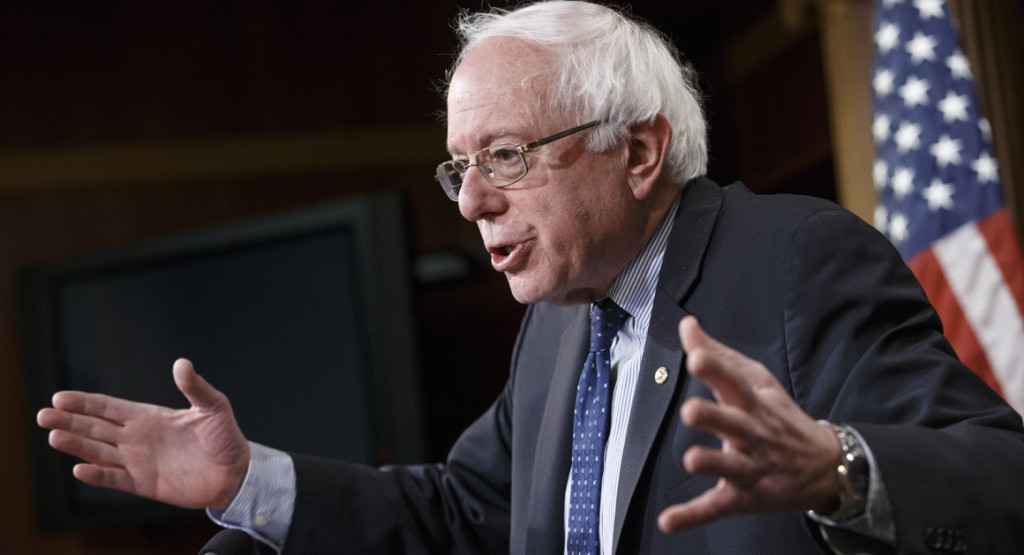
Democratic presidential candidate Bernie Sanders is packing `em in: 10,000 people in Madison, Wisconsin. More than 2,500 in Council Bluffs, Iowa. Another 7,500 this week in Portland, Maine. The trick for the independent senator from Vermont is to turn all that excitement into something more than a summer fling. Will those supporters caucus for him on a cold winter night in Iowa? Will they volunteer to help him get out the vote a week later in snowy New Hampshire? “We’ve only been a declared candidate for two months,” Sanders said recently in tiny Storm Lake, Iowa. “In a certain sense, our momentum is outpacing our infrastructure.” In presidential politics, infrastructure matters. For Sanders to turn his insurgent campaign into a viable challenge against unquestioned front-runner Hillary Rodham Clinton, he will need to covert those willing to come hear him speak in the summer of 2015 into volunteers, donors and – ultimately – voters in 2016. For all the crowds that Sanders is attracting, and the attention he’s getting for them, he remains far behind Clinton in the work of building a campaign organization. He has a few more than 50 paid staffers in all. Clinton has nearly 50 organizers in Iowa alone, as well as at least one in every other state. “The grassroots movement behind this campaign has been much faster than I think anyone could have anticipated,” said Sanders campaign manager Jeff Weaver. “The organization is trying to catch up to where the people are.” More than 100 people crowded into the Better Day Cafe in Storm Lake, Iowa, to hear Sanders. A table at the front of the restaurant held clipboards with sign-up sheets, where people could fill in their name, email address and phone number – as well as a box to check if they planned to caucus for Sanders. By the end of the event, many had signed up, but few had checked the box indicating how they’d caucus. Brian Gerjets, co-chair of the Cherokee County Democrats, said that while Sanders had drawn 200 people to an event earlier in the day, “out of that 200 people, he’ll be lucky to get to 10 percent” to show up in person and support him on caucus night. Weaver said the infrastructure needed to get that turnout is coming soon. Sanders has more than 20 paid staffers in Iowa, with more scheduled to come aboard next month. In New Hampshire, he has four paid staffers, but the state will get a “big jump soon,” Weaver said. At every event, Sanders’ campaign collects email addresses and cellphone numbers. The audience is asked to send a text message to a number operated by the campaign, another way to connect with supporters. The campaign is holding its first organizing day July 29. These are campaign practices perfected by Barack Obama‘s campaign in 2008 and 2012, and ones that Clinton’s campaign – led by campaign manager Robby Mook, a Vermont native very familiar with Sanders’ appeal – is deploying on a scale that far exceeds what Sanders has done so far. The former secretary of state’s campaign said Tuesday it had directly contacted more than 16,000 Iowans and held more than 3,000 in-depth, one-one-one meetings to urge them to commit to caucus for Clinton. In a sign of Clinton’s blanket approach across the state, her campaign said it had a committed supporter in each of the state’s 1,682 precincts – people able to advocate for her in person on caucus night. That breadth of support is crucial, said former Obama campaign aide Mitch Stewart, who oversaw Obama’s field operation in Iowa in 2008 and battleground states in 2012. “If it’s just deep in a couple of urban areas or particularly liberal areas, that’s not going to translate into caucus success,” he said. When Sanders narrowly lost to Clinton in a straw poll held during the Wisconsin Democratic Party convention, his team booked an appearance in Madison, the liberal home of the University of Wisconsin. Sanders filled the city’s Veterans Memorial Coliseum with 10,000 people. “We saw what happened without the benefit of organizing in the Wisconsin straw poll,” said Tad Devine, Sanders’ chief strategist. “The light went off with us and we said, `This could be a big opportunity.’” For the big rallies, Sanders is picking places where he can attract a crowd while also tapping into voters in Iowa and New Hampshire. Monday’s speech in Maine drew interest in nearby New Hampshire. Another speech is planned soon for Boston. “It’s an echo chamber that gets back to the early voters,” Devine said. He’s also trying to broaden his appeal to Hispanic and black voters. Sanders spoke at a conference of Latino officials in Las Vegas recently and plans to address the Southern Christian Leadership Conference in Louisiana this month. For her part, Clinton appears in no rush to match Sanders when it comes to drawing a crowd. She ended her campaign day Tuesday at a house party in Ottumwa, Iowa, speaking to about 60 people gathered in a living room. “What I am trying to do is at least have enough of an opportunity to have a conversation with people,” Clinton said. “There will be plenty of time for huge events, for interviews, for all of that.” Republished with permission of The Associated Press.
Former Virginia Sen. Jim Webb opens presidential bid
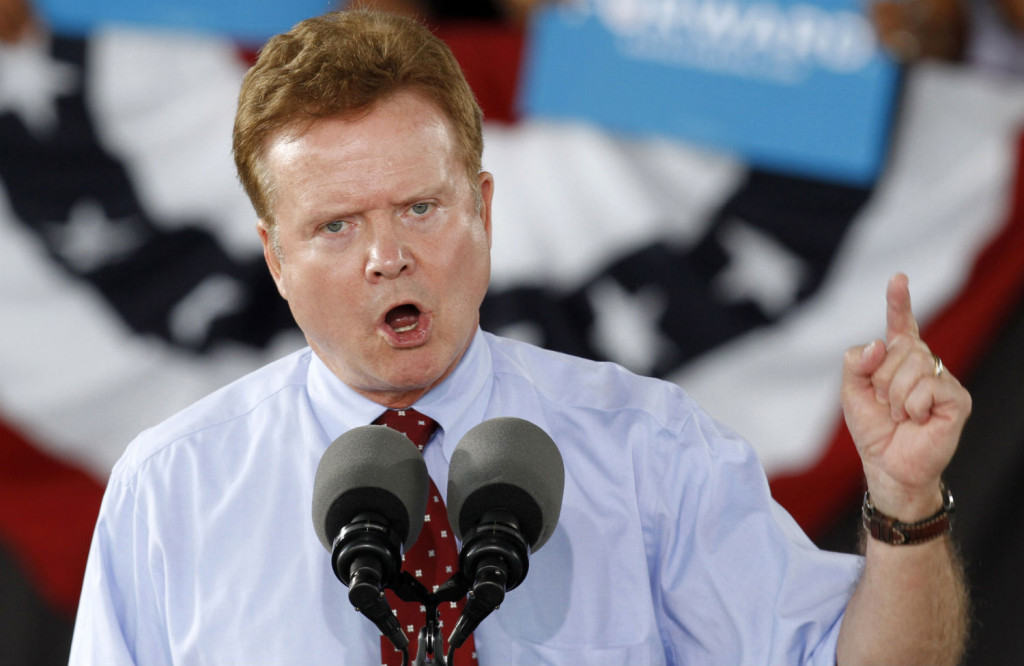
Former Virginia Sen. Jim Webb announced his presidential campaign on Thursday, opening a long-shot bid against Hillary Rodham Clinton and a field of Democratic rivals for the party’s nomination. Webb, in an announcement posted on his campaign website, acknowledged he would face major hurdles but vowed to bring an outsider’s voice to the 2016 race. “I understand the odds, particularly in today’s political climate, where fair debate is so often drowned out by huge sums of money. I know that more than one candidate in this process intends to raise at least a billion dollars,” Webb wrote. But he said the nation “needs a fresh approach to solving the problems that confront us and too often unnecessarily divide us. We need to shake the hold of these shadow elites on our political process.” Webb, 69, a decorated Vietnam veteran and former Navy secretary under President Ronald Reagan, surprised many Democrats when he became the first major figure in the party to form a presidential exploratory committee last November. He has outlined the roots of a campaign message that include helping working-class Americans compete in the economy, tackling campaign finance reform and preventing the U.S. from getting involved in foreign entanglements like Iraq and Afghanistan. Webb’s opposition to the Iraq War — his son Jimmy served in the war — played a central role in his surprise Senate election in 2006 against Republican Sen. George Allen. While he chose not to seek re-election after one term, his military and foreign policy credentials could allow him to become a debate stage foil to Clinton, who was President Barack Obama‘s secretary of state. Webb has said U.S. foreign policy has been “adrift” since the end of the Cold War and called for a new foreign policy doctrine that would outline the circumstances in which the U.S. would use military force. Webb has made frequent trips to the early voting states of Iowa and New Hampshire, but early polls show him trailing in a field dominated by Clinton that also includes Vermont Sen. Bernie Sanders, former Maryland Gov. Martin O’Malley and former Rhode Island Gov. Lincoln Chafee. Republished with permission of The Associated Press.
Democratic hopeful Bernie Sanders hopes to find like-minded liberals in Scott Walker’s backyard
Democratic presidential candidate Bernie Sanders is hoping to tap the long history of liberalism and progressive politics in Wisconsin as he pushes his campaign into Republican Gov. Scott Walker‘s backyard. Sanders has booked the downtown Alliant Energy Center with the goal of filling its 10,000 seats to show his bid to snatch the Democratic nomination from front-runner Hillary Rodham Clinton isn’t a longshot after all. In a conference call ahead of his speech Wednesday night, Sanders told reporters that 9,500 people have said they expect to attend. Sanders, a 73-year-old self-described democratic socialist, is trying to appeal to the most liberal Democrats with his message of raising the minimum wage to $15 an hour, bridging the gap between rich and poor, and raising taxes on the wealthy and Wall Street. Madison, the state’s reliably liberal capital and home to the University of Wisconsin, has its own White House hopeful in Walker, who is preparing to enter the crowded field of GOP candidates. The governor is expected to make his announcement on or shortly after July 13. Sanders said in Tuesday’s call with reporters that he was “strongly opposed” to Walker’s agenda. “We need leadership in this country that stands up for working families, that is prepared to take on the big money interests today that have so much power and so much influence, that we need to strengthen the trade union movement in this country, not break it,” Sanders said. “I suspect that Gov. Walker’s views are very different than that.” Walker criticized Sanders in a statement issued Wednesday in advance of Sanders’ speech. “Bernie Sanders is right about one thing: We don’t need another Clinton in the White House,” he said. “On virtually every other issue, however, he stands in stark opposition to most Americans. Wisconsinites have rejected his top-down, government-knows-best approach three times in the last four years.” Walker’s statement is a reference to his three election victories since 2010. He won election, defeated a recall in 2012 and then won re-election. His victories have helped fuel his all-but-certain run for the White House. Sanders has built his underdog campaign on blunt talk about the economy. In addition to advocating a $15-an-hour minimum wage and raising taxes on the rich, he also supports a massive government-led jobs program to fix roads and bridges, a single-payer health care system, an expansion of Social Security benefits and debt-free college. Republished with permission of the Associated Press.
Hillary Clinton set to raise $45M in gifts both small — and large
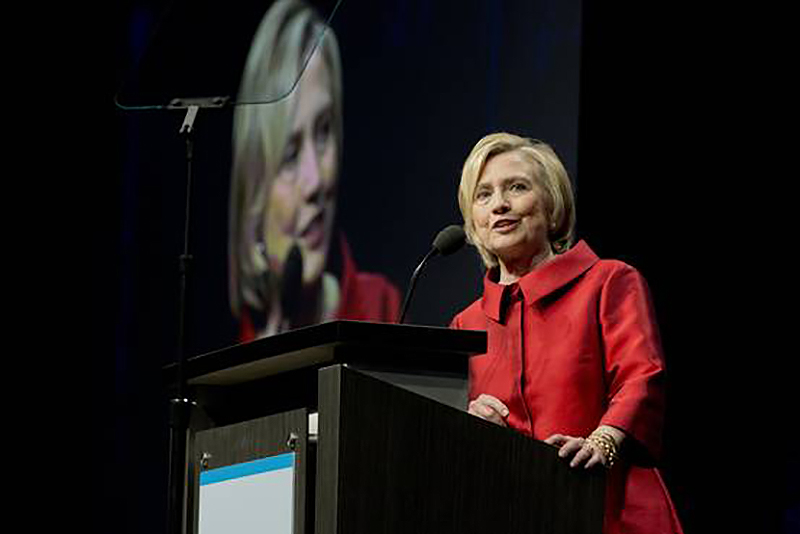
Hillary Rodham Clinton‘s presidential campaign says it is on track to report that it has raised more than $45 million since its launch in mid-April, with the vast majority of those donating giving less than $100. While Clinton’s campaign on Wednesday touted its success with such small-dollar donors, the leading Democrat in the 2016 race also pulled in a large chunk on campaign cash from donors who are giving her the maximum allowed by law. In all, Clinton’s campaign said, their haul is set to best the previous record of primary money raised in a candidate’s first quarter, set by President Barack Obama‘s re-election campaign in 2011 at $41.9 million. “Thank you so much for being part of this campaign. I’m grateful for all you’ve done and excited for what comes next,” Clinton wrote in a handwritten message, a photo of which was posted on Twitter. Clinton’s campaign released a summary of their fundraising the morning after the close of the second quarter. The figures must be formally reported to the Federal Election Commission by July 15, along with a list of each donor who gave at least $200. The campaign did not release the total number of contributions or how many donors gave to Clinton’s campaign, all details it must eventually disclose. But John Podesta, the campaign’s chairman, said on Twitter that 91 percent of all donations to the campaign were $100 or less. “Many people doubted whether we could build an organization powered by so many grassroots supporters,” campaign manager Robby Mook wrote in an email to supporters. “Today’s announcement proves them wrong.” Left unsaid in the campaign’s flurry of celebration of its small-dollar donors was how much it has raised from donors asked to give the legal maximum of $2,700. In recent weeks, Clinton has traveled the country raising money at celebrity-studded events, exclusive gatherings in Hollywood estates and inside Manhattan penthouses. On Wednesday, she was attending an event in a wealthy New York suburb at the home of Maria Cuomo Cole, the daughter of the late New York Gov. Mario Cuomo and sister of the current Gov. Andrew Cuomo. Clinton has raised at least $19.5 million at 61 such fundraisers, an amount that makes up at least 43 percent of her fundraising total. That percentage is sure to be even higher, because The Associated Press used the most conservative ticket prices to her events to calculate the total raised at each. The Clinton campaign’s focus on small-dollar donors isn’t unexpected. Vermont Sen. Bernie Sanders has aggressively courted the party’s most liberal grassroots voters by running largely on a platform of reducing income inequality, and the figures released Wednesday are aimed at showing Clinton also has a strong base of eager supporters and is taking nothing for granted in the primary contest. Aides also promoted Clinton as the most successful primary contest fundraiser in history, besting the nearly $42 million Obama raised in the first three months after beginning his re-election bid in 2011. Obama actually raised more — $46 million — but that number included some checks earmarked for the general election. During her 2008 campaign, Clinton raised $36 million in the first quarter. At that time, she collected checks for both the primary contest and general election — meaning donors could give up to $5,400. That general election money never became available to her. This time, her campaign has set a goal of raising $100 million in primary money by the end of the year and decided to fundraise only for the primary, meaning contributors can give no more than $2,700. If she becomes the Democratic nominee, she can return to those donors and ask for another $2,700. Clinton will also benefit from a network of outside groups that can accept checks of any size from donors. Those organizations are expected to raise several hundred million through the primary and, if she wins the Democratic nomination, the general election. Republished with permission of the Associated Press.
Presidential primary brief: 498 days until Election Day
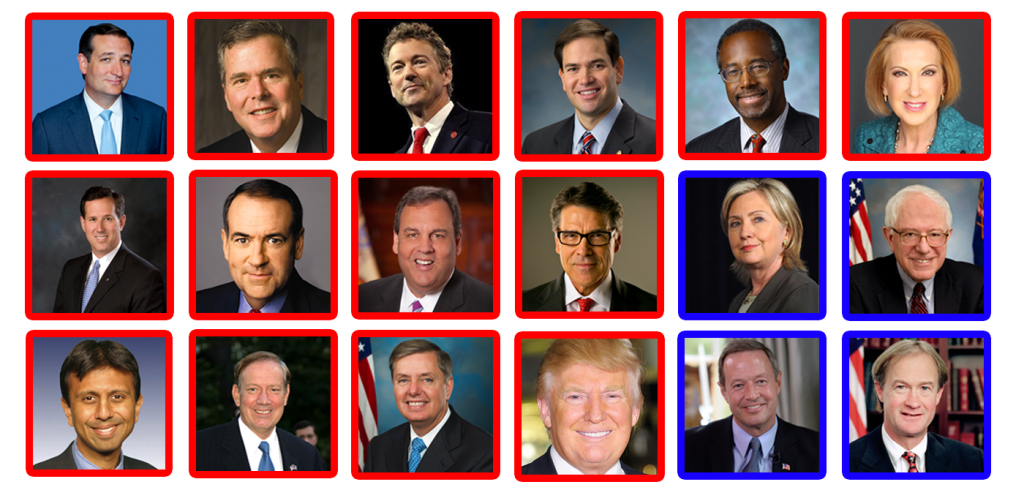
Welcome to the Monday presidential primary brief provided by Alabama Today. Every week you can find your latest headlines on the presidential primary races as we count down the days until Election Day. 245 days until AL Presidential Primary 498 days until Election Day Convention Dates: Republican July 18-21 2016, Democratic July 25-28 2016 Weekly Headlines: Bush leads in N.H. poll, Trump is second WSJ/NBC national poll shows Hillary Clinton crushing all rivals Bobby Jindal announces entry into 2016 presidential race Press Clips: Chris Christie Launches Campaign Website Three Days Before His Announcement (National Journal 6/27/15) If the trips to New Hampshire and leaked announcement invitations weren’t big enough clues, Chris Christie is in for 2016. Like several other campaigns this cycle, Christie’s team went for a digital-first approach ahead of a formal announcement: The New Jersey governor launched a campaign website Saturday, just three days before he’s expected to announce his White House bid from the gym of the Livingston high school where he graduated. He signaled the site’s launch in a series of tweets Saturday morning. New Poll: Bernie Sanders closing in on Hillary Clinton (The Blaze 6/26/15) With the progressive wind at his back, Vermont Sen. Bernie Sanders is emerging as the most viable Democratic challenger, at least in New Hampshire, to former Secretary of State Hillary Clinton for the Democratic presidential nomination. A WMUR/CNN poll released Thursday evening shows Sanders has narrowed the gap between him and Clinton from 21 percentage points to just 8 points in less than two months, for a Clinton lead of 43 percent to 35 percent. The poll was taken from 360 likely Democratic voters from June 18 to June 24. A year ago, Clinton trounced Sanders by 59 percent to 5 percent. 2016 candidates react to Supreme Court’s gay marriage ruling (NBC News 6/26/15) The Supreme Court’s landmark decision that all states must issue marriage licenses to same-sex couples prompted a flood of responses on Friday morning, including from those eyeing the White House in 2016. Reaction from the presidential hopefuls poured in almost immediately after the decision was announced. Democratic presidential frontrunner Hillary Clinton tweeted just moments after the news broke that she’s proud to celebrate the “historic victory.” Here’s what climate hawk Martin O’Malley would do as president (Grist 6/25/15) Say what you will about Martin O’Malley, the former Maryland governor and current Democratic presidential candidate, but the man is a wonk. He may lack for narrative, but he will give you plenty of commonsense solutions. And he has a demonstrated commitment to combating climate change. So perhaps it should come as no surprise that despite his lagging far behind Hillary Clinton and even lefty Sen. Bernie Sanders (I-Vt.) in the polls, he is the first candidate to produce anything resembling a detailed climate policy. It’s only a work in progress, and it isn’t even available yet on the campaign website. But O’Malley’s team shared with Grist a white paper outlining some significant climate change policy proposals. Collectively, they would go further than President Obama has — or than Hillary Clinton has called for thus far. State Dept. gets Libya emails that Hillary Clinton didn’t hand over (NY Times 6/25/15) The State Department said on Thursday that 15 emails sent or received by Hillary Rodham Clinton were missing from records that she has turned over, raising new questions about whether she deleted work-related emails from the private account she used exclusively while in office. The disclosure appeared to open the door for Republicans on Capitol Hill to get more deeply involved in the issue. Senator Lindsey Graham, Republican of South Carolina, who is running for president, said he planned to send a series of questions to the State Department about the missing emails and about why it allowed her to use the personal account. Scott Walker to announce 2016 intentions next month (CBS News 6/25/15) Wisconsin Gov. Scott Walker will make his presidential intentions known the week of July 13, he said on Fox News Thursday night. In a crowded field of more than a dozen Republican candidates, Walker’s standing in the 2016 polls is relatively decent, so far. In a recent Fox poll of likely Republican voters, Walker tied for fourth place. A recent NBC/ Wall Street Journal poll put him in second place. The two-term governor has gained a reputation as a staunch conservative after successfully taking on unions in his state and pushing an often polarizing conservative agenda. Walker told Fox’s Greta Van Susteren that he would bring that same moxie to Washington, should he decide to run. 2016 contenders react to Obamacare ruling (Politico 6/25/15) Here’s how the 2016 presidential contenders reacted on Twitter to the Supreme Court’s decision to uphold a major component of the Obamacare health law: Fox News Poll: Bush, Trump score post-announcement bumps (Fox News 6/24/15) There’s been a lineup change in the race for the GOP nomination, as businessman Donald Trump moves up after declaring his candidacy. He’s now second in the order after former Florida Gov. Jeb Bush, who also got an uptick in support after his formal announcement. For Democrats, former Secretary of State Hillary Clinton is still — by far — the team leader, according to a new Fox News national poll on the 2016 presidential election. After son’s death, Biden not ruling out 2016 bid (CNN 6/22/15) As Vice President Joe Biden slowly returns to official duties in Washington following his son’s death, a decision on mounting a third presidential bid looms in the not-so-distant future. In just more than a month, Biden will determine whether or not to make another go at the top job. And while many Democrats say they’re doubtful he will launch a presidential campaign, his supporters are holding out hope he decides to challenge Hillary Clinton for the Democratic nomination. As he steps back into public life, Biden has set an early August deadline for making his intentions known, said a Democrat familiar with his thinking. Before his son’s death, Biden consistently said he
2016 Presidential candidates react to supreme court ruling on same-sex marriage
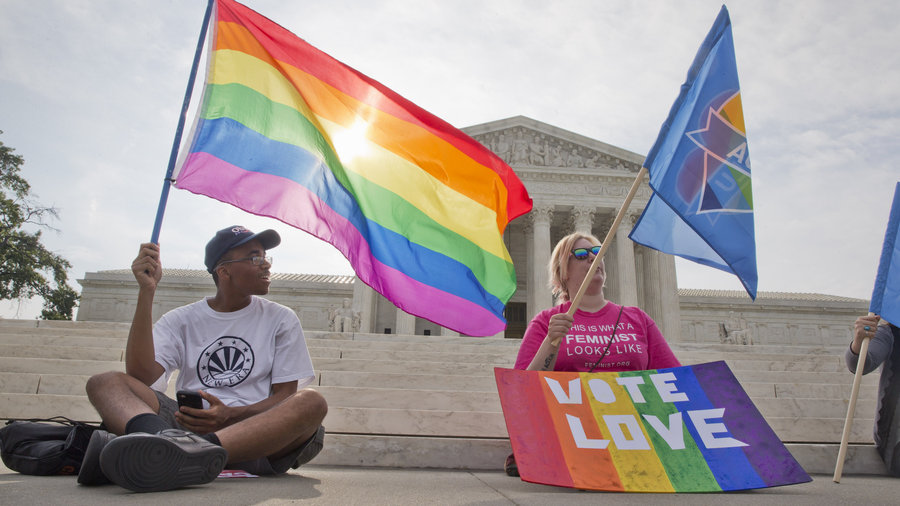
On Friday, in a 5-4 ruling the U.S. Supreme Court gave same-sex couples the right to marry in the United States. Although Lesbian and Gay couples can already marry in 36 states the U.S. Supreme Court’s ruling means the other 14 states must stop enforcing their bans on same-sex marriage. The 2016 presidential hopefuls were quick to weigh in with their opinions on the decision. Here’s a compilation of the candidates reactions: Former Gov. Jeb Bush: Guided by my faith, I believe in traditional marriage. I believe the Supreme Court should have allowed the states to make this decision. I also believe that we should love our neighbor and respect others, including those making lifetime commitments. In a country as diverse as ours, good people who have opposing views should be able to live side by side. It is now crucial that as a country we protect religious freedom and the right of conscience and also not discriminate. Ben Carson: While I strongly disagree with the Supreme Court’s decision, their ruling is now the law of the land. I call on Congress to make sure deeply held religious views are respected and protected. The government must never force Christians to violate their religious beliefs. I support same-sex civil unions but to me, and millions like me, marriage is a religious service — not a government form. Lincoln Chafee: Congratulations to Supreme Court on today’s good ruling for marriage equality! Hillary Clinton: “Today is one of those days we’ll tell all our grandchildren about,” “This is our country at its best: inclusive, open and striving towards true equality,” wrote Clinton. Read more here Carly Fiorina: This is only the latest example of an activist Court ignoring its constitutional duty to say what the law is and not what the law should be. Justice Alito spoke for so many of us when he said that “[t]oday’s decision usurps the constitutional right of the people to decide whether to keep or alter the traditional understanding of marriage … All Americans, whatever their thinking on that issue, should worry about what the majority’s claim of power portends.” The Court ruled today that all Americans should receive equal benefits and rights from the government under the law. I have always supported this view. However, this decision was also about the definition of marriage itself. I do not agree that the Court can or should redefine marriage. I believe that responsibility should have remained with states and voters where this conversation has continued in churches, town halls and living rooms around the country. Moving forward, however, all of our effort should be focused on protecting the religious liberties and freedom of conscience for those Americans that profoundly disagree with today’s decision. The Court did not and could not end this debate today. Let us continue to show tolerance for those whose opinions and sincerely held beliefs differ from our own. We must lead by example, finding a way to respect one another and to celebrate a culture that protects religious freedom while promoting equality under the law. Former Gov. Mike Huckabee: The Supreme Court has spoken with a very divided voice on something only the Supreme Being can do-redefine marriage. I will not acquiesce to an imperial court any more than our Founders acquiesced to an imperial British monarch. We must resist and reject judicial tyranny, not retreat. This ruling is not about marriage equality, it’s about marriage redefinition. This irrational, unconstitutional rejection of the expressed will of the people in over 30 states will prove to be one of the court’s most disastrous decisions, and they have had many. The only outcome worse than this flawed, failed decision would be for the President and Congress, two co-equal branches of government, to surrender in the face of this out-of-control act of unconstitutional, judicial tyranny. The Supreme Court can no more repeal the laws of nature and nature’s God on marriage than it can the law of gravity. Under our Constitution, the court cannot write a law, even though some cowardly politicians will wave the white flag and accept it without realizing that they are failing their sworn duty to reject abuses from the court. If accepted by Congress and this President, this decision will be a serious blow to religious liberty, which is the heart of the First Amendment. Louisiana Gov. Bobby Jindal: The Supreme Court decision today conveniently and not surprisingly follows public opinion polls, and tramples on states’ rights that were once protected by the 10th Amendment of the Constitution. Marriage between a man and a woman was established by God, and no earthly court can alter that. This decision will pave the way for an all out assault against the religious freedom rights of Christians who disagree with this decision. This ruling must not be used as pretext by Washington to erode our right to religious liberty. The government should not force those who have sincerely held religious beliefs about marriage to participate in these ceremonies. That would be a clear violation of America’s long held commitment to religious liberty as protected in the First Amendment. I will never stop fighting for religious liberty and I hope our leaders in D.C. join me. Former Gov. Martin O’Malley: So grateful to the people of MD for leading the way on this important issue of human dignity and equality under the law. Former Gov. Rick Perry: I am disappointed the Supreme Court today chose to change the centuries old definition of marriage as between one man and one woman. I’m a firm believer in traditional marriage, and I also believe the 10th Amendment leaves it to each state to decide this issue. I fundamentally disagree with the court rewriting the law and assaulting the 10th Amendment. Our founding fathers did not intend for the judicial branch to legislate from the bench, and as president, I would appoint strict Constitutional conservatives who will apply the law as written. Sen. Marco Rubio: I believe that marriage, as the key to strong family life,
Defying conventions, Bernie Sanders emerges as a Hillary Clinton challenger
Bernie Sanders likes to call it “practicing democracy.” He doesn’t take the stage to a blaring soundtrack. He doesn’t have a teleprompter or a phalanx of Secret Service agents surrounding him. But when his Brooklyn accent booms out at a campaign stop in rural Iowa, heads nod along in approval. “What I’m doing in this campaign is trying to tell the people the truth – but a truth which is not heard a whole lot in Washington or discussed a lot in the media,” Sanders said recently at a picnic in Iowa’s Warren County, south of Des Moines. “So let me lay it out on the table for you,” he said. “You’re living in a country today which has more wealth and income inequality than any major industrialized nation on earth.” In a race for the Democratic presidential nomination with Hillary Rodham Clinton, the blunt talk about the economy and the gap between the rich and poor is working for Sanders. The independent senator from Vermont is an unconventional messenger at a time when many politicians test-drive what they want to say in polls and with focus groups. Sanders is drawing sizable crowds in the early voting states. He’s also gaining against Clinton in very early polls, particularly in New Hampshire, a factor that impresses the political class even though opinion surveys at this point are limited in predicting who will win. Clinton remains the race’s overwhelming favorite, but there’s no question that the 73-year-old self-described democratic socialist, whose disheveled white hair might remind some of Doc Brown from “Back to the Future,” isn’t just a novelty. “This is a unique individual,” said Iowa Democratic state Rep. Scott Ourth, who introduced Sanders last weekend at the picnic in Indianola. “This guy has only one standard. If it’s right for people, he’s going to fight for it. If it’s bad for people, he’s going to take a stand against it.” Drawing unexpectedly large crowds, the campaign has moved a town meeting planned in Las Vegas on Friday into a more spacious venue. About 5,000 people are expected at a rally Saturday at the University of Denver. “The challenge for us, really, is that at this point the crowds are way ahead of us,” said Sanders campaign manager Jeff Weaver. Sanders is running with a relentless focus on policy. He rarely talks about his family, other than mentioning his four children and 7 grandchildren when explaining the importance of confronting climate change. In Minneapolis he was joined on stage by his wife, Jane, and noted they had just celebrated their 27th wedding anniversary. He’s promoting a massive government-led jobs program to fix roads and bridges. He wants a $15-an-hour minimum wage, and higher taxes on the wealthy and Wall Street. He advocates for a single-payer health care system, an expansion of Social Security benefits and debt-free college. He’s combative, too. Sanders often points to some European and Scandinavian countries that provide subsidized or free education, universal health care and generous family leave policies as models for the U.S. While speaking to graduate students recently, Sanders asked a student from Finland whether his country is “crazy” to pay for his education. Then he grilled the students about U.S. policy on paid sick leave for new parents. “C’mon guys, you’re in graduate school!” he barked. “What are you teaching these guys? Do you know anything?” One woman yelled, “None,” meaning no national policy on such leave. Nodding, Sanders instructed the students that people in Finland get paid leave after they have children. “Ahhh. Now I want to get everybody very nervous,” Sanders said sarcastically. “This is called European socialism! Terrible, horrible, right? Because none of you want to be able to go to college and graduate school tuition-free. “None of you, when you have kids, want the opportunity to bond with your kids. Terrible! European socialism!” His speeches often reflect such a black-and-white view of the world. He rarely mentions that tax rates in such countries are far higher than in the U.S. It’s a style that couldn’t be more different than Clinton’s. Hours before the first major rally of her campaign, Clinton released a Spotify playlist of songs, featuring music by Katy Perry, Kelly Clarkson and Sara Bareilles. One of her campaign Twitter feeds showed a green silhouette of her head wearing trendy headphones. Clinton has been traveling with Secret Service agents since her husband’s presidency in the 1990s. Sanders shows up at rallies and events with a small contingent of aides. In Indianola, he carried a folded piece of paper scrawled with notes while he spoke. Other presidential candidates in Iowa and New Hampshire will linger long after their speeches, trying to shake every hand and make a personal connection with a potential voter. Sanders doesn’t make a lot of small talk. After receiving a standing ovation in Indianola, he was stopped repeatedly for photos and handshakes – which he obliged – but he kept moving. “Very quickly, very quickly,” he said to one man requesting a photograph. For all of that, the woman he’s challenging is perhaps the most dominant front-runner within the party in a generation. “Clinton is going to be a safer bet,” said John MacBride, a 24-year-old Sanders supporter who drove from Kansas City to see him speak. “A lot of my peers think she’s a safer bet. But they like what he says better.” Republished with permission of The Associated Press.
