
Edward Bowser accepts position with Randall Woodfin administration

Former AL.com employee and current Content Creator at Big Communications, Edward Bowser on Thursday took to social media to announce that he has accepted a position with Birmingham Mayor Randall Woodfin‘s administration. He will be working on the Mayor’s mayor’s public information team in order to provide greater transparency regarding initiatives coming out of City Hall and into the Birmingham community. Bowser posted the news on Facebook that he “had planned to share the news over the weekend but since my DMs are poppin and my texts are blowing up I figured I’d break the news here and now.” Bowser posted: I’m honored to announce that I’ve accepted a position with Mayor Randall Woodfin’s administration – starting Monday I’ll be joining the mayor’s public information team. My goal will be to provide greater transparency regarding initiatives coming out of city hall and into our communities. It’s no secret that I’m very passionate about pushing our city forward and ensuring that all of us – from the smallest to the largest of our 99 communities – has a voice. I’m here to be that bullhorn. Thanks to Mayor Woodfin for trusting me with this very crucial role and thanks to all of you for the years of support and encouragement. We all have the same goal, a better Birmingham. I’m grateful to help make that a reality.
Birmingham City Council approves $90M BJCC expansion
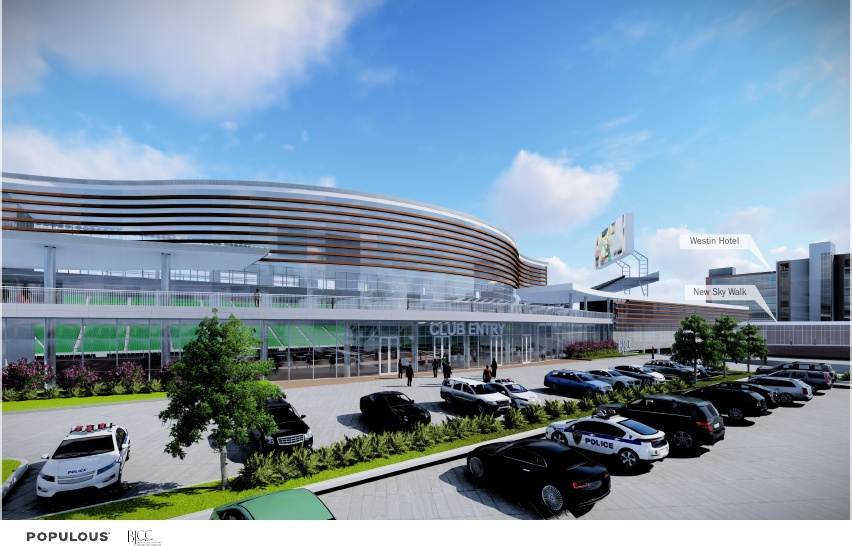
The Birmingham City Council on Tuesday approved a controversial $90 million investment over the next 30 years to renovate the Birmingham-Jefferson Convention Complex (BJCC) including construction of a new downtown stadium. After hours of public comment, councilors voted 6-3 in favor of the project. Councilors Shelia Tyson, Darrell O’Quinn and Lashunda Scales voted against the measure. The vote follows a vote in the State House last week where lawmakers approved a 3 percent tax on automobile leases and rentals in the county to help support the new stadium, renovations and expansion at the BJCC. The city will pay $3 million annually for the expansion. They will be joined by several other outside entities contributing to the expansion including Jefferson County, which will pay $1 million per year for 30 years. The BJCC Authority has also committed $10.7 million, and UAB and its corporate partners will pay $4 million for 10 years. Following the council meeting, Birmingham Mayor Randall Woodfin tweeted 100 percent of the money generated from this project will go to funding revitalization efforts for all of the city’s 99 neighborhoods. Thank you Birmingham! #PuttingPeopleFirst pic.twitter.com/r360835jFE — Randall Woodfin (@WoodfinForBham) March 27, 2018 The master plans for the renovation include: Notable items of the master plan include: An open-air stadium north of Uptown District with 45,000 fixed seats programmed to be expandable to 55,000 with a pre-designed temporary seating plan. Interviews and program requirements were conducted with stakeholders and potential users of the stadium, including the University of Alabama at Birmingham and ESPN. Legacy Arena would get a facelift, with an updated façade on the outside, new entrances, an added suite level and premium club space. The flow of the concourse will be improved and an upper level concourse added. It will also include enhanced food and beverage locations and options and improvements to the overall guest experience for sporting events, concerts and family oriented programming. The piazza outside of the arena will be renovated to feature a more open plan that will serve as a natural gathering and prefunction space encouraging activity and anchoring the pedestrial flow around the arena, concert hall and theater. Establishing a consistent and effective wayfinding experience throughout the BJCC venues to better guide attendees to their appropriate destinations and creating a stronger sense of place. The open-air stadium is expected to be the future home of UAB football games. After the council’s vote, UAB Blazers head coach Bill Clark tweeted his excitement and approval. Huge Day for Birmingham!!! Proud of great leadership who believe in where our City is headed. #WTD #GreaterBHAM — Bill Clark (@CoachBillClark) March 27, 2018 Watch live coverage (previously recorded) of the Birmingham City Council meeting:
Birmingham moves closer to new downtown stadium
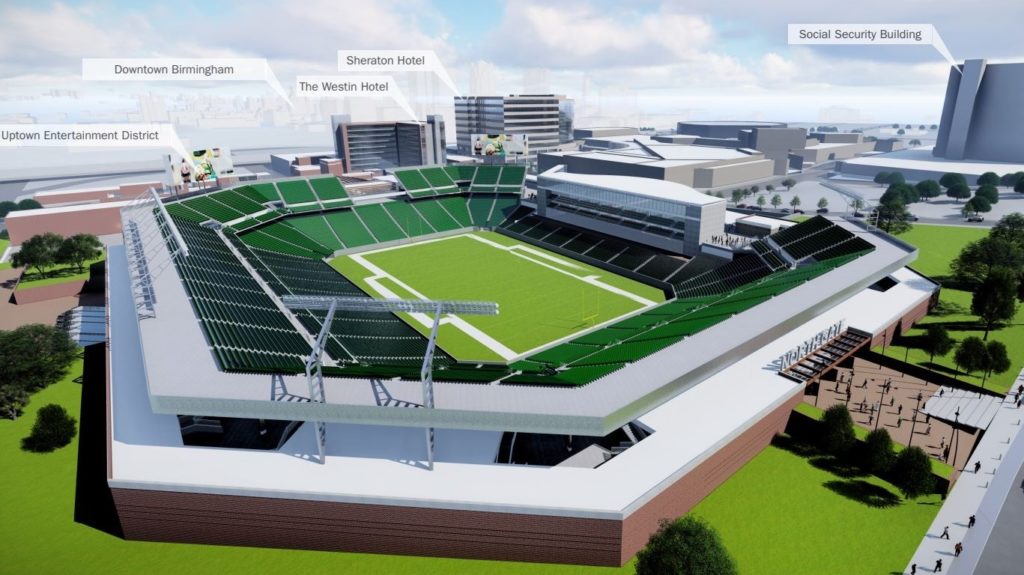
The Alabama House of Representatives this week passed a Jefferson County auto lease tax to help build a downtown stadium and renovate the Birmingham Jefferson Convention Complex (BJCC). The bill imposes a 3 percent tax on automobile leases and rentals in the county to help support the new stadium, renovations and expansion at the BJCC. The bill, which had already won the Alabama Senate’s approval, passed 14-3 in the House and will now go to Gov. Kay Ivey. “The action (by) the Alabama House took us one step closer to Birmingham having state-of-the art facilities to better compete for tourism, sporting and entertainment business,” said Birmingham Mayor Randall Woodfin. “In addition, expanding and renovating the BJCC will generate millions of dollars over the next decade for the city that will go to neighborhood revitalization.” The rental tax is expected to generate about $3.5 million a year to help pay the debt service on the project, which the BJCC Authority estimates will be about $21.5 million a year. The auto lease and rental tax will not cost residents a dime because residents don’t lease vehicles to get around their own town, Woodfin said. Also, the city needs to modernize its entertainment and sports venues to compete with Atlanta, New Orleans and Nashville, which have updated facilities that Birmingham lacks, he said. State Rep. Jack Williams, R-Vestavia Hills, who sponsored the bill in the House, said passage of the legislation will lead to the renovation of the Legacy Arena at the BJCC and to the construction of a 55,000-seat outdoor stadium. “This project will create 3,700 new construction jobs in Birmingham and Jefferson County and a $130 million payroll,” he said. Renovations would allow the city to again attract NCAA tournament games that bring thousands of visitors and millions in revenue, Williams said. Woodfin agreed. “This public/private partnership between the city, county, BJCC, UAB and the corporate community will create thousands of jobs for citizens in Birmingham, and be a significant shot in the arm for our economy for decades to come,” he said. State Reps. John Rogers, Mary Moore and Juandalynn Givan, all of Birmingham, voted against the lease and rental tax. Rogers said the BJCC would benefit from the additional revenue and not the city, which city officials disputed. Money for neighborhoods In February, the Birmingham City Council voted overwhelmingly to approve a resolution of intent to provide $90 million in funding — $3 million annually for 30 years — for the construction of a multipurpose facility at the BJCC. Woodfin has argued that money from tourism could generate revenue that could be used in the neighborhoods. “There has been zero funding for street paving over the last several years. That’s a need. We have a $428 million budget and we’ve put less than $2 million in getting rid of dilapidated houses. That’s a need. Tourism is a need as well. Economic development is a need. Investing in our existing infrastructure, including the $5 million we’ve already put into the BJCC Legacy Arena, is a need. This is not an isolated topic. We’re not talking about an investment in a stadium alone. It’s an investment in the BJCC and our communities.” After taking office in November, the mayor said he needed to find money to pave the streets. “I have to find money to invest in curbs, sidewalks and lights and neighborhood revitalization. That money does not exist today. We could cut a lot of money or we could borrow money, but that’s not an idea any of us want to take. I think the return of this [new and updated entertainment and sports venues] gets us to where those things can happen. If we’re going to generate new revenue, where is that going to go? It will go toward those priorities that we don’t currently have funding for.” According to the resolution approved by the council in February, certain conditions have to be met before any money is allocated. In January, the Jefferson County Commission approved $30 million in funding for 30 years; the largest contribution will be coming from the BJCC, which will pay $10.7 million in annual debt service for 30 years. The University of Alabama at Birmingham will lease the stadium for $4 million annually for its football games. Additional funding is expected from corporate sponsors as well. The $174 million stadium is part of a $300 million master plan that includes a remodeling of the BJCC’s Legacy Arena and outside piazza. According to an independent feasibility study commissioned by the BJCC, the stadium could be completed as early as 2020, in time for the 2021 World Games, and generate roughly $5.5 million per year in tax revenue during the construction phase and as much as $9.9 million a year after construction. No specific number has been given as to how much tax revenue will be earmarked for neighborhood revitalization, but Woodfin has indicated it will be a substantial portion, if not all of it. This story originally appeared on The Birmingham Times’ website. Republished with permission from the Alabama NewsCenter.
Women of Influence: Greater Birmingham Humane Society CEO Allison Black Cornelius

There’s no shortage of influential women doing amazing things in the Yellowhammer State and Birmingham’s Allison Black Cornelius is certainly one of them. The President and Chief Executive Officer at the Greater Birmingham Humane Society (GBHS), Cornelius is also the Founder and President of Blackfish, a consulting group specializing in “total team strategy” using organizational, staff, and board development programs. Cornelius has faced more than her fair share of adversity but has used it to fuel her work, and advocacy for those who can’t speak for themselves. A graduate of John Carroll High School, she received her nonprofit, and leadership education through the Harvard Business School Social Enterprise Initiative where she completed her MBA. Cornelius is a true testament to the resilience of the human spirit. When she was seven years old, she was molested and raped several times by her Sunday School teacher, Leon Prince over the course of three months. “Leon Prince doesn’t just rape you, he tortures you,” Cornelius told WSFA. Prince told her if she refused to do what he asked, or told anyone what he was doing that he’d kill her dog, so Cornelius stayed silent for 20 years. In 1988 Cornelius began the long, and arduous task of facing Prince and informing the world of what he had done. Prince was indicted and sentenced to 30 years in prison, of which he only served 15 years. “We were lucky for him to do 15,” she says. “It brought me 15 years where he didn’t mess with a kid. Now, we’re back to square one,” she told AL.com. Cornelius played a huge role in the court process, and the process of others; spearheading the passage of Megan’s Law in 36 states and creating the first Sex Offender Registry in the nation, and has founded more than 50 child advocacy centers around the country as well as Court Appointed Special Advocate (CASA) agencies. But she’s done so much more than that. Cornelius has been hard at work lately between the humane society and Blackfish, making over 150 presentations each year. She offers lectures and trains audiences, nonprofit organizations, government agencies and Fortune 500 companies on how to just “keep on swimming.” She has trained more than 1,000 nonprofit boards and raised more than $30 million for charity through these public presentations. Cornelius has traveled the world speaking; the year before she became CEO of the Humane Society, she traveled 265 of 365 days in the year. She’s given messages at the Kennedy Center, for professional sports teams, celebrity foundations, and the White House. She’s won several awards including: Birmingham 12 SMARTEST Women 2012, Animal Advocate of the Year, Citizen of the Year, Woman of Distinction, Mervyn H. Sterne Award, and was an Olympic Torch Relay Runner. Cornelius accepted the CEO position at GBHS in 2014, and has brought the company to a $4.5 million annual budget, operating three facilities, providing jobs for 80 employees. The humane society currently takes in over 23,000 animals each year, and that number is only growing. When Cornelius took over the humane society in 2014, one major source of income she sought was a government contract to take over the animal control in unincorporated parts of Jefferson County. The GBHS won the contract, and has been taking care of Jefferson County, including Birmingham’s stray animal problems since. She is currently concentrating on revitalizing the GBHS; which include plans to build a news $30 million facility located on land nestled between Titusville and will house all of the GBHS’s programs and services and provide more room for additional students from both Auburn and Tuskegee University’s. The facility would also contain a Cat Cafe, a growing trend in the U.S. From her extraordinary career despite the horrendous acts committed against her, her ability to turn her pain into advocacy for other, and her service to animal lovers in Birmingham, it’s indisputable why Allison Black Cornelius is this week’s woman of influence.
Deadline near for ‘Rise of the Rest’ Birmingham startup competition for $100,000

Birmingham area startups have only a few days left to be considered for a $100,000 investment from “Rise of the Rest” founded by Steve Case. Birmingham is among five cities chosen for the America Online founder’s latest initiative aimed at championing innovation ecosystems in the U.S. The Rise of the Rest bus tour arrives in Birmingham May 9, but the deadline for startups to apply for the six-figure prize is March 20. Interested companies are encouraged to go to the website and apply. Birmingham Mayor Randall Woodfin said having Rise of the Rest in Birmingham is great exposure for what is happening in the Birmingham entrepreneurial scene but the $100,000 could make a major difference for a company on the rise. “This is an amazing opportunity for local startups because now we get a chance to highlight and showcase what they’re already doing so well,” Woodfin said in the video below. “They deserve national exposure.” The tour stop in Birmingham also features Google for Entrepreneurs, a longtime Rise of the Rest partner, which will provide coaches to help startup founders with their investment pitches. Republished with permission from the Alabama NewsCenter.
Birmingham, Mobile landmark renovations among those receiving Alabama historic tax credits
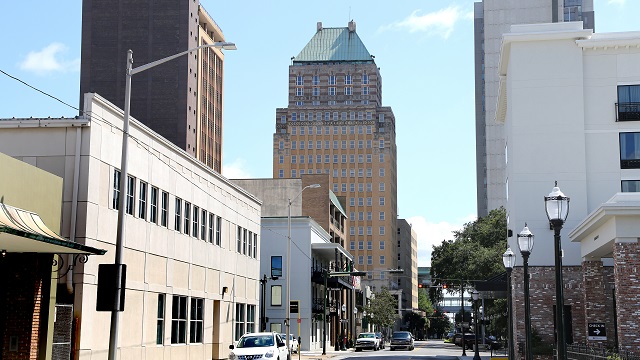
The Alabama Historical Commission announced $20 million in tax credits last week that will be used to help renovate 12 structures across the state. Previous tax credits helped finance more than 50 redevelopment projects, including several multimillion-dollar ones in Birmingham like the Lyric Theatre, the Redmont Hotel and the Pizitz. To qualify for the credits, properties must be at least 60 years old and have historical significance. A historical commission committee decided which projects would receive the merit-based awards this year. In past years, the commission awarded credits on a first-come, first-served basis. Another change this year is at least 40 percent of tax credits went to projects in rural counties. Birmingham received the lion’s share of allocations in 2018, with $6.8 million going to three projects. In the Magic City, $5 million in tax credits will help the group that renovated the Redmont transform the Protective Life Building (2027 Richard Arrington Jr. Blvd.) into a 96-room hotel. REV Birmingham CEO David Fleming said tax credits continue to be an essential tool for stimulating local economies. “The impact of historic tax credits in downtown Birmingham is undeniable. From the Elyton Hotel and Thomas Jefferson Tower to the Pizitz and Lyric Theatre, the incentive has enabled millions of dollars of investment in structures that give our city its unique character,” Fleming said. “The demand for these projects is demonstrated by the number of applicants this year. These credits return great value to the state.” Mobile was also well-represented in this year’s tax credits, receiving more than $5 million for three projects. Most of those credits will go toward renovating the Merchants National Bank building (104 St. Francis St.). When finished, the building will house 84 loft apartments as well as commercial, retail and restaurant space. “Downtown Mobile projects like the Merchants National Bank building are great examples of the multiplying return on investment made possible by the state historic tax credit,” said Patty M. Howell, director of regional affairs for the Mobile Area Chamber of Commerce. “In addition to saving a beautiful old building that would otherwise crumble, these projects allow properties to again generate positive tax revenues.” Projects approved for tax credits in 2018 include: Protective Life Building/Commerce Center (2027 Richard Arrington Jr. Blvd. in Birmingham), $5 million Merchants National Bank (104 St. Francis St. in Mobile), $5 million Family Service Laundry Building (2200 Magnolia Ave. S. in Birmingham,) $1.6 million Martin Building (2308 Fourth Ave. S. in Birmingham), $182,000 Kennedy-Foster House (1842 25th Ave. in Tuscaloosa), $62,000 Foote-Heisterhagen House (2160 Old Shell Road in Mobile), $50,000 Lyons Building (111 Dauphin St. in Mobile), $37,500 The largest rural project approved for tax credits was the $5 million awarded toward renovating of the Pratt Continental Gin in Prattville. Other rural projects approved for tax credits include: Howell School (408 E. Newton St. in Dothan), $1.5 million James Hotel (1200 Water Ave. in Selma), $1 million Fain Theatre (101 E. Bridge St. in Wetumpka), $221,000 Womack’s Hardware (107 N. Mount Pleasant Ave. in Monroeville), $147,000 The Alabama Legislature capped the amount of tax credits awarded in 2018 at $20 million. Fleming recommended the state re-evaluate that number in the future to spur even more investment. An additional 14 projects totaling more than $16 million in tax credit requests sit on a waiting list for consideration in 2019. “Alabama’s 2018 tax credit is now capped at $20 million to be spread across the state. This leaves many good impactful projects waiting,” Fleming said. “Imagine the progress in historic areas across Alabama if the cap were raised. It is worth considering.” Republished with permission from the Alabama NewsCenter.
Birmingham company makes Fortune’s ‘100 Best Companies to Work For’ list
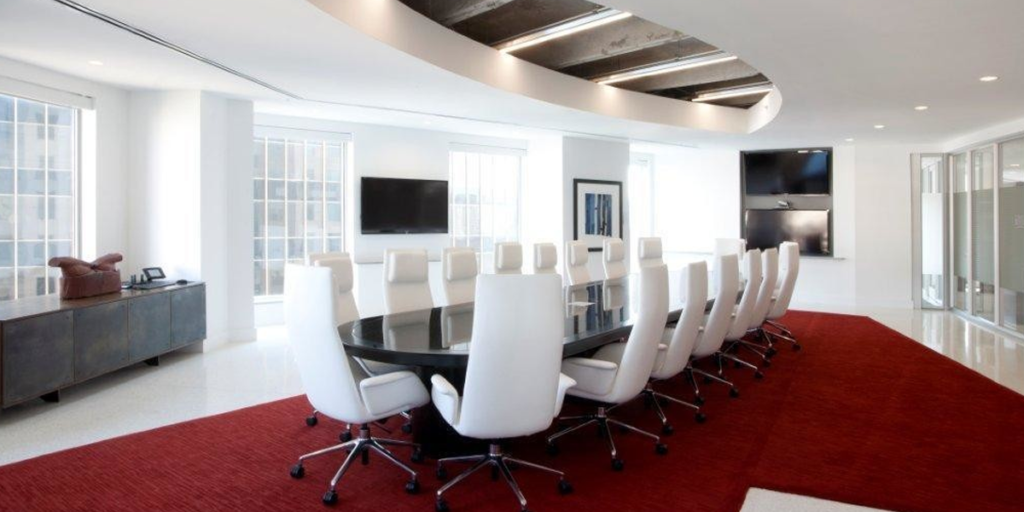
Fortune’s 2018 100 “Best Companies to Work For” list includes one Yellowhammer State company — Baker Donelson headquartered in Birmingham, Ala. Now in its 20th year, the prestigious list recognizes companies with exceptional workplace cultures. Fortune surveyed millions of employees measuring six components — values, innovation, financial growth, leadership effectiveness, maximizing human potential, and trust — to curate the annual list. “A great workplace “is one where employees trust the people they work with, have pride in the work they do, and enjoy the people they work with,” Great Place to Work CEO Michael Bush and vice president Sarah Lewis-Kulin wrote in Fortune. As one of the 60 largest law firms in the U.S., Baker Donelson employs 1,484 U.S. employees across 22 offices. In naming Baker Donelson to the list, Fortune highlighted employees’ trust in the firm’s management and the transparency of the firm’s leadership. The firm has made the list for nine consecutive years, ranking the highest at no. 30 in 2015. “Our Firm’s strategy is built on the belief that having the best people is essential to delivering the best client service,” Baker Donelson Chairman and Chief Executive Officer Ben C. Adams said. “We’re very proud that for nine years Fortune has recognized Baker Donelson’s culture of transparency, inclusiveness and respect for the contributions that every member of the Firm makes in serving our clients.” Here are the top 10 companies on the list: Salesforce (San Francisco): Information technology Wegmans Food Markets (Rochester, N.Y.): Retail Ultimate Software (Weston, Fla.): Information technology The Boston Consulting Group (Boston): Professional services Edward Jones (St. Louis, Mo.): Financial services and insurance Kimpton Hotels & Restaurants (San Francisco): Hospitality Workday (Pleasanton, Calif.): Information technology Genentech (San Francisco, Calif.): Biotechnology and pharmaceutical Hyatt Hotels (Chicago): Hospitality Kimley-Horn (Raleigh, N.C.): Professional services
‘Accidental shooting’ at Birmingham high school kills teen girl; 2 others hurt
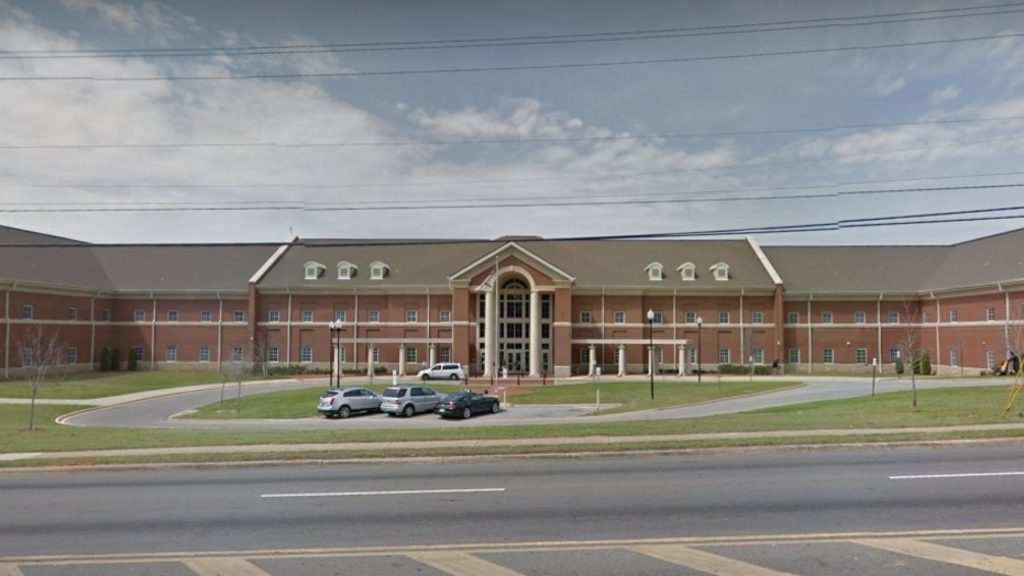
One Birmingham, Ala. student has died following an “accidental” school shooting during dismissal on Wednesday Birmingham City Schools confirmed in a statement. Huffman High School was briefly placed on lockdown as police were called to the scene. Students were later released and police are continuing to investigate the circumstances of the shooting. Wednesday evening, Birmingham Police Chief Orlando Wilson confirmed one female student, 17, died on the way to the hospital, and a male student, also 17, is in critical but stable condition. According to AL.com an adult victim was treated and released at the scene. Birmingham Mayor Randall Woodfin held a press conference at the school at 5:45 p.m., less than two hours after the incident. “I just want to remind all of us, that we lost a person today. Not just a person, but a student. But I’m quickly reminded this is not just a student, but someone’s daughter. Someone’s niece, someone’s best friend, someone’s granddaughter we lost,” Woodfin somberly said at the press conference. “This is a 17 year old who 30 days from now would be 18. A graduating senior who had been accepted into college already. Who had aspirations and dreams to be a nurse.” Woodfin continued, “We’re not just talking about some person, we’re talking about losing a part of our future. Our hearts are heavy, but I think it’s really important to find a way to mourn with this family and wrap our arms around the Huffman High School community.” Wednesday evening, Gov. Kay Ivey responded to the tragic news. “I am saddened to learn about the death of the Huffman High School student. I am praying for the family of this young lady who has tragically lost her life way too early,” said Ivey. “Every life is precious and, even though this was an accident, it reaffirms that there is no place for students to have firearms or other weapons on campus.” “My heart is breaking tonight for those hurt and killed in the shooting today at Huffman High School,” Alabama 7th District U.S. Rep. Terri Sewell posted on Facebook. “As we continue to learn more, please pray with me for the victims and their families.” The Birmingham City Schools statement below:
Winning ways return to Birmingham high school
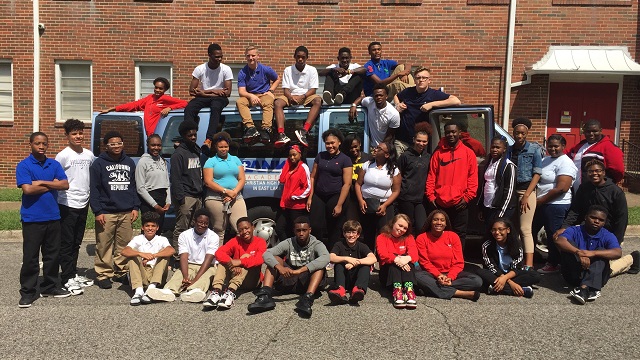
It was the 1960s and teenagers were rocking to the Beatles. In the governor’s office, George Wallace was promising “segregation today, segregation tomorrow, segregation forever.” And on the east side of Birmingham, head coach George O. “Shorty” White was winning the first of three state football championships at Banks High School. Jimmy Sidle, a tall, rangy fellow, was one of the first to earn a college scholarship. He chose Auburn and in 1963 became the first quarterback to lead the nation in rushing with 1,003 yards. Larry Willingham made his mark at Banks, Auburn and with the St. Louis Cardinals as an All-Pro defensive back. Mike Neal and his brother, Rick, were not far behind. Banks kept winning and the college scholarships kept coming. Alabama signed Bobby Johns, Johnny Musso, Gary and Jeff Rutledge, Donny and Johnny Johnston, Billy Strickland and Ronnie Roddam. But then, in 1989, the city transformed Banks High School into a middle school. It was a shocking development that still stings for some students and fans. Now, a school of winning in football as well as the classroom, is an unoccupied eyesore, and some nearby residents have urged the city to tear it down. Whether the city does or doesn’t knock it down, there is a something new to be proud of and respect. Through the efforts of Shorty White’s son, Darryl, and Banks graduates, including Mike Dutton, Steve Foster, Marilyn Davis Purdy, Cal Dodson and Randy Overstreet, a new Banks was born. Banks Academy, a private Christian high school, is carrying on the old Banks High School’s penchant for winning. The Jets won the recent Alabama Christian Athletic Association basketball championship by defeating Harvest Christian 82-58, then squeaking by Cornerstone Christian 86-84. The ACAA is an association of about 30 private Christian schools. Banks Academy finished the season with a 25-4 record and Chase Cornelius was voted Coach of the Year. “When I was offered the job as head coach, my dad enlightened me on what the name Banks meant,” Cornelius said. “It was a name that received national recognition and was a powerhouse, especially in football.” Dutton, a former varsity basketball player and later principal at Banks High School, is on the Banks Academy board of directors. He has a positive outlook about Banks Academy and the work of Darryl White. “He had the vision for this, and his leadership has been tremendous,” Dutton said. “Darryl is the catalyst.” Dutton is confident that Banks Academy students will latch onto the skills and opportunities to be successful in life. The school has 36 students, and that’s not many. But White said he expects enrollment to be 55-plus for the 2018 term, which starts in August. T-shirts acclaiming “Old Name New Tradition” were worn by students when they first enrolled at Banks Academy. “The old tradition is not dead,” said White, “this is just the beginning of a new Banks era.” And he offered a final word: “Football is on the horizon.” Rutledge and Nathan, a look back Banks vs. Woodlawn was a rivalry that split the schools apart in the Sixties, Seventies and Eighties, and there was no bigger game than Jets vs. Colonels in 1974. Traffic backed up for miles to get to Legion Field for the game that featured Banks quarterback Jeff Rutledge and Woodlawn running back Tony Nathan (and featured in the movie “Woodlawn” and a highlight from the book “Woodlawn” on which the movie is based). Tony Nathan (22) breaking away for a long run. (contributed) Traffic backed up for miles to get to Legion Field. And when fans got there, only four gates were open. With kickoff time near, fans had to squeeze their way through the gates and find seats. This was the largest crowd – an estimated 40,000 — to watch a high school game in Alabama. Police estimated that another 20,000 turned around and went home. But on the field it was Banks vs. Woodlawn, Rutledge vs. Nathan, Coach Shorty White vs. Coach Tandy Geralds. The results: White picked up his 100th victory. Rutledge completed nine of 10 passes for 188 yards and a touchdown. Nathan rushed for 112 yards in 31 carries. Banks 18, Woodlawn 7 Republished with permission from the Alabama NewsCenter.
Steve Case’s ‘Rise of the Rest’ tour to showcase Birmingham startups
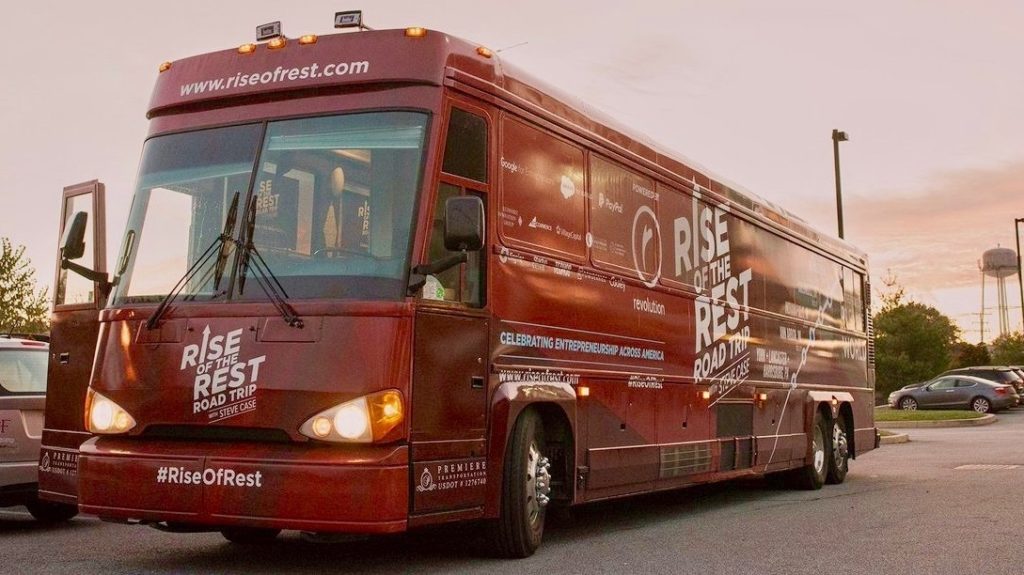
Birmingham’s technology startup scene is poised to receive a substantial boost from an initiative led by Steve Case, the founder of America Online and a champion of supporting emerging innovation ecosystems across the United States. Case will visit Birmingham on May 9 as part of the initiative’s five-city “Rise of the Rest” bus tour, now in its fourth year. The visit is meant to showcase the city’s growing tech startup sector, culminating with a $100,000 investment from the Rise of the Rest Fund in a local business. “For the past four years, we have been encouraged by the entrepreneurs and ecosystem builders we’ve met on our tours and are excited to invest catalytic capital into these Rise of the Rest regions,” said Case, chairman and CEO of Revolution, a Washington, D.C.-based investment firm whose mission is to build disruptive, innovative companies. Since the tour launched, Case and his team have traveled more than 8,000 miles on a bus to visit 33 cities and invest in local startups, according to an announcement. “It’s encouraging to see the interesting businesses and growth potential of startups in these cities,” said J.D. Vance, managing partner of the Rise of the Rest Fund. “We’ve witnessed firsthand the potential for startup ecosystems to transform economies and believe by investing in these companies early we are capitalizing on long-term trends.” The tour stop in Birmingham also features Google for Entrepreneurs, a longtime Rise of the Rest partner, which will provide coaches to help startup founders with their investment pitches. Other cities on the Rise of the Rest Tour are Dallas, Memphis, Chattanooga and Louisville. The tour wasn’t the only good news for Birmingham’s startup scene this week. Bronze Valley Corp., a nonprofit organization that aims to promote diversity and growth in the region’s tech startup sector, launched Wednesday with a conference featuring corporate executives, entrepreneurs and venture capitalists. This story originally appeared on the Alabama Department of Commerce’s Made in Alabama website. Republished with permission from the Alabama NewsCenter.
NAM’s 2018 ‘State of Manufacturing’ Tour stops in Birmingham
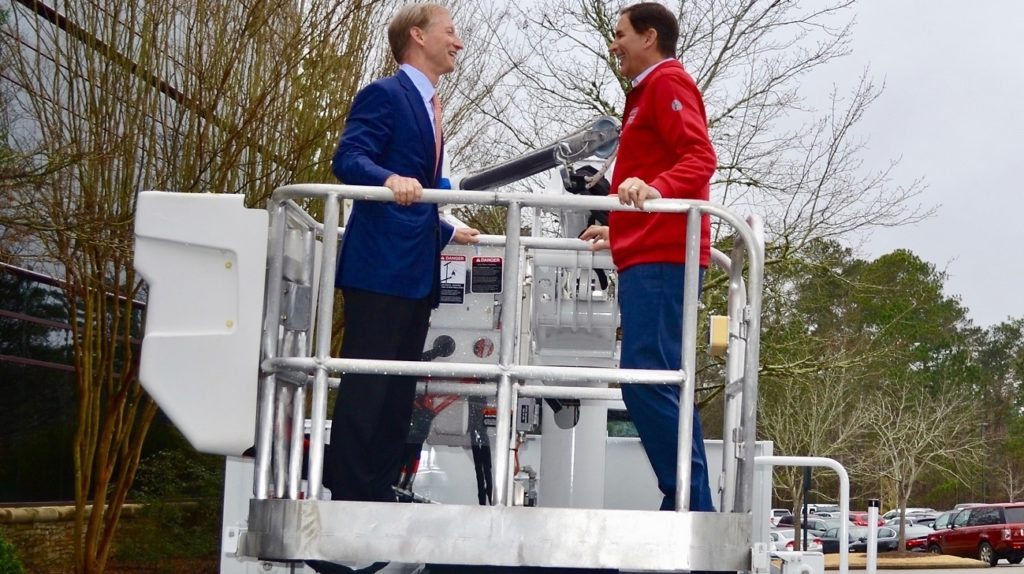
The leader of the nation’s premier manufacturing trade group visited Birmingham’s Altec Inc. to provide company leaders and key Alabama officials with a high-level briefing on the industry’s outlook. “It’s a great day to be in manufacturing, and it’s a great day to be in Alabama,” Jay Timmons, president and CEO of the National Association of Manufacturers (NAM), told the group. During the meeting, Altec Chairman and CEO Lee Styslinger III moderated a discussion that included Timmons and other NAM officials and Altec executives. Also included were Greg Canfield, secretary of the Alabama Department of Commerce, and Bill Canary, president of the Business Council of Alabama. “The efforts by NAM have been crucial to developing policies that benefit American manufacturers,” Styslinger said. “Altec is proud to take part in discussions with leadership that move manufacturing forward for the state of Alabama and the rest of America.” Timmons arrived in Alabama as part of NAM’s 2018 “State of Manufacturing” Tour, which has already taken him to Michigan, Kentucky and Indiana. Later this month, he’ll be in Kansas, California and Missouri. The tour comes as manufacturers’ confidence in the future has skyrocketed. In the midst of tax reform and regulatory relief, 95 percent of respondents expressed a positive outlook for their companies’ future in the NAM’s latest Manufacturers’ Outlook Survey. “Our focus on this tour is telling the story of modern manufacturing and the incredible opportunities we have for well-paying, rewarding careers — whether it’s a first career or a new career,” Timmons said. While in Birmingham, NAM officials also visited Lawson State Community College and Innovation Depot, one of the South’s largest technology business incubators. Manufacturing growth Topics discussed during the meeting at Altec included a proposed federal infrastructure plan, tax reform and workforce development, particularly how to encourage young people to pursue careers in manufacturing. Canfield told the group that the state’s robust manufacturing sector has been a key driver of employment growth in recent years. Nearly 270,000 Alabamians held manufacturing jobs in January, and the sector has gained more than 36,000 jobs since 2011, an increase of 15 percent, according to data from the Federal Reserve Bank in St. Louis. “Manufacturing, particularly advanced manufacturing, is a big part of our economy, so we want to do everything we can to support the right business climate, the right tax environment and the right regulatory environment,” Canfield said. “We think that, with NAM’s work and our partnership with them, we will continue to see an improved environment for advanced manufacturing across the U.S., but particularly in Alabama,” he said. Balancing trade In addition, the group discussed thorny issues emerging in the debate over the future direction of NAFTA and global trade, which could profoundly affect industries and companies on many different levels. “We have to tackle this trade issue because there are a lot of concerns and a lot of uncertainly circling trade,” Canfield said. That’s important because many Alabama businesses are involved in exporting, driving the state’s overseas shipments to a new annual record in 2017. Altec, for instance, delivers products and services to more than 100 countries. Founded in 1929, the company produces lift trucks and other products for customers in the electric utility, telecommunications, tree care and other industries. This story originally appeared on the Alabama Department of Commerce’s Made in Alabama website.
Kemper Corp. buys Birmingham-based auto insurance provider for $1.4B

Chicago-based insurer Kemper Corp. will acquire Birmingham-based Infinity Property & Casualty Corp. in a cash and stock transaction valued at approximately $1.4 billion, or $129.00 per share. Infinity, who moved its headquarters to downtown Birmingham in 2016, is a provider of auto insurance focused on serving the specialty, nonstandard segment. With approximately 2,300 employees, 10,600 independent agents and $1.4 billion in 2017 direct written premiums, Infinity is one of the largest nonstandard auto insurers in the country. The Kemper family of companies is one of the nation’s leading insurers. With $8 billion in assets, Kemper is improving the world of insurance by offering personalized solutions for individuals, families and businesses. Kemper employs roughly 5,550 associates, represents 20,000 agents and brokers and services six million policies nationwide. “This compelling transaction combines two well-known brands with complementary strengths and cultures to form a leader in nonstandard auto insurance, and enhances Kemper’s overall growth opportunities, diversification, financial strength, and ability to serve policyholders,” said Joseph P. Lacher, Jr., Kemper’s President and Chief Executive Officer. “We look forward to welcoming the Infinity team to the Kemper family and working together to deliver greater choice to our policyholders through an expanded product offering and deeper relationships with our agent networks, while generating strong returns for our shareholders.” Under the terms of the definitive merger agreement, Infinity shareholders will receive $51.60 in cash and 1.2019 Kemper common shares for each share of Infinity common stock. The transaction was valued at approximately $1.4 billion, or $129.00 per Infinity share.
