
Supreme Court to rule soon on Alabama Congressional Districts
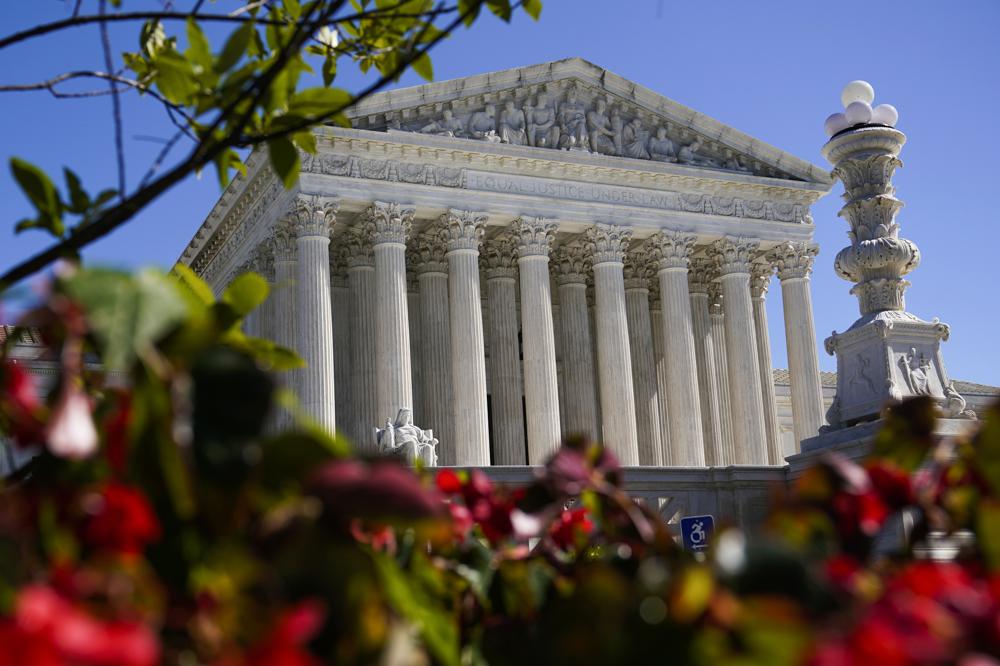
Alabama’s Congressional Districts could be thrown into chaos in the coming weeks if the U.S. Supreme Court upholds a lower court decision in a case challenging the 2021 congressional redistricting by the Alabama Legislature. The Supreme Court decision in the case of Milligan versus Merrill will be announced in the next few weeks. This decision could have a wide-ranging impact on when states must draw minority-majority districts. The plaintiffs claim that since Blacks are over 27% of the population of Alabama, the Legislature should have drawn two majority-minority districts, not one (Alabama’s Seventh Congressional District). A federal three-judge panel ruled for the plaintiffs and ordered the Legislature to redraw the districts. The state appealed to the U.S. Supreme Court, which voted 5 to 4 to stay the lower court decision until they hear and decide the case. Alabama Attorney General Steve Marshall said that the Supreme Court granted the State’s motion, allowing the Alabama Congressional District map as drawn by the Legislature in November to stand for now. “I’m gratified that the Supreme Court has stepped in to halt the district court’s order, which would have resulted in a congressional map that would have unconstitutionally divided Alabamians based on race,” Marshall stated. “As we have explained throughout this litigation, Alabama’s 2021 plan is an ordinary plan that looks much like the plan approved by a federal court in 1992, the plan approved by a majority-Democratic legislature in 2001, and the plan approved by a majority-Republican legislature in 2011. “Plaintiffs demand a significant overhaul to the map to create a second majority-Black district, but their own experts showed that no such map could be drawn unless traditional race-neutral principles took a back seat to voters’ race,” Marshall explained. “Indeed, one expert used her algorithm to draw two million random versions of Alabama’s map based on race-neutral principles, and not a single one had two majority-black districts. That is why each of the plans proposed by Plaintiffs would split Mobile County for the first time ever, to join voters in Mobile with voters as far away as Phenix City, based on race, all while dividing long-recognized communities centered on the Gulf Coast’s unique economy and culture.” The lawsuit challenging the map was brought by Evan Milligan, Khadidah Stone, Letitia Jackson, Shalela Dowdy, Greater Birmingham Ministries, and the Alabama State Conference of the NAACP, who are represented by the NAACP Legal Defense and Educational Fund, Inc. (LDF), the American Civil Liberties Union (ACLU), the American Civil Liberties Union) of Alabama, Hogan Lovells LLP, and Wiggins, Childs, Pantazis, Fisher & Goldfarb. Civil Rights groups are concerned that the opinion could further narrow the Voting Rights Act, similar to the landmark decision in Shelby v. Holder, which found that the preclearance section of the Voting Rights Act was an arcane measure that had no relevance in the modern world. As a result of the landmark Shelby v. Holder decision, the 2021 redistricting was the first in the state of Alabama in decades that did not have to get preclearance from the U.S. Department of Justice. A victory for the state of Alabama could give state legislatures nationwide more flexibility in how they draw their districts. A strong for the plaintiffs could impact districts beyond Alabama and spark more lawsuits as the two political parties use the courts to gain advantage over the other. On November 2022, six Alabama congressional incumbents (5 Republicans and 1 Democrat) easily sailed to re-election with little drama in districts that look much like how their districts were drawn a decade ago. Alabama congressional Republicans held on to the open Fifth Congressional District. No Alabama congressional district has flipped parties since the Second Congressional District flipped from Democrat to Republican control in 2010. Then Montgomery City Councilwoman Martha Roby defeated incumbent Congressman Bobby Bright. That was also the last time that an Alabama Congressional incumbent lost re-election. The decision is due before the end of June. To connect with the author of this story or to comment, email brandonmreporter@gmail.com.
Once a Trump critic now a Trump endorsee Roby looks for runoff win
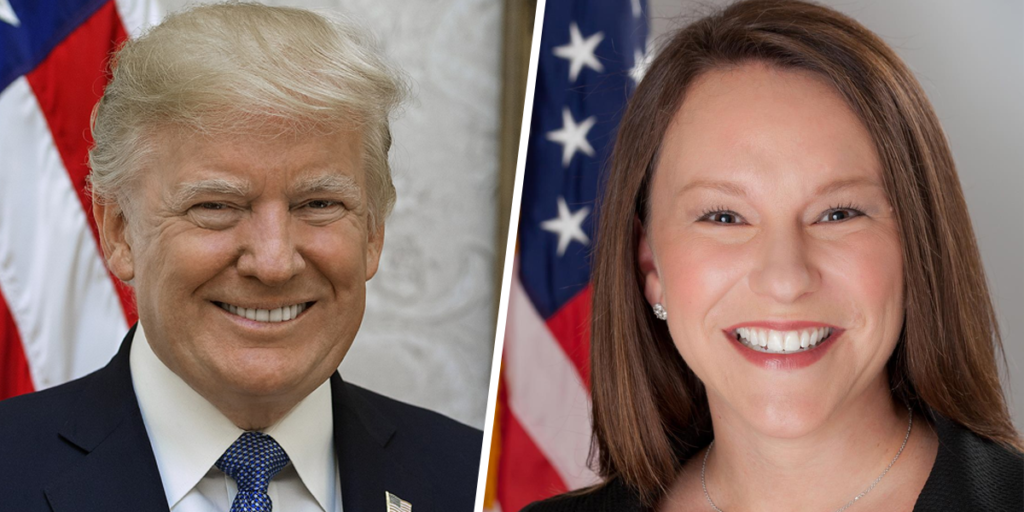
Rep. Martha Roby is seeking Republican redemption in an Alabama runoff election that hinges on her loyalty to President Donald Trump. Roby is facing Democrat-turned-Trump Republican Bobby Bright on Tuesday, trying not to become the third congressional Republican to lose her job this primary season. From the outside, the race shouldn’t be close. Roby is a four-term incumbent in deep-red Alabama. Trump and Vice President Mike Pence have endorsed her. And her Republican opponent supported Nancy Pelosi when he served as a Democrat in Congress. But as is often the case in the Trump era, the conventional rules of politics do not apply. Roby’s political survival depends on whether Alabama voters are sufficiently convinced that she’s made amends for turning her back on Trump in 2016 after he was caught bragging about sexually predatory behavior in the infamous “Access Hollywood” tape. The remarks, she said at the time, made Trump “unacceptable” as a Republican candidate for president. She’s spent much of the last two years trying to convince her red-state constituents in Alabama’s 2nd Congressional District that she is a reliable vote for the administration. Roby failed to convince a majority of Republican primary voters back in June, earning just 39 percent of the vote in the first primary contest, which forced a runoff against the second-place vote getter. Despite her past criticism, the Trump White House has emerged as Roby’s most powerful backer. Trump himself endorsed Roby on Twitter, calling her a “reliable vote for our Make America Great Again Agenda” and bashing Bright as “a recent Nancy Pelosi voting Democrat.” Vice President Mike Pence recorded automated calls for Roby distributed to district voters beginning on Saturday. He calls Roby a reliable vote for the Trump agenda and urged voters to send her back to Congress. “We can always count on her vote,” Pence says in the call. Armed with an endorsement from Trump, Roby has argued that she’s “a conservative Republican with a proven record.” “I’ve worked with the administration to get conservative policies across the finish line. My opponent voted for Nancy Pelosi to be speaker,” Roby said during a campaign stop at a south Alabama lumber company. She also touted her support for a border wall and opposition to abortion. Bright, who represented the district for two years as a Democrat, argues that he’s more conservative than Roby, whom he calls an establishment Republican who hasn’t “stayed connected” with the heavily agrarian and military district. “I’m not an elitist. I’m not what they refer to as a blue blood. I’m a populist. I talk with the people and so does (Trump),” said Bright, the 13th of 14 children born into a sharecropping family. Roby has enjoyed a 5-to-1 fundraising advantage over Bright. She’s used the arsenal to hammer Bright in television ads over his Democratic background — particularly his 2009 vote for Pelosi as House speaker. A mailer distributed by Roby’s campaign promotes Trump’s endorsement and lists Pelosi’s name five times in attacking Bright. While many Washington Republicans expect Roby to win on Tuesday, the anticipated low turnout in the midsummer affair offers an air of unpredictability. Less than 20 percent of eligible voters are expected to participate. Republished with the permission of the Associated Press.
Overview of runoffs for US House, state positions on ballot
Only a handful of statewide races are on the ballot in Alabama’s runoff election on Tuesday, July 17, 2018, and all that action is on the Republican side. Most attention nationally will go to the U.S. House race in southeastern Alabama between Rep. Martha Roby and former congressman Bobby Bright. President Donald Trump has endorsed Roby even though she withdrew her endorsement of him in 2016 after the release of the infamous “Access Hollywood” tape. Her criticism fueled a backlash against Roby among Trump-loving Alabamians. Two years later, Trump’s backing could persuade holdouts to support her. But Bright is fully supporting Trump, even though he used to be a Democrat. While election officials don’t expect a large voter turnout, there are six statewide GOP races on the ballot plus one state school board seat. Here is a look at those races: ___ LIEUTENANT GOVERNOR The head of Alabama’s utility-regulating agency is up against a state legislator in the Republican runoff for lieutenant governor. Alabama Public Service Commission president Twinkle Andress Cavanaugh will face state legislator Rep. Will Ainsworth of Guntersville on Tuesday. Cavanaugh carried 43 percent of the vote to 37 percent for Ainsworth in the three-way GOP primary. Cavanaugh also led all candidates for lieutenant governor in fundraising with nearly $1.1 million in total contributions through April. The lieutenant governor’s main duty is presiding over the state Senate, but the office has been vacant since April 2017. That’s when now-Gov. Kay Ivey succeeded Robert Bentley following his resignation and guilty plea to a campaign finance charge amid a sex-tinged scandal. The eventual Republican nominee will face Democratic minister Will Boyd in November. ___ ATTORNEY GENERAL Alabama Attorney General Steve Marshall is trying to fend off a challenge from a former attorney general, Troy King, in the GOP primary on Tuesday. Marshall has served in the job since February 2017, when then-Gov. Robert Bentley appointed after naming Luther Strange to the U.S. Senate. Marshall previously worked as a county prosecutor. The 53-year-old Marshall had a razor-thin lead over the 49-year-old King in the primary in June, but it wasn’t enough to avoid the runoff. King was appointed attorney general in 2004 and won a full term before losing a bid for re-election. Both Marshall and King temporarily paused their campaigns following the suicide of Marshall’s wife last month. The winner will face Birmingham attorney Joseph Siegelman, who’s the son of former Gov. Don Siegelman. ___ APPEALS COURTS Three statewide appeals court seats are at stake in Alabama’s Republican runoff. Gubernatorial appointee Brad Mendheim and Sarah Hicks Stewart of Mobile are in a runoff for a seat on the nine-member Alabama Supreme Court. Mendheim is a former circuit judge from southeast Alabama who led primary balloting. Alabama Tax Court Judge Christy Edwards of Montgomery and Baldwin County Circuit Judge Michelle Manley Thomason are competing for the Republican nomination for a judgeship on the five-member Alabama Court of Civil Appeals. And west Alabama District Attorney Chris McCool and Assistant Alabama Attorney General Rich Anderson are vying for a position on the five-member Alabama Court of Criminal Appeals. No Democrat is running for any of the three judgeships in November, so winning the GOP runoff is tantamount to election. ___ AGRICULTURE AND INDUSTRIES A runoff will decide the race for the Republican nomination for commissioner of the Alabama Department of Agriculture and Industries. Longtime state Sen. Gerald Dial of Lineville will face Rick Pate, a farmer and businessman who’s mayor of Lowndesboro. The 63-year-old Pate outdistanced the 80-year-old Dial in the four-person primary in June, but he didn’t get enough votes to win the nomination outright. Both candidates are portraying themselves as farmers. Pate is a cattle breeder west of Montgomery, and Dial says he farms timber. No Democrats are running, so the eventual Republican nominee is virtually assured of winning in November. ___ STATE SCHOOL BOARD Two candidates from southeast Alabama are vying for the Republican nomination in the only state school board race on the runoff ballot. Dothan school board member Melanie Hill and Auburn City School Board President Tracie West are seeking the nomination for the District 2 position on the Alabama State Board of Education. Hill led West narrowly in the four-person primary contest. Both support repealing Common Core educational standards, and both are touting their experience as in education and leadership roles. The winner will face Democrat Adam Jortner in November. He teaches history at Auburn University. Republished with permission of the Associated Press.
Vice President Mike Pence endorses Martha Roby ahead of primary runoff election
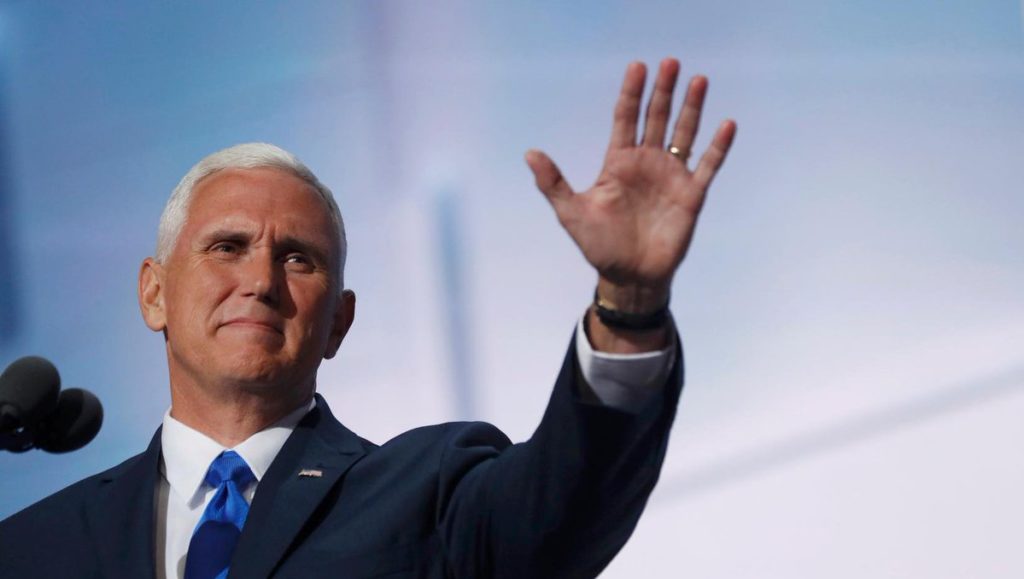
Vice President Mike Pence threw his support on Friday behind Alabama 2nd District U.S. Rep. Martha Roby’s reelection campaign. “President Trump and I support Martha Roby – a strong supporter of tax cuts & President Trump’s pro-growth, America First agenda! Get out Tuesday and support Team Roby,” the Veep tweeted. Roby expressed gratitude to the Vice President for his endorsement and reaffirmed her commitment to their shared conservative agenda: “I am very grateful to Vice President Pence for his support in my campaign for reelection in Alabama’s Second District. I was fortunate to serve with the Vice President in the House, and I am proud to call him a friend. I deeply appreciate his endorsement, and I am eager to continue working with the Administration in the fight for our shared conservative priorities.” Pence’s endorsement comes three weeks after President Donald Trump endorsed the four-term Congressman, and just four days ahead of the primary runoff election on July 17. On Tuesday, Roby faces-off with former U.S. Rep. Bobby Bright as neither garnered enough voters to avoid a runoff. It’s a familiar place for Roby, who unseated Bright in 2010, who was a then-Democrat. He has since turned a Trump-supporting-Republican who once held that very seat. The winner will go on to face Democrat Tabitha Isner in the November 6 general election.
In Alabama, a onetime Donald Trump critic fights GOP challenger
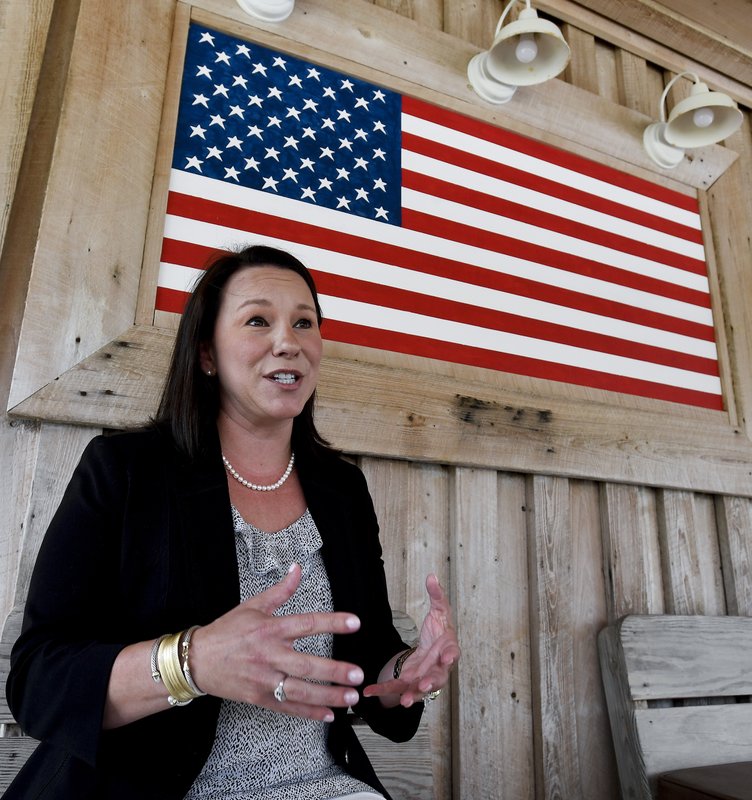
As U.S. Rep. Martha Roby of Alabama chatted with a farmer after a meeting in her district on agriculture legislation, she was peppered with questions on a range of conservative issues. She was eager to answer. Border wall? She supports it. Abortion? Against it. The four-term Republican is underscoring her conservative bona fides as she fights for her political life. She’s facing off against another Republican next week in a runoff race that’s at least partially the result of her past criticism of Donald Trump. Roby, 41, angered some Republican voters during the 2016 campaign when she said then-candidate Trump’s lewd comments about women — infamously captured on the “Access Hollywood” tape in 2005 — made him “unacceptable” as a candidate for president. Two years later, some voters weren’t ready to forgive those comments. She captured only 39 percent of the vote in the June GOP primary, forcing her into a July 17 runoff against former Rep. Bobby Bright, who was once a Democrat but is now running as a Republican fully embracing Trump. The president came to Roby’s aid last month with a tweeted endorsement calling her a “reliable vote for our Make America Great Again Agenda.” That endorsement could prove to be Roby’s saving grace. Trump has endorsed the opponents of other GOP lawmakers who have criticized him, most notably Rep. Mark Sanford of South Carolina, who lost his primary race last month. Trump’s backing of Roby could persuade holdouts to support her. Her message is that her past criticism of Trump doesn’t undermine her conservative voting record in Congress. “My record is a strong conservative record that I stand by, that I believe does accurately represent the principles and priorities of the people in Alabama’s 2nd District — whether we’re talking about the military or farmers or veterans, fighting for the unborn,” she said after a campaign lunch with peanut farmers in Enterprise. On a humid Friday night, Bright, 65, met about three dozen people at the wood-paneled Vida Community Center, laying out his own conservative credentials. In answering a question about the 2nd Amendment, he noted he has 11 guns at home. “I am a Republican. Get that clear and spread the word. I am a Republican and I am proud of it, and I’ve been voting conservatively all my life. My conservative record is stronger than hers,” Bright said. Bright, the 13th of 14 children born into a sharecropping family in the district’s southern end, spent 10 years as mayor of Montgomery before being elected to Congress as a Democrat in 2008. Bright cast votes against some of his party’s key proposals, including health care reform. Roby unseated him in 2010. The 2nd District is a conservative swath that begins north of Montgomery and spans through the soybean and peanut fields in the southeastern corner of the state. The district is heavily agrarian. A boll weevil monument in Enterprise pays tribute the agricultural pest that prompted the region’s shift from cotton to peanuts and other crops. The district’s strong military presence is sometimes visible in the skies as planes from Maxwell Air Force Base in Montgomery and helicopters from the Army’s aviation program at Fort Rucker buzz overhead. Steve Tanner, a 60-year-old farmer from Greenville, Alabama, called Roby’s office in 2016 because he was upset about her Trump comments. But he said he plans to vote for her next week. “I think people need to get behind her and forget about it. She’s trying to work with us,” Tanner said. Tanner said he thinks many people misunderstood her comments, wrongly interpreting them as a backing of Hillary Clinton. Lynn Popwell of Marbury, Alabama, voted for Trump in 2016. She’s voting for Bright on Tuesday, saying she believes he will “shake things up” like Trump. “Everybody right now doesn’t want Washington. They want hometown. They want the guy next door who is your neighbor,” Popwell said. Like Tanner, Popwell said in 2016 she also reached out to Roby because she was angry about her Trump comments. While Trump loyalty has become something of a litmus test in the GOP ranks, there are some nuances. Soybean prices plummeted as concerns of a U.S-China trade war stoke anxieties among the region’s farmers. Popwell said she doesn’t agree with everything Trump does. “We live in the South and I’ll tell you my terms. He was the cleanest turd in the pasture,” Popwell said of her 2016 vote for Trump. Roby has a 5-to-1 fundraising advantage over Bright, who is largely self-funding his campaign. Roby has used the arsenal to hammer at Bright in television ads over his past as a Democrat, particularly his 2009 vote for Nancy Pelosi as speaker. “Democrat Bobby Bright voted for Nancy Pelosi to be speaker of the House when he was elected in 2008,” Roby said when asked why voters should choose her on Tuesday. Bright responds that he did not personally support Pelosi, but he said not voting for her would have ostracized him from House leadership and crippled his effectiveness in representing the district. Bright counters that Roby is the establishment candidate of Washington, out of touch with her district and the people in it. “It’s not about steak and lobster in D.C., it’s about peanuts and helicopters in Alabama,” Bright said. Republished with permission from the Associated Press.
U.S. Chamber throws support to Martha Roby, against Bobby Bright in AL-02 race

The U.S. Chamber of Commerce has again inserted itself into the Alabama’s 2nd District congressional race —where four-time incumbent U.S. Rep. Martha Roby has found herself forced into a runoff with primary challenger, former U.S. Rep. Bobby Bright — introducing a second ad in Roby’s favor. The ad draws a contrast between Bright, who the Chamber says has a record of supporting Nancy Pelosi‘s liberal agenda, with Roby’s conservative record of voting for tax cuts and standing up for Alabama’s farmers. “The choice is clear,” the ad says. “Fall with Pelosi and Bright, or stand with Roby and Trump.” This is the U.S. Chamber’s second ad in this race. You can watch the first ad below: A political rematch Bright, the former mayor of Montgomery, Ala. is seeking a rematch with incumbent Roby. He. made the announcement he was running against her in February at the Alabama Republican Party Headquarters in Birmingham, Ala. where he explained he believes he’ll be more effective in Washington as a Republican. “I tried to be a Democrat, and I didn’t do the job as a Democrat that I wanted to do,” Bright said, “mainly because my beliefs are conservative and that kind of held me back.” In the June 5th primary, Bright forced Roby into a runoff with her 39 percent to his 28 percent. The two face-off again in the runoff election June 17.
Donald Trump endorses Martha Roby in AL-02 runoff despite 2016 snub
With less than a month before Alabama’s primary runoff elections, President Donald Trump has weighed-in on one of the most watched races: the battle for Alabama’s 2nd District between incumbent U.S. Rep. Martha Roby and former U.S. Rep. Bobby Bright. “Congresswoman Martha Roby of Alabama has been a consistent and reliable vote for our Make America Great Again Agenda,” Trump tweeted in the early hours of Friday morning. “She is in a Republican Primary run-off against a recent Nancy Pelosi voting Democrat. I fully endorse Martha for Alabama 2nd Congressional District!” Trump’s tweet is referencing the fact Roby’s opponent, Bright, previously represented the 2nd District as a Democrat and backed Pelosi for Speaker during his time on the Hill. Endorsement despite criticisms Roby found herself lambasted by the crowded field of challengers due her 2016 criticism of President Donald Trump after recordings of him making lewd comments were released during his campaign for president. Roby said then that Trump’s behavior “makes him unacceptable as a candidate for president” and suggested he step aside to let another Republican lead the presidential ticket. The runoff is the political price Roby has to pay for being one of the few Republicans in the Deep South state to speak out against the president. Trump however, clearly thinks Roby is the better choice despite her criticisms. Roby faces Bright on July 17 in the Republican primary runoff. The winner will most likely go on to win the soundly red district in November.
Five things you need to know about Bobby Bright
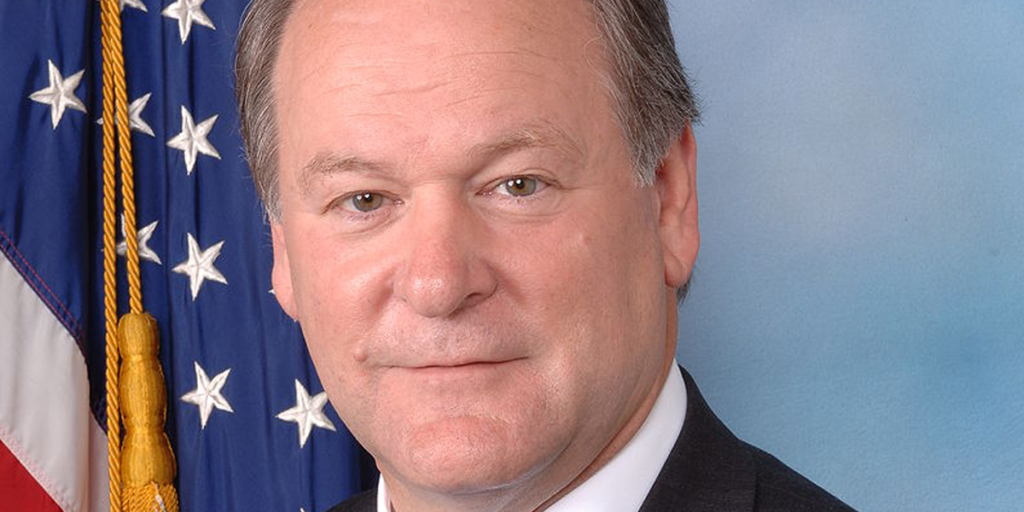
The primary elections are over, but some highly sought after spots still remain open due to the primary races resulting in runoffs. One of those races is for the Alabama 2nd Congressional District seat. Bobby Bright faced-off against Incumbent Martha Roby and three other opponents in the June 5 primary election, Roby and Bright both pulled enough voter support to tip their race into a runoff set for July 17. Here’s five things you need to know about Bobby Bright before the July runoff: 5. He’s served in this office before, but as a Democrat. Prior to 2008 Bobby Bright had never claimed affiliation with any party. But that year, he decided to seek election for Alabama’s 2nd District seat in the U.S. House of Representatives. When he approached the Republican party about joining the ticket, they told him they intended to support another candidate. So Bright joined the Democratic ticket, and won in 2008, but ultimately the decision to run as a Democrat came back to bite him. In Congress, Bright was a member of the Blue Dog Coalition, and voted with Democratic leadership only 71.7% of the time which made him the second most conservative member of the House Democratic Caucus. Bright was also named the most conservative Democrat during the first session of the 111th United States Congress by the National Journal. In 2010, Martha Roby entered the scene and challenged Bright as the Republican nominee. She won. Flash-forward eight years later, and Bright is back to reclaim his former seat in the House. This time as a Republican. He announced his candidacy in February under the Republican ticket, saying he would be more effective in Washington as a Republican. Later that month, the Alabama Republican Party okayed his decision and let him remain on the ballot. 4. He was mayor of Montgomery for a decade. Before Bright became the U.S. Rep for Alabama’s 2nd Congressional District, he served as the mayor of Montgomery for a an entire decade. He was also the first mayor of Montgomery ever to be elected to Congress. Some of Bright’s most notable achievements during this time include the creation of almost 20,000 jobs, including the jobs added by the arrival of the Hyundai plant in Montgomery during his time in office. He also revitalized the city’s declining downtown area, and had implemented a rainy day fund of $30 million before he left for Congress. 3. He used to be a lawyer and is married to a former judge. Bright earned his M.S. in criminal justice from Troy State University in 1977. He went on to own his law practice in Montgomery, where he practiced for fifteen years before entering into politics. He was also chief counsel to the Alabama Department of Corrections (side note, talking about coming full circle: he actually began his career as a corrections officer). He is also married to former District Judge Lynn Bright. 2. Bright was one of 14 children, and grew up on a cotton farm Bright was the son of a sharecropper, and missed a week of school every year to bring in the cotton harvest. This firsthand knowledge made him a valuable asset on the Agricultural Committee in Congress. Of all 14 children in his family, Bright was the only one to graduate from college. He attended Auburn University and earned his bachelors degree in 1975. He then proceeded to Troy University, receiving a master’s degree in 1977 and a J.D. from Faulkner University in 1982. 1. He dug his own postholes for his campaign signs. Bright posted a photo of himself digging postholes for his own 4×8 campaign signs on Facebook, asking supporters to call or message his campaign if they had a suitable place for a sign that large. Looks like Bright’s years spent on the family’s cotton farm paid off in more ways than one.
Five things you need to know about Martha Roby

The primary elections are over, but some highly sought spots still remain open due to the primary races resulting in runoffs. One of those races is for the Alabama 2nd Congressional District seat. Incumbent Martha Roby faced off against four opponents in the primary election, one of them, Bobby Bright, won enough votes to pull Roby into a runoff set for July 17. Here’s five things you need to know about Martha Roby before the runoff: 1. She’s one of the most vocal pro-life members in the House. Roby was one of the first to speak out on the House floor to raise awareness of Planned Parenthood’s role in the harvest and sale of aborted babies’ body parts for profit. She has fought to redirect taxpayer funding from Planned Parenthood, the nation’s largest abortion business, to comprehensive health care alternatives. She is also a co-sponsor of the Protecting Life and Integrity in Research Act of 2017, which would ban federal funding for research using fetal tissue from abortion victims. Recently, she spoke in support of the Pain-Capable Unborn Child Protection Act. She also co-sponsored the Born-Alive Abortion Survivors Protection Act and managed floor debate on the bill. 2. She endorsed, then un-endorsed now-President Donald Trump. In 2016, Roby had endorsed then-candidate Donald Trump for President. When the infamous “Access Hollywood” tape was published, in which Trump is heard saying demeaning things about women, Roby, now famously, retracted her endorsement. She said then that Trump’s behavior “makes him unacceptable as a candidate for president” and suggested he step aside to let another Republican lead the presidential ticket. 3. She’s a big proponent of veterans, and Veteran’s Affairs in particular. When Alabama Today asked Roby what her favorite area of service was, she replied: “Both my biggest responsibility and greatest joy in Congress is being in a position to fight for proper treatment for our nation’s veterans. We owe the men and women who have put their lives on the line in service to this great country the absolute best care available, but far too often we fall short. I remain committed to advocating for commonsense solutions to make the Department of Veterans Affairs work for veterans.” Roby has been instrumental in bringing military jobs to her district, including fighting to keep eight C-130 aircrafts at Montgomery’s Maxwell Air Force Base, and working in Congress to help the Army Aviation Center of Excellence at Fort Rucker avoid crippling budget cuts that would have decimated training capabilities. She has also been an advocate for Veterans Affairs and has worked tirelessly to address some of the misconduct at the Central Alabama Veterans Health Care System (CAVHCS). 2. She decided to run for office after hearing a graduation speech. Roby was in her third year at law school, almost ready to embark on her dream career in the music industry when she and her (now) husband Riley attended Roby’s younger brother’s high school graduation ceremony. “The commencement speaker talked about the ‘brain drain,’” Roby said. “He mentioned how important it is to go out into the world and do all the things you dream of doing, but then to return home to serve your community in whatever way you feel called. The challenge had a profound effect on both of us. Shortly thereafter I kicked off my first campaign in my hometown for the Montgomery City Council. 1. She got a puppy this year And she’s adorable. Also her name is Ruth Roby, how cute it that? Beyond being an adorable companion, research has also shown that owning a pet can reduce stress, lower blood pressure, and increase social interaction and physical activity, which sounds like the perfect fit for an on-the-go Congresswoman. Meet Ruth Roby!!! Happy New Year! #puppy A post shared by Martha Roby (@martharoby) on Jan 2, 2018 at 8:45pm PST Ruth had a fun day at #DoggyDayCare #TiredPuppy #RobyOut A post shared by Martha Roby (@martharoby) on Feb 9, 2018 at 1:52pm PST
2018: Year of the Woman in Alabama politics, primary update

If there ever was a “Year of the Woman” in Alabama, it’s 2018. Following the national trend, more Alabama women are stepping up to run for political office as a major party candidate than ever before, according to the Center for American Women and Politics at Rutgers University. But how did the female candidates fare in the June 5 primaries? Below is a list of women who prevailed in their races. Statewide Executive Office Currently only two women serve in statewide elected executive positions — Gov. Kay Ivey and Alabama Public Service Commission President Twinkle Andress Cavanaugh. But after last night’s election results, those numbers could change in November. Governor Gov. Kay Ivey (Republican candidate) triumphed over her three male opponents, and will face Walt Maddox in November’s general election. Lt. Governor Twinkle Andress Cavanaugh (Republican candidate) will face Will Ainsworth in a runoff election, July 17. Secretary of State Heather Milam (Democratic candidate) won her primary election, and will face John Merrill in the November general election. Alabama Court of Civil Appeals Christy Olinger Edwards (Place 1, Republican candidate) won her spot over Michelle Manley Thomason, another female republican candidate. U.S. Congress Currently only two women represent the Yellowhammer State in the United States Congress — 2nd District U.S. Rep. Martha Roby and 7th District U.S. Rep. Terri Sewell. Five other women ran for office in U.S. house races. Alabama 2nd District in the U.S. House of Representatives Rep. Martha Roby (incumbent, Republican candidate) was forced into a runoff set for July 17 with former Rep. Bobby Bright. Tabitha Isner (Democratic candidate) won the democratic primary for the 2nd district and will face either Roby or Bright in November. Alabama 3rd District in the U.S. House of Representatives Mallory Hagan (Democratic candidate) won the democratic primary for the 3rd district and will face incumbent Mike Rogers in the November general election. Alabama 7th District in the U.S. House of Representatives Rep. Terri Sewell (incumbent, Democratic candidate) was the only candidate in her race. State Legislature Amy Wasyluka (Democratic candidate) won the State Senate District 2 race Deidra Willis (Democratic candidate) won the State Senate, District 7 race Vivian Davis Figures (Democratic candidate) won the State Senate, District 33 race Laura Hall (Democratic candidate) won the State House District 19 race Barbara Bigsby Boyd (Democratic candididate) won the State House District 32 race Debbie Hamby Wood (Republican candidate) won the State House District 38 race April Weaver (Republican candidate) won the State House District 49 race Louise “Lulu” Alexander (Democratic candidate) won the State House District 56 race Rolanda Hollis (Democratic candidate) won the State House District 58 race Mary Moore (Democratic cadet) won the State House District 59 race Juandalynn Givan (Democratic candidate) won the State House District 60 race Elaine Beech (Democratic candidate) won the State House District 65 race Pebblin Walker Warren (Democratic candidate) won the State House District 82 race Pat “Patsy” Jones (Democratic candidate) won the State House District 83 race Adline C. Clarke (Democratic candidate) won the State House District 97 race
Democrats hope for big push from 8-state primary night
Holding hopes of a “blue wave” in November, Democrats fought to shape the political battlefield in primaries across eight states Tuesday, none more important than California and New Jersey where control of Congress may well be decided this fall. It was a big night for women. And neither party immediately appeared to suffer major setbacks. Yet the winners and losers in California’s most competitive races could take days to sort out given the state’s unique election laws. Republicans were concerned but breathing a bit easier as results came in in the race to succeed California’s term-limited Democratic governor, Jerry Brown. Lt. Gov. Gavin Newsom won the top spot and the right to run in the general election this fall, while the competition for the second spot featured Democratic former Los Angeles Mayor Antonio Villaraigosa and Republican business executive John Cox. Cox seemed headed for that second spot, avoiding a situation in which the Republicans would have no one at the top of the ticket to drive turnout for congressional and other races. That could have had a profound impact on several suburban House races, where Democrats see a prime opportunity to steal some of the 23 seats needed to retake the House. Roughly half of that total could come from districts in California and New Jersey. Meanwhile, Democratic Sen. Dianne Feinstein seized her party’s nomination for another term, as widely expected. It was still unclear whether a Republican would earn enough votes to oppose her on California’s November ballot. Three thousand miles away from California, former federal prosecutor and Navy pilot Mikie Sherrill bested a field of party rivals in the race to replace retiring Republican Rep. Rodney Frelinghuysen. The favorite of Washington Democrats will take on GOP Assemblyman Jay Webber in one of several New Jersey races Democrats view as possible pickups. Much of the day’s drama focused on women, who fought to make history in some cases and to avoid disaster in others. In Alabama, four-term Republican Rep. Martha Roby was forced into a runoff election next month after failing to win 50 percent of her party’s vote. She will face former Democratic Rep. Bobby Bright in Alabama’s conservative 2nd district — where Trump loyalty has been a central issue. Roby was the first member of Congress to withdraw her endorsement of the Republican president in 2016 after he was caught on video bragging about grabbing women’s genitals. In New Mexico, Democratic Rep. Michelle Lujan Grisham won her party’s nomination in the race to succeed outgoing Republican Gov. Susana Martinez. If Grisham wins, she’d be the state’s second Latino state executive. Alabama Gov. Kay Ivey fended off three GOP challengers, while South Dakota Rep. Kristi Noem became the first female nominee for governor in her state. In Iowa, 28-year-old Democratic state Rep. Abby Finkenauer was trying to become the youngest woman to serve in Congress. And in New Mexico, former state Democratic Party Chairwoman Debra Haaland, a tribal member of Laguna Pueblo, won her primary and could become the first Native American woman in Congress if she wins this fall. Haaland said in her primary victory statement: “Donald Trump and the billionaire class should consider this victory a warning shot: the blue wave is coming.” In Mississippi, Republican Sen. Roger Wicker won his primary contest as did New Jersey Sen. Bob Menendez, a Democrat who faced federal bribery charges last year. The jury deadlocked, but Republicans hope to use Menendez’s legal troubles to tar other Democrats like Sherrill across the state. Republican businessman Bob Hugin claimed the Republican nomination Tuesday and will face Menendez this fall. Much of Tuesday’s focus was on California. Recognizing the high stakes, Trump sought to energize his supporters in a series of tweets praising his preferred California Republican candidates earlier in the day. “In High Tax, High Crime California, be sure to get out and vote for Republican John Cox for Governor. He will make a BIG difference!” Trump tweeted. Yet frightening scenarios existed for both parties. Because of California’s unusual primary system, all candidates appear on a single primary ballot, with the top two vote-getters regardless of party advancing to the November election. That allows the possibility of two candidates qualifying from the same party — and neither from the other. National Democrats spent more than $7 million trying to curb and repair the damage inflicted by Democrats attacking each other in districts opened by retiring Republican Reps. Ed Royce and Darrell Issa, and the district where Republican Dana Rohrabacher is facing challenges from the left and the right. Trump will not be on the ballot this year. But he was on the minds of many voters. Francine Karuntzos, a 57-year-old retiree from Huntington Beach, California, said she has deep concerns about the Republican president — particularly his recent declaration that he could pardon himself. She said she isn’t a member of a political party, but she voted Democratic on Tuesday. “I’m really, really worried about our Constitution being ruined by this presidency,” Karuntzos said after casting her ballot at a local community center. Across the country in Montclair, New Jersey, Lynnette Joy Baskinger, a psychotherapist, said she’s fed up with the GOP. “I still consider myself an independent, but I just won’t vote Republican because of what’s going on,” she said. It was a different story in Mississippi, where 66-year-old Gladys Cruz wasn’t sure which Republican she would support in the state’s Senate primary, but she wants whoever wins to firmly support Trump. The president “touches my heart,” she said. A key Senate race took shape in the heart of Trump country as well. Montana Republicans were picking a candidate to take on Democratic Sen. Jon Tester, one of the most vulnerable senators in the nation. The GOP struggled to recruit top-tier candidates, leaving the most likely nominees as state Auditor Matt Rosendale or retired Judge Russ Fagg. Democrats have aimed their most aggressive attacks at Rosendale, seizing on his background in Maryland and questions about his experience as a
Martha Roby forced into runoff by primary challenger, former Rep. Bobby Bright
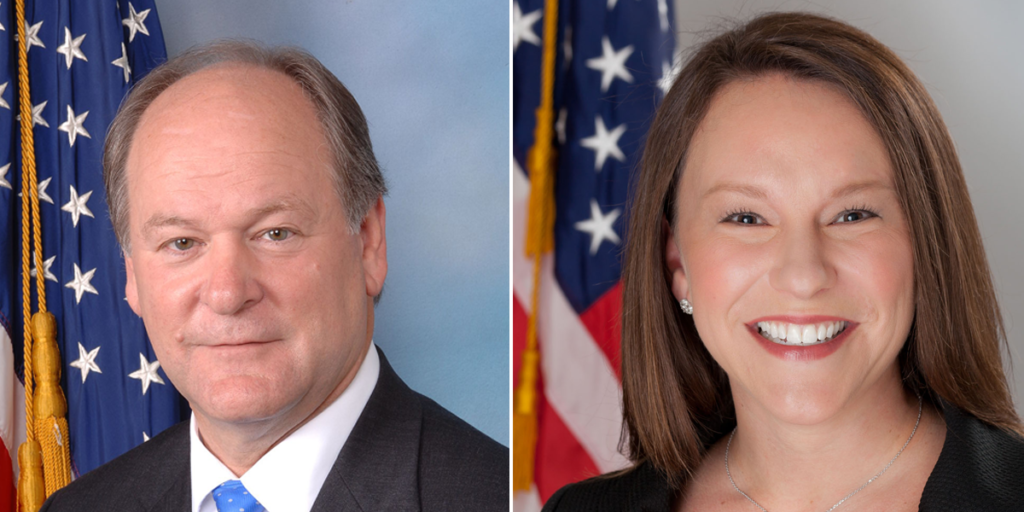
Tuesday night must’ve felt like waking up from a bad dream for Alabama 2nd District U.S. Rep. Martha Roby as she found herself forced into a run-off against former U.S. Rep. Bobby Bright… the man whom she defeated to go to Congress for the first time… back in 2010. With 59 percent of the precincts reporting, the Associated Press declared Roby in a runoff with Bright, with her 39 percent to his 29 percent. The two will now go head-to-head once again in the July 17 runoff election having edged out State Rep. Barry Moore Tommy Amason, and Rich Hobson in Tuesday’s Republican primary. A political price Roby found herself lambasted by the crowded field of challengers due her 2016 criticism of President Donald Trump after recordings of him making lewd comments were released during his campaign for president. Roby said then that Trump’s behavior “makes him unacceptable as a candidate for president” and suggested he step aside to let another Republican lead the presidential ticket. The runoff is the political price Roby has to pay for being one of the few Republicans in the Deep South state to speak out against the president. Roby’s optimistic Despite being forced into a runoff, Roby remains optimistic. “I am grateful for the strong support my campaign has received, and I look forward to continuing to discuss my proven record as a conservative Republican for the next six weeks. We have run this race before,” said Roby. “The people who live and work in Alabama’s Second District rejected the big government, liberal policies that came as a result of the Barack Obama and Nancy Pelosi era when they voted to replace Democrat Bobby Bright with a Republican. I am confident they will do so again.” Roby continued, “Our unified Republican government has accomplished a lot over the last year and a half, and I believe I am best positioned to deliver meaningful results for our military, veterans, farmers, and hardworking Alabamians. I’m eager to continue my work on behalf of the people I represent, and I humbly ask for their continued support on July 17.” History of AL-02 Alabama’s 2nd Congressional District includes just over half of the state capital, Montgomery, as well as most of the Wiregrass Region in the southeastern part of the state. In 2008, eight-time winner Republican Rep. Terry Everett announced his retirement, creating a vacancy for the seat. Bright ran for the seat as a Democrat and defeated Republican-candidate for State Rep. Jay Love. Bright, the former mayor of Montgomery, Ala., served only one term in the U.S. House of Representatives, from 2009-2011, before Roby ran on the Republican ticket and unseated him in the 2010 midterm elections.
