
GOP team addresses America Saturday
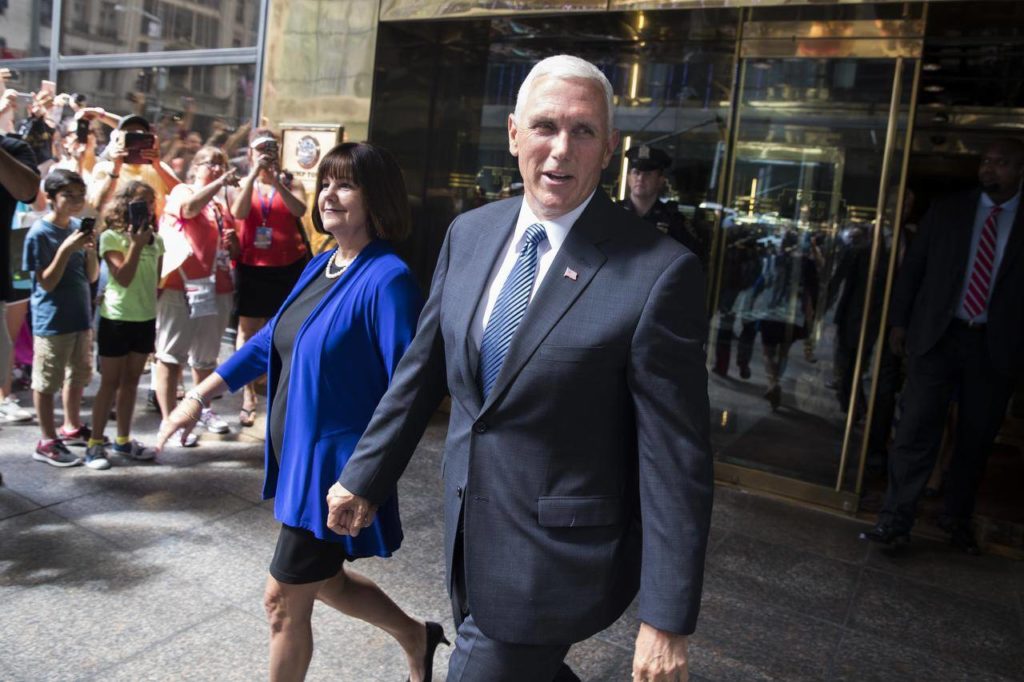
After frenzied, final decision-making, Donald Trump announced Indiana Gov. Mike Pence as his running mate Friday, adding an experienced politician with deep Washington connections to the Republican presidential ticket. Trump’s pick was aimed in part at easing some Republicans’ concerns about his temperament and lack of political experience. Pence spent 12 years in Congress before being elected governor and his demeanor is as calm as Trump’s is fiery. While some conservatives are skeptical of Trump’s political leanings, Pence has been a stalwart ally on social issues. Yet Pence is largely unknown to many Americans. And his solidly conventional political background runs counter to Trump’s anti-establishment mantra. The two men scheduled a news conference for Saturday in New York to present themselves to America as the Republican team that will take on Hillary Clinton and her Democratic running mate in November. The duo will head to Cleveland next week for the Republican National Convention. As Pence arrived for a private meeting with Trump Friday, he told reporters he “couldn’t be more happy for the opportunity to run with and serve with the next president of the United States.” In choosing Pence, Trump appears to be looking past their numerous policy differences. The governor has been a longtime advocate of trade deals such as NAFTA and the Trans-Pacific Partnership, both of which Trump aggressively opposes. Pence also has been critical of Trump’s proposed temporary ban on foreign Muslims entering the United States, calling the idea “offensive and unconstitutional.” The reaction to the Pence choice from Republican officials was overwhelmingly positive — no small feat for Trump, given how polarizing he’s been within his own party. “It was a pick that clearly shows he is pivoting to the general election,” said GOP chairman Reince Priebus, who was in the midst of an interview with The Associated Press when Trump announced his decision. “He is choosing a person who has the experience inside and outside Washington, Christian conservative, very different style that I think shows a lot of maturity.” Pence, a staunchly conservative 57-year-old, served six terms in Congress before being elected governor and could help Trump navigate Capitol Hill. He is well-regarded by evangelical Christians, particularly after signing a law that critics said would allow businesses to deny service to gay people for religious reasons. Clinton’s campaign moved quickly to paint him as the “most extreme pick in a generation.” “By picking Mike Pence as his running mate, Donald Trump has doubled down on some of his most disturbing beliefs by choosing an incredibly divisive and unpopular running mate,” said John Podesta, Clinton’s campaign chairman. Clinton spent Friday holding meetings in Washington about her own vice presidential choice. Massachusetts Sen. Elizabeth Warren, a favorite of liberals and one of the Democrats’ most effective Trump critics, and Colorado Gov. John Hickenlooper, were seen in separate cars that left Clinton’s home. Housing Secretary Julian Castro also met with Clinton, according to a person familiar with the meeting who spoke on condition of anonymity to describe the private gathering. Trump spent weeks weighing vice presidential contenders, including former House Speaker Newt Gingrich and New Jersey Gov. Chris Christie, and only zeroed in on Pence in recent days. In fact, the selection process appeared on the verge of sliding out of control in the final hours before the announcement, sparking speculation that Trump might be changing his mind. Word that Pence would be joining the Republican ticket began trickling out in news reports Thursday before Trump had made a final decision or called Pence to offer him the job, according to a Republican familiar with the situation. Trump was in California for fundraisers, separated from his closest aides, and was fuming about leaks that he viewed as an attempt to pressure him into the decision. Still, Trump called Pence Thursday afternoon to offer him the job and ask him to fly to New York for a Friday morning news conference. Pence accepted and boarded a private plane, along with his wife. A few hours later, a huge truck barreled through a crowded holiday celebration in Nice, France, killing more than 80 people. With Pence sitting in a New York hotel, Trump decided to postpone the announcement. The billionaire businessman then went on Fox News to say he had not yet settled on his “final, final” choice. He also held a midnight conference call with his top aides to discuss the situation, according to two people with knowledge of the call. By Friday, plans were back on track. Trump sent out a Twitter message saying he was pleased to announce Pence as his running mate. Moments later, one of Pence’s aides filed paperwork with the Indiana Secretary of State’s office withdrawing him from the governor’s race. Pence was up for re-election, and state law prohibits candidates from being on ballots in two contests. Trump’s formal announcement came about an hour before Pence’s noon Friday deadline for withdrawing. Paul Manafort, Trump’s campaign chairman, strongly rejected suggestions that the candidate considered changing his mind about Pence. “Never waffled once he made his decision,” Manafort wrote in an email. Gingrich, one of the finalists for the vice presidential spot, said he was “very comfortable” with Trump’s decision and praised Pence as someone who could help unite the party. But as of Friday afternoon, Gingrich had yet to share his support with Trump himself. He told The Associated Press he had not received a call from Trump telling him he wasn’t getting the job. Meanwhile, Trump did speak with Christie, according to a person familiar with their conversation. Ironically, Christie traveled with Trump to Indiana in April to help introduce the candidate to Pence when Trump was trying to win his endorsement ahead of India’s primary. Pence endorsed Trump’s rival Ted Cruz instead. Republished with permission of the Associated Press.
Jeff Sessions certainly makes Donald Trump’s slightly-less-short VP list

New Jersey Gov. Chris Christie, Indiana Gov. Mike Pence and former House Speaker Newt Gingrich make up Donald Trump’s short list for the VP nod, but Alabama Sen. Jeff Sessions certainly makes the slightly less-short list. Sessions was the first senator to back Trump’s White House bid, and in many ways he has been on board the Trump platform since before Trump decided what it was. Long before he donned a “Make America Great Again” hat at a February rally in Alabama, Sessions espoused some of the same outsider views that Trump’s candidacy have turned into the new normal in the GOP. When it comes to immigration, possibly Trump’s biggest selling point to voters, Sessions made it clear long ago he wouldn’t support any bill with amnesty for illegal immigrants. When it comes to trade, Trump’s foothold with Rust Belt voters, Sessions was one of the first lawmakers to speak out against the Trade Promotion Authority and the Trans-Pacific Partnership, though the four-term senator has voted for other trade deals in the past. Christie can’t say the same about his immigration stance, and Gingrich certainly isn’t as pure when it comes to Trump’s anti-trade platform — the former House Speaker just change his position in July. Whether he would add anything to the Trump ticket, however, appears to be the biggest argument against Sessions as VP. He’s Trump’s ideological doppelgänger, sure, but it’s not like the GOP nominee needs a lot of help in Alabama, and the 69-year-old wouldn’t exactly drive any youth to the voting booth. Still, Sessions seems to be on the bleeding edge of the shift in GOP politics toward Trump and has said he would be “honored” to run with Trump in the fall.
Dan Coats says Donald Trump hasn’t made up his mind on VP
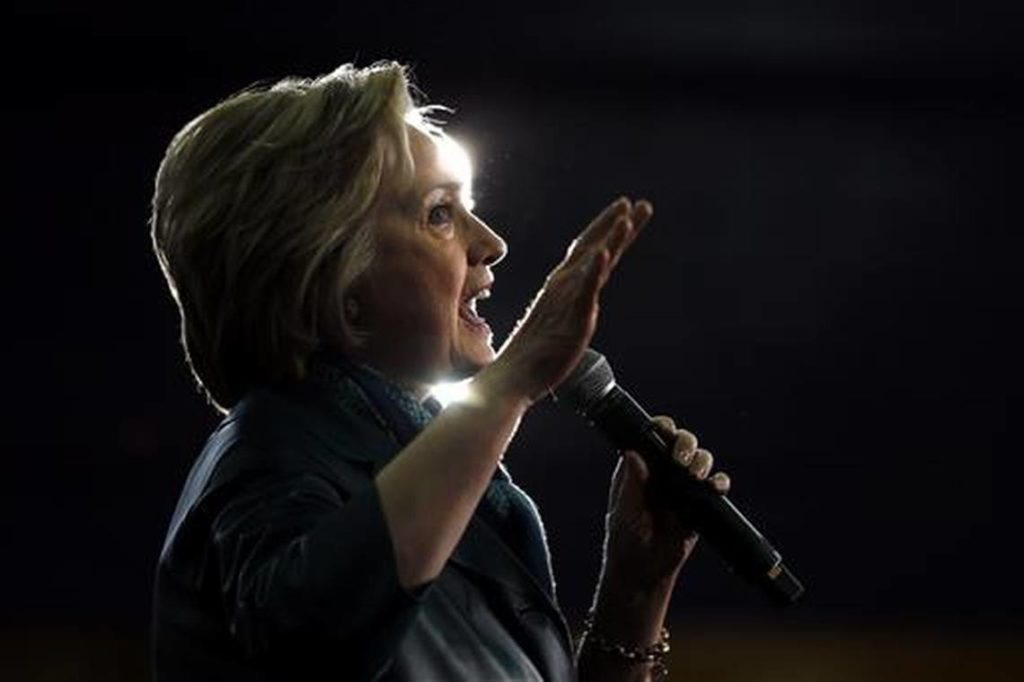
The Latest on the 2016 presidential campaign ahead of the Republican and Democratic national conventions (all times EDT): 1:30 p.m. Indiana Sen. Dan Coats says Donald Trump hasn’t made up his mind about who to select as his running mate. Coats told The Associated Press Wednesday that he spoke with Gov. Mike Pence late Tuesday — one of the names on Trump’s shortlist of potential running mates — and Pence told him there’s still no decision. “I think he’s the front-runner,” Coats said, adding, “I think he ought to be the front-runner.” Coats said Pence is “pretty calm about the whole thing.” He added that Trump is cognizant that he needs to make a decision by Friday given gubernatorial succession rules in Indiana. But he concluded that “reading Donald Trump’s mind is not the easiest thing to do.” ___ 1:20 p.m. Hillary Clinton says the Republican Party of Abraham Lincoln has been transformed into “the party of Trump.” Rattling off a series of attacks against her GOP rival, Clinton says Trump is “dangerous,” ”divisive,” ”fear-mongering” and is “pitting American against American.” Even stalwart Republicans, she says, should be alarmed by Trump’s policies and racist rhetoric. Clinton is casting Trump as ignorant of the Constitution, dismissive of U.S. law and lacking the character to be trusted with American security. “Imagine if he had not just Twitter and cable news to go after his critics and opponents, but also the IRS – or for that matter, our entire military,” she says. “Do any of us think he’d be restrained?” ___ 1:07 p.m. Hillary Clinton is calling on the country — including herself — to “do a better job of listening” rather than fueling political and other divisions after a series of high-profile shootings. Clinton says the country must address both gun violence, criminal justice reform and find ways to better support police departments. “I know that just saying these things together may upset some people,” she says. “But all these things can be true at once.” Clinton is speaking in the Illinois Old State House chamber in Springfield, the site of Abraham Lincoln’s his famous address about the perils of slavery. She is trying to use the symbolic site to contrast her call for civility with what she sees as rival Donald Trump’s polarizing campaign. Clinton said she has work to do, as well. She says that as someone “in the middle of a hotly fought political campaign, I cannot claim that my words and actions haven’t sometimes fueled the partisanship that often stands in the way of our progress.” Clinton adds, “I recognize that I have to do better too.” ___ 12:29 p.m. Donald Trump is meeting with finalists for the job of his vice presidential running mate. Trump met Tuesday with New Jersey Gov. Chris Christie and his family. Early Wednesday, Trump and his children met with Indiana Gov. Mike Pence and his family. Former House Speaker Newt Gingrich also was said to be a finalist. All three have auditioned for the job by opening for Trump at campaign rallies over the past week. Trump was expected to make an announcement on Friday. ___ 10:20 a.m. Republican Donald Trump huddled with Indiana Gov. Mike Pence at the governor’s mansion in Indiana on Wednesday morning amid swirling speculation about Trump’s vice presidential deliberations. Pence and Trump walked out of the residence together just before 10:30 a.m. The pair was joined inside by Pence’s wife, Karen, as well as Trump’s daughter, Ivanka, and his son-in-law Jared Kushner. Trump is said to have narrowed his short list down to a trio of top contenders, including Pence. Pence joined Trump at a fundraiser and a rally on Tuesday where he received a warm reception from the crowd. ___ 10:15 a.m. The lead super PAC backing Democratic presidential candidate Hillary Clinton has begun targeting Spanish-speaking voters in Colorado, Nevada and Florida as part of a $35 million online effort it announced earlier this year. An online ad from Priorities USA features video clips of Trump calling Hispanics “drug dealers” and “criminals” and leading his supporters in the chant: “Build that wall! Build that wall! Build that wall!” In Spanish, an on-screen message declares that “hatred is growing in our country.” The ad campaign also includes a website: unidoscontratrump.org, which means “united against Trump.” The same message will appear in banner ads on social media. The three targeted states all have significant Latino populations. Trump insists he can do better among Hispanics than the less-than-30 percent Republican Mitt Romney drew in 2012 after calling for “self-deportation” for immigrants in the country illegally. ___ 7:35 a.m. Bernie Sanders says he agrees with the harsh remarks that Justice Ruth Bader Ginsburg has made about Republican presidential candidate Donald Trump. The Vermont senator declined to say whether it is appropriate for a sitting Supreme Court justice to openly criticize a White House contender. But he tells ABC’s “Good Morning America” that he agrees Trump is a “total opportunist” and said “the record clear is quite clear that he lies just a whole lot of the time.” Ginsburg in a series of interviews with The Associated Press, The New York Times and CNN has called Trump unqualified to be president and joked that she would move to New Zealand if he won. Trump said in a tweet that Ginsburg should resign. Sanders’s comments came a day after he formally endorsed Hillary Clinton as the Democratic nominee for president. Asked if he is open to being her running mate, Sanders said, “I doubt that will happen.” He said his focus is on helping Clinton win. He says, “We cannot have a man with Trump’s temperament with the nuclear code and running this country.” 5:25 a.m. Hillary Clinton is turning to the symbolism of Abraham Lincoln’s “House Divided” speech to argue that the nation needs to repair its divisions after high-profile shootings in Texas, Louisiana and Minnesota. Clinton’s campaign says the Democratic presidential candidate will talk about the importance of uniting
Jeff Sessions could be a good choice for Donald Trump’s VP
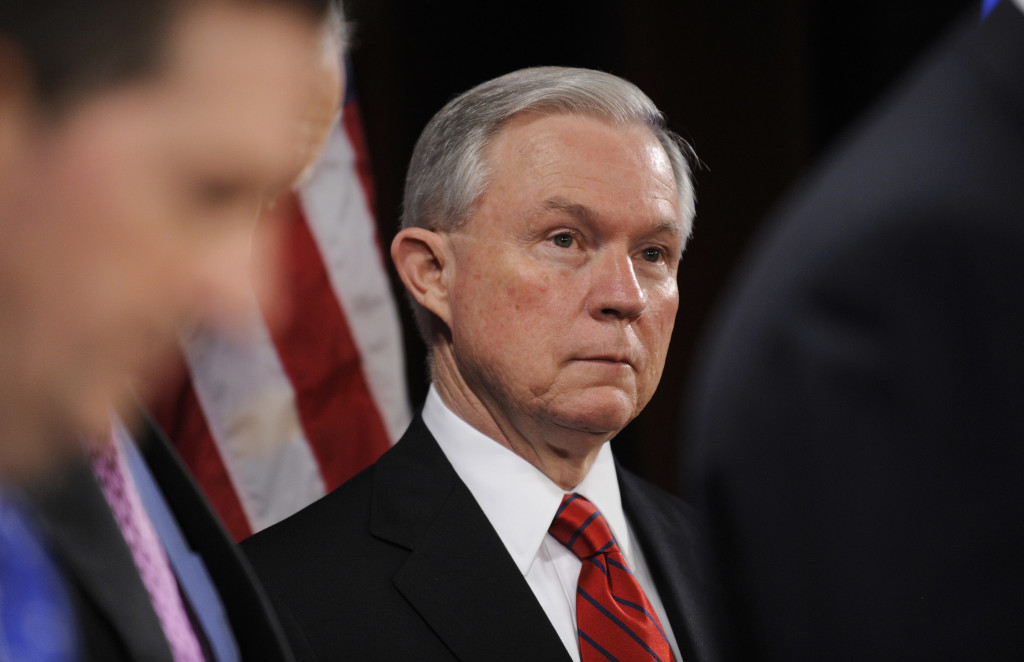
Who presumptive Republican nominee Donald Trump will pick as his running mate has been a focal point since the 2016 presidential shifted toward the general election. Campaign insiders say the businessman is likely to pick Indiana Gov. Mike Pence, New Jersey Gov. Chris Christie or former House Speaker Newt Gingrich, but Alabama Sen. Jeff Sessions said this week he would answer the call to be Trump’s running mate if asked. But would Trump pick Sessions? The 20-year U.S. Senate veteran has been one of Trump’s most vocal supporters, especially on his plan to build a wall across the U.S.-Mexico border and on trade issues, but it’s hard to see what the Alabama Republican could bring to the ticket, especially with Trump needing to woo Rust Belt voters in his campaign against Hillary Clinton. Sessions was the first senator to back Trump’s bid for the GOP nomination, and he even donned a “Make America Great Again” hat during a Trump rally in Mobile, but he doesn’t have near the name recognition as Christie or Gingrich, nor the Midwest ties of Pence. Trump likely doesn’t need help winning over Deep South voters, either. Of course, Sessions also doesn’t have a black mark like “bridge-gate” or passing anti-LGBTQ rights legislation in the recent past. Trump is expected to pick his running mate Friday, though those close to the campaign say he could make the announcement anytime this week — perhaps after a planned public rally with Pence set for Tuesday.
Many experienced GOP strategists unwilling to work for Donald Trump

Donald Trump has finally acknowledged that to best compete against Hillary Clinton he needs more than the bare-bones campaign team that led him to primary success. But many of the most experienced Republican political advisers aren’t willing to work for him. From Texas to New Hampshire, well-respected members of the Republican Party’s professional class say they cannot look past their deep personal and professional reservations about the presumptive presidential nominee. While there are exceptions, many strategists who best understand the mechanics of presidential politics fear that taking a Trump paycheck might stain their resumes, spook other clients and even cause problems at home. They also are reluctant to devote months to a divisive candidate whose campaign has been plagued by infighting and disorganization. “Right now I feel no obligation to lift a finger to help Donald Trump,” said Brent Swander, an Ohio-based operative who has coordinated nationwide logistics for Republican presidential campaigns dating to George W. Bush. “Everything that we’re taught as children — not to bully, not to demean, to treat others with respect — everything we’re taught as children is the exact opposite of what the Republican nominee is doing. How do you work for somebody like that? What would I tell my family?” Swander said. Trump leapt into presidential politics with a small group of aides, some drafted directly from his real estate business, with no experience running a White House campaign. An unquestioned success in the GOP primaries, they have struggled to respond to the increased demands of a general election. As in years past, the primary season created a pool of battle-tested staffers who worked for other candidates, from which Trump would be expected to draw. But hundreds of such aides have so far declined invitations to work for him. They include several communications aides to Chris Christie, as well as the New Jersey governor’s senior political adviser, Michael DuHaime, who has rejected direct and indirect inquiries to sign on with the billionaire. Chris Wilson, a senior aide to Ted Cruz, said the Texas senator’s entire paid staff of more than 150 ignored encouragement from Trump’s team to apply for positions after Cruz quit the presidential race. Wilson said that even now, many unemployed Cruz aides are refusing to work for the man who called their former boss “Lyin’ Ted.” That’s the case for Scott Smith, a Texas-based operative who traveled the country planning events for Cruz, and earlier worked on presidential bids for Bush and Texas Gov. Rick Perry. “It’s very clear that none of us are going to work for Trump,” Smith said. “Even if I wanted to work for Trump, my wife would kill me.” Smith, like many experienced strategists interviewed for this story, noted the intense personal sacrifice required of presidential campaigns. Many advisers do not see their families for long stretches, work brutal hours on little sleep and enjoy no job security. With Trump, Smith said, “I would feel like a mercenary. I can’t be away from my young children if it’s just for money.” Trump’s need for additional staff is acute. His paltry fundraising network brought in less than $2 million last month. He has just one paid staffer to handle hundreds of daily media requests and only a few operatives in battleground states devoted to his White House bid. Last month, Trump fired Rick Wiley, who was the campaign manager for Wisconsin Gov. Scott Walker, a former 2016 candidate, and was brought on to run Trump’s nationwide get-out-the-vote effort. On Monday, Trump fired campaign manager Corey Lewandowski, who acknowledged he lacked the experience needed to expand Trump’s operation. “This campaign needs to grow rapidly,” Lewandowski told the Fox News Channel. “That’s a hard job and candidly I’ve never grown something that big.” Trump credited Lewandowski with helping “a small, beautiful, well-unified campaign” during the primary season. “I think it’s time now for a different kind of a campaign,” Trump told Fox. Campaign spokeswoman Hope Hicks did not respond to multiple requests for comment about the campaign’s hiring. A former adviser, Barry Bennett, played down any staffing challenges, suggesting the campaign should be able to double its contingent by the party’s national convention next month. Trump announced four new hires in the past week, including a human resources chief to help with hiring, to supplement a staff of about 70. That’s compared with Clinton’s paid presence of roughly 700, many of them well-versed in modern political strategy. Trump’s senior team, including campaign chief Paul Manafort and newly hired political director Jim Murphy, largely represent an older generation of political hands more active in the 1980s and 1990s. The campaign’s new Ohio director, Bob Paduchik, led state efforts for Bush’s 2000 and 2004 campaigns. A new generation of top talent active in more recent years has shown little interest in Trump. In Iowa, experienced operative Sara Craig says she will not work for Trump or even support him. “I am more interested in working on down-ballot races,” said Craig, who helped elect Joni Ernst to the Senate from Iowa and directed a pro-Bush super political action committee. Ryan Williams, who worked on Mitt Romney‘s presidential campaigns, said he’s happy working for a consulting firm, where he’s involved with various other elections across the country, as well as with corporate clients. “When you sign up for a campaign, you’re putting your name on the effort. Some of the things that Trump has said publicly are very hard for people to get behind,” Williams said. But Paduchik offered the kind of positive perspective expected of a campaign on the move. “It’s been great, the response I’ve gotten,” Paduchik said. “Republicans in every corner of Ohio are excited about Mr. Trump’s campaign.” Republished with permission of The Associated Press.
Darryl Paulson: Candidate’s running mate rarely affects outcome of presidential election
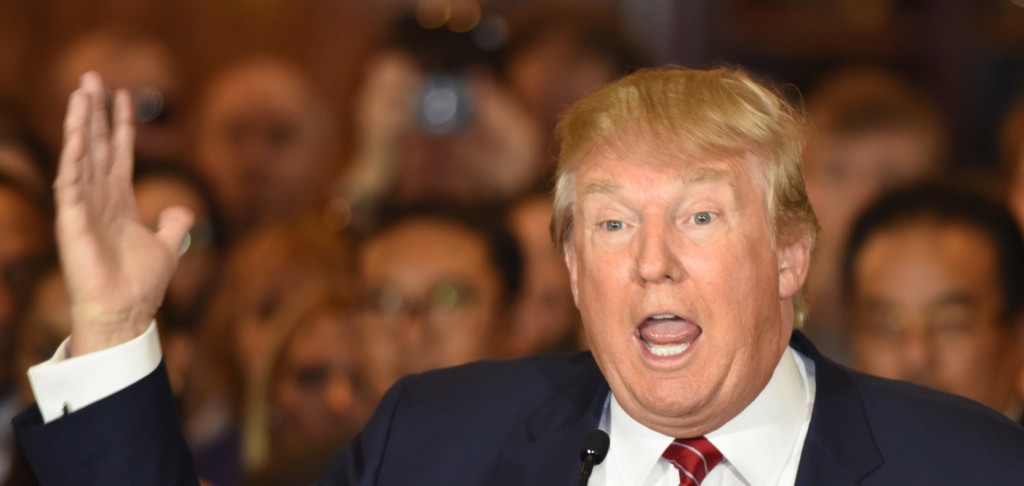
The national conventions are less than three months away and, as the nomination phase comes to a close, attention will gravitate toward potential vice presidential candidates. Let’s focus on the factors that have been used in selecting vice presidents. Most conventional wisdom is wrong. To begin with, most people and many presidential candidates select a vice president who they believe will help them win the election. Few vice presidents have had any effect on the election results. Jack Kemp did not help carry his home state for Bob Dole and Paul Ryan did not win Wisconsin for Mitt Romney. On the Democratic side, Sen. Lloyd Bentsen was not able to carry Texas for Michael Dukakis, nor did John Edwards help the Democrats win South Carolina or other southern states. One of the few times a vice president actually helped a president carry a state was in 1960 when John F. Kennedy picked Sen. Lyndon Johnson as his running mate. If Kennedy had not won Texas, Richard Nixon would have won the presidency. In like fashion, vice presidents are sometimes selected to provide regional balance, although there is no evidence that this helps. When Bill Clinton of Arkansas picked fellow southerner Al Gore as his vice president, many thought this unbalanced regional ticket was crazy. When the Clinton-Gore team captured the electoral vote of four southern states, something that Democrats had been unable to do in recent presidential elections, Clinton’s choice looked like genius. In addition to regional balance, vice presidents are sometimes selected to provide ideological balance. With increased polarization in recent years, this is becoming a less important factor. In 1976, Ronald Reagan announced Sen. Richard Schweiker of Pennsylvania as his vice presidential choice prior to the convention. Reagan hoped to alleviate the fears of some that he was too conservative and needed a moderate to balance the ticket. More importantly, Reagan hoped that picking Schweiker would convince some Pennsylvania delegates to support his candidacy over incumbent Gerald Ford. The pick of Schweiker did not help Reagan and Ford went on to win the nomination. Many Democrats in 2016 see Hillary Clinton as too conservative and too establishment and have urged her to choose a progressive as vice president. In addition to Bernie Sanders, other progressive names being floated are Sen. Sherrod Brown of Ohio and Sen. Elizabeth Warren of Massachusetts. A vice president is sometimes selected to stimulate participation by a particular group. Walter Mondale selected Geraldine Ferraro to get more women to vote. That pick didn’t provide much help. Mondale won only his home state of Minnesota and the District of Columbia against Reagan. Vice presidents have been picked to add gravitas to the ticket. Concerns about Reagan’s limited government experience led him to pick George Herbert Walker Bush as his vice president. Bush had been a member of Congress, the U.S. ambassador to the United Nations and to China, head of the Republican National Committee and head of the CIA prior to his selection. Bush’s son, George W., picked Dick Cheney as his vice president to add heft to his ticket. Cheney had served as Chief-of-Staff to Ford, been a member of the House, and served as Secretary of Defense for George W’s father. In fact, Cheney headed George W’s vice presidential selection team and concluded he was the best candidate. Do any of these factors help a presidential candidate win? The answer is no. A study by two political scientists, Bernard Grofman and Reuben Kline, analyzed 11 presidential elections between 1968 and 2008 and found the net effect of a vice president was 1 percent at most. If Clinton is the Democratic nominee, she may pick a progressive or choose someone like Secretary of Housing and Urban Development Julian Castro. Although not well known, Castro’s youth and Hispanic background might help stimulate Hispanic turnout. If Trump is the GOP nominee, it is easier to put together a list of people he would not select than those he would. There is little chance that “lying Ted,” “little Marco,” or “low energy Bush” would want to join forces with Trump. Gov. Scott Walker of Wisconsin is one possibility since he dropped out of the nomination race early before Trump had the opportunity to insult him. Chris Christie is another option because he was the first major candidate to endorse Trump after Christie withdrew. Another option is Florida Gov. Rick Scott. Florida is a “must win” state and Scott endorsed Trump as a “businessman outsider who will shake up the status quo in Washington.” Although most of the factors in the vice presidential selection process have been shown to have little impact, there are two general rules that no president should ignore. First, pick someone you feel comfortable working with. Second, and most important, pick someone who is ready to be president. Nothing else matters. *** Darryl Paulson is Professor Emeritus of Government at USF St. Petersburg.
Donald Trump’s abortion flub shows risks of ‘winging it’ on policy
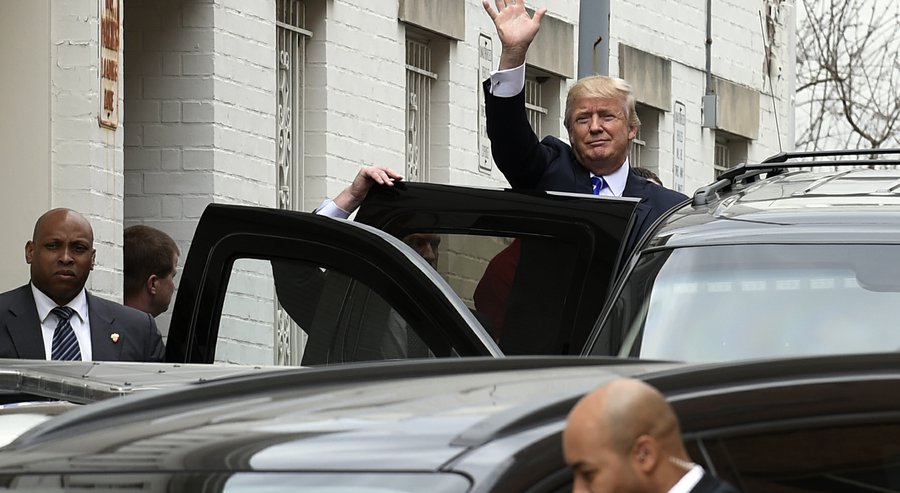
It was a question sure to come up at some point in the Republican primary campaign. “What should the law be on abortion?” asked MSNBC’s Chris Matthews to Donald Trump at a town hall event in Wisconsin. “Should the woman be punished for having an abortion?” Matthews pressed. “This is not something you can dodge.” Trump’s bungled response — an awkward, extended attempt to evade the question, followed by an answer that, yes, “there has to be some form of punishment” — prompted a backlash that managed to unite abortion rights activists and opponents. And it also brought an unprecedented reversal from the notoriously unapologetic candidate less than a week before Wisconsin’s important primary. The episode demonstrated the extent to which Trump has glossed over the rigorous policy preparation that is fundamental to most presidential campaigns, underscoring the risks of the billionaire businessman’s winging-it approach as he inches closer to the Republican nomination. “Well, bear in mind I don’t believe that he was warned that that question was coming” and didn’t have a chance to really think about it, said Ben Carson, a former Trump rival who has since endorsed him, in an interview with CNN. He should have, said political professionals. “When you’re just winging it, that’s what happens,” said Kevin Madden, a veteran of 2012 nominee Mitt Romney‘s campaign. “Running for president, it’s not a take-home exam.” And this wasn’t the first time Trump’s approach has gotten him in trouble. He raised eyebrows during a debate when he appeared unfamiliar with the concept of the nuclear triad, an oversight his opponents happily pointed out. At a town hall on CNN earlier this week, Trump appeared to falter when asked to name what he believed were the top three priorities of the federal government. Among his answers: health care and education. Trump has vowed to repeal President Barack Obama‘s landmark health care law and gut the budget of the Department of Education. The lack of preparation extends beyond policy. This week, Trump called into a series of radio stations in Wisconsin, apparently unaware the interviews were likely to be combative. At the end of a remarkable interview in which he compared Trump’s behavior to that of “a 12-year-old bully on the playground,” WTMJ-AM’s Charlie Sykes asked Trump if he was aware he’d called into someone unabashedly opposed to his candidacy. “That I didn’t know,” Trump said. During a recent rally in Vienna, Ohio, Trump delivered his usual indictment of the North American Free Trade Agreement and blasted American companies that have shipped jobs overseas. But he seemed unaware that Chevrolet, which builds the Chevy Cruze sedan in nearby Lordstown, had recently announced that it was planning to build its 2017 hatchback model in Mexico. It was the kind of local knowledge that requires research and legwork, and could have helped Trump connect with his audience and others in the state. For most presidential candidates, especially those new to it all, getting up to speed on the intricacies of domestic and foreign policy is a process that begins early. While Trump’s campaign did not respond Thursday to questions about the kind of briefings he receives, it’s clear he has done things differently. Who does he consult on foreign policy? “I’m speaking with myself, number one, because I have a very good brain and I’ve said a lot of things,” Trump said on MSNBC this month. He’s also said he gets information about international affairs from “the shows” and newspapers. He announced members of his foreign policy team only this month and met with them Thursday as part of a series of appointments in Washington. Out on the trail, Trump largely skipped town hall events in the early-voting states that were the hallmarks of several rival campaigns. Chris Christie and John Kasich, for example, held dozens of the events, fielding hundreds of questions on every topic imaginable. Trump might well note that most of his GOP rivals are gone, and he’s still the front-runner. But what about his abortion comments? “None of the other candidates would have made that mistake,” said Marjorie Dannenfelser, president of the Susan B. Anthony List, which supports anti-abortion legislation and candidates. Michael Steel, an adviser to former Trump rival Jeb Bush, said that candidates and presidents have to be able to respond to issues as they arise, which requires a “tremendous amount” of work behind the scenes. It’s one reason major candidates from both parties typically have government experience. “I think we’ve seen in a variety of venues including the debates that he doesn’t seem to have the knowledge and background on important policy issues that you would expect from a presidential candidate,” Steel said. Bush spent the months after he announced his candidacy last summer developing a comprehensive domestic and foreign policy platform. Campaign employees assisted by more than 100 outside advisers briefed him in frequent sessions, said Justin Muzinich, the campaign’s policy director. “He took policy extraordinarily seriously,” Muzinich said. Dannenfelser, the abortion opponent, said there is still time for Trump. “The question is, will he be able to get to the point of confidently communicating his position to contrast with Hillary Clinton in a way that helps?” she said. “I think it’s possible.” Republished with permission of the Associated Press.
Steven Kurlander: Donald Trump will grow up to be a great president
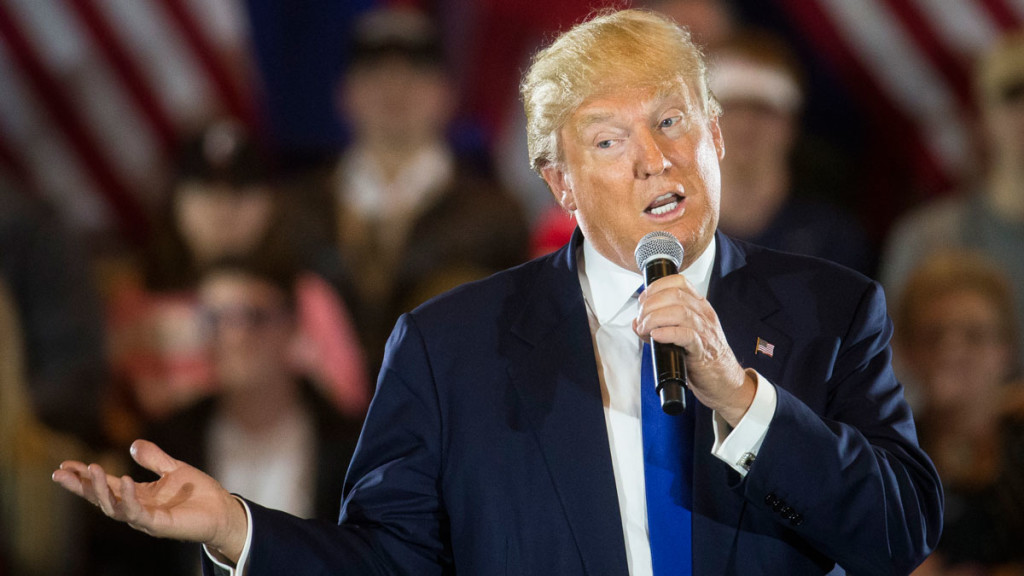
I forced myself the other night to watch in totality Donald Trump speak at two rallies in Ohio before that state’s primary — and initially I had great reservations about voting for him. At these rallies Trump rarely spoke more than five or six words in a sentence. When he was not repeating his canned slogans against Mexicans and the Chinese, he embraced an exaggerated confrontation with demonstrators, urging his security forces to “get ‘em outta here.” You would expect more from a 69-year-old billionaire with his background and intelligence. Up to now, Trump has been the “wise guy” candidate who spits out wisecracks and who masterfully plays on the frustrations of the average American. This “Trumpist” strategy has worked well so far. A political phenomenon, he has so far badly beaten a crowded GOP field of candidates. Trump has separated himself as the “anti-politician” in the race through callous rhetoric and manipulating the media. His arrogance was not countered effectively by the younger candidates such as Marco Rubio, Ted Cruz, or Chris Christie. There was no older wise man or woman in the GOP contest. Instead, most showed a remarkable lack of maturity and depth. All of Trump’s opponents, except maybe John Kasich, failed to understand what ails America. Trump, on the other hand, continues to say what most Americans think, but don’t say because they fear it might be politically incorrect. It’s a brilliant gimmick that is working well. Growing old makes most people a bit wiser. Reflection and learning are the key to gaining wisdom. At the time the Constitution was written, our forefathers made sure to impose what was at the time a high age requirement on elected federal officials. Article II, Section 1, Clause 5 of the U.S. Constitution provides: “No Person except a natural born Citizen, or a Citizen of the United States, at the time of the Adoption of this Constitution, shall be eligible to the Office of President; neither shall any Person be eligible to that Office who shall not have attained to the Age of thirty-five Years, and been fourteen Years a Resident within the United States.” The average life expectancy during that time was close to the age required to be president, so obviously the framers wanted American presidents to be reflective, wise old men. Indeed, many of our founding fathers were truly wise in their writings and their actions. In the 21st century, the presidency of the young and charismatic Barack Obama proved the opposite — he was a decade or more too early to be a great president. I regret that Trump and his shallow, reality television approach toward politics (that I would define as “Trumpistic,”) so far is chiefly characterized by a lack of innate wisdom. It’s made me have grave reservations about his candidacy. But there’s something inside me that says that Trump will prove himself — that he will be an evolutionary politician that will lead America into an era of prosperity and democratic leadership in the world. Despite his rhetoric, Trump is a great man already. He has achieved remarkable accomplishments as a developer and entertainer. He has experienced great personal and business failure too, which in my book is more important. That’s because old men often learn from their mistakes. So at the wise old age of 58, I can forgive Trump for all his nasty crap and vile gimmicks displayed in his campaign. It’s a shtick, that’s all. Deep down, I think Trump is the anti-Obama who will prove once he steps into the Oval Office that he has the same attributes that the founding fathers had. It’s that instinctual thought of mine, which is (secretly) shared by many angry Americans like myself, that will cause me and many others to vote for Trump. We’re not interested in a worn-out Hillary Clinton, despite Trump’s nasty theatrics on the campaign trail. *** Steven Kurlander blogs at Kurly’s Kommentary (stevenkurlander.com) and writes for Context Florida and The Huffington Post and can be found on Twitter @Kurlykomments. He lives in Monticello, New York.
Darryl Paulson: The rise and fall of Marco Rubio
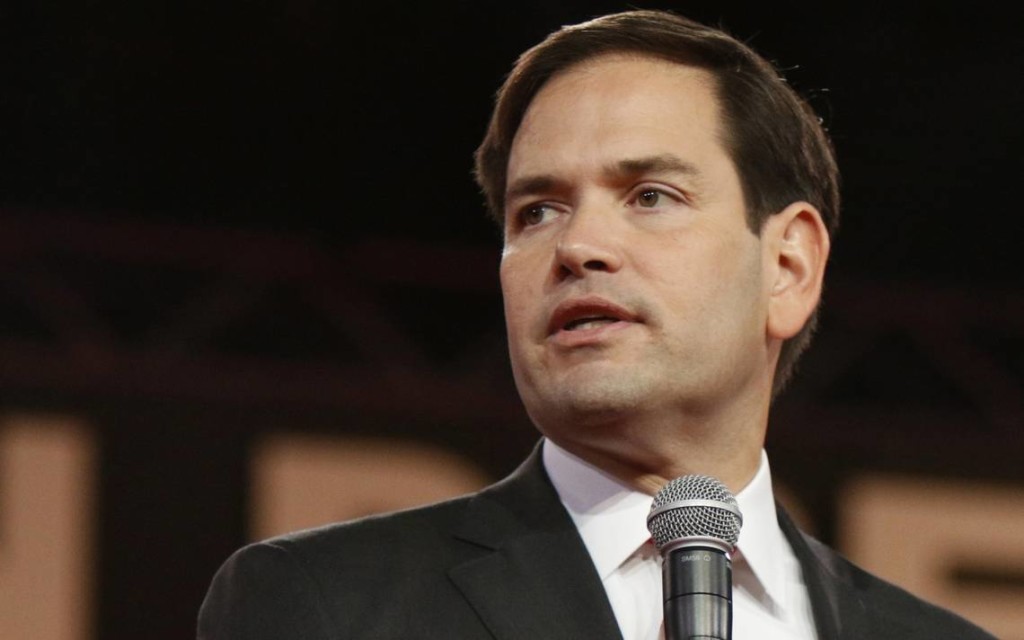
Marco Rubio has had a meteoric political career. From winning a seat on the West Miami City Council in the 1990s, to winning a special election by 64 votes to earn a seat in the Florida House, to his stunning victory over Republican Gov. Charlie Crist in the 2010 U.S. Senate race, Rubio’s political career has been impressive. When Rubio challenged the popular Crist for the Republican nomination to the U.S. Senate, most pundits said he didn’t have a chance. Crist had the support of the Republican establishment in Florida and also the support of the Republican Senatorial Campaign Committee. Rubio started the race trailing Crist by anywhere between 30 to 45 percent. Rubio, playing the role of the biblical David to perfection, defeated the Goliath Crist. In what I consider the most astounding election in modern Florida history, Rubio chased Crist from the Republican Party and forced him to run as an independent candidate. On Election Day, Rubio won 49 percent of the vote to 30 percent for Crist and only 20 percent for Democrat Kendrick Meek. The giant had been slain, and Rubio would soon be branded by Time magazine as “the Republican savior.” After losing the 2012 presidential election, the Republican Party created a “Growth and Opportunity Program” to analyze the results and develop a path forward. Essentially, the committee recommended that the party had to broaden its appeal to women and minorities, especially Hispanics, if they hoped to win the White House. They could no longer win with just white, male voters. Many Republicans viewed Rubio as the future face of the party. Young, articulate, conservative and Hispanic, he was the ideal candidate. In April 2015, Rubio announced his campaign for the presidency. He was one of 17 Republican candidates and was consider one of the front-runners. Rubio turned out to be one of the great political underachievers in modern politics. He won only three of the 32 primaries and caucuses, winning Minnesota, Puerto Rico and the District of Columbia. Tea Party voters who carried him into the U.S. Senate in 2010 deserted him in the presidential campaign. “America is in the middle of a real political storm, a real tsunami, and we should have seen this coming,” Rubio said in his concession speech. Donald Trump destroyed Rubio in his home state where Rubio had never lost an election. Trump got 45.7 percent of the vote; Rubio got only 27 percent. Trump won 66 of Florida’s 67 counties. The only county Rubio won was his home county of Miami-Dade. All of Florida’s 99 delegates were awarded to Trump. Not only did Rubio get trounced, but Trump also laid to rest the myth that he could not win in a closed primary state. It was the Republican voters of Florida who said yes to Trump and no to Rubio. What went wrong for Rubio? Among the many explanations is Rubio’s role as a member of “the gang of 8” who pushed for immigration reform and a pathway for citizenship for illegal aliens. There is some truth to this, but among Florida’s primary voters, only 12 percent mentioned immigration as a major factor in their vote. Others cited Rubio’s devastating performance in the New Hampshire debate where Chris Christie accused Rubio of being a robotic, scripted candidate who merely repeated his 25-second talking points. Rubio repeated the same talking point three times during the debate. He finished in fifth place in New Hampshire. Rubio’s campaign was widely criticized for its reliance on a media-focused approach. As his campaign manager, Terry Sullivan, told the New York Times: “More people in Iowa see Marco on ‘Fox and Friends’ than see Marco when he is in Iowa.” However, numerous studies demonstrate that a solid ground game can produce a voter boost of up to 10 percent on Election Day and a good telephone effort can add another 4 percent. Finally, many believe Rubio delivered the wrong message at the wrong time. He alluded to this in his concession speech when he said, “this may not have been the year for a hopeful and optimistic message.” Republican voters wanted someone to channel their anger into reforming politics and solving problems. March 15 was the Ides of March. To paraphrase Marc Antony, “I come to bury Marco, not to praise him.” *** Darryl Paulson, Emeritus Professor of Government, USF St. Petersburg.
Chris Christie on Donald Trump appearance: ‘I wasn’t being held hostage’

Anyone worried that Republican Gov. Chris Christie was being held hostage by Donald Trump as he stood, seemingly shell-shocked, behind the GOP presidential front-runner on Super Tuesday can rest easy. “No, I wasn’t being held hostage. No, I wasn’t sitting up there thinking, ‘Oh, my God, what have I done?’” Christie said Thursday back home in New Jersey. “I don’t know what I was supposed to be doing. All these armchair psychiatrists should give it a break.” He said his face was stoic because he was listening as Trump spoke. In “I stood where they asked me to stand. What do I care? Do you think I really care? … I really don’t,” he said. “Next week there will be an Internet freakout about something else.” InChristie also said he won’t heed calls from a handful of newspapers to resign and will continue helping Trump’s campaign. His defense of endorsing the billionaire developer came as two former Republican presidential nominees — including Mitt Romney on Thursday — and 70 national security experts warned that Trump was unfit to be commander in chief. Christie said he doesn’t agree with Trump on everything, though he wasn’t specific. He said he’s told Trump when he disagreed with him and has tried to change his mind. “That’s what a good endorser does,” Christie said. He spoke Thursday at a nearly two-hour news conference in Trenton that was part campaign debriefing, part attempt to refocus on priorities in the state. But he opened the floor up to questions, and reporters had a lot of them. Christie, who ended his own Republican presidential campaign last month, said he will continue helping Trump’s campaign but doesn’t have any more appearances scheduled. Christie added that his 30th wedding anniversary is next week, but he is otherwise focused on state priorities, including a budget due in June. Seven New Jersey newspapers have called on Christie to resign. The Star-Ledger, which endorsed Christie in his 2013 re-election campaign, said in an editorial Thursday that he has since made it clear that governing the state is a “distant second priority” that comes behind his personal ambition. Six newspapers published by Gannett also called for his resignation. Christie said he isn’t surprised by the newspapers’ stance because they haven’t supported him in the past. He said they’re merely trying to find a way to stay relevant as their readerships decline. “The only way to do that is to set themselves on fire,” Christie said. Christie, who spent 261 days out of the state in 2015, also chided the media for counting time he spent either in Philadelphia or New York as somehow not related to state business. “The way you count days is absurd,” he said. He said the Trump campaign financed his recent trips, but state taxpayers, as they always do, will be on the hook for the New Jersey State Police detail that is required to travel with him. Defending his endorsement, Christie said he believes Trump would make the best president out of the remaining candidates and has the best chance to defeat Democrat Hillary Clinton in the general election. He said he and Trump have been friends for 14 years. Christie noted that despite jokes from online commenters, he wasn’t forced into giving any coerced statements on Trump’s behalf. “This is part of the hysteria of the people who opposed my Trump endorsement,” Christie said. Christie said he plans to finish out the nearly two years left in his term and then go into the private sector. He did shoot down one question Thursday. When a reporter asked if he would resign if he were Trump’s pick for vice president, he replied, “Next!” Republished with permission of the Associated Press.
Chris Christie’s shell-shocked look stirs mockery, befuddlement

Was that really Chris Christie, the brusque, take-a-back-seat-to-no-one governor of New Jersey? Christie’s seemingly shell-shocked gaze as he stood behind Donald Trump on Super Tuesday is generating befuddlement and mockery in his home state and beyond. Conservatives and liberals alike have piled on. His introductory remarks were so subdued and his appearance was so grave that many people joked on the Internet that he looked like a hostage reading a coerced statement. “Gov. Christie, blink twice if you’re in trouble!” one person tweeted. In a move that shocked nearly everyone, especially in Democratic-leaning New Jersey, Christie endorsed Trump last week and has appeared at the billionaire businessman’s side at campaign appearances over the past few days. But after Tuesday night’s appearance, conservative commentator Jonah Goldberg of the anti-Trump National Review imagined Christie was thinking: “My God what have I done?” Others saw the same thing in Christie’s blank stare and robotic words of introduction. Aside from Tuesday night, Christie appears to be fully embracing his surrogate duties. The governor has introduced Trump at a number of enthusiastic rallies and has been Trump’s attack dog, sinking his teeth into Sen. Marco Rubio and vouching for Trump and his family. Back home, the reaction has been fierce. Republican Christine Todd Whitman, the former New Jersey governor and Environmental Protection Agency administrator, told The Star-Ledger of Newark last week she would rather vote for Hillary Clinton than Trump. “I am ashamed that Christie would endorse anyone who has employed the kind of hate mongering and racism that Trump has,” she said. Six Gannett newspapers in New Jersey, including the Asbury Park Press, said he isn’t fit to be governor anymore. They called him a political opportunist who has neglected his duties in the Garden State, and urged him to resign. A Fairleigh Dickinson University poll saw Christie’s approval ratings fall from 33 percent before he backed Trump to 27 percent since. The poll sampled 694 registered New Jersey voters, with a margin of error of plus or minus 3.9 percentage points. “Trump and Christie kind of do belong together, but not running our country,” said Barbara Silverstein of Gibbsboro, New Jersey. “It’s a big show, and it’s pretty pathetic.” In the past few days, the politician with the outsized personality seemed to be shrinking in political stature even if something big — perhaps the No. 2 spot on the ballot with Trump — is his goal. Trump was heard on a microphone telling Christie to get on a plane and go home after Christie was pressed Sunday in an ABC interview about his disagreement with Trump on his proposed ban on Muslims. Christie refers to the candidate, who is supposedly his longtime friend, as “Mr. Trump,” while Trump refers to the governor as “Chris.” Christie defended his endorsement this week on his regular radio call-in show. “I’ve known him personally for 14 years and I believe he is the best person to beat Hillary Clinton,” the governor said, before clarifying that he, Christie, was the best candidate but that Trump is the best of the remaining contenders. Christie wouldn’t discuss on the call-in show whether he was hoping for a vice presidential or Cabinet slot. Asked about his previous criticisms of Trump, Christie said that was a natural part of having to run against him — no different, he said, from George H.W. Bush calling Ronald Reagan‘s policies “voodoo economics” before becoming his vice presidential pick. To Montclair State University political science professor Brigid Harrison, Christie’s seeming thousand-yard stare seemed to reflect sadness. “It really looked like heartbreak and kind of a bitter pill that he was swallowing,” she said. “I still think that in his heart of hearts he thinks he was destined to be president of the United States.” Republished with permission of the Associated Press.
Donald Trump gains powerhouse endorsement from Chris Christie
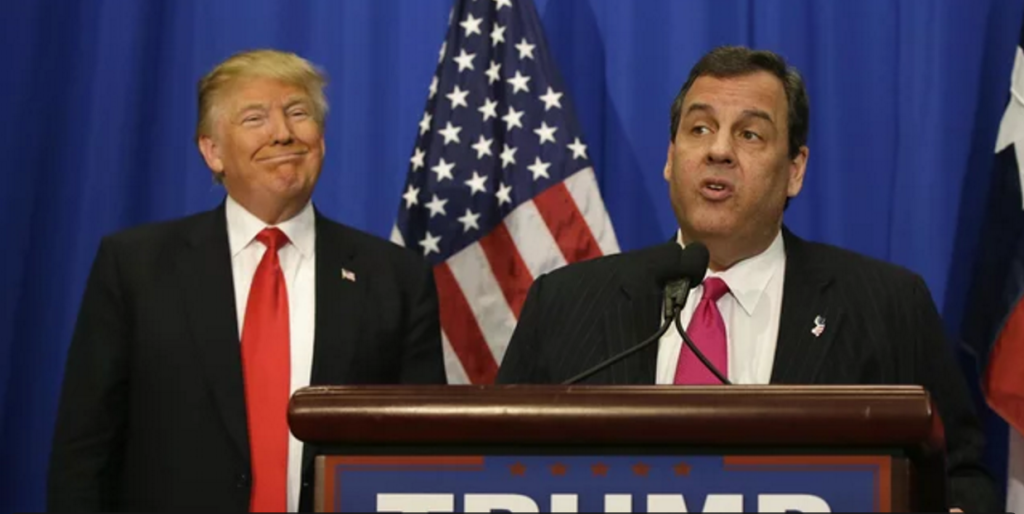
New Jersey Gov. Chris Christie backed Donald Trump in the Republican race for president Friday, a powerhouse endorsement as the billionaire tries to beat back assaults on his character from a newly aggressive rival, Marco Rubio. Christie joined Trump at a Forth Worth news conference and praised him as “the person who will go to Washington, D.C., and be able to absolutely turn the place around.” Christie said Trump was hands-down the better choice than Rubio, a first-term senator who “didn’t show up for work.” “We don’t need any more of these Washington, D.C. acts,” said the governor, who had needled Rubio for missing Senate votes back when the governor was a candidate himself. The shock endorsement came after Rubio, in an abrupt shift cheered by anxious Republicans nationwide, shattered months of relative peace with Trump in Thursday night’s GOP debate. It marked the beginning of a long-awaited takedown effort on Trump heading into the weekend before Super Tuesday. Rubio continued the verbal assault on Friday, repeatedly calling Trump “a con artist” in interviews designed to weaken Trump’s tightening grasp on the Republican nomination. And a new advertising campaign from Rubio allies attacked Trump’s business background and limited knowledge on foreign policy. “A con artist is about to take over the Republican Party and the conservative movement,” Rubio charged on CBS’ “This Morning.” ”And we have to put a stop to it.” But as he has so many times during the campaign, Trump found a way to turn the attention back to himself just hours later, with the Christie endorsement. “I just said wow, that is really great,” Trump said of the governor’s support. Trump has won three consecutive primary contests and leads polls in most of the 11 states participating in Tuesday’s mega-round of voting. Christie’s endorsement is a blow to Trump’s Republican competitors, not least Rubio, who had been courting the tough-talking New Jersey governor since he dropped his own presidential candidacy earlier in the month. “Desperate people do desperate things,” Christie said of Rubio’s attacks while standing at Trump’s side. “The idea that Marco Rubio can get inside Donald Trump’s head is an interesting proposition.” Rubio’s strategic shift comes as the GOP presidential candidates barreled into the final sprint to Super Tuesday. This, after a name-calling, insult-trading, finger-pointing debate Thursday night at which Rubio and Ted Cruz engaged in a tag-team attack against the GOP front-runner. Trump’s rivals concede that it might take an extraordinary “brokered” national Republican convention in July to stop him. “Point is, there’s still a pathway to beating him,” said Liz Mair, a Republican strategist leading an anti-Trump group. “As of Wednesday, I wasn’t convinced there really was.” On the Democratic side, Hillary Clinton claimed new headway on the eve of a South Carolina Democratic primary that she’s expected to win handily. “I think it does take me a little bit longer to get into the rhythm of campaigning,” she said on MSNBC’s “Morning Joe.” ”We hit our stride in Nevada. Our message of breaking all barriers is really beginning to take hold. I really felt we were on an upward trajectory.” Even if the Republican-backed Trump attacks don’t work in the short-term, Clinton suggested he’d be vulnerable as the GOP nominee in the fall. “When it moves to the general election, I think you’re going to see a real seriousness,” she said, “with people turning and saying, ‘What do we know about this man?’” There was little sign that Trump’s stock was falling at the Fort Worth rally where supporters gathered. Many Trump supporters said they hadn’t seen the Houston debate that shook him up. Those who had stood by their candidate and criticized the way his rivals teamed up on him. “They come prepared to attack Trump at all costs,” said Arlene Smart, 58, of Liberty, Texas. “I’m sick of lying in Washington. Trump is the man. That’s all there is to it.” “I think most people see it as Washington’s crooked attacks,” she added. As Trump’s rivals stepped up their criticism, a pro-Rubio super PAC announced plans to start running Trump attack ads in key states on Friday. One ad charges that Trump “knows nothing about foreign policy.” Another targets his business background, highlights the businessman’s use of “sleazy bankruptcy laws to avoid paying workers” and calls him out for saying he loves “the poorly educated” – Trump’s clumsy way of expressing compassion for the poor. From Houston, the GOP candidates spread out in the hunt for Super Tuesday votes, with Cruz headed for Tennessee and Virginia on Friday. Both Trump and Rubio are signaling they’re unwilling to cede Texas, the crown jewel of Tuesday’s voting, to Cruz, the home-state senator. Each scheduled campaign events in Texas before going to Oklahoma City. Republished with permission of the Associated Press.
