
Jumbled GOP field hopes for survival in South Carolina
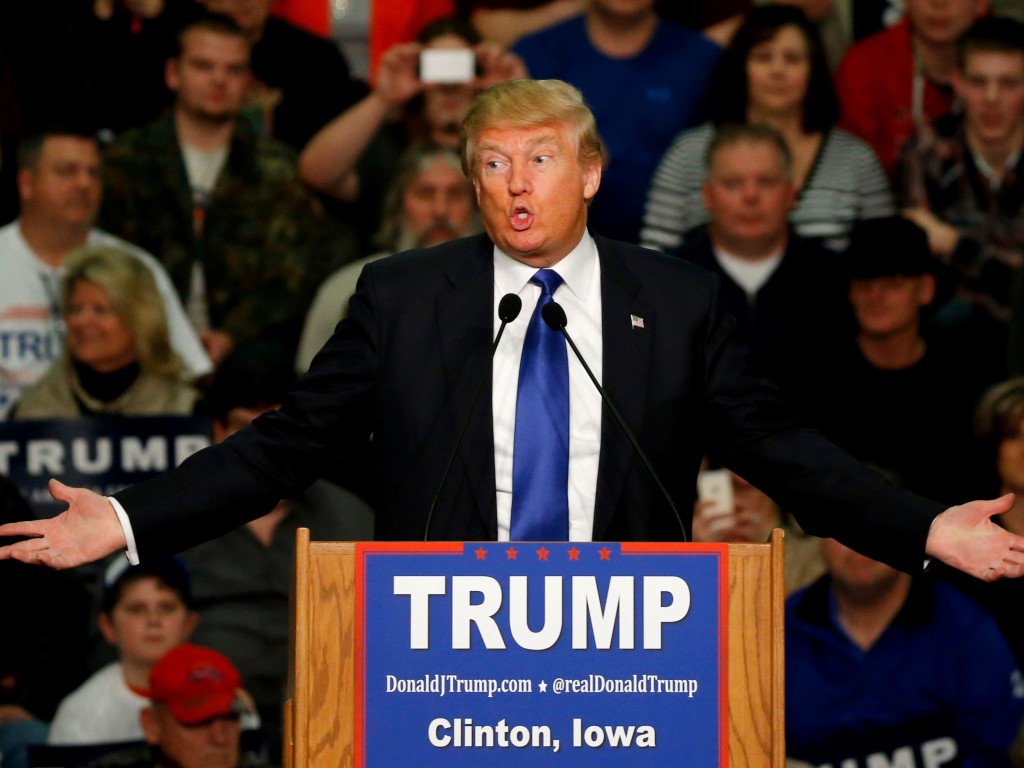
Hoping for survival in the South, a muddled field of Republican presidential contenders descended Wednesday on South Carolina, no closer to clarity about who can stand between Donald Trump and their party’s nomination. Not me, Carly Fiorina announced, dropping out of the campaign. A Chris Christie spokeswoman said his race was over, too. But a sizeable field remained. To the dismay of party leaders, all signs point to a drawn-out battle for delegates following Trump’s resounding victory in New Hampshire. Florida Sen. Marco Rubio, under immense pressure to prove himself after a devastating fifth-place finish, was looking for a fight that could last for months or even spill into the first contested GOP national convention since 1976. “We very easily could be looking at May — or the convention,” Rubio campaign manager Terry Sullivan told The Associated Press. If Trump had Republicans on edge, Democrats were feeling no less queasy. Rejected in New Hampshire, Hillary Clinton sought redemption in Nevada, where a more diverse group of voters awaited her and Bernie Sanders. Sanders, a Vermont senator and self-proclaimed democratic socialist, raised $5 million-plus in less than a day after his New Hampshire triumph. The contributions came mostly in small-dollar amounts, his campaign said, illustrating the resources he’ll have to fight Clinton to a bitter end. Both Clinton and Sanders — the first Jew to win a presidential primary — worked to undercut each other among African-Americans and Hispanics with less than two weeks until the Democratic contests in Nevada and South Carolina. Sanders met for breakfast in Harlem with the Rev. Al Sharpton, a civil rights activist. Clinton, meanwhile, announced plans to campaign with the mother of Sandra Bland, whose death while in police custody became a symbol of racial tensions. And Clinton’s campaign deployed South Carolina state Rep. Todd Rutherford to vouch for her support for minorities. “Secretary Clinton has been involved in South Carolina for the last 40 years,” Rutherford said. “Bernie Sanders has talked about these issues for the last 40 days.” Texas Sen. Ted Cruz, the conservative firebrand and victor in the leadoff Iowa caucuses, returned to the center of the fracas after largely sitting out New Hampshire. He drew contrasts with Trump as he told a crowd of 500 in Myrtle Beach that Texans and South Carolinians are more alike than not. “We love God, we’re gun owners, military veterans and we’re fed up with what’s happening in Washington,” Cruz said. Almost all the Republicans have spent months building complex campaigns and blanketing airwaves in South Carolina, which heralds the start of the GOP campaign’s foray into the South. After that primary on Feb. 20, seven Southern states including Georgia and Virginia will anchor the Super Tuesday primaries on March 1, with oodles of delegates at stake. The state, with its array of conservative GOP voters, will test Trump and the others in new ways. Having courted social conservatives in Iowa and moderates in New Hampshire, the candidates face an electorate infused with evangelical, pro-business and military-minded flavors. Rubio’s campaign has looked forward to the state. Yet his path grew far trickier after a fifth-place New Hampshire letdown, which terminated talk of Republican leaders quickly uniting behind him as the strongest alternative to “outsiders” Trump and Cruz. His campaign’s suggestion that the race could veer a contested convention seemed to signal to mainstream Republicans that the party would be ill-served by allowing the Trump phenomenon to last much longer. GOP officials have already had early discussions about such a July scenario, which could be triggered if no candidate secures a majority of delegates by convention time. For Gov. John Kasich, whose second-place showing was New Hampshire’s primary stunner, the task was to convert newfound interest into support in a state ideologically distant from his native Ohio. With a minimal South Carolina operation compared to his rivals, Kasich must work quickly. Seeking votes at a local business in Charleston, Kasich worked to burnish his reputation as a results-oriented leader. “If you don’t go to the gym, you get flabby,” Kasich said. “And if the country doesn’t solve its problems, it gets flabby.” Heading into the final two-week sprint, Trump was leading in South Carolina among all demographic groups, an NBC/Marist/Wall Street Journal poll showed, with Cruz and Rubio a distant second and third. Already, more than $32 million has been spent on TV ads here, according to CMAG/Kantar Media data — much of it by Right to Rise, the PAC backing former Florida Gov. Jeb Bush. Though he placed fourth on Tuesday, Bush was hoping that Rubio’s slump would forestall his own ouster from the race. After a rally in Bluffton, he said voters in New Hampshire “pushed the pause button” on anointing any candidate — and turned to his brother, George W. Bush, for help. His campaign debuted a new ad featuring the former president, who plans to campaign in the Palmetto State. Republished with permission of the Associated Press.
Chris Christie pulls plug on 2016 White House campaign
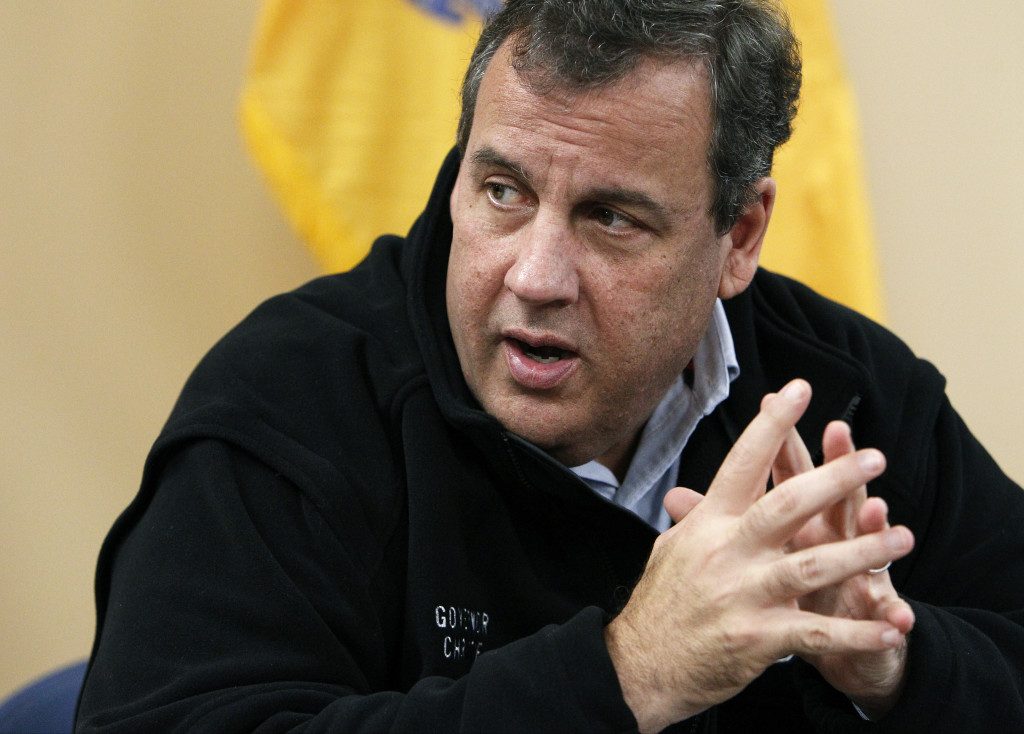
New Jersey Gov. Chris Christie dropped out of the Republican nomination for president on Wednesday, a day after his disappointing sixth-place finish in New Hampshire’s primary. Campaign spokeswoman Samantha Smith said Christie told staff at his campaign headquarters in Morristown, New Jersey, late Wednesday afternoon, and was calling donors and other supporters. Christie on Tuesday night told supporters he was heading home to New Jersey to “take a deep breath,” await the final tally of results from New Hampshire, and decide what to do next. He said he was leaving New Hampshire “without an ounce of regret,” but spoke of his campaign in the past tense at one point and canceled a Wednesday event in next-to-vote South Carolina. Christie dropped out of the race the same day that Carly Fiorina announced on social media that she, too, was calling it quits. The former chief executive of Hewlett-Packard won just 4 percent of the vote in New Hampshire. Christie had 7 percent. Christie had been banking on a strong finish in New Hampshire and spent more than 70 days campaigning in the state, holding well-received town halls and meet-and-greets. Tuesday’s result, though, appeared to be the final blow for a candidate whose campaign saw glimmers of hope at times, but had trouble from the get-go raising money and building support in a crowded Republican field dominated by another brash East Coaster, businessman Donald Trump. While Trump posed a challenge to the entire Republican field, his dominance seemed especially damaging to Christie, who had branded himself the “telling it like it is” candidate. When he returns home to finish his second term as governor, Christie will face a slew of unsolved problems and rock-bottom approval ratings from residents who, polls show, feel he neglected New Jersey to pursue his national ambitions. Christie racked up a long list of notable endorsements from state legislative leaders in New Hampshire. At the end of 2015, he appeared to be breaking into the top tier after a video of him discussing a friend’s struggle with drug addiction went viral. The terrorist attacks in Paris and San Bernardino, in particular, played to Christie’s advantage, allowing him to talk about his previous job as a U.S. attorney and play up his law-and-order credentials. And a commanding performance during the final GOP debate before the New Hampshire primary earned him strong reviews. But with a field filled with numerous other options, including current and former governors and senators, Christie never consolidated support, despite being praised by both fans and rivals as one of the Republican Party’s best communicators. Christie may have missed a better chance at the White House four years ago, when some of his party’s most powerful statesmen and donors begged him to run in 2012. But Christie declined, saying that he didn’t feel ready. Christie’s aggressive political team worked to rack up endorsements and wide victory margins in his re-election bid for governor as a springboard for 2016. At the same time, his aides took their game of doling out political favors and punishments too far, leading to one of the most dumbfounding political scandals in recent memory. Aides purposely created traffic jams in the town of Fort Lee to punish the mayor, who chose not to endorse Christie’s re-election. While Christie first laughed off the suggestion that his team had anything to do with the plot, the denials quickly unraveled following the release of emails, including one from a top aide that read, “Time for some traffic problems in Fort Lee.” Three people have been indicted in the scheme, including a former high school classmate of the governor who has pleaded guilty and is working with federal prosecutors. Other Republicans who have left the race include South Carolina Sen. Lindsey Graham, former Arkansas Gov. Mike Huckabee, Louisiana Gov. Bobby Jindal, Wisconsin Gov. Scott Walker, and former Texas Gov. Rick Perry. Republished with permission of the Associated Press.
Marco Rubio promises supporters he’ll do better as the campaign moves to South Carolina
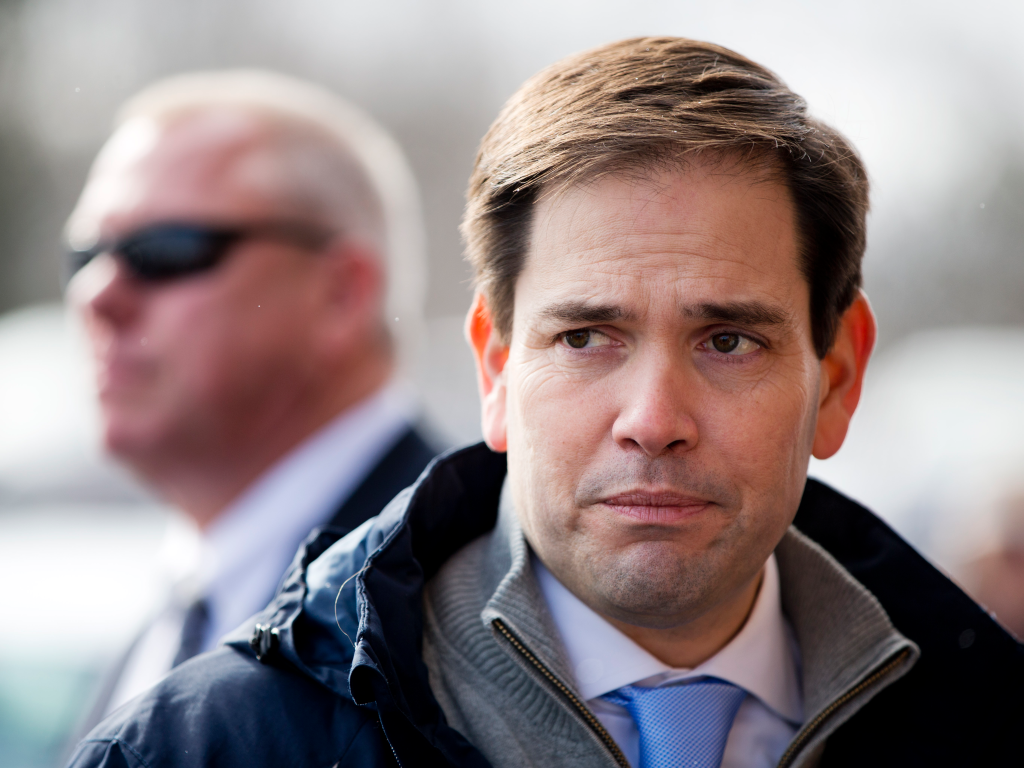
Marco Rubio vows that he will never allow what happened to him in last Saturday night’s GOP debate to happen to him again. “I want you to understand something,” he told the crowd of disappointed supporters at the Radisson Hotel in Manchester, New Hampshire on Tuesday night. “Our disappointment tonight is not on you; it’s on me. It is on me. I did not do well on Saturday night — listen to this: that will never happen again. That will never happen again.” What Rubio’s vowing will never happen again is that he will falter in this campaign as he did under a verbal assault he received at the hands of New Jersey Governor Chris Christie during last Saturday night’s debate in Manchester. “Let me tell you why it will never happen again,” he said. “It’s not about me, it’s not about this campaign, it is about this election. It’s about what’s at stake in this election.” Christie blasted Rubio for his lack of experience during the debate, and Rubio failed to respond, instead repeatedly reciting his criticisms about Barack Obama. In the days after the debate, he tripled down on those comments, saying he didn’t understand why the media was making such a big issue about it and continued the anti-Obama mantra. He dropped the facade on Tuesday night, however, after he finished a disappointing fifth in the race, behind not only Donald Trump and Ted Cruz, but John Kasich and Jeb Bush as well. He did, however, best Christie, who appears now to be considering dropping out of the race. Rubio’s nationally televised gaffe may have impacted the race, as 65 percent of GOP voters said they were influenced by Saturday night’s debate. Also, ABC News found nearly half of Republican primary voters saying they’d made their final decision in just the last few days. Only 20 percent of Democratic voters reported being late deciders. The question is now – is Rubio’s campaign fatally wounded? That remains to be seen. You can watch Rubio’s concession speech here.
New Jeb Bush ad uses Rick Santorum’s stumble to take a shot at Marco Rubio

Jeb Bush is jumping on Rick Santorum’s inability to name an accomplishment of Marco Rubio, using the footage of in a new television advertisement. As first reported by CNN, the 60-second spot will start running in New Hampshire on Saturday. The advertisement features clips from an interview with Santorum on MSNBC’s Morning Joe on Thursday. During the interview, Santorum struggles to name something Rubio had done during his first term in the Senate. After showing about 30 seconds of Santorum fumbling through the interview, Sean Hannity is heard interviewing Bush and rattling off a list of his accomplishments during his time in the governor’s mansion. “I was a reform-minded conservative. I did cut taxes every year. I balanced budgets every year. When I left, there were $9 billion in reserves, we reduced the state government workforce by 13,000,” the former Florida governor is shown saying in the advertisement. “My record, I think, shows the path of what could happen in Washington, D.C.” NEW AD: My conservative record of accomplishments vs. @MarcoRubio’s record of doing nothing in the Senate.https://t.co/vKbtrVGlmF — Jeb Bush (@JebBush) February 5, 2016 The advertisement is the second as many days using the Morning Joe footage. On Thursday, Chris Christie released a 30-second spot based on the interview. Recent polls show Rubio gaining ground in the Granite State. A NBC News/Wall Street Journal/Marist poll has Rubio in second place in New Hampshire with 17 percent. The survey found Bush was at 9 percent and Christie was at 4 percent.
Ted Cruz has raised $3 million since winning Iowa caucuses
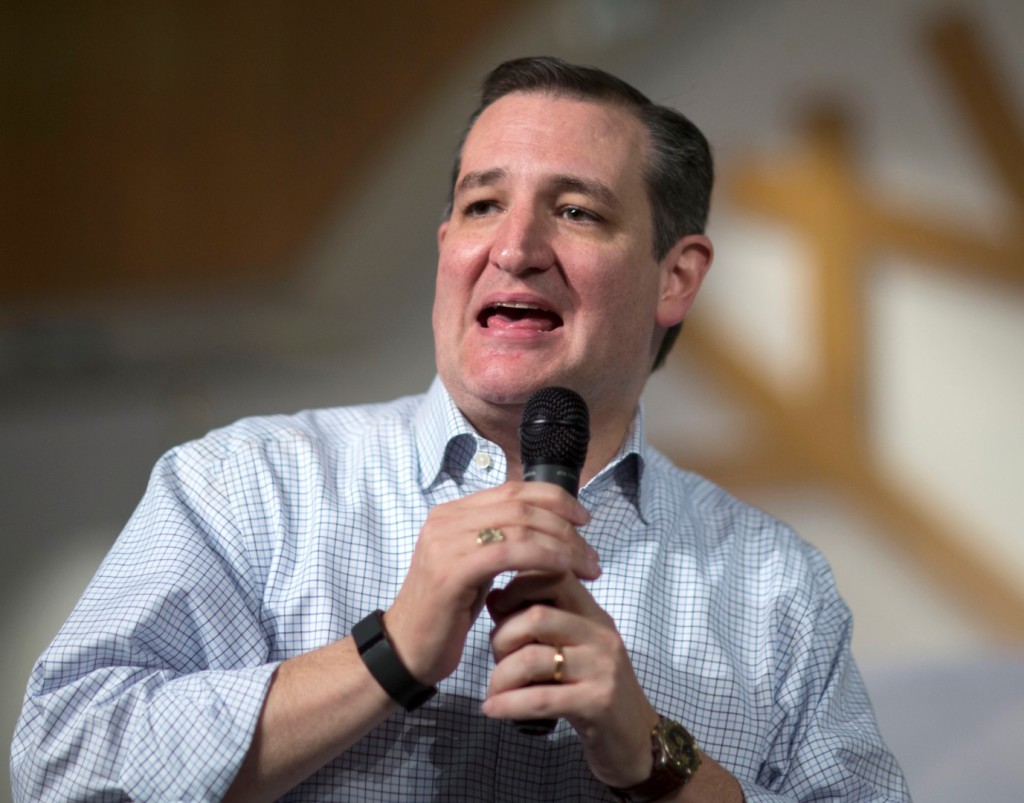
Republican Ted Cruz’s presidential campaign has raised $3 million since winning the Iowa caucuses on Feb. 1. That’s according to Cruz campaign manager Jeff Roe, who tweeted out the new fundraising numbers on Thursday. Roe says the Cruz campaign has raised $10 million overall since the beginning of the year. That includes 182,000 individual contributions averaging $55 each. Cruz was enjoying a big fundraising advantage over his Republican rivals even before the new numbers were released. His campaign closed the year with almost $18.7 million in the bank. That was roughly as much as Marco Rubio, Jeb Bush, John Kasich and Chris Christie combined. Republished with permission of the Associated Press.
Presidential Primary Brief: 280 days until Election Day
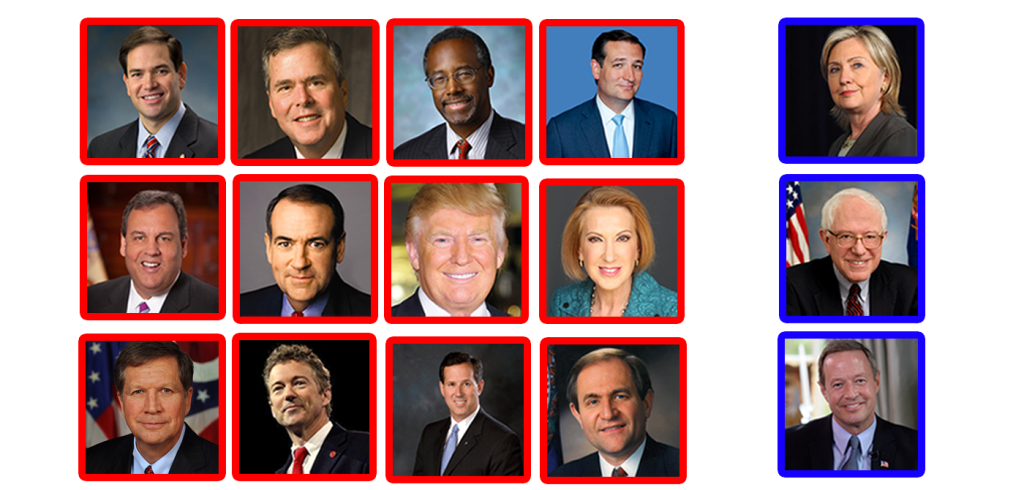
28 days until AL Presidential Primary 280 days until Election Day Convention Dates: Republican July 18-21, 2016, Democratic July 25-28, 2016 Weekly Headlines: Skipping debate, Donald Trump gambles with Iowa Pressure grows on Paul to ditch presidential bid Poll: Sanders and Clinton in tight battle for Iowa Press Clips: Sanders challenges Clinton to 3 new debates (Politico 1/27/16) Hours after Hillary Clinton ratcheted up her pressure on him to accept an invitation to an unsanctioned debate on Feb. 4, Bernie Sanders escalated the debate by calling for three new debates. “From the beginning of this campaign Sen. Sanders has called for more debates. Secretary Clinton has not. Now she is asking to change the rules to schedule a debate next week that is not sanctioned by the DNC. Why is that? The answer is obvious. The dynamics of the race have changed and Sen. Sanders has significant momentum,” said Sanders campaign manager Jeff Weaver in a statement on Wednesday night, while Sanders was speaking to a packed audience here. Trump gets backing of S.C. lieutenant governor (Politico 1/27/16) South Carolina Lt. Gov. Henry McMaster has thrown his support behind Donald Trump and will appear alongside him at a rally Wednesday .In a statement from the Trump campaign, McMaster said he is “delighted” to support the businessman. “He is a man of accomplishment and speaks the truth in words everyone can understand, instills confidence in the people about our country’s bright future, and reflects and believes in the strength and determination necessary for success,” McMaster said. “These qualities — and his quiet compassion for those in need — are essential to ‘making America great again.’” Faith and the 2016 campaign (Pew Research Center 1/27/16) The conventional wisdom in American politics has long been that someone who is not religious cannot be elected president of the United States. Most Americans have consistently said that it is important to them that the president have strong religious beliefs. And a new Pew Research Center survey finds that being an atheist remains one of the biggest liabilities that a presidential candidate can have; fully half of American adults say they would be less likely to vote for a hypothetical presidential candidate who does not believe in God, while just 6% say they would be more likely to vote for a nonbeliever. Jeb Bush super PAC cash plummets (Politico 1/31/16) The super PAC dedicated to former Florida Gov. Jeb Bush’s flagging campaign for the GOP presidential nomination raised $15 million in the second half of the year ― a massive drop- off from the $103 million it raised in the first half ― according to a report filed Sunday night with the Federal Election Commission. The super PAC, Right to Rise, spent $54 million between the beginning of July and the end of last year, leaving it with $59 million in the bank at the beginning of this year, according to the report. Donald Trump reclaims lead in latest Iowa poll (USA Today 1/30/16) Donald Trump has muscled ahead in Iowa, regaining his lead on the brink of the first votes being cast in the 2016 presidential race. Trump stands at 28 percent, while rival Ted Cruz has slid to 23 percent. But there’s still a strong case for Cruz in this race — he’s more popular and respected than Trump, the final Des Moines Register/Bloomberg Politics Iowa Poll shows. “The drill-down shows, if anything, stronger alignment with Cruz than Trump, except for the horse race,” said J. Ann :, the pollster for the Iowa Poll. Fact check: The seventh Republican debate (USA Today 1/29/16) The Republican presidential candidates debated in Iowa Jan. 28 and stretched the facts: Sen. Marco Rubio went too far in claiming that Hillary Clinton “wants to put Barack Obama on the Supreme Court.” An Iowa resident suggested such an appointment to Clinton, and she said she’d take it “under advisement.” Rubio also said that the White House “still refuses to acknowledge” that the shooting of a Philadelphia police officer on Jan. 7 “had anything to do with terror.” DNC expected to sanction Feb. 4 debate in New Hampshire (Politico 1/31/16) The Democratic National Committee will formally sanction the Feb. 4 debate in New Hampshire, hosted by MSNBC, the network announced on Sunday. The debate will be held at University of New Hampshire in Durham at 9 p.m. ET and will be moderated by MSNBC anchors Chuck Todd and Rachel Maddow. All three Democratic presidential candidates, former secretary of state Hillary Clinton, Sen. Bernie Sanders and former Gov. Martin O’Malley are expected to attend. Email issues dog Hillary Clinton on eve of Iowa caucuses (New York Times 1/31/16) This is not what Hillary Clinton wanted to discuss the morning before the Iowa caucuses. But, in her brief appearance on ABC’s “This Week” on Sunday, Mrs. Clinton found herself defending her use of a private email server while serving as secretary of state and reinforcing that she did not knowingly send or receive classified emails. “She lied about the fact that there is nothing classified on my server. Why as long as you can get away with it?” Carly Fiorina says in ABC’s introduction of Mrs. Clinton, who appeared on the show right before her main rival, Senator Bernie Sanders of Vermont. “She put our national security at risk for her convenience,” Chris Christie says.
Cash flow could be issue for 4 GOP contenders seeking boost
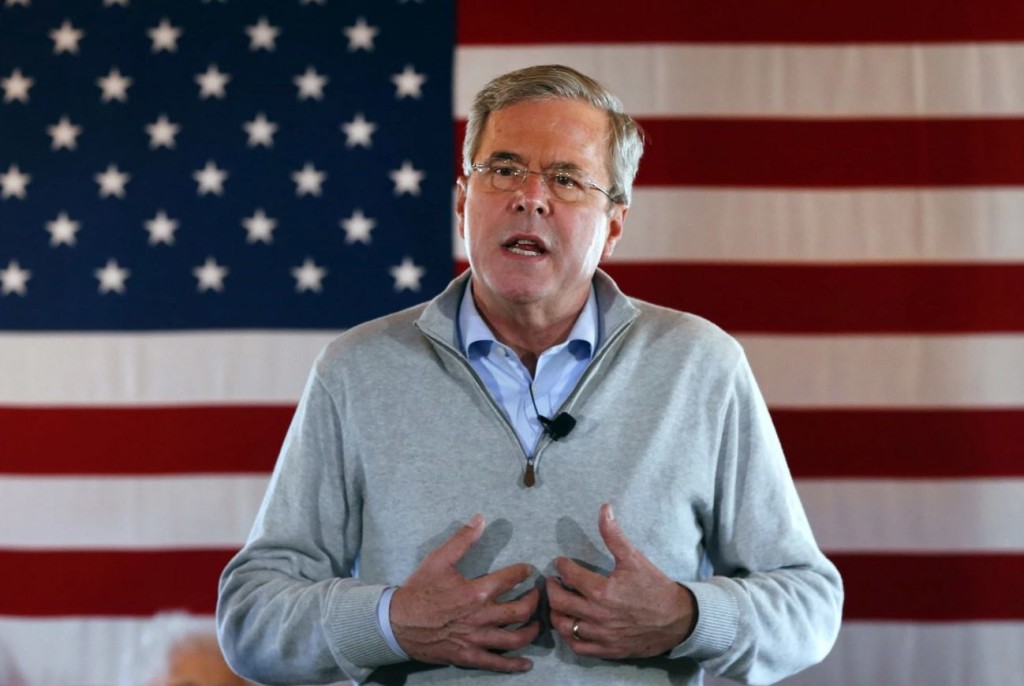
Money may be growing tight for four Republican presidential hopefuls clustered under Donald Trump and Ted Cruz — just when they’re about to need it the most. Financial reports coming out Sunday will show who began the year with enough cash to put their long-range campaign plans into motion. For Chris Christie, Jeb Bush and John Kasich, the aim is a strong showing in New Hampshire on Feb. 9 that power-boosts them deep into primary season. Marco Rubio‘s imperative is to do well enough in the first four states to vote that he can make a sustained climb in the weeks that follow. That sort of long slog would be costly because it involves travel around the two dozen states that hold contests on or before March 15. And some of those states, including Virginia, Florida and Ohio, have expensive advertising markets. “If you’re going to proceed after New Hampshire, you’re absolutely going to need considerable funds,” said Fred Malek, who has helped four decades of Republican presidential candidates raise money. “The pace of the primaries builds up rapidly. It’s far better to already have the cash on hand rather than have to ramp up.” The financial health of the campaigns of Christie, Kasich, Bush and Rubio is critically important because they’re competing not only with each other, but with Trump, a billionaire who has vowed to spend whatever it takes to win, and Cruz, who began the year with $19 million in the bank — an amount that probably exceeds most of his rivals. The foursome is considered to be competing for mainstream Republicans in a campaign that has seen Trump and Cruz most effectively tap populist anger and disdain for the establishment. In addition to the candidates, the outside political groups known as super PACs helping them must turn in progress reports on their fundraising and spending Sunday. Stanley Hubbard, a billionaire Minnesota broadcast executive, said he’s poised to write a large check to a super PAC backing any one of his preferred candidates, Rubio, Christie and Bush, among others. “If we get someone who really has a chance of doing something, I’m ready,” he said. “Someone just needs to rise to the top.” Asked if he is confident anyone will have enough money to compete with Trump or Cruz, he said: “No, I do not feel confident. But I’m hopeful.” There are signs that Rubio, a Florida senator, could be facing a cash crisis. After his campaign began leasing corporate jets and hiring dozens of additional employees at the end of the year, it recently downsized its advertising plans in Iowa, New Hampshire and South Carolina, according to advertising tracker Kantar Media’s CMAG. His campaign said it would air a 30-minute Rubio town hall over the weekend on several Iowa TV stations. Federal broadcast filings show that sets him back at least $12,000. On Friday, Rubio acknowledged the obvious, telling reporters he’s not going to be the candidate with the most campaign cash. He also said he believes his campaign has spent money wisely, building up staffing slowly and trimming the ad buy to save money. For Bush, the budget crunch arrived in October, when a fundraising shortfall — combined with the realization that the primary could last well into 2016 — prompted him to narrow what had been a large national campaign to focus squarely on New Hampshire. “It’s super hard to raise money,” said Anthony Scaramucci, a New York-based top fundraiser for Bush. “We’ve knuckled down to the new reality.” But he said the Bush finance team is working furiously and “generating cash every day for the campaign.” Judging by their ad buys, Christie and Kasich haven’t been reaping much contributor cash, either. Even as they barnstorm New Hampshire, they’ve each spent only about $500,000 on commercials there, CMAG shows. That’s less than retired neurosurgeon Ben Carson, who has paid little mind to New Hampshire. Christie campaign strategist Mike DuHaime said he expects “a new influx” of cash if Christie performs well in New Hampshire and at least some of his competitors drop out. But under several scenarios, all four candidates could think they’ve done well enough to continue on. Come Sunday, fundraising reports answer the question which of the four is best financially prepared to do so. As of Sept. 30, the last time the campaigns had to report, Christie had collected $4.2 million for the year, Kasich $4.4 million, Rubio $15.5 million and Bush $24.8 million. Previous filings also hinted at a fundraising challenge facing them: They’re struggling to connect with low-dollar donors who can give again and again, replenishing campaign treasuries if the candidates survive deep into the primaries. For Christie, Bush and Kasich, people giving $200 or less were barely a blip in their fundraising totals. About 20 percent of Rubio’s operation is supported that way, compared with 42 percent of Cruz’s. That could be why all four lean heavily on super PACs to communicate with voters through paid media. While campaigns can raise no more than $2,700 from each donor for the primaries, super PACs can — and do — take million-dollar checks. These outside groups have accounted for almost 90 percent of the $129 million in radio and television ads aired by the four establishment Republicans, according to CMAG. But super PACs can only do so much, as Scott Walker and Rick Perry can attest. Both had well-funded outside efforts in their corner, but folded up their presidential bids when their campaigns couldn’t raise enough money to keep going. Republished with permission of the Associated Press.
Stage set for chaos as New Hampshire primary looms
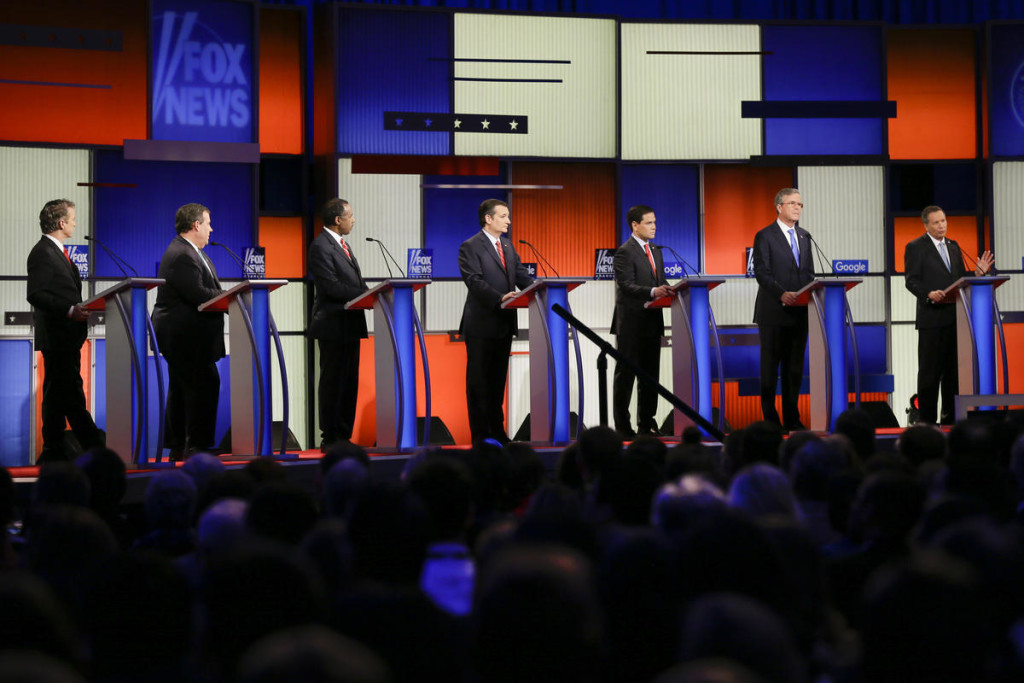
Uncertainties are mounting in New Hampshire as Republican presidential candidates fail to sway the state’s many fence-sitters one way or the other, despite months of outreach by the various campaigns. More than 40 percent are not registered with any political party, giving them the power to choose which party they’d like to vote with come Feb. 9. Seeking to emerge as the establishment contender against billionaire Donald Trump and Texas Sen. Ted Cruz, four of those candidates — John Kasich, Chris Christie, Marco Rubio and Jeb Bush — are scrambling to find anything that will set them apart. With Trump maintaining a commanding lead in the state, the battle has intensified among the rest of the pack as they look to elbow each other out for a second-place finish. “What the hell is taking so long with you people?” New Jersey Gov. Christie half-joked at a town hall in Portsmouth last week. “I mean, c’mon now!” Kasich, Ohio’s sitting governor, is the latest to claim momentum in the rollercoaster race, pointing to endorsements from several major New Hampshire newspapers and an uptick in preference polls. Once an afterthought, most polls show Kasich is among the candidates vying for second place. He’s attracting relatively small crowds, but his rivals are taking no chances. The outside political organization backing Bush, called Right to Rise, has launched television ads declaring Kasich “wrong on New Hampshire issues,” citing his decision to expand Medicaid in Ohio — something New Hampshire has also done. “You also know that you’re rising when Jeb Bush’s operation starts throwing negative ads at you,” Kasich spokesman Chris Schrimpf said. “Three weeks ago they weren’t spending millions on TV against us.” The jabs go both ways. Several of Kasich’s top New Hampshire backers scheduled a press conference Friday, right across from Bush’s Manchester campaign office in a clear attempt to steal the former Florida governor’s thunder. The attacks are coming from all sides. The super PAC backing Rubio, Florida’s junior senator, is bashing nearly every other candidate on the air, while Christie’s campaign sends out emails almost daily highlighting inconsistencies in his opponents’ records. Some differ in their approach. Christie blatantly goes after his rivals, while Kasich professes positivity, leaving the trash talk to his campaign staff and the outside group backing him. But Mike Dennehy, a longtime GOP strategist in New Hampshire who is not with any campaign, said it’s a mistake for the candidates to launch their attacks at each other rather than Trump. “They’re all shooting each other up so much that none of them are going to create any distance between themselves,” Dennehy said. “They’re all going to end up tied for third place between eight and 11 percent, and then they’re doomed.” And some voters say the negativity is a turnoff. Judith McKenna, 66, said she emailed the Bush campaign to complain after receiving recorded phone calls promoting his candidacy and “trashing all the other candidates.” McKenna added that she’s leaning toward Rubio or Christie, whom she’s already seen twice. Despite having attended multiple town halls and candidate events, she said she’s still undecided — and she’s not alone. Bruce McCracken, a 66-year-old retired teacher, has seen nine presidential candidates in recent weeks, including Trump and Democrat Bernie Sanders. Yet, he’s still mulling whether to vote in the GOP or Democratic primary. He says Marco Rubio “shows more compassion” than other Republican candidates and feels Kasich’s experience as Ohio governor is a plus. But for now, at least, he’s leaning toward a vote for Sanders — senator in neighboring Vermont. But if Sanders maintains his comfortable lead in New Hampshire over Clinton, McCracken said he’d rather use his vote in the more unpredictable GOP contest and vote for someone other than Trump. “You do these calculations in New Hampshire,” he laughed. Andy Smith, a political scientist and director of the UNH Survey Center, says voters like McCracken, who are unsure which primary to vote in, are relatively unusual. Not so unusual, however, are voters who wait until the last minute to make up their minds. Data from a recent UNH poll shows that just 31 percent of GOP voters have ‘definitely decided’ on a candidate. And in the 2012 contest, 21 percent of Republican voters didn’t make up their minds until primary day, Smith said. This late in the game, the candidates wouldn’t mind a little more certainty. “There’s so many undecided people, and I wish they were all committed to me,” Kasich recently told reporters. “What am I not doing right?” Republished with permission of the Associated Press.
Marco Rubio’s Iowa crisscross approach bends caucus campaign norm
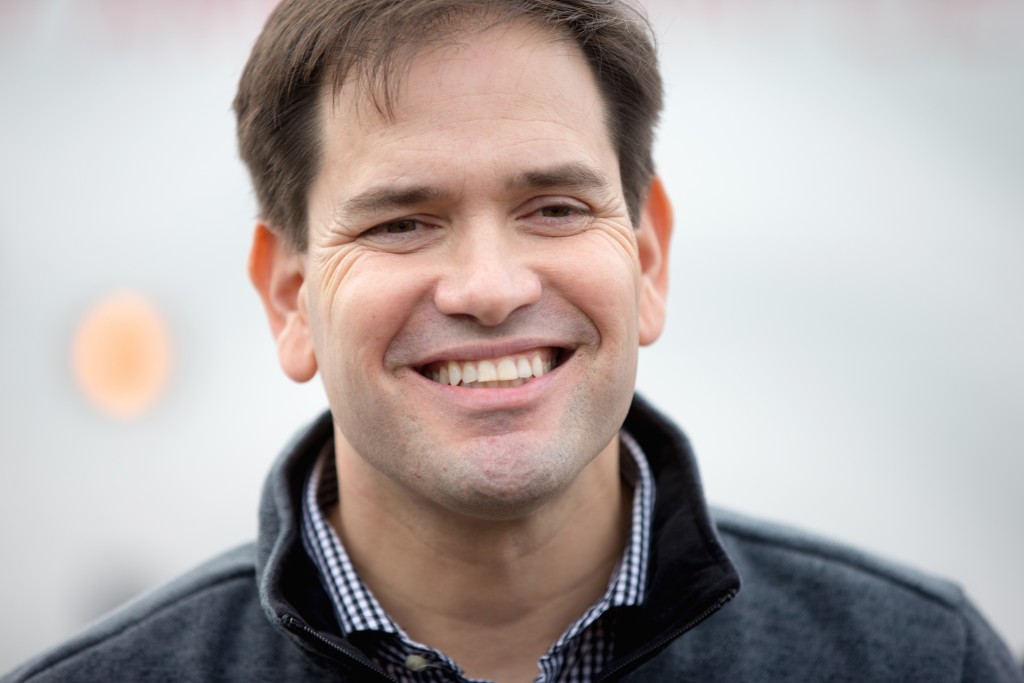
Marco Rubio is all over the map in Iowa. Quite literally. Having spent little time in the state’s rural Christian conservative northwest, the Republican presidential candidate dropped in to Sioux County for the first time last week, then bounced across the state two days later to speak with some of Iowa’s more fiscally conservative voters in the east. “I’m going to trust that he knows what he’s doing,” state Rep. John Wills, who supports Rubio, said after his campaign stop at the Christian Dordt College in GOP-rich Sioux Center. “I hope he gets the chance to get up here again. Northwest Iowa is where you win.” Rubio began an uninterrupted nine-day run Saturday ahead of Iowa’s lead-off caucuses next Monday. His itinerary includes college towns, larger cities and rural outposts. After months of promising that his campaign was on the verge of ramping up in early-voting states, Rubio appears to be following through in the Iowa homestretch. He dismisses the notion that he’s changing in the 11th hour to play catch-up with rival Ted Cruz, who has dedicated significant time and resources toward campaigning across the state. Rubio has focused more on Des Moines and the state’s other urban areas. Rather, “it’s an indication that the caucuses are eight days away,” Rubio said Saturday during a campaign stop in Indianola. In the chess game of early voting, Rubio needs to finish in Iowa ahead of mainstream GOP rivals like former Florida Gov. Jeb Bush and New Jersey Gov. Chris Christie. If he does, undecided voters in the upcoming contests in New Hampshire and South Carolina could take notice. Despite the scattershot appearance of Rubio’s schedule, a pattern of building toward caucus day was beginning to take shape over the weekend as he drew large, diverse and engaged crowds, picked up endorsements from some of Iowa’s larger newspapers and appeared Monday with the state’s freshman U.S. senator, Republican Joni Ernst. “He knows what it is to keep our country safe from the threats that are out there,” Ernst, an Iraq War veteran, said of her 44-year-old Senate colleague. She called him “near and dear to my heart.” Ernst’s glowing introduction echoed formal endorsements of younger, Republicans elected to Congress in the past decade. Rubio described as “young, strong conservative leaders,” those who have campaigned with him, including Colorado Sen. Cory Gardner, South Carolina Rep. Trey Gowdy and South Dakota Rep. Kristi Noem. “I feel good where that is going to lead,” Rubio said of his campaign on Monday. “As soon as we’re done here, we’re going to head to New Hampshire and do as well as we can there.” Until now, some Iowa GOP officials — among them, people who are backing Rubio or are remaining neutral — have been perplexed by his Iowa approach. The caucuses are far different from primary elections, and require successful campaigns to identify individual supporters, stay in touch and communicate with them about how they can be involved and ultimately attend their local precinct meetings. “The critique or allegation has been that (Rubio’s campaign is) not building an organization,” said John Stineman, an Iowa Republican consultant who is not affiliated with any campaign. “He’s not spent as much time in western or northwest Iowa as a traditional Iowa campaign,” said Gwen Ecklund, Crawford County GOP chairwoman. Instead, Rubio has frequently visited Sioux City, the metro hub of northwest Iowa, but a far cry from the socially conservative counties that surround it where the more clearly evangelical candidate Rick Santorum won in the 2012 caucuses. Cruz, who has led in some recent Iowa GOP polls, has visited them all, evidenced by red signs, reading “Choose Cruz” that mark the snowy banks along the two-lane farm roads of Sioux County. Still, Rubio drew 600 to his event at the Dordt College union on a recent, bitterly cold night. He had drawn a smaller audience to the Christian college two weeks earlier, when students were away for winter break. Two days after his Sioux County event, Rubio was 370 miles east, speaking to about 500 on a Monday night in Bettendorf, part of the more moderate Quad Cities metro area, where 2012 GOP nominee Mitt Romney won during the 2012 caucuses. In the days ahead, Rubio has an equally demanding schedule, beginning Monday in the Des Moines area with little letup, except for Thursday’s GOP debate in that city. Stineman said activities behind the scenes could fill any gaps. Much of Rubio’s voter identification has been digital — through social media and email. “It’s happening in a way we’re not used to,” said former state GOP Chairman Matt Strawn, who is not working for a campaign. Rubio is also getting organizational help from an unconventional source. Conservative Solutions, the super PAC that supports Rubio, is calling potential Rubio supporters, collecting information about them and directing them to the Iowa Republican Party’s website to find their caucus locations. Stineman said he had received such calls and follow-up information. While a spokesman for the group said it was conducting some organizational functions aimed at benefiting Rubio in the caucuses, he declined to elaborate. It’s a new role for these groups, which can, unlike federally regulated campaigns, take unlimited contributions but have until now largely used their money on advertisements. “Rubio’s team seems to be operating off of a new Iowa Caucus playbook,” Strawn said. Republished with permission of the Associated Press.
Jeb Bush upbraids Donald Trump at New Hampshire Republican forum
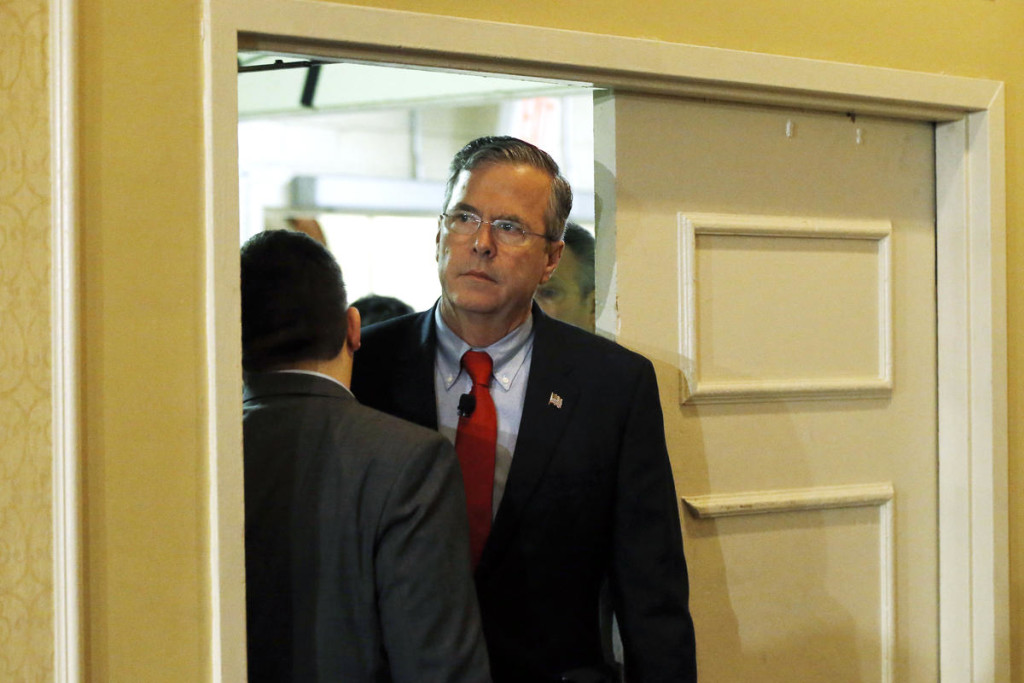
Former Florida Gov. Jeb Bush unleashed a fury of criticism against Donald Trump on Saturday before imploring New Hampshire voters to forgo the billionaire businessman in the state’s Feb. 9 primary. “You have a chance to reshape this whole primary,” Bush told hundreds of voters at a state Republican Party presidential candidate forum. Trump, who continues to dominate polling in the first primary state, did not attend the event. Nor did Texas Sen. Ted Cruz, who is neck-and-neck with Trump in first-to-nominate Iowa and rising in New Hampshire. A host of candidates fighting for survival in the 2016 race appeared alongside Bush. Among them: Florida Sen. Marco Rubio, Ohio Gov. John Kasich, Kentucky Sen. Rand Paul, former CEO Carly Fiorina and former Pennsylvania Sen. Rick Santorum. But only Bush delivered harsh words for Trump. “He’s a gifted entertainer, but he’s not a conservative,” Bush said, citing Trump’s past support for Democrats, including the Clintons, past stances on social issues and previous support for a single-payer health care system, noting “that’s Bernie Sanders’ position.” He slammed Trump for saying Sen. John McCain, a Vietnam prisoner of war and two-time New Hampshire presidential primary winner, is not a “war hero” because he was captured. Bush also reminded voters of Trump’s remarks about women and immigrants. “It is not strong to insult women; it is not a sign of strength when you insult Hispanics,” Bush said. “(Or) when you say that a prisoner of war is a loser because they got caught.” Rubio and Kasich, meanwhile, largely stayed away from attacking fellow Republicans. Rubio offered only veiled attacks against Cruz and New Jersey Gov. Chris Christie over taxes. Instead, he stuck largely to his campaign speech and focused his criticism on President Barack Obama and Democratic candidate Hillary Clinton. “We are on the road to decline right now, and the reason is because in 2008 America elected a president who wasn’t interested in fixing the problems of America,” Rubio said. He criticized Obama for his stance on gun rights, immigration, education, military and foreign policy. “The result is the anger and frustration that people are feeling now,” the Florida senator said, echoing the feelings of Trump’s supporters and populist message. But, without naming rivals Trump and Cruz, the Rubio said voters cannot “just elect any Republican.” Kasich, by contrast, said it’s pointless to spend time focusing on Obama, who has only months left in office. Kasich in recent days has said he plans to keep his focus on what’s ahead. But, he noted he’s excited about the prospect of challenging Clinton in a general election. “She’s a fragile candidate,” he said. “In the general, I’m gonna have a ball.” Paul criticized rival Rubio and other Republican senators for pushing to raise military spending, which he said would add to the $19 trillion national debt. The Kentucky senator, whose campaign is struggling to gain traction, also said that Rubio, Bush and other Republicans are eroding Americans’ civil liberties in the fight against terror. They “want more surveillance of you,” he said. Republished with permission of the Associated Press.
Presidential race shows evolving gender roles in politics

Carly Fiorina has a husband who quit his career to further hers. Chris Christie boasts of his wife being the family’s top earner. Hillary Clinton is looking to get back into the White House, but this time as president. In the 2016 presidential campaign, a modern take on gender roles is increasingly on display in both parties. With two women running for president, a number of high-powered career spouses in the mix and an increased focus on policies to support two-income families, 2016 is shaping up as a different kind of election, said Anne Marie Slaughter, who four years ago wrote a popular essay in The Atlantic on why she left a job in the State Department to spend more time with her family. “I think what is changing is, this is the year of the family,” said Slaughter, now president and CEO of New America, a Washington-based nonprofit. And that means more attention on “how you support the family with policies for women and men.” While more women have been running at a state and local level, this is the first time both parties have a woman running in a serious way. This gives former Michigan Gov. Jennifer Granholm reason to hope decisions about running for office are no longer just being made “based on one’s plumbing.” Compared with her 2008 run, heavy on national security, Clinton this time has heavily stressed issues that are meant to appeal to women and families: health care, pay equality, education, child care, family leave. She says “these aren’t just women’s issues, they are economic issues that drive growth and affect all Americans.” This is murky territory for Clinton. She has a long record as an advocate of women’s advancement and speaks often and passionately about her baby granddaughter. But her potential Republican rivals have raised questions not only about her husband’s past infidelities but about how she might have contributed to efforts to discredit some of the women known or alleged to have been involved with him. Donald Trump flatly accused her of enabling Bill Clinton‘s philandering. Among Republicans, Florida Sen. Marco Rubio has proposed increasing the child tax credit and creating a tax credit for employers that provide family leave. Rep. Paul Ryan asserted his need for family time when agreeing to become House speaker. Christie says voters are meeting a new generation of candidates with “different types of marriages and different types of relationships than people in the generation before. It really is necessitated by the increasing role and prominence of women in the workforce and by necessity, too.” Dianne Bystrom, director of the Carrie Chapman Catt Center for Women and Politics at Iowa State University, said that in recent years there has been a shift in both how female candidates talk about their personal lives and family-oriented policies. The political reasons are clear. “The Democrats have to mobilize the base and the Republicans have to whittle away at the women’s vote,” said Debbie Walsh, director of the Center for American Women and Politics at Rutgers University. Support from women, who typically lean toward Democrats, was vital for President Barack Obama, who won re-election in 2012 with 55 percent of female voters, while Republican opponent Mitt Romney won 52 percent of men, according to exit polls analyzed by Walsh’s center. Obama won about the same percentage of women in 2008 as he did in 2012. The two-career marriages on display in the campaign are in keeping with the rise of women in the workforce. About 58 percent of working-age women were employed in 2012, compared with 38 percent in 1963, federal statistics show. Mothers work at even higher rates – with about 70 percent of women with children under 18 working. Christie’s wife, Mary Pat Christie, was a former Wall Street executive who out-earned him for most of their marriage. Heidi Cruz, wife of Texas Sen. Ted Cruz, is on leave from her job at Goldman Sachs. Jane Sanders is a key adviser to husband Bernie Sanders. And Fiorina’s husband, Frank, was a corporate executive until he retired early to support her high-powered career. With a more diverse group campaigning, the role of political spouse may get a reboot. Ex-President Clinton and Frank Fiorina are campaigning in Iowa as potential “first gentlemen.” Many of the other spouses are out on the trail. The campaign has also gone beyond the usual (and still ubiquitous) sugar-coating of family life of the candidates, as Fiorina discussed the stepdaughter she lost to drug and alcohol addiction, Jeb Bush opened up about the daughter who’s struggled with drug abuse and Christie acknowledged a complicated marital history. Still, stereotypes tend to die hard. During a recent Republican debate, Christie seemed caught in a time warp back to the 1950s when talking about Los Angeles families dealing with a terrorist scare. “Think about the mothers who will take those children tomorrow morning to the bus stop wondering whether their children will arrive back on that bus safe and sound,” he said. “Think about the fathers of Los Angeles, who tomorrow will head off to work and wonder about the safety of their wives and their children.” And then there’s Trump, who has tossed various sexist insults at certain women – saying at one point that a debate moderator had “blood coming out of her wherever” – yet insists at rallies that he would “cherish women” as president. Republished with permission of the Associated Press
Presidential Primary Brief: 293 days until Election Day
41 days until AL Presidential Primary 293 days until Election Day Convention Dates: Republican July 18-21, 2016, Democratic July 25-28, 2016 Weekly Headlines: Debate over refugees will be heated in 2016 presidential race NBC replaced by CNN for GOP’s Super Tuesday debate Trump bungles Bible reference at Liberty University Press Clips: 5 takeaways from the Democratic debate (Politico 1/18/16) Hillary Clinton, facing an unexpectedly stout challenge from Bernie Sanders, threw diplomatic dignity to the wind in the fourth Democratic debate, attacking the senator even if it reinforced his characterization of her as an establishment politician so desperate she’d say anything to win. Sanders’ stunning gains in New Hampshire and Iowa have put a jolt into a Clinton campaign that had grown increasingly confident at the end of 2015 and forced her to take risks she might have avoided with a firmer grip on her party’s loyalty. In the three previous debates, Clinton adopted an attitude of pre-presidential diffidence, but on Sunday night she was brawling like a Republican, slamming Sanders on guns, health care reform and taxes. Fact checking the sixth round of GOP debates (The Washington Post 1/14/15) Fox Business News aired two GOP presidential debates on Jan. 14: a prime-time event starring seven candidates and an earlier debate featuring three second-tier contenders, based on an average of recent polls. Not every candidate uttered statements that are easily fact checked, but following is a list of 14 suspicious or interesting claims. As a bonus, we also fact-checked comments by Sen. Rand Paul (R-Ky.), who boycotted the second-tier debate and instead appeared on “The Daily Show.” As is our practice, we do not award Pinocchio’s when we do a roundup of facts in debates. Jeb Bush invokes MLK as he unveils education plan (Politico 1/18/16) Former Florida Gov. Jeb Bush offered a sweeping school choice-centric education plan Monday with proposals that would allow parents to spend government dollars on the pre-K program of their choice and give college students a $50,000 line of credit to pay tuition. Bush unveiled his plan on Martin Luther King Jr. Day as he Eights to stay relevant in a GOP race dominated by Donald Trump, Ted Cruz and Marco Rubio, invoking education as a civil rights issue. His plan also includes allowing federal dollars for schools with many low- income students to follow a child to a new school and doubling federal support for charter schools, which are publicly funded but privately run. His campaign said the plan is budget neutral, and it would cut the federal Education Department by 50 percent, but much of what he wants would likely require congressional approval. Christie vs. Rubio heats up in GOP debate (USA Today 1/15/16) The growing rivalry between Chris Christie and Marco Rubio spilled into Thursday night’s Republican presidential debate. The two are battling to become the top so-called establishment alternative to Donald Trump and Ted Cruz. Rubio hit first. “I like Chris Christie, but we cannot afford to have a president of the United States that supports Common Core. We cannot afford to have president of the United States that supports gun control,” he said. “Chris Christie wrote a check to Planned Parenthood,” the Florida senator continued, adding the nation can’t afford to have a president supportive of Barack Obama’s agenda. Clinton dodges question on Obama’s Syria red line (Politico 1/17/16) Hillary Clinton dodged a question at Sunday’s Democratic presidential debate about whether President Barack Obama erred by not taking military action in Syria in 2013 after he laid down a “red line,” vowing to act if chemical weapons were used there. Asked by NBC’s Andrea Mitchell if Obama should “have stuck to his red line once he drew it,” the former secretary of state did a verbal tap dance, saying that the situation worked out for the best since Syrian President Bashar Assad ended up relinquishing his chemical weapons stockpile. Ben Carson back in South Carolina for a week of events (WRDW 1/18/16) Republican presidential hopeful Ben Carson is back in South Carolina this week for a few events, including a discussion on law and the Constitution. The retired neurosurgeon is participating in a forum Monday evening sponsored by the Conservative Leadership Project. At the Brookland Baptist Banquet and Conference Center, Carson is sitting down with state Attorney General Alan Wilson. Fiorina likens Hillary Clinton to Mexican drug lord El Chapo (CNN 1/15/16) Carly Fiorina said Friday that Hillary Clinton is “more qualified for the Big House” than the White House and compared her to the recently captured Mexican drug lord El Chapo. “Hillary Clinton has spent her entire life on a quest for power. She has avoided prosecution more times than El Chapo. Honestly. We’ve run out of ‘gates,’” Fiorina told CNN’s Alisyn Camerota on “New Day.” Fiorina added, “Once again, she wants to be in the White House. The truth is she is more qualified for ‘the Big House.’” That is why I am continuing to talk about the reality of the political establishment – of which Mrs. Clinton is example, exhibit A — the political establishment does not serve the interest of the American people.” How Bernie Sanders’ “political revolution” would change the nation (The Washington Post 1/18/16) What is Bernie Sanders talking about when he says he wants a “political revolution”? The answer is a series of policies that would offer vast new government-funded benefits to individual Americans, including health insurance, paid maternity leave and free tuition at public colleges. To make those things possible, Sanders — a Vermont senator, “democratic socialist” and Democratic presidential candidate — would impose a variety of new taxes on the wealthy, on corporations and on Wall Street trade. He also would give the federal government a new level of control over the college experience, the price of prescription drugs and child care — by making these sectors of the economy far more dependent on federal money. Martin O’ Malley wants “just 10 seconds” (USA Today 1/17/16) When you’re struggling to gain traction in
