
Marco Rubio donors to remain secret indefinitely
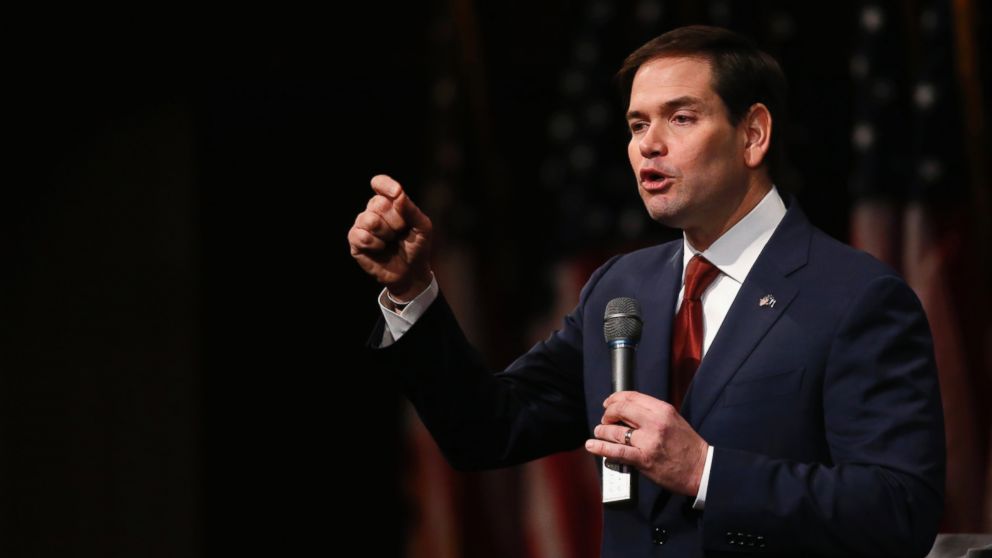
Much was made of Jeb Bush‘s relentless maneuvering when it came to early fundraising, but the actual dark money pioneer of 2016 may well be U.S. Sen. Marco Rubio. As Shane Goldmacher writes in POLITICO, the Florida senator’s top moneymen allies at Conservative Solutions Project managed to stake out a novel arrangement that will allow the sources of more than $10 million in funding for opposition research, mailers, and TV ads will remain forever unknown to the public. “It is now the model for a how a candidate can inject unlimited, secret, corrupting money into their campaigns to benefit their election,” said Fred Wertheimer, president of Democracy 21, a campaign watchdog group. “That is precisely the kind of model that we do not need in America.” The pro-Rubio nonprofit, known as the Conservative Solutions Project, was created in early 2014 and run by some of the same political operatives who would later lead for his super PAC, including South Carolina strategist Warren Tompkins. Both groups can accept unlimited donations from donors, but unlike like the super PAC, the nonprofit can keep its contributors hidden from the public — permanently. The Conservative Solutions Project operates under the “social welfare” 501(c)4 section of the tax code, which requires such groups not be primarily involved in political matters. The pro-Rubio nonprofit has claimed not to be directly involved in electoral politics. Yet the group paid for a raft of polling and research in the early primary states of Iowa, New Hampshire and South Carolina, as well as in Rubio’s home state of Florida. It bought millions in TV ads that aired in those early states, and it filled the mailboxes of Republican voters there with pro-Rubio literature. In fact, the Conservative Solutions Project was the second biggest TV advertiser of the 2016 campaign last year — trailing behind only Jeb Bush’s super PAC, according to a media tracker. Loose nonprofit tax laws, and an unusual filing schedule set up by its creators, ensure the pro-Rubio nonprofit will file little paperwork covering the primary period until April 2017 — months after the next president is sworn in. And even then, no donors will be named. “If you are trying to obscure your activities, they’re perfect,” Robert Maguire, a nonprofit investigator for the Center for Responsive Politics, said of 501(c)4s. Though a spokesman representing both Conservative Solutions Project and Rubio’s super PAC defends the “social welfare” designation saying the former was not involved in explicit electioneering, the two groups shared staffs and buildings. Their ads also aired only in states key to Rubio’s electoral success – Iowa, New Hampshire and South Carolina – where his campaign’s “3,2,1 strategy” sought to launch Rubio to the top of the GOP field. The supposed firewalls between Rubio’s political backers and backers of his social welfare rely on cutting the baloney extremely thin, writes Goldmacher: The nonprofit’s broadcast ads ran through November 22 in Iowa and New Hampshire. About a week later the Rubio super PAC picked up where it left off. The same ad buying firm, Target Enterprises, executed the ad reservations for both the Rubio super PAC and nonprofit. “They could not have been more blatant with the way this took place,” Wertheimer said. At some television stations, such as WMUR in Manchester and KCCI in Des Moines, the forms the television stations filed with the Federal Communications Commission listed the nonprofit as spending on behalf of “Marco Rubio 2016.” When that became public, the nonprofit’s attorney sent letters to some stations asking to correct those records, arguing their ads starring Rubio were not actually about Rubio. “CSP does not make candidate-related, political expenditures,” wrote Cleta Mitchell, the group’s lawyer and a prominent GOP attorney, of the Conservative Solutions Project. “All public communications are centered around important policy debates and concerns.” Some of Rubio’s rivals, particularly from the Jeb Bush camp, tried to make an issue of the questionable fundraising and disclosure tactics employed by the pro-Rubio 501(c)4. But this year’s slash-and-burn primary season was not well-suited for that kind of nuance, writes Goldmacher. Bush’s team, in particular, tried to highlight Rubio’s use of nonprofit as they battled over fundraising totals. “Haven’t seen the Rubio news release on frugality did it include the $6 million in secret money TV ads they saved money on?” as Bush communications director Tim Miller tweeted in October. The issue, however, never really broke through. “You’re talking about two of the most boring and convoluted fields of law: campaign finance and nonprofit tax law,” said Maguire, the nonprofit investigator. “Trying to explain that in an election where you have someone as outrageous as Donald Trump — it’s hard to do.”
Ted Cruz, Marco Rubio and John Kasich all face must-wins in home states
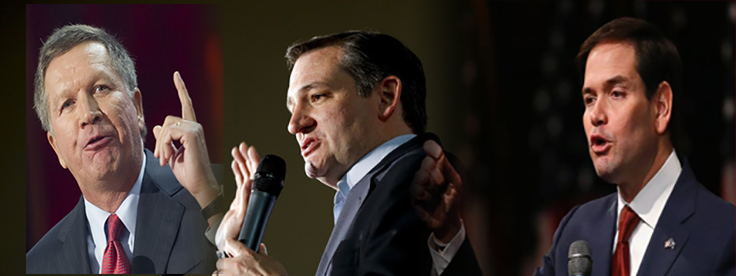
In their efforts to derail Donald Trump from the Republican presidential nomination, Texas Sen. Ted Cruz, Florida Sen. Marco Rubio and Ohio Gov. John Kasich are all facing enormous pressure in their home state primaries, which account for about a fourth of the delegates up for grabs in the next three weeks. Failure to defend their turf could leave each explaining what states they can win going forward — and make the New York billionaire look all the more inevitable. After Trump’s impressive win in Nevada, the presidential race now shifts to Super Tuesday, featuring 11 largely Southern states, including Texas, with 155 GOP delegates. Those delegates will be awarded proportionally. On March 15 will come primaries in Florida, with 99 delegates, and Ohio with 66, and they are winner take all. If no one can dent Trump’s advantage by then, the race for the nomination may be all but over. But home states have buoyed candidates in the past. Four years ago, eventual GOP nominee Mitt Romney used his native Michigan to quash a surprisingly stout challenge from Rick Santorum. Newt Gingrich won his home state of Georgia and neighboring South Carolina but did little elsewhere. Of the trio with looming home-state primaries, Cruz may be in the strongest position. “I wanna say, I cannot wait to get home to the great state of Texas,” Cruz said Tuesday night after losing in Nevada to Trump. “Tonight, I’ll sleep in my bed for the first time in a month.” But Cruz will have to win more than just Texas on Tuesday if he doesn’t want to be looking up at Trump in the delegate count. Kasich and Rubio, meanwhile, may be battling for many of the same votes from traditional Republicans uneasy with the bombastic Trump and the firebrand conservative Cruz. As long as both remain in the race, they could continue to split the establishment bloc. And they’ll have to run Tuesday’s gauntlet before they can even reach must-wins at home. The home-state jockeying is underway. ___ FLORIDA Current and former members of Congress from Florida who had been backing Jeb Bush signed on with Rubio this week after the ex-governor left the race. That’s not to say Rubio’s a slam dunk in his state. Trump is the only Republican still in the race who had an obvious campaign presence in Florida — office space and paid employees on the ground — as of late last month. Trump is a part-time resident. Bush also was building a Florida operation and some of that may flow to Rubio. “Now that Jeb is out of the race, that helps Marco tremendously,” said Marcelo Llorente, a former Republican legislator in Florida who knows both men well. Cruz strategist Jason Johnson released a memo arguing that if Rubio’s hopes are built around winning Florida, that won’t work because almost half of the delegates needed to win the nomination will have been awarded by then. “That’s an even less plausible path to victory than Mayor Rudy Giuliani‘s ‘wait for Florida’ strategy in 2008,” Johnson said, referring to Giuliani’s short-lived presidential run. But Johnson’s argument presumes Rubio won’t do well Super Tuesday. ___ TEXAS The Texas senator has spent more time in the South than his rivals and built networks of supporters he hopes can not only help him in Texas but also nearby states. That approach did not work in South Carolina, the only Southern state where it has been tested. Cruz has for years been considered his state’s most popular politician and Gov. Greg Abbott is his friend, mentor and ex-boss — although Abbott has so far held off making a presidential endorsement. Cruz also has the backing of former Texas Gov. Rick Perry and current Lt. Gov. Dan Patrick, along with nearly one-fourth of the Republicans representing Texas in Congress and about half of the Republicans in the state Legislature. He’s also built a strong ground game, boasting 27,000 volunteers, but a similarly strong organization didn’t spell victory in South Carolina. Texas may not have a decisive winner, unless the top candidate can get a majority of the votes cast statewide and in each congressional district. Otherwise, delegates will be awarded proportionally based on full-state results and results in each district. The only campaign or outside group advertising in Texas so far supports Rubio. Ads by the Conservative Solutions PAC tag Cruz as “calculated, underhanded.” Still, polls suggest Cruz is the favorite. “He’s a native-son candidate,” GOP strategist Matt Mackowiak said. “Support for him is very strong.” ___ OHIO Kasich is looking to the Midwest and Michigan’s March 8 primary to help carry him through to his neighboring home state a week later. His bid for the nomination is already a longshot and whatever viability he might have now surely would vanish if he faltered in Ohio. A new Quinnipiac survey has Kasich lagging Trump but within 5 percentage points of him, marking progress for the governor. Kasich brushes off any notion he may not win his state. “The last thing I’m worried about is how we’ll do in Ohio,” he said Tuesday. Republished with permission of the Associated Press.
Watchdog group files complaint in shadowy Marco Rubio super PAC gift
An election watchdog organization filed a complaint Friday with the Federal Election Commission over a $500,000 donation to a super political action committee aiding Marco Rubio from a mystery firm headed by a New York investor. Efforts by good government groups to stem the use of shadowy corporate entities to channel large political donations have been long stymied by the FEC’s internal political paralysis. The complaint from the Citizens for Responsibility and Ethics in Washington, or CREW, seeks an investigation into IGX LLC for masking the donation and to determine whether the Conservative Solutions PAC was aware of the origins of the contribution. The actual donor, Andrew Duncan, of Brooklyn, New York, acknowledged to The Associated Press earlier this month that he had routed his contribution through IGX, a business entity registered last year in Delaware. Noah Bookbinder, CREW’s executive director, the group filed its complaint because “you’re not allowed to use a corporation as a pass-through to hide donations.” He said IGX’s lack of business activity “makes it appear that it was being used as a pass-through.” The CREW complaint cites FEC regulations prohibiting donations “in the name of another person and knowingly permitting one’s name to be used to effect a contribution in the name of another person.” CREW says that if the IGX donation was “knowing and willful,” the matter should be referred to the Justice Department for investigation. Duncan and spokesmen for the super PAC and the FEC did not immediately respond to requests for comment from the AP. Large political donations masked behind limited liability companies have become increasingly common with the rise of super PACS. Donors are obligated under federal law to identify the source of the gifts but are allowed to shield them through corporate entities. In many cases, donors’ identities have been exposed by media or political organizations, but the FEC has yet to rule on recent complaints because the agency’s Democratic and Republican-leaning commissioners remain deadlocked. The agency’s six commissioners are divided evenly between Democratic and Republican appointees and have repeatedly split in recent years along party lines, prompting the FEC’s chairwoman, Ann M. Ravel, to publicly vent frustration last year about its inaction. “We’re very concerned about the stalemate at the FEC, but we feel we have an obligation to take the steps necessary to get action,” Bookbinder said. He said that bringing attention to the issue of masked donors “creates a political cost to donors and campaigns that violate the rules.” Election watchdog groups have filed a spate of FEC complaints about masked donors since the rise of super PACs. The Supreme Court ruling in 2011 in the Citizens United case allows nearly unfettered contributions from corporations and labor unions to political committees. One good government group, the Campaign Legal Center, has filed five complaints. Among them is a 2012 request for a closer look into the use of two Tennessee “straw companies” that channeled $12 million in donations to a super PAC run by the conservative organization, FreedomWorks of America. The money was spent on congressional races. The FEC has yet to rule on the 3-year-old complaint. “It’s infuriating that the FEC hasn’t acted on these cases,” said Paul S. Ryan, deputy executive director of the Campaign Legal Center. In the IGX LLC case, Duncan conceded that he was the source of the money after the AP found a similar $2,700 donation he had made to Rubio’s campaign under his own name and IGX. Duncan, an activist on behalf of human rights in China, told the AP he supported Rubio’s stance on China but was worried about reprisals. Duncan’s corporate shield was one of several that cropped up in federal contribution filings last month. Billionaire Frank VanderSloot of Idaho also gave $175,000 to Conservative Solutions through two LLCs. And a $125,000 donation was made to a super PAC supporting Republican Iowa Gov. John Kasich from HJK LLC, an entity registered to a firm headed by Peter S. Kalikow, the former publisher of the New York Post. Republished with permission of the Associated Press.
Email insights: Jeb Bush, Marco Rubio campaigns make fundraising pitches before first votes
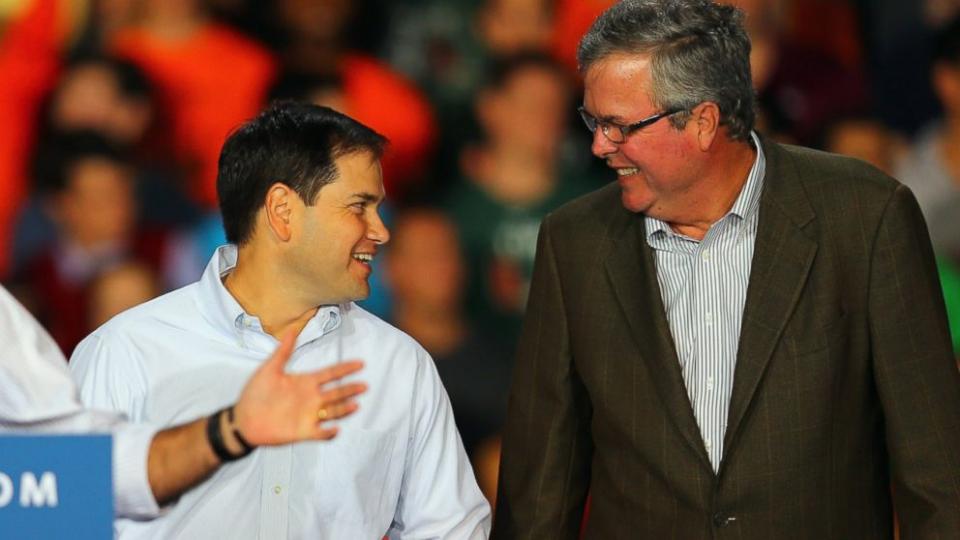
There’s one week until the first nominating contest of 2016, and candidates are doubling down on their campaign efforts in Iowa and New Hampshire. Marco Rubio began the week in the Hawkeye State, scheduling seven events in two days, and is planning to spend the entire week leading up to the Iowa caucuses barnstorming through the state. He isn’t alone: Jeb Bush, his friend and fellow GOP hopeful, is also campaigning in Iowa, holding events there to rally support by Monday’s caucus. He’s also campaigning hard in New Hampshire, where he’s hoping to stage a comeback when voters head to the polls on Feb. 9. Boots on the ground, though, aren’t the only way political hopefuls are hoping to drum up support. In recent days, candidates have been contacting supporters to ask for money to help with the final stretch. On Wednesday, the Bush campaign sent an email to supporters touting an Emerson College Polling Society survey that has the former Florida governor in second place in New Hampshire. “Friend — first the good new: A new poll released last night has Jeb in second place, surging past the nearest competition,” the email reads. “The bad news: This is only going to increase the amount everyone else will spend against us, and we’re seriously close to missing our $250,000 goal for the month. Unless you step up now, we won’t be able to combat the attacks that are coming, and we’ll lose.” The email asks supporters “rush a contribution of just $1” to help the campaign get on track. Bush raised more than $24.8 million as of Sept. 30; while Right to Rise, a super PAC backing Bush, has raised more than $103.2 million, according to the Center for Responsive Politics. Bush isn’t alone in sending a fundraising plea to supporters as the first nominating contest nears. On Wednesday, the Rubio camp sent an email encouraging supporters to chip in. “No matter the size of your donation, it will make a huge impact and ensure we are able to succeed in the Iowa caucuses next week and ultimately win the Republican nomination,” the email read. According to Center for Responsive Politics, Rubio raised more than $15.1 million as of Sept. 30, while Conservative Solutions PAC, the super PAC backing Rubio, raised more than $16.1 million. The Iowa caucuses are Monday, and the New Hampshire primary is one week later on Feb. 9.
Marco Rubio super PAC releases first TV ad
Conservative Solutions PAC, the pro-Marco Rubio Super PAC which has not previously aired any television ads to date, is releasing its first television ad of the campaign in the early voting states beginning today. The ad is called, “Marco.” “He took on the Republican establishment, and won,” a narrator says as images of the Florida Senator dominate. “The insiders were shocked, but not the people, because they heard his clear conservative message: less government, more freedom, a foreign policy based on strength.” Conservative Solutions PAC is linked with a pro-Rubio Super PAC with a similar name, Conservatives Solutions Project, that has aired ads in Iowa and New Hampshire featuring Rubio criticizing the Iran nuclear deal. However, Conservative Solutions Project is officially not a Super PAC, but a tax-exempt social welfare group. However, two organizations, Campaign Legal Center and Democracy 21 have asked the Justice Dept. to launch an investigation, claiming that the group is supporting Rubio. The Wall Street Journal reports that Conservative Solutions PAC aired its last ad on November 22, and has no plans to air more ads this year.
Marco Rubio wins support of Idaho billionaire Frank VanderSloot
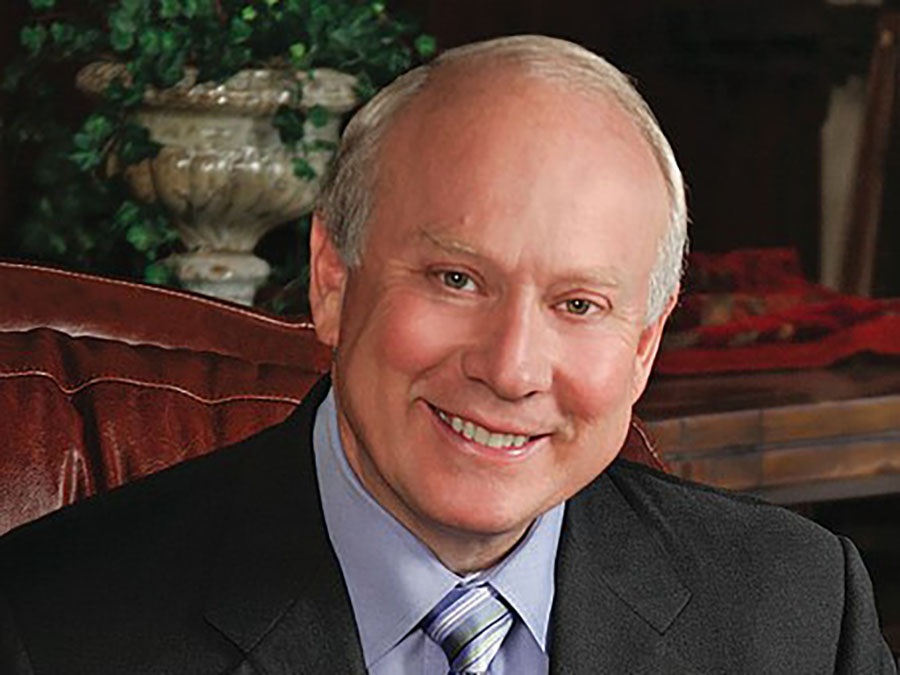
Idaho billionaire Frank VanderSloot said Wednesday he will support Republican Marco Rubio for president, adding another prominent donor to the Florida senator’s endorsement list. “He’s clearly, in our opinion, the brightest of the bunch,” said VanderSloot, founder and chief executive of the health care products company Melaleuca. “He has a great understanding of what it takes to have a robust economy and he has a real firm grasp on international affairs.” VanderSloot said he plans to raise money for Rubio, but has not decided how much to give personally. In 2012, VanderSloot and his company gave $1.1 million to Restore Our Future, a super political action committee that helped GOP nominee Mitt Romney. He also was one of Romney’s national campaign finance co-chairs, raising at least $2 million for the campaign. VanderSloot said he and his wife gave $50,000 in June to the Conservative Solutions PAC, which is backing Rubio’s campaign. VanderSloot has contributed $2,700, the maximum allowed by law, to the presidential campaign of former technology executive Carly Fiorina. He said Fiorina ran a close second in his deliberations about who to endorse, but he concluded she lacks Rubio’s charisma. “Marco Rubio has a big edge on Carly Fiorina on the likeability factor,” he said. “He is just so dang likable.” VanderSloot is the latest major GOP donor to sign on with Rubio, joining investor Paul Singer and hedge fund manager Cliff Asness. VanderSloot said many big donors have been hesitant to make a public endorsement before a clear front-runner emerged. But he said such a delay will only help candidates such as billionaire businessman Donald Trump and retired neurosurgeon Ben Carson — candidates he doesn’t think can unite the country and win the White House. “We’re stepping out earlier, because it’s a dangerous game to play if we don’t,” he said. Republished with permission of the Associated Press.
