Survey shows continued apprehension among rural residents regarding COVID-19 vaccinations
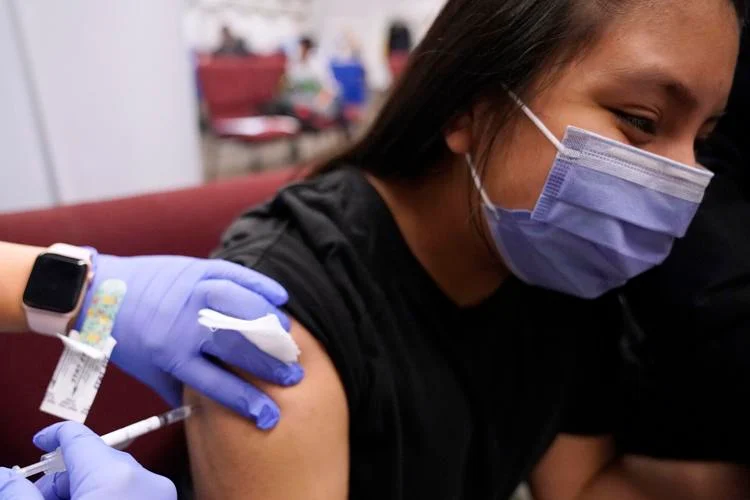
A survey by a rural health organization regarding COVID-19 vaccines shows apprehension by many about getting the shot. The National Rural Health Organization, with locations in Illinois, paired with the U.S. Centers for Disease Control and Prevention to find out how adults, parents and teens in rural areas feel about getting vaccinated. Only 15% of rural adults and 14% of teens believe vaccines are good protection from diseases. Nearly 40% of rural teens said they are concerned the vaccines may result in serious side effects, which Amy Elizondo, chief strategy officer with the NRHA, said is very revealing. “We wanted to get perspective within these groups that we haven’t readily heard from, in particular rural teenagers, the first time they have been surveyed in this particular topic area,” Elizondo said. Vaccination rates in many rural areas of Illinois lag behind urban areas, as many southern counties are reporting full vaccination rates lower than 40%, including in Alexander County, where less than a fourth of the population is fully vaccinated. Thirty percent of adults surveyed said the information they receive about vaccines is reliable and trustworthy, but many were not so sure. “When looking at barriers to vaccination, folks reported feeling overwhelmed by the information and misinformation,” Elizondo said. Health care providers are the most trusted source for COVID-19 vaccine information across all three rural samples (71%+ say they trust their health care provider “a lot” or “some” when receiving COVID-19 vaccine advice or information) of the options tested. When asked about their current level of concern about COVID-19 in general, 31% of rural adults said they were very concerned, while only 12% of teens reported the same. This poll was conducted between Feb. 1 and Feb. 22 among a sample of 1,806 rural adults, 475 rural parents, and 220 rural teens. Republished with the permission of The Center Square.
Kay Ivey awards $10 million in Covid-19 grants for emergency services providers
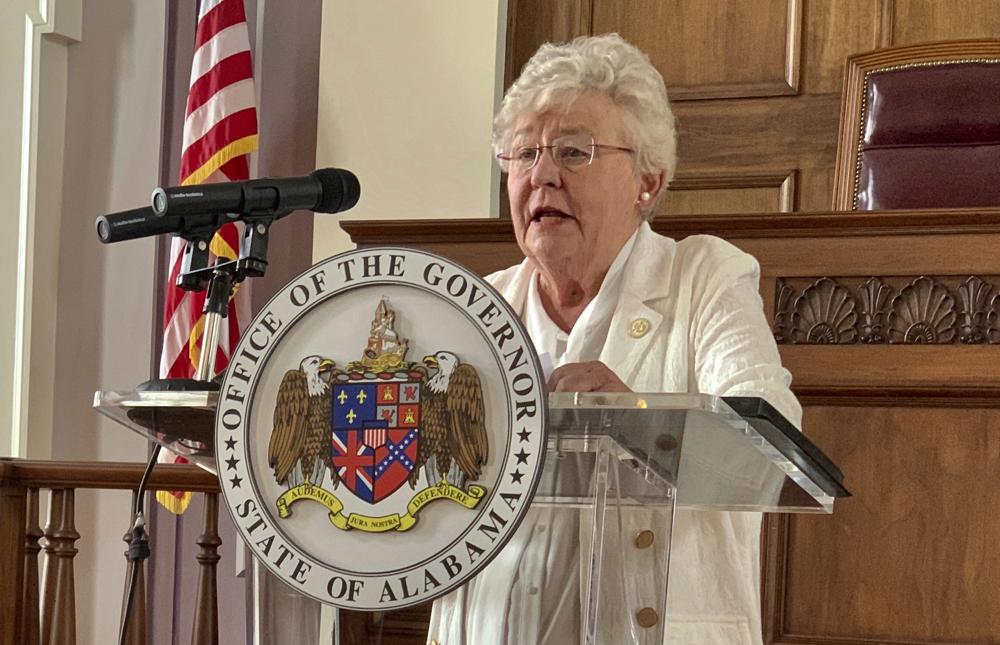
On Wednesday, Gov. Kay Ivey announced $10 million of the State Fiscal Recovery Fund from the American Rescue Plan Act (ARPA) has been awarded to establish COVID recovery grants for emergency services providers. The program aims to provide support to Alabama’s emergency services providers that have been financially impacted by the COVID-19 pandemic. Eligible applicants for this grant program are volunteer rescue squads, E-911 Boards, and emergency services providers that are not an agency or department of a city, county, state, or federal government. Alabama will offer grants up to $10,320 for providers that meet eligibility requirements. The application period for the Alabama Emergency Services Provider Grant Program will be open from noon April 27 through noon May 13, 2022. “Alabama’s emergency service providers greatly supported our communities throughout the pandemic, often times putting their own lives on the line to provide rapid care. Now, we are in a position to return the favor and help them in their recovery efforts,” stated Governor Ivey. “I appreciate the Alabama Legislature for their partnership in making this critical funding available to our emergency service providers, and I encourage them to apply and utilize these funds to further invest in public safety services.” Alabama received $2.1 billion in ARPA funds. The Alabama Legislature appropriated $136,796,346 of that to Alabama’s State Fiscal Recovery Revenue Replacement Fund with $10 million of these funds to be distributed to Alabama’s emergency services providers.
Kamala Harris positive for COVID-19, Joe Biden not a ‘close contact’
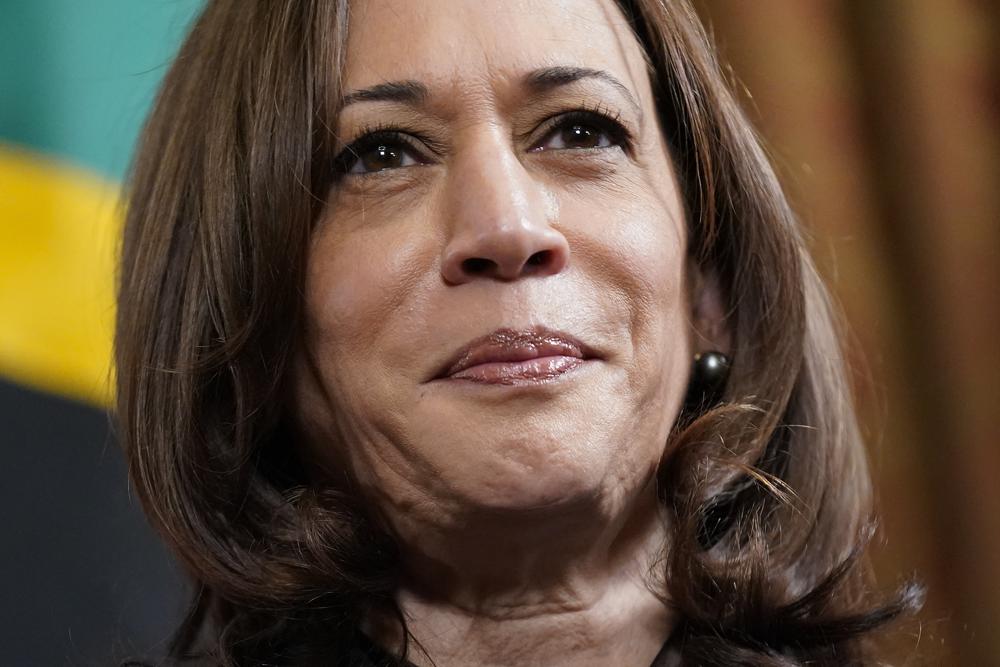
Vice President Kamala Harris tested positive for COVID-19 on Tuesday, the White House announced, underscoring the persistence of the highly contagious virus even as the U.S. eases restrictions in a bid to return to pre-pandemic normalcy. Neither President Joe Biden nor first lady Jill Biden was considered a “close contact” of Harris in recent days, said the vice president’s press secretary, Kirsten Allen. Harris had been scheduled to attend Biden’s Tuesday morning Presidential Daily Brief but was not present, the White House said. She had returned Monday from a weeklong trip to the West Coast. The last time she saw Biden was the previous Monday, April 18. “I have no symptoms, and I will continue to isolate and follow CDC guidelines,” Harris tweeted. “I’m grateful to be both vaccinated and boosted.” Biden phoned her Tuesday afternoon to make sure she “has everything she needs” while working from home, the White House said. Harris, 57, received her first dose of the Moderna COVID-19 vaccine weeks before taking office and a second dose just days after Inauguration Day in 2021. She received a booster shot in late October and an additional booster on April 1. Fully vaccinated and boosted people have a high degree of protection against serious illness and death from COVID-19, particularly from the most common and highly transmissible omicron variant. Harris’ diagnosis comes a month after her husband, Doug Emhoff, recovered from the virus, as a wave of cases of the highly transmissible omicron subvariant has spread through Washington’s political class, infecting Cabinet members, White House staffers, and lawmakers, including House Speaker Nancy Pelosi. Sens. Ron Wyden, D-Ore., and Chris Murphy, D-Conn., tested positive on Tuesday. Allen said Harris would follow Centers for Disease Control and Prevention guidelines “and the advice of her physicians.” It was not immediately clear whether she is being prescribed any antiviral treatments. The White House has put in place strict COVID-19 protocols around the president, vice president, and their spouses, including daily testing for those expected to be in close contact with them. Biden is tested regularly on the advice of his physician, the White House has said and last tested negative on Monday. “We have a very, very contagious variant out there,” said White House COVID-19 coordinator Dr. Aashish Jha on Tuesday. “It is going to be hard to ensure that no one gets COVID in America. That’s not even a policy goal.” He said the administration’s goal is to make sure people don’t get seriously ill. Jha added that despite the precautions, it is possible that Biden himself will come down with the virus at some point. “I wouldn’t say it’s just a matter of time, but of course, it is possible that the president, like any other American, could get COVID,” he said. “There is no 100% anything.” Psaki said she “would not expect” any changes to White House protocols. After more than two years and nearly a million deaths in the U.S., the virus is still killing more than 300 people a day in the U.S., according to the CDC. The unvaccinated are at far greater risk, more than twice as likely to test positive and nine times as likely to die from the virus as those who have received at least a primary dose of the vaccines, according to the public health agency. Harris’ diagnosis comes as the Biden administration is taking steps to expand availability of the life-saving COVID-19 antiviral treatment Paxlovid, reassuring doctors that there is ample supply for people at high risk of severe illness or death from the virus. Paxlovid, when administered within five days of symptoms appearing, has been proven to bring about a 90% reduction in hospitalizations and deaths among patients most likely to get severe disease. In addition to her husband’s diagnosis, Harris was identified as a “close contact” after her communications director tested positive on April 6. The Centers for Disease Control and Prevention defines “close contact” with an infected person as spending 15 minutes or more with them over a 24-hour period. The CDC says people with “close contact” do not need to quarantine if they are up to date on their vaccines but should wear well-fitting masks around other people for 10 days after the contact. Republished with the permission of the Associated Press.
Feds will appeal mask ruling only if mandate still needed
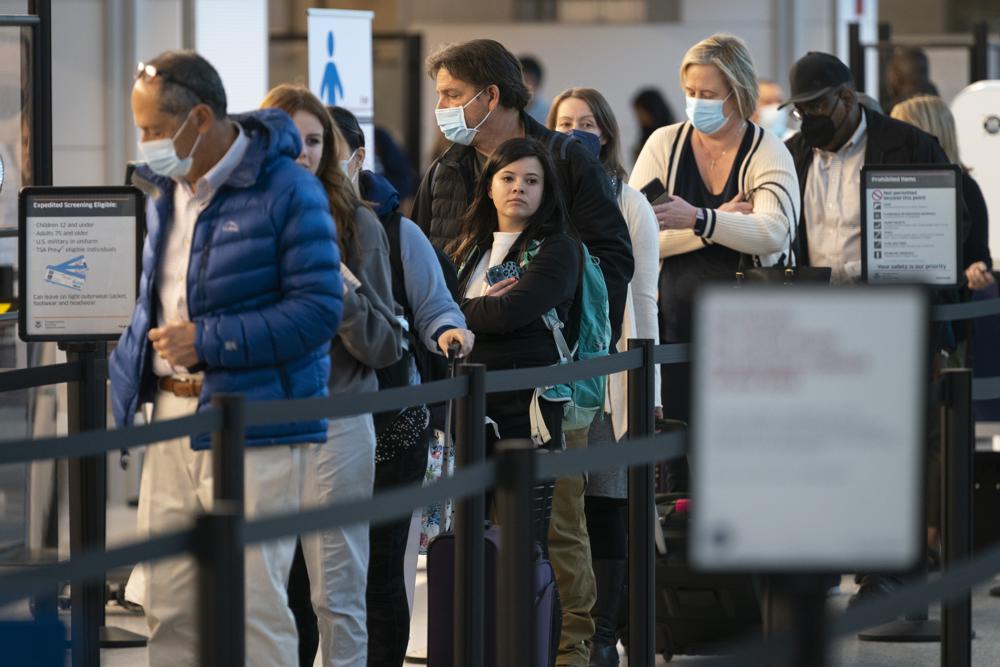
The Justice Department said Tuesday it will not appeal a federal district judge’s ruling that ended the nation’s federal mask mandate on public transit unless the Centers for Disease Control and Prevention believes the requirement is still necessary. In a statement released a day after a Florida judge ended the sweeping mandate, which required face coverings on planes and trains and in transit hubs, Justice Department spokesman Anthony Coley said officials believe that the federal mask order was “a valid exercise of the authority Congress has given CDC to protect the public health.” He said it was “an important authority the Department will continue to work to preserve.” Coley said the CDC had said it would continue to assess public health conditions, and if the agency determined a mandate was necessary for public health, the Justice Department would file an appeal. The Justice Department said Tuesday it will not appeal a federal district judge’s ruling that ended the nation’s federal mask mandate on public transit unless the Centers for Disease Control and Prevention believes the requirement is still necessary. THIS IS A BREAKING NEWS UPDATE. AP’s earlier story follows below. A pilot declared over the loudspeaker on a cross-country Delta Air Lines flight that passengers were no longer required to wear masks, eliciting cheers from the cabin and prompting some on board to immediately toss their face coverings onto their seats. “Feel free to burn them at will,” a train conductor told New Jersey commuters Tuesday. Other passengers were confused, startled, and angered by the abrupt change, however, especially those who booked trips in the belief that their unvaccinated children would be traveling in a masked environment. A federal judge’s decision Monday to throw out a mask requirement on public transportation did away with the last major vestige of federal pandemic rules and led to a mishmash of new locally created rules that reflected the nation’s ongoing division over how to battle the virus. Major airlines and airports in places like Dallas, Atlanta, Los Angeles, and Salt Lake City quickly switched to a mask-optional policy. New York City, Chicago, Los Angeles, and Connecticut continued to require them on mass transit. But a host of other cities ditched their mandates, even though the Centers for Disease Control and Prevention continued to recommend masking on transportation. Brooke Tansley, a television producer and former Broadway performer, boarded a flight with her 4-year-old and 8-month-old baby— neither old enough to be vaccinated — only to learn the mask mandate had ended mid-flight. “Very very angry about this,” she said in a tweet, noting that her baby was too young to wear a mask. For many, though, the news was welcome. A video showed some passengers on a Delta Air Lines flight cheering and applauding as they took off their masks upon hearing the announcement they were now optional. One man could be seen happily twirling his mask on his finger. On a Southwest Airlines flight Monday from Detroit to Nashville, the change to optional status was incorporated into the safety announcements, prompting murmurs and fist pumps from some passengers and no audible complaints. At the Seattle airport, Deb McLane continued to wear a mask because of the crowds but said she was “thankful that it’s not being forced on us anymore.” In Portland, Oregon, transit employees were immediately working on taking down “mask required” announcements and signs, but said it would likely take several days to remove everything. The city joined Atlanta, Boston, Philadelphia, Washington, D.C., Kansas City, Missouri, and two of Alaska’s largest cities, Anchorage and Juneau, in making masking optional on mass transit. “We know our riders have mixed feelings about the mandate ending,” Portland’s public transit agency, TriMet, posted on social media. “We ask everyone to be respectful of others as we all adjust to this change.” Some passengers at Chicago’s Union Station said the rules were confusing. Both Amtrak and Metra, the regional commuter rail service, said masks still are required, but some passengers walking through the station didn’t wear them. “It’s like this patchwork of different rules and enforcement of it,” said Erik Abderhalden, who wore a mask as he waited for a Metra train to his home in suburban Naperville. “I mean, it’s like Swiss cheese … there’s no uniformity and it seems pretty laissez-faire.” The Chicago Transit Authority also said it still will require masks on city trains and buses, for now. Subway rider Cooper Klinges was pleased that New York City’s public transit system wasn’t following the trend and planned to keep its mask requirement in place. As he waited at a train station in Brooklyn, New York, he said he canceled a flight earlier this year over concerns about the virus. “I don’t think we are out of the woods yet,” said Klinges, a teacher, citing concerns about the BA.2 omicron subvariant of the coronavirus. “It is still around. We have to still stick it out.” The ride-sharing companies Lyft and Uber announced on their websites Tuesday that masks will now be optional while riding or driving. The national mask rule for travelers was one of the last of the pandemic restrictions still in place. It sparked online flame throwing between those who felt they were crucial to protecting people and those who saw it as an unnecessary inconvenience or even government overkill. Some flight attendants found themselves cursed and even attacked by passengers who refused to comply. In a 59-page lawsuit ruling, U.S. District Judge Kathryn Kimball Mizelle in Tampa said the U.S. Centers for Disease Control and Prevention overstepped its authority in issuing the original health order on which the TSA directive was based. She also said the order was fatally flawed because the CDC didn’t follow proper rulemaking procedures. The Justice Department declined to comment when asked if it would seek an emergency stay to block the judge’s order. While airline and mass transit passengers around the country were ditching masks, the White House made clear that those traveling with President Joe Biden
Florida judge voids U.S. mask mandate for planes, other travel
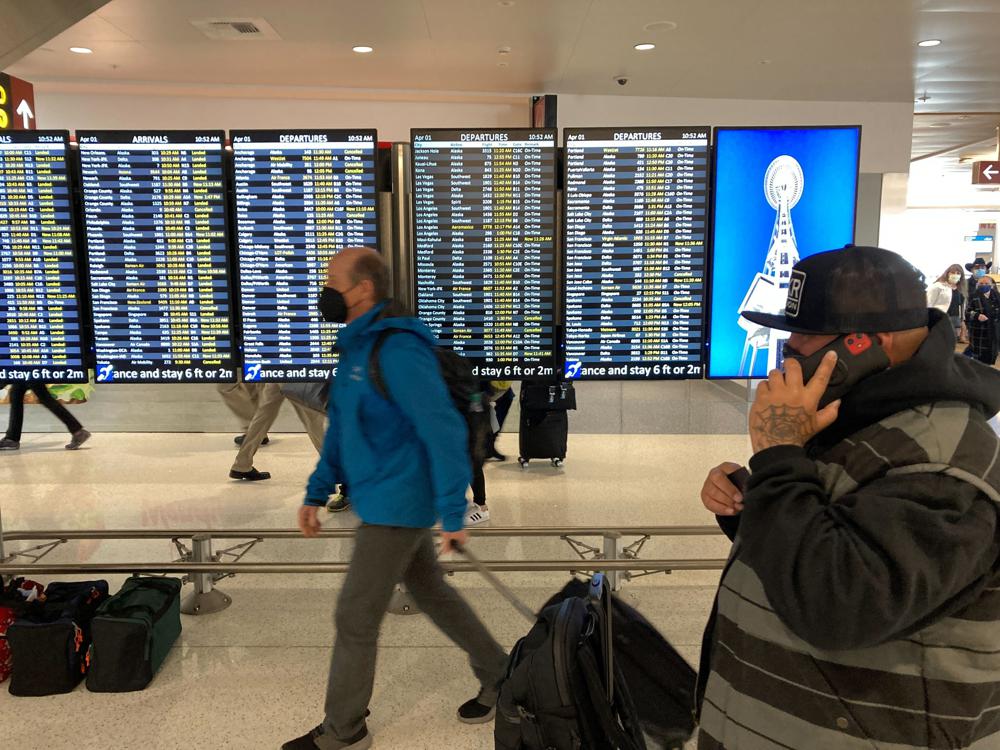
A federal judge in Florida struck down the national mask mandate covering airlines and other public transportation Monday, and the Biden administration said the rule would not be enforced while federal agencies decide how to respond to the judge’s order. The ruling appeared to free operators to make their own decisions about mask requirements, with several airlines announcing they would drop mandates but New York City’s public transit system planning to keep one in place. The Association of Flight Attendants, the nation’s largest union of cabin crews, has recently taken a neutral position on the mask rule because its members are divided about the issue. On Monday, the union’s president appealed for calm on planes and in airports. “The last thing we need for workers on the frontlines or passengers traveling today is confusion and chaos,” union leader Sara Nelson said. Nelson said it takes airlines 24 to 48 hours to put new procedures in place and tell employees about them. She said passengers should check with airlines for updates about travel requirements. The decision by U.S. District Judge Kathryn Kimball Mizelle in Tampa, an appointee of former President Donald Trump, also said the U.S. Centers for Disease Control and Prevention failed to justify its decision and did not follow proper rulemaking procedures that left it fatally flawed. In her 59-page ruling, Mizelle said the only remedy was to vacate the rule entirely across the country because it would be impossible to end it for the limited group of people who objected in the lawsuit. The judge said “a limited remedy would be no remedy at all” and courts have full authority to make a decision such as this — even if the CDC’s goals in fighting the virus are laudable. The Justice Department declined to comment when asked if it would seek an emergency stay to block the judge’s order. The CDC also declined to comment. The White House said the court ruling means that for now the mask order “is not in effect at this time.” “This is obviously a disappointing decision,” White House press secretary Jen Psaki told reporters. “The CDC is recommending wearing a mask on public transit.” The CDC had recently extended the mask mandate, which was set to expire Monday, until May 3 to allow more time to study the BA.2 omicron subvariant of the coronavirus now responsible for the vast majority of cases in the U.S. In New York, Metropolitan Transportation Authority communications director Tim Minton said the system was “continuing to follow CDC guidelines and will review the Florida court order.” The MTA operates New York City buses and subway trains as well as two commuter rail lines. Face coverings have been mandatory on all trains and buses since early in the pandemic. United Airlines said in a statement that, effective immediately, masks would no longer be required on domestic flights or certain international flights. “While this means that our employees are no longer required to wear a mask – and no longer have to enforce a mask requirement for most of the flying public – they will be able to wear masks if they choose to do so, as the CDC continues to strongly recommend wearing a mask on public transit,” United said. The federal mask requirement for travelers was the target of months of lobbying from the airlines, which sought to kill it. The carriers argued that effective air filters on modern planes make transmission of the virus during a flight highly unlikely. Republicans in Congress also fought to kill the mandate. Critics have seized on the fact that states have rolled back rules requiring masks in restaurants, stores, and other indoor settings, and yet COVID-19 cases have fallen sharply since the omicron variant peaked in mid-January. There have been a series of violent incidents on aircraft that have mainly been attributed to disputes over the mask-wearing requirements. The lawsuit was filed in July 2021 by two plaintiffs and the Health Freedom Defense Fund, described in the judge’s order as a nonprofit group that “opposes laws and regulations that force individuals to submit to the administration of medical products, procedures, and devices against their will.” Republican Florida Gov. Ron DeSantis, who was not directly involved in the case but has battled against many government coronavirus requirements, praised the ruling in a statement on Twitter. “Great to see a federal judge in Florida follow the law and reject the Biden transportation mask mandate. Both airline employees and passengers deserve to have this misery end,” DeSantis tweeted. Republished with the permission of the Associated Press.
FDA authorizes 1st breath test for COVID-19 infection

The Food and Drug Administration on Thursday issued an emergency use authorization for what it said is the first device that can detect COVID-19 in breath samples. The InspectIR COVID-19 Breathalyzer is about the size of a piece of carry-on luggage, the FDA said, and can be used in doctor’s offices, hospitals, and mobile testing sites. The test, which can provide results in less than three minutes, must be carried out under the supervision of a licensed health care provider. Dr. Jeff Shuren, director of the FDA’s Center for Devices and Radiological Health, called the device “yet another example of the rapid innovation occurring with diagnostic tests for COVID-19.” The FDA said the device was 91.2% accurate at identifying positive test samples and 99.3% accurate at identifying negative test samples. “InspectIR expects to be able to produce approximately 100 instruments per week, which can each be used to evaluate approximately 160 samples per day,” the agency said. “At this level of production, testing capacity using the InspectIR COVID-19 Breathalyzer is expected to increase by approximately 64,000 samples per month.” Republished with the permission of the Associated Press.
GOP blocks Senate COVID bill, demands votes on immigration
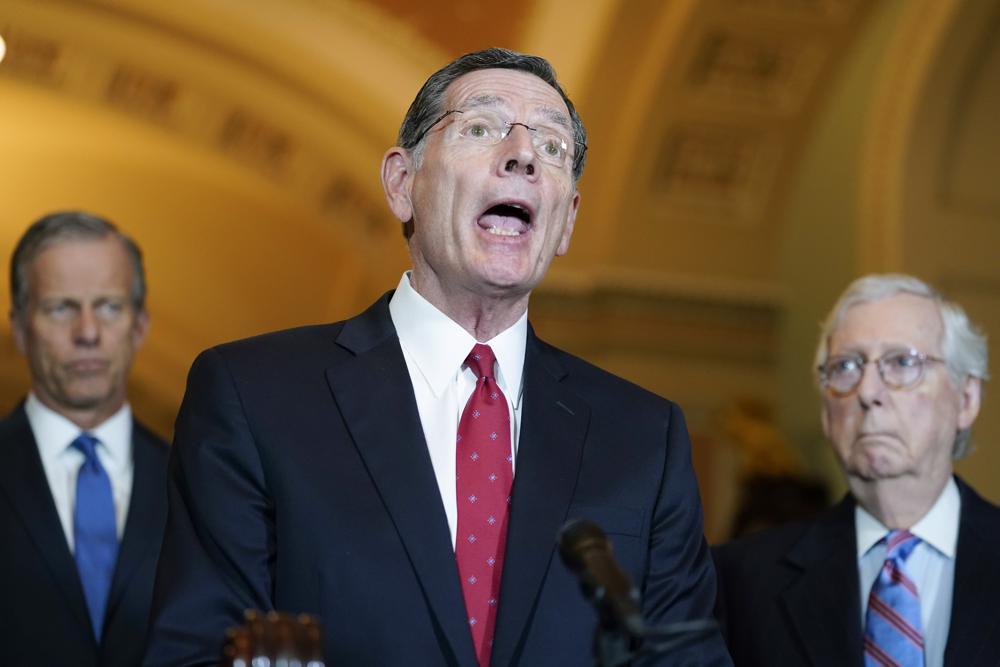
Republicans blocked a Democratic attempt Tuesday to begin Senate debate on a $10 billion COVID-19 compromise, pressing to entangle the bipartisan package with an election-year showdown over immigration restrictions that poses a politically uncomfortable fight for Democrats. A day after Democratic and GOP bargainers reached an agreement on providing the money for treatments, vaccines, and testing, a Democratic move to push the measure past a procedural hurdle failed 52-47. All 50 Republicans opposed the move, leaving Democrats 13 votes short of the 60 votes they had needed to prevail. Hours earlier, Republicans said they’d withhold crucial support for the measure unless Democrats agreed to votes on an amendment preventing President Joe Biden from lifting Trump-era curbs on migrants entering the U.S. With Biden polling poorly on his handling of immigration and Democrats divided on the issue, Republicans see a focus on migrants as a fertile line of attack. “I think there will have to be” an amendment preserving the immigration restrictions “in order to move the bill,” bolstering federal pandemic efforts, Senate Minority Leader Mitch McConnell, R-Ky., told reporters. “I don’t think there are probably 10 Republican votes at the moment for a process that doesn’t include” a vote on language retaining the immigration barriers, said No. 2 Senate GOP leader John Thune of South Dakota. At least 10 GOP votes will be needed in the 50-50 Senate for the measure to reach the 60 votes it must have for approval. Biden and Senate Majority Leader Chuck Schumer, D-N.Y., want Congress to approve the pandemic bill before lawmakers leave in days for a two-week recess. Tuesday’s vote suggested that could be hard. ”This is a potentially devastating vote for every single American who was worried about the possibility of a new variant rearing its nasty head within a few months,” Schumer said after the vote. The new omicron variant, BA.2, is expected to spark a fresh increase in U.S. COVID-19 cases. Around 980,000 Americans and over 6 million people worldwide have died from the disease. The $10 billion pandemic package is far less than the $22.5 billion Biden initially sought. It also lacks $5 billion Biden wanted to battle the pandemic overseas — money that fell victim to disagreements over GOP demands that the measure be entirely paid for with budget savings. At least half the bill would be used for research and to produce therapeutics to treat COVID-19. Money would also be used to buy vaccines and tests and to research new variants. The measure is paid for by pulling back unspent funds provided earlier for protecting aviation manufacturing jobs, assisting entertainment venues shuttered by the pandemic, and other programs. Administration officials have said the government has run out of money to finance COVID-19 testing and treatments for people without insurance, and is running low on money for boosters, free monoclonal antibody treatments, and care for people with immune system weaknesses. At the 2020 height of the pandemic, President Donald Trump imposed immigration curbs letting authorities immediately expel asylum seekers and migrants for public health reasons. The ban is set to expire May 23, triggering what, by all accounts, will be a massive increase in the number of people trying to cross the Mexican border into the U.S. That confronts Democrats with messy choices ahead of fall elections when they’re expected to struggle to retain their hair-breadth majorities in the House and Senate. Many of the party’s lawmakers and their liberal supporters want the U.S. to open its doors to more immigrants. But moderates and some Democrats confronting tight November reelections worry about lifting the restrictions and alienating centrist voters. Shortly before Tuesday’s vote, Senate Majority Leader Chuck Schumer, D-N.Y., showed no taste for exposing his party to a divisive immigration vote. “This is a bipartisan agreement that does a whole lot of important good for the American people. Vaccines, testing, therapeutics,” he said. “It should not be held hostage for an extraneous issue.” Jeff Zients, head of White House COVID-19 task force, expressed the same view about an immigration provision. “This should not be included on any funding bill,” he told reporters. “The decision should be made by the CDC. That’s where it has been, and that’s where it belongs.” But Rep. Bennie Thompson, D-Miss., chairman of the House Homeland Security Committee, said he would still support a Senate COVID-19 aid bill if it included the GOP effort to retain the Trump immigration restrictions. “Why wouldn’t I?” he said in a brief interview. The federal Centers for Disease Control and Prevention, which initiated the move two years ago, said earlier this month that it would lift the ban next month. The restrictions, known as Title 42, have been harder to justify as pandemic restrictions have eased. Trump administration officials cast the curbs as a way to keep COVID-19 from spreading further in the U.S. Democrats considered that an excuse for Trump, whose anti-immigrant rhetoric was a hallmark of his presidency, to keep migrants from entering the country. Sen. Catherine Cortez Masto, D-Nev., who faces a competitive reelection this fall, declined to say Tuesday whether she would support retaining the Trump-era ban, saying she wanted to see its language. But she said the Biden administration needs to do more. “I’ve been very clear with the administration. I need a plan; we need a plan,” she said in a brief interview. “There’s going to be a surge at the border. There should be a plan, and I’ve been calling for it all along.” Republished with the permission of the Associated Press.
Democratic, GOP Senate bargainers reach $10 billion COVID agreement

Senate bargainers reached an agreement Monday on a slimmed-down $10 billion package for countering COVID-19 with treatments, vaccines, and other steps, the top Democratic and Republican negotiators said, but the measure dropped all funding to help nations abroad combat the pandemic. The compromise drew quick support from President Joe Biden, who initially pushed for a $22.5 billion package. In a setback, he ended up settling for much less amid administration warnings that the government was running out of money to keep pace with the disease’s continued — though diminished — spread in the U.S. “Every dollar we requested is essential, and we will continue to work with Congress to get all of the funding we need,” said White House press secretary Jen Psaki. “But time is of the essence. We urge Congress to move promptly on this $10 billion package because it can begin to fund the most immediate needs.” Biden and Senate Majority Leader Chuck Schumer, D-N.Y., his party’s lead bargainer, also ended up agreeing to abandon Biden’s request to include $5 billion to help countries — especially poorer ones — where the disease is still running rampant. But the two sides could not agree on enough budget savings to pay for the larger amounts. Schumer said the pact would provide “the tools we need” to help the country recover from the economic and public health blows that COVID-19 has inflicted for the past two years. But he said while the $10 billion “is absolutely necessary, it is well short of what is truly needed to keep up safe” over time. He said members of both parties want to craft a second spending measure this spring that could include funds to battle COVID-19 and hunger overseas and more assistance for Ukraine as it continues battling the Russian invasion. The fate of such a measure is uncertain. Sen. Mitt Romney of Utah, the lead GOP bargainer, hailed the accord as one that would address “urgent COVID needs.” He also trumped the measure’s savings, which he said meant it “will not cost the American people a single additional dollar.” Romney also suggested an openness to considering future money. “While this agreement does not include funding for the U.S. global vaccination program, I am willing to explore a fiscally responsible solution to support global efforts in the weeks ahead,” he said. The agreement comes with party leaders hoping to move the legislation through Congress this week, before lawmakers leave for a two-week spring recess. It also comes with BA.2, the new omicron variant, expected to spark a fresh increase in U.S. cases. Around 980,000 Americans and over 6 million people worldwide have died from COVID-19. At least half the compromise would have to be used to research and produce therapeutics to treat the disease, according to fact sheets from Schumer and Romney. The money would also be used to buy vaccines and tests. At least $750 million would be used to research new COVID-19 variants and to expand vaccine production, the descriptions said. The deal is also a reduction from a $15 billion version that both parties’ leaders had negotiated last month. House Speaker Nancy Pelosi, D-Calif., abandoned that plan after Democratic lawmakers rejected proposed cuts in state pandemic aid to help pay for the package. Some people said the fate of the new agreement remained uncertain in the House, where Pelosi and liberal Democrats have expressed opposition to dropping the money for helping other countries. Rep. Pramila Jayapal, leader of the House Progressive Caucus, said it is “a big problem” to erase the global assistance from the package. “It’s really shortsighted to not spend money on making sure this virus is contained around the world,” Jayapal, a Washington state Democrat who worked in global public health for a decade, told reporters. The agreement will need to attract at least 10 GOP votes to move through the 50-50 Senate. The others said the needed Republican votes would be there. The measure is fully paid for by pulling back unspent funds from previous pandemic relief bills that have been enacted, bargainers have said. Romney’s fact sheet says those savings include $2.3 billion from a fund protecting aviation manufacturing jobs; $1.9 billion from money for helping entertainment venues shuttered by the pandemic; another $1.9 billion from a program that helps states extend credit to small businesses; and $1.6 billion from agriculture assistance programs. Republished with the permission of the Associated Press.
Lindy Blanchard launches new campaign ads aimed at questioning Kay Ivey’s record
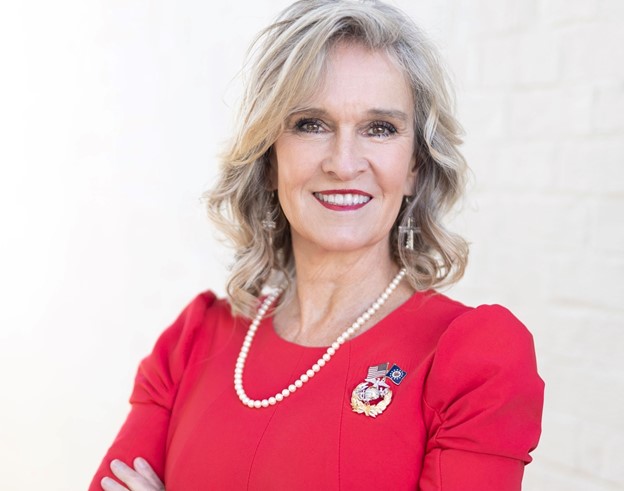
The campaign for gubernatorial hopeful Lindy Blanchard launched two new ads on broadcast and cable television. Both ads will run statewide. The first ad, raises questions about Gov. Kay Ivey’s record, arguing that some of her actions around Covid-19 and the gas tax have drawn praise from the Biden Administration. The second ad highlights Blanchard’s national security experience as a Trump appointee and compares and contrasts Ivey to Blanchard. “Try as I may, I cannot make sense of Kay Ivey’s liberal record. It’s no wonder she’s trying to rewrite history about her record but her actions speak louder than any campaign ad she may put out,” stated Blanchard. “After signing a pledge to not raise taxes, she led the charge to do just that. Now, while gas prices are devastating family budgets, she refuses to act and lead the effort to provide the relief we need.” “During the pandemic, Kay Ivey shut down Alabama businesses; adding insult to injury she condemned and mocked those who made the personal decision not to get the COVID-19 vaccination. It’s safe to say that when Joe Biden and Anthony Fauci are on your side, you’re on the wrong side of Alabama”, continued Blanchard. “After the 2020 election, where widespread fraud put Joe Biden in office, Kay Ivey gave up on President Donald Trump and welcomed Joe Biden with open arms. When Trump came to town? Ivey couldn’t be bothered to stand with him. Kay Ivey doesn’t believe President Donald Trump won the election and she doesn’t believe Alabama voters are smart enough to see through her weak leadership on the issue. “One of President Donald Trump’s legacies will be his conservative court appointments. Given the same opportunity, Kay Ivey appointed 8 liberal judges to Alabama courts. This includes choosing democrats to run elections in major counties rather than Trump conservatives. “I will stand up for the voters and make sure that confidence is restored to the election process. I will only appoint Republicans,” Blanchard concluded. Blanchard is on the ballot in the Republican primary for Governor on May 24th. She is a businesswoman, entrepreneur, and philanthropist from Montgomery, Alabama. A conservative outsider, Blanchard has never run for elected office before and will bring a fresh perspective, vast business and management experience, and conservative common sense to the governor’s office.
Alabama COVID-19 hospitalizations at low for pandemic
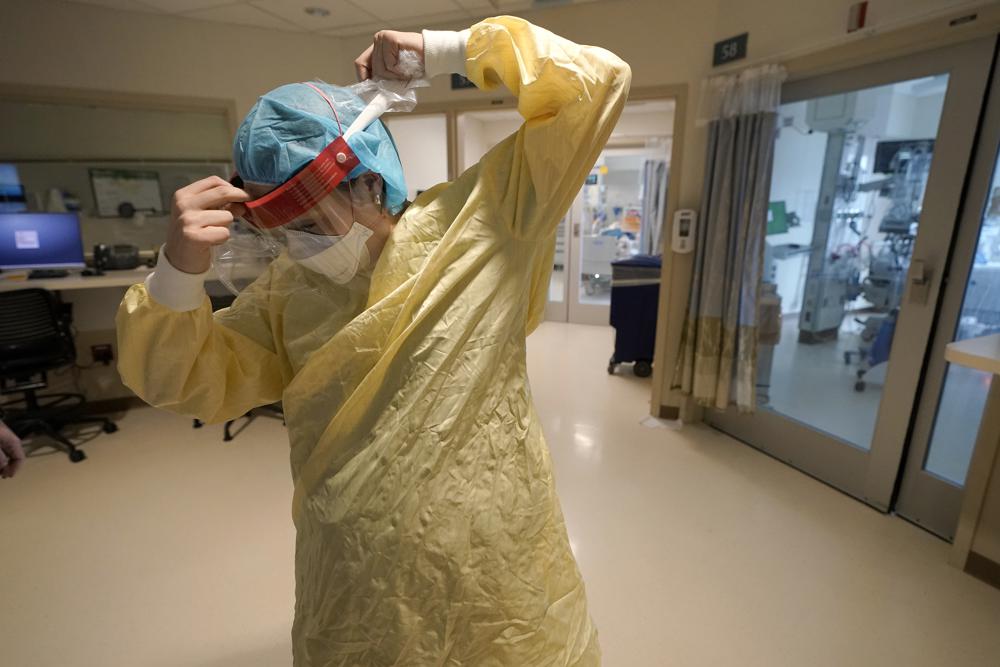
Fewer people are being treated for COVID-19 in Alabama hospitals than at any time since the beginning of the pandemic in March 2020, but experts say the rise of a new version of the coronavirus combined with fewer safety precautions might mean the decline is only temporary. Just 90 people statewide were hospitalized with the coronavirus on Friday, which was one fewer than the tally at the very start of the pandemic, statistics showed. It was far less than the highs of roughly 3,000 patients who were being treated at once when the outbreak was at its worst. Dr. Michael Saag, an infectious diseases expert at the University of Alabama at Birmingham, said the statewide trend matches what he is seeing at the hospital there. While the rise of a new omicron variant called BA-2 could cause more hospitalizations, he said, it could be that so many already have been infected in the state that the new version won’t make much of a difference. “Time will tell,” he said. The head of the Alabama Hospital Association, Dr. Donald Williamson, said he expects to see an increase in COVID-19 because of the new variant and the fact that so few people are wearing face masks and taking other precautions, but it’s impossible to determine how large the hike might be. More than 19,200 people have died of COVID-19 in Alabama, the nation’s third-highest death rate at nearly 395 fatalities for every 100,000 residents, according to researchers from Johns Hopkins University. While the rolling average number of daily new cases increased by 33% over the last two weeks, the state released a new batch of older test results that may have affected the statistics. While it’s reasonable to relax mask requirements given the overall improvement, Saag said, people at higher risk for illness likely will continue to wear them. “For the rest of the population, we can begin to get back to some semblance of ‘normal,’ with the caveat that public health officials will continue to monitor the case load,” he said in an email. “Should a new spike in cases, and especially hospitalizations, occur, we should reinstate masking recommendations.” Republished with the permission of the Associated Press.
U.S. opens second COVID boosters to 50 and up, others at risk
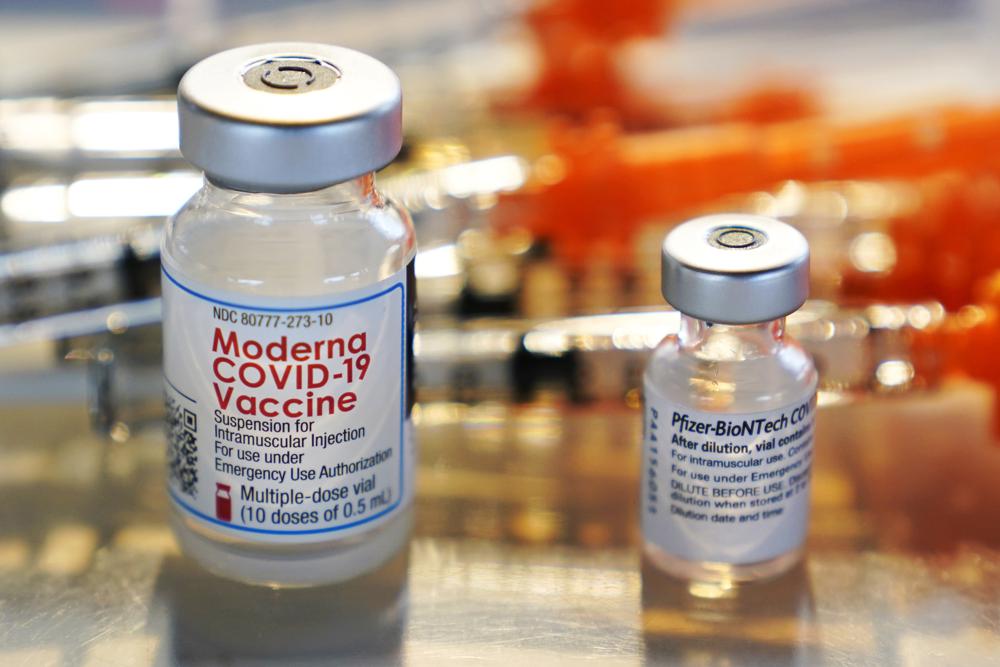
Americans 50 and older can get a second COVID-19 booster if it’s been at least four months since their last vaccination, a chance at extra protection for the most vulnerable in case the coronavirus rebounds. The Food and Drug Administration on Tuesday authorized an extra dose of the Pfizer or Moderna vaccine for that age group and for certain younger people with severely weakened immune systems. The Centers for Disease Control and Prevention later recommended the extra shot as an option but stopped short of urging that those eligible rush out and get it right away. That decision expands the additional booster to millions more Americans. Dr. Rochelle Walensky, CDC’s director, said it was especially important for older Americans — those 65 and older — and the 50-somethings with chronic illnesses such as heart disease or diabetes to consider another shot. “They are the most likely to benefit from receiving an additional booster dose at this time,” Walensky said. There’s evidence protection can wane, particularly in higher-risk groups, and for them, another booster “will help save lives,” FDA vaccine chief Dr. Peter Marks said. For all the attention on who should get a fourth dose of the Pfizer and Moderna vaccines, only about half of Americans eligible for a third shot have gotten one — and the government urged them to get up to date. Two shots plus a booster still offer strong protection against severe illness and death, even during the winter surge of the super-contagious omicron variant. The move toward additional boosters comes at a time of great uncertainty, with limited evidence to tell how much benefit an extra dose right now could offer. COVID-19 cases have dropped to low levels in the U.S., but all vaccines are less powerful against newer mutants than earlier versions of the virus — and health officials are warily watching an omicron sibling that’s causing worrisome jumps in infections in other countries. Pfizer had asked the FDA to clear a fourth shot for people 65 and older, while Moderna requested another dose for all adults “to provide flexibility” for the government to decide who really needs one. FDA’s Marks said regulators set the age at 50 because that’s when chronic conditions that increase the risks from COVID-19 become more common. Until now, the FDA had allowed a fourth vaccine dose only for the immune-compromised as young as 12. Vaccines have a harder time revving up severely weak immune systems, and Marks said their protection also tends to wane sooner. Tuesday’s decision allows them another booster, too — a fifth dose. Only the Pfizer vaccine can be used in those as young as 12; Moderna’s is for adults. What about people who got Johnson & Johnson’s single-dose shot? They already were eligible for one booster of any kind. Of the 1.3 million who got a second J&J shot, the CDC said now they may choose a third dose — either Moderna or Pfizer. For the more than 4 million who got Moderna or Pfizer as their second shot, the CDC says an additional booster is only necessary if they meet the newest criteria — a severely weakened immune system or are 50 or older. That’s because a CDC study that tracked which boosters J&J recipients initially chose concluded a Moderna or Pfizer second shot was superior to a second J&J dose. If the new recommendations sound confusing, outside experts say it makes sense to consider extra protection for the most vulnerable. “There might be a reason to top off the tanks a little bit” for older people and those with other health conditions said University of Pennsylvania immunologist E. John Wherry, who wasn’t involved in the government’s decision. But while he encourages older friends and relatives to follow the advice, the 50-year-old Wherry — who is healthy, vaccinated, and boosted — doesn’t plan on getting a fourth shot right away. With protection against severe illness still strong, “I’m going to wait until it seems like there’s a need.” While protection against milder infections naturally wanes over time, the immune system builds multiple layers of defense, and the type that prevents severe illness and death is holding up. During the U.S. omicron wave, two doses were nearly 80% effective against needing a ventilator or death — and a booster pushed that protection to 94%, the CDC recently reported. Vaccine effectiveness was lowest — 74% — in immune-compromised people, the vast majority of whom hadn’t gotten a third dose. To evaluate an extra booster, U.S. officials looked to Israel, which opened a fourth dose to people 60 and older during the omicron surge. The FDA said no new safety concerns emerged in a review of 700,000 fourth doses administered. Preliminary data posted online last week suggested some benefit: Israeli researchers counted 92 deaths among more than 328,000 people who got the extra shot, compared to 232 deaths among 234,000 people who skipped the fourth dose. What’s far from clear is how long any extra benefit from another booster would last, and thus when to get it. “The ‘when’ is a really difficult part. Ideally, we would time booster doses right before surges but we don’t always know when that’s going to be,” said Dr. William Moss, a vaccine expert at the Johns Hopkins Bloomberg School of Public Health. Plus, a longer interval between shots helps the immune system mount a stronger, more cross-reactive defense. “If you get a booster too close together, it’s not doing any harm — you’re just not going to get much benefit from it,” said Wherry. The newest booster expansion may not be the last: Next week, the government will hold a public meeting to debate if everyone eventually needs a fourth dose, possibly in the fall, of the original vaccine or an updated shot. Even if higher-risk Americans get boosted now, Marks said they may need yet another dose in the fall if regulators decide to tweak the vaccine. For that effort, studies in people — of omicron-targeted shots alone or in
Moderna says its low-dose COVID shots work for kids under 6
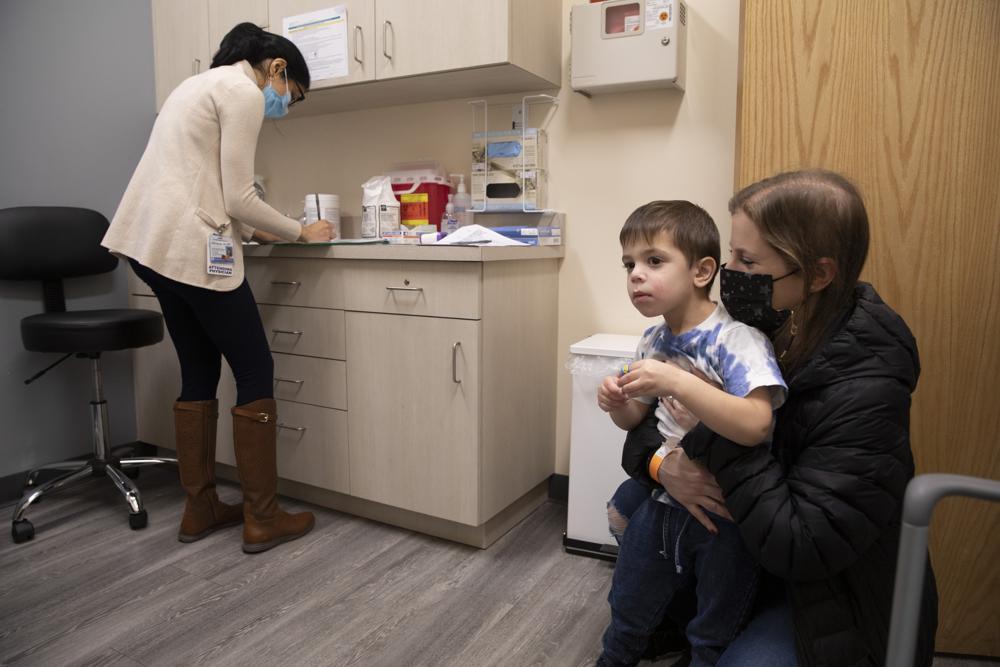
Moderna’s COVID-19 vaccine works in babies, toddlers, and preschoolers, the company announced Wednesday — a development that could pave the way for the littlest kids to be vaccinated by summer if regulators agree. Moderna said that in the coming weeks it would ask regulators in the U.S. and Europe to authorize two small-dose shots for youngsters under 6. The company also is seeking to have larger doses cleared for older children and teens in the U.S. The announcement is positive news for parents who have anxiously awaited protection for younger tots and have been continuously disappointed by setbacks and confusion over which shots might work and when. The nation’s 18 million children under 5 are the only age group not yet eligible for vaccination. Moderna says early study results show tots develop high levels of virus-fighting antibodies from shots containing a quarter of the dose given to adults. Once Moderna submits its full data, the U.S. Food and Drug Administration will have to determine if that important marker means the youngsters are as protected against severe illness as adults. “The vaccine provides the same level of protection against COVID in young kids as it does in adults. We think that’s good news,” Dr. Stephen Hoge, Moderna’s president, told The Associated Press. But that key antibody finding isn’t the whole story. COVID-19 vaccines aren’t as effective against the super-contagious omicron mutant — in people of any age — and Moderna’s study found the same trend. There were no severe illnesses during the trial but the vaccine was only about 44% effective at preventing milder infections in babies up to age 2, and nearly 38% effective in the preschoolers. “Not a home run” but the shots still could be helpful for the youngest children, said Dr. Jesse Goodman of Georgetown University, a former FDA vaccine chief. Goodman said the high antibody levels seen in the study “should translate into higher efficacy against severe infections.” Some parents say even a little protection would be better than leaving their youngest children unvaccinated. “I don’t care if it’s even 15 or 20%,” said Lauren Felitti of Gaithersburg, Maryland. Her 4-year-old son Aiden, who’s at extra risk because of a heart condition, was hospitalized for eight days with COVID-19 and she’s anxious to vaccinate him to lessen the chance of a reinfection. “It was very scary,” Felitti said. “If there’s a chance that I’m able to keep him protected, even if it’s a small chance, then I’m all for it.” Competitor Pfizer currently offers kid-size doses for school-age children and full-strength shots for those 12 and older. And the company is testing even smaller doses for children under 5 but had to add a third shot to its study when two didn’t prove strong enough. Those results are expected by early April. If the FDA eventually authorizes vaccinations for little kids from either company, there still would be another hurdle. The Centers for Disease Control and Prevention recommends who should get them — and Goodman said there may be debate about shots for higher-risk children or everyone under 5. Vaccinating the littlest “has been somewhat of a moving target over the last couple of months,” Dr. Bill Muller of Northwestern University, who is helping study Moderna’s pediatric doses, said in an interview before the company released its findings. “There’s still, I think, a lingering urgency to try to get that done as soon as possible.” While COVID-19 generally isn’t as dangerous to youngsters as to adults, some do become severely ill. The CDC says about 400 children younger than 5 have died from COVID-19 since the pandemic’s start. The omicron variant hit children especially hard, with those under 5 hospitalized at higher rates than at the peak of the previous delta surge. The younger the child, the smaller the dose being tested. Moderna enrolled about 6,900 kids under 6 — including babies as young as 6 months — in a study of the 25-microgram doses. While the study wasn’t large enough to detect very rare side effects, Moderna said the small doses were safe and that mild fevers, like those associated with other common pediatric vaccines, were the main reaction. Hudson Diener, 3, only briefly cried when getting test doses at Stony Brook Medicine in Commack, New York. His parents welcomed the study results and hope to learn that Hudson received the vaccine and not dummy shots. “We are really hoping to get the answer we’re looking for soon so we can take a deep breath,” said Hudson’s mom, Ilana Diener. Wednesday’s news should “hopefully be a step closer for his age group to be eligible for the vaccine very soon.” Boosters have proved crucial for adults to fight omicron and Moderna currently is testing those doses for children as well — either a third shot of the original vaccine or an extra dose that combines protection against the original virus and the omicron variant. Parents may find it confusing that Moderna is seeking to vaccinate the youngest children before it’s cleared to vaccinate teens. While other countries already have allowed Moderna’s shots to be used in children as young as 6, the U.S. has limited its vaccine to adults. The FDA hasn’t ruled on Moderna’s earlier request to expand its shots to 12- to 17-year-olds because of concern about a very rare side effect. Heart inflammation sometimes occurs in teens and young adults, mostly males, after receiving either the Pfizer or Moderna vaccines. Moderna is getting extra scrutiny because its shots are a far higher dose than Pfizer’s. The company said Wednesday that, armed with additional evidence, it is updating its FDA application for teen shots and requesting a green light for 6- to 11-year-olds, too. Hoge said he’s optimistic the company will be able to offer its vaccine “across all age groups in the United States by the summer.” Moderna says its original adult dose — two 100-microgram shots — is safe and effective in 12- to 17-year-olds. For elementary school-age kids, it’s using half the adult