
Justin Bogie: Alabama lawmakers must choose the people over bigger government

Despite the pandemic, the business of state government is booming in Alabama. It is past time for the state to give some of its newfound wealth back to citizens. A recent court ruling should pave the way for Alabama’s elected officials to do so if they choose to. But lawmakers already missed one opportunity. To recap, in March, Congress passed a second massive COVID-19 stimulus bill, the American Rescue Plan Act (ARPA). Alabama’s state government has already received half of its $2.1 billion allotment from the bill and will receive the second half early next year. So far, the state has committed $480 million of its ARPA funds, with the bulk of that going towards prison construction projects. In total, state government alone has been handed $4 billion in federal stimulus funds since the start of the pandemic. In addition to the stimulus money, the state saw $1.2 billion in new revenue flow into the state in 2021. Most of that money has been reinvested in the public sector. A controversial provision of ARPA blocked states from being able to cut taxes and then use stimulus funds to replace lost revenue. In response, 13 states, including Alabama, sued the Treasury Department, arguing that the federal government had no Constitutional authority to dictate state tax policy. On November 15th, U.S. District Court Judge L. Scott Coogler issued a permanent injunction against the provision, writing that the restriction is “a federal invasion of State sovereignty.” Coogler further wrote that the mandate pressures states into adopting federally preferred tax policy and disincentivizes states “from considering any tax reductions for fear of forfeiting ARPA funds.” The bottom line is that the federal court ruling clears the way for Alabama to use its ARPA funds for tax relief. It also proves that elected officials missed an opportunity to provide relief much sooner. Alabama received $1.8 billion from the Coronavirus Aid, Relief, and Economic Security Act (CARES) in 2020. In June of last year, the Alabama Policy Institute (API) presented a proposal to Governor Kay Ivey that would have set aside a portion of the state’s CARES funding to implement an extended statewide sales tax holiday. If the proposal had been adopted, it would have saved citizens money and provided a much-needed boost to Alabama’s brick and mortar businesses during the heart of the pandemic. Before presenting the proposal, API commissioned an outside legal opinion that determined a sales tax holiday was a permissible use of CARES Act funds. Ultimately the governor’s office refused to implement the sales tax holiday, hiding behind U.S. Treasury guidance that said the money couldn’t be used to replace lost revenue. However, other states, like Idaho, went full speed ahead with measures to reduce citizens’ tax burden. The federal government never intervened. If state government wanted to use CARES Act funds to provide a sales tax holiday, it likely would have been allowed. But the desire to use the money to grow government outweighed the need to help struggling citizens and businesses. While we as citizens cannot change past government actions, we can demand better for the future. There are a number of ways that Alabama’s government could use ARPA funds to help the citizens and business owners of this state. API believes that an extended sales tax holiday would still provide benefits to both, but there are other ways. Alabama is one of just three states that fully taxes grocery and food items, something that every person living here relies on. The stimulus funds would go a long way towards permanently eliminating that tax burden. Because of a rise in unemployment claims over the last two years, employers are now paying more in unemployment compensation tax than they were before the pandemic. In 2021 the employer tax rate increased by 92 percent, adding additional strain to businesses already hit hard by COVID-related shutdowns. The state could use ARPA funds to reduce unemployment taxes in 2022. The state has more than $1.5 billion in remaining ARPA funds at its disposal. To put that in perspective, it is enough money to eliminate unemployment taxes for up to six years. It could wipe out the grocery tax for three years. That’s not including this year’s $1.2 billion revenue windfall. Regardless of the method, Alabama citizens deserve tax relief. A federal court has already ruled that Washington cannot tell Alabama and other states how to use that money. If lawmakers fail to provide tax relief to the citizens of Alabama, it is because they chose government over the people they are elected to serve, not because they can’t. Justin Bogie is the Senior Director of Fiscal Policy for the Alabama Policy Institute.
Democrats call on Joe Biden to lower gas prices, support tax hikes, other regulations on the industry

Eleven U.S. Senate Democrats have called on President Joe Biden to do something about rising gas prices while also expressing support for policies that energy industry says are contributing to seven-year high costs at the pump, including oil and gas tax increases embedded in the Build Back Better Act. The 11 senators wrote this month that they support the president’s commitment to the development of “clean, renewable energy” but “must ensure that Americans are able to afford to fill up their cars at the pump in the meantime.” The average cost for a gallon of gasoline Friday was $3.41 a gallon, according to AAA. That’s $1.20 more a gallon than this time last year. Under the Donald Trump administration, the U.S. led the world in oil production and was energy independent. Under the Biden administration, gas prices are the highest they’ve been since 2014 within eleven months of him taking office. In their home states, the Democratic senators write, “high gasoline prices have placed an undue burden on families and small businesses trying to make ends meet, and have proven especially burdensome as our constituents continue to recover from the economic fallout of the COVID-19 pandemic.” They blame rising gas prices “on the Organization of the Petroleum Exporting Countries (OPEC) and others to purposefully manipulate gas prices by constraining supply, as well as the choice of domestic leaseholders and producers to continue to export U.S. petroleum.” They asked Biden to consider “all tools available” at his disposal to lower U.S. gasoline prices, including releasing oil from the Strategic Petroleum Reserve and banning crude oil exports. Biden instead responded by calling on the Federal Trade Commission to look into possible illegal conduct in the oil and gas industry that could be causing gas prices to rise. Those in the oil and gas industry say the reason for increasing prices is because of lower supply due to restrictions imposed on the industry by the Biden administration, including canceling the Keystone Pipeline, halting new leases for existing operations on federal lands, among other policies. American Petroleum Institute SVP Frank Macchiarola told The Center Square that Biden’s call was a distraction from his own energy policies, including restricting access to America’s energy supply and canceling important infrastructure projects. “Rather than launching investigations on markets that are regulated and closely monitored on a daily basis or pleading with OPEC to increase supply, we should be encouraging the safe and responsible development of American-made oil and natural gas,” Macchiarola said. Todd Staples, president of the Texas Oil and Gas Association, agrees, arguing, “The solution,” he says, “is not to disrupt energy opportunities that have been a driver to more economic gains for our state and nation.” Instead, all Americans, “should ask their elected officials to support the abundance of affordable, reliable energy available here at home.” U.S. energy policy “shouldn’t forfeit energy freedom for energy dependence,” Staples added. Instead, it must “encourage smart, science-based policies that advocate for homegrown production, domestic jobs, and economic advancement that benefit all Texans and every American. Unfortunately, we are feeling the repercussions of misguided policies that have encouraged foreign energy instead of encouraging American pipeline projects, domestic production, and trade opportunities.” One policy includes the “Methane Emission Reduction Act of 2021,” embedded in the BBBA, which imposes new taxes on all oil and gas producers for “ambient methane emissions.” Costs would be passed onto the consumer, the industry says, making gas prices even higher for the foreseeable future. Ed Cross, president of the Kansas Independent Oil and Gas Producers Association, said the plan requires the industry to measure “ambient methane emissions,” using technology that doesn’t currently exist or be taxed. “The tax is based on ambient methane emissions measurements,” Cross wrote in an op-ed published by the Kansas City Star. “The measurements would have to distinguish between oil and natural gas production, agricultural emissions – about a third of U.S. methane emissions – and landfill emissions – about a third of U.S. methane emissions. “And the measurements would have to be continuous – 24 hours/day every day. No such system exists and cannot be created in the foreseeable future.” Methane emissions are already highly regulated. Because of American technological innovation, natural gas production in the U.S. has lowered emissions, making the U.S. the world leader in emission reductions, industry leaders point out. The Texas Independent Producers and Royalty Owners Association argue the proposed taxes and fees on the industry “could cripple small Texas oil and gas operators and severely burden American taxpayers.” Additional taxes would “have a ripple effect through the entire U.S. economy, negatively impacting American jobs, domestic energy production, household energy bills and the cost of goods and services, including the price of gasoline,” TIPRO President Ed Longanecker said. “The U.S. oil and natural gas industry has demonstrated its commitment to reducing emissions through innovation, collaboration, and investment of hundreds of billions of dollars in greenhouse gas mitigating technologies throughout the value chain, and with quantifiable success. “Turning back the clock on carbon dioxide emissions and every other major air pollutant, natural gas leads the way,” he added. Increased natural gas production “through innovation and efficient practices brought back manufacturing jobs and saved American families $204 billion a year through lower electricity, oil, and natural gas prices. That’s the equivalent of $2,500 a year for a family of four.” During the statewide shutdown in 2020, when the oil and gas industry experienced a “bloodbath” of losses, Texas companies still produced 43% of the nation’s crude oil and 26% of its marketed natural gas. Nearly one-fourth of the nation’s operable refineries and one-third of the U.S. total refining capacity are in Texas, the Energy Information Administration (EIA) reports, with 31 petroleum refineries processing a combined total of almost 5.9 million barrels of crude oil per day. Texas also produces more electricity than any other state, EIA notes, generating nearly twice as much as Florida, the second-highest electricity-producing state. Roughly one-fourth of U.S. dry natural gas reserves and three-tenths of the 100
White House: 10% of kids have been vaccinated in 1st two weeks

The White House says about 10% of eligible kids aged 5 to 11 have received a dose of the Pfizer COVID-19 vaccine since its approval for their age group two weeks ago. At least 2.6 million kids have received a shot, White House COVID-19 coordinator Jeff Zients said Wednesday, with 1.7 million doses administered in the last week alone, roughly double the pace of the first week after approval. It’s more than three times faster than the rate adults were vaccinated at the start of the nation’s vaccination campaign 11 months ago. Zients said there are now 30,000 locations across for kids to get a shot, up from 20,000 last week, and that the administration expects the pace of pediatric shots to pick up in the coming days. Kids who get their first vaccine dose by the end of this week will be fully vaccinated by Christmas, assuming they get their second shot three weeks after the first one. State-by-state breakdowns of doses given to the age group haven’t been released by the White House or the Centers for Disease Control and Prevention, but figures shared by states show the pace varies. About 11-12% of children in that age group have received their first doses in Colorado, Utah, and Illinois, but the pace is much slower in places like Idaho (5%), Tennessee (5%), and Wyoming (4%), three states that have some of the lowest rates of vaccination for older groups. The White House was stepping up its efforts to promote kid vaccination, with first lady Jill Biden and the singer Ciara taping a video Wednesday encouraging shots for kids. The first lady also visited a Washington pediatric care facility along with Surgeon General Dr. Vivek Murthy, the Washington Mystics’ Alysha Clark, and the Washington Wizards’ Thomas Bryant. “You’re the real heroes,” Biden told newly vaccinated kids. “You have your superpower, and now you’re protected against COVID.” Biden also warned parents against misinformation around the vaccines and emphasized their safety. “I want you to remember and share with other parents: The vaccine protects your children against COVID-19,” she said. “It’s been thoroughly reviewed and rigorously tested. It’s safe. It’s free, and it’s available for every single child in this country five and up.” Republished with the permission of the Associated Press.
Dan Sutter: Supply chains and the shortage economy

America is experiencing extended shortages of goods without recent precedent. The global transportation system is heavily congested, with dozens of ocean freighters waiting off California to dock. Is America’s economy beginning to emulate the former Soviet Union? Consumer spending quickly recovered from a sharp decline during the COVID-19 pandemic. More significantly, the pandemic and the policy responses changed buying plans. Consumers shifted from dining out and entertainment to purchasing goods. Stay-at-home orders led to a demand for building supplies for DIY projects, while remote schooling led to huge purchases of Chromebooks. COVID stimulus checks encouraged additional purchases. Every economy features capacity constraints. Setting up new factories takes time; we can only ramp up production of lumber or computer chips modestly in the short run. The changes in the composition of consumer demand consequently created challenges. The labor shortages resulting from four million fewer workers have slowed efforts to expand production. Global supply chains employ ships, planes, trucks, and trains to move parts and products around the globe. Just-in-time production involves not holding large inventories of parts and materials, requiring reliable transportation. But capacity constraints also exist in transportation. And the goods consumers wanted to purchase are either imported or assembled using imported components. Demand for transportation has increase. Several disruptions of global shipping have compounded the strain on the system. In March, the Ever Given ran aground and blocked the Suez Canal for six days. Two of China’s leading ports have closed due to COVID-19 outbreaks among dock workers. Port congestion will spread across the rest of the system. Containers on ships waiting off Los Angeles, for instance, cannot transport other loads. And containers to be loaded on the ships waiting off the coast clog ports and warehouses. We consequently have seen substantial increases in transportation prices, like a doubling of the cost of shipping a standard container and equipment, like shipping containers and truck chassis. These price increases are a feature of markets, not a flaw. High prices help bring all used shipping containers into service. High shipping costs make customers think carefully about whether they can wait. Despite the “broken” characterizations, U.S. ports are projected to set all-time cargo handling records this year. Supply chains are struggling to meet increased demand, not failing to deliver what we normally buy. Our elected officials imagine that they can solve all our problems. Unsurprisingly President Joe Biden appointed a “port czar” in August and has said, “If the private sector doesn’t step up, we’re going to call them out and ask them to act.” Many experts suggest we need someone, presumably government, in charge. An authority quoted in the Washington Post said, “It’s like an orchestra with lots of first violins and no conductor. … No one’s really in charge.” Yet government control over supply chains would help make shortages permanent. Supply chains are too complex for anyone, including the managers of companies like Apple and Nike, to understand. Companies use suppliers and do not know all their suppliers’ logistics. The resulting economy is so interconnected that the lumber shortage has worsened transportation problems. How? As American Institute for Economic Research economist Peter Earle explains, shipping containers require wooden pallets. Beyond this, as economist Friedrich Hayek observed, production remains steady only because businesses daily make hundreds of small and large adjustments. Businesses have responded to transportation bottlenecks. Home Depot and Walmart, for instance, are chartering cargo ships and sending them to ports with shorter delays. Businesses adjust because they see the looming problems and potential solutions and have a profit incentive to do so. Unapproved changes, however, would disrupt government plans. A government supply chain czar would almost certainly require approval for adjustments. How long will shortages persist before bureaucrats decide to approve adjustments? Firms across the globe are working tirelessly to supply Americans with the things we want. Supply chains are not broken and are delivering more goods than ever. Politicians can help the most by cheering on these efforts. Daniel Sutter is the Charles G. Koch Professor of Economics with the Manuel H. Johnson Center for Political Economy at Troy University and host of Econversations on TrojanVision. The opinions expressed in this column are the author’s and do not necessarily reflect the views of Troy University.
Navy SEALs sue Biden administration over COVID mandate

A group of Navy SEALs filed a lawsuit against the Biden administration over its vaccine mandate, the latest to join the legal fight over what critics are calling unconstitutional government overreach. Dozens of SEALs, along with other Navy service members, joined in the lawsuit after the Department of Defense refused to grant them COVID-19 vaccination exemptions. With President Joe Biden’s approval, Defense Secretary Lloyd Austin announced in August that all U.S. service members must be vaccinated. “The fact that the government has not granted a single religious exemption from the vaccine mandate shows that the Biden Administration does not care about religious freedom,” said Mike Berry, general counsel for First Liberty Institute, the legal group representing the plaintiffs. “Instead, this appears to be an attempted ideological purge. After all these elite warriors have done to defend our freedoms, the Navy is now threatening their careers, families, and finances.” “It’s appalling and it has to stop before any more harm is done to our national security,” he added. According to First Liberty Institute, the service members who requested religious exemptions to the vaccine were told they may face “court-martial or involuntary separation.” “Each of their religious exemption denials appear to be identical, suggesting the Navy is not taking their requests seriously,” the group said. “The Navy also warned some of the plaintiffs that if they sought a religious exemption, the Navy would confiscate their Special Warfare devices – such as the famous SEAL ‘Trident’ – that they proudly wear on their uniforms. The Vaccine Mandate substantially burdens the SEALs’ free exercise of religion, and the Department of Defense has failed to prove it has a compelling government interest, or that there are no less restrictive ways to further its effort to mitigate the Covid-19 virus.” The latest lawsuit comes after a federal court temporarily halted Biden’s mandate that private sector companies with more than 99 employees ensure that their workers are vaccinated or receive weekly testing. More than 20 states have joined a series of lawsuits challenging the private sector vaccine mandate. A separate vaccination mandate for federal employees is also facing pushback. Many SEALs have reportedly left in anticipation that they would be forced out. “We generally have about 2,500 Navy SEALs,” Robert O’Neill, a former Navy SEAL who claims to have killed Osama Bin Laden in Operation Neptune Spear, said after the mandate was announced. “It takes time to get to certain levels. Hundreds are leaving because of nonsense.” By Casey Harper | The Center Square
Kay Ivey signs protections for unvaccinated workers
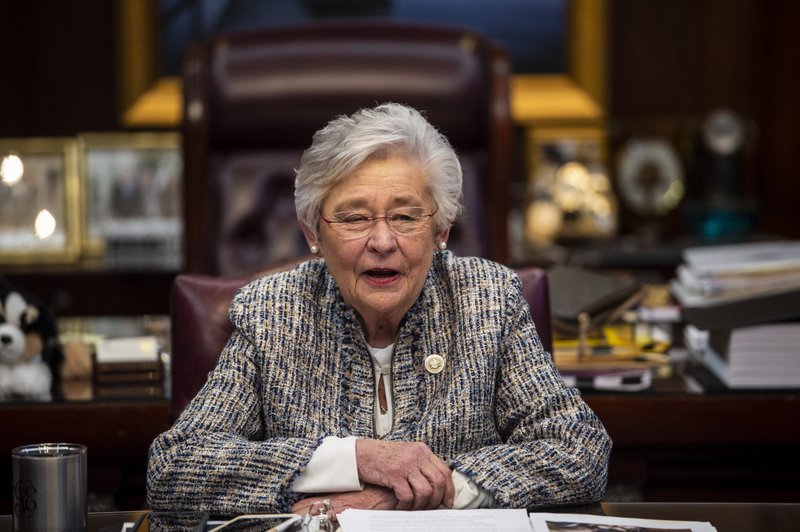
Alabama Gov. Kay Ivey on Friday signed employment protections for workers who claim a religious or health reason for not getting vaccinated against COVID-19. The Republican governor signed the legislation a day after it was approved by the Alabama Legislature as GOP-led states turn to lawsuits and legislation to fight the federal vaccine requirements they call an infringement on personal liberties. Ivey also signed into law a separate bill requiring parental consent for minors to get vaccinated for COVID-19. The new law says state employers can’t fire workers for being unvaccinated against COVID-19 if the employee returns a new standardized state form to claim a religious, medical exemption. “From the moment the White House rolled out their scare tactic plans to try to force this vaccine on Americans, I called it for what it is: an un-American, outrageous overreach. Alabamians – including those like myself who are pro-vaccine – are adamantly against this weaponization of the federal government, which is why we simply must fight this any way we know how,” Ivey said in a statement. President Joe Biden in September announced contractors who do business with the federal government must have workforces vaccinated — with no option to test out. The Alabama law will also affect companies, such as medical providers, who wanted to independently place vaccination requirements on workers. The bill drew opposition from the Business Council of Alabama, which said it would put federal contractors in a no-win situation. Democrats said Republicans were putting both jobs and public health in jeopardy for the sake of scoring political points. “After supporting a bill like that, I don’t think they can say they are pro-business or pro-growth. Hopefully, the business community will remember that House Democrats support their interests,” House Minority Leader Anthony Daniels of Huntsville said. Under the legislation, employees would check a box in a new standardized form for the reason they couldn’t get vaccinated — such as a religion, certain qualifying medical conditions, or a health provider’s signed recommendation. There would be no requirement to provide proof of the reason. An employee denied an exemption can appeal to the state Department of Labor. The new process and job protections will end automatically on May 1, 2023, unless extended by lawmakers. The legislation is a carve-out from existing law that allows companies to fire workers at will and specifies that it wouldn’t alter the ability of an employer to terminate an employee for reasons other than the employee’s COVID-19 vaccination status. Republicans argued that the federal government already allows exemptions for medical and religious reasons, and lawmakers are trying to provide an easy way for employees to claim those exemptions. “They’re fearful of losing jobs they’ve had for 20 years, very good jobs that they had with federal contractors,” Republican Rep. Mike Jones of Andalusia said. Some Democrats said the GOP proposal would create a wide-open portal for people to fraudulently claim an exemption without truly having a valid reason. “You know and I know, everybody, even atheists, is going to come up and say it’s because of their religious beliefs,” Democratic Rep. Pebblin Warren of Tuskegee said. Alabama has had at least 15,629 COVID-19 related deaths and has the second-highest per capita death rate from COVID-19 among states, according to researchers from Johns Hopkins University. Republished with the permission of the Associated Press.
Alabama hospitals face severe blood shortage, need donations
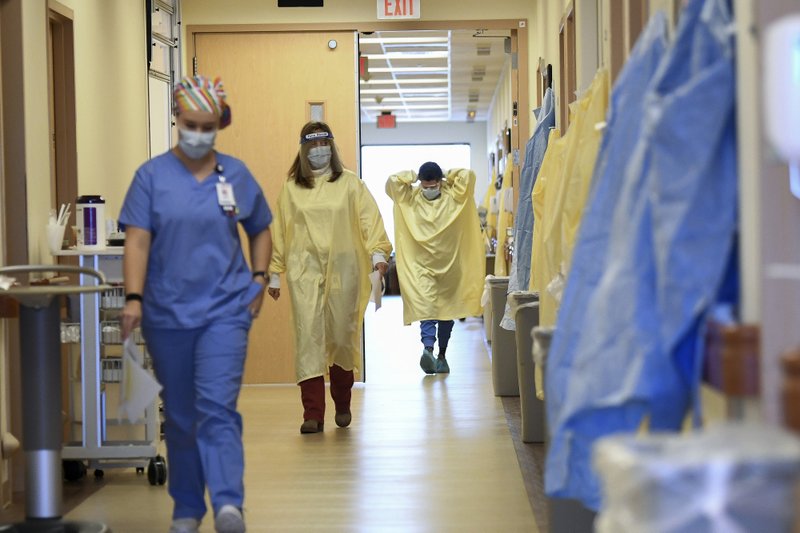
Alabama hospitals are facing a severe blood shortage and have a critical need for donations, an organization of state hospitals said. The Alabama Hospital Association said the state is facing a blood supply crisis after the number of people donating blood has declined during the COVID-19 pandemic. “The shortage of blood has reached a crisis level. We have critical shortages now throughout the health system,” said Dr. Don Williamson, the president of the Alabama Hospital Association. The Hospital Association said LifeSouth, the donation center that supplies blood to the majority of Alabama’s hospitals, has listed the statewide blood supply at “critical” levels. That means, on average, there is less than two days’ supply of blood on their shelves. Williamson said some hospitals would have difficulty handling a major trauma event as a result. That is particularly concerning with the holiday travel season approaching, he said. While it’s not uncommon to see occasional blood shortages on a local level, Williamson said, “It’s pretty rare for us to see this level of blood shortage on a statewide basis.” The hospital organization said donations are urgently needed. The group also encouraged schools, colleges, churches, businesses, and other organizations to host a local blood drive as soon as possible. “We are strongly encouraging people who can donate, to please go donate,” Williamson said. Republished with the permission of the Associated Press.
Pfizer says COVID-19 pill cut hospital, death risk by 90%

Pfizer Inc. said Friday that its experimental antiviral pill for COVID-19 cut rates of hospitalization and death by nearly 90% in high-risk adults, as the drugmaker joins the race to bring the first easy-to-use medication against the coronavirus to the U.S. market. Currently, all COVID-19 treatments used in the U.S. require an IV or injection. Competitor Merck’s COVID-19 pill is already under review at the Food and Drug Administration after showing strong initial results, and on Thursday, the United Kingdom became the first country to OK it. Pfizer said it will ask the FDA and international regulators to authorize its pill as soon as possible after independent experts recommended halting the company’s study based on the strength of its results. Once Pfizer applies, the FDA could make a decision within weeks or months. If authorized, the company would sell the drug under the brand name Paxlovid. Researchers worldwide have been racing to find a pill against COVID-19 that can be taken at home to ease symptoms, speed recovery, and reduce the crushing burden on hospitals and doctors. Pfizer released preliminary results Friday of its study of 775 adults. Patients who received the company’s drug along with another antiviral shortly after showing COVID-19 symptoms had an 89% reduction in their combined rate of hospitalization or death after a month, compared to patients taking a dummy pill. Fewer than 1% of patients taking the drug needed to be hospitalized, and no one died. In the comparison group, 7% were hospitalized, and there were seven deaths. “We were hoping that we had something extraordinary, but it’s rare that you see great drugs come through with almost 90% efficacy and 100% protection for death,” said Dr. Mikael Dolsten, Pfizer’s chief scientific officer, in an interview. Study participants were unvaccinated, with mild-to-moderate COVID-19, and were considered high risk for hospitalization due to health problems like obesity, diabetes, or heart disease. Treatment began within three to five days of initial symptoms and lasted for five days. Patients who received the drug earlier showed slightly better results, underscoring the need for speedy testing and treatment. Pfizer reported few details on side effects but said rates of problems were similar between the groups at about 20%. An independent group of medical experts monitoring the trial recommended stopping it early, standard procedure when interim results show such a clear benefit. The data have not yet been published for outside review, the normal process for vetting new medical research. Top U.S. health officials continue to stress that vaccination will remain the best way to protect against infection. But with tens of millions of adults still unvaccinated — and many more globally — effective, easy-to-use treatments will be critical to curbing future waves of infections. The FDA has set a public meeting later this month to review Merck’s pill, known as molnupiravir. The company reported in September that its drug cut rates of hospitalization and death by 50%. Experts warn against comparing preliminary results because of differences in studies. Although Merck’s pill is further along in the U.S. regulatory process, Pfizer’s drug could benefit from a safety profile that is more familiar to regulators with fewer red flags. While pregnant women were excluded from the Merck trial due to a potential risk of birth defects, Pfizer’s drug did not have any similar restrictions. The Merck drug works by interfering with the coronavirus’ genetic code, a novel approach to disrupting the virus. Pfizer’s drug is part of a decades-old family of antiviral drugs known as protease inhibitors, which revolutionized the treatment of HIV and hepatitis C. The drugs block a key enzyme which viruses need to multiply in the human body. The drug was first identified during the SARS outbreak originating in Asia in 2003. Last year, company researchers decided to revive the medication and study it for COVID-19, given the similarities between the two coronaviruses. The U.S. has approved one other antiviral drug for COVID-19, remdesivir, and authorized three antibody therapies that help the immune system fight the virus. But they have to be given by IV or injection at hospitals or clinics, and limited supplies were strained by the last surge of the delta variant. Shares of Pfizer spiked more than 9% before the opening bell Friday. Republished with the permission of the Associated Press.
Katie Britt urges lawmakers to protect workers against vaccine mandates

U.S. Senate candidate Katie Britt is urging Alabama Legislators to protect workers against the Biden administration’s vaccine mandates. It was announced today that Americans who work at companies with 100 or more employees will need to be fully vaccinated against COVID-19 by January 4 or get tested for the virus weekly. The Alabama Senate passed two anti-vaccine discrimination bills earlier this week, and the Alabama House of Representatives will see those bills on Thursday, Yellowhammer News reported. Senate Bill 9 and Senate Bill 15 are two of several bills the GOP-led legislature filed during the special session. Senate Bill 9 will provide workers the ability to claim exemption from the vaccine mandate. Senate Bill 15 will authorize the attorney general to pursue civil action against violators of the state’s ban on vaccine passports. The bill also requires parental consent for minors to get the COVID-19 vaccine. Chris Elliot, who authored Senate Bill 9, told the Alabama Daily News, “We’re trying to make this as easy as possible for the rank-and-file employees that don’t have a law degree or don’t want to go out and hire an attorney to be able to claim their exemption without an undue burden.” Britt, former chief executive of the Business Council of Alabama (BCA), is publicly disagreeing with her former employer. BCA is against Senate Bill 9, arguing that it puts employers in a “no-win position” by forcing them to comply with conflicting state and federal laws. Robin Stone, the BCA’s interim executive director, stated, “This legislation would prevent Alabama employers from making their own personnel decisions and place that authority in the hands of state government.” Britt stated, “Joe Biden’s tyrannical mandate threatens the livelihood of countless Alabamians and the freedom of every American. This vast overreach and coercion is not a solution to a problem; it only causes problems. Real leadership would find a way to simultaneously protect the lives of Americans while preserving their jobs and safeguarding their freedoms.” Senate Bills 9 and 15 now move to the full House for a vote.
U.S. mandates vaccines or tests for big companies by January 4

Tens of millions of Americans who work at companies with 100 or more employees will need to be fully vaccinated against COVID-19 by January 4 or get tested for the virus weekly under government rules issued Thursday. The new requirements, which were first previewed by President Joe Biden in September, will apply to about 84 million workers at medium and large businesses, although it is not clear how many of those employees are unvaccinated. The Occupational Safety and Health Administration regulations will force the companies to require that unvaccinated workers test negative for COVID-19 at least once a week and wear a mask while in the workplace. OSHA left open the possibility of expanding the requirement to smaller businesses. It asked for public comment on whether employers with fewer than 100 employees could handle vaccination or testing programs. Tougher rules will apply to another 17 million people who work in nursing homes, hospitals and other facilities that receive money from Medicare and Medicaid. Those workers will not have an option for testing — they will need to be vaccinated. Workers will be able to ask for exemptions on medical or religious grounds. OSHA said companies that fail to comply with the regulations could face penalties of nearly $14,000 per violation. It was unclear how OSHA planned to enforce the rules: Even counting allied regulators at the state level, the agency has only 1,850 inspectors to oversee 130 million workers at 8 million workplaces. A senior administration official said OSHA will target companies if it gets complaints. The release of the rules followed weeks of regulatory review and meetings with business groups, labor unions and others. The regulations form the cornerstone of Biden’s most aggressive effort yet to combat the spread of COVID-19, which has killed more than 740,000 people in the U.S. OSHA drafted the rules under emergency authority meant to protect workers from an imminent health hazard. The agency estimated that the vaccine mandate will save more than 6,500 worker lives and prevent more than 250,000 hospitalizations over the next six months. Senior administration officials said the rules preempt conflicting state laws or orders, including those that ban employers from requiring vaccinations, testing or the wearing of face masks. The administration will face an immediate challenge from Republican state officials who are eager to fight Biden in court and in Congress. Senate Republicans immediately launched a petition to force a vote to overturn the vaccine mandate, but with Democrats controlling the chamber, the effort is nearly certain to fail. More than two dozen Republicans serving as state attorneys general have indicated they plan to sue, arguing that only Congress can enact such sweeping requirements under emergency authority. Last week, 19 states sued to stop Biden’s narrower mandate that employees of federal contractors be vaccinated. That requirement was scheduled to take effect December 8, but the administration said Thursday it will be delayed until January 4 to match the requirements on other large employers and health care providers. The rules will require workers to receive either two doses of the Pfizer or Moderna vaccines or one dose of the Johnson & Johnson vaccine by January 4 or be tested weekly. Employees who test positive must be removed from the workplace. The requirements will not apply to people who work at home or outdoors. Companies won’t be required to provide or pay for the tests, but they must give paid time off for employees to get vaccines and sick leave to recover from side effects that prevent them from working. The requirements for masks and paid time off for shots will take effect December 5. The Centers for Medicare & Medicaid Services issued a separate rule requiring vaccination for workers in 76,000 health facilities and home health care providers that get funding from the government health programs. A senior administration official said that several large private health care organizations imposed their own mandates and achieved high vaccination rates — 96% or higher — without widespread resignations. The White House sees the new requirements as a potent tool to winnow down the ranks of the tens of millions of Americans who have thus far refused to get a shot. For weeks, Biden has encouraged businesses not to wait for the OSHA rule to take effect. He has touted businesses that have already announced their own vaccine mandates and urged other companies to follow their lead. Administration officials say those efforts are paying off, with about 70% of the nation’s adults now fully vaccinated. Walmart, the nation’s largest private employer, said in late July it was requiring all workers at its headquarters in Bentonville, Arkansas, as well as its managers who travel within the U.S., to be vaccinated against COVID-19 by Oct. 4. But the company had stopped short of requiring shots for its frontline workers. United Airlines required U.S. employees to get vaccinated or face termination. Only a very small number of its 67,000 workers refused to do so. In August, Tyson Foods told its 120,000 U.S. workers that they must be vaccinated by November 1. A week before that deadline, the company said 96% of its workforce was fully vaccinated. However, some companies have expressed fear that some vaccine-hesitant workers might quit, leaving their workforces even thinner in what is already a tight labor market. Several large business groups complained about the timing of the mandate. Retail groups worried that the requirement could disrupt their operations during the critical Christmas shopping period. Retailers and others also said it could worsen supply chain disruptions. The National Retail Federation suggested that the new rules are not needed because the rolling average number of new daily cases in the U.S. has fallen by more than half since September. “Nevertheless, the Biden administration has chosen to declare an ‘emergency’ and impose burdensome new requirements on retailers during the crucial holiday shopping season,” said David French, a senior vice president for the trade group. The number of new COVID-19 infections in the U.S. is still falling from a summer surge
Alabama police chief dies of COVID-19, regretted vaccine choice
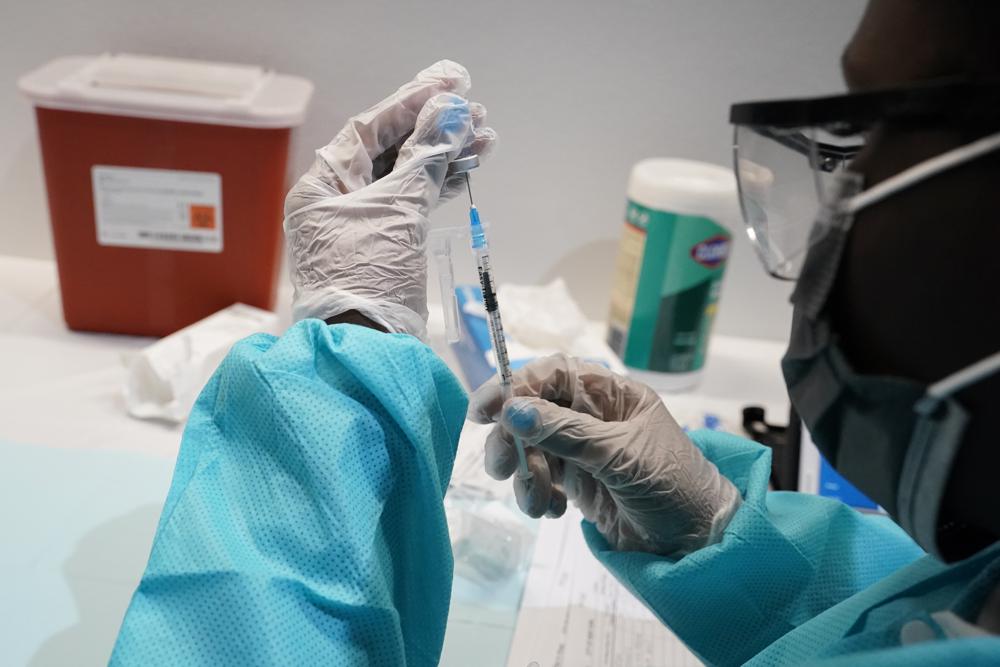
A small-town Alabama police chief who died of COVID-19 loved the community he served and regretted his decision against getting vaccinated, his widow said. Buddy Crabtree, a 10-year veteran of the Ider Police Department in northeastern Alabama, died Saturday of the illness caused by the new coronavirus, news outlets reported. He was often seen inside schools in the town of about 650 people. “He loved his job and Ider,” widow Kristie Crabtree told WAAY-TV. “He loved the community of Ider, his officers, the school kids.” Crabtree’s battle with Covid-19 was a surprise to many since he seemed healthy and kept busy. Crabtree said her husband went to Highlands Medical Center in Scottsboro on Oct. 9 and was flown to Memorial Hospital in Chattanooga, Tennessee, 10 days later. She said her husband said he would’ve got a vaccine, which health officials say prevents nearly all serious cases of COVID-19 and deaths if he knew how hard he would have to fight to live. “He actually said, ‘If I get better, I’ll take all three, I don’t ever want to go through this again,’” she said. Crabtree’s funeral is scheduled for Wednesday. Republished with the permission of the Associated Press.
Republicans advance bill for claiming vaccine exemptions
Alabama lawmakers on Tuesday advanced legislation aimed at protecting employees who choose not to get vaccinated against COVID-19 by setting out an easy process to claim a religious or medical exemption. The legislation comes as Republican leaders in many states have expressed opposition to the federal vaccine mandate, calling it an infringement on personal decisions. But opposed lawmakers said Republicans were authorizing people to “lie” to avoid getting vaccinated and thereby risk the lives of others. The Alabama Senate voted 26-5 for the bill by Republican Sen. Chris Elliott of Fairhope would mandate businesses requiring COVID-19 vaccinations to distribute a form where employees could claim a religious or medical exemption by checking a box. An employee submitting the form could not be fired over not getting the vaccination unless the business appealed and got permission from the Alabama Department of Labor. State senators also voted 26-4 for a separate bill that gives the state attorney general authority to enforce an existing state law that prohibits businesses from refusing service to unvaccinated customers. It also requires parental consent for a child to get a COVID-19 vaccine. Both bills now move to the Alabama House of Representatives. Elliott said the federal government already allows exemptions for religious and medical reasons, and they are trying to “make it as easy as possible on the employee to claim those exemptions so that they can keep their job.” “I’ve got constituents in my district that are losing their jobs right now at various different employers that have a vaccine mandate right now. I think we need to do everything we can to protect those jobs and protect those folks that are just trying to provide for their family,” Elliott said. Democratic Sen. Bobby Singleton of Greensboro said Republicans were giving people the ability to “tell a big lie” to avoid getting vaccinated. He said the Labor Department would have limited or no ability to investigate the sincerity of the employee’s claim of a religious or medical reason for declining the vaccine. “We as a Legislature are about to manufacture an excuse for people not to take the vaccine,” Singleton said, predicting that “everybody will claim some sort of illness” or religious reason. Democratic Sen. Vivian Davis Figures of Mobile said Republicans supporting the bill were putting the lives of others at risk and interfering with the ability of a business to make decisions about its workplace. “All of the thousands and thousands and thousands of people who have died of COVID since early 2020, and you have the audacity to introduce a bill like this to sanction the death of so many others,” Figures said. Alabama has seen at least 15,629 COVID-19 related deaths and has the second-highest per capita death rate from COVID-19 among states, according to researchers from Johns Hopkins University One of the state’s largest business groups opposed the bill, saying it interferes with private business decisions and puts federal contractors in a difficult situation that could cost jobs. “This legislation would prevent Alabama employers from making personnel decisions and place that authority in the hands of state government,” the Business Council of Alabama said in a statement. The group said court action was the best way to challenge the mandate. Senate President Pro Tem Greg Reed said lawmakers are trying to do what they can, within their authority, to address the federal vaccine mandate. “The Biden administration’s vaccine mandates are a reckless federal government overreach that infringe on Alabamians’ liberty and freedom of personal choice and could cause significant economic harm to Alabama and Americans across the country,” Reed said in a statement. Republican-led states have turned to a mix of lawsuits, executive orders, and legislation to try to resist President Joe Biden’s COVID-19 vaccine mandate. Nineteen states, including Alabama, have filed lawsuits against Biden’s requirement that all employees of federal contractors be vaccinated against the coronavirus by Dec. 8, arguing that the mandate violates federal procurement law and is an overreach of federal power. Republished with the permission of the Associated Press.
