
Parroting Donald Trump, GOP primary losers cast doubt on elections
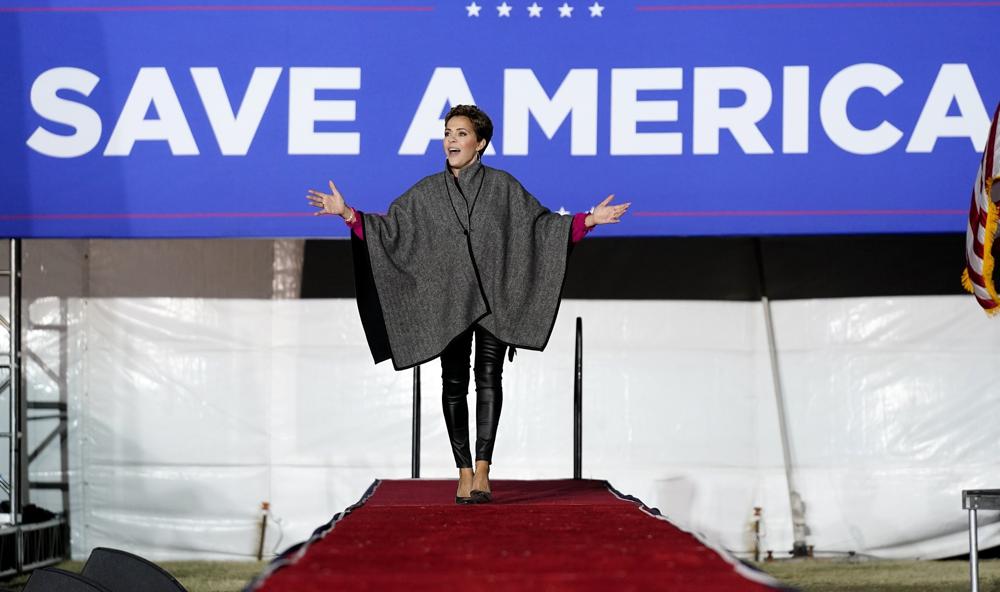
It was no shock that state Rep. Ron Hanks and Mesa County Clerk Tina Peters handily lost their recent Republican primaries in Colorado for U.S. Senate and secretary of state. Hanks was outspent 14-to-1 by his rival. Peters, who was vying to become Colorado’s top elections official, had been indicted on seven felony charges alleging she helped orchestrate a breach of her voting system’s hard drive. But this past week, both candidates formally requested recounts of their primary elections from June 28, suggesting widespread irregularities seen by no one other than their own campaigns and allies. “I have reasons to believe extensive malfeasance occurred in the June 2022 primary,” Peters wrote in her recount request, “and that the apparent outcome of this election does not reflect the will of Colorado voters not only for myself but also for many other America First statewide and local primary candidates.” America First is a coalition of conservative candidates and officeholders who, among other things, promote the falsehood that Democrat Joe Biden did not win the 2020 presidential election. This idea has seeped deeply into this year’s Republican primaries, which have revealed a new political strategy among numerous candidates: running on a platform that denies President Donald Trump’s defeat two years ago. As some of those candidates lose their own races, they are reaching new frontiers in election denial by insisting that those primaries, too, were rigged. “There’s a clear reason they’re doing it, and it’s a much broader, coordinated attack on the freedom to vote across the country,” said Joanna Lydgate of States United Action. Her group supports election officials who recognize the validity of the 2020 election. Noting that she coaches youth basketball, Lydgate added another reason: “Really, what this is is people who are sore losers, people who don’t want to accept defeat.” The primary losers have an obvious role model: Trump himself. After his first election loss during his 2016 run for the White House, in the Iowa caucuses, Trump baselessly claimed fraud and demanded an investigation. When he was elected president later that year, he claimed that fraud was the reason Democrat Hillary Clinton won more votes than he did. Trump set up a commission to try to prove that. That commission was disbanded when it failed to produce any evidence. After his 2020 defeat, Trump and his supporters lost 63 of 64 legal challenges to the election. Trump continued to blame fraud without evidence, even after his own attorney general and election reviews in the states failed to turn up any widespread wrongdoing that would have any impact on the outcome. This year’s post-primary election denial may be a preview for November when Republicans face Democrats in thousands of races across the country. The GOP is expected to do well — an expectation that could set the stage for more false claims of fraud when some of those candidates lose. Still, some Republicans aren’t waiting for Democratic voters to weigh in before making unsubstantiated fraud claims. Some recent candidates who have done that are relatively marginal ones. In Georgia, Trump’s two recruits to challenge the state’s governor and secretary of state — former Sen. David Perdue and Rep. Jody Hice — admitted defeat after they lost the May primaries. But Kandiss Taylor, a fringe candidate who won only 3% of the primary vote for governor, refused to concede, claiming there was widespread cheating. In South Carolina, Republican Harrison Musselwhite — who goes by Trucker Bob — lost his primary against Gov. Henry McMaster by 66 percentage points. Still, he complained of problems with the election to the state party, as did another losing GOP contender, Lauren Martel, who ran for attorney general. The party rejected their claims. Others who have cried fraud are more prominent. Joey Gilbert, who came in second in the Nevada Republican primary for governor, posted a Facebook video days after the June tally showing him 26,000 votes short. “These elections, the way they’ve been run, it’s like Swiss cheese,” he said. “There’s too many holes.” Gilbert, who attended Trump’s rally near the White House on Jan. 6, 2021, before the riot at the U.S. Capitol, demanded a recount. The results appear unlikely to substantially change the final tally. He did not return messages seeking comment. In Arizona, former newscaster Kari Lake won Trump’s endorsement in her quest for the party’s nomination for governor, insisting that he won the presidency in 2020. This past week, she told supporters that her top opponent in the primary “might be trying to set the stage for another steal” in next month’s primary. That earned her a rebuke from Gov. Doug Ducey, a Republican who has endorsed Lake’s chief rival, Karin Taylor Robson. “The 2022 elections haven’t even been held yet, and already we’re seeing speculation doubting the results – especially if certain candidates lose,” Ducey tweeted. “It’s one of the most irresponsible things I can imagine.” Lake’s campaign did not return messages seeking comment. In Colorado, county clerk Peters immediately questioned the primary results once the tally showed her losing badly in the secretary of state’s race. Claiming fraud as she trailed former county clerk Pam Anderson, a regular debunker of Trump’s election lies, Peters said: “Looking at the results, it’s just so obvious it should be flipped.” She and Senate candidate Hanks repeated Trump’s election lies, a position that had won them strong support last spring at the 3,000-strong GOP state assembly, a convention attended by the party’s strongest activists. Both candidates, in letters to the secretary of state’s office this past week demanding a recount, cited that support in explaining why they could not have lost their primaries. Hanks referred a reporter to an email address for media for the two candidates, though no one responded to questions sent to that address. The activists who attend the GOP gathering are just a small fraction of the 600,000 who voted in the June primary. According to preliminary results, Peters lost by 88,000 votes and Hanks by 56,000 votes. Their recount letters gave reasons why the candidates believed those vote tallies were “being artificially controlled.” The Colorado Secretary of State’s office said
Takeaways: Donald Trump’s conditional loyalty, new warning for left
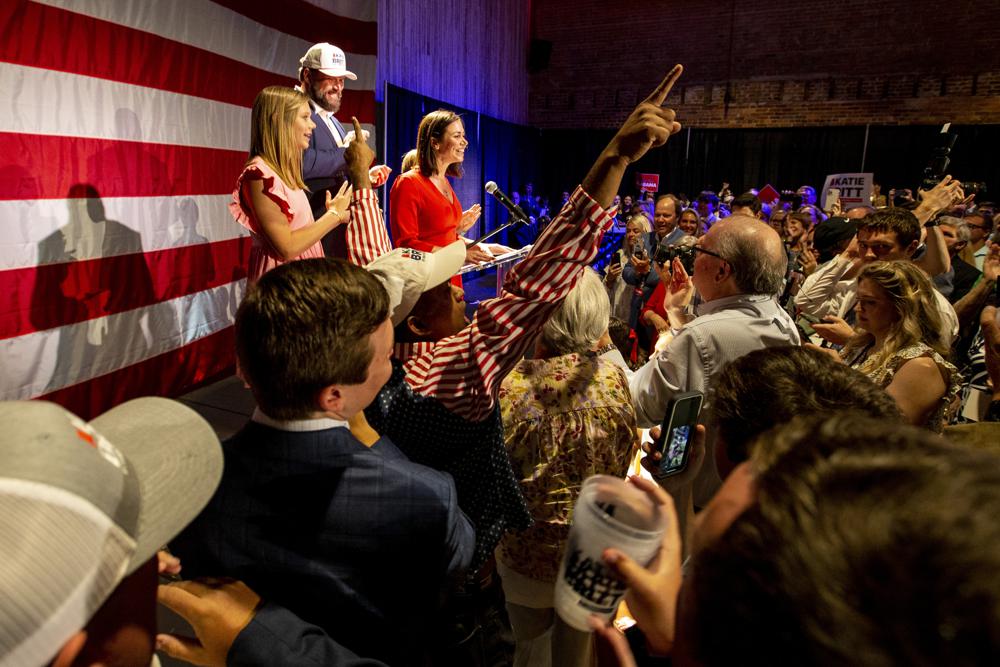
A Republican who was backed by Donald Trump at the last minute prevailed on Tuesday in an Alabama Senate runoff. But in neighboring Georgia, the former president’s losing streak deepened. Meanwhile, moderate Washington, D.C., Mayor Muriel Bowser won her Democratic primary, offering a fresh warning to progressives. Takeaways from the latest round of midterm primary elections: LOYALTY RUNS ONE WAY Throughout his life in business, entertainment, and, eventually, politics, Trump demanded loyalty from those around him. And over the decades, he’s repeatedly shown that he’s less eager to return the favor. Rep. Mo Brooks, one of the former president’s most ardent defenders in Congress, felt the sting of that reminder on Tuesday when he lost a runoff for the GOP nomination for a U.S. Senate seat from Alabama. Trump initially backed Brooks but rescinded that endorsement after the campaign got off to a lackluster start. Then, less than two weeks before the runoff, Trump backed Katie Britt, a candidate more oriented toward the GOP establishment but someone whose victory seemed more assured. Britt is now the prohibitive favorite in the deep-red state to succeed retiring Sen. Richard Shelby, for whom she formerly worked. Her victory allows Trump to take credit for the win — even if he waited until the last minute to back her. And it reinforces that with Trump, loyalty often flows in one direction. On paper, Brooks checked all of the boxes that Trump looks for. He implored election deniers at a Washington rally before the January 6 U.S. Capitol attack to “start taking down names and kicking ass.” He voted in Congress against certifying President Joe Biden’s victory. And he’s remained a denier of the outcome of the 2020 election. But Brooks also landed in Trump’s bad graces after he said last August that it was time to move on from the 2020 presidential race and focus on upcoming elections. Trump pointed to those comments to accuse Brooks of being “woke,” a dangerous label in conservative circles. In focusing on adding to his roster of wins, Trump ultimately aligned himself with a candidate who, while deeply conservative, is backed by the GOP establishment the former president has railed against for years. The irony was not lost on Brooks, someone so dedicated to Trump’s agenda that he has called himself “MAGA Mo.” “We are sending to Washington, D.C., the exact opposite of what we need in the United States Senate. But the voters have spoken,” he said in a concession speech. “They might not have spoken wisely.” TRUMP WENT DOWN IN GEORGIA Trump extended his losing streak in Georgia on Tuesday after two U.S. House candidates he endorsed were blown out in runoff primary elections that represented a continuation of the drubbing he received in the state last month. Vernon Jones, a former liberal Democrat turned MAGA warrior, was crushed by trucking company owner Mike Collins, while Jake Evans also lost in dramatic fashion to emergency room physician Rich McCormick. Georgia has been a fixation of Trump’s ever since he lost the 2020 election and mounted a pressure campaign to get Republican leaders in the state to overturn the results. When they rejected his efforts, Trump’s interests shifted to retribution. He recruited candidates to challenge Republican Gov. Brian Kemp, as well as GOP Secretary of State Brad Raffensperger, Georgia’s top elections official. Both incumbents prevailed. Trump’s meddling even went so far as to ask Jones, who initially ran for governor, to step aside for his handpicked candidate, former Sen. David Perdue, while offering his endorsement to Jones if he ran for an open House seat instead. Jones, the former executive of DeKalb County, took him up on that offer and declared himself the “Black Donald Trump!” while challenging his opponents to ”Bring it on, liars!” But Jones’ baggage, including accusations that he raped a woman in 2004, became a liability in the campaign. The woman dropped charges against Jones, but she never recanted. Jones said the sexual encounter was consensual. But Collins, whose late father represented Georgia in the U.S. House in the 1990s, handed out rape whistles to keep the allegation fresh. Meanwhile, in the other Atlanta area runoff, McCormick, the doctor, easily beat Trump-backed Jake Evans. McCormick’s name was already well known to many in the district after narrowly losing a high-profile 2020 House race to Democrat Carolyn Bourdeaux. He was backed by the influential conservative group Club For Growth. WARNING FOR PROGRESSIVES In Washington, Bowser fended off a progressive rival in the city’s Democratic primary, overcoming a tough primary campaign that focused on rising crime. Her victory virtually guarantees that she will win a third consecutive term as mayor in the heavily Democratic city. The results could also be interpreted as the latest warning to progressives that voters in the party’s own base are wary of their criminal justice policies at a time of rising anxiety about public safety. Bowser defeated At-large Councilmember Robert White, who harshly criticized her response to spiraling violent crime rates, and Councilmember Trayon White, who represents Ward 8, the poorest and most crime-ridden area in the district. The primary unfolded as many progressive cities are struggling with how to address crime. For citizens of the nation’s capital, much of it has happened on Bowser’s watch. Homicides have risen for four years. The 2021 murder count of 227 was the highest mark since 2003. And in January, a candidate for the D.C. Council, Nate Fleming, was carjacked at gunpoint. But Bowser, a moderate, adopted a pragmatic approach that may have helped her on Tuesday. She largely stood by her police department at a time when activists called to defund the police, fighting public battles with the D.C. Council over the police budget. She quietly replaced an older white police chief with a younger Black successor. She also pushed for funding to hire hundreds more police officers over the next decade. Republished with the permission of The Associated Press.
Katie Britt wins tumultuous Alabama Senate race scrambled by Donald Trump
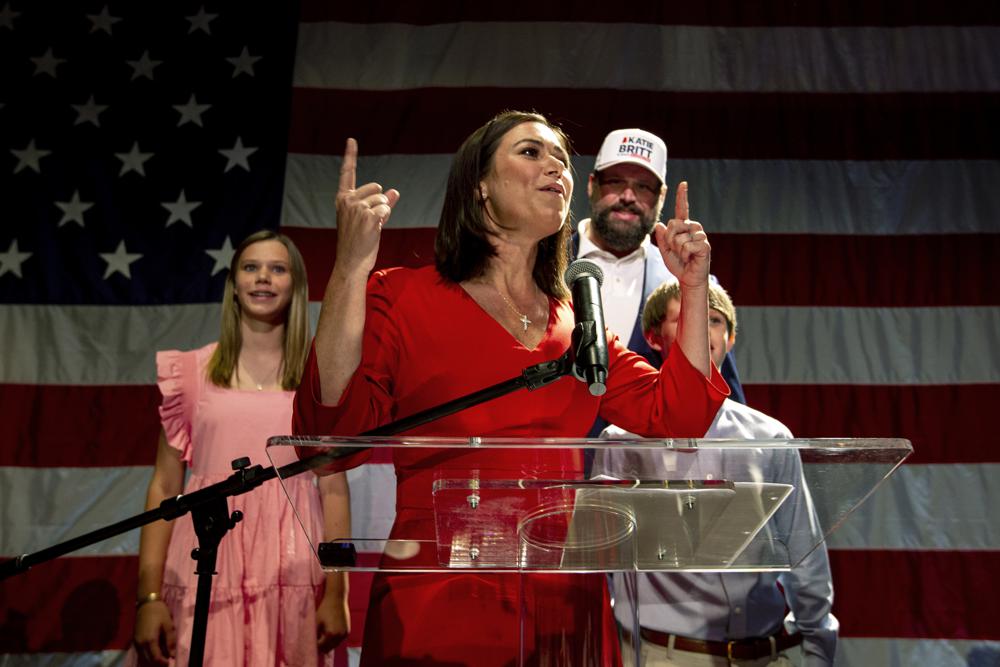
Katie Britt won the Republican nomination for Senate in Alabama Tuesday, defeating six-term Rep. Mo Brooks in a primary runoff after former President Donald Trump took the unusual step of rescinding his initial Brooks endorsement. The loss ends a turbulent campaign that pit Brooks, a conservative firebrand who has spent more than a decade in Congress, against someone who has never held elected office. Brooks ran under the banner “MAGA Mo” and fully embraced Trump’s election lies. But that wasn’t enough for the former president, who initially backed Brooks in the race to replace Britt’s former boss, retiring Sen. Richard Shelby, but then pulled his support as Brooks languished in the polls. The race was among a handful of contests held Tuesday at the midpoint of a primary season that has been shaped by Trump’s effort to influence the GOP. By the time Trump backed her earlier this month, Britt was already considered the favorite in the race. She emerged as the top vote-getter in the state’s May 24 primary, but just missed the threshold that triggered a runoff. Still, Tuesday’s result gives Trump a win at a time when his influence over the GOP has come under scrutiny. The former president has had a mixed record of success in backing candidates this election season, helping lift Senate contenders in Pennsylvania and Ohio while floundering elsewhere, particularly in Georgia. Voters in the one-time Republican stronghold rejected his efforts to unseat the state’s GOP governor and secretary of state, both of whom rebuffed his extraordinary pressure to overturn the results of the 2020 presidential election. And his trouble in the crucial swing state deepened Tuesday as two of his endorsed congressional candidates faltered in their GOP runoff elections. In the 6th District in Atlanta’s northern suburbs, emergency room physician Rich McCormick beat Trump-backed lawyer Jake Evans. And in the 10th District east of Atlanta, trucking company owner Mike Collins bested Democrat-turned-Republican Vernon Jones. Trump persuaded Jones to run for the seat and drop his long-shot bid for governor to clear the field for his chosen candidate, former Sen. David Perdue. Perdue lost to Republican Gov. Brian Kemp, who endorsed Collins. The seat is being vacated by Republican Rep. Jody Hice, who also lost his bid to unseat Republican Secretary of State Brad Raffensperger, another top Trump target. Meanwhile, in Washington, D.C., Mayor Muriel Bowser won the Democratic nomination to serve another term, fending off a pair of challengers amid concerns over rising crime and homelessness. But the Alabama Senate runoff had drawn particular attention because of the drama surrounding Trump’s endorsement and because the winner, who will face Democrat Will Boyd in November, is considered the overwhelmingly favorite in the Republican state. Britt, 40, cast herself as part of a new generation of conservative leaders while disparaging Brooks, 68, as a career politician. If victorious in November, Britt will be the first woman elected to the U.S. Senate from Alabama and one of its youngest members. The state’s previous female senators had been appointed. “Alabama has spoken. We want new blood. We want fresh blood,” she said at her victory party. “We want someone who will fight for Christian conservative values, who will fight for the freedoms and liberties this nation was founded on and will fight for the American dream for the next generation and the next generation.” That argument seemed to resonate with some voters Tuesday. “She’s young. She’s smart,” said 86-year-old Carolyn Bowman. “That’s what we need in Congress.” Brooks, who is known for his bombastic oratory style, described the race as a battle for the soul of the Republican Party, pitting the “true conservative” wing against establishment members of the GOP. He disparaged Britt, 40, as a RINO — the GOP pejorative meaning “Republican in name only” — and maintained he was the only one with a proven conservative record. The founding member of the conservative House Freedom Caucus, Brooks has a history of bucking party leadership and made his opposition to Senate Minority Leader Mitch McConnell a pillar of his campaign, embarking on a “Fire McConnell Tour” of town halls. In his concession speech Tuesday night, Brooks told supporters he respected the race’s outcome. But in a sign of the contentious race, he accused voters of having been seduced by false advertising and congratulated high-dollar donors and “special interest groups” for funding Britt’s campaign. “We are sending to Washington, D.C., the exact opposite of what we need in the United States Senate. But the voters have spoken. They might not have spoken wisely,” he groused. Brooks was initially considered the frontrunner when he announced his Senate candidacy, and Trump quickly offered his support, rewarding an ally who had been an ardent supporter of Trump’s false claims of election fraud. Brooks voted against certifying Democrat Joe Biden’s presidential election victory and delivered a fiery speech at the “Stop the Steal” rally that proceeded the U.S. Capitol insurrection, telling the crowd, “Today is the day that American patriots start taking down names and kicking ass.” But their relationship soured as Brooks struggled to gain traction. Trump eventually pulled his support in March, accusing Brooks — one of the most conservative members in Congress — of going “woke” for saying at a rally that it was time to move on from litigating the 2020 presidential election. Brooks clawed his way into a second-place finish in the May primary and tried once again to get Trump to back him. But Trump instead threw his support to Britt 11 days before the runoff she was widely expected to win. Elsewhere, in Virginia, Republicans chose a pair of Trump-aligned congressional candidates to take on two of the most vulnerable Democrats in the fall. In the coastal 2nd District, state Sen. Jen Kiggans won the Republican race to try to unseat Democrat Elaine Luria, a retired Naval commander and member of the January 6 committee, in the general election. And in central Virginia’s 7th District, Yesli Vega emerged from a competitive six-candidate field to face Democratic Rep. Abigail Spanberger. At the polls Tuesday in Virginia Beach, Nanci
Mounting losses show limits of Donald Trump’s power

Donald Trump opened May by lifting a trailing Senate candidate in Ohio to the Republican nomination, seemingly cementing the former president’s kingmaker status before another possible White House run. He’s ending the month, however, stinging from a string of defeats that suggests a diminishing stature. Trump faced a series of setbacks in Tuesday’s primary elections as voters rejected his efforts to unseat two top targets for retribution: Georgia’s Republican governor and secretary of state, both of whom had rebuffed Trump’s extraordinary pressure to overturn the results of the 2020 presidential election. But the magnitude of defeat in the governor’s race — more than 50 percentage points — was especially stunning and raised questions about whether Republican voters are beginning to move on from Trump. Nearly six years after the one-time reality television star launched what seemed to be an improbable campaign for the White House, the “Make America Great Again” movement Trump helmed isn’t going anywhere. But voters are increasingly vocal in saying that the party’s future is about more than Trump. “I like Trump a lot, but Trump is in the past,” said David Butler of Woodstock, Georgia, who voted for Gov. Brian Kemp on Tuesday and said Trump’s endorsements had “no” impact “whatsoever” on his thinking. It was the same for Will Parbhoo, a 22-year-old dental assistant who also voted for Kemp. “I’m not really a Trumper,” he said after voting. “I didn’t like him to begin with. With all the election stuff, I was like, ‘Dude, move on.’” One thing Parbhoo liked about the current governor? “Kemp is focused on Georgia,” he said. Trump sought to play down the losses by his favored candidates, saying on his social media platform Wednesday that he had a “very big and successful evening of political Endorsements” and insisting some races “were not possible to win.” Still, the pattern of high-profile defeats is hard to ignore. After JD Vance vaulted from third to first place following Trump’s late-stage endorsement in the Ohio Senate primary, the dynamics took a turn. Trump’s pick in Nebraska’s primary for governor, Charles Herbster, lost his race after allegations surfaced that he had groped women. In Idaho a week later, the governor beat a Trump-backed challenger. In North Carolina, voters rebuffed Trump’s plea to give a scandal-plagued congressman a second chance. And in Pennsylvania, a marquee Senate primary featuring Trump-endorsed celebrity heart surgeon Mehmet Oz remains too close to call. But his biggest upset was in Georgia, a crucial swing state, where former Sen. David Perdue, whom Trump had lobbied to run and helped clear the field for, lost to Kemp. The governor was among Trump’s top targets after he refused to overturn the results of the 2020 White House election in his state. Georgia Secretary of State Brad Raffensperger, who defied Trump’s call to “find” the votes to change the outcome two years ago — a call that is now under investigation — also won his party’s nomination. Attorney General Chris Carr and Insurance Commissioner John King — all opposed by Trump — were also successful in their primaires. In Alabama, Rep. Mo Brooks, whose Senate endorsement Trump rescinded as he struggled to gain traction, made it to a runoff, having gained support after Trump dropped him. Trump has endorsed in nearly 200 races, from governor to county commissioner, often inserting himself into contests that aren’t particularly competitive and helping bolster his compilation of wins. Some of his work, even in races with multiple candidates, has paid off. His early support helped football great Herschel Walker and Rep. Ted Budd sail to their respective Senate primary nominations in Georgia and North Carolina. Sarah Huckabee Sanders, Trump’s former press secretary, easily won the GOP nomination for governor in Arkansas. And even in Georgia, all of the candidates Trump endorsed in open races won or will head to runoffs. Some allies say Trump’s endorsement tally is a poor measure of his influence, even if Trump constantly promotes that record. They argue that voters may support the former president and be eager for him to run again but may not be persuaded by his selections, especially in races with governors such as Kemp, who have long histories with voters. And even without Trump on the ballot, the party has been transformed in Trump’s image, with candidates adopting his “America First” platform, mimicking his tactics, and parroting his lies about a stolen election. But with Trump out of office and relegated to posting on his own social media platform, other voices are beginning to fill the void. Fox News host Tucker Carlson, the most-watched personality on cable television, has become a driving ideological force in the party. Republicans such as the conspiracy-embracing Rep. Marjorie Taylor Greene, who won her party’s nomination for reelection Tuesday, have taken up his mantle in Washington. Meanwhile, potential presidential rivals to Trump are waiting in the wings for 2024. Former Vice President Mike Pence, who has been distancing himself from Trump, rallied with Kemp in suburban Atlanta on Monday evening and told the crowd that “elections are about the future” — an implicit knock on his former boss. Trump has also spawned a new generation of candidates who have channeled his “MAGA” brand but who have done so independent of his support and see themselves as its next iteration. “MAGA doesn’t belong to him,” Kathy Barnette, the Pennsylvania Senate candidate whose late-stage surge stunned party insiders, said in an interview. “Trump coined the word. He does not own it.” While the left, she said, may see the “MAGA movement” as a “cult of Trump voters,” she said it goes far beyond one man. She argued that Trump had succeeded in 2016 because he aligned himself with voters’ concerns and said out loud what people were already thinking, particularly on immigration. She said she tried in her race to do the same. “I do believe Trump has an important voice still,” she added, but “he needs to get better advisers, and in addition to that, he needs to do better himself in remembering why we aligned with him. And it wasn’t because we were aligning with his
Donald Trump rescinds Mo Brooks endorsement in Alabama U.S. Senate race
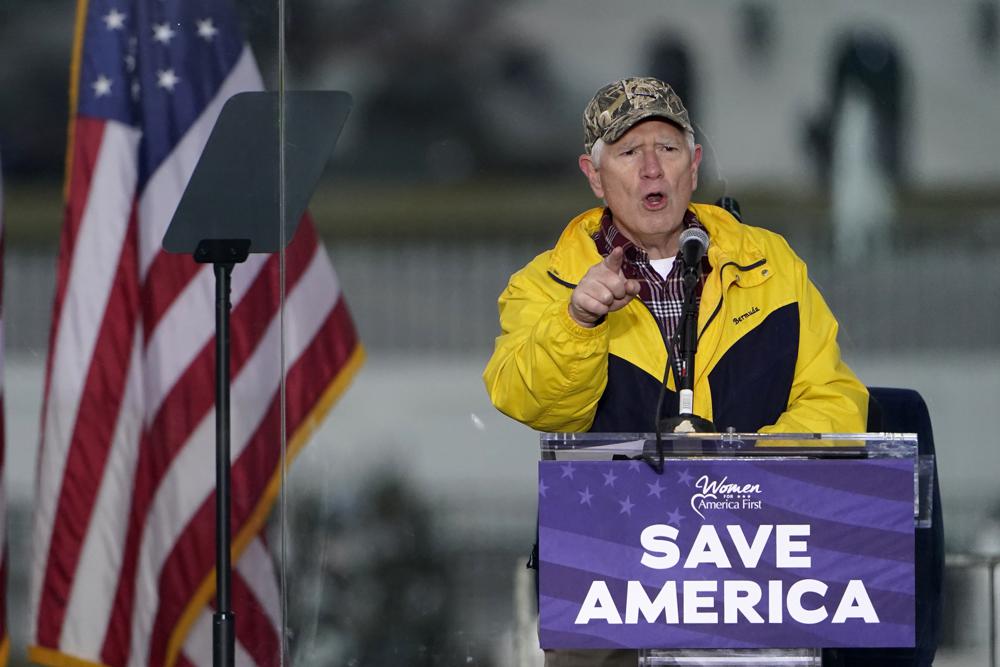
Former President Donald Trump on Wednesday rescinded his endorsement of Rep. Mo Brooks in Alabama’s U.S. Senate race in a major blow to the congressman’s campaign. In a statement, Trump cited Brooks’ performance in the race, poor campaign staffing, and what Trump perceived as a softening of Brooks’ stance on the former president’s false 2020 election fraud claims. Trump said he will be making another endorsement announcement in the “near future.” “Very sad but, since he decided to go in another direction, so have I, and I am hereby withdrawing my Endorsement of Mo Brooks for the Senate,” Trump said in a statement. “I don’t think the great people of Alabama will disagree with me.” Trump has been frustrated for months by Brooks’ performance as he has failed to gain traction in the race. By dropping the endorsement, the former president is trying to stave off the embarrassment of backing a losing candidate in a high-profile race. Trump, who often brags about his endorsement record, takes his tally seriously, seeing it as a reflection of his power as he mulls another presidential run. It’s not the only race in which Trump’s pick has been struggling. The candidate he originally endorsed in Pennsylvania’s Senate race, Sean Parnell, dropped out amid allegations of abuse from his ex-wife. In North Carolina, his endorsed candidate for an open Senate seat, Rep. Ted Budd, has failed to make a splash. And in Georgia, his pick for governor, David Perdue, is trailing incumbent Republican Gov. Brian Kemp, one of his top 2022 targets. Trump has since become more cautious and held back endorsements in several high-profile races, including contests in Ohio, Missouri, Arizona, and Pennsylvania. Trump had backed Brooks since last April, more than a year ahead of the upcoming May 24 primary, rewarding the conservative firebrand and ally who whipped up a crowd of Trump supporters at the January 6, 2021, rally that preceded the Capitol insurrection. Brooks has since found himself in a primary battle with two formidable opponents: Katie Britt, the former head of a state business group, and Mike Durant, a businessman best known as the helicopter pilot shot down and held prisoner in the 1993 “Black Hawk Down” incident. The Alabama Senate race will decide who replaces retiring U.S. Sen. Richard Shelby, a fellow Republican. Britt previously served as Shelby’s chief of staff. Trump, in his Wednesday statement, cited remarks Brooks had made during an August rally with Trump in Alabama that briefly resulted in jeers from the crowd. Brooks told the crowd it was time to move on from the 2020 presidential race and focus on upcoming elections. The remark resulted in some rallygoers briefly booing him. “When I heard his statement, I said, ‘Mo, you just blew the Election, and there’s nothing you can do about it,’” Trump said Wednesday. Trump told the Washington Examiner last week that he was disappointed in Brooks’ performance and suggested he was open to backing another candidate. “It’s a very tight race between the three of them right now, and I’m not particularly happy,” he said. Trump invited Britt and her husband, Wesley Britt, a former lineman for the New England Patriots, to visit with him at his Palm Beach, Florida, estate last month, according to a person who was familiar with the visit but not authorized to speak about it publicly. Brooks has leaned heavily on the Trump connection. His campaign signs refer to him as “MAGA Mo” in reference to the former president’s “Make America Great Again” slogan. He appeared with a life-size poster of Trump at one recent campaign stop. Brooks had tried to salvage the endorsement by pledging not to back Mitch McConnell as Senate Republican leader if he wins the seat. Trump has fumed at McConnell and repeatedly called for his replacement since McConnell criticized the then-president’s conduct on January 6. Republished with the permission of the Associated Press.
Stacey Abrams seeks national voting rights action before 2022 race
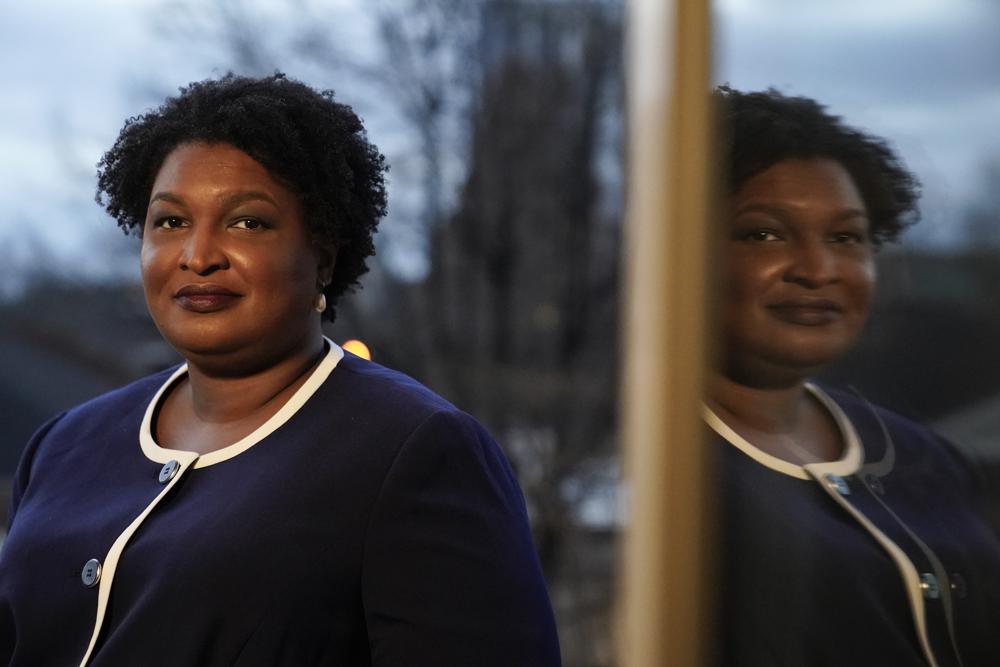
Stacey Abrams, who built her national reputation by advocating for voting rights, is calling on Congress to take action on federal voting rules as the Democrat launches a second bid to become Georgia’s governor. Senators, including Georgia Democrat Raphael Warnock, Abrams’ close ally, have been arguing in recent days that the Senate must try again on federal voting standards, despite earlier setbacks. In an interview Thursday with The Associated Press, Abrams said senators need to override Republican opposition to new federal voting guarantees by weakening the legislation-blocking filibuster to allow the Democrats’ bare majority to pass new rules. Otherwise, Abrams said, more Republican-dominated state legislatures nationwide will adopt voting restrictions like Georgia did this year. “Starting in January, when legislators come back into session in 2022, we’re going to see a maelstrom of voter suppression laws. I understand the resistance to completely dismantling the filibuster. But I do believe there’s a way to restore the Senate to a working body so that things like defending democracy can actually take place.” Abrams lost narrowly to Republican Brian Kemp in 2018 after becoming the first Black woman to ever become a major party’s nominee for governor. She maintains that Kemp used his position as secretary of state to unfairly tip the scales in his favor by doing things like purging voters from the rolls. Kemp denies wrongdoing. Abrams’ loss and her response, including forming a new voting group called Fair Fight, vaulted her to national prominence among Democrats. This year, Republicans pushed through a new voting law in Georgia, which, among other things, cuts days for requesting an absentee ballot, shortens early voting before runoff elections, and limits drop boxes. Democrats fear it will chip away at their gathering strength in Georgia, where President Joe Biden won the state’s 16 electoral votes, and then Warnock and fellow Democrat Jon Ossoff won runoffs in January, delivering control of the U.S. Senate to their party. Republicans argue the law is fair to all and was necessary to restore confidence in the state’s elections after claims of fraud by then-President Donald Trump inflamed many GOP voters. Those claims have been debunked and repeatedly rejected by courts. Abrams insists she can still win the election in Georgia next year even if there are no changes to its new law. “I will do everything in my power to make certain that these new onerous voter suppression laws do not effectively block voters from their right to vote,” she said. “And so yes, there’s absolutely a pathway to win.” Abrams said that pathway leads in a different direction than the traditional approach to policy taken by Southern Republicans, instead seeking to improve the prospects of those who don’t get a fair shot today. “This is a state that is on the cusp of greatness. But we have high income inequality; we have low graduation rates relative to our capacity; we have a broken public health infrastructure system,” Abrams said. “But we also have the ability, if we had good leadership, to invest in our communities, in all of our communities across the state.” Republicans are mobilizing against that approach, saying it would undermine freedom and the economy in Georgia and that Abrams is just using Georgia as a stepping stone to run for president. Although she said she’d like to be president one day, Abrams pledges to serve a full term as governor. In a lacerating attack on Kemp, Abrams argued he failed to recognize the severity of the COVID-19 pandemic and has been callous in his refusal to expand the Medicaid health insurance program to poor adults. “Leadership is about leading. It’s not about guessing, and more importantly, it’s not about abdicating responsibility by saying everyone just figure it out,” Abrams said. “If we wanted a system where everyone could figure it out, we wouldn’t need to elect the governor.” Kemp maintains he’s struck the right balance between health and the economy during the pandemic. He noted that he avoided unpopular lockdowns and that Georgia has a record-low unemployment rate right now. But with former Sen. David Perdue challenging Kemp in the Republican primary, Georgia’s 2022 governor’s contest might not be an Abrams-Kemp rematch. Abrams said Thursday that she would focus on her campaign, saying she didn’t know enough about Perdue to evaluate his record. “I don’t really know what it is, and I’m someone who’s paid very close attention to politics,” Abrams said. In a year where national public opinion has turned sour on Biden and Democrats, Abrams believes she can still win. She said that’s in part because Georgia is different, with a population on the cusp of becoming majority nonwhite, and because her approach is different, with a focus on “one Georgia” where she says, “I’m going to talk to every community, and I’m going to have plans for every community.” Republicans, though, maintain that Abrams will never overcome the tide of anti-Democratic sentiment and hope to lure wayward white suburbanites home, as well as pry away some African American, Latino and Asian voters. Abrams is preaching patience to those communities. “Winning an election isn’t about magic,” she said. “Voting isn’t magic. It is medicine. It takes time; it takes effort; it takes continued investment.” The terrain that Abrams is campaigning on could change in other ways in coming months. Congress is considering creating a workaround to give health insurance to more people in states that have refused to expand Medicaid to poor adults. Extending Medicaid benefits has been the central focus of Democratic campaigns in Georgia for a decade. Abrams said she would celebrate if Congress expanded Medicaid, but said Georgia would still have a high uninsured rate and a troubled public health system. The U.S. Supreme Court could clear the way for Georgia to ban abortions after six weeks of pregnancy. Passed in 2019, the law is currently on hold before an appeals court. Abrams called it a “forced pregnancy bill.” “I’m going to do everything in my power to ensure that no woman is forced to put her family, herself, or her
Kay Ivey draws challengers in 2022 GOP primary
Alabama Gov. Kay Ivey, who had been considered a safe incumbent as she seeks a second full-term in office, is drawing challengers in next year’s 2022 Republican primary with candidates gambling that they can capitalize on ties to former President Donald Trump or conservative voter dissatisfaction with the pandemic and other matters. Lynda Blanchard, who was Trump’s ambassador to Slovenia, is switching from the U.S. Senate race to the gubernatorial contest, according to a copy of a campaign event invitation she tweeted. Toll road developer Tim James, the son of former Alabama Gov. Fob James, confirmed Monday that he is launching a primary challenge against Ivey. Blanchard’s campaign did not immediately respond to a request for comment on the invitation that said a Tuesday campaign announcement was sponsored by the Lindy Blanchard campaign for governor. James said he is entering the race because he believes many conservative voters are “anxious” about the state’s recent political decisions. Among them, he cited a gas tax increase, a push by some Republicans to legalize casinos, a medical marijuana program, and aspects of the handling of the COVID-19 pandemic such as past mask mandates on K-12 students. “This is not who the people of this state are,” James said in a telephone interview Monday. “It’s certainly not what normal, conventional-type Republicans believe in.” James ran for governor in 2002 and 2010, when he narrowly missed making the GOP runoff, finishing about 200 votes behind eventual winner Robert Bentley. Bentley went on to win the post that year. Ivey is seeking her second full term after Bentley stepped down in 2017 amid a legislative push to impeach him. Blanchard has scheduled a Tuesday campaign event in Wetumpka. Taking on a well-funded incumbent is typically an uphill battle in a primary. James is already known to primary voters. Blanchard, a businesswoman and mother of eight, is expected to lean into her ties to Trump, who remains popular among state Republicans. “The MAGA Movement is the heart and soul of this nation. I entered the Senate race to serve Alabama’s people, and no matter what the future may bring, that will always be my main goal,” Blanchard said last month amid speculation she was switching races. Trump on Monday backed former U.S. Sen. David Perdue’s challenge to Georgia Gov. Brian Kemp in that state’s GOP primary next year. Trump encouraged Perdue to run after lashing out at Kemp, claiming he did not do enough to overturn Democratic President Joe Biden’s electoral victory in Georgia. It is unclear if Trump will weigh in on the Alabama race. He told Newsmax on Monday that he is looking at races but did not mention any candidate by name. “Well, I look at Alabama. It’s been a great state. I won it by record numbers, as you know. And a lot of people (are) asking for endorsements. And I’ll probably endorse people, various people at Alabama,” Trump said, noting he has already endorsed U.S. Mo Brooks in the U.S. Senate race. The primary is set for May 24, 2022. Stacy Lee George, a correctional officer and former Morgan County commissioner, is already running against Ivey. Speaking about the growing field, James noted his father used to say that “a governor’s race ought to draw a crowd.” Fob James served two terms as governor, once as a Democrat after being elected in 1978 and then as a Republican after being elected in 1994. Republished with the permission of the Associated Press.
Donald Trump endorses challenger against Georgia elections chief
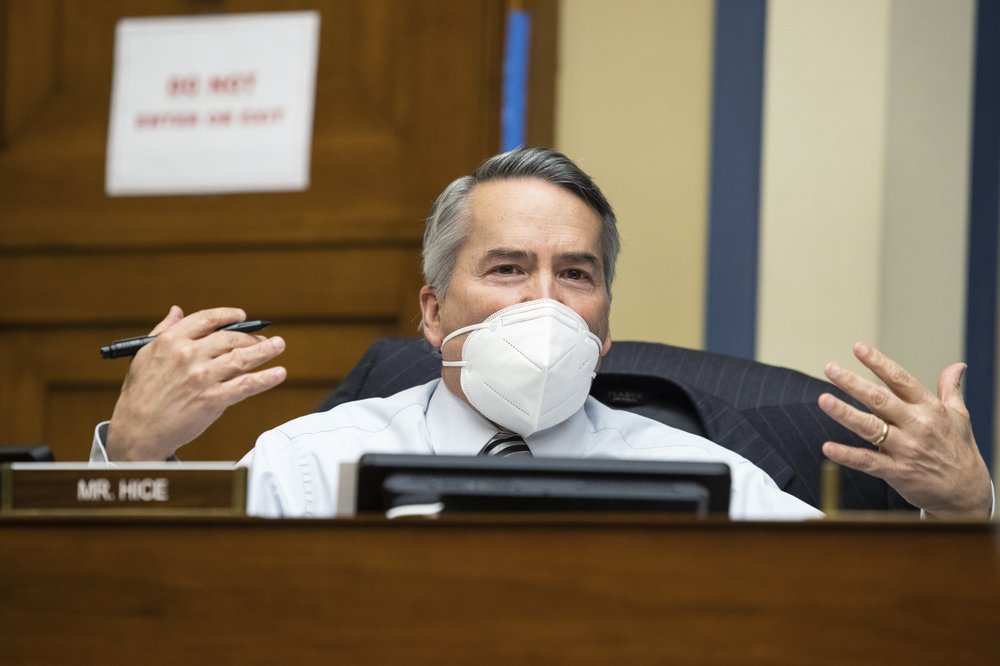
Former President Donald Trump on Monday endorsed a conservative Georgia congressman in his bid to unseat the Republican secretary of state who refused to help overturn the November election results. Rep. Jody Hice, a tea party favorite and Trump acolyte, is the first major challenger to Brad Raffensperger since the secretary of state certified President Joe Biden’s narrow victory in Georgia and disputed Trump’s false allegations of fraud. Trump’s endorsement marks his most direct attempt at retribution against those he blames for his loss and reaffirms his continued influence over the Republican Party. “Jody has been a steadfast fighter for conservative Georgia values and is a staunch ally of the America First agenda,” Trump said in a statement that repeated the unsupported allegations of fraud. “Unlike the current Georgia Secretary of State, Jody leads out front with integrity. I have 100% confidence in Jody to fight for Free, Fair, and Secure Elections in Georgia, in line with our beloved U.S. Constitution.” In a statement, Raffensperger criticized Hice for supporting Trump’s false fraud claims and likened him to former GOP Sens. David Perdue and Kelly Loeffler, who lost twin Senate runoffs in January after supporting Trump’s bid to subvert the election results. “Few have done more to cynically undermine faith in our election system than Jody Hice,” Raffensperger said. “We saw in January what Georgia voters will do to candidates who use that rhetoric.” Hice didn’t mention Trump in his announcement but has said previously that he expected the former president’s support, and he echoed Trump’s rhetoric about Raffensperger. “What Brad Raffensperger did was create cracks in the integrity of our elections, which I wholeheartedly believe individuals took advantage of in 2020,” Hice said in a statement Monday, without supporting evidence that would refute Georgia’s three statewide counts of nearly 5 million ballots. “Every Georgian, in fact, every American, has the right to be outraged by the actions and, simultaneously, the inaction of our Secretary of State,” Hice added. Trump has long made clear his intentions to target Raffensperger and Gov. Brian Kemp, also a Republican, for their parts in ratifying Biden’s victory. “I’ll be here in a year in a half campaigning against your governor and your crazy secretary of state,” Trump said at a Georgia rally on Jan. 4, the eve of the two U.S. Senate runoffs that Democrats swept to win control of the chamber. Both Kemp and Raffensperger have said they were simply following the state’s election law and fulfilling their required duties. The developments Monday drew immediate plaudits from the right. “The establishment still doesn’t get how popular Trump is with the base, but they will,” said Debbie Dooley, an early tea party organizer and Trump ally who is close to Hice. “We’ve known Raffensperger was dead, and Jody can excite the base and raise money. This is a serious challenge.” No heavyweight primary opponent has emerged yet against Kemp. Some Trump allies are looking to former Rep. Doug Collins as an ideal challenger. Others close to Collins, one of Trump’s most high-profile House defenders during impeachment proceedings, say he is more likely to make another bid for the Senate after his unsuccessful campaign last year in a special election ultimately won by Sen. Raphael Warnock, a Democrat. Collins was Trump’s choice in 2019 for a Senate vacancy, opened by Republican Johnny Isakson’s retirement. But Kemp opted for Loeffler. Collins finished third in a jungle primary behind Warnock and Loeffler last November before Warnock prevailed in the January runoff. Hice has not cut as high a profile since his election in 2014 as Collins did in Washington, but the 60-year-old has been a loyal Trump lieutenant. He was among the many Republican officials in Georgia who relentlessly pushed Trump’s false claims of voter fraud last fall. He endorsed a lawsuit filed by Texas against Georgia and other battleground states seeking to overturn Biden’s victory in the U.S. Supreme Court — a suit the high court rejected — and he objected to the certification of Electoral College votes even after a pro-Trump mob violently stormed the U.S. Capitol on Jan. 6. Trump’s ire has proven vexing for Raffensperger and Kemp. Kemp won Trump’s endorsement in a heated Republican primary for governor in 2018 and has never publicly criticized the president. He even reaffirmed recently that he’d back Trump if he sought the White House again in 2024. Raffensperger has pushed back more directly, arguing forcefully in national media interviews last fall that the election was accurate and fair. He wrote an op-ed saying he felt “thrown under the bus” by a president he’d supported. Weeks before the Capitol insurrection, a Raffensperger aide angrily predicted the president’s rhetoric would lead to violence. Since then, both Kemp and Raffensperger have tried, carefully, to appeal to the Republican base by calling for changes to the state’s election law. Most specifically, the two men support requiring voter identification for absentee voting to replace the current signature-match requirement. But some GOP lawmakers want to go considerably further, rolling back Georgia’s no-excuse absentee voting altogether, contracting weekend early voting options in some counties, and ending automatic voter registration. Raffensperger and Kemp have been more circumspect publicly about their positions on the more sweeping proposals, though the incumbent secretary of state has continued to vouch for the integrity of absentee voting and the success of automatic registration. Hice, despite his criticism of Raffensperger, also avoided any specifics about what changes he’d like to see in Georgia’s election, saying only that he is “encouraged to see the General Assembly taking it upon themselves to address some of the glaring issues in our elections.” Republished with the permission of the Associated Press.
Raphael Warnock, Jon Ossoff win in Georgia, handing Dems Senate control
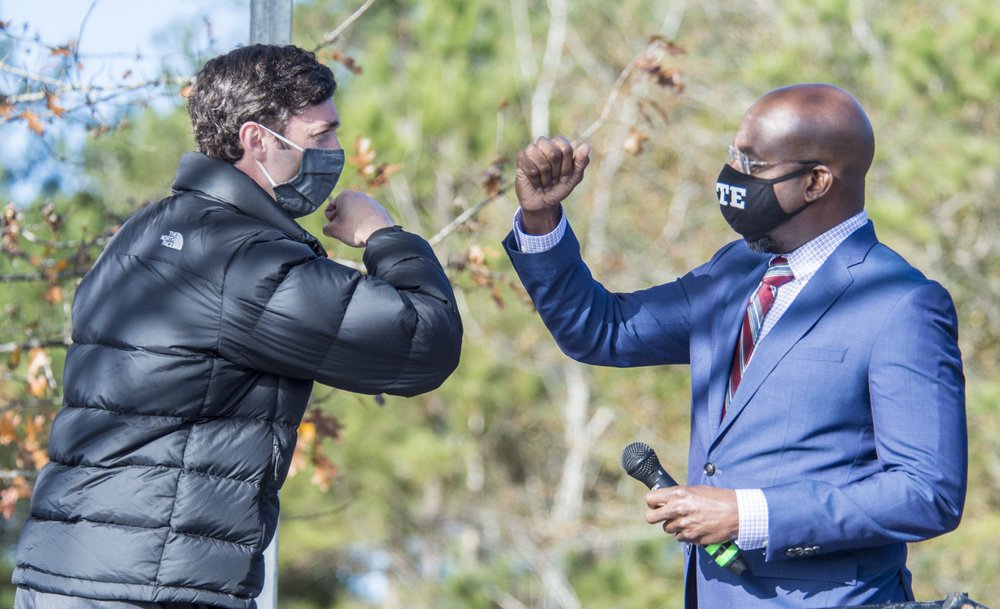
Democrats won both Georgia Senate seats — and with them, the U.S. Senate majority — as final votes were counted Wednesday, serving President Donald Trump a stunning defeat in his turbulent final days in office while dramatically improving the fate of President-elect Joe Biden’s progressive agenda. Jon Ossoff and Raphael Warnock, Democratic challengers who represented the diversity of their party’s evolving coalition, defeated Republicans David Perdue and Kelly Loeffler two months after Biden became the first Democratic presidential candidate to carry the state since 1992. Warnock, who served as pastor for the same Atlanta church where civil rights leader the Rev. Martin Luther King Jr. preached, becomes the first African American from Georgia elected to the Senate. And Ossoff becomes the state’s first Jewish senator and, at 33 years old, the Senate’s youngest member. This week’s elections were expected to mark the formal finale to the tempestuous 2020 election season, although the Democrats’ resounding success was overshadowed by chaos and violence in Washington, where angry Trump supporters stormed the U.S. Capitol to stop Congress from certifying Biden’s victory. Wednesday’s unprecedented siege drew fierce criticism of Trump’s leadership from within his own party, and combined with the bad day in Georgia, marked one of the darkest days of his divisive presidency. Still, the Democrats’ twin victories in Georgia represented a striking shift in the state’s politics as the swelling number of diverse, college-educated voters flex their power in the heart of the Deep South. They also cemented the transformation of Georgia, once a solidly Republican state, into one of the nation’s premier battlegrounds for the foreseeable future. In an emotional address early Wednesday, Warnock vowed to work for all Georgians whether they voted for him or not, citing his personal experience with the American dream. His mother, he said, used to pick “somebody else’s cotton” as a teenager. “The other day, because this is America, the 82-year-old hands that used to pick somebody else’s cotton picked her youngest son to be a United States senator,” he said. “Tonight, we proved with hope, hard work and the people by our side, anything is possible.” Loeffler, who remains a senator until the results of Tuesday’s election are finalized, returned to Washington on Wednesday morning to join a small group of senators planning to challenge Congress’ vote to certify Biden’s victory. She didn’t get a chance to vocalize her objection before the violent protesters stormed the Capitol. Georgia’s other runoff election pitted Perdue, a 71-year-old former business executive who held his Senate seat until his term expired Sunday, against Ossoff, a former congressional aide and journalist. “This campaign has been about health and jobs and justice for the people of this state — for all the people of this state,” Ossoff said in a speech broadcast on social media Wednesday morning. “Whether you were for me, or against me, I’ll be for you in the U.S. Senate. I will serve all the people of the state.” Trump’s false claims of voter fraud cast a dark shadow over the runoff elections, which were held only because no candidate hit the 50% threshold in the general election. He raised the prospect of voter fraud as votes were being cast and likened the Republicans who run Georgia’s election system to “chickens with their heads cut off” during a Wednesday rally in Washington. Gabriel Sterling, a top official with the Georgia secretary of state’s office and a Republican, said there was “no evidence of any irregularities.” “The biggest thing we’ve seen is from the president’s fertile mind of finding fraud where none exists,” he said. Both contests tested whether the political coalition that fueled Biden’s November victory was an anti-Trump anomaly or part of a new electoral landscape. To win in Tuesday’s elections — and in the future — Democrats needed strong African American support. AP VoteCast, a survey of more than 3,700 voters in Tuesday’s contests, found that Black voters made up roughly 30% of the electorate, and almost all of them — 94% — backed Ossoff and Warnock. The Democrats also relied on the backing of younger voters, people earning less than $50,000 annually, and newcomers to the state. The Republican coalition backing Loeffler and Perdue was the mirror opposite: white, older, wealthier, and longtime Georgia residents. The coalition closely resembles the one that narrowly handed Georgia’s Electoral College votes to Biden in November, making him the first Democratic presidential candidate to win the state in almost three decades. Trump’s claims about voter fraud in the 2020 election, while meritless, resonated with Republican voters in Georgia. About 7 in 10 agreed with his false assertion that Biden was not the legitimately elected president, AP VoteCast found. Election officials across the country, including the Republican governors in Arizona and Georgia, as well as Trump’s former attorney general, William Barr, have confirmed that there was no widespread fraud in the November election. Nearly all the legal challenges from Trump and his allies have been dismissed by judges, including two tossed by the Supreme Court, where three Trump-nominated justices preside. Publicly and privately, some Republicans acknowledged that Trump’s monthslong push to undermine the integrity of the nation’s electoral system may have contributed to the GOP’s losses in Georgia. “It turns out that telling the voters that the election was rigged is not a great way to turn out your voters,” said Utah Sen. Mitt Romney, a Republican and a frequent Trump critic. Even with Trump’s claims, voters in both parties were drawn to the polls because of the high stakes. AP VoteCast found that 6 in 10 Georgia voters say Senate party control was the most important factor in their vote. Turnout exceeded both sides’ expectations. Ultimately, more people cast ballots in the runoffs than voted in Georgia’s 2016 presidential election. Former President Barack Obama, the nation’s first Black president, issued a statement praising the election of Georgia’s first African American senator and his ability to improve divisions in Washington. “Georgia’s first Black senator will make the (Senate)
Dividing party, Republicans poised to challenge Joe Biden win

Republicans mounting an unprecedented challenge to Joe Biden’s election win are setting up a congressional showdown on Wednesday that threatens to divide their party and the country for years to come. With protestors already gathering in Washington to support President Donald Trump, the House and the Senate will convene a joint session to count the electoral votes cast in November’s election. Trump has repeatedly said there was widespread fraud, but his claims have been roundly rejected by Republican and Democratic election officials in state after state and by judges, including at the Supreme Court, further cementing Biden’s victory. Trump sees the joint session of Congress as one of his final attempts to overturn the results, even though there is no credible path for that to happen. Echoing Trump’s baseless claims, some of his Republican allies in Congress plan to formally object to the results, focusing on six battleground states — Arizona, Georgia, Michigan, Nevada, Pennsylvania, and Wisconsin. But a growing number of their GOP colleagues, especially in the Senate, said they would not sign on. If an objection has support from both a House member and a senator in writing, then both chambers will vote on it. That could happen three or more times on Wednesday as Republican Sens. Josh Hawley of Missouri, Ted Cruz of Texas, and Kelly Loeffler of Georgia, along with at least ten other GOP senators, have indicated they will support at least some of the House challenges. It is unclear just what the Republican senators will do, but the process could drag into the night as the two chambers will have to consider each objection individually. There could be more than 100 Republicans in the House willing to object. The challenge to the presidential election is on a scale unseen since the aftermath of the Civil War, though the typically routine process of confirming Electoral College votes has been hit with brief objections before. In 2017, several House Democrats challenged Trump’s win, but Biden, who presided at the time as the vice president, swiftly dismissed them to assert Trump’s victory. In 2005, a challenge by a Democratic House member and a Democratic senator to George W. Bush’s victory in Ohio was quickly dismissed by both chambers. The effort this week is expected to be much broader but is all but certain to fail. Biden is set to be inaugurated Jan. 20. Republicans had not yet settled on a full strategy the night before the joint session. A late-night meeting on Monday convened by Cruz reached few conclusions, according to two Republicans familiar with the situation and granted anonymity to discuss it. Cruz will object to electoral results from Arizona, another Republican said — likely to be the first objection considered, in a state Biden won. Hawley has said he will object to the Pennsylvania results, and Loeffler may object to Georgia, where she was vying to keep her seat in a runoff election on Tuesday. With mounting desperation, Trump declared at a campaign rally for Loeffler and David Perdue in Georgia Monday that he would “fight like hell” to hold on to the presidency and he appealed to Republican lawmakers to reverse his election loss. Perdue is seeking another six years in the Senate, but his term expired Sunday. The days ahead will be defining for his presidency. Trump is whipping up crowds and people are gathering in Washington, where security is on alert. Lawmakers are being told to arrive early at the Capitol and some are considering sleeping overnight in their offices to ensure they can safely access the building amid the protests. Vice President Mike Pence will be closely watched as he presides over the session. He is under growing pressure from Trump and others to tip the results in Trump’s favor. But Pence has a ceremonial role that does not give him the power to affect the outcome. “I promise you this: On Wednesday, we’ll have our day in Congress,” Pence said while himself campaigning in Georgia ahead of Tuesday’s runoff elections that will determine control of the Senate. But he did not detail what that meant. The high-stakes decisions on whether to ally with Trump are splitting the Republican Party. A range of Republican officials — including Gov. Larry Hogan of Maryland; Rep. Liz Cheney of Wyoming, the third-ranking House GOP leader; and former House Speaker Paul Ryan — have criticized the GOP efforts to overturn the election. And more than a dozen Republican senators have said they will not support the effort. “The 2020 election is over,” said a statement Sunday from a bipartisan group of 10 senators, including Republicans Susan Collins of Maine, Lisa Murkowski of Alaska, Bill Cassidy of Louisiana, and Mitt Romney of Utah. Several others have said they, too, will not back objections, including Republican Sens. John Thune of South Dakota, the No. 2 Republican in the Senate who said last month he thought any challenges would go down “like a shot dog.” In a statement Tuesday, South Carolina Sen. Tim Scott said that as he reads the Constitution, “there is no constitutionally viable means for the Congress to overturn an election wherein the states have certified and sent their electors.” Senate Majority Leader Mitch McConnell has tried to prevent his party from engaging in the battle, which could help define the GOP in the post-Trump era and create lingering resentments among Republican voters. Both Hawley and Cruz are potential 2024 presidential contenders, vying for Trump’s base of supporters. Some other potential candidates, including Arkansas Sen. Tom Cotton, have chosen not to challenge the results. Cruz’s coalition of 13 senators has said it will vote to reject the Electoral College tallies unless Congress launches a commission to immediately conduct an audit of the election results. Congress is unlikely to agree to that. Facing the criticism from many in his own party, Cruz has attempted to put a finer point on his challenge. The commission remains his focus, he has said, not to undo the election
Mike Pence, Joe Biden warn of high stakes of Georgia Senate runoffs
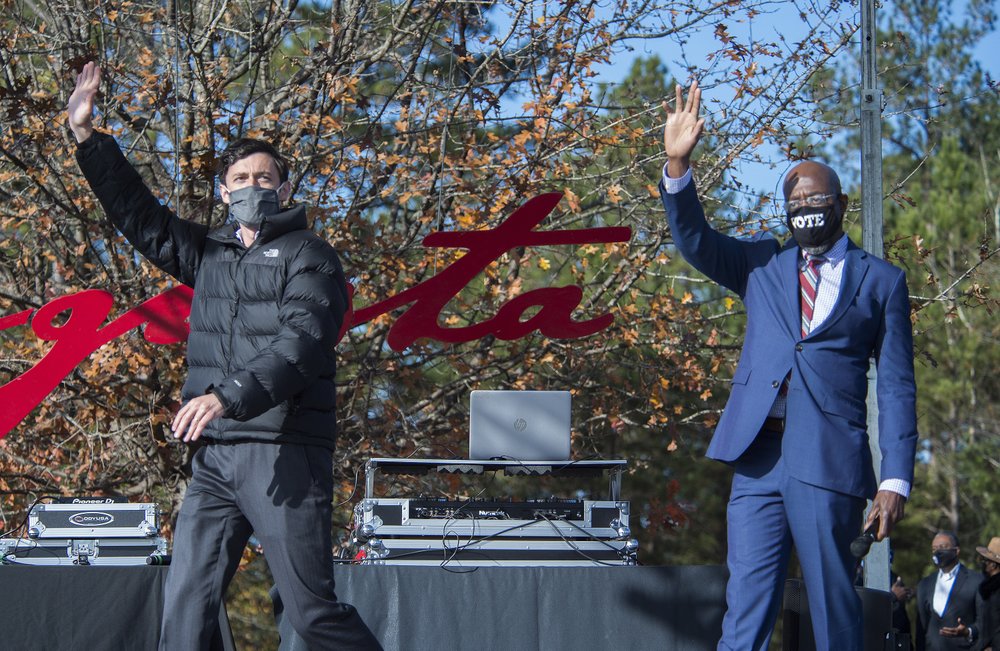
President-elect Joe Biden on Monday told Georgia Democrats they had the power to “chart the course” for a generation and Vice President Mike Pence urged Republicans to vote for “the last line of defense” in Washington in a series of final pleas ahead of runoff elections that will determine control of the U.S. Senate. The men spoke hours before President Donald Trump was due to make his case to voters at a nighttime rally in north Georgia, where Republicans were banking on strong voter turnout on Tuesday to reelect Sen. Kelly Loeffler and David Perdue and hold control of the chamber. Biden campaigned with Democrats Jon Ossoff and Raphael Warnock in Atlanta, hoping he could recreate the coalition that secured him a narrow victory in the presidential race in November. “Folks, this is it. This is it. It’s a new year, and tomorrow can be a new day for Atlanta, for Georgia, and for America,” Biden said at a drive-in rally. “Unlike any time in my career, one state — one state — can chart the course, not just for the four years but for the next generation.” The stakes have drawn hundreds of millions of dollars in campaign spending to a once solidly Republican state that now finds itself as the nation’s premier battleground. Biden won Georgia’s 16 electoral votes by about 12,000 votes out of 5 million cast in November, though Trump continues pushing false assertions of widespread fraud that even his now-former attorney general and Georgia’s Republican secretary of state — along with a litany of state and federal judges — have said did not happen. The president’s trip Monday comes a day after disclosure of a remarkable telephone call he made to the Georgia secretary of state over the weekend. Trump pressured Republican Brad Raffensperger to “find” enough votes to overturn Georgia’s election results ahead of Wednesday’s joint session of Congress that will certify Biden’s Electoral College victory. The call highlighted how Trump has used the Georgia campaign to make clear his continued hold on Republican politics. Angry after the Raffensperger call, Trump floated the idea of pulling out of the rally but was persuaded to go ahead with it so he will have a chance to reiterate his claims of election fraud. Republicans are wary as to whether Trump will focus only on himself and fail to promote the two GOP candidates. Biden on Monday took aim at Trump’s scheme by declaring that “politicians cannot assert, take or seize power” by undermining legitimate elections. Biden said he needs a Senate majority to pass legislation to combat the coronavirus, and he blasted Perdue and Loeffler as obstructionist Trump loyalists. Loeffler says she will join other Republican lawmakers in objecting to the Electoral College certification of Biden’s victory by Congress on Wednesday. “You have two senators who think they’ve sworn an oath to Donald Trump, not the United States Constitution,” Biden said. Earlier Monday, Pence told a crowd of conservative Christian voters to stop a Democratic takeover in Washington. “We’re going to keep Georgia, and we’re going to save America,” Pence said at Rock Springs Church in Milner. Perdue addressed the church crowd by telephone while quarantining over coronavirus exposure, claiming that “the very future of our republic is on the line” and declaring the duty to vote “a calling from God.” Republicans need just one victory to maintain Senate control and force Biden to contend with a divided government. Democrats need a sweep for a 50-50 split, giving the tiebreaking vote to Vice President-elect Kamala Harris, who will succeed Pence as the Senate’s presiding officer. That would give Democrats a Senate majority to go along with their control of the House and executive branch. Pence, who will preside over Wednesday’s congressional joint session, sidestepped Trump’s denials Monday until a man yelled out that he must “do the right thing on Jan. 6.” Pence promised that “we’ll have our day in Congress,” though he offered no details about what that might mean. Scores of Republicans in Congress have pledged to protest the Electoral College count, but Pence has no legal authority to override Biden’s win. Pence drew chants of “Four more years!” and “Stop the steal!” from the church gathering. Facing those passions from the Republican base, Perdue, whose first Senate term expired Sunday, and Loeffler, an appointed senator trying to win her first election, have run as unabashed Trump Republicans and spent the two-month runoff blitz warning of a “radical” and “dangerous” lurch to the left. Ossoff and Warnock have countered with warnings that a Republican Senate will stymie Biden’s administration, especially on pandemic relief. Warnock pushed back at the deluge of Loeffler television ads casting him as a socialist. “Have you noticed she hasn’t even bothered to make a case, Georgia, for why you should keep her in that seat?” Warnock said, speaking ahead of Biden. “That’s because she has no case to make.” To be sure, a closely divided Senate — with the rules still requiring 60 votes to advance major bills — lessens the prospects of sweeping legislation regardless. But a Democratic Senate would at least assure Biden an easier path for top appointees, including judges, and legitimate consideration of his legislative agenda. A Senate led by Mitch McConnell would almost certainly deny even an up-or-down vote on Biden’s most ambitious plans. More than 3 million Georgians already have voted. Monday’s push is focused on getting voters to the polls Tuesday. Democrats ran up a wide margin among 3.6 million early votes in the fall, but Republicans countered with an Election Day surge, especially in small towns and rural areas. Even with Biden’s statewide win, Perdue led Ossoff by 88,000 votes in November, giving the GOP confidence in the runoff. The runoffs were required because none of the candidates reached a majority vote, as required by Georgia law. Despite Perdue’s initial advantage, early voting figures suggest Democrats have had a stronger turnout heading into Tuesday, and leading Republicans have expressed concerns about
Donald Trump, on tape, presses Ga. official to ‘find’ him votes
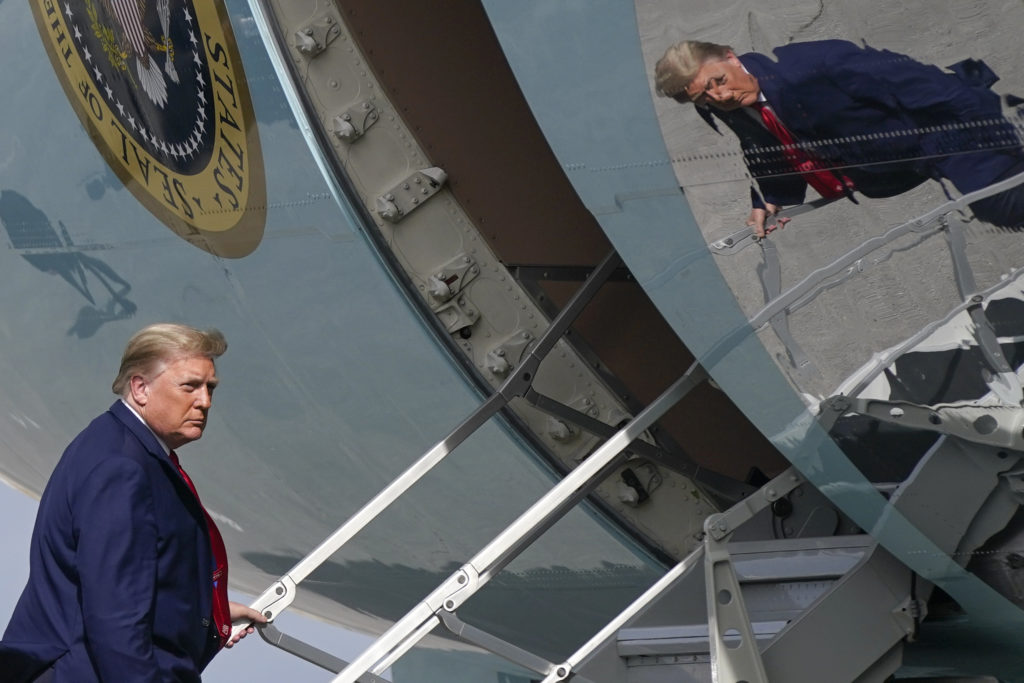
President Donald Trump pressured Georgia’s Republican secretary of state to “find” enough votes to overturn Joe Biden’s win in the state’s presidential election, repeatedly citing disproven claims of fraud and raising the prospect of “criminal offense” if officials did not change the vote count, according to a recording of the conversation. The phone call with Secretary of State Brad Raffensperger on Saturday was the latest step in an unprecedented effort by a sitting president to pressure a state official to reverse the outcome of a free and fair election that he lost. The president, who has refused to accept his loss to Democratic president-elect Biden, repeatedly argued that Raffensperger could change the certified results. “All I want to do is this. I just want to find 11,780 votes, which is one more than we have,” Trump said. “Because we won the state.” Georgia counted its votes three times before certifying Biden’s win by a 11,779 margin, Raffensperger noted: “President Trump, we’ve had several lawsuits, and we’ve had to respond in court to the lawsuits and the contentions. We don’t agree that you have won.” Audio snippets of the conversation were first posted online by The Washington Post. The Associated Press obtained the full audio of Trump’s conversation with Georgia officials from a person on the call. The AP has a policy of not amplifying disinformation and unproven allegations. The AP will be posting the full audio as it annotates a transcript with fact check material. Trump’s renewed intervention and the persistent and unfounded claims of fraud come nearly two weeks before he leaves office and two days before twin runoff elections in Georgia that will determine political control of the U.S. Senate. The president used the hour-long conversation to tick through a list of claims about the election in Georgia, including that hundreds of thousands of ballots mysteriously appeared in Fulton County, which includes Atlanta. Officials have said there is no evidence of that happening. The Georgia officials on the call are heard repeatedly pushing back against the president’s assertions, telling him that he’s relying on debunked theories and, in one case, selectively edited video. At another point in the conversation, Trump appeared to threaten Raffensperger and Ryan Germany, the secretary of state’s legal counsel, by suggesting both could be criminally liable if they failed to find that thousands of ballots in Fulton County had been illegally destroyed. There is no evidence to support Trump’s claim. “That’s a criminal offense,” Trump says. “And you can’t let that happen.” Others on the call included Mark Meadows, the White House chief of staff, and attorneys assisting Trump, including Washington lawyer Cleta Mitchell. Democrats and a few Republicans condemned Trump’s actions, while at least one Democrat urged a criminal investigation. Legal experts said Trump’s behavior raised questions about possible election law violations. Biden senior adviser Bob Bauer called the recording “irrefutable proof” of Trump pressuring and threatening an official in his own party to “rescind a state’s lawful, certified vote count and fabricate another in its place.” “It captures the whole, disgraceful story about Donald Trump’s assault on American democracy,” Bauer said. Sen. Dick Durbin of Illinois, the No. 2 Democrat in that chamber, said Trump’s conduct “merits nothing less than a criminal investigation.” Trump confirmed in a tweet Sunday that he had spoken with Raffensperger. The White House referred questions to Trump’s reelection campaign, which did not respond Sunday to an emailed request for comment. Raffensperger’s office did not respond to a request for comment. Trump has repeatedly attacked how Raffensperger conducted Georgia’s elections, claiming without evidence that the state’s 16 electoral votes were wrongly given to Biden. “He has no clue!” Trump tweeted of Raffensperger, saying the state official “was unwilling, or unable” to answer questions. Raffensperger’s Twitter response: “Respectfully, President Trump: What you’re saying is not true. The truth will come out.” Various election officials across the country and Trump’s former attorney general, William Barr, have said there was no widespread fraud in the election. Republican governors in Arizona and Georgia, key battleground states crucial to Biden’s victory, have also vouched for the integrity of their state elections. Nearly all the legal challenges from Trump and his allies have been dismissed by judges, including two tossed by the Supreme Court, which includes three Trump-nominated justices. In Georgia, the ballots were counted three times, including a mandatory hand count and a Trump-requested recount. Still, Trump has publicly disparaged the election, worrying Republicans that may discourage GOP voters from participating in Tuesday’s runoffs pitting Sen. Kelly Loeffler against Democrat Raphael Warnock and Republican David Perdue against Democrat Jon Ossoff. Rebecca Green, who helps direct the election law program at William and Mary Law School, said that while it is appropriate for a candidate to question the outcome of an election, the processes for doing so for the presidential election have run their course. States have certified their votes. Green said Trump had raised “lots of questions” about whether he violated any election laws. Carl Tobias, a law professor at the University of Richmond, said Trump is guilty of “reprehensible and, possibly illegal, conduct.” Trump noted on the call that he intended to repeat his claims about fraud at a Monday night rally in Dalton, a heavily Republican area in north Georgia. “The people of Georgia are angry, the people of the country are angry,” he says on the recording. Biden is also due to campaign in Georgia on Monday, and Vice President-elect Kamala Harris stumped in Garden City, Georgia, on Sunday, slamming Trump for the call. “It was a bald, bald-faced, bold abuse of power by the president of the United States,” she said. Loeffler and Perdue have largely backed Trump in his attempts to overturn election results. But on Sunday, Loeffler said she hadn’t decided whether to join Republican colleagues in challenging the legitimacy of Biden’s victory over Trump when Congress meets Wednesday to affirm Biden’s 306-232 vote win in the Electoral College. Perdue, who was quarantining after being exposed
